A good friend passed along an article at Forbes from a month ago with the pregnant title, “U.S. Army Fears Major War Likely Within Five Years — But Lacks The Money To Prepare.” Basically, the article argues that war is possible — even likely — within five years with Russia or North Korea or Iran, or maybe all three, but that America’s army is short of money to prepare for these wars. This despite the fact that America spends roughly $700 billion each and every year on defense and overseas wars.
Now, the author’s agenda is quite clear, as he states at the end of his article: “Several of the Army’s equipment suppliers are contributors to my think tank and/or consulting clients.” He’s writing an alarmist article about the probability of future wars at the same time as he’s profiting from the sales of weaponry to the army.
As General Smedley Butler, twice awarded the Medal of Honor, said: War is a racket. Wars will persist as long as people see them as a “core product,” as a business opportunity. In capitalism, the profit motive is often amoral; greed is good, even when it feeds war. Meanwhile, the Pentagon is willing to play along. It always sees “vulnerabilities” and always wants more money.
But back to the Forbes article with its concerns about war(s) in five years with Russia or North Korea or Iran (or all three). For what vital national interest should America fight against Russia? North Korea? Iran? A few quick reminders:
#1: Don’t get involved in a land war in Asia or with Russia (Charles XII, Napoleon, and Hitler all learned that lesson the hard way).
#2: North Korea? It’s a puppet regime that can’t feed its own people. It might prefer war to distract the people from their parlous existence.
#3: Iran? A regional power, already contained, with a young population that’s sympathetic to America, at least to our culture of relative openness and tolerance. If the U.S. Army thinks tackling Iran would be relatively easy, just consider all those recent “easy” wars and military interventions in Iraq, Afghanistan, Libya, Syria …
Of course, the business aspect of this is selling the idea the U.S. Army isn’t prepared and therefore needs yet another new generation of expensive high-tech weaponry. It’s like convincing high-end consumers their three-year-old Audi or Lexus is obsolete so they must buy the latest model else lose face.
We see this all the time in the U.S. military. It’s a version of planned or artificial obsolescence. Consider the Air Force. It could easily defeat its enemies with updated versions of A-10s, F-15s, and F-16s, but instead the Pentagon plans to spend as much as $1.4 trillion on the shiny new and under-performing F-35. The Army has an enormous surplus of tanks and other armored fighting vehicles, but the call goes forth for a “new generation.” No other navy comes close to the U.S. Navy, yet the call goes out for a new generation of ships.
The Pentagon mantra is always for more and better, which often turns out to be for less and much more expensive, e.g. the F-35 fighter.
Wars are always profitable for a few, but they are ruining democracy in America. Sure, it’s a business opportunity: one that ends in national (and moral) bankruptcy.
Last night’s “commander-in-chief” security forum that featured Hillary Clinton and Donald Trump was, not surprisingly, disappointing. (You can read the transcript here.) Trump recently stated he was in favor of large increases in defense spending, but he wasn’t asked about this. He wasn’t asked about his support of torture, nor was he challenged on his remarkably dangerous statement back in March that military officers would obey his presidential decrees, even when they were unlawful. Hillary was challenged on her email fiasco at the State Department, and rightly so, but she pretty much got a free pass on her support of the calamitous Iraq war and the chaos following the Libyan intervention. And of course neither candidate was challenged on their blanket support of Israel.
What you got was two self-absorbed candidates, one wonkish, the other one clearly a wanker, both of them posing as warriors as long as someone else’s kids are doing the fighting. Here’s a question for Trump and Hillary: the next time you deploy troops to Iraq or Syria or Afghanistan or wherever, will you include Ivanka or Chelsea, respectively, and put them in harm’s way?
Most interesting to me was Trump’s old-fashioned imperialism, which explains much of his appeal to the rabid right. Here’s what Trump had to say about how the Iraq war should have turned out for the USA:
“We [the USA] go in [to Iraq in 2003], we spend $3 trillion, we lose thousands and thousands of lives, and then, Matt, what happens is, we get nothing. You know, it used to be to the victor belong the spoils. Now, there was no victor there, believe me. There was no victor. But I always said: Take the oil.”
You have to hand it to The Donald: at least he’s occasionally honest. The Iraq war was about oil, among other things, and Trump says the USA as the “victor” should have taken it. Why? Because might makes right. Because, as Thucydides said so many centuries ago, the strong do what they will and the weak suffer as they must.
Remember when George W. Bush said Iraq’s oil was the “patrimony” of the Iraqi people and that the USA wasn’t about to take it? That the Iraq war was about freedom and democracy in the Middle East, not a naked grab for resources? Trump is having none of that. Any wonder that he’s so popular among Americans who are tired, as they see it, of losing?
“Take the oil!” It’s a statement that could easily appear on the next iteration of Trump’s baseball cap.
All they are sayin’ is give bombing a chance (U.S. Air Force photo)
W.J. Astore
In my latest article for TomDispatch.com, which you can read in its entirety here, I tackle the American infatuation with air power and bombing. Despite its enormous destructiveness and indecisive results in Korea, Vietnam, Desert Storm, the Iraq invasion of 2003, and in the ongoing War on Terror, U.S. leaders persist in bombing as a means to victory, even against dispersed organizations such as ISIS and the Taliban that offer few targets. As I put it in my article:
For all its promise of devastating power delivered against enemies with remarkable precision and quick victories at low cost (at least to Americans), air power has failed to deliver, not just in the ongoing war on terror but for decades before it. If anything, by providing an illusion of results, it has helped keep the United States in unwinnable wars, while inflicting a heavy toll on innocent victims on our distant battlefields. At the same time, the cult-like infatuation of American leaders, from the president on down, with the supposed ability of the U.S. military to deliver such results remains remarkably unchallenged in Washington.
Indeed, as Glenn Greenwald points out, Hillary Clinton’s presumptive Defense Secretary, Michele Flournoy, has already issued calls for more U.S. bombing and military interventions in the Middle East. Talk about doubling down on a losing strategy.
Yet “strategy” isn’t really the right word. Bombing is a method of war, not a strategy. And in this case the method truly is the madness, with the end being perpetual war.
When will the madness end? To be honest, I don’t see an end in the immediate future, so invested in bombing are America’s leaders and foreign “diplomats.”
Here’s the rest of my article for TomDispatch.com.
Yet despite this “asymmetric” advantage [America’s dominance of the air], despite all the bombing, missile strikes, and drone strikes, “progress” proved both “fragile” and endlessly “reversible” (to use words General David Petraeus applied to his “surges” in Iraq and Afghanistan). In fact, 12,000 or so strikes after Washington’s air war against ISIS in Syria and Iraq began in August 2014, we now know that intelligence estimates of its success had to be deliberately exaggerated by the military to support a conclusion that bombing and missile strikes were effective ways to do in the Islamic State.
So here we are, in 2016, 25 years after Desert Storm and nearly a decade after the Petraeus “surge” in Iraq that purportedly produced that missing mission accomplished moment for Washington — and U.S. air assets are again in action in Iraqi and now Syrian skies. They are, for instance, flying ground support missions for Iraqi forces as they attempt to retake Falluja, a city in al-Anbar Province that had already been “liberated” in 2004 at a high cost to U.S. ground troops and an even higher one to Iraqi civilians. Thoroughly devastated back then, Falluja has again found itself on the receiving end of American air power.
If and when Iraqi forces do retake the city, they may inherit little more than bodies and rubble, as they did in taking the city of Ramadi last December. About Ramadi, Patrick Cockburn noted last month that “more than 70% of its buildings are in ruins and the great majority of its 400,000 people are still displaced” (another way of saying, “It became necessary to destroy the town to save it”). American drones, meanwhile, continue to soar over foreign skies, assassinating various terrorist “kingpins” to little permanent effect.
Tell Me How This Ends
Here’s the “hot wash”: something’s gone terribly wrong with Washington’s soaring dreams of air power and what it can accomplish. And yet the urge to loose the planes only grows stronger among America’s political class.
Given the frustratingly indecisive results of U.S. air campaigns in these years, one might wonder why a self-professed smart guy like Ted Cruz, when still a presidential candidate, would have called for “carpet” bombing our way to victory over ISIS, and yet in these years he has been more the norm than the exception in his infatuation with air power. Everyone from Donald Trump to Barack Obama has looked to the air for the master key to victory. In 2014, even Petraeus, home from the wars, declared himself “all in” on more bombing as critical to victory (whatever that word might now mean) in Iraq. Only recently he also called for the loosing of American air power (yet again) in Afghanistan — not long after which President Obama did just that.
Even as air power keeps the U.S. military in the game, even as it shows results (terror leaders killed, weapons destroyed, oil shipments interdicted, and so on), even as it thrills politicians in Washington, that magical victory over the latest terror outfits remains elusive. That is, in part, because air power by definition never occupies ground. It can’t dig in. It can’t swim like Mao Zedong’s proverbial fish in the sea of “the people.” It can’t sustain persuasive force. Its force is always staccato and episodic.
Its suasion, such as it is, comes from killing at a distance. But its bombs and missiles, no matter how “smart,” often miss their intended targets. Intelligence and technology regularly prove themselves imperfect or worse, which means that the deaths of innocents are inevitable. This ensures new recruits for the very organizations the planes are intent on defeating and new cycles of revenge and violence amid the increasing vistas of rubble below. Even when the bombs are on target, as happens often enough, and a terrorist leader or “lieutenant” is eliminated, what then? You kill a dozen more? As Petraeus said in a different context: tell me how this ends.
Recalling the Warbirds
From Ronald Reagan to Barack Obama, dropping bombs and firing missiles has been the presidentially favored way of “doing something” against an enemy. Air power is, in a sense, the easiest thing for a president to resort to and, in our world, has the added allure of the high-tech. It looks good back home. Not only does the president not risk the lives of American troops, he rarely risks retaliation of any kind.
Whether our presidents know it or not, however, air power always comes with hidden costs, starting with the increasingly commonplace blowback of retaliatory terrorist strikes on “soft” targets (meaning people) in cities like Paris or Madrid or London. Strikes that target senior members of enemy armies or terrorist organizations often miss, simply stoking yet more of the sorts of violent behavior we are trying to eradicate with our own version of violence. When they don’t miss and the leadership of terror groups is hit, as Andrew Cockburn has shown, the result is often the emergence of even more radical and brutal leaders and the further spread of such movements. In addition, U.S. air power, especially the White House-run drone assassination program, is leading the way globally when it comes to degrading the sovereignty of national borders. (Witness the latest drone strike against the head of the Taliban in violation of Pakistani airspace.) Right now, Washington couldn’t care less about this, but it is pioneering a future that, once taken up by other powers, may look far less palatable to American politicians.
Despite the sorry results delivered by air power over the last 65 years, the U.S. military continues to invest heavily in it — not only in drones but also in ultra-expensive fighters and bombers like the disappointing F-35 (projected total cost: $1.4 trillion) and the Air Force’s latest, already redundant long-range strike bomber (initial acquisition cost: $80 billion and rising). Dismissing the frustratingly mixed and often destabilizing results that come from air strikes, disregarding the jaw-dropping prices of the latest fighters and bombers, America’s leaders continue to clamor for yet more warplanes and yet more bombing.
And isn’t there a paradox, if not a problem, in the very idea of winning a war on terror through what is in essence terror bombing? Though it’s not something that, for obvious reasons, is much discussed in this country, given the historical record it’s hard to deny that bombing is terror. After all, that’s why early aviators like Douhet and Mitchell embraced it. They believed it would be so terrifyingly effective that future wars would be radically shortened to the advantage of those willing and able to bomb.
As it turned out, what air power provided was not victory, but carnage, terror, rubble — and resistance.
Americans should have a visceral understanding of why populations under our bombs and missiles resist. They should know what it means to be attacked from the air, how it pisses you off, how it generates solidarity, how it leads to new resolve and vows of vengeance. Forget Pearl Harbor, where my uncle, then in the Army, dodged Japanese bombs on December 7, 1941. Think about 9/11. On that awful day in 2001, Homeland USA was “bombed” by hijacked jet liners transformed into guided missiles. Our skies became deadly. A technology indelibly associated with American inventiveness and prowess was turned against us. Colossally shocked, America vowed vengeance.
Are our enemies any less resolutely human than we are? Like us, they’re not permanently swayed by bombing. They vow vengeance when friends, family members, associates of every sort are targeted. When American “smart” bombs obliterate wedding parties and other gatherings overseas, do we think the friends and loved ones of the dead shrug and say, “That’s war”? Here’s a hint: we didn’t.
Having largely overcome the trauma of 9/11, Americans today look to the sky with hope. We watch the Blue Angels and Thunderbirds with a sense of awe, wonder, and pride. Warplanes soar over our sports stadiums. The sky is ourhigh ground. We see evidence of America’s power and ingenuity there. Yet people in Afghanistan, Iraq, and elsewhere often pray for clouds and bad weather; for them, clear skies are associated with American-made death from above.
It’s time we allow other peoples to look skyward with that same sense of safety and hope as we normally do. It’s time to recall the warbirds. They haven’t provided solutions. Indeed, the terror, destruction, and resentments they continue to spread are part of the problem.
The United States is addicted to war — and to war-spending. That’s the message of Bill Hartung’s latest article at TomDispatch.com. Hartung, the director of the Arms and Security Project at the Center for International Policy, writes:
The more that’s spent on “defense”… the less the Pentagon wants us to know about how those mountains of money are actually being used. As the only major federal agency that can’t pass an audit, the Department of Defense (DoD) is the poster child for irresponsible budgeting.
It’s not just that its books don’t add up, however. The DoD is taking active measures to disguise how it is spending the hundreds of billions of taxpayer dollars it receives every year — from using the separate “war budget” as a slush fund to pay for pet projects that have nothing to do with fighting wars to keeping the cost of its new nuclear bomber a secret. Add in dozens of other secret projects hidden in the department’s budget and the Pentagon’s poorly documented military aid programs, and it’s clear that the DoD believes it has something to hide.
Having served in the military and DoD for twenty years and having read about it for twenty more, none of this surprises me.
Here’s the thing: In the Pentagon and the wider military, there’s absolutely no incentive to save money. Indeed, the incentive is to spend as much as possible, because that is the best way to increase next year’s budgetary allotment. The military is filled with “Type A” officers whose job it is to spend, spend, spend, while fighting sister services for a bigger slice of the budgetary pie. The more money you get for your program and service, the more likely you’ll get pats on the back, a medal or two, and a glowing promotion recommendation.
Next, Members of Congress. Their incentive is also to spend — to bring home the pork to their districts. And the most lucrative source of pork is “defense” spending, which has the added benefit of being easily spun as “patriotic” and in “support” of the troops.
Finally, the President. His incentive is also to spend. That’s the best way to avoid being charged as being “weak” on defense. It’s also about the only leverage the US has left in foreign policy. Just look at President Obama’s recent trip to Vietnam. The headlines have focused on the US ending its 50-year arms embargo with Vietnam, as if that’s a wonderful thing for Americans and the Vietnamese. As Peter Van Buren noted, normalizing relations with Vietnam by selling them lethal weapons is truly an exercise in cynicism by a declining American empire.
Whether it’s the Pentagon, the Congress, or the president, the whole defense wars and weapons complex is structured to spend the maximum amount of money possible while engorging and enlarging itself. Small wonder it’s never passed an audit!
Making matters worse is how the Pentagon uses various shady practices (e.g. secret budgets) to hamstrung reformers seeking to corral the system’s excesses. After detailing the Byzantine complexity of the budgetary process, Hartung concludes that:
If your head is spinning after this brief tour of the Pentagon’s budget labyrinth, it should be. That’s just what the Pentagon wants its painfully complicated budget practices to do: leave Congress, any administration, and the public too confused and exhausted to actually hold it accountable for how our tax dollars are being spent. So far, they’re getting away with it.
Put succinctly, the US National Security State may be losing its overseas wars, yet losing equates to winning when it comes to increased budgetary authority abetted by a Congress that prefers enablement to oversight. And as any military officer knows, authority without responsibility is a recipe for serious abuse.
Should we enlarge the military, buy more weapons, or fight more wars? Heck, let’s do all three!
W.J. Astore
Inside the Washington beltway, the debate is never focused on making major cuts to the defense budget, then using that money to improve infrastructure, health care, education, and other projects that benefit all of us domestically. No: the debate is whether we should fight more wars overseas or buy more weapons and enlarge the military for those wars.
That is the lesson from the following summary at FP: Foreign Policy that I’m pasting below:
There’s a fight brewing over the 2017 Defense Department budget, and right in the middle of the scrum is how to use the $58 billion the White House has set aside to pay for military operations in Iraq, Syria, and Afghanistan. The House of Representatives votes this week on its version of the bill, which yanks $18 billion from that account and uses it to buy more ships, dozens of fighter jets, and adding about 50,000 more troops to the rolls.
The White House and Pentagon aren’t happy about the whole thing.
On Monday, the Office of Management and Budget released a memo threatening a presidential veto of the bill, calling the move a “gimmick.” The memo added, “shortchanging wartime operations by $18 billion and cutting off funding in the middle of the year introduces a dangerous level of uncertainty for our men and women in uniform carrying out missions in Afghanistan, Iraq, Syria, and elsewhere. ”
And there are lots of elsewheres. Yemen, Somalia, Libya, Cameroon, and the Central African Republic, just to name a few. On Thursday, the Senate Armed Services Committee passed its own version of the 2017 defense policy bill, which rejects the House funding plan. The entire defense bill is $610 billion.
Indeed, there are lots of “elsewheres.” And how are those “elsewhere” wars going for the United States? As Peter Van Buren wrote on Sunday at TomDispatch.com, those wars have been repetitive disasters.
Peter Van Buren
Van Buren, who learned firsthand about the folly and fruitlessness of US reconstruction efforts in Iraq while working for the State Department, writes that:
Starting wars under murky circumstances and then watching limited commitments expand exponentially is by now so ingrained in America’s global strategy that it’s barely noticed. Recall, for instance, those weapons of mass destruction that justified George W. Bush’s initial invasion of Iraq, the one that turned into eight years of occupation and “nation-building”? Or to step a couple of no-less-forgettable years further into the past, bring to mind the 2001 U.S. mission that was to quickly defeat the ragged Taliban and kill Osama bin Laden in Afghanistan. That’s now heading into its 16th year as the situation there only continues to disintegrate…
Or for those who like to look ahead, the U.S. has just put troops back on the ground in Yemen, part of what the Pentagon is describing as “limited support” for the U.S.-backed war the Saudis and the United Arab Emirates launched in that country.
The new story is also the old story: just as you can’t be a little pregnant, the mission never really turns out to be “limited,” and if Washington doesn’t know where the exit is, it’s going to be trapped yet again inside its own war, spinning in unpredictable and disturbing directions.
The baseball-philosopher Yogi Berra coined the motto for recent US military efforts in the Greater Middle East: It’s like deja-vu, all over again. The same saying applies to Pentagon budget “debates.” It’s never about how to save money, or what “defense” truly means to America. It’s always about how to get more money, and whether it should be spent on enlarging the military, buying more weapons, or fighting more wars. The perfect trifecta is doing all three. Perhaps that’s the true “triad” of US defense policy.
I’m a fan of books and book sales. A few weeks ago, I came across a vintage copy of Hugh Prather’s “Notes to Myself.” Published in 1970, it caught the Zeitgeist of the “Age of Aquarius” and became a surprise best seller. Its considerable influence is shown by the fact it was lampooned on “Saturday Night Live” as part of the “Deep Thoughts” series.
Some of Prather’s “notes” are solipsistic and more than a little pretentious, a fact he himself recognized, but some of them also have considerable depth of meaning.
Consider this one:
When I see I am doing it wrong there is
a part of me that wants to keep on doing
it the same way anyway and even starts
looking for reasons to justify the continuation.
When I read this, I instantly thought of U.S. strategy when it comes to the Middle East. I recently read Colonel (ret.) Andrew Bacevich’s new book, “America’s War for the Greater Middle East,” and Prather’s note could serve as an epigraph to the book, and an epitaph to U.S. wars and policy in the Middle East.
Despite a painfully expensive and tragically wasteful record of militarized interventions in Iraq, Afghanistan, Lebanon, Iran, Somalia, Libya, and many other countries throughout the greater Middle East, the U.S. military and foreign policy establishment persists in staying its presence course. Sure, the tactics have changed slightly over the years. Obama is less enamored of committing big battalions of ground troops than Bush/Cheney were, yet his administration is nevertheless committed to constant military interventions, misguided and one-sided relationships with Israel and Saudi Arabia, and unwavering optimism that this time, maybe this time, we’ll finally build effective Iraqi (or Afghan) security forces while simultaneously encouraging liberty in the region by sending more U.S. troops and selling more weaponry (together with bombing and killing, of course).
As Bacevich notes in his book (you should beg, borrow, or otherwise acquire a copy), experience has not taught the U.S. national security state much of anything. Whether that state is led by a Clinton or a Bush or an Obama matters little. The U.S. can’t help but meddle, using its powerful military as a more or less blunt instrument, at incredible expense to our country, and at a staggering cost in foreign lives lost or damaged by incessant warfare. And no matter how catastrophic the results, that national security state can’t help but find reasons, no matter how discredited by events, to “stay the course.”
Consistent with what Prather says, it looks “for reasons to justify the continuation” of present policy, even when it knows things are going wrong in a very bad way.
Perhaps the U.S. national security state needs to make some “notes to itself.” Consider it a personal audit of sorts, since the Pentagon can’t pass a financial one. If it ever does, Prather’s “note” above would be a good place to start.
Send in the troops … there ought to be troops … don’t bother they’re here
W.J. Astore
I get a situation report (or SITREP) from FP: Foreign Policy. I’ve pasted it below. The gist of it is that Afghanistan is going poorly, therefore there’ll be no U.S. troop drawdown; and Iraq is going poorly, therefore the U.S. is sending more troops and money.
“Poorly” never seems to lead to the obvious conclusion: withdrawal. Rather it always leads to escalation: more troops and more money. So the U.S. always reinforces failure, exactly the opposite of sound military strategy.
The illogical nature of U.S. foreign policy would surely befuddle Mr. Spock. Put differently, U.S. foreign policy has a “logic” of its own. It goes something like this: Never admit mistakes. Domestic politics always come first, so never leave yourself open to charges of “cutting and running.” Never close an avenue to “influence” and future weapons sales, no matter if that avenue is a dead end.
No foreign policy update would be complete without a Republican charge of weakness or pusillanimity leveled against the Obama administration, hence the concluding comment by John McCain.
Here is the FP SITREP:
“The Institute for the Study of War recently released a map of Taliban strongholds throughout the country, showing the Taliban gains in the south.”
“A spokesman for the U.S. military command in Kabul tells SitRep that no U.S. servicemembers were caught up in the attack. In a statement, Gen. John Nicholson, head of U.S. and NATO troops in the country, said that the attack “shows the insurgents are unable to meet Afghan forces on the battlefield and must resort to these terrorist attacks.” Nicholson, who took command of America’s longest war last month, is still working to draw up a list of recommendations for what assets he’ll need. It’s expected he will ask that troop numbers remain at the current level of 9,800, and not drop to about 5,500 by the end of the year.”
“All eyes on Mosul. There are another 217 U.S. troops headed to Iraq to help security forces fight their way toward the ISIS-held city of Mosul, bringing the official number of American servicemembers there to just over 4,000. Hundreds more are in country but are not counted on the official rolls, meaning the real number is over 5,000, defense officials have said.”
“As part of the new aid package announced in Baghdad by Defense Secretary Ash Carteron Monday, the Pentagon will also start handing over $415 million to the Kurdish government to help pay their fighters, who have gone without pay amid a budget crunch due to falling oil prices.”
“The new troops will move out with Iraqi forces, advising local commanders at the battalion level, potentially putting them closer to the fight as the Iraqi army pushes north toward Mosul. Until this point, American advisors generally stayed at the division level or above. The new troops will also fly Apache helicopters that will strike ISIS fighters and man artillery systems, including the HIMARS (High Mobility Artillery Rocket System), which can fire multiple 200-lb. GPS-guided rockets over 40 miles. The HIMARS has already been used by U.S. forces to pound ISIS around Ramadi, and one U.S.-manned system has fired from Jordan into Syria in recent months. Sen. John McCain (R-Ariz.) called the new deployment the kind of ‘grudging incrementalism that rarely wins wars.'”
A reader wrote to ask my opinion on which presidential candidate would make the best commander-in-chief. This is a speculative exercise, of course, but why not speculate? I’ve watched most of the debates and have a sense of the candidates, though of course I’ve never met them and have no direct experience with them. (I once shook President Bill Clinton’s hand, and saw Hillary in the background, but that’s a story for another day.) So let’s take the five remaining candidates in alphabetical order:
Hillary Clinton: Often wrong and too hawkish, which is a bad combination. She was wrong on the Iraq War, wrong on Libya, and unapologetic in her fondness for Henry Kissinger. Under Clinton, I see more wasteful military interventions.
Ted Cruz: Far too eager to use military force. You’ll recall his posturing about “carpet bombing” and making the sand “glow” in the Middle East, apparently by using nuclear weapons. The recent terrorist attacks in Belgium have him calling for a police state in U.S. neighborhoods where Muslim-Americans live.
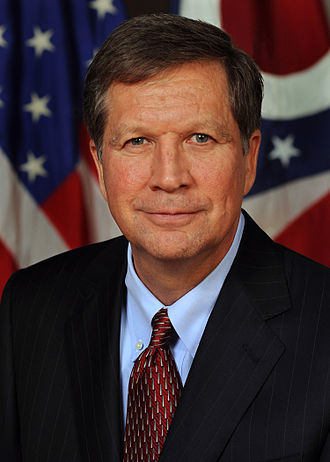
John Kasich: Has experience working military matters while in Congress (18 years on the House Armed Services Committee). Has executive experience as a governor. Has had the temerity to criticize the Saudis for supporting radical elements in Islam. Has opposed wasteful weapons systems (the B-2 and A-12, for example). Speaks carefully and appears to be temperamentally suited to the job.
Bernie Sanders: He was right to oppose the Iraq War. Thinks for himself. Not a slave to neoconservative interventionism. Yet he lacks experience dealing with the military and with foreign policy. Has the capacity for growth.
Donald Trump: Lacks an understanding of the U.S. Constitution and his role and responsibilities as commander-in-chief. Though he has shown a willingness to depart from orthodoxies, e.g. by criticizing the Iraq War and the idea of nation-building, Trump’s temperament is highly suspect. His bombast amplified by his ignorance could make for a deadly combination. Hysterical calls for medieval-like torture practices are especially disturbing.
Of the five major candidates, and with Sanders somewhat of a blank slate, I think John Kasich has the best potential — in the short-term — to be an effective commander-in-chief. This does not mean that I support Kasich for president, for I object to several of his domestic policies.
Not exactly a “bracing view,” perhaps, but it’s my honest attempt to answer a reader’s question. I do think Sanders has considerable potential to be an excellent commander-in-chief because he possesses moral courage.
Sadly, the odds of either Kasich or Sanders winning in November seem very long indeed.
I was on active duty in the military for twenty years. My experience: It’s very difficult to see the big picture in the military. The everyday pressures of the mission keep you focused on the short term. I recall writing many WARs (weekly activity reports) and being focused on the immediate. Even the yearly budgetary process tends to keep you focused on the short term. Assignments for officers and enlisted rarely last longer than three years, with combat tours typically much shorter. Personnel are constantly changing: for one acquisition project I worked on, four program managers (colonels) rotated in and out in three years.
Along with being focused on the immediate, you are actively discouraged from criticizing the system in any fundamental way. Of course, you’re not supposed to criticize the commander-in-chief, you’re not supposed to be insubordinate to your chain of command, you’re not supposed to undermine morale. At the same time, one mistake can be deadly to a career. People in the military therefore tend to play it safe. Doubters tend to conform. They shut their mouths. Or they vote with their feet by leaving the military.
Critics with the best of intentions often get squashed. Consider the Air Force pilot who found a problem with the F-22 Raptor’s cockpit oxygen supply system. This was a top priority, safety of flight, issue, but the Air Force played down the problem so as to protect procurement for the Raptor. The pilot eventually complained to CBS “60 Minutes” and saw his career stall as a result. Or consider General Eric Shinseki, who as Army Chief of Staff had the temerity to disagree with the Bush Administration’s rosy talk of low troop requirements in the wake of the invasion of Iraq in 2003. Shinseki was shunted aside by a system that had no room for well-informed dissent.
Pressures to conform and short-term planning and personnel cycles combine to produce mediocrity and to reproduce the past. John Paul Vann, an expert on the Vietnam War who died in that war, noted the U.S. military didn’t have 12 years’ experience in Vietnam: it had one years’ experience repeated 12 times over. Something similar is true in Afghanistan today: the U.S. doesn’t have 14 years’ experience fighting the Taliban and building Afghan security forces, but rather one years’ experience repeated 14 times.
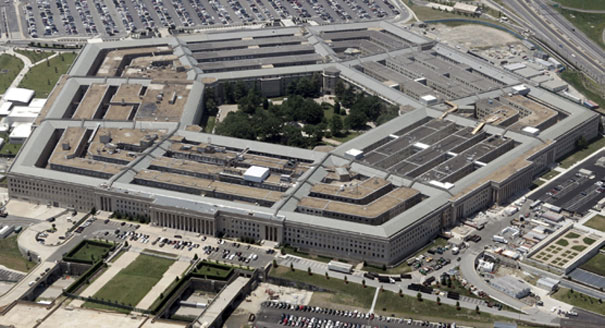
U.S. military actions are sequential rather than synergistic. It’s just one damn thing after another. The reality of this is often seen more clearly by people who are outside of the military. Outsiders aren’t caught up in everyday pressures or limited by conformism. They’re not caught in a Pentagonal box in which misguided tactics and mistaken goals are accepted by insiders as SOP – standard operating procedure.
But perhaps “box” is the wrong image for the Pentagon and its unreflective busyness; ant farm might be better. If you’re of a certain age, you may remember those old ant farms advertised in the back pages of comic books. You could send away for a see-through container with sand and ants that allowed you to watch as your crew of ants busily worked away in your “farm.”
Today’s Pentagon reminds me of those old ant farms. The ants work busily within it. Anyone watching wouldn’t question their dedication. Yet as you’re standing outside the farm, watching them, you can see how tightly their world is delimited and circumscribed. What is obvious to you is simply beyond them. The ants keep digging in and rolling along.
It’s well worth asking why the U.S. military puts so much pride on working to the point of exhaustion. A friend of mine worked at the Pentagon. He worked hard during his normal shift – but he left on-time to go home. His co-workers, noses to the grindstone, would hassle him about leaving “early.” He’d reply: I can leave on-time because I didn’t spend hours rotating between the coffee maker and the gym.
A mindless emphasis on over-caffeinated work and fitness, as another friend suggested, may be a post-Vietnam War reaction to the McNamara “managerial” culture of the 1960s. As he put it, “One easy way of showing one has the right stuff is to be an exercise nut, and the penumbras of that mind-set have really distorted the allocation of effort in our military.” Recall that General David Petraeus made a moral fetish out of personal fitness and how that indirectly cost him his career (he made his initial connection to his mistress/biographer while running together). Recall that General Stanley McChrystal was celebrated for his fitness regimen, which didn’t convey the smarts to rein in the insubordinate behavior of his men.
One more anecdote about incessant “army ant” work. A Vietnam veteran told me this story about mindless work for the sake of show:
“One feature of my first Vietnam unit epitomized all this to me: the trucks in our motor pool were perfectly lined up. I don’t know how they did it. Must have had squads of soldiers pushing them to just the right spot then stuck chocks under the wheels to keep them there. The 4-star-corps commander used to drive by our motor pool frequently to go to USARV HQ. He never stopped to see if the trucks were drivable. They were not. Almost all deadlined.”
Lots of busy-work down on the ant farm may look good from a distance, but it does not produce victory.
Today’s U.S. military has its enemies outgunned. There’s little wrong with its work ethic. What the U.S. military hasn’t done is to outthink its enemies. Indeed, the military’s actions often conspire to create new ones. To admit this is not to place the blame entirely on the military. Its civilian leaders have to shoulder blame as well. But ultimately it’s the military that advises the president and Congress, and I haven’t witnessed senior military officers resigning because their advice hasn’t been followed.
If the U.S. military is to be reformed, you can’t look to the ants to do it. They’re too busy keeping the system running. We must look beyond the farm, to outsiders who are able and willing to think freely. Yet the military too needs to act, if for no other reason than to end a miserable run of defeats (or pyrrhic victories, if that sounds less harsh). Rather than simply promoting loyal and hardworking ants, it needs to foster seers and thinkers – people willing to buck the system.
It won’t be easy – but it’s sure better than losing.
Military spending is supposed to be about keeping America safe. It’s supposed to be tied to vital national interests. And at roughly $750 billion a year (for defense, homeland security, wars overseas, the VA, and nuclear weapons), it’s a colossal chunk of money, representing nearly two-thirds of federal discretionary spending.
There’s also a colossal amount of waste in defense spending, and nearly all of the major candidates currently running for commander-in-chief want more. Only Bernie Sanders has suggested, tepidly, that defense spending might be cut.
Why is this? It’s because much of Pentagon spending is not about “keeping us safe.” Listen to the social critic and essayist Lewis Lapham. For him, the U.S. military establishment is both “successful business enterprise and reformed church.” In his words, “How well or how poorly the combined services perform their combat missions matters less than their capacity to generate cash and to sustain the images of omnipotence. Wars, whether won or lost, and the rumors of war, whether true or false, increase the [defense] budget allocations, stimulate the economy, and add to the stockpile of fear that guarantees a steady demand for security and promotes a decent respect for authority.”
Is Lapham too cynical?
It’s true that the more ISIS or China or Russia are hyped as threats, the more money and authority the Pentagon gains. Not much incentive – if any – exists within the Pentagon to play down the threats it perceives itself as facing. Minimizing danger is not what the military is about. Nor does it seek to minimize its funding or its authoritative position within the government or across American society. Like a business, the Pentagon wants to enlarge its market share and power. Like a church, it’s jealous of its authority and stocked with true believers.
There was a time when Americans, as well as their commander-in-chief, recognized the onerous burden of defense spending as a regressive tax on society and humanity. That time was 1953, and that commander was Dwight D. Eisenhower, the former five-star general who’d led the D-Day invasion on June 6, 1944.
This is what Ike had to say about “defense” spending:
Every gun that is made, every warship launched, every rocket fired signifies, in the final sense, a theft from those who hunger and are not fed, those who are cold and not clothed. This world in arms is not spending money alone. It is spending the sweat of its laborers, the genius of its scientists, the hopes of its children. This is not a way of life at all in any true sense. Under the cloud of threatening war, it is humanity hanging from a cross of iron.
Economists use the term “opportunity cost,” and certainly massive spending on weapons and warfare is an opportunity lost for greater spending in needed areas such as education, infrastructure, environmental preservation, and alternative energies.
Keeping Ike’s words in mind, Americans may yet come to recognize that major cuts in the Pentagon “tax” are in the best interests of all. Even, I daresay, the Pentagon.










 Bracing Views