Billions and Billions for the B-21 Stealth Bomber

b-21
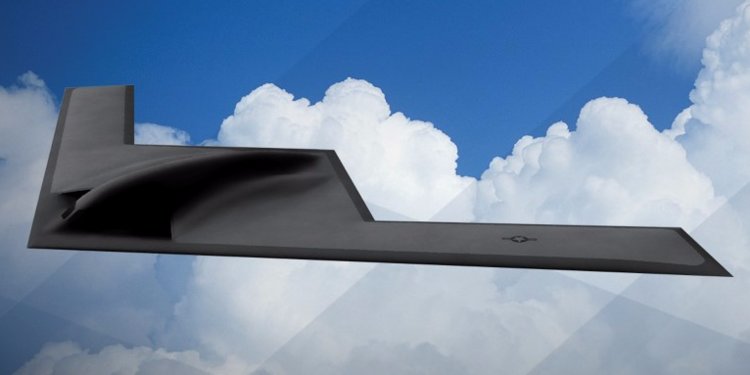
Conceptual drawing of the new B-21 stealth bomber

W.J. Astore

In a new article for TomDispatch.com. I tackle the Air Force’s latest stealth bomber, the B-21 Raider.  The project will likely cost $100 billion, and possibly much more than this over its lifetime.  Is this truly what we need for our national “defense”?

By their nature,  bombers are not defensive weapons. They’re designed to take the fight to the enemy with overwhelming destructive force. In other words, the B-21, strictly speaking, is not for national defense: it’s for national offense. That’s why the U.S. Air Force speaks so proudly of “global strike” against “any target.” It’s the empowerment as well as the enshrinement of a vision of violent and disruptive action by the U.S. military anytime, anywhere, on the planet. If we weren’t Americans, we’d recognize this vision for what it really is: a form of militarism gone mad.

Here is an excerpt from my article at TomDispatch.

The Air Force’s Strange Love for the New B-21 Bomber
The Military-Industrial Complex Strikes (Out) Again
By William J. Astore

Did you know the U.S. Air Force is working on a new stealth bomber? Don’t blame yourself if you didn’t, since the project is so secret that most members of Congress aren’t privy to the details. (Talk about stealthy!) Known as the B-21 Raider, after General Doolittle’s Raiders of World War II fame, it’s designed to carry thermonuclear weapons as well as conventional missiles and bombs. In conceptual drawings, it looks much like its predecessor, the B-2 Spirit stealth bomber, all wing and no fuselage, a shape that should help it to penetrate and survive the most hostile air defense systems on Earth for the purposes of a “global strike.” (Think: nuclear Armageddon.)

As the Air Force acquires those future B-21s, the B-2s will be retired along with the older B-1B bomber, although the venerable B-52 (of the Cold War era), much modified, will remain in service for the foreseeable future. At $550 million per plane (before the inevitable cost overruns even kick in), the Air Force plans to buy as many as 200 B-21s. That’s more than $100 billion in procurement costs alone, a boon for Northrop Grumman, the plane’s primary contractor.

If history is any judge, however, a boon for Northrop Grumman is likely to prove a bust for the American taxpayer. As a start, the United States has no real need for a new, stealthy, super-expensive, nuclear-capable, deep-penetrating strategic bomber for use against “peer” rivals China and Russia …

Here’s the nightmarish reality of actually bringing such weapons systems online: when the U.S. military develops a capability, it seeks to use it, even in cases where it’s wildly inappropriate. (Again, think of the massive B-52 bombings in Vietnam, Laos, and Cambodia in a counterinsurgency campaign classically meant to win “hearts and minds.”) Fielding a new strategic bomber for global strike, including potential thermonuclear attacks, will not so much enhance national security as potentially embolden future presidents to strike whenever and wherever they want in a fashion devastating to human life. The B-21 isn’t a force-multiplier. It’s an Armageddon-enabler.

Flying High in our B-21s

Having marketed himself as a savvy military critic, is there any possibility that Donald Trump will have the smarts of Jimmy Carter when it comes to the B-21 program? Will he save America at least $100 billion (and probably far more) while eliminating yet another redundant weapons system within the Department of Defense? Fat chance. Even if he wanted to, The Donald doesn’t stand a chance against the Pentagon these days.

Flush with billions and billions of new taxpayer dollars, including funds for those F-35s and for new nukes from a bipartisan coalition in an otherwise riven Congress, America’s military services will fight for any and all major weapons systems, the B-21 included. So, too, will Congress, especially if Northrop Grumman follows the production strategy first employed by Rockwell International with the B-1: spreading the plane’s subcontractors and parts suppliers to as many states and Congressional districts as possible. This would, of course, ensure that cuts to the B-21 program would impact jobs and so drive votes in Congress in its favor. After all, what congressional representative would be willing to vote against high-paying jobs in his or her own state or district in the name of American security?

So here’s my advice to young model-builders everywhere: don’t blow up your B-21s anytime soon. Rest assured that the real thing is coming. If the Air Force wants to ensure that it has a new bomber, in the name of blasting America’s enemies to oblivion, so be it. It worked (partially and at tremendous cost) in 1943 in the flak- and fighter-filled skies of Nazi Germany, so why shouldn’t it work in 2043 over the skies of who-knows-where-istan?

Why does “your” Air Force think this way? Not just because it loves big bombers, but also because its biggest rivals aren’t in Russia or China or some “rogue” state like Iran. They’re right here in “the homeland.” I’m talking, of course, about the other military services. Yes, interservice rivalries remain alive and well at the Pentagon. If the U.S. Navy can continue to build breathtakingly expensive nuclear-powered aircraft carriers (like the much-troubled USS Gerald R. Ford) and submarines, and if the Army can have all its tanks, helicopters, and associated toys, then, dammit, the Air Force can have what truly makes it special and unique: a new stealthy strategic bomber escorted by an even newer long-range stealthy fighter.

And don’t just blame the Air Force for such retrograde thinking. Its leaders know what’s easiest to sell Congress: big, splashy projects that entail decades of funding and create tens of thousands of jobs. As congressional representatives line up to push for their pieces of the action, military contractors are only too happy to oblige. As the lead contractor for the B-21, Northrop Grumman of Falls Church, Virginia, has the most to gain, but other winners will include United Technologies of East Hartford, Connecticut; BAE Systems of Nashua, New Hampshire; Spirit Aerosystems of Wichita, Kansas; Orbital ATK of Clearfield, Utah, and Dayton, Ohio; Rockwell Collins of Cedar Rapids, Iowa; GKN Aerospace of St Louis, Missouri; and Janicki Industries of Sedro-Woolley, Washington. And these are just the major suppliers for that aircraft; dozens of other parts suppliers will be needed, and they’ll be carefully allocated to as many Congressional districts as possible. Final assembly of the plane will likely take place in Palmdale, California, integrating components supplied from sea to shining sea. Who says America’s coastal enclaves can’t join with the heartland to get things done?

Even if President Trump wanted to cancel the B-21 — and given his recent speech to graduates of the Naval Academy, the odds are that there isn’t a weapons system anywhere he doesn’t want to bring to fruition — chances are that in today’s climate of militarism he would face enormous push-back. As a colleague who’s still on active duty in the Air Force puts it, “What makes today worse than the Carter days is our flag-humping, military-slobbering culture. We can’t even have a discussion of what the country’s needs are for fear of ‘offending’ or ‘disrespecting’ the troops. Today, Carter would be painted as disloyal to those troops he was consigning to an early death because every procurement decision centers on a ‘grave’ or ‘existential’ threat to national security with immediate and deadly consequences.”

And so the Air Force and its flyboy generals will win the fight for the B-21 and take the American taxpayer along for the ride — unless, that is, we somehow have the courage to pry the control sticks from the cold, dead hands of hidebound military tradition and lobbying firepower. Until we do, it’s off we go (yet again), into the wild blue yonder, flying high in our B-21s.

Read the entire article here at TomDispatch.com.

The U.S. Military Takes Us Through the Gates of Hell

nationunmade

By Tom Engelhardt

[This essay is the introduction to Tom Engelhardt’s new book, A Nation Unmade by War, a Dispatch Book published by Haymarket Books.]

(Since 2007, I’ve had the distinct honor of writing for Tom Engelhardt and TomDispatch.com.  Tom is a patriot in the best sense of that word: he loves his country, and by that I mean the ideals and freedoms we cherish as Americans.  But his love is not blind; rather, his eyes are wide open, his mind is sharp, and his will is unflagging.  He calls America to account; he warns us, as Dwight D. Eisenhower did, about the many dangers of an all-powerful national security state; and, as Ike did sixty years ago, he reminds us that only Americans can truly hurt America.  I think Ike would have commended his latest book, “A Nation Unmade by War.”  Having read it myself, I highly recommend it to thinking patriots everywhere.  W.J. Astore.)

Tom Engelhardt, A Staggeringly Well-Funded Blowback Machine

As I was putting the finishing touches on my new book, the Costs of War Project at Brown University’s Watson Institute published an estimate of the taxpayer dollars that will have gone into America’s war on terror from September 12, 2001, through fiscal year 2018. That figure: a cool $5.6 trillion (including the future costs of caring for our war vets). On average, that’s at least $23,386 per taxpayer.

Keep in mind that such figures, however eye-popping, are only the dollar costs of our wars. They don’t, for instance, include the psychic costs to the Americans mangled in one way or another in those never-ending conflicts. They don’t include the costs to this country’s infrastructure, which has been crumbling while taxpayer dollars flow copiously and in a remarkably — in these years, almost uniquely — bipartisan fashion into what’s still laughably called “national security.” That’s not, of course, what would make most of us more secure, but what would make them — the denizens of the national security state — ever more secure in Washington and elsewhere. We’re talking about the Pentagon, the Department of Homeland Security, the U.S. nuclear complex, and the rest of that state-within-a-state, including its many intelligence agencies and the warrior corporations that have, by now, been fused into that vast and vastly profitable interlocking structure.

In reality, the costs of America’s wars, still spreading in the Trump era, are incalculable. Just look at photos of the cities of Ramadi or Mosul in Iraq, Raqqa or Aleppo in Syria, Sirte in Libya, or Marawi in the southern Philippines, all in ruins in the wake of the conflicts Washington set off in the post–9/11 years, and try to put a price on them. Those views of mile upon mile of rubble, often without a building still standing untouched, should take anyone’s breath away. Some of those cities may never be fully rebuilt.

And how could you even begin to put a dollars-and-cents value on the larger human costs of those wars: the hundreds of thousands of dead? The tens of millions of people displaced in their own countries or sent as refugees fleeing across any border in sight? How could you factor in the way those masses of uprooted peoples of the Greater Middle East and Africa are unsettling other parts of the planet? Their presence (or more accurately a growing fear of it) has, for instance, helped fuel an expanding set of right-wing “populist” movements that threaten to tear Europe apart. And who could forget the role that those refugees — or at least fantasy versions of them — played in Donald Trump’s full-throated, successful pitch for the presidency? What, in the end, might be the cost of that?

Opening the Gates of Hell

America’s never-ending twenty-first-century conflicts were triggered by the decision of George W. Bush and his top officials to instantly define their response to attacks on the Pentagon and the World Trade Center by a tiny group of jihadis as a “war”; then to proclaim it nothing short of a “Global War on Terror”; and finally to invade and occupy first Afghanistan and then Iraq, with dreams of dominating the Greater Middle East — and ultimately the planet — as no other imperial power had ever done.

Their overwrought geopolitical fantasies and their sense that the U.S. military was a force capable of accomplishing anything they willed it to do launched a process that would cost this world of ours in ways that no one will ever be able to calculate. Who, for instance, could begin to put a price on the futures of the children whose lives, in the aftermath of those decisions, would be twisted and shrunk in ways frightening even to imagine? Who could tote up what it means for so many millions of this planet’s young to be deprived of homes, parents, educations — of anything, in fact, approximating the sort of stability that might lead to a future worth imagining?

Though few may remember it, I’ve never forgotten the 2002 warning issued by Amr Moussa, then head of the Arab League. An invasion of Iraq would, he predicted that September, “open the gates of hell.” Two years later, in the wake of the actual invasion and the U.S. occupation of that country, he altered his comment slightly. “The gates of hell,” he said, “are open in Iraq.”

His assessment has proven unbearably prescient — and one not only applicable to Iraq. Fourteen years after that invasion, we should all now be in some kind of mourning for a world that won’t ever be. It wasn’t just the US military that, in the spring of 2003, passed through those gates to hell. In our own way, we all did. Otherwise, Donald Trump wouldn’t have become president.

I don’t claim to be an expert on hell. I have no idea exactly what circle of it we’re now in, but I do know one thing: we are there…

Read the rest of Tom’s article here at TomDispatch.com.

America’s Phony Wars and the National Defense Strategy

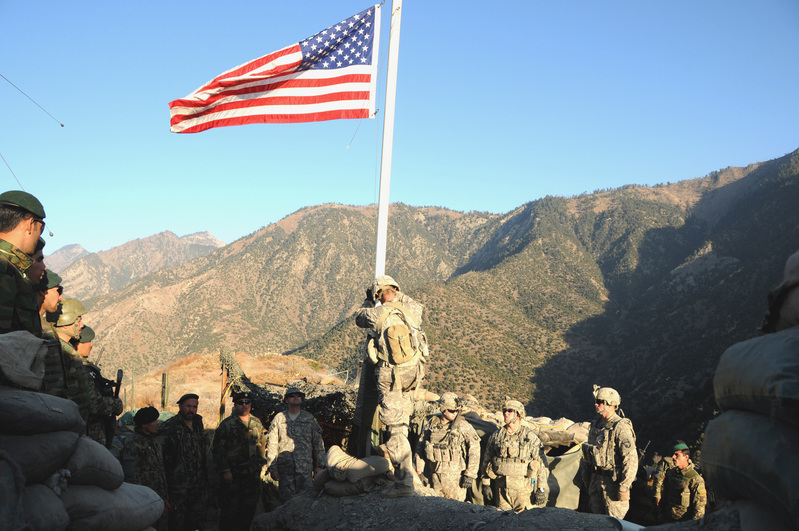
Afghan National Army takes charge at Observation Post Mace
U.S. troops and outposts and flags are everywhere, but for whose interests, and at what cost?

W.J. Astore

In my latest article for TomDispatch.com, I address America’s real wars overseas and contrast them with the phony war in the so-called Homeland.  What I mean by “phony” is the lack of national mobilization for, and even interest in, these overseas wars.  These wars exist and persist; they are both ever-spreading and never-ending; yet few Americans outside of the military and the Washington beltway crowd have any stake in them.  Except when U.S. troops die or a spectacular bomb is used, the mainstream media rarely covers them.

Meanwhile, the Trump administration has defined a new National Defense Strategy (NDS) that has only expanded America’s list of enemies and rivals.  A quick summary:

  1. Conventional conflict against peer enemies, e.g. Russia and China.
  2. Conventional conflict against “rogue” states, e.g. North Korea and Iran.
  3. Unconventional (anti-terror) operations, e.g. Afghanistan, Syria, Yemen, Niger, etc.

If that’s not enough, the Pentagon also seeks extended nuclear supremacy (at a cost of at least $1.2 trillion over the next few decades) and full-spectrum dominance for space and cyber as well as land, sea, and air.  As U.S. “defense” budgets continue to grow, there’s really no sense of limits, monetary or otherwise.  Rising budgets feed endless war, and vice-versa.  It’s a fail-safe recipe for imperial over-stretch and the decline if not collapse of America.

What follows is an excerpt from my latest article; you can read the entire article here at TomDispatch.com.
America’s New (Phony) National Defense Strategy

Even phony wars need enemies.  In fact, they may need them more (and more of them) than real wars do.  No surprise then that the Trump administration’s recently announced National Defense Strategy (NDS) offers a laundry list of such enemies.  China and Russia top it as “revisionist powers” looking to reverse America’s putative victory over Communism in the Cold War.  “Rogue” powers like North Korea and Iran are singled out as especially dangerous because of their nuclear ambitions.  (The United States, of course, doesn’t have a “rogue” bone in its body, even if it is now devoting at least $1.2 trillion to building a new generation of more usable nuclear weapons.)  Nor does the NDS neglect Washington’s need to hammer away at global terrorists until the end of time or to extend “full-spectrum dominance” not just to the traditional realms of combat (land, sea, and air) but also to space and cyberspace.

Amid such a plethora of enemies, only one thing is missing in America’s new defense strategy, the very thing that’s been missing all these years, that makes twenty-first-century American war so phony: any sense of national mobilization and shared sacrifice (or its opposite, antiwar resistance).  If the United States truly faces all these existential threats to our democracy and our way of life, what are we doing frittering away more than $45 billion annually in a quagmire war in Afghanistan?  What are we doing spending staggering sums on exotic weaponry like the F-35 jet fighter (total projected program cost: $1.45 trillion) when we have far more pressing national needs to deal with?

Like so much else in Washington in these years, the NDS doesn’t represent a strategy for real war, only a call for more of the same raised to a higher power.  That mainly means more money for the Pentagon, the Department of Homeland Security, and related “defense” agencies, facilitating more blitz attacks on various enemies overseas.  The formula — serial blitzkrieg abroad, serial sitzkrieg in the homeland — adds up to victory, but only for the military-industrial complex.

Ike’s Military-Industrial-Congressional Complex Is Alive and Very Well

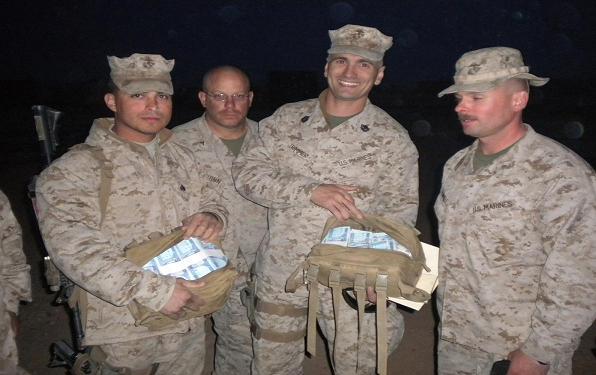
250 000 dollar - 50
Look, Ma: More Money!  Don’t Worry: We’ll Spend It Wisely

W.J. Astore

The new Congressional budget boosts military spending in a big way.  Last night’s PBS News report documented how military spending is projected to increase by $160 billion over two years, but that doesn’t include “overseas contingency funding” for wars, which is another $160 billion over two years.  Meanwhile, spending for the opioid crisis, which is killing roughly 60,000 Americans a year (more Americans than were killed in the Vietnam War), is set at a paltry $6 billion ($25 billion was requested).

One thing is certain: Ike was right about the undue influence of the military-industrial-Congressional complex.

The military talks about needing all these scores of billions to “rebuild.”  And, sure, there are ships that need to be refitted, planes in need of repairs, equipment that needs to be restocked, and veterans who need to be cared for.  But a massive increase in military and war spending, perhaps as high as $320 billion over two years, is a recipe for excessive waste and even more disastrous military adventurism.

Even if you’re a supporter of big military budgets, this massive boost in military spending is bad news.  Why?  It doesn’t force the military to think.  To set priorities.  To define limits.  To be creative.

Perhaps you’ve heard of the expression, “Spending money like drunken sailors on shore leave.”  Our military has been drunk with money since 9/11.  Is it really wise to give those “sailors” an enormous boost in the loose change they’re carrying, trusting them to spend it wisely?

U.S. Politicians and their Love of the Military

W.J. Astore

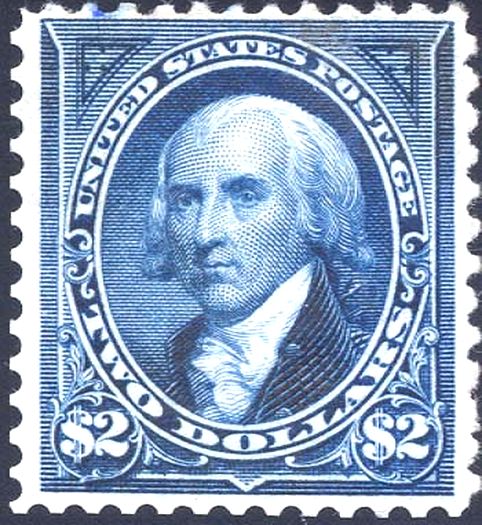
James_Madison_1894_Issue-2$
James Madison.  We need his wisdom more than ever.

If there’s one area of bipartisan agreement today, it’s politicians’ professed love of the U.S. military.  Consider George W. Bush.  He said the U.S. military is the greatest force for human liberation the world has ever known.  Consider Barack Obama.  He said that same military is the finest fighting force the world has ever known.  Strong praise, indeed.

Today’s politicians are not to be outdone.  This past weekend at Camp David, Paul Ryan praised the military for keeping America safe.  Mike Pence noted the military remains “the strongest in the world,” yet paradoxically he said it needs rebuilding.  He promised even more “investment” in the military so that it would become “even stronger still.”

Apparently, no matter how strong and superior the U.S. military is, it must be made yet stronger and yet more superior.  All in an effort to “keep us safe,” to cite Paul Ryan’s words.  Small wonder that the Pentagon’s budget is soaring above $700 billion.

It didn’t use to be this way.  President Dwight D. Eisenhower, formerly a five-star general and a man who knew the military intimately, warned us in 1961 of the anti-democratic nature of the military-industrial complex.  James Madison, one of America’s founders, warned us in the 18th century of the perils of endless war and how armies drive authoritarian tendencies and contribute to financial debt and national ruin.

Ike knew that national safety shouldn’t be equated with military prowess; quite the reverse, as he warned us against the unchecked power of a burgeoning military-industrial-Congressional complex.  Madison knew that armies weren’t “investments”; rather, they were, in historical terms, positive dangers to liberty.

But for America’s politicians today, the idea of national safety has become weaponized as well as militarized.  In their minds personal liberty and national democracy, paradoxically, are best represented by an authoritarian and hierarchical military, one possessing vast power, whether measured by its resources across the globe or its reach within American society.

Our politicians find it easy to be uncritical cheerleaders of the U.S. military.  They may even think they’re doing a service by issuing blank checks of support.  But Ike and Madison would disagree, and so too would anyone with knowledge of the perils of military adulation.

The Biggest National Security Threats

694940094001_5677950187001_5677904359001-vs
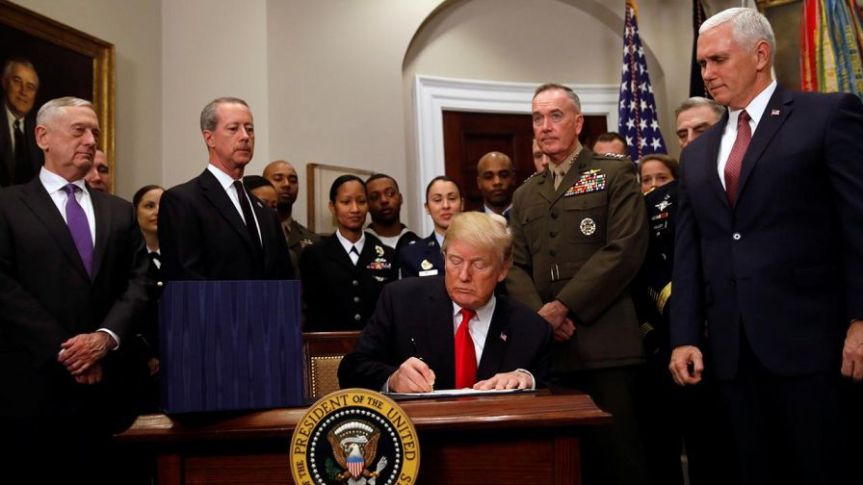
Trump, surrounded by the military, vows to give it more (and more!) money

W.J. Astore

Today at 2PM, the Trump administration releases its National Security Strategy.  It’s already making news because Trump is dropping climate change (added by the Obama administration) as a threat.  Instead, Trump is placing new emphasis on economic competitiveness and border security (“Build the wall!”), which are two corporate-friendly policies (read: boondoggles).

I’d like to cite two threats that Trump won’t mention in his national security strategy.  These two threats are perhaps the biggest ones America faces, and they are related.  The first is threat inflation, and the second is the U.S. military itself, as in Dwight D. Eisenhower’s military-industrial-Congressional complex.

Threat inflation is a huge problem in America.  The threat of terrorism is vastly inflated, as is the threat from North Korea.  If we wanted to focus on what threatens Americans, we’d be redoubling efforts to help those with opioid addictions even as we work to cut deaths by guns and in road accidents.  Roughly 120,000 Americans are dying each year from opioid overdoses, road accidents, and shootings.  How many are dying from terrorism or from attacks by North Korea?

North Korea is a weak regional power led by an immature dictator who is desperate to keep his grip on power.  Kim Jong-un knows that any use of nuclear weapons by North Korea would end in his death and the annihilation of his country.  He also knows that nuclear weapons serve as a deterrent and a symbol of prestige domestically and internationally.  Does he need to be deterred?  Yes.  Should Americans cower in fear?  Of course not.

Cyberwar is certainly a threat–just look at Russian meddling in our last presidential election.  China and Russia are nuclear powers and rivals that bear close watching, but they are not enemies.  Indeed, since the end of the Cold War the United States hasn’t faced serious peer enemies.  We should have been cashing in our “peace dividends” for the last 25 years.  Why haven’t we?

Enter the military-industrial-Congressional complex.  Ike warned us about it in 1961.  He warned about its misplaced power, its persistence, and its anti-democratic nature.  Ike, a retired five-star general who led the allied armies on the Western Front in World War II against the Nazis, knew of what he spoke.  He knew the Complex exaggerated threats, such as missile or bomber “gaps” (which didn’t exist) vis-a-vis the Soviet Union.  Ike knew the military, its corporate feeders and enablers, and Congress always wanted one thing: more.  He did his best to control the military, but once he left office, it was the Complex that took control, leading America into a disastrous war in Vietnam, the first of many “wars of choice” that ended in American defeats, but which proved highly profitable to the Complex itself.

Those endless wars that feed the Complex persist today.  Elements of the U.S. military are deployed to 149 countries and 800 foreign bases at a budgetary cost of $700 billion (that’s just for the “defense” budget).  Spending so much money on the military represents a tremendous opportunity cost–for that money, Americans could have free health care and college tuition, but who wants good health and a sound education, right?

Ike recognized the opportunity cost of “defense” spending in 1953 in this famous speech:

Every gun that is made, every warship launched, every rocket fired signifies, in the final sense, a theft from those who hunger and are not fed, those who are cold and are not clothed.

This world in arms is not spending money alone. It is spending the sweat of its laborers, the genius of its scientists, the hopes of its children. The cost of one modern heavy bomber is this: a modern brick school in more than 30 cities. It is two electric power plants, each serving a town of 60,000 population. It is two fine, fully equipped hospitals. It is some fifty miles of concrete pavement. We pay for a single fighter with a half-million bushels of wheat. We pay for a single destroyer with new homes that could have housed more than 8,000 people. . . . This is not a way of life at all, in any true sense. Under the cloud of threatening war, it is humanity hanging from a cross of iron.

What Ike said.  The point is not that Ike was a perfect man (look at the Iran coup, also in 1953), but he sure as hell was a sound and at times a penetrating thinker, a mature man who knew the awful burdens of war.

And now we have Trump, the opposite of Ike, an unsound and shallow thinker, an immature man who knows nothing of the awfulness of war.  Add Trump himself–his immaturity, his bellicosity, his ignorance, and his denial of reality–as a threat to our national security.

So, a quick summary of three big threats that won’t make Trump’s “strategy” today:

  1. Threat inflation: terrorism, North Korea, Iran, etc.
  2. The Complex itself and its profligate, prodigal, and anti-democratic nature.
  3. Trump.

And add back one more: climate change/global warming.  Because flooding, fires, droughts, famines, etc., exacerbated by global warming, are already creating security challenges, which will only grow worse over the next half-century.  Denying that reality, or calling it “fake news,” won’t change Mother Nature; she has her own implacable ways,

The Atrocious Nature of the Vietnam War

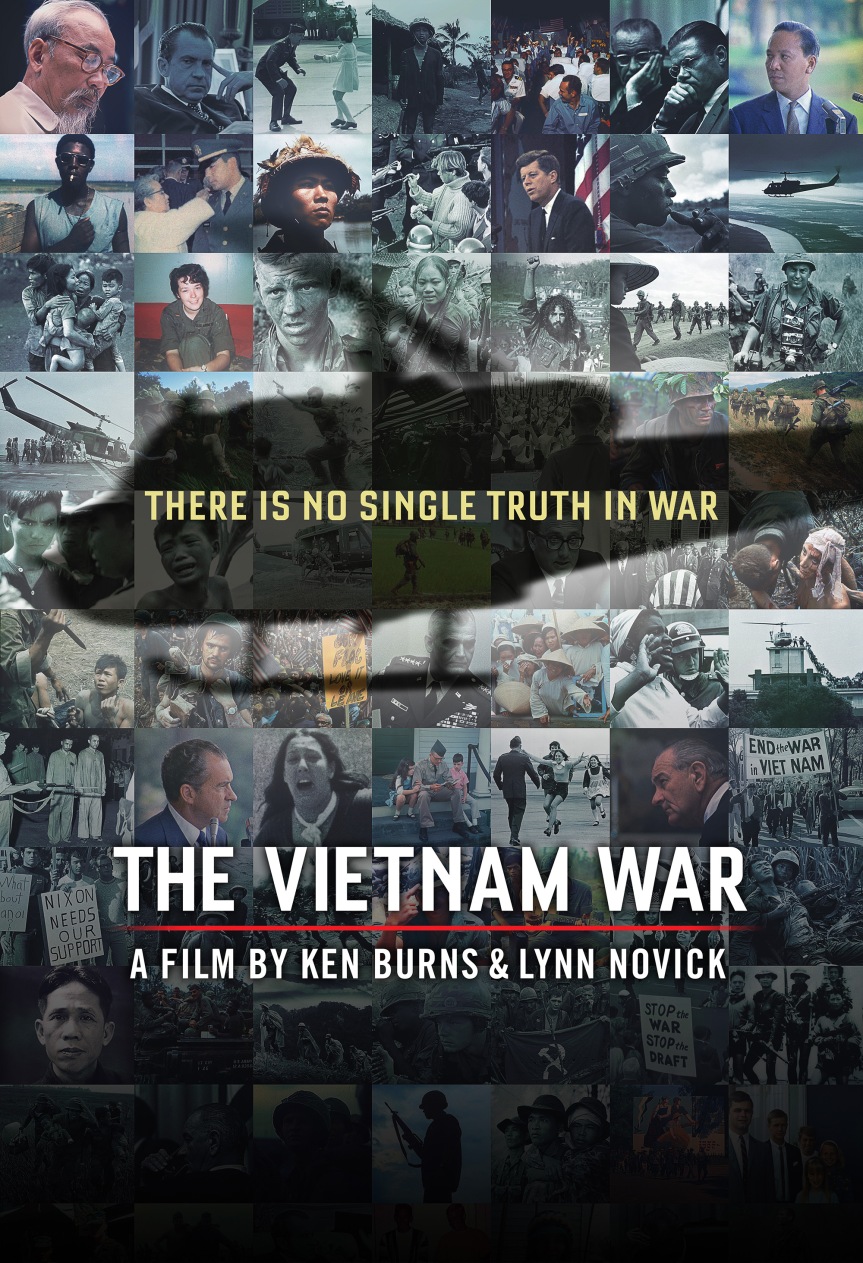
Helicopter_Poster_promoV2

W.J. Astore

“It’s their [South Vietnam’s] war to win. We can help them … but in the final analysis, it’s their people and their government who have to win or lose this struggle.”  President Kennedy in September 1963

“We are not about to send American boys nine or ten thousand miles from home [to fight in Vietnam] to do what Asian boys ought to be doing for themselves.”  President Johnson in 1964

I’ve now watched all ten episodes of the Burns/Novick series on the Vietnam War.  I’ve written about it twice already (here and here), and I won’t repeat those arguments.  Critical reviews by Nick Turse, Peter Van Buren, Andrew Bacevich, and Thomas Bass are also well worth reading.

I now know the main message of the series: the Vietnam war was an “irredeemable tragedy,” with American suffering being featured in the foreground.  The ending is revealing.  Feel-good moments of reconciliation between U.S. veterans and their Vietnamese counterparts are juxtaposed with Tim O’Brien reading solemnly from his book on the things American troops carried in Vietnam.  The Vietnamese death toll of three million people is briefly mentioned; so too are the bitter legacies of Agent Orange and unexploded ordnance; regional impacts of the war to Laos and Cambodia are briefly examined.  But the lion’s share of the emphasis is on the American experience, with the last episode focusing on subjects like PTSD and the controversy surrounding the Vietnam War Memorial in Washington, D.C.

The series is well made and often powerful.  Its fault is what’s missing.  Little is said about the war being a crime, about the war being immoral and unjust; again, the war is presented as a tragedy, perhaps an avoidable one if only U.S. leaders had been wiser and better informed, or so the series suggests.  No apologies are made for the war; indeed, the only apology featured is by an antiwar protester near the end (she’s sorry today for the harsh words she said decades ago to returning veterans).

The lack of apologies for wide-scale killing and wanton destruction, the lack of serious consideration of the war as a crime, as an immoral act, as unjust, reveals a peculiarly American bias about the war, which Burns/Novick only amplify.  The series presents atrocities like My Lai as aberrations, even though Neil Sheehan is allowed a quick rejoinder about how, if you include massive civilian casualties from U.S. artillery and bombing strikes, My Lai was not aberrational at all.  Not in the sense of killing large numbers of innocent civilians indiscriminately.  Such killing was policy; it was routine.  Sheehan’s powerful observation is not pursued, however.

What the Burns/Novick series truly needed was a two-hour segment devoted exclusively to the destruction inflicted on Southeast Asia and the suffering of Vietnamese, Laotian, and Cambodian peoples.  Such a segment would have been truly eye-opening to Americans.  Again, the series does mention napalm, Agent Orange, massive bombing, and the millions of innocents killed by the war.  But images of civilian suffering are as fleeting as they are powerful.  The emphasis is on getting to know the veterans, especially American ones, of that war.  By comparison, the series neglects the profound suffering of Vietnamese, Laotians, and Cambodians.

In short, the series elides the atrocious nature of the war.  This is not to say that atrocities aren’t mentioned.  My Lai isn’t ignored.  But it’s juxtaposed with communist atrocities, such as the massacre of approximately 2500 prisoners after the Battle of Hue during the Tet Offensive, a war crime committed by retreating North Vietnamese Army (NVA) and National Liberation Front (NLF) forces.

Yet in terms of scale and frequency the worst crimes were committed by U.S. forces, again because they relied so heavily on massive firepower and indiscriminate bombing.  I’ve written about this before, citing Nick Turse’s book, Kill Anything That Moves, as well as the writings of Bernard Fall, who said that indiscriminate bombing attacks showed the U.S. was not “able to see the Vietnamese as people against whom crimes can be committed.  This is the ultimate impersonalization of war.”

Why did many Americans come to kill “anything that moves” in Vietnam?  Why, in the words of Fall, did U.S. officialdom fail to see the peoples of Southeast Asia as, well, people?  Fellow human beings?

The Burns/Novick series itself provides evidence to tackle this question, as follows:

  1. At the ground level, U.S. troops couldn’t identify friend from foe, breeding confusion, frustration, and a desire for revenge after units took casualties. It’s said several times in the series that U.S. troops thought they were “chasing ghosts,” “phantoms,” a “shadowy” enemy that almost always had the initiative.  In American eyes, it wasn’t a fair fight, so massive firepower became the equalizer for the U.S.—and a means to get even.
  2. Racism, depersonalization, and alienation.  U.S. troops routinely referred to the enemy by various racist names: gooks, dinks, slopes, and so on. (Interestingly, communist forces seem to have referred to Americans as “bandits” or “criminals,” negative terms but not ones dripping with racism.)  Many U.S. troops also came to hate the countryside (the “stinky” rice paddies, the alien jungle) as well.  Racism, fear, and hatred bred atrocity.
  3. Body count: U.S. troops were pushed and rewarded for high body counts. A notorious example was U.S. Army Lieutenant General Julian Ewell.  The commanding general of the 9th Infantry Division, Ewell became known as the “Butcher of the Delta.”  Douglas Kinnard, an American general serving in Vietnam under Ewell, recounted his impressions of him (in “Adventures in Two Worlds: Vietnam General and Vermont Professor”).  Ewell, recalled Kinnard, “constantly pressed his units to increase their ‘body count’ of enemy soldiers.  This had become a way of measuring the success of a unit since Vietnam was [for the U.S. Army] a war of attrition, not a linear war with an advancing front line.  In the 9th [infantry division] he had required all his commanders to carry 3” x 5” cards with body count tallies for their units by date, by week, and by month.  Woe unto any commander who did not have a consistently high count.”

The Burns/Novick series covers General Ewell’s “Speedy Express” operation, in which U.S. forces claimed a kill ratio of 45:1 (45 Vietnamese enemy killed for each U.S. soldier lost).  The series notes that an Army Inspector General investigation of “Speedy Express” concluded that at least 5000 innocent civilians were included as “enemy” in Ewell’s inflated body count—but no punishment was forthcoming.  Indeed, Ewell was promoted.

Ewell was not the only U.S. leader who drove his troops to generate high body counts while punishing those “slackers” who didn’t kill enough of the enemy.  Small wonder Vietnam became a breeding ground for atrocity.

  1. Helicopters.  As one soldier put it, a helicopter gave you a god’s eye view of the battlefield.  It gave you distance from the enemy, enabling easier kills (If farmers are running, they’re VC, it was assumed, so shoot to kill).  Helicopters facilitated a war based on mobility, firepower, and kill ratios, rather than a war based on territorial acquisition and interaction with the people.  In short, U.S. troops were often in and out, flitting about the Vietnamese countryside, isolated from the land and the people—while shooting lots and lots of ammo.
  2. What are we fighting for? For the grunt on the ground, the war made no sense.  Bernard Fall noted that, after talking to many Americans in Vietnam, he hadn’t “found anyone who seems to have a clear idea of the end – of the ‘war aims’ – and if the end is not clearly defined, are we justified to use any means to attain it?”

The lack of clear and defensible war aims, aims that could have served to limit atrocities, is vitally important in understanding the Vietnam war.  Consider the quotations from Presidents Kennedy and Johnson that lead this article.  JFK claimed it wasn’t America’s war to win — it was South Vietnam’s.  LBJ claimed he wasn’t going to send U.S. troops to Vietnam to fight; he was going to leave that to Asian boys.  Yet JFK committed America to winning in South Vietnam, and LBJ sent more than half a million U.S. “boys” to wage and win that war.

Alienated as they were from the land and its peoples, U.S. troops were also alienated from their own leaders, who committed them to a war that, according to the proclamations of those same leaders, wasn’t theirs to win.  They were then rewarded for producing high body counts.  And when atrocities followed, massacres such as My Lai, U.S. leaders like Richard Nixon conspired to cover them up.

In short, atrocities were not aberrational.  They were driven by the policy; they were a product of a war fought under false pretenses.  This is not tragedy.  It’s criminal.

Failing to face fully the horrific results of U.S. policy in Southeast Asia is the fatal flaw of the Burns/Novick series.  To that I would add one other major flaw*: the failure to investigate war profiteering by the military-industrial complex, which President Eisenhower famously warned the American people about as he left office in 1961.  Burns/Novick choose not to discuss which corporations profited from the war, even as they show how the U.S. created a massive “false” economy in Saigon, riven with corruption, crime, and profiteering.

As the U.S. pursued Vietnamization under Nixon, a policy known as “yellowing the bodies” by their French predecessors, the U.S. provided an enormous amount of weaponry to South Vietnam, including tanks, artillery pieces, APCs, and aircraft.  Yet, as the series notes in passing, ARVN (the South Vietnamese army) didn’t have enough bullets and artillery shells to use their American-provided weaponry effectively, nor could they fly many of the planes provided by U.S. aid.  Who profited from all these weapons deals? Burns/Novick remain silent on this question—and silent on the issue of war profiteering and the business side of war.

The Vietnam War, as Tim O’Brien notes in the series, was “senseless, purposeless, and without direction.”  U.S. troops fought and died to take hills that were then quickly abandoned.  They died in a war that JKF, Johnson, and Nixon admitted couldn’t be won.  They were the losers, but they weren’t the biggest ones.  Consider the words of North Vietnamese soldier, Bao Ninh, who says in the series that the real tragedy of the war was that the Vietnamese people killed each other.  American intervention aggravated a brutal struggle for independence, one that could have been resolved way back in the 1950s after the French defeat at Dien Bien Phu.

But U.S. leaders chose to intervene, raining destruction on Southeast Asia for another twenty years, leading to a murderous death toll of at least three million.  That was and is something more than a tragedy.

*A Note: Another failing of the Burns/Novick series is the lack of critical examination about why the war was fought and for what reasons, i.e. the series takes at face value the Cold War dynamic of falling dominoes, containment, and the like.  It doesn’t examine radical critiques, such as Noam Chomsky’s point that the U.S. did achieve its aims in the war, which was the prevention of Vietnamese socialism/communism emerging as a viable and independent model for economic development in the 1950s and 1960s.  In other words, a debilitating war that devastated Vietnam delayed by several decades that people’s emergence as an economic rival to the U.S., even as it sent a message to other, smaller, powers that the U.S. would take ruthless action to sustain its economic hegemony across the world.  This line of reasoning demanded a hearing in the series, but it’s contrary to the war-as-tragedy narrative adopted by Burns/Novick.

For Chomsky, America didn’t accidentally or inadvertently or ham-fistedly destroy the Vietnamese village to save it; the village was destroyed precisely to destroy it, thereby strengthening capitalism and U.S. economic hegemony throughout the developing world.  Accurate or not, this critique deserves consideration.

The American Military Uncontained

Ike
Ike had it right: Beware the military-industrial complex

W.J. Astore

In my latest article for TomDispatch.com, I detail how the U.S. military is out everywhere but winning nowhere.  What I mean by not winning is the military’s failure to end wars on terms remotely favorable to national security and the interests of democracy.  I hesitate to be a cynic, but perpetual war does mean perpetual high “defense” budgets and prolonged and prodigious power for generals (and retired generals). Peace would mean smaller defense budgets and far less influence for these men.

What chance of peace with President Trump in charge surrounded by the generals of all these losing wars?  Indeed, generals continue to speak of generational wars, so much so that I’m tempted to make a play on words: generational wars generated by generals.  It’s not entirely fair, nor is it entirely unfair.

Anyway, here’s an excerpt from my article.  You can read it in its entirety at TomDispatch.com.

When it comes to the “world’s greatest military,” the news has been shocking. Two fast US Navy ships colliding with slow-moving commercial vessels with tragic loss of life. An Air Force that has been in the air continuously for years and yet doesn’t have enough pilots to fly its combat jets. Ground troops who find themselves fighting “rebels” in Syria previously armed and trained by the CIA. Already overstretched Special Operations forces facing growing demands as their rates of mental distress and suicide rise. Proxy armies in Iraq and Afghanistan that are unreliable, often delivering American-provided weaponry to black markets and into the hands of various enemies. All of this and more coming at a time when defense spending is once again soaring and the national security state is awash in funds to the tune of nearly a trillion dollars a year.

What gives? Why are highly maneuverable and sophisticated naval ships colliding with lumbering cargo vessels? Why is an Air Force that exists to fly and fight short 1,200 pilots? Why are US Special Operations forces deployed everywhere and winning nowhere? Why, in short, is the US military fighting itself — and losing?

It’s the Ops Tempo, Stupid

After 16 years of a never-ending, ever-spreading global war on terror, alarms are going off in Asia from the Koreas and Afghanistan to the Philippines, while across the Greater Middle East and Africa the globe’s “last superpower” is in a never-ending set of conflicts with a range of minor enemies few can even keep straight. As a result, America’s can-do military, committed piecemeal to a bewildering array of missions, has increasingly become a can’t-do one.

Too few ships are being deployed for too long. Too few pilots are being worn out by incessant patrols and mushrooming drone and bombing missions. Special Operations forces (the “commandos of everywhere,” as Nick Turse calls them) are being deployed to far too many countries — more than two-thirds of the nations on the planet already this year — and are involved in conflicts that hold little promise of ending on terms favorable to Washington. Meanwhile, insiders like retired Gen. David Petraeus speak calmly about “generational struggles” that will essentially never end. To paraphrase an old slogan from ABC’s Wide World of Sports, as the US military spans the globe, it’s regularly experiencing the agony of defeat rather than the thrill of victory.

To President Donald Trump (and so many other politicians in Washington), this unsavory reality suggests an obvious solution: boost military fundingbuild more navy ships; train more pilots and give them more incentive pay to stay in the military; rely more on drones and other technological “force multipliers” to compensate for tired troops; cajole allies like the Germans and Japanese to spend more on their militaries; and pressure proxy armies like the Iraqi and Afghan security forces to cut corruption and improve combat performance.

One option — the most logical — is never seriously considered in Washington: to make deep cuts in the military’s operational tempo by decreasing defense spending and downsizing the global mission, by bringing troops home and keeping them there. This is not an isolationist plea. The United States certainly faces challenges, notably from Russia (still a major nuclear power) and China (a global economic power bolstering its regional militarily strength). North Korea is, as ever, posturing with missile and nuclear tests in provocative ways. Terrorist organizations strive to destabilize American allies and cause trouble even in “the homeland.”

Such challenges require vigilance. What they don’t require is more ships in the sea lanes, pilots in the air and boots on the ground. Indeed, 16 years after the 9/11 attacks it should be obvious that more of the same is likely to produce yet more of what we’ve grown all too accustomed to: increasing instability across significant swaths of the planet, as well as the rise of new terror groups or new iterations of older ones, which means yet more opportunities for failed US military interventions …

The Greatest Self-Defeating Force in History?

Incessant warfare represents the end of democracy. I didn’t say that, James Madison did.

I firmly believe, though, in words borrowed from President Dwight D. Eisenhower, that “only Americans can hurt America.” So how can we lessen the hurt? By beginning to rein in the military. A standing military exists — or rather should exist — to support and defend the Constitution and our country against immediate threats to our survival. Endless attacks against inchoate foes in the backlands of the planet hardly promote that mission. Indeed, the more such attacks wear on the military, the more they imperil national security.

A friend of mine, a captain in the Air Force, once quipped to me: you study long, you study wrong. It’s a sentiment that’s especially cutting when applied to war: you wage war long, you wage it wrong. Yet as debilitating as they may be to militaries, long wars are even more devastating to democracies. The longer our military wages war, the more our country is militarized, shedding its democratic values and ideals.

Back in the Cold War era, the regions in which the US military is now slogging it out were once largely considered “the shadows” where John le Carré-style secret agents from the two superpowers matched wits in a set of shadowy conflicts. Post-9/11, “taking the gloves off” and seeking knockout blows, the US military entered those same shadows in a big way and there, not surprisingly, it often couldn’t sort friend from foe.

A new strategy for America should involve getting out of those shadowy regions of no-win war. Instead, an expanding US military establishment continues to compound the strategic mistakes of the last 16 years. Seeking to dominate everywhere but winning decisively nowhere, it may yet go down as the greatest self-defeating force in history.

Trump Is Hurting the Pentagon!  (By Giving It Too Much Money)

Pentagon-Money
Throwing money at the Pentagon is never a good idea

W.J. Astore

Anyone who’s been in the military knows what happens as the end of a fiscal year approaches: wild spending.  Any money that’s left in your budget must be spent, if only to justify next year’s budgetary appropriation.  Woe to any unit with leftover money!  Not only is there no incentive to economize at the Pentagon: there’s a negative incentive to save money, and a positive one to spend as much as possible within your yearly allotment, while complaining to anyone within earshot that you never have enough.

Trump has already promised to enlarge Pentagon funding by 10% next year, or roughly $54 billion.  According to Mick Mulvaney, director of the Office of Management and Budget, Trump’s budget is all about “hard-power,” a signal to “our allies and our potential adversaries that this is a strong-power administration.”  At $54 billion, that is indeed a very expensive signal.

Forget about the global fight against ISIS: The big focus at the Pentagon is now going to be on spending that windfall of taxpayers’ dollars.  And, unlike the ISIS fight, which is expected to last for at least another generation, the “fight” to spend lots of money quickly is one that the Pentagon will surely win.  Believe me, the military-industrial-Congressional complex knows how to spend.

Want to make the Pentagon a better, more effective, place?  Cut its budget by 10%.  And keep cutting, year by year, while downsizing its mission.  Force it to economize – force it to think.

Let me give you a few examples.  How does the stealthy, super-expensive, F-35 jet fighter contribute to the war on terror?  It doesn’t.  Does the U.S. Navy really need more super-expensive aircraft carriers?  No, it doesn’t.  Do U.S. nuclear forces really need to be modernized and expanded at a cost of nearly a trillion dollars over the next few decades?  No, they don’t.  More F-35s, more carriers, and more nukes are not going “to make America great again.”  What they will do is consume enormous amounts of money for little real gain.

Throwing cash at the Pentagon is not the way to greater security: it’s a guarantee of frivolous military wish lists and “more of the same, only more” thinking.  In case you haven’t noticed, the Pentagon’s record since 9/11/2001 is more than a little mixed; some would say it’s been piss-poor.  Why is this?  One thing is certain: shortage of money hasn’t been the problem.

Want to send a signal about “hard-power,” President Trump?  Go hard on the Pentagon by cutting its budget.  Spend the savings on alternative energy development and similar investments in American infrastructure.  That’s the best way to put America first.

Pentagon Spending: Up, Up, and Away!

roosevelt
The Navy at flank speed, in pursuit of more money

W.J. Astore

Show me your budget and I’ll tell you what you value.  Under the Trump administration, what is valued is spending on military weaponry and wars.  The Pentagon is due to get a major boost under Trump, as reported by the Associated Press and FP: Foreign Policy:

Money train. It’s looking like it might be Christmas in February for the U.S. defense industry. The Pentagon has delivered a $30 billion wish list to Congress that would fund more ships, planes, helicopters, drones, and missiles, the AP reports.

And that might only be the beginning.

President Trump has already ordered the Pentagon to draft a “supplemental” budget for 2017 that would include billions more for the U.S. military on top of the $600 billion the Obama administration budgeted for… 

As FP’s Paul McLeary and Dan De Luce recently reported, there are proposals floating around for a defense budget as high as $640 billion for 2018, which would bust through congressionally-mandated spending caps that Democrats — and many Republicans — are happy to keep in place. Defense Secretary Jim Mattis has been tasked with completing the supplemental request by March 1.

The Pentagon, which has never passed a financial audit and which has wasted more than two trillion dollars over the years (this figure came in 2001, when Donald Rumsfeld was Secretary of Defense under Bush/Cheney), is due to be given even more money to spend, irrespective of past performance or future need.

Naturally, each military service is already posturing and clamoring for the extra money promised by Trump.  Consider the U.S. Navy, which, according to Vice Chief of Naval Operations Admiral William Moran, will be “Just Flat Out Out Of Money” without this supplemental funding boost from Congress.

According to the Navy and Marine Corps:

Five attack submarines would see their maintenance availabilities canceled this year and be put at risk of being decertified if no supplemental were passed out of Congress, Moran added, in addition to similar cuts to surface ship maintenance availabilities.

Assistant Commandant Gen. Glenn Walters said “we would stop flying in about July” without a supplemental. He clarified that forward forces would continue to operate, but for units training at home, “all training would cease without a supplemental, and that includes the parts money and the flying hour money.”

Even if the supplemental – which could total between $30 and $40 billion for all the armed services – is passed in a timely manner, the Navy and Marine Corps still face massive readiness issues that money can’t immediately address.

That last part is disturbing indeed.  Even with billions in additional funding, the Navy still faces “massive readiness issues.”

Well, here are a few radical suggestions for Trump and the Pentagon:

  1. If money is tight, why not re-prioritize?  If readiness is compromised, why not scale back the mission?
  2. Before boosting funding, why not force the Pentagon to pass a financial audit?
  3. If trillions of dollars have gone “missing” over the last decades (remember, a Republican Secretary of Defense made this claim), why not launch missions to find that money before spending billions of new money?

You don’t reform a bureaucracy that wastes money by giving them more money.  It’s like reforming an addict on drugs by giving him more money to spend on drugs. Until the Pentagon can account for its spending, its budget needs to be flatlined or cut.

The only way to force the Pentagon to think about “defense” spending is to limit its budget.  Throwing money at the Pentagon just ensures more of the same, only more: as in more weaponry, more wars, and more fraud, waste, and abuse.

Given the Pentagon’s track record over the last half-century, does anyone truly think that more money is a solution to anything?