I was going through old notes and came across emails written to me from 2009 in response to an article I wrote for TomDispatch about militarism in America and its many dangers. (When I tell readers that I often learn as much from them as they do from me, I mean it.)
Without further ado, four “letters” from readers, vintage 2009:
I enjoyed very much your article on patriots and the flag. Out here in Wyoming we get a real dose of it. It bothers me a great deal to see political candidates wrap themselves in the flag and even use the flag as advertising items. Many people have a flag on their driveway that hangs there until it falls apart and they are proclaiming they are patriots. I served in the army and the Wyoming National Guard and I feel that I do not need my motives scrutinized. I feel that my saying “bring the troops home” is supporting them and not wanting any other young people maimed or killed should speak for itself. Keep up the good work.
The next letter highlighted the “cult of hyper-patriotism” that Bush/Cheney in particular were cultivating:
Suffice it to say that you have touched on a number of issues that I strongly agree with. The cult of hyper-patriotism that seems to have sprung up since the early to mid 80s seems to sucking the marrow from America’s bones, rather than strengthening and replenishing it. Too many of our fellow citizens are only familiar with the first half of Carl Schurz’s quote: “My country, right or wrong; if right, to be kept right; and if wrong, to be set right.”
Another reader, an Army veteran, questioned all the “thank you for your service” hoopla:
I cannot say how we arrived at the point we are today, regarding some of the issues you raised, but we have reached a point that I think is not right. And, unfortunately, raising questions about this draws rapid condemnation.
The extra thing, that your article did not mention, which I find unsettling, is that we seem to have become a citizenry of gestures, rather than resolve (and Gary Cooper was all about being resolute). As if plastering the trunk lid of one’s car with yellow ribbon magnets and ‘Freedom isn’t free’ stickers is somehow just as valid as actually serving the country. As if the ostentatious example of thanking soldiers one coincidentally meets in the airport for their service makes up for staying home oneself. I volunteered and served my three years in the Army (and didn’t like military life at all, so left when my enlistment was up), but can’t imagine why anyone would thank me for simply doing my duty, and without knowing whether I did my duty well.
In one of my favorite letters, a reader noted the melding of sports and the military along with Hollywood’s predilection for big men with even bigger guns:
I just read your essay “What Happened to Gary Cooper” on Middle East Online and loved it. As a screenwriter in California, I’m often in meetings where some twenty something “exec” speaks lovingly about big men with big guns. I try to steer the discussion to a different kind of hero, the reluctant kind that solve their problems with keen insight instead of quick trigger fingers. I’m sure you can imagine how those suggestions are treated.
And also, as a former professional football player and lifelong sports fan, I’m also very interested in the melding of military and sports cultures. Watch an NFL game and it’s readily apparent. Pregame shows with military guards, monstrous flags, reverential tributes to the troops overseas, etc.
And always the flyovers! A few years back I was at an Angels World Series game with a friend. A stealth bomber thundered overhead right before the first pitch and the crowd went wild. My friend said he had tears in his eyes, and I said, just think how many tears are shed by the people whose countries those things flyover every single day. He thought I was joking. I wasn’t.
These reader comments from 2009 could have been made yesterday—or today. Steroidal displays of hyper-patriotism and exotic weaponry continue apace in allegedly peace-loving America as the president boasts of trillion-dollar war budgets.
A final comment from another reader:
I served in the US Coast Guard back when it wasn’t fashionable to be in the military. I remember having garbage thrown at me from passing cars when on liberty from the Academy. I don’t desire a return to those days but I firmly believe that the pendulum has gone too far the other way.
I love my country as much as anyone but I really wish that they’d stop singing ‘God Bless America’ during the 7th inning stretch and replace it with “America the Beautiful”, prefereably all verses but at least the first two. For the past 8 years, I’ve been moved to tears when singing te second verse as it ends,
“America! America! God mend thine ev’ry flaw;
Confirm thy soul in self control, thy liberty in law! “
We could use a bit more self control.
These comments come from men who at first glance might be seen as “conservative” or even as “deplorable” by some sectors of society. This is deeply unfortunate. I’m not sure how else to put this, so I’ll just say it: these men would not be out of step with the efforts of groups like Code Pink. We need to come together.
In America there is a “silent majority” who are tired of vapid patriotism, rabid nationalism, and endless wars. How we activate that silent majority—how we get them to stand up, to march, to declare “Enough is enough!” is a question for the ages.
I read the news today, oh boy. About a lucky man named Elon Musk. But he lost out on one thing: he didn’t get a top secret briefing on Pentagon war plans for China. And the news people breathed a sigh of relief.
With apologies to John Lennon and The Beatles, a day in the life is getting increasingly tough to take here in the land of the free. I’m meant to be reassured that Musk didn’t get to see America’s top-secret plans for — yes! — going to war with China, even as I’m meant to ignore the constant drumbeat of propaganda, the incessant military marches that form America’s background music, conveying the message that America must have war plans for China, that indeed war in or around China is possible, even probable, in the next decade. Maybe in 2027?
My fellow Americans, we should be far more alarmed by such secret U.S. war plans, along with those “pivots” to Asia and the Indo-Pacific, and the military base-building efforts in the Philippines, than reassured by the “good news” that Comrade Billionaire Musk was denied access to the war room, meaning (for Dr. Strangelove fans) he didn’t get to see “the big board.”
It’s war, war, everywhere in America. We do indeed have a strange love for it. I’ve been writing for TomDispatch for 18 years now — this is my 111th essay (the other 110 are in a new book of mine) — most of them focusing on militarism in this country, as well as our disastrous wars in Iraq, Afghanistan, and elsewhere, the ruinous weapons systems we continue to fund (including new apocalyptic nuclear weapons), and the war song that seems to remain ever the same.
A few recent examples of what I mean: President Trump has already bombed Yemen more than once. He’s already threatening Iran. He’s sending Israel all the explosives, all the weaponry it needs to annihilate the Palestinians in Gaza (so too, of course, did Joe Biden). He’s boasting of building new weapons systems like the Air Force’s much-hyped F-47 fighter jet, the “47” designation being an apparent homage by its builder, Boeing, to Trump himself, the 47th president. He and his “defense” secretary, Pete Hegseth, continually boast of “peace through strength,” an Orwellian construction that differs little from “war is peace.” And I could, of course, go on and on and on and on…
Occasionally, Trump sounds a different note. When Tulsi Gabbard became the director of national intelligence, he sang a dissonant note about a “warmongering military-industrial complex.” And however haphazardly, he does seem to be working for some form of peace with respect to the Russia-Ukraine War. He also talks about his fear of a cataclysmic nuclear war. Yet, if you judge him by deeds rather than words, he’s just another U.S. commander-in-chief enamored of the military and military force (whatever the cost, human or financial).
Consider here the much-hyped Department of Government Efficiency (DOGE) led by that lucky man Elon Musk. Even as it dismantles various government agencies like the Department of Education and USAID, it has — no surprise here! — barely touched the Pentagon and its vast, nearly trillion-dollar budget. In fact, if a Republican-controlled Congress has any say in the matter, the Pentagon budget will likely be boosted significantly for Fiscal Year 2026 and thereafter. As inefficient as the Pentagon may be (and we really don’t know just how inefficient it is, since the bean counters there keep failing audit after audit, seven yearsrunning), targeted DOGE Pentagon cuts have been tiny. That means there’s little incentive for the generals to change, streamline their operations, or even rethink in any significant fashion. It’s just spend, spend, spend until the money runs out, which I suppose it will eventually, as the national debt soars toward $37 trillion and climbing.
Even grimmer than that, possibly, is America’s state of mind, our collective zeitgeist, the spirit of this country. That spirit is one in which a constant state of war (and preparations for more of the same) is accepted as normal. War, to put it bluntly, is our default state. It’s been that way since 9/11, if not before then. As a military historian, I’m well aware that the United States is, in a sense, a country made by war. It’s just that today we seem even more accepting of that reality, or resigned to it, than we’ve ever been. What gives?
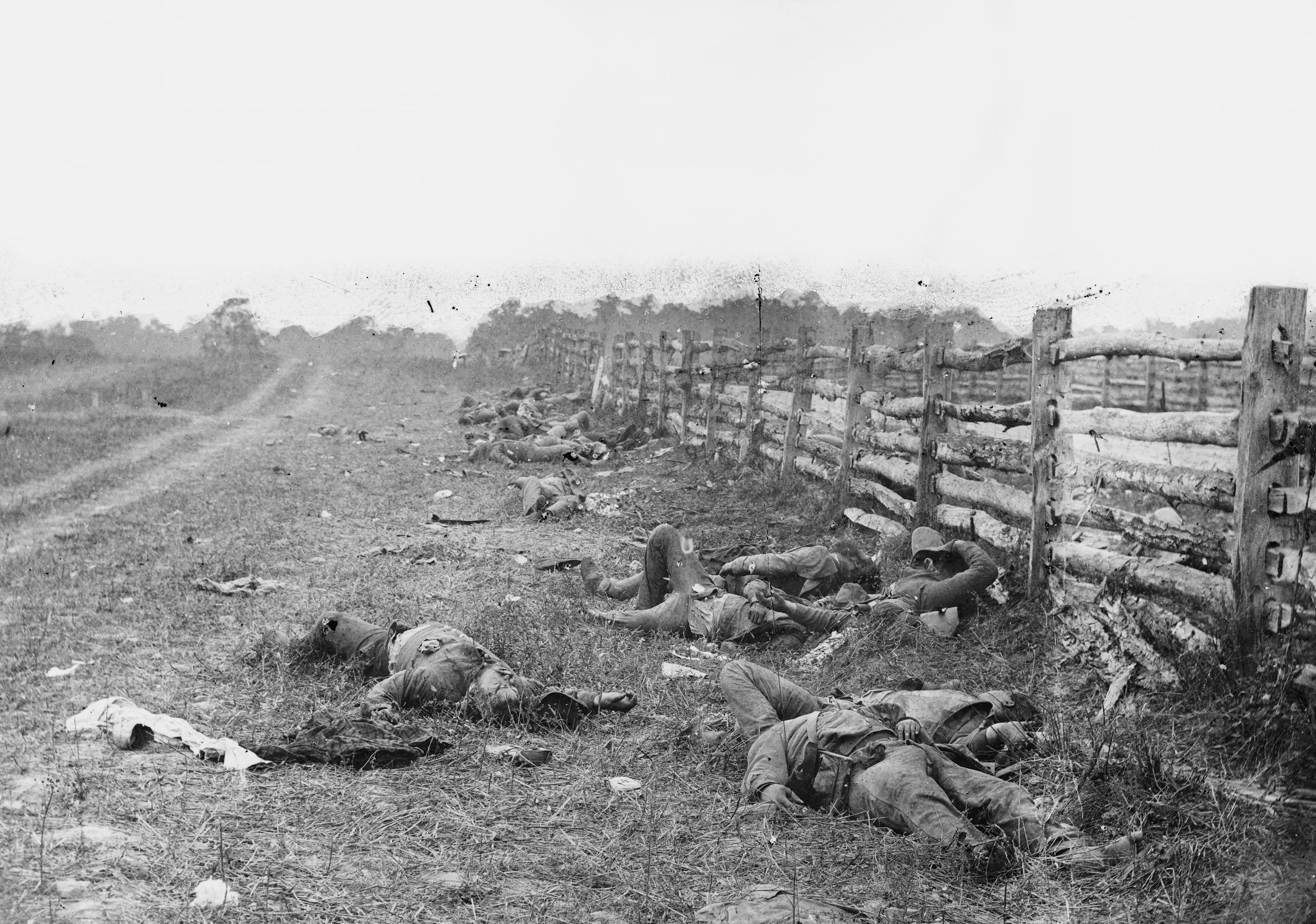
The Face of War: Confederate Dead at Antietam (Matthew Brady)
Remember when, in 1963, Alabama Governor George Wallace said, “Segregation now, segregation tomorrow, and segregation forever”? Fortunately, after much struggle and bloodshed, he was proven wrong. So, can we change the essential American refrain of war now, war tomorrow, and war forever? Can we render that obsolete? Or is that too much to hope for or ask of America’s “exceptional” democracy?
Taking on the MICIMATT(SH)
Former CIA analyst Ray McGovern did America a great service when he came up with the acronym MICIMATT, or the Military-Industrial-Congressional-Intelligence-Media-Academia-Think-Tank complex, an extension of President Dwight D. Eisenhower’s military-industrial complex, or MIC (from his farewell speech in 1961). Along with the military and industry (weapons makers like Boeing and Lockheed Martin), the MICIMATT adds Congress (which Eisenhower had in his original draft speech but deleted in the interest of comity), the intelligence “community” (18 different agencies), the media (generally highly supportive of wars and weapons spending), academia (which profits greatly from federal contracts, especially research and development efforts for yet more destructive weaponry), and think tanks (which happily lap up Pentagon dollars to tell us the “smart” position is always to prepare for yet more war).
You’ll note, however, that I’ve added a parenthetical SH to McGovern’s telling acronym. The S is for America’s sporting world, which eternally gushes about how it supports and honors America’s military, and Hollywood, which happily sells war as entertainment (perhaps the best known and most recent film being Tom Cruise’s Top Gun: Maverick, in which an unnamed country that everyone knows is Iran gets its nuclear ambitions spanked by a plucky team of U.S. Naval pilots). A macho catchphrase from the original Top Gun was “I feel the need — the need for speed!” It may as well have been: I feel the need — the need for pro-war propaganda!
Yes, MICIMATT(SH) is an awkward acronym, yet it has the virtue of capturing some of the still-growing power, reach, and cultural penetration of Ike’s old MIC. It should remind us that it’s not just the military and the weapons-makers who are deeply invested in war and — yes! — militarism. It’s Congress; the CIA; related intel “community” members; the mainstream media (which often relies on retired generals and admirals for “unbiased” pro-war commentary); academia (consider how quickly institutions like Columbia University have bent the knee to Trump); and think tanks — in fact, all those “best and brightest” who advocate for war with China, the never-ending war on terror, war everywhere.
But perhaps the “soft power” of the sporting world and Hollywood is even more effective at selling war than the hard power of bombs and bullets. National Football League coaches patrol the sidelines wearing camouflage, allegedly to salute the troops. Military flyovers at games celebrate America’s latest death-dealing machinery. Hollywood movies are made with U.S. military cooperation and that military often has veto power over scripts. To cite only one example, the war movie 12 Strong (2018) turned the disastrous Afghan War that lasted two horrendous decades into a stunningly quick American victory, all too literally won by U.S. troops riding horses. (If only the famed cowboy actor John Wayne had still been alive to star in it!)
The MICIMATT(SH), employing millions of Americans, consuming trillions of dollars, and churning through tens of thousands of body bags for U.S. troops over the years, while killing millions of people abroad, is an almost irresistible force. And right now, it seems like there’s no unmovable object to blunt it.
Believe me, I’ve tried. I’ve written dozens of “Tomgrams” suggesting steps America could take to reverse militarism and warmongering. As I look over those essays, I see what still seem to me sensible ideas, but they die quick deaths in the face of, if not withering fire from the MICIMATT(SH), then being completely ignored by those who matter.
And while this country has a department of war (disguised as a department of defense), it has no department of peace. There’s no budget anywhere for making peace, either. We do have a colossal Pentagon that houses 30,000 workers, feverishly making war plans they won’t let Elon Musk (or any of us) see. It’s for their eyes only, not yours, though they may well ask you or your kids to serve in the military, because the best-laid plans of those war-men do need lots of warm bodies, even if those very plans almost invariably (Vietnam, Afghanistan, Iraq, etc.) go astray.
So, to repeat myself, how do you take on the MICIMATT(SH)? The short answer: It’s not easy, but I know of a few people who had some inspirational ideas.
On Listening to Ike, JFK, MLK, and, Yes, Madison, Too
Militarism isn’t exactly a new problem in America. Consider Randolph Bourne’s 1918 critique of war as “the health of the state,” or General Smedley Butler’s confession in the 1930s that “war is a racket” run by the “gangsters of capitalism.” In fact, many Americans have, over the years, spoken out eloquently against war and militarism. Many beautiful and moving songs have asked us to smile on your brother and “love one another right now.” War, as Edwin Starr sang so powerfully once upon a time, is good for “absolutely nothin’,” though obviously a lot of people disagree and indeed are making a living by killing and preparing for yet more of it.
And that is indeed the problem. Too many people are making too much money off of war. As Smedley Butler wrote so long ago: “Capital won’t permit the taking of the profit out of war until the people — those who do the suffering and still pay the price — make up their minds that those they elect to office shall do their bidding, and not that of the profiteers.” Pretty simple, right? Until you realize that those whom we elect are largely obedient to the moneyed class because the highest court in our land has declared that money is speech. Again, I didn’t say it was going to be easy. Nor did Butler.
As a retired lieutenant colonel in the U.S. Air Force, I want to end my 111th piece at TomDispatch by focusing on the words of Ike, John F. Kennedy (JFK), Martin Luther King, Jr. (MLK), and James Madison. And I want to redefine what words like duty, honor, country, and patriotism should mean. Those powerful words and sentiments should be centered on peace, on the preservation and enrichment of life, on tapping “the better angels of our nature,” as Abraham Lincoln wrote so long ago in his First Inaugural Address.
Why do we serve? What does our oath of office really mean? For it’s not just military members who take that oath but also members of Congress and indeed the president himself. We raise our right hands and swear to support and defend the U.S. Constitution against all enemies, foreign and domestic, to bear true faith and allegiance to the same.
There’s nothing in that oath about warriors and warfighters, but there is a compelling call for all of us, as citizens, to be supporters and defenders of representative democracy, while promoting the general welfare (not warfare), and all the noble sentiments contained in that Constitution. If we’re not seeking a better and more peaceful future, one in which freedom may expand and thrive, we’re betraying our oath.
If so, we have met the enemy — and he is us.
Ike told us in 1953 that constant warfare is no way of life at all, that it is (as he put it), humanity crucifying itself on a cross of iron. In 1961, he told us democracy was threatened by an emerging military-industrial complex and that we, as citizens, had to be both alert and knowledgeable enough to bring it to heel. Two years later, JFK told us that peace — even at the height of the Cold War — was possible, not just peace in our time, but peace for all time. However, it would, he assured us, require sacrifice, wisdom, and commitment.
How, in fact, can I improve on these words that JFK uttered in 1963, just a few months before he was assassinated?
What kind of peace do we seek? Not a Pax Americana enforced on the world by American weapons of war. Not the peace of the grave or the security of the slave. I am talking about genuine peace, the kind of peace that makes life on earth worth living…
I speak of peace because of the new face of war. Total war makes no sense in an age… when the deadly poisons produced by a nuclear exchange would be carried by wind and water and soil and seed to the far corners of the globe and to generations yet unborn… surely the acquisition of such idle [nuclear] stockpiles — which can only destroy and never create — is not the only, much less the most efficient, means of assuring peace.
I speak of peace, therefore, as the necessary rational end of rational men. I realize that the pursuit of peace is not as dramatic as the pursuit of war — and frequently the words of the pursuer fall on deaf ears. But we have no more urgent task.
Are we ready to be urgently rational, America? Are we ready to be blessed as peacemakers? Or are we going to continue to suffer from what MLK described in 1967 as our very own “spiritual death” due to the embrace of militarism, war, empire, and racism?
Of course, MLK wasn’t perfect, nor for that matter was JFK, who was far too enamored of the Green Berets and too wedded to a new strategy of “flexible response” to make a clean break in Vietnam before he was killed. Yet those men bravely and outspokenly promoted peace, something uncommonly rare in their time — and even more so in ours.
More than 200 years ago, James Madison warned us that continual warfare is the single most corrosive force to the integrity of representative democracy. No other practice, no other societal force is more favorable to the rise of authoritarianism and the rule of tyrants than pernicious war. Wage war long and it’s likely you can kiss your democracy, your rights, and just maybe your ass goodbye.
America, from visionaries and prophets like MLK, we have our marching orders. They are not to invest yet more in preparations for war, whether with China or any other country. Rather, they are to gather in the streets and otherwise raise our voices against the scourge of war. If we are ever to beat our swords into plowshares and our spears into pruning hooks and make war no more, something must be done.
Let’s put an end to militarism in America. Let’s be urgently rational. To cite John Lennon yet again: You may say I’m a dreamer, but I’m not the only one. Together, let’s imagine and create a better world.
The so-called SignalGate scandal centered on the bombing of Yemen is highly revelatory. First, some resources. CNN has a useful annotated account of the chats exchanged at the highest levels of the Trump administration. At their respective Substacks, Lenny Broytman and Caitlin Johnstone have telling dissections of these chats as well. At Jacobin, Branko Marcetic has an important article that reminds us of the illegality of the attacks. As the article’s subheading puts it: The press [mainstream media] is mostly framing the Yemen group chat scandal as a story of incompetence. There’s little attention being paid to the deadliness, illegality, and ineffectiveness of the strikes themselves.
To me, among the most telling “chats” came from Secretary of Defense Pete Hegseth. It highlights the “exceptional” nature of America:
*****
Pete Hegseth to Vice President JD Vance: I fully share your loathing of European free-loading. It’s PATHETIC.
But Mike [Waltz, the National Security Adviser] is correct, we are the only ones on the planet (on our side of the ledger) who can do this. Nobody else even close. Question is timing…
*****
This is precisely the problem for America since the Vietnam War, if not before then. We’ve created a monster military, a “global strike” force, that is capable of destroying any target anywhere around the globe. “Nobody else even close,” SecDef Hegseth correctly says. And because we can do it, because we are exceptional in military force, our leaders believe we should do it, even if it’s only to send a “message” to the world how tough we are, how committed we are to killing others.
Other countries—like those “free-loading” European ones—are PATHETIC because they don’t have America’s military might. Only we can smite evildoers around the globe, only we can do so while also arming Israel to the teeth and covering its flanks while it continues its annihilation of Gaza, and this is something we are immensely proud of.
My fellow Americans, this is not something to be proud of. Consider if America’s military in the 1960s had lacked the ability to deploy over half a million troops to Vietnam while also facing down the Warsaw Pact in Europe. Consider if America’s military had lacked the ability to invade Iraq in 2003 while also waging war in Afghanistan and garrisoning the globe with roughly 800 military bases. Consider how much blood would not have been spilled, and treasure wasted, if the U.S. military was smaller, focused on defense, and led by people who didn’t put muscle and flame emojis in their chats to celebrate U.S. military prowess at killing people in Yemen.
That U.S. military forces are the only ones who can kill globally with such comparative ease, that “nobody else even close,” is exactly what is wrong with our government. We place far too much faith and pride in military prowess, so much so that the Pentagon becomes the Pentagod, something we worship, something we make immense sacrifices to, as in budgets that approach $1 trillion yearly.
Not for nothing did President Dwight D. Eisenhower say in 1953 that this is no way of life at all—that we are crucifying ourselves on a cross of iron. Tell me again, who are the pathetic ones?
We must end our intoxication with military power before it ends us.
Coming soon to a Kindle store near you: all my articles for TomDispatch, with a new introduction by me and a foreword by Tom Engelhardt. You can preorder it by clicking on this link. Thanks!
Speaking of American militarism on steroids:
It’s been called the “House of War” by esteemed author James Carroll. Within the military, it’s jokingly referred to as the five-sided puzzle palace on the Potomac. It’s a monetary black hole that consumes eagerly and without bounds (in light of seven failed audits in a row) roughly a trillion dollars in yearly military expenditures. It’s a place where full-bird colonels, who should be leading regiments in the field, become errand boys and girls to a grossly inflated number of generals. Yes, it’s America’s very own Pentagon, built in record time in the early months of World War II to manage that colossal war—and never shuttered since because perpetual global war is very much fundamental to the American way of life.
If there’s a symbol of America that captures current and past governmental budgetary priorities and foreign policy commitments, it’s the Pentagon. Forget the Statue of Liberty. Never mind Freedom Towers and national parks and bald eagles and the like. Increasingly, the Pentagon is America, a highly militarized version of our country, which is precisely why it needs to be closed down. Where’s Elon Musk and the DOGE wunderkinds when you need them?
Nearly 30,000 people work in the Pentagon on a daily basis. It makes for some crowded parking lots—and cramped offices even for those aforementioned bird colonels. It’s a hotbed of intrigue and competition among the services for money and resources. It’s depressingly short on natural light. It’s a repository for hidebound thinking, a place where good ideas go to die. A line from the original “Star Wars” has been used more than once to describe it: “You will never find a more wretched hive of scum and villainy.”
And (again) it’s time to shut it down.
Here’s an idea to make the U.S. military far more efficient. Empty the Pentagon of all its worker-bees and from them create infantry battalions. An average battalion consists of roughly 800 “effectives,” so demobbing the Pentagon work force and mobilizing them instead for action in the field would create roughly 35 battalions. Send these battalions to all combat zones where U.S. troops are deployed today. Does Ukraine need more troops at the front? Does Israel need more stormtroopers in Gaza? We’ve got some Pentagon legions for you, Bibi.
Of course, I jest. I want to close the Pentagon to weaken militarism, not to wage war and genocide. Nevertheless, I’m guessing putting the entire Pentagon workforce at the point of the spear might serve to dull it a bit. Perhaps war boosterism might decrease if the cheerleaders were sent directly into the trenches instead of remaining safely on the sidelines?
As a retired U.S. military officer, I’m appalled at the notion of “peace through strength.” You may as well say “war is peace.” Peace is achieved through dialogue. Diplomacy. Engagement. A spirit of good will. It isn’t achieved by brandishing weapons while selling the same around the globe. (The U.S. dominates the global arms trade, accounting for nearly half of it.)
I’m also outraged by the ongoing militarism of this moment, whether it’s Kamala Harris celebrating military lethality and embracing the Cheneys in 2024 or the Trump crowd that embraces “warriors” and “warfighters.” The solemn tradition of the citizen-soldier has long been abandoned in the U.S., replaced as it has been by a mercenary mindset that sees war as permanent and therefore “normal,” even admirable.
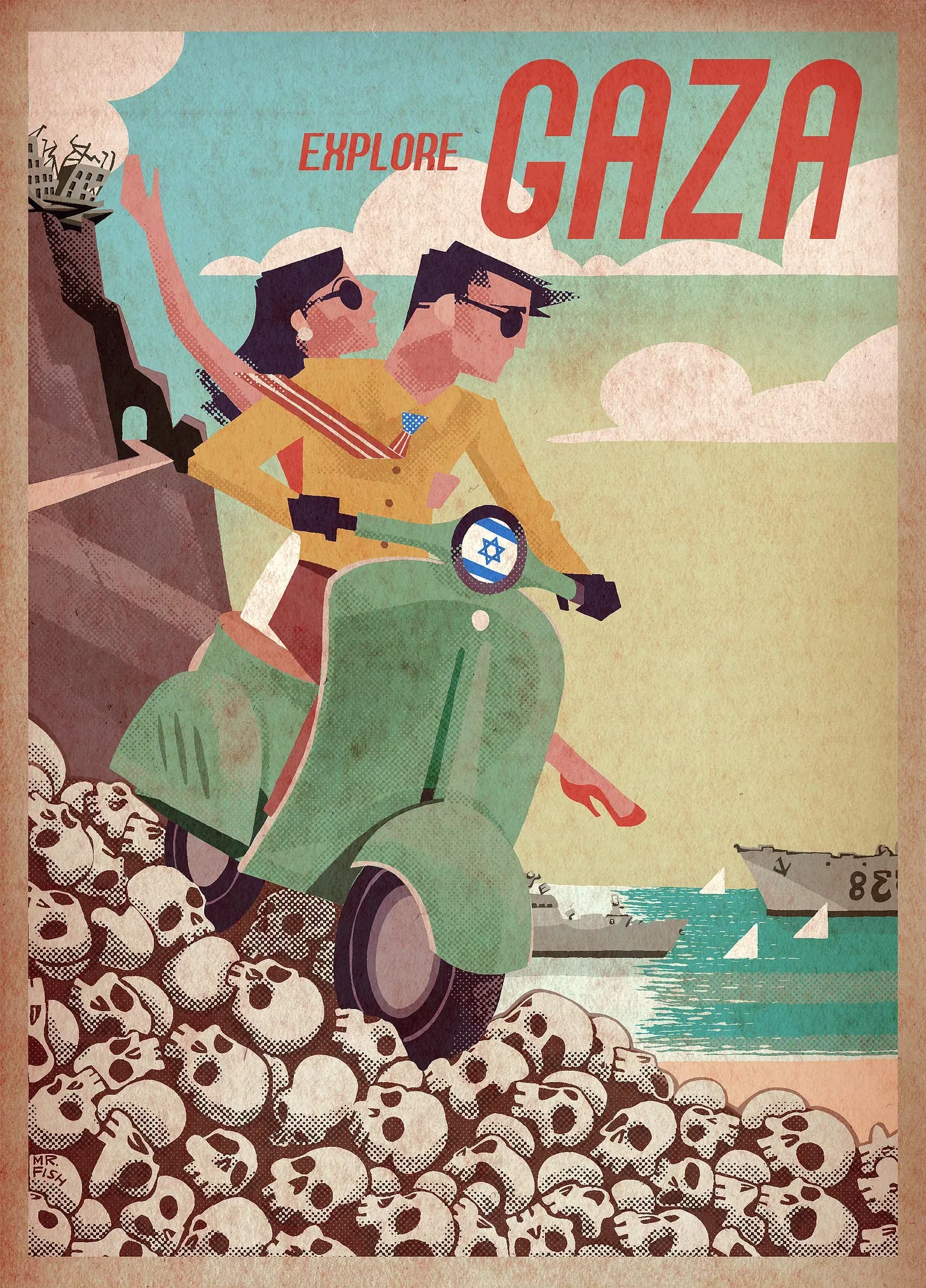
Even as we’re essentially being told and sold “war is peace,” we’re also being told and sold that ethnic cleansing in Gaza is urban renewal, a prelude to a new Riviera, a new playground for the rich, even if it’s erected on the bones of millions of Palestinians. Obviously, this cleansing of genocide using the imagery of crass and vulgar tourism must be condemned in no uncertain terms.
Put colloquially, I often wonder, Dude, where’s my country?
Explore Gaza, by Mr. Fish (at Chris Hedges’ Substack)
The Bombs Land Softer When a Latina Lesbian Drops Them
Listening to Chris Hedges and Cornel West the other day, I heard them use the term “multicultural militarism” to describe the Democratic Party’s embrace of war and the U.S. military. It fits. Consider Kamala Harris as commander-in-chief. She’ll be celebrated as the first woman of color, the first Black and South Asian president, even as she embraces and boasts about the “lethality” of the U.S. military and the utility of war. And by “utility,” I mean Harris’ support of Ukraine and Israel to the tune of $200 billion in weapons and other forms of mainly military aid.
But do the bombs and missiles land softer because a Latina lesbian Air Force pilot drops and launches them?
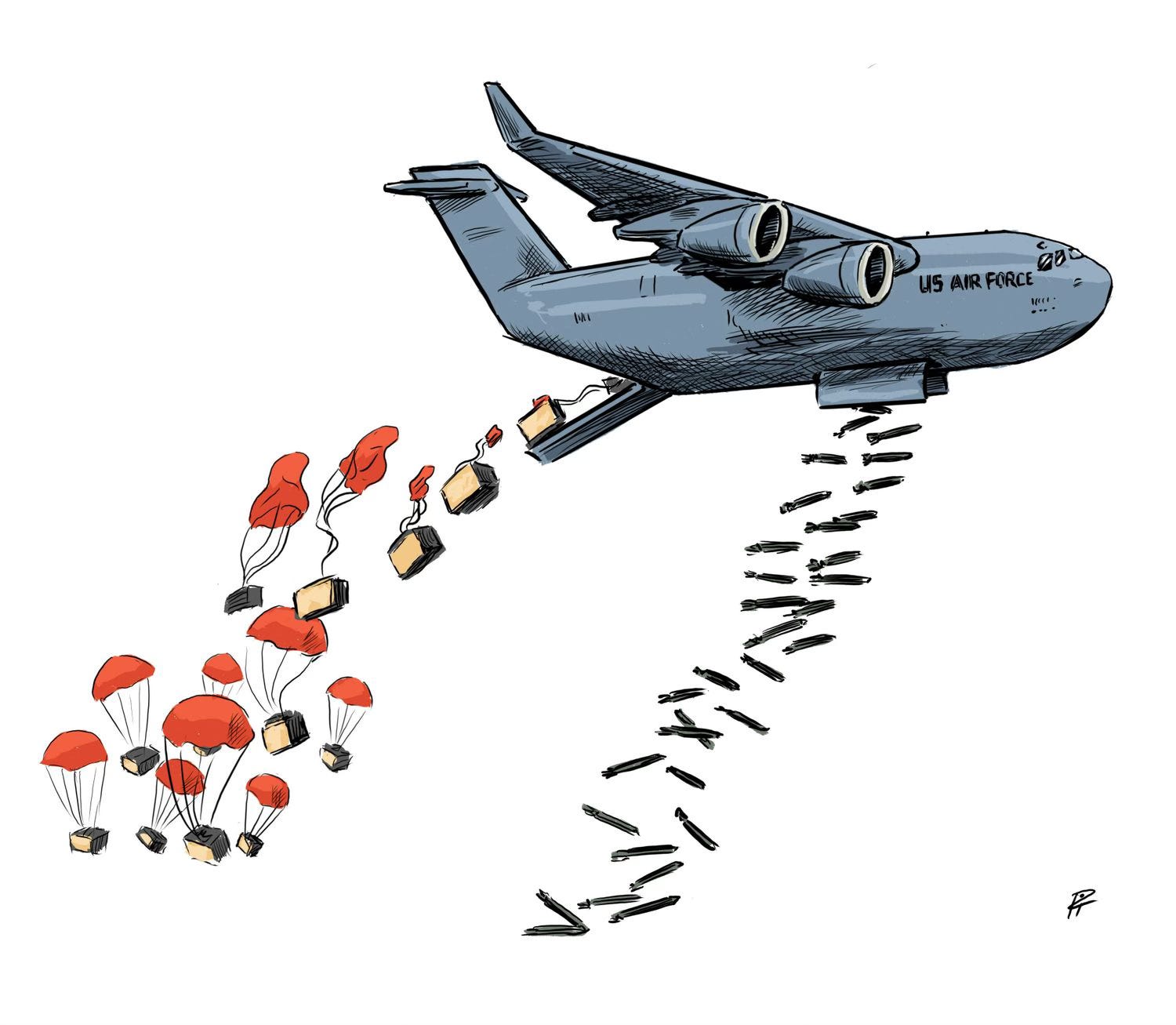
Speaking of the Air Force, my old service, I caught this cartoon by Pia Guerra:
The U.S. government really believes it can have it both ways. It can provide bombs to Israel to annihilate Gaza while at the same time dropping care packages among the wounded and desperate. Call it feel-good militarism. Have some MREs with your HE.* A new form of American (un)happy meal.
Harris and Trump reflect the bipartisan consensus in DC that Pentagon budgets must always go up. They both boast and brag about the U.S. military and its deadliness. They mainly disagree on which enemy is the most serious, with Harris favoring Iran and Russia while Trump hypes China. Neither candidate sees militarism as a problem: they see it as something to celebrate. It’s just that Harris and the Democrats prefer “diverse” militarism.
Trump, of course, has said he wants to end the Russia-Ukraine War. He also raised the specter of nuclear war. Harris, apparently, seems to think she must be more hawkish than Trump, hence her embrace of generals and her talk of lethality.
Whether Harris or Trump wins, higher military budgets are guaranteed and probably more war too. Interestingly, Trump talks more of the enemy within than the enemy without, though his “enemy within” is typically a caricature of woke liberals out to destroy America by forcing your kids to undergo gender-reassignment surgery. Just as Trump is using threat inflation for the enemy within, Harris is inflating the Iranian and Russian threats from without.
Civil discord within America or more war outside of America? That may be our “choice” on November 5th. Or maybe we’ll get both.
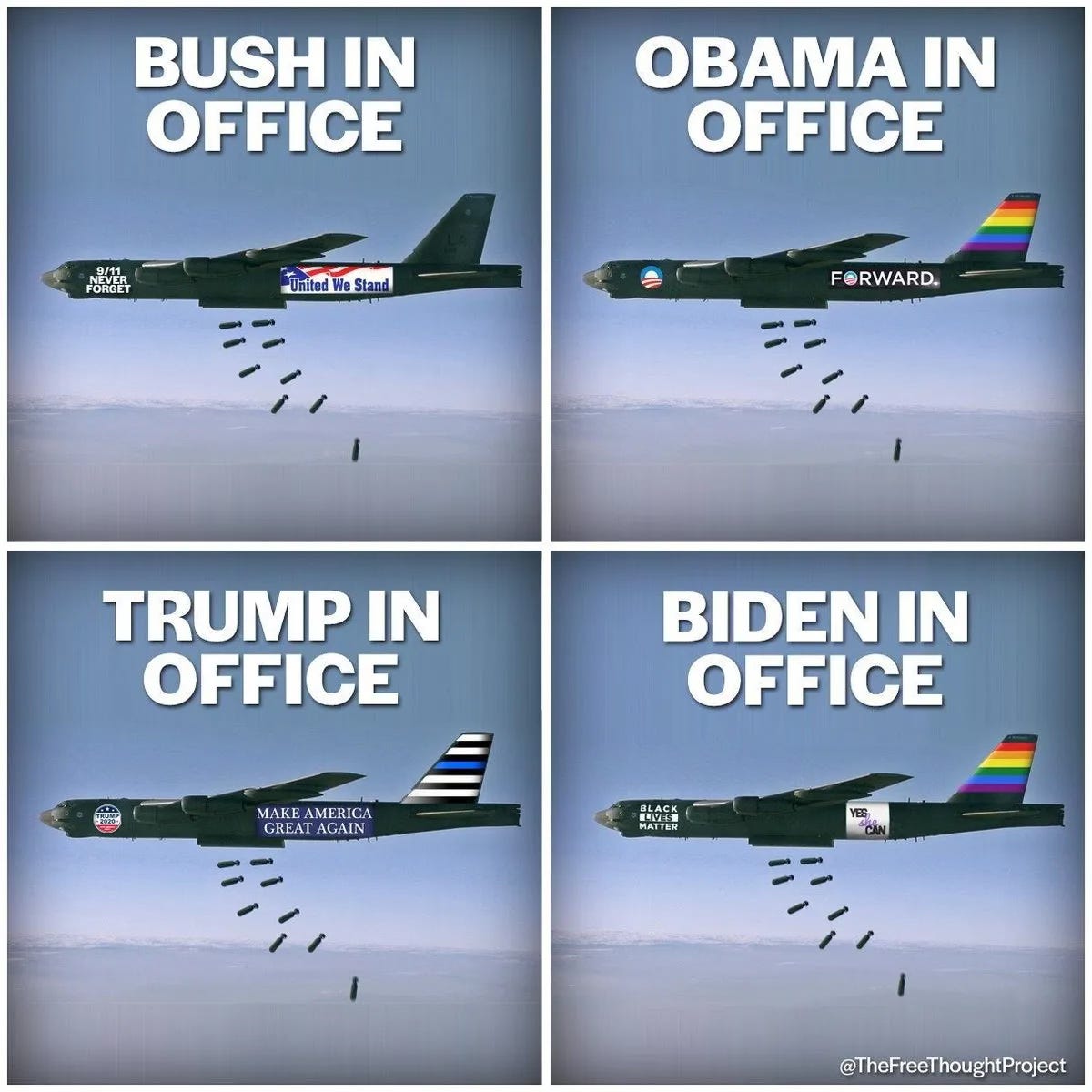
One thing is certain: A B-52 with a rainbow flag and a BLM slogan is still a B-52.
I suppose a Harris B-52 will be the first joyful bomber
* That’s meals ready to eat (MRE), or rations, with your high explosives (HE).
During his one debate with Joe Biden, Donald Trump made the audacious claim that if reelected in November he would end the Russia-Ukraine War before his inauguration in January. While it’s doubtful he could do that, the boast certainly disturbed self-styled supporters of Ukraine like Senator Lindsey Graham.
Graham recently made an appearance to highlight strategic minerals in Ukraine. He said Ukraine is sitting on $10-$12 trillion in various “critical” minerals and metals and that Putin must not be allowed to seize, mine, sell, or otherwise share them with China.
Mr. President, we cannot allow a strategic minerals gap!
Trump, in general, has been skeptical of providing an almost open-ended commitment to Ukraine, to the tune of roughly $200 billion in aid since Russia launched its “special military operation.” This new emphasis on Ukraine as a business partner sitting on a “gold mine,” a mine that could be stolen by Putin, seems tailor-made to convince Trump, a businessman with an affinity for gold, to keep funneling weapons and money to Ukraine if he does indeed win reelection in November.
A trillion here, a trillion there, pretty soon you’re talking real money.
*****
This week in U.S. militarism: I was scrolling through my CNN email feed this morning and noticed this headline:
Army officer wins Miss USA Michigan’s Alma Cooper was crowned the new Miss USA on Sunday, capping a tumultuous year of pageant controversy.
A U.S. Army officer is Miss USA. At least she’s used to obeying orders.
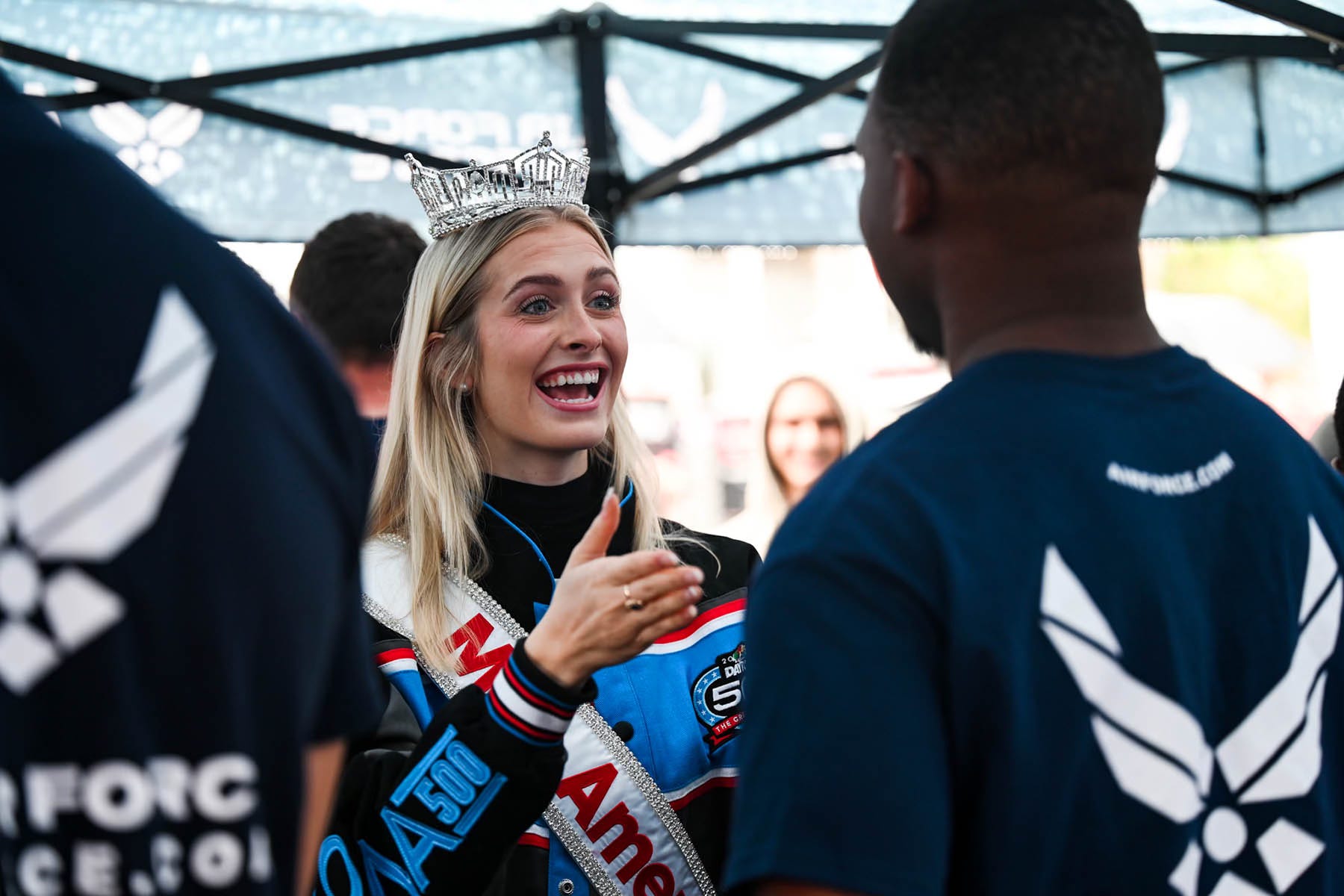
Back in January at CNN, I noted this headline: US Air Force officer crowned as 2024 Miss America.
Miss America, 2Lt Madison Marsh (from the AF Website). Taken at the Daytona 500 Speedway, where she was engaged in recruitment and PR
This truly must be a first. Both Miss USA and Miss America are serving U.S. military officers. My only question is this: What’s wrong with the Navy? How come the Army and the Air Force are dominating the beauty pageants?
In all seriousness, public relations teams for the U.S. military must think this is a major coup, but it seems so strange to me to mix beauty pageants with military service. I recently caught Miss America on NESN (New England Sports Network) doing an on-air interview wearing mufti and a tiara. She attended the Air Force Academy, where I taught for six years. She’s smart, ambitious, accomplished, and obviously pretty.
She may yet fulfill her dream of becoming an Air Force pilot. Will she then launch missiles and drop bombs, perhaps on whatever country is threatening Israel in the Middle East? At least those on the receiving end of those missiles and bombs can say they were killed by a former Miss America.
Empty Boasts of Having the “World’s Best” Military Hide Rot, Waste, and Stupidity
Sixteen years ago, I made a plea to my fellow citizens to banish the word “warfighter” from our vocabulary. I asked that we stop referring to the U.S. military as the “world’s best,” an empty boast then and, after twin disasters in Iraq and Afghanistan, an emptier one today. (If something can indeed be “emptier,” it’s certainly bellicose boasts of alleged military brilliance.) Today’s military is overstretched, busy guaranteeing Israel’s security as the Israeli Defense Forces demolish and depopulate Gaza. Facing recruiting shortfalls, open-ended imperial commitments across the globe, and fears of hostilities with Russia, China, Iran, or an almost unimaginable and certainly unbeatable combination of the three, the U.S. military faces grim times. If leaders like President Biden truly want to protect “our” troops, they should look not to God but in the mirror. They should pursue peace through diplomacy while downsizing an unsustainable empire. Isn’t it finally time for “Generation Warfighter” to come to an end before the U.S. military is utterly hollowed out — and America with it?
Having the “Best Military” Is Not Always a Good Thing Reclaiming Our Citizen-Soldier Heritage By William J. Astore
[Originally posted at TomDispatch in July of 2008]
When did American troops become “warfighters” — members of “Generation Kill” — instead of citizen-soldiers? And when did we become so proud of declaring our military to be “the world’s best”? These are neither frivolous nor rhetorical questions. Open up any national defense publication today and you can’t miss the ads from defense contractors, all eagerly touting the ways they “serve” America’s “warfighters.” Listen to the politicians, and you’ll hear the obligatory incantation about our military being “the world’s best.”
All this is, by now, so often repeated — so eagerly accepted — that few of us seem to recall how against the American grain it really is. If anything — and I saw this in studying German military history — it’s far more in keeping with the bellicose traditions and bumptious rhetoric of Imperial Germany under Kaiser Wilhelm II than of an American republic that began its march to independence with patriotic Minutemen in revolt against King George.
So consider this a modest proposal from a retired citizen-airman: A small but meaningful act against the creeping militarism of the Bush years would be to collectively repudiate our “world’s best warfighter” rhetoric and re-embrace instead a tradition of reluctant but resolute citizen-soldiers.
Becoming Warfighters
I first noticed the term “warfighter” in 2002. Like many a field-grade staff officer, I spent a lot of time crafting PowerPoint briefings, trying to sell senior officers and the Pentagon on my particular unit’s importance to the President’s new Global War on Terrorism. The more briefings I saw, the more often I came across references to “serving the warfighter.” It was, I suppose, an obvious selling point, once we were at war in Afghanistan and gearing up for “regime-change” in Iraq. And I was probably typical in that I, too, grabbed the term for my briefings. After all, who wants to be left behind when it comes to supporting the troops “at the pointy end of the spear” (to borrow another military trope)?
But I wasn’t comfortable with the term then, and today it tastes bitter in my mouth. Until recent times, the American military was justly proud of being a force of citizen-soldiers. It didn’t matter whether you were talking about those famed Revolutionary War Minutemen, courageous Civil War volunteers, or the “Greatest Generation” conscripts of World War II. After all, Americans had a long tradition of being distrustful of the very idea of a large, permanent army, as well as of giving potentially disruptive authority to generals.
Our tradition of citizen-soldiery was (and could still be) one of the great strengths of this country. Let me give you two examples of such citizen-soldiers, well known within military circles because they wrote especially powerful memoirs. Eugene B. Sledge served in the U.S. Marines during World War II, surviving two unimaginably brutal campaigns on the islands of Peleliu and Okinawa. His memoir With the Old Breed is arguably the best account of ground warfare in the Pacific. After three years of selfless, heroic service to his country, Sledge gladly returned to civilian life, eventually becoming a professor of biology. His conclusion — that “war is brutish, inglorious, and a terrible waste” — is one seconded by many a combat veteran.
Richard (Dick) Winters is better known because his exploits were captured in the HBO series Band of Brothers. He rose from platoon commander to battalion commander, serving in the elite 101st Airborne Division during World War II. A hero beloved by his men, Winters wanted nothing more than to quit the military and return to the civilian world. After the war, he lived a quiet life as a businessman in Pennsylvania, rarely mentioning his service and refusing to use his military rank for personal gratification. In Beyond Band of Brothers, he recounts both his service and his ideas on leadership. It’s a book to put in the hands of any young American who wishes to understand the noble ideas of service and sacrifice.
Sledge and Winters were regular guys who answered their country’s call. What comes across in their memoirs, as well as in the many letters I’ve read from World War II soldiers, was the desire of the average dogface to win the war, return home, hang up the uniform, and never again fire a shot in anger. These men were war-enders, not warfighters. Indeed, they would’ve been sickened by the very idea of being “warfighters.”
The term “warfighter” — a combination, I suppose, of “warrior” and “war fighting” — suggests a person who lives for war, who spoils for a fight. Certainly, the United States has fought its share of ruthless wars. But traditionally our soldiers have thought of themselves as civilians first, soldiers second. Equally as important, the American people thought of their troops that way.
Why are we now, with so little debate, casting aside an ethos that served us well for two centuries for one that straightforwardly embraces war and killing? Possibly because we’ve invented a distinctly American product: sanitized militarism. I bumped into it last week at a most unlikely place.
Visiting Gettysburg
Last week, I finally made it to Gettysburg, site of the great three-day battle between Union and Confederate forces in July 1863 that ended with the defeat of General Robert E. Lee’s army. Walking the battlefield was a sobering experience. I found myself on Little Round Topat 5:00 PM, just about the time of day that Union generals rushed men to reinforce the hill against a determined Confederate assault at the close of the battle’s second day. Earlier, I was at the Angle, just when, almost a century and a half ago, Pickett’s Charge failed to pierce the Union center, sealing Lee’s fate on the third day.
The Devil’s Den at Gettysburg
As these events played through my mind, I marveled that I had the battlefield largely to myself. Not that I was alone, mind you. Tour buses circled; cars, trucks, and SUVs whizzed about, but many, perhaps most, Americans who visit Gettysburg get surprisingly little tactile or sensory experience of its difficult topography. Yes, a few kids (and fewer adults) joined me in clambering about the huge, claustrophobically placed boulders of Devil’s Den, and I did spy a couple of guided tour groups on foot. But at the site of a bloodcurdling, distinctly septic nineteenth century battle, most visitors were clearly having a distinctly bloodless, even antiseptic, twenty-first century experience.
That day, I learned a lot about Gettysburg the battle — and maybe a little about us as well. As surely as my fellow tourists were staying in their cars and buses, we, as a people, are distancing ourselves from the realities of war. As we seal ourselves away from war’s horrors, we’re correspondingly finding it easier to speak of “warfighters” and to boast of having the world’s best military.
As we catch a glimpse, from the comfort of our living rooms, of a suicide bombing in Iraq or an American outpost attacked, then abandoned, in Afghanistan, are we not like those tourists in buses at Gettysburg, listening to sanitized recordings telling us what to see and think about the (expurgated) reality in front of us? And who dares challenge the “expert” commentary? Who dares turn off the canned talking heads and stare into the face of war?
But if we are to end our militaristic, yet curiously sanitized, “warfighter” moment, if we are ever to return to our citizen-soldier ethos and heritage, this is just what we must do.
After all, it’s later than you think. Our military now relies not only on a volunteer (if, at times, “stop-lossed”) Army, but increasingly on tens of thousands of hired guns, consultants, interrogators, interpreters, and other paramilitary camp followers. Private, for-profit “security contractors” — companies like Blackwater and Triple Canopy — give a disturbing new meaning to our “warfighter” terminology and the rhetoric that marches in step with it. As even casual students of history will recall, a clear sign of the Roman Empire’s decline was its shift from citizen-soldiers motivated by duty to mercenaries motivated by profit.
Replacing “warfighters” with true citizen-soldiers in the mold of Sledge and Winters would hardly be a solve-all solution at this late date, but it might be a step in the right direction — however unlikely it is to happen. For when we look at our troops, if we don’t see ourselves, then we see aliens or, worse yet, superiors (“warfighters”) in need of “support.” And that’s a clear sign of trouble for the republic.
Want to Be in the “World’s Best Military”? Ask German Veterans
It may come as a shock to some, but the American army wasn’t the best in the field in World War I, or World War II either. And thank heavens for that.
The distinction falls to the Kaiser Wilhelm’s army in 1914, and to Hitler’s Wehrmacht in 1941. Even toward the end of World War II, the American army was still often outmaneuvered and outclassed by its German foe. Because victory has a way of papering over faults and altering memories, few but professional historians today recall the many shortcomings of our military in both world wars.
But that’s precisely the point: The American military made mistakes because it was often ill-trained, rushed into combat too quickly, and handled by officers lacking in experience. Put simply, in both World Wars it lacked the tactical virtuosity of its German counterpart.
But here’s the question to ponder: At what price virtuosity? In World War I and World War II, the Germans were the best soldiers because they had trained and fought the most, because their societies were geared, mentally and in most other ways, for war, because they celebrated and valued feats of arms above all other contributions one could make to society and culture.
Being “the best soldiers” meant that senior German leaders — whether the Kaiser, Field Marshal Paul von Hindenburg, that Teutonic titan of World War I, or Hitler — always expected them to prevail. The mentality was: “We’re number one. How can we possibly lose unless we quit — or those [fill in your civilian quislings of choice] stab us in the back?”
If this mentality sounds increasingly familiar, it’s because it’s the one we ourselves have internalized in these last years. German warfighters and their leaders knew no limitations until it was too late for them to recover from ceaseless combat, imperial overstretch, and economic collapse.
Today, the U.S. military, and by extension American culture, is caught in a similar bind. After all, if we truly believe ours to be “the world’s best military” (and, judging by how often the claim is repeated in the echo chamber of our media, we evidently do), how can we possibly be losing in Iraq or Afghanistan? And, if the “impossible” somehow happens, how can our military be to blame? If our “warfighters” are indeed “the best,” someone else must have betrayed them — appeasing politicians, lily-livered liberals, duplicitous and weak-willed allies like the increasingly recalcitrant Iraqis, you name it.
Today, our military is arguably the world’s best. Certainly, it’s the world’s most powerful in its advanced armaments and its ability to destroy. But what does it say about our leaders that they are so taken with this form of power? And why exactly is it so good to be the “best” at this? Just ask a German military veteran — among the few who survived, that is — in a warrior-state that went berserk in a febrile quest for “full spectrum dominance.”
Fighting to End Wars
Words matter. Let’s start by banishing the word “warfighter,” and, while we’re at it, let’s toss out that “world’s best” boast as well. Boasting about military prowess is more Spartan than Athenian, more Second and Third Reich Germany than republican and democratic America.
Indeed, imagine, for a moment, a world in which the U.S. is no longer “number one” in military might (and, at the same time, no longer fighting endless wars in the Middle East and Central Asia). Would we then be weak and vulnerable? Or would we become stronger precisely because we stopped boasting about our ability as “warfighters” to dominate far from our shores and instead redirected our resources to developing alternative energy, bolstering our education system, reviving American industry, and focusing on other “soft power” alternatives to weapons and warriors? In other words, alternatives we can actually boast about with the pride of accomplishment.
Think about it: Must our military forever remain “second to none” for you to feel safe? Our national traditions suggest otherwise. In fact, if we no longer had the world’s strongest military, perhaps we would be more reluctant to tap its strength — and more hesitant to send our citizen-soldiers into harm’s way. And while we’re at it, perhaps we’d also learn to boast about a new kind of “warfighter” — not one who fights our wars, but one who fights against them.
Joe Biden has become a major distraction. Much like Donald Trump, he’s demanding far too much attention.
As genocide continues in Gaza, as war continues to rage in Ukraine, as America continues to pursue militarism both at home and abroad, all the press can talk about is whether Biden should stay or go.
The answer is obvious: he should go.
Sure, Biden remains capable of having a “good” day in the sense of doing OK at a rally while reading prepared remarks from a teleprompter. Yet it’s impossible to ignore brain glitches where he introduces Zelensky of Ukraine as President Putin and suggests his vice president’s name is Trump instead of Harris.
America faces serious issues, especially working- and middle-class Americans who are struggling to make ends meet. Their stories are rarely told in the corporate-owned media as Biden’s flubs and stubbornness and Trump’s lies and showboating grab nearly all the attention.
A new (and desperate) ploy I’ve seen on Twitter/X is Biden supporters arguing that a failing older man is better than a lying one as president. That argument assumes Biden has a strong record as a truth-teller when it was gratuitous lies and flagrant plagiarism that ended his presidential campaign in 1988. Besides, is it really true that Biden, a man visibly in mental and physical decline, is the only choice Democrats can muster to defeat Trump in 2024?
Let’s look at one chart that shows Biden’s record. Since he became President, military spending has soared as social spending has dipped.
And this man, Democrats say in reverent tones, is the new FDR?
I suppose their counter would be: Trump will be worse! So, it’s the old “lesser of two evils” argument.
Biden and Harris continue to run a campaign devoid of any message other than vote for us because Trump will be worse. That empty message, and Biden’s visible decline, produce images like this:
Exactly. Which “job” is the Biden/Harris team so intent on finishing? No one knows since they’re not saying. Vague messaging and a confused candidate are almost certain to lead to a Trump victory in November.
And if that happens, those to blame will be clear, starting with Biden, the DNC, and all the scheming powerbrokers behind the scenes like the Obamas and the Clintons.
American foreign policy remains in the grip of heretics. They believe that the Prince of Peace is actually a god of war. They believe America is strengthened by entangling alliances (think here of our so-called alliance with Israel). They believe in constant war as a recipe both for dominant power and greater freedom and democracy throughout the world. They believe that spending roughly a trillion dollars each year on weapons and war is a wise “investment.” And they believe they are the toughest and truest of patriots, the ones who see further, the ones with the guts to get things done, no matter how poorly America’s wars have gone from Korea and Vietnam through Afghanistan, Iraq, and today’s proxy wars.
There used to be a different America, a much less militaristic and bellicose one. The American tradition is rich and complex; it contains multitudes, as Walt Whitman might say. Why are we so stuck on warmongers, thieves, and vainglorious simps of empire?
As an American, I’m very much a part of my country’s complexity and richness. And the America that speaks to me contains elements and lessons such as these:
George Washington’s prescient warning about the dangers of entangling alliances with foreign powers.
James Madison’s warning that constant warfare is the direst of enemies of liberty, freedom, and democracy in America.
General Smedley Butler’s confession that “war is a racket” and that he had often served as a “gangster for capitalism.”
The Nye Commission in the U.S. Senate that investigated arms manufacturers and weapons makers as “Merchants of Death” that profited greatly from war.
President Dwight D. Eisenhower’s “cross of iron” speech and his warning about the growing power and insidious nature of the military-industrial complex.
President John F. Kennedy’s powerful peace speech in which he extended an olive branch to the Soviet Union.
Martin Luther King Jr.’s powerful speech against the Vietnam War and the perils of militarism, racism, and materialism in America.
Of course, America has always had its dark side, with slavery and the genocidal treatment of Native Americans being at the top of the list. Yet America also has had its triumphs of wisdom and goodness. That is the America we should be embracing and celebrating. I believe it’s captured in the words of Washington, Madison, JFK, MLK, and so many others who’ve fought for peace and sanity, people like Dorothy Day, the Catholic activist who fought against war and all its awful excesses.
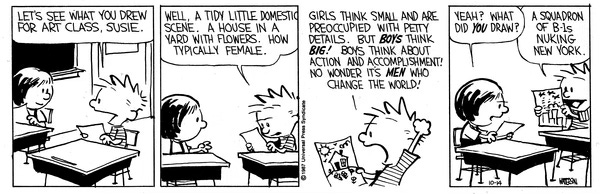
All that said, sometimes cartoons can express truths in ways that are as powerful as they are simple. In the cartoon below, the heretics of U.S. foreign policy are so many Calvins, spreading destruction and employing nukes in the name of manly seriousness. They are wrong. They are heretics. And if we continue to allow them to rule, they will surely lead America (as they already are in Gaza) to mass graves.