Wrecking Democracy in America

A Meditation on Trump’s “Dream Military”

BILL ASTORE

FEB 05, 2026

Hi Everyone: Here’s my latest post for TomDispatch.com. It was inspired by President Trump’s notion of a “dream military,” a dream that consists of throwing another $500 billion at the Pentagon while building a “golden dome,” more nuclear weapons, and a new class of naval battleship named after—you guessed it—Donald Trump.

Once upon a time, in the aftermath of a devastating civil war, Americans recognized that “war is all hell.” Do we need the antidote of another calamitous war to move us to rethink our imperial march and global warmongering? If that war should go nuclear, it will be far too late to rethink anything as humanity (what’s left of it) struggles to survive a post-apocalyptic hellscape.

What does not kill us does not necessarily make us stronger. 

Trump’s $1.5 Trillion “Dream Military”

Or What National Nightmares Are Made Of

BY WILLIAM J. ASTORE

What constitutes national security and how is it best achieved? Does massive military spending really make a country more secure, and what perils to democracy and liberty are posed by vast military establishments? Questions like those are rarely addressed in honest ways these days in America. Instead, the Trump administration favors preparations for war and more war, fueled by potentially enormous increases in military spending that are dishonestly framed as “recapitalizations” of America’s security and safety.

Such framing makes Pete Hegseth, America’s self-styled “secretary of war,” seem almost refreshing in his embrace of a warrior ethos. Republican Senator Lindsey Graham is another “warrior” who cheers for conflict, whether with Venezuela, Iran, or even — yes! — Russia. Such macho men revel in what they believe is this country’s divine mission to dominate the world. Tragically, at the moment, unapologetic warmongers like Hegseth and Graham are winning the political and cultural battle here in America.

Of course, U.S. warmongering is anything but new, as is a belief in global dominance through high military spending. Way back in 1983, as a college student, I worked on a project that critiqued President Ronald Reagan’s “defense” buildup and his embrace of pie-in-the-sky concepts like the Strategic Defense Initiative (SDI), better known as “Star Wars.” Never did I imagine that, more than 40 years later, another Republican president would again come to embrace SDI (freshly rebranded as “Golden Dome”) and ever-more massive military spending, especially since the Soviet Union, America’s superpower rival in Reagan’s time, ceased to exist 35 years ago. Amazingly, Trump even wants to bring back naval battleships, as Reagan briefly did (though he didn’t have the temerity to call for a new class of ships to be named after himself). It’ll be a “golden fleet,” says Trump. What gives?

For much of my life, I’ve tried to answer that very question. Soon after retiring from the U.S. Air Force, I started writing for TomDispatch, penning my first article there in 2007, asking Americans to save the military from itself and especially from its “surge” illusions in the Iraq War. Tom Engelhardt and I, as well as Andrew Bacevich, Michael Klare, and Bill Hartung, among others, have spilled much ink (symbolically speaking in this online era) at TomDispatch urging that America’s military-industrial complex be reined in and reformed. Trump’s recent advocacy of a “dream military” with a proposed budget of $1.5 trillion in 2027 (half a trillion dollars larger than the present Pentagon budget) was backed by places like the editorial board of the Washington Post, which just shows how frustratingly ineffectual our efforts have been. How discouraging, and again, what gives?

Sometimes (probably too often), I seek sanctuary from the hell we’re living through in glib phrases that mask my despair. So, I’ll write something like: America isn’t a shining city on a hill, it’s a bristling fortress in a valley of death; or, At the Pentagon, nothing succeeds like failure, a reference to eight failed audits in a row (part of a 30-year patternof financial finagling) that accompanied disastrous wars in Vietnam, Afghanistan, Iraq, and elsewhere. Such phrases, no matter how clever I thought they were, made absolutely no impression when it came to slowing the growth of militarism in America. In essence, I’ve been bringing the online equivalent of a fountain pen to a gun fight, which has proved to be anything but a recipe for success.

In America, nothing — and I mean nothing! — seems capable of reversing massive military spending and incessant warfare. President Ronald Reagan, readers of a certain (advanced) age may recall, was nicknamed the “Teflon president” because scandals just didn’t seem to stick to him (at least until the Iran-Contra affair proved tough to shed). Yet history’s best candidate for Teflon “no-stick” status was never Reagan or any other president. It was and remains the U.S. warfare state, headquartered on the Potomac River in Washington, D.C. And give the sclerotic bureaucracy of that warfare state full credit. Even as the Pentagon has moved from failure to failure in warfighting, its war budgets have continued to soar and then soar some more.

Forgive the repetition, but what gives? When is our long, national nightmare of embracing war and (wildly overpriced) weaponry going to end? Obviously, not anytime soon. Even the Democrats, supposedly the “resistance” to President Trump, boast openly of their support for what passes for military lethality (or at least overpriced weaponry), while Democratic members of Congress line up for their share of war-driven pork. To cite a cri de coeur from the 1950s, have they no sense of decency?

The Shameless Embrace of Forever War and Its Spoils

I’m just an aging, retired Air Force lieutenant colonel. Who cares what I think? But America should still care about the words of Dwight D. Eisenhower, also known as Ike, the victorious five-star general of D-Day in 1944 and beyond, and this country’s president from 1953 to 1961. Ike was famously the first significant figure to warn Americans about the then-developing military-industrial complex (MIC) in his farewell address to the nation. Yet, even then, his words were largely ignored. Recently, I reread Ike’s warning, perhaps for the 100th time and was struck yet again by the way he highlighted the spiritual dimension of the challenge that is, all too sadly, still facing us.

In case you’ve forgotten them (or never read them), here are Ike’s words from that televised address in January 1961, when he put the phrase “the military-industrial complex” in our language:

“This conjunction of an immense military establishment and a large arms industry is new in the American experience. The total influence — economic, political, even spiritual — is felt in every city, every state house, every office of the Federal government. We recognize the imperative need for this development. Yet we must not fail to comprehend its grave implications. Our toil, resources, and livelihood are all involved; so is the very structure of our society.

“In the councils of government, we must guard against the acquisition of unwarranted influence, whether sought or unsought, by the military-industrial complex. The potential for the disastrous rise of misplaced power exists and will persist.

“We must never let the weight of this combination endanger our liberties or democratic processes. We should take nothing for granted. Only an alert and knowledgeable citizenry can compel the proper meshing of the huge industrial and military machinery of defense with our peaceful methods and goals, so that security and liberty may prosper together.”

Those were the prescient words of the most senior military man of his era, a true citizen-soldier and president, and more than six decades later, we should and must act on them if we have any hope left of preserving “our liberties and democratic processes.”

Again, wise words, yet our leaders have seldom heeded them. Since 1961, the “disastrous rise of misplaced power” when it comes to the MIC has infected our culture, our economy, even — to steal a term from the era of the disastrous American war in Vietnam — our hearts and minds. Indeed, despite the way the MIC failed so spectacularly to win the hearts and minds of the Vietnamese, the Afghans, the Iraqis, and other embattled peoples across the globe in various misbegotten and mendacious wars, it did succeed spectacularly over the years in winning the hearts and minds of those who make the final decisions in the U.S. government.

In an astonishing paradox, a spendthrift military establishment that almost never wins anything, while consistently evading accountability for its losses, has by now captured almost untrammeled authority within our land. It defies logic, but logic never was this country’s strong suit. In fact, only recently, we reached a point of almost ultimate illogic when America’s bully-boy commander-in-chief insisted that a Pentagon budget already bloated with cash needs an extra $500 billion. That, of course, would bring it to about $1.5 trillion annually. Apologies to my Navy friends but even drunken sailors would be challenged to spend that mountain of money.

In short, no matter what it does, the Pentagon, America’s prodigal son, never gets punished. It simply gets more.

More, More, More!

Not only is such colossal military spending bad for this country, but it’s also bad for the military itself, which, after all, didn’t ask for Trump’s proposed $500 billion raise. America’s prodigal son was relatively content with a trillion dollars in yearly spending. In fact, the president’s suggested increase in the Pentagon budget isn’t just reckless; it may well wreck not just what’s left of our democracy, but the military, too.

Like any massive institution, the Pentagon always wants more: more troops, more weapons, more power, invariably justified by inflating (or simply creating) threats to this country. Yet, clarity of thought, not to speak of creativity, rarely derives from excess. Lean times make for better thinking, fat times make for little thought at all.

Not long ago, Trump occasionally talked sense by railing on the campaign trail against the military-industrial complex and its endless wars. Certainly, more than a few Americans voted for him in 2024 because they believed he truly did want to focus on domestic health and strength rather than pursue yet more conflicts globally (and the weapons systems that went with them). Tragically, Trump has morphed into a warlord, greedily siphoning oil from Venezuela, posturing for the annexation of Greenland and all its resources, while not hesitating to bomb IranNigeria, or most any other country. Meanwhile, China and Russia lurk in the wings as scary “near-peer” rivals and threats.

Although Trump’s supporters may indeed have been conned into imagining him as a prince of peace, this country’s militarism and imperialism clearly transcend him. Generally speaking, warfare and military boosterism have been distinctly bipartisan pursuits in America, making reform of any sort that much more difficult. Replacing Trump in 2028 won’t magically erase deep-rooted militarism, megalomaniacal imperial designs, or even the possibility of a $1.5 trillion military budget. Clearly, more, more, more is the bipartisan war song being sung inside the Pentagon, Congress, and the White House these days.

Taking on the MICIMATTSHG, or Blob

Ex-CIA analyst Ray McGovern coined a useful acronym from the classic military-industrial complex, or MIC. He came up with MICIMATT (the Military-Industrial-Congressional-Intelligence-Media-Academia-Think-Tank complex) to highlight its blob-like growth. And it’s true that Congress and the rest are all deeply implicated in the blob. To which I’d add an “S” for the sporting world, an “H” for Hollywood, and a “G” for the gaming sector, all of which are implicated in, influenced by (as well as influencing), and often subservient to Ike’s old MIC. So, what we now have is the MICIMATTSHG. Recall that Ike warned us about the “disastrous rise of misplaced power” if we failed to challenge it back in 1961. Recall that he also warned us that the MIC could change the very structure of our society, making America far less democratic and also far less free. And most subtly, he warned us that it might also weaken America spiritually.

What did he mean by that? To reference a speech Ike made in 1953, he warned then that we could end up hanging ourselves from a cross of iron. He warned that we could become captives of militarism and war, avid believers in spending the sweat of our laborers, the genius of our scientists, and the blood of our youth, pursuing military dominance globally, while losing our democratic beliefs and liberties at home in the process. And that, it seems to me, is exactly what did indeed happen. We the people were seduced, silenced, or sidelined via slogans like “support our troops” or with over-the-top patriotic displays like military parades, no matter that they represented something distinctly less than triumphant in their moment.

And it never ends, does it? Americans in various polls today indicate that they don’t want a war against either Venezuela or Iran, but our opinions simply aren’t heeded. Increasingly, we live in a “might makes right” country, even as military might has so regularly made for wrong since 1945.

And what in the world is to be done? Many things, but most fundamentally it’s time as a society to perform an “about-face,” followed by a march in double-time away from permanent war and toward peace. And that, in turn, must lead to major reductions in Pentagon spending. The best and only way to tackle the inexorable growth of the blob is to stop feeding it money — and stop worshipping it as well. Instead of a $500 billion increase, Congress should insist on a $500 billion decrease in Pentagon spending. Our task should be to force the military-industrial complex to think, improvise, become leaner, and focus on how most effectively to protect and defend America and our ideals, rather than fostering the imperial dreams of the wannabe warlords among us.

Trump’s current approach of further engorging the imperial blob is the stuff of national nightmares, not faintly a recipe for American greatness. It is, in fact, a sure guarantee of further decline and eventual collapse, not only economically and politically but spiritually as well, exactly as Ike warned in 1961. More wars and weapons simply will not make America great (again). How could they when, as Civil War General William T. Sherman so famously observed, war is “all hell”?

Americans, we must act to cut the war budget, shrink the empire, embrace diplomacy, and work for peace. Sadly, however, the blob has seemingly become our master, a well-nigh unstoppable force. Aren’t you tired yet of being its slave?

On the 250th anniversary of America’s founding, which was predicated on resistance to empire and military rule, it should be considered deeply tragic that this country has met the enemy — and he is indeed us. Here the words of Ike provide another teachable moment. Only Americans can truly hurt America, he once said. To which I’d add this corollary: Only Americans can truly save America.

As we celebrate our nation’s birthday this July 4th, wouldn’t it be wonderful if we could save this deeply disturbed country by putting war and empire firmly in the rearview mirror? A tall task for sure, but so, too, was declaring independence from the mighty British Empire in 1776.

Copyright 2026 William Astore

Wars Make the Rich Richer and the Poor Dead

W.J. Astore

On Ending Militarism in America

Also at TomDispatch.com

I read the news today, oh boy. About a lucky man named Elon Musk. But he lost out on one thing: he didn’t get a top secret briefing on Pentagon war plans for China. And the news people breathed a sigh of relief.

With apologies to John Lennon and The Beatles, a day in the life is getting increasingly tough to take here in the land of the free. I’m meant to be reassured that Musk didn’t get to see America’s top-secret plans for — yes! — going to war with China, even as I’m meant to ignore the constant drumbeat of propaganda, the incessant military marches that form America’s background music, conveying the message that America must have war plans for China, that indeed war in or around China is possible, even probable, in the next decade. Maybe in 2027?

My fellow Americans, we should be far more alarmed by such secret U.S. war plans, along with those “pivots” to Asia and the Indo-Pacific, and the military base-building efforts in the Philippines, than reassured by the “good news” that Comrade Billionaire Musk was denied access to the war room, meaning (for Dr. Strangelove fans) he didn’t get to see “the big board.”

It’s war, war, everywhere in America. We do indeed have a strange love for it. I’ve been writing for TomDispatch for 18 years now — this is my 111th essay (the other 110 are in a new book of mine) — most of them focusing on militarism in this country, as well as our disastrous wars in Iraq, Afghanistan, and elsewhere, the ruinous weapons systems we continue to fund (including new apocalyptic nuclear weapons), and the war song that seems to remain ever the same.

A few recent examples of what I mean: President Trump has already bombed Yemen more than once. He’s already threatening Iran. He’s sending Israel all the explosives, all the weaponry it needs to annihilate the Palestinians in Gaza (so too, of course, did Joe Biden). He’s boasting of building new weapons systems like the Air Force’s much-hyped F-47 fighter jet, the “47” designation being an apparent homage by its builder, Boeing, to Trump himself, the 47th president. He and his “defense” secretary, Pete Hegseth, continually boast of “peace through strength,” an Orwellian construction that differs little from “war is peace.” And I could, of course, go on and on and on and on

Buy the Book

Occasionally, Trump sounds a different note. When Tulsi Gabbard became the director of national intelligence, he sang a dissonant note about a “warmongering military-industrial complex.” And however haphazardly, he does seem to be working for some form of peace with respect to the Russia-Ukraine War. He also talks about his fear of a cataclysmic nuclear war. Yet, if you judge him by deeds rather than words, he’s just another U.S. commander-in-chief enamored of the military and military force (whatever the cost, human or financial).

Consider here the much-hyped Department of Government Efficiency (DOGE) led by that lucky man Elon Musk. Even as it dismantles various government agencies like the Department of Education and USAID, it has — no surprise here! — barely touched the Pentagon and its vast, nearly trillion-dollar budget. In fact, if a Republican-controlled Congress has any say in the matter, the Pentagon budget will likely be boosted significantly for Fiscal Year 2026 and thereafter. As inefficient as the Pentagon may be (and we really don’t know just how inefficient it is, since the bean counters there keep failing audit after audit, seven years running), targeted DOGE Pentagon cuts have been tiny. That means there’s little incentive for the generals to change, streamline their operations, or even rethink in any significant fashion. It’s just spend, spend, spend until the money runs out, which I suppose it will eventually, as the national debt soars toward $37 trillion and climbing.

Even grimmer than that, possibly, is America’s state of mind, our collective zeitgeist, the spirit of this country. That spirit is one in which a constant state of war (and preparations for more of the same) is accepted as normal. War, to put it bluntly, is our default state. It’s been that way since 9/11, if not before then. As a military historian, I’m well aware that the United States is, in a sense, a country made by war. It’s just that today we seem even more accepting of that reality, or resigned to it, than we’ve ever been. What gives?

The Face of War: Confederate Dead at Antietam (Matthew Brady)

Remember when, in 1963, Alabama Governor George Wallace said, “Segregation now, segregation tomorrow, and segregation forever”? Fortunately, after much struggle and bloodshed, he was proven wrong. So, can we change the essential American refrain of war now, war tomorrow, and war forever? Can we render that obsolete? Or is that too much to hope for or ask of America’s “exceptional” democracy?

Taking on the MICIMATT(SH)

Former CIA analyst Ray McGovern did America a great service when he came up with the acronym MICIMATT, or the Military-Industrial-Congressional-Intelligence-Media-Academia-Think-Tank complex, an extension of President Dwight D. Eisenhower’s military-industrial complex, or MIC (from his farewell speech in 1961). Along with the military and industry (weapons makers like Boeing and Lockheed Martin), the MICIMATT adds Congress (which Eisenhower had in his original draft speech but deleted in the interest of comity), the intelligence “community” (18 different agencies), the media (generally highly supportive of wars and weapons spending), academia (which profits greatly from federal contracts, especially research and development efforts for yet more destructive weaponry), and think tanks (which happily lap up Pentagon dollars to tell us the “smart” position is always to prepare for yet more war).

You’ll note, however, that I’ve added a parenthetical SH to McGovern’s telling acronym. The S is for America’s sporting world, which eternally gushes about how it supports and honors America’s military, and Hollywood, which happily sells war as entertainment (perhaps the best known and most recent film being Tom Cruise’s Top Gun: Maverick, in which an unnamed country that everyone knows is Iran gets its nuclear ambitions spanked by a plucky team of U.S. Naval pilots). A macho catchphrase from the original Top Gun was “I feel the need — the need for speed!” It may as well have been: I feel the need — the need for pro-war propaganda!

Yes, MICIMATT(SH) is an awkward acronym, yet it has the virtue of capturing some of the still-growing power, reach, and cultural penetration of Ike’s old MIC. It should remind us that it’s not just the military and the weapons-makers who are deeply invested in war and — yes! — militarism. It’s Congress; the CIA; related intel “community” members; the mainstream media (which often relies on retired generals and admirals for “unbiased” pro-war commentary); academia (consider how quickly institutions like Columbia University have bent the knee to Trump); and think tanks — in fact, all those “best and brightest” who advocate for war with China, the never-ending war on terror, war everywhere.

But perhaps the “soft power” of the sporting world and Hollywood is even more effective at selling war than the hard power of bombs and bullets. National Football League coaches patrol the sidelines wearing camouflage, allegedly to salute the troops. Military flyovers at games celebrate America’s latest death-dealing machinery. Hollywood movies are made with U.S. military cooperation and that military often has veto power over scripts. To cite only one example, the war movie 12 Strong (2018) turned the disastrous Afghan War that lasted two horrendous decades into a stunningly quick American victory, all too literally won by U.S. troops riding horses. (If only the famed cowboy actor John Wayne had still been alive to star in it!)

The MICIMATT(SH), employing millions of Americans, consuming trillions of dollars, and churning through tens of thousands of body bags for U.S. troops over the years, while killing millions of people abroad, is an almost irresistible force. And right now, it seems like there’s no unmovable object to blunt it.

Believe me, I’ve tried. I’ve written dozens of “Tomgrams” suggesting steps America could take to reverse militarism and warmongering. As I look over those essays, I see what still seem to me sensible ideas, but they die quick deaths in the face of, if not withering fire from the MICIMATT(SH), then being completely ignored by those who matter.

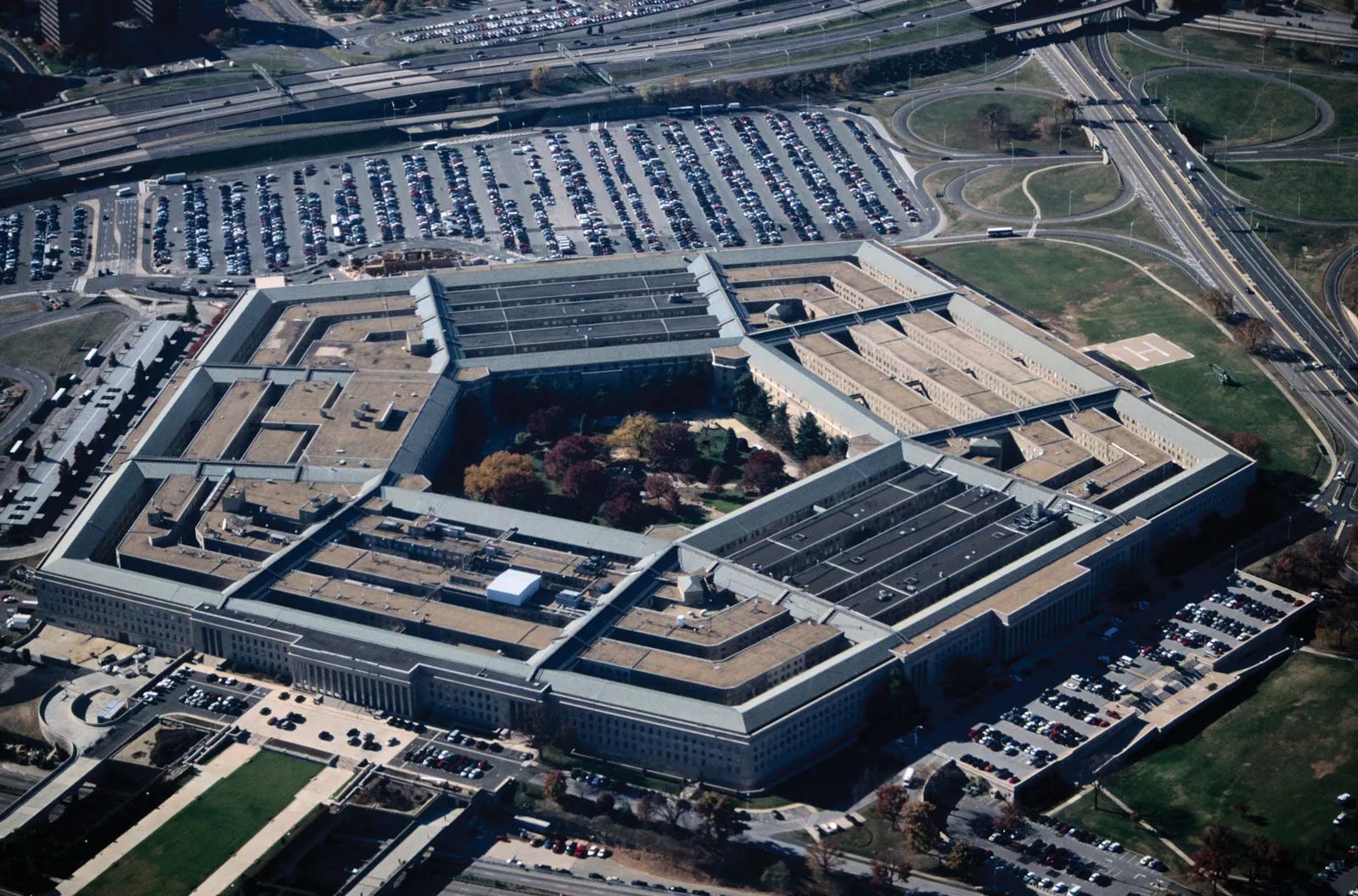
And while this country has a department of war (disguised as a department of defense), it has no department of peace. There’s no budget anywhere for making peace, either. We do have a colossal Pentagon that houses 30,000 workers, feverishly making war plans they won’t let Elon Musk (or any of us) see. It’s for their eyes only, not yours, though they may well ask you or your kids to serve in the military, because the best-laid plans of those war-men do need lots of warm bodies, even if those very plans almost invariably (Vietnam, Afghanistan, Iraq, etc.) go astray.

So, to repeat myself, how do you take on the MICIMATT(SH)? The short answer: It’s not easy, but I know of a few people who had some inspirational ideas.

On Listening to Ike, JFK, MLK, and, Yes, Madison, Too

Militarism isn’t exactly a new problem in America. Consider Randolph Bourne’s 1918 critique of war as “the health of the state,” or General Smedley Butler’s confession in the 1930s that “war is a racket” run by the “gangsters of capitalism.” In fact, many Americans have, over the years, spoken out eloquently against war and militarism. Many beautiful and moving songs have asked us to smile on your brother and “love one another right now.” War, as Edwin Starr sang so powerfully once upon a time, is good for “absolutely nothin’,” though obviously a lot of people disagree and indeed are making a living by killing and preparing for yet more of it.

And that is indeed the problem. Too many people are making too much money off of war. As Smedley Butler wrote so long ago: “Capital won’t permit the taking of the profit out of war until the people — those who do the suffering and still pay the price — make up their minds that those they elect to office shall do their bidding, and not that of the profiteers.” Pretty simple, right? Until you realize that those whom we elect are largely obedient to the moneyed class because the highest court in our land has declared that money is speech. Again, I didn’t say it was going to be easy. Nor did Butler.

As a retired lieutenant colonel in the U.S. Air Force, I want to end my 111th piece at TomDispatch by focusing on the words of Ike, John F. Kennedy (JFK), Martin Luther King, Jr. (MLK), and James Madison. And I want to redefine what words like duty, honor, country, and patriotism should mean. Those powerful words and sentiments should be centered on peace, on the preservation and enrichment of life, on tapping “the better angels of our nature,” as Abraham Lincoln wrote so long ago in his First Inaugural Address.

Why do we serve? What does our oath of office really mean? For it’s not just military members who take that oath but also members of Congress and indeed the president himself. We raise our right hands and swear to support and defend the U.S. Constitution against all enemies, foreign and domestic, to bear true faith and allegiance to the same.

There’s nothing in that oath about warriors and warfighters, but there is a compelling call for all of us, as citizens, to be supporters and defenders of representative democracy, while promoting the general welfare (not warfare), and all the noble sentiments contained in that Constitution. If we’re not seeking a better and more peaceful future, one in which freedom may expand and thrive, we’re betraying our oath.

If so, we have met the enemy — and he is us.

Ike told us in 1953 that constant warfare is no way of life at all, that it is (as he put it), humanity crucifying itself on a cross of iron. In 1961, he told us democracy was threatened by an emerging military-industrial complex and that we, as citizens, had to be both alert and knowledgeable enough to bring it to heel. Two years later, JFK told us that peace — even at the height of the Cold War — was possible, not just peace in our time, but peace for all time. However, it would, he assured us, require sacrifice, wisdom, and commitment.

How, in fact, can I improve on these words that JFK uttered in 1963, just a few months before he was assassinated?

What kind of peace do we seek? Not a Pax Americana enforced on the world by American weapons of war. Not the peace of the grave or the security of the slave. I am talking about genuine peace, the kind of peace that makes life on earth worth living…

I speak of peace because of the new face of war. Total war makes no sense in an age… when the deadly poisons produced by a nuclear exchange would be carried by wind and water and soil and seed to the far corners of the globe and to generations yet unborn… surely the acquisition of such idle [nuclear] stockpiles — which can only destroy and never create — is not the only, much less the most efficient, means of assuring peace.

I speak of peace, therefore, as the necessary rational end of rational men. I realize that the pursuit of peace is not as dramatic as the pursuit of war — and frequently the words of the pursuer fall on deaf ears. But we have no more urgent task.

Are we ready to be urgently rational, America? Are we ready to be blessed as peacemakers? Or are we going to continue to suffer from what MLK described in 1967 as our very own “spiritual death” due to the embrace of militarism, war, empire, and racism?

Of course, MLK wasn’t perfect, nor for that matter was JFK, who was far too enamored of the Green Berets and too wedded to a new strategy of “flexible response” to make a clean break in Vietnam before he was killed. Yet those men bravely and outspokenly promoted peace, something uncommonly rare in their time — and even more so in ours.

More than 200 years ago, James Madison warned us that continual warfare is the single most corrosive force to the integrity of representative democracy. No other practice, no other societal force is more favorable to the rise of authoritarianism and the rule of tyrants than pernicious war. Wage war long and it’s likely you can kiss your democracy, your rights, and just maybe your ass goodbye.

America, from visionaries and prophets like MLK, we have our marching orders. They are not to invest yet more in preparations for war, whether with China or any other country. Rather, they are to gather in the streets and otherwise raise our voices against the scourge of war. If we are ever to beat our swords into plowshares and our spears into pruning hooks and make war no more, something must be done.

Let’s put an end to militarism in America. Let’s be urgently rational. To cite John Lennon yet again: You may say I’m a dreamer, but I’m not the only one. Together, let’s imagine and create a better world.

Copyright 2025 William J. Astore.

You Get What They Pay For, War

W.J. Astore

A Few Specifics on the MICIMATT

Readers here have heard of Ray McGovern’s MICIMATT, the military-industrial-congressional-intelligence-media-academe-think-tank complex. It’s gargantuan and lubricated with enormous sums of money.

Consider think tanks. Go to thinktankfundingtracker.org and you’ll see useful information like this:

Top 10 Think Tanks That Receive Funding from Pentagon Contractors

Atlantic Council $10,270,001

Center for a New American Security $6,665,000

Center for Strategic and International Studies $4,115,000

Brookings Institution $3,475,000

Hudson Institute $2,240,000

Council on Foreign Relations $2,095,000

Stimson Center $1,555,763

Aspen Institute $1,125,000

German Marshall Fund $871,010

Carnegie Endowment for International Peace $620,008

I wonder why these think tanks tend to favor the agendas and interests of America’s various weapons makers? Hard to offer “neutral” or “balanced” advice when so much of your funding is coming from the merchants of death.

Now consider these stats, courtesy of former Congressman Dennis Kucinich and The Kucinich Report on Substack:

Military Contractors’ Political Contributions (2023-2024)

According to OpenSecrets, the top defense contractors contributed significantly to political campaigns in the current election cycle:

  • Lockheed Martin – $4,470,698 total ($2,393,034 to Democrats, $2,021,283 to Republicans)
  • Northrop Grumman – $3,354,889 total ($1,903,884 to Democrats, $1,385,924 to Republicans)
  • RTX Corp (Raytheon) – $2,805,535 total ($1,472,920 to Democrats, $1,258,511 to Republicans)
  • General Atomics – $2,507,912 total ($595,947 to Democrats, $1,660,970 to Republicans)
  • L3Harris Technologies – $2,475,712 total ($1,126,096 to Democrats, $1,331,975 to Republicans)

In the presidential race, defense contractors have donated:

  • Kamala Harris – $4,440,605
  • Donald Trump – $1,787,259

In total, the defense sector has contributed over $41.4 million in the 2023-2024 election cycle. For every $1 contributed to political campaigns, these companies receive $10,000 in government contracts—a return on investment most businesses could only dream of.

*****

As weapons makers like Lockheed Martin and RTX throw around millions of dollars to influence Congress, presidential elections, and think tanks, peace organizations that I’m familiar with operate on shoestring budgets where a donation of $1000 is considered large.

My dad taught me the saying, He who pays the piper calls the tune. The weapons makers are paying the piper (think tanks, Congress, the media), and the tunes they’re calling are military marches.

America, we truly get what they pay for, which is war and more war.

A Coda: So far, Bracing Views has received $0.00 from weapons makers. 🙂

Is China Really America’s Enemy?

W.J. Astore

Diplomacy is better than a land war in Asia

A friend of mine sent along a typical militarized think-tank article and asked for my comments. Here’s the title, with a link: 

Moneyball Military: An Affordable, Achievable, and Capable Alternative to Deter China

It was published by the Hoover Institution out of “liberal” Stanford University. 

“Moneyball” is a baseball term, the idea being that smaller market (and budget) teams can compete with larger teams (like the LA Dodgers or NY Yankees) by being smarter, by using metrics and stats to identify “cheap” but good players as well as more effective tactics to win ballgames. Check out the movie with the same title starring Brad Pitt.

Brad Pitt in “Moneyball.” But war, especially a land war in Asia, isn’t a game.

The “Moneyball Military” article basically argues the U.S. military must become more innovative, more responsive, more nimble, more flexible, etc., to meet the challenge of China. What articles like this one never suggest is diplomacy and the pursuit of PEACE. They never suggest that major cuts can be made to the Pentagon budget because the U.S. is fundamentally safe from invasion. They usually argue instead for more Pentagon spending, only “smarter.”

Why does the U.S. “need” 800 military bases around the globe? Why does it “need” to dominate the global trade in arms? Why has the U.S. wasted $10 trillion on unwinnable wars and conflicts (Iraq, Afghanistan, the GWOT, et al.) since 9/11? Why is China, a major U.S. trading partner and holder of U.S. debt, seen as an “enemy”?

These are questions that aren’t raised in think-tank articles like this one.

If you believe the polls, the U.S. is allegedly a Christian nation. Is there a worse sin than killing other humans in massive numbers? How do we stop doing this? Didn’t Christ say “Blessed are the peacemakers”? Why is the U.S. ennobling and saluting the warmakers instead? Why are we always envisioning wars with other peoples?

Again, is China really America’s enemy? Is China really planning to invade Taiwan? If so, wouldn’t diplomacy be a far smarter way of addressing this rather than a land war in Asia?

When one encounters think-tank articles like this one, one would be wise to remember Ray McGovern’s acronym, MICIMATT, which rightly includes these think tanks among the powerful entities that form America’s military-industrial-congressional complex.

When it comes to a land war in Asia, there is no smart way to “moneyball” it. The smart thing to do is to not play “ball” at all.

War, after all, is not a game.

MICIMATT for President!

W.J. Astore

The Real Winner in November Won’t Be Harris or Trump

Former CIA analyst Ray McGovern coined the term MICIMATT to describe America’s sprawling national (in)security state. It’s an expanded version of President Dwight D. Eisenhower’s military-industrial-congressional complex, which Ike warned America about in 1961. (Ike originally included Congress in his warning, but in the speech he gave he left it out so as not to offend the DC elites.)

MICIMATT includes the military, industry (the weapons makers), Congress, the intelligence “community,” media, academia, and various think tanks funded by weapons makers and seeded with “thinkers” beholden to the donors. The acronym’s awkwardness is more than compensated by its acuity and scope. In fact, even MICIMATT isn’t quite sprawling enough. You’d also have to add Hollywood (all those movies and TV shows that glorify the military and war) and the sporting world to the mix. MICIMATTHS, perhaps? And I’m sure we could think of another letter or two to add, perhaps another “S” for the State Department, which has become a tiny branch of the Pentagon.

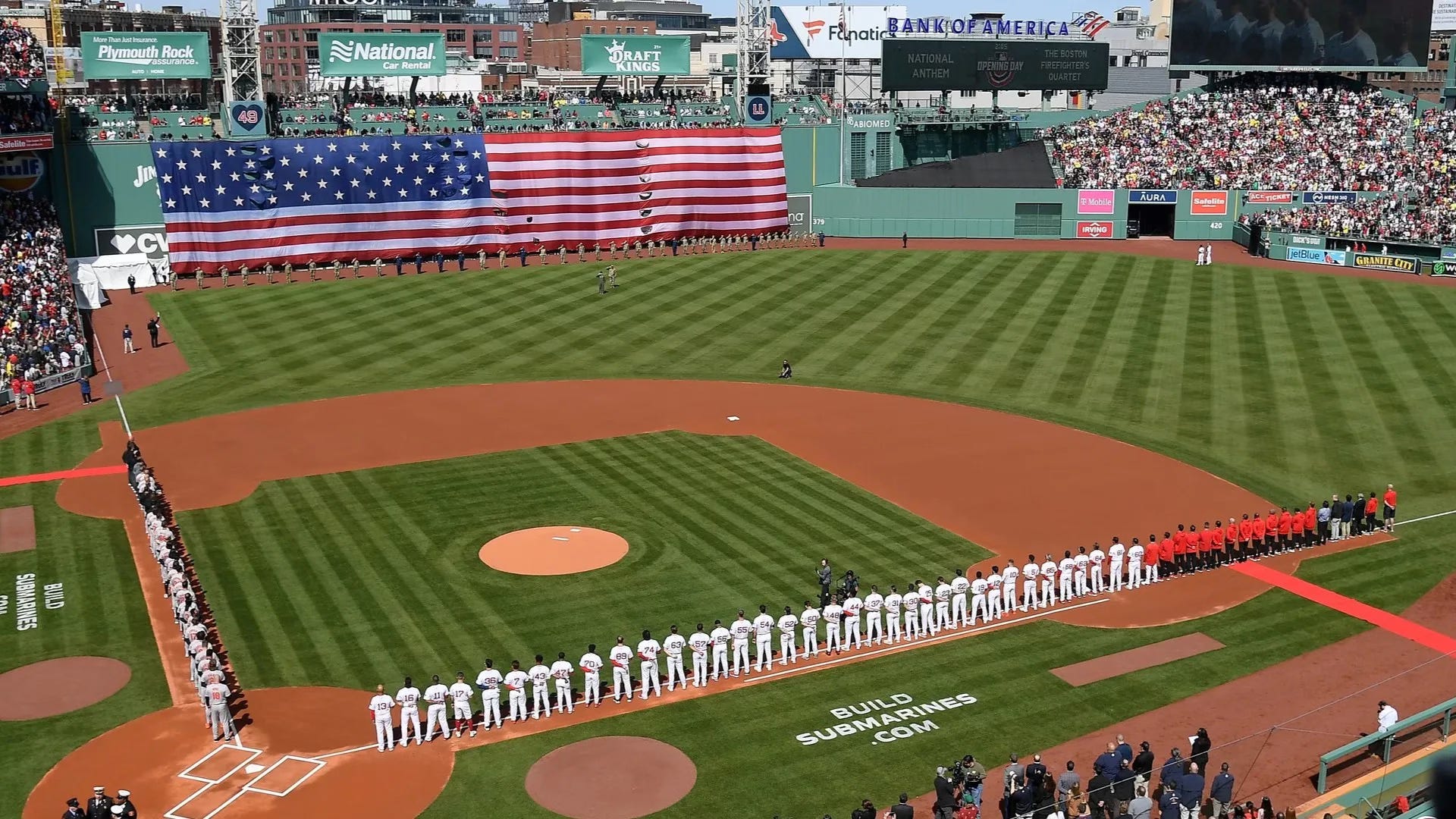
At every Boston Red Sox game this year, I’ve been reminded that America needs to build more nuclear submarines. Imagine an ad along each baseline that read: “PromotePeace”

Given the sweep as well as the power of the MICIMATT over our lives in America, especially our mindset, our culture, our way of thinking and doing, the real president that America is electing this November isn’t personages like Kamala Harris or Donald Trump. The real POTUS is the MICIMATT, a colossus that rules much of our lives and which dominates and largely determines U.S. foreign policy. 

To tackle that colossus, you’ve got to cut its funding in a major way: 25% immediately, and perhaps 50% over the next five years. You’ve also got to change our culture. End threat inflation, end fear-mongering, end the worship of all things military. And I don’t see this happening whether the POTUS is Harris or Trump.

*****

On a related subject, I heard once again from my friend who believes I am too critical of Biden/Harris and insufficiently critical of Trump. For what it’s worth, here’s my reply:

Friend, as I’ve written time and time again, I’m against both Trump and Biden/Harris.

Lately, I’ve written more about Biden/Harris since the Dems are the party in power.  Though I hope Trump doesn’t win, you’ll see plenty of articles criticizing him if he takes office again.

Also, there’s no shortage of anti-Trump articles in the mainstream media.  I’m not about to repeat those.  It’s not what my site is about.  Why read BV if I just echo MSNBC?

I’m not confident that a Trump victory will produce a result that is more congenial to me with respect to the MICC and perpetual war.  Even with Tulsi and RFK Jr. in the mix.  Sorry, I can’t “own” that.

In my view, the worst outcome is another Trump victory.  Close behind that is a Harris victory for reasons you already know, e.g. genocide in Gaza, more wars, tight embrace of Pentagon lethality, praise for the Cheneys and other Republcian neocons, etc.

In contributing to Harris and voting for her with some enthusiasm, are you prepared to “own” her tacit support of genocide in Gaza as well as her celebration of U.S. military lethality and her embrace of Republican neocons as true patriots?

Wars that Never Should Have Been Fought Cannot Be Won

W.J. Astore

Perpetual War Abroad Is the Most Insidious Enemy to Liberty and Freedom at Home

I wrote my first article for TomDispatch in 2007, two years after I’d retired from the military. That article was highly critical of the U.S. military and its disastrous war in Iraq. I wrote that we, the citizens of America, had to save the military from itself and its worst excesses. Sadly, we the people have been demobilized; we have no say about “our” military and its wars.

In fact, while the Iraq and Afghan Wars are now officially over, both lost at enormous cost, we the people are still issuing blank checks to a Pentagon that is wildly if not fatally deluded and delusional.

Much like a black hole, the Pentagon keeps sucking in everything around it, especially taxpayer dollars

Back in 2018, Tom Engelhardt, the creator, editor, and prime mover of TomDispatch, asked me to write a new introduction to my article from 2007. Here’s that intro as I wrote it back then:

Retiring from the U.S. military liberated my tongue, but I quickly learned few people were interested in what I had to say. In 2007, I was outraged by the way the Bush administration hid behind the richly bemedaled chest of General David Petraeus, using his testimony before a spineless Congress to evade responsibility for the catastrophic war in Iraq. I wrote an op-ed about how ‘my’ military was deluding itself not only into believing that it was the ‘greatest’ but that it could somehow find a formula to win an unwinnable war. I sent it to the usual suspects, newspapers like the New York Times and Boston Globe, with no response. A friend then mentioned a website I’d never heard of, TomDispatch.com, and I found a man there who would listen: today’s equivalent of I.F. Stone, Tom Engelhardt. What started as a one-off article led to 55 more ‘Tomgrams‘ over the last decade.

In that very first post, I asked, ‘How can you win someone else’s civil war?’ It’s a question the U.S. military still avoids asking, let alone answering. Indeed, a state of what I then called ‘ongoing self-delusion’ about war persists in that military and American society as a whole. More than a decade later, its commanders continue to mislead themselves and the rest of us by speaking about ‘new’ approaches that promise ‘progress’ in places like Afghanistan.

Who will teach the Pentagon that wars that never should have been fought cannot be won? Who will remind the American people that perpetual war abroad is the most insidious enemy to liberty and freedom at home? Members of the military, active duty and retired, need to speak up. Our oath to the Constitution was never about saluting smartly and following blindly, but about allegiance to the noble ideals expressed in that document. William J. Astore, May 2018

Since 2018, I’ve written another fifty or so articles for TomDispatch, nearly all of them focusing on U.S. military folly and fallacies. It hasn’t mattered. Both parties, Republicans and Democrats, profess their unconditional love of “our” troops, even as they’ve shoved and shoveled trillions of dollars to the military-industrial-congressional complex, the all-powerful MICIMATT* that increasingly infects our lives and infests our society and culture.

This November provides us another opportunity to go to the polls and allegedly vote for what we want. Most people want peace. The Republicans and Democrats offer us more war. Might I suggest that we vote for a person or party that actually seeks peace?

It’s highly unlikely we’re going to vote ourselves out of the mess we’re in. Look at the mainstream candidates! But at least we shouldn’t vote for yet more insanity.

*MICIMATT: military industrial congressional intelligence media academe think tank complex. To that you can now add Hollywood and the world of sports as well. Hercules had a much easier time vanquishing the hydra. It only had seven heads.

The “Arsenal of Democracy” Is Merely An Arsenal

W.J. Astore

$95 Billion for More War, Weapons, and Death

Surprise! The House has approved $95 billion in more weapons and war for Ukraine and Israel, along with a few billion tossed in for Taiwan. Ukraine gets the lion’s share of the aid, roughly $61 billion, while Israel gets roughly $26 billion, which is $12 billion more than the Biden administration initially asked for.

Imagine that! $26 billion for Israel as it slaughters Palestinians in Gaza. America is led by moral monsters and mental midgets.

Speaker Mike Johnson confuses the Baltics with the Balkans and says the Bible tells us America must support Israel no matter what that country does. Does he “speak” for you?

I predicted months ago (not a tough prediction) that Republicans would eventually cave and support Ukraine. In this election year, they don’t want to be blamed for “losing” the Russia-Ukraine War. Even though the war is going poorly for Ukraine, the answer is never to negotiate or deescalate, it’s always to escalate with even more destructive weaponry. Of course, this is justified by America’s moral monsters and mental midgets (M4 for short) by saying Putin is evil and that jobs will be created in America among the arsenal-producing merchants of death.

There was a time, World War II to be exact, when it made a smidgen of sense to call America the “Arsenal of Democracy.” Those days are long gone. America is now simply an arsenal.

Of course, this is yet another triumph for the MICIMATT: the military-industrial-congressional-intelligence-media-academe-think-tank complex. Its power and greed are almost irresistible. Add that to AIPAC, threat inflation, and fear-mongering and perhaps it is irresistible until the U.S. empire final collapses under the weight of its own folly.

But let me give the last word to my smarter wife, who upon hearing of yet another $95 billion for war put it succinctly: “All that money to kill people.” Then she added: they are the planet-wreckers.

Did the USA Lose the Cold War?

W.J. Astore

Thoughts on War with Podcast by George

Yesterday, I appeared on Podcast by George. George Clark and I discussed the Russia-Ukraine War, Gaza, and the military-industrial-congressional complex. Here’s the video:

As George and I discussed America’s constant state of (very expensive and deadly) war, it occurred to me, not for the first time, that my country lost the Cold War that we allegedly won in 1991.

How so? After that “victory,” America was supposed to cash in on its peace dividends, becoming a normal country in normal times, to cite Jeanne Kirkpatrick. Instead, America doubled down on empire and the idea of imperial dominance. Militarism, not democracy, became a leading feature of our society, especially after the trauma of the 9/11 attacks. The U.S. government today remains shrouded in secrecy; those who would expose imperial war crimes, like Julian Assange or Daniel Hale, are imprisoned, even tortured.

The national security state, the MICIMATT,* is a colossus, far more insidious and invasive than anything even President Dwight D. Eisenhower imagined in his farewell address against the military-industrial complex in 1961. “Peace” is a word rarely heard in Washington, and the State Department has become a tiny branch of the Pentagon, bragging about weapons sales and shipments overseas rather than embracing diplomatic solutions to increasingly deadly conflicts. Even genocide in Gaza is dismissed as the Biden administration embraces Israel’s right to defend itself—against women and children in Gaza.

Courtesy of John Whitbeck, here’s a handy (and devastating) chart showing the damage inflicted on Gaza:

Chart prepared by the Euro-Med Human Rights Monitor available at this link:

https://euromedmonitor.org/en/article/6176/Statistics-on-the-Israeli-attack-on-the-Gaza-Strip-(07-October—23-February-2024)

*MICIMATT: military industrial congressional intelligence media academe think tank complex. We might also add Hollywood and the sports world to the complex, since both are so eager to celebrate war and “our” troops.

Democracy doesn’t die in darkness. It dies from constant warfare, as James Madison warned us about. It’s worth repeating his words:

Of all the enemies of true liberty, war is, perhaps, the most to be dreaded, because it comprises and develops the germ of every other.  War is the parent of armies; from these proceed debt and taxes; and armies, and debts, and taxes are the known instruments for bringing the many under the domination of the few.  In war, too, the discretionary power of the Executive is extended; its influence in dealing out offices, honors and emoluments is multiplied; and all the means of seducing the minds, are added to those of subduing the force, of the people.  The same malignant aspect in republicanism may be traced in the inequality of fortunes, and the opportunities of fraud, growing out of a state of war, and in the degeneracy of manner and of morals, engendered in both.  No nation can preserve its freedom in the midst of continual warfare …

“All Options Are On the Table”

W.J. Astore

Then why is bombing the option that’s always chosen?

There they go again. The geniuses inside the DC Beltway are bombing the Middle East again, specifically 85+ targets in Iraq and Syria allegedly supported by Iran. It’s funny: I don’t recall a Congressional declaration of war against Iraq and Syria (or Iran, for that matter), but who needs to be limited by the U.S. Constitution, am I right?

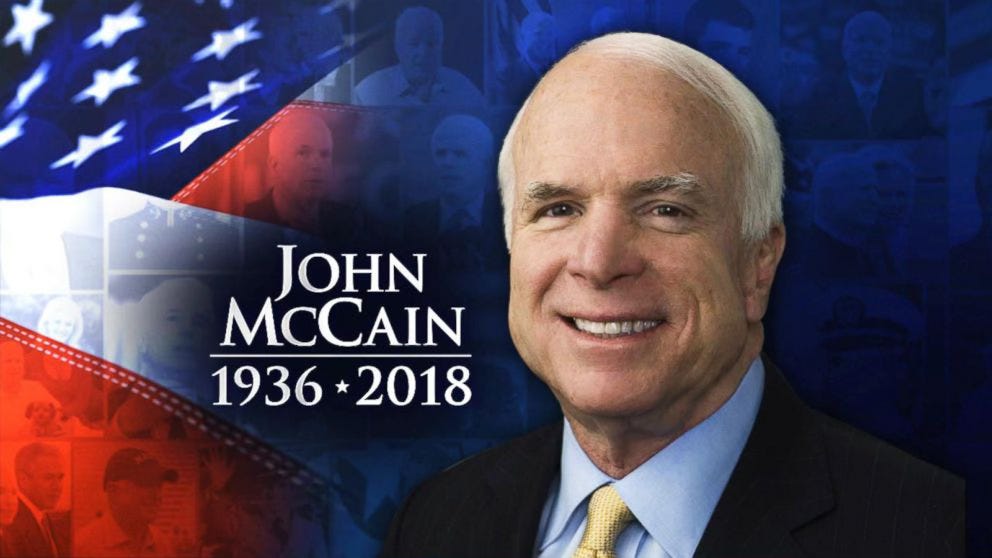
After the recent attack that killed three U.S. soldiers, I heard again that hackneyed expression from DC that “all options are on the table” in response. Amazing how the option that’s always picked by U.S. presidents is the military one. If it’s not “bomb bomb bomb bomb bomb Iran,” as John McCain once jokingly sang, it’s bomb Iranian-backed units in Iraq and Syria, because that’s the best way toward greater stability and peace in the Middle East. Perfectly logical.

Yes, he died in 2018, but he’s America’s most likely presidential winner in 2024.

Speaking of John McCain, I like the joke that’s making the rounds that no matter who Americans vote for as president, they get John McCain, which is a shorthand way of saying that the National Security State is the unofficial fourth and most powerful branch of the U.S. government. Or, if you prefer, the MICIMATT, the military-industrial-congressional-intelligence-media-academe-think-tank complex.

Speaking of the media, you can always count on U.S. media talking heads issuing resounding hosannas to the highest whenever a U.S. president bombs a foreign country. Remember when reporters gushed that Donald Trump had finally become a real president in 2017 when he bombed Syria? Trump, who expressed his contempt for John McCain, finally became him—and earned the MICIMATT’s approval—when he started bombing and launching missiles to kill foreigners.

Finally, we often hear the expression from U.S. government-types that the only thing “they” understand is physical violence and war. It’s often far more accurate to say that the only thing “we” (the MICIMATT, that is) understand (and profit from) is physical violence and war.

Fighting the Military-Industrial Complex

W.J. Astore

Its biggest advantage is that it knows what it wants

The military-industrial-congressional complex (MICC) has a huge advantage over its critics. Its proponents are united by greed and power. They know exactly what they want. Like Johnny Rocco in “Key Largo,” they want MORE. More money. More authority. And obviously more weapons and more war. 

Whereas critics of the MICC tend to approach the beast from different angles with different emphases.  Tactical differences lead to fissures. Fissures prevent coalitions from forming. Unity is lacking, and not for want of trying. And so the MICC rumbles on, unchallenged by any societal force that is remotely its size.

A colleague of mine, Dennis Showalter, was fond of a saying that helps to explain the situation. Critics and intellectuals, he said, have a propensity to see the fourth side of every three-sided problem. Analysis leads to paralysis. The tyranny of small differences prevents unanimity of purpose.

Dennis Showalter, a fine historian and a better friend.

Another key strength of the MICC is reflected in an alternate acronym: the MICIMATT, which adds the intelligence “community,” the mainstream media, academe, and various think tanks to the military, industry, and Congress. To that we might also add the world of sports, entertainment (Hollywood and TV especially), and the very idea of patriotism in America with all its potent symbols. I’d even add Christianity here, the muscular version practiced in the U.S. rather than the compassionate version promulgated by Christ.

When you focus just on the MICC, you miss the wellsprings of its power. It’s not just about greed and authority, it’s about full-spectrum dominance of all aspects of American life and society.

America hasn’t won a major war since World War II, but the MICC has won the struggle for societal dominance in America. Serious challenges to it will require Americans to put aside differences in the name of a greater cause of peace and sanity. The wildcard here, of course, is the ever-present hyping of fear by the MICC.

FDR told Americans the only thing we truly needed to fear was fear itself. Fear paralyzes the mind and inhibits action. Fear is the only darkness, Master Po said in “Kung Fu.”

If we can overcome our fear and our differences to focus on building a more compassionate world, a world in harmony with nature and life, then maybe, just maybe, we can see the foolishness of funding and embracing an MICC based on an unnatural pursuit of destruction and death.