Wars Make the Rich Richer and the Poor Dead

W.J. Astore

On Ending Militarism in America

Also at TomDispatch.com

I read the news today, oh boy. About a lucky man named Elon Musk. But he lost out on one thing: he didn’t get a top secret briefing on Pentagon war plans for China. And the news people breathed a sigh of relief.

With apologies to John Lennon and The Beatles, a day in the life is getting increasingly tough to take here in the land of the free. I’m meant to be reassured that Musk didn’t get to see America’s top-secret plans for — yes! — going to war with China, even as I’m meant to ignore the constant drumbeat of propaganda, the incessant military marches that form America’s background music, conveying the message that America must have war plans for China, that indeed war in or around China is possible, even probable, in the next decade. Maybe in 2027?

My fellow Americans, we should be far more alarmed by such secret U.S. war plans, along with those “pivots” to Asia and the Indo-Pacific, and the military base-building efforts in the Philippines, than reassured by the “good news” that Comrade Billionaire Musk was denied access to the war room, meaning (for Dr. Strangelove fans) he didn’t get to see “the big board.”

It’s war, war, everywhere in America. We do indeed have a strange love for it. I’ve been writing for TomDispatch for 18 years now — this is my 111th essay (the other 110 are in a new book of mine) — most of them focusing on militarism in this country, as well as our disastrous wars in Iraq, Afghanistan, and elsewhere, the ruinous weapons systems we continue to fund (including new apocalyptic nuclear weapons), and the war song that seems to remain ever the same.

A few recent examples of what I mean: President Trump has already bombed Yemen more than once. He’s already threatening Iran. He’s sending Israel all the explosives, all the weaponry it needs to annihilate the Palestinians in Gaza (so too, of course, did Joe Biden). He’s boasting of building new weapons systems like the Air Force’s much-hyped F-47 fighter jet, the “47” designation being an apparent homage by its builder, Boeing, to Trump himself, the 47th president. He and his “defense” secretary, Pete Hegseth, continually boast of “peace through strength,” an Orwellian construction that differs little from “war is peace.” And I could, of course, go on and on and on and on

Buy the Book

Occasionally, Trump sounds a different note. When Tulsi Gabbard became the director of national intelligence, he sang a dissonant note about a “warmongering military-industrial complex.” And however haphazardly, he does seem to be working for some form of peace with respect to the Russia-Ukraine War. He also talks about his fear of a cataclysmic nuclear war. Yet, if you judge him by deeds rather than words, he’s just another U.S. commander-in-chief enamored of the military and military force (whatever the cost, human or financial).

Consider here the much-hyped Department of Government Efficiency (DOGE) led by that lucky man Elon Musk. Even as it dismantles various government agencies like the Department of Education and USAID, it has — no surprise here! — barely touched the Pentagon and its vast, nearly trillion-dollar budget. In fact, if a Republican-controlled Congress has any say in the matter, the Pentagon budget will likely be boosted significantly for Fiscal Year 2026 and thereafter. As inefficient as the Pentagon may be (and we really don’t know just how inefficient it is, since the bean counters there keep failing audit after audit, seven years running), targeted DOGE Pentagon cuts have been tiny. That means there’s little incentive for the generals to change, streamline their operations, or even rethink in any significant fashion. It’s just spend, spend, spend until the money runs out, which I suppose it will eventually, as the national debt soars toward $37 trillion and climbing.

Even grimmer than that, possibly, is America’s state of mind, our collective zeitgeist, the spirit of this country. That spirit is one in which a constant state of war (and preparations for more of the same) is accepted as normal. War, to put it bluntly, is our default state. It’s been that way since 9/11, if not before then. As a military historian, I’m well aware that the United States is, in a sense, a country made by war. It’s just that today we seem even more accepting of that reality, or resigned to it, than we’ve ever been. What gives?
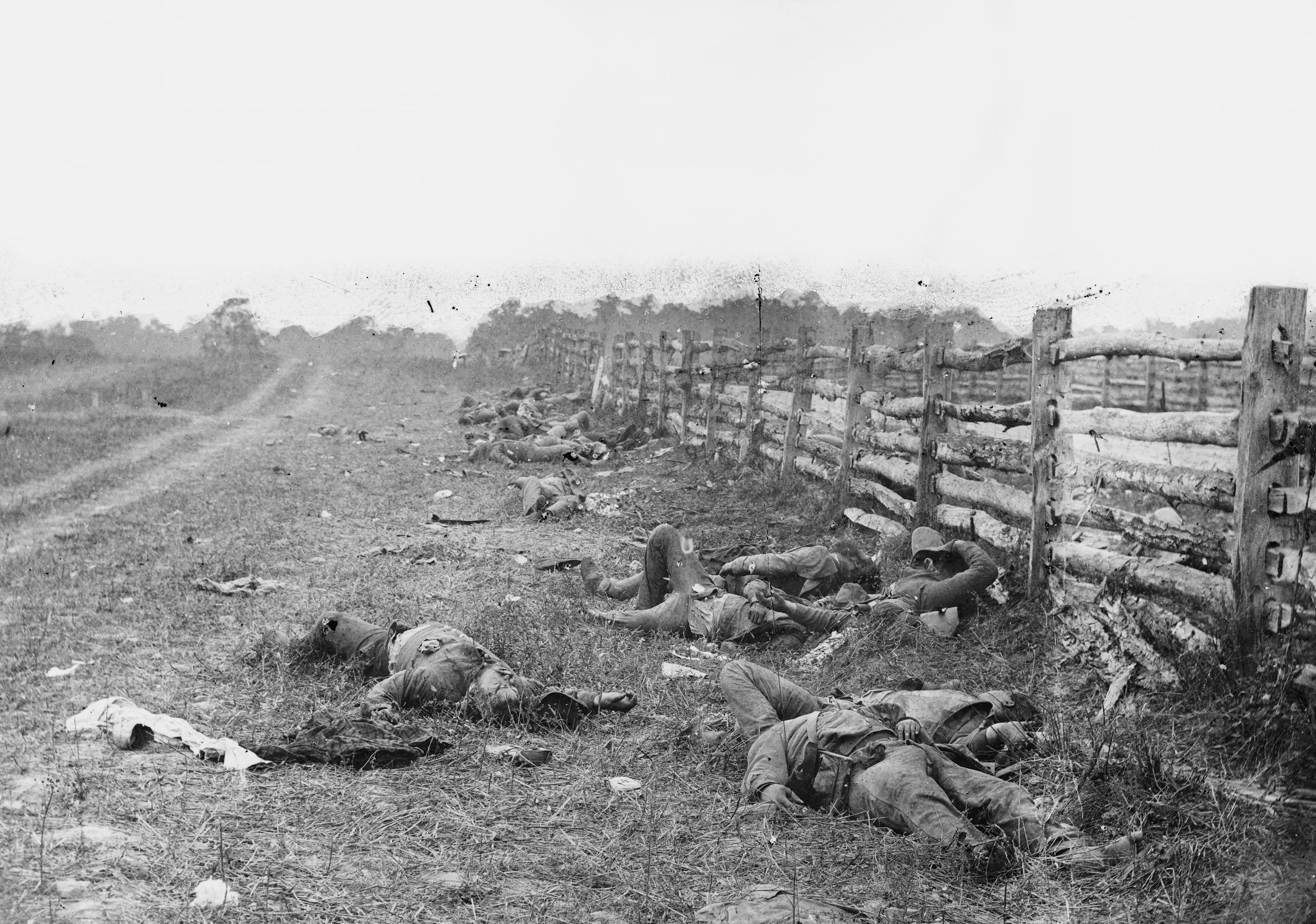
The Face of War: Confederate Dead at Antietam (Matthew Brady)

Remember when, in 1963, Alabama Governor George Wallace said, “Segregation now, segregation tomorrow, and segregation forever”? Fortunately, after much struggle and bloodshed, he was proven wrong. So, can we change the essential American refrain of war now, war tomorrow, and war forever? Can we render that obsolete? Or is that too much to hope for or ask of America’s “exceptional” democracy?

Taking on the MICIMATT(SH)

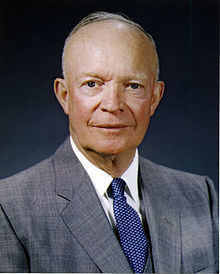
Former CIA analyst Ray McGovern did America a great service when he came up with the acronym MICIMATT, or the Military-Industrial-Congressional-Intelligence-Media-Academia-Think-Tank complex, an extension of President Dwight D. Eisenhower’s military-industrial complex, or MIC (from his farewell speech in 1961). Along with the military and industry (weapons makers like Boeing and Lockheed Martin), the MICIMATT adds Congress (which Eisenhower had in his original draft speech but deleted in the interest of comity), the intelligence “community” (18 different agencies), the media (generally highly supportive of wars and weapons spending), academia (which profits greatly from federal contracts, especially research and development efforts for yet more destructive weaponry), and think tanks (which happily lap up Pentagon dollars to tell us the “smart” position is always to prepare for yet more war).

You’ll note, however, that I’ve added a parenthetical SH to McGovern’s telling acronym. The S is for America’s sporting world, which eternally gushes about how it supports and honors America’s military, and Hollywood, which happily sells war as entertainment (perhaps the best known and most recent film being Tom Cruise’s Top Gun: Maverick, in which an unnamed country that everyone knows is Iran gets its nuclear ambitions spanked by a plucky team of U.S. Naval pilots). A macho catchphrase from the original Top Gun was “I feel the need — the need for speed!” It may as well have been: I feel the need — the need for pro-war propaganda!

Yes, MICIMATT(SH) is an awkward acronym, yet it has the virtue of capturing some of the still-growing power, reach, and cultural penetration of Ike’s old MIC. It should remind us that it’s not just the military and the weapons-makers who are deeply invested in war and — yes! — militarism. It’s Congress; the CIA; related intel “community” members; the mainstream media (which often relies on retired generals and admirals for “unbiased” pro-war commentary); academia (consider how quickly institutions like Columbia University have bent the knee to Trump); and think tanks — in fact, all those “best and brightest” who advocate for war with China, the never-ending war on terror, war everywhere.

But perhaps the “soft power” of the sporting world and Hollywood is even more effective at selling war than the hard power of bombs and bullets. National Football League coaches patrol the sidelines wearing camouflage, allegedly to salute the troops. Military flyovers at games celebrate America’s latest death-dealing machinery. Hollywood movies are made with U.S. military cooperation and that military often has veto power over scripts. To cite only one example, the war movie 12 Strong (2018) turned the disastrous Afghan War that lasted two horrendous decades into a stunningly quick American victory, all too literally won by U.S. troops riding horses. (If only the famed cowboy actor John Wayne had still been alive to star in it!)

The MICIMATT(SH), employing millions of Americans, consuming trillions of dollars, and churning through tens of thousands of body bags for U.S. troops over the years, while killing millions of people abroad, is an almost irresistible force. And right now, it seems like there’s no unmovable object to blunt it.

Believe me, I’ve tried. I’ve written dozens of “Tomgrams” suggesting steps America could take to reverse militarism and warmongering. As I look over those essays, I see what still seem to me sensible ideas, but they die quick deaths in the face of, if not withering fire from the MICIMATT(SH), then being completely ignored by those who matter.

And while this country has a department of war (disguised as a department of defense), it has no department of peace. There’s no budget anywhere for making peace, either. We do have a colossal Pentagon that houses 30,000 workers, feverishly making war plans they won’t let Elon Musk (or any of us) see. It’s for their eyes only, not yours, though they may well ask you or your kids to serve in the military, because the best-laid plans of those war-men do need lots of warm bodies, even if those very plans almost invariably (Vietnam, Afghanistan, Iraq, etc.) go astray.

So, to repeat myself, how do you take on the MICIMATT(SH)? The short answer: It’s not easy, but I know of a few people who had some inspirational ideas.

On Listening to Ike, JFK, MLK, and, Yes, Madison, Too

Militarism isn’t exactly a new problem in America. Consider Randolph Bourne’s 1918 critique of war as “the health of the state,” or General Smedley Butler’s confession in the 1930s that “war is a racket” run by the “gangsters of capitalism.” In fact, many Americans have, over the years, spoken out eloquently against war and militarism. Many beautiful and moving songs have asked us to smile on your brother and “love one another right now.” War, as Edwin Starr sang so powerfully once upon a time, is good for “absolutely nothin’,” though obviously a lot of people disagree and indeed are making a living by killing and preparing for yet more of it.

And that is indeed the problem. Too many people are making too much money off of war. As Smedley Butler wrote so long ago: “Capital won’t permit the taking of the profit out of war until the people — those who do the suffering and still pay the price — make up their minds that those they elect to office shall do their bidding, and not that of the profiteers.” Pretty simple, right? Until you realize that those whom we elect are largely obedient to the moneyed class because the highest court in our land has declared that money is speech. Again, I didn’t say it was going to be easy. Nor did Butler.

As a retired lieutenant colonel in the U.S. Air Force, I want to end my 111th piece at TomDispatch by focusing on the words of Ike, John F. Kennedy (JFK), Martin Luther King, Jr. (MLK), and James Madison. And I want to redefine what words like duty, honor, country, and patriotism should mean. Those powerful words and sentiments should be centered on peace, on the preservation and enrichment of life, on tapping “the better angels of our nature,” as Abraham Lincoln wrote so long ago in his First Inaugural Address.

Why do we serve? What does our oath of office really mean? For it’s not just military members who take that oath but also members of Congress and indeed the president himself. We raise our right hands and swear to support and defend the U.S. Constitution against all enemies, foreign and domestic, to bear true faith and allegiance to the same.

There’s nothing in that oath about warriors and warfighters, but there is a compelling call for all of us, as citizens, to be supporters and defenders of representative democracy, while promoting the general welfare (not warfare), and all the noble sentiments contained in that Constitution. If we’re not seeking a better and more peaceful future, one in which freedom may expand and thrive, we’re betraying our oath.

If so, we have met the enemy — and he is us.

Ike told us in 1953 that constant warfare is no way of life at all, that it is (as he put it), humanity crucifying itself on a cross of iron. In 1961, he told us democracy was threatened by an emerging military-industrial complex and that we, as citizens, had to be both alert and knowledgeable enough to bring it to heel. Two years later, JFK told us that peace — even at the height of the Cold War — was possible, not just peace in our time, but peace for all time. However, it would, he assured us, require sacrifice, wisdom, and commitment.

How, in fact, can I improve on these words that JFK uttered in 1963, just a few months before he was assassinated?

What kind of peace do we seek? Not a Pax Americana enforced on the world by American weapons of war. Not the peace of the grave or the security of the slave. I am talking about genuine peace, the kind of peace that makes life on earth worth living…

I speak of peace because of the new face of war. Total war makes no sense in an age… when the deadly poisons produced by a nuclear exchange would be carried by wind and water and soil and seed to the far corners of the globe and to generations yet unborn… surely the acquisition of such idle [nuclear] stockpiles — which can only destroy and never create — is not the only, much less the most efficient, means of assuring peace.

I speak of peace, therefore, as the necessary rational end of rational men. I realize that the pursuit of peace is not as dramatic as the pursuit of war — and frequently the words of the pursuer fall on deaf ears. But we have no more urgent task.

Are we ready to be urgently rational, America? Are we ready to be blessed as peacemakers? Or are we going to continue to suffer from what MLK described in 1967 as our very own “spiritual death” due to the embrace of militarism, war, empire, and racism?

Of course, MLK wasn’t perfect, nor for that matter was JFK, who was far too enamored of the Green Berets and too wedded to a new strategy of “flexible response” to make a clean break in Vietnam before he was killed. Yet those men bravely and outspokenly promoted peace, something uncommonly rare in their time — and even more so in ours.

More than 200 years ago, James Madison warned us that continual warfare is the single most corrosive force to the integrity of representative democracy. No other practice, no other societal force is more favorable to the rise of authoritarianism and the rule of tyrants than pernicious war. Wage war long and it’s likely you can kiss your democracy, your rights, and just maybe your ass goodbye.

America, from visionaries and prophets like MLK, we have our marching orders. They are not to invest yet more in preparations for war, whether with China or any other country. Rather, they are to gather in the streets and otherwise raise our voices against the scourge of war. If we are ever to beat our swords into plowshares and our spears into pruning hooks and make war no more, something must be done.

Let’s put an end to militarism in America. Let’s be urgently rational. To cite John Lennon yet again: You may say I’m a dreamer, but I’m not the only one. Together, let’s imagine and create a better world.

Copyright 2025 William J. Astore.
The Heretics

W.J. Astore

Global Dominance at Any Price

American foreign policy remains in the grip of heretics. They believe that the Prince of Peace is actually a god of war. They believe America is strengthened by entangling alliances (think here of our so-called alliance with Israel). They believe in constant war as a recipe both for dominant power and greater freedom and democracy throughout the world. They believe that spending roughly a trillion dollars each year on weapons and war is a wise “investment.” And they believe they are the toughest and truest of patriots, the ones who see further, the ones with the guts to get things done, no matter how poorly America’s wars have gone from Korea and Vietnam through Afghanistan, Iraq, and today’s proxy wars.

There used to be a different America, a much less militaristic and bellicose one. The American tradition is rich and complex; it contains multitudes, as Walt Whitman might say. Why are we so stuck on warmongers, thieves, and vainglorious simps of empire?

As an American, I’m very much a part of my country’s complexity and richness. And the America that speaks to me contains elements and lessons such as these:

George Washington’s prescient warning about the dangers of entangling alliances with foreign powers.

James Madison’s warning that constant warfare is the direst of enemies of liberty, freedom, and democracy in America.

General Smedley Butler’s confession that “war is a racket” and that he had often served as a “gangster for capitalism.” 

The Nye Commission in the U.S. Senate that investigated arms manufacturers and weapons makers as “Merchants of Death” that profited greatly from war.

President Dwight D. Eisenhower’s “cross of iron” speech and his warning about the growing power and insidious nature of the military-industrial complex.

President John F. Kennedy’s powerful peace speech in which he extended an olive branch to the Soviet Union.

Martin Luther King Jr.’s powerful speech against the Vietnam War and the perils of militarism, racism, and materialism in America.

Of course, America has always had its dark side, with slavery and the genocidal treatment of Native Americans being at the top of the list. Yet America also has had its triumphs of wisdom and goodness. That is the America we should be embracing and celebrating. I believe it’s captured in the words of Washington, Madison, JFK, MLK, and so many others who’ve fought for peace and sanity, people like Dorothy Day, the Catholic activist who fought against war and all its awful excesses.

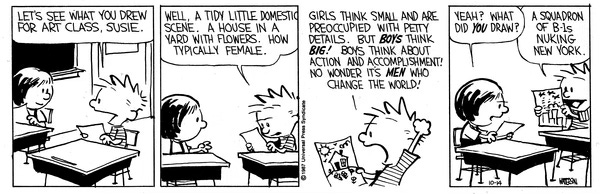
All that said, sometimes cartoons can express truths in ways that are as powerful as they are simple. In the cartoon below, the heretics of U.S. foreign policy are so many Calvins, spreading destruction and employing nukes in the name of manly seriousness. They are wrong. They are heretics. And if we continue to allow them to rule, they will surely lead America (as they already are in Gaza) to mass graves.

Trump Paying Stormy Means Biden Wins?

W.J. Astore

The Absurdity of Democratic “Strategy”

The vacuity of Democratic strategy is astonishing if you take at face value the claim that a Trump victory this November will “end democracy.” Apparently, Trump paying Stormy Daniels $130K in hush money, after which some creative accounting obscured the source of the payoff, renders him “unfit for office.” And that claim is now a “top 2024 issue” for Democrats, as The New York Times notes here:

Democrats Push Biden to Make Trump’s Felonies a Top 2024 Issue

Interviews with dozens of Democrats reveal a party hungry to tell voters that Donald Trump’s conviction makes him unfit for office, and hopeful that President Biden will lead the way.

Meanwhile, this was the lead headline in the NYT “top news” send-out this morning:

A Felon in the Oval Office Would Test the American System

Some are wondering how the Constitution’s checks and balances, meant to hold presidents accountable, would work if the next president elected were already a felon.

“Some are wondering”: What a vapid phrase!

I think there are more severe “tests” of the “American system.” How about a president enabling a genocide in Gaza, for example?

If you want to beat Donald Trump this November, how about running a more attractive, more dynamic, more charismatic, more populist and popular, candidate? Whatever else Biden is, he is very much lacking in dynamism even as his actions render him increasingly unpopular among key segments of the Democratic base.

My wife jokingly said today: Just what we need, another election featuring two tired and seriously old white guys. She has a point. It’s not that Trump is now a felon that renders him allegedly unfit. Trump is, in my view, constitutionally unsuited for the presidency. Biden, in contrast, is a fading political hack who will be 82 years of age at the end of this year. Yet, this is what the “American system” produces. Maybe that “system” needs an overhaul?

So, which tired and seriously old white guy do you want to vote for this year?

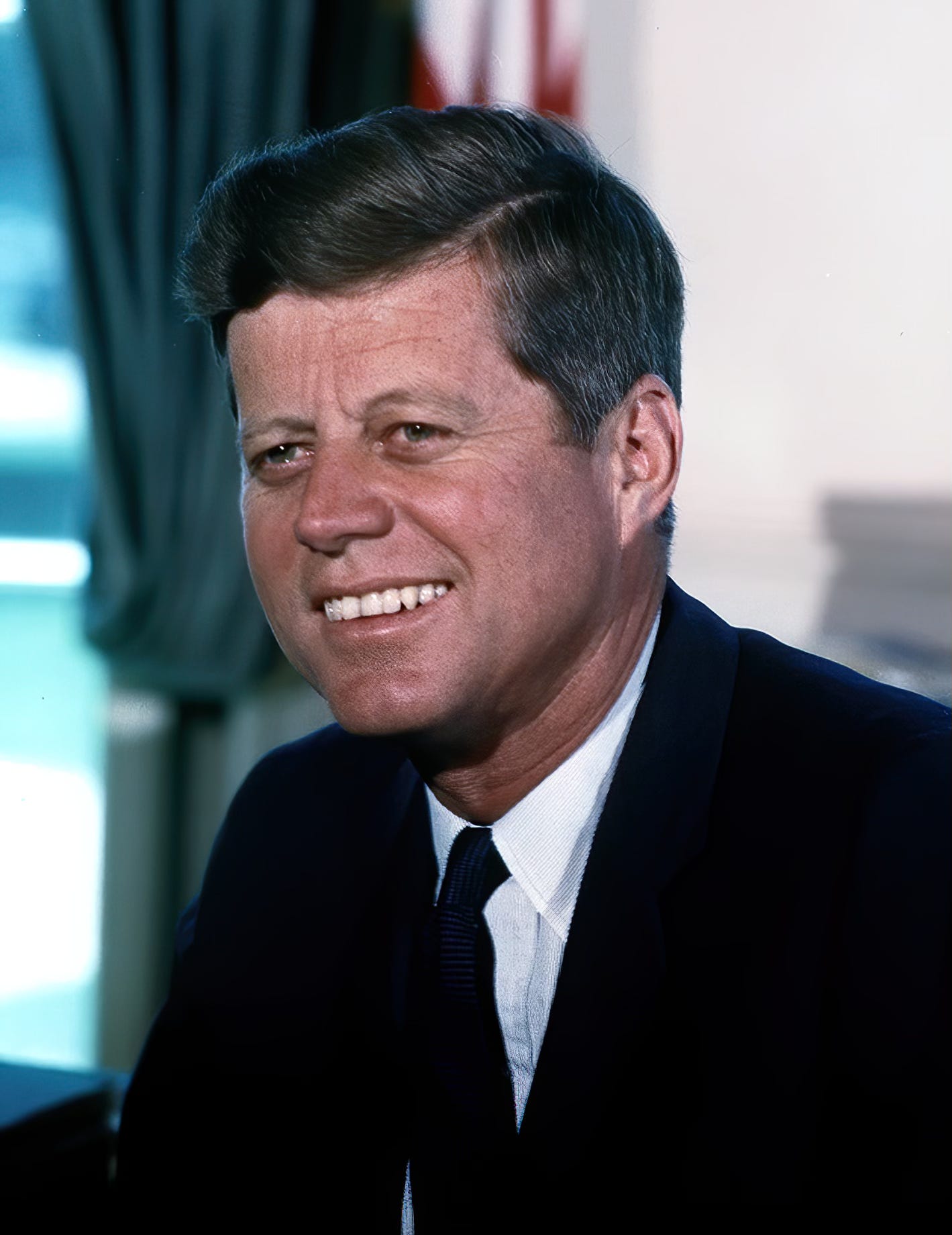
JFK in 1963. Read his famous “peace speech” at American University

It seems hard to believe that in my lifetime we had a young, dynamic, and visionary president, JFK, who was 43 years of age when elected. A president who grew in office, rather than fading. A president who in 1963 made a commitment to pursuing peace with the Soviet Union. A man with flaws, but also one with potential.

Of course, the DNC with its superdelegates has created a system to deny anyone like a JFK (or even RFK Jr.) any chance at securing the nomination. Only corporate stooges need apply. That has allowed a populist-fraud like Trump to emerge from the right, a billionaire who poses as a man of the people. That Trump’s claim is plausible to so many is a measure of how far the Democratic Party has fallen.

It’s already been a very long election cycle, and it’s only early June. Five more months of total BS to go, America.

Cutting the Pentagon Down to Size

W.J. Astore

It’s not a new idea

Also at TomDispatch.com.

In an age when American presidents routinely boast of having the world’s finest military, where nearly trillion-dollar war budgets are now a new version of routine, let me bring up one vitally important but seldom mentioned fact: making major cuts to military spending would increase U.S. national security.

Why? Because real national security can neither be measured nor safeguarded solely by military power (especially the might of a military that hasn’t won a major war since 1945). Economic vitality matters so much more, as does the availability and affordability of health care, education, housing, and other crucial aspects of life unrelated to weaponry and war. Add to that the importance of a Congress responsive to the needs of the working poor, the hungry and the homeless among us. And don’t forget that the moral fabric of our nation should be based not on a military eternally ready to make war but on a determination to uphold international law and defend human rights. It’s high time for America to put aside its conveniently generic “rules-based order” anchored in imperial imperatives and face its real problems. A frank look in the mirror is what’s most needed here.

It should be simple really: national security is best advanced not by endlessly preparing for war, but by fostering peace. Yet, despite their all-too-louddisagreements, Washington’s politicians share a remarkably bipartisan consensus when it comes to genuflecting before and wildly overfunding the military-industrial complex. In truth, ever-rising military spending and yet more wars are a measure of how profoundly unhealthy our country actually is.

“The Scholarly Junior Senator from South Dakota”

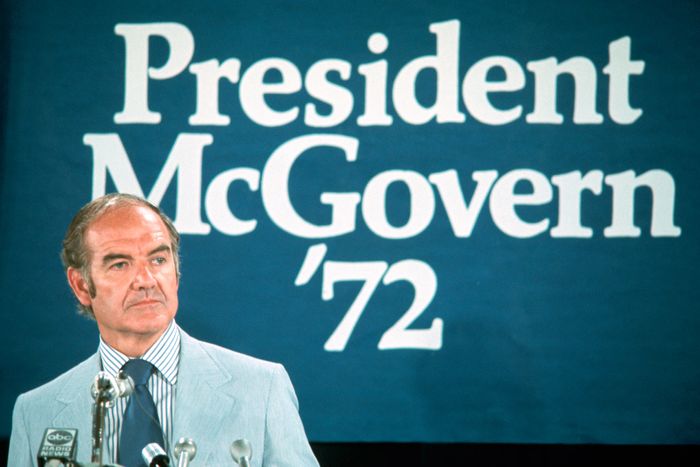
Such insights are anything but new and, once upon a time, could even be heard in the halls of Congress. They were, in fact, being aired there within a month of my birth as, on August 2, 1963, Democratic Senator George McGovern of South Dakota — later a hero of mine — rose to address his fellow senators about “New Perspectives on American Security.”

George McGovern

Nine years later, he (and his vision of the military) would, of course, lose badly to Republican Richard Nixon in the 1972 presidential election. No matter that he had been the one who served in combat with distinction in World War II, piloting a B-24 bomber on 35 missions over enemy territory, even as Nixon, then a Navy officer, amassed a tidy sum playing poker. Somehow, McGovern, a decorated hero, became associated with “weakness” because he opposed this country’s disastrous Vietnam War, while Nixon manufactured a self-image as the staunchest Cold Warrior around, never missing a chance to pose as tough on communism (until, as president, he memorably visited Communist China, opening relations with that country).

But back to 1963, when McGovern gave that speech (which you can read in the onlineSenate Congressional Record, volume 109, pages 13,986-94). At that time, the government was already dedicating more than half of all federal discretionary spending to the Pentagon, roughly the same percentage as today. Yet was it spending all that money wisely? McGovern’s answer was a resounding no. Congress, he argued, could instantly cut 10% of the Pentagon budget without compromising national security one bit. Indeed, security would be enhanced by investing in this country instead of buying yet more overpriced weaponry. The senator and former bomber pilot was especially critical of the massive amounts then being spent on the U.S. nuclear arsenal and the absurd planetary “overkill” it represented vis-à-vis the Soviet Union, America’s main competitor in the nuclear arms race. As he put it then:

“What possible advantage [can be had] in appropriating additional billions of dollars to build more [nuclear] missiles and bombs when we already have excess capacity to destroy the potential enemy? How many times is it necessary to kill a man or kill a nation?”

How many, indeed? Think about that question as today’s Congress continues to ramp up spending, now estimated at nearly $2 trillion over the next 30 years, on — and yes, this really is the phrase — “modernizing” the country’s nuclear triad of intercontinental ballistic missiles (ICBMs), as well as its ultra-expensive nuclear-missile-firing submarines and stealth bombers. And keep in mind that the U.S. already has an arsenal quite capable of wiping out life on several Earth-sized planets.

What, according to McGovern, was this country sacrificing in its boundless pursuit of mass death? In arguments that should resonate strongly today, he noted that America’s manufacturing base was losing vigor and vitality compared to those of countries like Germany and Japan, while the economy was weakening, thanks to trade imbalances and the exploding costs of that nuclear arms race. Mind you, back then, this country was still on the gold standard and unburdened by an almost inconceivable national debt, 60 years later, of more than $34 trillion, significant parts of it thanks to this country’s failed “war on terror” in Iraq, Afghanistan, and elsewhere across all too much of the planet.

McGovern did recognize that, given how the economy was (and still is) organized, meaningful cuts to military spending could hurt in the short term. So, he suggested that Congress create an Economic Conversion Commission to ensure a smoother transition from guns to butter. His goal was simple: to make the economy “less dependent upon arms spending.” Excess military spending, he noted, was “wasting” this country’s human resources, while “restricting” its political leadership in the world.

In short, that distinguished veteran of World War II, then serving as “the scholarly junior Senator from South Dakota” (in the words of Senator Jennings Randolph of West Virginia), was anything but proud of America’s “arsenal of democracy.” He wasn’t, in fact, a fan of arsenals at all. Rather, he wanted to foster a democracy worthy of the American people, while freeing us as much as possible from the presence of just such an arsenal.

To that end, he explained what he meant by defending democracy:

“When a major percentage of the public resources of our society is devoted to the accumulation of devastating weapons of war, the spirit of democracy suffers. When our laboratories and our universities and our scientists and our youth are caught up in war preparations, the spirit of [freedom] is hampered.

“America must, of course, maintain a fully adequate military defense. But we have a rich heritage and a glorious future that are too precious to risk in an arms race that goes beyond any reasonable criteria of need.

“We need to remind ourselves that we have sources of strength, of prestige, and international leadership based on other than nuclear bombs.”

Imagine if his call had been heeded. This country might today be a far less militaristicplace.

Something was, in fact, afoot in the early 1960s in America. In 1962, despite the wishes of the Pentagon, President John F. Kennedy used diplomacy to get us out of the Cuban Missile Crisis with the Soviet Union and then, in June 1963, made a classic commencement address about peace at American University. Similarly, in support of his call for substantial reductions in military spending, McGovern cited the farewell address of President Dwight D. Eisenhower in 1961 during which he introduced the now-classic phrase “military-industrial complex,” warning that “we must never let the weight of this combination [of the military with industry, abetted by Congress] endanger our liberties or democratic processes.”

Echoing Ike’s warning in what truly seems like another age, McGovern earned the approbation of his Senate peers. His vision of a better, more just, more humane America seemed, however briefly, to resonate. He wanted to spend money not on more nuclear bombs and missiles but on “more classrooms, laboratories, libraries, and capable teachers.” On better hospitals and expanded nursing-home care. On a cleaner environment, with rivers and streams saved from pollution related to excessive military production. And he hoped as well that, as military bases were closed, they would be converted to vocational schools or healthcare centers.

McGovern’s vision, in other words, was aspirational and inspirational. He saw a future America increasingly at peace with the world, eschewing arms races for investments in our own country and each other. It was a vision of the future that went down fast in the Vietnam War era to come, yet one that’s even more needed today.

Praise from Senate Peers

Here’s another way in which times have changed: McGovern’s vision won high praise from his Senate peers in the Democratic Party. Jennings Randolph of West Virginia agreed that “unsurpassed military power in combination with areas of grave economic weakness is not a manifestation of sound security policy.” Like McGovern, he called for a reinvestment in America, especially in underdeveloped rural areas like those in his home state. Joseph Clark, Jr., of Pennsylvania, also a World War II veteran, “thoroughly” agreed that the Pentagon budget “needs most careful scrutiny on the floor of the Senate, and that in former years it has not received that scrutiny.” Stephen Young of Ohio, who served in both World War I and World War II, looked ahead toward an age of peace, expressing hope that “perhaps the necessity for these stupendous appropriations [for weaponry] will not be as real in the future.”

Possibly the strongest response came from Frank Church of Idaho, who reminded his fellow senators of their duty to the Constitution. That sacred document, he noted, “vests in Congress the power to determine the size of our military budget, and I feel we have tended too much to rubberstamp the recommendations that come to us from the Pentagon, without making the kind of critical analysis that the Senator from South Dakota has attempted… We cannot any longer shirk this responsibility.” Church saluted McGovern as someone who “dared to look a sacred cow [the Pentagon budget] in the teeth.”

A final word came from Wayne Morse of Oregon. Very much a gadfly, Morse shifted the topic to U.S. foreign aid, noting that too much of that aid was military-related, constituting a “shocking waste” to the taxpayer even as it proved detrimental to the development of democracy abroad, most notably in Latin America. “We should be spending the money for bread, rather than for military aid,” he concluded.

Imagine that! Bread instead of bullets and bombs for the world. Of course, even then, it didn’t happen, but in the 60 years since then, the rhetoric of the Senate has certainly changed. A McGovern-style speech today would undoubtedly be booed down on both sides of the aisle. Consider, for example, consistent presidential and Congressional clamoring now for more military aid to Israel during a genocide in Gaza. So far, U.S. government actions are more consistent with letting starving children in Gaza eat lead instead of bread.

Peace Must Be Our Profession

What was true then remains true today. Real national defense should not be synonymous with massive spending on wars and weaponry. Quite the reverse: whenever possible, wars should be avoided; whenever possible, weapons should be beaten into plowshares, and those plowshares used to improve the health and well-being of people everywhere.

Oh, and that Biblical reference of mine (swords into plowshares) is intentional. It’s meant to highlight the ancient roots of the wisdom of avoiding war, of converting weapons into useful tools to sustain and provide for the rest of us.

Yet America’s leaders on both sides of the aisle have long lost the vision of George McGovern, of John F. Kennedy, of Dwight D. Eisenhower. Today’s president and today’s Congress, Republicans and Democrats alike, boast of spending vast sums on weapons, not only to strengthen America’s imperial power but to defeat Russia and deter China, while bragging all the while of the “good” jobs they’re allegedly creatinghere in America in the process. (This country’s major weapons makers would agree with them, of course!)

McGovern had a telling rejoinder to such thinking. “Building weapons,” he noted in 1963, “is a seriously limited device for building the economy,” while an “excessive reliance on arms,” as well as overly “rigid diplomacy,” serve only to torpedo promising opportunities for peace.

Back then, it seemed to politicians like McGovern, as well as President Kennedy, that clearing a path toward peace was not only possible but imperative, especially considering the previous year’s near-cataclysmic Cuban Missile Crisis. Yet just a few months after McGovern’s inspiring address in the Senate, Kennedy had been assassinated and his calls for peace put on ice as a new president, Lyndon B. Johnson, succumbed to pressure by escalating U.S. military involvement in what mushroomed into the catastrophic Vietnam War.

In today’s climate of perpetual war, the dream of peace continues to wither. Still, despite worsening odds, it’s important that it must not be allowed to die. The high ground must be wrested away from our self-styled “warriors,” who aim to keep the factories of death churning, no matter the cost to humanity and the planet.

My fellow Americans, we need to wake up from the nightmare of forever war. This country’s wars aren’t simply being fought “over there” in faraway and, at least to us, seemingly forgettable places like Syria and Somalia. In some grim fashion, our wars are already very much being fought right here in this deeply over-armed country of ours.

George McGovern, a bomber pilot from World War II, knew the harsh face of war and fought in the Senate for a more peaceful future, one no longer haunted by debilitating arms races and the prospect of a doomsday version of overkill. Joining him in that fight was John F. Kennedy, who, in 1963, suggested that “this generation of Americans has already had enough, more than enough, of war, and hate, and oppression.”

If only.

Today’s generation of “leaders” seems not yet to have had their fill of war, hate, and oppression. That tragic fact — not China, not Russia, not any foreign power — is now the greatest threat to this country’s “national security.” And it’s a threat only aggravated by ever more colossal Pentagon budgets still being rubberstamped by a spinelessly complicit Congress.

Priming the Pump for More War

W.J. Astore

A reader contacted me about China, Russia, and risks for war. One thing history has taught me is to be humble about predicting anything. Here was my response:

Have to admit I don’t know what China is planning.  I understand the policy of “One China,” i.e. that Taiwan is still part of China.  I don’t know if China is planning war.  I tend to doubt it.  Unlike the U.S., China is patient and careful.  But war by miscalculation is always possible.  Just look at 1914.  Here in the USA, we keep hearing that China is our most serious potential enemy.  That kind of rhetoric is not helpful, to put it mildly.

With respect to the Russia-Ukraine war, history teaches us that war is unpredictable, even chaotic.  The war already approaches 90 days, longer than most people predicted, I think, with no clear end in sight.  Meanwhile, the USA is planning to send $40 billion in “aid,” mostly military, on top of the already $12 billion or so that we’ve sent.  This money is not intended to end the war; indeed, it can only prolong it.

So I’m not optimistic about any of this.  It all strikes me as reckless and escalatory.

If I had but one message for my country, it would be this: Reject militarism. Reclaim democracy. Reinvest in America. Restore peace.

But we’re doing the very opposite of my message. We’re priming the pump for more war. Meanwhile, more violence overseas feeds more violence at home. And the government’s response is always the same: More police internally and more troops externally. More spending on police and the military. More focus on “security” achieved through weaponry and surveillance.

To me, it’s sobering and sad how broadly yet narrowly we define “national security.” It’s broad in the sense that America seeks full-spectrum dominance of the land, sea, air, space, and cyber; that global reach, global power, and global dominance is the goal; that the U.S. military splits the globe into “commands” headed by four-star generals and admirals. Yet it’s narrow because we don’t equate security with having affordable health care, a clean environment, a quality education, safe water and healthy food, and similar, non-military essentials.

How can we be safe and secure when kids are drinking water with lead and other toxic chemicals in it? When sickness leads to personal bankruptcy? When people can’t afford to put gas in their tanks while putting food in their bellies and paying their rent? When they have to ration essential drugs like insulin?

Instead of priming the pump for more war, we should be doing everything possible to work toward peace. Ike told us this in 1953, JFK in 1963, and MLK in 1967. George McGovern in 1972 told America to come home, to reject constant warfare overseas, and to focus on healing our country and its divisions.

Yet the pacific wisdom of leaders like Ike, JFK, MLK, and McGovern is being repressed in America today. If Ike gave his 1953 “Cross of Iron” speech today, explaining how weapons spending represents a theft from the American people, he’d be dismissed as muddleheaded and misguided. If JFK gave his 1963 speech calling for peace with the Russians, he’d be called a Putin puppet. If MLK gave his 1967 speech about the evils of militarism, materialism, and racism in America, he’d be called unpatriotic and even traitorous. (As he pretty much was in 1967, but that’s another story.) And McGovern and his principled anti-war stance? He’d never get near the Democratic nomination as a presidential candidate. (Indeed, that’s why the DNC invented super-delegates.) Doubtless he’d be smeared as an isolationist, as a Russian (or Chinese) agent, as an idealistic dupe or a useful idiot for America’s alleged enemies.

So we keep priming the pump for more war. And I have some experience priming a hand pump for water. Keep cranking that handle (war rhetoric), keep adding some water (more and more weaponry and troops), and soon enough the water starts gushing out.

When will war start gushing out for America? Don’t events at home and abroad suggest it’s already beginning to flow?

Why It’s So Hard to Give Peace A Chance in America

W.J. Astore

It sure is hard to give peace a chance in America, as recent events with Russia and Ukraine show. The Washington consensus is all about weapons and more weapons, of economic sanctions, i.e. economic warfare, of not being seen as a pitiful helpless giant, as Richard Nixon once said during the Vietnam War. America can never stand on the sidelines, even when its national security interests aren’t even threatened. Something must be done, something forceful, something involving troops and weapons and ultimatums that could very well escalate into disaster.

Revealingly, Washington insiders always talk of “all options” being on a metaphorical table, meaning the most violent ones, including war, for the president to choose from. They lie. Because the one option that’s never on that imaginary table is peace.

Peacemakers might be the children of God, but perhaps America is more godless than it knows. Or maybe it just worships the god of war, a Pentagod. It’s discouraging to face the obstacles to peace in America, because these obstacles are not going to be removed just by singing songs and writing articles or even by protesting. What is truly needed is a mass movement against war, as we saw during the Vietnam War years, but even that mass movement took years to have an impact. And it was motivated as well by resistance to the draft, which no longer exists.

A short list of the obstacles to peace is sobering indeed:

  • The power of the military-industrial-congressional complex. It doesn’t want to get smaller or less powerful. It thrives off weaponry and wars. It has no interest in peace.
  • The mainstream media. It’s owned by major corporations and advances corporate agendas. It smears antiwar voices as naive (at best) and often as traitorous and/or weak. Antiwar voices simply aren’t heard on the MSM. Instead, retired colonels and generals, as well as senior ex-CIA officials, are put forward as unbiased voices of reason as they promote the most hawkish lines.
  • The absence of a draft. Let’s face it: the youth of America are much more likely to resist war if they have to risk their lives. But America has an “all volunteer force,” and if these volunteers are sent off to war, that’s what they signed up for. Right?
  • American culture in general is suffused with violence and misinformed about the world, especially America’s imperial role in it. Myths about American exceptionalism and beliefs about the troops as freedom-fighters serve to inhibit antiwar criticism and protests.
  • The difficulty of launching any kind of sustained protest nowadays. Ready to gather in the streets to march against war? Sorry, do you have a permit? Covid restrictions may prevent you from gathering. And maybe we’ll move you to a special “free speech” zone, which I assure you will be far away from media cameras. What good is protesting if you gain no traction because few people see you and the media ignores you?

Don’t get me wrong. I’m not saying it’s impossible to give peace a chance. Just that it’s very difficult, given the power structures of our society and our collective national ethos. It’s mind-boggling that America has so many agencies for “defense” and “intelligence.” We have the Pentagon, the Department of Homeland Security (a domestic mini-Pentagon), something like 17 intelligence agencies like the CIA and NSA, the list goes on. State and local police forces are now heavily militarized and generally unsympathetic to your right to assemble and to protest vigorously. Get a job, commie peacenik!

Meanwhile, society’s heroes are U.S. military troops, or the “thin blue line” of police that “protect and serve.” Those who are committed to peace are generally not viewed as heroes, at least not by society at large. Again, Christ may have seen peacemakers as God’s children, but in the U.S. there’s a preference (judging by gun sales) for Colt Peacemakers.

How to overcome these obstacles to truly give peace a chance is perhaps the most pressing issue of our age, given the risk of war going nuclear and ending most life on our planet. Readers, I don’t have easy answers, but I’d begin with Ike’s warning about the military-industrial complex in 1961, JFK’s peace speech in 1963, MLK’s speech against the Vietnam War on April 4th, 1967, perhaps even John Lennon’s song “Imagine.”

How do we imagine — and then create — a new reality that favors peace instead of war? How do we pursue a just and lasting peace with ourselves and with all nations that Abraham Lincoln spoke of near the end of the U.S. Civil War?

The words are there. The vision is there. Tapping the nobility of Lincoln, Ike, JFK, and MLK and their antiwar messages is possible. Isn’t it?

As JFK said in his “peace speech,” to believe that war is inevitable is a “dangerous defeatist belief.” I’m with JFK.

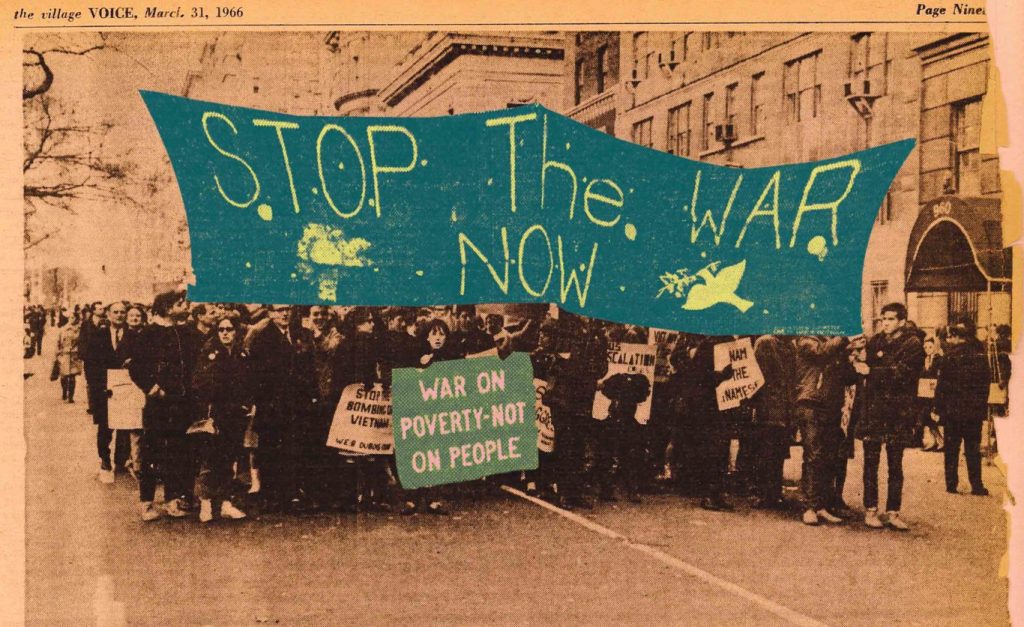
The antiwar movement helped to stop the disastrous Vietnam War, but it sure wasn’t easy

America Is Programmed for War

W.J. Astore

In my latest article for TomDispatch, I write that America is programmed for war. It’s a feature of our polity and our politics and our culture, not a bug. In some sense, we are a country made by war, and that’s not a good feature for a self-avowed democracy to have. Here’s an excerpt:

Why don’t America’s wars ever end?

I know, I know: President Joe Biden has announced that our combat troops will be withdrawn from Afghanistan by 9/11 of this year, marking the 20th anniversary of the colossal failure of George W. Bush and Dick Cheney to defend America.

Of course, that other 9/11 in 2001 shocked us all. I was teaching history at the U.S. Air Force Academy and I still recall hushed discussions of whether the day’s body count would exceed that of the Battle of Antietam, the single bloodiest day of the Civil War. (Fortunately, bad as it was, it didn’t.)

Hijacked commercial airliners, turned into guided missiles by shadowy figures our panicky politicians didn’t understand, would have a profound impact on our collective psyche. Someone had to pay and among the first victims were Afghans in the opening salvo of the misbegotten Global War on Terror, which we in the military quickly began referring to as the GWOT. Little did I know then that such a war would still be going on 15 years after I retired from the Air Force in 2005 and 80 articles after I wrote my first for TomDispatch in 2007 arguing for an end to militarism and forever wars like the one still underway in Afghanistan.

Over those years, I’ve come to learn that, in my country, war always seems to find a way, even when it goes badly — very badly, in fact, as it did in Vietnam and, in these years, in Afghanistan and Iraq, indeed across much of the Greater Middle East and significant parts of Africa. Not coincidentally, those disastrous conflicts haven’t actually been waged in our name. No longer does Congress even bother with formal declarations of war. The last one came in 1941 after Pearl Harbor. During World War II, Americans united to fight for something like national security and a just cause. Today, however, perpetual American-style war simply is. Congress postures, but does nothing decisive to stop it. In computer-speak, endless war is a feature of our national programming, not a bug.

Two pro-war parties, Republicans and Democrats, have cooperated in these decades to ensure that such wars persist… and persist and persist. Still, they’re not the chief reason why America’s wars are so difficult to end. Let me list some of those reasons for you. First, such wars are beyond profitable, notably to weapons makers and related military contractors. Second, such wars are the Pentagon’s reason for being. Let’s not forget that, once upon a time, the present ill-named Department of Defense was so much more accurately and honestly called the Department of War. Third, if profit and power aren’t incentive enough, wars provide purpose and meaning even as they strengthen authoritarian structures in society and erode democratic ones. Sum it all up and war is what America now does, even if the reasons may be indefensible and the results so regularly abysmal.

Support Our Troops! (Who Are They, Again?)

The last truly American war was World War II. And when it ended in 1945, the citizen-soldiers within the U.S. military demanded rapid demobilization — and they got it. But then came the Iron Curtain, the Cold War, the Korean War, fears of nuclear Armageddon (that nearly came to fruition during the Cuban Missile Crisis in 1962), and finally, of course, Vietnam. Those wars were generally not supported — not with any fervor anyway — by the American people, hence the absence of congressional declarations. Instead, they mainly served the interests of the national security state, or, if you prefer, the military-industrial-congressional complex.

Ike knew the score

That’s precisely why President Dwight D. Eisenhower issued his grave warning about that Complex in his farewell address in 1961. No peacenik, Ike had overseen more than his share of military coups and interventions abroad while president, so much so that he came to see the faults of the system he was both upholding and seeking to restrain. That was also why President John F. Kennedy called for a more humble and pacific approach to the Cold War in 1963, even as he himself failed to halt the march toward a full-scale war in Southeast Asia. This is precisely why Martin Luther King, Jr., truly a prophet who favored the fierce urgency of peace, warned Americans about the evils of war and militarism (as well as racism and materialism) in 1967. In the context of the enormity of destruction America was then visiting on the peoples of Southeast Asia, not for nothing did he denounce this country as the world’s greatest purveyor of violence.

Collectively, Americans chose to ignore such warnings, our attention being directed instead toward spouting patriotic platitudes in support of “our” troops. Yet, if you think about it for a moment, you’ll realize those troops aren’t really ours. If they were, we wouldn’t need so many bumper stickers reminding us to support them.

With the military draft gone for the last half-century, most Americans have voted with their feet by not volunteering to become “boots on the ground” in the Pentagon’s various foreign escapades. Meanwhile, America’s commanders-in-chief have issued inspiring calls for their version of national service, as when, in the wake of 9/11, President George W. Bush urged Americans to go shopping and visit Disney World. In the end, Americans, lacking familiarity with combat boots, are generally apathetic, sensing that “our” wars have neither specific meaning to, nor any essential purpose in their lives.

As a former Air Force officer, even if now retired, I must admit that it took me too long to realize this country’s wars had remarkably little to do with me — or you, for that matter — because we simply have no say in them. That doesn’t mean our leaders don’t seek to wage them in our name. Even as they do so, however, they simultaneously absolve us of any need to serve or sacrifice. We’re essentially told to cheer “our” troops on, but otherwise look away and leave war to the professionals (even if, as it turns out, those professionals seem utterly incapable of winning a single one of them).

Please read the rest of my article here at TomDispatch.com.

The Kennedy Administration: Camelot or Incompetence?

jackie-and-john-jackie-kennedy-3856502-816-800
They seemed perfect …

The Kennedy Administration: Camelot or Incompetence?

W.J. Astore

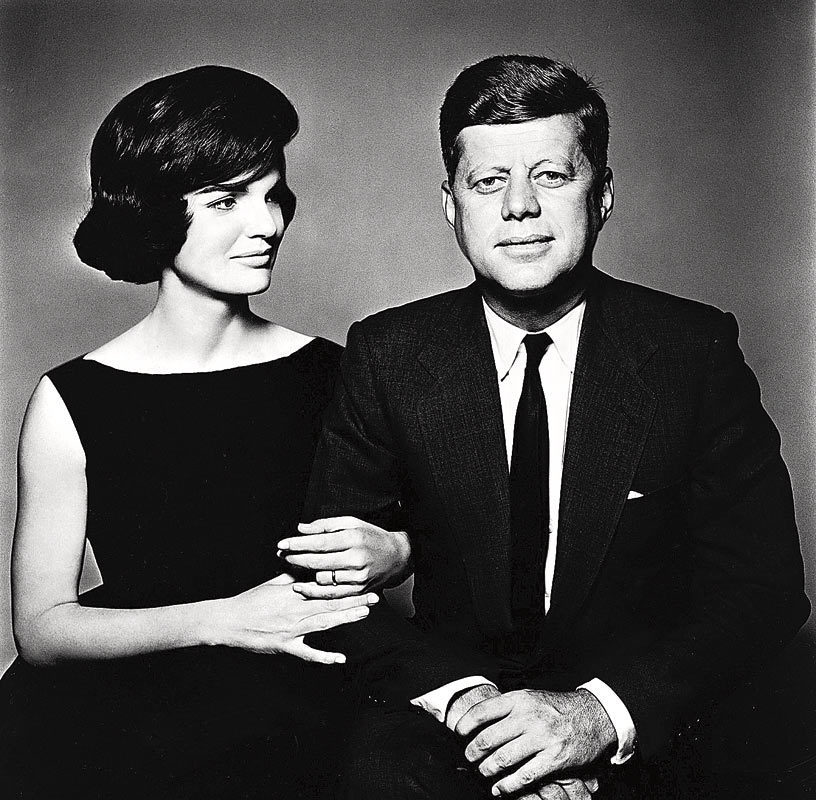
President John F. Kennedy is surrounded by myths, the most famous of which is Camelot. The Kennedys brought youth and glamour to the White House, a reprieve from the perceived stodginess of Ike and Mamie Eisenhower (as well as the “square” and indeed criminal Nixon White House to come).  They seemed the perfect couple, John and Jackie, and it seems churlish and graceless to note how much of this was image.  Kennedy was a notorious womanizer, a fact both known and suppressed by a fawning Washington Press Corps.  Jackie came across as a traditional wife: loyal, unobjectionable, limited by her times but also steely in her grace and fortitude after her husband was assassinated in Dallas in November 1963 (the latest movie that captures this awful event is Jackie, starring Natalie Portman).

Kennedy’s father, Joe Sr., taught his sons a sense of winning at all costs. A sense of recklessness. Kennedy’s older brother, Joe Jr. died leading a risky bombing mission in World War II, and John F. Kennedy nearly died when he lost his PT boat in action in the Pacific.  The loss of PT-109 was depicted as a heroic act, as the young JFK helped to save some of his crew, but one may question how he came to lose his boat in the first place. JFK’s perfect marriage, as already mentioned, was a sham, and despite his relative youth, he was not in the best of health, plagued by a bad back, Addison’s disease, and other health issues. His Pulitzer-prize winning book, “Profiles in Courage,” was largely ghost written.  JFK’s life was often more a triumph of image than a profile in courage.

As President, Kennedy made many unwise decisions.  He escalated American involvement in Laos and Vietnam, setting the stage for a major commitment of U.S. ground troops by President Lyndon Johnson early in 1965.  He oversaw the disastrous Bay of Pigs invasion of Cuba, which backfired badly on the inexperienced U.S. commander-in-chief.  As Lawrence Freedman put it in his book, Kennedy’s Wars (2000), “This was exactly the sort of move—gambling on the basis of insufficient strength and then abandoning the operation before it was complete—that made [Dean] Acheson despair.”  Freedman further cites Acheson as saying European leaders compared JFK’s bungling to “a gifted amateur practicing with a boomerang and suddenly knocking himself cold.  They were amazed that so inexperienced a person should play with so lethal a weapon.”

Greater lethality was to come the next year with the Cuban Missile Crisis.  This is often sold as JFK’s moment of steely toughness, when he made the Soviets blink and back down, but as a recent book by Daniel Ellsberg reveals, that crisis nearly resulted in nuclear war between the U.S. and the Soviet Union.  It was yet another instance of JFK’s tendency toward taking big risks as a way of proving himself.  Almost precipitating nuclear Armageddon, however, is terrifying way to prove one’s fitness for office.

Even before JFK became president, he fabricated what today might be called “alternative facts.”  He invented a missile gap vis-à-vis the Soviet Union that didn’t exist.  In fact, the true missile gap was the opposite of what JFK claimed, in that the U.S. had many more nuclear ICBMs than the Soviets did.  When he became president, JFK embarked on a strategic policy of “Flexible Response” (suggested by General Maxwell Taylor) that activated and empowered more conventional operations by the U.S. military.  In practice what this meant was that the U.S. became embroiled in conflicts that were secondary to national interests; worst of all, of course, was a major land war in Vietnam that was essentially a lost cause even before Kennedy chose to escalate it with more advisers and materiel aid.

Defenders of JFK suggest he grew in office and would have seen the folly of continuing in Vietnam, but there’s little evidence to support this narrative.  The recent Ken Burns series on the Vietnam War cites Kennedy as saying the U.S. couldn’t win in Vietnam, but that he couldn’t order a withdrawal because to do so would cost him his reelection in 1964.  JFK, moreover, fancied the notion of Flexible Response, his New Look military and its emphasis on special ops forces such as the Green Berets, and he saw Vietnam as a test bed for a “counterinsurgency” approach to defeating communism. What LBJ did in 1965 in escalating that conflict by committing U.S. ground troops is probably what JFK would have done if he had lived.  (In his book, Choosing War: The Lost Chance for Peace and the Escalation of War in Vietnam, Fredrik Logevall suggests JFK may have had the political will to resist escalation in 1965, effectively allowing South Vietnam to fall to communism, an intriguing if unprovable scenario.)

In sum, JFK set the stage for America’s disastrous war in Southeast Asia while provoking the Soviet Union into an escalatory nuclear arms race that threatened the world with extinction.  Profiles in courage these are not.

It’s worth briefly comparing JFK’s record to that of Richard Nixon, who has no Camelot myths attached to him.  Nixon, of course, was and is vilified as “Tricky Dick” and dismissed as one of America’s worst presidents.  He deserves opprobrium for his mendacious, meretricious, and murderous policies vis-à-vis Southeast Asia, especially his well-nigh treasonous meddling in peace negotiations in 1968, before he was elected president.  Nixon and Henry Kissinger saw themselves as the world’s powerbrokers, working to overthrow governments they disliked, as in Chile with the coup against Allende.  But Nixon and Kissinger deserve a measure of credit for opening negotiations with communist China as well as starting a process of détente with the Soviet Union.  Nixon showed a capacity for growth in office even as he permitted his own ego and paranoia to undermine his administration’s accomplishments in foreign policy.

The point here is not to praise Nixon, a man of considerable gifts but also of crippling flaws.  Rather, the point is to highlight an overly fawning approach to the presidency of John F. Kennedy.  His administration, rather than serving as a shining moment, a Camelot, ultimately was an exercise in imagery and incompetence.

The Vietnam War: A Tragic Mistake?

Helicopter_Poster_promoV2

W.J. Astore

I’ve watched the first three episodes of the Ken Burns/Lynn Novick series on the Vietnam War, which take us from the French colonial period beginning in the 19th century to the end of 1965 and a mushrooming U.S. military commitment.  The narrative thread, it seems to me, is the notion of the war as a tragic mistake, most especially for the United States.

The series begins with a voice-over that suggests the war was begun in good faith by America, even as other American voices in the series suggest otherwise.  I kept a notebook handy and jotted down the following notes and thoughts as the series progressed:

  1. There were divisions among the Vietnamese people, but they were more or less united by one idea: resist the foreign invaders/occupiers, whether that foreign presence was French, Japanese, the French again, American, or (both earlier and later) Chinese.  And there’s no doubt Ho Chi Minh would have won a democratic election, as promised at Geneva.  Which is exactly why that election never came.
  2. As one American admitted, the U.S. totally misread the situation in Indochina after the French defeat in 1954.  The Cold War and Falling Dominoes dominated the thoughts of Americans, obscuring the reality of a powerful and popular anti-colonial and nationalist revolt that tapped Vietnamese patriotism.
  3. When not fearing Falling Dominoes, U.S. officials were far more concerned about their own prestige (or political fortunes) than they were with the Vietnamese people.
  4. U.S. officials recognized South Vietnam was a fiction, a puppet government propped up by American money and power, and that they had “backed the wrong horse.” But they came to believe it was the only horse they had in the race against communism.
  5. U.S. presidents, stuck with a losing horse of their own creation, began to lie. As president, Kennedy said he hadn’t sent combat troops; he had.  As president, Johnson tried to obscure both the size and intent of the U.S. military’s commitment. These lies were not done to deceive the enemy — they were done to deceive the American people.
  6. After backing the wrong horse (Diem and his family), American leaders conspired to eliminate him in a coup.  When Diem was assassinated, matters only grew worse. Left with no horse in the race and a “turnstile” government in South Vietnam, the U.S. began to bomb North Vietnam and committed combat units beginning in March of 1965.
  7. More duplicity by U.S. officials: Battles such as Ap Bac and Binh Gia, which revealed the “miserable performance” of the South Vietnamese army (ARVN), were reinterpreted and sold as victories by senior U.S. military leaders.
  8. Both JFK and LBJ had serious reservations about going to war in Vietnam. However, domestic political concerns, together with concerns about containing the spread of communism, always came up trumps.  For example, the series quotes Kennedy as saying he believed America couldn’t win in Vietnam, but that he couldn’t win the 1964 presidential election if he withdrew U.S. advisors from Vietnam. LBJ was similarly skeptical but took a tough line with the Gulf of Tonkin resolution, which saw his approval rating on Vietnam soar from 42% to 72%, ensuring his electoral victory over Goldwater in 1964.

One of the more compelling sound bites comes from then-Major Charles Beckwith, who is at pains to praise the fighting quality of Viet Cong/NLF forces, their total commitment to the struggle.  If only he had (Vietnamese) troops like them to work with, says Beckwith.

To summarize: the series provides evidence of U.S. dishonesty and duplicity and showcases the mistakes generated by hubris when aggravated by ignorance.  Yet, the overall message is one of sadness about a “tragic mistake” committed by decent men who were overwhelmed by fears of international communism.

Final points: As we watch the series, we follow individual Americans, and hear American commentators, far more than we hear Vietnamese voices.  Also, while the series shows U.S. bombing from afar and mentions Agent Orange, the effects of this destruction haven’t yet been shown in detail.  (A telling exception: a young Vietnamese women joins the communist resistance after U.S. bombing destroys a center for senior citizens near her home.)

In short, the Burns/Novick series privileges the American experience, suggesting that U.S. troops of that era fought courageously as a new “greatest generation,” even as senior U.S. leaders spoke privately of an unwinnable war.

Is killing millions of people in a lost cause merely a tragic mistake?  Or is it something far worse?  More to come as the series continues to air on PBS.