Like too many people, I sometimes make the mistake of talking about nuclear war, when it’s really annihilation and genocide we’re talking about.
Wars have winners and losers. In nuclear “war,” everyone loses. The planet loses. Life loses and death triumphs on a scale we simply can’t imagine.
Language is so important here. I grew up learning about nuclear exchanges. EXCHANGES! The U.S. military talks of nuclear modernization and “investing” in nukes when the only dividend of this “investment” is mass death.
One of the few honest acronyms is MAD, or mutually assured destruction. Lately, it’s an acronym that’s largely disappeared from American discourse.
More than anything, though, realistic images of a nuclear attack are perhaps the most compelling evidence against building more nukes, as in this powerful and unforgettable scene from Terminator 2:
To me, nothing beats that scene. That is nuclear “war.”
The U.S. has over 5000 nuclear weapons; the Russians close to 6000. That’s more than enough to destroy the earth and a few other earth-sized planets. Imagine the scene above repeated eleven thousand times on our planet.
The insanity, the immorality of spending another $2 trillion on new nukes … well, it boggles my mind. We’ve become like the mutants in Beneath the Planet of the Apes, worshipping the bomb, acolytes of death and destruction.
If we all don’t end up killing ourselves and the planet in “an exchange,” we’ll likely degenerate into utter barbarism, as depicted in Cormac McCarthy’s The Road. And even that grim novel has a life-affirming ending that is most unlikely.
Amazingly, after I wrote the above passages about nuclear “war” and “exchanges,” I came across Admiral TR Buchanan’s recent keynote address at the Center for Strategic and International Studies (CSIS), where he uses the word “exchange” in a remarkably banal (and frightening!) way.
BUCHANAN: Yeah, so it’s certainly complex because we go down a lot of different avenues to talk about what is the condition of the United States in a post-nuclear exchange environment. And that is a place that’s a place we’d like to avoid, right? And so when we talk about non-nuclear and nuclear capabilities, we certainly don’t want to have an exchange, right?
I think everybody would agree if we have to have an exchange, then we want to do it in terms that are most acceptable to the United States. So it’s terms that are most acceptable to the United States that puts us in a position to continue to lead the world, right? So we’re largely viewed as the world leader.
And do we lead the world in an area where we’ve considered loss? The answer is no, right? And so it would be to a point where we would maintain sufficient – we’d have to have sufficient capability.
We’d have to have reserve capacity. You wouldn’t expend all of your resources to gain winning, right? Because then you have nothing to deter from at that point.
So very complex problem, of course. And as I think many people understand, nuclear weapons are political weapons. I think Susan Rice said that at one point.
The motto of Admiral Buchanan might be: We had to destroy the world in order to lead it. Buchanan here is less sane than General Buck Turgidson in Dr. Strangelove.
This admiral thinks we might have to have “an exchange” with Russia, and that, if we do, we could do so “in terms that are most acceptable to the United States,” and that even after “an exchange,” the U.S. can still “continue to lead the world.”
Truly this is the banality of evil. I like how even after “the exchange,” we need to have a “reserve capacity” so that we can nuke the world again.
This is madness–sheer madness–but it’s received as probity and sane “strategic” thinking by the national security blob.
This guy was promoted to admiral precisely because he thinks this way. He thinks without thinking. With no humanity.
Well, as General Turgidson says in Dr. Strangelove, we might just get our hair mussed during a nuclear “exchange,” but does it really matter as long as we can kill more of them than us?
It’s Independence Day in America, so it seems like a good day to declare our independence from the insanity of war.
Sadly, since the presidency of George W. Bush if not before, it’s become routine for U.S. commanders-in-chief to boast of having the world’s finest military in all of history. Obama did it routinely, and Biden recently said the same during his disastrous debate with Trump. Few Americans stop to think about the implications of boasting about having the world’s greatest military—is such a boast truly consistent with democracy, liberty, and freedom?
Certainly, empires rely on strong militaries. Think of the Roman Empire or the Mongol Empire, or the Third Reich (Empire) of Nazi Germany. Do we want to be like them?
Those empires lived by the sword (quite literally so with the Roman Empire) and died by it as well. Their militaries, I would argue, were also more effective than the U.S. one, which hasn’t won a major war since 1945, the latter with a lot of help from our “friends” like the Soviet Union. The Roman, Mongol, and German empires are no more, worn down in part through the constant costs and demands of war. We need to learn more from history than the “fact” that America’s military is supposedly the world’s best since forever and a day ago.
I’ve been reading Oriana Fallaci’s “Nothing, and So Be It,” in which she recounted her time reporting on the Vietnam War. Two conversations with U.S. troops in Vietnam caught my attention. On pages 22-23, she recounts a conversation with Army Captain Scher, during which Scher confesses his disgust with war:
God, how disgusting war is. Let me say it—I’m a soldier. People who enjoy making war, who find it glorious and exciting, must have twisted minds. There’s nothing glorious, nothing exciting; it’s just a filthy tragedy you can only cry over. You cry for the man you refused a cigarette to and who didn’t come back with the patrol. You cry for the man you bawled out and who is blown to pieces in front of you. You cry for the man who killed your friends …
Later in the book, she interviews a Marine Lieutenant whose surname is Teanek (pages 174-75). Here’s what he had to say:
Teanek: “Men have been saying that [we should abolish war] for thousands of years, and with the justification that they’re abolishing war, they’ve soaked the greatest periods of their civilization in blood.”
Fallaci: “That’s no good reason to keep on doing it.”
Teanek: “Theoretically, you’re right, but in practice what you’re saying is very silly. It’s like convincing yourself—as I bet you do—that when you describe people dying in war you’re helping to abolish war. On the contrary. The more you see people who’ve been killed in war, the more you want to go on fighting wars: it’s a mystery of the human soul.”
It is indeed “a mystery of the human soul” why we humans persist in killing each other in such vast numbers through war. Of course, it’s partly because we glorify it, when we should recognize, as Fallaci does on page 187, that “War is a madhouse.”
I am sane!
One of my favorite scenes in any war film came in “The Big Red One,” a World War II movie by Samuel Fuller starring Lee Marvin as a grizzled Army sergeant of the 1st Infantry Division. It’s a scene in which U.S. troops liberate an insane asylum.
The unforgettable part of this scene for me is when one of the madhouse residents picks up a submachine gun and starts blasting away, crying “I am one of you. I am sane!”
American foreign policy remains in the grip of heretics. They believe that the Prince of Peace is actually a god of war. They believe America is strengthened by entangling alliances (think here of our so-called alliance with Israel). They believe in constant war as a recipe both for dominant power and greater freedom and democracy throughout the world. They believe that spending roughly a trillion dollars each year on weapons and war is a wise “investment.” And they believe they are the toughest and truest of patriots, the ones who see further, the ones with the guts to get things done, no matter how poorly America’s wars have gone from Korea and Vietnam through Afghanistan, Iraq, and today’s proxy wars.
There used to be a different America, a much less militaristic and bellicose one. The American tradition is rich and complex; it contains multitudes, as Walt Whitman might say. Why are we so stuck on warmongers, thieves, and vainglorious simps of empire?
As an American, I’m very much a part of my country’s complexity and richness. And the America that speaks to me contains elements and lessons such as these:
George Washington’s prescient warning about the dangers of entangling alliances with foreign powers.
James Madison’s warning that constant warfare is the direst of enemies of liberty, freedom, and democracy in America.
General Smedley Butler’s confession that “war is a racket” and that he had often served as a “gangster for capitalism.”
The Nye Commission in the U.S. Senate that investigated arms manufacturers and weapons makers as “Merchants of Death” that profited greatly from war.
President Dwight D. Eisenhower’s “cross of iron” speech and his warning about the growing power and insidious nature of the military-industrial complex.
President John F. Kennedy’s powerful peace speech in which he extended an olive branch to the Soviet Union.
Martin Luther King Jr.’s powerful speech against the Vietnam War and the perils of militarism, racism, and materialism in America.
Of course, America has always had its dark side, with slavery and the genocidal treatment of Native Americans being at the top of the list. Yet America also has had its triumphs of wisdom and goodness. That is the America we should be embracing and celebrating. I believe it’s captured in the words of Washington, Madison, JFK, MLK, and so many others who’ve fought for peace and sanity, people like Dorothy Day, the Catholic activist who fought against war and all its awful excesses.
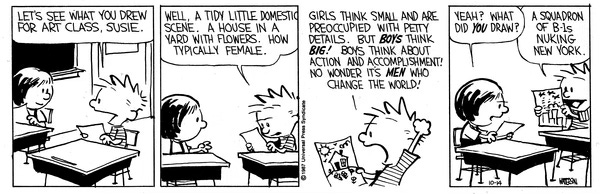
All that said, sometimes cartoons can express truths in ways that are as powerful as they are simple. In the cartoon below, the heretics of U.S. foreign policy are so many Calvins, spreading destruction and employing nukes in the name of manly seriousness. They are wrong. They are heretics. And if we continue to allow them to rule, they will surely lead America (as they already are in Gaza) to mass graves.
Student Protest and the White Rose Movement in Nazi Germany
Apologists for the Israeli government and its genocidal policies are now warning us about “radicalized” college and university students. Apparently, it’s “radical” to protest genocide, famine, and ceaseless bombing. Contrariwise, it’s apparently “normal” to support mass murder, total destruction, and widespread starvation. Talk about a world turned upside down …
Of course, it’s only “radical” to oppose genocide if you live in a totalitarian state that’s prosecuting that genocide or aiding others in prosecuting it. Anyone with a working conscience and a smidgen of humanity would think it’s normal and sane to oppose mass murder and to protest against it.
Sophie Scholl flanked by her brother, Hans (L) and friend Christoph Probst (R) in 1942
Consider a university student who famously protested against genocide: Sophie Scholl. She, her brother Hans, and the rest of the White Rose movement in Nazi Germany are celebrated as heroes today in Germany because they spoke out at great risk against mass murder, and indeed the Nazis executed them in 1943 after holding show trials.
Again, we don’t dismiss Sophie Scholl as a campus “radical” for standing up for Jews and protesting against the murderous policies of the Third Reich. We see her as a paradigmatic individual, an example of the very best of us, a young woman of great moral courage. Of course, the Nazis thought otherwise, arresting her then executing her, her brother, and other White Rose members as traitors to their “race.”
Perhaps the Scholls were radical after all: radical in their courage and their commitment to human rights and values for all.
If you want to watch a powerful movie about young campus “radicals,” check out “Sophie Scholl: The Final Days,” from 2005. I highly recommend it. Back in 2013, I put together a list of 13 movies about the Holocaust and genocide for a college course I taught. In that course, I used well-known movies and documentaries like “Schindler’s List,” “The Sorrow and the Pity,” and “Night and Fog.” The list below was my attempt to expand on that and to point my students to some movies and documentaries that they may not have seen.
Here’s the original article I posted back in 2013:
Thirteen Movies About the Holocaust
I’ve seen a lot of movies and documentaries about the Holocaust or with themes related to the Holocaust and totalitarianism. Of the films I’ve seen, these are the thirteen that stayed with me. Please note that these movies have adult themes; they may not be suitable for children or teens.
American History X (1998): Searing movie about neo-Nazis and the power of hate. Violent scenes for mature audiences only.
Anne Frank: The Whole Story (2001): Excellent dramatization of Anne Frank’s life, to include the tragic end at Bergen-Belsen.
For My Father (2008): A movie about Palestinians, Israelis, and suicide bombers, but also a movie about the difficulties of confronting and overcoming prejudice.
Hotel Rwanda (2004): The genocide in Rwanda, and how one brave man made a difference.
Judgment at Nuremberg (1961): Powerful indictment of Nazi war criminals after World War II.
Katyn (2007): A reminder that the Nazis weren’t the only mass murderers in World War II.
The Last Days (1998): Incredibly moving documentary that explores the fate of Hungarian Jews. Highly recommended.
Life Is Beautiful (1997): It’s hard to believe that a comedy could be made about the Holocaust. But I think this movie works precisely because the main character is so resourceful and full of life.
The Lives of Others (2006): Astonishing movie about life under a totalitarian regime (East Germany). A “must see” to understand how people can be controlled and cowed and coerced, but also how some find ways to resist.
Lore (2012): Movie about a German teenager who has to survive in the chaos of 1945 as the Third Reich comes crashing down. Various small scenes show the hold that Hitler had over the German people, and the reluctance of many Germans to believe that the Holocaust occurred and that Hitler had ordered it.
Sarah’s Key (2010): Heart-wrenching movie about the roundup of Jews in France, which reminds us that the Nazis had plenty of helpers and collaborators.
Sophie Scholl: The Final Days (2005): Inspiring movie about Hans and Sophie Scholl and the White Rose movement in Nazi Germany. The Scholls were college students who took a courageous stand against the Nazis. Executed as traitors in 1943, they are now celebrated as heroes in Germany.
The Wave (2008): Compelling movie about the allure of fascism and “the Fuhrer (leader) principle.” Highly recommended, especially if you want to know how Hitler got so many young people to follow him.
I was bantering online with an old friend and fellow historian and I hit him with my best shot: history is un-American. If you think like an historian, and especially if you think America and its future actions should be informed, or possibly even constrained, by history, you are clearly un-American. History is more or less bunk, Henry Ford famously said, and Americans can safely ignore it. We are like gods, creating our own futures out of nothing, imposing our will on everything around us.
Henry Ford, American god
This attitude, this hubris, explains much about the U.S. military’s woeful record since 1945. The French lost in Indochina? No matter. Americans will prevail in Vietnam, Laos, and Cambodia because we’re not the French. The Soviet Union lost in Afghanistan? No matter. Americans will prevail there because we’re not the Russians. Overthrowing Saddam Hussein and his minority Sunni government will unleash chaos that strengthens Shia forces in Iraq, aligning that country more closely with Iran? No matter. America will bring order and the blessings of democracy to Iraq at the point of gun or a Hellfire missile.
Karl Rove, a major player in the Bush/Cheney administration, summed up this hubris in this now-infamous passage:
“We’re an empire now, and when we act, we create our own reality. And while you’re studying that reality — judiciously, as you will — we’ll act again, creating other new realities, which you can study too, and that’s how things will sort out. We’re history’s actors . . . and you, all of you, will be left to just study what we do.”
That man did not want for confidence.
Related to the idea of history being un-American is the business- and management-oriented nature of the officer corps in the U.S. military. To be promoted to field-grade (major or lieutenant commander), you almost have to have a master’s degree or be close to finishing one. But rarely do officers choose to pursue a master’s in history or any other subject related to the humanities. The master’s of choice is in business administration or some type of management.
By pursuing MBAs and management degrees, officers show their practical nature. They also set themselves up well for future careers once they retire or separate from the military. After all, who needs to know history, even military history? The U.S. military will simply act, creating its own realities, which feckless historians will then passively study as America’s real actors get on with the job of remaking the world in America’s image.
We live in the United States of Amnesia, Gore Vidal quipped, and history is part of that amnesia. Who remembers that America was at war in Afghanistan as late as 2021? It’s on to new “great power” struggles with China and Russia. Look forward, not backward, Barack Obama said when he became president, meaning there was no need to hold the Bush/Cheney administration responsible for anything, including torture and other war crimes. “We tortured some folks” — time to move on!
An expression I learned in the U.S. military is “analysis paralysis,” as in don’t overthink the problem. Act! But if America’s military record since World War II proves one thing, it’s that ignoring history because it’s “bunk” or less practical than another business or management course is a very unwise idea.
Acting should be informed by thinking. Dare I say, historically-informed thinking. Even for America’s wannabe gods.
In my latest article for TomDispatch.com, I tackle Trump’s call for “patriotic” U.S. history. If normal history is “The Good, the Bad, and the Ugly,” think of Trump’s history as all good and with none of the bad and ugly. It would make for a boring movie, and for boring history as well. Of course, this argument over “patriotic” history is yet another front in Trump’s Kulturkamp, or culture war, in America.
Yet isn’t ironic that Trump, who says he seeks to celebrate America’s greatness, ran in 2016 as a declinist candidate? “Make America Great Again” was his motto: the again suggesting an America that had to be put right, which apparently Trump has done, since his 2020 motto is “Keep America Great.”
A lot of historians will be spilling much ink in the coming decades on Trump and his administration. I have a feeling most of it will not be judged as “patriotic” by Trump’s standard.
Nuking History (from TomDispatch)
There goes our history
Aggravating such essential collective madness in this moment (and the president’s fiery and furious fascination with such weaponry) is Trump’s recent cynical call for what might be thought of as the nuking of our history: the installation of a truly “patriotic” education in our schools (in other words, a history that would obliterate everything but his version of American greatness). That would, of course, include not just the legacy of slavery and other dark chapters in our past, but our continued willingness to build weaponry that has the instant capacity to end it all in a matter of hours.
As a history professor, I can tell you that such a version of our past would be totally antithetical to sound learning in this or any world. History must, by definition, be critical of the world we’ve created. It must be tough-minded and grapple with our actions (and inactions), crimes and all, if we are ever to grow morally stronger as a country or a people.
History that only focuses on the supposedly good bits, however defined, is like your annoying friend’s Facebook page — the one that shows photo after photo of smiling faces, gourmet meals, exclusive parties, puppies, ice cream, and rainbows, that features a flurry of status updates reducible to “I’m having the time of my life.” We know perfectly well, of course, that no one’s life is really like that — and neither is any country’s history.
History should, of course, be about understanding ourselves as we really are, our strengths and weaknesses, triumphs, tragedies, and transgressions. It would even have to include an honest accounting of how this country got one Donald J. Trump, a failed casino owner and celebrity pitchman, as president at a moment when most of its leaders were still claiming that it was the most exceptional country in the history of the universe. I’ll give you a hint: we got him because he represented a side of America that was indeed exceptional, just not in any way that was ever morally just or democratically sound.
Jingoistic history says, “My country, right or wrong, but my country.” Trump wants to push this a goosestep further to “My country and my leader, always right.” That’s fascism, not “patriotic” history, and we need to recognize that and reject it.
As a historian, I have an allegiance to the past, and to getting the facts right about that past. Because, if you can’t get the facts right, if you can’t do research with rigor and honesty, you can’t call yourself an historian.
So you won’t be surprised to learn that Trump’s version of the Republican Party is anathema to me. The party has no respect for the past. And getting facts right? What does that matter in a time of “alternative facts,” in an administration that lies routinely and about everything?
Trump’s version of the Republican Party is a party of the perpetual now, in which the meaning of “now” is remarkably labile and open to interpretation (and re-interpretation). In a strange way, Trump’s party is the party of post-modernism, where all facts are contingent, where everything is open to being constructed and deconstructed. Truth itself is a social construct in the Trumpian universe, determined by Trump himself and the various ass-kissers he’s assembled around him.
Not only is the Trumpian Party without a meaningful past: it’s also without a mediated future. According to the official platform of the Republican Party adopted last night, the party and its platform is what Trump says it is, world without end, Amen.
Here’s how it was put in a press release:
“RESOLVED, That the Republican Party has and will continue to enthusiastically support the President’s America-first agenda” and “The 2020 Republican National Convention will adjourn without adopting a new platform until the 2024 Republican National Convention.”
The platform is Trump and Trump is the platform. The future is whatever Trump wills it to be, in his usual egotistical and often nonsensical way.
Facts don’t matter. The (true) past doesn’t matter. America as will and idea, as defined by Trump’s mind and driven by Trump’s desires.
As many have said, this isn’t a party, it’s a cult. A cult of unreflective minds, a cult unconcerned with critical thinking about the past, a cult that believes the future is best defined by one man.
One thing is certain: You won’t need any historians in Trump’s world. Just a lot of stenographers and sycophants willing to accept reality as Trump presents it, a perpetual now that’s constantly constructed and deconstructed before your eyes, the only constant being the celebration of Trump.
Remember: you can’t believe your lying eyes, but you can believe in Trump. If that’s not the end of history, I don’t know what is.
Critical thinking? Forget that. Obey! (Inspired by the movie, “They Live”)
W.J. Astore
When I was still teaching college, I’d tell my students that a major goal of their education was developing a bullshit meter. This BS meter, I said, would help them to discriminate between fact and fiction, between informed views and misinformed ones, between respectable opinions and disreputable propaganda. Become critical thinkers, I told them. And that included being critical of my teaching, for every professor has biases and makes choices about what to include and what to exclude, what to stress and what to elide.
Critical thinking skills are what is being elided and excluded in much of education today. This is obviously convenient to those in power, for they do not wish to be questioned. In the name of economic competitiveness, of teaching job skills, of STEM (science, technology, engineering, and math), students are encouraged to focus on getting ahead, on making a high salary after graduation, the better to repay student loans and contribute back to the college as alumni. On their web sites and marketing brochures, colleges often feature prominently how much their students can be expected to make in salary after graduation. The almighty dollar sign: It’s the key metric of success.
A narrow utilitarianism, based on money, has come to define education. Much like war, education is becoming just another racket (think here of Trump University!). Eight years ago, when I was still teaching away in the classroom, I wrote the following article for TomDispatch.com. I’ve decided to share it here today, because I don’t think much has changed since 2009. Indeed, education in America has only worsened as Donald Trump and Company have taken a hatchet to educational funding. But stupid is as stupid does. (Then again, Trump isn’t so stupid; as he himself enthused after the Nevada caucuses in 2016, “I love the poorly educated!” Yes, hmm, yes.)
Hardly a week goes by without dire headlines about the failure of the American education system. Our students don’t perform well in math and science. The high-school dropout rate is too high. Minority students are falling behind. Teachers are depicted as either overpaid drones protected by tenure or underpaid saints at the mercy of deskbound administrators and pushy parents.
Unfortunately, all such headlines collectively fail to address a fundamental question: What is education for? At so many of today’s so-called institutions of higher learning, students are offered a straightforward answer: For a better job, higher salary, more marketable skills, and more impressive credentials. All the more so in today’s collapsing job market.
Based on a decidedly non-bohemian life — 20 years’ service in the military and 10 years teaching at the college level — I’m convinced that American education, even in the worst of times, even recognizing the desperate need of most college students to land jobs, is far too utilitarian, vocational, and narrow. It’s simply not enough to prepare students for a job: We need to prepare them for life, while challenging them to think beyond the confines of their often parochial and provincial upbringings. (As a child of the working class from a provincial background, I speak from experience.)
And here’s one compelling lesson all of us, students and teachers alike, need to relearn constantly: If you view education in purely instrumental terms as a way to a higher-paying job — if it’s merely a mechanism for mass customization within a marketplace of ephemeral consumer goods — you’ve effectively given a free pass to the prevailing machinery of power and those who run it.
Three Myths of Higher Ed
Three myths serve to restrict our education to the narrowly utilitarian and practical. The first, particularly pervasive among conservative-minded critics, is that our system of higher education is way too liberal, as well as thoroughly dominated by anti-free-market radicals and refugee Marxists from the 1960s who, like so many Ward Churchills, are indoctrinating our youth in how to hate America.
Nonsense.
Today’s college students are being indoctrinated in the idea that they need to earn “degrees that work” (the official motto of the technically-oriented college where I teach). They’re being taught to measure their self-worth by their post-college paycheck. They’re being urged to be lifelong learners, not because learning is transformative or even enjoyable, but because to “keep current” is to “stay competitive in the global marketplace.” (Never mind that keeping current is hardly a guarantee that your job won’t be outsourced to the lowest bidder.)
And here’s a second, more pervasive myth from the world of technology: technical skills are the key to success as well as life itself, and those who find themselves on the wrong side of the digital divide are doomed to lives of misery. From this it necessarily follows that computers are a panacea, that putting the right technology into the classroom and into the hands of students and faculty solves all problems. The keys to success, in other words, are interactive SMART boards, not smart teachers interacting with curious students. Instead, canned lessons are offered with PowerPoint efficiency, and students respond robotically, trying to copy everything on the slides, or clamoring for all presentations to be posted on the local server.
One “bonus” from this approach is that colleges can more easily measure (or “assess,” as they like to say) how many networked classrooms they have, how many on-line classes they teach, even how much money their professors bring in for their institutions. With these and similar metrics in hand, parents and students can be recruited or retained with authoritative-looking data: job placement rates, average starting salaries of graduates, even alumni satisfaction rates (usually best measured when the football team is winning).
A third pervasive myth — one that’s found its way from the military and business worlds into higher education — is: If it’s not quantifiable, it’s not important. With this mindset, the old-fashioned idea that education is about molding character, forming a moral and ethical identity, or even becoming a more self-aware person, heads down the drain. After all, how could you quantify such elusive traits as assessable goals, or showcase such non-measurements in the glossy marketing brochures, glowing press releases, and gushing DVDs that compete to entice prospective students and their anxiety-ridden parents to hand over ever larger sums of money to ensure a lucrative future?
Three Realities of Higher Ed
What do torture, a major recession, and two debilitating wars have to do with our educational system? My guess: plenty. These are the three most immediate realities of a system that fails to challenge, or even critique, authority in any meaningful way. They are bills that are now long overdue thanks, in part, to that system’s technocratic bias and pedagogical shortfalls — thanks, that is, to what we are taught to see and not see, regard and disregard, value and dismiss.
Over the last two decades, higher education, like the housing market, enjoyed its own growth bubble, characterized by rising enrollments, fancier high-tech facilities, and ballooning endowments. Americans invested heavily in these derivative products as part of an educational surge that may prove at least as expensive and one-dimensional as our military surges in Iraq and Afghanistan.
As usual, the humanities were allowed to wither. Don’t know much about history? Go ahead and authorize waterboarding, even though the U.S. prosecuted it as a war crime after World War II. Don’t know much about geography? Go ahead and send our troops into mountainous Afghanistan, that “graveyard of empires,” and allow them to be swallowed up by the terrain as they fight a seemingly endless war.
Perhaps I’m biased because I teach history, but here’s a fact to consider: Unless a cadet at the Air Force Academy (where I once taught) decides to major in the subject, he or she is never required to take a U.S. history course. Cadets are, however, required to take a mind-boggling array of required courses in various engineering and scientific disciplines as well as calculus. Or civilians, chew on this: At the Pennsylvania College of Technology, where I currently teach, of the roughly 6,600 students currently enrolled, only 30 took a course this semester on U.S. history since the Civil War, and only three were programmatically required to do so.
We don’t have to worry about our college graduates forgetting the lessons of history — not when they never learned them to begin with.
Donning New Sunglasses
One attitude pervading higher education today is: students are customers who need to be kept happy by service-oriented professors and administrators. That’s a big reason why, at my college at least, the hottest topics debated by the Student Council are not government wars, torture, or bail-outs but a lack of parking and the quality of cafeteria food.
It’s a large claim to make, but as long as we continue to treat students as customers and education as a commodity, our hopes for truly substantive changes in our country’s direction are likely to be dashed. As long as education is driven by technocratic imperatives and the tyranny of the practical, our students will fail to acknowledge that precious goal of Socrates: To know thyself — and so your own limits and those of your country as well.
To know how to get by or get ahead is one thing, but to know yourself is to struggle to recognize your own limitations as well as illusions. Such knowledge is disorienting, even dangerous — kind of like those sunglasses donned by Roddy Piper in the slyly subversive “B” movie They Live (1988). In Piper’s case, they revealed a black-and-white nightmare, a world in which a rapacious alien elite pulls the levers of power while sheep-like humans graze passively, shackled by slogans to conform, consume, watch, marry, and reproduce.
Like those sunglasses, education should help us to see ourselves and our world in fresh, even disturbing, ways. If we were properly educated as a nation, the only torturing going on might be in our own hearts and minds — a struggle against accepting the world as it’s being packaged and sold to us by the pragmatists, the technocrats, and those who think education is nothing but a potential passport to material success.
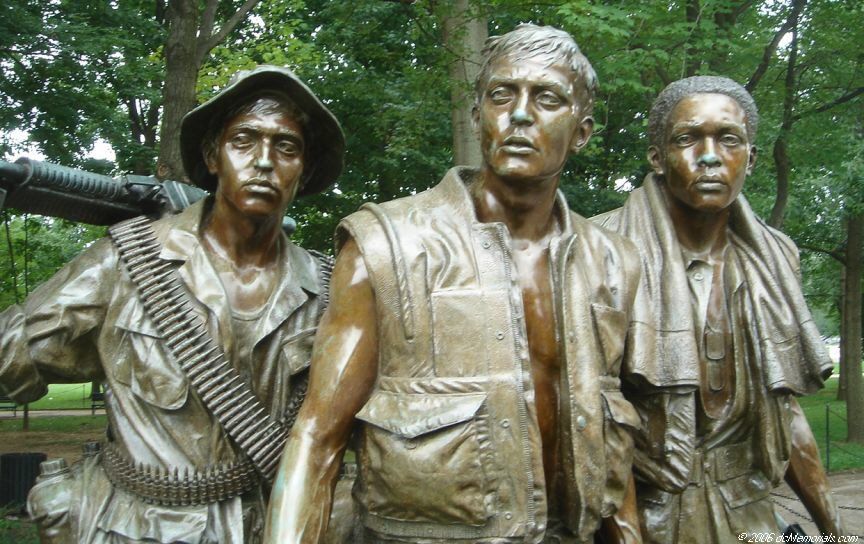
To counterbalance the perceived grimness of Maya Lin’s Vietnam wall memorial, more traditional statues depicting soldiers were added near it.
W.J. Astore
Historical statues and monuments are in the news, but sadly not because Americans have taken a new interest in understanding their history. Statues of men who supported the Confederacy, prominent generals like Robert E. Lee and Stonewall Jackson, for example, have been appropriated by White supremacists (this is nothing new, actually). Such statues have been defended as “beautiful” by a man, Donald Trump, with little sense of history, even as other Americans have called for these and similar statues to be removed.
Statues, of course, are just that. Inanimate objects. Places for pigeons to poop. It’s we who invest them with meaning. Most people, I think, take little notice of statues and monuments until they become controversial, after which everyone has an opinion.
For me, statues and monuments are a stimulus for reflection as well as education. Who was that guy on a horse? Why is he being honored? And what does that decision tell us about who we were and are as a people?
As a people, we choose certain historical figures as worthy of being sculpted in stone or cast in bronze. We choose our heroes, so to speak, our paragons, our worthies. And our choices are just that — choices. They reflect certain values, priorities, motives, feelings. And since our values, our motives, our sense of what is good and bad, right and wrong, change over time, so too can our statues and memorials change, if that is the will of the people in a democracy that enshrines freedom of choice.
If the peoples of various states choose to remove certain statues, so be it. Other statues might take their place; other worthies might be selected as more in keeping with the times and our values as we conceive them today as a people.
What we choose to memorialize as a people says much about ourselves. Many statues and memorials fall under the category of “man on horseback.” Certainly, military figures like Lee and Jackson were considered great men of their times, at least in a Confederate context. They also, sadly, became potent symbols of racism in the Jim Crow South, physical symbols of the myth of the Lost Cause, intimidating and demoralizing figures to Black communities struggling against violence and prejudice.
Americans are an intemperate lot, driven by extremes, constantly fighting to reconfigure ourselves through our interpretation and re-interpretation of history. All this is proof to William Faulkner’s famous saying that, “The past is not dead. It’s not even past.”
As a historian, I find it deeply sad as well as ironic that, at a time when education in history is withering in the United States, the importance of history has arguably never been greater. We should use statues as a stimulus for learning, but instead they’re more often appropriated as a driver for divisiveness.
If nothing else, today’s debates about statues should remind us yet again of the importance of history and a proper understanding of it. History is inherently disputatious. Controversial. Challenging. Exciting. If we can tap the heat generated by the latest controversies and warm students to a study of history in all its richness, perhaps some good can come from the ongoing controversy.
What kind of statues and memorials are the “right” ones for America? It’s a vexing question, is it not? It’s also a question with powerful implications. I come back to George Orwell’s comment (slightly paraphrased): He who controls the past controls the future. He who controls the present controls the past.
Our understanding of the past — our selective celebration of it — helps to define what is possible in the future. If you celebrate generals on horseback — military men of the Confederacy — you make a choice that helps to shape what is seen as right and proper in the present moment, and what will be right and proper in the future.
For a better future, I’d like to see fewer statues to military men and sports heroes and the like, and more to visionaries who sought a better way for us as a people. I recall a small monument I saw to Elihu Burritt in Massachusetts. No one is talking about him or his legacy today. He’s an obscure figure compared to his contemporaries, Lee and Jackson. Known as the “Learned Blacksmith,” he was a committed pacifist and abolitionist who worked to educate the less fortunate in society.
Monument to Elihu Burritt in New Marlboro, Mass. (author’s photo)
If we are to build prominent statues and monuments, would it not be better to build them to people like Elihu Burritt, people who worked for justice and equality, people who fought against war and slavery and for peace and freedom?
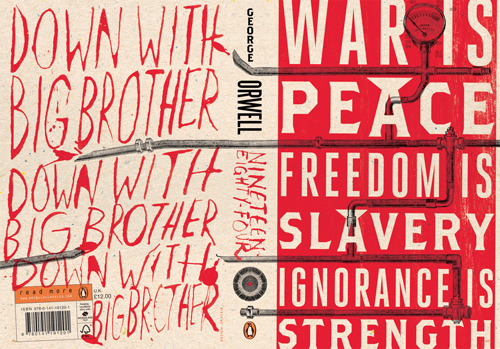
George Orwell’s 1984 is filled with wisdom. Perhaps my favorite saying from that book is Orwell’s statement about history and its importance. He said, he who controls the past controls the future. He who controls the present controls the past.
If you have the power, in the present, to rewrite history, to redefine the past, enshrining your version of history as fact while consigning all the bits you don’t like to oblivion (“down the memory hole”), you can define people’s sense of reality as well as what they believe is possible. You can limit what they see, their horizons. You can limit how and what they think. You can, in a major way, control the future. Add the control of language to the restriction and re-definition of history and you have a powerful means to dominate meaning, discourse, and politics in society.
Donald Trump and Company are brazen in their rewriting of history, notes Rebecca Gordon in her latest post at TomDispatch.com. They make no apologies and take no prisoners. They simply claim lies to be true, repeating them over and over until some people come to accept them as truth. The examples she cites include the size of Trump’s inauguration crowd (“Bigly!”), the reality of global warming (“Chinese lie!”), and why Trump fired FBI Director James Comey (“He hurt Hillary!”).
Another example of the big lie is the whole concept of “Trumpcare,” the recent revision to Obamacare as passed by the House. They sell this as a health care plan instead of what it really is: a health coverage denial plan and tax cut for the rich.
The GOP health care bill would insure 23 million fewer people than current law after a decade, while potentially impacting many with pre-existing conditions, according to the nonpartisan Congressional Budget Office.
The bill would spend $1.1 trillion less on health care and use the savings primarily to finance large tax cuts for high-income earners and medical companies. Overall, it would reduce deficits by $119 billion over ten years.
I know one thing: that’s not a health care plan.
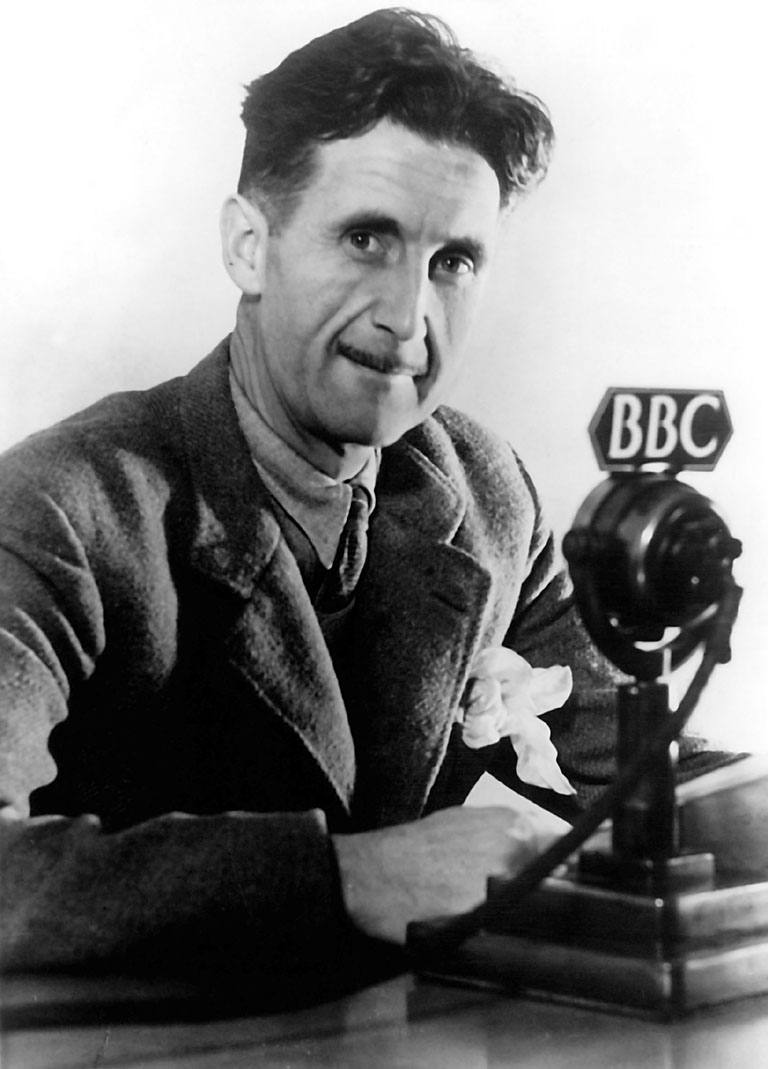
George Orwell
Returning to language, a big theme of Orwell’s 1984 is how language will be simplified, or dumbed down, stripping away meaning and subtlety and substituting unreflective obedience and coarseness in their place. Think here about how Donald Trump speaks. Orwellian expressions like “doubleplusgood” are not foreign to a man who speaks in glittering generalities to sell his ideas and hyperbolic superlatives to extol his own virtues.
In his introduction today to Rebecca Gordon’s article, Tom Engelhardt quotes Trump’s recent graduation speech at the Coast Guard Academy, during which Trump did what he does best — sell himself with lies (“alternative facts!”):
I’ve accomplished a tremendous amount in a very short time as president. Jobs pouring back into our country… We’ve saved the Second Amendment, expanded service for our veterans… I’ve loosened up the strangling environmental chains wrapped around our country and our economy, chains so tight that you couldn’t do anything — that jobs were going down… We’ve begun plans and preparations for the border wall, which is going along very, very well. We’re working on major tax cuts for all… And we’re also getting closer and closer, day by day, to great healthcare for our citizens.
One thing Trump does know is how to manipulate language — in short, to lie — to his own benefit.
In this age of Trump, a sense of history has rarely been more important. We have to fight for the richness, the complexity, as well as the accuracy of our history and our language. The very existence of the American republic depends on it.








 Bracing Views