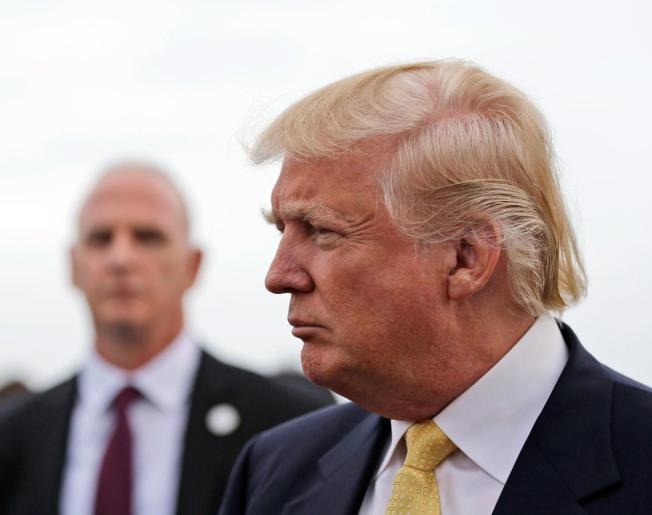
The Bizarre and Scary World of Republicans

11TRANSCRIPTweb-master675
There they go again

W.J. Astore

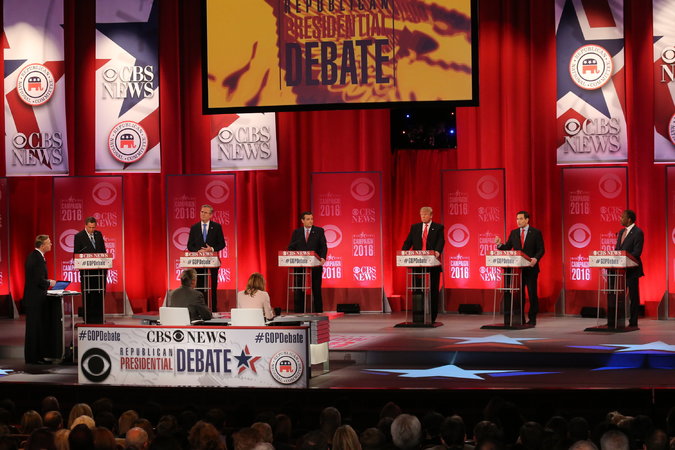
I watched last night’s Republican debate from Florida (transcript here) and then checked this morning’s coverage from major networks such as NBC and CBS.  The focus of media coverage was the “civility” of this debate compared to previous ones, combined with typical horse race speculations about which candidate won and which lost.

Well, I can’t tell you who won, but I can tell you who lost: the American people lost.

Several lowlights from the debate that stick in my mind:

1. Marco Rubio was asked about climate change and whether human action, such as the emission of greenhouse gases, contributed to it.  Rubio essentially denied that human action had any significant impact on global warming.  The essence of his answer: the climate is changing because the climate always changes.  And the U.S. government can take no action to reduce it.

2.  Donald Trump held to his position on torture.  He believes waterboarding should be used, that laws should be changed to allow harsher means of torture, apparently because the enemy (ISIS) beheads its opponents or drowns them in cages.  He was not challenged on how he would change international laws against torture, nor was he challenged on consistent evidence that torture does not work in efforts to gain accurate intelligence.  Nor were any questions raised about the morality of torture and its proposed expansion if he wins the presidency.

3.  All of the candidates expressed support for sending U.S. ground troops, perhaps 20,000 to 30,000, to combat ISIS in the Middle East.  The situation was presented as a civil war within Islam between radical Sunni and Shia forces, but no candidate explained how U.S. combat forces could win someone else’s civil war, a war driven by fierce ideological differences.  Somehow, magically, the reappearance of big battalions of U.S. troops and massive displays of air power would “shock and awe” radical jihadists into collapse and capitulation.

4.  For the candidates, nothing Obama has done in the last seven years is worthy of the slightest praise.  Obamacare must be repealed.  The Iran nuclear deal is a disaster.  His forthcoming trip to Cuba represents a capitulation to communism.  His executive actions are illegal; all of them must be reversed.

5.  Each candidate tried to best the other on who is more pro-Israel.  According to Trump, “there’s nobody on this stage that’s more pro-Israel than I am.”  Apparently Israel is the only U.S. ally that is worthy of total support and unconditional love by Republican candidates.

6.  Trump refused to qualify his statement that there is “tremendous hate” in the Islamic world directed against the United States.  However, there was no reason given for this hate, and no sense that U.S. military actions overseas, to include invasions, drone strikes, and special ops raids, contribute in any way to Islamic animosity.  The candidates were simply not asked why some, most, or nearly all Muslims “hate” America.

7.  Finally, topics that weren’t discussed at this debate but which are commonly discussed at Democratic debates: racism, shootings by police against Blacks, prison and justice reform, raising the minimum wage, the rising gap between the richest 1% and everyone else, reducing the cost of college education, and efforts to guarantee affordable health care for all.  Nor were women’s issues, such as equal pay for equal work, mentioned.  Indeed, with the exception of Trump’s comment about women being mistreated by the Muslim world, women’s issues simply didn’t exist, not in this debate and not in most of the others.  Indeed, my wife turned to me during a previous Republican debate and said, “Not one of these guys cares one whit about women’s issues — they’re offering us nothing.”

And on that sad yet telling note, I’ll end.


Last Night, Donald Trump Disqualified Himself

Donald Trump
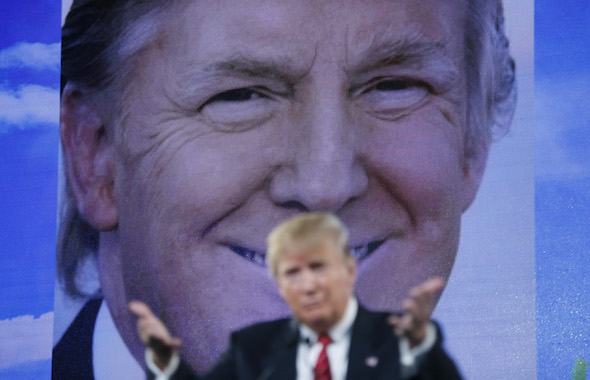
Hail the Leader (Trump at FreedomFest, July 11, 2015 (AP Photo/John Locher)

W.J. Astore

As a retired military officer, I watched last night’s Republican debate from Detroit (transcript here) with a special focus on which candidate is qualified to lead the military as commander-in-chief.  I knew, of course, that Donald Trump had promised in the past to use torture against America’s enemies (last night, he called them “animals”), that he would pursue and kill not only terrorists but their families (apparently because the families always know, according to Trump, what their father/brother/sister is up to, as if there are no secrets in families).  Trump, in short, is an Old Testament “eye for an eye” man: if they behead us, we’ll torture and kill them, end of story.

But Trump was put on the spot when he was asked what he would do if the U.S. military failed to carry out his unlawful orders.  Instead of saying he wouldn’t issue unlawful orders, that he would support and defend the U.S. Constitution, which as president would be his sworn duty to uphold, Trump boasted that the military would follow his orders no matter what.

America: those are the words of a dictator.

Here’s what was said:

BAIER: Mr. Trump, just yesterday, almost 100 foreign policy experts signed on to an open letter refusing to support you, saying your embracing expansive use of torture is inexcusable. General Michael Hayden, former CIA director, NSA director, and other experts have said that when you asked the U.S. military to carry out some of your campaign promises, specifically targeting terrorists’ families, and also the use of interrogation methods more extreme than waterboarding, the military will refuse because they’ve been trained to turn down and refuse illegal orders.

So what would you do, as commander-in-chief, if the U.S. military refused to carry out those orders?

TRUMP: They won’t refuse. They’re not going to refuse me. Believe me.

BAIER: But they’re illegal.

TRUMP: Let me just tell you, you look at the Middle East. They’re chopping off heads. They’re chopping off the heads of Christians and anybody else that happens to be in the way. They’re drowning people in steel cages. And he — now we’re talking about waterboarding.

This really started with Ted, a question was asked of Ted last — two debates ago about waterboarding. And Ted was, you know, having a hard time with that question, to be totally honest with you. They then came to me, what do you think of waterboarding? I said it’s fine. And if we want to go stronger, I’d go stronger, too, because, frankly…

(APPLAUSE)

… that’s the way I feel. Can you imagine — can you imagine these people, these animals over in the Middle East, that chop off heads, sitting around talking and seeing that we’re having a hard problem with waterboarding? We should go for waterboarding and we should go tougher than waterboarding. That’s my opinion.

BAIER: But targeting terrorists’ families?

(APPLAUSE)

TRUMP: And — and — and — I’m a leader. I’m a leader. I’ve always been a leader. I’ve never had any problem leading people. If I say do it, they’re going to do it. That’s what leadership is all about.

Our military does not follow blindly orders issued by “The Leader.” Our military swears an oath to the Constitution.  We swear to uphold the law of the land.  We don’t swear allegiance to a single man (or woman) as president.

Trump’s performance last night reminded me of Richard Nixon’s infamous answer to David Frost about Watergate: “When the president does it, that means it’s not illegal.” No, no, a thousand times no.  The president has to obey the law of the land, just as everyone else has to.  No person is above the law, an American ideal that Trump seems neither to understand nor to embrace.

And that disqualifies him to be president and commander-in-chief.

Might Makes Right: An American Tradition

162111-akmdv

W.J. Astore (also posted at History News Network)

To hear Republican candidates like Donald Trump and Ted Cruz talk, almost any act of violence is justifiable to defeat the enemy. Trump talks of torture, far worse than waterboarding, and total destruction. Cruz ups the ante, speaking of carpet bombing and making the sand glow, apparently via nuclear weapons. Both appear to treat the enemy as inhuman.

Sadly, for America this is nothing new. Just read Bernard Fall on America’s war against Vietnam. In an article for Ramparts (“This Isn’t Munich, It’s Spain”), Fall wrote late in 1965 that the American military strategy in Vietnam was based on massive killing through overwhelming firepower:

The new mix of air war and of land and seaborne firepower in Vietnam is one of technological counter-insurgency — if you keep up the kill rate you will eventually run out of enemies. Or at least armed enemies. Of course, the whole country will hate you, but at least they won’t resist you. What you will get is simply a cessation of resistance — an acquiescence in one’s fate rather than a belief that your side and your ideas have really prevailed.

In other words, America sought to bludgeon the Vietnamese into compliance, rather than winning their hearts and minds through ideas or ideals.

“But what I really fear most,” Fall continued, “is the creation of new ethics to match new warfare. Indications are that a new ethic is already being created, and such influential men as former Secretary of State Dean Acheson have begun to provide its intellectual underpinning.”

Fall cited a speech at Amherst College in 1965 in which Acheson declared:

The end sought by our foreign policy . . . is, as I have said, to preserve and foster an environment in which free societies may exist and flourish. Our policies and actions must be decided by whether they contribute to or detract from achievement of this end. They need no other justification or moral or ethical embellishment. . .

To keep the free world free, America was justified to do anything it desired, irrespective of ethics and morality. Acheson’s words in 1965 have become the essence of U.S. foreign policy today as advanced by men like Trump and Cruz. In short, the end (a “free” society) justifies any means (torture, carpet bombing, perhaps even nuclear weapons) to preserve it.

Fall went on to cite a Pastoral Letter from French Cardinal Feltin in 1960 during France’s war with Algeria. In that letter to French military chaplains, Cardinal Feltin noted:

There cannot be a morality which justifies efficacy by all means, if those means are in formal contradiction with Natural Law and Divine Law. Efficacy, in that case, goes against the very aim it seeks to achieve. There can be exceptional laws for exceptional situations. . . there cannot exist an exceptional morality which somehow takes leave of Natural Law and Divine Law.

Too often in the past as well as today, U.S. foreign policy has taken leave of natural and divine law. The ends do not and should not justify the means, especially when the means (torture, carpet bombing, and the like) contravene the end (a “free” society based on ethical and moral principles).

Rather than posing as protectors of the free world, people like Trump and Cruz should admit their own amorality. They should admit they see the world as a brutal place, occupied by brutes, and that only by slaying those brutes in a brutish way can America preserve its dominant position as chief brute.

Doubtless many of their followers would still salute them for this view. But more reflective souls would see the honesty of Pogo’s famous insight that “We have met the enemy and he is us.”


The Republican Debate of Texas

26DEBATE1jp-master675-v2
Let the insults fly (Rubio and Trump)

W.J. Astore

Last night’s Republican Presidential Debate in Texas would dismay almost anyone interested in debates or politics.  Insults flew.  Boasts filled the air. Donald Trump, Ted Cruz, and Marco Rubio postured about which could be meaner toward “illegals” (undocumented workers).  There was more talk of border walls, of higher defense spending, of cutting taxes, of eliminating Obamacare, of reanimating Antonin Scalia and restoring him to the Supreme Court (think of Stephen King’s “Pet Sematary” but retitled as “SCOTUS Sematary”) — OK, that last one I made up, but if they could, they would.

I took a high school course on “debate and discussion,” and later as a professor I graded my students on debates.  Remember rules like staying on subject?  On following the rules? On keeping to the time allotted, on being civil to your opponent, on sticking to facts, on relying on evidence?  If you don’t recall those criteria, join the club of Trump, Cruz, and Rubio.

Almost any objective observer of the debate would score a win for John Kasich, the governor of Ohio.  He was clear, passionate, and stuck mainly to the subject.  He stressed his executive and governmental experience, spoke in complete sentences, and avoided insults and sound bites.  I don’t agree with much of what Kasich advocates, but he has the temperament and qualifications to make him a sound choice for the presidency.

Trump, of course, plays up his business acumen as preparing him for the presidency, and his argument against bickering politicians like Cruz and Rubio is compelling.  But let’s face it: watch the debates for just a few minutes and you realize Trump is a bully whose main attribute is bombastic self-confidence. By temperament he is unsuited to be president. The grim reality is that Republicans appear to have no answer to him.

This is partly because the debates are about issues only in passing.  They’re mainly about show, and “The Donald” knows how to put on a show.  As Cruz and Rubio split the vote, and Kasich and Carson slowly fade, Trump tightens his grip on the delegate total needed to grab the Republican nomination.

The amazing thing is this: It’s now quite conceivable that come January 2017, we will see Donald Trump inaugurated as president.

Hillary Clinton: A Deeply Compromised Candidate

hillary henry
Hillary and Henry

W.J. Astore

Hillary Clinton is a deeply compromised candidate.  She and her husband have made over $125 million in paid speeches since 2001, including $30 million in 16 months.  There’s nothing wrong with making lots of money: this is America, after all.  But there’s something wrong about accepting big checks from powerful banks and investment houses and then positioning yourself as the champion of “everyday people” in your run for the presidency.

Along with her close alliance with Wall Street, Hillary is essentially a neo-conservative on foreign policy who admires the Real Politik of men like Henry Kissinger.  She promises more interventionism overseas and doubtless more wars.  She is especially close to Israel and advertises herself as a loyal ally to Benjamin Netanyahu.

The person she most closely resembles in recent U.S. politics is Richard Nixon.  Like Nixon, she’s aggressive in foreign policy (recall her infamous quip about the fall of Qaddafi in Libya: “We came, we saw, he died”).  Like Nixon, she is secretive and economical with the truth, despite her truth-telling vows.  Like Nixon, she is a complex person, not without talent, but a person who often doesn’t appear fully comfortable, especially when pressed about her record.  Like Nixon, she leaves very little to chance; there’s calculation to nearly everything she does.

A Hillary Clinton administration promises to be even less transparent than Obama’s.  It would be more in service to the powers that be (big money donors such as the health care industry will come calling for their payback, and they’ll get it).  Despite protestations of being “progressive,” a Clinton administration promises to be regressive in terms of peace, social progress, and fairness for the working classes.

Despite this, her path to the presidency seems remarkably clear.  Bernie Sanders, an honest man of conviction, lacks establishment support.  Hillary’s Republican opponent of the moment, Donald Trump, is an opportunistic business tycoon who apparently says whatever pops into his head.  Trump may be the one candidate with more negative baggage than Hillary.

A Hillary/Trump matchup this fall promises lots of drama, but it’s a lose/lose scenario for anyone looking for real progressive change.

Last Night’s Nasty Republican Debate

debate
Southern charm did not rub off on these candidates

W.J. Astore

One word describes last night’s Republican debate from South Carolina: nasty. That’s the word Donald Trump used to describe Ted Cruz (transcript here), and that’s the word that best describes the tone of most of the debate.  Ben Carson and John Kasich, as usual, tried to take the high road, but Marco Rubio and Jeb Bush joined Trump and Cruz in the mud-slinging, tossing accusations about who’s lying and who isn’t, who’s insulting whose family, ad nauseam. (According to the LA Times, the candidates together made 22 accusations of lying; all that was missing was the old expression we used as kids, “Liar! Liar! Pants on fire!”)

As far as content, there wasn’t much new.  The death of Supreme Court Justice Antonin Scalia touched off a dishonest discussion as to what President Obama should do about his empty seat.  Pretty much all the candidates suggested the “lame duck” president should not nominate a replacement for Scalia (thereby abdicating his Constitutional duties). According to them, Obama is such a polarizing figure, and so untrustworthy, that he should leave to the next president the duty of nominating a new justice.  It was all nonsense, but it illustrated the patent dishonesty of politics as practiced in America today.

As I listened to the debate, the content and tone reminded me of the mean and miserly Ebenezer Scrooge before his conversion.  Again, there was much talk of deporting illegal immigrants, of blowing away our enemies (especially the Islamic State), of protecting gun rights, of ending Obamacare, of lowering taxes on the rich, all to be done in the name of our Lord.

Some media headlines from the debate coverage: “Jeb Bush attacks Donald Trump” (New York Times); “Sparks Fly at Rowdy Republican Debate” (NBC News); “The Gloves Come Off” (CBS News).  Yes, much heat was generated, but precious little light.  A dispiriting exercise, the debate illustrated the bad faith of the leading Republican candidates, as well as the rot within and across our entire political system.

If you missed the debate, consider yourself fortunate.

A Message of Uplift Won New Hampshire

SUB-TRUMP2-videoSixteenByNine1050
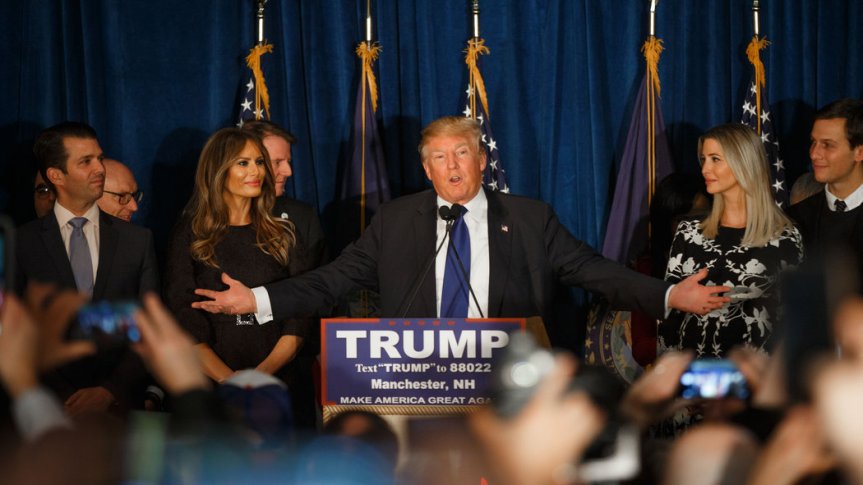
He’ll make America great again — it says so on his podium!

W.J. Astore

My wife and I watched the results come in last night on MSNBC and the four speeches by Hillary Clinton, Bernie Sanders, Donald Trump, and John Kasich.  Surprisingly, the best speech of the bunch was by Kasich, but more on that in a moment.

Hillary charged ahead with a concession speech that was basically a recycled stump speech.  It looked like she was using teleprompters.  She offered the obligatory thanks to her supporters, to New Hampshire, and so on, but you could tell she just wanted to move on from her crushing defeat.  She has real difficulty connecting with an audience, and her campaign’s message that she’s the most competent candidate, the one best able to step into the Oval Office on day one, simply isn’t resonating with voters who are fed up with establishment politics.

Bernie went next and also gave a modified version of his stump speech.  He spoke too long, but I’m guessing he was doing his best to exploit his “prime time” moment.  He offered kind words for Clinton but then proceeded to attack the politics as usual that she represents.  What got me most was the genuine excitement in the room for Bernie.  The people cheering behind him were an especially eclectic and vibrant mix (I know the “optics” are usually managed, but still).  There was a young black guy wearing a hat and a Bernie t-shirt who was simply a riot.  (He was standing behind and to Bernie’s left.)  My wife and I looked at each other and said: “He should be Bernie’s Vice President.”

Trump came on the heels of Bernie, and the shift in tone was immediate.  With Bernie, it’s all about the movement.  With Trump, it’s all about Trump.  Flanked by his photogenic family, Trump once again told Americans how he is going to make America “great” again, how America is going to win again — at negotiating treaties, with the economy, with wars — heck, I guess we’re going to win at EVERYTHING with Trump in command.  Again he boasted how he’s going to make the U.S. military so big and so strong that no one will dare attack us.  In a word, he bloviated.  But Trump should never be dismissed lightly, certainly not after his decisive victory in New Hampshire.

Kasich came next after Trump, and again the tone shifted.  Coming in a strong second in NH, Kasich talked about listening to the American people, and how the 100+ “town halls” he had done had changed him as a candidate and as a person.  He told personal stories and connected with the audience; he closed on a note of compassion, asking Americans to decompress, to take time to listen to one another, to find time for reflection.  His speech was the most personal and heartfelt of the four that I heard, and I found myself hoping that Kasich’s message would ultimately triumph over the bellicosity of Trump, Cruz, Rubio, and the rest of the Republicans.

Overall, last night was a night of surprises, with two unconventional candidates, Sanders and Trump, winning convincingly.  Their messages, of course, are polar opposites. Bernie wants a better future for all Americans, especially for the disadvantaged, whereas Trump is all about making America big and strong, a “winner.”  Put differently, Sanders sees a lot of ordinary Americans who are losing in today’s “rigged” economy, and he wants to lift them up.  Trump sees America writ large as losing, even some of the wealthiest, vis-a-vis foreign competitors like China, and he says he’ll lift all of America up.

It’s that message of uplift, expressed so differently by Sanders and Trump, that resonated so powerfully in New Hampshire.


A Surefire Recipe for the End of Democracy

cheerleader camo
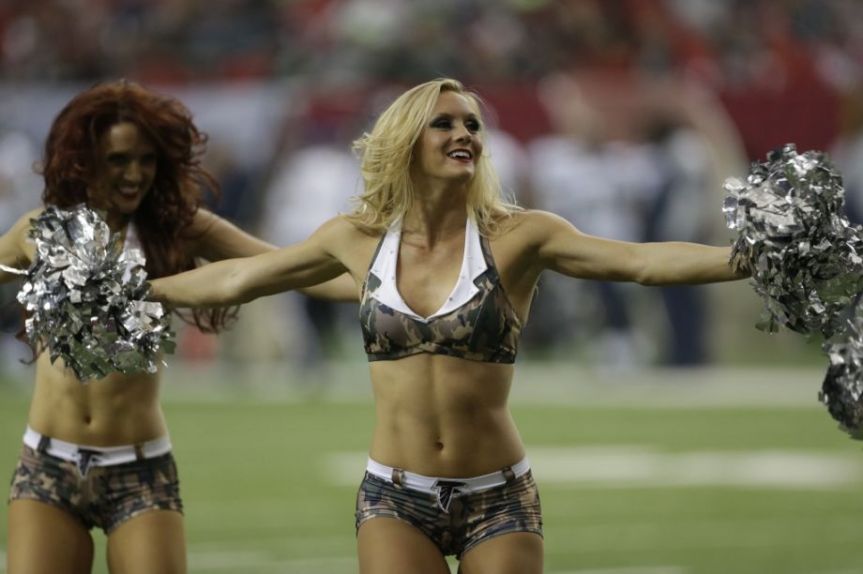
Camo-clad NFL Cheerleaders “Salute” the Troops

W.J. Astore

I’ve written several articles about the United States and creeping militarism (see here and here, for example).  This should be obvious, but I’ll say it again: Calling attention to the militarization of American society is pro-democracy, not anti-military.  Indeed, back in the citizen-soldier era of my father, being “gung ho” for the military wasn’t even applauded within the military!

As one veteran wrote to me:

When I was in the military, being “gung ho” was not considered a compliment by most of my friends… Of course we were not professional military types, just taking our turns to do our duty. We remembered the American soldier epitomized by Bill Mauldin as “Willie” and “Joe” who fought successfully against the German Army and the Japanese fanatics…The popular war movies of WWII after the war usually pitted the austere, indoctrinated Nazis fighting to demonstrate the Nazi superiority against the average American citizen soldier. Remember the movie “Battleground”? Today the images of our Army uncomfortably remind me of the way the German superman was portrayed that we overcame. 

As America today celebrates its “superman” warriors (one soldier recently called this “the age of the commando”), our country neglects these same men and women when they leave the military, often with crippling physical and psychological wounds.

As another veteran wrote to me:

[There is a] disjunction between the cult of military hero-worship in American society and American ignorance of veterans’ problems.  I am continually disgusted with those who are pimping off the mystique [surrounding our troops] who don’t deserve any special regard for their military service.  And a final but important point: many combat vets, knowing full well the realities of combat and its effects on combatants, do not want to be thanked at all [by the public].

America’s militarism both feeds and draws support from our endless wars.  The war on terror has been ongoing since 2001.  So too the war in Afghanistan.  Iraq keeps getting more chaotic.  Miscalculation in Syria could lead to World War III.

Speaking of future wars, just look at the rhetoric of our more popular political candidates for president, to include Donald “bomb those suckers” Trump and Ted “carpet bomb” Cruz.  Chickenhawk politicians are nothing but opportunists.  They may be leading the war charge, but they know they’re backed by a society in thrall to military spectacle (as represented, for example, by pom-pom shaking cheerleaders in skimpy camouflage outfits).

Unstinting praise of America’s “warriors” and “heroes” is reinforced by feel-good corporate/military advertising.  Recall Budweiser’s “welcome home” party for an Army lieutenant that aired during the Super Bowl a couple of years back.  Or red-white-and-blue Budweiser cans to “honor” the troops on July 4th.  “Saluting” the troops with colorful beer cans – really?

Signs of militarism USA are everywhere.  Police forces with MRAPs and similar tank-like vehicles.  Colleges and universities jostling for “defense” funding (even bucolic campuses want those war bucks).  Popular games that glorify military mayhem, such as the “Call of Duty” video games.  Even mundane items like camouflage headsets for NFL coaches.

It’s time to end the madness.  Paraphrasing Dwight Eisenhower, only Americans can defeat America.  Constant celebration of all things military is not a recipe for victory.  But it is a surefire recipe for the end of democracy.

Donald Trump and American Fascism?

The Donald: Easy to make fun of ... too easy
The Donald: Easy to make fun of … too easy (AP/Seth Wenig)

W.J. Astore

A reader wrote to me this morning about Donald Trump and American fascism.  Is Trump, with his anti-immigrant posturing and his generally bombastic demeanor, tapping into a “fascist spring” in America?

The question seems unduly alarming as well as absurd.  But let’s pause for a moment.  I recently saw on TV the results of a poll in which Americans were asked, “Which presidential candidate would best revive the American economy?”  The clear winner: Donald Trump. Yes, maybe it’s just name recognition or an association of Trump’s name with money-making, but the result was nevertheless disturbing.

Here’s the thing: It’s easy to view Trump as a joke.  His bad hair.  His vulgar manner.  His obvious bombast.

But guess who else was dismissed as a joke?  Adolf Hitler.

Before he got his grip on power, many in Germany thought that Hitler was a joke: bad haircut, ill-fitting clothes, vulgar accent. Hitler was known as the “Bohemian Corporal,” a euphemism which in colloquial American English translates to “Hillbilly Grunt.”  As a result, “good” Germans just couldn’t take Hitler that seriously.  They underestimated him — and when they tried to move against him, it was far too late.

Of course, I’m not saying that Trump is some kind of Hitler.  What I am saying is that popular demagogues are easy to make fun of — easy, that is, until they gain power.

Sinclair Lewis had it right: It Can Happen Here.  All it takes is a megalomaniacal and messianic leader, a crisis to make the people desperate (such as the Great Depression that facilitated Hitler’s rise), various elites who cynically and opportunistically throw their support behind the “great leader,” and enough of the rest of us who choose, out of fear or indifference or ignorance, to do nothing.

Update (8/23/15): The Donald is still gaining in the polls, notes the New York Times, despite (or rather because of) the outrageous things he says:

In poll after poll of Republicans, Mr. Trump leads among women, despite having used terms like “fat pigs” and “disgusting animals” to denigrate some of them. He leads among evangelical Christians, despite saying he had never had a reason to ask God for forgiveness. He leads among moderates and college-educated voters, despite a populist and anti-immigrant message thought to resonate most with conservatives and less-affluent voters. He leads among the most frequent, likely voters, even though his appeal is greatest among those with little history of voting.

One thing is certain: Trump draws support from people who are simply tired of traditional candidates like Jeb Bush.  But does Trump stand for anything other than himself?  He’s notably vague on the issues, perhaps learning from the Obama Campaign in 2008 that it’s far better to sell vague slogans like “hope” and “change” to the American people.  Trump’s slogan is “Make America Great Again!” — and that may be all that many Americans want to hear.