Apocalypse Soon?

Returning a Final Time to Cheyenne Mountain

BILL ASTORE

DEC 02, 2025

Hello Everyone: In 2007, I was fed up with the lies of the Bush/Cheney administration and the way civilian leadership was using the bemedaled chest of David Petraeus to deflect blame for that disastrous war. I knew then the “success” of the surge was an illusion, or, as Petraeus put it back then, “fragile” and “reversible” (and so it proved to be). I wrote an op-ed about how we the people had to save the military from itself and its own self-serving illusions. No one was interested in what I had to say; no one, that is, except Tom Engelhardt at TomDispatch. And so that led to my first “tomgram.

Eighteen years later, I’ve reached the unlikely number of 115 essays for TomDispatch, something neither Tom nor I ever expected. And just about all those essays have been introduced by a mini-essay by Tom himself. It’s been a remarkable partnership—it’s what got my career as a writer and essayist (rather than a traditional historian) started.

This piece, my 115th, returns again to Cheyenne Mountain and nuclear war. I first wrote about my time “in the mountain” in 2008; seventeen years later, I’m even more dismayed at (and disgusted by) my country’s newfound enthusiasm for nuclear weapons and their “recapitalization.” Read on!

*****

It’s been 20 years since I retired from the Air Force and 40 years since I first entered Cheyenne Mountain, America’s nuclear redoubt at the southern end of the Front Range that includes Pikes Peak in Colorado. So it was with some nostalgia that I read a recent memo from General Kenneth Wilsbach, the new Chief of Staff of the Air Force (CSAF). Along with the usual warrior talk, the CSAF vowed to “relentlessly advocate” for the new Sentinel ICBM (intercontinental ballistic missile) and the B-21 Raider stealth bomber. While the Air Force often speaks of “investing” in new nukes, this time the CSAF opted for “recapitalization,” a remarkably bloodless term for the creation of a whole new generation of genocidal thermonuclear weapons and their delivery systems.

(Take a moment to think about that word, “creation,” applied to weapons of mass destruction. Raised Catholic, I learned that God created the universe out of nothing. By comparison, nuclear creators aren’t gods, they’re devils, for their “creation” may end with the destruction of everything. Small wonder J. Robert Oppenheimer musedthat he’d become death, the destroyer of worlds, after the first successful atomic blast in 1945.)

In my Cheyenne Mountain days, circa 1985, the new “must have” bomber was the B-1 Lancer and the new “must have” ICBM was the MX Peacekeeper. If you go back 20 to 30 years earlier than that, it was the B-52 and the Minuteman. And mind you, my old service “owns” two legs of America’s nuclear triad. (The Navy has the third with its nuclear submarines armed with Trident II missiles.) And count on one thing: it will never willingly give them up. It will always “relentlessly advocate” for the latest ICBM and nuclear-capable bomber, irrespective of need, price, strategy, or above all else their murderous, indeed apocalyptic, capabilities.

At this moment, Donald Trump’s America has more than 5,000 nuclear warheads and bombs of various sorts, while Vladimir Putin’s Russia has roughly 5,500 of the same. Together, they represent overkill of an enormity that should be considered essentially unfathomable. Any sane person would minimally argue for serious reductions in nuclear weaponry on this planet. The literal salvation of humanity may depend on it. But don’t tell that to the generals and admirals, or to the weapons-producing corporations that get rich building such weaponry, or to members of Congress who have factories producing such weaponry and bases housing them in their districts.

So, here we are in a world in which the Pentagon plans to spend another $1.7 trillion(and no, that is not a typo!) “recapitalizing” its nuclear triad, and so in a world that is guaranteed to remain haunted forever by a possible future doomsday, the specter of nuclear mushroom clouds, and a true “end-times” catastrophe.

I Join AF Space Command Only to Find Myself Under 2,000 Feet of Granite

My first military assignment in 1985 was at Peterson Air Force Base in Colorado with Air Force Space Command. That put me in America’s nuclear command post during the last few years of the Cold War. I also worked in the Space Surveillance Center and on a battle staff that brought me into the Missile Warning Center. So, I was exposed, in a relatively modest way (if anything having to do with nuclear weapons can ever be considered “modest”), to what nuclear war would actually be like and forced to think about it in a way most Americans don’t.

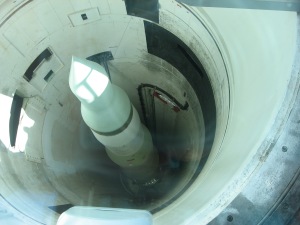
Each time I journeyed into Cheyenne Mountain, I walked or rode through a long tunnel carved out of granite. The buildings inside were mounted on gigantic springs (yes, springs!) that were supposed to absorb the shock of any nearby hydrogen bomb blast in a future war with the Soviet Union. Massive blast doors that looked like they belonged on the largest bank vault in the universe were supposed to keep us safe, though in a nuclear war they might only have ensured our entombment. They were mostly kept open, but every now and then they were closed for a military exercise.

The author (right) with Tom Engelhardt

I was a “space systems test analyst.” The Space Surveillance Center ran on a certain software program that needed periodic testing and evaluation and I helped test the computer software that kept track of all objects orbiting the Earth. Back then, there were just over 5,000 of them. (Now, that number’s more like 45,000 and space is a lot more crowded — perhaps too crowded.)

Anyhow, what I remember most vividly were military exercises where we’d run through different potentially world-ending scenarios. (Think of the movie War Gameswith Matthew Broderick.) One exercise simulated a nuclear attack on the United States. No, it wasn’t like some Hollywood production. We just had monochrome computer displays with primitive graphics, but you could certainly see missile tracks emerging from the Soviet Union, crossing the North Pole, and ending at American cities.

Even though there were no fancy (fake) explosions and no other special effects, simply realizing what was possible and how we would visualize it if it were actually to happen was, as I’m sure you can imagine, a distinctly sobering experience and not one I’ve ever forgotten.

That “war game” should have shaken me up more than it did, however. At the time, we had a certain amount of fatalism about the possibility of nuclear war, something captured in the posters of the era that told you what to do in case of a nuclear attack. The final step was basically to bend over and kiss your ass goodbye. That was indeed my attitude.

Rather than obsess about Armageddon, I submerged myself in routine. There was a certain job to be done, procedures to be carried out, discipline to adhere to. Remember, of course, that this was also the era of the rise of the nuclear freeze protest movement that was demanding the U.S. and the Soviet Union reach an agreement to halt further testing, production, and deployment of nuclear weapons. (If only, of course!) In addition, this was the time of the hit film The Day After, which tried to portray the aftermath of a nuclear war in the United States. In fact, on a midnight shift in Cheyenne Mountain, I even read Tom Clancy’s Red Storm Rising, which envisioned the Cold War gone hot, a Third World War gone nuclear.

Of course, if we had thought about nuclear war every minute of every day, we might indeed have been cowering under our sheets. Unfortunately, as a society, except in rare moments like the nuclear freeze movement one, we neither considered nor generally grasped what nuclear war was all about (even though nine countries now possess such weaponry and the likelihood of such a war only grows). Unfortunately, that lack of comprehension (and so protest) is one big reason why nuclear war remains so chillingly possible.

If anything, such a war has been eerily normalized in our collective consciousness and we’ve become remarkably numb to and fatalistic about it. One characteristic of that reality was the anesthetizing language that we used then (and still use) when it came to nuclear matters. We in the military spoke in acronyms or jargon about “flexible response,” “deterrence,” and what was then known as “mutually assured destruction” (or the wiping out of everything). In fact, we had a whole vocabulary of different words and euphemisms we could use so as not to think too deeply about the unthinkable or our possible role in making it happen.

My Date With Trinity

After leaving Cheyenne Mountain and getting a master’s degree, I co-taught a course on the making and use of the atomic bomb at the Air Force Academy. That was in 1992, and we actually took the cadets on a field trip to Los Alamos where the first nuclear weapon had largely been developed. Then we went on to the Trinity test sitein Alamogordo, New Mexico, where, of course, that first atomic device was tested and that, believe me, was an unforgettable experience. We walked around and saw what was left of the tower where Robert Oppenheimer and crew suspended the “gadget” (nice euphemism!) for testing that bomb on July 16, 1945, less than a month before two atomic bombs would be dropped on the Japanese cities of Hiroshima and Nagasaki, destroying both of them and killing perhaps 200,000 people. Basically (I’m sure you won’t be surprised to learn), nothing’s left of that tower except for its concrete base and a couple of twisted pieces of metal. It certainly does make you reflect on the sheer power of such weaponry. It was then and remains a distinctly haunted landscape and walking around it a truly sobering experience.

And when I toured the Los Alamos lab right after the collapse of the other great superpower of that moment, the Soviet Union, it was curious how glum the people I met there were. The mood of the scientists was like: hey, maybe I’m going to have to find another job because we’re not going to be building all these nuclear weapons anymore, not with the Soviet Union gone. It was so obviously time for America to cash in its “peace dividends” and the scientists’ mood reflected that.

Now, just imagine that 33 years after I took those cadets there, Los Alamos is once again going gangbusters, as our nation plans to “invest” another $1.7 trillion in a “modernized” nuclear triad (imagine what that means in terms of ultimate destruction!) that we (and the rest of the world) absolutely don’t need. To be blunt, today that outrages me. It angers me that all of us, whether those like me who served in uniform or your average American taxpayer, have sacrificed so much to create genocidal weaponry and a distinctly world-ending arsenal. Worse yet, when the Soviet Union collapsed in 1991, we didn’t even try to change course. And now the message is: Let’s spend staggering amounts of our tax dollars on even more apocalyptic weaponry. It’s insanity and, no question about it, it’s also morally obscene.

The Glitter of Nuclear Weapons

That ongoing obsession with total destruction, ultimate annihilation, reflects the fact that the United States is led by moral midgets. During the Vietnam War years, the infamous phrase of the time was that the U.S. military had to “destroy the town to save it” (from communism, of course). And for 70 years now, America’s leaders have tacitly threatened to order the destruction of the world to save it from a rival power like Russia or China. Indeed, nuclear war plans in the early 1960s already envisioned a massive strike against Russia and China, with estimates of the dead put at 600 million, or “100 Holocausts,” as Daniel Ellsberg of Vietnam War fame so memorably put it.

Take it from this retired officer: you simply can’t trust the U.S. military with that sort of destructive power. Indeed, you can’t trust anyone with that much power at their fingertips. Consider nuclear weapons akin to the One Ring of Power in J.R.R. Tolkien’s The Lord of the Rings. Anyone who puts that ring on is inevitably twisted and corrupted.

Freeman Dyson, a physicist of considerable probity, put it well to documentarian Jon Else in his film The Day After Trinity. Dyson confessed to his own “ring of power” moment:

“I felt it myself. The glitter of nuclear weapons. It is irresistible if you come to them as a scientist. To feel it’s there in your hands, to release this energy that fuels the stars, to let it do your bidding. To perform these miracles, to lift a million tons of rock into the sky. It is something that gives people an illusion of illimitable power, and it is, in some ways, responsible for all our troubles — this, what you might call technical arrogance, that overcomes people when they see what they can do with their minds.”

I’ve felt something akin to that as well. When I wore a military uniform, I was in some sense a captive to power. The military both captures and captivates. There’s an allure of power in the military, since you have a lot of destructive power at your disposal.

Of course, I wasn’t a B-1 bomber pilot or a missile-launch officer for ICBMs, but even so, when you’re part of something that’s so immensely, even world-destructively powerful, believe me, it does have an allure to it. And I don’t think we’re usually fully aware of how captivating that can be and how much you can want to be a part of that.

Even after their service, many veterans still want to go up in a warplane again or take a tour of a submarine, a battleship, or an aircraft carrier for nostalgic reasons, of course, but also because you want to regain that captivating feeling of being so close to immense — even world-ending — power.

The saying that “power corrupts, and absolute power corrupts absolutely” may never be truer than when it comes to nuclear war. We even have expressions like “use them or lose them” to express how ICBMs should be “launched on warning” of a nuclear attack before they can be destroyed by an incoming enemy strike. So many years later, in other words, the world remains on even more of a nuclear hair-trigger, the pistol loaded and cocked to our collective heads, just waiting for news that will push us over the edge, that will make those trigger fingers of ours too itchy to resist the urge to put too much pressure on that nuclear trigger.

No matter how many bunkers we build, no matter that the world’s biggest bunker tunneled out of a mountain, the one I was once in, still exists, nothing will save us if we allow the glitter of nuclear weapons to flash into preternatural thermonuclear brightness.

Copyright 2025 William J. Astore
Golden Dome Idiocy

A “shield” against nuclear attack makes nuclear war more likely

BILL ASTORE

JUN 09, 2025

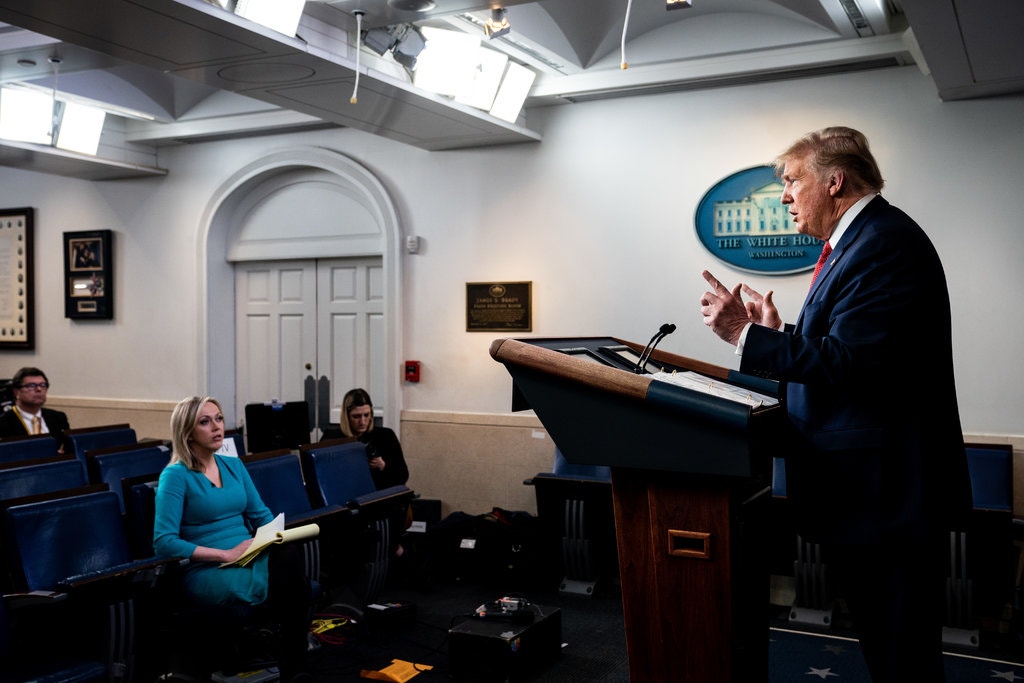
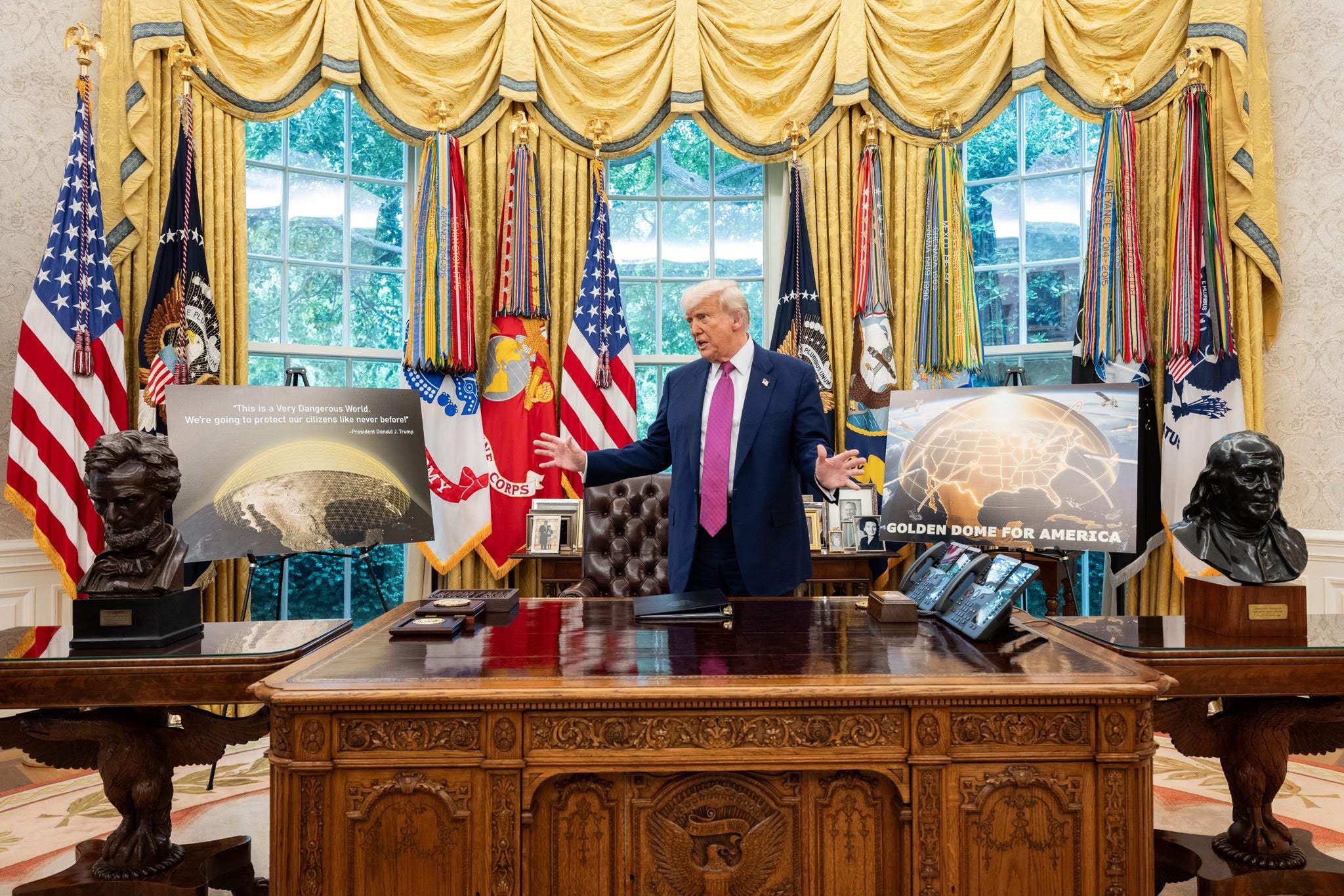
Donald Trump has a dream: a “golden dome” over America to defend the country against nuclear missiles. It’s a repeat of Ronald Reagan’s dream, the Strategic Defense Initiative, nicknamed “Star Wars” after the movie. The problem is that the dream represents a nightmare.

How so? Golden Dome would be dangerously escalatory, wildly expensive, and unlikely to work as a “shield” to America. It is worse than a mistake: it is a crime. It represents a massive theft from those who hunger and suffer in America. As Republican President Dwight D. Eisenhower said in 1953, wasting enormous resources on weapons systems is no way of life at all. It is humanity crucifying itself on a cross of iron. Crucifixion is not made more pleasant when the cross is golden.

A new golden idol occupies his mind

Put differently, the Golden Dome is a golden idol, a false god, one that by making a massive nuclear strike more likely endangers all of us and God’s creation.

Golden Dome is a grotesque example of makework militarism and warfare as welfare for weapons makers. Though it’s unlikely to work, if it did (partially) it would make a massive nuclear strike more likely, not less, endangering the world with the ecocidal terror of nuclear winter.

Golden Dome and the so-called investment in America’s nuclear triad are both examples of socio-technological madness–America’s leaders are like the mutants in “Beneath the Planet of the Apes,” worshipping the bombs that twisted them and which can only destroy what’s left of civilization.

Some Christians today await the apocalypse when Christ is supposed to return–but the most likely apocalypse features not the second coming of a God-man but a third world war featuring bomb-gods of thermonuclear destruction.

As Daniel Ellsberg once noted, U.S. nuclear attack plans in the early 1960s envisioned 600 million killed, or 100 Holocausts (before we knew such an attack would lead to nuclear winter). We’re lucky this insanity never came to pass. The only sane policy is to cancel Golden Dome and end “investment” in a new nuclear triad. Disarmament, not rearmament, is what’s needed.

*****

The Global Network Against Weapons & Nuclear Power in Space has released a statement against Golden Dome that you can read here. You can add your name to the statement, as I have. Here are some bullet points released along with the statement:

  • Golden Dome is financially reckless and unsustainable. Early cost estimates range from $550 billion to several trillion dollars over two decades. This dwarfs even the Pentagon’s annual budget and adds to the US’s $37 trillion national debt—a price tag that makes the project fiscally indefensible.
  • Experts overwhelmingly agree that 100% effective missile interception is a fantasy, especially against complex attacks involving decoys, hypersonic missiles, and maneuverable warheads. Even Israel’s Iron Dome has been bypassed by more rudimentary drone and missile attacks.
  • Golden Dome includes space-based interceptors—effectively weaponizing the Earth’s orbit and triggering an arms race. This violates the spirit of the Outer Space Treaty and pushes nations like China and Russia to accelerate space weapons development.
  • By giving the illusion of first-strike survivability, it runs counter to the Mutually Assured Destruction (MAD) doctrine that has prevented so far a nuclear holocaust and incentivizes other powers to retain or expand their nuclear arsenals, blocking disarmament efforts permanently.
  • Thousands of rocket launches for satellite interceptors would further damage the ozone layer, could generate dangerous orbital debris (Kessler Syndrome), and will harm our already fragile space environment.
  • The only guaranteed winners of Golden Dome are weapons giants like Lockheed Martin, Raytheon, and Palantir, which stand to profit enormously regardless of the system’s effectiveness or risks.
  • The trillions funneled into Golden Dome could be used for urgent domestic priorities—such as healthcare, infrastructure, climate action, and education, directly benefiting millions of Americans.

In short, Golden Dome is a massive, dangerous, and futile vanity project, cloaked in patriotism but driven by profit, politics, and illusion.

Daniel Ellsberg and the Madness of Nuclear Weapons

W.J. Astore

Honoring the wisdom of an anti-war hero

I woke this morning to the sad news that Daniel Ellsberg has pancreatic cancer and has been given only a few months to live. Ellsberg has lived a long and heroic life; he famously leaked the Pentagon papers, risking lifelong imprisonment to put a stop to America’s calamitous and atrocious war against Vietnam.

Five years ago, I read Ellsberg’s book on his years as a nuclear war theorist for the U.S. government. I was so impressed (and so alarmed) that I immediately wrote my own review of it, which I’m reposting today in Ellsberg’s honor.

Ellsberg is one of the giants of recent American history. He has lived a life of great value. Perhaps the best way to honor him is to read him, listen to him, and act to put a stop to our collective nuclear madness.

The Doomsday Machine: The Madness of America’s Nuclear Weapons

41zhRYUMyYL

(Originally posted 12/28/17)

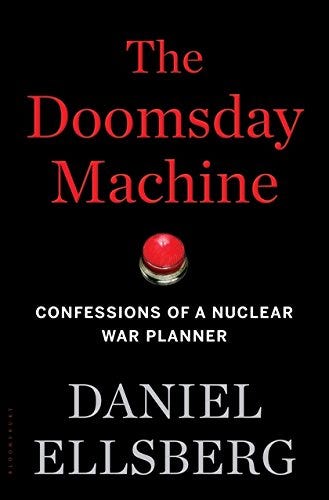
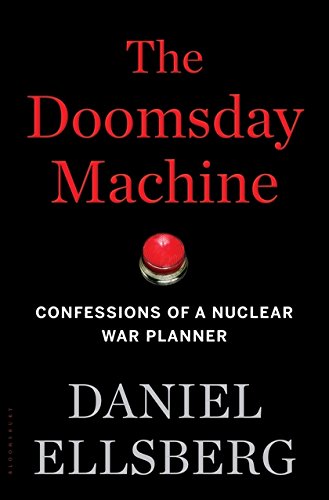
I just finished Daniel Ellsberg’s new book, The Doomsday Machine: Confessions of a Nuclear War Planner.  Talk about hair-raising!  Ellsberg, of course, is famous for leaking the Pentagon papers, which helped to end the Vietnam war and the presidency of Richard Nixon as well.  But before Ellsberg worked as a senior adviser on the Vietnam war, he helped to formulate U.S. nuclear policy in the late 1950s and early 1960s.  His book is a shattering portrayal of the genocidal nature of U.S. nuclear planning during the Cold War — and that threat of worldwide genocide (or omnicide, a word Ellsberg uses to describe the death of nearly everything from a nuclear exchange that would generate disastrous cooling due to nuclear winter) persists to this day.

Rather than writing a traditional book review, I want to list some memorable facts and lessons I took from the book, lessons that should lead us to question the very sanity of America’s leaders.  To wit:

  1. U.S. nuclear war plans circa 1960 envisioned a simultaneous attack on the USSR and China that would generate 600 million deaths after six months.  As Ellsberg notes, that is 100 Holocausts.  This plan was to be used even if China hadn’t directly attacked the U.S., i.e. the USSR and China were lumped together as communist bad guys who had to be eliminated together in a general nuclear war.  Only one U.S. general present at the briefing objected to this idea: David M. Shoup, a Marine general and Medal of Honor winner, who also later objected to the Vietnam War.
  2. The U.S. military consistently overestimated the Soviet nuclear threat, envisioning missile and bomber gaps that didn’t exist.  In the nuclear arms race, the U.S. was often racing itself in the fielding of more and more nuclear weapons.
  3. General Curtis LeMay, the famous commander of Strategic Air Command (SAC) and later AF Chief of Staff, said that once war started, politicians like the president had no role to play in decision-making.
  4. When the atomic bomb was first tested in 1945, there were fears among the scientists involved that the atmosphere could be ignited, ending all life on earth.  The chance was considered remote (perhaps 3 in a million), so the scientists pressed ahead.
  5. The Cuban Missile Crisis of 1962 came much closer to nuclear war than most people recognize.  Soviet submarines in the area, attacked by mock U.S. depth charges, were prepared to launch nuclear torpedoes against U.S. ships.  Fidel Castro’s air defenses were also preparing to shoot down American planes, which may have ended in U.S. air attacks and an invasion in which Soviet troops on Cuba may have used nuclear weapons to defend themselves.
  6. The U.S. military was (and probably still is) extremely reluctant to reveal nuclear secrets to senior American civilian leaders, including even the President himself.  Ellsberg, possessing the highest security clearances and acting with presidential authority, had to pry answers from military officers who refused to provide detailed and complete information.
  7. The U.S. has always refused, and continues to refuse, to pledge to a “no first use” policy for nuclear weapons.
  8. The U.S. remains the only country to have used nuclear weapons (Hiroshima and Nagasaki).  Yet, as Ellsberg notes, the U.S. uses nuclear weapons all the time — by threatening their use, as President Eisenhower did during the Korean War, as President Nixon did during the Vietnam War, and as President Trump is doing today, promising “fire and fury” against North Korea.  The U.S. uses nuclear weapons like a loaded gun — holding it to an enemy’s head and threatening to pull the trigger, Ellsberg notes.  In short, there’s nothing exceptional about Trump and his nuclear threats.  All U.S. presidents have refused to take nuclear attacks “off the table” of options for U.S. action.
  9. Interservice rivalry has always been a driver of U.S. nuclear force structure and strategy.  The Navy (with its nuclear submarine programs, Polaris followed by Trident) and especially the Air Force (with its ICBMs and bombers) jealously guard their nuclear forces and the prestige/power/budgetary authority they convey.
  10. President Eisenhower’s emphasis on massive retaliation (as represented by SAC and its war plan, the SIOP) was a way for him to limit the power of the military-industrial complex (MIC).  But once Ike was gone, so too was the idea of using the nuclear deterrent as a way of restricting U.S. expenditures on conventional weaponry and U.S. adventurism in foreign wars, e.g. Vietnam.  (It should be said that Ike’s exercise at limiting the MIC in America held the world as a nuclear hostage.)
  11. Ellsberg shows convincingly that control over U.S. nuclear weapons was decentralized and delegated to much lower levels than most Americans know.  It’s not the case that only the president can launch a nuclear war.  Especially in the late 1950s and early 1960s, Ellsberg shows how it was possible that field-grade officers (majors and colonels) could have made decisions in the heat of battle to release nuclear weapons without direct orders from the president.
  12. Most Americans, Ellsberg notes, still don’t understand the huge quantitative and qualitative differences between atomic bombs and hydrogen (thermonuclear) weapons.  Hydrogen bombs are measured in megatons in equivalent TNT yield; atomic bombs are in kilotons.  In short, hydrogen bombs are a thousand times more destructive than atomic ones.  And this is just their explosive yield.  Radioactive fallout and massive fires are even bigger threats to life on earth.
  13. Most Americans still don’t understand that even a smallish nuclear exchange involving a few dozen hydrogen bombs could very well lead to nuclear winter and the deaths of billions of people on the earth (due to the widespread death of crops and resulting famine and disease).
  14. Despite the genocidal threat of nuclear weapons, the U.S. is persisting in plans to modernize its arsenal over the next 30 years at a cost of $1 trillion.

Ellsberg sees this all as a form of collective madness, and it’s hard to disagree.  He quotes Nietzsche to the effect that madness in individuals is rare, but that it’s common among bureaucracies and nations.  The tremendous overkill inherent to U.S. nuclear weapons — its threat of worldwide destruction — is truly a form of madness.  For how do you protect a nation or uphold its ideals by launching a nuclear war that would kill nearly everyone on earth?  How does that make any sense?  How is that not mad?

Ellsberg ends his “confessions” with many sane proposals for downsizing nuclear arsenals across the world.  But is anyone in power listening?  Certainly not U.S. presidents like Trump or Obama, who both signed on to that trillion dollar modernization program for U.S. nuclear weapons.

Ellsberg shows us there have been many chair-bound paper-pushers in the U.S. government who’ve drawn up plans to murder hundreds of millions of people — to unleash doomsday — all in the name of protecting America.  He also shows how close they’ve come to doing just that, especially during the Cuban Missile Crisis, but during other crises as well.

Nuclear brinksmanship, threats of nuclear war, and similar uses of nuclear weapons to intimidate hold the potential for catastrophe.  Miscalculations, mishaps, mistakes, are more than possible in an atmosphere of mistrust, when words and actions can be misinterpreted.

Ellsberg’s recommendations for changes point the way to a better world, a world where the threat of nuclear doomsday could be much reduced, perhaps eliminated completely.  The question remains: Is anyone in power listening?

The Murderous Madness of Trillions for Nuclear Weapons

W.J. Astore

Supporting trillions of dollars “to update and modernize our nuclear arsenal” is akin to advocating for more production of Zyklon B and improved gas chambers.

Incendiary claim? I think not. Like Zyklon B, nuclear weapons are genocidal. They are designed to kill millions; used en masse, they will kill billions. They are ecocidal as well; nuclear weapons with their intense heat and blast and radiation kill virtually everything in their radius. How can anyone who’s sane want more of them?

I happened to catch Kelly Ayotte, a former U.S. senator who’s now the Chair of the Board of Directors for BAE Systems, a major weapons contractor, say that she’s “always” been a strong supporter of updating and modernizing the U.S. nuclear arsenal. Of course, she and her company stand to profit from this. But at what cost to life on this planet?

Nevertheless, nuclear “modernization” proceeds apace in the U.S. at an estimated cost of nearly $2 trillion over the next few decades. Is this not the very definition of a murderous insanity?

As Daniel Ellsberg pointed out, U.S. nuclear attacks plans in the early 1960s could have resulted in the death of 600 million people, mainly in China and the Soviet Union. As Ellsberg noted, the U.S. was prepared to launch 100 Holocausts in the name of defending its “ideals.” (And this was before we knew about the dangers of nuclear winter.)

This murderous madness has to stop before we put an end to ourselves and our planet.

We’ll produce new nuclear missiles like so many sausages. But it’s all OK because we need to “update” and “modernize” our (genocidal and ecocidal) nuclear arsenal. Sure makes me proud to be an American.

Addendum: When you think of nuclear weapons as “investments” or as “sensible” (see comments), please consider this scene from “Terminator II.”

What is “sensible” about any of this? Sorry, count me out of “investing” in mass death via nuclear holocaust.

In Praise of Whistleblowers

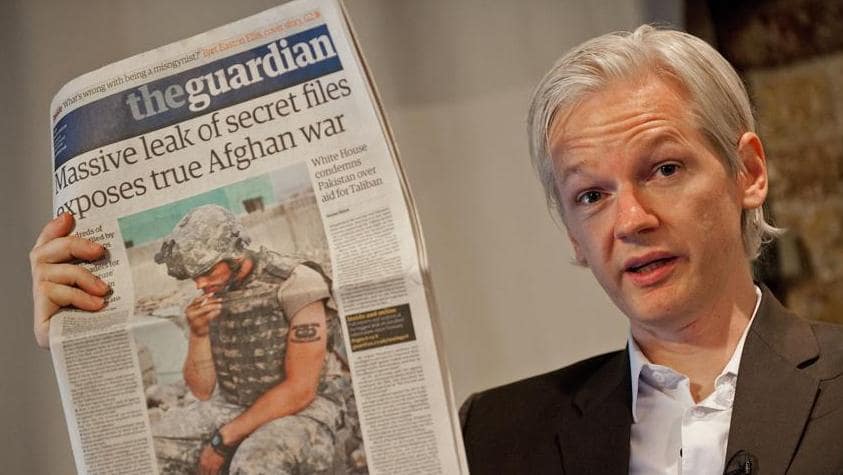
Julian Assange. The “true” Afghan War was not for us to see, but the truth will out, at least in this case, as total defeat in war is hard to hide

W.J. Astore

Edward Snowden. Daniel Hale. Chelsea Manning. Julian Assange. And of course Daniel Ellsberg. These and other whistleblowers courageously spoke out to reveal the lies the government feeds us to keep us pacified and compliant.

What do whistleblowers do? Some might say they speak truth to power. But power already knows the truth, indeed the powerful manufacture the truth, and they like their near-monopoly on truth and its creation and distribution.

What whistleblowers really do is speak truth to the powerless. They speak truth to us, and their version of the truth is one that reveals the manipulation and mendacity of the powerful. It exposes power to the light, revealing the rot, the greed, the lies, and for this act of defiance and of patriotism, the whistleblower must be punished.

Snowden was forced into exile in Russia. Hale was recently imprisoned for up to four years. Manning spent years in prison under humiliating conditions that included solitary confinement. Assange is still in prison, and the U.S. government still seeks to extradite him and punish him under an espionage act that shouldn’t even apply to a citizen of another country (not to mention a journalist who should be protected in a democracy that allegedly reveres the freedom of the press).

It’s not that the American people can’t handle the truth, to cite the words of Colonel Jessup as played by Jack Nicholson. It’s that the American people can handle the truth, that the truth would empower us while weakening the powers-that-be and their various plots and privileges. That’s why the truth is such a scarce commodity in Washington, D.C. It must be guarded while being massaged and manipulated before its fed to the masses as formless, often truthless, pabulum.

America’s punishment of principled whistleblowers is yet another sign of the death of democracy in America. If President Biden wanted to do something important, something inspiring, something meaningful, he’d permit Snowden to return with no charges, he’d pardon Hale, and he’d stop pursuing the extradition of Assange. But Biden will do none of these. Whistleblowers must be persecuted, must be punished, not because they’ve done something wrong, but because they’ve done something right, something that embarrasses the powerful. And that simply cannot be tolerated.

After all, if Americans in positions to know start speaking the truth to their fellow Americans, where will that end? We might see a resurgence of accountability, of justice, even of democracy in America. And we can’t have that.

Addendum: For a terrific book on whistleblowing that will make you angry indeed, check out Tom Mueller’s “Crisis of Conscience: Whistleblowing In An Age of Fraud” (New York, Riverhead Books, 2019).

In the USA, Life Is Incredibly Cheap

merlin_170974152_1520eff5-5086-4b5a-af30-814a37dd14bb-jumbo
America’s counterfactual leader, hands posed like pistols, telling it like it isn’t

W.J. Astore

The coronavirus has made one thing clear: life is incredibly cheap in the USA.  Or so it seems to our leaders, who are desperate to put America back to work by Easter in two weeks’ time, irrespective of the death toll that would result.  It’s all about getting back to “normal,” keeping the wheels of capitalism rolling along, and the profits rolling in for corporate America.

Capitalism is America’s true national religion, and money is our god.  Our leaders make decisions consistent with that belief system.  And, as Dorothy Day, the famous Catholic activist for the poor, said: “Our problems stem from our acceptance of this filthy, rotten system.”

Worth citing here is Caitlin Johnstone, who in a recent article noted how America’s response to COVID-19 illustrates the pathologies of market-driven capitalism and the politicians who so willingly serve it:

The corporate cronyism of America’s political system has been highlighted with a massive kleptocratic multitrillion-dollar corporate bailout of which actual Americans are only receiving a tiny fraction. Instead of putting that money toward paying people a living wage to stay home during a global pandemic, the overwhelming majority of the money is going to corporations while actual human beings receive a paltry $1,200 (which they won’t even be getting until May at the earliest) at a time of record-smashing unemployment.

America’s capitalism worship has been highlighted with Wall Street Journal headline “Dow Soars More Than 11% In Biggest One-Day Jump Since 1933” running at the exact same time as “Record Rise in Unemployment Claims Halts Historic Run of Job Growth — More than 3 million workers file for jobless benefits as coronavirus hits the economy“. Stocks are booming, Amazon is surging, and mountains of wealth are being transferred to sprawling megacorporations, while actual human beings are terrified of what the future holds.

Nice to know a few are profiting while so many worry, suffer, and die.  But should we be that surprised by how callous America’s leaders are?

I recall reading Daniel Ellsberg’s book on U.S. planning for nuclear war.  Sixty years ago, U.S. leaders were prepared to kill 600 million people (that’s not a typo) in their efforts to “win” the Cold War.  As I wrote about in December 2017:

U.S. nuclear war plans circa 1960 envisioned a simultaneous attack on the USSR and China that would generate 600 million deaths after six months.  As Daniel Ellsberg noted, that is 100 Holocausts.  This plan was to be used even if China hadn’t directly attacked the U.S., i.e. the USSR and China were lumped together as communist bad guys who had to be eliminated together in a general nuclear war.  Only one U.S. general present at the briefing objected to this idea: David M. Shoup, a Marine general and Medal of Honor winner, who also later objected to the Vietnam War.

Notoriously, General William Westmoreland once mused that “The Oriental doesn’t put the same high price on life as does a Westerner.  Life is plentiful.  Life is cheap in the Orient.”  That philosophy helped to justify massive killing of the Vietnamese people (perhaps as many as three million) in a futile quest to “win” the Vietnam War.

Thinking about Westmoreland’s musing in light of our government’s response to COVID-19, as well as past plans for “winning” a nuclear war and prevailing in Vietnam by killing everything that moved, one wonders about which value system truly esteems life.  It sure doesn’t seem to be the “Western” model as espoused by our leaders.

Bonus Lesson: In its daily send out, the New York Times had this article today: FACT CHECK: “Trump’s Baseless Claim That a Recession Would Be Deadlier Than the Coronavirus,” by LINDA QIU.  The opposite is more likely to be true, according to research and experts.

The Self-Defeating Military

pilot
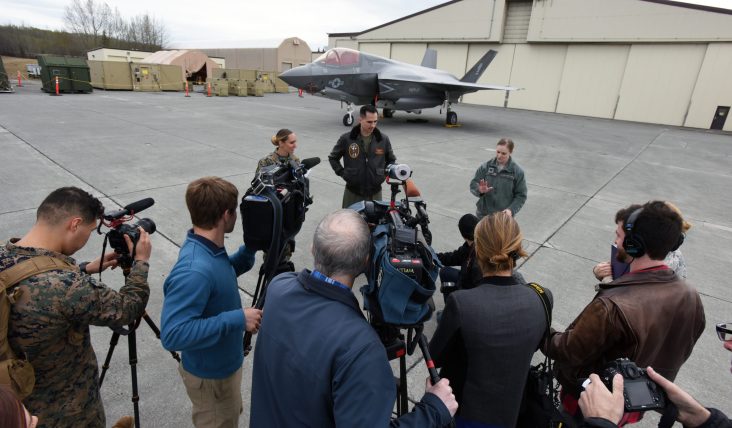
One of the pilots who flew at the Super Bowl in his F-35 gets a little media love

W.J. Astore

In my latest article for TomDispatch.com, I tackle the U.S. military and its self-defeating nature when it comes to wars overseas.  But there is a “war” that the military-industrial complex truly is winning handily, even overwhelmingly, and that’s the one for money and power within and across American society.  Put differently, when it comes to winning hearts and minds, the military fails spectacularly overseas but succeeds brilliantly here in the “homeland.”

Consider only one example: America’s major sporting events.  Each one has now become a military celebration.  At the Super Bowl this past weekend, four 100-year-old military veterans from World War II were the centerpiece of this year’s opening ceremonies (ostensibly to mark the 75th anniversary of the ending of that war in 1945, as well as the 100th year of the NFL), and of course no event is complete without military colorguards, saluting troops, and a loud flyover by combat jets at the close of the national anthem.  This is all accepted as “normal” and patriotic, the very mundanity of which illustrates the triumph of the military-industrial complex in our lives.

What follows is an excerpt from my article from TomDispatch:

The Future Is What It Used to Be

Long ago, New York Yankee catcher and later manager Yogi Berra summed up what was to come this way: “The future ain’t what it used to be.” And it wasn’t. We used to dream, for example, of flying cars, personal jetpacks, liberating robots, and oodles of leisure time. We even dreamed of mind-bending trips to Jupiter, as in Stanley Kubrick’s epic film 2001: A Space Odyssey. Like so much else we imagined, those dreams haven’t exactly panned out.

Yet here’s an exception to Berra’s wisdom: strangely enough, for the U.S. military, the future is predictably just what it used to be. After all, the latest futuristic vision of America’s military leaders is — hold onto your Kevlar helmets — a “new” cold war with its former communist rivals Russia and China. And let’s add in one other aspect of that military’s future vision: wars, as they see it, are going to be fought and settled with modernized (and ever more expensive) versions of the same old weapons systems that carried us through much of the mid-twentieth century: ever more pricey aircraft carriers, tanks, and top of the line jet fighters and bombers with — hey! — maybe a few thoroughly destabilizing tactical nukes thrown in, along with plenty of updated missiles carried by planes of an ever more “stealthy” and far more expensive variety. Think: the F-35 fighter, the most expensive weapons system in history (so far) and the B-21 bomber.

For such a future, of course, today’s military hardly needs to change at all, or so our generals and admirals argue. For example, yet more ships will, of course, be needed. The Navy high command is already clamoring for 355 of them, while complaining that the record-setting $738 billion Pentagon budget for 2020 is too “tight” to support such a fleet.

Not to be outdone when it comes to complaints about “tight” budgets, the Air Force is arguing vociferously that it needs yet more billions to build a “fleet” of planes that can wage two major wars at once. Meanwhile, the Army is typically lobbying for a new armored personnel carrier (to replace the M2 Bradley) that’s so esoteric insiders joke it will have to be made of “unobtainium.”

In short, no matter how much money the Trump administration and Congress throw at the Pentagon, it’s a guarantee that the military high command will only complain that more is needed, including for nuclear weapons to the tune of possibly $1.7 trillion over 30 years. But doubling down on more of the same, after a record 75 years of non-victories (not to speak of outright losses), is more than stubbornness, more than grift. It’s obdurate stupidity.

Why, then, does it persist? The answer would have to be because this country doesn’t hold its failing military leaders accountable. Instead, it applauds them and promotes them, rewarding them when they retire with six-figure pensions, often augmented by cushy jobs with major defense contractors. Given such a system, why should America’s generals and admirals speak truth to power? They are power and they’ll keep harsh and unflattering truths to themselves, thank you very much, unless they’re leaked by heroes like Daniel Ellsberg during the Vietnam War and Chelsea Manning during the Iraq War, or pried from them via a lawsuit like the one by the Washington Post that recently led to those Afghanistan Papers.

My Polish mother-in-law taught me a phrase that translates as, “Don’t say nothin’ to nobody.” When it comes to America’s wars and their true progress and prospects, consider that the official dictum of Pentagon spokespeople. Yet even as America’s wars sink into Vietnam-style quagmires, the money keeps flowing, especially to high-cost weapons programs.

Consider my old service, the Air Force. As one defense news site put it, “Congressional appropriators gave the Air Force [and Lockheed Martin] a holiday gift in the 2019 spending agreement… $1.87 billion for 20 additional F-35s and associated spare parts.” The new total just for 2020 is “98 aircraft — 62 F-35As, 16 F-35Bs, and 20 F-35Cs — at the whopping cost of $9.3 billion, crowning the F-35 as the biggest Pentagon procurement program ever.” And that’s not all. The Air Force (and Northrop Grumman) got another gift as well: $3 billion more to be put into its new, redundant, B-21 stealth bomber. Even much-beleaguered Boeing, responsible for the disastrous 737 MAX program, got a gift: nearly a billion dollars for the revamped F-15EX fighter, a much-modified version of a plane that first flew in the early 1970s. Yet, despite those gifts, Air Force officials continue to claim with straight faces that the service is getting the “short straw” in today’s budgetary battles in the Pentagon.

What does this all mean? One obvious answer would be: the only truly winning battles for the Pentagon are the ones for our taxpayer dollars.

Read the rest of my article here.  And thanks!

The Kennedy Administration: Camelot or Incompetence?

jackie-and-john-jackie-kennedy-3856502-816-800
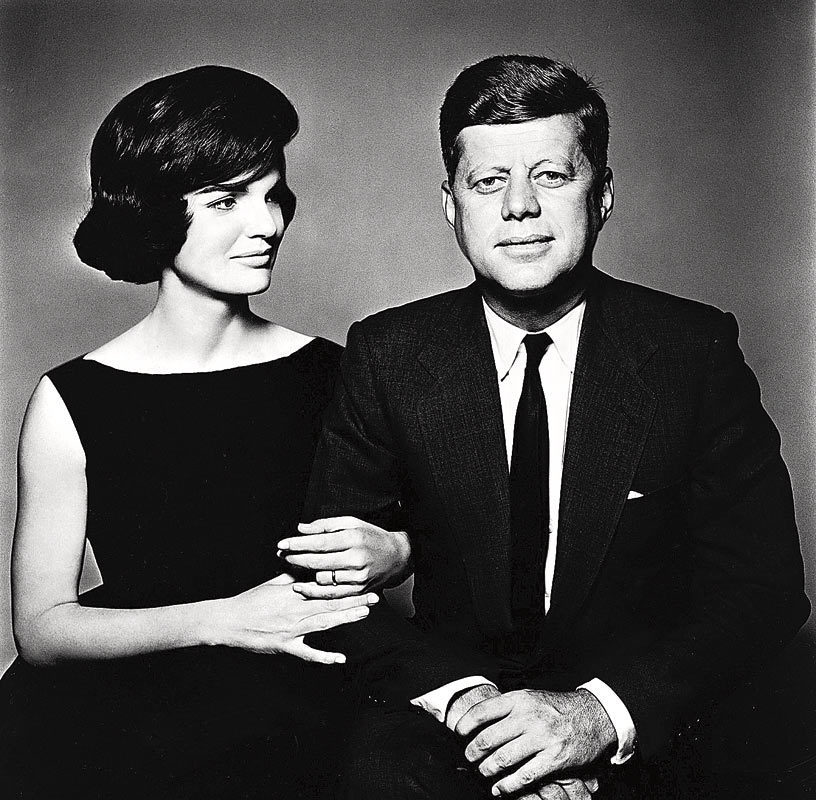
They seemed perfect …

The Kennedy Administration: Camelot or Incompetence?

W.J. Astore

President John F. Kennedy is surrounded by myths, the most famous of which is Camelot. The Kennedys brought youth and glamour to the White House, a reprieve from the perceived stodginess of Ike and Mamie Eisenhower (as well as the “square” and indeed criminal Nixon White House to come).  They seemed the perfect couple, John and Jackie, and it seems churlish and graceless to note how much of this was image.  Kennedy was a notorious womanizer, a fact both known and suppressed by a fawning Washington Press Corps.  Jackie came across as a traditional wife: loyal, unobjectionable, limited by her times but also steely in her grace and fortitude after her husband was assassinated in Dallas in November 1963 (the latest movie that captures this awful event is Jackie, starring Natalie Portman).

Kennedy’s father, Joe Sr., taught his sons a sense of winning at all costs. A sense of recklessness. Kennedy’s older brother, Joe Jr. died leading a risky bombing mission in World War II, and John F. Kennedy nearly died when he lost his PT boat in action in the Pacific.  The loss of PT-109 was depicted as a heroic act, as the young JFK helped to save some of his crew, but one may question how he came to lose his boat in the first place. JFK’s perfect marriage, as already mentioned, was a sham, and despite his relative youth, he was not in the best of health, plagued by a bad back, Addison’s disease, and other health issues. His Pulitzer-prize winning book, “Profiles in Courage,” was largely ghost written.  JFK’s life was often more a triumph of image than a profile in courage.

As President, Kennedy made many unwise decisions.  He escalated American involvement in Laos and Vietnam, setting the stage for a major commitment of U.S. ground troops by President Lyndon Johnson early in 1965.  He oversaw the disastrous Bay of Pigs invasion of Cuba, which backfired badly on the inexperienced U.S. commander-in-chief.  As Lawrence Freedman put it in his book, Kennedy’s Wars (2000), “This was exactly the sort of move—gambling on the basis of insufficient strength and then abandoning the operation before it was complete—that made [Dean] Acheson despair.”  Freedman further cites Acheson as saying European leaders compared JFK’s bungling to “a gifted amateur practicing with a boomerang and suddenly knocking himself cold.  They were amazed that so inexperienced a person should play with so lethal a weapon.”

Greater lethality was to come the next year with the Cuban Missile Crisis.  This is often sold as JFK’s moment of steely toughness, when he made the Soviets blink and back down, but as a recent book by Daniel Ellsberg reveals, that crisis nearly resulted in nuclear war between the U.S. and the Soviet Union.  It was yet another instance of JFK’s tendency toward taking big risks as a way of proving himself.  Almost precipitating nuclear Armageddon, however, is terrifying way to prove one’s fitness for office.

Even before JFK became president, he fabricated what today might be called “alternative facts.”  He invented a missile gap vis-à-vis the Soviet Union that didn’t exist.  In fact, the true missile gap was the opposite of what JFK claimed, in that the U.S. had many more nuclear ICBMs than the Soviets did.  When he became president, JFK embarked on a strategic policy of “Flexible Response” (suggested by General Maxwell Taylor) that activated and empowered more conventional operations by the U.S. military.  In practice what this meant was that the U.S. became embroiled in conflicts that were secondary to national interests; worst of all, of course, was a major land war in Vietnam that was essentially a lost cause even before Kennedy chose to escalate it with more advisers and materiel aid.

Defenders of JFK suggest he grew in office and would have seen the folly of continuing in Vietnam, but there’s little evidence to support this narrative.  The recent Ken Burns series on the Vietnam War cites Kennedy as saying the U.S. couldn’t win in Vietnam, but that he couldn’t order a withdrawal because to do so would cost him his reelection in 1964.  JFK, moreover, fancied the notion of Flexible Response, his New Look military and its emphasis on special ops forces such as the Green Berets, and he saw Vietnam as a test bed for a “counterinsurgency” approach to defeating communism. What LBJ did in 1965 in escalating that conflict by committing U.S. ground troops is probably what JFK would have done if he had lived.  (In his book, Choosing War: The Lost Chance for Peace and the Escalation of War in Vietnam, Fredrik Logevall suggests JFK may have had the political will to resist escalation in 1965, effectively allowing South Vietnam to fall to communism, an intriguing if unprovable scenario.)

In sum, JFK set the stage for America’s disastrous war in Southeast Asia while provoking the Soviet Union into an escalatory nuclear arms race that threatened the world with extinction.  Profiles in courage these are not.

It’s worth briefly comparing JFK’s record to that of Richard Nixon, who has no Camelot myths attached to him.  Nixon, of course, was and is vilified as “Tricky Dick” and dismissed as one of America’s worst presidents.  He deserves opprobrium for his mendacious, meretricious, and murderous policies vis-à-vis Southeast Asia, especially his well-nigh treasonous meddling in peace negotiations in 1968, before he was elected president.  Nixon and Henry Kissinger saw themselves as the world’s powerbrokers, working to overthrow governments they disliked, as in Chile with the coup against Allende.  But Nixon and Kissinger deserve a measure of credit for opening negotiations with communist China as well as starting a process of détente with the Soviet Union.  Nixon showed a capacity for growth in office even as he permitted his own ego and paranoia to undermine his administration’s accomplishments in foreign policy.

The point here is not to praise Nixon, a man of considerable gifts but also of crippling flaws.  Rather, the point is to highlight an overly fawning approach to the presidency of John F. Kennedy.  His administration, rather than serving as a shining moment, a Camelot, ultimately was an exercise in imagery and incompetence.

The Doomsday Machine: The Madness of America’s Nuclear Weapons

41zhRYUMyYL

W.J. Astore

I just finished Daniel Ellsberg’s new book, The Doomsday Machine: Confessions of a Nuclear War Planner.  Talk about hair-raising!  Ellsberg, of course, is famous for leaking the Pentagon papers, which helped to end the Vietnam war and the presidency of Richard Nixon as well.  But before Ellsberg worked as a senior adviser on the Vietnam war, he helped to formulate U.S. nuclear policy in the late 1950s and early 1960s.  His book is a shattering portrayal of the genocidal nature of U.S. nuclear planning during the Cold War — and that threat of worldwide genocide (or omnicide, a word Ellsberg uses to describe the death of nearly everything from a nuclear exchange that would generate disastrous cooling due to nuclear winter) persists to this day.

Rather than writing a traditional book review, I want to list some memorable facts and lessons I took from the book, lessons that should lead us to question the very sanity of America’s leaders.  To wit:

  1. U.S. nuclear war plans circa 1960 envisioned a simultaneous attack on the USSR and China that would generate 600 million deaths after six months.  As Ellsberg notes, that is 100 Holocausts.  This plan was to be used even if China hadn’t directly attacked the U.S., i.e. the USSR and China were lumped together as communist bad guys who had to be eliminated together in a general nuclear war.  Only one U.S. general present at the briefing objected to this idea: David M. Shoup, a Marine general and Medal of Honor winner, who also later objected to the Vietnam War.
  2. The U.S. military consistently overestimated the Soviet nuclear threat, envisioning missile and bomber gaps that didn’t exist.  In the nuclear arms race, the U.S. was often racing itself in the fielding of more and more nuclear weapons.
  3. General Curtis LeMay, the famous commander of Strategic Air Command (SAC) and later AF Chief of Staff, said that once war started, politicians like the president had no role to play in decision-making.
  4. When the atomic bomb was first tested in 1945, there were fears among the scientists involved that the atmosphere could be ignited, ending all life on earth.  The chance was considered remote (perhaps 3 in a million), so the scientists pressed ahead.
  5. The Cuban Missile Crisis of 1962 came much closer to nuclear war than most people recognize.  Soviet submarines in the area, attacked by mock U.S. depth charges, were prepared to launch nuclear torpedoes against U.S. ships.  Fidel Castro’s air defenses were also preparing to shoot down American planes, which may have ended in U.S. air attacks and an invasion in which Soviet troops on Cuba may have used nuclear weapons to defend themselves.
  6. The U.S. military was (and probably still is) extremely reluctant to reveal nuclear secrets to senior American civilian leaders, including even the President himself.  Ellsberg, possessing the highest security clearances and acting with presidential authority, had to pry answers from military officers who refused to provide detailed and complete information.
  7. The U.S. has always refused, and continues to refuse, to pledge to a “no first use” policy for nuclear weapons.
  8. The U.S. remains the only country to have used nuclear weapons (Hiroshima and Nagasaki).  Yet, as Ellsberg notes, the U.S. uses nuclear weapons all the time — by threatening their use, as President Eisenhower did during the Korean War, as President Nixon did during the Vietnam War, and as President Trump is doing today, promising “fire and fury” against North Korea.  The U.S. uses nuclear weapons like a loaded gun — holding it to an enemy’s head and threatening to pull the trigger, Ellsberg notes.  In short, there’s nothing exceptional about Trump and his nuclear threats.  All U.S. presidents have refused to take nuclear attacks “off the table” of options for U.S. action.
  9. Interservice rivalry has always been a driver of U.S. nuclear force structure and strategy.  The Navy (with its nuclear submarine programs, Polaris followed by Trident) and especially the Air Force (with its ICBMs and bombers) jealously guard their nuclear forces and the prestige/power/budgetary authority they convey.
  10. President Eisenhower’s emphasis on massive retaliation (as represented by SAC and its war plan, the SIOP) was a way for him to limit the power of the military-industrial complex (MIC).  But once Ike was gone, so too was the idea of using the nuclear deterrent as a way of restricting U.S. expenditures on conventional weaponry and U.S. adventurism in foreign wars, e.g. Vietnam.  (It should be said that Ike’s exercise at limiting the MIC in America held the world as a nuclear hostage.)
  11. Ellsberg shows convincingly that control over U.S. nuclear weapons was decentralized and delegated to much lower levels than most Americans know.  It’s not the case that only the president can launch a nuclear war.  Especially in the late 1950s and early 1960s, Ellsberg shows how it was possible that field-grade officers (majors and colonels) could have made decisions in the heat of battle to release nuclear weapons without direct orders from the president.
  12. Most Americans, Ellsberg notes, still don’t understand the huge quantitative and qualitative differences between atomic bombs and hydrogen (thermonuclear) weapons.  Hydrogen bombs are measured in megatons in equivalent TNT yield; atomic bombs are in kilotons.  In short, hydrogen bombs are a thousand times more destructive than atomic ones.  And this is just their explosive yield.  Radioactive fallout and massive fires are even bigger threats to life on earth.
  13. Most Americans still don’t understand that even a smallish nuclear exchange involving a few dozen hydrogen bombs could very well lead to nuclear winter and the deaths of billions of people on the earth (due to the widespread death of crops and resulting famine and disease).
  14. Despite the genocidal threat of nuclear weapons, the U.S. is persisting in plans to modernize its arsenal over the next 30 years at a cost of $1 trillion.

Ellsberg sees this all as a form of collective madness, and it’s hard to disagree.  He quotes Nietzsche to the effect that madness in individuals is rare, but that it’s common among bureaucracies and nations.  The tremendous overkill inherent to U.S. nuclear weapons — its threat of worldwide destruction — is truly a form of madness.  For how do you protect a nation or uphold its ideals by launching a nuclear war that would kill nearly everyone on earth?  How does that make any sense?  How is that not mad?

Ellsberg ends his “confessions” with many sane proposals for downsizing nuclear arsenals across the world.  But is anyone in power listening?  Certainly not U.S. presidents like Trump or Obama, who both signed on to that trillion dollar modernization program for U.S. nuclear weapons.

Ellsberg shows us there have been many chair-bound paper-pushers in the U.S. government who’ve drawn up plans to murder hundreds of millions of people — to unleash doomsday — all in the name of protecting America.  He also shows how close they’ve come to doing just that, especially during the Cuban Missile Crisis, but during other crises as well.

Nuclear brinksmanship, threats of nuclear war, and similar uses of nuclear weapons to intimidate hold the potential for catastrophe.  Miscalculations, mishaps, mistakes, are more than possible in an atmosphere of mistrust, when words and actions can be misinterpreted.

Ellsberg’s recommendations for changes point the way to a better world, a world where the threat of nuclear doomsday could be much reduced, perhaps eliminated completely.  The question remains: Is anyone in power listening?

Friday Morning Thoughts

rocco
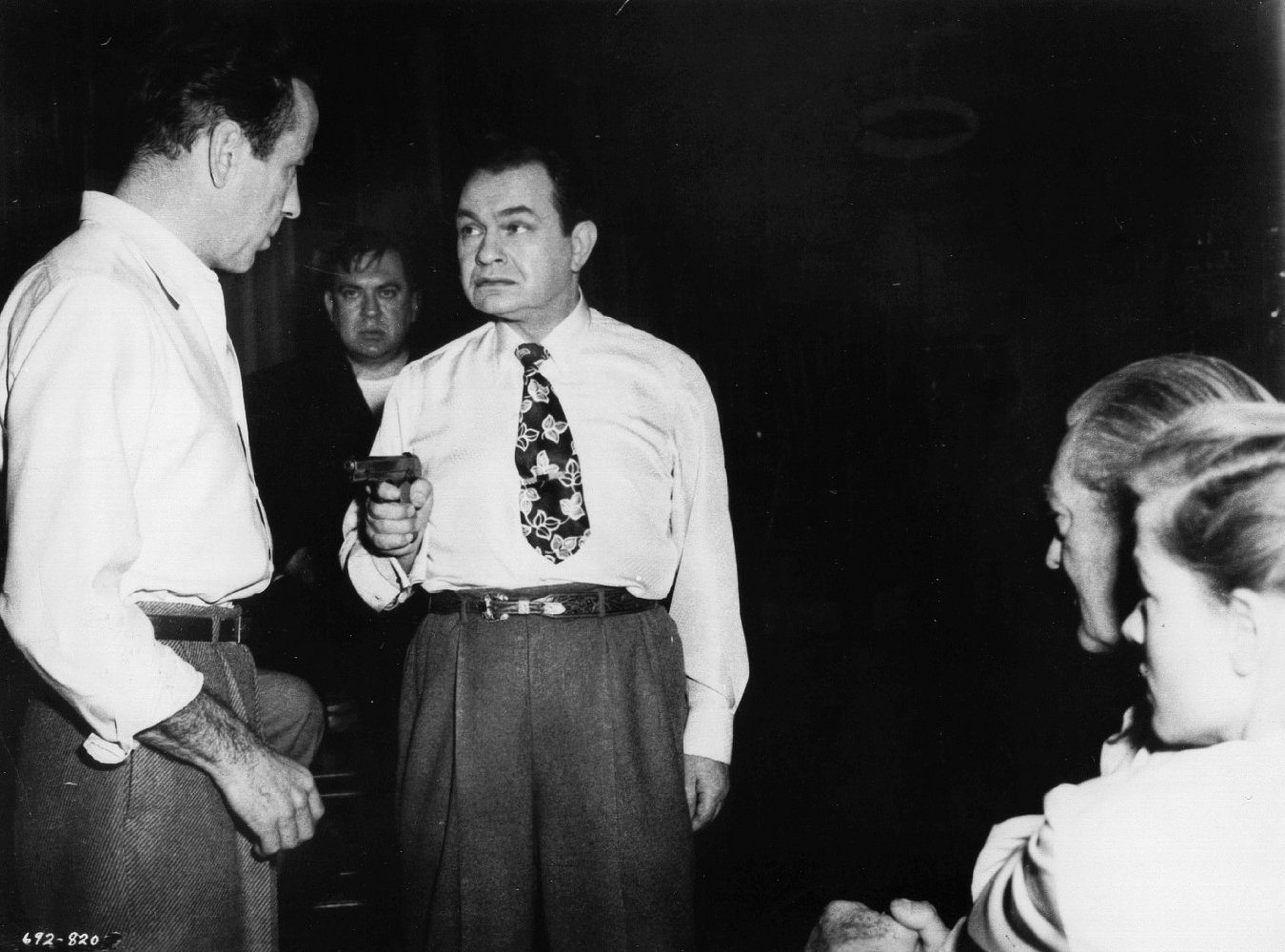
Johnny Rocco (with gun) wants more

W.J. Astore

A few thoughts on this Friday morning:

1. Andrew Bacevich at TomDispatch.com describes 24 stories/questions that are being ignored or neglected by the mainstream media as they obsess about Donald Trump. I’d like to add #25 to his list, as follows: Why is everything in America classified? The constant appeal to classification, to secrecy, prevents the discussion of vitally important military and security matters in public.  Is the real target of all this secrecy our rivals and enemies, or is it the American people?

Related to my #25, of course, is the persecution of “whistleblowers” for allegedly violating secrecy.  Under the Obama administration, people were accused of sedition and treason when their real “crime” was trying to keep the American people informed about what their government is really doing.

In short, when did the USA become the former Soviet Union, with its own NKVD/KGB and a state-controlled media that essentially promulgates and enforces the dictates of the powerful?

2. Afghanistan is a mess. According to this morning’s SITREP at FP: Foreign Policy, “Defense and intelligence officials are warning that the deteriorating situation in Afghanistan is likely to get worse before it ever gets better, despite the presence of thousands of U.S. troops and tens of billions invested in building and funding the faltering Afghan security forces.”

“’The intelligence community assesses that the political and security situation in Afghanistan will almost certainly deteriorate through 2018, even with a modest increase in military assistance by the United States and its partners,’ Director of National Intelligence Dan Coats said in a Senate hearing Thursday. The Pentagon is looking to add another 3,000 troops to the effort there in the coming months, pushing American advisors closer to the front lines to work directly with Afghan forces in the fight.”

After sixteen years of American/Coalition efforts, the Taliban is resurgent, yet the only strategy U.S. generals can offer is more troops and more money to train Afghan security forces that are mostly unreliable and often non-existent.  Why can’t the U.S. military admit defeat and leave?

Consider a sports analogy.  Last week, the Yankees-Cubs played an 18-inning game, eventually won by the Yankees.  Game over.  Imagine if the Cubs had said, “OK — We lost.  But we want to keep playing.  Maybe another 18 innings.  Maybe forever.  We just want to keep playing until we can claim, falsely even, that we’ve won.”  We’d label the Cubs as crazy.  As poor sports.  As deluded.

But this is what America is in Afghanistan.  We’ve lost in extra innings but we still want to keep playing — forever, it seems.

Daniel Ellsberg nailed it back in 2009.  The U.S. is a foreign power in Afghanistan engaged in a bloody stalemate that cannot be won.  Yet America persists, in part because U.S. presidents kowtow to military “judgment” and the idea that to withdraw from Afghanistan is to appear weak and unmanly.

3. Speaking of issues of manliness, Donald Trump (among others) likes to use the phrase “taking the gloves off” to refer to hyper-aggressive military actions. When did bare-knuckle brawling become a smart way to fight? Actually, it’s a great way to break your hand.  Boxing is dangerous enough while wearing gloves, yet our Washington “fighters” are ready to get down and dirty by doffing their gloves.  As I’ve written before, far too many Americans (and people in general) have died in the name of big-boy pants and similar machismo nonsense.

4. At TomDispatch.com, Army Major Danny Sjursen succinctly summarizes the U.S. military’s strategy in one word: More. As Sjursen puts it in his article:

Predictions are always a dicey matter, but recent history suggests that we can expect military escalation, which already seems to be underway in at least three of those countries.  More, after all, remains the option of choice for America’s generals almost 70 years after MacArthur went head to head with his president over Korea.

What then is to be expected when it comes to the conflict with ISIS in Iraq, the complex, multi-faceted Syrian civil war, and America’s longest war of all, in Afghanistan?  All signs point to more of the same. Open up a newspaper or check out a relevant website and you’ll find, for example, that U.S. Afghan commander General John Nicholson wants a new mini-surge of American troops dispatched into that country, while the U.S. commander in the fight against ISIS, General Stephen Townsend, may require yet more ground troops to “win” in Iraq and Syria.

More is the mantra of America’s generals.  It’s how they measure their influence as well as their success.  In this, they remind me of the gangster Johnny Rocco in the movie “Key Largo.”  When Humphrey Bogart asks Rocco what he wants, Rocco pauses, after which Bogart has the answer that Rocco seizes upon: More.  Will he ever get enough?  Rocco answers: Well, I never have.  No, I guess I won’t.

Even though Trump has promised a major hike in military spending for 2018, the Pentagon is already clamoring for more.  Like Johnny Rocco, America’s generals and admirals can never get enough.

5. Finally, a dire lesson from history. When strong men seek to take over a government, they first seek to seize or neutralize the military and police forces of their country. It’s a time-tested formula.  Consider Trump’s early actions.  From his hiring of generals and his promises of scores of billions more for the Pentagon as well as to his hiring of good buddy Jeff Sessions as Attorney General and his firing of James Comey at the FBI, Trump is well on his way to winning over and controlling the agencies of violence and enforcement in the U.S.

Does America await its very own Reichstag moment?