We’re #1 (once again) in selling weapons! Amazingly, the USA now accounts for 43% of the world’s trade in deadly weaponry. No country beats more plowshares into swords and pruning hooks into spears than America, which is also, obviously, the most Christian nation in the world.
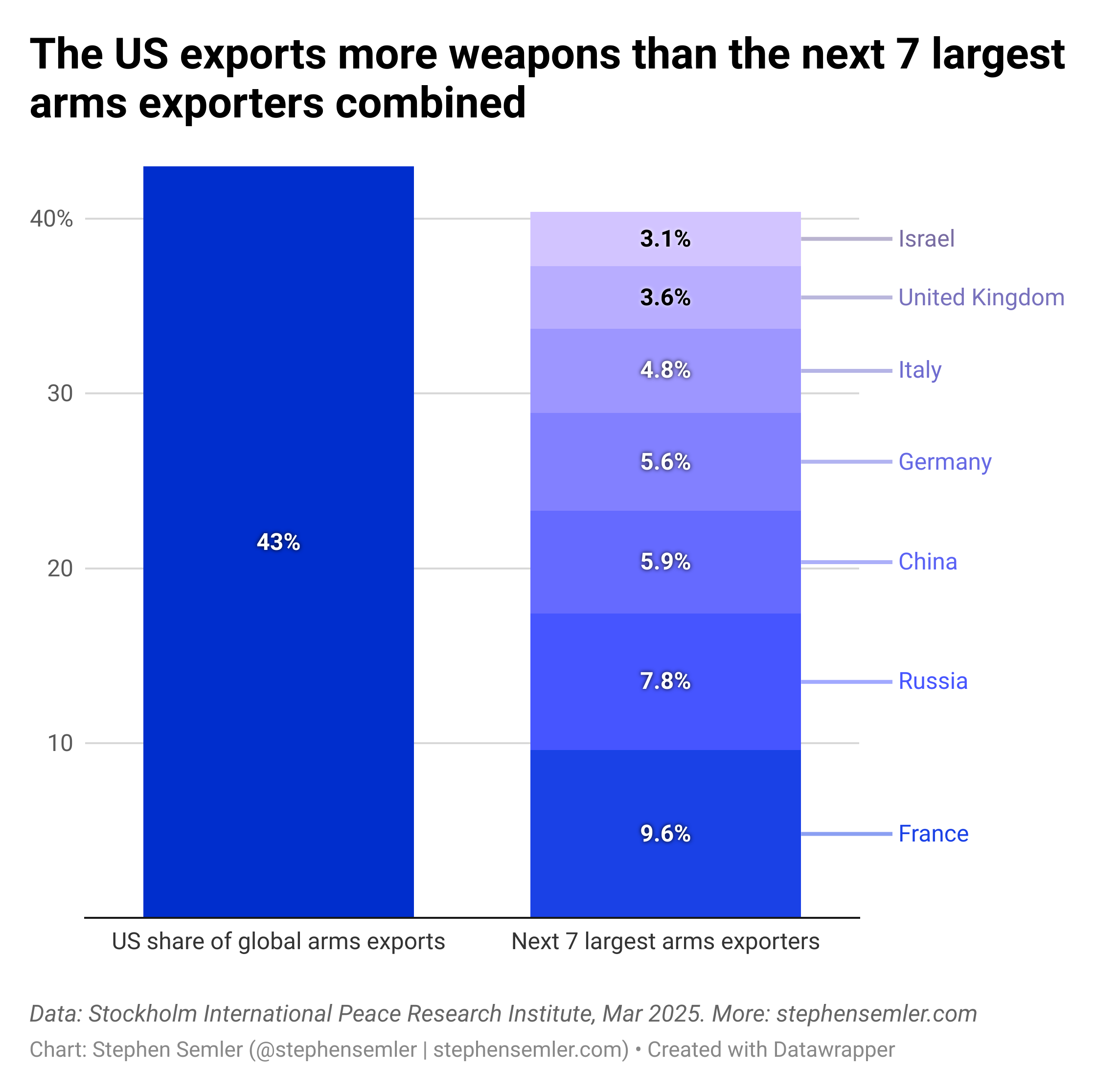
Let’s take a look at a useful chart from Stephen Semler (be sure to check out his blogon Substack):
*****
Finding #1: The US is the world’s largest arms dealer
The US accounts for 43% of global arms exports, more than the next seven largest arms-exporting countries combined. All the countries outside the top eight account for less than 17% of the worldwide total.
^Alt text for screen readers: The U.S. exports more weapons than the next 7 largest arms exporters combined. This graph has two columns, one showing the U.S.’s 43% share of global arms transfers, and the other showing the combined share of France, Russia, China, Germany, Italy, U.K., and Israel, totaling 40.4%.
For another perspective on America’s record-breaking year of selling deadly weaponry, check out this column by Lenny Broytman.
*****
Way back in 2012, I wrote a column for TomDispatch: “Weapons ‘r’ us,” in which I examined America’s dominance of the weapons trade. Here’s what I wrote back then:
Yes, we’re the world’s foremost “merchants of death,” the title of a best-selling exposé of the international arms trade published to acclaim in the U.S. in 1934. Back then, most Americans saw themselves as war-avoiders rather than as war-profiteers. The evil war-profiteers were mainly European arms makers like Germany’s Krupp, France’s Schneider, or Britain’s Vickers.
Not that America didn’t have its own arms merchants. As the authors of Merchants of Death noted, early on our country demonstrated a “Yankee propensity for extracting novel death-dealing knickknacks from [our] peddler’s pack.” Amazingly, the Nye Committee in the U.S. Senate devoted 93 hearings from 1934 to 1936 to exposing America’s own “greedy munitions interests.” Even in those desperate depression days, a desire for profit and jobs was balanced by a strong sense of unease at this deadly trade, an unease reinforced by the horrors of and hecatombs of dead from the First World War.
We are uneasy no more. Today we take great pride (or at least have no shame) in being by far the world’s number one arms-exporting nation. A few statistics bear this out. From 2006 to 2010, the U.S. accounted for nearly one-third of the world’s arms exports, easily surpassing a resurgent Russia in the “Lords of War” race. Despite a decline in global arms sales in 2010 due to recessionary pressures, the U.S. increased its market share, accounting for a whopping 53% of the trade that year. Last year saw the U.S. on pace to deliver more than $46 billion in foreign arms sales. Who says America isn’t number one anymore?
Who, indeed? And we remain, of course, our own best customers, as this year’s Pentagon budget soars to $900 billion, even as the Trump administration argues for “peace through strength,” or, put bluntly, peace through superior firepower.
Only in America is Jesus heavily armed and packing heat. Truly exceptional!
Obviously, American Jesus preached peace through strength
I recently ordered a few items from Amazon. Random stuff like a shower caddy, an iPhone case, and lamp sockets. It won’t surprise you to learn they were all “Made in China.”
I ordered some clothes from a fancy online retailer. The clothes said “Designed in California” but they were, of course, Made in China.
What is America making? What are we sending overseas? Bombs and bulldozers for the devastation and dismantlement of Gaza and other Palestinian Territories. Consider this article from Ken Klippenstein (excerpt follows), which details roughly $10 billion in “foreign aid” to Israel.
Here’s what Klippenstein had to say:
*****
While the entire news media is focused on Trump’s suspension of arms for Ukraine, the administration is arming Israel to the teeth. The nature of the bombs being sold indicates Israel’s military is preparing to continue its bombing campaigns in Gaza, Lebanon, Syria, and Yemen; as well as preparing for possible war with Iran.
Included in the sales are tens of thousands of controversial 2,000 lb. bombs so heavily criticized during the Gaza war for their destructive capacity, and thousands of “Hellfire” missiles that are used for targeted killings.
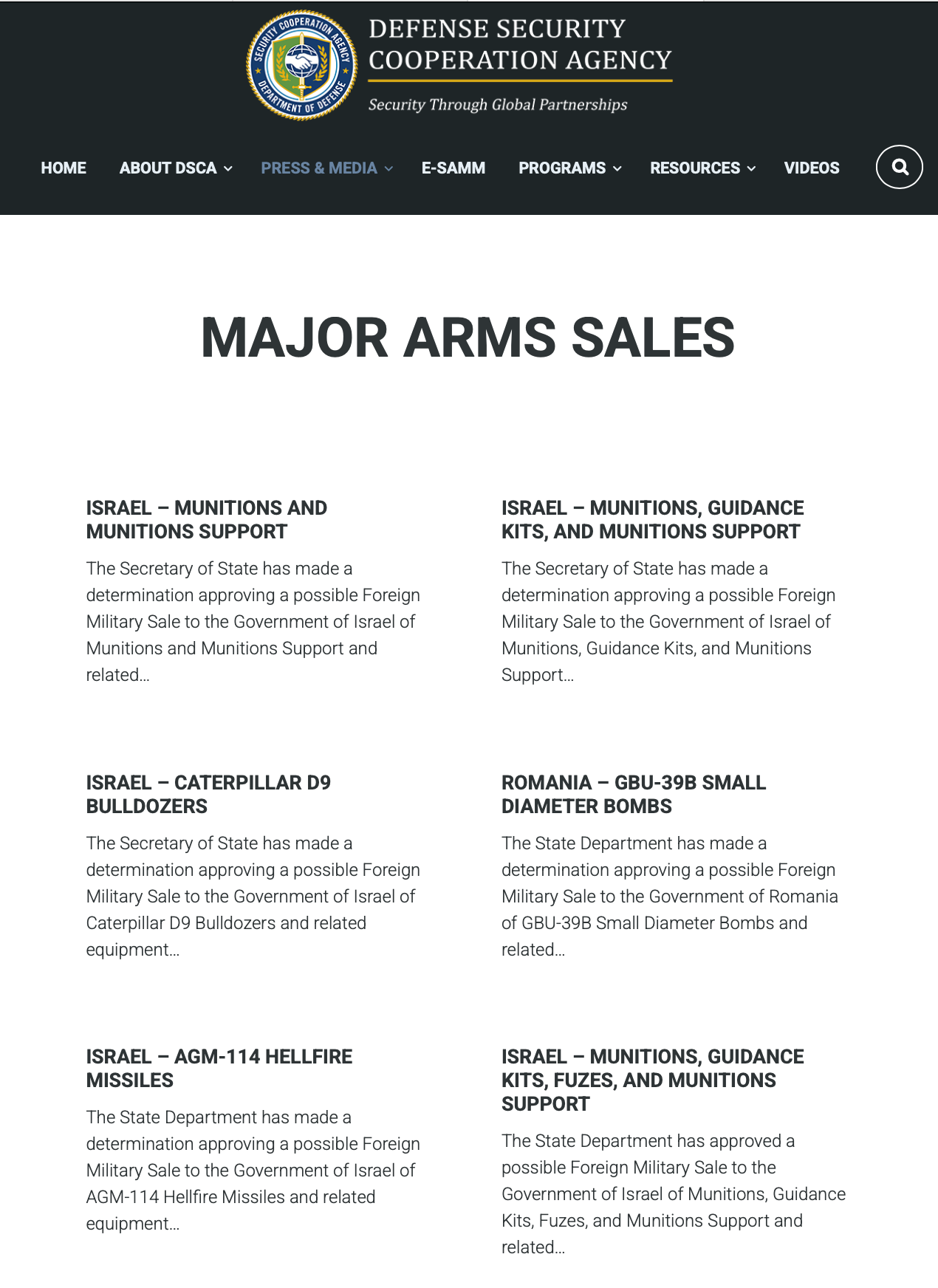
When I visited the Defense Security Cooperation Agency website’s section for major arms sales to see a breakdown of the weapons, I was immediately struck by the fact that five of the last six sales were to Israel.
Screenshot of DSCA’’s “Major Arms Sales” landing page
The U.S. bombs and missiles being sent to Israel, almost all made by Boeing, are included in:
2,166 GBU-39/B 250-pound Small Diameter Bombs (SDB) Increment 1.
2,800 MK 82 General Purpose, 500-pound bomb bomb bodies.
13,000 KMU-556 JDAM Guidance Kits to attach to MK-84 (2,000-pound) bomb bodies.
3,475 KMU-557 JDAM Guidance Kits to attach to BLU-109 (2,000-pound) bomb bodies.
1,004 KMU JDAM Guidance Kits to attach to 500-pound GBU-38v1 bomb bodies.
17,475 FMU-152A/B multi-function fuzes for bombs.
*****
Holy shit! Nearly thirty-six thousand 2000-pound bombs! That is 36 kilotons, roughly the equivalent of the two atomic bombs dropped on Hiroshima and Nagasaki in 1945. And that’s not including the assorted 1000- and 500-pound bombs tossed into the mix.
This is an astonishing amount of ordnance for Israel to continue its ethnic cleansing campaign in Gaza and the West Bank.
President Trump, of course, has the full support of most Democrats in sending this stockpile of destruction to Israel. Call it bipartisan genocidal enablement.
America sure is an “exceptional” nation. No nation is better at bombing others—or supplying the bombs for others like Israel to do so—then flattening what remains with “Made in USA” bulldozers.
Honestly, I wish my country made shower caddies, iPhone cases, and lamp sockets instead of bombs and bulldozers. Don’t you?
Yesterday, the Merchants of Death Tribunal concluded with a verdict of “guilty” for all those U.S. dealers and exporters of weapons globally. Yes, the merchants of death are guilty as sin, even as they account for 40% of the global trade in deadly weaponry. Who says nothing is made in America today? We make plenty of things that go “bang.”
In our culture today, it’s considered “patriotic” to make loads of money, especially by selling guns. Just look at the National Rifle Association (NRA) and its enablers in Congress and all the gun companies domestically.
Assault weapons are highly profitable, much more so than pistols, and isn’t it all about making money? Thoughts and prayers to those innocents caught in the crossfire, of course. No worries–more “good guys with guns” will save us from the bad guys with guns.
If we Americans embrace (or, refuse to stop) the sale of firearms, especially dangerous assault weapons, domestically, indeed, if we fetishize it with ideas of potency and manliness, is it any surprise we brag of weapons sales overseas and our dominance of that trade? If we don’t care (or care enough) about the safety of our own children, why should we care about dead kids in Gaza?
Our culture is violent and sick, and until we reform it, there’s little hope of meaningful change.
That said, it’s encouraging to hear of a ceasefire in Gaza. Perhaps the Trump administration can achieve a ceasefire in Ukraine as well. The problem is there always seems to be another war or wars looming on the horizon for the U.S., more conflicts that America’s merchants of death can make a killing on.
America has the war but not the peace
If there’s an American Leo Tolstoy out there, he couldn’t write a book on this epoch with the title of War and Peace. Today’s version for America has a single-word title: War.
Peace is rarely if ever mentioned in mainstream political discourse and culture. That’s not surprising. Roughly 60% of U.S. federal discretionary spending goes to the Pentagon, Homeland Security, nuclear weapons, and weapons shipments to places like Israel and Ukraine. President Biden once said: Show me your budget and I’ll tell you what you value. Looks like America values war very highly indeed.
Until we stop valuing and valorizing war and start embracing peace, the merchants of death will continue to thrive. Sure, they’re guilty, but so are we all if we keep feeding them our money and keep looking to them for “safety” and “security.”
The intent of this “tribunal” is to draw attention to America’s overwhelming dominance of the world’s trade in deadly weaponry and the cost we all pay when “weapons ‘r’ us.” How did the U.S. come to embrace this deadly trade, to the point of boasting of our market dominance as a sign of America’s health and fitness? How did we come to equate arsenals with democracy? And isn’t it high time we denounced this trade in death, as the U.S. Senate did back in the 1930s with the Nye Commission?
Back in 2012, I wrote an article for TomDispatch, “Confessions of a Recovering Weapons Addict,” in which I admitted my own childish enthusiasm for weaponry and all things that go “bang”—and kill. It’s reposted today at TomDispatch and also here below.
Perhaps you’ve heard of “Makin’ Thunderbirds,” a hard-bitten rock & roll song by Bob Seger that I listened to 30 years ago while in college. It’s about auto workers back in 1955 who were “young and proud” to be making Ford Thunderbirds. But in the early 1980s, Seger sings, “the plants have changed and you’re lucky if you work.” Seger caught the reality of an American manufacturing infrastructure that was seriously eroding as skilled and good-paying union jobs were cut or sent overseas, rarely to be seen again in these parts.
If the U.S. auto industry has recently shown sparks of new life (though we’re not making T-Birds or Mercuries or Oldsmobiles or Pontiacs or Saturns anymore), there is one form of manufacturing in which America is still dominant. When it comes to weaponry, to paraphrase Seger, we’re still young and proud and makin’ Predators and Reapers (as in unmanned aerial vehicles, or drones) and Eagles and Fighting Falcons (as in F-15 and F-16 combat jets), and outfitting them with the deadliest of weapons. In this market niche, we’re still the envy of the world.
Yes, we’re the world’s foremost “merchants of death,” the title of a best-selling exposé of the international arms trade published to acclaim in the U.S. in 1934. Back then, most Americans saw themselves as war-avoiders rather than as war-profiteers. The evil war-profiteers were mainly European arms makers like Germany’s Krupp, France’s Schneider, or Britain’s Vickers.
Not that America didn’t have its own arms merchants. As the authors of Merchants of Death noted, early on our country demonstrated a “Yankee propensity for extracting novel death-dealing knickknacks from [our] peddler’s pack.” Amazingly, the Nye Committee in the U.S. Senate devoted 93 hearings from 1934 to 1936 to exposing America’s own “greedy munitions interests.” Even in those desperate depression days, a desire for profit and jobs was balanced by a strong sense of unease at this deadly trade, an unease reinforced by the horrors of and hecatombs of dead from the First World War.
We are uneasy no more. Today we take great pride (or at least have no shame) in being by far the world’s number one arms-exporting nation. A few statistics bear this out. From 2006 to 2010, the U.S. accounted for nearly one-third of the world’s arms exports, easily surpassing a resurgent Russia in the “Lords of War” race. Despite a decline in global arms sales in 2010 due to recessionary pressures, the U.S. increased its market share, accounting for a whopping 53% of the trade that year. Last year saw the U.S. on pace to deliver more than $46 billion in foreign arms sales. Who says America isn’t number one anymore?
For a shopping list of our arms trades, try searching the Stockholm International Peace Research Institute database for arms exports and imports. It reveals that, in 2010, the U.S. exported “major conventional weapons” to 62 countries, from Afghanistan to Yemen, and weapons platforms ranging from F-15, F-16, and F-18 combat jets to M1 Abrams main battle tanks to Cobra attack helicopters (sent to our Pakistani comrades) to guided missiles in all flavors, colors, and sizes: AAMs, PGMs, SAMs, TOWs — a veritable alphabet soup of missile acronyms. Never mind their specific meaning: they’re all designed to blow things up; they’re all designed to kill.
Rarely debated in Congress or in U.S. media outlets is the wisdom or morality of these arms deals. During the quiet last days of December 2011, in separate announcements whose timing could not have been accidental, the Obama Administration expressed its intent to sell nearly $11 billion in arms to Iraq, including Abrams tanks and F-16 fighter-bombers, and nearly $30 billion in F-15 fighter jets to Saudi Arabia, part of a larger, $60 billion arms package for the Saudis. Few in Congress oppose such arms deals since defense contractors provide jobs in their districts — and ready donationsto Congressional campaigns.
Let’s pause to consider what such a weapons deal implies for Iraq. Firstly, Iraq only “needs” advanced tanks and fighter jets because we destroyed their previous generation of the same, whether in 1991 during Desert Shield/Storm or in 2003 during Operation Iraqi Freedom. Secondly, Iraq “needs” such powerful conventional weaponry ostensibly to deter an invasion by Iran, yet the current government in Baghdad is closely aligned with Iran, courtesy of our invasion in 2003 and the botched occupation that followed. Thirdly, despite its “needs,” the Iraqi military is nowhere near ready to field and maintain such advanced weaponry, at least without sustained training and logistical support provided by the U.S. military.
As one U.S. Air Force officer who served as an advisor to the fledging Iraqi Air Force, or IqAF, recently worried:
“Will the IqAF be able to refuel its own aircraft? Can the Iraqi military offer adequate force protection and security for its bases? Can the IqAF provide airfield management services at its bases as they return to Iraqi control after eight years under US direction? Can the IqAF ensure simple power generation to keep facilities operating? Will the IqAF be able to develop and retain its airmen?… Only time will tell if we left [Iraq] too early; nevertheless, even without a renewed security agreement, the USAF can continue to stand alongside the IqAF.”
Put bluntly: We doubt the Iraqis are ready to field and fly American-built F-16s, but we’re going to sell them to them anyway. And if past history is a guide, if the Iraqis ever turn these planes against us, we’ll blow them up or shoot them down — and then (hopefully) sell them some more.
Our Best Arms Customer
Let’s face it: the weapons we sell to others pale in comparison to the weapons we sell to ourselves. In the market for deadly weapons, we are our own best customer. Americans have a love affair with them, the more high-tech and expensive, the better. I should know. After all, I’m a recovering weapons addict.
Well into my teen years, I was fascinated by military hardware. I built models of what were then the latest U.S. warplanes: the A-10, the F-4, the F-14, -15, and -16, the B-1, and many others. I read Aviation Week and Space Technology at my local library to keep track of the newest developments in military technology. Not surprisingly, perhaps, I went on to major in mechanical engineering in college and entered the Air Force as a developmental engineer.
Enamored as I was by roaring afterburners and sleek weaponry, I also began to read books like James Fallows’sNational Defense (1981) among other early critiques of the Carter and Reagan defense buildup, as well as the slyly subversive and always insightful Augustine’s Laws (1986) by Norman Augustine, later the CEO of Martin Marietta and Lockheed Martin. That and my own experience in the Air Force alerted me to the billions of dollars we were devoting to high-tech weaponry with ever-ballooning price tags but questionable utility.
Perhaps the best example of the persistence of this phenomenon is the F-35 Lightning II. Produced by Lockheed Martin, the F-35 was intended to be an “affordable” fighter-bomber (at roughly $50 million per copy), a perfect complement to the much more expensive F-22 “air superiority” Raptor. But the usual delays, cost overruns, technical glitches, and changes in requirements have driven the price tag of the F-35 up to $160 million per plane, assuming the U.S. military persists in its plans to buy 2,400 of them. (If the Pentagon decides to buy fewer, the cost-per-plane will soar into the F-22 range.) By recent estimates the F-35 will now cost U.S. taxpayers (you and me, that is) at least $382 billion for its development and production run. Such a sum for a single weapons system is vast enough to be hard to fathom. It would, for instance, easily fund all federal government spending on education for the next five years.
The escalating cost of the F-35 recalls the most famous of Norman Augustine’s irreverent laws: “In the year 2054,” he wrote back in the early 1980s, “the entire defense budget will [suffice to] purchase just one aircraft.” But the deeper question is whether our military even needs the F-35, a question that’s rarely asked and never seriously entertained, at least by Congress, whose philosophy on weaponry is much like King Lear’s: “O, reason not the need.”
But let’s reason the need in purely military terms. These days, the Air Force is turning increasingly to unmanned drones. Meanwhile, plenty of perfectly good and serviceable “platforms” remain for attack and close air support missions, from F-16s and F-18s in the Air Force and Navy to Apache helicopters in the Army. And while many of our existing combat jets may be nearing the limits of airframe integrity, there’s nothing stopping the U.S. military from producing updated versions of the same. Heck, this is precisely what we’re hawking to the Saudis — updated versions of the F-15, developed in the 1970s.
Because of sheer cost, it’s likely we’ll buy fewer F-35s than our military wants but many more than we actually need. We’ll do so because Weapons ‘R’ Us. Because building ultra-expensive combat jets is one of the few high-tech industries we haven’t exported (due to national security and secrecy concerns), and thus one of the few industries in the U.S. that still supports high-paying manufacturing jobs with decent employee benefits. And who can argue with that?
The Ultimate Cost of Our Merchandise of Death
Clearly, the U.S. has grabbed the brass ring of the global arms trade. When it comes to investing in militaries and weaponry, no country can match us. We are supreme. And despite talk of modest cuts to the Pentagon budget over the next decade, it will, according to President Obama, continue to grow, which means that in weapons terms the future remains bright. After all, Pentagon spending on research and development stands at $81.4 billion, accounting for an astonishing 55% of all federal spending on R&D and leaving plenty of opportunity to develop our next generation of wonder weapons.
But at what cost to ourselves and the rest of the world? We’ve become the suppliers of weaponry to the planet’s hotspots. And those weapons deliveries (and the training and support missions that go with them) tend to make those spots hotter still — as in hot lead.
As a country, we seem to have a teenager’s fascination with military hardware, an addiction that’s driving us to bust our own national budgetary allowance. At the same time, we sell weapons the way teenage punks sell fireworks to younger kids: for profit and with little regard for how they might be used.
Sixty years ago, it was said that what’s good for General Motors is good for America. In 1955, as Bob Seger sang, we were young and strong and makin’ Thunderbirds. But today we’re playing a new tune with new lyrics: what’s good for Lockheed Martin or Boeing or [insert major-defense-contractor-of-your-choice here] is good for America.
Roughly half of President Biden’s recent budget request for more than $105 billion for Ukraine, Israel, Taiwan, and border security is dedicated to weapons sales. Nothing screams Christian values like massacres and mass weapons sales.
Speaking of massacres, Aaron Maté has a powerful article on Gaza and the U.S. role in facilitating Israel’s destruction of the same. Here’s an excerpt:
According to Save the Children, the number of Palestinian children killed in just three weeks has already surpassed the annual number of children killed across the world’s conflict zones since 2019. “Gaza has become a graveyard for children,” a UNICEF spokesperson says. “It’s a living hell for everyone else.” In a statement demanding a ceasefire, seven UN special rapporteurs now warn that “the Palestinian people are at grave risk of genocide.”
I remember when Sting got into trouble in the 1980s for singing that the Russians love their children too. Is it OK to say the Palestinians love their children too and would prefer that they not be obliterated by “Made in USA” bombs provided for free to Israel?
I wrote this just this morning to a friend who’s been taking fire because she believes the Palestinians in Gaza are human beings who shouldn’t be targeted for ethnic cleansing:
The Israel/Palestine issue is both complex and simple. To keep it simple, we’re all human beings. No group of people are “human animals.” If any country should know the dangers of dehumanizing an enemy, it’s Israel. Yet that’s precisely what Israel is doing.
There are plenty of Jews who are bravely denouncing Israel, but their voices are not being heard. Meanwhile, the US government supinely serves the worst elements in Israel. Our own government is complicit in ethnic cleansing, not that I’m surprised about this, given our nation’s history.
They say Dexter was a serial killer, but he’s got nothing on the jackals in the US and Israel who’ve already killed roughly 10K Palestinians with many more deaths to come. (With apologies to real jackals.)
I’ve been writing to my senators and representative as well, imploring them not to vote for more murderous weaponry, whether for Israel or Ukraine (or anyone else). Just about all our politicians make noises about our country advancing Judeo-Christian values yet they conveniently forget about values like “thou shalt not kill” and “blessed are the peacemakers.”
Hellscape in Gaza (Photo by Majdi Fathi/NurPhoto via Getty Images)
It would be far better if the U.S. stood on the sidelines and did nothing, yet Congress and the President must show their “strength” by using taxpayer dollars to ship scores of billions in weaponry to facilitate mass murder. As they do so, they pat each other on the back for being strong while boasting of creating jobs for various weapons makers in the “homeland.”
That’s how perverted and twisted government officials are. They’d rather spend scores of billions on death overseas than help struggling Americans here at home.
We need to vote the warmongers out, except I can’t forget what Emma Goldman said about voting: “If voting changed anything, they’d make it illegal.”
Why Not Add Medicare for All or Aid for the Unhoused?
President Biden’s “aid”—or, to be honest, weapons packages—for Ukraine and Israel also bundles together other weapons wish lists, or trigger treats, for Taiwan and border security. Here’s a quick summary, courtesy of Heather Cox Richardson:
Today [Friday] the administration asked Congress for a little over $105 billion in funding for national security. The package would devote $61.4 billion to support Ukraine (some of it to replenish U.S. stockpiles after sending weapons to Ukraine); $14.3 billion to Israel for air and missile defense systems; $9.15 billion for humanitarian aid to Ukraine, Gaza, and other places; $7.4 billion for initiatives in the Indo-Pacific; and $14 billion for more agents at the southwestern border, new machines to detect fentanyl, and more courts to process asylum cases.
It’s more than absurd to call these weapons exports “funding for national security.” The United States is not made more secure by funding permanent war in Ukraine or genocide in Gaza; quite the reverse, actually.
Scenes of destruction in Gaza sure make me proud to be an American. Let’s bundle more bombs and missiles for Israel.
Of course, the Biden administration knows there are elements in Congress who are against scores of billions for more war in Ukraine, hence its decision to bundle it with aid to Israel, Taiwan, and border security. It’s a cynical exercise to bundle all these packages together and to demand that Congress vote “yea” or “nay” on the entire bill.
Revealingly, polls show that slightly more than half of Americans are against more weapons shipments to Ukraine and Israel, despite all the propaganda about how killing Russians and Palestinians is vital to U.S. national security. What Americans are in favor of is humanitarian aid, the comfort of warm blankets rather than warm guns. Americans have a lot more sense and compassion than their government.
Speaking of the wonders of bundling, if Congress is so eager to send aid to Israel or perhaps to beef up Taiwan (those “Indo-Pacific initiatives”), let’s bundle a few more proposals into this bill.
How about a $15 or $18 federal minimum wage? Student loan debt forgiveness? A public option for health care or even medicare for all? How about humanitarian aid for America’s unhoused, the people living in tent cities?
Sorry, I don’t believe my “national security” is enhanced by more weapons for Ukraine, Israel, Taiwan, or even at America’s border with Mexico. Bundling all these weapons packages together, to the tune of $105 billion plus, isn’t just cynical. It’s total bullshit. BS, to be technical.
It makes me almost glad Republicans can’t elect a speaker because you just know most in Congress are eager to enable more killing overseas—in the cause of national security, naturally.
We’re making America a greater democracy one major weapons shipment at a time. Bundling them together is truly the sign of the “indispensable” nation.
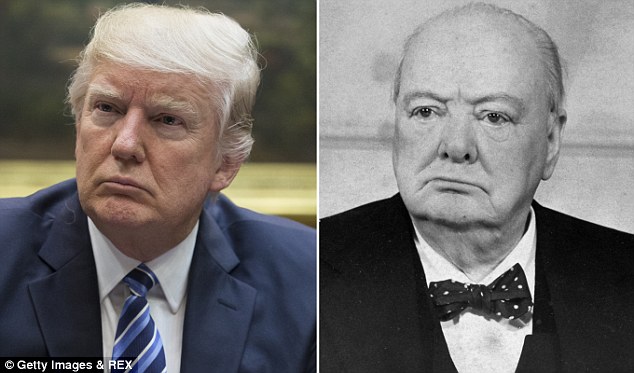
For all his tough-guy posturing and his attempts to pose like Winston Churchill, President Trump has largely been an appeaser to the military-industrial complex and its insatiable appetite for wars and weapons sales.
Trump, frowning (he thinks) like Churchill
Yes, it’s good news that Trump is withdrawing troops from Afghanistan and Iraq, though roughly 2500 troops will remain in each country when Joe Biden takes office in January. In short, Trump isn’t ending these wars; he’s merely reducing the number of boots on the ground. His Acting Defense Secretary, Chris Miller, described it as a “repositioning of forces from those two countries.”
Repositioning! Perish the thought that the U.S. military might retreat or even withdraw. The answer is to “reposition” those deck chairs on the USS Titanic and its imperial wars, never mind the sinking feeling you may be experiencing.
Meanwhile, Trump recently announced more weapons sales to the United Arab Emirates, including F-35 fighter-bombers and Reaper drones, worth $23 billion to U.S. weapons manufacturers. When it comes to empowering merchants of death, the United States is indeed number one.
Throughout his four years of office, Trump courted the Pentagon and the Complex by throwing money at it. He hired Complex functionaries like General (retired) James Mattis and General H.R. McMaster and Raytheon lobbyist Mark Esper to run things for him. The result was predictable: more of the same, such that Trump never kept his campaign promise to end America’s wasteful wars in Afghanistan, Iraq, and elsewhere.
Perhaps this was because Trump didn’t want to be blamed if things went south (as they probably will) if he’d ordered all U.S. troops out of these countries. Trump, like most Americans, hates to be labeled a loser. But what he needed to be reminded of was that these countries were never ours to win to begin with. The answer to “Who lost Afghanistan?” is not the president who finally “repositions” all U.S. troops from that country. The answer is Bush/Cheney, Obama/Biden, Trump/Pence, and, assuming they keep the war going in Afghanistan (and elsewhere), Biden/Harris.
Fighting needless and wasteful wars on the periphery of empire makes sense only to weapons makers and warmongers. Ditto making massive weapons sales, especially to unstable areas. The “Made in America” label used to be seen proudly on everything from clothing and shoes to engines and steel; now it’s affixed mainly to weapons and wars.
Before he took office, Trump promised a new approach, an America First approach, that would end the folly of perpetual wars that cost trillions of dollars. In this he failed. Because when it came to the Pentagon and to weapons makers, Trump chose appeasement rather than confrontation.
William Astore, a retired lieutenant colonel (USAF) and history professor, is a senior fellow at the Eisenhower Media Network (EMN), an organization of critical veteran military and national security professionals.






 Bracing Views