Imagining a Progressive Pentagon

W.J. Astore

13 Tasks and 3 Maxims for a Very Different Pentagon

Also at TomDispatch.com.

A progressive Pentagon? Talk about an oxymoron! The Pentagon continues to grow and surge with ever larger budgets, ever more expansive missions (for example, a Space Force to dominate the heavens and yet more bases in the Pacific to encircle China), and ever greater ambitions to dominate everywhere, including if necessary through global thermonuclear warfare. No wonder it’s so hard, to the point of absurdity, to imagine a Pentagon that would humbly and faithfully serve only the interests of “national defense.”

Yet, as a thought experiment, why not imagine it? What would a progressive Pentagon look like? I’m not talking about a “woke” Pentagon that touts and celebrates its “diversity,” including its belated acceptance of LGBTQ+ members. I’m glad the Pentagon is arguably more diverse and tolerant now than when I served in the Air Force beginning in the early 1980s. Yet, as a popular meme has it, painting “Black Lives Matter” and rainbow flags on B-52 bombers doesn’t make the bombs dropped any less destructive. To be specific: Was it really a progressive milestone that the combat aircraft in last year’s Super Bowl flyover were operated and maintained entirely by female crews? Put differently, are the bullets and bombs of trans Black G.I. Jane somehow more tolerant and less deadly than cis White G.I. Joe’s?

A progressive military shouldn’t stop with “more Black faces in high places,” more female generals “leaning in” around conference tables, and similar so-called triumphs for diversity. Consider Lloyd Austin, the first Black secretary of defense, whose views and actions have been little different from those of former Defense Secretaries James Mattis or Donald Rumsfeld, and whose background as a retired Army four-star general and well-paid former board member of Raytheon makes him the very stereotype of Dwight D. Eisenhower’s military-industrial complex.

No, all-female air crews aren’t nearly enough. Indeed, they are, I’d argue, a form of “woke” camouflage for a predatory military leopard that refuses to change its spots — or curb its appetite.

A truly progressive military should start with the fundamentals. All service members swear an oath to support and defend the Constitution, the system of laws that defines and enshrines our vital rights and freedoms (speech, a free press, the right to assemble, privacy, and so on); in short, the right to live untrammeled by domineering forces. Yet, almost by definition, that right is threatened, if not violated, by a massive military-industrial-congressional complex that penetrates nearly every domain of American life. That complex, after all, is anti-democratic, shrouded in secrecy, and jealous of its power, as well as fundamentally and profoundly anti-progressive. Indeed, it’s fundamentally and profoundly anti-truth.

Consider these hard facts. All too many Americans didn’t know how badly they’d been lied to about the Vietnam War until the Pentagon Papers emerged near the end of that disastrous conflict. All too many Americans didn’t know how badly they’d been lied to about the Afghan War until the Afghan War Papers emerged near the end of that disastrous conflict. All too many Americans didn’t know how badly they’d been lied to about the Iraq War until the myth of Saddam Hussein’s weapons of mass destruction (which had been part of the bogus rationale for invading that country) crumbled; nor did they know how badly they continued to be lied to until the myth of the American “surge” there collapsed when the Islamic State forces triumphed all too easily over an American-built Iraqi security structure that collapsed like a rotten house of cards. Perhaps some of them didn’t truly know until a loudmouthed Republican candidate for president, Donald J. Trump, dared to say that the Iraq War had been an unmitigated disaster, or, in Trump-speak, “a big fat mistake.” That burst of honesty helped him win the presidency in 2016. (His rival in that election, Hillary Clinton, remained essentially the chief spokesperson for the Pentagon.)

Yet despite the horrendous failures (and war crimes) of Vietnam, Afghanistan, Iraq, and other U.S. military ventures of this century, no one is ever punished! Sure, you could point to Donald Rumsfeld being cashiered as secretary of defense amid the rubble of “the Global War on Terror,” a belated admission by the administration of President George W. Bush and Vice President Dick Cheney that the Iraq War was going poorly indeed. Still, all those cracks were later papered over with the myth of “the surge” and when Rumsfeld died in 2021, he would receive remarkably glowing tributes in obituaries, as well as bipartisan salutes for his “service” to America rather than condemnation for his numerous crimes and blunders.

The Pentagon’s rampant culture of dishonesty, a cancer that above all infects the brass, led one serving Army officer, Lieutenant Colonel Paul Yingling, to write a now-renowned (or, if you’re part of the Pentagon, infamous) paper for Armed Forces Journal in 2007 on America’s failure of generalship. As he memorably noted, a U.S. Army private suffered far more dearly for losing a rifle than America’s generals did for losing a war. The Army’s response was — no surprise — to change nothing, leading Yingling to retire early.

13 Tasks for a Progressive Pentagon

Venturing into the Pentagon’s innermost corridors of power, one might be excused for recalling Obi-Wan Kenobi’s warning to Luke Skywalker in Star Wars as they approached the spaceport of Mos Eisley: “You will never find a more wretched hive of scum and villainy. We must be cautious.”

How does one possibly reform such a top-heavy, self-serving, and dishonest institution along progressive lines? A moment in Greek mythology comes to mind: Hercules and the Augean Stables. Let me nevertheless press ahead with this all too herculean task.

Dreaming is free, as Blondie once sang, so why not dream a little dream with me? Here’s a list — a baker’s dozen, in fact — of ways a progressive Pentagon would both exist and act far differently from America’s current regressive (and very, very aggressive) version of the same.

A progressive Pentagon would:

* Take the lead in working to eliminate all nuclear weapons everywhere — that is, total nuclear disarmament — rather than investing vast sums in the coming decades in the U.S. nuclear arsenal. It would disavow using nuclear weapons first (“no first use”) in any conflict. It would cancel all plans to “modernize” the current nuclear triad of missiles, planes, and submarines at an estimated cost of $2 trillion. It would also immediately eliminate obsolete and vulnerable land-based Intercontinental Ballistic Missiles, or ICBMs, and cancel as redundant the Air Force’s new B-21 stealth bomber.

* Oppose sending any more of those devastating cluster munitions or depleted uranium tank shells to Ukraine; indeed, it would take the lead in eliminating such awful weaponry.

* Stop inflating threats and end all talk of a “new Cold War” with China and Russia.

* Celebrate the insights of Generals Smedley Butler and Dwight D. Eisenhower that war is fundamentally a racket (Butler) and that the military-industrial-congressional complex poses the severest of threats to freedom and democracy in America (President Eisenhower).

* Reject the language of militarism, including describing its troops as “warriors” and “warfighters,” as profoundly undemocratic and un-American.

* Recognize the costs of wars already fought to those troops and ensure full funding of the Department of Veterans Affairs, including for post-traumatic stress disorder (PTSD), traumatic brain injury (TBI), and moral injuries, among the other wounds of war.

* End the war on terror, launched just after the attacks of September 11, 2001, and urge Congress to repeal the open-ended war authorization it passed then with but a single dissenting vote, because war itself is terror.

* Refuse to go to war unless there’s a formal congressional declaration of the same as the Constitution demands. If the United States had followed that rule, the last war we would have fought was World War II.

* Reject its present culture of secrecy as profoundly counterproductive to success not just in war but in general. That doesn’t mean, of course, sharing specific battle plans (of which there should be far fewer) or detailed information about weaponry with potential enemies. It does mean a willingness to speak truth to the American people, whose support would be needed to prosecute any genuinely necessary war, assuming there even is such a thing.

* Embrace honor and integrity including a willingness of the U.S. military to fall on its own sword — that is, take genuine responsibility for both its deeds and its misdeeds.

* Recognize that one cannot serve both a republic and an empire, that a choice must be made, and that a Pentagon of the present kind in a genuine republic would voluntarily downsize itself, while largely dismantling its imperial infrastructure of perhaps 800 overseas bases.

* Lead the way in demilitarizing space, including eliminating America’s fledgling Space Force and its “guardians.”

* Clearly acknowledge that large, standing militaries and constant wars, as well as preparations for more of the same, are corrosive to democracy, liberty, and the Constitution, as America’s founders recognized.

Imagine that! A progressive Pentagon of peace rather than a regressive one of power and unending warfare. You may say I’m a dreamer, but I’m not the only one.
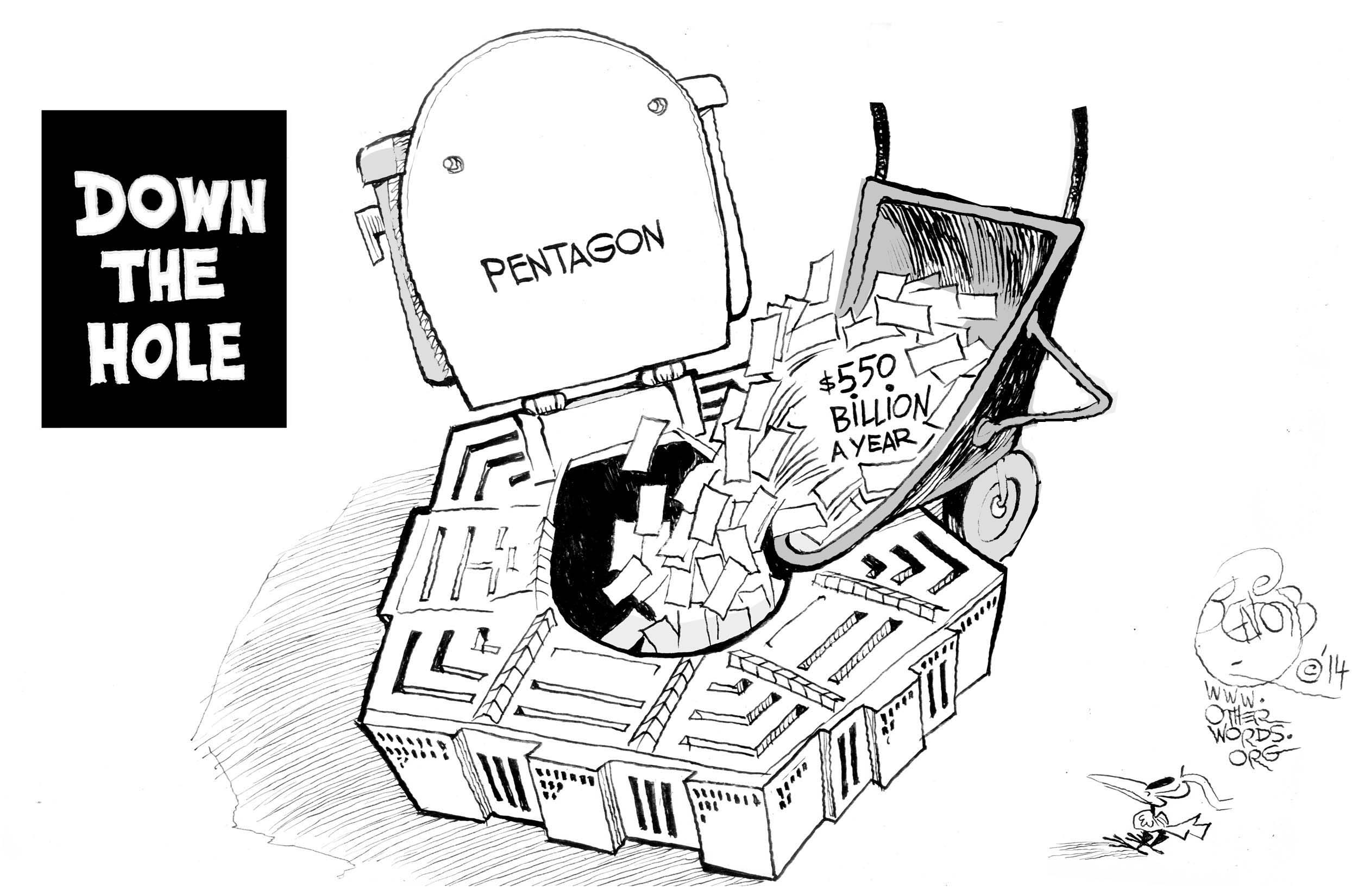
What was $550 billion down the crapper in 2014 is approaching $900 billion a decade later

Three Maxims for a Progressive Pentagon

Careful readers won’t be surprised to learn that I was an early Star Wars fan. Naturally, I rooted for the underdog rebels against the evil empire and its henchman, Darth Vader. I saw myself as a potential Jedi Knight, wielding an elegant weapon, a protector of freedom and the republic. (In my defense, I was 14 years old in 1977 when I first saw Star Wars.)

Then, in 1980, I watched The Empire Strikes Back, just as I was pursuing an Air Force ROTC scholarship for college. I heard Yoda, the Jedi master, declare to Luke that “wars not make one great.” That pearl of wisdom floored me then and continues to inform my life.

I’ve read my share of “heavy” philosophy and have the academic credentials to pose as a “serious” enough thinker. Yet I come back to the homespun wisdom captured in certain movies and TV shows that still carries weight for me. Let me share bits of such wisdom with you.

The first is from Kung Fu, the 1970s TV series starring David Carradine. As a young Kwai Chang Caine meets Master Po for the first time, he is astonished to discover that his master is blind. He takes pity on Po, suggesting that his life must be one of endless darkness. Master Po instantly corrects him. “Fear,” he says, “is the only darkness.”

The second is from The Outlaw Josey Wales, a classic western starring Clint Eastwood, also from the 1970s. Josey Wales is a renegade, a wanted man who leaves dead bodies in his wake wherever he travels. Yet he’s also tired of killing, a man in search of peace. In a moving scene, he negotiates just such a peace with Ten Bears, a Comanche chief, saying that there must be a way for people to live together without butchering one another, without constant bloodletting, without race-based hatreds.

A progressive Pentagon would recognize the deep truth of those three maxims: that wars not make one great, that fear is the only darkness, and that there’s a better way for people to live together than constantly butchering one another.

As a Catholic youth, I was taught that the beginning of wisdom is the fear of God. Today, I’d put that differently. The beginning of wisdom is the quest to master one’s fear, the urge to turn away from fear-driven hatreds, to find better, more pacific, more loving ways.

At the core of the original Star Wars trilogy, George Lucas implanted a message that anger, fear, aggression, and violence — the “dark side” of the Force, as he put it — should be resisted. As Darth Vader confesses to Luke, the power of that dark side is nearly irresistible. Fear and related negative emotions, eerily seductive as they are, can consume our minds (and, as it turns out, given the Pentagon budget, our taxpayer dollars as well).

Too many Americans are prey to the dark side, allowing fear to be the mind-killer. It’s not entirely our fault. From the end of World War II until this very moment, we’ve been told time and again to fear — and fear some more. Fear the communists in Korea and Vietnam. Fear Saddam Hussein and his weapons of mass destruction in Iraq. Fear Russia and its Hitleresque leader, Vladimir Putin. Fear China and its growing authoritarian power. Closer to home, we’re even now regularly told to fear our neighbors, MAGA or “woke,” depending on your “blue” or “red” team allegiance.

In truth, though, fear is the true darkness. You shouldn’t have to be a Jedi master to know that wars not make one great, that the darkness of fear (and arming ourselves against it) is a path to hell, and that people could indeed live together without eternally slaughtering one another. Those, then, would be my three maxims for a newly progressive Pentagon.

To echo the words of Steven Tyler of Aerosmith: Dream until your dreams come true.

Everything that’s wrong with America in one sentence

W.J. Astore

Guess who’s exempt from a potential government shutdown?

I saw this today at CNN.

The Pentagon has also determined that the training and support of Ukrainian forces is exempt from a potential government shutdown, and will continue even in the increasingly likely event that Congress fails to pass a spending bill in the coming days.

Isn’t it nice to know that even if the U.S. federal government shuts down, Ukraine will still get all the weapons and related military aid they need to continue to fight and kill Russians? Americans may be furloughed from their jobs or have to work for no pay, but Ukraine will get paid.

That one sentence shows you the priorities for “your” government. Guess what? You’re not a priority, but war overseas is. You’re not exempt from a government shutdown, but Ukrainian military forces are.

So, if you want to get paid, America, or enter a federal facility that may be closed due to a shutdown, just wave a blue-and-yellow flag and tell the government it’s all for the war effort in Ukraine.

Bring this flag with you and tell the government you’re exempt from the looming government shutdown

RFK Faces the Nation and Questions Its Conscience

W.J. Astore

The Moral Question of America’s Wars

It was November 1967. The Vietnam War was at its height. His brother, the President, had been shot and killed in Dallas four years earlier. He himself would die of an assassin’s bullet within the next year. It was time for Robert F. Kennedy Sr. to “Face the Nation.”

TV was more serious back then, and very few politicians today, certainly not Donald Trump and Joe Biden, could speak with RFK’s clarity and eloquence.

It’s worth listening to Bobby Kennedy’s interview from 1967, but especially the last six minutes (beginning at the 18-minute mark) as he attempts to explicate his moral reservations and objections to America’s war against Vietnam. Such moral objections to war are rarely if ever heard today from Democrats and Republicans in DC. Bobby Kennedy wasn’t just saying the Vietnam War was dumb, that the U.S. military was employing bad strategy, that the war was too expensive, that it was a distraction from pressing domestic concerns, and so on.

Near the end of this interview, Bobby Kennedy called for serious and deep moral reflection on the use of U.S. military power overseas.  He asked Americans to examine their consciences and cited the tens of thousands of civilians killed and wounded (not just U.S. troops).  He said America was losing its moral position in the world due to the war. He was right.  

RFK wasn’t anti-war. He recognized war was occasionally unavoidable. Yet he was willing to articulate war’s horrors. The deaths of tens of thousands of innocent women and children from wanton American firepower and especially napalm. The creation of millions of war refugees. The harsh realities of war should trouble Americans, Kennedy said, especially when its awful costs are justified on dubious grounds. Was it truly the case, Kennedy asked, that America had to fight communism over there so that we didn’t have to fight it over here? Did the U.S. have the moral right to wage a ghastly war against North Vietnam on the off-chance that a communist victory there might eventually pose a threat to America?

What I heard here from Bobby Kennedy was a dramatic appeal to conscience.  An appeal to Americans to look within themselves and to stop needless violence, not only in Vietnam but also here at home in America’s streets.

In November 1967, Bobby Kennedy said something truly vital. Appealing to moral conscience, he recognized we are all human.  That all lives matter, not only those of U.S. troops in Vietnam. And that far too often the decision makers in Washington had forgotten this most basic of moral facts.

I can’t say what Bobby would have achieved, killed as he was by an assassin’s bullet.  But I think he was a healer, a man who had matured much since the death of his brother, a man of compassion and conscience, a man willing to reject the notion that might makes right and that million of “others” can and should be killed, wounded, or made refugees simply because it could be justified in terms of “protecting America.”

Do we have that right? Bobby asks. Plainly, he believed we didn’t.

What a shame he didn’t live to become president.

The Dogs of War Are Winning

W.J. Astore

Like a herd of cats, antiwar activists lack unity 

Clearly, on this 22nd anniversary of 9/11, the dogs of war have won and continue to win.

It hasn’t mattered that, over the last 16 years, after a 20-year military career, I’ve written hundreds of articles critical of the military-industrial-congressional complex (MICC) and in support of peacemaking and diplomacy rather than war making and gargantuan military expenditures. My writing hasn’t slowed America’s collective march toward nationalism, militarism, and war.

Lately, I’ve been working more closely with antiwar groups. They mean well. America needs them. But they are losing.

There are many reasons for this, the main one being the sheer size, reach, and power of the MICC. But there’s another reason that’s become apparent to me that’s perhaps best described in metaphorical terms.

The dogs of war run in packs obedient to the alphas. They know exactly what they want: power, profit, dominance. They are usually cocksure in their confidence and think of themselves as realists and patriots. They are rewarded with loads of money.

My cat. She does not back down to the dogs of war. But she’s territorial and doesn’t play well with others. She’s been known to show me who’s boss. 

Critics of war are more like cats. They tend to be territorial, prickly, and disobedient. They may be against war, but they are often at cross purposes on how best to resist it. They may be quick to take offense at perceived slights and don’t always play well together.  They also have a lot less money. They are likely to see themselves as idealists and to reject patriotism as “combustible rubbish” and “the last refuge of the scoundrel.”

America is a dog country. Cats are suspect, especially antiwar ones. Especially brave cats (Daniel Hale, Chelsea Manning) are locked away in cages. Meanwhile, the alpha dogs make billions barking and growling and howling for war and yet more war.

Until we change this dynamic, the alpha dogs will continue to spread havoc in America and indeed across the globe.

Talking and Writing Honestly About War

W.J. Astore

Because words about war matter

As a retired Air Force officer and military historian, I’m familiar with all kinds of euphemisms about killing, e.g. “precision bombing” and “collateral damage.”  Just as it’s easier to kill at a distance, it’s easier to kill when we use words that provide distance from the act.  Words that facilitate detachment. Words that befuddle and confuse our minds.

When writing honestly about war, it’s best to use bullet-hits-the-bone words: atrocity, murder, war crime, slaughter. Rape, pillage, burn are “old” words associated with war, and these words often most fittingly describe war and its likely effects and outcomes.

Powerful, blunt, and accurate words should remind us that war is inherently horrible and also profoundly anti-democratic.  War is consistent with authoritarianism and lack of freedom, yet Americans nowadays seem to think war (and words about war) is conducive to democracy and freedom, e.g. Afghanistan, Iraq, and now Ukraine.

We used to know better.  Military people are fond of the saying, “freedom isn’t free,” but neither is war.  Indeed, war and its various manifestations are costing this nation more than a trillion dollars a year while weakening democracy and our constitutional freedoms.  And that is a very high price to pay to keep the factories of the merchants of death humming and the generals and admirals happy.

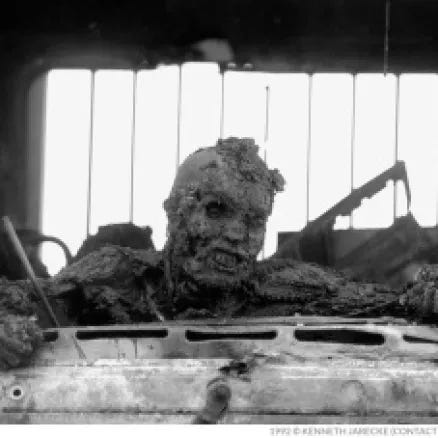
Grisly images like this one (of a dead Iraqi soldier) were censored in America. Language is censored as well.

Fortunately, there’s a new guide and website available that alerts us to the importance of language and war. The website is wordsaboutwar.org, from which you can read and download suggestions on how best to use words to convey the horrors and costs of war to people everywhere. I urge you to visit the site and peruse the guide. (Full disclosure: I was an advisor to this effort, which was ably led by David Vine.)

Here’s a sample of a few comments I made in passing to the group:

A war on terror is truly a war of terror because war itself is terrible.

Friendly fire is being killed by one’s own, often due to the chaos of war, the sheer waste of it all, exacerbated by incompetence.  “Fire” is always unfriendly.

Very few troops are “heroes,” and indeed most aren’t, because heroes are rare in all walks of life.

The word “casualty” is too benign.  I much prefer killed and wounded: the victims of war.

What are “enemy noncombatants”?  They are usually innocent civilians.

With respect to the “War on Terror” that the U.S. has prosecuted for 22 years and counting, I noted that:

We (the U.S.) manifested a Manichean world view; as George W. Bush said soon after 9/11, you’re either for America (and all its violence) or you’re for the terrorists (with their violence).  If you wanted a non-violent approach, you were dismissed as naive or “for them.”  It was good versus evil, thus the infamous “axis of evil” the U.S. allegedly faced.

This is, of course, a problem with all discourse related to war.  Subtlety and nuance are thrown out the window.  Language is greatly simplified.  The U.S. is “doubleplusgood” and the enemy must be the opposite while simultaneously being dehumanized.  We kill “cowardly” enemy troops or terrorists (by drone they’re “bugsplat”) yet our “heroic” troops “fall” in battle and are revered as “the fallen.”  Violent combat is disguised as “kinetic action” in U.S. military communiques.

In my view, the dishonesty of this language captures the dishonesty of America’s wars.

General William T. Sherman (U.S. Civil War) famously said that “War is all hell.” Sherman knew the hellish and harsh realities of war; he knew, as he wrote, that “war is cruelty, and you cannot refine it.”  Too many people today are using and manipulating words to refine war.  They’re camouflaging war’s harshest realities.  Writers should write plainly and honestly, as General Sherman did, to capture war’s hellish nature.  By choosing honest words, we also help to create a better future in which the threat of war recedes precisely because we recognize more clearly its horrific nature and terrifying costs.

Other high-ranking military officers, like General Smedley Butler, for example, also wrote plainly about war.  As Butler famously said, war is a racket, and he described himself as a gangster for capitalism.  Now that was plain speaking about war!

The chief intent of speaking and writing plainly about war is to discourage war and save lives.  Some might see it as patriotic—saving the lives of U.S. troops by helping to prevent bloody awful wars—but more broadly the goal is humanistic—to save the lives of all those on the receiving end of bullets and bombs.

Interestingly, U.S. troops at lower levels are generally blunt about what war is about. Talk to sergeants at the front and you’ll hear visceral truths, probably enhanced by choice expletives.  I’ve heard U.S. Marines shout “Kill!” at graduation ceremonies.  Killing, after all, is what war enables. Mass killing leads to atrocities like My Lai in Vietnam. This fact should never be sugarcoated.

Few people, however, truly want to confront war’s horrors. Gazing upon the face of war is profoundly disturbing, which is why we’re encouraged to look away.  And so the face of war is airbrushed and camouflaged with euphemisms and buried under a blizzard of acronyms.

If we are to end war and prevent atrocity, we must seek to name things accurately while calling up mental images (no matter how disturbing) appropriate to the horrors of war. The guide at wordsaboutwar.org is an important step in that direction.

Update: I went on Podcast by George today to talk about all this:

The Bitter Alchemy of War

W.J. Astore

Turning Bullet Lead into Corporate Gold

As the Ukrainian counteroffensive against Russia grinds on (or falters?), as U.S. disaster relief for Hawaii is tied to more military aid for Ukraine, as depleted uranium shells join cluster munitions as America’s latest gift to a blasted war zone, as calls for diplomacy continue to be muted when they’re not actively discouraged and dismissed, I was reminded of the alchemy of war.

Alchemists of the early modern period were sophisticated experimenters driven by an often quasi-religious quest for perfection. We tend to remember only the most craven part of their experiments: the attempt to transmute lead into gold. This transmutation could not be effected, but alchemy itself transmuted into chemistry as its practitioners, through trial and error, developed a better understanding of the nature of the elements, reflected in part by today’s Periodic Table.

Seeking a divine spark

Yet the business of war succeeded where alchemists failed. In their alchemy, the merchants of death turned bullet lead into corporate gold. And what gold! Yearly war budgets continue to soar in the United States toward the trillion dollar mark. Weapons shipments to Ukraine continue at a pace that promises many more shattered and blasted bodies, Ukrainian and Russian. 

In a sense, dead bodies are also being transmuted into corporate gold.

Transmutation, I was taught as a Catholic, is a miracle. The Word became flesh and dwelt among us (Jesus Christ, the Son of God, of course). We have made the miraculous the mundane, and indeed the profane. We take lead and spill blood which becomes gold. And some even celebrate this as good for business in the United States.

All these weapons: they’re job-creators! So we crucify the Word and elevate the life-takers and widow-makers as gods.

We are far more deluded than the alchemists of the past.

What Ever Happened to Gary Cooper?

W.J. Astore

On Ending Militarism in America

Fourteen years ago, I wrote the following article for TomDispatch. A colleague wrote to me today saying he had saved the article, had re-read it, and still found it useful, which is just about the highest compliment you can pay an author. I continue to believe, as I wrote in 2009, that America is experiencing a form of militarism on steroids. It’s a peculiar form of militarism, since the Pentagon works hard to obscure the costs and realities of war (see the recent book by Norman Solomon, War Made Invisible), but camouflaged or not, it persists.

Gary Cooper in "High Noon"

Gary Cooper in “High Noon”

[Written in August 2009]

I have a few confessions to make: After almost eight years of off-and-on war in Afghanistan and after more than six years of mayhem and death since “Mission Accomplished” was declared in Operation Iraqi Freedom, I’m tired of seeing simple-minded magnetic ribbons on vehicles telling me, a 20-year military veteran, to support or pray for our troops. As a Christian, I find it presumptuous to see ribbons shaped like fish, with an American flag as a tail, informing me that God blesses our troops. I’m underwhelmed by gigantic American flags — up to 100 feet by 300 feet — repeatedly being unfurled in our sports arenas, as if our love of country is greater when our flags are bigger. I’m disturbed by nuclear-strike bombers soaring over stadiums filled with children, as one did in July just as the National Anthem ended during this year’s Major League Baseball All Star game. Instead of oohing and aahing at our destructive might, I was quietly horrified at its looming presence during a family event.

We’ve recently come through the steroid era in baseball with all those muscled-up players and jacked-up stats. Now that players are tested randomly, home runs are down and muscles don’t stretch uniforms quite as tightly. Yet while ending the steroid era in baseball proved reasonably straightforward once the will to act was present, we as a country have yet to face, no less curtail, our ongoing steroidal celebrations of pumped-up patriotism.

It’s high time we ended the post-Vietnam obsession with Rambo’s rippling pecs as well as the jaw-dropping technological firepower of the recent cinematic version of G.I. Joe and return to the resolute, undemonstrative strength that Gary Cooper showed in movies like High Noon.

In the HBO series “The Sopranos,” Tony (played by James Gandolfini) struggles with his own vulnerability — panic attacks caused by stress that his Mafia rivals would interpret as fatal signs of weakness. Lamenting his emotional frailty, Tony asks, “What ever happened to Gary Cooper?” What ever happened, in other words, to quiet, unemotive Americans who went about their business without fanfare, without swagger, but with firmness and no lack of controlled anger at the right time?

Tony’s question is a good one, but I’d like to spin it differently: Why did we allow lanky American citizen-soldiers and true heroes like World War I Sgt. Alvin York(played, at York’s insistence, by Gary Cooper) and World War II Sgt. (later, 1st Lt.) Audie Murphy(played in the film “To Hell and Back,” famously, by himself) to be replaced by all those post-Vietnam pumped-up Hollywood “warriors,” with Sylvester Stallone and Arnold Schwarzenegger-style abs and egos to match?

And far more important than how we got here, how can we end our enduring fascination with a puffed-up, comic book-style militarism that seems to have stepped directly out of screen fantasy and into our all-too-real lives?

A seven-step recovery program

As a society, we’ve become so addicted to militarism that we don’t even notice the way it surrounds us or the spasms of societal ‘roid rage that go with it. The fact is, we need a detox program. At the risk of incurring some of that ‘roid rage myself, let me suggest a seven-step program that could help return us to the saner days of Gary Cooper:

1. Baseball players on steroids swing for the fences. So does a steroidal country. When you have an immense military establishment, your answer to trouble is likely to be overwhelming force, including sending troops into harm’s way. To rein in our steroidal version of militarism, we should stop bulking up our military ranks, as is now happening, and shrink them instead. Our military needs not more muscle supplements (or the budgetary version of the same), but far fewer.

2. It’s time to stop deferring to our generals, and even to their commander in chief. They’re ours, after all; we’re not theirs. When President Obama says Afghanistan is not a war of choice but of necessity, we shouldn’t hesitate to point out that the emperor has no clothes. Yet when it comes to tough questioning of the president’s generals, Congress now seems eternally supine. Senators and representatives are invariably too busy falling all over themselves praising our troops and their commanders, too worried that “tough” questioning will appear unpatriotic to the folks back home, or too connected to military contractors in their districts, or some combination of the three.

Here’s something we should all keep in mind: Generals have no monopoly on military insight. What they have a monopoly on is a no-lose situation. If things go well, they get credit; if they go badly, we do. Retired five-star Gen. Omar Bradley was typical when he visited Vietnam in 1967 and declared: “I am convinced that this is a war at the right place, at the right time and with the right enemy — the Communists.” North Vietnam’s only hope for victory, he insisted, was “to hang on in the expectation that the American public, inadequately informed about the true situation and sickened by the loss in lives and money, will force the United States to give up and pull out.”

There we have it: A classic statement of the belief that when our military loses a war, it’s always the fault of “we the people.” Paradoxically, such insidious myths gain credibility not because we the people are too forceful in our criticism of the military, but because we are too deferential.

3. It’s time to redefine what “support our troops” really means. We console ourselves with the belief that all our troops are volunteers, who freely signed on for repeated tours of duty in forever wars. But are our troops truly volunteers? Didn’t we recruit them using multimillion-dollar ad campaigns and lures of every sort? Are we not, in effect, running a poverty and recession draft? Isolated in middle- or upper-class comfort, detached from our wars and their burdens, have we not, in a sense, recruited a “foreign legion” to do our bidding?

If you’re looking for a clear sign of a militarized society — which few Americans are — a good place to start is with troop veneration. The cult of the soldier often covers up a variety of sins. It helps, among other things, hide the true costs of, and often the futility of, the wars being fought. At an extreme, as the war began to turn dramatically against Nazi Germany in 1943, Germans who attempted to protest Hitler’s failed strategy and the catastrophic costs of his war were accused of (and usually executed for) betraying the troops at the front.

The United States is not a totalitarian state, so surely we can hazard criticisms of our wars and even occasionally of the behavior of some of our troops, without facing charges of stabbing our troops in the back and aiding the enemy. Or can we?

4. Let’s see the military for what it is: a blunt instrument of force. It’s neither surgical nor precise nor predictable. What Shakespeare wrote 400 years ago remains true: when wars start, havoc is unleashed, and the dogs of war run wild — in our case, not just the professional but the “mercenary” dogs of war, those private contractors to the Pentagon that thrive on the rich spoils of modern warfare in distant lands. It’s time to recognize that we rely ever more massively to prosecute our wars on companies that profit ever more handsomely the longer they last.

5. Let’s not blindly venerate the serving soldier, while forgetting our veterans when they doff their spiffy uniforms for the last time. It’s easy to celebrate our clean-cut men and women in uniform when they’re thousands of miles from home, far tougher to lend a hand to scruffier, embittered veterans suffering from the physical and emotional trauma of the battle zones to which they were consigned, usually for multiple tours of duty.

6. I like air shows, but how about — as a first tiny step toward demilitarizing civilian life — banning all flyovers of sporting events by modern combat aircraft? War is not a sport, and it shouldn’t be a thrill.

7. I love our flag. I keep my father’s casket flag in a special display case next to the very desk on which I’m writing this piece. It reminds me of his decades of service as a soldier and firefighter. But I don’t need humongous stadium flags or, for that matter, tiny flag lapel pins to prove my patriotism — and neither should you. In fact, doesn’t the endless post-9/11 public proliferation of flags in every size imaginable suggest a certain fanaticism bordering on desperation? If we saw such displays in other countries, our descriptions wouldn’t be kindly.

Of course, none of this is likely to be easy as long as this country garrisons the planet and fights open-ended wars on its global frontiers. The largest step, the eighth one, would be to begin seriously downsizing that mission. In the meantime, we shouldn’t need reminding that this country was originally founded as a civilian society, not a militarized one. Indeed, the revolt of the 13 colonies against the King of England was sparked, in part, by the perceived tyranny of forced quartering of British troops in colonial homes, the heavy hand of an “occupation” army, and taxation that we were told went for our own defense, whether we wanted to be defended or not.

If Americans are going to continue to hold so-called tea parties, shouldn’t some of them be directed against the militarization of our country and an enormous tax burden fed in part by our wasteful, trillion-dollar wars?

Modest as it may seem, my seven-step recovery program won’t be easy for many of us to follow. After all, let’s face it, we’ve come to enjoy our peculiar brand of muscular patriotism and the macho militarism that goes with it. In fact, we revel in it. Outwardly, the result is quite an impressive show. We look confident and ripped and strong. But it’s increasingly clear that our outward swagger conceals an inner desperation. If we’re so strong, one might ask, why do we need so much steroidal piety, so many in-your-face patriotic props, and so much parade-ground conformity?

Forget Rambo and action-picture G.I. Joes: Give me the steady hand, the undemonstrative strength, and the quiet humility of Alvin York, Audie Murphy — and Gary Cooper.

Integrity Last

W.J. Astore

The Most Fundamental Problem with the U.S. Military

“Integrity First” is the fundamental core value of the U.S. Air Force. Two other core values speak to “service before self” and “excellence in all we do.” But integrity remains the wellspring, and it’s the U.S. military’s stunning lack of integrity that has cost the American people and indeed the world so dearly over the last half-century.

Tonkin Gulf. My Lai. The Pentagon Papers. WMD in Iraq. Abu Ghraib. The Afghan War Papers. So many instances of “official” lies and distortions. So many lost wars where no senior officers were ever held accountable. Put up, shut up, fuck up, cover up, move up, seems to be the operating manual for success.

Last September, I wrote an article for TomDispatch: “Something is rotten in the U.S. military.” I suggested that integrity was now optional in that military, that lies and dishonor plagued America’s war machine. Evidently, those lies, that dishonor, is working just fine for the Pentagon as its budget continues to soar.

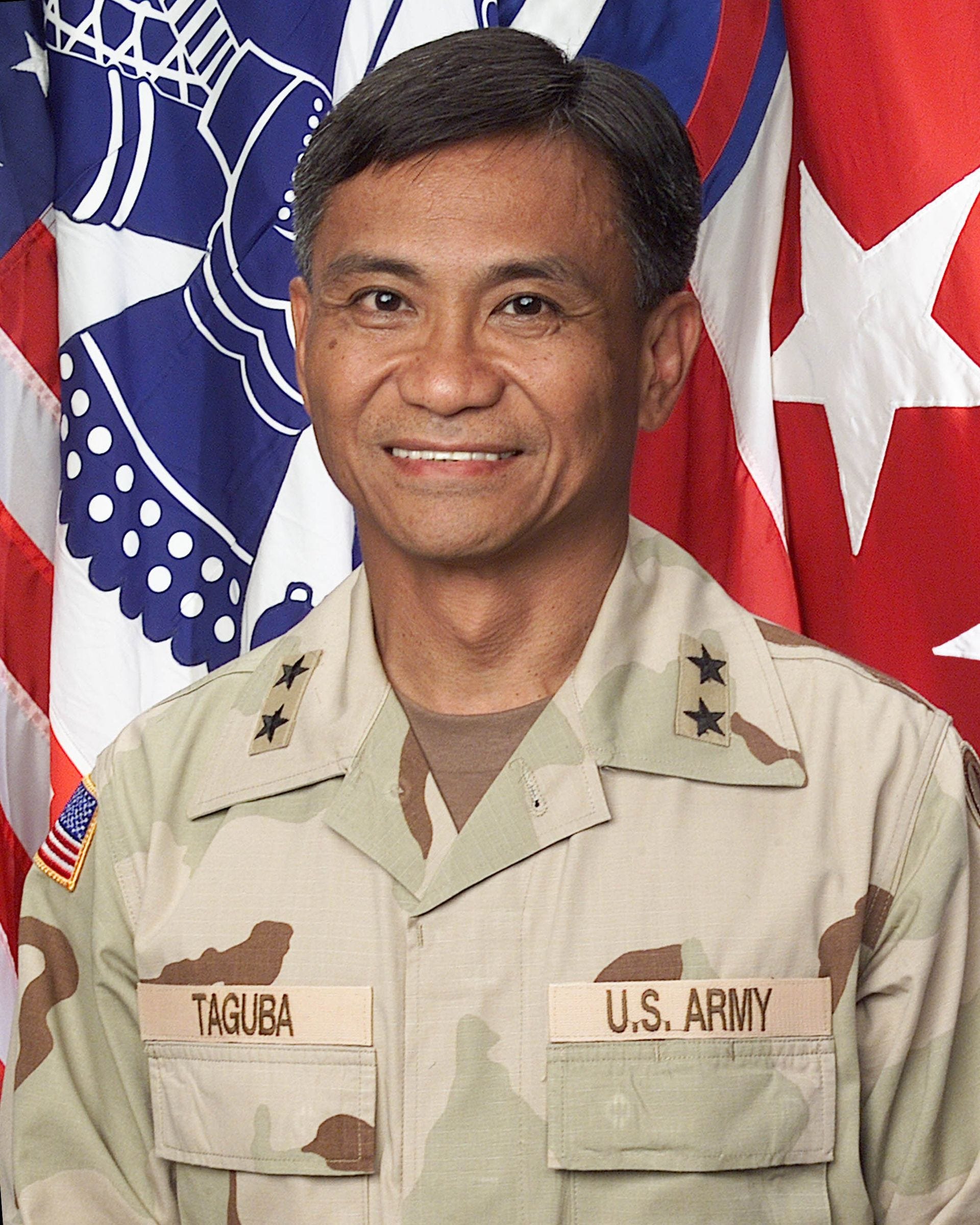
These thoughts occurred to me yet again as I read Seymour Hersh’s retrospective account of Major General Antonio (Tony) Taguba’s withering investigation of torture of prisoners at Abu Ghraib in Iraq. Taguba, a man of integrity, conducted an official—and honest—investigation of torture and mistreatment at Abu Ghraib; his reward for his honesty, his service, his excellence was not a commendation and promotion but threats, ostracism, and the death of his career as an Army officer.

General Antonio Taguba, man of integrity, service, and excellence

Sy Hersh’s article captures the rot at the core of the Pentagon and the U.S. government. Here Hersh speaks recently to Taguba:

[Taguba] “I was not a whistleblower. I knew I was in trouble when I was given the assignment [to investigate abuse at Abu Ghraib], but when you see those photos what can you do? I was a dead man walking.

“The kids were trained as traffic cops and then were told to transport [Iraqi] detainees. That’s how they got to Abu Ghraib. They weren’t trained for that but they had vehicles and rifles, just undisciplined kids with incompetent leadership and they were on the list to go home. They had all their equipment packed in Kuwait and ready to be shipped. And then they were told to stay behind.”

I [Hersh] asked: Would he do it again? “Sure,” Tony [Taguba] said, “I was hamstrung by the thirty days I had to investigate. I do not think I fulfilled my mission. [Secretary of Defense Donald] Rumsfeld was blaming the soldiers, but underneath they had no operational plan” for dealing with the prisoners.

“In hindsight, there was nothing I did to compromise my integrity. But integrity in the military and elsewhere is a bumper sticker. There is no reward for telling the truth.” [Emphasis added]

“There is no reward for telling the truth” in the U.S. military. That statement by retired General Taguba should move all Americans to take action against a military that has so clearly and tragically lost its way.

One suggestion: Cut the Pentagon budget in half and insist that it must pass a financial audit else forfeit all taxpayer funding. That might wake up a few generals and admirals.

Come On, Ukraine, Learn from the U.S. Military

W.J. Astore

American experts have all the answers for Ukraine

In today’s New York Times send out, I saw the following story:

Ukraine’s Forces and Firepower Are Misallocated, U.S. Officials Say

American strategists say Ukraine’s troops are too spread out and need to concentrate along the counteroffensive’s main front in the south.

Listen to the U.S. military, Ukraine! Don’t be casualty-averse! Concentrate your forces. Take the fight to the Russian enemy. Use all those cluster munitions we’ve sent you. Commit your armored reserve and punch a hole in the Russian lines. Break through, break out, and drive toward Crimea. You know: just like Americans would do in your place.

One might forgive Ukrainians if they asked, When was the last war you “experts” won for America? Afghanistan? Iraq? Vietnam? Korea? What about ongoing military commitments to Syria and Somalia? If you’re so good at winning wars, how come the U.S. military didn’t win in Afghanistan, Iraq, and Vietnam where you had overwhelming materiel and firepower superiority?

With respect to why Ukraine has its forces “too spread out”: perhaps Ukraine needs to garrison its lines so that it can fend off Russian counterattacks? If Ukraine concentrates its strategic reserve and uses it in a big counteroffensive that stalls, what’s to stop Russia from a decisive riposte? Think of Kursk for Nazi Germany in 1943. Once that huge offensive failed for Germany, using up its strategic reserve, the Red Army seized the initiative on the eastern front and never lost it.

At Kursk in 1943, the Germans committed their reserves in a desperate gamble to seize the initiative from the Soviet Union. When the offensive failed, the Red Army counterattacked and proved unstoppable.

Headlines like the one posted above from the New York Times are intended to be exculpatory for the U.S. If the war turns worse for Ukraine, U.S. “experts” can point to articles like this, casting blame on the Ukrainians for not following sage American advice.

If “we” win in Ukraine, it will be because of generous U.S. aid and especially vaunted U.S. and NATO weaponry; but if they (the Ukrainians) lose, it’s all their fault for not following the advice of America’s master strategists. And, obviously, even if Ukraine loses, plenty of weapons manufacturers in the U.S. are winning and will continue to win. Indeed, a Russian victory could be just the thing to propel even more weapons spending by NATO countries as well as even larger and more monstrous Pentagon budgets.

Atavistic War

W.J. Astore

The Future Meets the Past as War and Militarism Thrive in America

Barbara Ehrenreich was a remarkable writer and thinker. Her book, Blood Rites: Origins and History of the Passions of War (1997), is one of the most original and thoughtful studies of war and its nature. She traced humanity’s affinity to war, our predilection for it, not to our vaunted status as predators but to our vulnerable status as prey to other predators in the wild. Our early human ancestors were fearful creatures, and for good reason. Humans learned to band together as a way of conquering other predators and controlling their fear; once those predators were mostly banished to fleeting memories and occasional nightmares, we could turn on each other, becoming predators (and prey) to ourselves.

If you haven’t read her book, I urge you to check it out. Stimulating it is. And so too is an afterword she wrote to the paperback edition of the book, available at TomDispatch and which I read last night. Once again, Ehrenreich doesn’t disappoint.

While she wrote about the possibility of robot war in the future, a war largely devoid of human “boots on the ground,” she also made mention of atavistic war. By atavistic war, she meant a return to the past, to the primitive, to the reassuring (reassuring to America’s conventional big-battalion military, that is). Thus the U.S. suffers a major terrorist strike launched by a relatively small band of non-state actors, and the response of the war department in Washington was to launch invasions of Afghanistan and Iraq while talking about re-creating both countries with quasi-Marshall Plans, as if we had returned to the 1940s.

Even as America today pursues AI and increasingly sophisticated robot drones and the like, there’s a desire, a yen, to return to older models as certainties. Already in Ukraine, we’re witnessing a return to the trench warfare of Word War I as the New York Times reports that Ukraine and Russia have suffered half a million killed and wounded over the last 18 months. At the same time, the U.S. and NATO seem to believe that with weaponry like tanks and fighter jets and better training, Ukraine can break through Russian defenses in a quasi-Blitzkrieg like World War II, defeating Russian forces and forcing their leader to beg for peace. Erwin Rommel’s rapid advances in France in 1940 and North Africa in 1942 might serve as models for a decisive Ukrainian counteroffensive, a friend suggested to me, despite the costly slog and disappointing results of this year’s “spring” offensive.

Speaking of atavism, U.S. leaders of the military-industrial-congressional complex have a hankering for a new Cold War, not only with Russia but with China too. It includes the re-nuclearization of America, with new ICBMs, bombers, and submarines at a cost of $2 trillion over the next thirty years. Perhaps we’ll even see new bomb shelters, new “duck and cover” drills, maybe even a new nuclear crisis akin to the Cuban Missile Crisis in 1962.

The one future America’s self-styled warriors can’t seem to imagine is one largely free of war.  We Americans remain prey, this time to our “leaders” and their passions and pursuit of profit and power through violent dominance.

Ehrenreich would understand. Our very own “blood rites” remain very much in force in our lives. The prey—that’s us—remain predators that are prey to the passions of war with all its fear, destruction, and death.

Something tells me the robots and robotic war will not free us from our blood rites. For how can creations liberate their creators?