It Should Never Be Done Again: Hiroshima, 70 Years Later

Hiroshima after the bomb

W.J. Astore

August 6, 1945.  Hiroshima.  A Japanese city roughly the size of Houston.  Incinerated by the first atomic bomb.  Three days later, Nagasaki.  Japanese surrender followed.  It seemed the bombs had been worth it, saving countless American (and Japanese) lives, seeing that a major invasion of the Japanese home islands was no longer needed.  But was the A-bomb truly decisive in convincing the Japanese to surrender?

President Truman’s decision to use atomic bombs against Japan is perhaps the most analyzed, and, in the United States, most controversial decision made during World War II.  The controversy usually creates more heat than light, with hardliners posed on mutually opposed sides.  The traditional interpretation is that Truman used the A-bombs to convince a recalcitrant Japanese Emperor that the war was truly lost.  A quick Japanese surrender appeared to justify Truman’s choice.  It also saved tens of thousands of Allied lives in the Pacific (while killing approximately 250K Japanese).  This thesis is best summed up in Paul Fussell’s famous essay, “Thank God for the Atomic Bomb.”

Even before Hiroshima, however, a small number of scientists argued that the A-bomb should not be used against Japan without a prior demonstration in a remote and uninhabited location.  Later, as the horrible nature of radiation casualties became clearer to the American people, and as the Soviet Union developed its own arsenal of atomic weapons, threatening the United States with nuclear Armageddon, Americans began to reexamine Truman’s decision in the context of the Cold War and the nuclear arms race.  Gar Alperovitz’s revisionist view that Truman was practicing “atomic diplomacy” won its share of advocates in the 1960s. (Alperovitz expanded upon this thesis in the 1990s.)  Other historians suggested that racism and motives of revenge played a significant role in shaping the U.S. decision.  This debate reached its boiling point in the early 1990s, as the Smithsonian’s attempt to create a “revisionist” display to mark the bomb’s 50th anniversary became a lightning rod in the “culture wars” between a Democratic administration and a resurgent Republican Congress.

Were the atomic bombs necessary to get the Japanese to surrender?  Would other, more humane, options have worked, such as a demonstration to the Japanese of the bomb’s power?  We’ll never know with certainty the answer to such questions.  Perhaps if the U.S. had been more explicit in their negotiations with Japan that “unconditional surrender” did not mean the end of Japan’s Emperor, the Japanese may have surrendered earlier, before the A-bomb was fully ready.  Then again, U.S. flexibility could have been interpreted by Japanese hardliners as a sign of American weakness or war fatigue.

Unwilling to risk appearing weak or weary, U.S. leaders dropped the A-bomb to shock the Japanese into surrendering. Together with Stalin’s entry into the war against Japan, these shocks were sufficient to convince the Japanese emperor “to bear the unbearable,” in this case total capitulation, a national disgrace.

A longer war in the Pacific — if only a matter of weeks — would indeed have meant higher casualties among the Allies, since the Japanese were prepared to mount large-scale Kamikaze attacks.  Certainly, the Allies were unwilling to risk losing men when they had a bomb available that promised results.  The mentality seems to have been: We developed it.  We have it.  Let’s use it.  Anything to get this war over with as quickly as possible.

That mentality was not humane, but it was human.  Truman had a weapon that promised decisiveness, so he used it.  The attack on Hiroshima  was basically business as usual, especially when you consider the earlier firebombing raids led by General Curtis LeMay.  Indeed, such “conventional” firebombing raids continued after Hiroshima and Nagasaki until the Japanese finally sent a clear signal of surrender.

Of course, an event as momentous, as horrific, as Hiroshima took on extra meaning after the war, given the nuclear arms race, the Cold War and a climate represented by the telling acronym of MAD (mutually assured destruction). U.S. decisionmakers like Truman were portrayed as callous, as racist, as war criminals.  Yet in the context of 1945, it’s difficult to see any other U.S. president making a different decision, especially given Japan’s apparent reluctance to surrender and their proven fanaticism at Iwo Jima, Okinawa and elsewhere.

As Andrew Rotter notes in Hiroshima: The World’s Bomb (2008), World War II witnessed the weakening, if not erasure, of distinctions between combatants and non-combatants, notably during LeMay’s firebombing of Tokyo in March 1945 but in many other raids as well (Rotterdam and Coventry and Hamburg and Dresden, among so many others). In his book, Rotter supports the American belief that Japan would fight even more fanatically for their home islands than they did at Iwo Jima and Okinawa, two horrendous battles in 1945 that preceded the bomb. But he argues that Truman and Secretary of War Henry Stimson engaged in “self-deception” when they envisioned that the effects of the atomic bomb could be limited to “a purely military” target.

A quarter of a million Japanese died at Hiroshima and Nagasaki and in the years and decades following.  They died horrible deaths.  And their deaths serve as a warning to us all of the awful nature of war and the terrible destructiveness of nuclear weapons.

Hans Bethe worked on the bomb during the Manhattan Project.  A decent, humane, and thoughtful man, he nevertheless worked hard to create a weapon of mass destruction. His words of reflection have always stayed with me.  They come in Jon Else’s powerful documentary, “The Day After Trinity: J. Robert Oppenheimer and the Atomic Bomb.”

Here is what Bethe said (edited slightly):

The first reaction we [scientists] had [after Hiroshima] was one of fulfillment.  Now it has been done.  The second reaction was one of shock and awe: What have we done?  What have we done.  The third reaction was it should never be done again.

It should never be done again: Just typing those words here from memory sends chills up my spine.

Let us hope it is never done again.  Let us hope a nuclear weapon is never used again.  For that way madness lies.

Surprise! Weapons Sales Are Booming

Heck ya!  Send some B-52s to Israel (U.S. Air Force photo)
Heck ya! Send some B-52s to Israel (U.S. Air Force photo)

W.J. Astore

Any optimism that the Iran nuclear deal might slow the momentum of weapons sales to the Middle East has already been strangled in the cradle. Consider the following news item, courtesy of FP: Foreign Policy:

While U.S. Defense Department officials make promises to partner with Middle East allies nervous about the Iranian missile threat in their backyard, U.S. defense contractors are rushing in to ink multiple billion dollar deals to fill the gap. On Wednesday, the State Department announced a pending $5.4 billion deal with Saudi Arabia for a 600 new PAC-3 Patriot missile interceptors, which will bring the Saudi missiles up to date with the latest version of the Patriot.

The massive deal follows an April agreement with Riyadh for $2 billion worth of Patriots, and another $1.5 billion sale, announced this month, for Patriot interceptors in Qatar, United Arab Emirates, Taiwan, South Korea, and Saudi Arabia. Defense contractors Lockheed Martin and Raytheon will produce the missiles.

That’s $9 billion in Patriot surface-to-air missile (SAM) sales, a coup indeed for Lockheed Martin and Raytheon.

At least the Patriot SAM is largely defensive in nature.  One former Obama official has gone a quantum leap further in advocating that the U.S. supply B-52 bombers to Israel armed with special bunker-busting bombs.  Here’s the gist of the story, courtesy of Defense News:

A former top adviser to US President Barack Obama is calling on Washington to provide bunker-busting B-52 bombers to Israel as a means of bolstering Israeli deterrence and the credibility of its so-called military option should Iran opt out of commitments codified in Tuesday’s deal with world powers.

“To have a credible military option, it’s not enough to say all options are on the table. We have to be much more blunt,” said Ambassador Dennis Ross, a longtime diplomat and former special adviser to Obama on Iran.

In an interview Thursday, Ross said he favors the transfer of an unspecified quantity of B-52 Stratofortress bombers outfitted to deliver 30,000-pound GBU-57 Massive Ordnance Penetrators as one of the means of shoring up deterrence vis a vis Iran.

Sure: Just what the Israelis need: a huge long-range strategic bomber, originally built in the 1950s to deter, and if necessary to attack, the Soviet Union with nuclear weapons.  Perhaps an Israeli Major Kong can ride one of those bunker-busters right into the heartland of Iran.

We do indeed have a strange love for weaponry.

The Iran Nuclear Deal: What It Really Means

With Cuba and Iran, perhaps Obama is finally working to earn his peace prize?

W.J. Astore

When I was a teenager, America’s two biggest allies in the Middle East were Israel and Iran.  We considered the Shah of Iran to be a strong ally in the region, and sold him some of our most advanced weaponry, including the F-14 Tomcat fighter with its powerful radar as well as HAWK surface-to-air missiles.  Students from Iran attended American colleges and universities.  Heck, we even helped Iran with its fledgling nuclear power industry.

All that changed, of course, with the Islamic revolution in Iran and the Iranian hostage crisis.  America became “The Great Satan,” American flags were burned, and young Americans were told we had been betrayed.  We took to wearing t-shirts that read “Put a hola in the Ayatollah,” featuring a head shot of the Ayatollah Khomeini with a sniper’s cross hair superimposed on it.  (I should know: I owned and wore that very t-shirt.)

That kind of estrangement, bordering on the unhinged, is what is changing for the better because of the nuclear deal with Iran, notes Peter Van Buren at TomDispatch.com.  In Van Buren’s words:

Here’s what actually matters most [about the Iran nuclear deal]: at a crucial moment and without a shot being fired, the United States and Iran have come to a turning point away from an era of outright hostility. The nuclear accord binds the two nations to years of engagement and leaves the door open to a far fuller relationship. 

Iran and the USA have pulled back from the brink of war.  Sorry: No more off-key renditions by John McCain about bombing Iran.  Billions of dollars saved, countless innocent lives spared.  What’s to complain about?

As Van Buren notes, diplomacy, at least for the time being, was allowed to work.  In his words:

It’s a breakthrough because through it the U.S. and Iran acknowledge shared interests for the first time, even as they recognize their ongoing conflicts in Syria, Yemen, and elsewhere. That’s how adversaries work together: you don’t have to make deals like the July accord with your friends. Indeed, President Obama’s description of how the deal will be implemented — based on verification, not trust — represents a precise choice of words. The reference is to President Ronald Reagan, who used the phrase “trust but verify” in 1987 when signing the Intermediate-Range Nuclear Forces Treaty with the Russians.

The agreement was reached the old-school way, by sitting down at a table over many months and negotiating. Diplomats consulted experts. Men and women in suits, not in uniform, did most of the talking. The process, perhaps unfamiliar to a post-9/11 generation raised on the machismo of “you’re either with us or against us,” is called compromise. It’s an essential part of a skill that is increasingly unfamiliar to Americans: diplomacy. The goal is not to defeat an enemy, find quick fixes, solve every bilateral issue, or even gain the release of the four Americans held in Iran. The goal is to achieve a mutually agreeable resolution to a specific problem. Such deft statecraft demonstrates the sort of foreign policy dexterity American voters have seldom seen exercised since Barack Obama was awarded the 2009 Nobel Peace Prize (Cuba being the sole exception).

Of course, no good deed goes unpunished.  Republicans, having no other viable path to power, reflexively attack the deal even before they’ve read it.  Impostors like Mike Huckabee actually suggest the deal is leading Jews to the door of the ovens, an outrageously inflammatory and irresponsible reference to the Nazi Holocaust against the Jews in World War II.  Such rhetoric, wildly exaggerated, conveniently obscures the real fears of Israel and Saudi Arabia.

And what are those fears?  Here’s Van Buren again to explain:

No, what fundamentally worries the Israelis and the Saudis is that Iran will rejoin the community of nations as a diplomatic and trading partner of the United States, Asia, and Europe. Embarking on a diplomatic offensive in the wake of its nuclear deal, Iranian officials assured fellow Muslim countries in the region that they hoped the accord would pave the way for greater cooperation. American policy in the Persian Gulf, once reliably focused only on its own security and energy needs, may (finally) start to line up with an increasingly multifaceted Eurasian reality. A powerful Iran is indeed a threat to the status quo — hence the upset in Tel Aviv and Riyadh — just not a military one. Real power in the twenty-first century, short of total war, rests with money.

He nails it.  After all, what’s the worse that can happen?  Let’s say Iran cheats and starts to develop a nuclear weapon.  In that case, the U.S. will have broad support in attacking Iran to eliminate that capability.  Meanwhile, the thousands of nuclear warheads that the U.S. possesses, and the hundreds of nuclear bombs the Israelis possess, should serve as a sufficient deterrent against Iranian nuclear designs (assuming the Iranians ever seek to fulfill them).

After so many failed military interventions in the Middle East, after so much death and destruction, isn’t it high time the world community tried diplomacy and engagement?  I’d say so.  And this from a former teenager who wore a t-shirt advocating the assassination of Iran’s revolutionary leader.

Nixon’s Genesis of the Paranoid National Security State

Nixon

Tom Engelhardt.  Introduction by William Astore.

And Nixon said, “Let there be tapes.”  And there was surveillance — and knowledge of good and evil — and a multitude of dirty tricks.  And Nixon thought it was good.  And American democracy was fallen, forevermore.

And after Nixon slew democracy, the Founders asked him where it was.  And Nixon replied, “I know not.  Am I democracy’s keeper?”  And so he was banished, somewhere east of San Bernardino.

In his powerful introduction to Tim Weiner’s new book, Tom Engelhardt argues that Richard Nixon was in a sense the progenitor of today’s national security and surveillance state.  That state seeks to sweep up everything, to know everything, because it mistrusts everyone, and because it seeks power over everyone, just as Nixon sought nearly half a century ago.  If today’s surveillance state has a Bible (highly secret, no doubt, so how would I know?), Nixon contributed some of the earliest passages to its Book of Genesis.

How did our government come to implement on a macro scale what Nixon implemented on a micro (and microphone) scale? How did “dirty tricks” become legion — for they are many — in our government?  Read on!  W.J. Astore

Nixon’s Genesis of the Paranoid National Security State

Tom Engelhardt (used with kind permission of the author)

Let me give you a reason that’s anything but historical for reading Tim Weiner’s remarkable new book, One Man Against the World: The Tragedy of Richard Nixon. Mind you, with the last of the secret Nixon White House tapes finally made public some 40 years after the first of them were turned over to courts, prosecutors, and Congress, this will undoubtedly be the ultimate book on that president’s reign of illegality.

Still, think about the illegal break-in (or black-bag job) at the office of Daniel Ellsberg’s psychiatrist committed by a group of Nixon White House operatives dubbed “the Plumbers”; the breaking into and bugging of the Democratic National Committee’s headquarters at the Watergate office complex; the bugging, using warrantless wiretaps, of the phones of administration aides and prominent media figures distrusted by the president and National Security Adviser Henry Kissinger; the slush funds Nixon and his cronies created for his reelection campaign; the favors, including ambassadorships, they sold for “donations” to secure a second term in office; the privatized crew of contractors they hired to do their dirty work; the endemic lying, deceit, and ever more elaborate cover-ups of illegalities at home and of extra-constitutional acts in other countries, including secret bombing campaigns, as well as an attempt to use the CIA to quash an FBI investigation of White House activities on “national security grounds.” Put it all together and you have something like a White House-centered, first-draft version of the way the national security state works quite “legally” in the twenty-first century.

As a bonus, you also get a preview of the kinds of money machinations that, with the backing of the Supreme Court four decades later, would produce our present 1% democracy. The secret political funds Nixon and his cronies finagled from the wealthy outside the law have now been translated into perfectly legal billionaire-funded super PACs that do everything from launching candidate ad blitzes to running ground campaigns for election 2016.

Read Weiner’s new book — he’s also the author of a classic history of the CIA and another on the FBI — and it turns out that the president who resigned from office in disgrace in August 1974 provided a blueprint for the world that Washington would construct after the 9/11 attacks. If Weiner’s vision of Nixon is on the mark, then we never got rid of him. We still live in a Nixonian world. And if you need proof of that, just think about his infamous urge to listen in on and tape everyone. Does that sound faintly familiar?

Nixon had the Secret Service turn the Oval Office (five microphones in his desk, two at a sitting area), its telephones, the Cabinet Room (two mics), and his “hideaway” in the Executive Office Building into recording studios. He bugged his own life, ensuring that anything you said to the president of the United States would be recorded, thousands and thousands of hours of it. He was theoretically going to use those recordings for a post-presidential memoir (from which he hoped to make millions) and as a defense against whatever Henry Kissinger might someday write about him.

But whatever the initial impulse may have been, the point was to miss nothing. No one was to be exempted, including Nixon’s closest companions in office, no one but the president himself. He would know what others wouldn’t and act accordingly (though in the end he didn’t). What was one man’s mania for bugging and recording his world has become, in the twenty-first century, the NSA’s mania for bugging and recording the whole planet; a president’s mad vision, that is, somehow morphed into the modern surveillance state. The scale is staggeringly different, but conceptually it’s surprising how little has changed.

After all, the NSA’s global surveillance network was set up on the Nixonian principle of sweeping it all up — the words, in whatever form, of everyone who was anyone (and lots of people who weren’t). A generation of German politicians, Brazilians galore, terror suspects as well as just about anyone with a cell phone in the tribal backlands of the planet, two presidents of Mexico, three German chancellors, three French presidents, at least 35 heads of state, the secretary general of the U.N., and so on. The list was unending. As with Nixon, only officials of the national security state were to know that all our communications were being logged and stored. Only they were to be exempt from potential scrutiny. (Hence their utter outrage when Edward Snowden revealed their racket to the world.) Like Nixon, they would, in the end, be left with the same hopeless, incriminating overload of words. They would sweep it all up and yet, drowning in data, they wouldn’t hear a thing.

So pick up Tim Weiner’s new book and don’t for a second imagine that it’s ancient history. Think of it as the book of Genesis for the American national security state’s Bible. In the meantime, thanks to the kindness of Weiner’s publisher, Henry Holt, TomDispatch offers a little taste of the lead-up to the last days of Richard Nixon from One Man Against the World — of the moment when his system began to cave in and threatened to bury him alive. Someday, we can only hope, the same thing will happen to those responsible for similar acts on an unimaginably larger scale in our own time.

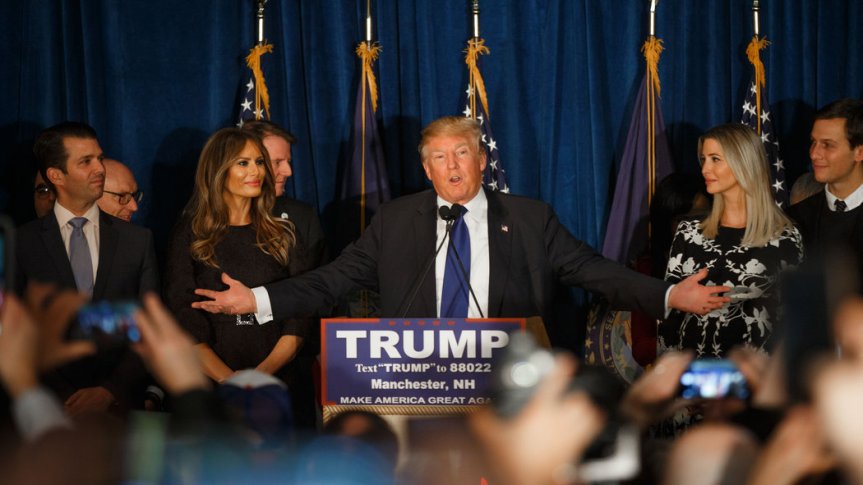
Donald Trump and American Fascism?

The Donald: Easy to make fun of ... too easy
The Donald: Easy to make fun of … too easy (AP/Seth Wenig)

W.J. Astore

A reader wrote to me this morning about Donald Trump and American fascism.  Is Trump, with his anti-immigrant posturing and his generally bombastic demeanor, tapping into a “fascist spring” in America?

The question seems unduly alarming as well as absurd.  But let’s pause for a moment.  I recently saw on TV the results of a poll in which Americans were asked, “Which presidential candidate would best revive the American economy?”  The clear winner: Donald Trump. Yes, maybe it’s just name recognition or an association of Trump’s name with money-making, but the result was nevertheless disturbing.

Here’s the thing: It’s easy to view Trump as a joke.  His bad hair.  His vulgar manner.  His obvious bombast.

But guess who else was dismissed as a joke?  Adolf Hitler.

Before he got his grip on power, many in Germany thought that Hitler was a joke: bad haircut, ill-fitting clothes, vulgar accent. Hitler was known as the “Bohemian Corporal,” a euphemism which in colloquial American English translates to “Hillbilly Grunt.”  As a result, “good” Germans just couldn’t take Hitler that seriously.  They underestimated him — and when they tried to move against him, it was far too late.

Of course, I’m not saying that Trump is some kind of Hitler.  What I am saying is that popular demagogues are easy to make fun of — easy, that is, until they gain power.

Sinclair Lewis had it right: It Can Happen Here.  All it takes is a megalomaniacal and messianic leader, a crisis to make the people desperate (such as the Great Depression that facilitated Hitler’s rise), various elites who cynically and opportunistically throw their support behind the “great leader,” and enough of the rest of us who choose, out of fear or indifference or ignorance, to do nothing.

Update (8/23/15): The Donald is still gaining in the polls, notes the New York Times, despite (or rather because of) the outrageous things he says:

In poll after poll of Republicans, Mr. Trump leads among women, despite having used terms like “fat pigs” and “disgusting animals” to denigrate some of them. He leads among evangelical Christians, despite saying he had never had a reason to ask God for forgiveness. He leads among moderates and college-educated voters, despite a populist and anti-immigrant message thought to resonate most with conservatives and less-affluent voters. He leads among the most frequent, likely voters, even though his appeal is greatest among those with little history of voting.

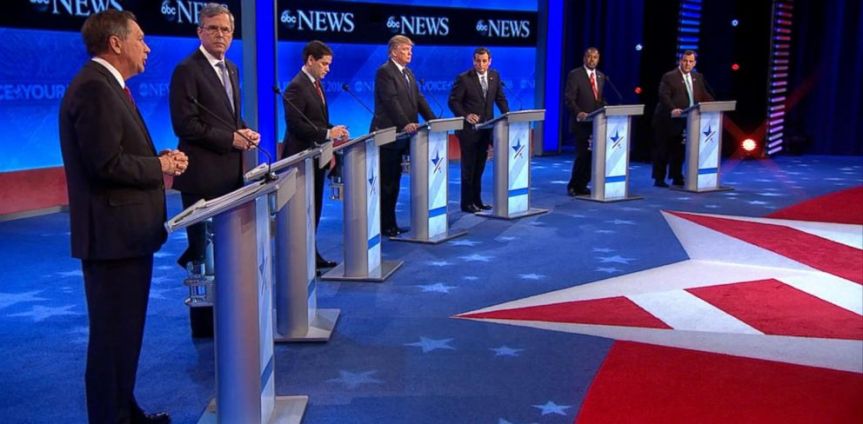
One thing is certain: Trump draws support from people who are simply tired of traditional candidates like Jeb Bush.  But does Trump stand for anything other than himself?  He’s notably vague on the issues, perhaps learning from the Obama Campaign in 2008 that it’s far better to sell vague slogans like “hope” and “change” to the American people.  Trump’s slogan is “Make America Great Again!” — and that may be all that many Americans want to hear.

The Media Is the Message, and the Message Is One of Fear

The Replicant Roy Batty knows the score
The Replicant Roy Batty knew the score

W.J. Astore

“Whoever controls the media, controls the mind,” Jim Morrison said, and this is certainly true in America.  Consider the lead stories over the July 4th weekend.  The first was the threat of terror attacks against America.  We were told that law enforcement officials were “in no mood for a national party” — that the threat of an ISIS-inspired terror attack was real.  That no attack occurred is of no consequence.  Fear was stoked, and that’s what matters.  Prepare for the next terror reminder on the anniversary of 9/11, if not sooner.

The second story was shark attacks off the Carolina coast.  Unusual, yes, but hardly a threat to America or to the vast majority of its people, even those who chose to go swimming in the ocean.  “Shark surge!”  “Fear at the beach!”  “High alert!”  These were common expressions in the media.

Of course, Americans were much more likely to be hurt in fireworks accidents than by terrorists or sharks, but the sensational always takes precedence over the mundane in our media.  Indeed, if the goal was to safeguard ordinary Americans, we should have been told to stay off the roads this past weekend, but of course that would hurt tourism and the economy, so you weren’t about to hear that advice coming from America’s talking heads.

It seems nearly impossible to remember that one of FDR’s Four Freedoms was the freedom from fear.  FDR knew the paralyzing and stultifying effects of fear, the way it erodes individual autonomy, the way it can be made to serve the powerful. Frank Herbert in Dune captured a powerful truth when he wrote that “Fear is the mind-killer.”  The movie Blade Runner echoes the sentiment, with the Replicant Roy Batty (played by Rutger Hauer) explaining that to live in fear is to be a slave.

A media that spreads fear facilitates a government of wolves.  Or, put slightly differently by the great Edward R. Murrow, “A nation of sheep will beget a government of wolves.”

There’s a definite method to the media madness, America.

Making War on Everything is the American Way

When you're at war, even your own youth become potential enemies.  A sign after the Kent State shootings
When you’re at war, even your own youth become potential enemies. A sign after the Kent State shootings (1970)

W.J. Astore

Here are a few excerpts from my latest article at TomDispatch.com.  I urge you to read the entire article here.  Thank you!

War on drugsWar on poverty. War in Afghanistan. War in Iraq. War on terror. The biggest mistake in American policy, foreign and domestic, is looking at everything as war. When a war mentality takes over, it chooses the weapons and tactics for you.  It limits the terms of debate before you even begin. It answers questions before they’re even asked.

When you define something as war, it dictates the use of the military (or militarized police forces, prisons, and other forms of coercion) as the primary instruments of policy.  Violence becomes the means of decision, total victory the goal.  Anyone who suggests otherwise is labeled a dreamer, an appeaser, or even a traitor.

War, in short, is the great simplifier — and it may even work when you’re fighting existential military threats (as in World War II).  But it doesn’t work when you define every problem as an existential one and then make war on complex societal problems (crime, poverty, drugs) or ideas and religious beliefs (radical Islam).

America’s Omnipresent War Ethos

Consider the Afghan War — not the one in the 1980s when Washington funneled money and arms to the fundamentalist Mujahideen to inflict on the Soviet Union a Vietnam-style quagmire, but the more recent phase that began soon after 9/11.  Keep in mind that what launched it were those attacks by 19 hijackers (15 of whom were Saudi nationals) representing a modest-sized organization lacking the slightest resemblance to a nation, state, or government.  There was as well, of course, the fundamentalist Taliban movement that then controlled much of Afghanistan.  It had emerged from the rubble of our previous war there and had provided support and sanctuary, though somewhat grudgingly, to Osama bin Laden.

With images of those collapsing towers in New York burned into America’s collective consciousness, the idea that the U.S. might respond with an international “policing” action aimed at taking criminals off the global streets was instantly banished from discussion.  What arose in the minds of the Bush administration’s top officials instead was vengeance via a full-scale, global, and generational “war on terror.”  Its thoroughly militarized goal was not just to eliminate al-Qaeda but any terror outfits anywhere on Earth, even as the U.S. embarked on a full-fledged experiment in violent nation building in Afghanistan.  More than 13 dismal years later, that Afghan War-cum-experiment is ongoing at staggering expense and with the most disappointing of results.

While the mindset of global war was gaining traction, the Bush administration launched its invasion of Iraq.  The most technologically advanced military on Earth, one that the president termed “the greatest force for human liberation the world has ever known,” was set loose to bring “democracy” and a Pax Americana to the Middle East.  Washington had, of course, been in conflict with Iraq since Operation Desert Storm in 1990-1991, but what began as the equivalent of a military coup (aka a “decapitation” operation) by an outside power, an attempt to overthrow Saddam Hussein and eliminate his armed forces and party, soon morphed into a prolonged occupation and another political and social experiment in violent nation-building.  As with Afghanistan, the Iraq experiment with war is still ongoing at enormous expense and with even more disastrous results …

It’s the mindset that matters.  In places like Iraq and Afghanistan, places that for most Americans exist only within a “war” matrix, the U.S. invades or attacks, gets stuck, throws resources at the problem indiscriminately, and “makes a desert and calls it ‘peace'” (to quote the Roman historian Tacitus).  After which our leaders act surprised as hell when the problem only grows.

Sadly, the song remains monotonously the same in America: more wars, made worse by impatience for results driven by each new election cycle.  It’s a formula in which the country is eternally fated to lose…

b. traven asked me about “First Causes” when it comes to America’s permanent war mentality. With respect to the Middle East, he mentioned the Saudis and Israelis and the extent to which the USA kowtows to each. Here is my quick response:

I’d say that our war mentality pre-dates our tango with the Saudis and Israelis.  We really didn’t come to support them in a big way until the early 1970s, and by that point Korea and Vietnam and the military-industrial complex had already created a permanent war mentality.

First Cause(s): It’s so hard to say.  The Cold War and anti-Communist hysteria played a powerful role.  So did our culture: the John Wayne mentality.  American exceptionalism and our own myths.  The misreading of history: We must always resist violently or we’re risking another Munich.  Capitalism and the pursuit of profit by any means, to include violence.  Violence itself as a means to profit.

Maybe that’s it: Naked greed feeds wanton aggression.

What say you, readers?  Why is America always at war with itself and the world?

A Little Honesty on the Confederate Flag

Want to fly a flag?  How about this one?
Want to fly a flag? How about this one?

W.J. Astore

Many people associate the Confederate flag (the “stars and bars”) with the South and the U.S. Civil War (Whoops — I mean “The War of Northern Aggression”).  For some people, it’s been a more or less vague expression of Southern heritage, or a symbol of rebellion, a sort of redneck “good ol’ boy” badge of pride.  Like any symbol, it is capable of holding multiple meanings.  To use academic fancy talk, its semiotics is negotiated and interrogated contextually within contingent cultural settings in which radical interpretive flexibility is possible.

Did you follow that last sentence?  If you didn’t, pat yourself on the back, because it’s all BS.  The “stars and bars” may have been a Confederate battle flag 150 years ago, but after the Civil War it morphed into a symbol of White supremacy, becoming a symbol of race hatred and violent resistance to integration during the Civil Rights movement.

A little honesty: The Confederate flag is hardly restricted to the South, and therefore it’s not primarily about Southern heritage. In rural Central Pennsylvania, where I recently taught for nine years, the Confederate flag was astonishingly common.  It was on license plates; it flew every day at a local gas station; I saw neighbors flying it openly on their flag poles.  Why, you might ask?

My wife was very good friends with a Black woman in a local town; the (White) neighbor immediately behind her openly flew a Confederate flag from his flag pole. Remember, this was Pennsylvania, Union country, not the heart of the Confederacy. There was no mistaking this man’s message — his unhappiness that a Black family lived near him, and his decision to make them uncomfortable, to make them squirm, by flying “his” flag.

Think I’m reaching here?  My wife’s friend has a son who went to the prom.  He complimented a (White) classmate on her prom dress, saying it looked “hot” on her.  He got a visit from an off-duty State Trooper who explained to him that Black boys don’t talk to White girls like that.  Not around here, son.  No, this wasn’t 1963.  It was 2013.  A half-century after the Civil Rights movement.

It’s good to see that the Confederate flag is finally being taken down from State Capitol buildings; that merchandise featuring it is being pulled from store shelves; that politicians are finally speaking out against it, even Republican candidates for president, who equivocated in such a cowardly manner until even they could no longer resist the pull of public outrage stemming from the latest racial hate crime in Charleston.

The question is: What the hell took them (and us) so long?

Divided, Distracted, Downtrodden: The Social and Political Reality in America Today

Consumerism1

W.J. Astore

The American people are being kept divided, distracted, and downtrodden.  Divisions are usually based on race and class. Racial tensions and discrimination exist, of course, but they are also exploited to divide people.  Just look at the current debate on the Confederate flag flying in Charleston, South Carolina, with Republican presidential candidates refusing to take a stand against it as a way of appeasing their (White) radical activist base.  Class divisions are constantly exploited to turn the middle class, or those who fancy themselves to be in the middle class, against the working poor.  The intent is to blame the “greedy” poor (especially those on welfare or food stamps), rather than the greedy rich, for America’s problems.  That American CEOs of top companies earn 300 times more than ordinary workers scarcely draws comment, since the rich supposedly “deserve” their money.  Indeed, in the prosperity Gospel favored by some Christians, lots of money is seen as a sign of God’s favor.

As people are kept divided by race, class, and other “hot button” issues (abortion and guns, for example), they are kept distracted by insatiable consumerism and incessant entertainment.  People are told they can have it all, that they “deserve it” (a new car, a bigger home, and so on), that they should indulge their wants.  On HGTV and similar channels, people go shopping for new homes, carrying a long list of “must haves” with them.  I “must have” a three-car garage, a pool, a media room, surround sound, and so on.  Just tell me what mortgage I can afford, even if it puts me deeply in debt.  As consumerism runs rampant, people are kept further distracted by a mainstream media that provides info-tainment rather than news. Ultimately, the media exists to sell product; indeed, it is product itself.  No news is aired that will disturb the financial bottom line, that will threaten the corporations that run the media networks, that will undermine the privileged and the powerful.

The people, kept divided and distracted, are further rendered powerless by being kept downtrodden.  Education is often of poor quality and focused on reciting rote answers to standardized tests.  Various forms of debt (student loan debt, credit card debt, debt from health care and prescription drugs costs, and so on) work to keep the people downtrodden.  Even workers with good jobs and decent benefits are worried.  Worried that if they lose their jobs, they lose their health care. So much of personal status and identity, as well as your ability to navigate American society, is based on your position.  For many it’s lose your job, lose your life, as you’re consumed by debt you can’t repay.

Divided, distracted, and downtrodden: It’s a recipe for the end of democracy in America.  But it also serves as a roadmap to recovery.  To reinvigorate our democracy, we must fight against divisiveness, we must put distractions behind us, and we must organize to fight for the rights of the people, rights like a better education for all, less debt (a college education that’s largely free, better health care for everyone, and far less emphasis on consumerism as a sign of personal and societal health and wealth), and improved benefits for the workers of America, who form the backbone of our nation.

We can’t wait for the politicians.  Most of them are already co-opted by the moneyed interests.  Meaningful change will have to come from us.  That is, after all, the way democracy is supposed to work.

Betraying the military (and democracy) by loving indifference

A grim reality of military service that we often prefer not to see

W.J. Astore

Since the end of the Vietnam War, when it eliminated the draft, the United States has relied on an “all-volunteer military,” or AVM.  But that military, as one would expect, has not drawn equally from all segments of American society.  Its recruits have been more rural than urban, more Southern and Midwestern than from coastal regions, more conservative and evangelical than liberal and non-denominational, and certainly more working and middle class than from the affluent upper classes.

Is there a problem here?  Some would answer “no,” but today’s AVM is not the citizen-military of World War II, which drew in a fairly equitable way from all sectors of American society.  Today’s AVM defines itself as a breed apart, as separate from and superior to the masses who choose not to serve.  And in some sense it is a breed apart, because we have allowed it to become so.

This band of self-styled warriors is augmented increasingly by privatized military corporations, or mercenaries in plain speak.  (Indeed, some service members, when they leave the AVM, choose to join privatized military corporations, often doubling or tripling their salaries in the process.)  National Guard and Reserves complete the picture, units of which have been deployed to war zones far more frequently than anticipated since 9/11.

So, the U.S. military today is a curious amalgam.  An AVM or “professional” military, supported by privatized corporations/mercenaries and “weekend warriors,” deployed to foreign locations, acting to guard and sometimes to extend an imperial frontier, often celebrated by gushing politicians and a fawning media as “heroes” and as “the finest fighting force ever,” even as that military is connected less and less tangibly to the American citizenry.

And it’s that very decline in tangible connections that accounts for much of the military boosterism in America.  Most Americans lack any clear sense of what the military does; they certainly care less than they should; but what they are willing to do is to “salute” the troops by buying a beer in a red-white-and-blue can or putting a magnetic ribbon on their SUV as an expression of “support.”

A military that is not drawn equitably and broadly from the people is a military that is potentially corrosive to democracy.  Perhaps not surprisingly, today’s military is also one that is rarely sent on the people’s business in anything but name.  Instead, it is sent on the government’s business, a government riddled by special interests, a deeply compromised government.

Having served myself in the AVM for twenty years, I confess to respect aspects of it while increasingly being uneasy at its current composition and direction.  Why?  Because its composition is less than democratic, and its missions are even less so.  These hard facts are nothing new in history, even in America’s history, even when we had a draft.  Just read General Smedley Butler’s War Is A Racket. What’s new is our acquiescence as a people in the transformation of our military as warriors and mercenaries to well-heeled special interests.

Our nation has betrayed its troops in a strange way — by loving indifference.  Even as the military kills in our name, we choose to look away, sometimes in horror at the face of war, most often in lack of interest.  Even when we show interest, it’s the interest of cheerleaders jumping in celebration, or of fans enthusiastically or politely applauding from the sidelines.  The vast majority of Americans choose to have no real skin in the game.

What our military needs is not gushing cheerleaders or applauding fans but determined critics.  It needs to be challenged.  It needs a good ass-chewing, especially of its decision-makers at the top, the brass.  We sure as hell can’t wait for our “leaders” to do this.

Recent presidents have become cheerleaders-in-chief rather than commanders, nearly all of our Members of Congress have joined the pep squad, and the few critics who exist have been marginalized or attacked as being unpatriotic.

Even as our military becomes less democratic, less a representative sample of the people, we the people refuse to know our military.  We especially don’t want to know what it does in our name (especially the bad stuff, which is largely kept secret from us anyway).  So we end up worshiping a fantasy military, a manic pixie dream military, a figment of our imagination, an amalgam of films like Saving Private Ryan (WWII idealism), Top Gun (technological wargasm), and Act of Valor (Rambo/cowboy histrionics).

We refuse to know our military and what it does.  And if the people don’t know the military, and if the military is not drawn fairly from the people, you have a ripple, a rent, maybe even a fatal fault line, in the political and social life of the Republic.

We don’t know what kind of military we have, we don’t know what it does, but we worship it anyway.  That’s not democracy; that’s militarism as a national religion.