Tackling the Military-Industrial Complex

W.J. Astore

Sixty-one years ago, in 1961, President Dwight D. Eisenhower warned America of the threat posed by the military-industrial complex (MIC). To that complex, Ike had rightly added Congress, whose members are generally supportive of immense military spending, especially when it occurs in their district. Americans, in the main, haven’t heeded Ike’s warning, mainly due to government/corporate propaganda, military lobbying and threat inflation, wars and rumors of war, the naked desire for global dominance in the stated cause of keeping the “homeland” safe, and, well, greed.
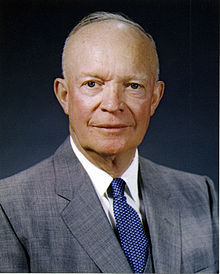
Ike in 1959

How does “an alert and knowledgeable citizenry” tackle such a beast?  I was part of a discussion this week on strategies to “dismantle” the MIC; more on that in a moment. First, a caveat. When I use the term “military-industrial complex,” I know what I’m referring to and talking about, and so too do my readers. But what about your average American, who perhaps has barely heard of President Eisenhower, let alone his farewell address in 1961?  And what about those who prosper from the MIC, whether they know it or not?  Why should they support calls for “dismantling” a big part of their livelihood?

Random example. I went to the doctor’s office today. The receptionist noted my military background as she told me about her son, whose work on red blood cells is funded by the Department of Defense, and her husband, whose work is connected to Raytheon, a major weapons contractor.  Another example is my previous dental hygienist, whose husband proudly worked on the helmet system for the F-35 jet fighter. So many of our fellow Americans are connected to the MIC; lots of my friends are, especially if they served.  As a retired military officer who writes articles that are generally critical of the MIC, I’m the exception.  Many of my peers are still employed by the MIC in good-paying positions that would be difficult for them to replicate in the private, civilian sector of society.

This is not an argument for how wonderful the MIC is. But reformers need to recognize that significant cuts to MIC funding, desirable as they are, will impact ordinary people first, rather than retired generals and corporate CEOs, who will be just fine no matter what happens.

Whatever your reforming zeal, terminology is vitally important.  To me, talk of “dismantling” the MIC is a non-starter.  Like “defund” the police, it’s doomed to fail because its message is so easily twisted. Recall that for most Americans, the military remains a trusted institution within our society, much more trusted than Congress and the President.  “Support our troops” is almost the new national motto, an adjunct to In God We Trust.  Indeed, Jesus is often envisioned as a warrior-god who’s always on America’s side.

To be persuasive, we shouldn’t say “defund” the Pentagon; “dismantle” also sounds wrong in this moment.  But if we talk of a leaner military, a smarter one, more agile, more cost-effective, more bang for the buck, those phrases will resonate better.  Let’s talk as well of a military focused on national defense, motivated by high ideals, and aligned with liberty, freedom, and democracy.

Look: The MIC has a big advantage over would-be reformers and cost-cutters: the clarity that comes with a common goal, which for the Complex is profit/power.  We live in a capitalist society that values those things. I don’t think we can compete on the money field with the MIC, but we can compete in the realm of ideas and ideals, and the military can be an ally in this, so long as its members remember the ideals of their oaths to the U.S. Constitution.

What do I mean here?  We need to tell Americans their very future is being stolen from them by wanton military spending.  At the same time, their past is being rewritten.  We’re forgetting past American ideals like “right makes might” and the citizen-soldier as a public servant.  Instead, it’s might makes right as enforced by warriors and warfighters.  We are in yet another Orwellian moment where war is peace, surveillance is privacy, and censorship is free speech.

In fighting against this moment, we need to use all tools at our disposal. Somehow, we need to bring people together at a moment when our “leaders” are determined to divide us, distract us, and keep us downtrodden.
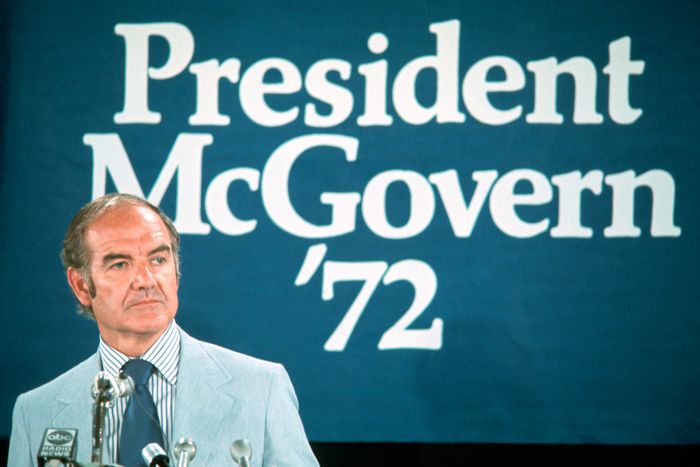
“Come home, America” is a famous speech given fifty years ago by George McGovern. He wanted to cut military/war spending and send rebate checks directly to the American people.  Let’s advocate for that!  Let’s put money back in the pockets of Americans as we make a leaner, smarter, cheaper U.S. military that can pass a financial audit.  (I’d cut all Pentagon funding until it passed an honest and thorough audit.) Most Americans would support major reforms if they were pitched in this way.

At the same time, I’d like to see a revival of the Nye Commission from the 1930s and the “merchants of death” idea.  Whatever else it is, selling weapons is not a way to peace, nor is it life-affirming.  Harry Truman made his mark in Congress during World War II by attacking fraud and waste related to military spending. Again, today’s Pentagon can’t even pass an audit!  We need to show the American people that the Pentagon brass is stealing from them and hiding behind a veil of secrecy that is undemocratic and probably illegal as well. Here, I would love to see Members of Congress act in the spirit of William Proxmire and his “Golden Fleece” awards.  The American people are being fleeced by the MIC, and we should be reminding them of this fact, every single day.

In the 1930s, General Smedley Butler, a Marine veteran who was twice awarded the Medal of Honor, saw how war was a racket, and that to end it, you had to take the profit out of it.  How can America do that?  Can we “nationalize” defense contractors?  Can we make weapons building into a non-profit activity?  Can we reverse Citizens’ United and outlaw weapons lobbying as a form of protected speech (it’s really legalized bribery)?

How about slowing the revolving door between the U.S. military and weapons contractors?  Make it so that retired officers in the grade of major and above must forfeit their pensions if they join a weapons/war firm.  Naturally, no one employed by, and especially on the board of, a defense contractor should ever be approved by Congress as the civilian Secretary of Defense.

Another idea: All retired military officers, CIA-types, etc., who appear on TV and media should be required to reveal their conflicts of interest (if any).  For example, if retired General John Q. Public appears on TV and works for Raytheon, that should be identified in the on-screen chyron, and by the general himself if he has integrity.

It’s high time the Pentagon shares more information with the American people. Secrecy is a huge problem that the MIC hides behind and exploits. Democracy doesn’t work without transparency, which is why the MIC is at pains to hide the truth from us of malfunctioning weaponry and disastrous and murderous wars.

I would add that tackling the MIC is not a liberal issue, it’s not a progressive issue, it’s not a partisan issue: it’s an American issue.  My readers, I’m guessing, are not fans of Fox News or commentators like Tucker Carlson.  But if they’re against war and want to see major reforms to the MIC, recruit them!  Work with them.  They are not the enemy.  Not even the MIC is the enemy.  I was, after all, part of it for 20 years.  The real enemy is war.  The real enemy is spending trillions of dollars on weaponry that could, and just might, destroy us all.  If we can’t set aside our differences and get together to save ourselves and our planet from war’s destructiveness, we’re pretty much doomed, don’t you think?

The MIC is united by profit and power.  Maybe we can find unity in the preservation of our planet and love for the wonderful blessings it has bestowed on us.

Come on people now, smile on your brother everybody get together try to love one another right now.  Right now.  Right now.

A Just Cause? Why Lie?

W.J. Astore

Readers, my memory here is a bit fuzzy, so please bear with me.

When I was at the Air Force Academy in the late 1990s, a British diplomat came to speak on Anglo-American policies and activities in the Middle East. A controversial subject was the “No-Fly” zone enforced by the U.S. Air Force as well as sanctions against Iraq, with the stated goal of encouraging the Iraqi people to overthrow Saddam Hussein. That overthrow never happened; instead, the U.S. military had to invade in 2003 with “shock and awe,” leading to war, insurgency, and torture that truly was shocking and awful.

I recall asking a question of the diplomat, a younger guy, slick and polished, probably a product of Oxbridge (and I had recently earned my D.Phil. from Oxford, so I knew the type). The gist of my question was this: Why are we continuing with sanctions when they appear not to be hurting Saddam but only ordinary people in Iraq?

The diplomat smoothly ignored the tenor of my question and instead praised Anglo-American resolve and cooperation in the struggle against Saddam and similar bad actors in the Middle East. I was nonplussed but I didn’t push the matter. I was in a classroom with a couple of dozen other AF officers and we were all supposed to be on the same team.

This all came back to me today as I listened to Army Colonel Douglas Macgregor at The Gray Zone. He recalled a British major asking similar questions of similar diplomats, but the British major went much further than I had in challenging the BS he was being fed. COL Macgregor quotes this major as saying the following in response:

If our cause is just, why do we have to lie about it?

Those words should be seared in the minds of all Americans at this perilous moment. I wish I’d had the clarity of mind and the confidence to say something similar, but I recall thinking that maybe I just didn’t know enough about what was going on in Iraq.

Of course, Madeleine Albright, asked on “60 Minutes” if the premature deaths of hundreds of thousands of Iraqi children due to sanctions was a price worth paying for Saddam’s eventual downfall, readily replied that yes, she believed this price was worth paying.

Her sociopathic calculation didn’t even work; only a massive U.S. invasion finally toppled Saddam, leading to yet more chaos and mass death in Iraq.

We need to stop lying to ourselves that America’s policies are generally noble and just or even morally defensible or forced upon us by a harsh and cruel world. In fact, perhaps that harsh and cruel world is exactly the one we’ve created for ourselves — and for so many others as well.

The New Cold War

W.J. Astore

In my latest article for TomDispatch, I tackle the new cold war and the consensus in Washington that future Pentagon budgets must soar ever higher in response to Russia’s invasion of Ukraine. You can read the entire article here. What follows is the concluding section of the article.

Your Role as a Loyal American in the New Cold War

My fellow Americans, in this new cold war of ours, the national security state expects both all too much and all too little of you. Let’s start with the little. It doesn’t expect you to enlist in the military if you’re rich or have “other priorities” (as former Vice President Dick Cheney said about the Vietnam War). It doesn’t expect you to pay close attention to our wars, let alone foreign policy. You don’t even have to vote. It does, however, expect you to cheer at the right times, be “patriotic,” wave the flag, gush about America, and celebrate its fabulous, militarized exceptionalism.

To enlist in this country’s cheerleading squad, which is of course God’s squad, you might choose to wear a flag lapel pin and affix a “Support Our Troops” sticker to your SUV. You should remind everyone that “freedom isn’t free” and that “God, guns, and guts” made America great. If the godly empire says Ukraine is a worthy friend, you might add a blue-and-yellow “frame” to your Facebook profile photo. If that same empire tells you to ignore ongoing U.S. drone strikes in Somalia and U.S. support for an atrocious Saudi war in Yemen, you are expected to comply. Naturally, you’ll also be expected to pay your taxes without complaint, for how else are we to buy all the weapons and wage all the wars that America needs to keep the peace?

Naturally, certain people need to be collectively despised in our very own version of George Orwell’s “Two Minutes Hate.” So, when Putin’s visage comes on the screen, or Xi’s, or Kim Jong-un’s, or whoever the enemy du jour is, be prepared to express your outrage. Be prepared to treat them as aliens, almost incomprehensible in their barbarity, as if, in fact, they were Klingons in the original Star Trek series. As a peaceful member of the “Federation,” dominated by the United States, you must, of course, reject those Klingon nations and their warrior vision of life, their embrace of might-makes-right, choosing instead the logic, balance, and diplomacy of America’s enlightened State Department (backed up, of course, by the world’s greatest military).

Two Minutes’ Hate: Still from the movie “1984”

Again, little is expected of you (so far) except your obedience, which should be enthusiastic rather than reluctant. Yet whether you know it or not, much is expected of you as well. You must surrender any hopes and dreams you’ve harbored of a fairer, kinder, more equitable and just society. For example, military needs in the new cold war simply won’t allow us to “build back better.” Forget about money for childcare, a $15 federal minimum wage, affordable healthcare for all, better schools, or similar “luxuries.” Maybe in some distant future (or some parallel universe), we’ll be able to afford such things, but not when we’re faced with the equivalent of the Klingon Empire that must be stopped at any cost.

But wait! I hear some of you saying that it doesn’t have to be this way! And I agree. A better future could be imagined. A saying of John F. Kennedy’s comes to mind: “We shall be judged more by what we do at home than what we preach abroad.” What we’re currently doing at home is building more weapons, sinking more tax dollars into the Pentagon, and enriching more warrior-corporations at the expense of the poor, the weak, and the vulnerable. Where’s the democratic future in that?

Sheer military might, our leaders seem to believe, will keep them forever riding high in the saddle. Yet you can ride too high in any saddle, making the fall that’s coming that much more precipitous and dangerous.

Americans, acting in concert, could stop that fall, but not by giving our current crop of leaders a firmer grasp of the reins. Do that and they’ll just spur this nation to greater heights of military folly. No, we must have the courage to unseat them from their saddles, strip them of their guns, and corral their war horses, before they lead us into yet another disastrously unending cold war that could threaten the very existence of humanity. We need to find another way that doesn’t prioritize weapons and war, but values compromise, compassion, and comity.

At this late date, I’m not sure we can do it. I only know that we must.

Orwell Is Alive and Well in the U.S. and Russia

W.J. Astore

There’s considerable support in the U.S. for “No-Fly” zones in Ukraine. It’s a fine Orwellian turn of phrase: by some kind of magic, we simply won’t allow Russian warplanes to fly over key areas in Ukraine. And Russia will be happy to respect our no-fly zones because that’s how wars work. War is always predictable, calm, rational, and moderate, and countries at war are always tolerant of other countries dictating terms on where and when they can fly and fight.

What’s amazing is the number of people, including members of Congress, who have no idea that no-fly zones mean engaging directly in conventional war with Russia: killing Russian air crews in air-to-air combat, clearly an act of war, and one that would escalate quickly as both sides took losses.

Here’s one member of Congress who supports a no-fly zone without even knowing what it is and what it implies:

Well, “freedom isn’t free.” So on we go to World War III.

Then there’s the Orwellian turn of phrase by the Russians that their invasion of Ukraine is really just a “special” operation, a conceit I’ve seen mocked on Facebook with this illustration:

Of course, Tolstoy wrote “War and Peace,” and the changed title is mildly humorous. But let’s not limit this critique to Russia. Think of all those lovely military “operations” that the U.S. military has launched over the years, such as Operation Enduring Freedom for the Afghan invasion beginning in 2001 and Operation Iraqi Freedom for the Iraq invasion in 2003. We are far better than the Russians at camouflaging our wars as “operations.” Indeed, at least the Russians didn’t describe their invasion as “Operation Ukrainian Freedom.” So take that, Russia! We still overmatch you in Orwellian terms.

Dishonesty of language isn’t just mendacious: it’s downright dangerous.

Finally, remember when nuclear war and World War III was supposed to be the end result of the madness of evil geniuses, Dr. Strangelove-like figures? What if World War III is the end result of ignorant dumbasses who think nuclear annihilation is worth it because “freedom isn’t free”?

Are Women the Secret Weapon in a Mass Antiwar Movement?

W.J. Astore

Mothers Against Drunk Driving (MADD) is an organization that’s helped to change the narrative on drinking and driving. Could a new organization like Mothers Against War (MAW) do the same for the world’s endless cycles of war?

In an antiwar movement that’s often fragmented and something less than the sum of its parts, a movement that unites women (and, of course, sympathetic men) in a dedicated push against war makes a lot of sense, argues Andre Sheldon. As he pointed out to me in our conversation yesterday, women united in the #MeToo movement against sexual violence; women marched on Washington in the aftermath of Trump’s election, donning pussy hats to remind us of his wanton and casual sexism (see Linda Roller’s account here for Bracing Views); Black women created the Black Lives Matter movement; and women helped to drive a movement against gun violence in the “Moms Demand Action” movement.

One thing we all have in common: we all have mothers. And there’s another thing that’s true for most of us (especially for us men): We should have listened to our mothers more, especially as a counterpoint to macho pro-war narratives being driven by powerful state and corporate interests.

As retired Army Colonel Ann Wright so eloquently put it recently: “For God’s Sake Boys, Stop this War S**t!!!”

In one of my favorite “Calvin & Hobbes” comic strips (from 1987), Calvin is shown comparing art projects with his friend, Susie. While Susie is content with a “tidy little domestic scene,” Calvin has something more ambitious in mind:

Something tells me we need more Susies and fewer Calvins.

For some reason, certain men, especially those who wear suits in the government, seem to think that toughness is all about putting on “big boy pants” and waging war. Of course, these same men usually don’t go to war themselves; they send other “boys” to fight and die for them. Macho posturing is common to both political parties in the United States, and it’s not just restricted to men. Perhaps the worst offenders were George W. Bush and Dick Cheney, who also both avoided the Vietnam War, but women like Hillary Clinton and Condoleezza Rice have shown no remorse in waging disastrous wars. Think here of Hillary’s infamous comment, “We came, we saw, he died” in the aftermath of the death of Qaddafi and the collapse of Libya into chaos.

Obviously, the answer isn’t as simple as putting women like Clinton or Rice in command. What we need instead are courageous and outspoken women like Barbara Lee and Dorothy Day. For, as Dorothy Day put it, “Our problems stem from our acceptance of this filthy, rotten system.”

Too many men have the emotional maturity of eight-year-old boys still seeking to knock each other over as they play “king of the hill.” But when the hill is Planet Earth and the toys they play with are nuclear missiles, the stakes are somewhat higher than bragging rights at the local playground.

Instead of “Jesus, take the wheel,” maybe it’s high time that women do. Something tells me we’d be better off as a people and as a planet.

Addendum: For more information on Andre Sheldon’s proposal, please check out his Facebook page.

Dissent Is Needed More than Ever

W.J. Astore

Dissent and critical thought are needed most of all in times of war. Yet it’s precisely the time when people are pressured the most to silence their doubts, to mindlessly conform, and to wave the flag and to cheer for the “good” guys against the “bad” ones.

Dissent is easy to tolerate when it’s about trivial matters that don’t challenge or involve prevailing power structures. Chomsky and Herman famously wrote “Manufacturing Consent,” which is another way of saying that dissent itself is manufactured and controlled, providing us with an illusion that democratic debate is allowed and encouraged in America. But of course dissent isn’t tolerated when it threatens power structures, profit margins, and prevailing narratives.

We see this clearly in the amount of dissent policing and information quashing about the Russia/Ukraine war. Look at what happened to the RT (Russia Today) network in the USA (RT America). It was dropped by DirecTV and forced to layoff its staff and cease operations. It’s easy to cheer something like this if you think or have been told everything Russian is evil, but the loss is considerable to democracy and to free speech.

I didn’t watch a lot of RT America, but I appreciated the network’s support of informed critics like Chris Hedges and Jesse Ventura. Hedges and Ventura, both freethinkers, were excluded by the mainstream media in the U.S. Ventura’s case is especially revealing. He had a three-year, multi-million dollar contract with MSNBC for a talk show in 2003 that was cancelled when the network realized he was against the Iraq War. The network honored the contract, paying him roughly $6-8 million while keeping him off the air for three years. Millions in hush money for no work sounds like a good deal, but it’s obviously not in the interest of free speech.

Jesse Ventura on RT: An informative, provocative, and often funny show

When I started writing for TomDispatch.com in 2007, posting articles that called into question the official narrative of “progress” in the Iraq and Afghan Wars, there were exactly two TV networks that asked to interview me: Al-Jazeera and RT America. (I turned them down, mainly because I was working in rural Pennsylvania and had no time to travel to New York City for in-studio interviews.) No mainstream media network showed any interest. I’m not complaining here — I’m just stating facts. Ask yourself how many times you’ve seen and heard antiwar voices and penetrating criticism on NBC, CBS, PBS, CNN, MSNBC, and similar networks. You won’t see and hear it there because it’s considered bad for business.

Why is it bad for business? Advertisers don’t like it. You know: companies like Boeing, Lockheed Martin, and similar bastions of the military-industrial complex. Those same companies are often part of multi-national conglomerates that own the networks. They are not about to sanction shows or grant airtime to well-informed critics like Hedges and Ventura. Why would they? Profit and power trump free speech every time.

Dissenting voices are still out there, but they are kept on platforms where their reach is often limited by computer algorithms that send people to mainstream sites first. For what it’s worth, I look for alternative perspectives at the Jimmy Dore Show, at Useful Idiots, at Breaking Points, and from journalists like Matt Taibbi, Glenn Greenwald, Chris Hedges, and Caitlin Johnstone, among others.

I also continue to check mainstream sources like the New York Times, NBC News, and PBS, as well as subscribing to old-fashioned paper magazines like The Nation, The New Republic, and The Baffler. And I’m not above watching Tucker Carlson when he features important voices like former Congresswoman Tulsi Gabbard.

Americans, citizens of what is allegedly a democracy, deserve access to the widest possible range of sources and critics. Denying the same to us is censorship. It limits thought, it stifles debate, and it makes us much less than what we could be as a democracy and as a people.

America’s Twin Pandemics of Covid and Agency Panic

M. Davout

Agency and autonomy are fundamental to democracy. Panic is fundamental to fear and chaos.  Preserving personal agency while avoiding panicked reactions is one of the great challenges ahead of us. While the Covid pandemic will burn itself out, America’s pandemic of panic–manifested in the rise of wild and often evidence-free conspiracies–continues to accelerate. How much misinformation and mistrust can America tolerate before democracy itself crashes around us? Our very own M. Davout, who teaches political science, introduces the concept of “agency panic” and challenges us to take the red pill of uncomfortable truths.  W.J. Astore

America’s Twin Pandemics of Covid and Agency Panic

M. Davout

America is awash in conspiracy thinking and it is doing terrible damage to the country. However, the solution is not to dismiss conspiracy thinking altogether but to distinguish fake conspiracies from real ones.

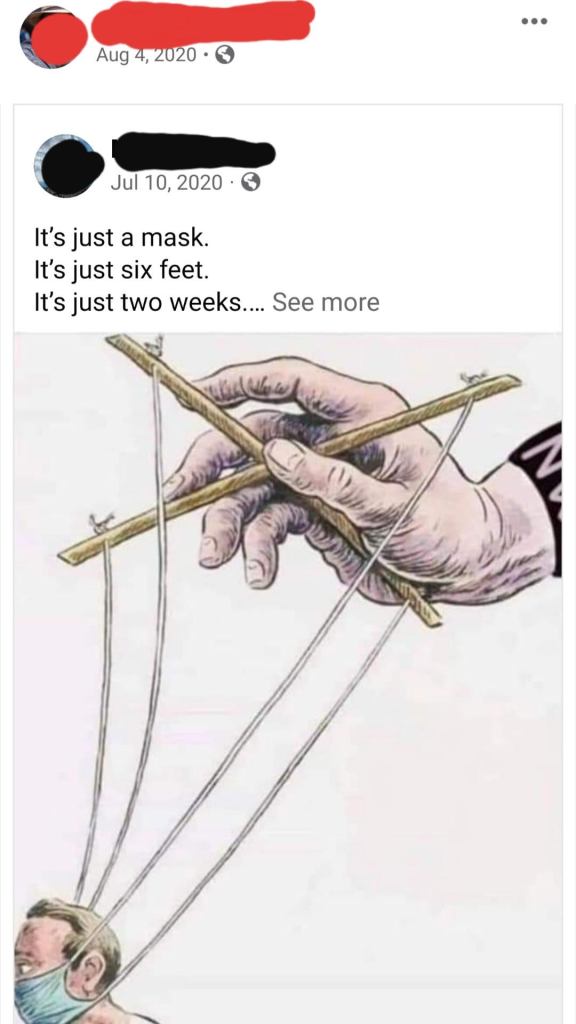
Consider the many theories afloat about Covid-19.  Scrolling through the Facebook posts of anti-maskers and anti-vaxxers curated on the Herman Cain Award subreddit, one is struck by the sheer quantity of conspiratorial memes circulating among networks of likeminded Facebook friends. The Covid pandemic is variously presented as the product of a nefarious plot enacted by the Chinese government or by the US government or by the Centers for Disease Control or…the list goes on. Public health measures that have been recommended or mandated at the federal, state or local levels such as quarantining, masking, and vaccinating are similarly condemned as elements of the conspiratorial machinations of Anthony Fauci or Bill Gates (or both of them working in cahoots), of profiteering Big Pharma, of collectivizing communists, of Medicare-For-All socialists, and so on.

As Richard Hofstadter demonstrated in his famous essay, “The Paranoid Style in American Politics,” the United States has from very early in its history provided fertile ground for the organized circulation of political rhetoric warning in shrill tones about the impending takeover of the political system. Alleged nefarious groups named in these conspiracy theories included the Illuminati, the Freemasons, papists, Jesuits, anarchists, Jews, international financiers, and communists. 

While the anti-mask and anti-vax conspiracies circulating on Facebook today manifest the characteristics of “heated exaggeration, suspiciousness, and conspiratorial fantasy” which Hofstadter identified as typical of the paranoid style, the sense of what is at stake has changed. It is no longer just constitutional government that seems to be at risk. When you read the conspiratorial warnings available across the ideological spectrum—from QAnon enthusiasts or Trumpist dead-enders or health purists or anti-corporate populists, among others—you get the sense that people feel their very identities to be under threat. Has a threshold been passed that separates the conspiracy-mongers of today from their anti-papist, anti-Masonic forebearers?   

In his book, Empire of Conspiracy: The Culture of Paranoia in Postwar America (2000), Timothy Melley argued that conspiracy thinking fundamentally changed after World War II with the rise of the “information age.” Consumers of electronic mass media became susceptible to what he characterized as a state of “agency panic,” an “intense anxiety about an apparent loss of autonomy or self-control” in the face of pernicious systems of social control acting with a singular will. Notions of secret plots hatched by bands of conspirators aiming at the conquest of political power were increasingly replaced by visions of “whole populations being openly manipulated without their knowledge” through the effects of advertising, schooling, fluoridation, and so on. The USA was ground zero for this new form of conspiratorial thinking because the American embrace of the idea of rugged individualism was so at odds with the reality of an increasingly interdependent society in which self-sufficient farmers were a dying breed.

Empire of Conspiracy was published at the dawn of the surveillance economy ushered in by Google and Facebook. This economy has at the same time systematically perfected the relentless tracking of individual activities and facilitated the exchange of conspiratorial memes and messages lamenting the threats to individual integrity and freedom. Paranoid messages that are likely to attract eyes are moved algorithmically to the top of search results or share lists. The Covid pandemic has only supercharged these developments by boosting mass dependence on the internet and amplifying mass grievance against infringements on individual freedoms. 

The easy response to this internet-fueled conspiratorial dynamic would be to dismiss conspiracy thinking as the paranoid raving of the uneducated and ignorant if it weren’t for the fact that real conspiracies are continually afoot in our political system. One has only to take note of the ever-accelerating revolving door between public officialdom and the lobbying-industrial complex or to monitor the ever-greater lobbying and campaign expenditures of major industries such as Big Pharma or Big Coal or Big Tech to know that well-paid influencers are working diligently with corrupted politicians to poach the common good.

Yet the rising tide of agency panic-driven conspiratorial thinking continually diverts Americans from the true causes of their collective misery into attacks on those few public measures that are in our collective interest. 

It truly is a choice between taking the red pill or the blue pill, as The Matrix meme circulated by so many of the Covid conspiracy Facebook posters suggests. But, against their expectation, taking the red pill would lead to a clear-eyed understanding of how corporate influence peddling diminishes our lives rather than to a revelation that supposed college roommates Bill Gates and Anthony Fauci hatched a conspiracy against our freedoms fifty years ago.

M. Davout, an occasional contributor to Bracing Views, teaches political science at the collegiate level.

Many Decades of the Condor

W.J. Astore

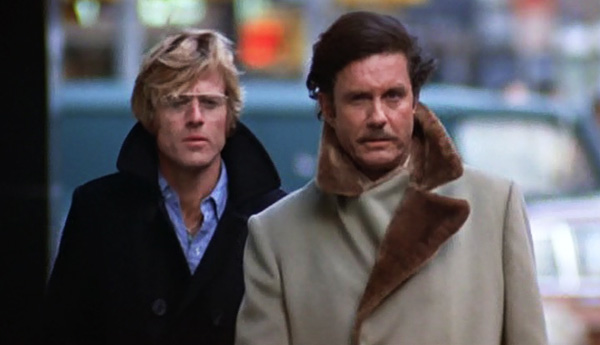
I recently rewatched “Three Days of the Condor” (1975) featuring Robert Redford and Faye Dunaway. It’s a smart and understated spy thriller that takes on the Central Intelligence Agency (CIA) and the deadly games the agency plays in its pursuit of global dominance. In the aftermath of the Vietnam War and the backlash from Richard Nixon and Watergate, not to mention America’s role in overthrowing the Allende government in Chile in 1973, it became acceptable in Hollywood to make films that portrayed the U.S. government as sometimes less than noble in all its pursuits. Condor, the codename for Redford’s character, stumbles across a plot within the CIA to overthrow governments in the Middle East so that U.S. corporations could dominate the oil market, and for that he and his colleagues in the special branch where he works must die. The movie follows his efforts to stay alive among people who will execute their own for the greater good of The Company (the CIA).

At the end (spoiler alert), Redford goes to the New York Times as a whistleblower in an effort both to stay alive and to reveal the nefarious machinations of the CIA. A CIA senior official, played by Cliff Robertson, confronts Redford and asks him a question that is deadly in its implications: Will they print it? Redford is confident the newspaper will, but Robertson, in asking Redford how he can be sure that they will, reminds us that there’s no certainty the “liberal” New York Times will go against the wishes of the CIA.

Robert Redford and Cliff Robertson in “Three Days of the Condor”

This was on my mind today as news broke once again that the CIA is collecting “bulk data” on Americans without Congressional authorization and outside of normal oversight. Well, as some of my students used to say, if you’ve done nothing wrong, you have nothing to fear from the diligent and honest agents of the CIA, right?

There’s a little scene in the movie where Condor laughs at the conceit of the CIA in referring to themselves as the intelligence “community.” A community of powerful and ultra-secretive intelligence agencies — I’m sure we have nothing to fear from such an Orwellian concoction.

Anyway, if you haven’t seen “Three Days of the Condor,” I recommend it. As a bonus, it has one of the most powerful yet understated romantic relationships caught on film, with Redford and Dunaway both superb in portraying two people on the edge who are desperately looking for connection.

When In Doubt, Send Troops

W.J. Astore

On that proverbial table in Washington D.C. where all options are allegedly kept, the one option that’s always used is military escalation. First, the U.S. sent more weaponry to Ukraine. Now, America’s commander-in-chief is sending more troops, according to this news update today from the Boston Globe:

President Biden is sending about 2,000 troops from Fort Bragg, North Carolina, to Poland and Germany this week and sending part of an infantry Stryker squadron of roughly 1,000 troops based in Germany to Romania, a senior administration official said Wednesday.

The military moves come amid stalled talks with Russia over its military buildup at Ukraine’s borders. And they underscore growing fears across Europe that Russian President Vladimir Putin is poised to invade Ukraine — and smaller NATO countries on the eastern flank worry they could be next.

Has Russia given any sign of invading “smaller NATO countries on the eastern flank”? No matter. The solution is obviously to send small contingents of U.S. troops as a sign of resolve. A couple thousand troops split between Poland and Romania will show Vladimir Putin that America means business. (War business, that is.)

Such small troop contingents have negligible military value, so their real significance is in domestic politics. Biden, a typical Democratic president, is forever on guard against accusations of “weakness” vis-a-vis Russia or China or Iran or you-name-it. To minimize such accusations, while keeping the military-industrial complex happy, the go-to option on the table is to send in the weapons and the troops. Who cares about the risk of military escalation and a wider war between major nuclear powers?

One could imagine a different president, a savvier one, winning major international points by offering to defuse tensions between Ukraine and Russia through negotiation. But that option, farfetched as it would be, is never on that table of options kept in Washington. And why Russia would trust the U.S. is beyond me.

Kyiv (Kiev) in Ukraine is roughly 5500 miles from me by airplane. That’s a very long way indeed from what I consider to be my “eastern flank.” Maybe America should practice a new foreign policy in which we learn to mind our own business, or, if you prefer, stay in our own backyard?

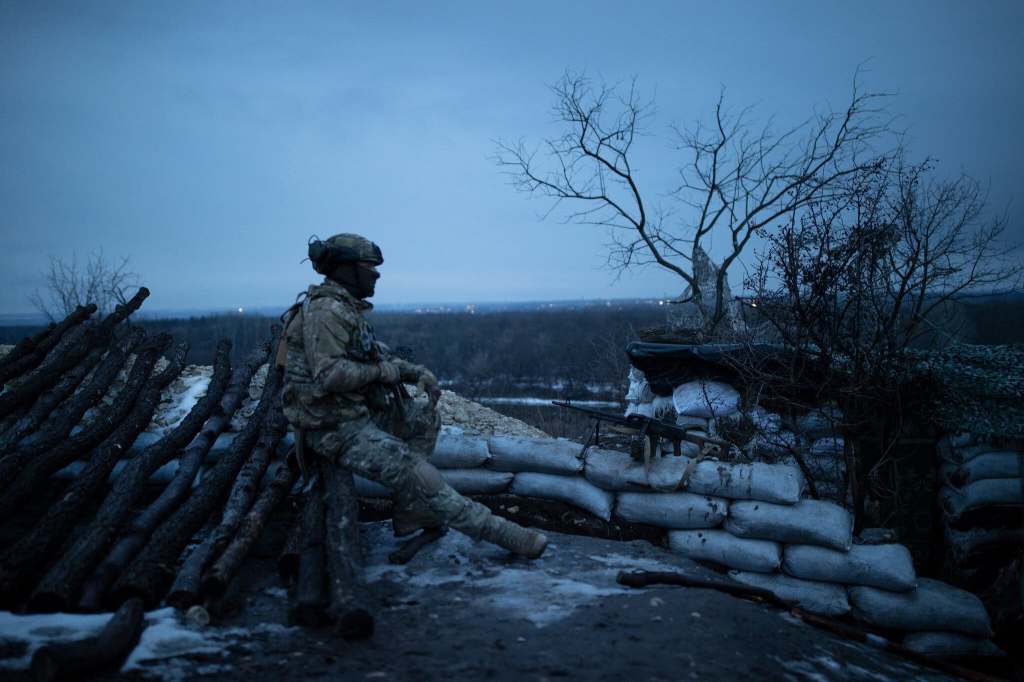
A Ukrainian soldier. One imagines he’s hoping for a peaceful solution. But this is not what I think of as America’s (or NATO’s) eastern flank

Why It’s So Hard to Give Peace A Chance in America

W.J. Astore

It sure is hard to give peace a chance in America, as recent events with Russia and Ukraine show. The Washington consensus is all about weapons and more weapons, of economic sanctions, i.e. economic warfare, of not being seen as a pitiful helpless giant, as Richard Nixon once said during the Vietnam War. America can never stand on the sidelines, even when its national security interests aren’t even threatened. Something must be done, something forceful, something involving troops and weapons and ultimatums that could very well escalate into disaster.

Revealingly, Washington insiders always talk of “all options” being on a metaphorical table, meaning the most violent ones, including war, for the president to choose from. They lie. Because the one option that’s never on that imaginary table is peace.

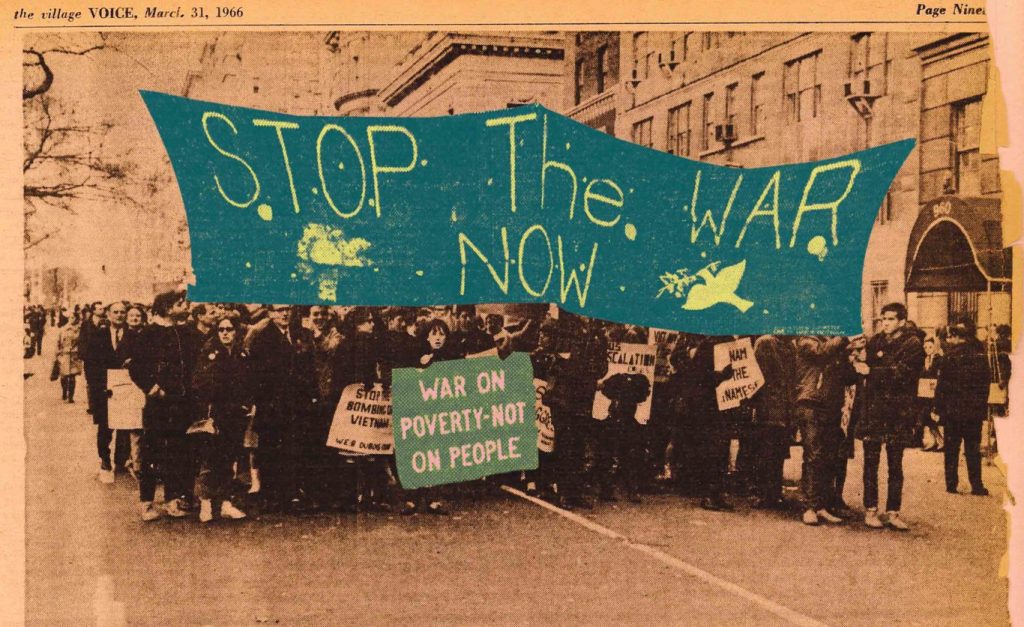
Peacemakers might be the children of God, but perhaps America is more godless than it knows. Or maybe it just worships the god of war, a Pentagod. It’s discouraging to face the obstacles to peace in America, because these obstacles are not going to be removed just by singing songs and writing articles or even by protesting. What is truly needed is a mass movement against war, as we saw during the Vietnam War years, but even that mass movement took years to have an impact. And it was motivated as well by resistance to the draft, which no longer exists.

A short list of the obstacles to peace is sobering indeed:

  • The power of the military-industrial-congressional complex. It doesn’t want to get smaller or less powerful. It thrives off weaponry and wars. It has no interest in peace.
  • The mainstream media. It’s owned by major corporations and advances corporate agendas. It smears antiwar voices as naive (at best) and often as traitorous and/or weak. Antiwar voices simply aren’t heard on the MSM. Instead, retired colonels and generals, as well as senior ex-CIA officials, are put forward as unbiased voices of reason as they promote the most hawkish lines.
  • The absence of a draft. Let’s face it: the youth of America are much more likely to resist war if they have to risk their lives. But America has an “all volunteer force,” and if these volunteers are sent off to war, that’s what they signed up for. Right?
  • American culture in general is suffused with violence and misinformed about the world, especially America’s imperial role in it. Myths about American exceptionalism and beliefs about the troops as freedom-fighters serve to inhibit antiwar criticism and protests.
  • The difficulty of launching any kind of sustained protest nowadays. Ready to gather in the streets to march against war? Sorry, do you have a permit? Covid restrictions may prevent you from gathering. And maybe we’ll move you to a special “free speech” zone, which I assure you will be far away from media cameras. What good is protesting if you gain no traction because few people see you and the media ignores you?

Don’t get me wrong. I’m not saying it’s impossible to give peace a chance. Just that it’s very difficult, given the power structures of our society and our collective national ethos. It’s mind-boggling that America has so many agencies for “defense” and “intelligence.” We have the Pentagon, the Department of Homeland Security (a domestic mini-Pentagon), something like 17 intelligence agencies like the CIA and NSA, the list goes on. State and local police forces are now heavily militarized and generally unsympathetic to your right to assemble and to protest vigorously. Get a job, commie peacenik!

Meanwhile, society’s heroes are U.S. military troops, or the “thin blue line” of police that “protect and serve.” Those who are committed to peace are generally not viewed as heroes, at least not by society at large. Again, Christ may have seen peacemakers as God’s children, but in the U.S. there’s a preference (judging by gun sales) for Colt Peacemakers.

How to overcome these obstacles to truly give peace a chance is perhaps the most pressing issue of our age, given the risk of war going nuclear and ending most life on our planet. Readers, I don’t have easy answers, but I’d begin with Ike’s warning about the military-industrial complex in 1961, JFK’s peace speech in 1963, MLK’s speech against the Vietnam War on April 4th, 1967, perhaps even John Lennon’s song “Imagine.”

How do we imagine — and then create — a new reality that favors peace instead of war? How do we pursue a just and lasting peace with ourselves and with all nations that Abraham Lincoln spoke of near the end of the U.S. Civil War?

The words are there. The vision is there. Tapping the nobility of Lincoln, Ike, JFK, and MLK and their antiwar messages is possible. Isn’t it?

As JFK said in his “peace speech,” to believe that war is inevitable is a “dangerous defeatist belief.” I’m with JFK.

The antiwar movement helped to stop the disastrous Vietnam War, but it sure wasn’t easy