Stop the MADness

W.J. Astore

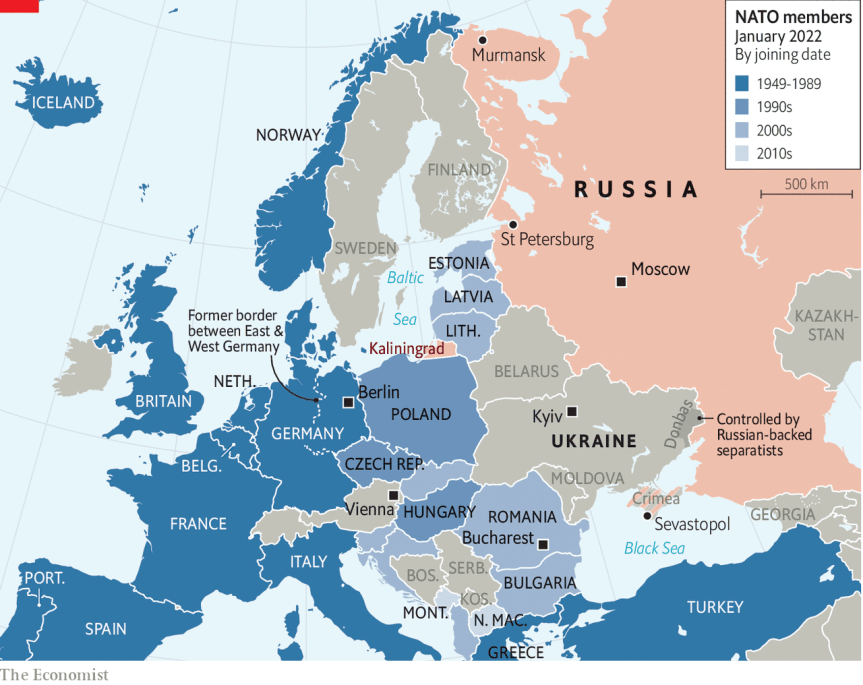
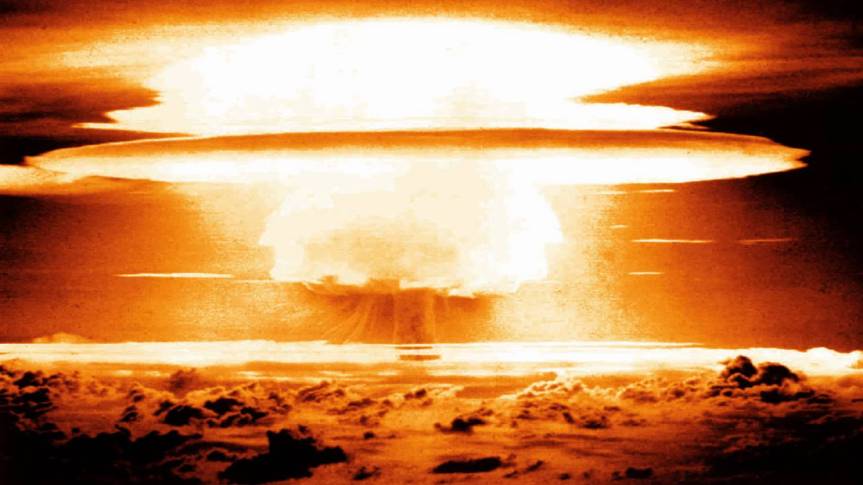
Mutually Assured Destruction (MAD) is making a comeback as the Pentagon hypes a new Cold War with China and Russia. Threat inflation is a big part of this “new” war, just as it was in the old one. So too is greed. There’s much money to be made (a trillion or more dollars, perhaps) in building new nuclear missiles and bombers, even though these weapons represent incipient holocausts.

We need to stop this MADness. There is no need for a new Cold War, and there is no need for new nuclear weapons, weapons that could very well destroy human civilization and most of life on our planet.

This is the subject of my latest article at TomDispatch.com. What follows is an excerpt. I encourage you to read the article in its entirety here.

Stop the MADness. Seriously.

Only Fools Replay Doomsday

In the early 1960s, at the height of America’s original Cold War with the Soviet Union, my old service branch, the Air Force, sought to build 10,000 land-based nuclear missiles. These were intended to augment the hundreds of nuclear bombers it already had, like the B-52s featured so memorably in the movie Dr. Strangelove. Predictably, massive future overkill was justified in the name of “deterrence,” though the nuclear war plan in force back then was more about obliteration. It featured a devastating attack on the Soviet Union and communist China that would kill an estimated 600 million people in six months (the equivalent of 100 Holocausts, notes Daniel Ellsberg in his book, The Doomsday Machine). Slightly saner heads finally prevailed — in the sense that the Air Force eventually got “only” 1,000 of those Minuteman nuclear missiles.

Despite the strategic arms limitation talks between the U.S. and the Soviet Union, the dire threat of nuclear Armageddon persisted, reaching a fresh peak in the 1980s during Ronald Reagan’s presidency. At the time, he memorably declared the Soviet Union to be an “evil empire,” while nuclear-capable Pershing II and ground-launched cruise missiles were rushed to Europe. At that same moment, more than a few Europeans, joined by some Americans, took to the streets, calling for a nuclear freeze— an end to new nuclear weapons and the destabilizing deployment of the ones that already existed. If only…

It was in this heady environment that, in uniform, I found myself working in the ultimate nuclear redoubt of the Cold War. I was under 2,000 feet of solid granite in a North American Aerospace Defense (NORAD) command post built into Cheyenne Mountain at the southern end of the Colorado front range that includes Pikes Peak. When off-duty, I used to hike up a trail that put me roughly level with the top of Cheyenne Mountain. There, I saw it from a fresh perspective, with all its antennas blinking, ready to receive and relay warnings and commands that could have ended in my annihilation in a Soviet first strike or retaliatory counterstrike.

Yet, to be honest, I didn’t give much thought to the possibility of Armageddon. As a young Air Force lieutenant, I was caught up in the minuscule role I was playing in an unimaginably powerful military machine. And as a hiker out of uniform, I would always do my best to enjoy the bracing air, the bright sunshine, and the deep blue skies as I climbed near the timberline in those Colorado mountains. Surrounded by such natural grandeur, I chose not to give more than a moment’s thought to the nightmarish idea that I might be standing at ground zero of the opening act of World War III.  Because there was one thing I knew with certainty: if the next war went nuclear, whether I was on-duty under the mountain or off-duty hiking nearby, I was certainly going to be dead.

Then came 1991 and the collapse of the Soviet Union. The Cold War was over! America had won! Rather than nightmares of the Red Storm Rising sort that novelist Tom Clancy had imagined or Hollywood’s Red Dawn in which there was an actual communist invasion of this country, we could now dream of “peace dividends,” of America becoming a normal country in normal times.

It was, as the phrase went, “morning again in America” — or, at least, it could have been. Yet here I sit, 30 years later, at sea level rather than near the timberline, stunned by the resurgence of a twenty-first-century version of anticommunist hysteria and at the idea of a new cold war with Russia, the rump version of the Soviet Union of my younger days, joined by an emerging China, both still ostensibly conspiring to endanger our national security, or so experts in and out of the Pentagon tell us.

Excuse me while my youthful 28-year-old self asks my cranky 58-year-old self a few questions: What the hell happened? Dammit, we won the Cold War three decades ago. Decisively so! How, then, could we have allowed a new one to emerge? Why would any sane nation want to refight a war that it had already won at enormous cost? Who in their right mind would want to hit the “replay” button on such a costly, potentially cataclysmic strategic paradigm as deterrence through MAD, or mutually assured destruction?

Please read the rest of my article here.

Air Force Core Values

W.J. Astore

I was thinking today about my old service branch’s core values. No — not “more fighters, more bombers, more missiles” or “put bombs on target” or “jet noise is the sound of freedom” or “show me the money!” or that old Strategic Air Command classic, “peace is our profession.” No — the core values all airmen are supposed to uphold — integrity first, service before self, and excellence in all we do, in that order, sometimes abbreviated as integrity, service, excellence. How’s the Air Force doing here?

Not well, I’m afraid. Think of “integrity,” which I think of as truth-telling. Over the last 20 years, and indeed over the life of the service, going back to 1947 and before, the Air Force has consistently overestimated the accuracy of its bombing and consistently underestimated the number of civilians and non-combatants killed by that bombing. And that’s putting it charitably. In reality, the Air Force has conspired to advance an image of airpower as surgical and precise when it clearly isn’t, and indeed never has been. My old service branch advances this image because it’s good for the Air Force. It’s really that simple. Such image-making, i.e. lying, may be good for the Air Force budget, but it isn’t good for integrity. Nor is it good for America or those unfortunates on the receiving end of U.S. munitions.

Turning to “service before self,” I think of a system that when I served often stressed and rewarded self before service. For example, the promotion system in the military was structured to reward the hard-chargers, the overachievers, Type-A personalities, the thrusters and the true believers. Perhaps this is true of most bureaucracies, but the emphasis on ticket-punching and hoop-jumping in the Air Force was conducive to a narrow form of achievement in which “service” played second fiddle, when it played at all. Another way of putting it is that a certain kind of personal selfishness is more than acceptable as long as it advances institutional goals and agendas — a quite narrow form of service, if one is again being charitable.

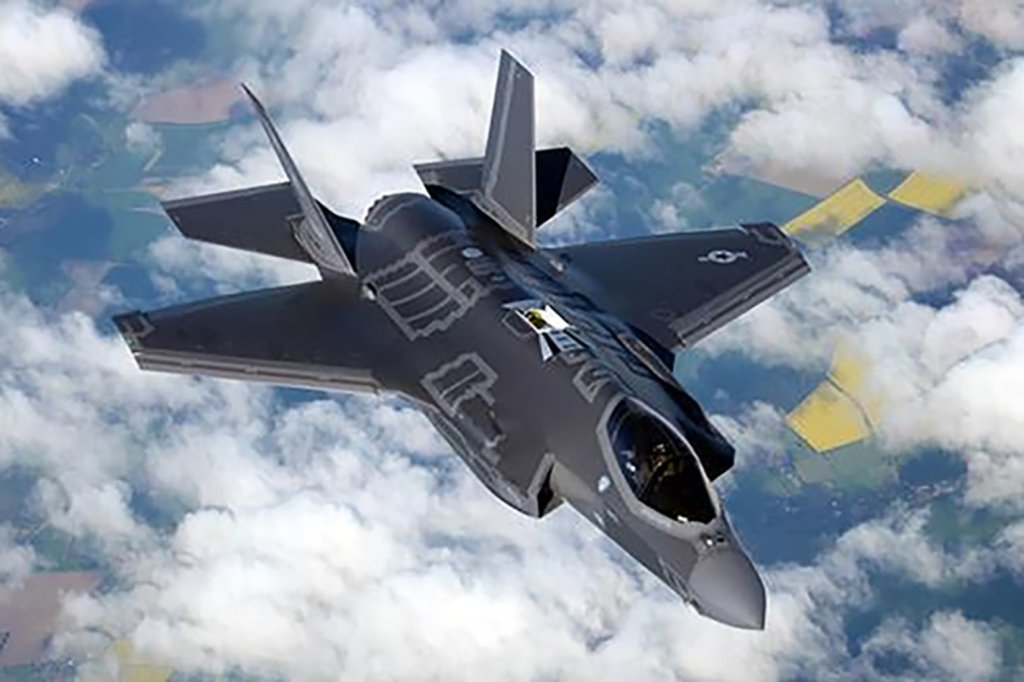
And now we come to “excellence in all we do,” which brings to mind all kinds of disasters, such as drone strikes that kill innocents, or wayward generals, or cheating nuclear missile crews, and so on. But I’d like to focus on recent procurement practices, such as the lamentable F-35 jet fighter, which was supposed to be a fairly low-cost, high-availability fighter but which even the Air Force Chief of Staff now compares to a Ferrari, i.e. super-expensive and often in the shop. From tankers that can’t refuel to fighter planes that can’t shoot straight to nuclear bombers and missiles that the country (and, for that matter, humanity) simply doesn’t need, the Air Force’s record of excellence is spotty indeed.

What are we to do with a service that is so unwilling or unable to live up to its core values? Well, as usual, accountability and punishment are out of the question. I guess we’ll just have to give the Air Force more money while hoping it’ll reform itself, because you know that strategy always works.

The F-35 “Ferrari”: It costs a lot and is often in the shop, but it looks kinda sexy. Too bad the F-35 was supposed to be a reliable workhorse, not a temperamental stallion. Interestingly, the inspiration for the Ferrari symbol of a prancing horse came from an Italian fighter pilot during World War I.

America Needs A Can’t Do Military

W.J. Astore

“Can-do” is an attitude that’s common, indeed obligatory, in the U.S. military. “Can’t do” is for quitters, for losers, for the “whiskey deltas” (weak dicks) who don’t have “the right stuff” to succeed. Yet I’d argue the U.S. military could use a few good men and women who are willing to say “can’t do,” not because they’re losers or lazy or otherwise “weak,” but because they’re smart and willing to speak uncomfortable truths.

“Saluting smartly” goes along with a “can-do” attitude. But was it sensible to salute smartly and invade Afghanistan and seek to remake a complex and decentralized tribal society into a centralized pseudo-democracy? Was it sensible to invade and occupy Iraq, disband its army, and seek to remake an ethnically and religiously fractured society, previously controlled by an authoritarian dictator, into a centralized pseudo-democracy? And by “remake,” I mean imposing a new government by often violent means by outsiders (yes, that’s us). Of course it wasn’t sensible, as events proved. These were “can’t do” scenarios, and never-should-have-done wars, and the U.S. military should have said so, and loudly, rather than saluting smartly and lying year after year about “progress.”

Sometimes, integrity means admitting that you can’t do. It recalls a line from Dirty Harry in “Magnum Force”: A man’s got to know his limitations. Not everything is achievable or even desirable, no matter how much money and “Hooah!” spirit you throw at the problem.

But officers in the military don’t get promoted for saying “can’t do,” no matter how sensible the sentiment may be. You’ve got to make it work, or die or lie trying, no matter the folly of it all. Here I recall a weapon system I worked on in the Air Force in the mid-1990s. It was over-budget, under-performing, and also being overtaken by newer, cheaper, technologies that flight crews liked better. But my job (and possibly my future promotion) hinged on refusing to recognize this truth. Instead, I had to do my part to make the “bad” system work — or seem to work.

As I recently wrote to a fellow former Air Force officer: As a captain, I worked on a project that probably should have been canceled. But the pressure on me was to make it work, at least my piece of it. Jobs depended on it. We are a can-do military even when can’t- or shouldn’t-do would be the much wiser course of action.

This fellow officer, also a captain and engineer, sent along this perceptive comment:

I don’t know about your path to promotion, but in my Support Group position, our annual performance reviews and officer promotion path was dependent upon being responsible for an ever expanding budget, year after year. I could never see a situation where being in charge of less compared to the previous year was ever a positive if one wanted to make a career out of military service. It really didn’t matter if the expansion was due to the inclusion of unnecessary spending. After I left active duty it finally sank in that all of the personal/professional incentives are to continually spend more, never to save the taxpayer money. I have since felt that the personal promotion incentive is one of several internal systems that creates the environment that is present; where DoD spending is commonly and fairly criticized for fraud, waste and abuse and why there are few incentives for the military leadership to do a better job of advising the civilian leadership to war less.

So, for example, saying “can’t do” while saving money is often the worst sort of action one could make if you want to get ahead in the military. Saying “can-do” while burning through money and accomplishing nothing but an expansion of next year’s budget is, however, rewarded by the system. You have proven yourself to be a “team player,” irrespective of results.

Of course, what America really needs is not a can- or can’t-do military but rather one with unimpeachable integrity in its oath to the U.S. Constitution. That oath carries with it an obligation to speak the truth, and a willingness to put the truth before conformity and ambition and “going along to get along.”

Our history since 9/11 would have been far different if the U.S. military knew its limitations and was willing to say “can’t do” when it was given unachievable objectives.

All the Insecurity Money Can Buy

Eight years ago, I posted this article about the insecurity America was buying at exorbitant cost. Gobs of money and power are being ceded to the Pentagon, and those “gobs” (truly a technical term) are acting as an accelerant to the worst excesses of the military-industrial complex. We need to remember bribery and cheating scandals, misbehaving generals, contractors that take the money and run while doing shoddy work — and hold them and the system accountable.

But that’s the problem: there is no accountability. As Army LTC Paul Yingling wrote in 2007, a private who loses a rifle suffers far harsher punishment than a general who loses a war. Indeed, generals who lose wars retire with six-figure pensions, then take seven-figure positions with various weapons makers, and/or they become “neutral” commentators on mainstream media networks like NBC.

The only people punished, besides occasional sad sack privates, are courageous whistle blowers like Daniel Hale.

An unaccountable and often mendacious government far precedes the excesses of Trump. Yet we are encouraged to fixate on the Trumpist threat while ignoring all the sins and excesses that came before him and which still persist, and indeed thrive, after him. And that simply isn’t good enough.

wjastore's avatarBracing Views

It's not nice to fool with nuclear missiles It’s not nice to fool with nuclear missiles

W.J. Astore

The United States spends nearly a trillion dollars a year on national defense, to include wars, homeland security, a bewildering array of intelligence agencies, and the maintenance of nuclear weapons.  Are we buying greater security with all this money?

Consider the following fact.  A private contractor hired to vet security clearances for US intelligence agencies has been accused of faulty and incomplete background checks in 665,000 cases.  Yes, you read that right.  More than half a million background checks for security clearances were not performed properly.  Doesn’t that make you feel safer?

Meanwhile, our nuclear forces have been bedeviled by scandal and mismanagement.  The latest is a cheating scandal involving 34 nuclear launch officers and the potential compromise of nuclear surety.  Previous scandals include a vice admiral, the deputy commander of US nuclear forces, being relieved of command for…

View original post 406 more words

Friday Morning Thoughts

Here are some old Friday morning thoughts that still seem fresh to me.

The generals are most certainly getting more, and more, and more. Meanwhile, most Americans have already forgotten (if they ever paid any attention to) the Afghan War. Also, the U.S. government is still pursuing Julian Assange and punishing principled whistle blowers like Daniel Hale with extensive prison time.

And of course we had a pseudo-Reichstag moment a year ago with the Capitol riot; even if it was more cosplay coup than coup, it caught the growing authoritarianism and lawlessness of America, as well as a certain desperation for anything other than the status quo, even if that “anything” is an unprincipled wannabe strongman like Trump.

With both parties compromised by corporate capture, and with Democrats failing to deliver on the most important campaign promises (higher wages, affordable health care, debt relief, and so on), conditions are ripe for a Trumpist revival this fall, even as Biden approaches his 80th birthday.

Readers, what do you think on this Friday?

wjastore's avatarBracing Views

rocco Johnny Rocco (with gun) wants more

W.J. Astore

A few thoughts on this Friday morning:

1. Andrew Bacevich at TomDispatch.com describes 24 stories/questions that are being ignored or neglected by the mainstream media as they obsess about Donald Trump. I’d like to add #25 to his list, as follows: Why is everything in America classified? The constant appeal to classification, to secrecy, prevents the discussion of vitally important military and security matters in public.  Is the real target of all this secrecy our rivals and enemies, or is it the American people?

Related to my #25, of course, is the persecution of “whistleblowers” for allegedly violating secrecy.  Under the Obama administration, people were accused of sedition and treason when their real “crime” was trying to keep the American people informed about what their government is really doing.

In short, when did the USA become the former Soviet Union, with its…

View original post 814 more words

How to Prevent a Coup in Washington

W.J. Astore

Three retired Army generals recently wrote an op-ed at The Washington Post on their fears of a coup in the aftermath of the next presidential election in 2024. Their scenario: Biden gets reelected, but Trump or a Trump-like candidate refuses to concede. A hyper-partisan military splits, with some units throwing their support to the loser, leading to a coup attempt. The three generals further suggest that the military must act now to prepare for, and thus to prevent, such a coup.

I have several thoughts on this. First, and most obvious, is the military’s oath of office, which is to the U.S. Constitution. If the U.S. military, with all its authority in our society, and all the colossal sums of money we give it, can’t be trusted to honor its oath, then there is truly something fundamentally wrong with its leadership and its ethos. I would suggest immediate public firings and prosecution of any leaders who put political partisanship before the U.S. Constitution and the oath of office.

Second, what’s most striking to me is what these generals don’t say. They talk about partisanship and seem to assume the enemy is solely from the Trumpian wing of the Republican Party. If Trump would just disappear, along with his movement, America would be just fine. Really?

Here’s my take: Partisanship surely does exist, but it needs to be understood. It needs to be connected to America’s disastrous and dishonest wars and also to the greedy and dishonest behavior of the generals. If military veterans are dangerous, it’s because they feel betrayed. They believe their situation is hopeless — and thus many are alienated and angry. A Trump-like figure can exploit this alienation and anger precisely because the Democratic Party is doing so little to help the working classes, including military veterans. (Of course, Republicans are arguably doing even less.)

If you want fewer hyper-partisan veterans, give them something tangible, like higher wages, affordable health care, better job opportunities — some recognition that their sacrifices were not in vain. Show them you’re working to enrich all citizens, not just those who are already in the top 10%, or the top 1% for that matter. 

That said, I want to stress the culpability of the U.S. military in creating the potential conditions for a coup. The warrior ethos of today’s all-volunteer military is corrosive to democratic society. It’s the generals who advanced this warrior ethos, and it’s the generals who accepted, even applauded, the elimination of the draft. They didn’t want a citizen-military that would question the constitutionality of aggressive wars overseas. Now, a few of them admit to worrying about those demobbed “warriors” who’ve learned to believe less in the Constitution and more in the shock and awe of decapitating strikes.

These generals further fail to note the total lack of accountability within the senior leadership of the U.S. military for Iraq and Afghanistan, among other disasters. Indeed, the generals have, almost to a man, cashed in, none more so than General Stanley McChrystal, who actually was fired for cause. The vast majority of today’s generals retire with six-figure pensions and go immediately to work for the military-industrial complex. In place of Cincinnatus or George Washington, their role model is Gordon Gekko.

Want to stop future coup attempts? Admit to veterans that the wars they fought were based on, driven by, and perpetuated with lies. Unite to advance true democratic reforms. Act to ensure all future wars are defensive and authorized only by congressional declaration. And return to the citizen-soldier traditions of Cincinnatus and George Washington. Most of all, seek peace, among ourselves and with all nations.

Cincinnatus surrendered power and went back to the plow. George Washington has been called the American Cincinnatus. Today’s generals are much more fond of cashing in (Image courtesy of ohkylel @twitter)

Reading Defense Contractor Ads

W.J. Astore

I subscribe to a news feed called “Breaking Defense” (the name may be more ironic than the site creators intended). I saw this advertisement today, which sums up much of what is common in America, where jargon substitutes for thought:

Kratos’ next generation unmanned aerial target drones and their capabilities continue to evolve to represent ever changing, evolving threats from near-peer adversaries to best prepare the American warfighter while keeping costs down for the American taxpayer

I know nothing about the company (Kratos), but it does appear to have a good command of Pentagon jargon. Those “near-peer adversaries” (meaning China and Russia, mainly). Those “ever changing, evolving threats.” And of course the almost obligatory appeal to the “warfighter.”

From this ad (and others like it), it’s simply assumed that America will always be at war. There’s also an assumption that Americans fall into two basic categories: warfighters and taxpayers. Warfighters are the doers, the hard men and women on the front lines, deserving of everlasting support and praise, and the taxpayers are there to fund it all and cheer along. Naturally, there’s no mention of “peacemakers.”

If we truly want to keep costs down for the American taxpayer, maybe we shouldn’t buy any of these target drones?

In the same email send-out, here’s a sample of the articles at “Breaking Defense”:


For Space Force, it’s acquisition, acquisition, acquisition: 2022 Preview 

In 2022, the Pentagon will need to see real movement on acquisition reform to reduce long understood vulnerabilities that have been essentially ignored for many years.

The Pentagon’s new strategy might already be behind the times: 2022 Preview 

A Russian invasion of Ukraine could derail the Defense Department’s planning. 

For the Army, looming budgets and multi-domain everything: 2022 Preview 

Here’s the key Army storylines we’ll be tracking at Breaking Defense next year. 

Seems like the “Space Force” will be spending lots of money in 2022 due to “vulnerabilities.” Meanwhile, a Russian invasion of Ukraine might “derail” the DoD’s “new strategy.” And the Army is looking at “multi-domains,” which I assume is a smart way for the Army to expand its budgetary reach in the new year.

Nice to know the Pentagon has a new strategy, but how could a Russian incursion into Ukraine derail it? If the U.S. invaded Mexico, would that derail Russia’s defense planning? Or China’s?

Here’s another ad from a different “Breaking Defense” send-out.

Systel’s fully rugged computing solutions are purpose-built for the most demanding environments and workloads. High performance, SWaP-optimized, single LRU solutions supporting edge AI and force-protection missions. MOSA/CMOA, SAVE, and GCIA-compliant. Fully rugged, configurable, and modular. Centralized sensor ingest and data fusion support.

Ah, the good old days of military acronyms! Again, I know nothing about Systel, but the company has a solid command of opaque acronyms. Even the ad has redundancy in the sense that it mentions “fully rugged” twice! Note the mission of “force-protection,” as in keeping U.S. “warfighters” safe while in harm’s way.

Maybe we should keep our troops safe by not putting them in harm’s way, unless the defense of America truly requires it?

There’s nothing special about these ads or stories, which is why I cite them here. Just another day in the American empire of warfighters buying weapons systems to force-protect and confront near-peer threats out to exploit our vulnerabilities across multiple domains. Or, put simply, multi-domain everything!

Happy New Year, everyone.

Nine Rows of Ribbons!

One of the more popular articles at BV is this one on the U.S. military’s propensity to give everyone a trophy — in the form of lots and lots of ribbons — regardless of results. Illustrative of this are the uniforms of America’s generals and admirals, which look much like over-decorated Christmas trees. Shouldn’t these officers be busy, well, leading, rather than collecting ribbons and badges and other, mostly empty, symbols of praise? Often, ribbons and medals simply show that someone’s been there rather than done that. Military members get awards for changing station, or simply for enlisting, or for time served in uniform. It’s often all show, no go, to go along with no clear wins in any major war since World War II.

There’s little reason for most of these ribbons and medals and badges. They are a sign of grade inflation, of course, but also of severe narcissism and serious self-deception.

It’s time the U.S. military stopped chasing bits of cloth and metal and started focusing on defending the U.S. Constitution.

wjastore's avatarBracing Views

General Robert Neller, the Commandant of the Marine Corps, is in the news since he told Marines to get ready for a big fight.  This doesn’t really alarm me.  A military exists to be ready to fight, and the Marines place a premium on combat readiness.  No — what bothers me is the nine rows of ribbons General Neller is sporting on his uniform.

marine He may need a bigger chest for all those ribbons

And compared to the other services (Army, Navy, and Air Force), the Marines are usually the most reluctant to hand out ribbons freely.

I wrote about this back in 2007: why medals and metrics in the U.S. military mislead. A big offender back then was General David Petraeus, whose uniform was festooned with ribbons and badges of all kinds, most of them of the “been there” rather than “done that” variety.

Petraeus with Broadwell Petraeus: 10 rows…

View original post 155 more words

War Pabulum: The Perils of War as a Master Narrative

I continue to be amazed at the dominance of war in America’s master narrative. “War is a force that gives us meaning,” notes Chris Hedges in his book by that title. Even nuclear war, apparently, as America pursues new nuclear bombers, submarines, and missiles at a cost approaching $2 trillion over the next 30 years.

The whole idea of nuclear “modernization” is insane; it’s like modernizing the methods of the Holocaust and broadening them on a planetary scale. Of course, Congress looks at nuclear weapons as job creators, as if we can’t spend money on better schools or health care or renewable energy.

War will always find a way in America, or so it seems. If we’re truly looking for New Year’s resolutions, how about saving the planet, and trillions of dollars, by resolving to work toward the elimination of nuclear weapons? Because “us” versus “them” will make no sense once those nuclear warheads start exploding.

wjastore's avatarBracing Views

IMG_0919 Photo by Paul Nadar (1891), from a French postcard

W.J. Astore

I was reading the novelist Ursula K. Le Guin and came across the following commentary by her:

“A hero whose heroism consists of killing people is uninteresting to me, and I detest the hormonal war orgies of our visual media … War as a moral metaphor is limited, limiting, and dangerous.  By reducing the choices of action to ‘a war against’ whatever-it-is, you divide the world into Me or Us (good) and Them or It (bad) and reduce the ethical complexity and moral richness of our life to Yes/No, On/Off.  This is puerile, misleading, and degrading.  In stories, it evades any solution but violence and offers the reader mere infantile reassurance.  All too often the heroes of such fantasies behave exactly as the villains do, acting with mindless violence, but the hero is on the ‘right’ side and therefore…

View original post 501 more words

Bombing Kills Lots of Innocents: Who Knew?

W.J. Astore

Extensive U.S. bombing overseas kills lots of innocent people: who knew?

So this blinding statement of the obvious popped up in my email today from the New York Times:

A five-year Times investigation found that the U.S. air wars in Iraq, Syria and Afghanistan led to thousands of civilian deaths.
Hidden Pentagon records show a pattern of failures in U.S. airstrikes — a sharp contrast to the American government’s image of war waged by all-seeing drones and precision bombs.
The military’s own confidential assessments of over 1,300 reports of civilian casualties since 2014, obtained by The Times, lays bare how the air war has been marked by deeply flawed intelligence, rushed and often imprecise targeting and the deaths of thousands of civilians, many of them children. None of these failures resulted in a finding of wrongdoing. We are making these Pentagon records public.
This is the first of a two-part investigation. Here are the key takeaways.

Finally, at the end of 2021, the Times is willing to speak up against America’s murderous regimen of bombing overseas. I wrote about this myself at this site in 2016 and 2017, and I’m hardly the only person to have pointed this out. At TomDispatch.com, Tom Engelhardt has been reporting for years and years on wedding parties being wiped out by U.S. bombing missions based on “faulty intelligence.” The mainstream media have largely played down these atrocities until now, when the war in Afghanistan is finally (mostly) over, at least for the U.S.

As I wrote in 2013 for TomDispatch.com, airpower is neither cheap nor surgical nor decisive. Indeed, because it provides an illusion of effectiveness, and because America dominates the “high ground” of the air, all of this “precision” bombing serves to keep America in wars for far longer than is tenable on tactical grounds. Imagine how long the Iraq and Afghan wars would have lasted if America didn’t dominate the air, if the U.S. military had to rely exclusively on ground troops, and thus had suffered much higher casualties in ground combat. My guess is that these wars would have ended earlier, but “progress” could always be faked with all those statistics of bombs dropped and alleged “high value targets” eliminated.

I suppose it’s good to see the “liberal” New York Times cover this issue of murderous bombing after 20 years of the global war on terror. The question remains: why did it take them two decades to cover this issue in depth?

Presidents become “presidential” when they bomb other countries. Meanwhile, Julian Assange rots in prison. Maybe he needs to bomb a few countries?

Update (12/21/21)

More notes on U.S. bombing and the Times report, courtesy of ReThink Round Up:

“Not a single file [from the military about the bombings] includes a finding of wrongdoing. An effort within the military to find lessons learned to prevent future civilian harm was suppressed. An analyst who captures strike imagery even told the Times that superior officers would often “tell the cameras to look somewhere else” because “they knew if they’d just hit a bad target.”

Responding to the report, a Pentagon spokesperson acknowledged that preventing civilian deaths is not just a “moral imperative” but a strategic issue because civilian casualties can fuel recruiting for extremist groups. [New York Times/ Azmat Khan]”

*****

Again, to state the obvious here:

1. There’s no accountability in the system. Murderous mistakes are covered up and no one is held responsible (“tell the cameras to look somewhere else”).

2. The bombing attacks were counterproductive. Guess what? Killing innocents creates more “terrorists.” Who knew?

Murderous inaccuracy, making matters worse, with no accountability: WTF? So much for America’s “awesome” military, as Andrew Bacevich writes about today at TomDispatch.com.

How Awesome Is “Awesome”?