What Is the Coronavirus Really Changing?

smalls
Have the courage to speak up and act, America

W.J. Astore

On the surface, our lives are changing.  We’re staying home.  We’re practicing social distancing.  We’re wearing masks when we go out.  Many of us have lost jobs and maybe our health insurance as well.  People are suffering and dying.  I don’t want to diminish any of this.

Yet how much is really changing?  Two of my dad’s sayings come to mind: the more things change, the more they stay the same; and the rich get richer and the poor, poorer.  The latter saying defines our coronaviral moment.

The Trump/Congressional stimulus package favors corporations, banks, financiers, and other forms of big business.  Ordinary people will be lucky to see a one-time $1200 check, maybe not until this summer.  Once again, the trickle-down philosophy rules.

The stimulus bill itself is a grab-bag of special interest legislation.  Did you know there’s a “provision in the $2 trillion coronavirus relief package [that] allows Education Secretary Betsy DeVos to seek congressional approval to waive parts of the federal law protecting students with disabilities”?  Crises are always a good time to attack the most vulnerable while extending the privileges of the most favored.

Meanwhile, truth-tellers are being vilified or punished.  Did you hear that “Dr. Anthony Fauci has been given added security after receiving threats”?  His “sin” has been to tell the truth about the perils of COVID-19, thereby contradicting all the spin and happy-talk of the Trump administration.  That pisses off the most fanatical of Trump’s cult, leading to threats against a medical doctor who’s trying his best to save lives.

Speaking of being punished, consider this report: “The Navy removed the captain of the aircraft carrier Theodore Roosevelt, saying an outbreak of the virus aboard his ship had ‘overwhelmed his ability to act professionally.’ Days earlier, Capt. Brett Crozier had sent a letter asking for help, using an unclassified email system.”  According to Reuters, the move could have a “chilling effect on others in the Navy looking to speak up about issues they are facing at a time when the Pentagon is withholding some of the more detailed data about coronavirus infections for fear of undermining the perception of American military readiness for a crisis or conflict.”

Here’s what Navy Captain Crozier had to say before he was relieved of command: “We are not at war. Sailors do not need to die. If we do not act now, we are failing to properly take care of our most trusted asset – our sailors.”

Crozier made two “mistakes” here: he cared too much about his sailors while highlighting the uncaring nature of his chain of command; and he dared to say “We are not at war,” when the accepted wisdom is that America is always at war (how else to justify gargantuan “defense” budgets?).  By embarrassing a callous and mercenary military abetted by the Trump administration, Crozier had to go.  And as he left his ship for the last time, his crew chanted his name in a rousing sendoff.

Today’s final lesson to illustrate how “the more things change, the more they stay the same”: the story of Christian Smalls, a brave Amazon manager who spoke out against unsafe conditions at a fulfillment center.  For his honesty, Smalls was fired by Amazon, which then considered smearing him as not smart or articulate in a leaked memo.  Smalls just happens to be Black, so Amazon resorted to racist words (not articulate, not smart) to imply he had nothing to say of any value.  Interesting that Smalls worked for Amazon for five years but only became dumb and inarticulate when he began to protest unsafe conditions related to the spread of COVID-19.  I watched Smalls in an interview, and he made a great suggestion: stop clicking and buying from Amazon, America.  That’s the only language Jeff Bezos understands.

I’ll close with some words of wisdom from one of my readers.  This is what she had to say:

No reason to complain however, we are the lucky ones.  As with all pandemics, it will be the poorest and weakest in the pecking order who will bear the brunt.  People in countries engulfed by war, refugee camps, metropolitan slums, prisoners in overcrowded prisons stand no chance against this medieval plague.

Excuse my French: Plus ça change, plus c’est la même chose.

Time to Change America

00EARTHRISE1-superJumbo
There’s only one Spaceship Earth

W.J. Astore

In my latest article for TomDispatch.com, I argue that the coronavirus crisis provides an opportunity to reimagine America.  Please read the entire article at TomDispatch; what follows is an extended excerpt.  Thanks!

This should be a time for a genuinely new approach, one fit for a world of rising disruption and disaster, one that would define a new, more democratic, less bellicose America. To that end, here are seven suggestions, focusing — since I’m a retired military officer — mainly on the U.S. military, a subject that continues to preoccupy me, especially since, at present, that military and the rest of the national security state swallow up roughly 60% of federal discretionary spending:

1. If ever there was a time to reduce our massive and wasteful military spending, this is it. There was never, for example, any sense in investing up to $1.7 trillion over the next 30 years to “modernize” America’s nuclear arsenal. (Why are new weapons needed to exterminate humanity when the “old” ones still work just fine?) Hundreds of stealth fighters and bombers — it’s estimated that Lockheed Martin’s disappointing F-35 jet fighter alone will cost $1.5 trillion over its life span — do nothing to secure us from pandemics, the devastating effects of climate change, or other all-too-pressing threats. Such weaponry only emboldens a militaristic and chauvinistic foreign policy that will facilitate yet more wars and blowback problems of every sort. And speaking of wars, isn’t it finally time to end U.S. involvement in Iraq and Afghanistan? More than $6 trillion has already been wasted on those wars and, in this time of global peril, even more is being wasted on this country’s forever conflicts across the Greater Middle East and Africa. (Roughly $4 billion a month continues to be spent on Afghanistan alone, despite all the talk about “peace” there.)

2. Along with ending profligate weapons programs and quagmire wars, isn’t it time for the U.S. to begin dramatically reducing its military “footprint” on this planet? Roughly 800 U.S. military bases circle the globe in a historically unprecedented fashion at a yearly cost somewhere north of $100 billion. Cutting such numbers in half over the next decade would be a more than achievable goal. Permanently cutting provocative “war games” in South Korea, Europe, and elsewhere would be no less sensible. Are North Korea and Russia truly deterred by such dramatic displays of destructive military might?

3. Come to think of it, why does the U.S. need the immediate military capacity to fight two major foreign wars simultaneously, as the Pentagon continues to insist we do and plan for, in the name of “defending” our country? Here’s a radical proposal: if you add 70,000 Special Operations forces to 186,000 Marine Corps personnel, the U.S. already possesses a potent quick-strike force of roughly 250,000 troops. Now, add in the Army’s 82nd and 101st Airborne divisions and the 10th Mountain Division. What you have is more than enough military power to provide for America’s actual national security. All other Army divisions could be reduced to cadres, expandable only if our borders are directly threatened by war. Similarly, restructure the Air Force and Navy to de-emphasize the present “global strike” vision of those services, while getting rid of Donald Trump’s newest service, the Space Force, and the absurdist idea of taking war into low earth orbit. Doesn’t America already have enough war here on this small planet of ours?

4. Bring back the draft, just not for military purposes. Make it part of a national service program for improving America. It’s time for a new Civilian Conservation Corps focused on fostering a Green New Deal. It’s time for a new Works Progress Administration to rebuild America’s infrastructure and reinvigorate our culture, as that organization did in the Great Depression years. It’s time to engage young people in service to this country. Tackling COVID-19 or future pandemics would be far easier if there were quickly trained medical aides who could help free doctors and nurses to focus on the more difficult cases. Tackling climate change will likely require more young men and women fighting forest fires on the west coast, as my dad did while in the CCC — and in a climate-changing world there will be no shortage of other necessary projects to save our planet. Isn’t it time America’s youth answered a call to service? Better yet, isn’t it time we offered them the opportunity to truly put America, rather than themselves, first?

5. And speaking of “America First,” that eternal Trumpian catch-phrase, isn’t it time for all Americans to recognize that global pandemics and climate change make a mockery of walls and go-it-alone nationalism, not to speak of politics that divide, distract, and keep so many down? President Dwight D. Eisenhower once said that only Americans can truly hurt America, but there’s a corollary to that: only Americans can truly save America — by uniting, focusing on our common problems, and uplifting one another. To do so, it’s vitally necessary to put an end to fear-mongering (and warmongering). As President Roosevelt famously said in his first inaugural address in the depths of the Great Depression, “The only thing we have to fear is fear itself.” Fear inhibits our ability to think clearly, to cooperate fully, to change things radically as a community.

6. To cite Yoda, the Jedi master, we must unlearn what we have learned. For example, America’s real heroes shouldn’t be “warriors” who kill or sports stars who throw footballs and dunk basketballs. We’re witnessing our true heroes in action right now: our doctors, nurses, and other medical personnel, together with our first responders, and those workers who stay in grocery stores, pharmacies, and the like and continue to serve us all despite the danger of contracting the coronavirus from customers. They are all selflessly resisting a threat too many of us either didn’t foresee or refused to treat seriously, most notably, of course, President Donald Trump: a pandemic that transcends borders and boundaries. But can Americans transcend the increasingly harsh and divisive borders and boundaries of our own minds? Can we come to work selflessly to save and improve the lives of others? Can we become, in a sense, lovers of humanity?

7. Finally, we must extend our love to encompass nature, our planet. For if we keep treating our lands, our waters, and our skies like a set of trash cans and garbage bins, our children and their children will inherit far harder times than the present moment, hard as it may be.

What these seven suggestions really amount to is rejecting a militarized mindset of aggression and a corporate mindset of exploitation for one that sees humanity and this planet more holistically. Isn’t it time to regain that vision of the earth we shared collectively during the Apollo moon missions: a fragile blue sanctuary floating in the velvety darkness of space, an irreplaceable home to be cared for and respected since there’s no other place for us to go?

In the USA, Life Is Incredibly Cheap

merlin_170974152_1520eff5-5086-4b5a-af30-814a37dd14bb-jumbo
America’s counterfactual leader, hands posed like pistols, telling it like it isn’t

W.J. Astore

The coronavirus has made one thing clear: life is incredibly cheap in the USA.  Or so it seems to our leaders, who are desperate to put America back to work by Easter in two weeks’ time, irrespective of the death toll that would result.  It’s all about getting back to “normal,” keeping the wheels of capitalism rolling along, and the profits rolling in for corporate America.

Capitalism is America’s true national religion, and money is our god.  Our leaders make decisions consistent with that belief system.  And, as Dorothy Day, the famous Catholic activist for the poor, said: “Our problems stem from our acceptance of this filthy, rotten system.”

Worth citing here is Caitlin Johnstone, who in a recent article noted how America’s response to COVID-19 illustrates the pathologies of market-driven capitalism and the politicians who so willingly serve it:

The corporate cronyism of America’s political system has been highlighted with a massive kleptocratic multitrillion-dollar corporate bailout of which actual Americans are only receiving a tiny fraction. Instead of putting that money toward paying people a living wage to stay home during a global pandemic, the overwhelming majority of the money is going to corporations while actual human beings receive a paltry $1,200 (which they won’t even be getting until May at the earliest) at a time of record-smashing unemployment.

America’s capitalism worship has been highlighted with Wall Street Journal headline “Dow Soars More Than 11% In Biggest One-Day Jump Since 1933” running at the exact same time as “Record Rise in Unemployment Claims Halts Historic Run of Job Growth — More than 3 million workers file for jobless benefits as coronavirus hits the economy“. Stocks are booming, Amazon is surging, and mountains of wealth are being transferred to sprawling megacorporations, while actual human beings are terrified of what the future holds.

Nice to know a few are profiting while so many worry, suffer, and die.  But should we be that surprised by how callous America’s leaders are?

I recall reading Daniel Ellsberg’s book on U.S. planning for nuclear war.  Sixty years ago, U.S. leaders were prepared to kill 600 million people (that’s not a typo) in their efforts to “win” the Cold War.  As I wrote about in December 2017:

U.S. nuclear war plans circa 1960 envisioned a simultaneous attack on the USSR and China that would generate 600 million deaths after six months.  As Daniel Ellsberg noted, that is 100 Holocausts.  This plan was to be used even if China hadn’t directly attacked the U.S., i.e. the USSR and China were lumped together as communist bad guys who had to be eliminated together in a general nuclear war.  Only one U.S. general present at the briefing objected to this idea: David M. Shoup, a Marine general and Medal of Honor winner, who also later objected to the Vietnam War.

Notoriously, General William Westmoreland once mused that “The Oriental doesn’t put the same high price on life as does a Westerner.  Life is plentiful.  Life is cheap in the Orient.”  That philosophy helped to justify massive killing of the Vietnamese people (perhaps as many as three million) in a futile quest to “win” the Vietnam War.

Thinking about Westmoreland’s musing in light of our government’s response to COVID-19, as well as past plans for “winning” a nuclear war and prevailing in Vietnam by killing everything that moved, one wonders about which value system truly esteems life.  It sure doesn’t seem to be the “Western” model as espoused by our leaders.

Bonus Lesson: In its daily send out, the New York Times had this article today: FACT CHECK: “Trump’s Baseless Claim That a Recession Would Be Deadlier Than the Coronavirus,” by LINDA QIU.  The opposite is more likely to be true, according to research and experts.

Pandemics and Partisan Politics

download
From the Oval Office: Beware of foreign viruses

W.J. Astore

If ever there was a time to put aside partisan politics, you’d think it would be now, as the United States faces the COVID-19 virus.  (When the American Mecca, Disney World, closes, you know times are tough.)  Instead, partisan politics are raging, especially in the White House, as President Trump implausibly blames his predecessor, Barack Obama, for the chaotic response by the Trump administration.  (Will “Crooked Hillary” be blamed next?)

Americans need to come together, and I think we are; Bernie Sanders gave a fine speech emphasizing science and teamwork as well as compassion and aid for those who lose their jobs and so on.  We need a much better testing regimen and we need to give doctors and health care personnel the resources they need to do their jobs.

But as I read David Lauter (LA Times Essential Politics), I despaired at the games being played as America faces a serious health crisis.  Here’s what Lauter had to say:

The Democrats have made clear what their line of attack will be: As Biden showed, they’re poised to say that while Trump didn’t cause the coronavirus outbreak, he made it worse by cutting government agencies designed to deal with epidemics and by refusing to take the advice of health officials and act aggressively to counter the illness when he could.

What Biden offers voters, Doyle McManus wrote, is a return to normalcy.

Trump has also tipped his hand on his likely response: Portray the disease as a foreign threat.

In his address to the nation Wednesday night, Trump repeatedly used rhetoric of a foreign invasion to describe the virus, as Noah Bierman wrote. His main policy response was to ban Europeans from traveling to the U.S., blaming them for having “seeded” many of the disease outbreaks in this country.

The speech did nothing to calm markets — indeed it roiled them further, as Bierman and Eli Stokols wrote. But it did provide a preview of Trump’s likely path.

Since the first moments of his astonishing political rise, with his opening blast against Mexican rapists, Trump has campaigned against immigrants and foreigners. And, despite much talk about blue-collar workers voting for him because of economic distress, the overwhelming weight of evidence is that opposition to immigration, concern about the changing demographics of the country and a belief that white Americans face discrimination form the biggest factors in predicting a person’s support for Trump.

In 2018, faced with the prospect that Republicans would lose control of the House, Trump tried to turn the election into a referendum on the supposed threat of immigrant caravans moving north through Mexico — a specter that largely evaporated soon after the election.

In 2020, deprived of the chance to campaign on economic prosperity and a rising stock market, it’s near certain that he will return to the theme that has powered his rise.

That approach might not work. His effort failed spectacularly in 2018 as suburban voters turned against Trump in droves. But Democrats would be wise to avoid overconfidence: The history of epidemics is also a history of xenophobia.

It would be a disaster if COVID-19 led to yet more fears of “foreigners,” however defined.

If anything, a threat like COVID-19 should remind us of our common humanity.  We are all vulnerable, and the smart way to meet this threat is to remain calm, to work together, and to listen to the experts.

Sure, the people who’ve botched America’s response so far should be held accountable.  But let’s first and foremost get a grip on the virus itself and stop its spread.  Because one thing is certain: partisan politics won’t stop a pandemic.  It’ll just make a bad situation worse.

A Few Words on the COVID-19 Pandemic

W.J. Astore

COVID-19 is now a pandemic, and each day brings news of cancellations and changes in an attempt to curb its spread, or to slow the rate at which it spreads.

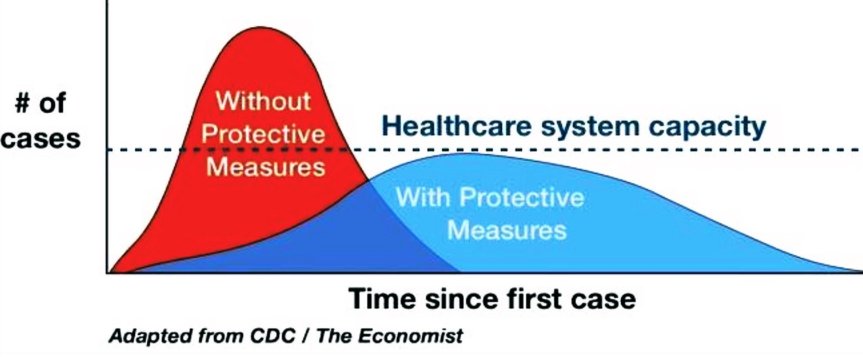
First off, I’m not a medical doctor, but I think I understand the gist of the approach, as represented by this graphic:

ESas8tHVAAAhr_I

If everyone gets sick at once, our healthcare system will be overwhelmed.  But if we take protective measures and slow the rate of transmission, our healthcare system should be able to cope.

What are some of these protective measures?

  1. “Social distancing”: Avoiding crowds and the like.  We see this as schools close and put classes online, the NBA suspends its season, etc.
  2. Quarantine for those who test positive for COVID-19.
  3. Helping to prevent transmission by washing hands vigorously with soap and hot water for 20 seconds and avoiding touching one’s face and eyes.
  4. Cover coughs and sneezes.
  5. Clean and disinfect surfaces.
  6. Wearing a face mask if you believe you are sick.

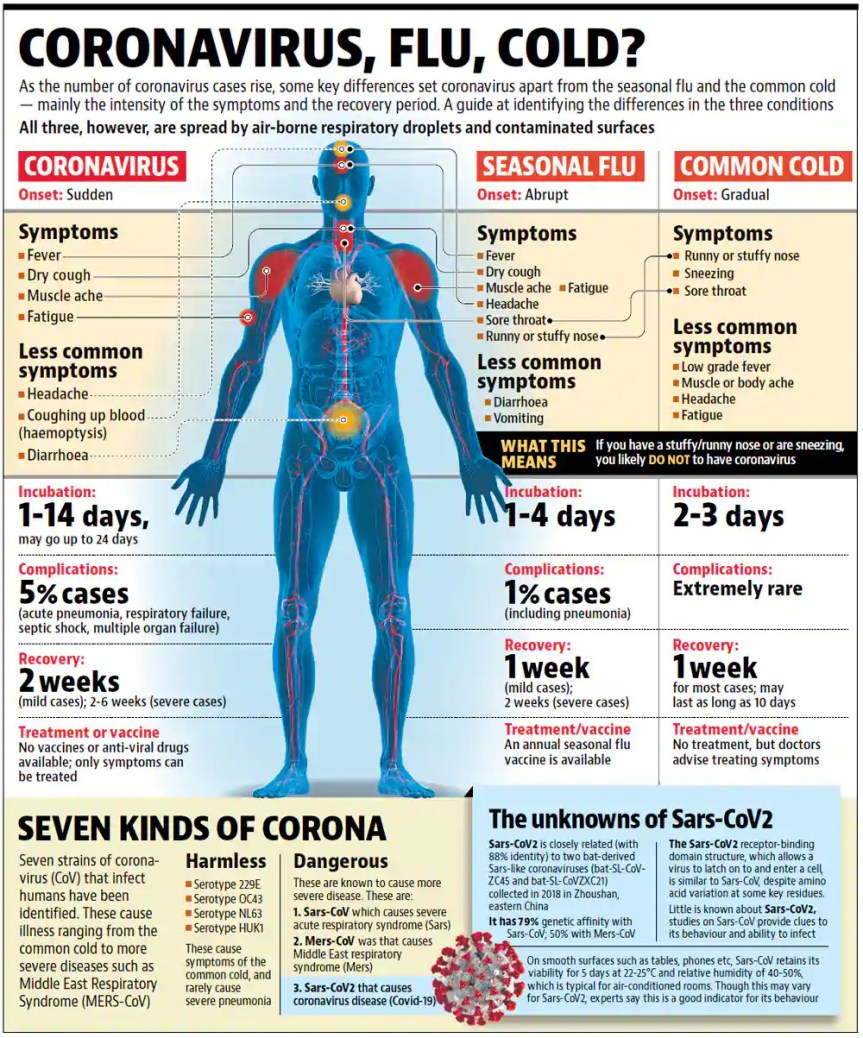
The chart below may be useful in recognizing the symptoms and knowing the difference between COVID-19 versus regular flu and the common cold.  But always defer to your doctor/health care practitioner:

corona

The best site for news on the virus is the CDC, the Centers for Disease Control and Prevention, at cdc.gov.  For example, go to https://www.cdc.gov/coronavirus/2019-ncov/about/prevention.html for tips on how to prevent the transmission of the virus.

The CDC site has many useful tips, including what to do if you are sick:

https://www.cdc.gov/coronavirus/2019-ncov/about/steps-when-sick.html

It’s important to stay informed and to follow the advice of health experts.

The Democratic Debates, Part 10: Goin’ to Carolina

RYOTVLN6JD5PROK2PEQ6QJJIU4
Before things got ugly

W.J. Astore

Last night’s debate from South Carolina had much sound and fury, signifying nothing.  Early on, the moderators lost control, and the candidates (or “contestants,” as Bloomberg called them) interrupted and shouted over each other most of the night.  The overall impression was a Democratic Party without a core message; the overall winner was Donald Trump, who was hardly criticized (and indeed he was praised by Bloomberg for allegedly rebuilding the military).

As usual, the mainstream media (MSM), this time CBS, came off poorly.  As an old friend quipped to me, the MSM is clearly a Russian asset.  The usual “gotcha” questions were aimed at Bernie: Why does Russia support you; Why do you criticize Israel — the implication being that Bernie is a self-hating Jew; Will your programs bankrupt America; Is America ready to elect a socialist; and so on.

The so-called moderates like Amy Klobuchar and Pete Buttigieg were given plenty of time to make their case, and no “gotcha” questions were aimed at them.  Still, no candidate stood out in a positive light, which overall is a win for the front-runner, Bernie Sanders.

In fact, Bernie had a moment of courage (at least for this crowd) when he dared to criticize American foreign policy for its one-sided support of Israel as well as past interventions on the behalf of authoritarian dictators in places like Chile in 1973 as well as Iran in 1953.  Naturally, he had little time to make his points, and his critique of the Saudis and their authoritarian record was drowned out.  But, again, he alone of the candidates on that stage was willing to speak some unpopular truths to the American people, so kudos to him.

All night long, Bernie’s fellow “contestants” tried to paint him as a radical red.  But, as Bernie himself said, what’s so radical about single-payer health care, a higher minimum wage, and free college tuition in state schools?  It’s not like Bernie is calling for a government takeover of the means of production, i.e. real socialism.  However, the debate moderators were not about to make any fine distinctions, or any distinctions at all, between Bernie’s sensible calls for moderate reforms to crony capitalism and rabid communism.  And so the debate went nowhere.

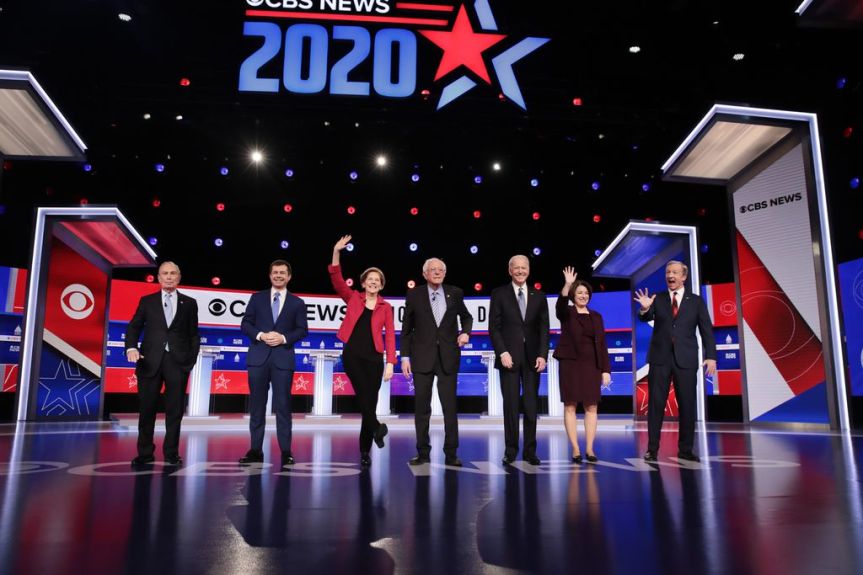
Anyway, here’s a quick take on the seven candidates contestants:

Joe Biden: Once again, Biden came off as angry.  His message, such as it is, was that we need to return to the good old days of Obama.

Mike Bloomberg: Smug, arrogant, and dishonest, Bloomberg almost blurted out that he’d bought the new 2018 Democratic class in Congress.  It was his most honest moment of the night.

Pete Buttigieg: Smug, arrogant, and dishonest, Mayor Pete is a fresh-faced Ted Cruz.  Lyin’ Ted — meet Lyin’ Pete.

Amy Klobuchar: She said the biggest misconception about her was that she’s boring.  I’m not sure that’s a misconception.

Bernie Sanders: Passionate as ever, you can tell Bernie is fed up with these so-called debates.

Tom Steyer: The billionaire with a heart — compared to Bloomberg, at least.  Steyer tried to attack Trump and mentioned climate change, but issues didn’t matter in this sad debate.

Elizabeth Warren: Once again, she nailed Bloomberg for his racism, sexism, and his failure to disclose his tax returns.  She tried to position herself as the reasonable alternative to Bernie for progressive-minded Democrats, but it’s hard to see her surviving Super Tuesday.

If you missed this “debate,” count yourself fortunate.

The Democratic Debates, Part 9: Special Bloomberg Edition

5352
Look at the billionaire wanting to be called on

W.J. Astore

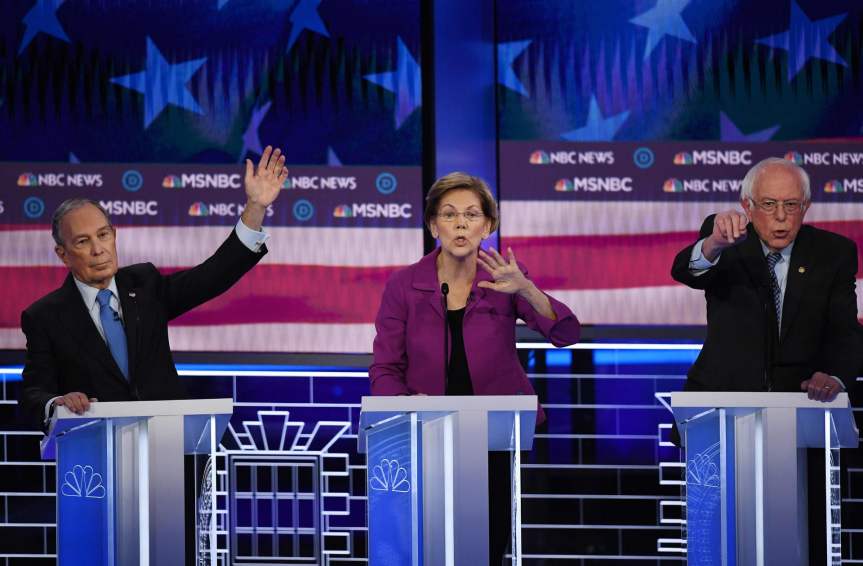
Feeling my own pain, I watched last night’s Democratic debate from Nevada, which I have to say sparkled in the first hour as Elizabeth Warren tore into Mike Bloomberg for his racism and sexism.  Indeed, all our regulars took their shots at the billionaire, but I thought Warren landed the most telling ones.  Throughout the proceedings, Bloomberg largely looked bored; perhaps he was mentally counting the billions he’d saved under Trump’s tax rebate for the richest.

Anyhow, I somehow endured the entire two hours, though the dishonest questioning of Bernie Sanders by the panel put me on edge.  Basically, they hinted he was an un-American socialist-communist who’d soon collapse from another heart attack.  It was that bad.

Here’s how I see the candidates and their performances, post-debate and in alphabetical order:

Joe Biden: I think he profits the most from Bloomberg being on the stage, because Uncle Joe no longer has the worst record.  As the other candidates went after Bloomberg, Biden could wax nostalgically about the good old days under Obama.  He did OK.

Mike Bloomberg: Mayor Mike is a mega-rich old white guy consumed by his own ego and smugness.  He didn’t even bother trying to connect with people.  Money is his connection.

Pete Buttigieg: Mayor Pete is mega-poor young white guy consumed by his own ego and smugness.  As he got into a few tussles with Amy Klobuchar, I found myself rooting for Amy.

Amy Klobuchar: She’s good when she’s delivering prepared lines, but she faltered when asked about her inability to name the president of Mexico.  She was both defensive and disingenuous, not the best combination.

Bernie Sanders: Bernie is always Bernie.  Consistent passion on behalf of workers is his sweet spot.  He hit a home run as he talked about socialism for the rich and rugged individualism for the poor.

Elizabeth Warren: Something about the presence of Bloomberg lit a fire under Warren.  She had someone to torch, and she hit the target.  She also brought her remarks back to people of color on several occasions.  Perhaps her best debate performance yet.

As usual, the mainstream media was awful.  Did you know capitalism is the religion of America?  Apart from Bernie, the candidates professed their belief in capitalism as if the almighty god of America is Mammon.  Then again, our money says “In [this] God We Trust.”  In all seriousness, there’s something truly unseemly about all the money-grubbing in these debates.

Of course, you already know what was missing in this debate.  There were no questions on foreign policy.  None on America’s wars.  None on the military-industrial complex.  None on Iran or North Korea or Venezuela.  There were questions on trade that involved China and Mexico, but that was about it.  But at least climate change was discussed.

Most revealingly of all, the candidates were asked if the candidate with the most delegates should be the party’s nominee, even if that candidate lacked the requisite number for a first ballot win.  All the candidates said, “let the [rigged] process play out,” meaning let the establishment’s super-delegates determine the winner, except for Bernie, who is likely to be the candidate with the most delegates who gets screwed by the DNC this summer.

And there you have it.  Time for a third party and a true political revolution, Bernie.

Bernie Sanders Wins New Hampshire

bernie

W.J. Astore

Bernie Sanders wins New Hampshire — as well as Iowa — and what headline do I see at NBC News?

Bernie Sanders is now the front-runner — and moderates may be too divided to stop him

Why is it necessary to “stop” Bernie Sanders?  What is so radical about Medicare for all, free college tuition, student debt relief, a higher minimum wage, and tax reform that benefits workers?

The next few months are going to be hard to endure for any American with a brain.  For example, Chris Matthews at MSNBC equates Bernie’s democratic socialism with hardcore communism and suggests Bernie’s policies could end with him being executed in Central Park.  No — I’m not kidding!


In another delusional MSNBC video, Bernie’s supporters are compared to Nazi Brownshirts:

Chuck Todd Cites Quote Calling Sanders Supporters “Digital Brownshirt Brigade”

As covered here at Real Clear Politics.

So, the reality is that Bernie Sanders not only has to defeat “moderates” like Mayor Pete and Amy Klobuchar (a strong third in New Hampshire).  He has to overcome the Democratic National Committee and the mainstream media, especially MSNBC.

Speaking of MSNBC and its negative and cynical coverage of Bernie, not all voters are fooled:

As one reader commented on our Facebook page, “OMG exactly the same tactics as in UK [United Kingdom] over [Jeremy] Corbyn followers. Trotsky rabble, Corbineestas, etc.”

Well, if you can’t beat ’em, smear ’em as a red, as dangerously radical, or alternatively as thuggish Brownshirted fascist Bernie Bros.

The establishment’s desperation is obvious.  Go Bernie!

The Democratic Debates, Part 8: Live Free or Die

debate

W.J. Astore

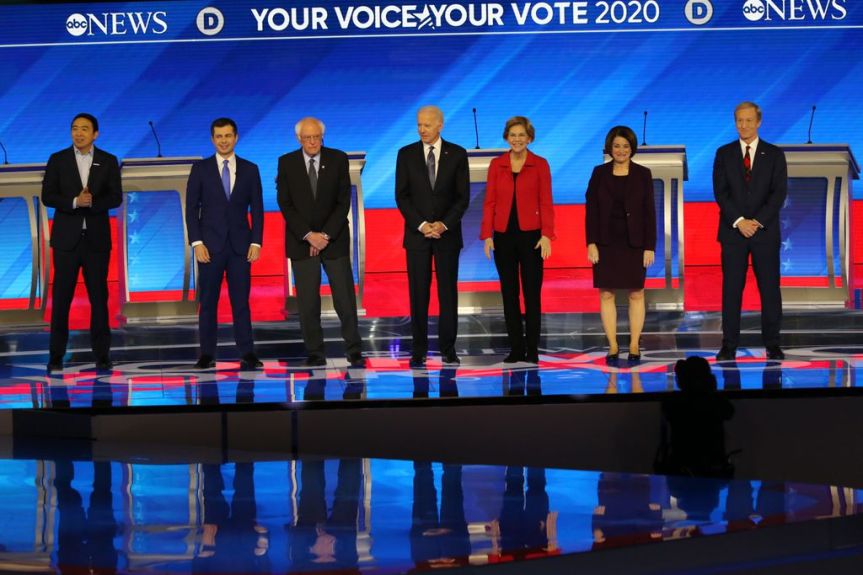
Last night, seven candidates took the stage in New Hampshire to joust before next Tuesday’s primary (where hopefully the votes will be counted quickly and accurately, unlike in Iowa).  Showing my usual streak of political masochism, I watched the entire debate; after tossing and turning in the night, here’s my take on how the candidates performed.

Joe Biden: Biden seems to be fading fast.  He came in fourth in Iowa and is slipping in the New Hampshire polls.  In this debate, he came across as angry but unfocused.  He has a “Get off my lawn!” vibe.  Biden’s never done well as a candidate for the presidency (see 1988 and plagiarism), and this time is no different.

Mayor Pete: Buttigieg talks a lot but says very little.  To me, he panders to the audience while simultaneously being disingenuous.  (I was waiting for someone to ask, “Where’s the beef?” when he stopped gabbing.)  For a politician, these are marketable skills, but Democrats are going to need a lot more than this to defeat Trump.

Amy Klobuchar: She had a very good night.  Especially strong was her closing statement.  But another way of putting this is that she was well coached and well prepared.  Perhaps she’ll pull moderate votes from Mayor Pete, which would only be a good thing.

Bernie Sanders: Always passionate, always on message, Bernie had a solid night.  But Bernie’s personal warmth doesn’t translate well in these debates.

Tom Steyer: Steyer had a good night as well, positioning himself for future contests in Nevada and South Carolina.  I’m warming to Steyer because I think he’ll take votes from Mike Bloomberg.

Elizabeth Warren: The more you listen to Warren, the more you realize “I have a plan for that” is not a compelling answer.  Warren has a habit of starting her replies with, “So, look …”  She proceeds to lecture the audience with a “smartest person in the room” vibe.  Lord knows we need competence in the White House, but I don’t think she’s connecting well enough with voters.

Andrew Yang: It was great to see Yang back on stage, since he tackles questions from a different angle than his rivals.  Still, he didn’t get much time to speak, and it’s hard to see him staying in the race for much longer.

Who wasn’t on the stage?

Mike Bloomberg: The $60 billion dollar man, Bloomberg is testing whether the presidency can be bought.  You’ve heard of the golden rule, as in he who has the money makes the rules, so who knows?

Tulsi Gabbard: Tulsi is staking everything on New Hampshire, where she’s held more town halls than any other candidate.  Will her ground game pay dividends?  Due to the high number of registered independents in NH, she has a chance to make an impression.

Final Comment

As usual, questions from the mainstream media, in this case ABC News, were framed to put progressives on the defensive.  Of course, no questions were asked about runaway military budgets, the widening gap between the richest Americans and everyone else, stagnant wages and personal bankruptcies, gun deaths and mass shootings, or climate change.  Even racial issues were ignored until the last third of the debate.  As ever, consent was manufactured by keeping topics and answers within narrow boundaries approved by the establishment.  And so it goes …

Progressives are getting screwed again — by the Democratic Party

bernie
Feel the Bern

W,J. Astore

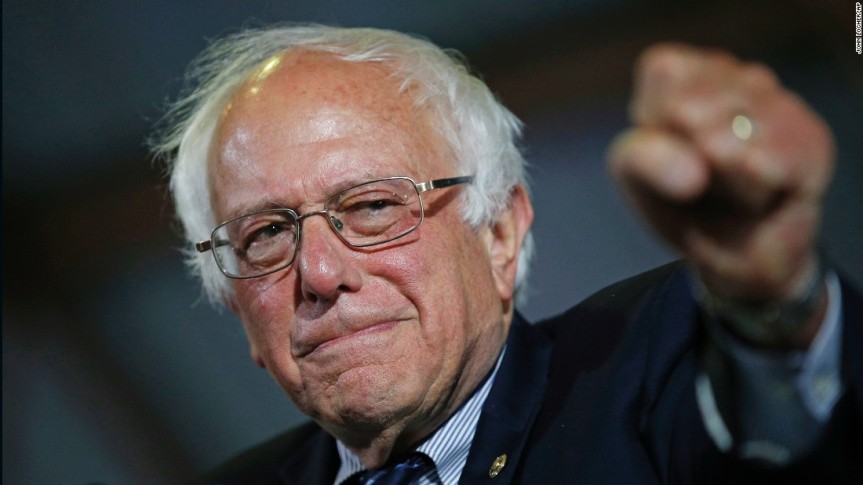
Bernie Sanders, it’s now clear, won the Iowa caucus vote.  The predictable response of Tom Perez, the Chair of the Democratic National Committee (DNC): Hey, it’s time to stop!  Let’s count the votes again!  Maybe we can come up with a new total where Bernie doesn’t win.

Incredibly, the corruption isn’t even hidden anymore.  It’s entirely in the open.  The DNC will do anything to stop Bernie Sanders.  Not because he won’t win against Trump.  No — it’s because DNC members won’t be able to protect their perks, power, and privileges with Bernie as the Democratic candidate for president.  Because Bernie simply won’t play their game.  In a system rife with corruption, Bernie is as incorruptible as they come.

Again, the DNC would rather lose to Trump in November than win with Bernie.  It truly is that simple.

Meanwhile, Tulsi Gabbard, who’s running strong in New Hampshire while calling for fundamental reform of the Democratic Party, is being treated as a non-person by the DNC.  No appearances on CNN.  No special rules for her so she can appear at the DNC-sponsored debate on February 7th.  But of course the DNC can make special rules so that billionaire Michael Bloomberg can and will appear in that same debate.

The Democratic Party supposedly stands for diversity.  Tulsi is a woman of color and a serving officer in the Hawaii Army National Guard.  Bloomberg is a conservative “stop and frisk” white oligarch who endorsed George W. Bush.  And who does the DNC favor in its quest for diversity?

Again, incredibly, the corruption isn’t even hidden anymore.  It’s crystal clear — and damning.

What is to be done?  Support Bernie and Tulsi.  Condemn the DNC and its corporate bosses.  And if some corporate tool becomes the nominee this summer, as is likely, think back to these days when it became so obvious (yet again) that, once again, the Democratic establishment is only truly determined when it’s out to screw its own progressive base.