“Members of the jury, you have just found Jesus Christ guilty”: Remembering the Catonsville Nine

IMG_0518

W.J. Astore

In May 1968, nine Catholic activists set fire to draft records in Catonsville, Maryland, in a deliberate act of sabotage and protest against the Vietnam War.  For the crime of destroying government property, a crime they freely admitted, they were tried in federal court in Baltimore and found guilty.  I’ve been reading the edited trial transcript (with commentary) by Daniel Berrigan, one of the Catonsville Nine and a Catholic priest.  What unified these nine people was their moral opposition to the Vietnam War, a moral revulsion to the acts their country was committing in Vietnam, a revulsion that drove them to burn draft records with a weak brew of homemade napalm so as to gain the attention of their fellow citizens.

On this Easter Weekend, I would like to focus on a few of the statements made by the Catonsville Nine, as recorded by Daniel Berrigan in “The Trial of the Catonsville Nine.”

Statement by Philip Berrigan

We have been accused of arrogance
But what of the fantastic arrogance … of our leaders
What of their crimes against the people … the poor and powerless
Still no court will try them … no jail will receive them
They live in righteousness … They will die in honor
For them we have one message … for those
in whose manicured hands … the power of the land lies
We say to them
Lead us … Lead us in justice
and there will be no need to break the law
Let the President do … what his predecessors failed to do
Let him obey the rich less … and the people more
Let him think less of the privileged
and more of the poor
Less of America and more of the world
Let lawmakers … judges … and lawyers
think less of the law … more of justice
less of legal ritual … more of human rights …

Statement by Thomas Lewis

We were speaking as Americans
We were proud to be Americans
Yet we have representatives in Vietnam
who do terrible things in our name
We were saying to the military
This is wrong … This is immoral … This is illegal
And their response to this was
they were only obeying orders

Question from the Judge: But they did respond to you, did they not?

Thomas Lewis: It was an atrocious response.

Statement by Marjorie Melville

I know that burning draft files
is not an effective way
to stop a war … but
who has found a way
of stopping this war
I have racked my brain
I have talked to all kinds of people
What can you do
They say yes … yes
But there is no answer
no stopping it
the horror continues

Statement by Thomas Melville

I hear our president … confuse greatness with strength
riches with goodness … fear with respect
hopelessness and passivity with peace
The clichés of our leaders
pay tribute to property … and indifference to suffering
We long for a hand of friendship and succor
and that hand
clenches into a fist
I wonder how long we can endure

Statement by George Mische

We were not out to destroy life
There is a higher law we are commanded to obey
It takes precedence over human laws
My intent was to follow the higher law
My intent was to save lives … Vietnamese lives
North and South American lives
To stop the madness
That was the intent

Statement of Daniel Berrigan

Question from the Judge: You say your intention was to save these children, of the jury, of myself, when you burned the [draft] records?  That is what I heard you say.  I ask if you meant that.

Daniel Berrigan:

I meant that
of course I mean that
or I would not say it
The great sinfulness
of modern war is
that it renders concrete things abstract
I do not want to talk
about Americans in general ….
I poured napalm [on the draft records]
on behalf of the prosecutor’s
and the jury’s children

Closing Statement by Daniel Berrigan

When at what point will you say no to this war?
We have chosen to say
with the gift of our liberty
if necessary our lives:
the violence stops here
the death stops here
the suppression of truth stops here
this war stops here
Redeem the times!
The times are inexpressibly evil
Christians pay conscious … indeed religious tribute
to Caesar and Mars
by the approval of overkill tactics … by brinksmanship
by nuclear liturgies … by racism … by support of genocide
They embrace their society with all their heart
and abandon the cross
They pay lip service to Christ
and military service to the powers of death
And yet … and yet … the times are inexhaustibly good
solaced by the courage and hope of many
The truth rules … Christ is not forsaken …

At the end of the trial, as all nine defendants were found guilty, a “member of the audience” cried, “Members of the jury, you have just found Jesus Christ guilty.”

That last statement, and the words of the Catonsville Nine, give us much to ponder on this Easter Weekend.

Why Fund the Arts and Humanities?

stained

W.J. Astore

Federal funding for the arts and humanities often comes under attack, notably from conservative quarters when a particular artistic expression is considered to be objectionable.  Cut the NEH and NEA (national endowments for the humanities and arts), Paul Ryan says, and we can save a whopping $335 million a year (slightly more than the cost of one F-35 jet fighter for the Marine Corps).

What are the humanities and the arts, after all?  Why should the government fund them? Can’t we let the marketplace rule?  Won’t good art find an audience (and patrons) without the government getting involved?

Art and the humanities?  Well, they are what make us human.  Art and music and dance and theater, but also our history, literature, languages, poetry, and so on.  Art and the humanities teach us about the human condition — what it means to be human.  So, in a way, religion is also part of the arts and humanities in the secular sense of the history of various belief systems, what they teach us about morality and ethics, as well as their iconography, music, and so on.

As a personal aside, I’m sure my first true artistic/humanistic experience came in my local Catholic church.  The splendor of light streaming through stained glass windows, the intricacy of the architecture, the majesty of the altar, the beauty of the music: all of this and more represented an artistic and humanistic experience that resonated with me, putting me in touch with something larger than myself.  I’ve felt similar majesty being out in the cathedral of nature, gazing out at the Continental Divide at 12,000 feet as clouds raced overhead after a long hike in the Colorado Rockies.

Nurturing and protecting the arts, humanities, and nature too is fundamental to being human.  We should be stewards of beauty in all its forms.  And certainly government must have a role in funding the arts and humanities as well as protecting the planet.

Unfortunately, the American political scene is oligarchical and driven by venality and greed.  So nowadays what you see in education is an obsessive push for STEM, for competitiveness vis-a-vis various foreign countries, for workforce development, as if education can be reduced simply to job/vocational training. Arts and humanities? Humbug!

I have nothing against science, technology, engineering, and math.  I majored in mechanical engineering as an undergraduate, loved calculus and differential equations, took several courses in physics and chemistry, and eventually got advanced degrees in the history of science and technology. Science is great and wonderful; technology is fascinating and much needed. Vocational training is important too.

But there’s more to life than getting a job.

Oligarchical powers don’t like to fund the arts and humanities.  They’d rather fund business and industry in the name of competitiveness (and profit!). But there’s more to life than building things, crunching numbers, and working for the man. We have souls, if you will (there’s the Catholic in me), and our souls need to be nurtured by ideas and ideals, by beauty, by the angels of our better natures as represented by the arts and humanities.

So please act to save the arts and humanities, especially in our schools. They enrich our lives in ways you simply can’t measure with dollar signs.  And please act to preserve nature and our planet as well, whether you see it as God’s creation or as spaceship Earth — or both.

The U.S. Military and Religion

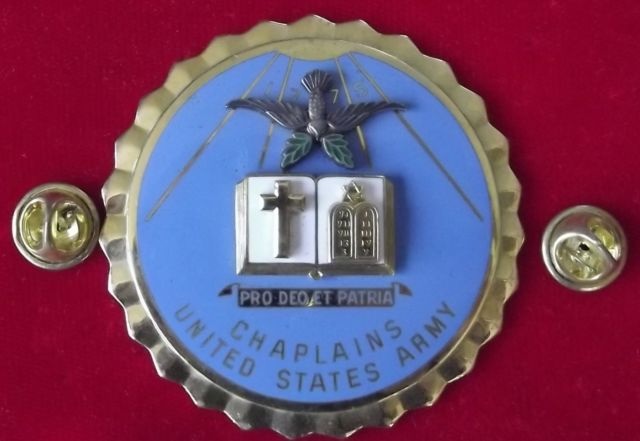
image
An older symbol of the Chaplain Corps that includes Christian and Jewish symbols. There are now Buddhist, Hindu, and Muslim symbols as well

W.J. Astore

Disturbing, upsetting, baffling: these words often apply when young troops face religious pressure or discrimination for the first time.

And it disturbs, upsets, and baffles me that a nation founded on religious freedom produces people that want to abridge or eliminate that freedom in the (false) name of following Christ.

It also disturbs, upsets, and baffles me that a military that is supposed to defend our Constitutional freedoms, to include freedom of religion, occasionally works in ways that undermine that very freedom.

I was born and raised within the Catholic church, but I would never push my religious beliefs on someone else.  Certainly not in a military context, in which supervisory authority is nearly absolute.

I believe there is a place for God (or gods, or no god) in the military, and a place for chaplains.  Troops should be able to worship freely in the military, as is their right as American citizens.  But there’s no place for proselytizing, pressure, “mandatory” Bible studies, and all the rest of that.

I remember how much Colorado Springs and the Air Force Academy changed between my first tour there (1990-92) and my second (1998-2002).  Lots of evangelical organizations (like Focus on the Family) built headquarters just to the east of the AF Academy.  I started to see that evangelical influence permeate the Academy.  I suppose I was lucky I left in 2002, just before the scandals involving religious discrimination broke.

The military attracts many young people looking for certitude as well as a mission, a calling.  Some of these young people come to espouse a narrow form of “Christianity,” one that sees itself as uniquely American and uniquely suited to a military context.

Yet how can troops take an oath to support and defend the Constitution, which enshrines freedom of religion, and then work to curtail or offend the religious freedoms of others?

Here’s what people need to remember about military settings: the authority of your direct supervisor is nearly absolute.  If your drill sergeant, your platoon commander, your company commander, makes it obvious that he or she favors Christianity, it puts enormous pressure on subordinates to conform, or at least to fake it.

If your boss in a civilian setting is an assertive Christian evangelist, at least you have the option of quitting (however painful that might prove).  There is no option in the military of “quitting” your platoon, your company, your unit.  Furthermore, in a war zone, refusing to conform to an evangelical zealot as a leader could literally become a matter of life and death.  Hey, Private Jones, you’re an atheist: go ahead and walk point again, i.e. take the lead as the unit walks through dangerous enemy territory infested with IEDs and snipers.  Maybe that’ll give you some faith in God.  Ha ha.

Again, the U.S. military must remember its purpose: to support and defend the Constitution.  In fulfilling that purpose, there is simply no place for evangelism of any religion, Christian or otherwise.

Note: Since 2005, the Military Religious Freedom Foundation (MRFF) has fought to ensure religious freedom within military settings.  The foundation represents nearly 45,000 service members, 96% of whom identify as Christian.  Find out more about the MRFF at http://www.militaryreligiousfreedom.org.

Liberty First: What an Old Coin Can Teach Us

IMG_0413
My dad’s half dime

W.J. Astore

When I was a kid, I was a stamp collector.  My dad, in contrast, saved old coins.  He was not a collector; he didn’t file them away in special folders. He just tossed old silver coins into a cigar box.

My favorite coin of his was also the oldest one he had: a “half dime” from 1845.  To me, it’s a remarkably simple and aesthetically pleasing design, featuring a seated figure of “Liberty” on the obverse, with the words “Half Dime” on the reverse.

half dime

Note what’s missing: the words “In God We Trust.”  This motto was not added to coins until the national trauma of the U.S. Civil War reinforced religious revivals that had preceded that war.  It made its first appearance in 1864.  (Interestingly, in the “Pledge of Allegiance,” the words “under God” were added only in 1954 during another crisis, the fear of communism stoked by McCarthyism during the Cold War.)

As a nation it seems we invoke God during crises, calling on Him for support and guidance and blessing.

But I want to return to my dad’s half dime from 1845, because that coin, in its simplicity, enshrines a value that is most fundamental to our country: Liberty.

With respect to religion, liberty to me means the freedom to worship God in one’s own way, to include the freedom not to worship God, even the freedom to express disbelief in God.

Such liberty was extremely rare in the 18th century when our nation was founded.  Back then, being labeled an “atheist” was roughly equivalent to being labeled a “terrorist” today.  But our nation’s founders were of diverse religious persuasions, to include Catholics and Quakers as well as myriad branches of “dissenting” Protestantism.  A few were deists (Thomas Jefferson most famously) who rejected the Trinitarian Christianity of most of their peers, and a small number (Thomas Paine, perhaps) were skeptics to the point of atheism.

What united them was a belief in liberty.  In religion, this was expressed as the freedom to worship in any way you chose, or not to worship at all.  Thus there was no religious “test” for office, no requirement to be a Christian or to express a belief that “In God We Trust.”

That profound belief in personal freedom — in liberty first — is captured on my dad’s old coin.  It’s also captured in the Pledge of Allegiance before 1954: “one nation indivisible with liberty and justice for all.”

In today’s political climate, with all of our public prayers and calls to God to bless America, with talk of Muslims not being allowed to hold office because their god is somehow the wrong god, we need to recall that America was founded on Liberty first.

Or as my mom put it in her inimitable way, “You worry about your soul and I’ll worry about mine.”  Jefferson and Paine would have liked my mom.


Republican Presidential Candidates Are Scaring Me

Please, God, make him stop

W.J. Astore

Yes, I know Republican candidates for president are currently feeding “red meat” to the base, a base that consists of evangelical Christians who vote in the primaries come hell or high water.  But the rhetoric used recently by Jeb Bush and Mike Huckabee is more rancid than red meat. And it’s dangerous.

Jeb Bush is supposedly the more centrist candidate.  Yet according to “centrist” Jeb, the federal government under Obama has adopted an “aggressive stance” against religious freedom.  The solution for Bush is to revive the “Christian voice,” which he claims isn’t being heard enough in America.

So: to enhance religious freedom in America, we need to amplify the voices of Christians?  Excuse me for seeing a slight contradiction here.

Mike Huckabee, of course, is a minister as well as a politician, so he is used to speaking with forked tongue.  As he announced his candidacy, Huckabee claimed that Obama had not been active enough against Muslim jihadists.  The answer, in his words, was simple:

“As president,” said Huckabee, “I promise you that we will no longer merely try to contain jihadism, we will conquer it!”

Super!  The answer to Muslim extremism is a conquering crusade against it, led by a Baptist minister as president!

Did I just slip back 800 years into the past?  Well, there’s nothing like a religious crusade to calm the waters of worldwide strife.

Few thinking Americans will be hornswoggled by such rhetorical nonsense (or so I hope).  But rhetoric has a way of becoming reality.

Jeb Bush, Mike Huckabee, and all the other “committed” Christians in the Republican Party put me to mind of one of Christ’s teachings in the New Testament:

And when thou prayest, thou shalt not be as the hypocrites are: for they love to pray standing in the synagogues and in the corners of the streets, that they may be seen of men. Verily I say unto you, They have their reward. (Matthew 6:5 KJV)

So I have a humble request to make, Republicans: Stop talking about religion on the street corner.  Stop boasting about how you’re going to fight your own jihad.  Start trying to live a truly moral life.  You might start with humility and compassion, both becoming in a true candidate of the people.

And, if you please, stop scaring me.

Update (10:00PM): A reader sent me this image.  It’s hilarious — and frightening.

unnamed

Are Troops Being Evangelized Instead of Being Treated for PTSD?

An older symbol of the Chaplain Corps that includes Christian and Jewish symbols.  There are now Buddhist, Hindu, and Muslim symbols as well
An older symbol of the Chaplain Corps that includes Christian and Jewish symbols. There are now Buddhist, Hindu, and Muslim symbols as well

W.J. Astore

I wrote the following article for Huffington Post back in August of 2010.  Good Friday seems an appropriate day to revive it.

Our country was founded on the idea of religious freedom, and several of our nation’s founders were deists (Thomas Jefferson) or skeptical to the point of atheism (Thomas Paine).  Religious plurality and diversity characterized America from our earliest days, and so too was that true of our citizen-military.

Private religious belief should remain that: private.  Evangelism in military settings is inappropriate.  It is especially insidious when practiced by supervisors.  Militaries are rigidly stratified, and certain positions (drill sergeants, first sergeants, commanders, and so on) carry with them great authority.  It is totally inappropriate for NCOs and officers in supervisory positions to promote religion in any way, especially among their subordinates.  

That said, you cannot banish religion from the military since our military will always be a reflection of American society.  In national polls, Americans routinely say they believe in God, with the percentage affirming this belief exceeding 90%. Our military today is more rural than urban, more small town than big city, more Southern and Midwestern than Coastal. In short, our military recruits from areas of the country that are often powerfully infused with evangelical Christian beliefs. Such beliefs are not going to disappear when troops don their uniforms.

God and country are united in the minds of many of our troops.  And a person’s mind is his or her own private affair.  What we must guard against is the intrusion of religion in policy areas and public arenas where it doesn’t belong.  The article below highlights one such case.

Yesterday [8/9/2010], the Military Religious Freedom Foundation (MRFF) and Veterans for Common Sense sent a startling letter to Secretary of Defense Robert Gates. It alleged that the military has sent some psychological casualties to chaplains for counseling, rather than to mental health care professionals for diagnosis and treatment. In a few cases, the letter alleges, chaplains sought to provide comfort through evangelism. In essence, it seems wounded and disturbed troops were encouraged to put their trust in Jesus: that He would provide for them if only they accepted Him.

General George S. Patton Jr. was fired during World War II for slapping soldiers with PTSD. Assuming the MRFF letter is correct, are we prepared to fire chaplains for seeking to alleviate PTSD and other disorders with a healthy dose of scripture and heartfelt appeals to Jesus?

I would advise against this.

I can well imagine that a few chaplains, perhaps of an evangelical bent, in their zeal to provide help, may have conflated their own personal conversion experiences and the resultant comfort they gained from them with the kind of professional care and treatment provided by mental health care experts. If one’s own doubts and problems were resolved through heartfelt conversion, it’s quite possible one would believe that evangelism in the name of Jesus could cure all ills — a belief they may then have tried to transfer to hurting, even desperate, troops.

Such misguided ministering, if it exists, must stop.

But at the same time let’s not forget that chaplains are invaluable as counselors. The equivalent at times to a “big brother” or “big sister,” they are both part of a unit but also in a (moral) sense stand above it and the entire military system. It’s a demanding job — indeed, it’s more than a job, it’s a calling — and the vast majority of chaplains perform it well.

Chaplains, of course, are not mental health care providers. Psychological trauma and other serious mental health issues clearly go beyond their abilities and training to treat and meliorate. The letter from the MRFF and Veterans for Common Sense reminds us of this fact, as well as of the burdens of war on our troops and of the dire shortages of qualified mental health care. It’s the latter that requires the lion’s share of our attention and resources.

That said, allow me a moment to praise military chaplains. The several I’ve known have been dedicated, decent, godly souls as well as good troops. They share in the burdens of their units even as they provide selfless counsel, spiritual or otherwise. One older chaplain I knew eagerly went through jump training prior to joining the 101st Airborne. If he was going to serve alongside airborne troops, he wanted to know what jumping out of airplanes was like.

National prayer breakfasts I’ve attended, run by military chaplains of multiple faiths, were always open to troops of any faith (or no faith at all). There were no distinctions between Protestants or Catholics, or for that matter between Muslims or Jews. As celebrations of non-denominational and undifferentiated spirituality, they were irenic, life-affirming, even moving.

Let’s be careful, then, not to let instances of Christian evangelism in the ranks distract us from a healthy exercise of spirituality and religious feeling. Let’s applaud our military chaplains even as we recognize that they too have limitations. But most of all, let’s be sure to get our troops the professional mental health care they both need and deserve.

America’s Original Sin

Hans Baldung Grien, "Eve, Serpent and Death"
Hans Baldung Grien, “Eve, Serpent and Death”

W.J. Astore

I’m a Catholic, so of course I know all about Original Sin.  For disobeying God and tasting the forbidden fruit, Adam and Eve were cast out of the Garden of Eden.  Eve would suffer the pains of childbirth, and both she and Adam would age and die, their earthly bodies returning to the dust from which they came.

I always thought Eve got a bad rap in that story.  She was, after all, tempted by Lucifer, a fallen angel in the shape of a serpent.  Whereas Adam simply gave in to a mild suggestion by Eve to join her.  Eve was tricked by the Master of Deceit, but Adam just joined in for the heck of it, and she shoulders the blame?

Of course, one might see Original Sin as part of God’s master plan.  For without that sin, there would be no need for God to send his only begotten son to redeem mankind.  No Original Sin, no New Testament.  No Beatitudes.  No Roman Catholic Church.  No Christianity.

And without Christianity and its evangelizing zeal, America would doubtless be a far different land.   Assuming Europeans still came to the New World in roughly 1500, would subsequent history be less bloody in the absence of Christianity?  Or would naked conquest have been unrestrained by any moral code of restraint and compassion?

The United States has an original sin as well.  It is the impiety of considering our country as being uniquely favored by God.  American history shows how we’ve killed, enslaved, and otherwise violated God’s great commandment of loving thy neighbor, even as we continue loudly to shout how God uniquely showers His praises on us.  God Bless America!

Is America’s original sin part of some master plan?  How will we redeem ourselves from its awful legacies?  My dad once joked that in school he almost solved an unsolvable equation; I confess I have no solution to such questions.

Readers, have at it in the comments section below.  Is the very idea of Original Sin mysterious and magisterial, or mischievous and misleading?  Have humans evolved beyond the need for God and gods?  Is “sin” a misleading term to apply to America’s past, too metaphysical, too imprecise?  Are there simply too many “chosen people” in this world, too many people who elevate themselves above others just because they believe they share a favored relationship to God?

It’s a grey and rainy day here — a good day for thinking.  Join in.

Conservative Kookiness in Iowa

Scott Walker serves up some red meat

W.J. Astore

OK.  I should know better.  When you pay attention to what conservatives are saying at the Iowa Freedom Forum, attended as it is by religious activists, you’re going to hear kookiness and craziness.  But what’s sad is how the “red meat” issues raised by the likes of Ted Cruz, Scott Walker, and Rick Santorum are so devoid of nutritional value.  Empty calories, all of it.

You hear the usual talk about lower taxes and less governmental regulation, even though Republicans under Reagan and the Bushes (along with the Democrats as well) oversaw expansions in government.  George H.W. Bush famously said, “Read my lips — no new taxes,” before proceeding to raise taxes once he became president.  Along with lower taxes and smaller government, Republicans also claim to support “family values,” a vapid phrase that basically means whatever you want to read into it.  I’m not a fan of Obama’s priorities and policies, but one thing I can say for the man is that his life, his wife, and his teenage girls have exuded family values, Thanksgiving controversy or no.

So we know Republicans are supposedly for lower taxes, smaller government, and family values.  What else are they for? Abortion, of course, as in restricting it further or even eliminating it.  Voter ID laws, because we all know how the “wrong” kind of people are being bussed in en masse to skew voting results in favor of socialism (talk about an urban myth!).  And more gun rights, like open carry laws and easier approval for concealed permits to carry.

Egads!  These are the issues that sway the activist base of the Republican Party?  Fetuses, the specter of more disadvantaged people of color voting, and guns.

Wow.  Our country faces serious issues.  A crumbling infrastructure.  An unsustainable prison system.  Perpetual wars.  Climate change (even Republicans admit it’s real, though they won’t blame humans for it).  Ever widening gaps between rich and poor.  Student loan and credit card debt that threaten a fragile economic recovery.  Mediocre education.  Ever rising health care costs (still the number one cause for personal bankruptcies in America).  But forget all that: let’s talk about fetuses, non-existent voter fraud, and guns.

And Republicans like Santorum wonder why “too many people don’t think we care about them.”  Gee… I wonder why, Rick.

(A personal note: In 1976, though too young to vote, I supported Gerald Ford rather than Jimmy Carter.  In 1984, I voted for Ronald Reagan because I believed Walter Mondale lacked the gravitas to be president at a crucial moment in US-Soviet affairs.  Ever since then, the Republican Party has lost me with its cynical culture wars and active suppression of democracy, among other reasons.)

On Religion

Eve tempting Adam. I guess Adam didn't have a mind of his own
Eve tempting Adam. I guess Adam didn’t have a mind of his own

W.J. Astore

The other day my wife and I were watching Wadjda, a terrific film about a spirited Saudi girl who dreams of buying and riding her very own bicycle.  The film does a great job of highlighting the constraints put on women in traditional Saudi and Islamic culture.  Women are not allowed to drive, they must veil themselves whenever they can be seen by men, they are trained to be subservient and not to attract attention to themselves, and so on.

Watching the constraints under which Saudi women live their lives, my spirited wife uttered the following aphorism:

Religion – written by men, for men.  And that’s all you need to know.

Having been raised Catholic, it’s hard to disagree with her.  The Catholic Church has historically been misogynist.  It was Eve, after all, who tempted Adam.  She was “the weaker vessel” who was cursed with the pain of childbirth because of her “original sin.”  The Church itself, to state the obvious, is run entirely by men.  Even the woman most respected by the Church, the Virgin Mary, is an unattainable ideal.  A woman who gets pregnant without losing her virtue and virginity?  Try aspiring to that.

Whenever a religion, no matter if it’s Islam or Catholicism or some other faith or sect, places half of humanity in inferior and subservient roles, we must question very closely its true intent and inspiration.  Surely a just and compassionate God would not sanction a religion that subordinates women to the whims of men.

Obviously, I know many believers, women as well as men, will disagree with this.  They will point to their faith, their holy books, the power of tradition.  Or they will try to explain how their religion really doesn’t discriminate against women and so on.

Here I recall a saying that Temple Grandin says she will never forget: “Men will wrangle for religion, write for it, fight for it, die for it, anything but live for it.”

How true.  And I’d add that any religion worth living for is one that treats men and women equally as believers.  I don’t think God, if He or She (!) exists, would want it any other way.

David versus Goliath in the Middle East

david and goliath_aaron wolpert

W.J. Astore

When I was a kid, I was a big admirer of Israel.  I saw Israel as being surrounded by implacable enemies bent on its destruction.  Israel was the plucky underdog, David against Goliath, with Goliath being Arab countries like Egypt and Syria, having militaries trained and equipped by the Soviet Union, sworn enemy of the U.S. during the Cold War (or so my ten-year-old mind saw it).  I recall keeping a scrapbook of articles on the Yom Kippur War of 1973.  I cheered the Israeli “blitzkrieg” (What an odd term for a daring Jewish armored attack!) that crossed the Suez Canal and isolated the Egyptian Third Army, as well as the Israeli riposte on the Golan Heights against Syria.

That was 1973.  Forty-one years later, Israel is engaged in yet another assault on Gaza and the Palestinians.  Compared to the Israeli Defense Forces (IDF), the Palestinian militants are undergunned and hopelessly outclassed.  Organizations like Hamas rely on the traditional tactics of terrorists (or freedom-fighters, choose your loaded word): hit-and-run raids, random attacks (unguided rockets), war in the shadows (or in the tunnels).  Who is David and who is Goliath now?

What hasn’t changed, of course, is the mainstream media in the U.S., which cheers the Israelis while condemning Hamas and any other Palestinians who choose resistance instead of compliance.  Watching a snippet of CNN, I witnessed Wolf Blitzer, who poses as a disinterested journalist, demanding from his Palestinian interviewee an immediate stoppage in rocket attacks.  Blitzer had nothing critical to say of Israeli air raids or the disproportionate casualties suffered by the Palestinians in this latest skirmish in a very long war.

What can be done?  As one of my historian friends put it, the Middle East has “a massive legacy of entropy.”  All I know is that more bloodshed, and more innocents killed, like those four young boys playing soccer on the beach, only adds to that entropy — and the legacy of hatred.

Perhaps one thing I’ve learned in four decades is that negotiations in good faith can’t occur when either side sees itself as a heroic David fighting against a glowering Goliath.  Until Israelis and Palestinians see each other as fellow human beings, as equals rather than as monsters, wars will continue, innocents will suffer, and hopes will be left in the dust, slayed like so many Goliaths by self-anointed Davids.