Creator of Bracing Views. Contributor to TomDispatch, Truthout, HNN, Alternet, Huffington Post, Antiwar, and other sites. Retired AF lieutenant colonel and professor of history. Senior fellow, Eisenhower Media Network
Back in March, Tom Engelhardt had a stimulating article at TomDispatch.com on the wounding of planet Earth. He also made mention of the Covid-19 pandemic. And as I read his piece, I thought of Mother Earth suffering from a human-made pandemic. A virus of humans. A human-made flu of fevers (heat waves and fires), chills (freezes in the South), coughs (turbulent weather), thirst (droughts out West), and pain (nearly everywhere).
But, sadly, there’s no vaccine for Mother Earth. All we humans can do is relieve the symptoms by changing our behavior. Mother Earth is already infected with us; now we need to leave her alone, let her rest, allow her to recover. But we don’t. We keep stressing her with our actions (and inaction on climate change) and making her symptoms worse.
The only problem: When Mother Earth dies, we all die.
We’re on the fast track to dystopia, which puts me to mind of a recent Splinterlands trilogy written by John Feffer. His latest and last volume is called Songlands, which he writes about here at TomDispatch.com. For a dystopic trilogy, I found it strangely uplifting, for Feffer still sees hope in humans who are willing to sacrifice to save our planet. I urge you to check it out.
It’s amazing to me that ultra-rich billionaires like Jeff Bezos and Elon Musk are saluted for their “investment” in space exploration, as if we humans are going to save ourselves by building stations on the moon or Mars. If Bezos and Musk truly wanted to give back to humanity, they’d be focusing on reducing consumption here on Earth while fighting for preservation and conservation. But their space trips are really ego trips, and their fuel has always been money.
Here’s hoping humanity rejects the “final frontier” nonsense of Bezos and Musk and turns its attention to what really matters: the health and welfare of this wonderful yet fragile world of ours.
For if we refuse to honor Mother Earth, it may be the last sin we humans commit.
Among my many weak spots is economics and business. I took exactly one course in college on macroeconomics. I took dozens of courses in math and engineering like calculus, statics, dynamics, fluid mechanics, thermodynamics, biomechanics, you name it. Then I switched academic specialties and became a historian of science, technology, and religion. Again I took dozens of courses in various branches of history, but again my one economics course remains my brief exposure to that world. And I took it as a freshman forty years ago!
Economics has been on my mind lately because so much of what passes for national military (a redundant phrase) strategy in the U.S. is really about making money. Profit. Capitalism, pure and simple. Moving products, expanding markets, diversifying portfolios, and so on. There’s no business like war business. It’s a capitalist’s dream.
In this rich vein of greed-war, I urge you to read Christian Sorensen’s 5-part series on the military-industrial-congressional complex at Consortium News. (Here’s a link to part 5, which also includes links to the previous four parts.) I really like the way he begins Part 5:
Without looking at military adventurism through the lens of the corporation, analysts are bound to produce error-filled studies. For example, one analyst contended in an interview on The Real News Network, “Military force is almost never going to achieve your political aims. The Americans learned this in Vietnam. They’re learning it in Afghanistan. They’re learning it in Syria… So [President Barack] Obama supporting the Saudis and Emiratis in Yemen is a sign really of incoherence on the part of the United States.”
Far from incoherence, the behavior actually is quite rational. A variety of conflicts, disparate and some seemingly futile, is precisely the aim. Conflict itself — producing untold mountains of profit for war corporations and Wall Street — is the goal.
Yes, yes, a thousand times yes. You can’t look at U.S. military-national “strategy” today through a purely strategic lens or one informed solely by military history (as I’m tempted to do). Clausewitz, Jomini, and other classical military theorists won’t help you much. You need to look to Wall Street, to economics, to how capitalism works. You have to look to business cycles, profit, markets, portfolios, diversification, and similar concepts. You have to recognize war is a special kind of business, one that America is very good at because we specialize in it. War and weaponry may well be our leading exports.
Again, I’m tempted as a former engineer and as a professional historian who’s studied strategy (at Oxford no less) to try to make sense of U.S. national-military strategy in logical terms informed by history, Wrong approach! The right approach is to follow the money. Think not of “war as a continuation of politics” but of war as a continuation of capitalism, a special kind of disaster or death capitalism. Remember too to think in terms of portfolios and diversification of the same, after which U.S. policies make all the sense in the world. More conflict means more weapons sales means more money. The same is true of arms races in the false cause of deterrence.
An early example from my life. When I was a young lieutenant in the U.S. Air Force, circa 1985, I wrote a paper on the B-1 bomber and the strategy of “manned penetrating bombers.” In plain speak (plane speak?), the Air Force was spending loads of money on a high-tech swing-wing plane loaded with avionics which would in theory enable it to penetrate Soviet airspace and bomb targets directly. This made little sense to me, nor did it make sense to President Jimmy Carter, who had cancelled the plane as unneeded. After all, B-52s could carry highly accurate cruise missiles and launch them from outside of Soviet airspace, and for much less money.
But the B-1, like any major weapon system, had powerful friends in Congress, since Rockwell International had spread production of the plane and its components to as many Congressional districts as possible. When Ronald Reagan became president in 1981, he quickly reversed Carter’s decision. It wasn’t about strategy. It was about business and profit justified in the name of sending a tough message to the “Evil Empire.” Meanwhile, the Soviet Union collapsed a few years later and the U.S. was stuck with 100 B-1 bombers it didn’t need. Time has proven it to be an expensive plane to maintain, and one that’s never been used (fortunately) on the mission for which it was designed.
The U.S. has a lot of weapons like the B-1 bomber: expensive, unreliable, redundant strategically, and ultimately unneeded. It doesn’t make much sense, until you realize it’s all about making money, moving product, inflating threats, and keeping the cycle going, again and again, wars and weapons without end, Amen.
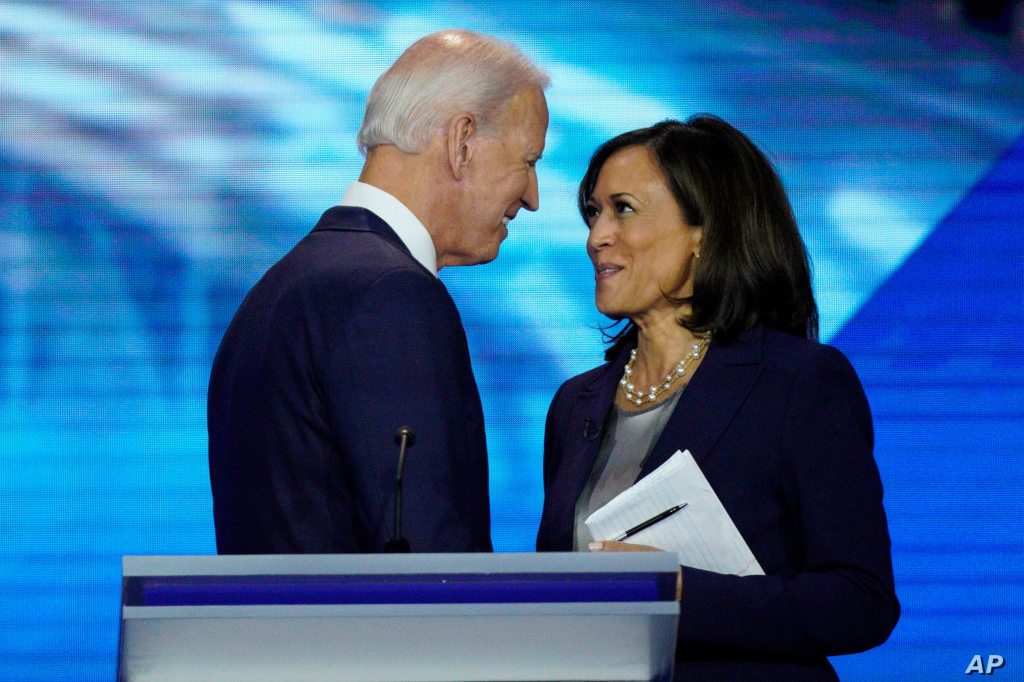
America doesn’t have a foreign policy, it has a business plan, and it’s business as usual in the Biden administration. Joe Biden promised his donors that nothing would fundamentally change in his administration. Kamala Harris said her agenda wasn’t about substantive change. So what we’re getting under the Biden/Harris team is eminently predictable:
More blank checks for Israel, and no recognition of any rights for Palestinians.
A revival of the old Cold War, with China as the leading “threat” but with Russia not forgotten.
Politics subordinated to the military, rather than the military in service of political aims. In brief, military dominance is America’s foreign policy.
Related to (1-3) is dominance of the world’s trade in weapons. The State Department has become a tiny branch of the Pentagon and the military-industrial complex. It’s all about closing arms deals, moving hardware, selling weaponry, making a buck.
Naturally, one of Biden’s first acts as president was to bomb a foreign country, in this case Syria. So presidential!
In Joe Biden, America has a fading and flailing man to lead a fading and flailing empire. In Kamala Harris, America has an example of old wine in new packaging. She’s a woman, she’s Black, she’s South Asian — and she thinks like Hillary Clinton and Henry Kissinger.
Joined at the hip
Remember when Joe Biden said he’d be all about diplomacy? That the power of America’s example would rule over the example of our power? Nice words, but that’s all they’ve been so far. Words.
Two examples where Biden has appeared to offer meaningful change are with Afghanistan and Yemen. With Afghanistan, Biden has promised a complete military withdrawal by 9/11/2021. But does this apply only to combat troops while excluding mercenaries, the CIA, special forces “trainers,” and the like? It’s not yet clear. Plus anything can happen between now and 9/11 for Biden to switch gears and keep some combat troops in place.
With Yemen, Biden made a point about excluding offensive arms sales to Saudi Arabia while still allowing defensive ones. Almost any weapon can be labeled as defensive in nature, so it’s doubtful whether Saudi operations in Yemen will be impacted at all by Biden’s weasel-word policies.
The Biden/Harris foreign policy, such as it is, is retrograde. It’s a return to the Cold War, with an emphasis on new nuclear weapons and larger Pentagon budgets. It’s about global dominance while America at home burns. It’s foolish and stupid yet it will make a few people richer for a few more business cycles.
And thus it’s business as usual in Washington, which is exactly what Biden/Harris were hired for.
In my village, there’s a memorial to the men who served in “the war with Germany,” 1917-18, which we now call World War I. Here’s a photo of it that I took a few days ago:
It includes the names of some of the oldest and most prominent families of my community, which is not surprising. World War I did witness a draft in America, but there was also a sense of noblesse oblige among the more affluent, a sense that one was required to serve if one was healthy.
I’ve often wondered what would have happened if Woodrow Wilson, reelected as president in 1916, actually had acted to keep America out of the war, as he promised he would. The “Yanks and the tanks” helped to tip the scales against Imperial Germany on the Western Front in the spring of 1918. Without the presence of U.S. doughboys (troops), and more importantly the promise of more to come, it’s possible the French and British may have been defeated by the great German offensive, or at the very least may have decided to sue for peace. But of course the German offensive ran its course and stalled, and the Allied counteroffensive (supported by a million or so fresh Yanks) wore down the Germans until they sued for peace, with the war finally ending on November 11, 1918.
It’s tempting to think that a German victory or quasi-victory in 1918 or 1919 would have prevented the rise of someone like Adolf Hitler. Hitler himself was devastated by Germany’s loss in 1918, as so many Germans were, and that loss combined with the seductive lie that Germany had been “stabbed in the back” by traitorous elements on the homefront created the climate in which a rabble-rouser like Hitler could rise and thrive. And surely the Second Reich under Kaiser Wilhelm and officers like Paul von Hindenburg and Erich Ludendorff was preferable to the Third Reich under Hitler and his henchmen?
I’m not so sure. Germany’s Second Reich achieved something in 1917 the Third Reich couldn’t in 1941: the defeat of Russia. (The injection of Lenin into Russia as a poison pill of sorts contributed to the Russian Revolution and the death of the Tsar.) But that same Second Reich imposed the harshest of peaces on a destabilized Russia. Known as the Treaty of Brest-Litovsk, the Germans took huge swaths of territory from Russia, most of its industrial resources, and much of its agricultural base as well. Basically, men like Ludendorff saw the Slavic peoples as inferior and pictured them as Germany’s slaves. Russia’s western lands were to become living space for the superior Germanic peoples. In short, Lebensraum (living space) wasn’t just Hitler’s idea: it was an ambition shared by many German militarists. Let’s recall as well the name of the general who marched beside Hitler in the infamous Beer Hall Putsch of 1923. That general: Ludendorff.
Area Lost by Russia in Treaty. Treaty of Brest-Litovsk (March 1918)
A German victory in 1918 or 1919 would have produced a hell of sorts for the Slavic peoples to the east. Perhaps not a Hitlerian Holocaust (virulent and murderous anti-Semitism was peculiar to Hitler and the Third Reich), but nevertheless an empire characterized by an expansionist militarism that saw dispossession and slavery as perfectly legitimate options for the future. In sum, the Germans of early 1918 were ruthless in victory, so when Germany ultimately lost later that year, the Allies reciprocated with ruthlessness of their own in 1919.
German militarism had to be stopped, or so the men with names on the monument in my village appear to have decided. The shame of it all is how World War I led, not to eternal peace as Wilson promised, but to World War II and to so many wars and conflicts after that.
Memorial Day reminds us of the price troops pay for seemingly endless wars, and that even when wars appear to be for good, even noble, causes, how often those causes are betrayed whether during or after those wars.
Remember in the 1930s how Americans referred to arms dealers, especially those who profited from war, as “merchants of death”? Yes, that was indeed a long time ago in a galaxy far far away. Nowadays, it’s weapons ‘r’ us, and America’s leading sounds of freedom are blam-blam-blam and ka-ching ka-ching ka-ching. Cash registers for weapons makers are truly ka-chinging wildly as America continues to dominate the global trade in war weapons, notes William Hartung at TomDispatch.com. Hartung’s title, “Selling Death,” puts it succinctly. Here’s an excerpt:
When it comes to trade in the tools of death and destruction, no one tops the United States of America.
In April of this year, the Stockholm International Peace Research Institute (SIPRI) published its annual analysis of trends in global arms sales and the winner — as always — was the U.S. of A. Between 2016 and 2020, this country accounted for 37% of total international weapons deliveries, nearly twice the level of its closest rival, Russia, and more than six times that of Washington’s threat du jour, China.
Sadly, this was no surprise to arms-trade analysts. The U.S. has held that top spot for 28 of the past 30 years, posting massive sales numbers regardless of which party held power in the White House or Congress. This is, of course, the definition of good news for weapons contractors like Boeing, Raytheon, and Lockheed Martin, even if it’s bad news for so many of the rest of us, especially those who suffer from the use of those arms by militaries in places like Saudi Arabia, Egypt, Israel, the Philippines, and the United Arab Emirates. The recent bombing and leveling of Gaza by the U.S.-financed and supplied Israeli military is just the latest example of the devastating toll exacted by American weapons transfers in these years.
When it comes to weapons sales, America truly is Number One! Which, in that faraway galaxy ,was once nothing to celebrate. In fact, it was something to deplore and denounce.
Why is this? Christian Sorensen at Consortium News has some answers. In a five-part series, he’s tackling the military-industrial-congressional complex and detailing its reach and power across American society. In “A People’s Guide to the War Industry,” Sorensen has this to say about America’s “solutions”-based war industry:
War corporations market their goods and services as “solutions.” A Raytheon executive, John Harris, explained to the Defense & Aerospace Report in 2018 that engaging “with senior members of government” is just “providing solutions to our customers,” providing “integrated solutions to meet our customers’ needs,” and even “figuring out how we can solve our customers’ problems using a dispassionate system approach.”
The solutions trick works well when selling to the U.S. military. For example, Booz Allen Hamilton offers digital solutions, CACI offers information solutions, and Leidos offers innovative solutions. Through its inherently harmful, anti-democratic activities, the war industry helps create the miserable conditions for which it then offers “solutions,” of course without ever taking responsibility for the dismal state of affairs (i.e. nonstop war) that it helped create.
“Providing solutions” sounds prettier and more generous than “making money off death and destruction.” MIC officials also regularly couch Washington’s imperialism, weapon sales, and war-first foreign policy as giving the troops the “tools they need.” A similar phrase (“We’ve listened to the warfighter”) is utilized when selling goods and services, particularly upgrades and technological insertions.
I’d add that, not only do war corporations market “solutions” to the warfighter, but the Pentagon sells these to the American people as “investments” in peace.
And who can be against “solutions” and “investments”?
I had the pleasure to be at a Warren Zevon concert in the early 1980s when he sang one of his signature songs, “Lawyers, Guns and Money.” How right he was! Between a rock and a hard place, America knows how to send lawyers, guns, and money.
I urge you to read Hartung and Sorensen and then reflect on the words of MLK about a nation that spends so much on weaponry and exports so much violence as one that is as a result approaching spiritual death.
I saw another article this weekend about culture war in America. Supposedly, America is deeply divided, and I’m not denying there are divisions. But when you ask Americans what they want, what’s surprising is how united we are, irrespective of party differences. For example, Americans favor a $15 minimum wage. We favor single-payer health care. We favor campaign finance reform that gets big money donors and corporations out of government. Yet our government, which is bought by those same donors, refuses to give Americans what we want. Division is what they give us instead, and even then it’s often a sham form of division.
What do I mean by “sham”? Well, our so-called divided government is strongly united in support of huge war budgets and endless war. Strongly united in support of Israel. Strongly in favor of, and obedient to, special interests and big money in politics. Strongly in favor of business as usual (with a stress on “business”), with sham elections every four years between the center-right Democrats and the increasingly unhinged-right Republicans. Sadly, when it comes to policy that impacts the working classes, there isn’t much difference between Nancy Pelosi and Mitch McConnell. They are unified in what they deny us.
It’s a war of the have-mores versus the haves and especially the have-nots, and the have-lots-more are winning. Why? Because they’ve bought the government too.
Of course, we do see examples of so-called culture war in the U.S. Consider in the realm of history the “battle” between the 1619 Project and the 1776ers. The 1619ers want to stress the many violent and tragic legacies of slavery to America’s history. (1619 was the first year an African slave was brought to the colonies.) The 1776ers want to stress the ideals of the American Revolution, the proud legacy of George Washington and other founders, the Declaration of Independence and the U.S. Constitution, and so on.
What’s the solution to this “culture war” between the 1619ers and the 1776ers? I’m a historian, and I’ve taught U.S. history. The solution is easy. You teach both. America is a land of contradictions. Any U.S. historian worth her salt is going to talk about genocide and the Native Americans; is going to talk about the violent and bitter legacies of slavery; and is also going to talk about the ideals and idealism of the founders, however imperfectly they put them into practice, and the promise of the Constitution and the spirit of liberty. To ignore slavery while singing the praises of the founders would be as flawed and one-sided as focusing entirely on slavery without ever mentioning the proud achievements of those same founders.
America is a complex and contradictory place — and any historian is going to address those complexities and contradictions because that’s precisely what makes history interesting, fascinating, enthralling. Few students want to be comforted by feel-good history or assaulted by feel-bad history. They want to know the good, the bad, and the ugly, and historians should be able to teach the same. There’s simply no need for a culture war here over the content of history.
I said there’s no need, but that doesn’t mean a culture war isn’t wanted. Polemicists love culture wars, and so too do the already privileged and the powerful. For if we’re fighting each other, if we perceive we’re divided and simply can’t find common ground, we’ll forget we have so much in common, like our desire for a living wage, affordable health care, and politicians who’d actually represent us instead of the special interests.
Forget culture war. Let’s make war on those who keep us apart and who refuse to work for those so desperately in need.
I got a circular from a university today boasting of their efforts to encourage diversity and inclusion. Good things for sure. Such circulars and brochures are all the rage. They typically feature lots of people of color and a few inspiring stories of grads who’ve beaten the demographic odds in their particular field. Sometimes it’s made obvious the grads are also part of the LGBTQ community, a double dip into political correctness. And I truly dislike that PC term.
Again, these efforts are commendable and necessary, but the self-promotional tenor of these marketing brochures gives me pause. They remind me of those old Benetton ads that assiduously promoted diversity as a way of moving product. It’s a fine thing to be diverse, inclusive, tolerant, and so on, but can we just do it and shut up about it?
Even the Army is getting into the act, promoting recruits who come from non-traditional families (two mothers, for example). America is so great that even our warriors are woke, which is truly upsetting to people like Senator Ted Cruz, who prefers old-fashioned tough-guy Russians in the ranks. Cruz fears our military is “emasculated,” but if I recall, he couldn’t handle a few cold days in Texas and bugged out to Cancun before he was called out for his hypocrisy. Please, Ted, bring your manliness back to us!
Having served in the military for twenty years, I met and served with plenty of “diverse” people, to use today’s terminology. I had a white guy evangelical boss and a Black woman colonel boss. I had plenty of colleagues who were Black and brown. I can’t say if they were LGBTQ since I served in the “Don’t ask, don’t tell” era, but I really don’t think I would have cared. I have male friends who live with their husband and female friends who live with their wife. The first time you see it (at least for this Catholic white boy), you’re a bit surprised just because of the novelty, then you get over it because love is love and who really cares anyway? We’ve got bigger fish to fry in America.
To repeat myself, I’m all for diversity and inclusion. Let’s do it. But can we also truly focus on health care for all, a living wage for all, a healthy environment for all? Can we stop our disastrous wars and stop building new nuclear weapons while destroying the ones we have?
Because I don’t feel better when America’s allegedly more diverse and inclusive military keeps having to fight the same old dumb wars overseas, where, sadly and with bitter irony, they kill a lot of people with Black and brown faces and with backgrounds that would register as “diverse” and “inclusive” and therefore worthy of being promoted and celebrated by those same glossy university brochures I receive.
Readers, what do you think?
More Thoughts (5/23/21)
To state the obvious, there’s nothing new about the push for diversity and inclusion. Reading a tribute to JFK from 1964, I saw this: “This is a time when we are struggling to guarantee that persons of all classes, creeds, and races may move into positions of economic and political leadership…”
Nowadays, class isn’t often mentioned, but race, gender, sexual orientation, and so on are. BIPOC, Black, Indigenous, people of color, is a common acronym. So too is LGBTQ.
Diversity and inclusion shows up in many places. Consider the first three “Dirty Harry” movies from the 1970s. Harry’s first partner was a Mexican-American. His second partner was Black. His third partner was a woman promoted by a quota system driven by diversity concerns. Harry comes to respect all these partners because they’re good, not because of BIPOC or gender.
Of course, we have a long way to go to be truly diverse and inclusive. But, and here’s the rub, if we see more women at work but they still make only 80% (or less) than men make for the same job, that’s not right. And it’s not solved simply by hiring more women.
And if “Black faces in high places” promote the same policies as the same old white establishment, is there truly progress here in policy? In fairness for people in the lower classes, i.e. for workers of all colors and orientations living paycheck to paycheck?
Biden has been touted as having a diverse cabinet, but when it comes to policies that would truly help the working classes, how diverse is it, really? For example, Biden has already essentially abandoned promises to support a $15 minimum wage and a public option for health care. Higher wages and cheaper health care would be a boon to BIPOC, LGBTQ, indeed everyone on the lower rungs of the economic ladder. The only problem is that corporations may see lower profits, including health insurance and drug companies. And guess who received lots of money from these corporations and companies? Joe Biden and his “diverse” cabinet.
I wonder why they won’t help diverse members of the working classes when they say they’re so committed to diversity?
The bomb in “Beneath the Planet of the Apes.” Not our Alpha, but it could very well be our Omega
Coming of age in the 1970s, I had a real fear of nuclear Armageddon. Mutually Assured Destruction, or MAD, guaranteed both the USA and USSR would be destroyed in the case of a “general” nuclear war (as opposed to a “limited” one). When Ronald Reagan was elected and started denouncing the Soviet Union as an “Evil Empire” while stationing Pershing II and Ground Launched Cruise Missiles in Europe in the early 1980s, a powerful movement calling for a “nuclear freeze” (no new nuclear weapons) helped to provide a measure of sanity. With the collapse of the Soviet Union in the early 1990s, it seemed the world had stepped back from the brink of nuclear annihilation. Indeed, Barack Obama campaigned on eliminating nuclear weapons, supported by conservative voices like Henry Kissinger and George Schultz.
But you can’t keep a bad bomb down, apparently. Amazingly, nuclear weapons are back and in a big way. So-called nuclear modernization of America’s strategic triad may cost as much as $1.7 trillion over the next 30 years, notes Andrew Bacevich in his latest article for TomDispatch.com. Here’s an excerpt:
President Biden has left essentially untouched the core assumptions that justify the vast (and vastly well funded) national security apparatus created in the wake of World War II. Central to those assumptions is the conviction that global power projection, rather than national defense per se, defines the U.S. military establishment’s core mission. Washington’s insistence on asserting global primacy (typically expressed using euphemisms like “global leadership”) finds concrete expression in a determination to remain militarily dominant everywhere.
So far at least, Biden shows no inclination to renounce, or even reassess, the practices that have evolved to pursue such global military dominion. These include Pentagon expenditures easily exceeding those of any adversary or even plausible combination of adversaries; an arms industry that corrupts American politics and openly subverts democracy; a massive, essentially unusable nuclear strike force presently undergoing a comprehensive $1.7 trillion “modernization”; a network of hundreds of bases hosting U.S. troop contingents in dozens of countries around the world; and, of course, an inclination to use force unmatched by any nation with the possible exception of Israel.
Of course, “global military dominion” makes little sense if the world is a burnt out radioactive husk after a general nuclear strike. So why is America’s military pursuing a new generation of land-based ICBMs, new nuclear stealth bombers, and submarines (the most secure and survivable “leg” of the triad)? Money and jobs, I suppose, are always key factors. But there’s something deeper at work here, a sort of bizarre religion in which America’s death-dealers actually worship the bomb, as in the movie “Beneath the Planet of the Apes.” Here’s a relevant scene from that movie:
Worshiping at the altar of global destruction is about as black of a mass as I can imagine. The only course of action that makes any sense for the future of humanity is a nuclear freeze (no new nuclear weapons, warheads, and delivery systems) followed by reductions and culminating in elimination.
Meanwhile, let’s assume we save $1.7 trillion by not “modernizing” the triad. How about investing that money in America’s crumbling infrastructure? Why not build bridges and roads and high-speed rail and dams instead of planning on blowing them up and all of humanity with them?
To read all of Andrew Bacevich’s article, go to TomDispatch.com.
A friend sent along an article on a certain lieutenant colonel in the U.S. Air Force who is being disciplined because he wrote a book warning about Marxism in the U.S. military. Apparently this officer is deeply concerned about “critical race theory,” which he connects to Marxism, and how the military is being contaminated by an emphasis on diversity and other “liberal” ideas. In short, by stressing inclusion, diversity, and tolerance, (neo)Marxism is unmaking the U.S. military, or perhaps remaking it in a revolutionary way that excludes conservative views espoused by white men like this Lt Col.
And I thought Marxism was about class conflict, about seizing the means of production from the rich capitalists and ensuring an equitable distribution of wealth to the workers. Marxism is supposed to witness a withering away of the state as societal hierarchies are flattened or leveled in the cause of creating a more equitable and just society. Nowadays, Marxism has become a bogeyman term of great elasticity, associated with anything somebody doesn’t like that can be further tarred with labels like “liberal” or “leftist.”
Too much diversity isn’t exactly the biggest problem facing the U.S. Air Force today. Consider the under-performing F-35 jet fighter that’s 10 years behind schedule and $200 billion over budget. Consider a new and unneeded B-21 stealth bomber that will cost at least $100 billion (I think you can double or triple that price, based on cost overruns for previous AF projects). Consider the plan to spend at least $100 billion on new land-based ICBMs, an obsolete concept that is also dangerously escalatory. Indeed, so-called nuclear modernization, meaning more megatons of explosives and deadly radiation with which we can destroy all life on planet earth, may cost more than a trillion dollars over the next 30 years. I’d say these issues are a bit more disconcerting than rumors of Marxism in the ranks.
Another concern this lieutenant colonel had was with the politicization of the military, which he associates with contamination by liberal agendas that are neo-Marxist. I think the good colonel should realize the U.S. military is already politicized, but not in the way he imagines. The brass may be willing to pay lip service to diversity and LGBTQ empowerment and so on, but what they really care about is budgetary authority, pure power and influence.
The U.S. military isn’t being undone by neo-Marxist agendas: it’s being undone by unwinnable wars and wasteful spending on unnecessary or ineffective weaponry.
Unwinnable (and unnecessary) wars have cost the American taxpayer more than $6 trillion since 9/11. We’ve lost thousands of troops killed with tens of thousands seriously injured. Profligate spending on prodigal weapon systems is further driving America into debt, even as more nuclear weapons threaten our planet with destruction.
The problem isn’t Karl Marx invading our military. The problem is greed and stupidity, threat inflation and dereliction of duty.
We really could use more diversity in the U.S. military, as in diversity of ideas, of strategy. How about some “diverse” leaders who have the courage to challenge and change the militaristic and imperial path we’re on?
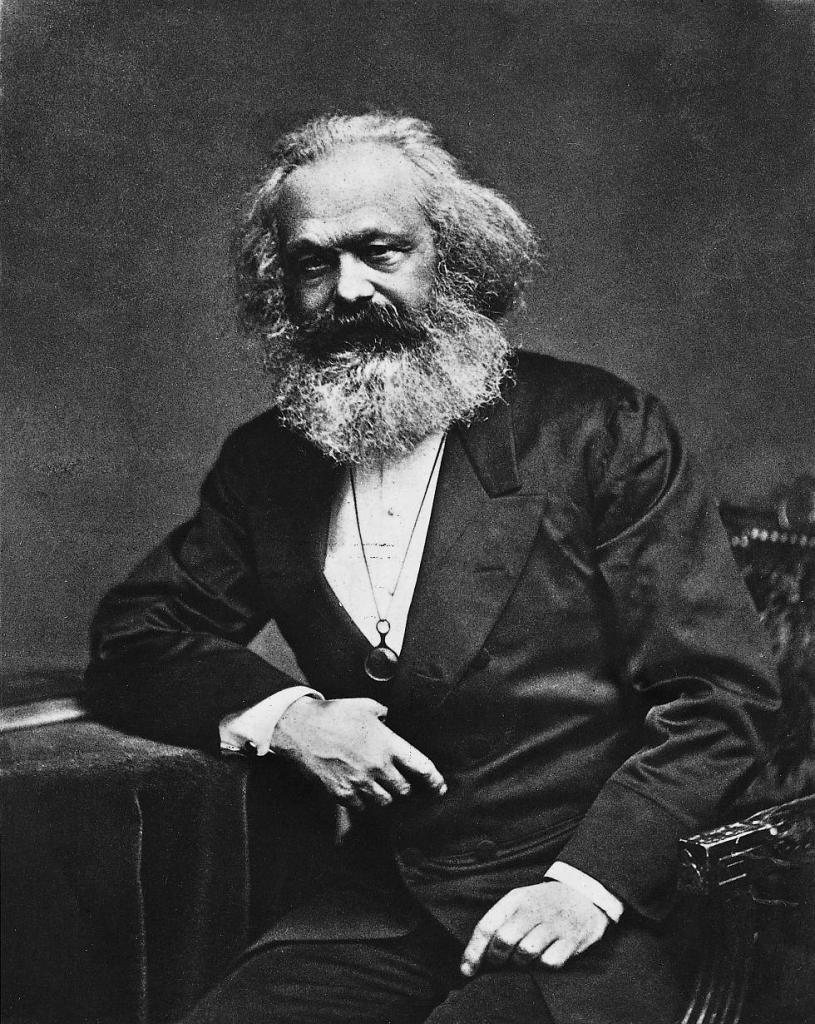
Karl Marx. No, he’s not a problem for the U.S. military, but unwinnable wars and more nuclear weapons are
This week brings another round of one-sided battles between Israelis and Palestinians in Gaza. I think many Americans are like my 10-year-old self, thinking of Israel as an innocent democracy surrounded by implacable enemies. And no doubt 1973 saw the very existence of Israel threatened. But now it’s Israel as the region’s Goliath, backed by the military and financial might of the United States. The blank check of support that the U.S. gives to Israel emboldens the Israeli state to take the harshest measures against the peoples of Gaza. I read articles that say the Biden administration has to intervene and broker a peace, but how is this possible when the U.S. is so clearly on the side of Israel? Palestinian voices just aren’t heard in the mainstream media here; even alternative media sites tread carefully, knowing the power of Israeli lobbies and fearing the stigma of being labeled anti-Semitic.
I understand the trauma of the Jewish people. For several years I taught a course on the Holocaust, after attending a seminar at the U.S. Holocaust Memorial Museum in DC. Of course, the Jewish people have a right to exist. But so too do the Palestinians, who have legitimate grievances of their land being stolen, among other crimes.
Fear, hatred, aggression, and more and more bombs are not going to bring peace. That’s one thing I do know.
When I was a kid, I was a big admirer of Israel. I saw Israel as being surrounded by implacable enemies bent on its destruction. Israel was the plucky underdog, David against Goliath, with Goliath being Arab countries like Egypt and Syria, having militaries trained and equipped by the Soviet Union, sworn enemy of the U.S. during the Cold War (or so my ten-year-old mind saw it). I recall keeping a scrapbook of articles on the Yom Kippur War of 1973. I cheered the Israeli “blitzkrieg” (What an odd term for a daring Jewish armored attack!) that crossed the Suez Canal and isolated the Egyptian Third Army, as well as the Israeli riposte on the Golan Heights against Syria.
That was 1973. Forty-one years later, Israel is engaged in yet another assault on Gaza and the Palestinians. Compared to the Israeli Defense Forces (IDF), the Palestinian militants…













 Bracing Views