Fighting for Coveted Combat Badges and Patches

the point

W.J. Astore

What will West Point graduates do without wars in Iraq and Afghanistan? Don’t worry! There are a lot more threats listed on the classroom chalkboard.

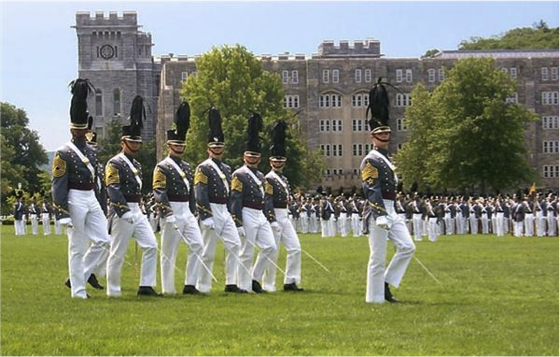
The New York Times this morning has an interesting article on this year’s West Point graduates.  With the end of the war in Iraq (at least for us) and the winding down of the Afghan conflict (again, at least for us), West Point graduates face the prospect of not being immediately deployed to a shooting war.  The article paints this as grim times, at least for the graduates, many of whom are seeking opportunities in the Special Forces for a better chance at earning “coveted” combat badges and patches.

And this is precisely the problem with a professional military that is self-defined as “warriors.”  Its members desire war: a chance, so they think, to test themselves in the crucible of combat.  They want to be where the action is, even if that action is ill-advised or even illegal under international law.

Two centuries ago, the model for West Point was a citizen-soldier engineering school, a band of brothers who would help tame our continent more through engineering skill than fighting prowess.  Our army, of course, has never been reluctant to fight when the cause was just (or when they were told by various leaders the cause was just), but the emphasis was on civilian needs first, notably the development of our nation’s infrastructure.

Contrast that with today.  The article in the New York Times includes a photo of a chalkboard used in a West Point class to explain today’s security environment.  The threats listed on the board include terrorism, cyber, Egypt, Syria, China, Iran, and North Korea (NK).  The Army’s priorities appear to be defense of the homeland (the HL), something about preserving order, and something about promoting our economic interests and values overseas.  Notably absent (as far as I can tell from the photo) was any explicit mention of the citizen-soldier ideal of supporting and defending our Constitution.

A slice of military education at West Point (Source: New York Times)

I wouldn’t want to make too much of a few words scribbled on a chalkboard.  But it appears from that list of “threats” that our West Point graduates will have plenty of opportunities in their military careers to march to the sound of gunfire.  And probably more than a few opportunities to add some “coveted” combat badges and patches to their uniforms.

They’ll be no lack, in short, of red badges of courage.  More’s the pity for ourselves and for our nation.

Did Jesus Have a Wife?

In this papyrus, Jesus mentions "my wife" and suggests she is his disciple
In this papyrus, Jesus mentions “my wife” and suggests she is his disciple

W.J. Astore

Did Jesus have a wife? Or, if not a wife, did his mention of “wife” symbolize a greater role for women as disciples? I’ve always wondered about the proudly patriarchal Catholic church and its marginalization of women. WWJD?  Would would Jesus do about a church that is so male-dominated?  So proud of its prejudices and biases vis-a-vis women and their reputed weaknesses?  I’m thinking Jesus would not have approved of official church teachings on women.

The papyrus in which Jesus mentions a wife is suggestive but not conclusive.  Nevertheless, it should spur the church to reexamine its teachings on the proper roles for women within the church.

Women should not be segregated in separate and unequal communities. They should be incorporated in the church as disciples every bit as equal and whole as male disciples.  They should be able to become priests and to administer the sacraments.  No more Adam’s rib and weaker vessel nonsense, Catholics.

It seems a radical concept to a church burdened with two thousand years of woman-marginalizing tradition.  But Jesus came to forge a new covenant, a new world order.  It’s time for the church, at least partially, to fulfill His vision.

Open your hearts, Catholics, to the equality of women within the church.  By doing so, you’ll be following Jesus more nearly.  Or so I believe.


One Word Defines U.S. Foreign Policy: Hubris

Like Gloria Swanson in "Sunset Boulevard," Our Hubristic Leaders Are Always Ready for their Close-up
Like Gloria Swanson in “Sunset Boulevard,” Our Hubristic Leaders Are Always Ready for their Close-up

W.J. Astore

When Hannah Arendt, the famous German-American political philosopher, criticized American involvement in the Vietnam War, she said that our foreign policy “experts” fell prey to using excessive means to achieve minor aims in a region of marginal interest to the United States.  You could say the same of most of America’s foreign interventions since 1945.  We are a superpower with a boundless propensity for meddling in world affairs.  We waste enormous amounts of money and resources intervening in areas that are of marginal importance to our national security.

There are many reasons for these wasteful interventions, of course.  The military-industrial-Congressional complex plays its role. Presidents love to intervene as a sign of “strength.” Natural resources, especially oil, are usually in play.  The usual motives, in short: profit, power, greed.

But perhaps the root cause of our mistakes can be traced to hubris, our prideful belief that we can remake other societies and peoples in our image.  Our hubris leads us to undervalue legitimate cultural differences, and to underestimate the difficulties involved in bridging those distances.  Because we underestimate the difficulties, we rush in with money and troops, only to find that the problems we encounter — and often exacerbate — are not amenable to being solved with money and troops.  Nevertheless, once we’ve committed our prestige, we believe that we can’t withdraw without losing face.  So we commit even more money and troops and prestige, until our folly can no longer be denied, even to ourselves.  After which, sadly, we usually search for scapegoats.

Rarely do we stop to think that some problems simply can’t be solved with massive infusions of money and troops.  Indeed, infusions of the same often exacerbate the very problems we claim we’re trying to solve.

The way out, to paraphrase Arendt, is to commit only those means necessary to secure our major aims in regions of vital interest to the U.S.

Such an approach requires humility as well as moderation. Our foreign policy types will need to stop strutting the world stage as if they own it.  Our leaders will need to stop vamping like Gloria Swanson in Sunset Boulevard, declaiming “I am big.  It’s the pictures that got small.” (If only they had her style.)

“Look at them in the front offices.  The masterminds!”  Yes, Gloria Swanson had it right. Our foreign policy “masterminds” need to learn some humility.  Either that, or America will be among the smashed idols of history.

The GM Ignition Switch Crime

A grieving Laura Christian (far right) appeals to GM and America for justice (J. Scott Applewhite/AP)

W.J. Astore

Truthout has a powerful story on the GM ignition switch design flaw, the one that killed at least thirteen people, and possibly as many as 29 (or more).  If many are so eager to support capital punishment for mass murderers, why not the death penalty for GM?  GM knew about the problem with their switch, but apparently decided it was more cost effective not to engage in a recall that would cost the company roughly $1.5 million, or 57 cents per car.

As Truthout suggests, the big problem is no one is held responsible for corporate murder.  Some money washes hands in various lawsuits, perhaps a big fine will be levied by the government, but no one goes to jail, no specific person is punished.

This sad and tragic fact put me to mind (once again) of Don Henley’s song, “If Dirt Were Dollars,” in which he sings:

“These days the buck stops nowhere/no one takes the blame/but evil is still evil/in anybody’s name.”

If corporations are people, as the U.S. Supreme Court decided, and as Mitt Romney reminded us while he campaigned for president, can’t we punish them as people?

The death penalty is popular in many places in America — it allegedly deters the worst crimes, its supporters claim.  Isn’t it time for an ignition kill switch to be activated against GM?  That would certainly deter future companies from valuing their bottom lines more than the lives of their customers.

But I’m dreaming, of course.  Corporations are citizens, my friends, except they are much more equal as citizens than you and me.  How can we measure their value?  Look again to their financial bottom lines, and how much “free” speech that allows them to exercise in the halls of power.

And so it goes in the land that equates speech and honor with money and power.


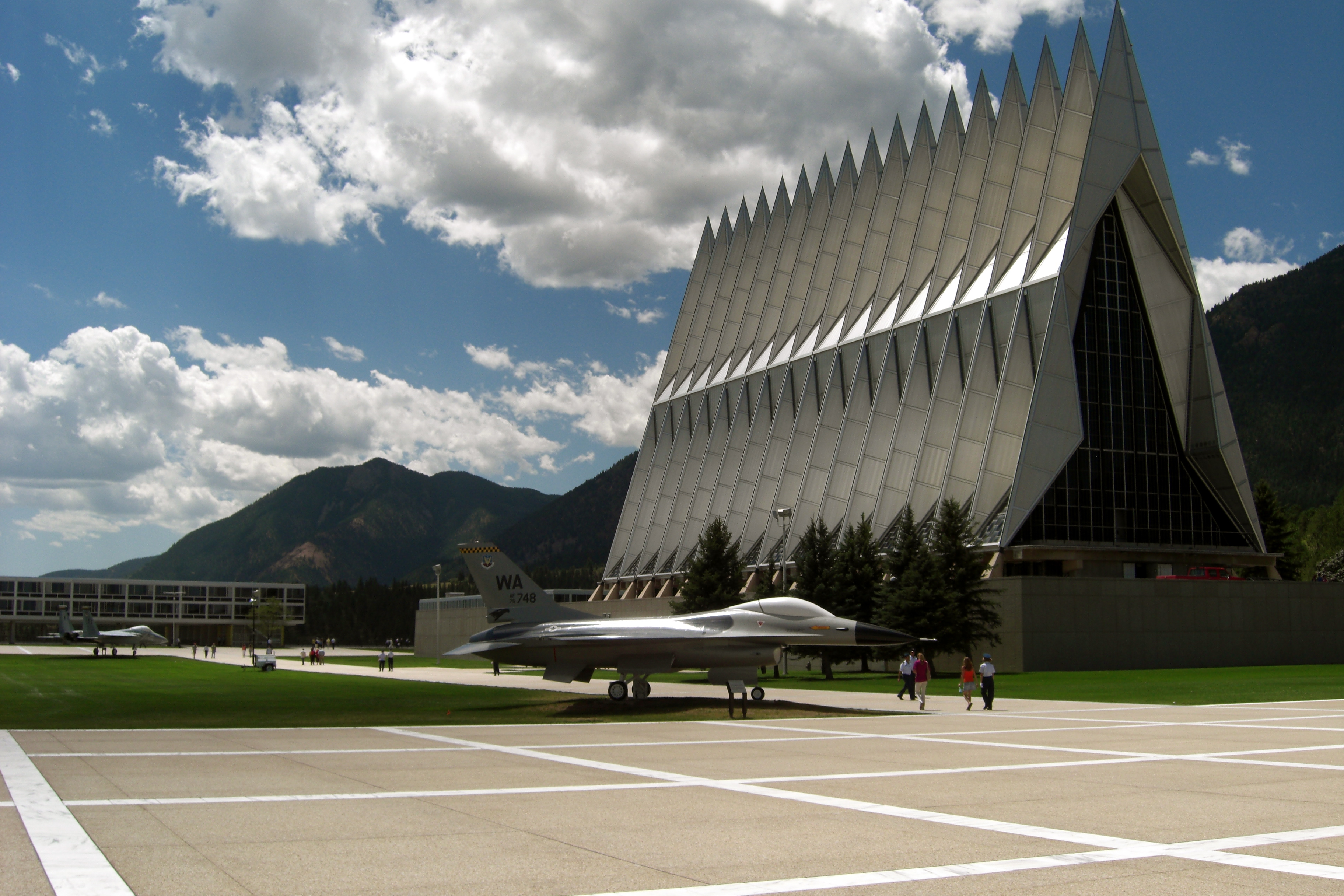
Abolish the Air Force?

usaf

W.J. Astore

Back in January, James Carroll had an op-ed in the Boston Globe that called for eliminating the Air Force as a separate service.  He claimed that the Air Force’s strategic components (its nuclear ICBMs and manned bombers) were now largely irrelevant, that the Air Force’s tactical mission could be folded into the Army and Navy, and that unmanned aerial vehicles or drones would soon largely replace manned surveillance and attack planes.

By folding the Air Force into its two older rivals, the Army and Navy, Carroll suggested the Pentagon would be forced to economize, the magic coming from reorganization.  I highly doubt that.

OK.  I’m a retired Air Force officer, so I’m biased.  But there are certain things the Air Force does, certain skills the Air Force has, that won’t be easily duplicated and probably will be lost in a bureaucratic war touched off by elimination and reorganization.  Here’s a quick list:

1.  The Air Force concentrates on air and space, just like the Army concentrates on land and the Navy on sea.  These are unique elements, requiring unique services with specialized mindsets.

2.  The Air Force is not just about fighter planes and nuclear missiles.  Much of the Air Force’s mission is in the less glorious aspects of air and space control.  Missions like cargo transport, tankers for aerial refueling, aerial and satellite reconnaissance, and the like.  Do we really believe the Army and Navy will adequately focus on and fund these vital missions?

3.  The U.S. Air Force was hardly the first independent air force in the world.  Great Britain saw the need for an independent air force in 1918 when the Royal Air Force was created.  (The USAF had to wait until 1947, i.e. after World War II.)  An independent air force reflects the technological revolution inaugurated by the Wright Brothers in 1903 and the inherent reach and power of aerial vehicles.  This is especially relevant to “island” nations such as Great Britain — and the United States.

4.  Related to (2), the Air Force has a wide range of missions, to include aerial intelligence-gathering, AWACS (airborne warning and control) and vital national command planes such as Air Force One.  Again, are these missions truly suited to the Army or Navy?

5.  In the chaos that is war, there’s something to be said for military continuity and tradition and experience.  Eliminating the Air Force and folding it into the Army and Navy will generate enormous internal friction within the Pentagon, possibly destabilizing a national defense system that is already less than optimal in its stability (as well as its wisdom).

The Air Force today certainly has its problems.  It’s the most top heavy of the services, with far too many colonels and generals.  It spends way too much on under-performing aircraft such as the F-35 Lightning II.  It’s always shied away from adequately funding the close air support mission, which is why the Army pursues its own fleet of attack helicopters.  Since its early days, it’s placed way too much faith in the efficacy of bombing, so much so that it’s generated its own Strangelovian caricatures, men like Curtis LeMay.

That said, the last thing we need is more internecine warfare in the Pentagon.  Eliminating the Air Force is not a recipe for cost-savings.  It’s a recipe for a bureaucratic bloodbath that will ultimately hurt rather than help America’s national defense.

The My Lai Massacre Just Got Worse

The My Lai Massacre
The My Lai Massacre

W.J. Astore

CBS News has an article that shows that President Richard Nixon sought to cover up the My Lai Massacre during the Vietnam War.  The article draws from notes taken at the time by H.R. Haldeman, Nixon’s chief of staff and hatchet man.  The notes suggest that Nixon ordered “dirty tricks” to discredit the testimony of the true Army heroes who intervened to stop the massacre.  It further suggests neutralizing the gory details of My Lai by playing up atrocities committed by communist forces at Huế (“You think we’re bad in massacring innocents at My Lai?  Well, the commies are a lot worse”).

Here are Haldeman’s notes from his meeting with Nixon:

Credit: Richard Nixon Presidential Library and Museum

Note that My Lai is treated as a problem in public relations, not as a war crime.  It’s to be managed by dirty tricks and the exploitation of a senator or two.  As long as we all stay on the same page and spout the same message (while suppressing the facts and intimidating and discrediting witnesses), My Lai and the 504 Vietnamese killed there in 1968 can just be made to disappear.  That’s the gist of Haldeman’s notes.

Haldeman’s notes are further evidence of what The Contrary Perspective argued previously on the Vietnam War: We lost more than a war in Vietnam.  We lost our humanity.

“The Harder I Worked Physically, the Less Money I Made”: The Harsh Reality of Life in America

My father after being drafted in 1942

W.J. and J.A. Astore

My Dad, Julius Anthony Astore, was a child of the Great Depression.  Born in 1917, he had to quit high school in 1933 to help support his family.  In 1935 he joined the Civilian Conservation Corps, or CCC, working in forestry and as a firefighter in Oregon until he left in 1937.

Finding a job after he left the CCC was tough, but eventually Dad got one working at F.B. Washburn’s Candy Company during the Christmas rush.

Here’s how Dad described his job:

I was hired for a five week job starting at 6:00PM and my night shift would be over 6:00AM the next morning.  I would have Saturdays and Sundays off.  My work hours would add up to sixty hours a week and I would get twenty cents an hour.  Total twelve dollars a week.  Those days there wasn’t any time-and-a-half after forty hours.  It was quite a grind.  I had to sugar hard candy that was shaped like a small peach stone.  I won’t go into detail but it was a very tiring job.

From my life’s experience I’ve found that the harder I worked physically the less money I made.

Time goes by and I thought I was going to be laid off at the end of five weeks [but] I was put to work on the day shift permanently.  That was in 1938, four years before I was drafted into the Army and introduced to World War II.

At Washburn’s candy factory, Dad operated a lollipop machine, candy cookers, and he mixed sugar.  His starting salary was $9 a week (working forty-five hours).  By 1942 he was making $17 a week.  As with most factory jobs, the work was tedious, physically demanding, and unrewarding.  Writing ruefully to his brother Gino in 1938, and comparing factory work to his time spent in the CCC, Dad wrote “The CCCs are a helluva lot better than that place [Washburn’s].”

When Dad was drafted into the Army in February 1942, he took a major cut in salary.  From making roughly $70 a month at Washburn’s Candy Factory, his salary dropped to $21 a month as an Army private (which was still $9 less than what he had earned in the CCC in 1935!).  When he was discharged from the Army in January 1946 as a corporal technician, he was finally making what he had earned at Washburn’s, about $69 a month.

Although it’s true that the American soldier was paid better than his British counterpart, it’s still shocking to hear that U.S. privates were fighting and dying in Europe and the Pacific for less than $30 a month basic pay.

The truth is simply this: Even the richest, most prosperous country in the world grossly underpaid its frontline troops.  While contractors got rich on the homefront, never risking a hair on their precious necks, young Americans fought and died for peanuts.

Hasn’t it always been this way?  Today, Americans are uncomfortable calling attention to pay discrepancies and exploitation because it smacks of Marxism and class warfare.  Yes, some of the worst abuses of workers have been curbed since my Dad suffered through the Great Depression, but today’s workers are simply scared: scared that their jobs will be outsourced, scared that they’ll be “downsized” (i.e., fired); scared that they’ll be replaced by robots.  Thus they put up and shut up.

For all the rhetoric about the dignity of work in the USA, Dad’s words still ring true: so-called unskilled labor, or demanding physical work, is still undervalued and disrespected in our country.  And for all the talk of “supporting our troops,” those young men and women sent into harm’s way are still paid little when you consider they’re risking their necks.

Which makes me think of another one of my Dad’s sayings: “the more things change, the more they remain the same.”  Especially if we don’t work to change them.

Thanking Me for My Service

US_Flag_Backlit

W.J. Astore

A visitor to my home today saw my retirement plaque, which marks my twenty years of service in the US Air Force.  He immediately thanked me for my service to my country.

I appreciated his thanks because I took (and take) some pride in having served honorably in the military.  But people who thank me make me uncomfortable.  Why, you ask?

Because I believe it was an honor to serve my country.  It was an honor to be entrusted by the people of our great land with their trust.

So when people thank me, I always feel like thanking them back for allowing me to serve; for giving me this honor, this privilege.

Now, I write articles that are often critical of today’s military.  And there’s lots of things to criticize.  But I don’t believe in criticizing the military’s ethic of service, an ethic that should be based on humility and tinged with pride.  Because our nation’s ideal is a citizen-soldier military.  Note how the word “citizen” comes first.  We are not supposed to want a military composed of mercenaries or warriors.  Such a military is inconsistent with our democratic ideals.

Also inconsistent with our democratic ideals is our national tendency to idolize officers of high military rank.  You know, the generals and admirals, men like Tommy Franks or David Petraeus.  Why?  Because any citizen-civilian outranks any citizen-soldier in the military, generals included.

We must always remember that military members serve us: we the people.  We don’t serve them.  And we must remember as well that our president, a civilian commander-in-chief, is first and foremost exactly that: a civilian.  And that he’s not the commander-in-chief of all Americans; merely of those Americans who choose to don a uniform and take the oath of office (to include active duty, reserves, and National Guard members).

These are fundamental points (or they should be).  They are derived from our Constitution.  Our founders saw (reluctantly) the need for a military, and perhaps our greatest founder, George Washington, was also arguably our greatest military leader.  Not because he was a Napoleon, but precisely because he wasn’t.  He was our Cincinnatus, a citizen-soldier, with the emphasis firmly placed on citizen.  A man who placed his duty to the Constitution, and to the people, before himself and military vainglory.

If you wish to thank a service member for his or her service, by all means do so.  Just don’t be completely surprised when they deflect your thanks, or even thank you back for the honor and privilege of being able to serve in the name of the people to protect our highest ideals as enshrined in our Constitution.

Why We Fight? Oil

Pay no attention to the "black gold" in Iraq!
Pay no attention to the “black gold” in Iraq!

W.J. Astore

Rachel Maddow at MSNBC aired a new documentary last night on why we went to war against Iraq in 2003.  In a word: oil.  Bush and Cheney were looking to overthrow Saddam Hussein as a prerequisite to controlling and privatizing Iraqi oil production.  Pre-war planning in the U.S. as well as Great Britain focused on identifying, safeguarding, and ultimately privatizing Iraqi oil facilities.  When U.S. forces took Baghdad, the one building they protected was the Iraqi oil ministry (museums containing priceless objects from the dawn of human civilization, left unprotected, were looted).

This is a familiar story, of course, though many Americans continue wrongly to believe that Saddam had WMD or that he was allied to Al Qaeda (or both).  Watching the documentary, I appreciated the honesty of the Polish government, which admitted that it had participated in the invasion of Iraq precisely to gain access to Iraqi oil resources.  Bush and Blair, naturally, denied any such connection, even as Bush was warning Iraqis not to damage oil facilities, even as Blair’s government was negotiating with British Petroleum on how best to divide the spoils.

When it comes to oil, maybe “The Beverly Hillbillies” song had it right: “Black gold.  Texas tea.”  And whether it’s black gold or the yellow variety, the West has always shown a rapacity for it that borders on the insane.  Just ask the Aztecs and the Incas, for example.

Here’s an article I wrote back in 2012 for Huffington Post on the question of why the U.S. invaded Iraq and not, say, North Korea, which as Maddow points out was identified as one head of Bush’s three-headed “Axis of Evil,” but which unlike Iraq and Iran actually was hard at work on building an atomic bomb, efforts that ended in a successful test in 2006.  But North Korea is not floating on a sea of oil, is it?

Why We Fight? Oil  (written in 2012)

I’m old enough to remember the Arab oil embargo of 1973 and long lines for gasoline in the United States. A joke that circulated among my schoolmates caught the spirit of the moment. It involved calculators, which were fairly new back then for the masses. It went like this: 142 Arabs fight 154 Israelis for control of 69 oil wells for five years. Who wins?

Punch the numbers 142, 154, and 69 into your calculator and then multiply by 5 and you get 71077345. Turn the calculator upside down and those numbers spell out “ShELLOIL,” or so we joked. Call it the cynicism of 11-year-olds.

Thirty years later, as an Air Force officer I recall a discussion of what we should name the operation to liberate Iraq from Saddam Hussein. Wags in my office suggested the obvious: Operation IRAQI LIBERATION, with lots of chuckles about the resulting acronym (OIL). Call it the cynicism of 40-somethings.

Fighting for vital resources is nothing new in history, and nothing new in U.S. history either. Smedley Butler, the famous U.S. Marine general who penned War Is a Racket, wrote in the 1930s that “those damned oil companies” should fly their own flag — perhaps one with a gas pump on it — over foreign lands that they viewed as their personal property. Call it the cynicism of a retired major-general who twice was awarded the Congressional Medal of Honor.

But is it cynicism — or just plain honesty? Consider the book by Greg Muttitt on the Iraq war and its fallout, which places oil back where it belongs, front and center, in American motivations and machinations. This is hardly surprising, for recall the words of then-Deputy Secretary of Defense Paul Wolfowitz that Iraq floated on a sea of oil, or the background of then-Vice President Dick Cheney and his overweening ambition to dominate global energy resources.

Our nation’s great thirst for oil should come as no surprise to anyone. Even former President George W. Bush gave a speech in which he declared that the U.S. was addicted to foreign oil. What’s surprising is that we continue to wrap our wars in the rhetoric of “freedom” even as we pursue the fix that our leaders believe they need to thrive: foreign oil, and lots of it.

There’s plenty of oil still in the ground in Iraq and elsewhere in the Middle East, and at $100 a barrel for oil and $4.00 a gallon for gasoline, you’re talking trillions of dollars for oil companies over the next few decades.

Considering the vast profits involved, you don’t have to be a cynic to recognize that concerns about oil continue to drive our nation’s foreign policy. But you do have to be willing to face that fact; and you do have to be willing, like General Smedley Butler was willing, to ignore the siren song about waging war for freedom and democracy.

As former President Bush said, we’re addicted to oil. And history has shown we’re willing to fight for it, though the biggest winners may well be powerful energy companies.

Don’t believe me? Read Smedley Butler or Greg Muttitt. Or just ask to see an 11-year-old’s calculator.

Hair-Trigger America

Easy on that trigger, America

W.J. Astore

I wrote this for Truthout but debated whether to publish it.  I just didn’t want to deal with all the gun enthusiasts who equate liberty with owning lots of guns and ammo.  This article is not specifically about guns.  It’s about our propensity for seeking quick and violent solutions to societal and political problems.  It’s about our willingness to spend billions on weaponry and also our willingness to sell billions in weaponry. It’s about a mentality that’s captured in the image of fingers tensed on so many hair-triggers, whether metaphorically or literally.

A nation that used to espouse isolationism has morphed into one poised for hair-trigger pre-emptive war, privately armed to the teeth and the leading purveyor in the global arms trade.

We live in hair-trigger America, an America that’s quick to kill, slow to think. A nation and a people that used to espouse isolationism (even if the practice was imperfect) has morphed into one poised for constant warfare. America’s leaders call for hair-trigger pre-emptive war even if the odds of an attack on the United States are 100 to 1against. America’s military and the CIA use Predator and Reaper drones to kill “enemies,” even when they’re not completely sure they are the enemy.

This is not the first time we’ve been a hair-trigger people. When I worked in the Air Force at the Cheyenne Mountain complex in Colorado in the 1980s, fear of nuclear annihilation was palpable. US nuclear forces were on hair-trigger alert. With the collapse of the Soviet Union and the end of the Cold War, annihilatory fears abated.  We were, in the words of President George H.W. Bush, offered a chance to cash-in our peace dividends. We were, in the words of Jeanne Kirkpatrick (no dove she), offered a chance to become a normal country in normal times.

What intervened, of course, was the shock and awe of 9/11, together with what President Dwight D. Eisenhower termed the growing power of the military-industrial complex. Motive and opportunity drove a military (and militantly hysterical) response to 9/11 (to include torture) that was in retrospect entirely out of proportion to the damage done as well as to the threat posed by the attackers. At the same time, US troops were lauded as so many heroes, their leaders as so many Caesars. Forgotten was our founders’ hard-earned skepticism of militarism and war, their prediction that constant warfare would trigger the end of liberty.

More than a decade after 9/11, America remains poised to strike, fingers at ready on so many hair triggers. The military and especially its Special Forces remain on alert, trigger-pullers who are forward-deployed in 100-plus countries for rapid responses (and deadly interventions). Drones patrol foreign skies, always circling, always seeking targets. Full-spectrum dominance is the military’s stated goal. The land, the seas, the skies, space, even cyberspace – all must be treated as potential war zones.  All must therefore be dominated.

A hair-trigger mentality is both glitch and feature of a distinctly militarized and authoritarian American moment.  And those hair-triggers often morph into trigger-pullers, literally so, domestically as well as internationally.  Gun deaths in America continue to exceed 30,000 a year; by 2015, they may exceed traffic deaths. If not trigger-pullers, so many millions of Americans are trigger owners. As of 2009, there were 310 million non-military firearms in the United States, enough guns to arm every man, woman and child. One nation, under guns (but certainly not under-gunned).

Of course, Americans are not only trigger-pullers, but trigger-pushers. And by that I mean that the United States dominates the world’s (legal) arms trade. In 2010, we accounted for 53 percent of this trade; in 2011, a banner year, we accounted for a whopping 75 percent of this trade, dropping back to only 58 percent in 2012. Add to this legal arms trade the propensity for American guns to cross borders illegally to end up at crime scenes in Mexico and elsewhere, even when our own government isn’t involved in facilitating the trade.

To be seen as ready, willing, and able to pull various triggers is a distinctly American trope. Toughness, especially in dealing with foreign adversaries, is measured by a willingness to kill, a form of martial virtue. No American president can be seen without a gun in his hand, a trigger being pulled, even Barack Obama, whose staff took pains to release a photo of him shooting skeet.

When will we learn, as Eisenhower said, that only Americans can hurt America? And that trigger-pulling and trigger-pushing Americans are an especially grave threat, not only to America, but also to the world?

Recalling the words of Kirkpatrick, it’s long past time for America to become a normal country in normal times.  A time when fingers need not be tensed on so many hair triggers. Or any triggers at all.

Copyright, Truthout. May not be reprinted without permission.