Real War: The Horror

blood

W.J. Astore

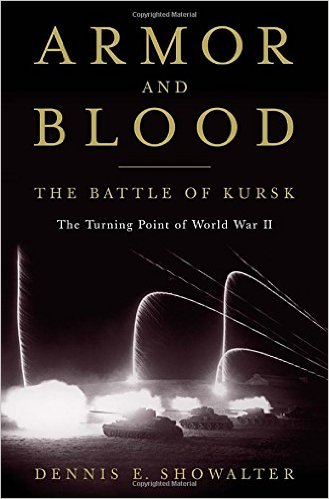
I recently read Blood Red Snow: The Memoirs of a German Soldier, by Günter Koschorrek, which focuses mainly on combat on the Eastern Front between the Germans and Soviets during World War II.  As Dan White has noted, military history sometimes degenerates into war porn – exciting tales of derring-do that save the day and end in citations and medals.  Real war isn’t like that.  Real war is horror, a horror that Koschorrek quickly came to know as a very young man.

Writing about his first weeks of combat, Koschorrek notes “how impatiently we waited for the opportunity to fight at the front!  Now, after exactly three weeks in combat, no one talks of heroism or enthusiasm any more.  On the contrary, the only wish is to get out of this death trap alive.”

Koschorrek’s first wound in combat is a minor one, which does not qualify him for evacuation from the front.  He writes:

I feel the disappointment—a hope has been dashed.  And then I think how quickly human feelings and attitudes can change.  It is only a matter of weeks since I was dreaming of glory and heroism and was so full of élan that I was almost bursting.  Now I long for a Heimatschuss—because it appears to me to be the only way that I can, with any sort of honor, say goodbye to this soul-destroying environment …

Koschorrek, a machine-gunner, quickly became a hardened veteran of the war.  When he sees friends killed in combat, he writes of a “sort of madness” that came over him, the desire for “bloody revenge.”  He writes:

Revenge and retaliation!  That inflammatory clarion call for revenge!  That’s the way all war leaders want their soldiers to be.  Remorseless, and with hatred and retaliation in their hearts, men can win battles, and quite ordinary soldiers can be converted into celebrities.  Fear is converted into hatred, anger and calls for retribution.  In this way you are motivated to fight on—even decorated with medals as a hero.

As the war drags on and Nazi Germany begins to lose, Koschorrek writes of “deserters and dissenters” within the ranks.  “They are called traitors to the fatherland,” he notes, but Koschorrek concludes with an important insight: “Nobody can be himself during a war—we all belong to the people and the state.”

War witnesses the death of individuality in the name of a collective: the people, the state.  More frightening is the death of individual conscience, as even the worst war crimes are excused in the name of “defending” the state.

As the Soviets close in and begin to invade Germany proper, Koschorrek encounters the aftermath of horrific reprisals committed by the Soviet invaders on the German people.  In one case, he notes how ordinary German villagers “were surprised in their sleep by the Soviets and couldn’t escape.  The [Nazi] party bigwigs, however, were all able to get away in time.”

When the war is finally over, Koschorrek was able to evade capture by the Soviets and transportation to Siberia as a POW.  He writes of trading his war medals (such as the Iron Cross) and ribbons for cigarettes, noting how American soldiers lusted after German war memorabilia.  Koschorrek’s medals and ribbons—marks of valor he wanted so keenly at war’s start—became by war’s end nothing but barter for smokes.

His last words reflect the hard-won wisdom of a man who fought as part of a war of annihilation on the Eastern Front:

when will people realize that it is possible for any of us to be manipulated by domineering and power-crazed individuals who know how to motivate the masses in order to misuse them for their own ends?  While they keep well out of the way [of war], in safety, they have no hesitation in brutally sacrificing their people in the name of patriotism.  Will mankind ever stand together against them?

Koschorrek, a frontline combat soldier, can be faulted for not being more critical of Nazi ideology and its megalomaniacal designs.  He has little to say about Nazi war atrocities.  His account is focused on combat and comrades, in the thick of the fighting, where the desire to stay alive is all-consuming.

It’s a book to be read carefully by anyone who thinks war is glorious.

The Drone Medal Revived!

W.J. Astore

Bad ideas never die at the Pentagon — nor do they fade away.  No — like no-win wars (Vietnam followed by Afghanistan, and so on), they keep coming back to haunt us.

According to today’s New York Times, the Pentagon is reviving the idea of special medals and awards for drone pilots and cyber-warfare specialists.

predator
Give that drone a medal!

This was an idea shot down by former SecDef Chuck Hagel, but bad ideas live a phoenix-like existence at the Pentagon.

Back in July 2012, I wrote the following article for Huffington Post about “the drone medal.”  It still stands today.  There are plenty of military decorations and awards, already on the books, that “a grateful nation” can give to its drone operators and cyberwar experts.  Creating new decorations to celebrate the “chair force” — well, what more can I say?

The Drone Medal (July 2012)

News that the Pentagon is considering a special “Distinguished Warfare Medal” for drone pilots tells us much about the American war-making moment. Leaving aside issues of bravery or courage of drone operators, let’s first consider the name of the medal, with its stress on “distinguished warfare.”

Traditionally, U.S. military medals by their very names have stressed honor or service, such as our highest award, the Medal of Honor, or the Distinguished Service Cross. Other medals are specifically connected to aerial prowess and feats, such as the Distinguished Flying Cross or the Air Medal. Such medals are well named, linked as they are to skills demonstrated by air crews operating in harm’s way.

What are we to make of a medal named for prowess in “warfare,” especially when drone operators are completely isolated from the battlefield? For that matter, how can war by remote control be recognized and celebrated as a “distinguished” form of “warfare”? Wouldn’t it be more honest (and perhaps even more honorable) to name this new decoration the “Drone Medal,” with all that name implies?

In raising these semantic points, I wish to take nothing away from drone pilots. They train hard, they work long hours, and they’re dedicated professionals. What they don’t need is a new medal created especially for them, and I’m guessing most of them would agree.

The U.S. military already has a bewildering array of awards and decorations on the books. If a drone pilot does something especially noteworthy or meritorious, there already exist commendation, meritorious service, and distinguished service medals that can be awarded to recognize his or her contribution.

Honestly, the last thing our bloated military establishment needs is more medals. But if the Pentagon insists on creating a “Distinguished Warfare Medal,” we really should insist on calling the Department of Defense by its old (and, given recent events, much more accurate) name: the Department of War.

Liberty First: What an Old Coin Can Teach Us

IMG_0413
My dad’s half dime

W.J. Astore

When I was a kid, I was a stamp collector.  My dad, in contrast, saved old coins.  He was not a collector; he didn’t file them away in special folders. He just tossed old silver coins into a cigar box.

My favorite coin of his was also the oldest one he had: a “half dime” from 1845.  To me, it’s a remarkably simple and aesthetically pleasing design, featuring a seated figure of “Liberty” on the obverse, with the words “Half Dime” on the reverse.

half dime

Note what’s missing: the words “In God We Trust.”  This motto was not added to coins until the national trauma of the U.S. Civil War reinforced religious revivals that had preceded that war.  It made its first appearance in 1864.  (Interestingly, in the “Pledge of Allegiance,” the words “under God” were added only in 1954 during another crisis, the fear of communism stoked by McCarthyism during the Cold War.)

As a nation it seems we invoke God during crises, calling on Him for support and guidance and blessing.

But I want to return to my dad’s half dime from 1845, because that coin, in its simplicity, enshrines a value that is most fundamental to our country: Liberty.

With respect to religion, liberty to me means the freedom to worship God in one’s own way, to include the freedom not to worship God, even the freedom to express disbelief in God.

Such liberty was extremely rare in the 18th century when our nation was founded.  Back then, being labeled an “atheist” was roughly equivalent to being labeled a “terrorist” today.  But our nation’s founders were of diverse religious persuasions, to include Catholics and Quakers as well as myriad branches of “dissenting” Protestantism.  A few were deists (Thomas Jefferson most famously) who rejected the Trinitarian Christianity of most of their peers, and a small number (Thomas Paine, perhaps) were skeptics to the point of atheism.

What united them was a belief in liberty.  In religion, this was expressed as the freedom to worship in any way you chose, or not to worship at all.  Thus there was no religious “test” for office, no requirement to be a Christian or to express a belief that “In God We Trust.”

That profound belief in personal freedom — in liberty first — is captured on my dad’s old coin.  It’s also captured in the Pledge of Allegiance before 1954: “one nation indivisible with liberty and justice for all.”

In today’s political climate, with all of our public prayers and calls to God to bless America, with talk of Muslims not being allowed to hold office because their god is somehow the wrong god, we need to recall that America was founded on Liberty first.

Or as my mom put it in her inimitable way, “You worry about your soul and I’ll worry about mine.”  Jefferson and Paine would have liked my mom.


War, American Style

769px-National_Security_Agency_headquarters,_Fort_Meade,_Maryland
The National Security Agency, just one of seventeen agencies devoted to intelligence

W.J. Astore

A common belief shared by U.S. political pundits and a compliant and complicit U.S. media is that America never chooses its wars: it’s dragged into them.  Last October, I read an article in the “liberal” New York Times that caught the mood perfectly.  It worried the U.S. was being “sucked into” wars in the Middle East, drawn in, inexorably, by forces the world’s lone superpower couldn’t control.  As if America’s leaders had no choice.  As if they (and we) couldn’t walk away whenever we so chose.

What foolishness.  By choice the U.S. has been meddling in the greater Middle East for decades (consider the CIA-orchestrated coup in Iran in 1953, to cite only one example).  America is not being “sucked in” by uncontrollable forces.  Our leaders choose to meddle – most often in extremely violent and prejudicial ways – in regions of the world they understand poorly, if at all

And poor understanding comes despite a massive intelligence complex featuring 17 agencies chewing through $70 billion a year.  Indeed, according to a Washington Post study, the U.S. has nearly 1300 government organizations and nearly 2000 private companies devoted to counterterrorism, homeland security, and intelligence.

Let’s look at a tiny piece of that complex: the presence of 1500 intel operatives working daily to provide “actionable intelligence” for U.S. Central Command (CENTCOM) in Florida.  Roughly the equivalent of a military regiment of high-priced intelligence operatives sits on its collective butt in Florida, gazing at computer screens, producing its own fog of war about the Middle East.

Indeed, much of war, American style has degenerated into watching people killed at a distance.  Think of video footage from drone strikes that call to mind snuff films.  Want explosive climaxes?  As Peter Van Buren noted, they’ve got the war porn for you.

War, American style features lots of bragging about the military (We’re Number One!), lots of grinding in wars that last forever, but no satisfying climaxes, whether in Vietnam or Afghanistan or Iraq or Libya.  Lots of steroidal militarism, but no clear military victories.

Donald Trump had a fleeting moment of sanity when he said in the last presidential debate that the U.S. after 9/11 wasted three or four trillion dollars on wars with nothing to show for it.  That money should have been invested in America instead, he said, which caused Carly Fiorina to denounce him for sounding like Barack Obama!  Yes, Obama the “feckless weakling,” according to that man-burger, Chris Christie.

Ergo I can suggest one safe bet for 2016: more war.  At least we’re number one at something.

Update: I added this to the comments section below, but will also put it here for new readers.

Ten Features of War, American Style

1. Wars are no longer declared by Congress, and thus they are not waged in the name of the people.
2. Wars are now fought by “warriors” rather than by citizen-soldiers. Citizens are excluded from wars by choice and by design; they are reduced to cheerleaders and told to go shopping.
3. Wars no longer have a discernible end point. (How do you end a war on terror?)
4. Wars are supported by both parties and by the corporate-owned media as well. Dissenters to war are pushed to the margins and dismissed as unserious and/or misguided and/or unpatriotic.
5. War damage is confined largely to foreigners; American life continues on, undisturbed by war.
6. Major corporations continue to profit from war; similarly, the USA remains dominant in the world arms trade.
7. “Security” has become the byword of America, a security that is linked to a strong military presence overseas and a strong police presence at home. “Security” has become synonymous with guns and prisons in Lockdown USA. In other words, a war mentality has spread deeply into American consciousness, so much so that few people recognize its signs anymore. (Peace, love, understanding? Get thee behind me, Hippie!)
8. Related to (7): The celebration of all things military. Baseball uniforms with camouflage. Camouflage headsets for football coaches. Constant celebrations of military “heroes” in “private” venues, some of them paid for using public (taxpayers’) dollars.
9. No need for elites to risk their sons and daughters in war (no draft), thus apathy. When they do express some concern, they’re largely unable to critique war and U.S. foreign policy since they’ve been trained to defer to “experts.” Those experts? Mostly retired military officers, many with conflicts of interest, e.g. they work for defense contractors that profit from continuous war.
10. Fear. Fear is both a product of war and a generator of it. Fear is constantly stoked in the USA.

Chris Hedges, of course, is superb on this general question. Read his “War Is A Force that Gives Us Meaning.”

The Bull, not the Eagle, Is the New Symbol of U.S. Foreign Policy

Send in the bombers! A "strange love" indeed
Send in the bombers! A “strange love” indeed

W.J. Astore

One of the first acronyms I learned in the military was KISS.  No, not the heavy metal band.  No, nothing romantic either.  It stands for “keep it simple, stupid.”  The lesson: don’t think too much.  That leads to “analysis paralysis.” Be decisive!  Act, if need be, with extreme prejudice, a preference expressed vulgarly as “Kill ’em all and let God sort ’em out.”

It’s a preference readily expressed by the current crop of political candidates for commander-in-chief.  With the possible exceptions of Rand Paul and Bernie Sanders, all are slavering for a chance to bomb the bastards back to the Stone Age.  Like the young macho fools in the movie “Boiler Room,” they all want to wield their (fantasy) big swinging dicks.  They’re all budding Curtis LeMays, cigar-chomping bulls in a china shop.

Indeed, the bull rather than the eagle should be the symbol of American foreign policy.  Always charging off to foreign lands, always striving to gore anyone within reach of its horns, all in the name of being decisive, of showing that “America means business” (and not just on Wall Street).

To this season’s peculiar electoral crop of presidential candidates, it looks remarkably easy to win wars. Just bomb the bastards!  Teach them not to mess with Team USA.  Heck, I’m sure it looked easy to the political hacks of London in 1775 as they faced a perceived terrorist threat in a faraway land.  Just send some “special ops” Redcoats supported by Hessian mercenaries (boots on the ground!) to teach those New England terrorists a lesson. Use superior technology (in this case, gunboats) to bombard their rebellious cities (like Boston).  Never mind civilian casualties – a show of force will show the bastards who’s boss.

At least the British had enough sense to cut their losses after six years of bungling that ended at Yorktown (1781).  The U.S. today just keeps sending more troops and more money and more bombs overseas, each time expecting victory instead of the destruction and chaos that characterized previous misadventures (Vietnam, Lebanon, Somalia, Iraq, Afghanistan, Libya, Syria …).

American foreign policy: It’s become like a bull in the ring, snorting, pawing at the ground, racing madly at red capes.  Each time it thinks it’s going to get that cape – until it ends up impaled on the toreador’s sword.

Feeding the Disease of Terrorism

07kurds.xlarge1 U.S. troops in Mosul, Iraq in 2007.  A foreign presence to Iraqis

W.J. Astore

I’m a retired U.S. military officer.  When I think of U.S. troops, naturally I see them as my gals and guys.  I identify with them.  And I know enough of them to know that their intent is usually good — at least in the sense that they seek to do their duty.

But I’m also an historian with a modicum of empathy.  I know that foreigners don’t see the U.S. military as I see it.  Nor do they experience it the way I experienced it.  To cite just one anecdote: I recall a story in the New York Times in which U.S. troops in Iraq ask an Iraqi farmer if he’s seen any foreign fighters around.  The Iraqi has a simple answer: “Yes. You.”

Six years ago, I wrote an article for Huffington Post on “Catch-22 in Afghanistan.”  I argued that the more the U.S. military intervened in the affairs of Afghanistan, the less likely it was that a permanent, and suitably Afghan, solution would be found to the problems confronting that country.  Not much has changed in those six years, except that today the Taliban controls even more territory, the drug trade is even more pervasive, and corruption is even more endemic.

We need to learn (or re-learn) a basic lesson: The more the U.S. intervenes in conflicts within other countries, the less likely it is that a favorable outcome will result (favorable for the U.S., that is), simply because U.S. forces are viewed as a foreign contagion. And indeed we are that.

Ignoring its Afghan failures, the U.S. government now seeks to widen its military commitment to the most hotly contested areas of the Middle East.  Our leaders act as if the way to end civil wars driven in part by radical Islam is violent intervention led by American troops.

But American troops (and drones and bombs and all the rest) are not the answer.  Indeed, their actions spread the contagion further.

The other day, I was reading about “super-bugs,” those bacterial infections that have become highly resistant to traditional antibiotics due to misuse and overuse of the same.  In seeking to “destroy” ISIL and similar “infections,” the American government instead often feeds them.  Indeed, I was surprised to learn that in medicine there are super-bugs that literally feed on traditional antibiotics.  They gain strength from being attacked.  Such is often the case for “bugs” like ISIL, which feed off of heavy-handed U.S. military actions.

This is not an argument for the U.S. military to do nothing.  Rather, it’s a reminder of the limits of power and the complexity of life.  It’s a reminder too that to foreigners the U.S. military is the foreign presence, the contagion.  Even when it seeks to act as a “cure,” it may in fact be feeding the disease.

School Cops with Assault Rifles: Make My Day — Not

swat
Keeping American TV “safe” since 1975

W.J. Astore

At Northeastern University in Massachusetts, members of campus security are now routinely carrying military assault rifles in their vehicles. The rationale is that you never know when and where terrorists will strike, so you have to be prepared to outgun them at all times.

Many Americans equate guns with safety — and bigness with value. So, the bigger the gun, the safer you are.  Right?

It didn’t used to be this way.

Back in the 1970s, I remember when the police got by with .38 revolvers. Up-arming the police meant going from .38 specials to .357 magnums.  Of course, these were six-shot revolvers.  Then cops started carrying 9mm handguns with clips that could carry 15-18 rounds.  Now some cops carry .40 caliber semi-automatics, which are more powerful than the 9mm but also more difficult to control.

You might call it the “Dirty Harry” syndrome (that bigger guns are better), except that that’s being unfair to Harry (played so memorably by Clint Eastwood).

As a teen, I was a big “Dirty Harry” fan, so I remember the rationale for Harry’s Smith & Wesson .44 magnum.  He carried it because he was a pistol champion (as he said, “I hit what I aim at”), and because he wanted a round with “penetration” (he noted that .38 rounds “careen off of windshields”). Finally, Harry said he used a “light special” load to limit recoil, saying it was like firing a .357 with wadcutters.  (All of this is from memory, which shows you the impression those “Dirty Harry” movies made on a typical teen interested in guns.)

Soon after Harry started boasting about his .44 magnum, a new TV show aired in America: SWAT (standing for “special weapons and tactics”). Police SWAT teams are now common in America, but they were somewhat of a novelty forty years ago.  I recall that the team carried AR-15 assault rifles along with specialized sniper rifles and shotguns.  They drove around in a big police van and arrived each week just in the nick of time to save the day.  My favorite character was the guy who carried the sniper rifle.

My excuse?  Heck, I was a teenager! What’s disturbing to me is how my teen enthusiasm for guns is now considered the height of maturity in the USA.  So much so that we arm campus police with assault rifles and see it as a prudent and sensible measure to safeguard young students.

The ready availability of guns of all types has created our very own “arms race” in America — an arms race that is being played out, in deadly earnest, each and every day on our streets and in our buildings.  We’ve allowed the cold, bold “Dirty Harry” of the early 1970s to be outgunned not only by today’s hardened criminals but by campus cops as well.

Assault rifles and SWAT teams are part of America’s new normal. Rare in the 1970s, they are now as American as baseball and apple pie.

I don’t think even Dirty Harry would be pleased with America’s new reality.  Make my day — not.

The Republican Debate: Attack of the Clones!

W.J. Astore

They say a picture is worth a thousand words, so here’s one:

635858109901870040-AP-GOP-2016-Debate.2

From left to right, we have Kasich, Fiorina, Rubio, Carson, Trump, Cruz, Jeb!, Christie, and Paul.

Look closely.  Rubio, Trump, Cruz, Jeb!, Christie, and Paul are following the standard sartorial script for “conservative” politicians: dark suits, red power ties, flag lapel pins.  Obedient to their image consultants, they are conforming to the notion that one can appear confident and patriotic just by donning that red tie and flag pin.  In the spirit of the “Star Wars” season, let’s call this the “Attack of the Clones.”

Then you have Fiorina.  She upstages the men with a power red suit, complete with an ostentatious cross to assure viewers that she’s not just a kickass former CEO: She’s a kickass Christian CEO.

Fiorina Rubio

Then we have Dr. Ben Carson.  Yes, he has the (nearly) obligatory flag lapel pin, but kudos to him for wearing a smart blue tie with white polka dots.  His tie is much like the way the candidate speaks: calm and measured.  (The content of his speech is often a different story.)

carson

Finally we have John Kasich.  A soft blue tie and no flag lapel pin.  Why do you hate America, Governor Kasich?

Kasich

Well, if I had to vote for a Republican based purely on optics, I’d go for Kasich.  Imagine a Republican candidate brave enough not to wear a power red tie and a flag lapel pin.  With no Christian crosses in sight.

Perhaps Kasich actually wants to be judged by his words and deeds?


A Contrary Perspective on the Middle East

IMG_0230

W.J. Astore

How about a contrary perspective on the Middle East, courtesy of my old globe?  It dates from the early 1920s, just after World War I but before Russia became the Soviet Union.  Taking a close look at the Middle East (a geographic term that I use loosely), you’ll notice more than a few differences from today’s maps and globes:

  1. Iraq and Syria don’t exist.  Neither does Israel.  Today’s Iran is yesterday’s Persia, of course.
  2. Instead of Iraq and Syria, we have Mesopotamia, a name that resonates history, part of the Fertile Crescent that encompassed the Tigris and Euphrates Rivers as well as the Nile in Egypt.  Six thousand years ago, the cradle of human civilization, and now more often the scene of devastation caused mainly by endless war.
  3. Ah, Kurdistan!  The Kurds today in northern Iraq and southern Turkey would love to have their own homeland.  Naturally, the Arabs and Turks, along with the Persians, feel differently.
  4. Look closely and you’ll see “Br. Mand.” and “Fr. Mand.”  With the collapse of the Ottoman Empire (roughly a larger version of modern-day Turkey) at the end of World War I, the British gained a mandate over Palestine and Mesopotamia and the French gained one over territory that would become Lebanon and Syria.  The British made conflicting promises to Jews and Arabs over who would control Palestine while scheming to protect their own control over the Suez Canal.  A large portion of Palestine, of course, was given to Jews after the Holocaust of World War II, marking the creation of Israel and setting off several Arab-Israeli Wars(1948-73) and the ongoing low-level war between Israel and the Palestinians, most bitterly over the status of the “Occupied Territories”: land captured by the Israelis during these wars, i.e. the West Bank (of the Jordan River) and the Gaza Strip (both not labeled on my outdated globe).
  5. Improvisation marked the creation of states such as Lebanon, Syria, and Iraq.  Borders encapsulated diverse peoples with differing goals. Western powers like Britain and France cared little for tribal allegiances or Sunni/Shia sensitivities or political leanings, favoring autocratic rulers who could keep the diverse peoples who lived there in line.
  6. Historically powerful peoples with long memories border the Middle East.  The Turks and the Persians (Iranians), of course, with Russians hovering in the near distance.  They all remain players with conflicting goals in the latest civil war in Syria and the struggle against ISIS/ISIL.
  7. Three of the world’s “great” religions originated from a relatively tiny area of our globe: Judaism, Christianity, and Islam.  Talk about a fertile crescent!  Sadly, close proximity and shared roots did not foster tolerance: quite the reverse.
  8. Remember when Saudi Arabia was just Arabia?  Ah, those were the good old days, Lawrence.
  9. Nobody talks much about Jordan, an oasis of relative calm in the area (not shown on my old globe).  Lucky Jordan.
  10. The presence of Armenia in Turkey on my old globe raises all kinds of historical ghosts, to include the Armenian genocide of World War I. Today, Turkey continues to deny that the word “genocide” is appropriate to the mass death of Armenians during World War I.

My fellow Americans, one statement: The idea that America “must lead” in this area of the world speaks to our hubris and ignorance.  We are obviously not seen as impartial.  Our “leadership” is mainly expressed by violent military action.

But we just can’t help ourselves.  The idea of “global reach, global power” is too intoxicating.  We see the globe as ours to spin.  Ours to control.

Perhaps old globes can teach us the transitory nature of power.  After all, those British and French mandates are gone.  European powers, however grudgingly, learned to retrench.  (Of course, the British and French, together with the Germans, are now bombing and blasting old mandates in the name of combating terrorism.)

I wonder how a globe made in 2115 will depict this area of the world. Will it look like today’s globe, or more like my globe from c.1920, or something entirely different?  Will it show a new regional empire or more fragmentation?  An empire based on Islam or a shattered and blasted infertile crescent ravaged by war and an inhospitable climate driven by global warming?

Readers: I welcome your comments and predictions.

Mother Nature: It’s Really Not Nice to Fool with Her

earth
Guess What?  There’s Only One Earth

W.J. Astore

The other day, I was watching a typical truck commercial on TV. It showed trucks literally tearing up the backroads, along with ATVs spinning and jumping and chewing up the countryside, all synonymous with “adventure” and “freedom.”

I remember those old Coors commercials featuring Mark Harmon. They were set in Colorado (I think) and featured him quietly extolling the virtues of barley and clean water. Now most Coors commercials are about self-indulgent partying (but please drink responsibly).

My point? We need a change in mindset — one that values nature and its preservation. We’re doomed if we keep selling the idea “you can have it all,” so go party and tear up nature — who cares as long as you’re having fun?

We act as if we have many planet earths, but we have only one.  And we’re slowly and surely making our planet less habitable for humans.

Our planet is already having its revenge.  As Tom Engelhardt wrote about in a recent article about “Emperor Weather,”

Of course, his [Emperor Weather’s] air power — his bombers, jets, and drones — would be superstorms; his invading armies would be mega-droughts and mega-floods; and his navy, with the total or partial melting of the Greenland and Antarctic ice sheets, would be the rising seas of the planet, which would rob humanity of its coastlines and many of its great cities. His forces would occupy not just one or two countries in the Greater Middle East or elsewhere, but the entire planet, lock, stock, and barrel.

Emperor Weather’s imperial realms would be global on an awe-inspiring scale and the assaults of his forces would fragment the present planet in ways that could make much of it, in human terms, look like Syria. Moreover, given how long it takes greenhouse gases to leave the atmosphere, his global rule would be guaranteed to last an inhumanly long period of time unchallenged.

Heat (think burning Australia today, only far worse) would be the coin of the realm. While humanity will undoubtedly survive in some fashion, whether human civilization as we now know it can similarly survive on a planet that is no longer the welcoming home that it has been these last thousands of years we have no way of knowing.”

Wars will doubtless follow in the wake of disruptions by Emperor Weather, which will only make matters worse for humanity.  Think of all those weapons that run on fossil fuels — ships, planes, and tanks.  All those weapons that pollute the earth while consuming valuable resources that could be used for alternative energies (solar panels, for example).

It’s time to beat our weapons into wind turbine blades, and to make war no more, either on ourselves or on nature.