Creator of Bracing Views. Contributor to TomDispatch, Truthout, HNN, Alternet, Huffington Post, Antiwar, and other sites. Retired AF lieutenant colonel and professor of history. Senior fellow, Eisenhower Media Network
Here are twelve questions for Hillary Clinton and Donald Trump, followed by quick answers about where they stand, based on what they’ve done as well as what I’ve heard them say in various speeches and debates. To avoid any confusion with her husband, I refer to Hillary Clinton as “Hillary.”
Which candidate is going to:
End America’s wars?
Hillary will continue them. Trump has questioned whether they’re worth it. Advantage Trump.
Tackle global warming?
Hillary believes in science. Trump apparently doesn’t, though he’s taken steps to safeguard his properties against climate change. Advantage Hillary.
Reverse Citizen’s United and get corporate money out of politics?
Hillary has said she’ll do something; Trump hasn’t. But Hillary is dependent on corporate financing. A wash.
Work to reduce the growing gap between the richest 1% and everyone else?
Hillary talks about fairness, raising the minimum wage, and equal pay for women. Trump wants to restore American jobs through tariffs and trade wars. Whether either candidate really cares about the working classes is debatable. A wash.
Rebuild America’s crumbling infrastructure, ensuring safe roads, bridges, and water supplies?
Both candidates talk a good game. The problem is: Where is the money coming from? Trump’s tax breaks that favor the rich may literally bankrupt America; Hillary’s war and social spending will absorb most federal funding. A wash.
Reject trade deals that hurt American workers?
Hillary was for the TPP before she was against it. She and Bill were also for NAFTA. Trump talks about helping workers even as his companies shift jobs overseas to save money. A wash.
Pursue a domestic political agenda that doesn’t vilify minorities and the vulnerable?
Hillary is far better than Trump at promoting a message of inclusion. Advantage Hillary.
Respect the U.S. Constitution and the separation of powers, i.e. reject the “Unitary Executive” model?
Neither candidate promises to rein in executive authority. Both are power-hungry and secretive. A wash.
Rein in the burgeoning national security state and its lockdown mentality?
Trump is seemingly more skeptical about military spending and is less encumbered by neocon conventions. Yet he stokes fear of the outsider, which feeds the lockdown mentality that plagues America. Hillary boasts of strengthening national security and cultivates hawkish elements while rejecting any cuts to war spending. A wash.
Work for quality public education?
Neither candidate has spoken a lot about public education. But Trump has joked that he likes the under-educated since they’re many of his most ardent supporters. Stupid is as stupid does. Advantage Hillary.
Reduce the prison-industrial complex?
Hillary’s husband’s policies are partly responsible for the complex, though now she says she wants to reduce America’s reliance on prisons, which target minorities disproportionately. I haven’t heard Trump articulate a clear vision on this, except to vow “on day one” that he’d restore law and order to America. Slim advantage to Hillary.
Respect the environment, e.g. end fracking?
Hillary promoted fracking while she led the State Department. Trump simply promotes business and making money. I don’t see either as having any deep-rooted respect for nature. A wash.
Score Card: Score 1 for Trump, 4 for Hillary. And 7 for candidate “Wash.”
Jill Stein in Philly
What if Green Party candidate Jill Stein were included? She might edge Trump and Hillary on all of these questions. I think Bernie Sanders would score 11 out of 12. His one failing during the primary was his reluctance to say he’d rein in the national security state. What a shame Bernie is out, especially since he was beaten neither fairly nor squarely.
What about the Libertarians? I have limited exposure to Gary Johnson, William Weld, and their party, but here’s a quick cut and paste job from CNN:
“First, libertarianism is more than just an economic ideology. It’s a social one. And many Libertarian social positions — an openness to immigration, an embrace of equal rights for gay, lesbian, and transgender persons, a hostility toward the war on drugs and American militarism abroad, and support for women’s reproductive rights — are arguably more progressive than the average Democrat. Libertarians were supporting marriage equality and marijuana legalization, for instance, long before any mainstream politician — Clinton included — would touch those issues.”
“Second, even on strictly economic issues, Libertarians have a lot to say that should appeal to those on the left. Libertarians have long been sharply critical, for instance, of the ways regulations such as occupational licensing requirements are used to protect the economically powerful at the expense of the poor and marginalized. They’ve fought against subsidies, bailouts, and other forms of “crony capitalism” that benefit the few at the expense of the masses. And — contrary to popular perception — Libertarians have often argued in favor of a well-designed social safety net to protect those who fail to benefit from the economic dynamism of a free economy.”
A quick look at my 12 questions coupled with interviews I’ve seen with Gary Johnson suggest that he’d easily score higher than Hillary and Trump but lower than Stein and Sanders.
Here’s the deep irony for America: The most interesting candidates, Gary Johnson and Jill Stein, are the ones marginalized by the system. They are not allowed to debate. They are judged “not ready for prime time.” And the weakest candidates, the most deeply compromised, Hillary and The Donald, are the ones who are given the lion’s share of attention and respectability. They are celebrated. They are prime time.
So many flags, but where’s the fresh thinking? (AP Photo/John Locher)
W.J. Astore
Andrew Bacevich has written a whip-smart article at TomDispatch.com on this November’s choice for the presidency. Here are a few excerpts:
Trump is a bozo of such monumental proportions as to tax the abilities of our most talented satirists. Were he alive today, Mark Twain at his most scathing would be hard-pressed to do justice to The Donald’s blowhard pomposity.
Similarly, how did the party of Adlai Stevenson, but also of Stevenson’s hero Franklin Roosevelt, select as its candidate someone so widely disliked and mistrusted even by many of her fellow Democrats? True, antipathy directed toward Hillary Clinton draws some of its energy from incorrigible sexists along with the “vast right wing conspiracy” whose members thoroughly loathe both Clintons. Yet the antipathy is not without basis in fact.
Even by Washington standards, Secretary Clinton exudes a striking sense of entitlement combined with a nearly complete absence of accountability. She shrugs off her misguided vote in support of invading Iraq back in 2003, while serving as senator from New York. She neither explains nor apologizes for pressing to depose Libya’s Muammar Gaddafi in 2011, her most notable “accomplishment” as secretary of state. “We came, we saw, he died,” she bragged back then, somewhat prematurely given that Libya has since fallen into anarchy and become a haven for ISIS.
She clings to the demonstrably false claim that her use of a private server for State Department business compromised no classified information. Now opposed to the Trans Pacific Partnership (TTP) that she once described as the “gold standard in trade agreements,” Clinton rejects charges of political opportunism. That her change of heart occurred when attacking the TPP was helping Bernie Sanders win one Democratic primary after another is merely coincidental. Oh, and the big money accepted from banks and Wall Street as well as the tech sector for minimal work and the bigger money still from leading figures in the Israel lobby? Rest assured that her acceptance of such largesse won’t reduce by one iota her support for “working class families” or her commitment to a just peace settlement in the Middle East.
Let me be clear: none of these offer the slightest reason to vote for Donald Trump. Yet together they make the point that Hillary Clinton is a deeply flawed candidate, notably so in matters related to national security. Clinton is surely correct that allowing Trump to make decisions related to war and peace would be the height of folly. Yet her record in that regard does not exactly inspire confidence.
Not much of a “choice,” right? Donald Trump is a loose cannon, with no apparent rangefinder, whereas Hillary Clinton is a “fire-at-will” cannon, with a known record of pounding a select list of targets. Trump doesn’t know what a nuclear triad is and asks why the U.S. has so many nuclear weapons while not using them (good question, actually, but I don’t think The Donald wants to follow this to the logical conclusion that we should eliminate our nuclear arsenal). Clinton is hopelessly compromised on Israel and so many other issues and is a card-carrying member of American exceptionalism and neo-conservative military adventurism.
Here’s another telling excerpt from Bacevich:
When it comes to fresh thinking, Donald Trump has far more to offer than Clinton — even if his version of “fresh” tends to be synonymous with wacky, off-the-wall, ridiculous, or altogether hair-raising.
The essential point here is that, in the realm of national security, Hillary Clinton is utterly conventional. She subscribes to a worldview (and view of America’s role in the world) that originated during the Cold War, reached its zenith in the 1990s when the United States proclaimed itself the planet’s “sole superpower,” and persists today remarkably unaffected by actual events. On the campaign trail, Clinton attests to her bona fides by routinely reaffirming her belief in American exceptionalism, paying fervent tribute to “the world’s greatest military,” swearing that she’ll be “listening to our generals and admirals,” and vowing to get tough on America’s adversaries. These are, of course, the mandatory rituals of the contemporary Washington stump speech, amplified if anything by the perceived need for the first female candidate for president to emphasize her pugnacity.
A Clinton presidency, therefore, offers the prospect of more of the same — muscle-flexing and armed intervention to demonstrate American global leadership — albeit marketed with a garnish of diversity. Instead of different policies, Clinton will offer an administration that has a different look, touting this as evidence of positive change.
Yet while diversity may be a good thing, we should not confuse it with effectiveness….
So the question needs be asked: Has the quality of national security policy improved compared to the bad old days when men exclusively called the shots? Using as criteria the promotion of stability and the avoidance of armed conflict (along with the successful prosecution of wars deemed unavoidable), the answer would, of course, have to be no. Although Madeleine Albright, Condoleezza Rice, Susan Rice, Samantha Power, and Clinton herself might entertain a different view, actually existing conditions in Afghanistan, Iraq, Libya, Syria, Somalia, Sudan, Yemen, and other countries across the Greater Middle East and significant parts of Africa tell a different story.
The abysmal record of American statecraft in recent years is not remotely the fault of women; yet neither have women made a perceptibly positive difference. It turns out that identity does not necessarily signify wisdom or assure insight. Allocating positions of influence in the State Department or the Pentagon based on gender, race, ethnicity, or sexual orientation — as Clinton will assuredly do — may well gratify previously disenfranchised groups. Little evidence exists to suggest that doing so will produce more enlightened approaches to statecraft, at least not so long as adherence to the Washington playbook figures as a precondition to employment. (Should Clinton win in November, don’t expect the redoubtable ladies of Code Pink to be tapped for jobs at the Pentagon and State Department.)
In the end, it’s not identity that matters but ideas and their implementation. To contemplate the ideas that might guide a President Trump along with those he will recruit to act on them — Ivanka as national security adviser? — is enough to elicit shudders from any sane person. Yet the prospect of Madam President surrounding herself with an impeccably diverse team of advisers who share her own outmoded views is hardly cause for celebration.
In short, if you want more endless foreign wars and the abridgment of rights here at home in the name of “security,” vote for Hillary. If you want “rogue” actions based on knee-jerk sentiments and biases backed by inexperience and a stunning ignorance of even the most basic world facts, vote for Trump.
Quite a “choice,” right?
Be sure to read the rest of Bacevich’s article here.
Mike Murry’s recent comment reminded me of this article that I wrote about three years ago. Macho posturing by America’s “leaders” has created enormous problems for the U.S. What is it with this obsession for “hardness” and “toughness” and “big boy” pants? Isn’t it a defining trait of a bully to whack people around precisely because he’s insecure and wants to compensate for that by feeling “big” through violence against the vulnerable? Just look at Trump and his bullying behavior. He attacks those he perceives as vulnerable (Mexicans, Muslims, women, and so on), even as he dodged the draft during the Vietnam War.
It’s obvious that many men in America see masculinity under assault, or they fear their own loss of manliness, hence those calls for “big boy” pants, and hence all those sports metaphors applied to war.
Time to put away the “big boy” pants, America. Instead, how about engaging in mature, intelligent, thinking and reflection, followed by action that ends our unwinnable wars and our national obsession with violence and weapons?
Too many troops have died in the name of big boy pants
W.J. Astore
Jeremy Scahill is a reporter for whom the word “intrepid” may have been invented. He’s been remarkably bold in covering the creation of private mercenary forces in the United States (as documented in his bestseller, Blackwater) as well as America’s “turn to the dark side” after 9/11/2001, which led to “wars of choice” in Iraq and Afghanistan, together with interventions in Somalia, Yemen, and across the world in the name of combating terrorism. Indeed, the subtitle of Scahill’s new book is “The World Is A Battlefield.” And since there’s always a terrorist organization at large somewhere in the world, we are ensured of a forever war, a grim prospect on this Veterans Day.
I’ve written an extended review of Scahill’s Dirty Wars at Michigan War Studies Review, edited by the incomparable Jim Holoka. An aspect…
Someday, someone will write a history of the U.S. national security state in the twenty-first century and, if the first decade and a half are any yardstick, it will be called something like State of Failure. After all, almost 15 years after the U.S. invaded the Taliban’s Afghanistan, launching the second American Afghan War of the past half-century, U.S. troops are still there, their “withdrawal” halted, their rules of engagement once again widened to allow American troops and air power to accompany allied Afghan forces into battle, and the Taliban on the rise, having taken more territory (and briefly one northern provincial capital) than at any time since that movement was crushed in the invasion of 2001.
Thirteen years after George W. Bush and his top officials, dreaming of controlling the oil heartlands, launched the invasion of Saddam Hussein’s Iraq (the second Iraq War of our era), Washington is now in the third iteration of the same, with 6,000 troops (and thousands of private contractors) back in that country and a vast air campaign underway to destroy the Islamic State. With modest numbers of special operations troops on the ground and another major air campaign, Washington is also now enmeshed in a complex and so far disastrous war in Syria. And if you haven’t been counting, that’s three wars gone wrong.
Then, of course, there was the American (and NATO) intervention in Libya in 2011, which cracked that autocratic country open and made way for the rise of Islamic extremist movements there, as well as the most powerful Islamic State franchise outside Syria and Iraq. Today, plans are evidently being drawn up for yet more air strikes, special operations raids, and the like there. Toss in as well Washington’s never-ending drone war in Pakistan’s tribal borderlands, its disastrous attempt to corral al-Qaeda in the Arabian Peninsula in Yemen (leading to a grim and horrifying Saudi-led, American-supported internecine conflict in that country), and the unending attempt to destroy al-Shabaab in Somalia, and you have at least seven wars and conflicts in the Greater Middle East, all about to be handed on by President Obama to the next president with no end in sight, no real successes, nothing. In these same years Islamic terror movements have only spread and grown stronger under the pressure of the American war machine.
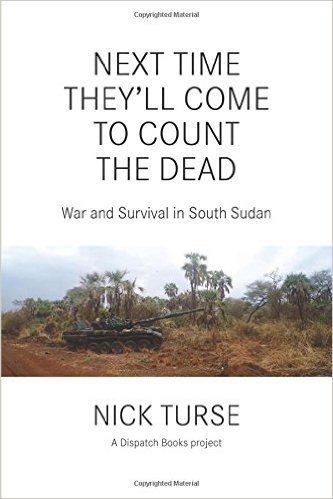
It’s not as if Washington doesn’t know this. It’s quite obvious and, as TomDispatch Managing Editor Nick Turse, author of the highly praisedNext Time They’ll Come to Count the Dead, points out today in his latest report on the U.S. military’s pivot to Africa, the pattern is only intensifying, something clearly recognized by key American commanders. What’s strange, however, is that none of this seems to have caused anyone in the national security state or the military to reconsider the last 15 years of military-first policies, of bombs dropped, troops dispatched, drones sent in, and what the results were across the Greater Middle East and now Africa. There is no serious recalibration, no real rethinking. The response to 15 years of striking failure in a vast region remains more of the same. State of failure indeed!
Be sure to read Nick Turse on how U.S. military efforts in Africa show more regress than progress.
Two weeks ago, I did an interview with TheoFantastique on the military in science fiction. I’d like to thank John Morehead, the site’s creator, for inviting me to answer a few questions on a subject near and dear to my heart.
TheoFantastique: Bill, thanks for making a little time to respond to a few questions related to the subject matter of your article. What are some general observations you have made about the shift in science fiction film depictions of the American military from the post-World War II period to the present?
Bill Astore: Thanks for inviting me, John. I grew up in the late 1960s and 1970s, in the immediate aftermath of the Vietnam War and Watergate. Films of that era were generally critical of the establishment, including sci-fi films. I fondly recall Planet of the Apes with its anti-nuclear message. Also Soylent Green with its warning about over-population, but even more dire was the way in which the authorities hid from the people the true nature of their new food source. Think also of Capricorn One, hardly a great film, but one which exposed a government conspiracy at the heart of the first manned mission to Mars. And Silent Running with Bruce Dern. The basic message was how humans were destroying planet earth, often due to nuclear war or environmental destruction, or both. Finally, Logan’s Run was a favorite of mine, but again the message was how the government of that world hid from the people the true nature of life outside of the bubble.
I remember seeing Alien in the theater and being blown away by the alien “birth” scene. But again the theme of that film was you can’t trust the authorities, who wanted the “alien” at any cost, i.e. the crew was expendable. Think of Outland as well with Sean Connery: yet more corruption among the establishment, this time involving drugs and production quotas in space mining. Here the workers were expendable.
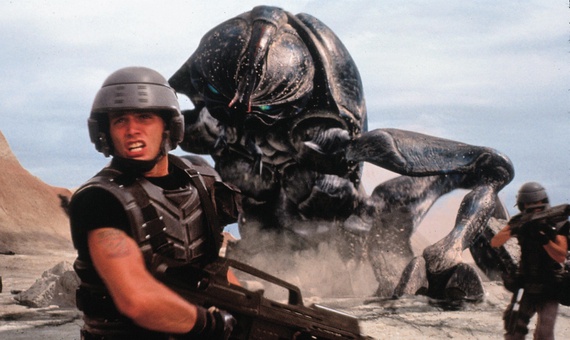
I know I’m digressing from your question, but my general point is this: Sci-Fi films (and stories) are generally questioning (or questing, perhaps). They are usually not pro-military or pro-authority. Put differently, for every Starship Troopers there’s a Bill the Galactic Hero as a counterweight.
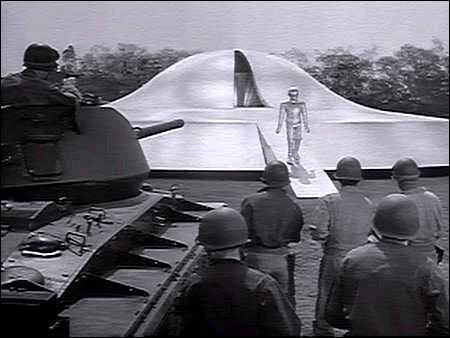
Think of one of my all-time favorite films, The Day the Earth Stood Still. The military is completely ineffectual in that film. Worse: the military contributes to the problem. Similarly, in the 1950s lots of films were made about the dangers of nuclear war and radiation. The military usually didn’t emerge in a favorable light in those films, if I recall correctly.
I think this began to change with films like Star Wars and Close Encounters of the Third Kind. Star Wars could be read as apolitical (“a long time ago, in a galaxy far, far away”), even if that wasn’t George Lucas’s intent. In Close Encounters, a terrific film that I saw in the theater, the authorities actually know what they’re doing. They greet the alien mothership peacefully, and communicate with music and light instead of guns and nukes. Again, I don’t think Spielberg was making a pro-authority or pro-military film, but I believe he didn’t want to make a political film, a film like The Day the Earth Stood Still.
After these two films, Hollywood embraced space operas and feel-good movies. There were exceptions, of course. One of my favorite movies is Starman with Jeff Bridges. Again, the authorities only want the alien for the powers he brings with him. Think too of The Man Who Fell to Earth and the way in which his life is corrupted by human excess. Doesn’t he get addicted to television?
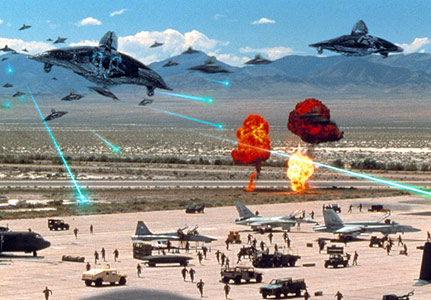
The movie that really changed it all was Independence Day, a perfect film in the aftermath of Desert Storm (the expulsion of Iraq from Kuwait). Here, of course, the militaries of various countries come together to defeat the aliens, led by an American president who climbs into the cockpit to lead the charge himself. This proved so popular that it’s no surprise George W. Bush tried to replicate the scene in the aftermath of the U.S. invasion of Iraq in 2003 (his infamous landing on an aircraft carrier, followed by his “Mission Accomplished” victory speech).
TheoFantastique: What represents much of the portrayal of the U.S. and its military, and what does this say back to us by way of reflection on American militarism around the world?
Bill Astore: I think many, if not most, Americans now want to see the U.S. military portrayed in a positive light in films. Since the 1980s, and especially since the 1990s, Americans have been told to “support our troops.” After 9/11, ordinary Americans were taught and told we live in a dangerous world filled with “alien” terrorists, and that we had to submit to authority to combat and defeat those “aliens.”
Some recent sci-fi films, I believe, have come to celebrate the military, its weaponry, and its can-do spirit of “warriors.” They’ve played it safe, in other words. In some cases, film makers may have curried favor with the Pentagon as a way of securing military cooperation in filming. For example, to secure access to bases, to advanced technologies such as the F-22 and F-35 jet fighters, and so on. It makes their films “sexier” to have such access.
I’m sure some would say, So what? What’s wrong with a summer blockbuster that portrays military action in a favorable light? To that I’d say: reel war is nothing like real war. The best science fiction films — or the memorable ones — inspire us to dream of bettering ourselves as individuals and as a species. And I think the best films still seek to challenge us to be more noble, more benevolent, more compassionate.
TheoFantastique: How do you feel as a retired Air Force officer about current science fiction’s perspective on the U.S. military?
Bill Astore: I have mixed feelings. On the one hand, I’m glad that films are not universally anti-military. On the other hand, I’m upset that many films tend to glorify battle and war. War often looks very sexy and exciting in today’s crop of sci-fi action flicks. We need to remember that war is bloody awful, and that lasers and light sabers would not make it any less awful.
Check out TheoFantastisque, a meeting place for myth, imagination, and mystery in pop culture.
Yes, there was a revealing moment at last night’s Democratic National Convention. No, it wasn’t President Obama’s soaring speech, or Joe Biden’s heartfelt appeal, or Tim Kaine’s “believe me” lampoon of Donald Trump. All these were scripted.
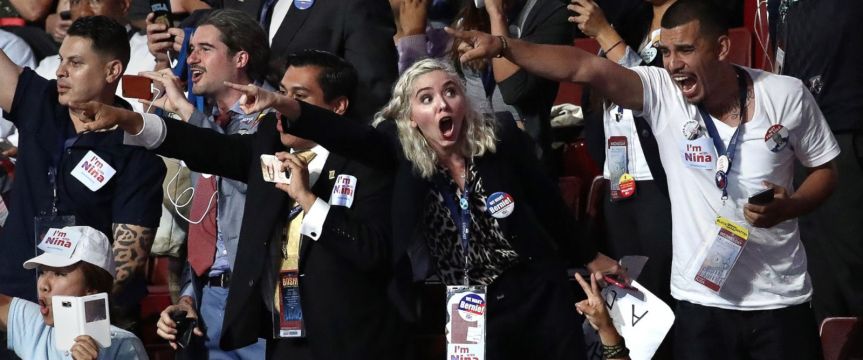
It was the anti-war protesters who spoke out against drone assassinations and war while former CIA Director and Secretary of Defense Leon Panetta spoke.
Good for them. This democratic convention has been at pains to please the military. Last night, Panetta called the U.S. military our greatest national treasure. Obama repeated his claim that the U.S. military is the finest fighting force since Cain slew Abel. Tim Kaine opened his remarks by mentioning the Marines and shouting Semper Fi.
The Democrats are the new Republicans: they’re going “all in” on military boosterism and ra-ra patriotism.
Which is why the anti-war protest was so refreshing. End the wars — end the killing — what’s wrong with these protesters for expressing such crazy sentiments at a Democratic political rally? (An aside: my favorite sign read “Fauxmocracy.”)
The DNC response was swift. Apparently, they cut the lights to the section where the main body of protesters sat (the Oregon delegation), but the protesters simply pulled out their Smart phones for light. Panetta, of course, ignored them, carrying on with his prepared speech that vilified Trump for his remarks about Vladimir Putin and hacking. (Pretty dumb by The Donald, but the man is an empty barrel, an Archie Bunker who loves to make lots of noise.)
Most interesting of all was media response. I was watching MSNBC (I think) when a commentator attacked the anti-war protesters for undercutting Panetta’s speech against Trump. Yes, it was the protesters who were TOTALLY in the wrong! How dare they chant “no more war” at a former CIA Director and secretary of war? How dare they challenge an olympian like Panetta while he’s on the stage? How dare they organize and exercise their first amendment rights?
Expect more unbounded praise of the U.S. military tonight by Hillary Clinton. Expect more talk of war. Just don’t expect any honest talk about the cost of America’s wars or any vows about ending them in our lifetimes.
Update (7/28):
I just endured General Allen’s jingoistic speech/scream and all the “USA! USA!” chants, followed by a short speech by a Medal of Honor recipient in favor of Clinton.
After which Brian Williams of MSNBC said, “Sadly,” you could still hear faintly the voices of protesters shouting “No more war.” Why is that so sad, Brian Williams? Why is it so sad for Democrats to be against war? Why must they shut up when a general speaks, a general who boasts of making the U.S. military stronger with even better weaponry with which to kill?
That’s the real “sad” part, Brian Williams: How the Democratic Party has become the war party.
I had begun an article on why Donald Trump can still win when I saw an article by Michael Moore on the same subject. I’m going to post Moore’s article below, and by way of introduction, here’s the gist of what I was going to say:
Trump has advertised himself as the “law and order” candidate, the new sheriff in town, the one who’s going to kick ass and save us all, from the very day he takes the oath of office. It sounds absurd. Laughable. But I’ve seen this script play out before, and the “absurd” won.
I lived in rural Pennsylvania for nine years in a conservative area that went gaga over Sarah Palin’s visit in 2008 (she drew roughly 20 times as many people as Joe Biden). The local election for mayor pitted a moderate Republican, cozy with the establishment (let’s call him “Hillary”) versus a candidate who had a billboard featuring his image and boasting to local criminals that “On Day One, You’re Done,” a candidate who was an outspoken outsider (let’s call him “Trump”).
Guess who won? “Trump” won. People got out and voted for “Trump” because they were tired of establishment politics and broken promises; they wanted the “law and order” guy. Incredibly, the new mayor actually wore a bullet-proof coat when he was sworn in, allegedly because people had made threats against him (his wife, who stood next to him during the mayoral ceremony, had no such protection).
The people voted for the tough-talking “Trump.” The guy who hung gun profiles with bullet holes in the window of his garage. The guy who talked about the past and restoration (not reformation, and certainly not revolution). And that’s what (enough) people wanted. A reactionary. A man in the saddle, a new sheriff, no matter how implausible it sounded. This is the dynamic the real Trump is tapping today.
I’ve lived outside the liberal bubble. I’ve spent 20 years in the military and nine years in rural PA, in flyover country, a place where limousine liberals would never come to, let alone get out of the car. And based upon my many years of bubble-free life, I tell you the real Trump can win.
Now, I’d like to call on Michael Moore to tell you the same thing.
Five Reasons Why Trump Will Win
Michael Moore
Friends:
I am sorry to be the bearer of bad news, but I gave it to you straight last summer when I told you that Donald Trump would be the Republican nominee for president. And now I have even more awful, depressing news for you: Donald J. Trump is going to win in November. This wretched, ignorant, dangerous part-time clown and full time sociopath is going to be our next president. President Trump. Go ahead and say the words, ‘cause you’ll be saying them for the next four years: “PRESIDENT TRUMP.”
Never in my life have I wanted to be proven wrong more than I do right now.
I can see what you’re doing right now. You’re shaking your head wildly – “No, Mike, this won’t happen!” Unfortunately, you are living in a bubble that comes with an adjoining echo chamber where you and your friends are convinced the American people are not going to elect an idiot for president. You alternate between being appalled at him and laughing at him because of his latest crazy comment or his embarrassingly narcissistic stance on everything because everything is about him. And then you listen to Hillary and you behold our very first female president, someone the world respects, someone who is whip-smart and cares about kids, who will continue the Obama legacy because that is what the American people clearly want! Yes! Four more years of this!
You need to exit that bubble right now. You need to stop living in denial and face the truth which you know deep down is very, very real. Trying to soothe yourself with the facts – “77% of the electorate are women, people of color, young adults under 35 and Trump can’t win a majority of any of them!” – or logic – “people aren’t going to vote for a buffoon or against their own best interests!” – is your brain’s way of trying to protect you from trauma. Like when you hear a loud noise on the street and you think, “oh, a tire just blew out,” or, “wow, who’s playing with firecrackers?” because you don’t want to think you just heard someone being shot with a gun. It’s the same reason why all the initial news and eyewitness reports on 9/11 said “a small plane accidentally flew into the World Trade Center.” We want to – we need to – hope for the best because, frankly, life is already a shit show and it’s hard enough struggling to get by from paycheck to paycheck. We can’t handle much more bad news. So our mental state goes to default when something scary is actually, truly happening. The first people plowed down by the truck in Nice spent their final moments on earth waving at the driver whom they thought had simply lost control of his truck, trying to tell him that he jumped the curb: “Watch out!,” they shouted. “There are people on the sidewalk!”
Well, folks, this isn’t an accident. It is happening. And if you believe Hillary Clinton is going to beat Trump with facts and smarts and logic, then you obviously missed the past year of 56 primaries and caucuses where 16 Republican candidates tried that and every kitchen sink they could throw at Trump and nothing could stop his juggernaut. As of today, as things stand now, I believe this is going to happen – and in order to deal with it, I need you first to acknowledge it, and then maybe, just maybe, we can find a way out of the mess we’re in.
Don’t get me wrong. I have great hope for the country I live in. Things are better. The left has won the cultural wars. Gays and lesbians can get married. A majority of Americans now take the liberal position on just about every polling question posed to them: Equal pay for women – check. Abortion should be legal – check. Stronger environmental laws – check. More gun control – check. Legalize marijuana – check. A huge shift has taken place – just ask the socialist who won 22 states this year. And there is no doubt in my mind that if people could vote from their couch at home on their X-box or PlayStation, Hillary would win in a landslide.
But that is not how it works in America. People have to leave the house and get in line to vote. And if they live in poor, Black or Hispanic neighborhoods, they not only have a longer line to wait in, everything is being done to literally stop them from casting a ballot. So in most elections it’s hard to get even 50% to turn out to vote. And therein lies the problem for November – who is going to have the most motivated, most inspired voters show up to vote? You know the answer to this question. Who’s the candidate with the most rabid supporters? Whose crazed fans are going to be up at 5 AM on Election Day, kicking ass all day long, all the way until the last polling place has closed, making sure every Tom, Dick and Harry (and Bob and Joe and Billy Bob and Billy Joe and Billy Bob Joe) has cast his ballot? That’s right. That’s the high level of danger we’re in. And don’t fool yourself — no amount of compelling Hillary TV ads, or out-facting him in the debates or Libertarians siphoning votes away from Trump is going to stop his mojo.
Here are the 5 reasons Trump is going to win:
Midwest Math, or Welcome to Our Rust Belt Brexit.
I believe Trump is going to focus much of his attention on the four blue states in the rustbelt of the upper Great Lakes – Michigan, Ohio, Pennsylvania and Wisconsin. Four traditionally Democratic states – but each of them have elected a Republican governor since 2010 (only Pennsylvania has now finally elected a Democrat). In the Michigan primary in March, more Michiganders came out to vote for the Republicans (1.32 million) that the Democrats (1.19 million). Trump is ahead of Hillary in the latest polls in Pennsylvania and tied with her in Ohio. Tied? How can the race be this close after everything Trump has said and done? Well maybe it’s because he’s said (correctly) that the Clintons’ support of NAFTA helped to destroy the industrial states of the Upper Midwest. Trump is going to hammer Clinton on this and her support of TPP and other trade policies that have royally screwed the people of these four states. When Trump stood in the shadow of a Ford Motor factory during the Michigan primary, he threatened the corporation that if they did indeed go ahead with their planned closure of that factory and move it to Mexico, he would slap a 35% tariff on any Mexican-built cars shipped back to the United States. It was sweet, sweet music to the ears of the working class of Michigan, and when he tossed in his threat to Apple that he would force them to stop making their iPhones in China and build them here in America, well, hearts swooned and Trump walked away with a big victory that should have gone to the governor next-door, John Kasich.
From Green Bay to Pittsburgh, this, my friends, is the middle of England – broken, depressed, struggling, the smokestacks strewn across the countryside with the carcass of what we use to call the Middle Class. Angry, embittered working (and nonworking) people who were lied to by the trickle-down of Reagan and abandoned by Democrats who still try to talk a good line but are really just looking forward to rub one out with a lobbyist from Goldman Sachs who’ll write them nice big check before leaving the room. What happened in the UK with Brexit is going to happen here. Elmer Gantry shows up looking like Boris Johnson and just says whatever shit he can make up to convince the masses that this is their chance! To stick to ALL of them, all who wrecked their American Dream! And now The Outsider, Donald Trump, has arrived to clean house! You don’t have to agree with him! You don’t even have to like him! He is your personal Molotov cocktail to throw right into the center of the bastards who did this to you! SEND A MESSAGE! TRUMP IS YOUR MESSENGER!
And this is where the math comes in. In 2012, Mitt Romney lost by 64 electoral votes. Add up the electoral votes cast by Michigan, Ohio, Pennsylvania and Wisconsin. It’s 64. All Trump needs to do to win is to carry, as he’s expected to do, the swath of traditional red states from Idaho to Georgia (states that’ll never vote for Hillary Clinton), and then he just needs these four rust belt states. He doesn’t need Florida. He doesn’t need Colorado or Virginia. Just Michigan, Ohio, Pennsylvania and Wisconsin. And that will put him over the top. This is how it will happen in November.
The Last Stand of the Angry White Man.
Our male-dominated, 240-year run of the USA is coming to an end. A woman is about to take over! How did this happen?! On our watch! There were warning signs, but we ignored them. Nixon, the gender traitor, imposing Title IX on us, the rule that said girls in school should get an equal chance at playing sports. Then they let them fly commercial jets. Before we knew it, Beyoncé stormed on the field at this year’s Super Bowl (our game!) with an army of Black Women, fists raised, declaring that our domination was hereby terminated! Oh, the humanity!
That’s a small peek into the mind of the Endangered White Male. There is a sense that the power has slipped out of their hands, that their way of doing things is no longer how things are done. This monster, the “Feminazi,”the thing that as Trump says, “bleeds through her eyes or wherever she bleeds,” has conquered us — and now, after having had to endure eight years of a black man telling us what to do, we’re supposed to just sit back and take eight years of a woman bossing us around? After that it’ll be eight years of the gays in the White House! Then the transgenders! You can see where this is going. By then animals will have been granted human rights and a fuckin’ hamster is going to be running the country. This has to stop!
The Hillary Problem.
Can we speak honestly, just among ourselves? And before we do, let me state, I actually like Hillary – a lot – and I think she has been given a bad rap she doesn’t deserve. But her vote for the Iraq War made me promise her that I would never vote for her again. To date, I haven’t broken that promise. For the sake of preventing a proto-fascist from becoming our commander-in-chief, I’m breaking that promise. I sadly believe Clinton will find a way to get us in some kind of military action. She’s a hawk, to the right of Obama. But Trump’s psycho finger will be on The Button, and that is that. Done and done.
Let’s face it: Our biggest problem here isn’t Trump – it’s Hillary. She is hugely unpopular — nearly 70% of all voters think she is untrustworthy and dishonest. She represents the old way of politics, not really believing in anything other than what can get you elected. That’s why she fights against gays getting married one moment, and the next she’s officiating a gay marriage. Young women are among her biggest detractors, which has to hurt considering it’s the sacrifices and the battles that Hillary and other women of her generation endured so that this younger generation would never have to be told by the Barbara Bushes of the world that they should just shut up and go bake some cookies. But the kids don’t like her, and not a day goes by that a millennial doesn’t tell me they aren’t voting for her. No Democrat, and certainly no independent, is waking up on November 8th excited to run out and vote for Hillary the way they did the day Obama became president or when Bernie was on the primary ballot. The enthusiasm just isn’t there. And because this election is going to come down to just one thing — who drags the most people out of the house and gets them to the polls — Trump right now is in the catbird seat.
The Depressed Sanders Vote.
Stop fretting about Bernie’s supporters not voting for Clinton – we’re voting for Clinton! The polls already show that more Sanders voters will vote for Hillary this year than the number of Hillary primary voters in ’08 who then voted for Obama. This is not the problem. The fire alarm that should be going off is that while the average Bernie backer will drag him/herself to the polls that day to somewhat reluctantly vote for Hillary, it will be what’s called a “depressed vote” – meaning the voter doesn’t bring five people to vote with her. He doesn’t volunteer 10 hours in the month leading up to the election. She never talks in an excited voice when asked why she’s voting for Hillary. A depressed voter. Because, when you’re young, you have zero tolerance for phonies and BS. Returning to the Clinton/Bush era for them is like suddenly having to pay for music, or using MySpace or carrying around one of those big-ass portable phones. They’re not going to vote for Trump; some will vote third party, but many will just stay home. Hillary Clinton is going to have to do something to give them a reason to support her — and picking a moderate, bland-o, middle of the road old white guy as her running mate is not the kind of edgy move that tells millenials that their vote is important to Hillary. Having two women on the ticket – that was an exciting idea. But then Hillary got scared and has decided to play it safe. This is just one example of how she is killing the youth vote.
The Jesse Ventura Effect.
Finally, do not discount the electorate’s ability to be mischievous or underestimate how any millions fancy themselves as closet anarchists once they draw the curtain and are all alone in the voting booth. It’s one of the few places left in society where there are no security cameras, no listening devices, no spouses, no kids, no boss, no cops, there’s not even a friggin’ time limit. You can take as long as you need in there and no one can make you do anything. You can push the button and vote a straight party line, or you can write in Mickey Mouse and Donald Duck. There are no rules. And because of that, and the anger that so many have toward a broken political system, millions are going to vote for Trump not because they agree with him, not because they like his bigotry or ego, but just because they can. Just because it will upset the apple cart and make mommy and daddy mad. And in the same way like when you’re standing on the edge of Niagara Falls and your mind wonders for a moment what would that feel like to go over that thing, a lot of people are going to love being in the position of puppetmaster and plunking down for Trump just to see what that might look like. Remember back in the ‘90s when the people of Minnesota elected a professional wrestler as their governor? They didn’t do this because they’re stupid or thought that Jesse Ventura was some sort of statesman or political intellectual. They did so just because they could. Minnesota is one of the smartest states in the country. It is also filled with people who have a dark sense of humor — and voting for Ventura was their version of a good practical joke on a sick political system. This is going to happen again with Trump.
Coming back to the hotel after appearing on Bill Maher’s Republican Convention special this week on HBO, a man stopped me. “Mike,” he said, “we have to vote for Trump. We HAVE to shake things up.” That was it. That was enough for him. To “shake things up.” President Trump would indeed do just that, and a good chunk of the electorate would like to sit in the bleachers and watch that reality show.
(Next week I will post my thoughts on Trump’s Achilles Heel and how I think he can be beat.)
Hillary Clinton has selected her vice president and it’s Tim Kaine from Virginia. Kaine is known as steady, Catholic, in favor of “free” (corporate) trade agreements like the TPP, a man with foreign policy experience, and also a man with the right pedigree (Harvard-educated lawyer). Being from Virginia, naturally he’s considered to bring “balance” to the ticket.
But what about all those progressive passions that Bernie Sanders mobilized? What about tapping that movement? What about a candidate like Elizabeth Warren? By choosing Kaine, Hillary is saying, Forget all that, Democrats. I’m in charge here, and they’ll be no tomfoolery about progressive issues like health care or education or bank reform. They’ll be no reform of a “rigged system” because we are the rigged system and we like it that way, thank you very much.
Hillary is banking that progressives have nowhere else to go, so to speak. They’re not going to vote for Trump. Sure, a few might go Green or Libertarian. But most will stay with her, Hillary believes, as the best and only chance to keep Trump at bay. And perhaps she’s right.
An interesting statement from a puff piece at the New York Times: “He’s a company man,” said Dan Allen, who was an adviser to George Allen (no relation), the Republican Mr. Kaine beat in 2012 to win his Senate seat. “He was in Mark Warner’s footsteps as lieutenant governor, then he was in the footsteps of Obama. From a Clinton standpoint, this is a guy who’s shown a pattern of, he’s more than willing to be a follower in the footsteps of whomever is the leader.”
That makes perfect sense. Hillary wouldn’t want a VP who would eclipse her. Elizabeth Warren would have. Plus Warren is tough-minded, a fighter, an independent thinker. Hillary’s number one priority has always been herself and keeping those beneath her loyal and subservient. Seems like Kaine fits the bill.
In the aftermath of the Tim Kaine choice, if anyone out there still believes in a “progressive” Hillary, I have a bridge to sell you in Brooklyn, some great vacation land in the swamps of Florida …
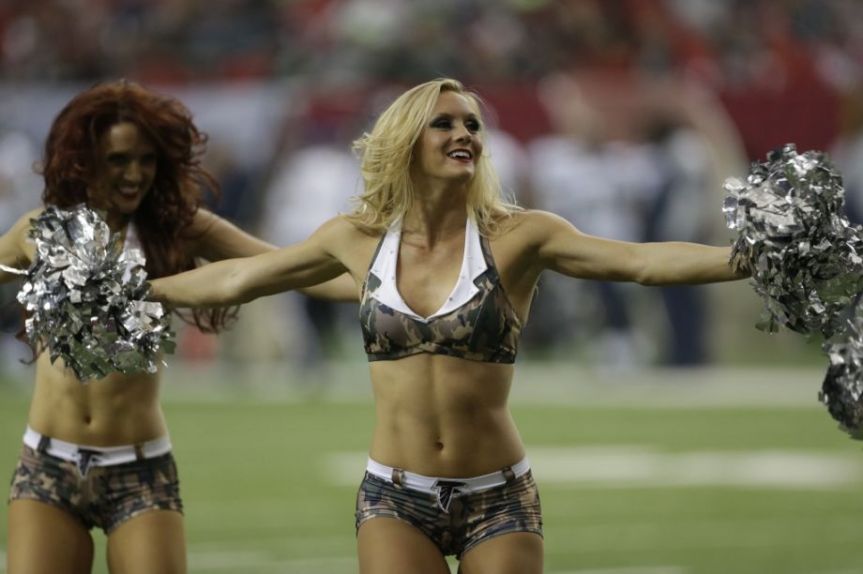
“Military appreciation” now includes cheerleaders in skimpy camo outfits
W.J. Astore
A few weeks ago, I was stuck at a dealership, my car awaiting service. In the waiting room, The Today Show was blasting out, featuring a performance by a well-known pop star. Choreographed and repetitive, her performance was substance- and content-free, a repetition of words that were mostly unclear to me, set to a machine gun-like beat echoed by gyrating dancers on stage.
And I thought to myself: this is much like America’s wars, or at least how they’re packaged and presented to the American people.
America’s wars have been choreographed. Obligatory cheers for “our” troops. Plenty of flags and songs to “bless” America. Lots of video footage of gyrating jets putting “bombs on target.” Meanwhile, the overall meaning is unclear. Vague promises are made of “progress,” but signs of the same are difficult to decipher.
War has become the background music to our lives. A sobering fact: If you’re a high school student in America, you can’t remember a time when America has been at peace. Your country has always been at war – and so it always will be, for it’s impossible to win a war on terror, because war is terror.
But back to TheToday Show. I watched it in the 1970s. Back then it featured serious news along with lighter “fluff” pieces like movie reviews (I fondly recall Gene Shalit). Now it’s dominated by entertainment and celebrities, infotainment driven by the pursuit of ratings. In other words, it’s much like our war coverage, which features celebrity generals and various forms of fluff, driven largely by “ratings,” i.e. keeping the people happy — and happily ignorant – about the realities of war.
I remember talking to an Army battalion commander about some of the realities he and his men faced in Iraq. Back in the Surge days, he mentioned a “churn rate” of 50% in U.S. infantry units: troops either didn’t want to reenlist, or they went into privatized militaries and doubled or tripled their pay. He mentioned repetitive overseas deployments that contributed to stress, domestic violence, divorce, and broken families. He himself was not at home for eight out of twelve Christmases.
In the field, his troops faced 12-16 hour days of drudgery. He referred to the Surge as “mental ditch-digging,” the fatigue that came with humping gear in the desert (or the cities) of Iraq with little to show for it. Such work, often frustrating, occasionally deadly, placed enormous strain on young troops, many of whom had been in high school not that long ago.
Nothing about this is exceptional – it’s just war. Demanding. Tough. Ugly. The kind of war that isn’t featured on American “news” shows, driven as they are by ratings and infotainment.
Of course, a real shooting war is far worse than simply long hours and repetitive duty. That’s why an Army major used to remind me, “Any day in the Army you’re not being shot at is a good day.” But our media prefers to put a happy face on war.
America’s latest wars are never-ending. A reason for this, not acknowledged enough, is the way they’re being packaged, sanitized, and sold to the American public as infotainment. As a performance that’s meant to be cheered briefly and just as quickly forgotten, like that pop star and her gyrating dancers on TheToday Show.
It’s Trump coronation week. My wife and I were out with friends last night, sitting in a bar, watching a muted screen that featured Melania Trump giving her (plagiarized?) speech at the convention. A muted screen was perfect to focus on what really matters at this convention – the optics. The screen behind Melania was a fetching color of patriotic red. Shots of the audience showed a mostly clean-cut crowd of predominantly White people, politely applauding, sprinkled with occasional shouts (which happily I couldn’t hear).
As I watched the spectacle, I turned to my friend, another historian. We both waxed nostalgic for political conventions that featured real news rather than manufactured drama. For example, I vividly recall the Republican Convention of 1980, when it seemed for a fleeting moment former President Gerald R. Ford was joining Ronald Reagan on a “unity” ticket. (It was not to be, which is sad. Such a ticket may have saved us from the rise of the Bushes.) Nowadays, barring a major gaffe (plagiarism again?) or perhaps a violent protest, nothing much of consequence happens at these conventions.
Of course, readers of this blog know that I reject Trump, and all his works, and all his empty promises. But that doesn’t mean I won’t give the devil his due. Trump is a deceiver, a con man par excellence, and many Americans are desperate to believe the con.
An example from my local paper. A reader wrote: “Without Trump’s help, we’re all going down,” following that with “We are on the Titanic, and it is going down. Hillary is snug in a lifeboat. The rest of us are in steerage. I don’t care what his hair looks like; we need to be rescued.”
What can one say to that? As I recall, once it struck the iceberg, the Titanic was a doomed ship. Putting Trump at the helm would only help it to slip under the waves faster, perhaps a mercy for those fated to die, but certainly no salvation for ship, crew, and passengers. But if it sped up the Titanic movie and Leonardo DiCaprio’s death scene, that at least would have been a cinematic mercy.
In all seriousness, this reader’s letter moved me. Not for its logic, but for its desperation. Yes, for many people these are desperate times in America. They know the ship of state is sinking. They know they’re stuck in steerage. And they know they’re fated to suffer the consequences, even as Hillary Clinton and crew have ready escapes.
But, and it’s a big “but,” America: Putting a con man at the helm of a foundering ship is not exactly the wisest course of action.
There are alternatives to Captain Trump and Lifeboat Hillary. Seek them out. Get involved. Leonardo DiCaprio’s character found his way out of steerage. Yes, a bit of Hollywood fantasy, but remember the Unsinkable Molly Brown? She was real.
Give me the generosity of Molly Brown over the narcissism of Trump any day — or any year.
(Dedicated to Paul and Mo, my friends at the bar.)