Trump and the Art of the Con

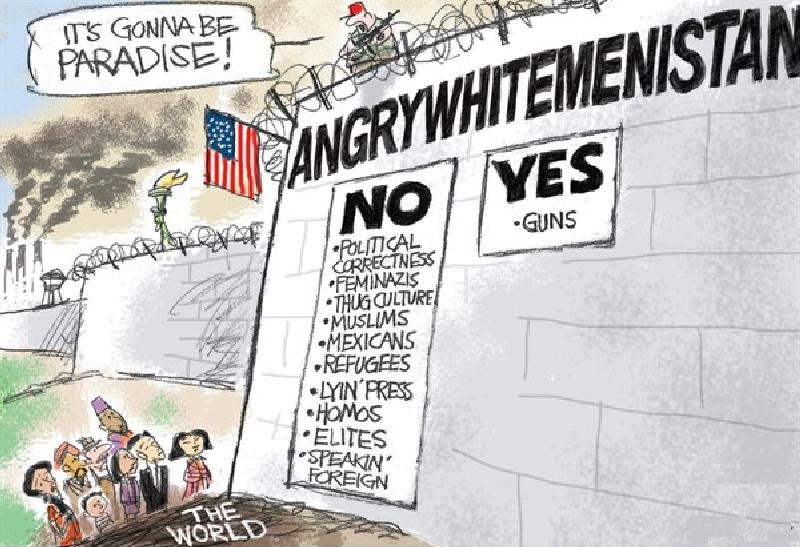
trumps-wall-l

W.J. Astore

The ink hasn’t yet dried on Trump’s victory and we’re already hearing about how his campaign promises are being “modified,” i.e. reneged on.  Trump’s infamous wall along the border with Mexico is already becoming more virtual than real, with admissions that Mexico will not pay for it. Trump himself has suggested he favors certain features of Obamacare (no denial of coverage based on preexisting conditions, and coverage extended to “children” until the age of 26), so there’ll be no wholesale “repeal and replace,” as he promised.  He also promised to appoint a special prosecutor to go after Hillary Clinton, to “lock her up,” as his followers chanted, but he’s backtracked on that as well.  Talk about draining the swamps of government, of bringing in fresh faces and new ideas, has produced tired old faces like Pence, Gingrich, Giuliani, and Christie.  In a classic case of nepotism, the “fresh” faces are those in his own family, his two sons and daughter Ivanka (she seems to be the one with the most smarts).

Many Trump voters appear to have voted for him because he represented “change,” a rejection of the usual suspects in the establishment.  Yes, the Clintons and their fellow travelers are out, but the hardline Republican establishment is back in, complete with the usual corporate hacks and think tanks.  And if you think these “conservatives” are going to start embracing the working classes and helping them financially with higher wages and better job prospects, I have a Chris Christie bridge for you that’s named after our first president.

These events are hardly surprising.  Trump is a con man.  For him, “the art of the deal” is basically the art of the con.  Consider his promise of bringing back American jobs.  How is that supposed to happen?  Simply through higher tariffs against foreign goods?  Who’s going to replace those with American-made goods at an affordable price to the working classes?

Here’s an example.  I got dressed this morning with no thought about using my clothes as an illustration for this article.  My jeans are made in Mexico (of fabric from the USA, so why weren’t they made here?).  My shirt is from Thailand.  My leather belt is from China, and so too are my shoes.  We all know why.  Labor costs in those countries are much cheaper than those in the USA.  Profits to corporations are thus much higher.  How is Trump going to change this dynamic?

I actually try to buy clothes that are made in America.  I got a nice pair of shoes that are made in Maine.  I got them on sale for a great price, but they retail for over $300.  If they were made in China, they’d probably retail for about $100.  How many members of the working classes are able to spend roughly triple the price for the privilege of wearing shoes and clothes “Made in the USA”?

Here’s one thing Trump could do: Raise the minimum wage to $15 an hour so that Americans can afford the up-charge for domestic goods.  Any chance that Trump’s regime is going to do this?

It’s great to talk about bringing back American manufacturing jobs that pay well.  It’s possible to raise barriers to foreign trade to make American goods more competitive.  But who’s going to build the new factories?  And where are the skilled workers with the requisite knowledge base?  With the right advanced tools and technologies?

Speaking of technology, there’s an ever greater push in America to automate everything, even long-haul driving jobs, a job that provides a decent living for many Americans.  Is Trump going to reverse this push?  Is he going to preserve American blue-collar jobs against the pressure applied by multinational corporations to cut costs and maximize profits, workers be damned?  Given Trump’s own record of using cheaper foreign labor and goods, this doesn’t seem bloody likely.

Believe me, I hope I’m wrong, but the early signs are that America’s working classes, along with a lot of Trump enthusiasts, are already getting conned.


Trump Wins! A Few Thoughts on Why

sap
“I won’t play the sap for you.”

W.J. Astore

In my last post, I predicted Trump would lose.  I thought his declinist message and his blatant vulgarity would ultimately cost him too many votes.  As Trump would say, “wrong.”

What are we to take from Trump’s stunning upset?  Here are a few quick thoughts:

  1.  The Democrats ran the wrong candidate.  Remember when Bernie Sanders was saying he had the best chance to defeat Trump?  That the polls favored him and not Hillary? Turns out Bernie was right. People were looking for a candidate who represented change. Real change.  Bernie had that. So too did Trump.  But Hillary was the establishment personified. Not only that, but she had extensive baggage that led to high negatives. Too many people just didn’t like her. Or they simply wanted a fresh face and a new approach — even if that face was Trump.
  2. The October surprise.  Does Trump win without the last minute intervention of the FBI in the email follies? We’ll never know, but Hillary had the momentum prior to the letter issued by the FBI. That letter may have slowed her momentum just enough to allow Trump to win.
  3. All politics is local — or, at least, personal.  The Democrats addressed global issues like climate change.  The Republicans basically denied it’s happening.  The Democrats talked about embracing immigrants and tolerating Muslims.  The Republicans did neither.  What the Republicans did was to emphasize personal pain. The pain of those who’ve seen their jobs disappear and their way of life suffer.  The Republicans also played to nostalgia.  Yes, America is in decline, they said, but we can make the country great again (by making it less inclusive, by keeping out the “bad” people, by being tough).  That message proved appealing to so many Americans who see in Trump the possibility of returning to “the good old days” (whatever that may mean).
  4. I won’t play the sap for you.”  That’s a Humphrey Bogart line from “The Maltese Falcon.”  Many Americans believe they are being played for saps by foreign powers. Trump recognized this.  He called for tougher trade deals.  He called for NATO and other U.S. allies to pay their way.  He promised a new approach to foreign policy, one where enemies would be smashed even as Americans would avoid dumb wars like Iraq.  Basically, Trump promised that America would no longer play the sap for the rest of the world.  And the American people liked what they heard.

That’s my quick take.  Lots of Americans truly wanted a change in course — a sort of reactionary revolution.  That desire led them to downplay Trump’s sexism, ignorance, incivility, and vulgarity.  (Of course, there were some who embraced Trump precisely for these qualities.)  In essence, they simply had no patience for Hillary’s “politics as usual” message.

Finally, let’s not forget that Trump said the election is “rigged.”  He was a sore loser even before the results were in.  What kind of winner will he be?  Much will depend on the answer to that question.

Why Donald Trump Will Lose

schopenhauer
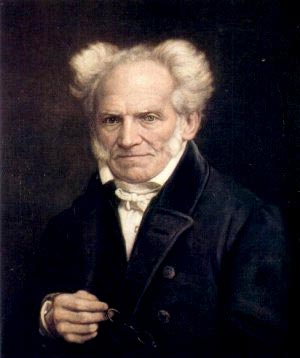
Arthur Schopenhauer

W.J. Astore

Donald Trump claims that if he loses the election it’s because the whole process is rigged.  But a rigged game is not why Trump will lose.  He’s going to lose because he’s offered no compelling vision about why he should be president.  (I don’t think “making America great again” is such a vision.)

What’s most remarkable to me about Trump’s campaign is how negative it’s been.  America is in decline!  Our inner cities are wastelands! Immigrants are thugs and rapists!  Muslims are out to get us!  Our leaders are stupid and crooked!  Indeed, until recently, Trump argued our top leader wasn’t even born in America.

A relentlessly negative campaign says a lot more about Trump than it does about America.  Sure, this country has problems.  But there are many silver linings in the dark clouds (economy on the mend; job growth up; health care extended to more people; rights for the LGBTQ community more accepted; the U.S. auto industry is back; more action on climate change is forthcoming, as long as Trump doesn’t win).

I was reading Arthur Schopenhauer’s “Counsels and Maxims” and came across a passage that reminded me of Trump.  Here it is:

No man can see over his own height … You cannot see in another man any more than you have in yourself; and your own intelligence strictly determines the extent to which he comes within its grasp …. Hence intercourse with others involves a process of leveling down.  The qualities which are present in one man, and absent in another, cannot come into play when they meet; and the self-sacrifice which this entails upon one of the parties, calls forth no recognition from the other.

Consider how sordid, how stupid, in a word, how vulgar most men are, and you will see that it is impossible to talk to them without becoming vulgar yourself for the time being.  Vulgarity is in this respect like electricity; it is easily distributed…

That’s Trump in a nutshell: vulgar.  Vulgar language.  Vulgar action. Vulgar appeals.  The question is: Will that vulgarity triumph on election day?  Is it enough?  My guess is that it isn’t.  That it won’t be.

His opponent, Hillary Clinton, has her own set of issues, but compared to Trump she has run a more hopeful campaign, or, at the very least, a much less vulgar one.  “Stronger together” is a tepid slogan, but it does stress togetherness, a certain strength in numbers, a degree of tolerance.  And Hillary has simply done a better job than Trump at reaching out to wider constituencies with a message that is positive rather than declinist.

Sure, a lot of people will vote for Trump, and for many reasons.  They don’t like or trust Hillary.  They’re loyal to the Republican Party.  They see something in Trump that resonates with them.  They feel they’ve gotten the shaft and think that a wild card like Trump can help them more than a face card like Hillary.

But ultimately I believe Trump will be done in by his own vulgarity.  He will lose because he couldn’t see past the limitations of his own height — his own flawed character.

But if I’m wrong, prepare yourself for four years of vulgar appeals, of sordidness and stupidity, to quote Schopenhauer.  For as the philosopher said, vulgarity is easily distributed.

Trump Is the Grinch: What I Learned from Last Night’s Debate

grinch-frown
Almost the exact expression Trump wore through most of the debate

W.J. Astore

In the last formal debate between Hillary Clinton and Donald Trump, here are a few things I heard:

1. Hillary thinks Trump is unqualified to be president.  Trump thinks Hillary should be locked up as a criminal.

2.  Trump thinks Hillary is a nasty woman.  Hillary thinks Trump is a Russian puppet.

3.  Hillary thinks Trump may start a nuclear war.  Trump thinks Hillary is a loser who will make America vulnerable to foreign powers.

4.  Trump thinks the election is rigged and that the media is firmly in Hillary’s corner. Hillary thinks Trump is encouraging Russia to hack and manipulate the election.

5.  Trump thinks Hillary supports the ripping of babies from the wombs of mothers (late-term abortions).  Hillary thinks Trump is a serial assaulter of women.

6.  Trump says all nine women who accused him of unwanted sexual advances/assaults are either opportunists seeking a few minutes of fame, or stooges in the employ of the Clinton campaign.  Clinton says Trump is a tax dodger, an exploiter of immigrant labor, and an enthusiast for cheap Chinese steel at the expense of American workers.

7.  Trump says Clinton is all talk and no action.  Clinton says Trump is a man who never apologizes and who never takes responsibility for his actions.

Yes, it was that bad.  Usually the question is “Who won the debate,” and the answer is clear: we the American people lost.  Put on the spot, I’d say that Hillary won because of Trump’s refusal to say whether he’d accept the result of the election.  That refusal to accept the will of the voters is fundamentally undemocratic.  To me, it made Trump look like a sore loser even before he’s lost.

I can’t imagine Trump or Hillary supporters had their minds changed while watching this debate.  But I can guess that Hillary picked up more undecided or fence-straddling voters. Why?  Because Trump’s message (as well as his demeanor) was so relentlessly negative. My wife could hardly stand being in the same room with Trump on the TV: he was, in a literal sense, giving her the creeps.  Something tells me many other women across America were similarly repulsed by Trump.  He was more than combative toward Hillary: he was sneering, condescending, and insulting.

Image is important in debates, and Hillary came across as the fresher of the two, the more likable, the more positive, the more focused.  As I watched Trump rant, I told my wife that he reminded me of the Grinch who stole Christmas, with his snarl and his hate and his withered heart.

Will the Grinch steal the election?  From the Grinch’s perspective, the election has already been stolen from him.  That’s my takeaway from the debate: that Trump is a sore loser even before he’s lost.

My post-debate prediction: Welcome to four more years of the Clintons, America.  See you in 2020.

Why This Year’s Presidential Election Is So Depressing

furiosa_2015
I’d vote for Imperator Furiosa before Hillary and Trump

W.J. Astore

This year’s presidential election is depressing.  I suppose Trump and Hillary supporters are fired up.  They want to see “their” candidate win.  But for me, I wish a pox on both their houses, even as I hope the eventual winner is not as bad as he or she appears to be.

With respect to foreign policy, neither candidate comes close to representing my views.  Instead of American exceptionalism, instead of global reach and global power, I believe the U.S. needs to learn the merits of minding its own business.  I want a country that is not imperial, not militaristic, and not intent on waging forever wars against inchoate forces (terror) and with a changing roster of enemies (Al Qaeda/ISIS/radical Islam, North Korea, Iran, and now possibly Russia and China, and who knows who or what else next).  I want active wars in Iraq and Afghanistan to end.  I want U.S. troops to be brought home.

We don’t need a new Cold War, America.  Nor should we be elevating terrorism, a containable threat, to an existential threat.  The true existential threat is incessant greed-wars, which will bankrupt our country even as they administer the death blow to our democracy.

The main candidates, Trump and Clinton, are committed to feeding the national security state.  Both promise more wars, especially war-hawk Clinton.  With Trump, honestly, I have no idea what to expect from him.  Trump has all the makings of a Nero.  He’ll fiddle (or Tweet) while the world burns.  And Hillary?  She’s a self-styled Imperator Furiosa (from the latest Mad Max movie) but without her heart.

So much of U.S. foreign policy nowadays is about selling weaponry.  We sell billions and billions to the Israelis and Saudis (among others), and the peoples of Palestine and Yemen suffer and die as a result.  Are U.S. hands clean merely because we made the weapons (and in some cases subsidized their purchase)?  What kind of “democracy” dominates the world’s arms trade?  In more enlightened days, the U.S. excoriated European countries and their “merchants of death” (this was in the 1920s and 1930s).  Now we are the merchants of death, boasting of all the money we’re making.  We have met the enemy, and he is us.

Trump and Hillary: one a Nero, one an Imperator.  Both American exceptionalists, both believers in the military, both willing to wield big sticks while never speaking softly.  Yes, I find that depressing.

On domestic policy, Hillary hews closer to what I believe, at least in theory.  But in practice who knows with Hillary?  She speaks with forked tongue on so many important issues.  I think liberals/progressives can count on her to be pro-choice, to be pro-LGBTQ, to be (or appear to be) sensitive to racism, to be inclusive (compared to Republicans), to be pro-immigration (again, compared to Republicans).  For many liberals/progressives/democrats, Hillary’s predictability on these issues is enough, especially compared to the hard right positions embraced by Trump/Pence.  And indeed more than a few of my Democratic friends are voting for Hillary based on these positions, together with their faith (fingers crossed) that her Supreme Court nominees will be somewhere to the left of Antonin Scalia.

Is that enough?  Not for me.  Again, it’s Hillary’s opportunism, the way she slips in and out of positions as if they’re so many interchangeable pantsuits, that I find so depressing.  Whether it’s the TPP or fracking or the $15 minimum wage or health care reform or bank reform or what have you, she changes her tune, much like a piper responding to requests.  Yes, he who pays the piper calls the tune, and I can’t pay the piper what Goldman Sachs can.  So I’ll never hear my tune played; only theirs.  And I know how that song ends: with even greater inequality followed by another financial meltdown, and this time maybe the middle class will die.

I can’t vote for more of the same (Hillary) only with more fury.  I can’t vote for random acts of caprice and belligerence guided by ignorance (Trump).  Honestly, you know what I want to do?  Write in “Bernie Sanders.”  He’s not perfect (who is?), but he has character and integrity, and that’s what this country really needs.  I know: Bernie told me to vote for Hillary.  But dammit, Bernie, I can’t do it.

Did I say I was depressed?  After I write in Bernie’s name on November 8th, I’ll walk away from the voting booth with a smile.  And to me that’s not a “wasted” vote.

Trump, the Anti-Obama, Ends in Tyranny

khan1
Khan in “Star Trek.”  A strong leader if you don’t mind tyranny

W.J. Astore

My wife, who knows how to cut to the chase, pointed out a big aspect of Trump’s appeal to me this morning: “Trump is the anti-Obama.”

Think about it.  When it comes to their personal qualities, it would be hard to envision two men who are such polar opposites.  Consider Obama.  He’s cool.  Rational.  Analytical.  A thinker.  He’s also polite, cautious, and considerate.  He’s a skilled writer and a poised, often inspirational, speaker.  He’s at pains to broadcast a message of inclusiveness.  He’s all about diversity and tolerance and embracing those who are different.  He’s also by all accounts a loyal family man, a loving husband and father, with a strong marriage.

Consider Trump.  Everything I just said about Obama is the opposite for Trump.  Trump is emotional.  Flamboyant.  Given to knee-jerk responses.  A man of action.  He appears to be impolite, impetuous, and inconsiderate.  Near as I can tell, Trump’s books are ghost-written, and his speaking style is bombastic and inflammatory rather than poised and inspirational. Promoting divisiveness rather than inclusiveness, his message of “making America great again” is read by some of his supporters as making America white-male-dominated again. Hardly a loyal family man, he’s on his third marriage, the previous two ending acrimoniously, and if you credit his boasts caught on tape he was trying to cheat on his current wife while they were still newlyweds.

Now, which one of these men is more desirable as a role model?  The loyal husband and family man, the one who embraces diversity and brings people together?  Or the disloyal husband, the one who boasts of sexual encounters, who objectifies women, the one who rejects tolerance for rhetoric that drives intolerance?

It’s sobering to see self-styled conservative or evangelical Christians, who claim they are all about family values and the sanctity of marriage, twisting their professed beliefs to embrace Trump and reject Obama.  Certainly, in some cases racism is involved here, a sense that Obama is “not one of us,” whereas Trump, with all his glaring flaws of character and behavior, is accepted as the imperfect guy who’s “just like me” (or perhaps just like a black sheep of the family).

Here’s another way of looking at it if you’re a “Star Trek” fan: Trump is Captain Kirk to Obama’s Mr. Spock.  In his coolly logical manner, Obama has often been compared to Mr. Spock.  And Trump as Captain Kirk: it seems to work, since Kirk was a man of action, often emotional, a womanizer, sometimes intemperate.

But this is to insult Captain Kirk.  More than anything, Kirk was a leader: a man who brought a diverse crew together and made them better.  Yes, he could be intemperate, but he had a capacity for personal growth.  Smart, tough, and experienced, Kirk was a ladies’ man, but he wasn’t married and never forced himself on women (with the notable exception of “The Enemy Within” episode, in which Kirk is split in two, his hyper-aggressive twin given to attacking women for his own pleasure).

stenemy_within
In “The Enemy Within,” a hyper-aggressive Kirk “twin” sees nothing wrong with sexual assault

In Trump you’re not getting Captain Kirk, America.  You’re getting a one-dimensional “evil” Kirk, or perhaps a Khan Noonien Singh, another “Star Trek” character (played memorably by Ricardo Montalbán), a tyrant and ruthless dictator, a man who believes it’s the right of the strong to take or do whatever they want.  (So-called Alpha Male behavior, according to one of Trump’s sons, though I prefer a different A-term: Asshole Male.)

Some of Trump’s success, at least initially, came from the fact he was a powerful contrast to Obama, the anti-Obama, if you will.  And the “anti-” was more than symbolic, considering how Trump drove the birther movement and its false narrative of how Obama was illegitimate as president.  And I can understand after eight years the desire among many for a “Captain Kirk” after two terms of “Mr. Spock.”

But Trump is much more Khan than Kirk.  He’d embrace Khan’s motto that “Such [superior] men [like me] dare take what they want.”  But a man who believes in his own inherent superiority — that his might will make right — is not a leader.  He’s a tyrant. And tyranny is the very opposite of democracy.

Trump and Clinton: Poor Choices for America

Jeremy Scahill

Editor’s Note: Jeremy Scahill, author of “Dirty Wars,” minces no words in his reaction to Trump/Clinton and their second “debate.”  Scahill’s article appeared originally at The Intercept.

Trump may go away, but the people he has empowered will not

ST LOUIS, MO - OCTOBER 09:  Republican presidential nominee Donald Trump responds to a question during the town hall debate at Washington University on October 9, 2016 in St Louis, Missouri. This is the second of three presidential debates scheduled prior to the November 8th election.  (Photo by Rick Wilking-Pool/Getty Images)

Republican presidential nominee Donald Trump during the town hall debate at Washington University on Oct. 9, 2016, in St. Louis, Missouri.

Photo: Rick Wilking/Getty Images

These presidential debates — certainly this one — serve as the most stark commentary on how bankrupt the U.S. electoral system is.

This is the choice the system produces for “viable” candidates.

The cartoonish villainy of Donald Trump is a major factor in distracting attention from the hawkish, neoliberal policies of Hillary Clinton. Hillary’s best selling point for a lot of people — Democrats and, increasingly, Republicans — is: I’m not batshit crazy like Trump.

There is rarely a focus on Clinton’s embrace of regime change, her role in creating the conditions, as secretary of state, for the horror show currently unfolding in Yemen, or her paramilitarization of the State Department. Clinton has never been asked about her role in the secret drone “kill chain” the Obama administration has now codified as a parallel justice system, where there are no trials, indictments, or convictions, but a whole lot of death sentences. Just as Clinton avoided real questions about Libya thanks to the clownfuck Republicans’ carnival over Benghazi, she emerges as the only choice for many sane people. That she is buddy-buddy with Wall Street, speaks one way to them and another way in public, becomes a footnote. She is the empire candidate and that is why the John Negropontes and Max Boots and George H.W. Bushes of the world have embraced her.

Here is the thing, though: Both Clinton’s and Trump’s candidacies have fucked us — albeit in different ways. Hillary represents more of the same bipartisan warmongering. And, under Obama, that has been met with a lot of silence and complicity from liberals. Depressing.

Whether Trump wins, loses, or loses big, he has empowered fascists, racists, and bigots. He did not create them, but he has legitimized them by becoming the nominee and openly expressing their heinous, hateful beliefs. This, to me, is one of the most frightening developments on a domestic level in the U.S. this election cycle. Trump may go away, but the people he has empowered will not.

On Nuclear Weapons, Trump is Nightmarishly Scary

ohio6
An Ohio-class nuclear submarine

W.J. Astore

Much of the post-debate analysis I’ve read from last night’s presidential debate has focused on Donald Trump’s crudeness, his threat to prosecute and jail his political opponent, the way in which he stalked her on the stage, looming in the background and crowding her, and finally his non-apology apology about “locker room banter.”  Yes: Trump is most definitely lewd, crude, and socially unacceptable, but that’s hardly the worst of his qualities.

His worst quality?  His sweeping ignorance to the point of recklessness when it comes to matters of national defense, and specifically America’s nuclear arsenal.

This is what Trump had to say last night about the U.S. nuclear deterrent:

But our nuclear program has fallen way behind, and they’ve gone wild with their nuclear program. Not good. Our government shouldn’t have allowed that to happen. Russia is new in terms of nuclear. We are old. We’re tired. We’re exhausted in terms of nuclear. A very bad thing.

This is utter nonsense.  First off, nuclear weapons are not people.  They don’t get “tired” or “exhausted” or “old.”  Second, the U.S. nuclear program has not “fallen way behind” the programs of other nations, certainly not Russia’s.  Third, even if portions of Russia’s nuclear program are “new” (whatever that means), that’s not necessarily a bad thing for the United States.  “New” in this case may mean safer and more reliable systems that are less prone to catastrophic error.

Here’s an undeniable fact: The U.S. nuclear arsenal is by far the world’s most powerful and advanced.  The key aspect to nuclear capability is survivability, and nothing is more survivable than America’s force of Trident nuclear submarines.  Virtually impossible to detect, America’s Trident force is essentially capable of destroying the world.  One submarine carries enough missiles and warheads to devastate every major city in Russia (or any other country, for that matter).  What more is needed as a deterrent?

Specifically, an Ohio-class Trident submarine can carry up to 24 nuclear missiles, each with up to eight nuclear warheads, each warhead equivalent to roughly six Hiroshima bombs.  That represents a potential for hitting 192 targets, each with six times the impact of the atomic bomb dropped on Hiroshima in 1945 (which killed up to 200,000 people). That’s 1152 Hiroshimas from one submarine — a rough calculus, I know, but accurate enough to show the awesome might represented by a small portion of America’s nuclear force.

The Trident missiles are also incredibly accurate, with a circular error probability of less than 150 meters.  And the U.S. has 14 of these submarines.  (Not all are on patrol at any one time.) These highly sophisticated and ultra-powerful submarines are further augmented by land-based ICBMs (intercontinental ballistic missiles) and bomber planes (the “air-breathing” element), forming the other two legs of the American nuclear triad. Again, when it comes to redundancy, accuracy, and survivability, no other country comes close to America’s nuclear capability.

This awesome nuclear force is not a sign the U.S. is “old” and “tired” and “exhausted.” It’s a sign that the U.S. is incredibly powerful, and, if you’re a foreign leader, incredibly dangerous, especially if America’s next commander-in-chief is undisciplined, thin-skinned, and in possession of a scattershot knowledge of military matters.

Back in March of this year, Trump boasted at a debate that the U.S. military would follow his orders irrespective of their legality.  In this latest debate, he yet again revealed that he has no real knowledge of America’s nuclear capability and how modern and powerful (and scary) it truly is.

Sure, Trump is crude, lewd, and sexist, but those qualities won’t destroy the world as we know it.  Ignorance about nuclear weapons, combined with impetuosity and an avowed affection for he-man wild-card generals like George S. Patton and Douglas MacArthur, is a recipe for utter disaster.

Trump the Sorest of Losers

Trump holds a rally with supporters at the Suburban Collection Showplace in Novi, Michigan, U.S.
Trump, a self-avowed winner, is the sorest of losers

W.J. Astore

Are there too many articles about Donald Trump?  You might say yes, until, that is, you realize the man has a fair shot at being America’s next president.  With that disaster in the making, one must speak up, which is what Tom Engelhardt has done at TomDispatch.com.  Engelhardt shows us what Trump is all about – and what that reveals about the present American moment.

Here’s a telling sample from Engelhardt’s latest:

He’s made veiled assassination threats; lauded the desire to punch someone in the face; talked about shooting “somebody” in “the middle of Fifth Avenue”; defended the size of his hands and his you-know-what; retweeted neo-Nazis and a quote from Mussolini; denounced the outsourcing of American manufacturing jobs and products while outsourcing his own jobs and products; excoriated immigrants and foreign labor while hiring the same; advertised the Trump brand in every way imaginable; had a bromance with Vladimir Putin; threatened to let nuclear weapons proliferate; complained bitterly about a rigged election, rigged debates, a rigged moderator, and a rigged microphone; swore that he and he alone was capable of again making America, and so the world, a place of the sort of greatness only he himself could match, and that’s just to begin a list on the subject of The Donald.

Engelhardt highlights an aspect of Trump that more Americans need to see: Trump the Sore Loser.  Consider his first debate with Hillary Clinton.  Instead of taking personal responsibility (“I had a bad night, but I’ll win the next one”), Trump blamed everyone else and anything else.  The election’s rigged.  The media’s against me.  My mic was bad.  And so on.  Everyone’s accountable except himself.

In his sore losership, Trump is much like America.  One example: It took (some of) us nearly fifty years to get over defeat in the Vietnam War.  In fact, many U.S. “experts” still aren’t over it, arguing that America really won that war (like Trump argued he’d won the debate with Hillary at subsequent rallies), or alternatively that the war was “rigged,” i.e. that American troops were winning until they were stabbed in the back, betrayed by a hostile and biased media and pusillanimous and disloyal civilian leaders.  Really?

Here’s another telling excerpt from Engelhardt on Trump:

In relation to his Republican rivals, and now Hillary Clinton, he stands alone in accepting and highlighting what increasing numbers of Americans, especially white Americans, have evidently come to feel: that this country is in decline, its greatness a thing of the past, or as pollsters like to put it, that America is no longer “heading in the right direction” but is now “on the wrong track.”  In this way, he has mainlined into a deep, economically induced mindset, especially among white working class men facing a situation in which so many good jobs have headed elsewhere, that the world has turned sour.

Or think of it another way (and it may be the newest way of all): a significant part of the white working class, at least, feels as if, whether economically or psychologically, its back is up against the wall and there’s nowhere left to go.  Under such circumstances, many of these voters have evidently decided that they’re ready to send a literal loose cannon into the White House; they’re willing, that is, to take a chance on the roof collapsing, even if it collapses on them.

That is the new and unrecognizable role that Donald Trump has filled.  It’s hard to conjure up another example of it in our recent past. The Donald represents, as a friend of mine likes to say, the suicide bomber in us all. And voting for him, among other things, will be an act of nihilism, a mood that fits well with imperial decline.

Trump, in other words, embodies the resentment of Americans who are used to seeing themselves (and their country) as winners, but who now recognize, at least on some level, they are no longer winners – that they may be, horror of horrors, losers.  And, much like Trump, they are sore about this – but not sore (or honest) enough to look in the mirror.  No – far better to cast about for scapegoats, to shift the blame, to avoid taking any personal responsibility.

Trump is the Sore Loser of sore losers.  His (possibly winning?) appeal is to tell certain Americans exactly what they want to hear: That it’s not your fault that you’re losing.  No – it’s the fault of others.  Mexicans.  Muslims.  China.  Pushy women.  The liberal media.  You name it.

Trump, as Engelhardt notes, is a declinist candidate, a rare thing indeed.  But he’s declinist with a twist.  He’s not trying to motivate Americans to be better.  There’s no idealism to his pitch.  No appeal to the better angels of our nature.  No – Trump is all about finding (marginal and vulnerable) people to blame and punishing them.

Again, he’s the sorest of losers.  Come this November, Americans need to make sure he remains a loser.

Ignorance and Dishonesty: Trump, Hillary, and Nuclear Genocide

castle-romeo-573x720
Some honesty, please!

W.J. Astore

Should the United States reject the “first use” of nuclear weapons?  That question was put to Hillary Clinton and Donald Trump during their first debate.  Colonel (retired) Andrew Bacevich asks us to take their answers seriously in his latest insightful essay at TomDispatch.com, which I urge you to read here in full.

Trump was asked to respond first, and his rambling answer, I thought, showed the evidence of someone who had crammed for a test.  He was desperate to show he knew something – anything – about America’s nuclear forces (here some may recall how Trump obviously knew little about America’s nuclear triad during the Republican primary debates).  So Trump rambled on about obsolete B-52s flown by the sons and grandsons of previous pilots, a non sequitur since the B-52 has been continuously upgraded with new engines, advanced avionics, the latest in high-tech weaponry, and despite their age they’re still more than capable of doing the job.  But somebody must have told Trump to use the B-52’s age as a talking point, and he was determined to get it in.

As confused and incoherent as Trump’s reply was (read more about this at TomDispatch.com), at least he tried to grapple with the issue.  Trump did reject First Strike.  He did refer to the terror of nuclear war, even as he got lost in other talking points about North Korea, Iran, and allegations about how weak on national security Obama is.

By comparison, Clinton’s response was classic Hillary.  Avoid and evade.  Try to be all things to all voters.  Bloviate, in other words, as Warren G. Harding did in 1920.  In essence, Hillary ducked the question.  She refused to address the issue of first use of nuclear weapons; indeed, she didn’t address nuclear strategy and policy at all.  Instead, she drew a contrast between her experience and predictability versus Trump’s inexperience and unpredictability.  Her message was clear: I’m not talking about nuclear weapons or policy, except to say you shouldn’t trust Trump with the nuclear launch codes.

Who won on this question?  Bacevich is right to say neither candidate won, but it’s clear who lost: the American people.  And the world.

It’s shameful that this country hasn’t rejected the first use of nuclear weapons.  It’s also shameful that instead of working to eliminate nuclear weapons, the U.S. is actually planning to spend nearly a trillion dollars over the next 30 years to upgrade that arsenal.  For what possible strategic purpose, one must ask?  America’s current nuclear deterrent is the most powerful and survivable in the world.  No other country comes close.  There’s no rational reason to invest more money in nuclear weapons, unless you count the jobs and money related to building new nuclear submarines, weaponry, bombs, and all the other infrastructure related to America’s nuclear triad of Trident submarines, land-based bombers, and fixed missile silos.

Neither Trump nor Hillary addressed this issue.  Trump was simply ignorant.  Hillary was simply disingenuous.  Which candidate was worse?  When you’re talking about nuclear genocidal death, it surely does matter.  Ignorance is not bliss, nor is a lack of forthrightness and honesty.

Next time, Mr. Trump and Secretary Clinton, let’s have some rigor, some honesty, and some wisdom on the issue of nuclear weapons.  Not only America deserves it – the world does.