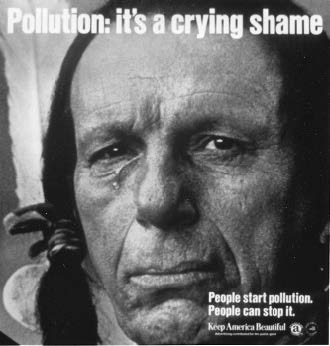
If you’re of a certain age, you probably remember environmental commercials featuring Woodsy the “anti-pollution owl” with the motto: “Give a hoot! Don’t pollute!”
Under the Trump administration, we need to modify that motto: “Don’t give a hoot. Pollute!”
That’s the message of Trump’s new plan for powerplant emissions. According to the EPA, this new plan may result in as many as 1,630 additional premature deaths annually by 2030, as reported by Bloomberg:
The U.S. Environmental Protection Agency says its proposal to relax greenhouse gas limits on power plants will cause as many as 1,630 additional premature deaths annually by 2030 from heart and lung disease — an estimate independent experts say may be low.
The projection is contained in a 289-page technical document accompanying the agency’s proposal to replace the Obama-era Clean Power Plan that was released Tuesday.
The new rule would give states more leeway to set limits on greenhouse gas emissions from their power sectors — even though, by the agency’s own admission, that will result in higher levels of particulate matter and ozone being emitted by coal plants than would have occurred under President Barack Obama’s plan. That pollution is linked with respiratory infections, asthma and impaired lung function.
As my wife pointed out to me, Trump & friends aren’t worried about smog and pollution and respiratory discomfort. They don’t live downwind from coal-fired plants. Trump can always escape to one of his many resorts and golf courses around the world.
How cynical and callous do you have to be to suggest changes to environmental regulations that you know will kill lots of Americans in the future?
Making America great again? No — It’s making America polluted again. Woodsy the Owl is not happy, America.
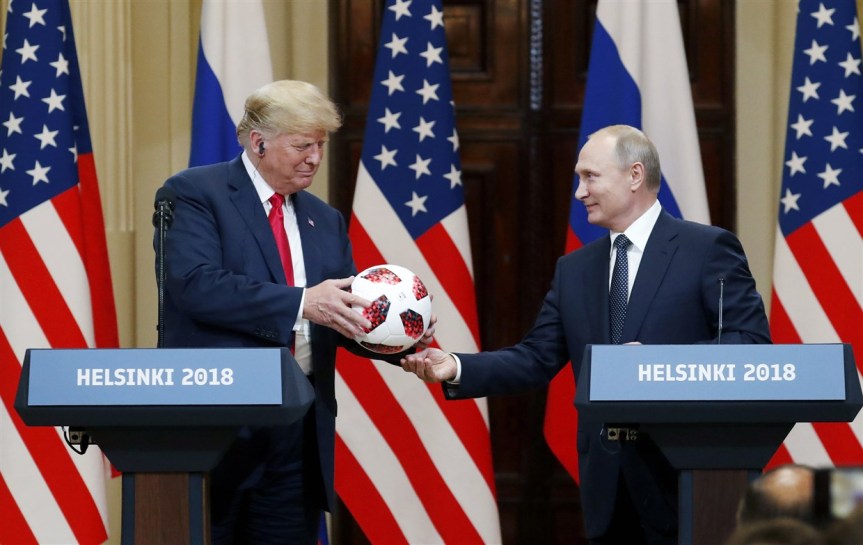
The supposed big news here is that Dan Coats, the Director of National Intelligence, didn’t know about President Trump’s invitation to Vladimir Putin to visit the White House this fall.
The real story is in plain sight: all the corporate sponsors of the Aspen Security Forum, including Lockheed Martin, the nation’s leading weapons maker. I like the way the logo for Lockheed Martin hovers just above Dan Coats’s head. Who works for whom here?
(Other military contractors with prominent logos included Symantec, which specializes in cybersecurity, and MITRE, which technically is a not-for-profit corporation that works mainly with the Department of Defense; I worked with MITRE engineers when I was in the Air Force.)
The other obvious story: the mainstream media’s cozy relationship to those in power. Andrea Mitchell’s interview with Coats is downright chummy. It’s all very polite and non-confrontational, with Mitchell hinting we all should be very concerned and nervous about Trump negotiating alone with Putin.
Perhaps so, perhaps not. But I am concerned about all those cozy relationships within and across the national security state, and the way our media eagerly joins in on the fun. Collusion takes many forms; let’s not focus so tightly on alleged collusion between the Trump campaign and Russia that we miss what’s in clear sight in photos and videos such as this.
Update (7/22/18): Is the mainstream media focusing on cozy relationships and possible collusion among the various players at Aspen? You know, the military-industrial complex, the government and its seventeen intelligence agencies, universities and think tanks and the media, i.e. the usual suspects? Of course not. At ABC News, they’re focusing on whether Dan Coats’s chuckle and off-the-cuff remarks about Putin’s proposed visit to the White House were disrespectful to Trump. And there you have it.
America’s MAGA President, Donald Trump, has generated enormous criticism for his news conference with Vladimir Putin. Typical of this is James Fallows at The Atlantic, who wrote that “Never before have I seen an American president consistently, repeatedly, publicly, and shockingly advance the interests of another country over those of his own government and people.” A “national nightmare,” opined The Washington Post. A “train wreck,” said NBC News, that made Russians “gleeful.”
Is Trump advancing the interests of Russia? Is this an example of high crimes and misdemeanors, perhaps even rising to treason?
Methinks not. Trump, if he is advancing Russian interests, is doing so indirectly. Because only one thing matters to Trump: his own interests. With Trump, it really is all about him.
Consider the accusations of Russian meddling in the 2016 presidential election. Trump is never going to side with his intelligence agencies on this issue. He thinks that, by doing so, he’d be admitting that maybe he didn’t win fair and square over “Crooked Hillary.” He refuses to countenance Russian meddling, not because he’s a Putin stooge, but rather because he’s an egomaniac. He’ll admit to nothing that diminishes, however slightly, his victory — and his ego.
Russia doesn’t matter to Trump. Indeed, America doesn’t matter to Trump. With Trump, it’s really all about him. Recall how he visited the CIA and boasted about himself while standing before the wall that commemorates fallen CIA officers. Recall how he declared the military would follow his orders regardless of their legality. He rashly accuses Democrats of not caring about the troops or border security whenever they oppose his policies. He does best with foreign leaders, like the Saudis and Israelis, who are at pains to flatter him. He apparently can’t stand Angela Merkel because she doesn’t play the flattery game.
Trump lives in his own reality, a narcissistic swirl of fabrications, falsehoods, and lies. He’s happiest when he’s commanding the scene, when people are kowtowing to him, when he can boast about himself and advertise his businesses (during this latest trip, he went to a Trump golf course in Scotland and waxed about its “magical” qualities).
In short, Trump is not treasonous. He simply has no concept of public service. He has no capacity to serve any cause other than himself.
Readers, what do you think of the treason accusations against Trump?
My family’s old wringer-washer. Look closely: as a kid, I stuck an American flag just above the “Maytag” label.
W.J. Astore
Walls and weapons and wars have come to define the USA in the 21st century. The most infamous wall is Donald Trump’s proposed extension of the border wall with Mexico. Weapons are everywhere, domestically with guns and mass shootings even as weapons sales overseas drive U.S. foreign policy. Wars are simply endless in places that most Americans would struggle to identify on maps. What percentage of Americans, for example, could identify Niger before the ambush that cost four Green Berets or Yemen before a Navy SEAL died there after Trump’s first military action (which he subsequently blamed on the generals)? Indeed, how many Americans could identify these countries now, even with U.S. troops having died there, ostensibly in the name of fighting terrorism and keeping America safe?
I’m both a baby boomer and a retired military officer. Looking back to the 20th century and in the context of the Cold War, when I thought of walls, images of Berlin came to mind, with desperate people risking life and limb to seek freedom in the West. A wall was a symbol of them – you know, the Evil Empire, the Soviets, the Stasi, the freedom-deniers. The USA, land of liberty, neither needed nor wanted walls. Weapons? Sure, we had plenty of those when I was young, and sold lots of them too to countries overseas, when we weren’t using them ourselves to pummel Southeast Asia and other regions. But military-style assault weapons for citizens were virtually unknown until the 1980s, and extensive weapons sales overseas had a purpose (at least in theory) of deterring communist expansion. Nowadays, weapons sales need have no purpose other than profit for those who make and sell them.
And wars? However evil the U.S. had acted during the Vietnam War, and indeed there’s much evil in policies that enjoin troops to “kill anything that moves,” as Nick Turse has documented in his book by that name, at least one thing can be said of that war: it ended, and America lost. Even the Cold War ended (or so we believed, until recent claims that Russia and China represent the threats of the future). Today, America’s wars never end. Retired generals like David Petraeus spout gibberish about the wisdom of a “sustainable sustained commitment” to the war in Afghanistan, with the Pentagon babbling on about “long” and “generational” campaigns, as if prolonging wars for less-than-vital causes is a sign of U.S. strength.
The point is this: Walls were not us. Weapons, however prevalent throughout U.S. history, were not treated as panaceas and sold as solutions to everything from classroom shootings to saving American jobs to boosting economic growth and cutting trade imbalances. Even America’s wars were not open-ended or openly described as “generational.” All of this is either new today or a twisted version of past policies and practices.
The Unmaking of American Idealism
As a teenager, I embraced American idealism. The bicentennial was coming in 1976, and I was the proud owner of a reproduction of the Declaration of Independence. It was on pseudo-parchment paper, a cheap copy for sure, but I treated it as if were precious because it was – and is. It’s precious for the ideals it represents, the enshrinement of self-evident truths like life and liberty and the pursuit of happiness, however imperfectly America upheld and advanced these in practice.
Maybe this is why I bought a roll of American flag stickers and stuck them on everything (including our kitchen door and our washing machine, which must have thrilled my parents). Back then, I thought I knew what America stood for, or at least what my country stood against. Despite all our sins, America was anti-wall, and even as we built and sold weapons and fought proxy wars in a contest with the Soviets, there was a sense America stood for freedom, or so I believed. Meanwhile, in the immediate aftermath of Vietnam, we were also not as eager to fight wars everywhere and without end.
But that was then, and this is now. Forget about the “Age of Aquarius,” a trippy song about peace and love that I remember singing when I was eight years old. Today in America, it’s the Age of Mars, the Age of Walls and Weapons and War.
Coming of age in the 1970s, I heard and read a lot about war. Vietnam had been a disaster, but there was always the example of World War II to set things right in my mind. I could read about American heroism at Wake Island and during the Battle of the Bulge; I could watch movies like “Patton” that glorified tough-talking U.S. generals; I could look to my uncle who won a bronze star fighting at Guadalcanal in the Pacific. I knew (or so I thought) that America stood for freedom and against tyranny.
But that ideal of freedom was always tinged by images of violent frontier justice, as depicted in popular culture. Memorable movies of my teen years included Clint Eastwood playing a rogue cop in “Dirty Harry,” Charles Bronson playing a shattered vigilante in “Death Wish,” and John Wayne playing tough cop roles in movies like “McQ” and “Brannigan.” These movies were clear about one thing: the rule of law wasn’t enough to keep us safe. Sometimes, a man’s gotta do what a man’s gotta do, which usually involved Clint or Chuck or John (and, later, Sylvester Stallone’s John Rambo) dispensing justice with fists and from the barrels of various (big) guns.
Extreme violence as well as images of the lone gunfighter were and are features of American history and culture, of course. But these were counterbalanced in the 1960s and 1970s by peace anthems such as John Lennon’s “Imagine.” A less known song, one I sang as a kid, was “Billy don’t be a hero” (how could I resist: It had my name in it). In this song, young Billy wants to go off to war, but his fiancée discourages him. Predictably, Billy goes anyway, the words of his fiancée following him (Billy don’t be a hero/don’t be a fool with your life). Billy, after volunteering for a dangerous mission, dies a hero, the government sending a laudatory letter to his fiancée, who tearfully tosses it into the trash.
That song made an impression, though it didn’t stop me from joining the military. Why? Because I bought the narrative: the U.S. was fighting a war of survival against godless communism, showing patient resolve as we worked to contain a threat to freedom around the world.
That cold war ended more than 25 years ago, yet nevertheless the U.S. continues to build and sell more weapons than any other country; to support higher and higher military spending; and to wage more wars in more places than ever. Clinton or Bush, Obama or Trump, the war song remains the same. It all represents a narrowing of national horizons, a betrayal of American promise, one we’ll overcome only when we change course and reject walls and weapons and war.
Stopping Walls, Weapons, and Wars
There are two war parties in the U.S. today. We call them Republicans and Democrats. When it comes to fostering and feeding war, both are essentially the same. Both are slaves to the national security state, even if Democrats make a show of rattling their chains a bit more. Both define patriotism in militaristic terms and loyalty in terms of blanket support of, even reverence for, American military adventurism and interventionism. Political candidates who have rival ideas, such as Libertarian Gary Johnson (remember him?) or Green Party candidate Jill Stein, are not even allowed on the stage. Even when heard, they’re dismissed as jokes.
In 2016, for example, Johnson suggested cuts to military spending approaching 20%; Jill Stein suggested cuts as deep as 50%. Their proposals, however, were simply rejected as preposterous by the mainstream media. Even Bernie Sanders, a democratic socialist, refused to propose serious cuts to military spending: if he had, he knew he’d be dismissed as either a weak-kneed appeaser or an unserious ignoramus. (Recall how Gary Johnson was depicted as clueless by the mainstream media because he couldn’t place Aleppo in Syria or instantly name a foreign leader he adored.)
Unmasked military authoritarianism is the new reality in U.S. government and society today, complete with a martial parade in Washington, D.C. come this November. This is no surprise. Recall how both Hillary Clinton and Donald Trump boasted of how many generals and admirals supported them in their respective presidential campaigns, as if they couldn’t run for office unless they’d been anointed by men in military uniforms wearing stars.
And we dare call this a democracy?
Seeing the problem clearly is a way to begin to solve it. Want to restore American liberty? Stop building walls (and tearing children from parents). Stop buying and selling massive amounts of weaponry here and everywhere. And stop waging war across the globe. Americans used to know the chief result of divisive walls, proliferating weapons, and endless war is chaos everywhere and democracy nowhere. How did we come to forget this lesson?
If we take these simple yet profound steps, I could look again at my childhood copy of the Declaration of Independence with a renewed sense of hope.
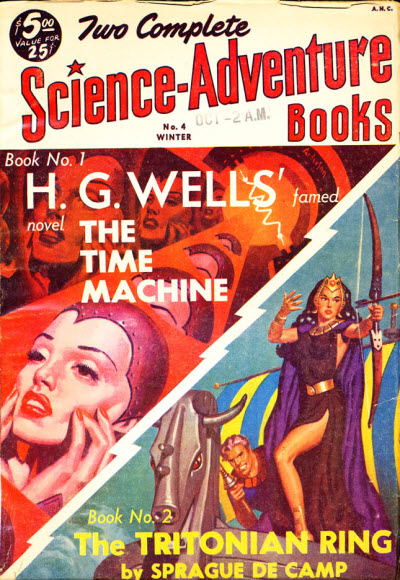
A friend recently sent me a passage from H.G. Wells’ The Time Machine (1895) that resonated with me. It comes when the main character journeys deep into the future. He muses about what kind of human beings he will face:
What might not have happened to men? What if cruelty had grown into a common passion? What if in this interval the race had lost its manliness and had developed into something inhuman, unsympathetic, and overwhelmingly powerful? I might seem some old-world savage animal, only the more dreadful and disgusting for our common likeness–a foul creature to be incontinently slain.
Writing in the late Victorian era, Wells put a heavy stress on manliness that is decidedly unfashionable today. Yet his description of manliness is interesting: he contrasts it to men who are “inhuman, unsympathetic, and overwhelmingly powerful.” For Wells, true manliness taps humane qualities; it values sympathy; it resists being consumed by a will to power.
And it struck me that in men like Trump, a portion of the dystopic future Wells envisions in The Time Machine is now. For Trump, being “manly” is about acquiring power, commanding obedience, forcing other men to submit while grabbing pussy whenever you can. It’s a noxious notion of masculinity, an unsympathetic, even an “inhuman” one.
Another interesting passage I came across this week appears in Robert Ludlum’s The Bourne Identity (1980). The main female character in that book, a Canadian economist by the name of Marie, muses about the men she’s encountered in government employ, at the highest and most secretive levels:
Oh, God, she loathed them all! Mindless, stupid men. Playing with the lives of other men, knowing so little, thinking they knew so much.
They had not listened! They never listened until it was too late, and then only with stern forbearance and strong reminders of what might have been—had things been as they were perceived to be, which they were not. The corruption came from blindness, the lies from obstinacy and embarrassment. Do not embarrass the powerful; the napalm said it all.
And again it got me thinking of Trump and men like him. Trump is all about his “instincts.” He doesn’t bother to read or study, and he sure as hell is not a listener. And he lies and lies just to stay in shape.
But Trump is less cause than symptom. America produced him, and voters voted for him. Roughly one-third of Americans continue to say they support him, irrespective of his serial lying, serial infidelity, and his greedy and grasping policies that favor the richest few over the poorest many.
As Marie said in The Bourne Identity, America has too many “mindless, stupid men.” Men whose ideas about masculinity are defined in opposition to that of H.G. Wells’ concept. Men who are driven by power, who think being manly is about suppressing any sympathy for those less fortunate, men who are proud to be “tough” by being inhumane and nasty. “Empty souls,” as my wife succinctly said this morning.
Can we get 10-20 million Americans to settle here?
W.J. Astore
I was jesting with a friend the other day about how the U.S. could win the Afghan War. There were two ways, I suggested. The first is to relocate about 10 or 20 million Americans to Afghanistan and declare it the 51st state. Then wait a generation or two. The second was to withdraw all American forces and declare “mission accomplished.” Half-measures that fall in between these options are doomed to fail, which is what we’ve been witnessing since the fall of 2001.
In Afghanistan today, the Taliban controls more territory than ever, the drug trade is flourishing, government corruption is endemic, yet the U.S. military/government continues to speak of progress. This “spin it to win it” approach to the Afghan War is nothing new, of course, which is why the following article that I wrote in 2010 is still relevant.
President Trump had a sound instinct in seeking to end the Afghan War. He was talked out of it by the military. For all his faults, Trump knows a loser policy when he sees it. Will he have the moxie to withdraw U.S. forces from Afghanistan?
No More Afghanistans (originally posted in 2010)
In grappling with Afghanistan, President Obama and his team of national security advisors reveal a tendency all too common within the Washington beltway: privileging fleeting and reversible signs of local success while downplaying endemic difficulties and larger patterns of strategic failure. Our latest intelligence estimates, we are told, show signs of progress. But of what sort? The Taliban appears to be extending its hold in the countryside, corruption continues to spread in the Karzai government, and the Afghan National Army remains unreliable, all despite (or rather because of) prodigious infusions of cash courtesy of the American taxpayer.
The president and his advisors would do well to toss aside the latest “feel good” intel and pick up a good book on war. I’d recommend Summons of the Trumpet: U.S.-Vietnam in Perspective, by Colonel (later, Lieutenant General) Dave Richard Palmer. “One of the essential ingredients of [national] preparedness,” wrote then-Colonel Palmer in 1978, “is a diligent and honest study of the past, an intellectual examination of historical successes and failures.” True to his word, Palmer quoted Major G.P. Baldwin, who wrote in 1928 of the Russo-Japanese War that:
The [Russian] government, the press, and the people as a whole had no enthusiasm for the war, indeed failed to understand what the nation was fighting about … Such support is necessary in any war … Unless the people are enthusiastic about war, unless they have a strong will to win it, they will become discouraged by repeated [setbacks] … no government can go to war with hope of success unless it is assured that the people as a whole know what the war is about, that they believe in their cause, are enthusiastic for it, and possess a determination to win. If these conditions are not present the government should take steps to create them or keep the peace.
Palmer cited these words at the end of his probing account of America’s defeat in Vietnam. Though I don’t agree with all of Palmer’s conclusions, his book is stimulating, incisive, and compelling in its concluding vow: “There must be no more Vietnams.”
Let’s consider the points that Baldwin and Palmer raise in light of today’s situation in Afghanistan. Are the American people enthusiastic for this war? Do they have a strong will to win it (assuming the war is winnable on terms consistent with our interests)? Do they know what the war is about (this seems unlikely, since nine out of ten Americans can’t seem to locate Afghanistan on a map)?
If the answer to these fundamental questions is “no,” and I believe it is, shouldn’t our government and our troops be withdrawing now? Because I don’t see that our government will seek to mobilize the people, mobilize our national will, tell us clearly what our cause is and why it is just, and persist in that cause until it is either won or lost. And if I’m right about this, our government had best work to “keep the peace.”
Some of the reasons Palmer cites for why Vietnam was such an “incomprehensible war” for the United States bear careful consideration for President Obama’s policy review. These reasons include that few Americans knew exactly why we were fighting in Vietnam; that it was a “limited war” during which most Americans “sensed no feeling of immediate danger and certainly no spirit of total involvement”; that no “unifying element” was at work to suppress internal doubt and dissent, common elements in all wars; that the struggle was not only (or even primarily) a military one but one in which economic, political, and psychological factors often intruded; and that a cultural gap of great perplexity separated us from both our in-country allies and our enemy, a gap that “foment[ed] mistrust and misunderstanding.”
In light of these points, Afghanistan may qualify as a new “incomprehensible war.” Let’s not be distracted by the minutia of the latest intelligence reports and their uncertain metrics of “success.” Unless we can give convincing answers to General Palmer’s questions and points – and unless we can wage a war that doesn’t entail destroying the Afghan village in order to save it – our only sound course is expedient withdrawal, followed by a renewed vow: There must be no more Vietnams – or Afghanistans.
Trump, America’s very stable genius, doing what he loves
W.J. Astore
My wife perceptively notes how the USA is sliding backwards. Racism has new vigor even as science is rejected, e.g. climate change denial. A woman’s right to choose is under attack. Immigrants once again are openly subjected to prejudice and scorn. Diversity of views and efforts at inclusion are rejected as so many exercises in “political correctness.” Unions are being weakened and the working poor are attacked as lazy and irresponsible. Life expectancy for many is declining, mainly due to suicide, opioid and other addictions, and illnesses related to poor eating habits and obesity. War is perpetual and violence is never-ending. Meanwhile, the rich are getting richer, a sign of “greatness,” at least to Trump and his followers.
Sexism, racism, prejudice, ignorance, scapegoating, the privilege of rich white men to say and do whatever they want: this is “greatness” to Trump. The embodiment of fat cat privilege, Trump rides about in his golf cart and swats balls at his various “resorts.” Indeed, America’s hard-working president, who said as a candidate he’d have no time for golf or vacations, has spent one-third of his presidency on vacation. Mission accomplished!
Meanwhile, Democratic officialdom is looking backwards, not forwards. The Democratic National Committee’s (DNC) idea of progress is to bring a lawsuit against Russia, the Trump campaign, and WikiLeaks for the 2016 election. This act will “fire up the base,” or so leading Democrats appear to think. But it’s really sour grapes, a loser policy conducted by pols who remain out of touch with the pressing concerns of ordinary Americans (you know, things like health care, a living wage, and other issues associated with Bernie Sanders’s campaign). If only America had a true Labor Party instead of a DNC that mirrors the Republicans while lacking their focus and ruthlessness.
Let’s face it: America needs a new leader, a fresh start, an unapologetic progressive, someone who’s smart but who also possesses empathy. Someone on the side of workers; someone like Jacinda Ardern, the prime minister of New Zealand.
PM Jacinda Ardern of New Zealand. Yes, she’s pregnant and taking maternity leave after she gives birth.
Roughly half Trump’s age, Jacinda Ardern represents the future. Intelligent, principled, committed to her people, Ardern is refreshingly honest and frank. Imagine, for a moment, a truly progressive woman as president of the United States, one who has the courage of her convictions, one committed to fairness and equity in society, one untainted by big money, even one who’s unabashedly pregnant and who supports maternity and paternity leave for parents.
She’s got spunk too. When she first met Trump and he had a snide remark for her, she replied that masses of people didn’t take to the streets to protest when she was elected. As my Kiwi friend put it, “It’s the ability of Jacinda to not only represent her own party but pull together alliances that is impressive. Not only an arrangement with the conservative ‘New Zealand First’ party but also the Greens.” She brings people together for the greater good — making concessions when she has to. What a quaint concept.
America could use a woman like Jacinda Ardern as president. If only my Kiwi friends would let her emigrate! (Yes, sadly, she wasn’t born here so she couldn’t run, but let a man dream, dammit.) Perhaps Congresswoman Tulsi Gabbard will emerge as America’s Jacinda in 2020; aligned with Bernie Sanders, Gabbard has moxie as well as military experience. But I wouldn’t bank on it. The DNC, still with its collective head up its ass, isn’t seeing the future too clearly.
Five years ago, I remember talking about lockdown drills (or “active shooter drills”) with colleagues at Penn College. Such drills were voluntary. Basically, the drill involved locking the classroom door, moving students to the back of the classroom, and having them hunker down, away from windows, while keeping silent so as to avoid detection by a shooter roaming the halls.
I was against these drills. I thought they added to the fear, and I chose not to do them. But maybe I would do them today.
After one shooting massacre (I can’t recall if it was Virginia Tech in 2007 or Sandy Hook in 2012), locks were added to the classroom doors. In theory, if I heard gunshots, I or one of my students could jump up and lock the door before a shooter got in. But what if a determined shooter shot the lock out?
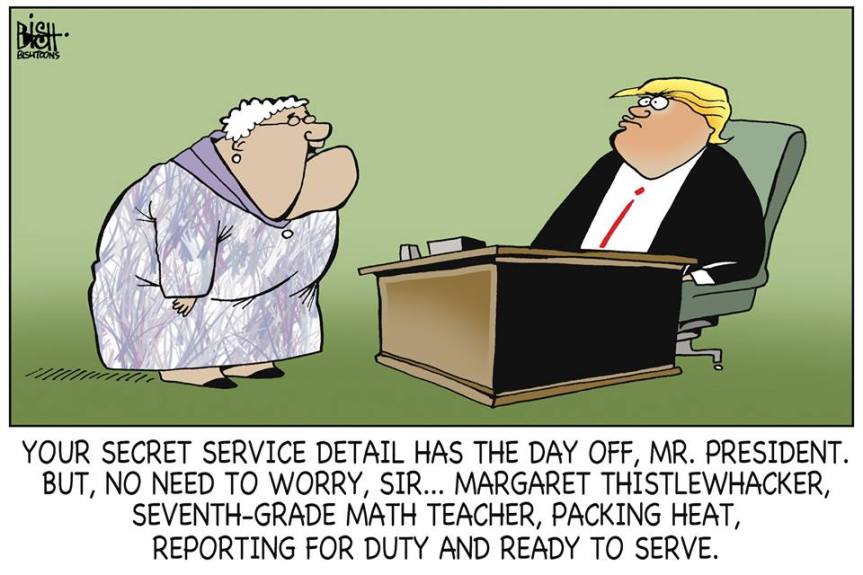
What a world we Americans live in. Locked classrooms, lockdown drills for active shooters, and now the proposal to turn teachers into so many Harry Callahans (Clint Eastwood’s Dirty Harry) and our schools into “hardened” targets by arming teachers with pistols. Perhaps we should keep an AR-15 in each classroom (alongside the fire extinguisher), with a sign that reads, “In case of emergency, break glass – then lock and load.”
President Trump has argued that select teachers be armed – following the NRA’s theory that a good man with a gun is the best insurance against a bad man with a gun. It’s a crazy idea, but we live in a crazy country. Among the worst parts of Trump’s proposal was his stingy suggestion that armed and trained teachers might earn “a little bit” of a bonus. How generous of our brave commander-in-chief.
Think about that for a moment. There is an active shooter (or shooters) in a school, armed with military-style assault weapons and perhaps protected by body armor. Young people are running and screaming, bullets are flying, and in this bloody chaos, we place our faith in a teacher, perhaps armed with a 9mm pistol, thoroughly trained in shooting under combat conditions, willing to risk it all “for a little bit of a bonus.”
It’s a powerful fantasy: the cold bold Harry Callahan-like teacher, taking aim with his or her pistol and blowing away school intruders with perfect head shots. And that’s exactly what it is: a fantasy. As Belle Chesler, a teacher, put it at TomDispatch.com, “We are not warriors, we are teachers. We are not heroes, we are teachers.”
It’s one thing to shoot at paper targets on a gun range; it’s another thing entirely to fire accurately in combat when you’re outgunned and someone is firing back at you. What if, during the chaos of shooting, a teacher accidentally shoots a few students? So-called friendly fire incidents happen frequently in combat, despite the most careful troop training.
If you want more security guards in America’s schools, hire them. Don’t try to turn teachers into cheap cut-rate guards. Yet “a little bit of a bonus” for armed teachers is the best idea our stingy billionaire of a president can come up with.
As we saw in Parkland, Florida, even armed and trained deputies may hesitate before confronting a heavily-armed shooter. How is your average teacher going to react? At least we know Trump will rush in, heel spurs and all, whether he’s armed or unarmed, to save the day. Or so he says.
Most people, even when armed, will not rush toward the sound of gunfire. We tend instinctively to freeze, to take cover, or to run. It takes a combination of training, willpower, and courage to rush toward danger, often strengthened by teamwork and inspired by one or more leaders who set the example. The problem is not as simple as “give a teacher a gun, and he or she will blow the bad guy away.”
In a country awash in weapons, there are no easy answers. One model is to turn our schools into fortresses, complete with surveillance cameras and panic buttons and smoke ejectors in hallways, as in this “safe” school in Indiana. Trump’s model is to arm select teachers for a tiny bonus. Limited efforts at gun control, such as raising the age to purchase an assault rifle from 18 to 21, are like putting a Band-Aid on a sucking chest wound. One thing is certain: better law enforcement is crucial, e.g. there were many warnings about the Parkland shooter that were dismissed or ignored.
Again, there are no easy answers. And so Lockdown America is now our reality.
Update (3/9/18): In the wake of the Parkland shootings, Florida legislators have approved guns for teachers in the classroom, as well as more spending on school security. Assault weapons, however, are not to be banned. So the solution to bad men with guns is indeed good men with guns, according to Florida. The NRA wins again.
How long before a teacher, teacher’s aide, or coach with a gun accidentally or intentionally hurts a student with a gun? How long before the inevitable lawsuits result from this, the multi-million dollar settlements? Will school districts be required to carry expensive insurance against gun shootings by educators? Are taxpayers ready to pony up a lot more money to cover the costs of insurance premiums and lawsuits?
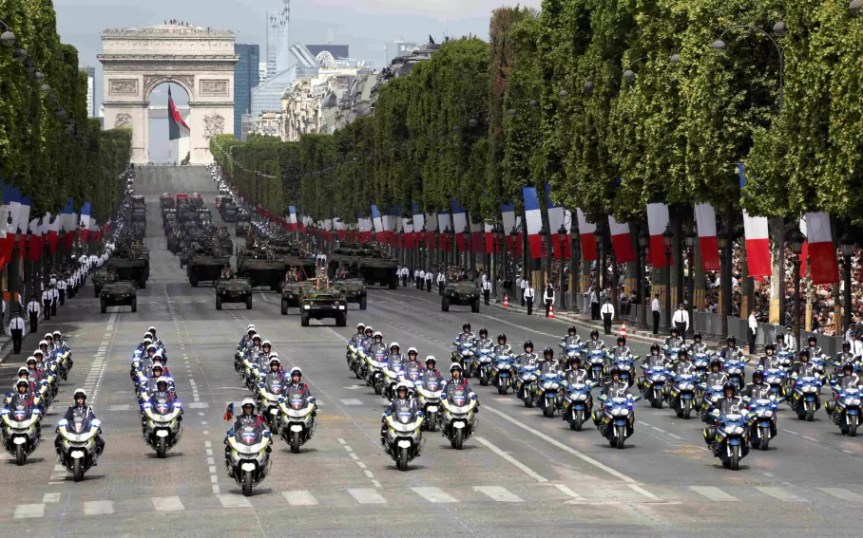
Trump, inspired by the French, wants his own military parade
W.J. Astore
News that President Trump favors a military parade in Washington D.C., perhaps to coincide with Veterans Day in November, has drawn criticism, and rightly so. The president has a juvenile fascination with parades and other forms of pomp and circumstance, but more than anything I’m guessing he relishes the thought of posing as “The Leader,” reviewing and saluting “his” troops and generals as they pass in review. If only “Cadet Bone Spurs,” the telling nickname that Tammy Duckworth has pegged him with, could don a military uniform for the occasion — his fantasy would be complete.
The idea of a military parade down Pennsylvania Avenue, complete with tanks and jets (and maybe some big missiles and bombs too?), sounds radical. But is it really that different from other militarized celebrations that America has been witnessing and applauding since 9/11?
Consider this year’s Super Bowl. It was played in a domed stadium, yet there was the obligatory military flyover (featuring A-10 attack planes, which the Air Force ironically wants to get rid of). Fifteen Medal of Honor recipients were celebrated on the field, with one (a Marine) performing the coin toss for the game. A video link showed U.S. troops watching from overseas. In past years, troops featured were usually in combat zones like Iraq and Afghanistan. This year the troops were in South Korea, perhaps because NBC wanted a link to the forthcoming Olympic games, hopefully not because the Trump administration is foreshadowing a “bloody nose” strike against North Korea that would turn that region into a combat zone.
Such patriotic (read: militarized) hoopla has become standard, not just at the Super Bowl and other NFL events, but at many other sporting events. At last year’s U.S. Open tennis tournament in New York, prior to the men’s final played on 9/10, there was a ceremony to mark the 9/11 attacks, complete with the usual jumbo-sized U.S. flag, with uniformed troops joined by officer cadets from West Point, climaxed by a military flyover. The ceremony was timed for maximum TV exposure.
As a retired military officer, I can’t tell you how many times I’ve saluted the colors and sung the National Anthem. I have no objection to military color guards and proud renditions of our anthem. It’s all the other hoopla — the flyovers, the video links, the gigantic flags, the increasing size of military contingents on playing fields and tennis courts and elsewhere — that I find so exaggerated. It’s as if I sat down to watch a football game or a tennis match and a military parade broke out instead.
Give President Trump his due: he knows his audience. His supporters will revel in a military parade in Washington. So too will Trump. The rest of us? Why should we complain: we’ve been watching over-the-top military celebrations for nearly two decades. A big parade down Pennsylvania Avenue is the logical culmination of all this, especially with Trump in charge.
Like many other aspects of American culture, Trump is just bringing our love of the military into higher relief. Don’t blame him (or only him) if you don’t like what you see.
In my latest article for TomDispatch.com, I suggest how America can pursue a wiser, more peaceful, course. This is exactly what our leaders are not doing (and haven’t been doing for decades), as I document in the first half of my article, which I’m sharing here. Bottom line: perpetual war doesn’t produce perpetual peace. Nor does it make us safer.
Whether the rationale is the need to wage a war on terror involving 76 countries or renewed preparations for a struggle against peer competitors Russia and China (as Defense Secretary James Mattis suggested recently while introducing America’s new National Defense Strategy), the U.S. military is engaged globally. A network of 800 military bases spread across 172 countries helps enable its wars and interventions. By the count of the Pentagon, at the end of the last fiscal year about 291,000 personnel (including reserves and Department of Defense civilians) were deployed in 183 countries worldwide, which is the functional definition of a military uncontained. Lady Liberty may temporarily close when the U.S. government grinds to a halt, but the country’s foreign military commitments, especially its wars, just keep humming along.
As a student of history, I was warned to avoid the notion of inevitability. Still, given such data points and others like them, is there anything more predictable in this country’s future than incessant warfare without a true victory in sight? Indeed, the last clear-cut American victory, the last true “mission accomplished” moment in a war of any significance, came in 1945 with the end of World War II.
Yet the lack of clear victories since then seems to faze no one in Washington. In this century, presidents have regularly boasted that the U.S. military is the finest fighting force in human history, while no less regularly demanding that the most powerful military in today’s world be “rebuilt” and funded at ever more staggering levels. Indeed, while on the campaign trail, Donald Trump promised he’d invest so much in the military that it would become “so big and so strong and so great, and it will be so powerful that I don’t think we’re ever going to have to use it.”
As soon as he took office, however, he promptly appointed a set of generals to key positions in his government, stored the mothballs, and went back to war. Here, then, is a brief rundown of the first year of his presidency in war terms.
In 2017, Afghanistan saw a mini-surge of roughly 4,000 additional U.S. troops (with more to come), a major spike in air strikes, and an onslaught of munitions of all sorts, including MOAB (the mother of all bombs), the never-before-used largest non-nuclear bomb in the U.S. arsenal, as well as precision weapons fired by B-52s against suspected Taliban drug laboratories. By the Air Force’s own count, 4,361 weapons were “released” in Afghanistan in 2017 compared to 1,337 in 2016. Despite this commitment of warriors and weapons, the Afghan war remains — according to American commanders putting the best possible light on the situation — “stalemated,” with that country’s capital Kabul currently under siege.
How about Operation Inherent Resolve against the Islamic State? U.S.-led coalition forces have launched more than 10,000 airstrikes in Iraq and Syria since Donald Trump became president, unleashing 39,577 weapons in 2017. (The figure for 2016 was 30,743.) The “caliphate” is now gone and ISIS deflated but not defeated, since you can’t extinguish an ideology solely with bombs. Meanwhile, along the Syrian-Turkish border a new conflict seems to be heating up between American-backed Kurdish forces and NATO ally Turkey.
Yet another strife-riven country, Yemen, witnessed a sixfold increase in U.S. airstrikes against al-Qaeda on the Arabian Peninsula (from 21 in 2016 to more than 131 in 2017). In Somalia, which has also seen a rise in such strikes against al-Shabaab militants, U.S. forces on the ground have reached numbers not seen since the Black Hawk Down incident of 1993. In each of these countries, there are yet more ruins, yet more civilian casualties, and yet more displaced people.
Finally, we come to North Korea. Though no real shots have yet been fired, rhetorical shots by two less-than-stable leaders, “Little Rocket Man” Kim Jong-un and “dotard” Donald Trump, raise the possibility of a regional bloodbath. Trump, seemingly favoring military solutions to North Korea’s nuclear program even as his administration touts a new generation of more usable nuclear warheads, has been remarkably successful in moving the world’s doomsday clock ever closer to midnight.
Clearly, his “great” and “powerful” military has hardly been standing idly on the sidelines looking “big” and “strong.” More than ever, in fact, it seems to be lashing out across the Greater Middle East and Africa. Seventeen years after the 9/11 attacks began the Global War on Terror, all of this represents an eerily familiar attempt by the U.S. military to kill its way to victory, whether against the Taliban, ISIS, or other terrorist organizations.
This kinetic reality should surprise no one. Once you invest so much in your military — not just financially but also culturally (by continually celebrating it in a fashion which has come to seem like a quasi-faith) — it’s natural to want to put it to use. This has been true of all recent administrations, Democratic and Republican alike, as reflected in the infamous question Madeleine Albright posed to Chairman of the Joint Chiefs Colin Powell in 1992: “What’s the point of having this superb military you’re always talking about if we can’t use it?”
With the very word “peace” rarely in Washington’s political vocabulary, America’s never-ending version of war seems as inevitable as anything is likely to be in history. Significant contingents of U.S. troops and contractors remain an enduring presence in Iraq and there are now 2,000 U.S. Special Operations forces and other personnel in Syria for the long haul. They are ostensibly engaged in training and stability operations. In Washington, however, the urge for regime change in both Syria and Iran remains strong — in the case of Iran implacably so. If past is prologue, then considering previous regime-change operations in Afghanistan, Iraq, and Libya, the future looks grim indeed.
Despite the dismal record of the last decade and a half, our civilian leaders continue to insist that this country must have a military not only second to none but globally dominant. And few here wonder what such a quest for total dominance, the desire for absolute power, could do to this country. Two centuries ago, however, writing to Thomas Jefferson, John Adams couldn’t have been clearer on the subject. Power, he said, “must never be trusted without a check.”
The question today for the American people: How is the dominant military power of which U.S. leaders so casually boast to be checked? How is the country’s almost total reliance on the military in foreign affairs to be reined in? How can the plans of the profiteers and arms makers to keep the good times rolling be brought under control?
As a start, consider one of Donald Trump’s favorite generals, Douglas MacArthur, speaking to the Sperry Rand Corporation in 1957:
“Our swollen budgets constantly have been misrepresented to the public. Our government has kept us in a perpetual state of fear — kept us in a continuous stampede of patriotic fervor — with the cry of grave national emergency. Always there has been some terrible evil at home or some monstrous foreign power that was going to gobble us up if we did not blindly rally behind it by furnishing the exorbitant funds demanded. Yet, in retrospect, these disasters seem never to have happened, seem never to have been quite real.”
No peacenik MacArthur. Other famed generals like Smedley Butler and Dwight D. Eisenhower spoke out with far more vigor against the corruptions of war and the perils to a democracy of an ever more powerful military, though such sentiments are seldom heard in this country today. Instead, America’s leaders insist that other people judge us by our words, our stated good intentions, not our murderous deeds and their results.
For ten suggestions (plus a bonus) on how the U.S. can pursue a wiser, and far less bellicose, course, please read the rest of my article here at TomDispatch.com.