Our Enemy, Ourselves

W.J. Astore

In my latest article for TomDispatch.com, I suggest how America can pursue a wiser, more peaceful, course.  This is exactly what our leaders are not doing (and haven’t been doing for decades), as I document in the first half of my article, which I’m sharing here.  Bottom line: perpetual war doesn’t produce perpetual peace.  Nor does it make us safer.

Whether the rationale is the need to wage a war on terror involving 76 countries or renewed preparations for a struggle against peer competitors Russia and China (as Defense Secretary James Mattis suggested recently while introducing America’s new National Defense Strategy), the U.S. military is engaged globally.  A network of 800 military bases spread across 172 countries helps enable its wars and interventions.  By the count of the Pentagon, at the end of the last fiscal year about 291,000 personnel (including reserves and Department of Defense civilians) were deployed in 183 countries worldwide, which is the functional definition of a military uncontained.  Lady Liberty may temporarily close when the U.S. government grinds to a halt, but the country’s foreign military commitments, especially its wars, just keep humming along.

As a student of history, I was warned to avoid the notion of inevitability.  Still, given such data points and others like them, is there anything more predictable in this country’s future than incessant warfare without a true victory in sight?  Indeed, the last clear-cut American victory, the last true “mission accomplished” moment in a war of any significance, came in 1945 with the end of World War II.

Yet the lack of clear victories since then seems to faze no one in Washington.  In this century, presidents have regularly boasted that the U.S. military is the finest fighting force in human history, while no less regularly demanding that the most powerful military in today’s world be “rebuilt” and funded at ever more staggering levels.  Indeed, while on the campaign trail, Donald Trump promised he’d invest so much in the military that it would become “so big and so strong and so great, and it will be so powerful that I don’t think we’re ever going to have to use it.”

As soon as he took office, however, he promptly appointed a set of generals to key positions in his government, stored the mothballs, and went back to war.  Here, then, is a brief rundown of the first year of his presidency in war terms.

In 2017, Afghanistan saw a mini-surge of roughly 4,000 additional U.S. troops (with more to come), a major spike in air strikes, and an onslaught of munitions of all sorts, including MOAB (the mother of all bombs), the never-before-used largest non-nuclear bomb in the U.S. arsenal, as well as precision weapons fired by B-52s against suspected Taliban drug laboratories.  By the Air Force’s own count, 4,361 weapons were “released” in Afghanistan in 2017 compared to 1,337 in 2016.  Despite this commitment of warriors and weapons, the Afghan war remains — according to American commanders putting the best possible light on the situation — “stalemated,” with that country’s capital Kabul currently under siege.

How about Operation Inherent Resolve against the Islamic State?  U.S.-led coalition forces have launched more than 10,000 airstrikes in Iraq and Syria since Donald Trump became president, unleashing 39,577 weapons in 2017. (The figure for 2016 was 30,743.)  The “caliphate” is now gone and ISIS deflated but not defeated, since you can’t extinguish an ideology solely with bombs.  Meanwhile, along the Syrian-Turkish border a new conflict seems to be heating up between American-backed Kurdish forces and NATO ally Turkey.

Yet another strife-riven country, Yemen, witnessed a sixfold increase in U.S. airstrikes against al-Qaeda on the Arabian Peninsula (from 21 in 2016 to more than 131 in 2017).  In Somalia, which has also seen a rise in such strikes against al-Shabaab militants, U.S. forces on the ground have reached numbers not seen since the Black Hawk Down incident of 1993.  In each of these countries, there are yet more ruins, yet more civilian casualties, and yet more displaced people.

Finally, we come to North Korea.  Though no real shots have yet been fired, rhetorical shots by two less-than-stable leaders, “Little Rocket Man” Kim Jong-un and “dotard” Donald Trump, raise the possibility of a regional bloodbath.  Trump, seemingly favoring military solutions to North Korea’s nuclear program even as his administration touts a new generation of more usable nuclear warheads, has been remarkably successful in moving the world’s doomsday clock ever closer to midnight.

Clearly, his “great” and “powerful” military has hardly been standing idly on the sidelines looking “big” and “strong.”  More than ever, in fact, it seems to be lashing out across the Greater Middle East and Africa.  Seventeen years after the 9/11 attacks began the Global War on Terror, all of this represents an eerily familiar attempt by the U.S. military to kill its way to victory, whether against the Taliban, ISIS, or other terrorist organizations.

This kinetic reality should surprise no one.  Once you invest so much in your military — not just financially but also culturally (by continually celebrating it in a fashion which has come to seem like a quasi-faith) — it’s natural to want to put it to use.  This has been true of all recent administrations, Democratic and Republican alike, as reflected in the infamous question Madeleine Albright posed to Chairman of the Joint Chiefs Colin Powell in 1992: “What’s the point of having this superb military you’re always talking about if we can’t use it?”

With the very word “peace” rarely in Washington’s political vocabulary, America’s never-ending version of war seems as inevitable as anything is likely to be in history.  Significant contingents of U.S. troops and contractors remain an enduring presence in Iraq and there are now 2,000 U.S. Special Operations forces and other personnel in Syria for the long haul.  They are ostensibly engaged in training and stability operations.  In Washington, however, the urge for regime change in both Syria and Iran remains strong — in the case of Iran implacably so.  If past is prologue, then considering previous regime-change operations in Afghanistan, Iraq, and Libya, the future looks grim indeed.

Despite the dismal record of the last decade and a half, our civilian leaders continue to insist that this country must have a military not only second to none but globally dominant.  And few here wonder what such a quest for total dominance, the desire for absolute power, could do to this country.  Two centuries ago, however, writing to Thomas Jefferson, John Adams couldn’t have been clearer on the subject.  Power, he said, “must never be trusted without a check.”

The question today for the American people: How is the dominant military power of which U.S. leaders so casually boast to be checked? How is the country’s almost total reliance on the military in foreign affairs to be reined in? How can the plans of the profiteers and arms makers to keep the good times rolling be brought under control?

As a start, consider one of Donald Trump’s favorite generals, Douglas MacArthur, speaking to the Sperry Rand Corporation in 1957:

“Our swollen budgets constantly have been misrepresented to the public. Our government has kept us in a perpetual state of fear — kept us in a continuous stampede of patriotic fervor — with the cry of grave national emergency. Always there has been some terrible evil at home or some monstrous foreign power that was going to gobble us up if we did not blindly rally behind it by furnishing the exorbitant funds demanded. Yet, in retrospect, these disasters seem never to have happened, seem never to have been quite real.”

No peacenik MacArthur.  Other famed generals like Smedley Butler and Dwight D. Eisenhower spoke out with far more vigor against the corruptions of war and the perils to a democracy of an ever more powerful military, though such sentiments are seldom heard in this country today.  Instead, America’s leaders insist that other people judge us by our words, our stated good intentions, not our murderous deeds and their results.

For ten suggestions (plus a bonus) on how the U.S. can pursue a wiser, and far less bellicose, course, please read the rest of my article here at TomDispatch.com. 
Get the Widow on the Set: Trump’s State of the Union Address

180130-sotu-dem-women-reaction-njs-1004p_719e1eb8c128b0e7b47baa9a0d2b28ca.nbcnews-ux-2880-1000
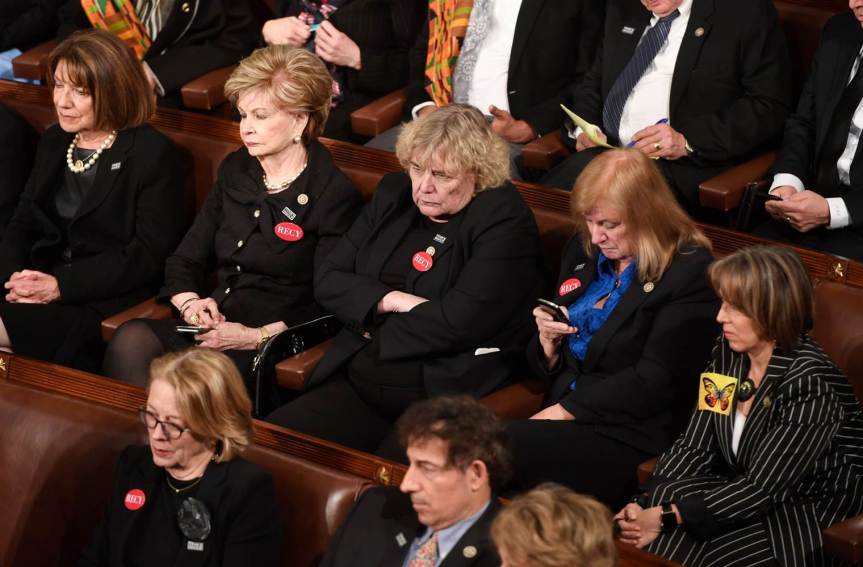
I felt like this, only worse

W.J. Astore

Last night’s State of the Union address was disturbing on many levels.  Republicans applauded when President Trump touted the elimination of the individual mandate for purchasing health care insurance — so it’s a good thing people have no health insurance?  Wait until they go to the emergency room for an appendectomy and leave with a bill for $20,000.  Republicans applauded as well when Trump touted the American prison at Guantanamo Bay in Cuba.  So it’s a good thing our President is vowing to send more “terrorists” to an offshore U.S. military prison?

I could go on and on, but what was most disturbing to me was the use of people in the audience as props for Trump’s positions.  A brave soldier who won the Bronze Star for valor was celebrated to support America’s wars overseas.  Parents whose daughters were killed by illegal immigrants were used to support Trump’s policies on immigration.  A family whose son suffered grievous, ultimately deadly, wounds in North Korea was used to support Trump’s bellicose policies toward Kim Jong-un and his regime, as was a courageous North Korean defector.

It reminded me of the Don Henley song, “Dirty Laundry” and its lines: Can we film the operation?/Is the head dead yet?/You know the boys in the newsroom got a running bet/get the widow on the set/we need dirty laundry. 

The shameless exploitation of other people’s grief is something I can’t stand.  It’s sordid and cynical and dirty.  There are many other things I could say about Trump’s State of the Union address, but my overall feeling was one of exploitation.  After his speech, I felt dirty.

Trump, His Generals, and the Road to Authoritarianism

W.J. Astore

An article yesterday at NBC focusing on Trump and “his” generals got me to thinking on this subject again.  Its author, Suzanne Garment, suggests that Trump likes generals as obedient alpha males.  They lend him credibility without directly threatening his delicate ego.  And there’s truth in this.

trump generals
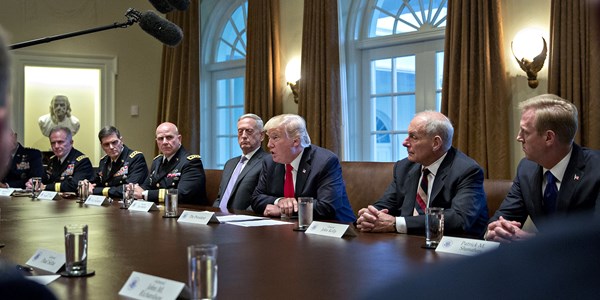
Trump and his generals.  Mattis and Kelly flanking Trump.  From the NBC article.

But I want to focus on other reasons for Trump’s preference for generals in high positions.  A year ago, I wrote an article for TomDispatch.com on “All the President’s Generals.”  That article focused mainly on the potential impact of these generals on America’s foreign policy and domestic culture.  As I wrote last December:

Collectively, the team of Mattis, Flynn, and Kelly could not be more symbolic of the ongoing process of subversion of civilian control of the military.  With Trump holding their reins, these self-styled warriors will soon take charge of the highest civilian positions overseeing the military of the world’s sole superpower.  Don’t think of this, however, as a “Seven Days in May” scenario in which a hard-headed general mounts a coup against an allegedly soft-hearted president.  It’s far worse.  Who needs a coup when generals are essentially to be given free rein by a president-elect who fancies himself a military expert because, as a teenager, he spent a few years at a military-themed boarding school?

In all of this, Trump represents just the next (giant) step in an ongoing process.  His warrior-steeds, his “dream team” of generals, highlight America’s striking twenty-first-century embrace of militarism.

I continue to think this is true.  Trump is empowering further military adventurism, even as he reinforces military-style solutions to problems.  But there are other reasons for Trump’s tight and eager embrace of the military.

Basically, by embracing the military and elevating it (while feeding it lots of money), Trump has neutralized it as a rival to his power.  Indeed, he is borrowing from the military’s authority and standing within our culture to bolster his own.

Recall how Candidate Trump was often quite critical of the U.S. military.  He knew more than the generals, he said.  Their wars he often called wasteful follies.  He was going to win (or end) these wars, he claimed, and hinted that quite a few “loser” generals might be on the receiving end of his infamous “You’re fired” line.

You hear none of this today. Trump is at pains to praise the military and his generals. He says they’re on a winning path, even in Afghanistan (because of Trump’s decisions, naturally).  He rewards them with record budgets and unalloyed praise.

And it’s working.  The military (and the larger national security state) is content with Trump.  He’s letting them have their way, which is another way of saying Trump is having his way.

In American society today, there aren’t too many power centers that truly can challenge Trump.  The media he’s diminished with all his attacks (“Fake news!”).  A Republican Congress remains quietly subservient.  Trump is stacking the judiciary with conservative judges to his liking.  The Democratic Party remains feckless and divided.  Bankers and corporations?  Trump has hired the former and given a huge gift to the latter in the latest Republican tax cut for the richest.

When you think about it, the one power center that could challenge Trump is the military-industrial complex: America’s fourth branch of government.  Yet by hiring so many of its generals and by praising it while passing loads of moola its way, Trump has co-opted its authority and power, attaching it to himself in his role as commander-in-chief.

Trump’s last hurdle may be the Robert Mueller investigation into Russian meddling and possible complicity or obstruction by Trump.  If Trump gets past this (perhaps even by firing Mueller), is there anyone left with the balls, the sand, the spine, the guts, the moxie (choose your favorite measure of fortitude) and the authority to stop his ambition and designs as an authoritarian leader?

Donald Trump and His Global War on Truth

Trump-Locker-Room-Cartoon-58b8fdb25f9b58af5cc8205d
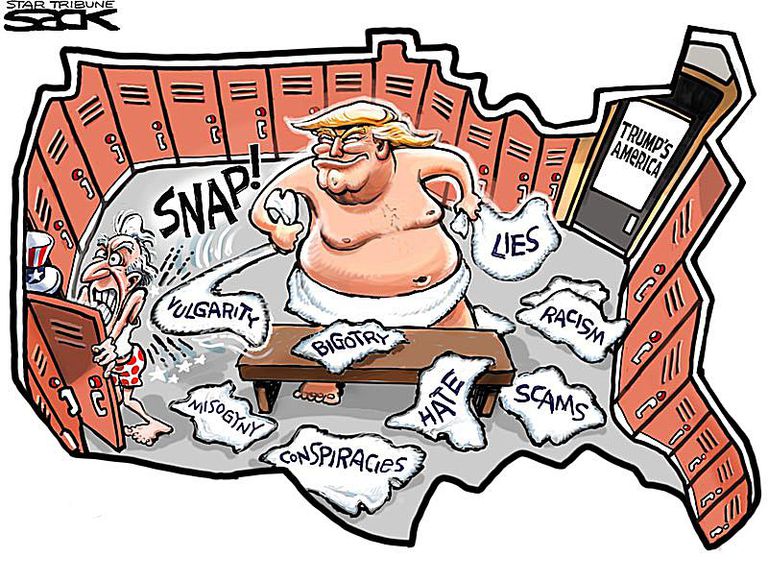
Too many lies

W.J. Astore

Donald Trump is waging a global war on truth.  He is the anti-truth president.  From Trump steaks to his “university” to his support of the “birther” movement against Barack Obama, he’s perpetually selling lies.  Now he’s selling lies on a global stage.  By making everything potentially a lie, e.g. climate change as a “Chinese hoax,” Trump is doing his best to demolish facts, paving the way to do whatever he pleases.

Trump believes he can have his own facts and tweet them too.  We can blame Trump for being the vain, venal, and vile man that he is, but America elected him (yes, not all Americans, but enough to carry the Electoral College).  He’s a con man, a crafty one, and the media can’t look away, nor can the rest of us.

How did we end up with Trump and his assault on truth?  I’d like to focus on two reasons.  The first was noted by Bernie Sanders back in September of 1998.  Then a congressman, Sanders noted how the Democratic Party under the Clinton regime, with its corporate-friendly pursuit of “free” trade and feel-good globalization, was screwing the working classes.  Sanders then issued the following warning (in an editorial in The Nation entitled, “Globalization’s the Issue”):

Right-wing populists like Pat Buchanan are lining up to ride to power on public fear and anger about globalization.  If corporate globalism continues to result in deteriorating conditions of life for ordinary Americans, we’re likely to see a rise of scapegoating demagogy and virulent right-wing economic nationalism.

Scapegoating demagogy?  Trump and Mexicans, Trump and Muslims, Trump and immigrants in general.  Right-wing economic nationalism?  Trump and “making America great again” through massive military spending and weapons exports combined with tax cuts that are sold as helping the poor even as they reward the rich.

By betraying the working classes and becoming yet another business party, the Clinton Democrats helped pave the way for right-wing populists and unprincipled opportunists like Trump.  Indeed, by running the corporate-friendly Hillary Clinton against Trump in 2016, the Democratic Party turned its back on their own populist, Bernie Sanders, who genuinely was (and is) concerned with helping the working classes.

The second reason for Trump’s assault on truth has been all around us for decades, but it was exacerbated by the 9/11 attacks.  Think back to the Vietnam War, the Pentagon Papers, and Watergate.  If there’s one thing we learned from these debacles, it’s how much our government lies to us.  Now fast-forward to 9/11.  In the aftermath of those attacks, the Bush/Cheney administration did its level best to deflect all responsibility, and especially their responsibility, for the attack.  Al Qaeda inflicted a major defeat on the U.S., yet no one took the blame.  The buck stopped nowhere.  Instead, Bush/Cheney drove a climate of fear and revenge, attacking Afghanistan followed by a disastrous war in Iraq.

By turning so quickly to war on a massive scale, Bush/Cheney knew that most Americans would rally around the flag.  They further cynically used the moment to pass the PATRIOT Act to extend their power and that of the government.  Choosing not to rally Americans, they instead made them fearful, obedient, and passive (Go to Disney!  Go shopping!).

The leaders and the government that so badly let us down on 9/11 worked to convince us that only those same leaders and government could keep us safe after 9/11.  Bush/Cheney and Crew, in essence, told a Big Lie that led, I think directly, to a Big Liar being elected as president in 2016.  But I don’t just blame Bush/Cheney.  The Obama administration refused to call these men to account, e.g. no prosecution for torture and other war crimes.  Furthermore, Obama expanded the legacy of illegal surveillance, excessive secrecy, and incessant warfare that has characterized the manic opportunism of a government that refuses accountability, whether for the defeat of 9/11 or for the ongoing disasters of Afghanistan, Iraq, Libya, et al.

Long in the making, Trump’s victory march of 2016 quickened its pace in the aftermath of 9/11 and all the anti-Muslim, anti-immigrant, and anti-anything-I-don’t-like, hysteria stirred up by Bush/Cheney and Crew.  But its impetus goes back further: to the lies and deceptions revealed by the Pentagon Papers, to the sordid lies and cover-ups of Watergate, and to the abandonment of the working classes by Democrats, the latter of which provided fertile soil for right-wing populist demagogy to take root and grow.

Whether led by democrats or republicans, our government has been telling us so many lies for so long that it’s not surprising we now have a president whose chief skill is as a con man and a liar.  His global war on truth is the culmination of too much governmental lying and too little attention paid to the real needs of ordinary Americans.

The Disastrous Italian War Against Austria-Hungary (1915-18), the Rise of Fascism, and Trump’s Victory in 2016

W.J. Astore

My father’s family was Italian, and his relatives fought, suffered, and died in Italy’s wars before and during World War I.  In his diary, my dad recounted these relatives and their fates:

My mother as far as I can recall had two brothers in the [Italian military] service. One brother had an exploding shell land near him.  He was highly agitated.  A doctor who knew my mother’s family saw that he got a medical discharge.

His brother had a much more dangerous career in the Italian Army.  He was a forward observer for an artillery unit.  He was severely gassed on the Austrian front.  He survived the war but had a premature death from the effects of the gas.

Luigi, Uncle Louie, Astore had quite a career in the Italian Army.  My mother used to call him El Sargento.

Uncle Louie fought three years in the Turkish War [1911-12] and four years in World War 1.  He was a prisoner of war in Germany for a year.  I overheard a conversation and he remarked that things were tough as a prisoner and food was a scarce item.  He never told me about his experiences in World War 1.

So, my grandmother had one brother who had shell-shock (PTSD) and another who died prematurely from poison gas.  My grandfather had a brother (Luigi) who was a POW who nearly starved and who didn’t talk about his war experiences. (I am too young to have clear memories of Luigi, but photos show an unsmiling man, which is not surprising given his war experiences.)

War is all hell, as General William Sherman said, and my father’s family’s experience in Italy illustrates the truth of that.

A childhood friend of mine, who also had Italian parents, sent along a book recommendation to me: The White War: Life and Death on the Italian Front, 1915-1919 by Mark Thompson.  My friend wrote a nice little review of it in an email to me, which follows below:

The White War (about Italy’s WWI fight against the Austro-Hungarians) has been fascinating but also depressing.  The insistence of Italian staff officers to send poorly armed and trained men into a battlefield even more deadly than the western front (the Italians had to scale hills and mountains in the face of withering machine gun and artillery fire) boggles the mind.  The Italian high command also had the dubious distinction of ordering more summary executions of the rank and file than the Brits, French, Germans, and Austrians.  Illiterate peasants needlessly sent to their deaths in the hundreds of thousands with Italian military policemen stationed with machine guns to their rear with orders to fire on them in case they did not show the requisite élan.  (My mother’s paternal uncle fell in that war–I wonder what horrors he saw and experienced.)  If it did not already exist, surely the stereotypical Italian cynicism toward governmental authority resulted from the incompetence and brutality of Italian military leadership in WWI.  

With respect to Italian POWs and food scarcity during captivity, my friend noted the following startling fact that he gleaned from reading The White War:

Italian authorities made it a policy to prevent food packages from being sent to Italian POWs in Austrian control as part of their strategy to deter Italian soldiers from surrendering.  Many POWs died as a result.  Unbelievable.

So much for the alleged glories of war.  Italy’s war against Austria-Hungary, fought under bitterly cold conditions in the torturous terrain of the alps, is little known in the United States.  It was a disastrous struggle that consumed nearly a million men for little reason, and the frustrations of that war – the betrayal of common soldiers by societal elites – contributed to estrangement, bitterness, and the embrace of fascism in the 1920s as an alternative to the status quo.

In U.S. politics today, with the backdrop of President Donald Trump’s strong man posturing that recalls the thrusting belligerence of the Italian fascist dictator Benito Mussolini, are we witnessing something similar?  Recall that Trump in 2016 garnered  a lot of support in rural areas by taking a position against America’s wasteful wars, even as he beckoned to an unspecified “great” past.  Mussolini, who railed against Italy’s “mutilated victory” in World War I, also won support by calling for societal revival, even as he beckoned to the greatness of Italy’s imperial past.

Like Mussolini, Trump wasn’t (and isn’t) against war.  Rather, both men were against losing wars.  Appealing to tough-guy generals like George Patton and Douglas MacArthur, Trump promised Americans who had suffered they’d “win” again.  Like Mussolini, he promised a brighter future (endless victories!) through higher military spending and aggressive military action.  No more shame of “mutilated” victories — or so Mussolini and Trump promised.

Screen-Shot-2017-07-06-at-1.46.30-PM-1499363261
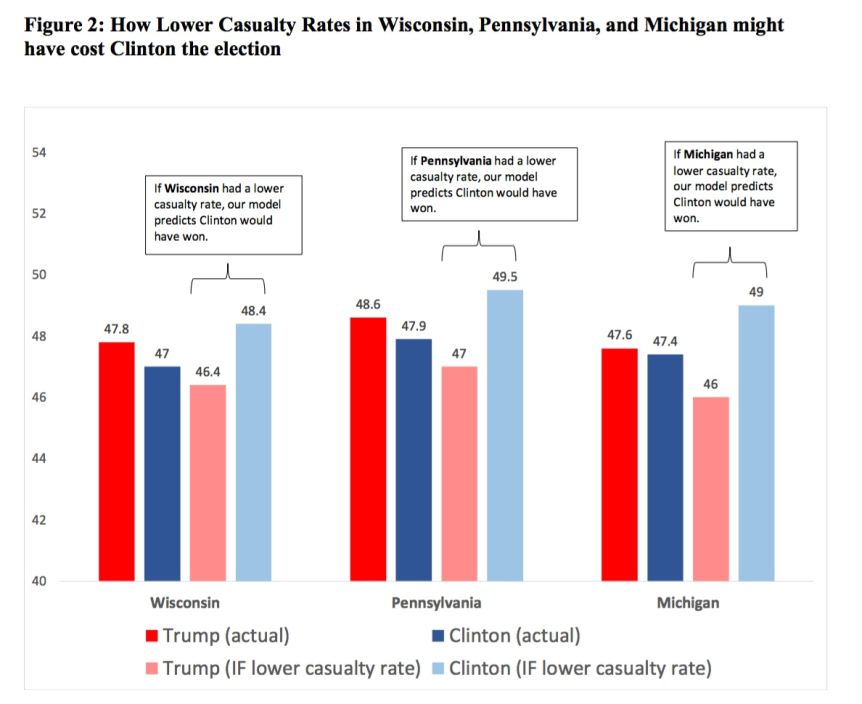
Did Trump win because he had the nerve to highlight the “mutilated victory” nature of America’s wars?  (Note that the caption here, from the Krinera/Shen study and the Zaid Jilani article, is unclear.  The intent is to show that higher casualty rates favored Trump, and, if rates had been lower, Hillary Clinton may have won instead.)

Trump tapped the anger and resentments of American families who’d borne the sacrifices and suffering of the mutilated victories of Afghanistan and Iraq.  He did this so well that, according to Zaid Jilani at The Intercept, citing a study by Boston University political science professor Douglas Krinera and University of Minnesota Law professor Francis Shen, it may have provided his winning margin of victory in 2016.  As the study notes (also see the illustration above):

“[The] three swing states — Wisconsin, Pennsylvania, and Michigan — could very well have been winners for [Hillary] Clinton [in 2016] if their war casualties were lower.”

Like rural Italian families in the aftermath of World War I, American rural families in the Bush-Obama “war on terror” rejected the status quo posturing of establishment politicians (e.g. Hillary Clinton), turning instead to the anger-driven nationalism (Italy first!  America first!) of self-styled strong men like Mussolini and Trump.

The question is, as America’s fruitless wars persist, and as rural American families continue to bear a disproportionate share of the burden of these wars, will “strong” men like Trump continue to prosper?  Put differently, will the Democratic Party finally have the guts to offer an alternative vision that rejects forever war across the planet?

We know what happened to Mussolini’s quest to make Italy great again — total defeat in World War II.  Will a similar fate befall Trump’s quest?

Time will tell.

Trump Talks About the Military as if It’s His Praetorian Guard

WGH-IR-03_PraetorianGuard
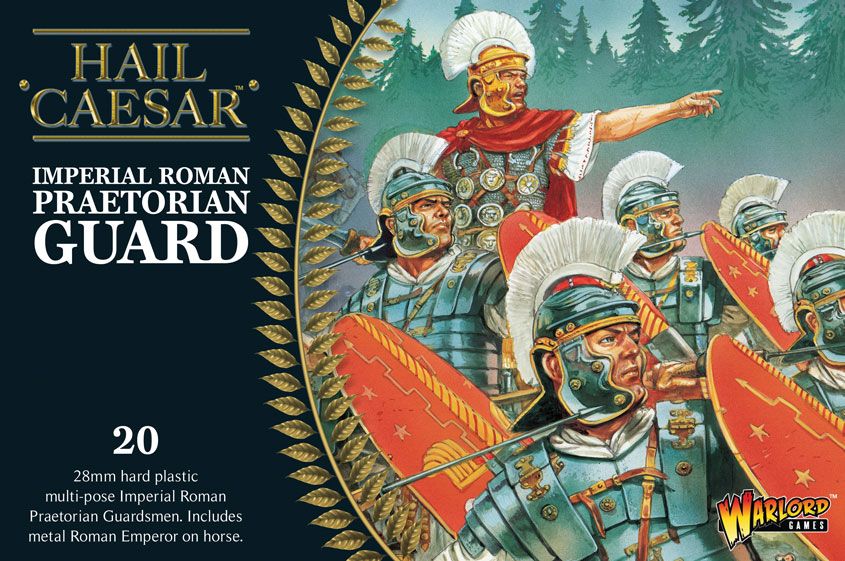
Hail Trump? Includes wannabe American Emperor in Golf Cart.

W.J. Astore

President Donald Trump has a disturbing way of talking about the U.S. military.  Consider the following Trump quotation about the recent attack on U.S. troops in Niger:

“I have generals that are great generals,” Trump said. “I gave them authority to do what’s right so that we win. My generals and my military, they have decision-making ability. As far as the incident that we’re talking about [in Niger], I’ve been seeing it just like you’ve been seeing it. I’ve been getting reports.” [emphasis added]

For Trump, it’s not the American people’s military, it’s “my” military.  Generals are not Congressionally-appointed officers, they’re “my” generals.  Trump has a fundamental misunderstanding of his role as commander-in-chief, as well as the role of the U.S. military.  He sees himself as the big boss of “his” military, with generals as his personal employees whom he can order around and fire at will.

And by “order around,” I mean the issuance of orders regardless of their legality, a point Trump made back in March of 2016, in response to a debate question by Bret Baier:

BAIER: Mr. Trump, just yesterday, almost 100 foreign policy experts signed on to an open letter refusing to support you, saying your embracing expansive use of torture is inexcusable. General Michael Hayden, former CIA director, NSA director, and other experts have said that when you asked the U.S. military to carry out some of your campaign promises, specifically targeting terrorists’ families, and also the use of interrogation methods more extreme than waterboarding, the military will refuse because they’ve been trained to turn down and refuse illegal orders.

So what would you do, as commander-in-chief, if the U.S. military refused to carry out those orders?

TRUMP: They won’t refuse. They’re not going to refuse me. Believe me.

BAIER: But they’re illegal.

TRUMP: And — and — and — I’m a leader. I’m a leader. I’ve always been a leader. I’ve never had any problem leading people. If I say do it, they’re going to do it. That’s what leadership is all about.

As I wrote then, Trump’s fundamental misunderstanding of leadership, and especially his boasts about the military obeying his orders irrespective of their legality, disqualified him as a presidential candidate.  Of course, Trump’s dictatorial statements didn’t deter his determined fans. Indeed, they elected him because they wanted a Strong Man, not because they feared one.

So here we are, with a dictator wannabe as president, treating the U.S. military as if it’s his personal Praetorian Guard.  If the Republic isn’t dead, its heartbeat is fading fast.  Meanwhile, the sordid and corrupt Empire of Trump – just by its endurance – grows ever stronger.

The Attack on Critical Thinking

obey
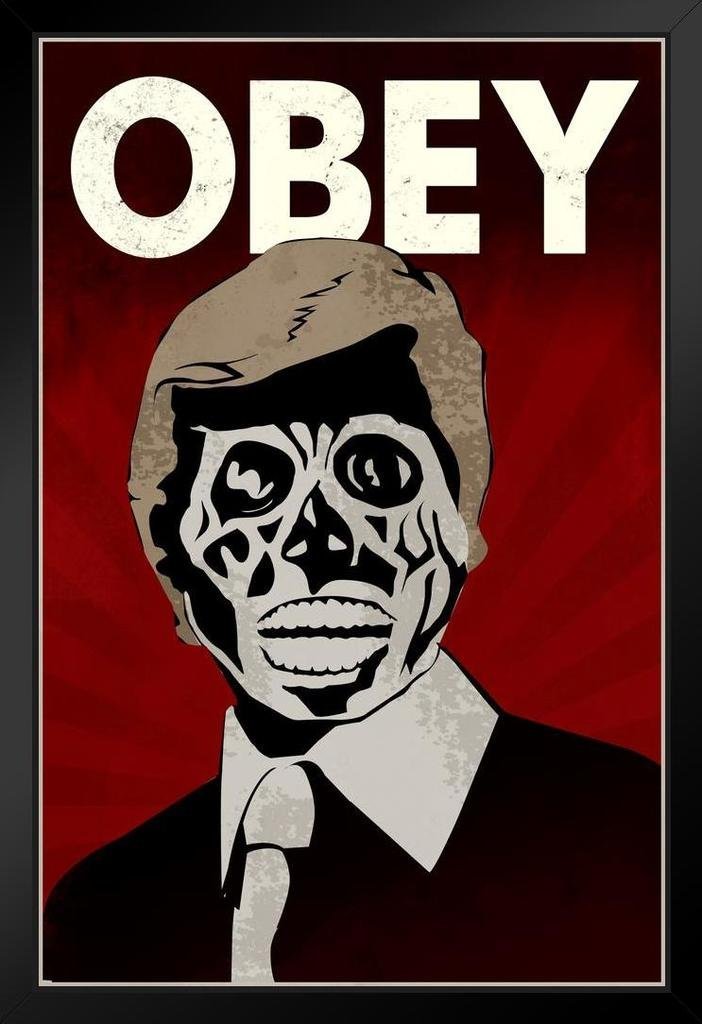
Critical thinking?  Forget that.  Obey!  (Inspired by the movie, “They Live”)

W.J. Astore

When I was still teaching college, I’d tell my students that a major goal of their education was developing a bullshit meter.  This BS meter, I said, would help them to discriminate between fact and fiction, between informed views and misinformed ones, between respectable opinions and disreputable propaganda.  Become critical thinkers, I told them.  And that included being critical of my teaching, for every professor has biases and makes choices about what to include and what to exclude, what to stress and what to elide.

Critical thinking skills are what is being elided and excluded in much of education today.  This is obviously convenient to those in power, for they do not wish to be questioned.  In the name of economic competitiveness, of teaching job skills, of STEM (science, technology, engineering, and math), students are encouraged to focus on getting ahead, on making a high salary after graduation, the better to repay student loans and contribute back to the college as alumni.  On their web sites and marketing brochures, colleges often feature prominently how much their students can be expected to make in salary after graduation.  The almighty dollar sign: It’s the key metric of success.

A narrow utilitarianism, based on money, has come to define education.  Much like war, education is becoming just another racket (think here of Trump University!).  Eight years ago, when I was still teaching away in the classroom, I wrote the following article for TomDispatch.com.  I’ve decided to share it here today, because I don’t think much has changed since 2009. Indeed, education in America has only worsened as Donald Trump and Company have taken a hatchet to educational funding.  But stupid is as stupid does.  (Then again, Trump isn’t so stupid; as he himself enthused after the Nevada caucuses in 2016, “I love the poorly educated!”  Yes, hmm, yes.)

Education Ourselves to Oblivion (TomDispatch.com, May 2009)

Hardly a week goes by without dire headlines about the failure of the American education system. Our students don’t perform well in math and science. The high-school dropout rate is too high. Minority students are falling behind. Teachers are depicted as either overpaid drones protected by tenure or underpaid saints at the mercy of deskbound administrators and pushy parents.

Unfortunately, all such headlines collectively fail to address a fundamental question: What is education for? At so many of today’s so-called institutions of higher learning, students are offered a straightforward answer: For a better job, higher salary, more marketable skills, and more impressive credentials. All the more so in today’s collapsing job market.

Based on a decidedly non-bohemian life — 20 years’ service in the military and 10 years teaching at the college level — I’m convinced that American education, even in the worst of times, even recognizing the desperate need of most college students to land jobs, is far too utilitarian, vocational, and narrow. It’s simply not enough to prepare students for a job: We need to prepare them for life, while challenging them to think beyond the confines of their often parochial and provincial upbringings. (As a child of the working class from a provincial background, I speak from experience.)

And here’s one compelling lesson all of us, students and teachers alike, need to relearn constantly: If you view education in purely instrumental terms as a way to a higher-paying job — if it’s merely a mechanism for mass customization within a marketplace of ephemeral consumer goods — you’ve effectively given a free pass to the prevailing machinery of power and those who run it.

Three Myths of Higher Ed

Three myths serve to restrict our education to the narrowly utilitarian and practical. The first, particularly pervasive among conservative-minded critics, is that our system of higher education is way too liberal, as well as thoroughly dominated by anti-free-market radicals and refugee Marxists from the 1960s who, like so many Ward Churchills, are indoctrinating our youth in how to hate America.

Nonsense.

Today’s college students are being indoctrinated in the idea that they need to earn “degrees that work” (the official motto of the technically-oriented college where I teach). They’re being taught to measure their self-worth by their post-college paycheck. They’re being urged to be lifelong learners, not because learning is transformative or even enjoyable, but because to “keep current” is to “stay competitive in the global marketplace.” (Never mind that keeping current is hardly a guarantee that your job won’t be outsourced to the lowest bidder.)

And here’s a second, more pervasive myth from the world of technology: technical skills are the key to success as well as life itself, and those who find themselves on the wrong side of the digital divide are doomed to lives of misery. From this it necessarily follows that computers are a panacea, that putting the right technology into the classroom and into the hands of students and faculty solves all problems. The keys to success, in other words, are interactive SMART boards, not smart teachers interacting with curious students. Instead, canned lessons are offered with PowerPoint efficiency, and students respond robotically, trying to copy everything on the slides, or clamoring for all presentations to be posted on the local server.

One “bonus” from this approach is that colleges can more easily measure (or “assess,” as they like to say) how many networked classrooms they have, how many on-line classes they teach, even how much money their professors bring in for their institutions. With these and similar metrics in hand, parents and students can be recruited or retained with authoritative-looking data: job placement rates, average starting salaries of graduates, even alumni satisfaction rates (usually best measured when the football team is winning).

A third pervasive myth — one that’s found its way from the military and business worlds into higher education — is: If it’s not quantifiable, it’s not important. With this mindset, the old-fashioned idea that education is about molding character, forming a moral and ethical identity, or even becoming a more self-aware person, heads down the drain. After all, how could you quantify such elusive traits as assessable goals, or showcase such non-measurements in the glossy marketing brochures, glowing press releases, and gushing DVDs that compete to entice prospective students and their anxiety-ridden parents to hand over ever larger sums of money to ensure a lucrative future?

Three Realities of Higher Ed

What do torture, a major recession, and two debilitating wars have to do with our educational system? My guess: plenty. These are the three most immediate realities of a system that fails to challenge, or even critique, authority in any meaningful way. They are bills that are now long overdue thanks, in part, to that system’s technocratic bias and pedagogical shortfalls — thanks, that is, to what we are taught to see and not see, regard and disregard, value and dismiss.

Over the last two decades, higher education, like the housing market, enjoyed its own growth bubble, characterized by rising enrollments, fancier high-tech facilities, and ballooning endowments. Americans invested heavily in these derivative products as part of an educational surge that may prove at least as expensive and one-dimensional as our military surges in Iraq and Afghanistan.

As usual, the humanities were allowed to wither. Don’t know much about history? Go ahead and authorize waterboarding, even though the U.S. prosecuted it as a war crime after World War II. Don’t know much about geography? Go ahead and send our troops into mountainous Afghanistan, that “graveyard of empires,” and allow them to be swallowed up by the terrain as they fight a seemingly endless war.

Perhaps I’m biased because I teach history, but here’s a fact to consider: Unless a cadet at the Air Force Academy (where I once taught) decides to major in the subject, he or she is never required to take a U.S. history course. Cadets are, however, required to take a mind-boggling array of required courses in various engineering and scientific disciplines as well as calculus. Or civilians, chew on this: At the Pennsylvania College of Technology, where I currently teach, of the roughly 6,600 students currently enrolled, only 30 took a course this semester on U.S. history since the Civil War, and only three were programmatically required to do so.

We don’t have to worry about our college graduates forgetting the lessons of history — not when they never learned them to begin with.

Donning New Sunglasses

One attitude pervading higher education today is: students are customers who need to be kept happy by service-oriented professors and administrators. That’s a big reason why, at my college at least, the hottest topics debated by the Student Council are not government wars, torture, or bail-outs but a lack of parking and the quality of cafeteria food.

It’s a large claim to make, but as long as we continue to treat students as customers and education as a commodity, our hopes for truly substantive changes in our country’s direction are likely to be dashed. As long as education is driven by technocratic imperatives and the tyranny of the practical, our students will fail to acknowledge that precious goal of Socrates: To know thyself — and so your own limits and those of your country as well.

To know how to get by or get ahead is one thing, but to know yourself is to struggle to recognize your own limitations as well as illusions. Such knowledge is disorienting, even dangerous — kind of like those sunglasses donned by Roddy Piper in the slyly subversive “B” movie They Live (1988). In Piper’s case, they revealed a black-and-white nightmare, a world in which a rapacious alien elite pulls the levers of power while sheep-like humans graze passively, shackled by slogans to conform, consume, watch, marry, and reproduce.

Like those sunglasses, education should help us to see ourselves and our world in fresh, even disturbing, ways. If we were properly educated as a nation, the only torturing going on might be in our own hearts and minds — a struggle against accepting the world as it’s being packaged and sold to us by the pragmatists, the technocrats, and those who think education is nothing but a potential passport to material success.

Trump Tackles the NFL!

When it Comes to the NFL, Trump Should be Flagged and Ejected for Unnecessary Roughness

taking a knee
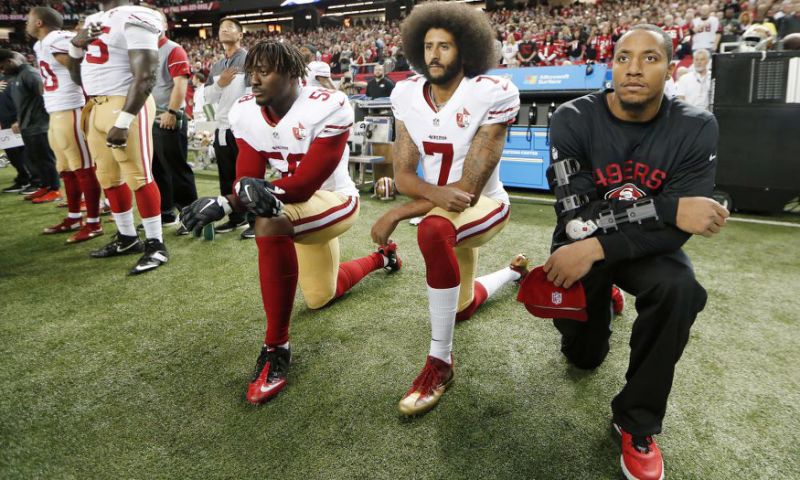
Taking a stand by taking a knee: NFL players, including Colin Kaepernick (#7)

W,J. Astore

President Trump has once again attacked the NFL for exactly the wrong reasons.  He wants NFL owners to fire players who take a knee during the national anthem.  Their sin, according to Trump, is disrespecting the American flag.  Trump also complains that the game has gotten soft, that big and exciting hits of the past are now penalized, so much so that today’s game is boring precisely because it’s insufficiently violent.

Nonsense.  First, few players dare to use the game as a platform for protest, perhaps because they fear being blackballed like Colin Kaepernick, the talented quarterback who can’t find a job because he took a knee in protest against racism.  Second, the NFL is awash in patriotic displays, everything from gigantic flags and military flyovers to special events to honor the troops.  Just one example: During the opening game of this season, uniformed troops waving flags ran out on the field ahead of the New England Patriots as the team emerged from the tunnel.  What are troops in camouflaged combat uniforms doing on the field of play?

With respect to violence, the NFL has only lately begun haltingly to address crippling injuries, especially brain abnormalities due to recurrent hits and concussions.  Watching an NFL game is often an exercise in medical triage, as players are carted off the field with various injuries.  A new feature this season is a tent on the sidelines that injured players may now enter to be treated away from the incessantly probing eyes of sideline cameras.  Careers in the NFL are often cut short by crippling injuries, yet Trump claims the game is going down the tubes because it’s not violent enough.

Trump represents a minority view (I believe), but nevertheless a vocal one.  Given his narcissism and the grudges he carries, one wonders if he attacks the NFL because of his failed bid to acquire the Buffalo Bills team back in 2014.

Football is the most popular sport in America.  It speaks volumes about our culture.  That Trump sees it as insufficiently violent and insufficiently patriotic — and that he’s cheered for making these claims — points to the gladiatorial nature of America’s imperial moment. Bread and circuses at home, wars abroad.  And U.S. politicians who fiddle while the world burns.

Update: Trump’s comments have drawn a response during the first NFL game today (played in England).  Here’s the headline at the Washington Post:  NFL Week 3: Ravens, Jaguars respond to President Trump’s comments by linking arms, kneeling during anthem.  It will be interesting to see how other teams respond today and during Monday night football.

With the Pentagon, Trump Has Morphed Into Hillary Clinton

trump-clinton
More alike than we knew?

W.J. Astore

Candidate Trump occasionally said unconventional things about the Pentagon and America’s wars.  He attacked the Pentagon for wasteful spending; cost overruns on the F-35 jet fighter were a favorite target.  He attacked the Iraq and Afghan wars as wasteful, asserting they’d cost trillions of dollars without aiding the U.S. in any measurable way.  He argued for friendlier relations with Russia, a détente of sort compared to the policies followed by the Obama administration.  Naturally, even as he declaimed against America’s wasteful wars and costly weaponry, he promised to fund the military generously.  Finally, he wasn’t afraid to take America’s generals to task, asserting he knew more than they did about war and foreign policy.

President Trump is a different man.  “His” generals have brought him under control.  Criticism of the F-35 has gone away.  Trump, even if reluctantly, has embraced the Afghan war and the Pentagon’s open-ended commitment to it.  Russian détente has taken a back seat to tough talk and sanctions (not that Trump had much of a choice, considering his campaign is under investigation for possible collusion with Russia).  More than anything, Trump has tacitly admitted “his” generals know far more than he does.  Mattis controls the Pentagon and the National Security State.  Kelly, as White House Chief of Staff, does his best to control Trump.  McMaster, as National Security Adviser, increasingly controls what Trump knows and when he knows it with respect to security policy.

In short, the generals have won.  Consider the fates of Steve Bannon, Sebastian Gorka, and John Bolton.  Bannon was eased out; Gorka was fired; and Bolton, according to today’s FP: Foreign Policy report, “has been shut out of the White House under the new leadership of chief of staff John Kelly. FP’s Dan De Luce writes that several sources confirm Bolton’s regular meetings with Trump are a thing of the past, and he has been unable to deliver a plan he devised to get Washington out of the deal it signed with Tehran to halt that country’s nuclear program.”

I’m no fan of Bannon-Gorka-Bolton, but they did represent a challenge to the U.S. military and the neo-con orthodoxy that rules Washington.

Trump is now firmly under the U.S. military’s control, even as he continues to feed the beast with more money and influence.  His only way out is to starve the beast — to cut its funding by cutting its mission.  Fat chance of that happening anytime soon, with generals like Mattis, Kelly, and McMaster in charge.

Most in the mainstream media see this in a positive light.  We read about how Trump’s generals are the adults in the room, a moderating influence on Trump’s ill-informed impetuosity.  There may even be some truth to this.  But here’s the rub: President Trump, at least on national security policy, has ironically morphed into Hillary Clinton.  He’s become a conventional hawk with no new ideas, when as a candidate he had the temerity to criticize America’s wasteful weaponry and disastrous imperial policies.

As Trump himself might tweet, “Sad.”

Trump’s Afghan War Speech: More of the Same, With More Killing

download
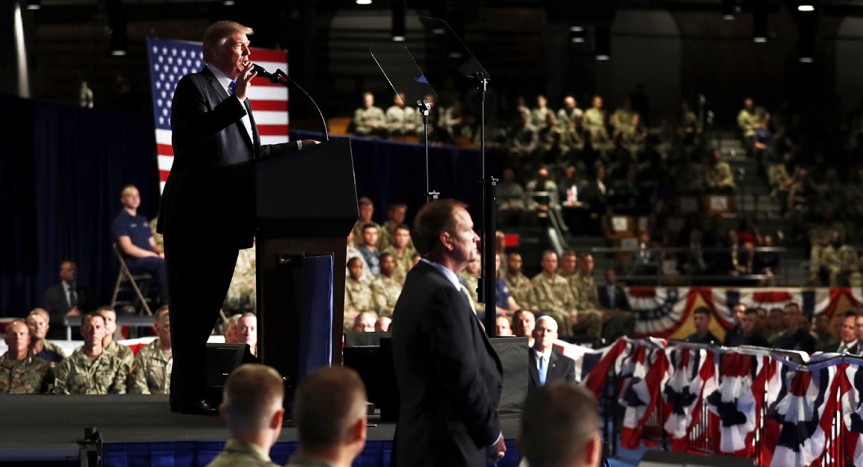
Trump, surrounded by troops and patriotic bunting, defines his “new” Afghan strategy (Carolyn Kaster/AP)

W.J. Astore

As a private citizen and presidential candidate, Donald Trump railed against the Afghan war.  A waste, he said.  Americans should withdraw, he said.  But in last night’s speech, Trump went against his own instincts (so he said) and went with the failed policies of his predecessors.  The war will continue, no timetable set, no troop levels determined, with conditions on the ground dictating America’s actions, according to the president.

What caught my attention, beyond the usual paeans of praise to America’s “warriors” and “warfighters,” was the specious reasoning to justify the continuation of the war.  Trump gave three reasons, so let’s take them one at a time:

  1. “First, our nation must seek an honorable and enduring outcome worthy of the tremendous sacrifices that have been made, especially the sacrifices of lives …”

It’s piss-poor reasoning to argue that, because a lot of people have sacrificed and died in a war, the war should continue (with more people dying) to justify those previous sacrifices.  By this logic, the more who die, the more we should keep fighting, meaning more dead, meaning more fighting, and so on.  Where is the honor and “worthy” outcome here?

  1. “Second, the consequences of a rapid exit are both predictable and unacceptable. 9/11, the worst terrorist attack in our history, was planned and directed from Afghanistan because that country was ruled by a government that gave comfort and shelter to terrorists. A hasty withdrawal would create a vacuum that terrorists, including ISIS and al Qaeda, would instantly fill, just as happened before September 11th.”

Actually, the consequences of an American withdrawal are both unpredictable and (most probably) acceptable.  Sure, terrorist organizations may gain impetus from an American withdrawal.  It’s also possible that a notoriously corrupt Afghan government might finally negotiate with the Taliban and other organizations, and that regional power brokers like Pakistan and Iran, who have their own interests in regional stability, might broker a settlement that Americans could live with.

Trump further argued that a rapid U.S. withdrawal from Iraq in 2011 led to “hard-won gains slip[ping] back into the hands of terrorist enemies. Our soldiers watched as cities they had fought for, and bled to liberate, and won, were occupied by a terrorist group called ISIS.”  The truth is far more complex.  The prolonged U.S. occupation of Iraq helped to create ISIS in the first place, and failed American efforts to create and train reliable Iraqi security forces contributed to easy ISIS victories after U.S. forces left in 2011.

  1. “Third and finally, I concluded that the security threats we face in Afghanistan and the broader region are immense. Today, 20 U.S.-designated foreign terrorist organizations are active in Afghanistan and Pakistan — the highest concentration in any region anywhere in the world.”

Isn’t it remarkable that, after sixteen years of sustained effort by the U.S. military, the Af-Pak region is now home to 20+ terrorist organizations?  The “highest concentration” in the world?  Is this not an admission of the utter failure of U.S. policy and actions since 2001?  How is this failure to be rectified by yet more U.S. attacks?

Trump said the new American goal is to kill terrorists.  This is not a strategy.  It’s a perpetual and deadly game of Whac-A-Mole.  That’s what Trump’s vaunted new strategy boils down to, despite the talk of economic pressure and working with Pakistan and India and other regional powers.

On Afghanistan, Trump should have listened to his instincts and withdrawn.  Instead, he listened to “his” generals.  With Trump, the generals won this round.  What they can’t win, however, is the war.