Terrorism and Threat Inflation: Fear Is the Mind-Killer

threat

W.J. Astore

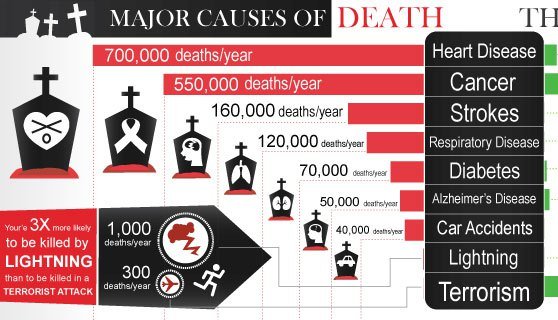
Over the last ten years in the United States, more than 280,000 Americans (more than 300,000 by some counts) have died because of guns.  Over that same period, roughly 350,000 Americans have died on the roads in vehicular accidents.  That’s roughly 630,000 Americans dying every decade either in road accidents or by gunshots, which is roughly the number of Americans who died in the horrible carnage of the U.S. Civil War from 1861 to 1865, America’s bloodiest war.

In other words, at the hands of guns and vehicles, Americans suffer the equivalent of a civil war-like bloodletting each and every decade.  Is it time to declare war on guns and cars?  (And now roughly 30,000 people each year are dying from drug overdoses related to the abuse of prescription painkillers and other opiates.)

The U.S. media and our leaders prefer to fixate on radical Islamic terrorism, which has accounted for 24 deaths over the same period.  Indeed, by the numbers the White supremacist threat to America is twice as serious as threats from ISIS or other external radical groups.

According to the Washington Times,

“In the 14 years since the Sept. 11 terror attacks, nearly twice as many people have been killed in the United States by white supremacists and anti-government radicals than by Muslim jihadis, according to a new study.”

“White supremacists and anti-government radicals have killed 48 Americans … versus 26 killings by Muslim radicals, according to a count by New America, a Washington research center.”

“New America program associate David Sterman said the study shows that white supremacy and anti-government idealists are a major problem, that their growth rate needs to be addressed and that there is an ‘ignored threat’ woven in the fabric of American society.”

Given these numbers and realities, why are America’s leaders so fixated on hyping the threat of radical Islamic terrorists?  Shouldn’t we be focusing on saving lives on our roads? Reducing gun accidents and gun crimes and suicide by guns? On reducing hate-filled radicalism within our own country?

We should be, but we’re not.  Our leaders prefer threat inflation: They believe in making political hay while the foreign terrorist threat shines.  So presidential candidates like Jeb Bush and Marco Rubio predictably call for a war on terrorism, for military “boots on the ground” in Syria and Iraq, and (of course) for higher military spending and more surveillance, in the name of protecting America.  Threat inflation knows no political party, of course, with Hillary Clinton joining the chorus of the tough-talkers against terror.

Threat inflation sells.  And threat inflation pays.  This is an important theme in Tom Engelhardt’s latest tour de force at TomDispatch.com, “The National Security State’s Incestuous Relationship with the Islamic State.”  As Engelhardt notes, threat inflation drives a dance of death even as it eliminates grey zones — opportunities for dialog, diplomacy, compromise, forms of accommodation.  It enforces a black and white world of crusaders and jihadists bent on killing one another in the name of righteousness.

Here is how Engelhardt puts it:

the officials of [the U.S. national] security state have bet the farm on the preeminence of the terrorist “threat,” which has, not so surprisingly, left them eerily reliant on the Islamic State and other such organizations for the perpetuation of their way of life, their career opportunities, their growing powers, and their relative freedom to infringe on basic rights, as well as for that comfortably all-embracing blanket of secrecy that envelops their activities.  Note that, as with so many developments in our world which have caught them by surprise, the officials who run our vast surveillance network and its staggering ranks of intelligence operatives and analysts seemingly hadn’t a clue about the IS plot against Paris (even though intelligence officials in at least one other country evidently did).  Nonetheless, whether they see actual threats coming or not, they need Paris-style alarms and nightmares, just as they need local “plots,” even ones semi-engineered by FBI informers or created online by lone idiots, not lone wolves. Otherwise, why would the media keep prattling on about terrorism or presidential candidates keep humming the terror tune, and how, then, would public panic levels remain reasonably high on the subject when so many other dangers are more pressing in American life?

The relationship between that ever-more powerful shadow government in Washington and the Islamic terrorists of our planet is both mutually reinforcing and unnervingly incestuous.

Of course, Engelhardt knows that terrorism must be fought.  The point is not to lose our collective heads over the (much exaggerated) threat of it.  To cite Frank Herbert’s insight in Dune, “Fear is the mind-killer.”  Yet our media and leaders seem determined to hype fear so as to kill our minds.

As our media and politicians stoke our fear by exaggerating the threat posed by terrorism, ask yourself to what purpose are they attacking your minds.

Hint: It certainly isn’t about keeping you safe.
Terrorism in Paris: A Few Thoughts

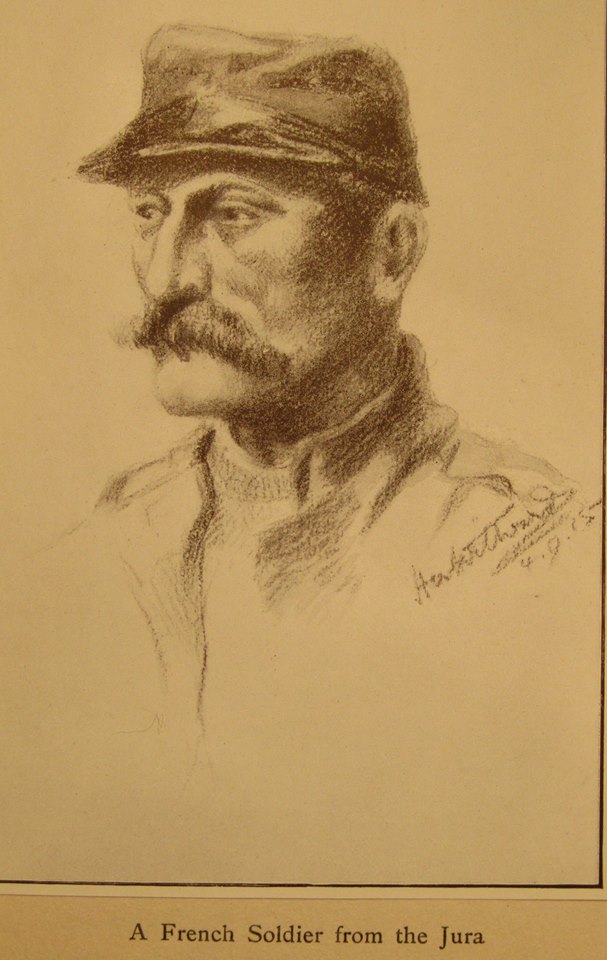
The French showed great resolve in 1915. A century later, that resolve yet lives

W.J. Astore

The world is still trying to digest the horrifying news from Paris of terrorist attacks by ISIS.  We sympathize with all the victims of terrorism and other forms of violence, and we stand with France and its desire to bring the perpetrators and their accomplices to justice.

Yet we also must be careful not to overreact — not to play into the hands of ISIS and similar terrorist organizations.

French President François Hollande is already on the record as vowing, “We are going to lead a war [against ISIS] which will be pitiless.” But the answer to terrorism is not “pitiless” war.  That’s exactly what terrorists want: they thrive on war and endless cycles of horrifying violence.

I understand Hollande’s rhetorical purpose.  He’s saying: We’re united, we’re tough, we’ll avenge the murder of innocents.  But pitiless war has been tried again and again in history — and it begets more atrocities and more war.

Terrorism is nothing new.  What’s new is the way the West is elevating it into a generational war — another crusade.  We must be very careful not to let the rhetoric of “generational” and “merciless” war become a self-fulfilling prophecy.

We must also be careful not to overreact to the threat of terrorism.  In spite of the latest horrifying attacks in Paris, the threat of terrorism remains remote for the vast majority of us.  The answer to the terrorist threat is not more state surveillance, not more military reprisals, not more curtailments of individual freedoms in the false name of security.

What is the answer?  Resolve.  Patience.  Cooperation (e.g. international police work, intelligence sharing, and so forth). And action.  Anger and cries for revenge in the form of “pitiless” war are natural after a profound shock, but they are not smart policy. Injustices committed in the name of “pitiless” war will not bring justice to the victims of the Paris attacks.

Resolve — yes.  Justice — yes.  Courage — yes.  Action — yes.  Pitiless war — no.

The Media Is the Message, and the Message Is One of Fear

The Replicant Roy Batty knows the score
The Replicant Roy Batty knew the score

W.J. Astore

“Whoever controls the media, controls the mind,” Jim Morrison said, and this is certainly true in America.  Consider the lead stories over the July 4th weekend.  The first was the threat of terror attacks against America.  We were told that law enforcement officials were “in no mood for a national party” — that the threat of an ISIS-inspired terror attack was real.  That no attack occurred is of no consequence.  Fear was stoked, and that’s what matters.  Prepare for the next terror reminder on the anniversary of 9/11, if not sooner.

The second story was shark attacks off the Carolina coast.  Unusual, yes, but hardly a threat to America or to the vast majority of its people, even those who chose to go swimming in the ocean.  “Shark surge!”  “Fear at the beach!”  “High alert!”  These were common expressions in the media.

Of course, Americans were much more likely to be hurt in fireworks accidents than by terrorists or sharks, but the sensational always takes precedence over the mundane in our media.  Indeed, if the goal was to safeguard ordinary Americans, we should have been told to stay off the roads this past weekend, but of course that would hurt tourism and the economy, so you weren’t about to hear that advice coming from America’s talking heads.

It seems nearly impossible to remember that one of FDR’s Four Freedoms was the freedom from fear.  FDR knew the paralyzing and stultifying effects of fear, the way it erodes individual autonomy, the way it can be made to serve the powerful. Frank Herbert in Dune captured a powerful truth when he wrote that “Fear is the mind-killer.”  The movie Blade Runner echoes the sentiment, with the Replicant Roy Batty (played by Rutger Hauer) explaining that to live in fear is to be a slave.

A media that spreads fear facilitates a government of wolves.  Or, put slightly differently by the great Edward R. Murrow, “A nation of sheep will beget a government of wolves.”

There’s a definite method to the media madness, America.

David versus Goliath in the Middle East

david and goliath_aaron wolpert

W.J. Astore

When I was a kid, I was a big admirer of Israel.  I saw Israel as being surrounded by implacable enemies bent on its destruction.  Israel was the plucky underdog, David against Goliath, with Goliath being Arab countries like Egypt and Syria, having militaries trained and equipped by the Soviet Union, sworn enemy of the U.S. during the Cold War (or so my ten-year-old mind saw it).  I recall keeping a scrapbook of articles on the Yom Kippur War of 1973.  I cheered the Israeli “blitzkrieg” (What an odd term for a daring Jewish armored attack!) that crossed the Suez Canal and isolated the Egyptian Third Army, as well as the Israeli riposte on the Golan Heights against Syria.

That was 1973.  Forty-one years later, Israel is engaged in yet another assault on Gaza and the Palestinians.  Compared to the Israeli Defense Forces (IDF), the Palestinian militants are undergunned and hopelessly outclassed.  Organizations like Hamas rely on the traditional tactics of terrorists (or freedom-fighters, choose your loaded word): hit-and-run raids, random attacks (unguided rockets), war in the shadows (or in the tunnels).  Who is David and who is Goliath now?

What hasn’t changed, of course, is the mainstream media in the U.S., which cheers the Israelis while condemning Hamas and any other Palestinians who choose resistance instead of compliance.  Watching a snippet of CNN, I witnessed Wolf Blitzer, who poses as a disinterested journalist, demanding from his Palestinian interviewee an immediate stoppage in rocket attacks.  Blitzer had nothing critical to say of Israeli air raids or the disproportionate casualties suffered by the Palestinians in this latest skirmish in a very long war.

What can be done?  As one of my historian friends put it, the Middle East has “a massive legacy of entropy.”  All I know is that more bloodshed, and more innocents killed, like those four young boys playing soccer on the beach, only adds to that entropy — and the legacy of hatred.

Perhaps one thing I’ve learned in four decades is that negotiations in good faith can’t occur when either side sees itself as a heroic David fighting against a glowering Goliath.  Until Israelis and Palestinians see each other as fellow human beings, as equals rather than as monsters, wars will continue, innocents will suffer, and hopes will be left in the dust, slayed like so many Goliaths by self-anointed Davids.

Remember Color-Coded Threat Warnings?

Hsas-chart

W.J. Astore

Back in the ancient time of 2007, you may recall that color-coded threat warnings were constantly appearing on our TV screens.  Those “Homeland Security threat advisory ratings” fluctuated between yellow (elevated) and orange (high).   With the lone exception of the State of Hawaii in 2003, the threat ratings never dropped to blue (guarded) or (heaven forbid) green (low).

It was like we were in an old Star Trek episode with Captain Kirk, stuck on a bridge that’s constantly on Yellow Alert, phasers and photon torpedoes locked on target.

Thankfully, the Department of Homeland Security finally ditched the color-coded warnings.  But have we ditched the mentality that drove them?  Are we not encouraged still to be afraid?

Yes, terrorism remains a threat.  I’m sure there’ll always be terrorists of some sort who seek to harm us.  But we’ve made a lot of progress in the so-called global war on terror.  We killed Osama Bin Laden.  We devastated Al Qaeda.

Indeed, as we teeter on the brink of national financial default, one of the bigger threats we seem to face is our own divided and ineffectual government.  While it appears a last-minute deal is in the works, it’s one of those “solutions” that just kicks the can down the road a few months.  We’ll doubtless be dealing with the same governmental gridlock — the same hostage-taking — after the New Year.

Hmm: Maybe we should revive that color-coded warning system.  But let’s apply it, not to the terrorists outside our borders, but to our own politicians who continue to threaten us with financial default and societal ruin.

If they continue to insist on taking our government hostage, throwing people out of work, and threatening us all with financial collapse, I’d say that rates at least an “orange” rating.  And if they persist in shooting the hostage (that’s us), I’d say that counts as a “red.”

Come on, Homeland Security!  Protect us from those who’d destroy our government.  Or are you shut down too?

What Is Terrorism?

My copy.  Not the sexiest cover, but a good primer nonetheless
My copy. Not the sexiest cover, but a good primer nonetheless

When I entered the Air Force in 1985, I grabbed a pamphlet by Brian M. Jenkins of Rand.  The title caught my eye: International Terrorism: The Other World War.  Back then, the country was focused on the Cold War against the Evil Empire of the Soviet Union.  Jenkins suggested there was another war we should be focusing on.

In his pamphlet, he provided a “working definition” of terrorism:

“Terrorism is the use of criminal violence to force a government to change its course of action.”

And: “Terrorism is a political crime.  It is always a crime…”

But Jenkins also knew that terrorism, as a word and concept, was contentious and politicized.  As he explained:

“Some governments are prone to label as terrorism all violent acts committed by their political opponents, while antigovernment extremists frequently claim to be the victims of governmental terror.  Use of the term thus implies a moral judgment.  If one group can successfully attach the label terrorist to its opponent, then it has indirectly persuaded others to adopt its moral and political point of view, or at least to reject the terrorists’ view.  Terrorism is what the bad guys do.  This drawing of boundaries between what is legitimate and what is illegitimate, between the right way to fight and the wrong way to fight, brings high political stakes to the task of definition.”

Jenkins correctly notes that the word “terrorism” implies both a political and moral (and legal) judgment.  By his working definition, to be a terrorist is to be a criminal.

Can nation-states be terrorists?  Interestingly, no.  Not if you accept the definitional imperative common to international relations.  Nation-states draw their identity (and authority) in part by and through their ability to monopolize the means of violence.  Because a state monopolizes or “controls” violence in a legally sanctioned international system, it cannot commit a criminal act of terror, however terrorizing that act might be.  (By this definition, dropping atomic bombs on Hiroshima and Nagasaki and killing 200,000 people were not terrorist acts, even though the intent was to terrorize the Japanese into surrendering.) Put differently, a state can sponsor terrorism, but it cannot commit it.

It’s an unsatisfying definition to many.   As Glenn Greenwald, constitutional lawyer and journalist for the Guardian, has noted many times, terrorism as a concept is now so highly politicized, so narrowly defined and closely tied to evil acts committed by Muslim extremists, that the word itself has become polluted.  It’s more weapon than word, with an emotional impact that hits with the explosive power of a Hellfire missile.

Terrorism, in short, has become something of an Alice in Wonderland word.  As Humpty Dumpty put it, “When I use a word, it means just what I choose it to mean — neither more nor less.”  Such is the case with “terrorist” and “terrorism”: they’re often just epithets, ones we reserve for people and acts we find heinous.

Terrorism exists, of course.  But so too does politically-motivated manipulation of the English language, as George Orwell famously warned.  If terrorist = criminal = always them but never us (because we’re a nation, and a good-hearted one at that), we absolve ourselves of blame even as we shout, like the Queen of Hearts in Alice, “Off with their heads!” at the “terrorists.”

That shout may be satisfying, but it may also be all too easy — and all too biased.

W.J. Astore