
What Should A U.S. President Do–And Be?

The Seven Habits of Highly Effective Presidents

BILL ASTORE

MAY 27, 2025

What are the seven habits of highly effective presidents?

My simple answer is the president needs to uphold and defend the U.S. Constitution. That’s first and foremost.

Second, he or she needs to be a public servant. Not a servant of special interests, and not a servant of himself or herself.

Third, he or she needs to be a leader. A president should be able to inspire, to bring people together, to get things done for the betterment of all (as much as that’s possible).

Fourth, the president should be a defender of the little guy or gal. Wall Street doesn’t need a defender. Corporations don’t need a defender. But ordinary people do. People without big money and connections need a champion, and the president should be that champion.

Fifth, the president must represent America on the world stage in a positive light. Like it or not, the president, whoever he or she is, inevitably becomes a lead symbol of America. That person should represent us at our best, not our worst.

Sixth, the president, as commander-in-chief, needs to recognize the limits of military power, and needs to exercise control over the national security state, recognizing that incessant war is an enemy of democracy, and that spending on weapons and war is a waste of resources.

Seventh (and perhaps most importantly), the president must be a steward of the nation’s resources, especially its environment (healthy air, clean water, unpolluted land, and so on). The president must always have an eye on the future — on the need to preserve our country for our children and their children.

This is a quick list, and it could easily be lengthened, but these to me are the seven most important habits for the U.S. president.
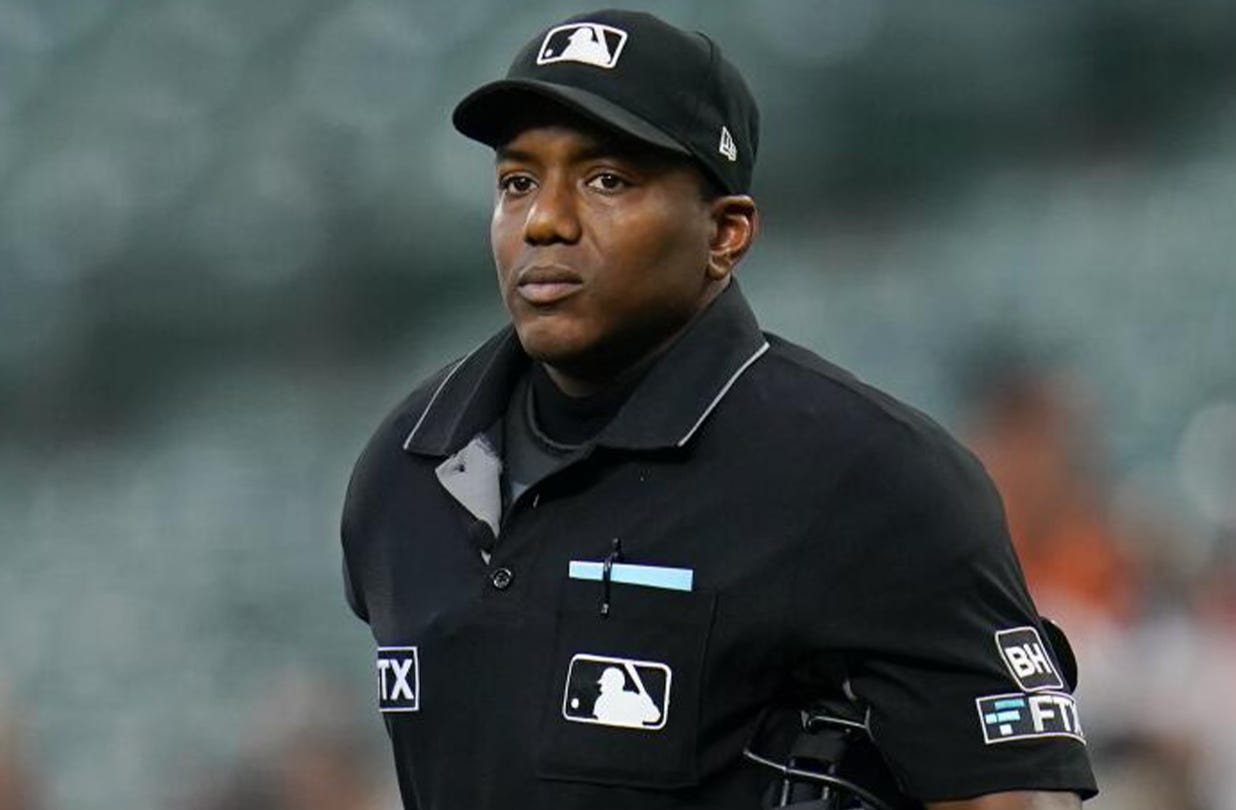
One presidential role model: An MLB Umpire

With respect to the fourth “habit,” I used “should,” not “must.” In my mind, I see the president as a sort of umpire or referee, making sure the game is played fair and square. In the “game” of life, powerful interests (the ultra-rich, powerful corporations, and so on) already have a big advantage, so I see the president as a public servant (umpire) who acts to ensure the interests of the people are not subsumed or denied or violated.

Of course, there are many interests of the people, and some are contradictory, but again I see the president as acting to ensure, as much as he or she can, the integrity of the process.

This is one reason we need campaign finance reform. Those with money speak with a much louder and more powerful voice, essentially drowning out our voices. A president who’s a captive of the special interests is a president only in name, i.e. just a money-grubber, just a bag-man (or -woman). We’ve allowed politics to be co-opted by special interests with deep pockets; campaign finance reform and public funding of elections will help to reverse this.
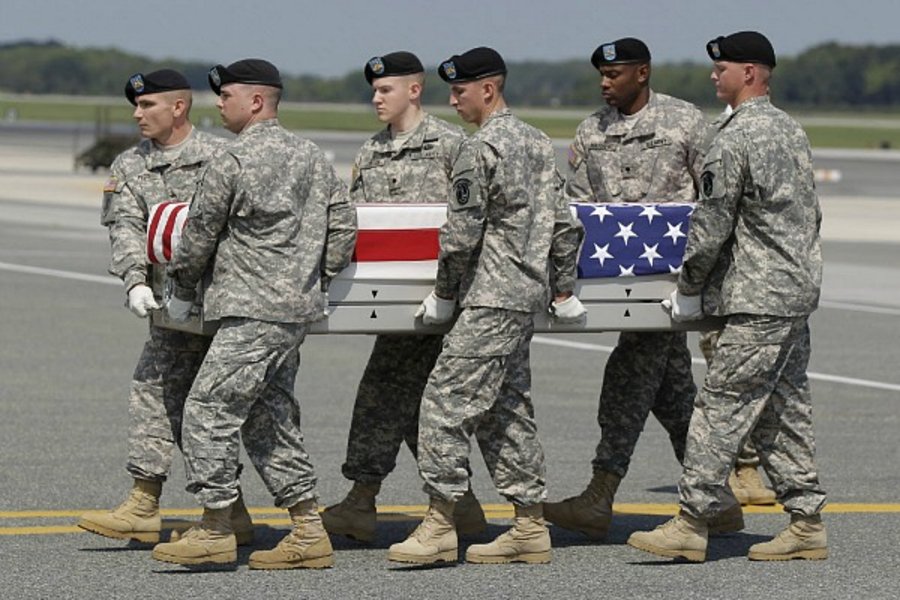
The U.S. Military, the Founders, and Original Intent

war weary
It’s too easy to speak of war in the abstract … the Founders knew better

W.J. Astore

In America, you sometimes hear talk of “original intent” (or strict constructionism) from conservatives, usually applied to the courts and especially to the Supreme Court.  The idea is to neuter “activist” judges by pressuring them to stick to the letter of the U.S. Constitution as written in the 1780s (as if that document has never required amendment), thereby upholding the original intent of the Founders (as if those men were gods who never got anything wrong).

Why is it, though, that original intent is never applied to America’s vast military establishment?  Because when you read the Founders, you learn they were strongly against large standing armies and vehemently criticized the anti-democratic nature and sheer wastefulness of wars.

James Madison was especially eloquent speaking against war.  In 1793, he wrote that: “In no part of the constitution is more wisdom found than in the clause which confines the question of war or peace to the legislature, and not to the executive department. War is in fact the true nurse of executive aggrandizement.”

Madison knew presidents could readily enlarge their powers by waging constant wars, just as Britain’s kings had.  So he and his fellow Founders did their best to subjugate the army to Congress through various laws, such as funding it for only two years while also having each member of the House stand for reelection every two years.  An unpopular and wasteful war, Madison figured, wouldn’t be funded after two years, forcing a president to put an end to it.  Voters, meanwhile, would act to get rid of Members of Congress who foolishly or selfishly supported such a war.

Madison, of course, lived in a time when America’s vast and powerful military-industrial complex didn’t exist.  That Complex is now a fourth branch of government that the Founders didn’t anticipate.  But what if the Complex either didn’t exist or could be reined in, and what if “original intent” could be applied to America’s Department of Defense?  We’d see a few things change:

1. No large standing army, thereby reducing American foolhardiness in places like Iraq, Afghanistan, and elsewhere.
2. Only defensive wars.  An end to the Iraq and Afghan wars would be a start.
3. Gun ownership would be contingent on the willingness and ability to serve in the militia (National Guard or Reserves).
4. No wars, no “overseas contingency operations,” without a formal Congressional declaration.
5. Firm Congressional oversight of all military operations.  An end to secrecy — the military must be accountable to the people.

The president, of course, serves as commander-in-chief.  But here the intent of the Founders was to firmly subordinate the military to civilian control.  It was not to empower the president as a quasi-generalissimo.  So the days of presidents making near-unilateral decisions to commit American troops abroad must end, as it is totally contrary to the original intent of the U.S. Constitution.

Of course, I’m not arguing that we slavishly follow the Founders — in that case, we’d still have slavery, and in more ways than one.  The point is that if we’re going to look to the Founders and celebrate their wisdom, let’s not do that merely for narrow partisan political gain.  Let’s do it in a way that truly nourishes and enlivens democracy.  Ending our permanent state of debilitating and destructive militarism and warfare would be a fine start.  Madison, I think, would approve.

Note: to read more on this subject, see Greg Foster’s “Why the Founding Fathers Would Object to Today’s Military” (2013) at https://www.defenseone.com/ideas/2013/07/why-founding-fathers-would-object-todays-military/66668.  As Foster notes, the Founders were not anti-military; they were anti-militarism.  And, having experienced the pains of war, they took pains to prevent future ones.  Let’s emulate them here.