The Highly Profitable Racket of Building Foreign Militaries

W.J. Astore

Is building effective security forces in Iraq and Afghanistan and elsewhere really what the U.S. military and government is about? Given the total collapse of the Iraqi military in 2014 and its Afghan equivalent in 2021, I’d have to say no. What are these efforts really all about? A few heretical thoughts:

  1. The top priority is profits for America’s military-industrial-Congressional complex. Foreign military forces are always provided with loads of U.S.-built weaponry, much of it unneeded or inappropriate to their capabilities and missions. When these forces collapse, as they did in 2014 and this summer, enemies such as ISIS or the Taliban are the recipients of plenty of new weapons funded by the American taxpayer. In short, the U.S. arms its (failed) proxy armies and its enemies as well, which almost guarantees more fighting and/or bombing in the future. Call it a win/win for weapons makers even when the U.S. loses.
  2. If profit-making is the top priority, so too is making it last. Until they utterly collapse, often without much combat, America’s proxy militaries are never fully ready to stand on their own. They always require more U.S. training and funding, that is until the lie is exposed.
  3. Along with profit-making, it’s important for the U.S. military to look good while providing the training. Looking good requires lying about progress. And so America’s proxy militaries are always making progress (on paper, if nowhere else) which helps everyone involved get promoted while keeping the money flowing.
  4. Along with perpetual profits and promotions, these proxy militaries must never be allowed to become independent from the U.S. military. Sure, the U.S. government says it’s seeking “standalone” forces, but in practice Iraqi and Afghan forces were always dependent on U.S. logistical support as well as air power. Which is just the way the U.S. government wanted it and wants it. Dependency ensures pliability and control (until the inevitable collapse, that is).
  5. In sum, one must always follow the money and ask, who is profiting the most from these “training” efforts? Most of the billions and billions spent on training and equipping these militaries goes to the military-industrial complex and to local warlords. It sure didn’t go to Iraqi or Afghan foot soldiers. Again, failure here is its own success; the longer it takes to build “reliable” proxy armies, the longer the money flows to military contractors in the USA. And if your proxy military collapses, maybe you can even rebuild it (at ever higher costs) or at least fight the enemy that captured the expensive high-tech weapons funded so generously by the U.S. taxpayer.

I hope this list is useful as one reads an article at Foreign Affairs, “Why America Can’t Build Allied Armies,” sent to me by a friend. It’s not that America can’t build them. It’s more that we really don’t want to build them; indeed, that there are perverse incentives to do a half-assed job, making money all the while, until the rot can no longer be hidden.

Allow me to explain. The author of this article assigns blame mainly to the “partner” militaries, suggesting these “partners” in Iraq and Afghanistan weren’t interested in building effective militaries: they’re interested in money and power instead. Displacing blame onto our “partners” is always good fun, but shouldn’t the U.S. government have recognized this dynamic instead of feeding it? (Let’s face it: the U.S. is driven by money and power as well.)

In fairness to the author, she does advise that maybe the U.S. government should smarten up and stop throwing money at foreign militaries. Here’s an excerpt:

But the United States also has another option: it could scale down its train-and-equip efforts altogether. Rather than using advisory missions as the preferred option for addressing local security threats, it could instead reserve such programs for states with strong national institutions and a demonstrated interest in building better militaries. This pathway would lead to the termination of most U.S. security assistance projects, including the ongoing effort to build the Iraqi security forces.

Too often, the United States’ efforts to train and equip foreign militaries have been motivated by bureaucratic logic rather than sound strategy. The fall of Kabul exposed more than the rot within the armies the United States builds. It also exposed the rot within the United States’ approach to building them.

Sound advice, except the author doesn’t discuss how much these “train-and-equip efforts” are really money laundering operations for the military-industrial-Congressional complex. War is a racket, as General Smedley Butler taught us, and building hollow legions overseas, whether in Iraq or Afghanistan or earlier in Vietnam, is a racket that pays very well indeed.


Imagine If America Had A Real Department of Defense

W.J. Astore

In my latest article for TomDispatch.com, I ask a simple question: What would real national defense look like? Here are some answers.

What would real national defense for this country look like?  Rarely do any of us pose this question, no less examine what it might truly mean.  Rarely do we think about all the changes we’d have to make as a nation and a people if we were to put defense first, second, and last, while leaving behind both our imperial wars and domestic militarism.

I know what it wouldn’t look like.  It wouldn’t look like today’s grossly inflated military.  A true Department of Defense wouldn’t need 800 foreign military bases, nor would the national security state need a budget that routinely exceeds a trillion dollars annually.  We wouldn’t need a huge, mechanized army, a navy built around aircraft carriers, or an air force that boasts of its global reach and global power, all of it created not for defense but for offense — for destruction, anytime, anywhere.

As a country, we would need to imagine a new “people’s” military as a force that could truly defend the American republic. That would obviously mean one focused above all on supporting the Constitution and the rights we (at least theoretically) hold sacred like freedom of speech, the press, and assembly, the right to privacy and due process, and of course the right to justice for all, not just for the highest bidder or those with the deepest pockets.

What might such a new military look like?  First, it would be much smaller.  America’s current military, including troops on active duty, reservists, and members of the National Guard, consists of roughly 2.4 million men and women.  Those numbers should gradually be cut at least in half.  Second, its budget should similarly be dramatically cut, the end goal being to have it 50% lower than next year’s proposed budget of $715 billion.  Third, it wouldn’t be based and deployed around the world. As a republican force (note the lower-case “r”), it would instead serve democratic ends rather than imperial ones.  It would certainly need far fewer generals and admirals.  Its mission wouldn’t involve “global reach,” but would be defensive, focused on our borders and this hemisphere.

Buy the Book

A friend of mine, a Navy veteran of the Vietnam War, speaks of a military that would consist of a Coast Guard, “militias” (that is, the National Guard) for each of the fifty states, and little else.  Yes, in this America, that sounds beyond extreme, but he has a point.  Consider our unique advantages in terms of geography.  Our continent is protected by two vast oceans.  We share a long and peaceful border with Canada.  While the border with Mexico is certainly troubled, we’re talking about unarmed, desperate migrants, not a military invasion flooding into Texas to retake the Alamo. 

Here, then, are just 10 ways America’s military could change under a vision that would put the defense of America first and free up some genuine funds for domestic needs as well:

  1. No more new nuclear weapons.  It’s time to stop “modernizing” that arsenal to the tune of possibly $1.7 trillion over the next three decades.  Land-based intercontinental ballistic missiles like the Ground Based Strategic Deterrent, expected to cost more than $264 billion during its lifetime, and “strategic” (nuclear) bombers like the Air Force’s proposed B-21 Raider should be eliminated.  The Trident submarine force should also be made smaller, with limited modernization to improve its survivability.
  2. All Army divisions should be reduced to cadres (smaller units capable of expansion in times of war), except the 82nd and 101st Airborne Divisions and the 10th Mountain Division.
  3. The Navy should largely be redeployed to our hemisphere, while aircraft carriers and related major surface ships are significantly reduced in number.
  4. The Air Force should be redesigned around the defense of America’s air space, rather than attacking others across the planet at any time.  Meanwhile, costly offensive fighter-bombers like the F-35, itself a potential $1.7 trillion boondoggle, should simply be eliminated and the habit of committing drone assassinations across the planet ended. Similarly, the separate space force created by President Trump should be folded back into a much-reduced Air Force.
  5. The training of foreign militaries and police forces in places like Iraq and Afghanistan should be stopped.  The utter collapse of the U.S.-trained forces in Iraqin the face of the Islamic State in 2014 and the ongoing collapse of the U.S.-trained Afghan military today have made a mockery of this whole process.
  6. Military missions launched by intelligence agencies like the CIA, including those drone assassination programs overseas, should be halted and the urge to intervene secretly in the political and military lives of so many other countries finally brought under some kind of control.
  7. The “industrial” part of the military-industrial complex should also be brought under control, so that taxpayer dollars don’t go to fabulously expensive, largely useless weaponry. At the same time, the U.S. government should stop promoting the products of our major weapons makers around the planet.
  8. Above all, in a democracy like ours, a future defensive military should only fight in a war when Congress, as the Constitution demands, formally declares one.
  9. The military draft should be restored.  With a far smaller force, such a draft should have a limited impact, but it would ensure that the working classes of America, which have historically shouldered a heavy burden in military service, will no longer do so alone. In the future America of my military dreams, a draft would take the eligible sons and daughters of our politicians first, followed by all eligible students enrolled in elite prep schools and private colleges and universities, beginning with the Ivy League.  After all, America’s best and brightest will surely want to serve in a military devoted to defending their way of life.
  10. Finally, there should be only one four-star general or admiral in each of the three services. Currently, believe it or not, there are an astonishing 44 four-star generals and admirals in America’s imperial forces. There are also hundreds of one-star, two-star, and three-star officers.  This top-heavy structure inhibits reform even as the highest-ranking officers never take responsibility for America’s lost wars.

Pivoting to America

Perhaps you’ve heard of the “pivot to Asia” under the Obama administration — the idea of redeploying U.S. military forces from the Greater Middle East and elsewhere in response to perceived threats from China.  As it happened, it took the new Biden administration to begin to pull off that particular pivot, but America’s imperial military regularly seems to be pivoting somewhere or other.  It’s time to pivot to this country instead.

Echoing the words of George McGovern, a highly decorated World War II bomber pilot who unsuccessfully ran for president against Richard Nixon in 1972, “Come home, America.” Close all those foreign military bases.  Redirect resources from wars and weapons to peace and prosperity.  Focus on restoring the republic.  That’s how Americans working together could truly defend ourselves, not only from our “enemies” overseas, almost always much exaggerated, but from ourselves, the military-industrial-congressional complex, and all our fears.

Please read all of this article at TomDispatch.com.

Listening to Ike’s Military-Industrial Complex Speech

W.J. Astore

May I make a suggestion to all my fellow Americans? Even if you’ve read it, even if you’ve listened to it before, listen again to Dwight D. Eisenhower’s farewell address to the nation in 1961. It’s the speech in which he warned against America’s military-industrial complex, to which Ike wanted rightly to add Congress as well but decided against it.

You’ll hear some words in Ike’s address that you rarely hear in political discourse today. Words like liberty, charity, dignity, integrity, love, mutual respect, and that rarest word of all, peace. You’ll hear him speak of Americans as citizens, not just as consumers, and at the end you’ll hear him rejoice in becoming a private citizen as he prepared to leave the White House to his successor, John F. Kennedy.

You’ll also hear Ike deplore war as one who’d seen its horrors. Ike referred to 20th-century wars as “holocausts,” which they were, and of the need to avoid future wars as they could utterly destroy civilization if nuclear weapons were used in them. Ike called for disarmament in the cause of world peace, and when was the last time an American president made such a call?

Ike further urged Americans, despite this country’s military strength, to avoid arrogance. The strong must not dominate, Ike said, for the weak also deserve a say and a seat at the negotiating table. Ike talked about exercising power for the cause of world peace and human betterment, and that moral intellect and decent purpose should rule, not fear and hate.

Of course, this speech is best known for Ike’s warning about the military-industrial complex, the immense U.S. military establishment “of vast proportions” as well as corporate weapons makers and the “disastrous rise” of their “misplaced power.” It’s vitally important we recognize how Ike framed his warning. His meaning is plain. He says the military-industrial complex, if allowed to grow unchecked, will endanger our liberties and our democratic processes. He says its immense power poses grave implications for the structure of our society. He calls on Americans, as alert and knowledgable citizens, to keep the Complex in check, and indeed to do their best to lessen its power.

Ike gave this address 60 years ago, and we have largely failed to heed his warning. We have allowed the military-industrial-Congressional complex to grow unchecked, so much so that the so-called national security state has become a fourth branch of government that gobbles up more than a trillion dollars a year while pursuing endless war around the globe.

As citizens (are we still citizens?), we are witnessing the slow death of our democracy, even as American militarism and repetitive undeclared wars have made the world a meaner, nastier place.

Our course of action is plain, as it was to Ike in 1961. Until we reject the holocaust of war and reduce as much as humanly possible the power of the military-industrial complex, America will remain on a catastrophic path that threatens the very existence of humanity.

Ike implored us to seek balance; to come together; to look toward the future; to cherish and protect our democratic institutions. He confessed he was disappointed in his own performance as president in ensuring disarmament and pursuing fair-minded diplomacy, but he enjoined us all to seek peace and to advance freedom around the world.

Why not do that?

Ike’s Warning (1961)

The conjunction of an immense military establishment and a large arms industry is new in the American experience. The total influence — economic, political, even spiritual — is felt in every city, every statehouse, every office of the federal government.

In the councils of government, we must guard against the acquisition of unwarranted influence, whether sought or unsought, by the military-industrial complex. The potential for the disastrous rise of misplaced power exists and will persist.

We must never let the weight of this combination endanger our liberties or democratic processes. We should take nothing for granted. Only an alert and knowledgeable citizenry can compel the proper meshing of the huge industrial and military machinery of defense with our peaceful methods and goals, so that security and liberty may prosper together.

Operation Enduring War

W.J. Astore

War Means Never Having to Say You’re Sorry

It’s another very warm and very humid day here in the Bracing Views HQ.  As the situation in Afghanistan continues to go poorly, at least from the perspective of the U.S. government, I thought I’d reflect on a comment I made with the theme of “Wherever we go, there we are.” In other words, wherever America makes war, we bring certain aspects of ourselves and our culture with us.  What do I mean by this?

When America intervenes in (or invades) countries like Iraq and Afghanistan in the stated cause of “freedom” (recall these operations were unironically named Operation Enduring Freedom and Operation Iraqi Freedom, proving that the U.S. government can out-Orwell George Orwell), we bring anything but freedom.  That’s because our “freedom” wars feature an almost total reliance on the military (no surprise there), and the military simply isn’t about freedom. That military is trained for kinetic ops, i.e., murderous violence; and that military features “force multipliers” (bombs and missiles and chemical agents of various sorts, otherwise known as weapons of mass destruction) to subdue various “enemies” while limiting American casualties.

At the same time as lots of foreigners are being killed, Americans generally maintain a stubborn ignorance of the foreign country in which we’re involved.  Their history doesn’t matter; all that matters is putting bombs on target and killing the “right” people, the bad guys, whoever they are.  Even as the war starts going poorly, predictably because we don’t really know who the “bad guys” are, nor are we sensible enough to recognize we’re the “foreigners” and often the real bad guys, the U.S. military proceeds to engage in a mindless pursuit of “victory,” however poorly defined, which in the end degenerates to a desire not to be labeled a “loser” in any war, no matter how stupid and unnecessary it is.

Related to this is the reality that once a war gets ginned up, there is an overwhelming desire by war profiteers in the U.S. military-industrial complex to keep the good times rolling.  Look at how long the Vietnam war lasted, or the Afghan war for that matter.  Decades of “good times” await war profiteers as long as American troops are kept in harm’s way, busily hammering away at “freedom,” because “our” troops must be “defended” at any cost.

Americans in general, ignoring obvious evidence to the contrary, have a strong bias that U.S. troops are always fighting on the side of the angels.  Who really wants to believe otherwise?  Such a bias makes it easier for us to wash our hands of the whole sordid affair.  And whether you like it or not, the U.S. military always fights in your and my name.

There are many other factors at work to explain the woeful nature of America’s wars, but the ones I mention above are important, I think, as we examine how dreadful America’s “freedom” wars turn out to be.  And when these freedom wars end poorly, as they do, the very last organization to shoulder any blame is the U.S. government.

Perhaps that’s truly the lead feature of U.S. war-making today: Even when you lose, and lose badly, war means never having to say you’re sorry.

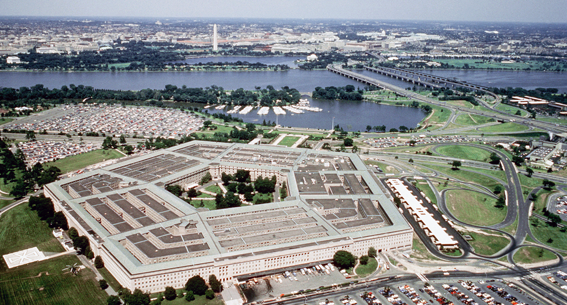
For the Pentagon, sorry seems to be the hardest word

Beware of China!

W.J. Astore

Threat inflation is always a lead feature at the Pentagon (how better to justify enormous budgets?), and just today I caught this story at FP: Foreign Policy.

At the Jiangyan shipyard near Shanghai, the Chinese navy is busy building up its next crown jewel. The Type 003 Carrier—boring name aside—showcases China’s growing naval ambitions and poses one of the greatest new challenges to U.S. naval supremacy in the Asia-Pacific. 

China isn’t saying much about its new carrier, but satellite imageryanalyzed by experts at the Center for Strategic and International Studies this week shows it is making “considerable progress” on the carrier, with its flight deck, superstructure, and sponsons “nearly complete.” 

The carrier, about 318 meters in length, will be the Chinese People’s Liberation Army Navy’s (PLAN) most technologically advanced and largest yet—and the largest non-U.S. carrier to be constructed in decades. U.S. Indo-Pacific Command estimates China could have four carriers by 2025, with potentially one more to come by 2030. It’s a sign China, already the world’s largest shipbuilder, wants to use that industrial might to supercharge its massive navy. 

What the new carrier means. “The trend is that China is attempting to build a blue water navy, and that’s what this third carrier and plan beyond that represents,” said Eric Sayers, an expert with the American Enterprise Institute and former advisor to the commander of U.S. Pacific Command. “That’s not for its near seas. … That’s more for projecting power into the Indo-Pacific and beyond.” 

China’s carrier upgrades and other investments in its navy have some experts worried Beijing could be getting more capable of showdowns with U.S. carrier strike groups in the region or launching a military assault on Taiwan, which top military officials have predicted could come within the next six years. 

PLAN of attack. “I think they’re going to become more confrontational,” said Jerry Hendrix, a retired Navy captain and former U.S. Defense Department official. “With their carriers, they may think that they’re going to be able to establish sea control for long enough that they can pull off an amphibious assault.” 

Aha! The Chinese are just like us! “Confrontational.” They’re building a navy that’s all about “projecting power,” perhaps even beyond the Pacific. How dare they! I wonder what the U.S. should do in response? Perhaps build even more aircraft carriers and an even bigger “blue water” navy? I wonder…

The U.S. Air Force is getting into the threat inflation act as well. I saw a report that suggested China is building sites (possibly dummy ones) for nuclear Intercontinental Ballistic Missiles (ICBMs). Guess which service has its own plans to build new ICBMs? Yes, it’s the U.S. Air Force, and the Chinese “threat” is being used to justify the huge expense of new, stationary, nuclear missiles based on land. (Those ICBMs, if deployed, will probably end up costing at least $100 billion, and perhaps double that.)

I have a perfect strategy for China to win any struggle against the U.S. Make noises about something that you know will set off America’s military-industrial complex, such as aircraft carriers, ICBMs, even ambiguous plans about attacking Taiwan. Then watch as America’s military wets its pants before Congress, calling desperately for money and weaponry to meet the Chinese threat. A few billion spent here and there by China should goad America’s military enthusiasts into spending trillions to meet the threat that, to be frank, they very much want to see from China. It’s truly a win-win for China, and perhaps a win as well for America’s military-industrial complex, but it’s a huge loss for the American people.

Speaking of Taiwan, I’ve even heard talk of the U.S. Army getting into the act by basing “tripwire” forces there, much like our “tripwire” forces in South Korea, the idea being if Mainland China dares to attack Taiwan, they know it’ll be a cause for war as they’ll have to “trip” over, and presumably kill, U.S. troops. What a comforting thought.

Chinese hysteria is reaching its peak in America, notes Michael Klare at TomDispatch.com, so much so that strategic miscalculation is more possible than ever as both sides–but especially America–see hostility as the other side makes moves to counter perceived aggression.

I know the title of my article is “Beware of China,” but of course my real message is beware of America, specifically its military leaders and corporate profiteers who are always happy to exaggerate threats in the cause of securing more money and power.

“Only Americans can hurt America,” said Dwight D. Eisenhower. We had best keep that in mind as various men in uniform hyperventilate about China and the threat it poses over the next few years or decades. Indeed, as Andrea Mazzarino noted in a fine article at TomDispatch.com today, the cancer of never-ending war is killing our democracy. Forget about being afraid of China. It’s time to be afraid of our leaders and all their democracy-killing schemes.

OMG! China might be building silos! You know, those things we’ve had for 60 years? Take cover!

The Unexamined U.S. Military

W.J. Astore

Perhaps you’ve heard the saying that the unexamined life is not worth living. Can it also be said that the unexamined military is not worth having?

What amazes me about the U.S. military is how little it is scrutinized. Sure, there’s armed services committees in the House and Senate, but they seem most concerned about shoveling more money toward the Pentagon. Either that or the dire perils of “critical race theory,” which is surely threatening the Republic more than runaway militarism, endless wars, and unneeded nuclear weapons.

What is to be done? I see only one solution: major cuts to the “defense” budget. And that budget is even higher than the stated figure of $705 billion or thereabouts. Nuclear weapons come under the Department of Energy, for example. Homeland Security has its separate budget (isn’t defense of the homeland what the Pentagon is all about?). The various intelligence agencies like the CIA and NSA and so forth churn through scores of billions yet couldn’t predict the collapse of the Soviet Union or the 9/11 attacks. Interestingly, after 9/11 these agencies saw vast increases in funding. Who knew incompetence could be so rewarding?

If you add up all the billions tied to weapons and wars and “defense” in America, you routinely exceed a trillion dollars a year. It’s almost an unfathomable sum. Perhaps it is to the U.S. military as well, since they can’t pass an audit. No one really knows where all the money is going.

Ike knew the score. Sixty years ago, President Eisenhower warned us all about the military-industrial-Congressional complex. A few people listened, but nobody in power did anything about it. Since then the Complex has only grown stronger and more pervasive (and invasive) in America. And now that same Complex owns the mainstream media. Remarkably, the “journalists” telling us all about the Complex on MSNBC and CNN and Fox are often retired CIA and military officials; they don’t even bother disclosing their obvious conflict of interest here.

Strangely, it’s become patriotic to salute our military rather than to examine it and challenge it. Americans, generally a boisterous and busy bunch, are remarkably quiet and passive except for all the saluting and praising. Until this mindset, and this behavior, changes radically, America will continue on a wasteful and wanton path forged by weapons and war.

And that really is something we need to examine in the collective life of our country.

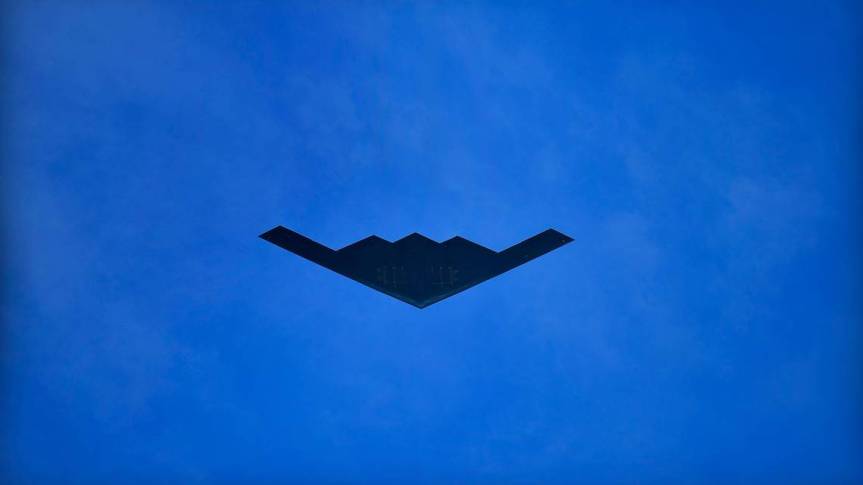
Sure, stealth bombers look cool. But together we paid roughly $2 billion per plane for a weapon designed to drop nuclear bombs on people.

There’s No Business Like War Business

W.J. Astore

Among my many weak spots is economics and business. I took exactly one course in college on macroeconomics. I took dozens of courses in math and engineering like calculus, statics, dynamics, fluid mechanics, thermodynamics, biomechanics, you name it. Then I switched academic specialties and became a historian of science, technology, and religion. Again I took dozens of courses in various branches of history, but again my one economics course remains my brief exposure to that world. And I took it as a freshman forty years ago!

Economics has been on my mind lately because so much of what passes for national military (a redundant phrase) strategy in the U.S. is really about making money. Profit. Capitalism, pure and simple. Moving products, expanding markets, diversifying portfolios, and so on. There’s no business like war business. It’s a capitalist’s dream.

In this rich vein of greed-war, I urge you to read Christian Sorensen’s 5-part series on the military-industrial-congressional complex at Consortium News. (Here’s a link to part 5, which also includes links to the previous four parts.) I really like the way he begins Part 5:

Without looking at military adventurism through the lens of the corporation, analysts are bound to produce error-filled studies. For example, one analyst contended in an interview on The Real News Network, “Military force is almost never going to achieve your political aims. The Americans learned this in Vietnam. They’re learning it in Afghanistan. They’re learning it in Syria… So [President Barack] Obama supporting the Saudis and Emiratis in Yemen is a sign really of incoherence on the part of the United States.”

Far from incoherence, the behavior actually is quite rational. A variety of conflicts, disparate and some seemingly futile, is precisely the aim. Conflict itself — producing untold mountains of profit for war corporations and Wall Street — is the goal.

Yes, yes, a thousand times yes. You can’t look at U.S. military-national “strategy” today through a purely strategic lens or one informed solely by military history (as I’m tempted to do). Clausewitz, Jomini, and other classical military theorists won’t help you much. You need to look to Wall Street, to economics, to how capitalism works. You have to look to business cycles, profit, markets, portfolios, diversification, and similar concepts. You have to recognize war is a special kind of business, one that America is very good at because we specialize in it. War and weaponry may well be our leading exports.

Again, I’m tempted as a former engineer and as a professional historian who’s studied strategy (at Oxford no less) to try to make sense of U.S. national-military strategy in logical terms informed by history, Wrong approach! The right approach is to follow the money. Think not of “war as a continuation of politics” but of war as a continuation of capitalism, a special kind of disaster or death capitalism. Remember too to think in terms of portfolios and diversification of the same, after which U.S. policies make all the sense in the world.  More conflict means more weapons sales means more money.  The same is true of arms races in the false cause of deterrence.

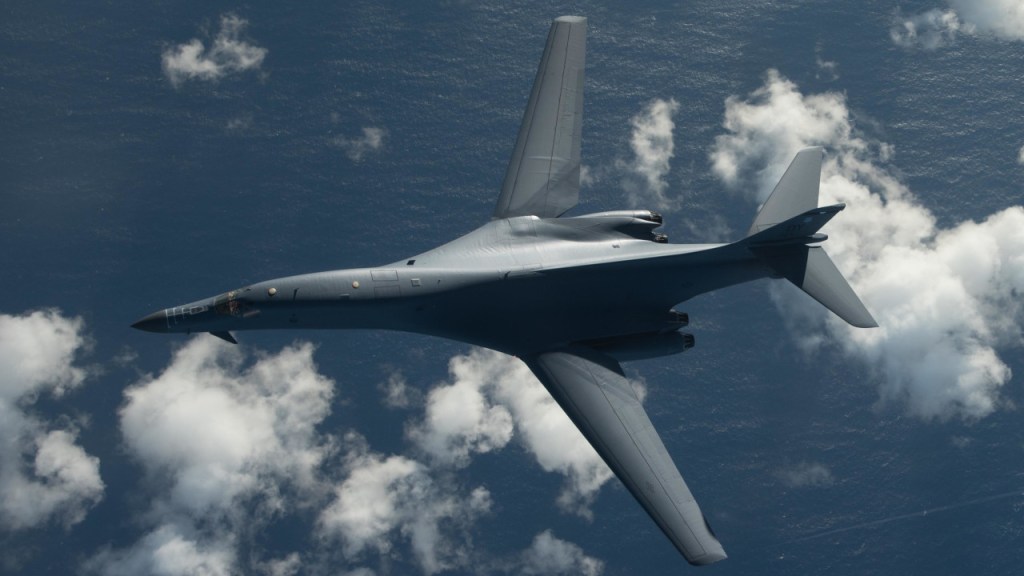
An early example from my life. When I was a young lieutenant in the U.S. Air Force, circa 1985, I wrote a paper on the B-1 bomber and the strategy of “manned penetrating bombers.” In plain speak (plane speak?), the Air Force was spending loads of money on a high-tech swing-wing plane loaded with avionics which would in theory enable it to penetrate Soviet airspace and bomb targets directly. This made little sense to me, nor did it make sense to President Jimmy Carter, who had cancelled the plane as unneeded. After all, B-52s could carry highly accurate cruise missiles and launch them from outside of Soviet airspace, and for much less money.

But the B-1, like any major weapon system, had powerful friends in Congress, since Rockwell International had spread production of the plane and its components to as many Congressional districts as possible. When Ronald Reagan became president in 1981, he quickly reversed Carter’s decision. It wasn’t about strategy. It was about business and profit justified in the name of sending a tough message to the “Evil Empire.” Meanwhile, the Soviet Union collapsed a few years later and the U.S. was stuck with 100 B-1 bombers it didn’t need. Time has proven it to be an expensive plane to maintain, and one that’s never been used (fortunately) on the mission for which it was designed.

The U.S. has a lot of weapons like the B-1 bomber: expensive, unreliable, redundant strategically, and ultimately unneeded. It doesn’t make much sense, until you realize it’s all about making money, moving product, inflating threats, and keeping the cycle going, again and again, wars and weapons without end, Amen.

America Doesn’t Have A Foreign Policy, It Has A Business Plan

Business as usual

W.J. Astore

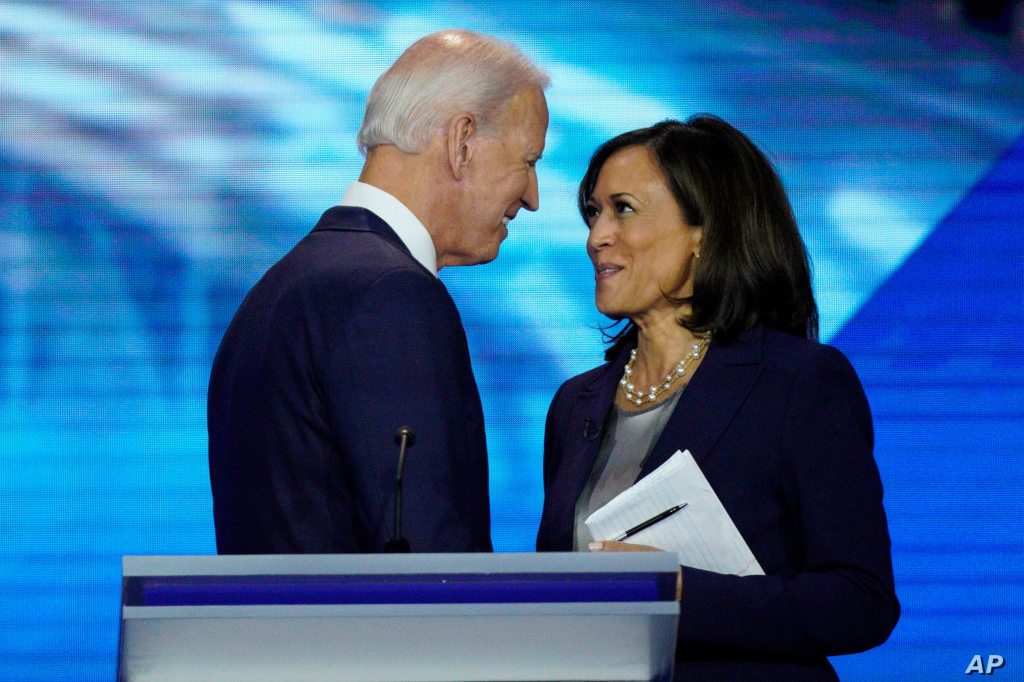
America doesn’t have a foreign policy, it has a business plan, and it’s business as usual in the Biden administration. Joe Biden promised his donors that nothing would fundamentally change in his administration. Kamala Harris said her agenda wasn’t about substantive change. So what we’re getting under the Biden/Harris team is eminently predictable:

  1. More blank checks for Israel, and no recognition of any rights for Palestinians.
  2. A revival of the old Cold War, with China as the leading “threat” but with Russia not forgotten.
  3. Politics subordinated to the military, rather than the military in service of political aims. In brief, military dominance is America’s foreign policy.
  4. Related to (1-3) is dominance of the world’s trade in weapons. The State Department has become a tiny branch of the Pentagon and the military-industrial complex. It’s all about closing arms deals, moving hardware, selling weaponry, making a buck.
  5. Naturally, one of Biden’s first acts as president was to bomb a foreign country, in this case Syria. So presidential!

In Joe Biden, America has a fading and flailing man to lead a fading and flailing empire. In Kamala Harris, America has an example of old wine in new packaging. She’s a woman, she’s Black, she’s South Asian — and she thinks like Hillary Clinton and Henry Kissinger.

Joined at the hip

Remember when Joe Biden said he’d be all about diplomacy? That the power of America’s example would rule over the example of our power? Nice words, but that’s all they’ve been so far. Words.

Two examples where Biden has appeared to offer meaningful change are with Afghanistan and Yemen. With Afghanistan, Biden has promised a complete military withdrawal by 9/11/2021. But does this apply only to combat troops while excluding mercenaries, the CIA, special forces “trainers,” and the like? It’s not yet clear. Plus anything can happen between now and 9/11 for Biden to switch gears and keep some combat troops in place.

With Yemen, Biden made a point about excluding offensive arms sales to Saudi Arabia while still allowing defensive ones. Almost any weapon can be labeled as defensive in nature, so it’s doubtful whether Saudi operations in Yemen will be impacted at all by Biden’s weasel-word policies.

The Biden/Harris foreign policy, such as it is, is retrograde. It’s a return to the Cold War, with an emphasis on new nuclear weapons and larger Pentagon budgets. It’s about global dominance while America at home burns. It’s foolish and stupid yet it will make a few people richer for a few more business cycles.

And thus it’s business as usual in Washington, which is exactly what Biden/Harris were hired for.

Guns and Money!

W.J. Astore

Remember in the 1930s how Americans referred to arms dealers, especially those who profited from war, as “merchants of death”? Yes, that was indeed a long time ago in a galaxy far far away. Nowadays, it’s weapons ‘r’ us, and America’s leading sounds of freedom are blam-blam-blam and ka-ching ka-ching ka-ching. Cash registers for weapons makers are truly ka-chinging wildly as America continues to dominate the global trade in war weapons, notes William Hartung at TomDispatch.com. Hartung’s title, “Selling Death,” puts it succinctly. Here’s an excerpt:

When it comes to trade in the tools of death and destruction, no one tops the United States of America.

In April of this year, the Stockholm International Peace Research Institute (SIPRI) published its annual analysis of trends in global arms sales and the winner — as always — was the U.S. of A. Between 2016 and 2020, this country accounted for 37% of total international weapons deliveries, nearly twice the level of its closest rival, Russia, and more than six times that of Washington’s threat du jour, China. 

Sadly, this was no surprise to arms-trade analysts.  The U.S. has held that top spot for 28 of the past 30 years, posting massive sales numbers regardless of which party held power in the White House or Congress.  This is, of course, the definition of good news for weapons contractors like Boeing, Raytheon, and Lockheed Martin, even if it’s bad news for so many of the rest of us, especially those who suffer from the use of those arms by militaries in places like Saudi Arabia, Egypt, Israel, the Philippines, and the United Arab Emirates.  The recent bombing and leveling of Gaza by the U.S.-financed and supplied Israeli military is just the latest example of the devastating toll exacted by American weapons transfers in these years.

When it comes to weapons sales, America truly is Number One! Which, in that faraway galaxy ,was once nothing to celebrate. In fact, it was something to deplore and denounce.

Why is this? Christian Sorensen at Consortium News has some answers. In a five-part series, he’s tackling the military-industrial-congressional complex and detailing its reach and power across American society. In “A People’s Guide to the War Industry,” Sorensen has this to say about America’s “solutions”-based war industry:

War corporations market their goods and services as “solutions.” A Raytheon executive, John Harris, explained to the Defense & Aerospace Report in 2018 that engaging “with senior members of government” is just “providing solutions to our customers,” providing “integrated solutions to meet our customers’ needs,” and even “figuring out how we can solve our customers’ problems using a dispassionate system approach.”

The solutions trick works well when selling to the U.S. military. For example, Booz Allen Hamilton offers digital solutions, CACI offers information solutions, and Leidos offers innovative solutions. Through its inherently harmful, anti-democratic activities, the war industry helps create the miserable conditions for which it then offers “solutions,” of course without ever taking responsibility for the dismal state of affairs (i.e. nonstop war) that it helped create.

“Providing solutions” sounds prettier and more generous than “making money off death and destruction.” MIC officials also regularly couch Washington’s imperialism, weapon sales, and war-first foreign policy as giving the troops the “tools they need.” A similar phrase (“We’ve listened to the warfighter”) is utilized when selling goods and services, particularly upgrades and technological insertions.

I’d add that, not only do war corporations market “solutions” to the warfighter, but the Pentagon sells these to the American people as “investments” in peace.

And who can be against “solutions” and “investments”?

I had the pleasure to be at a Warren Zevon concert in the early 1980s when he sang one of his signature songs, “Lawyers, Guns and Money.” How right he was! Between a rock and a hard place, America knows how to send lawyers, guns, and money.

I urge you to read Hartung and Sorensen and then reflect on the words of MLK about a nation that spends so much on weaponry and exports so much violence as one that is as a result approaching spiritual death.

Atlanta, Georgia, USA — Martin Luther King Jr. listens at a meeting of the SCLC, the Southern Christian Leadership Conference, at a restaurant in Atlanta. The SCLC is a civil rights organization formed by Martin Luther King after the success of the Montgomery bus boycott. — Image by © Flip Schulke/CORBIS

America Is Programmed for War

W.J. Astore

In my latest article for TomDispatch, I write that America is programmed for war. It’s a feature of our polity and our politics and our culture, not a bug. In some sense, we are a country made by war, and that’s not a good feature for a self-avowed democracy to have. Here’s an excerpt:

Why don’t America’s wars ever end?

I know, I know: President Joe Biden has announced that our combat troops will be withdrawn from Afghanistan by 9/11 of this year, marking the 20th anniversary of the colossal failure of George W. Bush and Dick Cheney to defend America.

Of course, that other 9/11 in 2001 shocked us all. I was teaching history at the U.S. Air Force Academy and I still recall hushed discussions of whether the day’s body count would exceed that of the Battle of Antietam, the single bloodiest day of the Civil War. (Fortunately, bad as it was, it didn’t.)

Hijacked commercial airliners, turned into guided missiles by shadowy figures our panicky politicians didn’t understand, would have a profound impact on our collective psyche. Someone had to pay and among the first victims were Afghans in the opening salvo of the misbegotten Global War on Terror, which we in the military quickly began referring to as the GWOT. Little did I know then that such a war would still be going on 15 years after I retired from the Air Force in 2005 and 80 articles after I wrote my first for TomDispatch in 2007 arguing for an end to militarism and forever wars like the one still underway in Afghanistan.

Over those years, I’ve come to learn that, in my country, war always seems to find a way, even when it goes badly — very badly, in fact, as it did in Vietnam and, in these years, in Afghanistan and Iraq, indeed across much of the Greater Middle East and significant parts of Africa. Not coincidentally, those disastrous conflicts haven’t actually been waged in our name. No longer does Congress even bother with formal declarations of war. The last one came in 1941 after Pearl Harbor. During World War II, Americans united to fight for something like national security and a just cause. Today, however, perpetual American-style war simply is. Congress postures, but does nothing decisive to stop it. In computer-speak, endless war is a feature of our national programming, not a bug.

Two pro-war parties, Republicans and Democrats, have cooperated in these decades to ensure that such wars persist… and persist and persist. Still, they’re not the chief reason why America’s wars are so difficult to end. Let me list some of those reasons for you. First, such wars are beyond profitable, notably to weapons makers and related military contractors. Second, such wars are the Pentagon’s reason for being. Let’s not forget that, once upon a time, the present ill-named Department of Defense was so much more accurately and honestly called the Department of War. Third, if profit and power aren’t incentive enough, wars provide purpose and meaning even as they strengthen authoritarian structures in society and erode democratic ones. Sum it all up and war is what America now does, even if the reasons may be indefensible and the results so regularly abysmal.

Support Our Troops! (Who Are They, Again?)

The last truly American war was World War II. And when it ended in 1945, the citizen-soldiers within the U.S. military demanded rapid demobilization — and they got it. But then came the Iron Curtain, the Cold War, the Korean War, fears of nuclear Armageddon (that nearly came to fruition during the Cuban Missile Crisis in 1962), and finally, of course, Vietnam. Those wars were generally not supported — not with any fervor anyway — by the American people, hence the absence of congressional declarations. Instead, they mainly served the interests of the national security state, or, if you prefer, the military-industrial-congressional complex.

Ike knew the score

That’s precisely why President Dwight D. Eisenhower issued his grave warning about that Complex in his farewell address in 1961. No peacenik, Ike had overseen more than his share of military coups and interventions abroad while president, so much so that he came to see the faults of the system he was both upholding and seeking to restrain. That was also why President John F. Kennedy called for a more humble and pacific approach to the Cold War in 1963, even as he himself failed to halt the march toward a full-scale war in Southeast Asia. This is precisely why Martin Luther King, Jr., truly a prophet who favored the fierce urgency of peace, warned Americans about the evils of war and militarism (as well as racism and materialism) in 1967. In the context of the enormity of destruction America was then visiting on the peoples of Southeast Asia, not for nothing did he denounce this country as the world’s greatest purveyor of violence.

Collectively, Americans chose to ignore such warnings, our attention being directed instead toward spouting patriotic platitudes in support of “our” troops. Yet, if you think about it for a moment, you’ll realize those troops aren’t really ours. If they were, we wouldn’t need so many bumper stickers reminding us to support them.

With the military draft gone for the last half-century, most Americans have voted with their feet by not volunteering to become “boots on the ground” in the Pentagon’s various foreign escapades. Meanwhile, America’s commanders-in-chief have issued inspiring calls for their version of national service, as when, in the wake of 9/11, President George W. Bush urged Americans to go shopping and visit Disney World. In the end, Americans, lacking familiarity with combat boots, are generally apathetic, sensing that “our” wars have neither specific meaning to, nor any essential purpose in their lives.

As a former Air Force officer, even if now retired, I must admit that it took me too long to realize this country’s wars had remarkably little to do with me — or you, for that matter — because we simply have no say in them. That doesn’t mean our leaders don’t seek to wage them in our name. Even as they do so, however, they simultaneously absolve us of any need to serve or sacrifice. We’re essentially told to cheer “our” troops on, but otherwise look away and leave war to the professionals (even if, as it turns out, those professionals seem utterly incapable of winning a single one of them).

Please read the rest of my article here at TomDispatch.com.