Norman Mailer for Secretary of Defense

W.J. Astore

A blast from my past, vintage 2009, with a postscript

Back in 2009, when President Barack Obama was debating a new “surge” in Afghanistan, I wrote an article for TomDispatch that urged him to reconsider, citing the words of Norman Mailer that he applied against the Vietnam War. Naturally, my article had no impact whatsoever on policy, though it was picked up by many outlets, including Salon. I was checking something else today at Salon and came across my old piece. I hope you enjoy reading (or re-reading) it.

This was that rare article I wrote that was actually excerpted at the New York Times. My article is mentioned at the end if you follow this link.

After this piece appeared, I had an opportunity to write a chapter for a book on “Star Wars and History.” Through the grapevine I heard George Lucas wasn’t too sure he wanted a retired military officer to write for a book in his “Star Wars” universe until he heard I’d recommended Norman Mailer (or someone like him) for Secretary of Defense. That seemed to persuade Lucas that my contribution might be acceptable.

POSTSCRIPT: In retrospect, I got one big thing right and one wrong here. I was right: the Afghan surge was doomed to fail. But what I didn’t realize was that its failure didn’t matter. What mattered was that Obama showed his obedience to Washington rules. He showed he’d largely defer to the Pentagon and the generals. His deference, his willingness to play the game rather than trying to end it, probably ensured his second term as president.

Yes, the surge was a failure, and the Afghan War would last another 12 years. But Obama easily won a 2nd term by showing he could wage war just like his predecessors, Bush/Cheney.

So, how was Joe Biden finally able to end the Afghan War in 2021? Two reasons. He could blame the Trump administration for putting him in an untenable position, and he could neutralize Pentagon opposition by giving them even more money even as he pulled troops from Afghanistan. Instead of the Pentagon budget decreasing by roughly $50 billion, the yearly cost of the Afghan War, it increased by that amount even as that war finally crashed and burned. There was never, ever, any talk of peace dividends, and once Russia invaded Ukraine early in 2022, vast increases in U.S. and NATO military spending were guaranteed. And so today’s Pentagon budget soars toward $900 billion, which doesn’t even include aid to Ukraine.

If Biden wins a 2nd term in 2024, it may be largely because he’s shown himself to be a slavish servant of the military-industrial-congressional complex and the national security state.

Anyhow, from October of 2009:

Norman Mailer for secretary of defense

On Afghanistan, Obama needs the input of freethinking outsiders, not generals. What if LBJ had listened to Mailer?

By WILLIAM ASTORE

PUBLISHED OCTOBER 13, 2009 7:07AM (EDT)

Author Norman Mailer speaks at an anti-war rally at the bandshell in New York's Central Park, March 26, 1966.

Author Norman Mailer speaks at an anti-war rally at the bandshell in New York’s Central Park, March 26, 1966.

It’s early in 1965, and President Lyndon B. Johnson faces a critical decision. Should he escalate in Vietnam? Should he say “yes” to the request from U.S. commanders for more troops? Or should he change strategy, downsize the American commitment, even withdraw completely, a decision that would help him focus on his top domestic priority, “The Great Society” he hopes to build?

We all know what happened. LBJ listened to the generals and foreign policy experts and escalated, with tragic consequences for the United States and calamitous results for the Vietnamese people on the receiving end of American firepower. Drawn deeper and deeper into Vietnam, LBJ would soon lose his way and eventually his will, refusing to run for reelection in 1968.

President Obama now stands at the edge of a similar precipice. Should he acquiesce to General Stanley A. McChrystal’s call for 40,000 to 60,000 or more U.S. troops for Afghanistan? Or should he pursue a new strategy, downsizing our commitment, even withdrawing completely, a decision that would help him focus on national healthcare, among his other top domestic priorities?

The die, I fear, is cast. In his “war of necessity,” Obama has evidently already ruled out even considering a “reduction” option, no less a withdrawal one, and will likely settle on an “escalate lite” program involving more troops (though not as many as McChrystal has urged), more American trainers for the Afghan army, and even a further escalation of the drone war over the Pakistani borderlands and new special operations actions.

By failing his first big test as commander-in-chief this way, Obama will likely ensure himself a one-term presidency, and someday be seen as a man like LBJ whose biggest dreams broke upon the shoals of an unwinnable war.

The conventional wisdom: Military escalation

To whom, we may ask, is Obama listening as he makes his decision on Afghanistan strategy and troop levels? Not the skeptics, it’s safe to assume. Not the freethinkers, not today’s equivalents of Mary McCarthy or Norman Mailer. Instead, he’s doubtless listening to the generals and admirals, or the former generals and admirals who now occupy prominent “civilian” positions at the White House and inside the beltway.

By his actions, Obama has embraced the seemingly sober conventional wisdom that senior military officers, whether on active duty or retired, have, as they say in the corridors of the Pentagon, “subject matter expertise” when it comes to strategy, war, even foreign policy.

Don’t we know better than this? Don’t we know, as Glenn Greenwald recently reminded us, that General McChrystal’s strategic review was penned by a “war-loving foreign policy community,” in which the usual suspects — “the Kagans, a Brookings representative, Anthony Cordesman, someone from Rand” — were rounded up to argue for more troops and more war?

Don’t we know, as Tom Engelhardt recently reminded us, that Obama’s “civilian” advisors include “Karl W. Eikenberry, a retired lieutenant general who is the U.S. ambassador to Afghanistan, Douglas Lute, a lieutenant general who is the president’s special advisor on Afghanistan and Pakistan (dubbed the “war czar” when he held the same position in the Bush administration), and James Jones, a retired Marine Corps general, who is national security advisor, not to speak of Secretary of Defense Robert Gates, a former director of the Central Intelligence Agency”? Are we surprised, then, that when we “turn crucial war decisions over to the military, [we] functionally turn foreign policy over to them as well”? And that they, in turn, always opt for more troops, more money and more war?

One person unsurprised by this state of affairs would have been Norman Mailer, who died in 2007. War veteran, famed author of the war novel “The Naked and the Dead” (1948) as well as the Pulitzer Prize-winning report on Vietnam-era protests, “The Armies of the Night” (1968), self-styled tough guy who didn’t dance, Mailer witnessed (and dissected) the Vietnam analog to today’s Afghan events. Back in 1965, Mailer bluntly stated that the best U.S. option was “to get out of Asia.” Period.

The unconventional wisdom: Military extrication

Can Obama find the courage and wisdom to extricate our troops from Afghanistan? Courtesy of Norman Mailer, here are three unconventional pointers that should be driving him in this direction:

1. Don’t fight a war, and clearly don’t escalate a war, in a place that means so little to Americans. In words that apply quite readily to Afghanistan today, Mailer wrote in 1965: “Vietnam [to Americans] is faceless. How many Americans have ever visited that country? Who can say which language is spoken there, or what industries might exist, or even what the country looks like? We do not care. We are not interested in the Vietnamese. If we were to fight a war with the inhabitants of the planet of Mars there would be more emotional participation by the people of America.”

2. Beware of cascading dominoes and misleading metaphors, whether in Southeast Asia or anywhere else. The domino theory held that if Vietnam, then split into north and south, was united under communism, other Asian countries, including Thailand, the Philippines, perhaps even India, would inevitably fall to communism as well, just like so many dominoes toppling. Instead, it was communism that fell or, alternately, morphed into a version that we could do business with (to paraphrase former British Prime Minister Margaret Thatcher).

We may no longer speak metaphorically of falling dominoes in today’s Af-Pak theater of operations. Nevertheless, our fears are drawn from a similarly misleading image: If Afghanistan falls to the Taliban, Pakistan will surely follow, opening a nuclear Pandora’s box to anti-American terrorists in which, in our fevered imaginations, smoking guns will once again become mushroom clouds.

Despite the fevered talk of falling dominoes in his era, Mailer was unmoved. Such rhetoric suggests, he wrote in 1965, “that we are not protecting a position of connected bastions so much as we are trying to conceal the fact that the bastions are about gone — they are not dominoes, but sand castles, and a tide of nationalism is on the way in. It is curious foreign policy to use metaphors in defense of a war; when the metaphors are imprecise, it is a swindle.”

To this I’d add that, in viewing countries and peoples as so many dominoes, which by the actions — or the inaction — of the United States are either set up or knocked down, we vastly exaggerate our own agency and emphasize our sense of self-importance. And before we even start in on the inevitable argument about “Who lost Afghanistan?” or “Who lost Pakistan?” is it too obvious to say that never for a moment did we own these countries and peoples?

3. Carrots and sticks may work together to move a stubborn horse, but not a proud people determined to find their own path. As Mailer put it, with a different twist: “Bombing a country at the same time you are offering it aid is as morally repulsive as beating up a kid in an alley and stopping to ask for a kiss.”

As our Predator and Reaper drones scan the Afghan terrain below, launching missiles to decapitate terrorists while unintentionally taking innocents with them, we console ourselves by offering aid to the Afghans to help them improve or rebuild their country. As it happens, though, when the enemy hydra loses a head, another simply grows in its place, while collateral damage only leads to a new generation of vengeance-seekers. Meanwhile, promised aid gets funneled to multinational corporations or siphoned off by corrupt government officials, leaving little for Afghan peasants, certainly not enough to win their allegiance, let alone their “hearts and minds.”

If we continue to speak with bombs while greasing palms with dollars, we’ll get nothing more than a few bangs for our $228 billion (and counting).

What if LBJ had listened to Mailer in ’65?

Not long before LBJ crossed his Rubicon and backed escalation in Vietnam, he could have decided to pull out. Said Mailer:

The image had been prepared for our departure — we heard of nothing but the corruption of the South Vietnam government and the professional cowardice of the South Vietnamese generals. We read how a Viet Cong army of 40,000 soldiers was whipping a government army of 400,000. We were told in our own newspapers how the Viet Cong armed themselves with American weapons brought to them by deserters or captured in battle with government troops; we knew it was an empty war for our side.

Substitute “the Hamid Karzai government” for “the South Vietnam government” and “Taliban” for “Viet Cong” and the same passage could almost have been written yesterday about Afghanistan. We know the Karzai government is corrupt, that it stole the vote in the last election, that the Afghan army is largely a figment of Washington’s imagination, that its troops sell their American-made weapons to the enemy. But why do our leaders once again fail to see, as Mailer saw with Vietnam, that this, too, is a recognizably “empty war for our side”?

Mailer experienced the relentless self-regard and strategic obtuseness of Washington as a mystery, but that didn’t stop him from condemning President Johnson’s decision to escalate in Vietnam. For Mailer, LBJ was revealed as “a man driven by need, a gambler who fears that once he stops, once he pulls out of the game, his heart will rupture from tension.” Johnson, like nearly all Americans, Mailer concluded, was a member of a minority group, defined not in racial or ethnic terms but in terms of “alienat[ion] from the self by a double sense of identity and so at the mercy of a self which demands action and more action to define the most rudimentary borders of identity.”

This American drive for self-definition through constant action, through headlong acceleration, even through military escalation, the novelist described, in something of a mixed metaphor, as “the swamps of a plague” in which Americans had been caught and continued to sink. He saw relief of the desperate condition coming only via “the massacre of strange people.”

To be honest, I’m not sure what to make of Mailer’s analysis here, more emotionally “Heart of Darkness” than coolly rational. But that’s precisely why I want someone Mailer-esque — pugnacious, free-swinging, and prophetical, provocative and profane — advising our president. Right now.

As Obama’s military experts wield their battlefield metrics and call for more force (to be used, of course, with ever greater precision and dexterity), I think Mailer might have replied: We think the only thing they understand is force. What if the only thing we understand is force?

Mailer, I have no doubt, would have had the courage to be seen as “weak” on defense, because he would have known that Americans had no dog in this particular fight. I think he would intuitively have recognized the wisdom of the great Chinese strategist Sun Tzu, who wrote more than 2,000 years ago in “The Art of War” that “to win one hundred victories in one hundred battles is not the acme of skill. To subdue the enemy without fighting is the acme of skill.” Our generals, by way of contrast, seem to want to fight those 100 battles with little hope of actually subduing the enemy.

What Obama needs, in other words, is fewer generals and ex-generals and more Norman Mailers — more outspoken free-thinkers who have no interest in staying inside the pentagonal box that holds Washington’s thinking tight. What Obama needs is to silence the endless cries for more troops and more war emanating from the military and foreign policy “experts” around him, so he can hear the voices of today’s Mailers, of today’s tough-minded dissenters. Were he to do so, he might yet avoid repeating LBJ’s biggest blunder — and so avoid suffering his political fate as well.


Fighting the Military-Industrial Complex

W.J. Astore

Its biggest advantage is that it knows what it wants

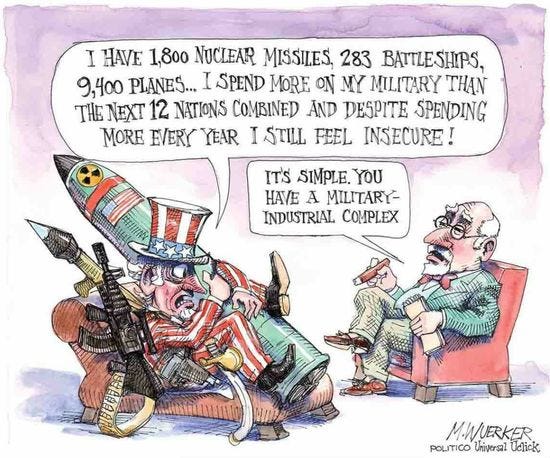
The military-industrial-congressional complex (MICC) has a huge advantage over its critics. Its proponents are united by greed and power. They know exactly what they want. Like Johnny Rocco in “Key Largo,” they want MORE. More money. More authority. And obviously more weapons and more war. 

Whereas critics of the MICC tend to approach the beast from different angles with different emphases.  Tactical differences lead to fissures. Fissures prevent coalitions from forming. Unity is lacking, and not for want of trying. And so the MICC rumbles on, unchallenged by any societal force that is remotely its size.

A colleague of mine, Dennis Showalter, was fond of a saying that helps to explain the situation. Critics and intellectuals, he said, have a propensity to see the fourth side of every three-sided problem. Analysis leads to paralysis. The tyranny of small differences prevents unanimity of purpose.

Dennis Showalter, a fine historian and a better friend.

Another key strength of the MICC is reflected in an alternate acronym: the MICIMATT, which adds the intelligence “community,” the mainstream media, academe, and various think tanks to the military, industry, and Congress. To that we might also add the world of sports, entertainment (Hollywood and TV especially), and the very idea of patriotism in America with all its potent symbols. I’d even add Christianity here, the muscular version practiced in the U.S. rather than the compassionate version promulgated by Christ.

When you focus just on the MICC, you miss the wellsprings of its power. It’s not just about greed and authority, it’s about full-spectrum dominance of all aspects of American life and society.

America hasn’t won a major war since World War II, but the MICC has won the struggle for societal dominance in America. Serious challenges to it will require Americans to put aside differences in the name of a greater cause of peace and sanity. The wildcard here, of course, is the ever-present hyping of fear by the MICC.

FDR told Americans the only thing we truly needed to fear was fear itself. Fear paralyzes the mind and inhibits action. Fear is the only darkness, Master Po said in “Kung Fu.”

If we can overcome our fear and our differences to focus on building a more compassionate world, a world in harmony with nature and life, then maybe, just maybe, we can see the foolishness of funding and embracing an MICC based on an unnatural pursuit of destruction and death.

Dwight Eisenhower on the Cost of Permanent War

W.J. Astore

Ike’s Cross of Iron Speech, 70 Years Later

If Dwight Eisenhower could somehow give his 1953 “Cross of Iron” address and his 1961 warning about the military-industrial complex to the American people today, I truly believe he’d be dismissed by the mainstream media (MSM) as a Putin puppet and as repeating Kremlin talking points. Why? Because Ike advocated for negotiation and peace instead of war; he documented how spending on weapons was intrinsically wasteful and a bane to democratic society; and he challenged citizens to be alert and knowledgeable, ready to take action against the growing power of a corporate-military nexus supported and strengthened by Congress.

To mark Ike’s integrity and wisdom, and also to update his cost calculations from 1953 for the present day, I wrote this article, my latest for TomDispatch.com. Again, the words of Ike, focusing on peace, the preciousness and burdens of democracy, and the dangers of militarism, are rarely if ever heard in our government and in the MSM today. And that suggests we are in a dark place indeed in this country of ours.

In April 1953, newly elected President Dwight D. Eisenhower, a retired five-star Army general who had led the landings on D-Day in France in June 1944, gave his most powerful speech. It would become known as his “Cross of Iron” address. In it, Ike warned of the cost humanity would pay if Cold War competition led to a world dominated by wars and weaponry that couldn’t be reined in. In the immediate aftermath of the death of Soviet dictator Josef Stalin, Ike extended an olive branch to the new leaders of that empire. He sought, he said, to put America and the world on a “highway to peace.” It was, of course, never to be, as this country’s emergent military-industrial-congressional complex (MICC) chose instead to build a militarized (and highly profitable) highway to hell.

Eight years later, in his famous farewell address, a frustrated and alarmed president called out “the military-industrial complex,” prophetically warning of its anti-democratic nature and the disastrous rise of misplaced power that it represented. Only an alert and knowledgeable citizenry, fully engaged in corralling, containing, and constraining it, he concluded, could save democracy and bolster peaceful methods and goals. 

The MICC’s response was, of course, to ignore his warning, while waging a savage war on communism in the name of containing it. In the process, atrocious conflicts would be launched in Vietnam, Laos, and Cambodia as the contagion of war spread. Threatened with the possibility of peace in the aftermath of the Soviet Union’s collapse in 1991, the MICC bided its time with operations in Iraq (Desert Storm), Bosnia, and elsewhere, along with the expansion of NATO, until it could launch an unconstrained Global War on Terror in the aftermath of the attacks of September 11, 2001.  Those “good times” (filled with lost wars) lasted until 2021 and the chaotic U.S. withdrawal from Afghanistan.

Not to be deterred by the fizzling of the nightmarish war on terror, the MICC seized on a “new cold war” with China and Russia, which only surged when, in 2022, Vladimir Putin so disastrously invaded Ukraine (as the U.S. had once invaded Afghanistan and Iraq). Yet again, Americans were told that they faced implacable foes that could only be met with overwhelming military power and, of course, the funding that went with it — again in the name of deterrence and containment. 

In a way, in 1953 and later in 1961, Ike, too, had been urging Americans to launch a war of containment, only against an internal foe: what he then labeled for the first time “the military-industrial complex.” For various reasons, we failed to heed his warnings. As a result, over the last 70 years, it has grown to dominate the federal government as well as American culture in a myriad of ways. Leaving aside fundingwhere it’s beyond dominant, try moviesTV showsvideo gameseducationsports, you name it. Today, the MICC is remarkably uncontained. Ike’s words weren’t enough and, sadly, his actions too often conflicted with his vision (as in the CIA’s involvement in a coup in Iran in 1953). So, his worst nightmare did indeed come to pass. In 2023, along with much of the world, America does indeed hang from a cross of iron, hovering closer to the brink of nuclear war than at any time since the Cuban Missile Crisis of 1962.

Updating Ike’s Cross of Iron Speech for Today

Perhaps the most quoted passage in that 1953 speech addressed the true cost of militarism, with Ike putting it in homespun, easily grasped, terms. He started by saying, “Every gun that is made, every warship launched, every rocket fired signifies, in the final sense, a theft from those who hunger and are not fed, those who are cold and are not clothed.” (An aside: Can you imagine Donald Trump, Joe Biden, or any other recent president challenging Pentagon spending and militarism so brazenly?)

Ike then added:

“This world in arms is not spending money alone. It is spending the sweat of its laborers, the genius of its scientists, the hopes of its children. The cost of one modern heavy bomber is this: a modern brick school in more than 30 cities. It is two electric power plants, each serving a town of 60,000 population. It is two fine, fully equipped hospitals. It is some fifty miles of concrete pavement. We pay for a single fighter plane with a half million bushels of wheat. We pay for a single destroyer with new homes that could have housed more than 8,000 people.”

He concluded with a harrowing image: “This is not a way of life at all, in any true sense. Under the cloud of threatening war, it is humanity hanging from a cross of iron.”

Ike’s cost breakdown of guns versus butter, weapons versus civilian goods, got me thinking recently: What would it look like if he could give that speech today? Are we getting more bang for the military megabucks we spend, or less?  How much are Americans sacrificing to their wasteful and wanton god of war?

Let’s take a closer look. A conservative cost estimate for one of the Air Force’s new “heavy” strategic nuclear bombers, the B-21 Raider, is $750 million. A conservative estimate for a single new fighter plane, in this case the F-35 Lightning II, is $100 million. A single Navy destroyer, a Zumwalt-class ship, will be anywhere from $4 to $8 billion, but let’s just stick with the lower figure. Using those weapons, and some quick Internet sleuthing, here’s how Ike’s passage might read if he stood before us now:

“The cost of one modern heavy bomber is this: a modern brick-veneer and reinforced concrete school in 75 cities.  It is five electric power plants, each serving a town with 60,000 inhabitants. It is five fine, fully equipped hospitals. It is some 150 miles of pavement. We pay for a single fighter plane with more than 12 million bushels of wheat. We pay for a single destroyer with new homes that could have housed more than 64,000 people.”

(Quick and dirty figures for the calculations above: $10 million per elementary school; $150 million per power plant [$5,000/kilowatt for 30,000 homes]; $150 million per hospital; $5 million per new mile of road; $8 per bushel of wheat; $250,000 per home for four people.)

Grim stats indeed! Admittedly, those are just ballpark figures, but taken together they show that the tradeoff between guns and butter — bombers and jet fighters on the one hand, schools and hospitals on the other — is considerably worse now than in Ike’s day. Yet Congress doesn’t seem to care, as Pentagon budgets continue to soar irrespective of huge cost overruns and failed audits (five in a row!), not to speak of failed wars.

Without irony, today’s MICC speaks of “investing” in weapons, yet, unlike Ike in 1953, today’s generals, the CEOs of the major weapons-making corporations, and members of Congress never bring up the lost opportunity costs of such “investments.” Imagine the better schools and hospitals this country could have today, the improved public transportation, more affordable housing, even bushels of wheat, for the cost of those prodigal weapons and the complex that goes with them. And perish the thought of acknowledging in any significant way how so many of those “investments” have failed spectacularly, including the Zumwalt-class destroyers and the Navy’s Freedom-class littoral combat ships that came to be known in the Pentagon as “little crappy ships.”

Speaking of wasteful warships, Ike was hardly the first person to notice how much they cost or what can be sacrificed in building them. In his prescient book The War in the Air, first published in 1907, H.G. Wells, the famed author who had envisioned an alien invasion of Earth in The War of the Worlds, denounced his own epoch’s obsession with ironclad battleships in a passage that eerily anticipated Ike’s powerful critique:

The cost of those battleships, Wells wrote, must be measured by:

“The lives of countless men… spent in their service, the splendid genius and patience of thousands of engineers and inventors, wealth and material beyond estimating; to their account we must put stunted and starved lives on land, millions of children sent to toil unduly, innumerable opportunities of fine living undeveloped and lost. Money had to be found for them at any cost—that was the law of a nation’s existence during that strange time.  Surely they were the weirdest, most destructive and wasteful megatheria in the whole history of mechanical invention.”

Little could he imagine our own era’s “wasteful megatheria.” These days, substitute nuclear intercontinental ballistic missiles, strategic bombers, aircraft carriers, and similar “modern” weapons for the ironclads of his era and the sentiment rings at least as true as it did then. (Interestingly, all those highly touted ironclads did nothing to avert the disaster of World War I and had little impact on its murderous course or ponderous duration.)

Returning to 1953, Eisenhower didn’t mince words about what the world faced if the iron cross mentality won out: at worst, nuclear war; at best, “a life of perpetual fear and tension; a burden of arms draining the wealth and labor of all peoples; a wasting of strength that defies the American system, or the Soviet system, or any system to achieve true abundance and happiness for the peoples of this earth.”

Ike’s worst-case scenario grows ever more likely today. Recently, Russia suspended the START treaty, the final nuclear deal still in operation, that oversaw reductions in strategic nuclear weapons.  Instead of reductions, Russia, China, and the United States are now pursuing staggering “modernization” programs for their nuclear arsenals, an effort that may cost the American taxpayer nearly $2 trillion over the coming decades (though even such a huge sum matters little if most of us are dead from nuclear war).

In any case, the United States in 2023 clearly reflects Ike’s “cross of iron” scenario. It’s a country that’s become thoroughly militarized and so is slowly wasting away, marked increasingly by feardeprivation, and unhappiness.

It’s Never Too Late to Change Course

Only Americans, Ike once said, can truly hurt America.  Meaning, to put the matter in a more positive context, only we can truly help save America. A vital first step is to put the word “peace” back in our national vocabulary.

“The peace we seek,” Ike explained 70 years ago, “founded upon a decent trust and cooperative effort among nations, can be fortified, not by weapons of war but by wheat and by cotton, by milk and by wool, by meat and timber and rice. These are words that translate into every language on earth. These are the needs that challenge this world in arms.”

The real needs of humanity haven’t changed since Ike’s time. Whether in 1953 or 2023, more guns won’t serve the cause of peace. They won’t provide succor. They’ll only stunt and starve us, to echo the words of H.G. Wells, while imperiling the lives and futures of our children.

This is no way of life at all, as Ike certainly would have noted, were he alive today.

Which is why the federal budget proposal released by President Biden for 2024 was both so painfully predictable and so immensely disappointing. Calamitously so. Biden’s proposal once again boosts spending on weaponry and war in a Pentagon budget now pegged at $886 billion. It will include yet more spending on nuclear weapons and envisions only further perpetual tensions with “near-peer” rivals China and Russia.

This past year, Congress added $45 billion more to that budget than even the president and the Pentagon requested, putting this country’s 2023 Pentagon budget at $858 billion. Clearly, a trillion-dollar Pentagon budget is in our collective future, perhaps as early as 2027. Perish the thought of how high it could soar, should the U.S. find itself in a shooting war with China or Russia (as the recent Russian downing of a U.S. drone in the Black Sea brought to mind).  And if that war were to go nuclear…

The Pentagon’s soaring war budget broadcast a clear and shocking message to the world. In America’s creed, blessed are the warmakers and those martyrs crucified on its cross of iron.

This was hardly the message Ike sought to convey to the world 70 years ago this April. Yet it’s the message the MICC conveys with its grossly inflated military budgets and endless saber-rattling.

Yet one thing remains true today: it’s never too late to change course, to order an “about-face.” Sadly, lacking the wisdom of Dwight D. Eisenhower, such an order won’t come from Joe Biden or Donald Trump or Ron DeSantis or any other major candidate for president in 2024. It would have to come from us, collectively. It’s time to wise up, America. Together, it’s time to find an exit ramp from the highway to hell that we’ve been on since 1953 and look for the on-ramp to Ike’s highway to peace.

And once we’re on it, let’s push the pedal to the metal and never look back.

Warfare Is Welfare for the Merchants of Death

W.J. Astore

Whatever else it is, the Russia-Ukraine War is a major money-making opportunity

Warfare is welfare for the merchants of death. Consider the Russia-Ukraine War. In the name of Ukrainian liberation, the U.S. Congress is preparing to approve another $37.7 billion in mostly military aid, bringing the total to nearly $100 billion in less than a year. This remarkable sum represents roughly 5% of federal discretionary spending, nearly the same as what the federal government spent on education in America this year. So far, all Democrats in Congress have supported aid to Ukraine, with only a minority of Republicans objecting.

Why is this? America is fertile ground for anti-Russian sentiment, but that’s not the main reason. It’s all about the Benjamins, as war is always immensely profitable for some sectors of society. Recall that President Dwight D. Eisenhower warned us of the disastrous rise of misplaced power represented by the military-industrial-congressional complex (MICC). Congress is heavily influenced by weapons contractors, not only through campaign contributions but by the jobs in their districts tied to the production of weapons of all sorts.

In a refreshing burst of honesty from the 1930s, the U.S. Senate referred to weapons contractors as “merchants of death,” and so they are. Weapons, from mundane bullets and artillery shells to “sexy” stealth fighters like the wildly expensive F-35, are designed to kill our fellow human beings. That’s why Eisenhower famously said in 1953 that humans essentially crucify themselves on a cross of iron when they prioritize weapons building over hospitals, schools, and other necessities of a civilized life.

More and more money to the merchants of death ensures three things: more power to weapons contractors, higher profits for them, and in this particular case a lot more dead Russians and Ukrainians. Some Americans seem to think it’s all worth it, though I’m skeptical about Ukrainian liberation being an important goal to officials in Washington.

Ike exhibited basic common sense when he noted the MICC is fundamentally anti-democratic. That it threatened our liberties and democratic processes. He told us to take nothing for granted, and challenged us to remain alert and knowledgeable. For when you empower the MICC, you weaken democracy. You also choose death over life.

Whether it’s the Russia-Ukraine War or previous ones like Vietnam, Iraq, and Afghanistan, the MICC has been and is making a killing in America and indeed across the globe— and in more ways than one. And as Ike said, that’s no way of life at all.

What is to be done? We need to start by recognizing that the MICC is fundamentally anti-democratic, often wasteful, driven by greed, and consistent with imperialism of the worst sort. Again, I’m not really saying anything new here; Ike, a five-star general and two-term president, said the same almost 70 years ago. His sentiments were echoed by James Madison when Madison wrote in 1795 that a large standing military and incessant warfare were deadly to democracy and liberty.1 Yet wars continue to find a way, and the MICC continues to thrive and expand its reach and power.

To resort to Scripture, not only is the flesh weak in America when it comes to reining in war and weapons: so too is the spirit. The spirit is unwilling because we are saturated in war and violence. An imperial vision like “full-spectrum dominance” has come to dominate American culture and society. Too many people believe that freedom is best projected and protected through the barrel of a gun.

The words of Ike come to me again when he said that only Americans could truly hurt America. The primary dangers are within not without. In that spirit, Ike warned us about a danger within, the MICC. We would do well to heed his warning if we wish to preserve and strengthen the tree of liberty.

How best to heed his warning? With respect to the Russia-Ukraine War, stop sending weapons that drive more killing. Put more effort on diplomacy. With respect to America itself, abandon the concept of a “new cold war” with Russia and China. Recognize America’s strength instead of focusing incessantly on hypothetical weaknesses. Stop listening to the screech of war hawks. Invest in life instead of death. Start from a place of life-affirming confidence rather than of fear and doubt.

There’s a powerful scene in “Enemy at the Gates” about the Battle of Stalingrad where Soviet political officers are debating how to inspire the troops to fight to the last. The Soviets had been relying on fear, and indeed at Stalingrad Soviet units killed thousands of their own troops for “cowardice” in the face of the Nazi enemy. One commissar is brave enough to offer something other than fear and death. “Give them hope!” he cries. Hope that they can and would prevail against a ruthless enemy.

That’s what we need in America today, a lot less fear and a lot more hope.

1

Madison wrote that: “Of all the enemies of true liberty, war is, perhaps, the most to be dreaded, because it comprises and develops the germ of every other.  War is the parent of armies; from these proceed debt and taxes; and armies, and debts, and taxes are the known instruments for bringing the many under the domination of the few.  In war, too, the discretionary power of the Executive is extended; its influence in dealing out offices, honors and emoluments is multiplied; and all the means of seducing the minds, are added to those of subduing the force, of the people.  The same malignant aspect in republicanism may be traced in the inequality of fortunes, and the opportunities of fraud, growing out of a state of war, and in the degeneracy of manner and of morals, engendered in both.  No nation can preserve its freedom in the midst of continual warfare.”

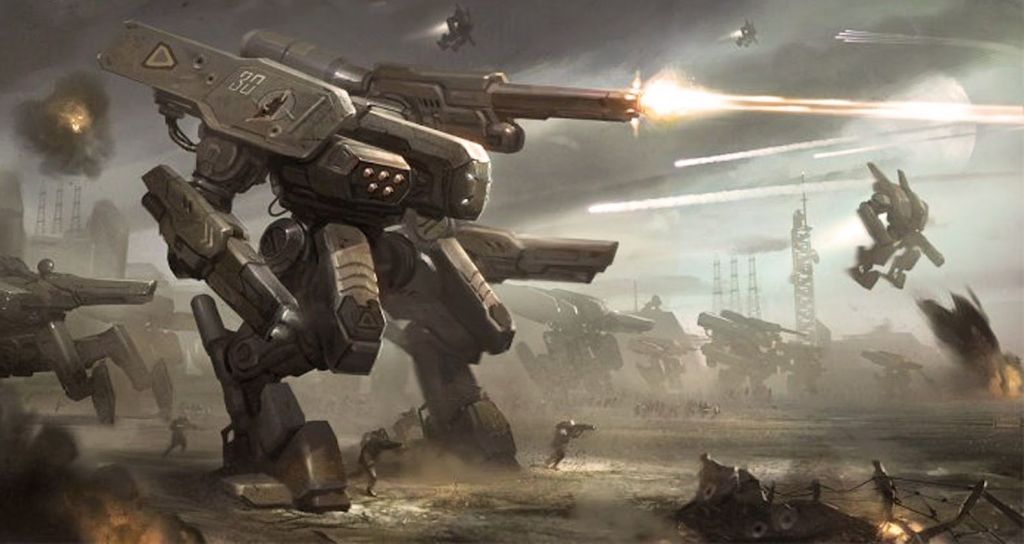
The Giant War Robot that Rules America

Not exactly the “Great Society” envisioned by LBJ in the 1960s. How long before war becomes both programmed and automated into our society as an unstoppable force?

W.J. Astore

Readers, I admit to you I’m demoralized after seeing this news a couple of days ago:

The House on Thursday passed, 329-101, its version of the fiscal 2023 National Defense Authorization Act, which would authorize $840.2 billion in national defense spending.

I’ve been writing against massive and unnecessary spending on wars and weapons since the early 1980s, when I did a college project that was highly critical of the Reagan “Defense Buildup” under then-Secretary of Defense Caspar Weinberger. Those were the days when there was a real movement against Reagan’s pursuit of the MX “Peacekeeper” ICBM and the deployment of nuclear-tipped Pershing II and GLCMs (ground-launched cruise missiles, or “glick-ems”) to Europe. The Nuclear Freeze Movement helped to stimulate talks between Reagan and Gorbachev that led to the elimination of weapons like the Pershing II, the GLCMs, and Soviet SS-20s, introducing a small sliver of (temporary) sanity to U.S.-Soviet relations.

Then came the collapse of the Soviet Union in 1991 and America’s unipolar moment of triumph. Who knew that 30 years later, America would be vigorously advancing and inflating a new Russian threat that would then be used to “justify” renewed spending on all sorts of esoteric, exorbitant, and wildly unnecessary weaponry to feed the never-satiated military-industrial-congressional complex (MICC). I didn’t predict it, that’s for sure.

For the last 15 years, I’ve been writing for TomDispatch.com, averaging six articles a year whose main theme has been the often colossal failures of the MICC and the total lack of accountability for the same. Never has failure bred so much success for an institution. And the institution itself, I truly hesitate to write, is woefully lacking in integrity. Whether it was the Pentagon Papers in Vietnam, the Afghan War Papers, the lies about WMD in Iraq that precipitated the disastrous Iraq War in 2003, or that hoary chestnut about babies being ripped from incubators in Kuwait that helped to justify Desert Shield/Storm in 1991-92, the American people have been told so many lies about war by “their” MICC that it boggles the mind.

And don’t even get me started about how the military lied about Pat Tillman’s death, tarnishing the legacy of a brave soldier inspired by service and idealism.

People with integrity who try to tell us the truth about America’s wars, like Chelsea Manning and Daniel Hale, end up in jail. The liars and the ones who always get it wrong end up being richly rewarded and often promoted to the highest levels.

This has to end, or America itself will come to an end. And it’s so frustrating because, again, I’ve been writing about this, off and on, for forty years, and steadily over the last 15 years. But nothing I say or write, or other critics like Andrew Bacevich and William Hartung say or write, makes any difference, so it seems, as the MICC continues to become the giant war robot that rules America.