War Is the True Enemy

W.J. Astore

America’s Revival Will Begin When It Finally Embraces Peace

Arguably the biggest problem in America today is that the government remains on a wartime footing. The possibility of America being a normal country in normal times, at peace, is simply never mentioned. In current politics and in the mainstream media, there is no vision of America being at peace with the world. Ever.

There is always an enemy, usually plural. Russia. China. Iran. North Korea. The inchoate threat of terror and terrorists. Islamist extremism. All these and more are cited by the “experts” in the “national security state” as requiring a military response. If some kind of peace deal is orchestrated for the Russia-Ukraine War, America and its war machine will immediately pivot to Asia. Or the Middle East. Or perhaps Africa. Or all three.

I’m amazed when friends tell me they’re concerned about U.S. isolationism. Usually this concern is couched in America’s alleged withdrawal from (or even betrayal of) Europe in light of the Russia-Ukraine War. Their message to me is simple: America must keep sending weapons and intel to Ukraine until Russia and Putin are defeated, “as long as it takes.” The “it” is left undefined, but apparently “it” refers to an unqualified Ukrainian victory over Russia, followed by Ukraine’s eventual admission into NATO. Whether that “it” is even possible—whether that “it” could well lead to a nuclear exchange—doesn’t seem to matter because “We’re at war.”

I don’t know how anyone can think America will return to isolationism when the U.S. has 800 military bases globally and a vision of global reach, global power, and total dominance everywhere. And when America spends more on its military than the next ten countries combined (and most of those are U.S. allies). Dominating the globe isn’t exactly consistent with isolationism.

The problem with all the war rhetoric, the war narrative, the war framing, the warrior and lethality talk, is what it enables and facilitates, which is atrocity. Waste. Destruction. War is no way of life at all. As Ike said, the persistence of war is humanity crucifying itself on a cross of iron.

War is immensely corrosive to democracy. It is the enemy of freedom. Just listen to James Madison:
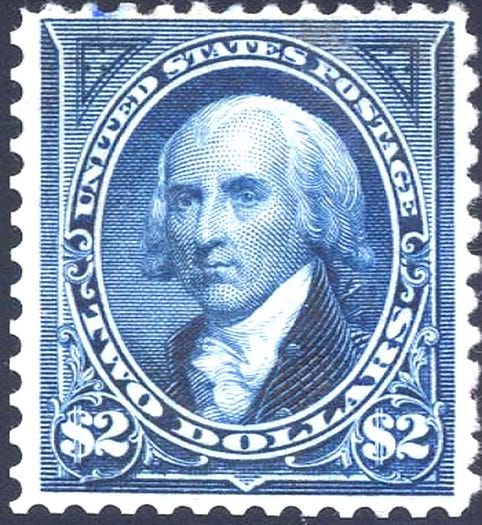
James Madison

Of all the enemies of true liberty, war is, perhaps, the most to be dreaded, because it comprises and develops the germ of every other. War is the parent of armies; from these proceed debt and taxes; and armies, and debts, and taxes are the known instruments for bringing the many under the domination of the few. In war, too, the discretionary power of the Executive is extended; its influence in dealing out offices, honors and emoluments is multiplied; and all the means of seducing the minds, are added to those of subduing the force, of the people. The same malignant aspect in republicanism may be traced in the inequality of fortunes, and the opportunities of fraud, growing out of a state of war, and in the degeneracy of manner and of morals, engendered in both. No nation can preserve its freedom in the midst of continual warfare …

*****

If you’re concerned about authoritarianism, if you’re concerned about maintaining and strengthening freedom, if you’re concerned about combatting corruption and waste, if you’re concerned about America’s huge deficits, stopping war should be your number one concern.

War is a terrible thing, and a state of war enables all kinds of butchery. Just ask the indigenous peoples of America, or the peoples of Palestine today. Even genocide can be disguised as a wartime exigency, a wartime necessity. How many times throughout history has the declaration, “We’re at war!” been used to justify the most heinous crimes against humanity? Even the Nazis hid behind wartime exigency to justify the mass euthanasia of the old, the mentally ill, and other forms of “life unworthy of life” as part of the T4 program (which anticipated the Holocaust).

The true revival of America will begin when this country declares itself to be at peace with the world. Until then, precipitous decline will continue for as long as our government remains at (and continues to celebrate) war.
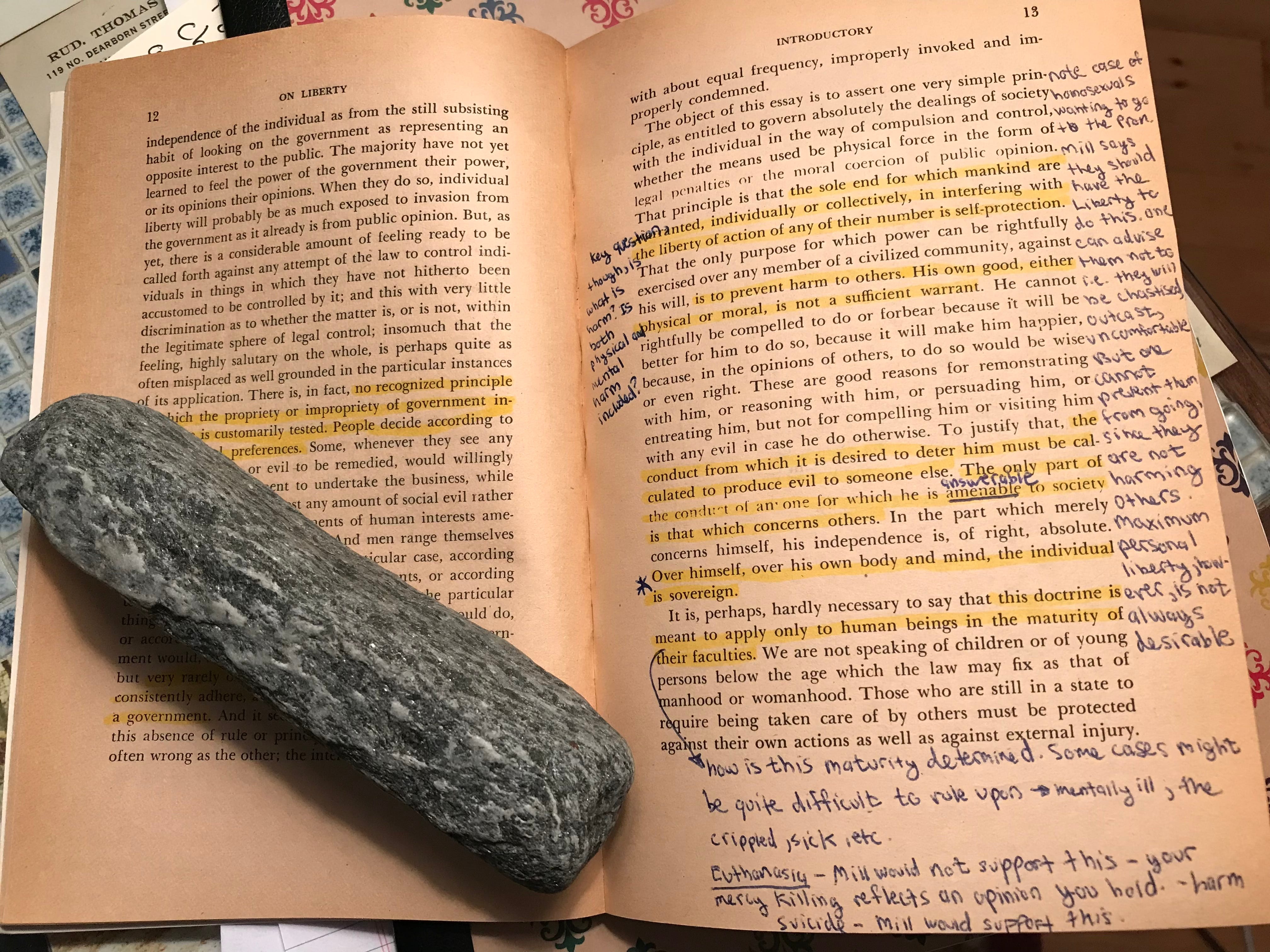
Reading John Stuart Mill’s “On Liberty”

W.J. Astore

And reflecting on notes I made in the margins forty years ago

In college, I majored in mechanical engineering but also took courses in U.S. history and philosophy. I kept most of my college textbooks for a couple of decades, books on statics, dynamics, strength of materials, fluid mechanics and dynamics, thermodynamics, heat transfer, vibrations, along with calculus, physics, chemistry, and the like. But there came a time when these books seemed not only obsolete but a burden of sorts, so I brought them to various used bookstores for trade.

One book I didn’t trade in was a slim volume: John Stuart Mill’s “On Liberty.” It cost me the princely sum of $5.75 in 1983, and I read it for a course in political philosophy. The theme of liberty seemed timeless to me, always pertinent and worth pondering, so I kept the book.

Yesterday, I was shifting some books around and spied my copy among my small collection on philosophy. I opened it and came across a long passage I wrote in the margins back when I first read it in college in 1983. This “marginalia” struck me as a somewhat interesting window into America in 1983 and what I was thinking about as I tried to apply Mill’s insights to American culture.

My college copy of Mill’s “On Liberty” with my marginalia

My marginal comment came as Mill discussed liberty and when people are warranted “in interfering with the liberty of action of any of their number.” Self-protection, Mill wrote, was the only purpose sufficiently compelling here to exercise power to abridge liberty. Preventing harm. It’s insufficient and wrong, Mill added, to act to abridge someone’s liberty because you think it would be better for them, wiser for them, as well as being better for society at large. If the person isn’t harming others, if their actions aren’t “calculated to produce evil to someone else,” those actions shouldn’t be interfered with.

Now, here’s the example that popped into my head back in 1983, which I wrote in the margin:

Note [the] case of homosexuals wanting to go to the prom. Mill says they should have the liberty to do this. One can advise them not to [go], i.e. they will be chastised, outcast, uncomfortable. But one cannot prevent them from going, since they are not harming others.

Back in 1983, before LGBTQ+, in the era of the Reagan revolution in which real men didn’t eat quiche, the idea of homosexuals taking same-sex (or non-binary) dates to the high school prom was more than controversial. It must have been “in the news” for that example to have popped into my head.

It’s interesting how times have changed in forty years. Personal liberty for the LGBTQ+ communities is, I think, far less restricted by the “tyranny of the majority” than it used to be. We have Pride month, Pride celebrations, rainbow flags, and the like. I assume it’s now unremarkable when LGBTQ+ members attend proms with same-sex (or non-binary) dates. And that reflects greater diversity and tolerance within our society along with more liberty, which John Stuart Mill would applaud.

Mill’s message is a good one. We should strive as a society and culture to maximize personal liberty. We should be very careful indeed in exercising power to abridge liberty, especially in the cause of “helping” the other person. As Mill writes, quite powerfully, “Over himself, over his own body and mind, the individual is sovereign.”

Which, to put it in non-gendered language: Over themselves, over their own bodies and minds, individuals are sovereign.

Sometimes, old college textbooks are worth keeping around.

Readers, is there an old high school or college textbook you’ve never parted with, and why?

The New American Motto: Choose Death!

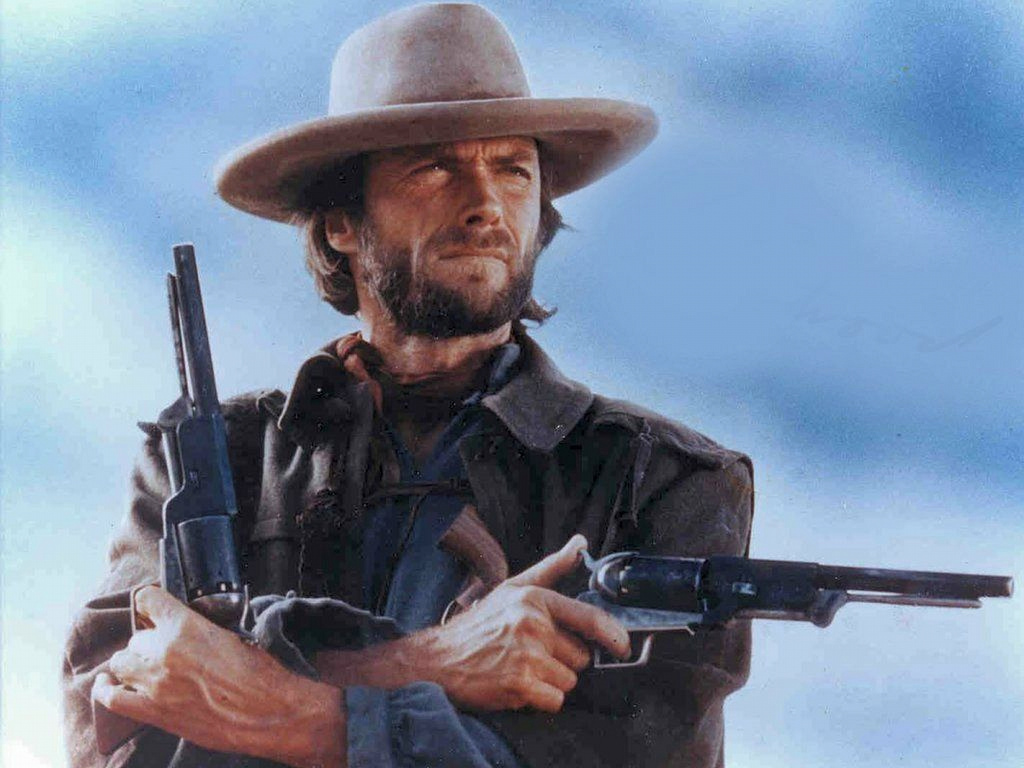
-Clint-Eastwood-clint-eastwood-24780712-1024-768
Clint Eastwood as the Outlaw Josey Wales

W.J. Astore

As some Americans party hearty this Memorial Day weekend, I just happened to catch this snippet via The Washington Post:

Gov. Asa Hutchinson (R) [of Arkansas] said a recent high school swim party contributed to the state’s “second peak” of infections but still encouraged residents to venture out. “We take the virus very seriously, the governor told Fox News. “It’s a risk, it causes death, but you can’t cloister yourself at home, that is just contrary to the American spirit.”

Don’t you love the false choice?  Apparently, the only two choices available to Americans are 1) Cloister yourself at home; 2) Get out there, throw caution to the winds, and celebrate your “American spirit.”

What about a third choice?  Get outside, be responsible with social distancing, wear a mask when necessary, and be prudent while thinking of others and their health and safety.

Again, no one said you had to cloister yourself like a nun, but at least you’re not harming anyone if you do.  Far, far worse is an attitude of total irresponsibility, as the Post reported here from the Ozarks: A nearby bar and grill advertised a pool party for hundreds of people called “Zero Ducks Given.”

Ah, yes, how clever.  Or, as I like to say, “Live free and die.”

But let’s remember what the Outlaw Josey Wales said about this: “Dyin’ ain’t much of a living, boy.”  Just so.

The Language of Politics: Aristotle, Ronald Reagan, and Bernie Sanders

190612-bernie-sanders-al-1454_ed53be4ed4391f456a626d6ab00bd281.fit-2000w
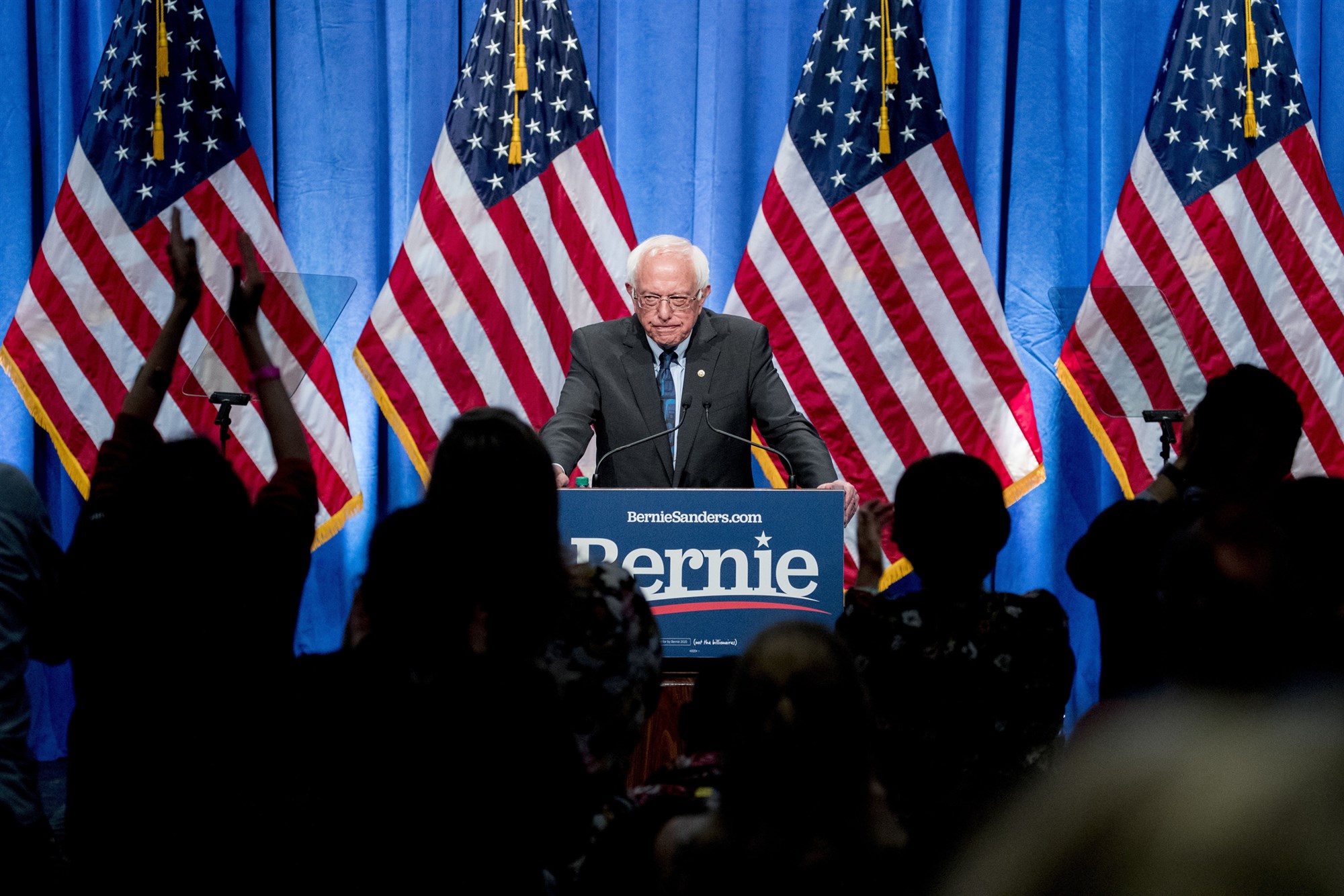
Bernie Sanders at George Washington University: Reshaping America’s political language

M. Davout

In his book, The Politics, Aristotle expressed a famous claim that political science textbooks have been quoting for generations: man is by nature a political animal. Less appreciated has been Aristotle’s follow-up assertion that “man is the only animal that nature has endowed with the gift of speech, [which gift] is intended to set forth the advantageous and disadvantageous, the just and the unjust.”

With these claims Aristotle is reminding us that speech counts for a lot in politics. One need only consider how the language of politics in the post-New Deal, post-Great Society U.S. shifted so that it became a matter of course for millions of modest income Americans to vote for politicians who promised to cut, eliminate, or privatize government programs (e.g., Social Security, Medicare, Medicaid) that have kept so many vulnerable Americans from going under. Foundations such as the American Enterprise Institute, Heritage Foundation, Richard Mellon Scaife Foundation provided financial support for scholars and pundits willing to make the libertarian argument for an every-man-for-himself society for which, to paraphrase Ronald Reagan in his first inaugural address, government is the problem, not the solution.

Funded by wealthy interests and individuals, these foundations and think tanks developed the rhetoric (e.g., “death tax” instead of “estate tax”) and ideas (e.g., cutting taxes increases government revenues) that would be picked up and propagated by conservative politicians across the country. Reagan himself, who began his national political career on the pundit side of conservative politics as a paid spokesman of General Electric giving speeches at GE plants across the country, paid homage to the decades-long conservative struggle to change the political conversation when he said, “The American Enterprise Institute stands at the center of a revolution of ideas of which I too have been a part…”

While it is too early confidently to guess which of the democratic contenders for the presidential nomination will face off against Trump, it is not too early to appreciate how much the speech of a certain senator from Vermont has changed the national conversation. Every time Bernie Sanders appears in public and speaks, whether at a televised debate, on a union picket line, on the stump in Iowa or New Hampshire, or on a college campus, his words serve to enlarge and invigorate the space of political discourse in this country. His relentlessly on-message campaign in 2016 for a $15-dollar-minimum (“living”) wage, Medicare-for-All, tuition-free public colleges and universities, highlighting global warming as an existential threat, a political revolution against a corrupt system, had discernible impacts in local, state and national races in 2018.  Consider as well the leftward policy positioning of several of his fellow candidates for the 2020 nomination; their language and positions often echo those of Sanders.

And while it is also too early to tell whether his recent speech at George Washington University successfully immunized the word, socialism, from the taboo status it has labored under in American political culture since at least the post-World War One Red Scare, Bernie Sanders’ evocation of FDR’s “Economic Bill of Rights” and his enlargement of the notion of being free to encompass having adequate health insurance, for example, or having access to a college education without sinking into paralyzing debt continues his crucial efforts to change the language of U.S. politics.

In helping to reshape the language of American politics, Bernie Sanders may go down in U.S. history as the presidential candidate who did not need to win to get his most important work done.

M. Davout, a professor of political science, teaches in the American South.

Frederick Douglass on Patriotism and Taking A Knee

taking a knee
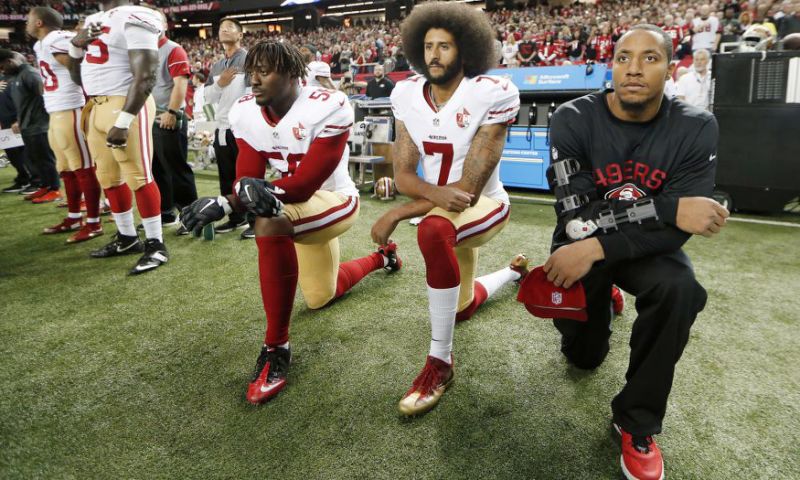
Colin Kaepernick (#7) takes a knee

M. Davout

A week after Super Bowl Sunday, I was reading Frederick Douglass’s “Fourth of July Address,” given by the intrepid abolitionist and eminent public intellectual on July 5, 1852 to several hundred spectators in Rochester, New York. It struck me then how contemporary Douglass’s antebellum insights into the nature of patriotism in America seemed, especially in the wake of an NFL season steeped in controversy over football players (mostly African-American) taking a knee during the national anthem.  Their symbolic protest, dismissed by some, notably including a tweeting president, as unpatriotic, was intended to highlight how police encounters with people of color in this country all too often and disproportionately end in unjustified uses of deadly force.

800px-Frederick_Douglass_by_Samuel_J_Miller,_1847-52
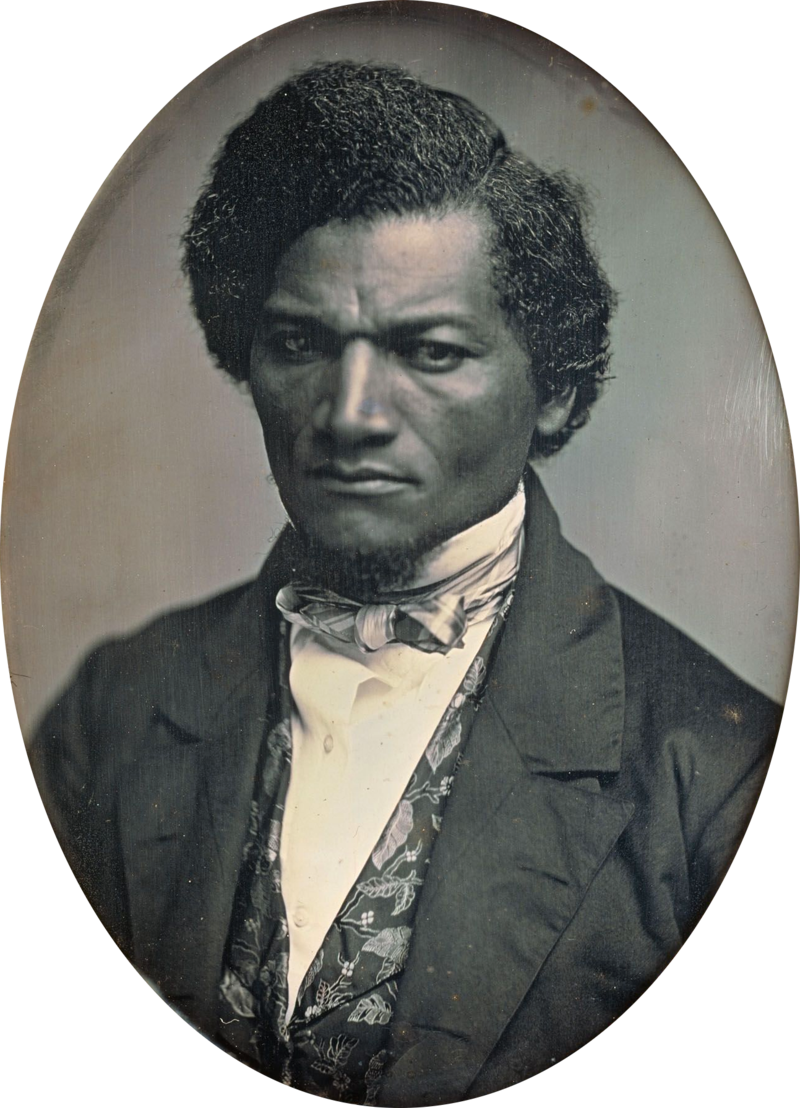
Frederick Douglass near the time of the Rochester Speech, given on the 5th of July 1852

At the time of his Fourth of July Address, Douglass was about fifteen years removed from a state of enslavement he managed, against steep odds, to escape and had become an orator of note in abolitionist circles. Attesting to a sense of trepidation in accepting an invitation to speak before such a large audience on their august day of national celebration, Douglass praised the generation of 1776 (“your fathers,” he calls them) for “lov[ing] their country better than their own private interests” and for their “solid manhood” in “preferr[ing] revolution to peaceful submission to bondage.”

Douglass then reminded his audience that, while it is easy in present times to celebrate the founders for resisting British oppression, “to pronounce against England, and in favor of the cause of the colonies” in the 1770s meant being pilloried and browbeaten as “plotters of mischief, agitators and rebels, dangerous men.”  Moving beyond this critique of the easy and self-congratulatory patriotism of his contemporaries, Douglass raised the prospect that the founders’ great deeds might even be evoked by men of tyrannical intent: “The cause of liberty may be stabbed by the men who glory in the deeds of your fathers.”

Douglass went on to warn his listeners, and free citizens of the American republic generally, against shirking their own responsibility for carrying on the emancipatory tradition celebrated each Fourth of July–“You have no right to wear out and waste the hard-earned fame of your fathers to cover your indolence.”

While there is much more to Douglass’s powerful address, his opening discourse on the patriotic meaning of the Fourth of July provides a way of dousing the “fire and fury” that has been generated by the right-wing media around the symbolic protest started by Colin Kaepernick in 2016 and seeing the significance of that protest with a quiet clarity.

Douglass’s Fourth of July Address warns against the self-serving belief that routinized, programmed patriotic gesture is equivalent to a true love of liberty.  He daringly calls out those who would abuse patriotic gesture in order to control others. His words remind us that the struggle for freedom is always a work in progress and that it is too easy to celebrate its provisional achievement after the hard and risk-laden work is done by others.

Douglass’s speech is part of a tradition of exposing empty patriotic gesture and challenging citizens to live up to the emancipatory demands of true patriotism, a tradition which Colin Kaepernick and his emulators can be seen as stalwartly embracing.  His speech serves as a powerful rejoinder to those who would, like Donald J. Trump, attempt to shame NFL player-protesters into anthem-standing conformity with transparently cynical references to the sacrifices of US veterans and members of the armed forces.

M. Davout (pseudonym) is a professor of political science who teaches in the Deep South.

What Is True National Security?

general-zod-kneel
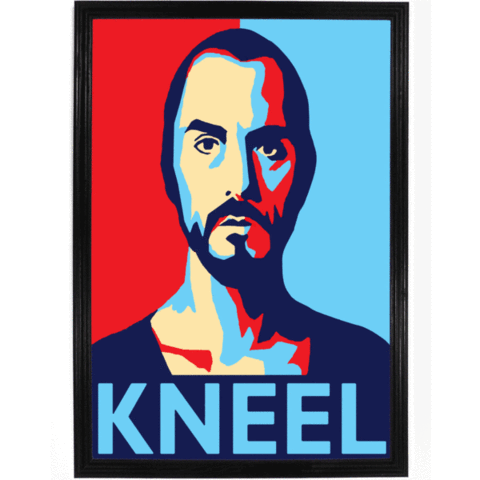
He promises safety and security.  You just have to kneel.

W.J. Astore

What is true national security?  Recent answers to this question focus on the U.S. military, Homeland Security, various intelligence agencies, and the like.  The “threat” is usually defined as foreign terrorists, primarily of the Islamist variety; marauding immigrants, mainly of the Mexican variety; and cyber hackers, often of the Russian variety.  To “secure” the homeland, to make us “safe,” the U.S. government spends in the neighborhood of $750 billion, each and every year, on the Department of Defense, Homeland Security, and intelligence agencies such as the CIA and NSA (and there are roughly 15 more agencies after those two goliaths).

But what makes people truly secure?  How about a living wage, decent health care, and quality education?  Affordable housing?  Some time off to decompress, to pursue one’s hobbies, to connect with family and friends, to continue to grow as a human being?  Water without lead, air without toxins, land without poisons?

These thoughts came to me as I read the usual anodyne statement put out by Lt. Gen. H.R. McMaster, nominated as President Trump’s new National Security Adviser.  “The safety of the American people and the security of the American homeland are our top priorities,” McMaster said in his statement.

I agree that safety and security are important, but I wouldn’t place them as America’s top priorities, even in the realm of national defense.  Our top priority is supporting and defending the U.S. Constitution, including all those rights and freedoms that are often threatened in nervous and excitable times.  Institutions like the press, freedoms like the right to assemble and protest, the right to individual privacy, and the like.

When the powerful threaten those freedoms, as President Trump is doing by denouncing the press as the enemy of the people, that very act is a bigger threat to national security than ISIS or illegal immigrants or Russian hackers or what-have-you.

Security is not just about weapons and warriors and killing terrorists and other “bad hombres,” and safety is not just about guarding your money and property or even your person from physical harm.  Safety and security draw their strength from our Constitution, our communities, and our societal institutions, not only those that catch and punish criminals, but those that enlighten us, those that make us better, those that enrich our souls.

In the USA, we have a very narrow and negative definition of safety and security.  It’s a definition that’s been increasingly militarized, much like our government, over the last few decades.

We’d be wise to broaden and deepen our view of what security and safety really mean; we’d be especially wise not to allow leaders like Donald Trump to define them for us.  In their minds, security and safety mean doing what you’re told while shutting up and paying your taxes.

Kneeling before General Zod (to cite Superman for a moment) or indeed any other leader is not what I call safety and security.

Update: Just after I wrote this, I saw these two headlines from today: “Trump on deportations: ‘It’s a military operation,'” and “Trump adviser Bannon assails media at CPAC: Of media coverage of Trump, Steve Bannon said: ‘It’s not only not going to get better — it’s going to get worse every day… they’re corporatist, globalist media.'”

There you have it: militarization (at least of rhetoric) and scapegoating of the media before the fact.  Judge Trump, Bannon, and Co. by their deeds, but also by their words.

Update 2: Last night, a PBS report noted that the USA, with less than 5% of the world’s population, accounts for 80% of opioid prescriptions.  The overuse of powerful and addictive painkillers points to serious problems in national morale.  Even as many Americans have poor access to health care or overpay for it, America itself is awash in prescription drugs, many of them either highly expensive or highly addictive, or both. This reliance on prescription drugs is a sign of a complex communal malaise, yet the government seems most focused on policing the use of marijuana, which is now legal in many states.

The USA No Longer Sees Freedom and Liberty as Core Strengths

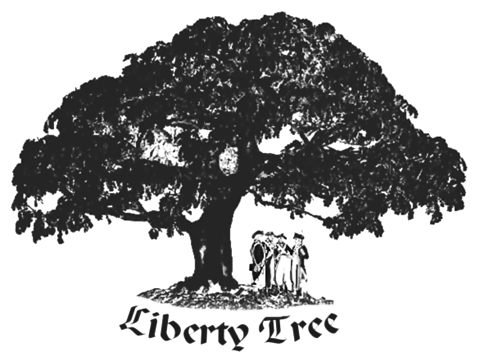
liberty-tree1
Why are we so intent on chopping it down?

W.J. Astore

In the crusade against Communism, otherwise known as the Cold War, the U.S. saw “freedom” as its core strength.  Our liberties were contrasted with the repression of our chief rival, the USSR.  We drew strength from the idea that our system of government, which empowered people whose individualism was guided by ethics based on shared values, would ultimately prevail over godless centralism and state-enforced conformity.  An important sign of this was our belief in citizen-soldiers rather than warriors, and a military controlled by democratically-elected civilians rather than by dictators and strong men.

Of course, U.S. foreign policy during the Cold War could be amoral or immoral, and ethics were often shunted aside in the name of Realpolitik.  Even so, morality was nevertheless treated as important, and so too were ethics.  They weren’t dismissed out of hand.

Fast forward to today.  We no longer see “freedom” as a core U.S. strength.  Instead, too many of us see freedom as a weakness.  In the name of defeating radical Islamic terrorism, we’ve become more repressive, even within the USA itself.  Obedience and conformity are embraced instead of individualism and liberty.  In place of citizen-soldiers, professional warriors are now celebrated and the military is given the lion’s share of federal resources without debate.  Trump, a CEO rather than a statesman, exacerbates this trend as he surrounds himself with generals while promising to obliterate enemies and to revive torture.

In short, we’ve increasingly come to see a core national strength (liberty, individualism, openness to others) as a weakness.  Thus, America’s new crusades no longer have the ethical underpinnings (however fragile they often proved) of the Cold War.  Yes, the Cold War was often unethical, but as Tom Engelhardt notes at TomDispatch.com today, the dirty work was largely covert, i.e. we were in some sense embarrassed by it.  Contrast this to today, where the new ethos is that America needs to go hard, to embrace the dark side, to torture and kill, all done more or less openly and proudly.

Along with this open and proud embrace of the dark side, America has come increasingly to reject science.  During the Cold War, science and democracy advanced together.  Indeed, the superior record of American science vis-à-vis that of the Soviet Union was considered proof of the strength and value of democracy.  Today, that is no longer the case in America.  Science is increasingly questioned; evidence is dismissed as if it’s irrelevant.  “Inconvenient truths” are no longer recognized as inconvenient — they’re simply rejected as untrue.  Consider the astonishing fact that we have a president-elect who’s suggested climate change is a hoax perpetrated by China.

Yesterday, I saw the following comment online, a comment that summed up the new American ethos: “Evidence and facts are for losers.”  After all, President-elect Trump promised America we’d win again.  Let’s not let facts get in the way of “victory.”

That’s what a close-minded crusader says.  That the truth doesn’t matter.  All that matters is belief and faith.  Obey or suffer the consequences.

Where liberty is eroded and scientific evidence is denied, you don’t have democracy.  You have something meaner.  And dumber.  Something like autocracy, kleptocracy, idiocracy.  And tyranny.

What Will “Freedom” Mean in a Trump Administration?

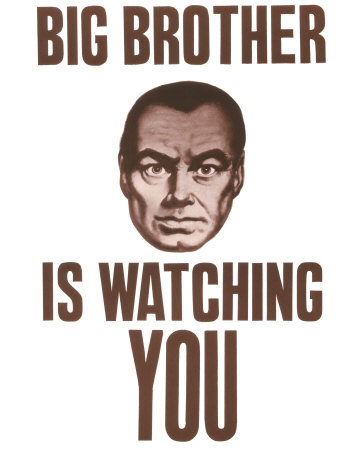
Big Brother
Remember the 1st and 4th Amendments?

W.J. Astore

What will freedom mean in a Trump administration?  During his campaign, why did Trump harp on the Second Amendment but none of the others?  How did our country come to define freedom as buying lots of guns and ammo without restrictions, or flying objectionable symbols such as Confederate battle flags?  What kind of “freedom” is the freedom to spend lots of money on guns? What kind of “speech” is flying a symbol that is highly offensive and hateful to many Americans?

The “freedom” to fly a flag associated with slavery, rebellion, oppression, and racism doesn’t seem to me to be much of a “freedom.” The same is true of the “freedom” to spend lots of money on guns and ammo. What is so “free” about that?

The “freedom” of the average Joe has come to be defined as the right to carry guns or the right to fly racist flags. But what about the right to a living wage, the right to privacy, the right to good health care, the right to a decent education, the right to clean water and fresh air, the right to have a real say in the political process?  These rights are being increasingly abridged, yet so many Americans see no infringement to their “freedom” here.

Surely one of the great triumphs of the power elite has been the redefinition of “freedom” such that the freedoms that are allowed, like buying lots of guns, make no impact on the elite’s ability to rule and to exploit.

A couple of sobering facts.  During his campaign, Trump railed against the press, suggesting that he’d work to change libel laws so that he could sue and punish the press for writing critical stories about him.  Also, Trump has suggested some kind of national registry for Muslims, and members of his staff have suggested internment camps for unreliable elements, citing the internment of Japanese-Americans during World War II as a laudable precedent.

What the hell?

As the Trump administration takes shape, apparently with men like Jeff Sessions as Attorney General and retired General Michael Flynn as National Security Advisor, Americans would do well to read and re-read the Bill of Rights, all of them, not just rights like the Second Amendment.  For what good is it to be able to buy lots of guns if you need to worry about your religion, your right to privacy, your ability to organize and protest, and your right to a press that is untrammeled by the government?

Alarmist?  Consider the following facts about retired General Flynn, according to FP: Foreign Policy:

Earlier this year, Flynn Tweeted that “fear of Muslims is RATIONAL,” and just last month offered his support for a prominent Alt-Right writer and activist. In his book Field of Fight released earlier this year, Flynn wrote, “I’m totally convinced that, without a proper sense of urgency, we will be eventually defeated, dominated, and very likely destroyed” by Islamic militants, FP’s Paul McLeary and Dan De Luce noted in a story about the book.

Sitting in your walled bunker, surrounded by guns as well as the stars and bars and “Don’t Tread on Me” flags, is not much of a “freedom” if the government is illegally watching you, or getting ready to intern you in a camp because you worship God in the name of Allah instead of Yahweh or Jehovah, or getting ready to deport you because not all of your papers are perfectly in order.

First they came for undocumented immigrants, and I did not speak out, for I was not undocumented.  Then they came for the Muslims, and I did not speak out, for I was not Muslim.  Then they came for the protesters, and I did not speak out, for I was not a protester.  Then they came for me–and there was no one left to speak for me.

“American Fascism”: Accurate or Misleading?

Has an Iron Heel already come to the USA?
Is it already here in the USA?

recent article by John Pilger in the British Guardian speaks of a silent military coup that has effectively gained control of American policymaking. It features the following alarmist passage:

In 2008, while his liberal devotees dried their eyes, Obama accepted the entire Pentagon of his predecessor, George Bush: its wars and war crimes. As the constitution is replaced by an emerging police state, those who destroyed Iraq with shock and awe, piled up the rubble in Afghanistan and reduced Libya to a Hobbesian nightmare, are ascendant across the US administration … The historian Norman Pollack calls this “liberal fascism”: “For goose-steppers substitute the seemingly more innocuous militarisation of the total culture. And for the bombastic leader, we have the reformer manqué, blithely at work, planning and executing assassination, smiling all the while.” Every Tuesday the “humanitarian” Obama personally oversees a worldwide terror network of drones that “bugsplat” people, their rescuers and mourners. In the west’s comfort zones, the first black leader of the land of slavery still feels good, as if his very existence represents a social advance, regardless of his trail of blood. This obeisance to a symbol has all but destroyed the US anti-war movement — Obama’s singular achievement.

Strong words. Is America the land of “liberal fascism”?

Certainly, since the attacks of 9/11 the U.S. has become more authoritarian, more militarized, and less free (witness the Patriot Act, NSA spying, and the assassination of American citizens overseas by drones). The U.S. Supreme Court has empowered corporations and the government at the expense of individual citizens. Powerful banks and corporations reap the benefits of American productivity and of special tax breaks and incentives available only to them, even as average American citizens struggle desperately to keep their heads above water.

But to describe this as “fascism” is misleading. It’s also debilitating and demoralizing.

It’s misleading because fascism has a specific historical meaning. The best definition I’ve seen is from the historian Robert Paxton’s The Anatomy of Fascism

For Paxton, fascism is:

A form of political behavior marked by obsessive preoccupation with community decline, humiliation or victimhood and by compensatory cults of unity, energy and purity, in which a mass-based party of committed nationalist militants, working in uneasy but effective collaboration with traditional elites, abandons democratic liberties and pursues with redemptive violence and without ethical or legal restraints goals of internal cleansing and external expansion.

In formulating this definition, Paxton had Hitler’s Germany and Mussolini’s Italy in mind, but his definition is an excellent starting point in thinking about fascism.

What about it? Is the U.S. fascistic? Plainly, no. We don’t have a messiah-like dictator. Our justice system still works, however imperfectly. Our votes still count, even if our political speech often gets drowned out by moneyed interests.

It’s true that, in the name of “support our troops,” we grant the Pentagon brass and defense contractors too much leeway, and allow our Department of Defense to seek “global power” without reflecting that such ambitions are the stuff of totalitarian states. But let’s also recall that our troops (as well as our representatives) still swear an oath to the Constitution, not to a dictator or party.

It’s also true that, as a society, we are too violent, too attracted to violence (think of our TV/Cable shows, our video games, and our sports), and too willing to relinquish individual liberties in the name of protecting us from that violence and the fear generated by it. Yet Americans are also increasingly weary and skeptical of the use of military force, as recent events involving Syria have shown.

The point is not to despair, not to surrender to the demoralizing idea that American politics is an exercise in liberal fascism. No — the point is to exercise our rights, because that is the best way to retain them.

Authority always wants more authority. But as political actors, we deny by our actions the very idea of fascism. For in fascist societies, people are merely subjects, merely tools, in the service of the state.

Don’t be a tool. Be an actor. Speak up. Get involved. Work to make your imperfect republic a little more representative of the better angels of our nature. Because it’ll be your deeds that keep our country from falling prey to fear and violence and the authoritarian mindset they breed.

Astore writes regularly for TomDispatch.com and can be reached at wjastore@gmail.com.  This article is also at Huffington Post.

Why We Celebrate July 4th

Long may it wave as a symbol of freedom.  Photo in Maine, 2006, by the author
Long may it wave as a symbol of freedom. Photo in Maine, 2006, by the author

We celebrate July 4th with a lot of hoopla.  Flag-waving parades.  Backyard barbecues with beer and laughter.  Fireworks.  Good times.

We celebrate the creation of a new country, a new ideal, in 1776.  It was a country that rejected hereditary aristocracies, that called for equal rights for (most) men, that endeavored to create a new and better order for the ages.

Naturally, in an effort this ambitious, involving so many men with differing ideas and ideals, the end result was flawed.  Native Americans were ruthlessly killed or shunted aside.  Slavery remained the original sin of the young republic, a stain partially erased by the Civil War but one whose legacy still dims the brightness of America’s lamp of liberty.

Today the USA remains decidedly imperfect.  That is why we must continue to strive to form a more perfect union, one which protects the rights of the weak against the depredations of the strong.  In this sense the revolution is never over.

As we reflect on the meaning of July 4th, our day of independence, we should recognize that independence is not a day simply to be celebrated.  Rather, it is a legacy that others have fought and died for, one we must continue to earn — and one we must continue to cherish and protect.

Just as the founders of this country fought against the tyrants of the 18th century, we must be on guard against the tyrants of the 21st century.  They may not be kings named George sending their mercenaries to quarter among and fight against us.  Today’s tyrants–today’s power-seekers and liberty-limiters–may even claim to be super-patriots who are protecting us from harm, even as they work to limit our rights while feasting on the plenty that still defines America.

But we know better.  We know what is best about America.  And on July 4th, we celebrate it.

America’s thirst for freedom — may it never be quenched.  May it always endure.

W.J. Astore