Why Did Eisenhower Fail in 1961?

W.J. Astore

Perhaps America, Home of the Brave, Simply Fears Too Much

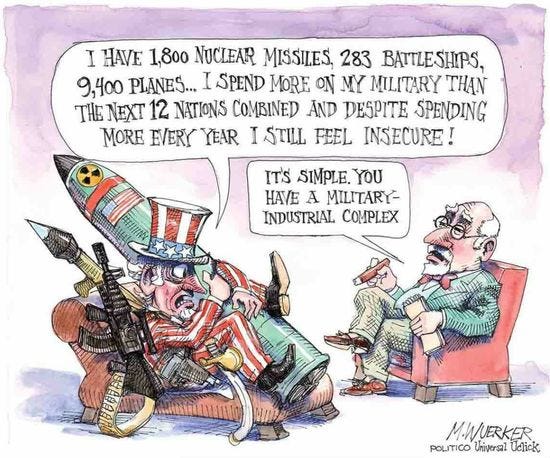
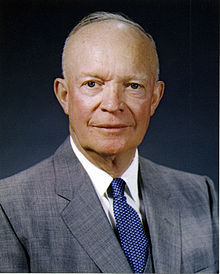
In 1961, in his famous farewell address, President Dwight D. Eisenhower warned America about the military-industrial complex. He said it potentially posed a grave threat to liberty and democracy, noting that only an alert and knowledgable citizenry could keep its “disastrous rise” in check. In an earlier draft of his speech, Ike had included Congress as part of the complex, but he removed it from the final draft in the interest of parting with Congress on good terms.

Ike, of course, knew the military and loved it and had worked with industry as well. He knew of what he spoke. Every year when he was president, the military wanted more. So did the weapons manufacturers. And Congress was willing to give them more in the name of jobs and for that nebulous cause of national security. Ike did a decent job as president containing the ambitions of the military and the greed of America’s merchants of death. His speech in 1961 was his parting shot across the bow of the complex and a warning that’s largely been forgotten by Americans then and now. 

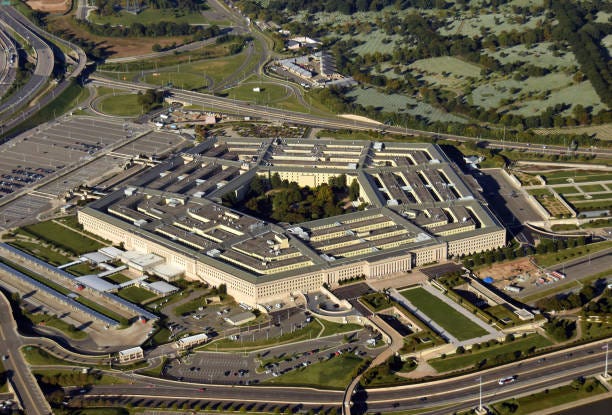
Ike, I think, would be dismayed but not shocked at how the military-industrial complex or MIC has expanded its “misplaced” power over the last sixty years. The MIC is now the MICIMATT, or the military industrial congressional intelligence media academia think tank complex, employing millions of Americans in pursuit of full-spectrum dominance across the globe. In fact, America has proudly become a warrior nation (the citizen-soldier ideal is long dead) with 750 bases around the world and military budgets that routinely touch or exceed a trillion dollars. Permanent war is the new normal in America, justified as always in terms of making the world safe for democracy.

In the spirit of Ike, we should recognize the military or industry or Congress alone is not the enemy. It’s the conjunction of an immense military establishment with powerful industrial interests, and the enabling of the same by Congress, that needs to be addressed and reformed.  

Yet, given its enormity and its power, the complex is remarkably resistant to change, let alone to being shrunk and weakened. It will take enormous national will, working against powerful propaganda forces that will paint every Pentagon budget reduction, large or small, as unsafe if not un-American.

So why did Ike fail?  Or why did we fail Ike?  He warned us in 1961.  Why have we as “an alert and knowledgable citizenry” failed to guard against the acquisition of “disastrous” power by the MIC?

For the truth is America has become an Orwellian country where war is peace.  War (or preparations for war) has been continuous since Ike’s speech.  Our government wages war in the alleged cause of peace.  It acts imperially in the name of democracy, and we collectively accept or tolerate the tale that Big Brother tells us.

Short of a revolution, what America needs is radical honesty. An awakening.  If we truly want as a people to pursue peace, we can’t do that by constantly waging war.  If we truly favor democracy, we can’t pursue one through militarism and imperialism.

What kind of nation — what kind of people — do we want to be? Judging by our federal discretionary budget and by the general affection for all things military in our nation, perhaps we want to be a bellicose empire. I’m not saying all Americans want this; even those who do probably wouldn’t state it so baldly. But maybe this is just who we are, a nation and a people convinced that it’s always at risk, and thus one that’s forever fearful, hyper-vigilant, coiled to strike and ready to rumble.

“Quite an experience to live in fear, isn’t it? That’s what it is to be a slave.” So says Roy Batty, the doomed replicant in Blade Runner, played so brilliantly by Rutger Hauer. There’s a lesson here for all of us. The first step to heeding Ike’s warning, as well as his marching orders to us, is to control our collective fear. To stop listening to threat inflation about China or Russia or Iran or terrorism or whatever. Fear is the mind-killer, Frank Herbert noted in Dune, thus to think freely requires us to master that which kills thought. Fear, Master Po said in Kung Fu, is the only darkness.

We will only begin to downsize the military-industrial complex and end our pursuit of militarism when we acknowledge our fear, stop being slaves to it, and head away from the darkness.

America is the home of the brave, so we say. Isn’t it time we acted like it?

The Military-Industrial Complex Wins Again!

W.J. Astore

Election 2022 Truly Had a Clear Winner

With Veterans Day in mind, I was asked as a retired U.S. military officer for a comment on the 2022 election results, which produced this:

When both political parties pose as pro-military, when both are pro-war, when both are enablers of record-high Pentagon spending, when both act as if a new cold war with China and Russia is inevitable, do election results even matter?  No matter which party claims victory, the true victor remains the military-industrial-Congressional complex.

We have a winner, America!

To paraphrase Joe Biden, nothing fundamentally changed in the 2022 elections when it comes to colossal military spending, incessant wars and preparations for the same, and non-stop imperialism around the globe. There is no new vision for lower Pentagon spending, for fewer wars and weapons exports, and for a smaller, less domineering, imperial mission.

As General and President Dwight D. Eisenhower warned us in 1961, the military-industrial-Congressional complex represents a disastrous rise of misplaced power that is profoundly anti-democratic. Collectively, we’ve failed to heed Ike’s warning. The result has been one unnecessary and disastrous war after another, even as democracy in America withers. The Vietnam War—disaster. The Iraq War—disaster. The Afghan War—disaster. The War on Terror—disaster. Even the war America ostensibly won, the Cold War against the USSR, is now apparently about to be refought.

I suppose we need to refight the Cold War we “won” thirty years ago so we can lose that one too.

With the Democrats doing somewhat better than expected at the polls, war business should continue to grow in Washington, D.C. Most political commentators seem to think this is a good thing, when they think about it at all. Few seem to recall Ike’s warning that a military establishment of vast proportions is antithetical to democracy.

In this election cycle, I’ve heard nothing about peace. I’ve heard nothing about strengthening and preserving democracy by downsizing our military and imperial presence around the globe. Not from Democrats and Republicans.

So the winner in 2022 is the same winner as always: the military-industrial-Congressional complex. It’s a sad result to contemplate with Veterans Day looming.

The Betrayal of Dwight D. Eisenhower by His Own Memorial in Washington DC

Eisenhower knew war and hated it. He spoke of spending on wars and weapons as humanity crucifying itself on a cross of iron. He warned America in the strongest terms of the perils of the “military-industrial complex.” The Eisenhower Memorial in DC fails to capture his most powerful and memorable sentiments against war

W.J. Astore

Dwight D. Eisenhower’s most famous address was his last one to the nation in January of 1961, when he warned America of what he termed “the military-industrial complex.” It was a warning as powerful as it was prescient, and though Ike achieved much in life, surely this speech and the meaning of his warning deserve to be captured in the boldest terms in the memorial to Ike in Washington, DC.

Sadly, it isn’t. Though I haven’t yet seen the monument in person, images of it are available online with audio commentary. Let’s tackle the audio commentary first. In Part 5, “Leader of the Free World,” the narrator speaks of Ike’s “farewell address,” not his address on the military-industrial complex, and that it included a “caution” (not a “warning”) to the nation. Ike is allowed a few sentences on the military-industrial complex, but the narrator provides no additional context or commentary. The narrator then ends by saying this was Ike’s goodbye speech; again, no mention of how powerful Ike’s speech was in its criticism of a force that Ike declared threatened America’s democracy and our personal liberties. And then the kicker: at the end of the narration, we’re told the audio commentary was made possible by “a generous donation” by Boeing!

I burst out in rueful laughter. Of course Ike’s warning about the military-industrial complex was played down; the military-industrial complex funded the audio commentary! I felt like Ralphie in “A Christmas Story” when he discovers his secret magic decoder ring is only useful for decoding crummy commercials that urge him to drink his Ovaltine.

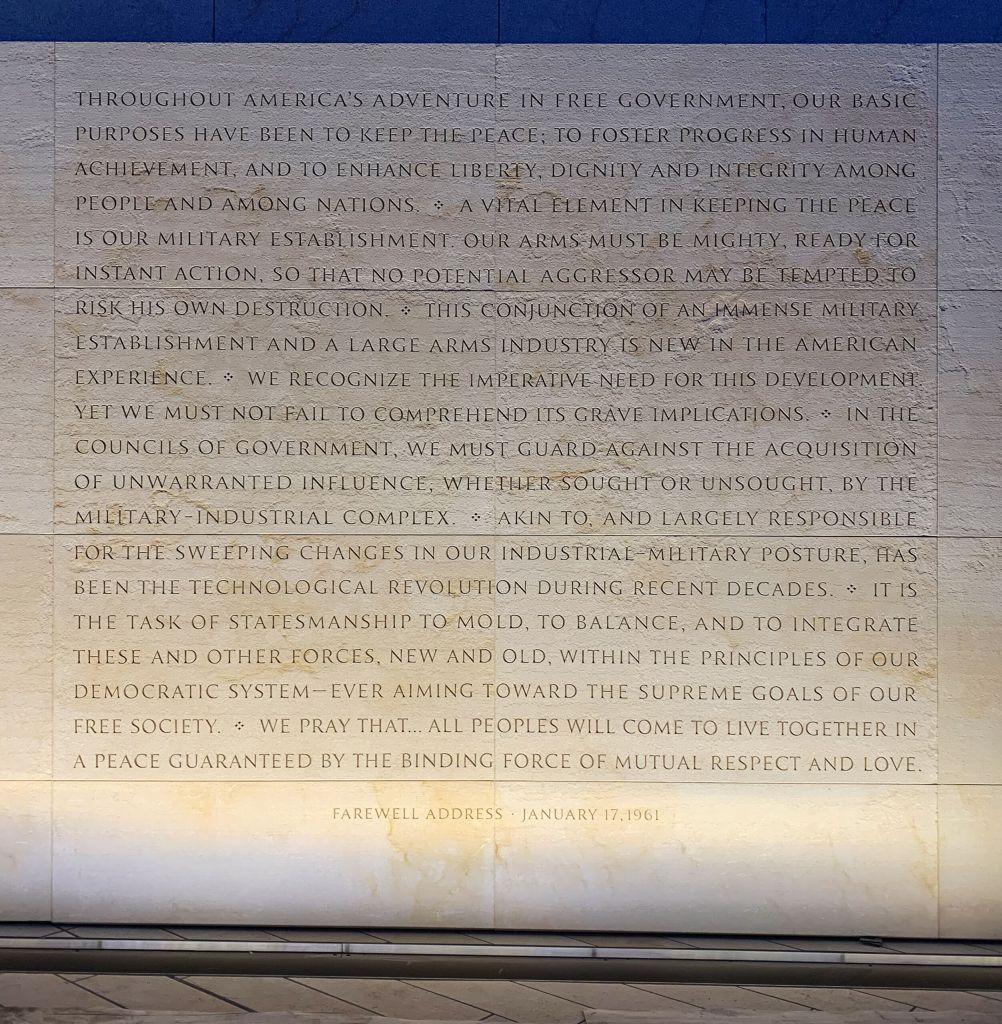
Turning to the memorial inscriptions themselves, here is the one for Ike’s “farewell address”:

Throughout America’s adventure in free government, our basic purposes have been to keep the peace; to foster progress in human achievement, and to enhance liberty, dignity and integrity among people and among nations. A vital element in keeping the peace is our military establishment. Our arms must be mighty, ready for instant action, so that no potential aggressor may be tempted to risk his own destruction. This conjunction of an immense military establishment and a large arms industry is new in the American experience. We recognize the imperative need for this development. Yet we must not fail to comprehend its grave implications. In the councils of government, we must guard against the acquisition of unwarranted influence, whether sought or unsought, by the military-industrial complex. Akin to and largely responsible for the sweeping changes in our industrial-military posture, has been the technological revolution during recent decades. It is the task of statesmanship to mold, to balance, and to integrate these and other forces, new and old, within the principles of our democratic system — ever aiming toward the supreme goals of our free society. We pray that…all peoples will come to live together in a peace guaranteed by the binding force of mutual respect and love.

Farewell Address
January 17, 1961

Notice how Ike’s warning (which I’ve bolded) about the military-industrial complex is buried in the text. Even more critically, the very heart of Ike’s warning is torn out. For here are Ike’s words that followed the warning about a military-industrial complex, and which are omitted on the memorial:

The potential for the disastrous rise of misplaced power exists and will persist.

We must never let the weight of this combination endanger our liberties or democratic processes. We should take nothing for granted. Only an alert and knowledgeable citizenry can compel the proper meshing of the huge industrial and military machinery of defense with our peaceful methods and goals, so that security and liberty may prosper together.

Why weren’t these powerful words of Ike also engraved in stone? Could it be because no one in the DC area, especially the military, its many corporations, and the Congress, wants the American people to come to grips with “the disastrous rise of misplaced power” in America?

Putting this memorial together required corporate funding. Congress was also heavily involved. So too was the military. Is it any wonder that Ike’s warning about the military-industrial-Congressional complex has been watered down to a “caution” and buried in the text of a fond “farewell”?

Remember, Ike implored us to be alert and knowledgeable citizens. How can we be when his speeches are bowdlerized at his own memorial and the audio commentary to the same is funded by Boeing?

It’s easy to lose the thrust of Ike’s powerful warning about the military-industrial complex when it’s buried in the middle of this monument, and when Ike’s strongest words weren’t even included

You truly need to sharpen your focus if you want to catch a glimpse of what truly worried Ike:

Something tells me that Ike, if he were alive today, would be none too happy about this. Ike’s memorial celebrates his boyhood, his service and great victory in World War II, and his presidency, but it fails to capture his finest speeches against war, against wasteful and immoral spending on deadly weaponry, and against a powerful alliance among the military, its weapons makers, and Congress that Ike saw as a fundamental threat to liberty and democracy.

Our monuments betray us, America, in more ways than one.

Military Spending Robs Workers and the Poor

Ike was unafraid of plain and cruel truths

W.J. Astore

Unless you’re working for Raytheon or some other weapons contractor, you’re being robbed whenever our government spends excessively on the military, which is always. $54 billion of your money was stolen from you and sent to Ukraine, with much of it going to Raytheon and similar merchants of death. More than $813 billion will be spent next year on the Pentagon, with roughly half of that being unnecessary for true national defense. Excessive military spending is a form of theft in which workers and the poor are the biggest victim.

My point here isn’t original. President Dwight D. Eisenhower said it nearly 70 years ago in 1953 in his brilliant “Cross of Iron” speech. In Ike’s words:

Every gun that is made, every warship launched, every rocket fired signifies, in the final sense, a theft from those who hunger and are not fed, those who are cold and are not clothed.

This world in arms is not spending money alone. It is spending the sweat of its laborers, the genius of its scientists, the hopes of its children. The cost of one modern heavy bomber is this: a modern brick school in more than 30 cities.  It is two electric power plants, each serving a town of 60,000 population. It is two fine, fully equipped hospitals. It is some fifty miles of concrete pavement. We pay for a single fighter plane with a half million bushels of wheat. We pay for a single destroyer with new homes that could have housed more than 8,000 people.

This is, I repeat, the best way of life to be found on the road the world has been taking. This is not a way of life at all, in any true sense. Under the cloud of threatening war, it is humanity hanging from a cross of iron. These plain and cruel truths define the peril and point the hope that come with this spring of 1953.

Ike, a Republican, a retired five-star general, told it like it was, is, and remains. Excessive military spending isn’t a left-right issue. It isn’t a Democrat-Republican issue. It’s a class issue. It’s a moral issue. Ike knew this and was unafraid to say it.

Ike said we are crucifying ourselves with this militarized way of life. He chose this image deliberately for its Christian meaning and moral power. He spoke openly of “plain and cruel truths.” Ike, a true public servant, wanted to make a better America. He had no fear of the military-industrial-Congressional complex because he knew it so well and could resist its old siren song of perpetual war as being somehow in our national interest. I salute him for his honesty and his wisdom.

What do we need to do? We need to reject militarism, we need to reinvest in America, we need to reanimate our democracy, and we need to restore peace. We need more Americans to run and work on these 4 Rs. America needs a thoroughgoing reformation now or, mark my words, as my dad used to say, we will soon experience something far more disruptive and unpleasant.

War and Weapons Are Strictly Business

W.J. Astore

“Strictly Business”

In “The Godfather,” Michael Corleone, played brilliantly by Al Pacino, says that killing a rival mobster and crooked police captain who conspired to kill his father is nothing personal — it’s strictly business. Something similar can be said of America’s wars and weapons trade today. As retired General Smedley Butler said in the 1930s, U.S. military actions often take the form of gangster capitalism. Want to know what’s really going on? Follow the muscle and the money!

America has “invested” itself in the Russia-Ukraine war, and I use that word deliberately. U.S. weapons makers like Raytheon and Lockheed Martin are making a killing, literally and figuratively, on the ongoing war, whether by sending arms to Ukraine or in the major boost forthcoming to Pentagon spending supported by Democrats and Republicans in Congress. (Who said bipartisanship is dead?) For all the blue-and-yellow flags that America is flying in symbolic solidarity with Ukraine, the true colors of this war, as with most wars, is red for blood and green for money.

Economic sanctions against Russia, meanwhile, are meant to damage the financial wellbeing of that country, possibly leading to instability and even collapse. And who would profit from such a collapse? And who is profiting now from restricting fossil fuel exports from Russia? As war drags on in Ukraine, disaster piles on disaster, and capitalism has a way of profiting from war-driven disasters. Why do you think America’s disastrous Afghan War lasted for two decades?

Curiously, investment-speak in the U.S. military is quite common. Generals and admirals talk of “investing” in new nuclear missiles and immense ships. They further talk of “divesting” in certain weapons that have proven to be disasters in their own way, like the F-22 fighter. What’s with all this “investing” and “divesting” in the U.S. military? One thing is certain: Generals won’t have to change their language as they retire and move through the revolving door to join corporate boards at major weapons contractors.

Today’s generals and politicians never display the honesty of President Dwight Eisenhower, who explained nearly seventy years ago that weapons represent a theft from the people and their needs, not an “investment.” Those who say there’s no business like show business may be right, but Hollywood’s a piker compared to the Pentagon, where there’s truly no business like war business.

Tackling the Military-Industrial Complex

W.J. Astore

Sixty-one years ago, in 1961, President Dwight D. Eisenhower warned America of the threat posed by the military-industrial complex (MIC). To that complex, Ike had rightly added Congress, whose members are generally supportive of immense military spending, especially when it occurs in their district. Americans, in the main, haven’t heeded Ike’s warning, mainly due to government/corporate propaganda, military lobbying and threat inflation, wars and rumors of war, the naked desire for global dominance in the stated cause of keeping the “homeland” safe, and, well, greed.

Ike in 1959

How does “an alert and knowledgeable citizenry” tackle such a beast?  I was part of a discussion this week on strategies to “dismantle” the MIC; more on that in a moment. First, a caveat. When I use the term “military-industrial complex,” I know what I’m referring to and talking about, and so too do my readers. But what about your average American, who perhaps has barely heard of President Eisenhower, let alone his farewell address in 1961?  And what about those who prosper from the MIC, whether they know it or not?  Why should they support calls for “dismantling” a big part of their livelihood?

Random example. I went to the doctor’s office today. The receptionist noted my military background as she told me about her son, whose work on red blood cells is funded by the Department of Defense, and her husband, whose work is connected to Raytheon, a major weapons contractor.  Another example is my previous dental hygienist, whose husband proudly worked on the helmet system for the F-35 jet fighter. So many of our fellow Americans are connected to the MIC; lots of my friends are, especially if they served.  As a retired military officer who writes articles that are generally critical of the MIC, I’m the exception.  Many of my peers are still employed by the MIC in good-paying positions that would be difficult for them to replicate in the private, civilian sector of society.

This is not an argument for how wonderful the MIC is. But reformers need to recognize that significant cuts to MIC funding, desirable as they are, will impact ordinary people first, rather than retired generals and corporate CEOs, who will be just fine no matter what happens.

Whatever your reforming zeal, terminology is vitally important.  To me, talk of “dismantling” the MIC is a non-starter.  Like “defund” the police, it’s doomed to fail because its message is so easily twisted. Recall that for most Americans, the military remains a trusted institution within our society, much more trusted than Congress and the President.  “Support our troops” is almost the new national motto, an adjunct to In God We Trust.  Indeed, Jesus is often envisioned as a warrior-god who’s always on America’s side.

To be persuasive, we shouldn’t say “defund” the Pentagon; “dismantle” also sounds wrong in this moment.  But if we talk of a leaner military, a smarter one, more agile, more cost-effective, more bang for the buck, those phrases will resonate better.  Let’s talk as well of a military focused on national defense, motivated by high ideals, and aligned with liberty, freedom, and democracy.

Look: The MIC has a big advantage over would-be reformers and cost-cutters: the clarity that comes with a common goal, which for the Complex is profit/power.  We live in a capitalist society that values those things. I don’t think we can compete on the money field with the MIC, but we can compete in the realm of ideas and ideals, and the military can be an ally in this, so long as its members remember the ideals of their oaths to the U.S. Constitution.

What do I mean here?  We need to tell Americans their very future is being stolen from them by wanton military spending.  At the same time, their past is being rewritten.  We’re forgetting past American ideals like “right makes might” and the citizen-soldier as a public servant.  Instead, it’s might makes right as enforced by warriors and warfighters.  We are in yet another Orwellian moment where war is peace, surveillance is privacy, and censorship is free speech.

In fighting against this moment, we need to use all tools at our disposal. Somehow, we need to bring people together at a moment when our “leaders” are determined to divide us, distract us, and keep us downtrodden.

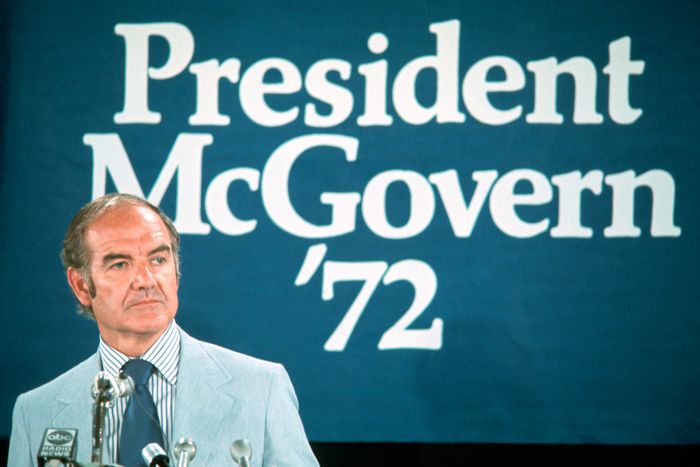
“Come home, America” is a famous speech given fifty years ago by George McGovern. He wanted to cut military/war spending and send rebate checks directly to the American people.  Let’s advocate for that!  Let’s put money back in the pockets of Americans as we make a leaner, smarter, cheaper U.S. military that can pass a financial audit.  (I’d cut all Pentagon funding until it passed an honest and thorough audit.) Most Americans would support major reforms if they were pitched in this way.

At the same time, I’d like to see a revival of the Nye Commission from the 1930s and the “merchants of death” idea.  Whatever else it is, selling weapons is not a way to peace, nor is it life-affirming.  Harry Truman made his mark in Congress during World War II by attacking fraud and waste related to military spending. Again, today’s Pentagon can’t even pass an audit!  We need to show the American people that the Pentagon brass is stealing from them and hiding behind a veil of secrecy that is undemocratic and probably illegal as well. Here, I would love to see Members of Congress act in the spirit of William Proxmire and his “Golden Fleece” awards.  The American people are being fleeced by the MIC, and we should be reminding them of this fact, every single day.

In the 1930s, General Smedley Butler, a Marine veteran who was twice awarded the Medal of Honor, saw how war was a racket, and that to end it, you had to take the profit out of it.  How can America do that?  Can we “nationalize” defense contractors?  Can we make weapons building into a non-profit activity?  Can we reverse Citizens’ United and outlaw weapons lobbying as a form of protected speech (it’s really legalized bribery)?

How about slowing the revolving door between the U.S. military and weapons contractors?  Make it so that retired officers in the grade of major and above must forfeit their pensions if they join a weapons/war firm.  Naturally, no one employed by, and especially on the board of, a defense contractor should ever be approved by Congress as the civilian Secretary of Defense.

Another idea: All retired military officers, CIA-types, etc., who appear on TV and media should be required to reveal their conflicts of interest (if any).  For example, if retired General John Q. Public appears on TV and works for Raytheon, that should be identified in the on-screen chyron, and by the general himself if he has integrity.

It’s high time the Pentagon shares more information with the American people. Secrecy is a huge problem that the MIC hides behind and exploits. Democracy doesn’t work without transparency, which is why the MIC is at pains to hide the truth from us of malfunctioning weaponry and disastrous and murderous wars.

I would add that tackling the MIC is not a liberal issue, it’s not a progressive issue, it’s not a partisan issue: it’s an American issue.  My readers, I’m guessing, are not fans of Fox News or commentators like Tucker Carlson.  But if they’re against war and want to see major reforms to the MIC, recruit them!  Work with them.  They are not the enemy.  Not even the MIC is the enemy.  I was, after all, part of it for 20 years.  The real enemy is war.  The real enemy is spending trillions of dollars on weaponry that could, and just might, destroy us all.  If we can’t set aside our differences and get together to save ourselves and our planet from war’s destructiveness, we’re pretty much doomed, don’t you think?

The MIC is united by profit and power.  Maybe we can find unity in the preservation of our planet and love for the wonderful blessings it has bestowed on us.

Come on people now, smile on your brother everybody get together try to love one another right now.  Right now.  Right now.

Curbing the Military-Industrial Complex

W.J. Astore

The American people have failed Dwight D. Eisenhower.

Sixty years ago, President Eisenhower warned us about the military-industrial complex. He told us it was sapping our resources and livelihood. He said its total influence — economic, political, and spiritual — was warping the very structure of our society. Its growing power, Ike warned, posed a grave danger to our liberties and our democratic processes. We heard his words, but we failed to act on them.

Ike didn’t just issue a warning in his farewell address in 1961. He gave us a mission. He literally put us on guard duty, as he said we must guard against the growing power of the Complex. He challenged us to be an alert and knowledgeable citizenry. Notice those three words: alert, knowledgeable, citizenry. Ike told us to get smart, to be vigilant, to be fully informed and involved citizens. Not citizen-soldiers for war, but citizen-guards against the growing power of the U.S. military and its weapons makers within a democracy that was increasingly compromised by militarism and imperialism.

Collectively, we have failed to heed Ike’s warning. We have failed to curb the military-industrial complex. And thus it has become a leviathan within our society and our culture. It has, as Ike warned, come to dominate our economics, our politics, even our spiritual lives.

Ike had a different vision. He knew war and hated it. So he asked Americans to work for world peace and for human betterment. Yes, of course he was worried about communism in the climate of the Cold War. Of course he was in favor of negotiating from a position of strength. But Ike was in favor of the kind of strength that feels free and confident to extend the open hand of friendship rather than the mailed fist of war.

The latest Pentagon budget is all about the mailed fist of war. It undermines world peace and human betterment. It is a betrayal of Ike’s vision and a failure of democracy.

The American Republic is dead. The American Empire, consumed by militarism and powered by threat inflation and greed, is visibly in decline even as it consumes the lion’s share of federal discretionary spending. What is needed is a spiritual rebirth of America, a turning away from greed-war, a collective reawakening to the idea that strength is not measured by nuclear missiles or tanks or fighter jets, but by the health of our society, especially our commitment to human rights, to maximizing our human potential while protecting our environment and our planet.

America desperately needs a new vision of the good life, one that abjures war and rejects weaponry. War and weaponry are not the health of society; quite the opposite. Ike saw this; he challenged us to see it as well, and to act to ensure our democracy wouldn’t be destroyed by a permanent military establishment of vast proportions.

And we the people have failed him — and ourselves.

What is to be done? We need to reject fear. We need to cut military spending. We need to dismantle the empire. And we need to see these acts for what they are: the acts of a strong people, confident that right makes might, committed to avoiding the utter waste of war and the depravity of building an economy based on weapons production and arms exports.

Nobody said it would be easy. Ike knew it wouldn’t be. It’s why he put us on guard duty. He told us to be alert, to get smart, and to act.

Ike gave us a mission, not just a warning. Are you ready to enlist and fight against weapons and war?

Are All Wars Local?

Carl von Clausewitz. Postage stamp issued in 1981, 150 years after his death.

W.J. Astore

Tip O’Neill, Speaker of the House when Ronald Reagan was president in the 1980s, liked the saying, “All politics is local.”

Carl von Clausewitz, the famous Prussian theorist of war in the time of Napoleon, taught that war is the continuation of politics by other (violent) means.

Does it follow from this that all wars are, in a sense, local?

It doesn’t seem so at first glance. Americans tend to see wars like Iraq and Afghanistan as distant events that are disconnected from our daily lives. (Obviously, if a loved one is in the military and deployed overseas, concern and connection are greatly heightened.)

But when we begin to see the local costs of war, fully to see them, the way they poison lives, infect and erode democracy, and compromise the very climate we live in, we may finally act to put a stop to war.

No matter how distant and obscure America’s wars may be (and who among us really knows what’s happening this minute in Somalia, to cite one example), there are effects that are local.  And until we calculate those costs, and confront the waste and inhumanity of them, we simply won’t work synergistically to end them.

What are some of these local costs? As President Eisenhower said in his famous “cross of iron” speech, every warship we build, every rocket we fire, every warplane we launch, represents a theft from those who hunger, a theft from projects such as building schools or repairing roads and bridges. Every dollar we spend on war is a dollar we don’t spend here in America on our own sustenance, our own health as a civil society. Meanwhile, the dreadful costs incurred by wasteful wars, which will eventually exceed $8 trillion for the Iraq and Afghan wars, drives up our national debt, which is then cited, rightly or wrongly, as a reason to curb domestic spending. Profligacy for war, austerity for ordinary Americans, seems to be the new American way. And it’s impoverishing our democracy and our civic culture.

Other effects of war would include the costs of aiding veterans who are wounded, whether in body or mind or both, in our local communities. It would include the militarization of local police forces with surplus military weaponry that is then used to suppress legitimate dissent. And, if you’ve lived on or near a military base, you’ve likely experienced noise pollution to go with environmental pollution and degradation, much of it kept classified or otherwise hidden from view.

America’s wars, in short, are never truly distant and disconnected from our lives. They are instead connected to us, shaping our vision of what’s possible and impossible, what’s inevitable and what’s preventable, what’s normal and what’s abnormal.

A state of permanent war is not normal, America. Its effects are all around us and they are not good. But the good news is that, just as the effects of war are local, so too can the fight against war be local. Raise your voice and take a stand against war. If all politics is local, the political fight against war can and should be local too.

VE Day, 75 Years Later

W.J. Astore

It’s worth pausing this month to mark the 75th anniversary of the end of World War II in Europe, marked by Adolf Hitler’s suicide and Germany’s unconditional surrender.  The Allied victory was a triumph of coalition warfare, the “Big Three” represented by the Soviet Union, the United States, and Great Britain, joined by so many other countries and peoples.

The Supreme Commander of the Allied Expeditionary Force, Dwight D. Eisenhower, sent a disarmingly simple message to mark Germany’s total defeat and surrender:

“The mission of this Allied Force was fulfilled at 0241, local time, May 7th, 1945.”

It was a true “mission accomplished” moment — perhaps the last clear one America has had in any major war or conflict since then.

Eisenhower was a complex man who presented himself as a simple one.  One thing he knew was how to lead, to bring people together, to keep hotheads like Field Marshal Bernard Montgomery and General George Patton under control while maximizing their gifts.  It’s difficult to imagine a better coalition commander than Ike.

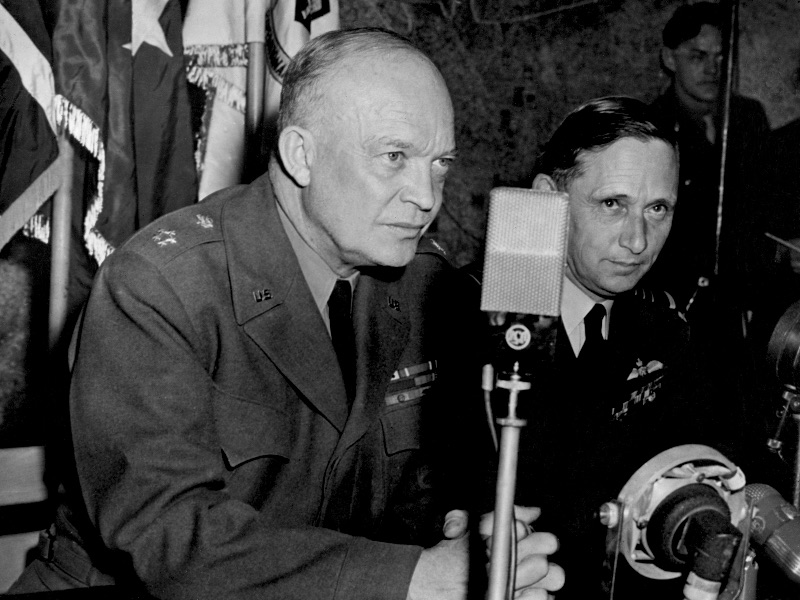
I love this image of Ike from May 7, 1945 (Ike is seen here with his deputy commander, Air Chief Marshal Sir Arthur Tedder of the Royal Air Force):

Ike

Note the simplicity of Ike’s uniform (just three rows of ribbons, and no badges, devices, or other military gewgaws).  The same can be said of Tedder’s uniform (a few ribbons, his wings, and that’s about it).  Compare their uniforms to America’s current Chairman of the JCS, Mark Milley:

mark-milley

With all this self-congratulation and self-glorification, is it any wonder America’s generals found stalemate in Korea and defeat in Vietnam, Iraq, and Afghanistan?

VE Day represented enormous sacrifices by peoples around the world to defeat a murderous fascistic regime in Germany.  Well should we remember it and learn from it.

How Do You Justify A $750 Billion Budget?

missiles
Missile Envy

W.J. Astore

I grew up on a steady diet of threat inflation.  Before I was born, bomber and missile “gaps” had been falsely touted as showing the Soviet Union was ahead of the U.S. in developing nuclear-capable weaponry (the reverse was true).  But those lies, which vastly exaggerated Soviet capabilities, perfectly served the needs of the military-industrial complex (hereafter, the Complex) in the USA.  Another example of threat inflation, common when I was a kid, was the Domino Theory, the idea that, if South Vietnam fell to communism, the entire region of Southeast Asia would fall as well, including Thailand and perhaps even countries like the Philippines.  Inflating the danger of communism was always a surefire method to promote U.S. defense spending and the interests of the Pentagon.

When I was in college, one book that opened my eyes was Andrew Cockburn’s “The Threat: Inside the Soviet Military Machine.”  James Fallows’s “National Defense” was another book I read in those days, together with Helen Caldicott’s “Missile Envy.”  Early in the Reagan years, I recall those old charts that displayed Soviet ICBMs as being bigger than American ICBMs, as if missile size was everything.  The message was clear: the Soviets have more missiles, and they’re bigger!  Yet what really mattered was the accuracy and reliability of those missiles, areas where the U.S. had a decisive edge.  U.S. nuclear forces were also far more survivable than their Soviet counterparts, but such details were lost on most Americans.

Throughout my life, the U.S. “defense” establishment has consistently inflated the dangers presented by foreign powers, which brings me to the current Pentagon budget for 2020, which may reach $750 billion.  How to justify such an immense sum?  A large dollop of threat inflation might help…

With the Islamic State allegedly defeated in Syria and other terrorist forces more nuisances than existential threats, with the Afghan War apparently winding down (only 14,000 U.S. troops are deployed there) and with Trump professing a “love” fest with Kim Jong-un, where are today’s (and tomorrow’s) big threats?  Iran isn’t enough.  The only threats that seem big enough to justify colossal military spending are Russia and China.  Hence the new “cold war” we keep hearing about, which drives a “requirement” for big spending on lucrative weapons systems like new aircraft carriers, new fighters and bombers, newer and better nuclear warheads and missiles, and so forth.

Which brings me to the alleged Russian collusion story involving Trump.  As we now know, the Mueller Report found no collusion, but was that really the main point of the investigation and all the media hysteria?  The latter succeeded in painting Vladimir Putin and the Russians as enemies in pursuit of the death of American democracy.  Meanwhile Trump, who’d campaigned with some idea of a rapprochement with Russia, was driven by the investigation to take harsher stances against Russia, if only to prove he wasn’t a “Putin puppet.”  The result: most Americans today see Russia as a serious threat, even though the Russians spend far less on wars and weaponry than the U.S. does.

Threat inflation is nothing new, of course.  Dwight D. Eisenhower recognized it and did his best to control it in the 1950s, but even Ike had only limited success.  Other presidents, lacking Ike’s military experience and gravitas, have most frequently surrendered to the Complex.  The last president who tried with some consistency to control the Complex was Jimmy Carter, but the Soviet invasion of Afghanistan, the Iranian hostage crisis, and his own political fortunes drove him to launch a major military buildup, which was then accelerated by Reagan until the collapse of the Soviet Union.

In the early 1990s, I briefly heard about a peace dividend and America returning to being a normal country (i.e. anti-imperial) in normal times, but ambition and greed reared their ugly heads, and U.S. leaders became enamored with military power.  Rather than receding, America’s global empire grew, with no peace dividends forthcoming.  The attacks on 9/11 led the Bush/Cheney administration to double down on military action in its “global war on terror,” leading to disastrous invasions of Afghanistan and Iraq that further served to engorge the Complex with money and power.

Today, faced with a debilitating national debt of $22 trillion and infrastructure that’s aptly described as “crumbling,” you’d think U.S. leaders would finally seek a peace dividend to lower our debt and rebuild our roads, bridges, dams, and related infrastructure.  But the Complex (including Congress, of course) is addicted to war and weapons spending, aided as ever by threat inflation and its close cousin, fearmongering about invading aliens at the border.

And there you have it: a $750 billion military budget sucking up more than sixty percent of discretionary spending by the federal government.  As Ike said, this is no way to live humanely, but it is a way for humanity to hang from a cross of iron.