Can Trump Beat Hillary?

trump
Who knew?

W.J. Astore

You’ve seen the headlines: Can Donald Trump beat Hillary Clinton?

The short answer: Of course he can.  And so can she beat him.

It’s a long time until November, and so much can (and will) happen between now and then.  But some obvious points about the volatility of this year’s presidential race:

1. Both candidates have high negatives. An NBC/Wall Street Poll suggests that 68% of voters doubt whether they could vote for Trump – and 58% of voters doubt they could vote for Hillary.  High negatives suggest lack of enthusiasm as well as antipathy.  Turned off by the candidates, many voters may simply stay home in November.  And that makes for a volatile race.

2. Trump is prone to gaffes. The man will say almost anything: Women seeking an abortion deserve to be punished.  Women reporters who challenge him are cranky from their period.  Mexican immigrants are thugs and rapists.  Muslims must be banned from the U.S.  Terrorists’ families should be hunted down and killed.  Protesters at his rallies should be punched and thrown out.  And on and on.  So far, Trump has been a Teflon candidate: His outlandish statements have not harmed him appreciably.  But how long before he says something equally offensive, or worse, as we head toward the general election this fall?

3. Trump’s business record. Trump University, anyone?  That trial should be interesting.  As lawsuits stalk Trump, how long before some past deal, either dodgy or dishonest, blows up in his face?

4. Hillary’s political record. Benghazi, anyone?  But potentially worse than Libya is the ongoing FBI investigation into Hillary’s emails.  Perhaps she’ll be cleared of wrongdoing, but the taint of wrongdoing will remain.  Indeed, a hint of scandal has always surrounded the Clintons – and it’s not just because of a “vast right-wing conspiracy.”

5. Hillary’s lack of political acumen: It’s hard to get enthusiastic about Clinton. Other than the fact she’d be the first female president (a big milestone, of course), there’s nothing new about her.  Consider her race against Bernie Sanders.  It was Bernie who drove the narrative.  It was Bernie who won the vote among the young, both male and female. Hillary is the staid old establishment.  When she raves, it’s about continuity.  But who wants continuity in America today?  What American is truly happy with the status quo (besides members of the establishment, of course)?

6. Wildcard events: Another 9/11-like attack. A bear market on Wall Street.  Wider conflict in the Middle East.  An incident with China in the Pacific.  A Russian move against Ukraine.  Will a crisis favor the “experience” of Clinton, or will people prefer Trump because “he gets things done” or “puts America first”?  As Yoda the Jedi Master says, “Difficult to see.  Always in motion the future.”

7. Finally, consider the fact that Bernie Sanders has run an issues-oriented campaign against Clinton. He hasn’t attacked her on her emails.  He’s left Bill Clinton’s past behavior out of the mix.  But just wait until the fall when the Republican attack dogs are unleashed.  Hillary is fond of saying she’s seen it all from Republicans, but with the stakes this high, I’m guessing there’s much she hasn’t seen.

So, yes, Trump can beat Clinton, and vice-versa.  The sorry fact is that regardless of which candidate wins, the country will be left with a deeply flawed leader who’ll be despised or disliked by more than half the electorate.
Clinton versus Trump this fall?

trump
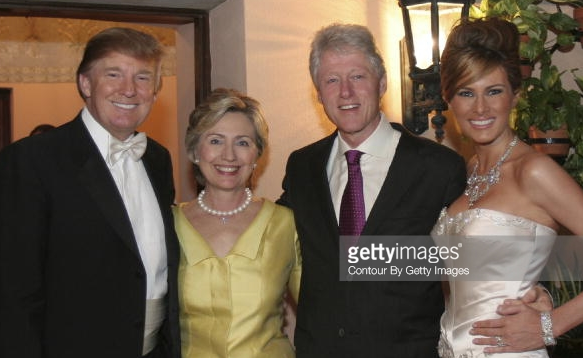
Good chums back in 2005

W.J. Astore

Last night’s primary results suggest it’s Hillary Clinton versus Donald Trump come this fall.  What does this mean for America?

Hillary is the easiest to gauge.  She’s been in politics for a long time and possesses a lengthy and controversial record.  She is of course a transformative candidate, the first female candidate for president from a major party.  That’s where the revolution begins — and ends.  Hillary is a pragmatist who promises a continuation of Obama’s policies.  Even more so than Obama, she is an establishment candidate, well ensconced among Wall Street financiers, K Street lobbyists, and all the other special interests that rule America today through money and power.  If this were 1976, you could well imagine her running as a moderate Republican against a Democratic candidate like Jimmy Carter (or Bernie Sanders).  With respect to foreign policy, she promises a hard line and the continuation of perpetual wars in Iraq, Afghanistan, and elsewhere.

Many liberal Democrats, and more than a few Republicans, will likely vote for her with noses held and fingers crossed.  Mainline Democrats will vote for her based on certain issues, such as Supreme Court vacancies, her pro-choice stance on abortion, and so on.  In a normal election year, an establishment Republican would have a good shot at beating her since Hillary’s negatives are so high.  But this is not a normal year.

Enter Donald Trump.  If Hillary promises more of the same, Trump promises unpredictability.  His simplistic rhetoric about making America great again has obviously resonated, just as Obama’s similarly simplistic message of “hope” and “change” did in 2008.  Trump is a man of (certain) people: unlike Hillary, he’s not a career politician. Unlike Hillary, he’s not tied to the political establishment.  In essence, he’s part wild card, part joker, and his outlandish statements on Muslims and Mexicans and walls and women suggest he’s not playing with a full deck.

No one really knows what a Trump presidency would look like.  I don’t think even Trump knows.  Trump has a habit of speaking off the cuff, of making statements that are more than a little grandiose, partly because he loves to grandstand.  He’s easy to dismiss — all too easy — yet look where he is now, closing in on the Republican nomination despite long odds.

Trump, as I wrote back in July 2015, likes to pose as a proto-fascist.  He likes to boast that the military will follow his orders even if they’re illegal.  (He backed off that statement, but the fact he made it speaks loudly about his judgement.)  On occasion he says something insightful and honest, as when he insisted the Iraq war was a mistake, costing the nation trillions of dollars, or when he attacks poorly negotiated trade deals as hurting working-class Americans.  But with the good comes lots of bad.

A big challenge for Trump this fall will be appearing presidential.  So far his policy knowledge in debates has been a mile wide and an inch deep.  He’s gotten away with this because of the size of the Republican field, but Hillary, the consummate policy wonk, will make mincemeat of him in the fall debates if he continues to speak off the cuff and glide over specifics.

Clinton versus Trump: it’s a grim choice for America.  An establishment oligarch versus a quixotic autocrat.  More of the same versus God knows what.  What they collectively represent is both the decline of progressivism and of conservatism in America.

For now I’m putting my crystal ball aside, except to say that one day (perhaps very soon) Americans may look back with fondness on the eight years Obama was president.

Bernie is More Generous to Workers than Hillary

Bernie

Last night’s town hall in Nevada revealed a crucial difference between Bernie Sanders and Hillary Clinton.  Bernie came out strongly for a $15 per hour minimum wage.  A living wage, as he called it.  Hillary demurred, suggesting that $12 per hour was sufficient, though she mentioned municipalities with higher minimums (places like San Francisco, which have a very high cost of living).

An extra $3.00 and hour, for 40 hours a week, for 50 weeks a year, is an extra $6000 in the pockets of workers (before taxes, of course).  For many working families, that’s the difference between struggling in poverty and making enough to live with a modicum of security.

Hillary went unchallenged on her $12 per hour figure.  But let’s remind ourselves that Hillary made $675,000 for three speeches to Goldman Sachs.  A person working for Hillary’s “generous” $12 wage would need 28 years to match what she made in three speeches that took her all of a few hours to make.

Indeed, Hillary’s “minimum wage” for her speeches to big banks and Wall Street is in the neighborhood of $100,000 to $200,000 per hour.  “Hey, that’s what they offered,” Hillary said.  And so Hillary is offering you, sales associate at Walmart, $12 per hour.  Are you not entertained?

When asked if she’d release transcripts of her speeches to the Wall Street banks and investment houses, Hillary essentially said no.  Of course, she didn’t say “no” because that would be honest.  Instead, she said she’d release her transcripts if all the other candidates did the same.  She knows that’s not happening, so her answer is no.

Perhaps Hillary could contact Goldman Sachs and ask them to start inviting workers to give speeches at her going rate.  A lot of American working families would deeply appreciate making $225,000 for a couple of hours of sharing their hard-won experiences with Wall Street bankers and investors.


Hillary Clinton’s “Low Blow”

joust
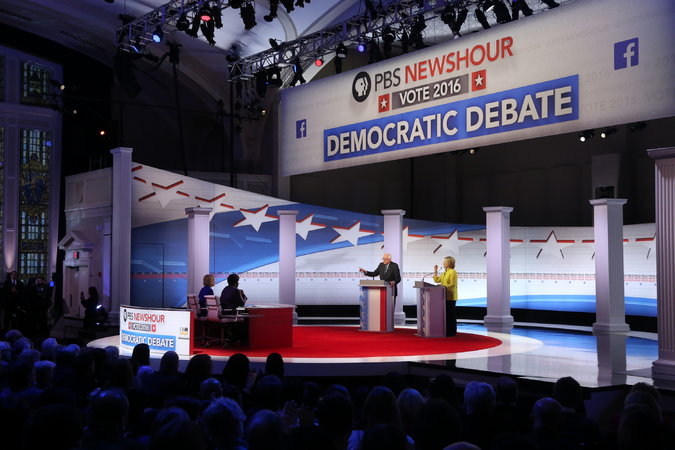
Bernie and Hillary at last night’s debate (Source: NYT)

W.J. Astore

Last night’s Democratic debate between Hillary Clinton and Bernie Sanders in Milwaukee hit the usual notes for these two candidates (the transcript is here). Clinton is all about competence and being ready on “day one” in the Oval office, whereas Bernie seeks a political revolution to galvanize the people. But a few telling items came up, mostly toward the end of the debate.

1.  Hillary accused Bernie of being too critical of President Obama, of not supporting him, of suggesting he was “weak,” and of not respecting Obama’s legacy of results, especially the Affordable Care Act.  This was a “low blow” for Bernie, who explained that he fully supported Obama, considered him to be a friend, and that he did indeed respect the president’s accomplishments.  Besides that, Bernie noted, “one of us ran against Barack Obama [in 2008]. I was not that candidate.”

2. Bernie actually dared to suggest the Defense Department’s budget had to be given careful scrutiny, noting that the DoD has yet to pass an audit.  In these days of issuing blank checks to the Pentagon, it was a significant moment.

3.  Bernie took Hillary to task, successfully I believe, for her cozy relationship with Henry Kissinger.  In my view, this was the most important moment of the night. With respect to U.S. foreign policy, Hillary promises continuity with neo-conservative principles of American interventionism and preemptive war.  Bernie, even as he promises to crush the Islamic State, is far less enamored with neo-con agendas and peace through aggression.

Here is what Bernie had to say about Kissinger:

“I happen to believe that Henry Kissinger was one of the most destructive secretaries of state in the modern history of this country.  I am proud to say that Henry Kissinger is not my friend. I will not take advice from Henry Kissinger. And in fact, Kissinger’s actions in Cambodia, when the United States bombed that country, overthrew Prince Sihanouk, created the instability for Pol Pot and the Khmer Rouge to come in, who then butchered some 3 million innocent people, one of the worst genocides in the history of the world. So count me in as somebody who will not be listening to Henry Kissinger…”

“Kissinger was one of those people during the Vietnam era who talked about the domino theory. Not everybody remembers that. You do. I do. The domino theory, you know, if Vietnam goes, China, da, da, da, da, da, da, da.  That’s what he talked about, the great threat of China.”

“And then, after the war, this is the guy who, in fact, yes, you’re right, he opened up relations with China, and now pushed various type of trade agreements, resulting in American workers losing their jobs as corporations moved to China.”

“The terrible, authoritarian, Communist dictatorship he warned us about, now he’s urging companies to shut down and move to China. Not my kind of guy.”

Hillary defended her relationship with Kissinger, just as she defended herself from suggestions she’d be influenced by big money donors. In both cases, she came across as the establishment candidate, one who is most comfortable in the corridors of power, schmoozing with other power brokers and players.

In sum, even as Hillary attempts to appropriate some of Bernie’s anti-establishment rhetoric, her actions demonstrate how much she’s ensconced within the establishment camp, especially when it comes to U.S. foreign policy.

For voters looking for change in November, Hillary promises only an amped up version of more of the same.


Bernie Sanders Won Last Night’s Democratic Debate

bernie
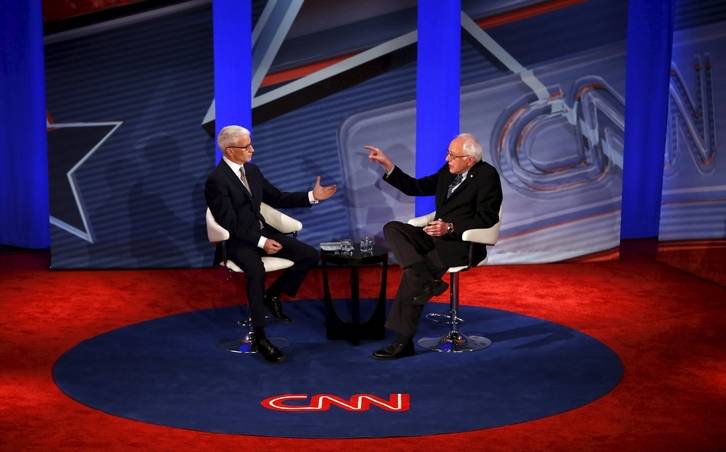
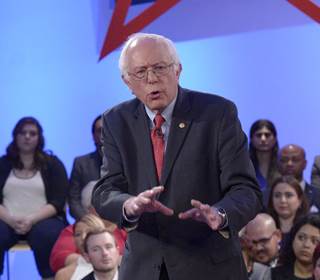
Bernie Sanders makes a point to Anderson Cooper during last night’s debate

W.J. Astore

Last night, Bernie Sanders and Hillary Clinton separately took questions from a “town hall” in Derry, New Hampshire with Anderson Cooper moderating.  Overall, both candidates did well, though I give the edge to Sanders (more on why in a moment).

Sanders came across as passionate on the issues and concerned for ordinary Americans.  He continues to speak of a political revolution, which to him doesn’t mean tumbrels to the guillotine.  It means getting more people involved in the political process, especially youth and the disadvantaged.  He spoke eloquently of helping others.  Memorable to me was his work to desegregate housing owned by the University of Chicago when Sanders was a student.  When asked why he fought against racist policies, Sanders said he’s always hated a bully – and always fought for fairness and equality.  He came across, in short, as an honest and decent man, a man of integrity, which is the word his wife used to describe him (she was sitting in the audience, and was asked to describe her husband with a single word).

Hillary came across as determined and competent and informed.  She tended to meander during her answers, coming across as somewhat of a policy wonk or a technocrat.  She rejected Sanders’ talk of a revolution, preferring to build on President Obama’s (and her own) legacy.  For example, she wants to put the finishing touches to Obamacare, rather than going for Sanders’ idea of a single-payer, “Medicare for all” system.  She spoke briefly of breaking the ultimate glass ceiling for women – her gaining the office of the presidency – and how that would inspire women of all ages.  She took her usual hardline on U.S. foreign policy, making no promises that she would reduce wars or for that matter spending on defense.

In sum, if you’re happy with the status quo, you’ll get plenty of that with Clinton.  If you want change, if you’re tired of a “rigged” economy and a corrupt political process, Sanders is far more likely to act in your favor.

Where I thought Hillary fell down was in her posturing as a progressive.  The millions of dollars she has accepted in speaking fees from banks and investment houses, she suggested, would have no impact on her policy decisions, which is simply implausible.  Powerful organizations don’t give political candidates big money without strings attached to it, and of course Clinton knows this.  It also seemed implausible when Clinton suggested she had not decided to run for president when she accepted those speaking fees.  As if her “doubts” about running absolved her of responsibility for taking big money from Wall Street.  It was all frankly unconvincing.

Hillary Clinton is a fighter.  She came across best when she spoke of the Republican right-wing attacks she’d had to endure over the last 25 years, and what they’d taught her about the political process.  Her footing was less secure when she had to relate to other people.  For example, a man suffering from advanced-stage cancer asked her about dying with dignity.  Bill Clinton, the “natural” as Hillary called him, would have turned this into an empathetic “I feel your pain” moment.  But Hillary got lost in the details, saying she would have to study up on the ethics of terminal care, the laws, the role of medical professionals, what other countries are doing (she mentioned The Netherlands), and so on.  As she tackled the problem in a wonkish way, she seemed to forget the person standing in front her.

In sum, Bernie Sanders is driving the narrative, not Hillary Clinton.  It’s Bernie who’s been talking about a rigged system, about economic fairness, about working for unions, about justice and prison reform, and it’s Hillary who’s been put on the defensive.  So lately Hillary’s been borrowing liberally from Bernie’s script.  She’s now talking about “the deck being stacked” against ordinary people, and how she’s going to fight for workers, and how much Wall Street is supposedly against her candidacy.

As Bernie has gained in the polls, as his message has begun to resonate, Hillary has responded by trying to be more like Bernie.  And it just doesn’t ring true, at least for me.  Advantage, Bernie.


The 2016 Presidential Candidates in a Word

face plant
Politics: Sometimes I just want to do a face plant (Photo: Barbara Neiberg)

W.J. Astore

Continuing our election coverage, I thought I’d try to sum up each major candidate with a single word (excluding profanities).  I encourage readers to submit your own words for each candidate in the comments section below.


The Democrats

Clinton: Compromised.  No candidate is more beholden to special interests and the establishment than Hillary.

Sanders: Revolutionary.  Let’s face it: It would be revolutionary for a Socialist Jew to win the Democratic nomination.  And “revolution” is one of Bernie’s favorite words.

O’Malley: Eclipsed.  I had to strain to remember his name, and I’ve watched the debates.  Simply overshadowed by Hillary and Bernie.


The Republicans

Trump: Bombastic.  Trump makes a lot of noise, and my dad always told me “the empty barrel makes the most noise.”

Cruz: Oleaginous.  There’s something slippery about Cruz.

Rubio: Callow.  An eager beaver, apple-polishing type.  Not quite ready for prime time.

Bush: Uncertain.  He doesn’t seem to believe the words coming out of his own mouth.  This is one reason why Trump calls him “weak,” because The Donald never doubts himself.

Carson: Serene.  His calm is perfect for a neurosurgeon, but he’s out of his element on the political stage.

Christie: Angry.  He seems to despise both Obama (“feckless weakling”) and Hillary.  Like Tony Soprano but without the charm.

Kasich: Grey.  A conventional Republican governor, he blends into the background due to the strutting peacocks that surround him.

What do you think, readers?  Have at it!


Hillary Clinton to Edward Snowden: Face the Music

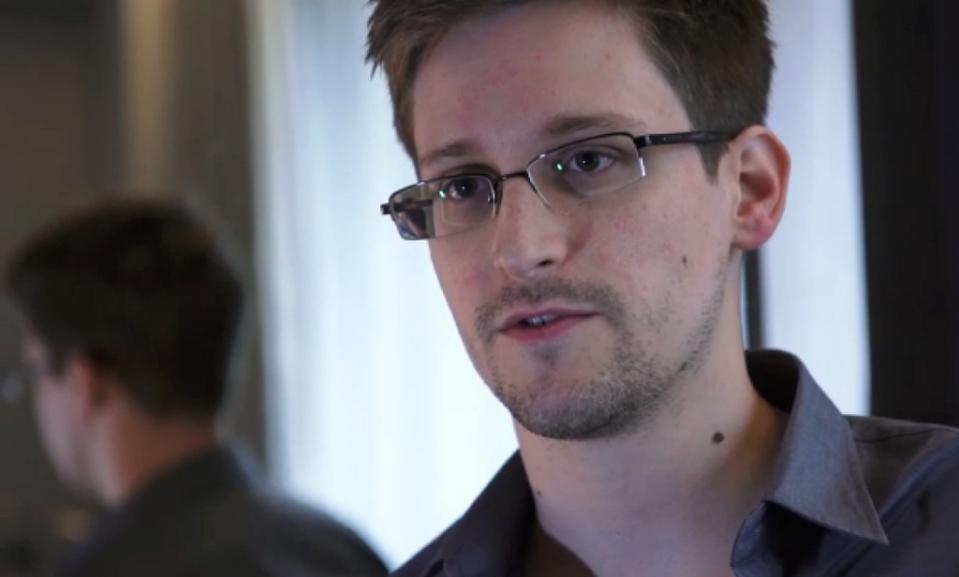
Edward Snowden: Face the music -- or perhaps a firing squad
Edward Snowden: Face the music — or perhaps a firing squad

W.J. Astore

A revealing question and answer came in this week’s presidential debate among the Democratic candidates.  They were asked if Edward Snowden, the whistleblower who revealed illegal spying by the NSA and the U.S. government, should be considered a hero or traitor.

Hillary Clinton’s answer was revealing of who she is and what she stands for; here it is in full:

CLINTON: He broke the laws of the United States. He could have been a whistleblower. He could have gotten all of the protections of being a whistleblower. He could have raised all the issues that he has raised. And I think there would have been a positive response to that.

COOPER: Should he do jail time?

ClINTON: In addition — in addition, he stole very important information that has unfortunately fallen into a lot of the wrong hands. So I don’t think he should be brought home without facing the music.

According to Hillary, Snowden is not officially a whistleblower, since he failed to apply for such status within the government. If he had, she suggests he would have been given a fair hearing.  (Right!  Just like the “positive response” Hillary Clinton’s State Department gave Peter Van Buren, who for his honesty about Iraq reconstruction was outcast and hounded into retirement.) She also suggests that Snowden’s revelations have “fallen into a lot of the wrong hands,” by which I think she means not foreign terrorists but the American people — what she terms “everyday” people to distinguish them from people like her.

But, finally, this sentence is the killer: I don’t think he should be brought home without facing the music.

Facing the music: Do you know what that potentially means for Edward Snowden?  Accused of treason (his information having fallen into all those “wrong hands“), he would face the possibility of execution by the U.S. government.  Facing the music in this case may mean facing a firing squad.  At the very least, we’re talking about a LONG jail sentence, doubtless in a maximum security federal penitentiary.

By comparison to Hillary, the other candidates showed measures of compassion.  Lincoln Chaffee said he wanted to bring Snowden home: that he deserved praise for revealing illegal activities by the U.S. government.  Martin O’Malley essentially agreed with Clinton but without the ominous warning about the need to face the music.  Bernie Sanders applauded Snowden for his role in educating the people about their dishonest and abusive government; he said that important service should be taken into account if and when Snowden returns for trial.  Jim Webb punted the question to “the legal system” but he also highlighted the dangers of uncontrolled surveillance and how such power can be used for undemocratic purposes: “We’ve got a vast data bank of information that is ripe for people with bad intentions to be able to use,” Webb said.  Of course, we truly wouldn’t know the full extent of this without the revelations provided by Snowden.

Following on from what Webb said, the conclusion is obvious: Edward Snowden is a hero.  He should be brought back to the United States and praised for his courage in revealing how our government has spied illegally, not only on the American people but on much of the world.  Untrammeled spying is not making us safer; it’s people like Snowden, those who still have integrity and who believe in the ideals of democracy, who are making us safer.

On the question of Snowden, hero or traitor, all the candidates disappointed. But in calling for Snowden to face the music, Hillary Clinton’s answer represented the deepest bow to the National Security State.

If I were Snowden, I wouldn’t plan on returning to the USA if Clinton is elected president.

Election Result: More Military Escalations Are Coming

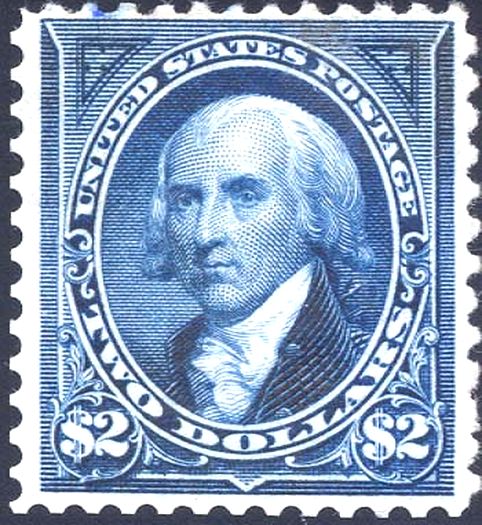
James_Madison_1894_Issue-2$
James Madison warned that perpetual war is the worst enemy of personal liberty

W.J. Astore

So, Republicans now control the Senate as well as the House.  As we the people endure the forced march to 2016 and the next presidential election, our new political landscape is sure to produce more military escalations.

The reason is as obvious as it is sad.  De-escalation of military conflicts is defined, especially by Republicans, as “losing” whereas escalation is defined as “doing something,” as being “decisive,” even when decision is nowhere in sight.  Even when military action just makes matters worse.

Once again, as we approach 2016, the Republicans will bash the Democrats as appeaseniks.  And the Republicans will be right.  The Democrats are appeaseniks — to the national security state.

You can almost guarantee that the hawkish Hillary Clinton — doing her best imitation of Margaret Thatcher — will be the Democratic candidate.  Meanwhile, Republican candidates will run to the right of Attila the Hun as they blame Obama for having “lost” both Iraq and Afghanistan (even though both of those countries were never ours to “win”).  Dishonest (or disingenuous) the Republicans may be, but they know how to win elections via the Big Lie.

As Tom Engelhardt noted this week, the national security state has built a militarized escalation machine that will execute its function of perpetual war regardless of whom is sworn in as the next commander-in-chief.

As my wife said to me today, our country is in big trouble.  Yes, we are, because as James Madison pointed out, perpetual war is the enemy of democracy and freedom.

As for me, I’ll vote for any candidate who has the spine to stand up for an end to perpetual war.  Show me a candidate who’s willing to abandon fear-mongering about overseas threats while telling the truth about the threats we face right here at home from America’s power brokers and I’ll show you a candidate worthy of being elected.  Either that, or show me a candidate who’s so worried about those overseas threats that he or she takes up arms (I mean literally) in the trenches against the enemy, and I’ll show you a candidate who at least is not a hypocrite.

But I fear 2016 will be the year of Benghazi!  Benghazi! and who lost Iraq/Afghanistan/and similar countries we never “found” to begin with.

Did I mention my smarter wife said our country is in trouble?