Someday, someone will write a history of the U.S. national security state in the twenty-first century and, if the first decade and a half are any yardstick, it will be called something like State of Failure. After all, almost 15 years after the U.S. invaded the Taliban’s Afghanistan, launching the second American Afghan War of the past half-century, U.S. troops are still there, their “withdrawal” halted, their rules of engagement once again widened to allow American troops and air power to accompany allied Afghan forces into battle, and the Taliban on the rise, having taken more territory (and briefly one northern provincial capital) than at any time since that movement was crushed in the invasion of 2001.
Thirteen years after George W. Bush and his top officials, dreaming of controlling the oil heartlands, launched the invasion of Saddam Hussein’s Iraq (the second Iraq War of our era), Washington is now in the third iteration of the same, with 6,000 troops (and thousands of private contractors) back in that country and a vast air campaign underway to destroy the Islamic State. With modest numbers of special operations troops on the ground and another major air campaign, Washington is also now enmeshed in a complex and so far disastrous war in Syria. And if you haven’t been counting, that’s three wars gone wrong.
Then, of course, there was the American (and NATO) intervention in Libya in 2011, which cracked that autocratic country open and made way for the rise of Islamic extremist movements there, as well as the most powerful Islamic State franchise outside Syria and Iraq. Today, plans are evidently being drawn up for yet more air strikes, special operations raids, and the like there. Toss in as well Washington’s never-ending drone war in Pakistan’s tribal borderlands, its disastrous attempt to corral al-Qaeda in the Arabian Peninsula in Yemen (leading to a grim and horrifying Saudi-led, American-supported internecine conflict in that country), and the unending attempt to destroy al-Shabaab in Somalia, and you have at least seven wars and conflicts in the Greater Middle East, all about to be handed on by President Obama to the next president with no end in sight, no real successes, nothing. In these same years Islamic terror movements have only spread and grown stronger under the pressure of the American war machine.
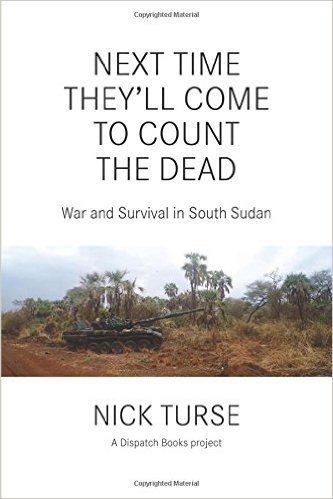
It’s not as if Washington doesn’t know this. It’s quite obvious and, as TomDispatch Managing Editor Nick Turse, author of the highly praisedNext Time They’ll Come to Count the Dead, points out today in his latest report on the U.S. military’s pivot to Africa, the pattern is only intensifying, something clearly recognized by key American commanders. What’s strange, however, is that none of this seems to have caused anyone in the national security state or the military to reconsider the last 15 years of military-first policies, of bombs dropped, troops dispatched, drones sent in, and what the results were across the Greater Middle East and now Africa. There is no serious recalibration, no real rethinking. The response to 15 years of striking failure in a vast region remains more of the same. State of failure indeed!
Be sure to read Nick Turse on how U.S. military efforts in Africa show more regress than progress.
In a notorious night raid near Gardez in Afghanistan in February 2010, a US Special Ops team apparently hit the wrong suspect’s house, resulting in the deaths of innocents to include pregnant women. It was further alleged that US troops dug bullets out of the bodies of these women. Jeremy Scahill’s recent article at The Intercept reviews the US military’s investigation into these allegations, an investigation that cleared the troops involved of any wrongdoing. Scahill’s article is here and warrants careful reading.
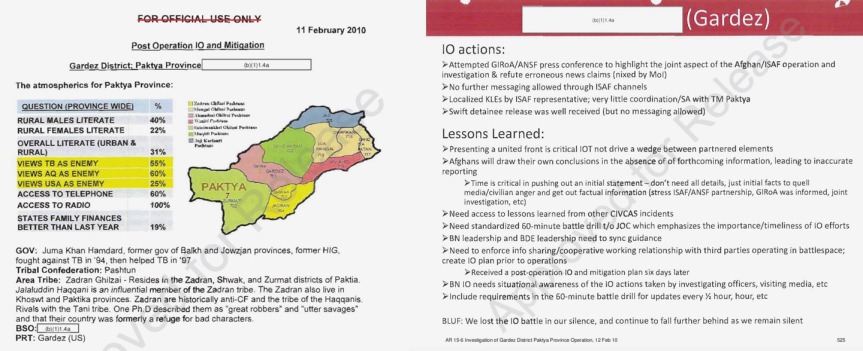
I want to focus on a piece of evidence that Scahill obtained: the U.S. military’s evaluation of the Afghan province and its after-action report about the failure of its IO (information operations) “battle.” Here is the document in question:
First, I want to focus on the BLUF at the bottom right. In the Army, it stands for bottom line up front. Most senior commanders will read this first; in some cases, the BLUF will be all they read (and remember). What does the BLUF conclude?
It says the US military “lost the IO battle in our silence,” and that it’s only getting worse as the military remains silent. It sounds vaguely reassuring: at least the military realizes it bungled the “information operations” job. But it’s a bureaucratic message in bureaucratic language. It reduces the objective to winning the “information” war, which the military says it’s not winning because of poor coordination with Afghan and other forces, lack of responsiveness, and so on.
How about some honesty? Here’s my BLUF: The US military is losing because it often misidentifies the enemy and misunderstands the culture, leading to the deaths of innocents and the estrangement of even those Afghans who are initially open to American influence. And no matter how hard you try to spin those facts, you can’t hide that cold truth from the Afghan people. (You can hide it from the American people, but that’s another story.)
As General Stanley McChrystal himself said about Afghanistan in 2010: “We have shot an amazing number of [Afghan] people [often at checkpoints], but to my knowledge, none has ever proven to be a threat.”
Tell me again how you win “information operations” by shooting “an amazing number” of innocent people?
I want to focus on a second aspect of the US military’s document from Scahill’s article: the illusion of data substituting for real knowledge. Here’s the document again:
Look at the left column. It has “atmospherics” for the province, to include percentages for literacy, support for the Taliban and Al Qaeda (as if those are fixed in place), access to radio and telephone, and so on. Is this knowledge? Or a masquerade for it?
Interestingly, a quarter of the people are viewed as hostile to the USA. One assumes this percentage went up significantly after the raid in question.
My point is these maps and charts and slides give an illusion of data-driven competence, but when you read Scahill’s article, you realize American forces were totally ignorant of basic Afghan customs, such as rituals to prepare bodies for burial. That ignorance seems to have driven the initial confused and inaccurate account of honor killings of females, an account that was repeated widely (and wrongly) in the Western media.
Another minor yet telling point: An unnamed Ph.D. describes some of the Afghan peoples of the region as “great robbers” and “utter savages.” Think about how that description would color the attitudes of US troops assigned to the region. “Here we go, men. Time to kill us some robbers and savages.”
Scahill’s article and the document he provides is a microcosm of the wider failure of US operations in Afghanistan. The war, already in its 15th year, promises to be never-ending unless and until the US finally withdraws. In a profile not of courage but of pusillanimity, Obama has punted the decision to the next president, which doubtless means another 2-4 years of war, mistakes and misunderstandings and more deaths of innocents included.
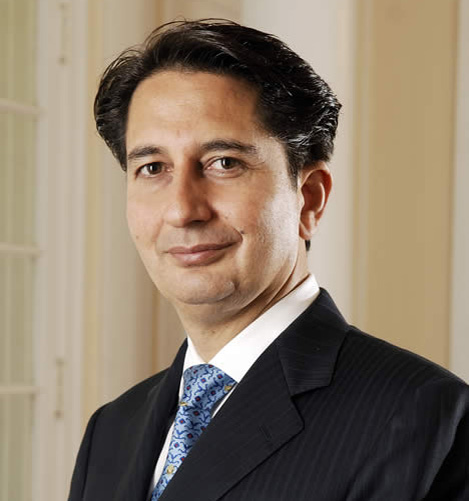
Now in its 15th year, the US war in Afghanistan continues to go poorly. The drug trade is up, the Taliban is resurgent, and Afghan security forces are weakening. Nevertheless, as Dan White notes below, Americans are told by their leaders in Washington that progress is steady, even if the usual Petraeus caveats (“fragile” and “reversible”) are thrown in about that “progress.” White recently had the chance to hear Said Jawad, Afghanistan’s former Ambassador to the US, speak about the war and his country’s relations with the US. What he heard was not encouraging. Sadly, the policy among America’s leaders is never to hear a discouraging word – or, never to share such a word with the American people.
Looming Failure in the Afghan War: It’s All Out in the Open
Dan White
A story from some actress about marriage and divorce always stuck with me, even if the actress’ name hasn’t. She talked about how if you are head over heels in love with someone, or if you are pissed off at them and divorcing them, you still see everything about the person, good and bad. Your vision doesn’t change with emotion, she said. The only thing that changes is which aspects of that person you bring into focus. Everything is out in the open for you to see, and you just choose what you want to focus on. She’s right about that. Not just in love, but in world events, too.
The Current Official Word (COW) from the Washington Beltway is that things are going as well as can be expected in Afghanistan. That’s the official spin, and it hasn’t changed since the war began. But other things are out there, in the open, and it’s high time we focused on them.
Afghanistan’s former Ambassador to the United States, Said Jawad, gave a speech on “America’s Longest War: The Afghan Perspective” on April 5th at UT-Austin, at a Strauss Center for International Relations/LBJ School event. Attendance at North America’s second-largest college campus for this event was about sixty; half the attendees were students while the rest were local residents, mostly affluent social security age or thereabouts. (Rather piss-poor attendance for a war America’s leaders are calling “generational.”)
I talked briefly to the Ambassador beforehand—he was friendly and approachable, always good for a diplomat. We talked about a book I was carrying, David Talbot’sThe War Without a Name, which is the best book written in English to date about the French counterinsurgency war in Algeria, 1954-62. This book was worth around $200 on Amazon back in 2004 or so, but I’d picked it up at the Half-Price slushpile for $2 the other day, and that fact probably showed something about how serious America was these days about wars, counterinsurgencies, and learning from history. Ambassador Jawad nodded politely. He declined my offer of the book as a gift; perhaps he knows the subject too well.
The Ambassador spoke for about 40 minutes. His PowerPoint presentation wasn’t working; it is somewhat disturbing that the Ambassador has become a slave to PowerPoint like everyone in the US government nowadays. I wasn’t expecting him to say much (the usual diplomatic discretion before an American audience combined with Beltway conformity). But if you were paying attention, the Ambassador let drop in the forefront, in easy camera range, some things that normally stay in the deep dark background.
Ambassador Jawad was as upfront as a diplomat can be about Afghanistan’s complete dependence on US military and political support and his expectations that it would continue at the current level for the next several years. This despite pronouncements from Official DC about our doing the contrary. He mentioned several times that ISIL pays its soldiers about three times what his government pays theirs, and how this was a major factor in ISIL’s success. Hmmm—I guess the three to one pay advantage trumps his army’s six to one numbers advantage. The former Ambassador also complained about Pakistan’s providing sanctuary for the enemy forces, and expressed a desire that the US would pressure Pakistan to stop doing so. Saudi Arabia came in for its licks too, and the Ambassador urged that the US pressure the Saudis into doing something to stop the financial support their citizens (and government too, Mr. Ambassador?) are giving to ISIS/ISIL. The Ambassador used the term ‘realistically’ several times about various actions Afghanistan or the United States could, and should, do.
One fact got dropped that I should have heard before, and that is that this past year was the bloodiest ever for the Afghan National Army and security forces. This was the first year ever that the war did not go into hibernation for the winter; it ran the whole year round. Ambassador Jawad said that there were 7000 government forces killed this past year and that current losses ran 16 KIA (killed in action) daily. I’d never heard this one before. 7000 KIA means a minimum of 21,000 WIA (wounded in action), a total of 28,000 casualties a year. The Afghan National Army has an official strength of around 150,000 (actual troop strength is a different smaller number due to potted plant soldiers) with roughly 150,000 auxiliary/police.
Losses at this level are militarily unsustainable for very long. I doubt anyone militarily knowledgeable would give the Afghan national forces more than two years before they collapse from losses at this rate. This means things are going to fall apart there in Afghanistan like they did in Iraq, and soon. There was not a sign of anyone in the audience catching this. If they did, they were too polite to say anything.
The Q&A came up, and again I wasn’t picked for a question (actually, I was ignored, a story for another day). Several faculty asked mostly pointless questions, and the student questions were wonkish policy-adjustment ruminations hewing to the Beltway line. No sign of intelligent life there, Scotty.
After the event, I spoke to the Ambassador again. He was apologetic about not selecting me for a question, delicately deferring blame, with much justification, to his host Robert Chesney. I dumped the question I had in mind to ask during the Q&A and instead I asked him this, something that had bubbled up from deep inside me:
Mr. Ambassador, I’ve already pointed out to you the story of this book and how its cratering in price shows something about how much interest the US has in its war in your country. Doesn’t this also show a distinct lack of competence in the US ruling elites, that they choose to remain ignorant about the biggest counterinsurgency war in the 20th Century, after this many years of failed wars?
And speaking of just how much real interest my country and countrymen have in your country and people, just look at the foreign aid amounts we’ve given to your country, a desperately poor country in dire need of everything, every last god-blasted handiwork of man there is, after four decades of war and devastation. It took us five years before we gave your country five billion dollars in aid. That’s peanuts and you know it. You also have to know that it took us another three years more before we hit ten billion dollars in aid. And certainly you have to know that aid like this is absolutely critically necessary and desperately time-sensitive for successful prosecution of a counter-insurgency, and doesn’t the fact that we cheaped out and didn’t deliver this militarily essential aid in anything near a timely fashion show again the incompetence of this country’s military and political ruling elites?
Doesn’t it also again show how little regard we here have for your fellow countrymen and their problems? Just look at our aid to Ukraine, instead. We officially spent five billion up front, unofficially twice that, on the latest color revolution there, and that was all money going to white European politicians for them to piss away on parties, bribes, and Swiss bank accounts. Doesn’t that show, decade and a half long war or not, just how little your country, its people, and our war there matter to the DC crowd?
Mr. Ambassador, you talked several times today about ‘realistic’ and ‘realistically’. Shouldn’t you be more realistic about the fact that there’s been a decade and a half for us to pressure the Saudis and Pakistanis to cooperate and we haven’t ever yet so realistically that just isn’t going to ever happen? Realistically shouldn’t you and your country adjust your policy plans and expectations to reflect this fact instead of calling still again for them? Shouldn’t you and your fellow countrymen be more realistic about this country of mine and its government and peoples and its profound indifference to you and your war and our rather gross and obvious failings as a nation and as a people by now?
The Former Ambassador listened to all this politely, and then gave a little speechette about how America was a great country full of great people who could do anything they put their minds to. I thanked him and left.
So just like that actress said, it’s all out in the open, and it’s just a question of if you want to focus on it and see it. We don’t, it doesn’t look like the Afghans do either, and we all will act surprised when the big crackup in Afghanistan happens soon. Our surprise will be genuine because our profound blindness certainly is.
Daniel N. White has lived in Austin, Texas, for a lot longer than he originally planned to. He reads a lot more than we are supposed to, particularly about topics that we really aren’t supposed to worry about. He works blue-collar for a living–you can be honest doing that–but is somewhat fed up with it right now. He will gladly respond to all comments that aren’t too insulting or dumb. He can be reached at Louis_14_le_roi_soleil@hotmail.com.
Hannah Arendt, cigarette in hand (Arendt Center, Bard College)
W.J. Astore
(This is part 2 of 2 of an essay dealing with lying, politics, and war, inspired by Hannah Arendt’s writings on The Pentagon Papers. For part 1, click here.)
After the Vietnam War, the U.S. government oversaw the creation of a post-democratic military, one that was less tied to the people, meaning that the government had even less cause to tell the truth about war. Unsurprisingly, then, the hubris witnessed in Vietnam was repeated with Iraq, together with an even more sweeping ability to deny or disregard facts, as showcased best in a statement by Karl Rove in 2004. The actions of the Bush/Cheney Administration, Rove suggested, bypassed the fact- or “reality-based” community of lesser humans precisely because their premises (the need to revolutionize the Middle East and to win the War on Terror through violence) were irrefutable and their motives unimpeachable. In Rove’s words:
We’re an empire now, and when we act, we create our own reality. And while you’re studying that reality—judiciously, as you will—we’ll act again, creating other new realities, which you can study too, and that’s how things will sort out. We’re history’s actors…and you, all of you, will be left to just study what we do.
So it was that the Bush/Cheney administration manufactured its own “facts” to create its own “reality,” as the Downing Street Memo revealed (according to a senior British official, U.S. intelligence was “fixed” in 2002 to justify a predetermined decision to invade Iraq in 2003). Dubious intelligence about yellowcake uranium from Africa and mobile biological weapons production facilities in Iraq (both later proved false) became “slam dunk” proof that Iraq had active programs of WMD development. These lies were then cited to justify a rapid invasion. That there were no active WMD programs in Iraq meant there could be no true “mission accomplished” moment to the war – a fact George W. Bush lampooned by pretending to “search” for WMD at the White House Correspondents’ Dinner in 2004. In this case, lies and self-deception coalesced in a wincing performance before chuckling Washington insiders that recalled the worst of vaudeville, except that Americans and Iraqis were dying for these lies.
Subsequent policy decisions in post-invasion Iraq didn’t fit the facts on the ground because those facts were simply denied. Then-Secretary of Defense Donald Rumsfeld said in July 2003 he didn’t do quagmires even as Iraq was becoming one for U.S. forces. Two years later, then-Vice President Cheney claimed the Iraq insurgency was “in the last throes” even as insurgent attacks began to accelerate. Lies and deception, to include self-deception, doomed the U.S. government to quagmire in Iraq, just as it had in Vietnam forty years earlier. Similar lies continue to bedevil U.S. efforts in Iraq today, as well as in Afghanistan and many other places.
Even as official lies and deception spread, whistleblowers who stepped forward were gagged and squashed. Chelsea Manning, Stephen Kim, and John Kiriakou were imprisoned; Edward Snowden was forced into permanent exile in Russia. Meanwhile, officials who toed the government line, who agreed to dissemble, were rewarded. Whether under Bush or Obama, government officials quickly learned that supporting the party line, no matter how fanciful, was and is rewarded – but that truth-telling would be punished severely.
Lying and Self-Deception Today
How are U.S. officials doing at truth-telling today? Consider the war in Afghanistan. Now in its 15th year, regress, not progress, is the reality on the ground. The Taliban controls more territory than ever, the drug trade is exploding, and Afghan forces remain unreliable. Yet the U.S. government continues to present the Afghan war as winnable and the situation as steadily improving.
Similarly, consider the war on terror, nowadays prosecuted mainly by drones and special ops. Even as the U.S. government boasts of terrorists killed and plots prevented, radical Islam as represented by ISIS and the like continues to spread. Indeed, as terrorism expert David Kilcullen recently admitted, ISIS didn’t exist until U.S. actions destabilized and radicalized Iraq after 2003. More than anything, U.S. intervention and blundering in Iraq created ISIS, just as ongoing drone strikes and special ops raids contribute to radicalization in the Islamic world.
Today’s generation of “best and brightest” problem-solvers believes U.S. forces cannot withdraw from Afghanistan without the Afghan government collapsing, hence the misleading statements about progress being made in that war. Radical Islamic terrorists, they believe, must be utterly destroyed by military means, hence deceptive statements about drone strikes and special ops raids as eliminating terrorism.
Accompanying lies and deception about progress being made in wars is image manipulation. Military action inoculates the Washington establishment, from President Obama on down, from (most) charges of being soft on terror (just as military action against North Vietnam inoculated John F. Kennedy and Lyndon B. Johnson against charges of being soft on communism). It also stokes the insatiable hunger of the military-industrial complex for bottomless resources and incessant action, a complex that the current crop of Republican and Democratic candidates for president (Bernie Sanders excepted) have vowed to feed and expand.
Whether in Vietnam, Iraq, or in the war on terror today, lying and self-deception have led to wrongheaded action and wrongful lessons. So, for example, rather than facing the quagmire of Afghanistan and extricating itself from it, Washington speaks of a generational war and staying the course until ultimate victory. Instead of seeing the often counterproductive nature of violent military strikes against radical Islam, Washington calls for more U.S. troops, more bombing, more “shock and awe,” the approach that bred the Islamic State in the first place.
One thing is certain: The U.S. desperately needs leaders whose judgment is informed by uncomfortable truths. Comfortable lies have been tried before, and look what they produced: lots of dead people, lost wars, and a crippling of America’s ability to govern itself as a democracy.
More than ever, hard facts are at a premium in U.S. politics. But the higher premium is the exorbitant costs we pay as a people, and the pain we inflict on others, when we allow leaders to make lies and deception the foundation of U.S. foreign policy.
Six years ago, I wrote an article about Afghanistan that opened like so:
In the U.S. debate on Afghanistan, virtually all experts agree that it’s not within the power of the American military alone to win the war. For that, Afghanistan needs its own military and police force, one that is truly representative of the people, and one that is not hopelessly corrupted by drug money and the selfish concerns of the Karzai government in Kabul.
What has changed since 2009? Karzai is gone, but corruption remains endemic. The U.S. military is still there, at least until 2017 and likely for far longer. And drug money! In a searching summary of the opium trade in recent Afghan history, Alfred McCoy at TomDispatch.com shows convincingly that the drug trade has flourished despite, or rather because of, American efforts to block it or control it. In his words:
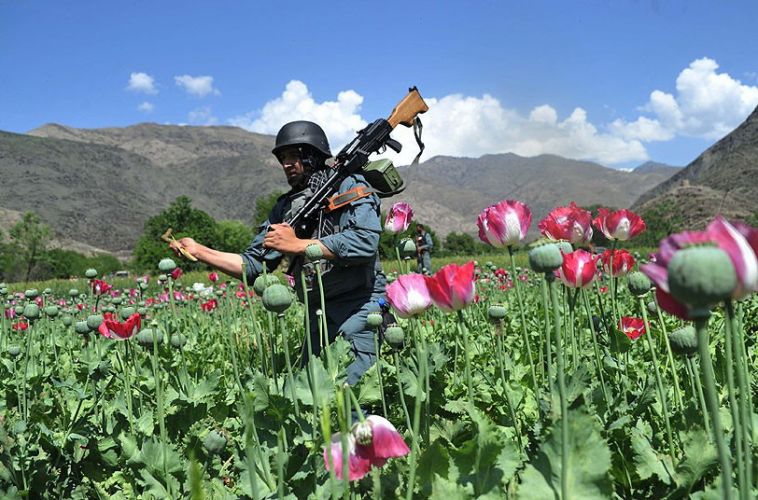
In the almost 15 years of continuous combat since the U.S. invasion of 2001, pacification efforts have failed to curtail the Taliban insurgency largely because the U.S. could not control the swelling surplus from the county’s heroin trade. As opium production surged from a minimal 180 tons to a monumental 8,200 in the first five years of U.S. occupation, Afghanistan’s soil seemed to have been sown with the dragon’s teeth of ancient Greek myth. Every poppy harvest yielded a new crop of teenaged fighters for the Taliban’s growing guerrilla army.
At each stage in Afghanistan’s tragic, tumultuous history over the past 40 years — the covert war of the 1980s, the civil war of the 1990s, and the U.S. occupation since 2001 — opium played a surprisingly significant role in shaping the country’s destiny. In one of history’s bitter twists of fate, the way Afghanistan’s unique ecology converged with American military technology transformed this remote, landlocked nation into the world’s first true narco-state — a country where illicit drugs dominate the economy, define political choices, and determine the fate of foreign interventions.
McCoy’s article, which you should read here in its entirety, raises many questions, but for me the obvious one is this: What is the U.S. military doing in Afghanistan? What is its strategy?
If it’s trying to win Afghan hearts and minds, you can’t do that by destroying the main cash crop of so many people. If it’s trying to create a measure of stability, you can’t do that by mounting destructive military operations that spread chaos. If it’s trying to interdict the drug trade, you can’t do that successfully while maintaining the support of powerful interests in Afghanistan that profit so heavily from that trade.
After nearly 15 years, a sensible person would conclude that American interference in Afghanistan is only making matters worse. Afghan drug wars are a no-win scenario for U.S. troops. Lacking a coherent and sensible strategy that is attractive to Afghan power brokers, American forces should smarten up, load up, and pull out.
A sensible strategy in three words: Yankee come home.
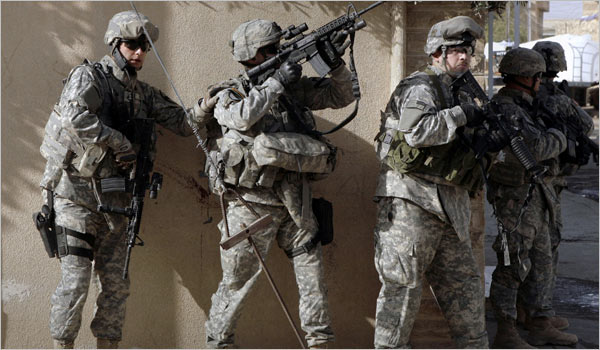
U.S. troops in Mosul, Iraq in 2007. A foreign presence to Iraqis
W.J. Astore
I’m a retired U.S. military officer. When I think of U.S. troops, naturally I see them as my gals and guys. I identify with them. And I know enough of them to know that their intent is usually good — at least in the sense that they seek to do their duty.
But I’m also an historian with a modicum of empathy. I know that foreigners don’t see the U.S. military as I see it. Nor do they experience it the way I experienced it. To cite just one anecdote: I recall a story in the New York Times in which U.S. troops in Iraq ask an Iraqi farmer if he’s seen any foreign fighters around. The Iraqi has a simple answer: “Yes. You.”
Six years ago, I wrote an article for Huffington Post on “Catch-22 in Afghanistan.” I argued that the more the U.S. military intervened in the affairs of Afghanistan, the less likely it was that a permanent, and suitably Afghan, solution would be found to the problems confronting that country. Not much has changed in those six years, except that today the Taliban controls even more territory, the drug trade is even more pervasive, and corruption is even more endemic.
We need to learn (or re-learn) a basic lesson: The more the U.S. intervenes in conflicts within other countries, the less likely it is that a favorable outcome will result (favorable for the U.S., that is), simply because U.S. forces are viewed as a foreign contagion. And indeed we are that.
Ignoring its Afghan failures, the U.S. government now seeks to widen its military commitment to the most hotly contested areas of the Middle East. Our leaders act as if the way to end civil wars driven in part by radical Islam is violent intervention led by American troops.
But American troops (and drones and bombs and all the rest) are not the answer. Indeed, their actions spread the contagion further.
The other day, I was reading about “super-bugs,” those bacterial infections that have become highly resistant to traditional antibiotics due to misuse and overuse of the same. In seeking to “destroy” ISIL and similar “infections,” the American government instead often feeds them. Indeed, I was surprised to learn that in medicine there are super-bugs that literally feed on traditional antibiotics. They gain strength from being attacked. Such is often the case for “bugs” like ISIL, which feed off of heavy-handed U.S. military actions.
This is not an argument for the U.S. military to do nothing. Rather, it’s a reminder of the limits of power and the complexity of life. It’s a reminder too that to foreigners the U.S. military is the foreign presence, the contagion. Even when it seeks to act as a “cure,” it may in fact be feeding the disease.
“The president announced last week that American troops will remain in Afghanistan beyond the planned withdrawal at the end of 2016. This is a devastating blow. We’ve already spent $716 billion and counting on the war in Afghanistan alone, plus countless lives lost and derailed.”
Of course, not the same American troops will “remain” in Afghanistan until 2017 (or 2024, or who knows what year). U.S. troops, intelligence operatives, privatized paramilitaries, and assorted imperial straphangers are constantly rotating in and out of war zones around the world, sometimes on yearly tours, often on much shorter ones. This reality got me to thinking about American imperialism as a peculiar form of global tourism. All those repetitive, fairly short-term, “tours” to foreign countries, followed by new American tour groups (fresh deployments of new combat units). The result is needless repetition, endless waste, and flat learning curves for Americans. For the locals who have to endure America’s “tours,” the results are often far worse — and unlike Americans they usually can’t get on a boat or helicopter or jet and leave.
I was stimulated to write this new article on America’s “tourists of empire,” which appears at TomDispatch.com today. You can read it in full here. I’ve included some excerpts below. I hope this article provides a contrary perspective on U.S. military efforts around the world.
Tourists of Empire: America’s Peculiar Brand of Global Imperialism
The United States is a peculiar sort of empire. As a start, Americans have been in what might be called imperial denial since the Spanish-American War of 1898, if not before. Empire — us? We denied its existence even while our soldiers were administering “water cures” (aka waterboarding) to recalcitrant Filipinos more than a century ago. Heck, we even told ourselves we were liberating those same Filipinos, which leads to a second point: the U.S. not only denies its imperial ambitions, but shrouds them in a curiously American brand of Christianized liberation theology. In it, American troops are never seen as conquerors or oppressors, always as liberators and freedom-bringers, or at least helpers and trainers. There’s just enough substance to this myth (World War II and the Marshall Plan, for example) to hide uglier imperial realities.
Denying that we’re an empire while cloaking its ugly side in missionary-speak are two enduring aspects of the American brand of imperialism, and there’s a third as well, even if it’s seldom noted. As the U.S. military garrisons the planet and its special operations forces alone visit more than 140 countries a year, American troops have effectively become the imperial equivalent of globetrotting tourists. Overloaded with technical gear and gadgets (deadly weapons, intrusive sensors), largely ignorant of foreign cultures, they arrive eager to help and spoiling for action, but never (individually) staying long…
Call it Imperial Tourist Syndrome, a bizarre American affliction that creates its own self-sustaining dynamic. To a local, it might look something like this: U.S. forces come to your country, shoot some stuff up (liberation!), take some selfies, and then, if you’re lucky, leave (at least for a while). If you’re unlucky, they overstay their “welcome,” surge around a bit and generate chaos until, sooner or later (in places like Iraq and Afghanistan, much, much later), they exit, not always gracefully (witness Saigon 1975 or Iraq 2011).
And here’s the weirdest thing about this distinctly American version of the imperial: a persistent short-time mentality seems only to feed its opposite, wars that persist without end. In those wars, many of the country’s heavily armed imperial tourists find themselves sent back again and again for one abbreviated tour of duty after another, until it seems less like an adventure and more like a jail sentence.
The paradox of short-timers prosecuting such long-term wars is irresolvable because, as has been repeatedly demonstrated in the twenty-first century, those wars can’t be won. Military experts criticize the Obama administration for lacking an overall strategy, whether in Syria, Iraq, Afghanistan, or elsewhere. They miss the point. Imperial tourists don’t have a strategy: they have an itinerary. If it’s Tuesday, this must be Yemen; if it’s Wednesday, Libya; if it’s Thursday, Iraq …
It was a dynamic already obvious five decades ago in Vietnam: a ticket-punching mentality that involved the constant rotation of units and commanders; a process of needless reinvention of the most basic knowledge as units deployed, bugged out, and were then replaced by new units; and the use of all kinds of grim, newfangled weapons and sensors, everything from Agent Orange and napalm to the electronic battlefield and the latest fighter planes and bombers — all for naught. Under such conditions, even the U.S. superpower lacked staying power, precisely because it never intended to stay. The “staying” aspect of the Vietnam War was often referred to in the U.S. as a “quagmire.” For the Vietnamese, of course, their country was no “big muddy” that sucked you down. It was home. They had little choice in the matter; they stayed — and fought.
Combine a military with a tourist-like itinerary and a mentality to match, a high command that in its own rotating responsibilities lacks all accountability for mistakes, and a byzantine, top-heavy bureaucracy, and you turn out to have a surefire recipe for defeat. And once again, in the twenty-first century, whether among the rank and file or at the very top, there’s little continuity or accountability involved in America’s military presence in foreign lands. Commanders are constantly rotated in and out of war zones. There’s often a new one every year. (I count 17 commanders for the International Security Assistance Force for Afghanistan, the U.S.-led military coalition, since December 2001.) U.S. troops may serve multiple overseas tours, yet they are rarely sent back to the same area. Tours are sequential, not cumulative, and so the learning curve exhibited is flat…
At some level, the U.S. military knows it’s screwed. That’s why its commanders tinker so much with weapons and training and technology and tactics. It’s the stuff they can control, the stuff that seems real in a way that foreign peoples aren’t (at least to us). Let’s face it: past as well as current events suggest that guns and how to use them are what Americans know best.
But foreign lands and peoples? We can’t control them. We don’t understand them. We can’t count on them. They’re just part of the landscape we’re eternally passing through — sometimes as people to help and places to rebuild, other times as people to kill and places to destroy. What they aren’t is truly real. They are the tourist attractions of American war making, sometimes exotic, sometimes deadly, but (for us) strangely lacking in substance.
I read the news today, oh boy. President Obama has decided to keep thousands of U.S. troops in Afghanistan until 2017, effectively kicking the war to the next president. According to the New York Times, “The Obama administration sees the choice to slow down the United States’ Afghan exit as the best of bad options.” Not to be cynical, but the decision to keep U.S. troops in Afghanistan until 2017 is obviously intended to prevent an Iraq-like collapse in 2016, a collapse that Republicans would seize upon in next year’s election cycle to portray democrats as weak and feckless. All politics is local, as Tip O’Neill said.
Afghanistan is known as the graveyard of empires, but the United States believes if we whistle loud enough past it, no harm will come to us. In other words, we refuse to learn anything from history, the theme of an article I wrote back in 2009 for TomDispatch on the lessons of Vietnam for Obama, recently anointed as presidential savior. Sections (2) and especially (4) below seem especially germane to today’s news of yet another extension to America’s troop commitment to Afghanistan.
Mary McCarthy in Vietnam, Barack Obama in Afghanistan
Seven Lessons and Many Questions for the President
By William Astore (written in 2009)
In 1967, outraged by the course of the Vietnam War, as well as her country’s role in prolonging and worsening it, Mary McCarthy, novelist, memoirist, and author of the bestseller The Group, went to Saigon, then the capital of South Vietnam, to judge the situation for herself. The next year, she went to the North Vietnamese capital, Hanoi. She wrote accounts of both journeys, published originally in pamphlet format as Vietnam (1967) and Hanoi (1968), and later gathered with her other writings on Vietnam as a book, The Seventeenth Degree (1974). As pamphlets, McCarthy’s accounts sold poorly and passed into obscurity; deservedly so, some would say.
Those who’d say this, however, would be wrong. McCarthy brought a novelist’s keen eye to America’s activities and its rhetoric in Vietnam. By no means a military expert, not even an expert on Vietnam — she only made a conscious decision to study the war in Vietnam after she returned from her trip to Saigon — her impressionistic writings were nevertheless insightful precisely because she had long been a critical thinker beholden to no authority.
Her insights into our approach to war-fighting and to foreign cultures are as telling today as they were 40 years ago, so much so that President Obama and his advisors might do well to add her unconventional lessons to their all-too-conventional thinking on our spreading war in Afghanistan and Pakistan.
What were those lessons? Here are seven of them, each followed by questions that, four decades later, someone at President Obama’s next press conference should consider asking him:
1. McCarthy’s most fundamental objection was to the way, in Vietnam, the U.S. government decided to apply “technology and a superior power to a political situation that will not yield to this.” At the very least, the United States was guilty of folly, but McCarthy went further. She condemned our technocentric and hegemonic form of warfare as “wicked” because of its “absolute indifference to the cost in human lives” to the Vietnamese people.
Even in 1967, the widespread, at times indiscriminate, nature of American killing was well known. For example, U.S. planes dropped roughly 7 million tons of bombs on Vietnam and parts of Laos and Cambodia during the war, nearly five times the tonnage used against Germany during World War II. The U.S. even waged war on the Vietnamese jungle and forest, which so effectively hid Vietnamese guerrilla forces, spraying roughly 20 million gallons of toxic herbicides (including the dioxin-contaminated Agent Orange) on it.
In her outrage, McCarthy dared to compare the seeming indifference of many of her fellow citizens toward the blunt-edged sword of technological destruction we had loosed on Vietnam to the moral obtuseness of ordinary Germans under Adolf Hitler.
Questions for President Obama: Aren’t we once again relying on the destructive power of technology to “solve” complex political and religious struggles? Aren’t we yet again showing indifference to the human costs of war, especially when borne by non-Americans? Even though we’re using far fewer bombs in the Af-Pak highlands than we did in Vietnam, aren’t we still morally culpable when these “precision-guided munitions” miss their targets and instead claim innocents, or hit suspected “terrorists” who suddenly morph into wedding parties? In those cases, do we not seek false comfort in the phrase, C’est la guerre, or at least that modern equivalent: unavoidable collateral damage?
2. As Richard Nixon campaigned for the presidency in 1968 by calling for “peace with honor” in Vietnam, McCarthy offered her own warning about the dangers that arose when the office of the presidency collided with an American desire never to be labeled a loser: “The American so-called free-enterprise system, highly competitive, investment-conscious, expansionist, repels a loser policy by instinctive defense movements centering in the ganglia of the presidency. No matter what direction the incumbent, as candidate, was pointing in, he slowly pivots once he assumes office.”
Questions for President Obama: Have you, like Vietnam-era presidents, pivoted toward yet another surge simply to avoid the label of “loser” in Afghanistan? And if the cost of victory (however defined) is hundreds, or even thousands, more American military casualties, hundreds of billions of additional dollars spent, and extensive collateral damage and blowback, will this “victory” not be a pyrrhic one, achieved at a price so dear as to be indistinguishable from defeat?
3. Though critical of the U.S. military in Vietnam, McCarthy was even more critical of American civilian officials there. “On the whole,” she wrote, they “behaved like a team of promoters with a dubious ‘growth’ stock they were brokering.” At least military men were often more forthright than the civilians, if not necessarily more self-aware, McCarthy noted, because they were part of the war — the product, so to speak — not its salesmen.
Questions for President Obama: In promising to send a new “surge” of State Department personnel and other civilians into Afghanistan, are you prepared as well to parse their words? Are you braced in case they sell you a false bill of goods, even if the sellers themselves, in their eagerness to speak fairy tales to power, continually ignore the Fantasyland nature of their tale?
4.Well before Bush administration officials boasted about creating their own reality and new “facts on the ground” in Iraq, Mary McCarthy recognized the danger of another type of “fact”: “The more troops and matériel committed to Vietnam, the more retreat appears to be cut off — not by an enemy, but by our own numbers. To call for withdrawal in the face of that commitment… is to seem to argue not against a policy, but against facts, which by their very nature are unanswerable.”
Questions for President Obama: If your surge in Afghanistan fails, will you be able to de-escalate as quickly as you escalated? Or will the fact that you’ve put more troops in harm’s way (with all their equipment and all the money that will go into new base and airfield and road construction), and committed more of your prestige to prevailing, make it even harder to consider leaving?
5.A cursory reading of The Pentagon Papers, the famously secret government documents on Vietnam leaked to the New York Times by Daniel Ellsberg, reveals how skeptical America’s top officials were, early on, in pursuing a military solution to the situation in South Vietnam. Nevertheless, knowing better, the “best and brightest,” as journalist David Halberstam termed them in his famous, ironic book title, still talked themselves into it; and they did so, as McCarthy noted, because they set seemingly meaningful goals (“metrics” or “benchmarks,” we’d say today), which they then convinced themselves they were actually achieving. When you trick yourself into believing that you’re meeting your goals, as Halberstam noted, there’s no reason to reexamine your course of action.
Questions for President Obama: Much has been written about an internal struggle within your administration over the wisdom of surging in Afghanistan. Now, you, too, have called for the setting of “benchmarks”for your new strategy’s success. Are you wise enough to set them to capture the complexities of political realities on the ground rather than playing to American strengths? Are you capable of re-examining them, even when your advisors assure you that they are being achieved?
6.In her day, Mary McCarthy recognized the inequities of burden-sharing at home when it came to the war in Vietnam: “Casualty figures, still low [in 1967], seldom strike home outside rural and low-income groups — the silent part of society. The absence of sacrifices [among the privileged classes] has had its effect on the opposition [to the war], which feels no need, on the whole, to turn away from its habitual standards and practices — what for? We have not withdrawn our sympathy from American power and from the way of life that is tied to it — a connection that is more evident to a low-grade G.I. in Vietnam than to most American intellectuals.”
Questions for President Obama: Are you willing to listen to the common G.I. as well as to the generals who have your ear? Are you willing to insist on greater equity in burden-sharing, since once again most of the burden of Iraq and Afghanistan has fallen on “the silent part of society”? Are you able to recognize that the “best and brightest” in the corridors of power may not be the wisest exactly because they have so little to lose (and perhaps much to gain) from our “overseas contingency operations”?
7.McCarthy was remarkably perceptive when it came to the seductiveness of American technological prowess. Our technological superiority, she wrote, was a large part of “our willingness to get into Vietnam and stay there… The technological gap between us and the North Vietnamese constituted, we thought, an advantage which obliged us not to quit.”
Questions for President Obama: Rather than providing us with a war-winning edge, might our robot drones, satellite imagery, and all our other gadgetry of war seduce us into believing that we can “prevail” at a reasonable and sustainable cost? Indeed, do we think we should prevail precisely because our high-tech military brags of “full spectrum dominance”?
One bonus lesson from Mary McCarthy before we take our leave of her: Even now, we speak too often of “Bush’s war” or, more recently, “Obama’s war.” Before we start chattering mindlessly about Iraq and Afghanistan as American tragedies, we would do well to recall what McCarthy had to say about the war in Vietnam: “There is something distasteful,” she wrote, “in the very notion of approaching [Vietnam] as an American tragedy, whose protagonist is a great suffering Texan [President Lyndon Baines Johnson].”
Yes, there is something distasteful about a media that blithely refers to Bush’s or Obama’s war as hundreds of thousands of Iraqis and Afghans suffer. For American troops, after all, are not the only ones paying the ultimate price when the U.S. fights foreign wars for ill-considered reasons and misguided goals.
Put them on? Take them off? The dilemma of US foreign policy “experts”
W.J. Astore
You read it here first: the fatal flaw in U.S. foreign policy is training wheels. Yes, those supplemental wheels you add to your child’s bike when she’s first trying to learn how to balance herself as she pedals.
How so? Listen closely to America’s leaders as they talk about helping Iraqis, Afghans, and other peoples. A common expression they use is training wheels, which they visualize themselves as affixing to or removing from the Iraqi or Afghan governmental bike. Because the idea of democracy is apparently so new and novel to foreign peoples, and because these foreigners basically act like so many children when it comes to governing themselves equitably, the U.S. must treat them like so many unskilled and tippy children on bikes. We must affix training wheels to their bikes of state, and at the proper moment – a moment that only American adults can determine – those training wheels must then be removed.
Sounds simple – or is it?
Some examples suggest it’s not so simple. In January 2004, President George W. Bush told his fellow Republicans that Iraqis were ready to “take the training wheels off” and assume some responsibility for their own self-government. Yet a decade later in June 2014, retired General Michael Hayden, formerly head of the NSA and CIA, claimed that America “took the training wheels off the new Iraqi government far too early,” and by “too early” Hayden meant 2011, not seven years earlier in 2004.
Another American “adult” in the room, retired General Anthony Zinni, formerly commander of US Central Command, disagreed with Hayden, saying in December 2014 that those training wheels were still very much on in Iraq as well as Afghanistan, and that it was now high time for us to take them off. That may have surprised Vice President Joe Biden, who said back in November 2010 that it was time for Afghans to remove their governmental training wheels, and if they didn’t, “Daddy” would do it for them.
In fact, those were Biden’s exact words on Larry King Live: “Daddy is going to start to take the training wheels off … next July [2011], so you [Afghan leaders had] better practice riding.” That admonition from their American “Daddy” in 2010 has failed over the last half-decade to inspire Afghan leaders to pedal smartly for American-style democracy.
And there’s the rub. You don’t win foreign peoples to your side by treating them like so many unskilled and tippy children. You don’t condescend to them by comparing their efforts to children trying to learn to ride a bike for the first time. And you certainly don’t shake a finger at them that “Daddy” has lost patience and is going to remove the training wheels, whether they’re ready or not.
So, how do Americans respond when their Iraqi or Afghan “children” get angry at “Daddy” for messing with their training wheels? Whether oblivious or indifferent to their own condescension, Americans respond by treating their foreign “children” as ingrates. “Ingratitude, the vilest weed that grows,” to cite Eugene O’Neill’s play, Long Day’s Journey Into Night, generates anger – and violence.
Dammit, why can’t these foreign “kids” learn to ride their democratic bikes? Time to cut their allowance (in this case, American aid). Or perhaps it’s even time for a good ass whooping with Daddy’s belt (in this case, drones firing Hellfire missiles).
Those foreign ingrates! We gave them everything — lots of money, lots of aid, American troops and advisers, even “training wheels” for their bikes of democracy — and they still despise us. Why?
I’ll tell you why. They don’t hate us for our freedoms, as former President George W. Bush once claimed. But they may very well despise us for our training wheels – and for all the smugness and paternalism and condescension they represent.
A Roman Cavalry Mask found at the presumed site of the Battle of Teutoburg Forest
W.J. Astore
Reports that President Obama is considering even more troops and bases to fight ISIS in Iraq put me to mind of Roman general Publius Quinctilius Varus. Two millennia ago, Varus committed three Roman legions to the Teutoburg Forest in Germania in terrain that neutralized Roman advantages in firepower and maneuverability. Ambushed and caught in a vise, his legions were destroyed in detail as Varus took his own life. To Rome the shock and disgrace of defeat were so great that Emperor Augustus cried, “Quinctilius Varus, give me back my Legions!”
Ever since 9/11, American presidents and their military advisors have repeatedly committed U.S. troops and prestige to inhospitable regions in terrain that largely neutralizes U.S. advantages in firepower and maneuverability. Whether it’s the urban jungles of Baghdad or Fallujah or Mosul or the harshly primitive and mountainous terrain of Afghanistan, American troops have been committed to campaigns that they can’t win (in any enduring sense), under conditions that facilitate ambushes by an elusive enemy with superior knowledge of the local terrain. The number of U.S. soldiers killed or seriously wounded in these campaigns is roughly equivalent to those lost by Varus, though unlike Varus no U.S. general has yet to fall on his sword.
Unlike Rome, which did learn from Varus’s catastrophe the perils of imperial overreach, the U.S. persists in learning nothing. Perhaps that’s because America’s defeat is collective and gradual, rather than singular and quick. America may lack a Varus or a calamity like Teutoburg Forest, yet the overall result since 9/11 has been no less debilitating to American foreign policy.
Despite setback after setback, American presidents and generals persist in trying to control hostile territory at the end of insecure logistical lines while mounting punitive raids designed to deny Al Qaeda or ISIS or the Taliban “safe havens.” We should have learned the impossibility of doing this from Vietnam, but it seems America’s presidents and generals keep trying to get Vietnam right, even if they have to move the fight to the deserts of Iraq or the mountains of Afghanistan.
Yet seeking to control territory in inhospitable regions like the Middle East or Afghanistan, whether you use American troops or proxy armies, is an exercise in strategic futility. It’s also old-fashioned thinking: the idea that, to exert influence and control, you need large numbers of military boots on the ground. But the world has already moved past such thinking into “borderless” hegemony as demonstrated by the Internet, by global business and finance, and by America’s own practice of drone strikes and cyber-war.
By repeatedly deploying American troops – whether in the tens of hundreds or tens of thousands – to so many equivalents of the Teutoburg Forest, our leaders continue a strategy of overreach that was already proven bankrupt in Vietnam. Meanwhile, despite our own early revolutionary history, our leaders seem to have forgotten that no country likes to be occupied or interfered with by foreigners, no matter how “generous” and “benevolent” they claim to be. Let’s also not forget that boots on the ground in faraway foreign lands cost an enormous amount of money, a cost that cannot be sustained indefinitely (just ask the British in 1781).
America simply cannot afford more troop deployments (and commitments of prestige) that set the stage for more military disasters. When you persist in committing your legions to torturous terrain against an enemy that is well prepared to exact a high price for your personal hubris and strategic stubbornness, you get the fate you deserve.
After Varus’s calamity, the Romans stopped campaigning east of the Rhine. When will America’s leaders learn that persistence in strategic overreach is nothing but folly?
Update (6/21/15): A friend writing from Germany reports that “new archaeological finds near the Elbe apparently show at least one major battle between Roman and Germanic forces in the second century AD. The documentary film’s claim was that the archaeological finds, combined with a few classical source references, show that the Roman armies did engage in major punitive expeditions deep into the territory across the Rhine in the time after Varus, including the one newly discovered which apparently showed a major Roman victory.”
Difficult to see. Always in motion the future, Yoda once said. He might have added that the past too “is always in motion.” Did a punitive raid such as this strengthen the Roman Empire or weaken it? If the Romans won a victory, was it of the Pyrrhic variety? Did the Romans attempt to sustain a presence across the Rhine only to abandon the attempt? It will be interesting to see what new evidence is uncovered by archaeologists working in the area.



 U.S. troops in Mosul, Iraq in 2007. A foreign presence to Iraqis



 Bracing Views