Top Stories of U.S. Foreign Policy in 2019

download
What happened to Afghanistan and all that lying about progress?

W.J. Astore

According to FP: Foreign Policy, these are the top five stories in U.S. foreign policy in 2019.  I’ve inserted quick comments at the end in bold:

1. U.S. and Turkey Lock Horns Over Syria.

“U.S. support to the Syrian Democratic Forces has long angered Turkey, a NATO ally which views the Kurdish-led group as a terrorist threat … But in a fateful October phone call, Turkish President Recep Tayyip Erdogan repeated his longtime threat to launch a cross-border invasion. This time Trump capitulated, moving a handful of U.S. troops so the Turks could begin the assault against the Kurds … Hundreds have been killed and roughly 200,000 people were displaced.”

Comment: Syria is not a vital U.S. interest.  U.S. forces shouldn’t be there.  And who are these “democratic forces” of Syria?

2. Trump Impeached Over Ukraine Scandal.

“Trump’s efforts to pressure Ukraine into investigating a Democratic rival this year led to the third impeachment of a U.S. president in history, thrusting Washington’s national security apparatus into the spotlight.”

Comment: The U.S. shouldn’t be meddling in Ukraine.  And we shouldn’t be sending more weapons there.  I sure as hell don’t want my taxpayer dollars going to weapons for Ukraine.

3. North Korea Talks Sputter and Stall.

“The historic nuclear talks between Trump and North Korean Supreme Leader Kim Jong Un in 2018 offered hope that the two countries could de-escalate tensions and prevent a nuclear confrontation. Talks stalled after the Singapore Summit in June 2018. While both sides made significant verbal commitments in 2019, the year saw a gradual deterioration of bilateral relations.”

Comment: North Korea isn’t giving up its nuclear weapons.  The North Koreans saw what happened to Gaddafi in Libya when he gave up his WMD.  Plus nuclear weapons and missiles are a prestige project for Kim Jong-un, who’s played Trump like a fiddle.

4. Iran Strikes Back.

“Tensions between Iran and the United States skyrocketed in 2019, as the U.S. maximum pressure campaign took effect and Tehran lashed out against harsh U.S. sanctions. (Trump withdrew from the 2015 nuclear deal in 2018.) … Attacks have ceased in recent weeks as Tehran launched a brutal crackdown on the worst political unrest the country has seen since the Islamic Revolution 40 years ago. But U.S. officials are bracing for another devastating strike in the region, this time perhaps targeting the region’s critical sources of drinking water.”

Comment: Harsh U.S. sanctions are an act of war — or at least we’d see them that way if the roles were reversed.  And why is Iran always seen as the aggressor capable of launching “devastating” strikes?

5. Venezuela Crisis Simmers.

“Venezuela’s Russia-backed leader Nicolás Maduro clung to power this year despite an economic collapse, nationwide blackouts and fierce opposition from Juan Guaidó, who declared himself Venezuela’s interim president in January with support from the West. Tensions threatened to boil over in May, when Guaidó tried and failed to ignite an uprising.  The attempted coup was seen as an embarrassing failure by the United States and particularly National Security Advisor John Bolton, reportedly the architect of multiple attempts to unseat Maduro. In addition to harsh sanctions, the United States went so far as to draw up military options, but never took any action.”

Comment: Looks like Bolton takes the fall for inept U.S. meddling in Venezuela.  Guess what?  It’s all about the oil — and the money.

Of course, FP: Foreign Policy missed the biggest story of 2019: Consistent, extensive, and persistent lying by U.S. leaders about the course of the Afghan War, as revealed by the “Afghan Papers” published by the Washington Post.

Readers — what do you think about this list?  In the holiday spirit, I see much naughtiness here, and no niceness.  Santa won’t be pleased.

Shaking the Money Tree in the Wine Cave: The Democratic Debates, Part 6

W.J. Astore

Yang
Andrew Yang: Not about to shake the money tree in the wine cave

Yes, there was yet another Democratic Debate among the remaining presidential candidates.  I gutted my way through most of it, gritting my teeth every time Mayor Pete opened his mouth to spout pious bromides.  In no particular order, here’s my quick take on the remaining seven candidates who made the debate stage:

Bernie Sanders: Passionate.  Bernie remains committed to a progressive agenda that will truly change lives for workers in America.  His consistency of vision is his biggest strength.

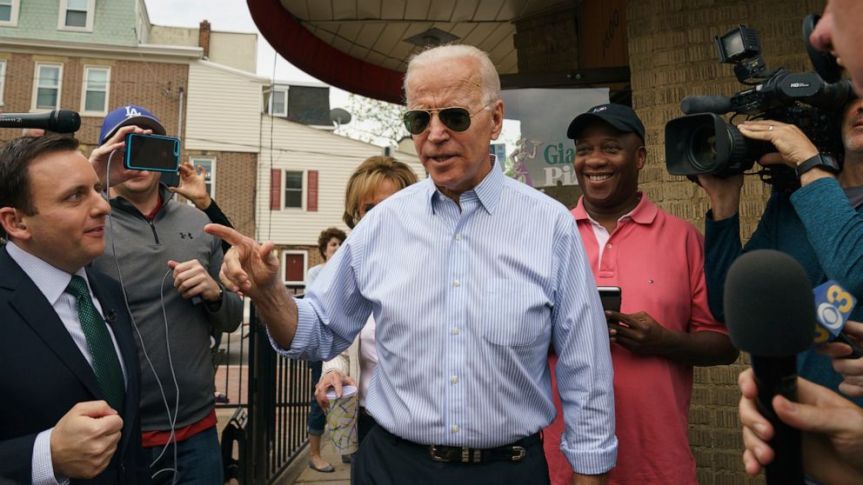
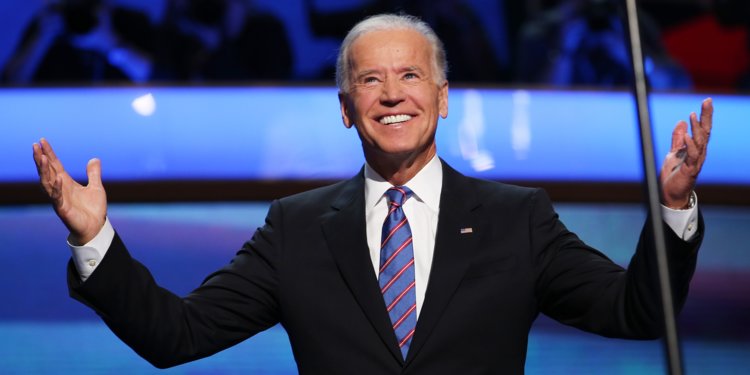
Joe Biden: Angry.  I may be biased, but when Joe tries to match Bernie’s passion, he comes off as angry instead.  There’s just nothing new here.

Elizabeth Warren: Competent.  Warren is always prepared and is capable of delivering a memorable one-liner, especially her quip that she’d be the youngest woman elected to the presidency.  But she may be the candidate least equipped to match Donald Trump in a debate.

Amy Klobuchar: Milquetoast Moderate.  Klobuchar is trying to present herself as the level-headed voice of reason between Trump’s followers and the “radicals” on the side of Sanders and Warren.  This has been tried before (anyone remember Hillary?), and it didn’t work out so well.

Tom Steyer: Earnest.  He’s putting his money where his mouth is.  I just don’t see him being a serious contender for the nomination.

Andrew Yang: Revelatory.  Yang had his best performance in this debate.  He’s shown an ability to think on his feet, and his answers are unconventional and thoughtful.  I hope he stays in these debates and wins more support.

Mayor Pete: Wine Cave.  Poor Mayor Pete.  He’s so desperate to appear serious and important.  But he’ll sell his soul for the big money (not that he’s alone here), including a big fundraiser in a wine cave, which led to the best line of the night, by Andrew Yang, when he quipped about those who are so willing to “shake the money tree in the wine cave.”

Way to go, Andrew Yang.

An Open Letter to Tulsi Gabbard on Voting “Present”

download
Tulsi Gabbard misses the mark with her move to the “center” and her weak vote of “present”

W.J. Astore

On hearing that Tulsi Gabbard voted “present” on Trump’s impeachment, and after reading her statement about that vote, I sent the following note to her campaign:

Dear Tulsi:

I respect your vote of “present” on Trump’s impeachment, but I think it was the wrong choice. Here’s why:

1. Censure is too weak. Trump’s actions are deserving of impeachment.
2. Of course it’s a partisan process, but this is because Trump dominates the Republicans. They all fear a negative tweet from him. Much more than the Democrats, the Republicans are failing their oaths to the Constitution.
3. Your move to the “center” will please few people. Where is this “center”? Both parties are too far to the right, especially when it comes to the forever wars being waged in places like Afghanistan.

You have spoken eloquently about the need to end regime-change wars, and I support you for this reason. But your “present” vote on impeachment was poorly judged, in my opinion. Yes, the impeachment process was partisan and imperfect, but it has always been thus through our nation’s history.

With respect to Trump, I’d say the following: he is not a public servant. He never has been. Trump is a businessman who knows the art of the con. He conflates his own self-interest with that of the country. For Trump, service to self is the only service he understands. This may not be treason, but it is nonetheless dangerous in the extreme. It’s the attitude of a wannabe king, and we already fought a war against that back in the 18th century.

END OF LETTER

The choice now is obvious: Bernie Sanders.

Rewarding the Pentagon for Lying

what
Nothing to see here, people!

W.J. Astore

The Afghan Papers have revealed widespread, systemic, and enduring lying about the course and progress of the Afghan War by U.S. military and civilian leaders.  So, what’s the punishment for all this lying?  Record-setting Pentagon budgets!  The more they lie, the more money they get.  Is it any wonder why these wars persist, without apparent end, when no one is punished for lies that lead to the death of American troops (not forgetting all the foreign innocents who are killed and wounded because of these lies)?

This may seem hard to believe, but “Integrity First” is the fundamental core value of the U.S. Air Force.  But what happens when the system is revealed to have no integrity? When the system sends young Americans to die in a lost war, a war that our most senior leaders have lied about since almost the very beginning?

I know we’re all jaded and cynical, but this is a monstrous failure, a horrendous betrayal of trust.

The entire military leadership at the top should be gutted. Anyone implicated in these lies, distortions, etc. should be cashiered. That’s what a real president and commander-in-chief would do. Heads should roll!

But the Pentagon prefers to obfuscate and pretend that the Afghan Papers are old news, and pretty much meaningless at that.  Meanwhile, fake tough guy Trump (along with the Congress) kowtows to the Pentagon, giving the generals everything they want as next year’s Pentagon budget soars to $738 billion, including money for a “Space Force,” among many other boondoggles.

Endless self-serving lies rewarded by scads of money — small wonder that America’s wars persist without end.

Troop “Reduction” in Afghanistan!

DH0-1MJXYAISyrp
Photo that allegedly persuaded Trump that Afghanistan wasn’t a lost cause

W.J. Astore

Trump was elected president in 2016 partly because he railed against America’s wasteful wars.  So, what did his advisers talk him into?  A mini-surge of troops to Afghanistan.  I still recall the odd news of Trump being shown photos of Afghan women in skirts (vintage 1972) to convince him that westernization and modernization of Afghanistan was possible.

Several thousand additional U.S. troops were sent to Afghanistan in 2017, predictably achieving nothing of note.  A little more than two years later, we have another item of “big” news today, according to CNN:

The Trump Administration is preparing to announce a long-awaited reduction of US troops in Afghanistan, a senior administration official confirmed to CNN. There are between 12,000 and 13,000 US troops in the country right now, and the US has maintained a solid presence throughout the 18-year war in the area. This drawdown would remove up to 4,000 troops, with more possible reductions in the future, the official said. That matches the claim Trump made on Fox News Radio in August that his administration would take the number “down to 8,600.” The reduction comes at the same time the US is restarting peace talks with the Taliban, and some worry the troop drawdown could be seen as a concession to the terrorist group.

Where to begin with this CNN snippet?

  1.  The “reduction” is not a reduction but a return to previous troop levels at the end of the Obama administration.
  2. The U.S. “has maintained a solid presence”?  Good god.  You’d never know about all the bombing, droning, and killing the U.S. has done over the last 18+ years.  Or is that the “solid presence” we’ve been maintaining?
  3. The troop “drawdown” as a “concession” to the Taliban?  Guess what: The Taliban aren’t going anywhere, and they’re winning.  A few thousand U.S. troops, either as a “plus-up” or “drawdown,” have had and will have no impact on the reality on the ground.

Sometimes I don’t know whether to laugh, cry, or do both.  Perhaps my dad put it best: “We laugh to hide the tears.”

Update (12/17): Speaking of laughing to hide the tears, the Pentagon has responded to the systematic lying revealed by the so-called Afghan Papers.  It won’t surprise you the response consists of three artless dodges:

  1. We’re looking forward, not backward!
  2. This is all old news.
  3. Nothing to see here, move along.

I kid you not.

Too Far Left?

buffett

W.J. Astore

Boris Johnson’s victory in Britain is generating predictable headlines in the USA.  Scanning the New York Times this morning, I saw a headline suggesting the Democratic Party is drifting too far to the left to win in 2020.  What arrant nonsense.

In the mainstream media, political issues in America are almost exclusively presented in terms of left and right.  Again, this is nonsense, because America has no leftist party.  We have two rightist ones: the Republicans and the moderate Republicans, otherwise known as Democrats.

In America, the true political divide isn’t about left-right; it’s about top-down, as in the richest Americans and corporations against the rest of America.  When Bill Gates, Warren Buffett, and Jeff Bezos are worth as much as the bottom 50% of Americans (that’s 160 million people), do you think top-down disparities in wealth and power might just be a bit more important than left–right issues?

At least Warren Buffett is honest about this.  “There’s class warfare, all right, but it’s my class, the rich class, that’s making war, and we’re winning.”  The only candidate who’s willing to tackle this issue consistently, Bernie Sanders, is the one who’s either ignored or vilified as extreme by the mainstream media.

Sanders is right.  America needs a political revolution, one in which workers’ concerns would finally take first rather than last place.  And that has nothing to do with being a leftist or rightist.

Impeaching Trump the Cynical Way

Glen_845x400 (1)
#NoResistance

W.J. Astore

Dare I say I haven’t been watching the impeachment proceedings against Trump?  That’s because the charges brought against Trump by the Democrats are weak.  They are basically for Trump acting like Trump.  The Donald is not, never has been, and never will be a public servant.  His existence as president revolves around rallies, golfing, watching Fox News, tweeting, and attending an occasional meeting, party, or other photo op.  If you want to impeach him, why not for not doing his job as chief executive?

What Trump did with Ukraine is what Trump has always done.  He pressured a guy to dig up dirt on another guy who could be a potential rival for his job.  For Trump, this isn’t a crime: it’s business as usual.  He has no grasp of his constitutional duties as president and no interest in learning.

Trump’s next crime has been to stonewall with lawyers and the like while going on the attack.  Again, this is par for the course for him.  He tells his underlings not to obey Congressional orders to testify.  He fights delaying actions.  He lies.  He’s used these and similar tactics his whole life and has lived to fight another day.

Don’t get me wrong.  I think Trump is unqualified to be president.  I’d like to see him gone.  But the charges the Democrats have brought are incredibly weak compared to the damage Trump has already wreaked.  That damage, however, is largely bipartisan, meaning if the Democrats (like Nancy Pelosi) were to call Trump to account for his real crimes against America, they’d implicate themselves as well.  And that’s not about to happen.

The analogy I’ve heard more than once for Trump’s impeachment is that it’s like going after Al Capone for income tax avoidance rather than his murderous reign as a gangster.  Even here, though, it seems more like we’re going after Capone for unpaid parking tickets or for playing Italian opera too loud.

We’ve been told impeachment is a political act, not, strictly speaking, a legal one, and that surely is the case here.  The cynic in me says this: Establishment democrats, led by Nancy Pelosi, knew they had to do something against Trump, if only to appease activists within the party.  Yet they also know they can’t remove Trump, not only because the Senate is controlled by Republicans, but because they can’t charge him with real crimes without implicating themselves, e.g. continuing to sell arms to Saudi Arabia and supporting the House of Saud no matter what in the name of profit and the petrodollar, even if that means a genocide in Yemen.  (It’s a lot worse than cajoling Ukraine to issue a negative statement about the Bidens, right?)

The Democrats know impeachment will fail in the Senate, but they can at least say they took a stand, even if they’re up to their necks in the swamps of DC.  It’s all so sad and sordid, and so predictably the behavior of an opposition party that offers no real opposition.

Readers, what do you think?

America’s Afghan War: Lies and More Lies

Obama
President Obama with General Stanley McChrystal in the days of the ill-fated Afghan Surge

W.J. Astore

Ten years ago, President Barack Obama decided to “surge” in the Afghan War.  The previous year he had run for the presidency on the idea of Iraq being the “bad” war but Afghanistan as the “good” war.  Good as in “winnable” and as countering terrorism.  But Obama’s surge in Afghanistan was a flop, even as American leaders tried to sell it as buying breathing space for the evolution of freer, more stable, Afghan government.

This sell/spin process was all lies, as the Washington Post revealed yesterday:

A confidential trove of government documents obtained by The Washington Post reveals that senior U.S. officials failed to tell the truth about the war in Afghanistan throughout the 18-year campaign, making rosy pronouncements they knew to be false and hiding unmistakable evidence the war had become unwinnable.

Surprise, surprise!  Sadly, the lies were obvious a decade ago, as I wrote about at TomDispatch.com in April of 2009.  Here’s my article from that time.  Remarkably, despite or rather because of all the lies, the war continues still, with no end in sight.

Mary McCarthy in Vietnam, Barack Obama in Afghanistan
Seven Lessons and Many Questions for the President

By William Astore (April 2009)

In 1967, outraged by the course of the Vietnam War, as well as her country’s role in prolonging and worsening it, Mary McCarthy, novelist, memoirist, and author of the bestseller The Group, went to Saigon, then the capital of South Vietnam, to judge the situation for herself. The next year, she went to the North Vietnamese capital, Hanoi. She wrote accounts of both journeys, published originally in pamphlet format as Vietnam (1967) and Hanoi (1968), and later gathered with her other writings on Vietnam as a book, The Seventeenth Degree (1974). As pamphlets, McCarthy’s accounts sold poorly and passed into obscurity; deservedly so, some would say.

Those who’d say this, however, would be wrong. McCarthy brought a novelist’s keen eye to America’s activities and its rhetoric in Vietnam. By no means a military expert, not even an expert on Vietnam — she only made a conscious decision to study the war in Vietnam after she returned from her trip to Saigon — her impressionistic writings were nevertheless insightful precisely because she had long been a critical thinker beholden to no authority.

Her insights into our approach to war-fighting and to foreign cultures are as telling today as they were 40 years ago, so much so that President Obama and his advisors might do well to add her unconventional lessons to their all-too-conventional thinking on our spreading war in Afghanistan and Pakistan.

What were those lessons? Here are seven of them, each followed by questions that, four decades later, someone at President Obama’s next press conference should consider asking him:

1. McCarthy’s most fundamental objection was to the way, in Vietnam, the U.S. government decided to apply “technology and a superior power to a political situation that will not yield to this.” At the very least, the United States was guilty of folly, but McCarthy went further. She condemned our technocentric and hegemonic form of warfare as “wicked” because of its “absolute indifference to the cost in human lives” to the Vietnamese people.

Even in 1967, the widespread, at times indiscriminate, nature of American killing was well known. For example, U.S. planes dropped roughly 7 million tons of bombs on Vietnam and parts of Laos and Cambodia during the war, nearly five times the tonnage used against Germany during World War II. The U.S. even waged war on the Vietnamese jungle and forest, which so effectively hid Vietnamese guerrilla forces, spraying roughly 20 million gallons of toxic herbicides (including the dioxin-contaminated Agent Orange) on it.

In her outrage, McCarthy dared to compare the seeming indifference of many of her fellow citizens toward the blunt-edged sword of technological destruction we had loosed on Vietnam to the moral obtuseness of ordinary Germans under Adolf Hitler.

Questions for President Obama: Aren’t we once again relying on the destructive power of technology to “solve” complex political and religious struggles? Aren’t we yet again showing indifference to the human costs of war, especially when borne by non-Americans? Even though we’re using far fewer bombs in the Af-Pak highlands than we did in Vietnam, aren’t we still morally culpable when these “precision-guided munitions” miss their targets and instead claim innocents, or hit suspected “terrorists” who suddenly morph into wedding parties? In those cases, do we not seek false comfort in the phrase, C’est la guerre, or at least that modern equivalent: unavoidable collateral damage?

2. As Richard Nixon campaigned for the presidency in 1968 by calling for “peace with honor” in Vietnam, McCarthy offered her own warning about the dangers that arose when the office of the presidency collided with an American desire never to be labeled a loser: “The American so-called free-enterprise system, highly competitive, investment-conscious, expansionist, repels a loser policy by instinctive defense movements centering in the ganglia of the presidency. No matter what direction the incumbent, as candidate, was pointing in, he slowly pivots once he assumes office.”

Questions for President Obama: Have you, like Vietnam-era presidents, pivoted toward yet another surge simply to avoid the label of “loser” in Afghanistan? And if the cost of victory (however defined) is hundreds, or even thousands, more American military casualties, hundreds of billions of additional dollars spent, and extensive collateral damage and blowback, will this “victory” not be a pyrrhic one, achieved at a price so dear as to be indistinguishable from defeat?

3. Though critical of the U.S. military in Vietnam, McCarthy was even more critical of American civilian officials there. “On the whole,” she wrote, they “behaved like a team of promoters with a dubious ‘growth’ stock they were brokering.” At least military men were often more forthright than the civilians, if not necessarily more self-aware, McCarthy noted, because they were part of the war — the product, so to speak — not its salesmen.

Questions for President Obama: In promising to send a new “surge” of State Department personnel and other civilians into Afghanistan, are you prepared as well to parse their words? Are you braced in case they sell you a false bill of goods, even if the sellers themselves, in their eagerness to speak fairy tales to power, continually ignore the Fantasyland nature of their tale?

4. Well before Bush administration officials boasted about creating their own reality and new “facts on the ground” in Iraq, Mary McCarthy recognized the danger of another type of “fact”: “The more troops and matériel committed to Vietnam, the more retreat appears to be cut off — not by an enemy, but by our own numbers. To call for withdrawal in the face of that commitment… is to seem to argue not against a policy, but against facts, which by their very nature are unanswerable.”

Questions for President Obama: If your surge in Afghanistan fails, will you be able to de-escalate as quickly as you escalated? Or will the fact that you’ve put more troops in harm’s way (with all their equipment and all the money that will go into new base and airfield and road construction), and committed more of your prestige to prevailing, make it even harder to consider leaving?

5. A cursory reading of The Pentagon Papers, the famously secret government documents on Vietnam leaked to the New York Times by Daniel Ellsberg, reveals how skeptical America’s top officials were, early on, in pursuing a military solution to the situation in South Vietnam. Nevertheless, knowing better, the “best and brightest,” as journalist David Halberstam termed them in his famous, ironic book title, still talked themselves into it; and they did so, as McCarthy noted, because they set seemingly meaningful goals (“metrics” or “benchmarks,” we’d say today), which they then convinced themselves they were actually achieving. When you trick yourself into believing that you’re meeting your goals, as Halberstam noted, there’s no reason to reexamine your course of action.

Questions for President Obama: Much has been written about an internal struggle within your administration over the wisdom of surging in Afghanistan. Now, you, too, have called for the setting of “benchmarks” for your new strategy’s success. Are you wise enough to set them to capture the complexities of political realities on the ground rather than playing to American strengths? Are you capable of re-examining them, even when your advisors assure you that they are being achieved?

6. In her day, Mary McCarthy recognized the inequities of burden-sharing at home when it came to the war in Vietnam: “Casualty figures, still low [in 1967], seldom strike home outside rural and low-income groups — the silent part of society. The absence of sacrifices [among the privileged classes] has had its effect on the opposition [to the war], which feels no need, on the whole, to turn away from its habitual standards and practices — what for? We have not withdrawn our sympathy from American power and from the way of life that is tied to it — a connection that is more evident to a low-grade G.I. in Vietnam than to most American intellectuals.”

Questions for President Obama: Are you willing to listen to the common G.I. as well as to the generals who have your ear? Are you willing to insist on greater equity in burden-sharing, since once again most of the burden of Iraq and Afghanistan has fallen on “the silent part of society”? Are you able to recognize that the “best and brightest” in the corridors of power may not be the wisest exactly because they have so little to lose (and perhaps much to gain) from our “overseas contingency operations”?

7. McCarthy was remarkably perceptive when it came to the seductiveness of American technological prowess. Our technological superiority, she wrote, was a large part of “our willingness to get into Vietnam and stay there… The technological gap between us and the North Vietnamese constituted, we thought, an advantage which obliged us not to quit.”

Questions for President Obama: Rather than providing us with a war-winning edge, might our robot drones, satellite imagery, and all our other gadgetry of war seduce us into believing that we can “prevail” at a reasonable and sustainable cost? Indeed, do we think we should prevail precisely because our high-tech military brags of “full spectrum dominance”?

One bonus lesson from Mary McCarthy before we take our leave of her: Even now, we speak too often of “Bush’s war” or, more recently, “Obama’s war.” Before we start chattering mindlessly about Iraq and Afghanistan as American tragedies, we would do well to recall what McCarthy had to say about the war in Vietnam: “There is something distasteful,” she wrote, “in the very notion of approaching [Vietnam] as an American tragedy, whose protagonist is a great suffering Texan [President Lyndon Baines Johnson].”

Yes, there is something distasteful about a media that blithely refers to Bush’s or Obama’s war as hundreds of thousands of Iraqis and Afghans suffer. For American troops, after all, are not the only ones paying the ultimate price when the U.S. fights foreign wars for ill-considered reasons and misguided goals.

Update: A cartoon panel by Matt Bors that sums it up:

the-war-of-a-lifetime-2-6d0

Why I Still Watch NFL Football

stealthbomberhead-800x533
Nothing screams “America!” like huge stadiums, big bombers, and giant flags 

W.J. Astore

A few weeks ago, a reader asked me a fair question: Why do I continue to watch football, given my comments on violence in the sport and the militarization of the game, including camouflage uniforms (even for coaches and cheerleaders!).  I could have hedged and said I don’t watch much football.  I don’t watch college games, and the only NFL game I regularly watch features my home team.  In short, I watch about three hours a week, and a little more during the playoffs.  Nevertheless, I still watch, so why do I do it?

I wrote back and identified four reasons: Because I’ve watched football since I was a kid (habit) and I enjoy the sport.  Because I put my mind in neutral during the game and just enjoy the action (a form of denial, I suppose).  Because, like so many Americans, I get caught up in the spectacle of it all, its ritualistic nature.  Because it’s often unpredictable and real in a way that “reality” shows are not.

After sending that answer along, another reader noted how my reasons could be made to serve as partial justification for supporting America’s wars, and to be honest the thought had occurred to me before I sent my answer.  So, you could say I’ve watched wars since I was a kid and on some level “enjoyed” them (the action, the drama, the spectacle of it all, the way things are “played for keeps”).  Perhaps I put my mind in neutral as well (TV trance) while enjoying the “reality” and rooting for the home team (America!).  Sports and war are connected in complex ways, and I’m only scratching the surface here.

I’d like to add two more reasons why I watch football.  I enjoy rooting for “my” team, and when they win, I’m pleased.  When they don’t, I’m bummed.  I get over it quickly (after all, it’s just a game, right?), but on some level the games have meaning to me.  I identify with “my” team, simple as that.

One more reason: nostalgia.  These games recall a simpler time, when we threw a ball around with friends or our dad, then quit for the day to watch a game and scream and shout at the stadium or in our living rooms.  (Such nostalgia is not unknown among combat veterans, who look back on war with mixed feelings of horror but also of love, or at least attraction in the sense of a powerful camaraderie and sense of belonging shared by those who were there.  It’s one reason for war’s peculiar attraction and perhaps its endurance as well.)

What say you, readers?  Do you watch football and, if so, why?

Random Thoughts on Death, Dying, and the Reality of America’s Wars

Another reason for the persistence of America’s wars is captured in a speech by Chief Dan George in the movie, “Little Big Man.” We have little sense of the sanctity of life, and we treat nature like our personal trash can. As Chief Dan George says, “If things keep trying to live, White Man will rub them out.” We need a much more enlightened approach to nature — and to ourselves — but we seem content instead to become purveyors of violence even as we play down or even deny the reality of death from our weapons and wars.

wjastore's avatarBracing Views

Jarecke's photo of a dead Iraqi was considered too disturbing to publish in America Kenneth Jarecke’s 1991 photo of a dead Iraqi was considered too disturbing to publish in America

W.J. Astore

Americans tend to fear death.  It makes us uncomfortable.  Yet death is inevitable.  Its inevitability should teach us to revel in the richness of the here and now.  It should also teach us the foolishness of undue pride.

All is vanity, the Bible teaches.  Death reminds us of this — that human vanity, as unavoidable as it may be, is ultimately shallow.  There are riches out there that we should seek away from the glaring and garish light of vanity.  Riches that give deeper meaning to life.

Of all cultures in the world, I wonder if there’s another that ignores or denies death as much as American culture.  We’re the culture of new beginnings, fresh starts, reinvention, and also of the perpetual now, of youth, of defying or denying death through face…

View original post 536 more words