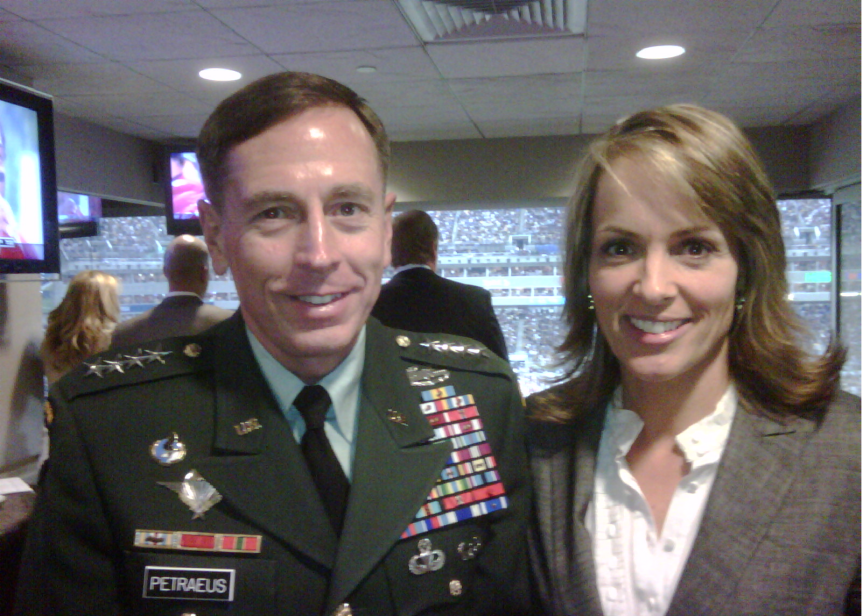
A scarlet letter hasn’t prevented Petraeus’s rise after retirement
W.J. Astore
One of the more disturbing aspects of American militarism today has been the elevation of generals to the pantheon of heroes. Since 9/11, one U.S. general has excelled all others in hype: David Petraeus, the “Surge” savior of Iraq.
Today, Nick Turse has an outstanding article at TomDispatch.com on Petraeus and his charmed career. Despite his very public marital infidelity, and despite leaking highly classified secrets to his mistress, Petraeus has emerged from scandal as if reborn.
As Turse notes with telling humor, the retired general is more in demand than ever, so busy making money and giving advice to the high and mighty that he has no time to talk to (critical) journalists. Shepherded in style from event to event, looked up to as a sage on nearly every topic facing America today, Petraeus has somehow maintained a Messiah-like aura despite his past sins.
And I truly mean Messiah-like. Turse cites a story about Petraeus that I’d never heard that casts a whole new celestial light on Petraeus and his hype machine. Visiting a wounded soldier in the hospital, a soldier apparently in an irreversible coma, Petraeus reportedly awakened this man by shouting “Currihee,” a Cherokee word and unit battle cry that became famous after HBO’s popular “Band of Brothers” series.
And what immediately popped into my head? Lazarus, come forth!
In the New Testament, Jesus Christ awakened the dead Lazarus. Petraeus awakened a comatose soldier. Petraeus is not just a genius general — He’s the freakin’ Messiah!
America’s continued embrace of Petraeus says much about the American moment. Despite the fact that his “surges,” whether in Iraq or Afghanistan, were not miracles but rather, in their lack of staying power, essentially mistakes, Petraeus is still celebrated as warrior, sage, even saint (despite that obvious scarlet letter).
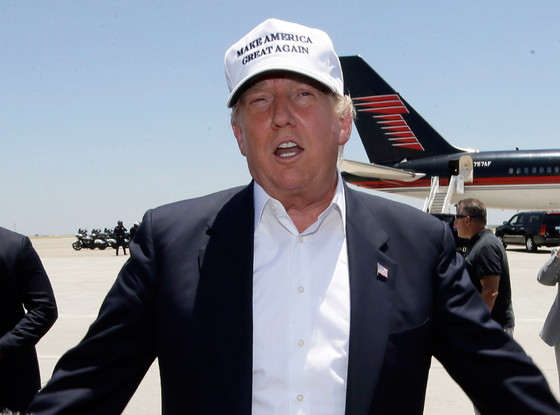
Is it possible that “saint” Petraeus might be “born again” to become a serious presidential contender in 2020? Heck, if thrice-married Donald Trump can break all the rules of civility to win his party’s nomination, why not the “honorable” Petraeus?
I’m not a prophet, but I’ll issue a warning anyway: Beware of false messiahs in 2020, especially those who wore general’s stars with miracle stories following in their wake.
All they are sayin’ is give bombing a chance (U.S. Air Force photo)
W.J. Astore
In my latest article for TomDispatch.com, which you can read in its entirety here, I tackle the American infatuation with air power and bombing. Despite its enormous destructiveness and indecisive results in Korea, Vietnam, Desert Storm, the Iraq invasion of 2003, and in the ongoing War on Terror, U.S. leaders persist in bombing as a means to victory, even against dispersed organizations such as ISIS and the Taliban that offer few targets. As I put it in my article:
For all its promise of devastating power delivered against enemies with remarkable precision and quick victories at low cost (at least to Americans), air power has failed to deliver, not just in the ongoing war on terror but for decades before it. If anything, by providing an illusion of results, it has helped keep the United States in unwinnable wars, while inflicting a heavy toll on innocent victims on our distant battlefields. At the same time, the cult-like infatuation of American leaders, from the president on down, with the supposed ability of the U.S. military to deliver such results remains remarkably unchallenged in Washington.
Indeed, as Glenn Greenwald points out, Hillary Clinton’s presumptive Defense Secretary, Michele Flournoy, has already issued calls for more U.S. bombing and military interventions in the Middle East. Talk about doubling down on a losing strategy.
Yet “strategy” isn’t really the right word. Bombing is a method of war, not a strategy. And in this case the method truly is the madness, with the end being perpetual war.
When will the madness end? To be honest, I don’t see an end in the immediate future, so invested in bombing are America’s leaders and foreign “diplomats.”
Here’s the rest of my article for TomDispatch.com.
Yet despite this “asymmetric” advantage [America’s dominance of the air], despite all the bombing, missile strikes, and drone strikes, “progress” proved both “fragile” and endlessly “reversible” (to use words General David Petraeus applied to his “surges” in Iraq and Afghanistan). In fact, 12,000 or so strikes after Washington’s air war against ISIS in Syria and Iraq began in August 2014, we now know that intelligence estimates of its success had to be deliberately exaggerated by the military to support a conclusion that bombing and missile strikes were effective ways to do in the Islamic State.
So here we are, in 2016, 25 years after Desert Storm and nearly a decade after the Petraeus “surge” in Iraq that purportedly produced that missing mission accomplished moment for Washington — and U.S. air assets are again in action in Iraqi and now Syrian skies. They are, for instance, flying ground support missions for Iraqi forces as they attempt to retake Falluja, a city in al-Anbar Province that had already been “liberated” in 2004 at a high cost to U.S. ground troops and an even higher one to Iraqi civilians. Thoroughly devastated back then, Falluja has again found itself on the receiving end of American air power.
If and when Iraqi forces do retake the city, they may inherit little more than bodies and rubble, as they did in taking the city of Ramadi last December. About Ramadi, Patrick Cockburn noted last month that “more than 70% of its buildings are in ruins and the great majority of its 400,000 people are still displaced” (another way of saying, “It became necessary to destroy the town to save it”). American drones, meanwhile, continue to soar over foreign skies, assassinating various terrorist “kingpins” to little permanent effect.
Tell Me How This Ends
Here’s the “hot wash”: something’s gone terribly wrong with Washington’s soaring dreams of air power and what it can accomplish. And yet the urge to loose the planes only grows stronger among America’s political class.
Given the frustratingly indecisive results of U.S. air campaigns in these years, one might wonder why a self-professed smart guy like Ted Cruz, when still a presidential candidate, would have called for “carpet” bombing our way to victory over ISIS, and yet in these years he has been more the norm than the exception in his infatuation with air power. Everyone from Donald Trump to Barack Obama has looked to the air for the master key to victory. In 2014, even Petraeus, home from the wars, declared himself “all in” on more bombing as critical to victory (whatever that word might now mean) in Iraq. Only recently he also called for the loosing of American air power (yet again) in Afghanistan — not long after which President Obama did just that.
Even as air power keeps the U.S. military in the game, even as it shows results (terror leaders killed, weapons destroyed, oil shipments interdicted, and so on), even as it thrills politicians in Washington, that magical victory over the latest terror outfits remains elusive. That is, in part, because air power by definition never occupies ground. It can’t dig in. It can’t swim like Mao Zedong’s proverbial fish in the sea of “the people.” It can’t sustain persuasive force. Its force is always staccato and episodic.
Its suasion, such as it is, comes from killing at a distance. But its bombs and missiles, no matter how “smart,” often miss their intended targets. Intelligence and technology regularly prove themselves imperfect or worse, which means that the deaths of innocents are inevitable. This ensures new recruits for the very organizations the planes are intent on defeating and new cycles of revenge and violence amid the increasing vistas of rubble below. Even when the bombs are on target, as happens often enough, and a terrorist leader or “lieutenant” is eliminated, what then? You kill a dozen more? As Petraeus said in a different context: tell me how this ends.
Recalling the Warbirds
From Ronald Reagan to Barack Obama, dropping bombs and firing missiles has been the presidentially favored way of “doing something” against an enemy. Air power is, in a sense, the easiest thing for a president to resort to and, in our world, has the added allure of the high-tech. It looks good back home. Not only does the president not risk the lives of American troops, he rarely risks retaliation of any kind.
Whether our presidents know it or not, however, air power always comes with hidden costs, starting with the increasingly commonplace blowback of retaliatory terrorist strikes on “soft” targets (meaning people) in cities like Paris or Madrid or London. Strikes that target senior members of enemy armies or terrorist organizations often miss, simply stoking yet more of the sorts of violent behavior we are trying to eradicate with our own version of violence. When they don’t miss and the leadership of terror groups is hit, as Andrew Cockburn has shown, the result is often the emergence of even more radical and brutal leaders and the further spread of such movements. In addition, U.S. air power, especially the White House-run drone assassination program, is leading the way globally when it comes to degrading the sovereignty of national borders. (Witness the latest drone strike against the head of the Taliban in violation of Pakistani airspace.) Right now, Washington couldn’t care less about this, but it is pioneering a future that, once taken up by other powers, may look far less palatable to American politicians.
Despite the sorry results delivered by air power over the last 65 years, the U.S. military continues to invest heavily in it — not only in drones but also in ultra-expensive fighters and bombers like the disappointing F-35 (projected total cost: $1.4 trillion) and the Air Force’s latest, already redundant long-range strike bomber (initial acquisition cost: $80 billion and rising). Dismissing the frustratingly mixed and often destabilizing results that come from air strikes, disregarding the jaw-dropping prices of the latest fighters and bombers, America’s leaders continue to clamor for yet more warplanes and yet more bombing.
And isn’t there a paradox, if not a problem, in the very idea of winning a war on terror through what is in essence terror bombing? Though it’s not something that, for obvious reasons, is much discussed in this country, given the historical record it’s hard to deny that bombing is terror. After all, that’s why early aviators like Douhet and Mitchell embraced it. They believed it would be so terrifyingly effective that future wars would be radically shortened to the advantage of those willing and able to bomb.
As it turned out, what air power provided was not victory, but carnage, terror, rubble — and resistance.
Americans should have a visceral understanding of why populations under our bombs and missiles resist. They should know what it means to be attacked from the air, how it pisses you off, how it generates solidarity, how it leads to new resolve and vows of vengeance. Forget Pearl Harbor, where my uncle, then in the Army, dodged Japanese bombs on December 7, 1941. Think about 9/11. On that awful day in 2001, Homeland USA was “bombed” by hijacked jet liners transformed into guided missiles. Our skies became deadly. A technology indelibly associated with American inventiveness and prowess was turned against us. Colossally shocked, America vowed vengeance.
Are our enemies any less resolutely human than we are? Like us, they’re not permanently swayed by bombing. They vow vengeance when friends, family members, associates of every sort are targeted. When American “smart” bombs obliterate wedding parties and other gatherings overseas, do we think the friends and loved ones of the dead shrug and say, “That’s war”? Here’s a hint: we didn’t.
Having largely overcome the trauma of 9/11, Americans today look to the sky with hope. We watch the Blue Angels and Thunderbirds with a sense of awe, wonder, and pride. Warplanes soar over our sports stadiums. The sky is ourhigh ground. We see evidence of America’s power and ingenuity there. Yet people in Afghanistan, Iraq, and elsewhere often pray for clouds and bad weather; for them, clear skies are associated with American-made death from above.
It’s time we allow other peoples to look skyward with that same sense of safety and hope as we normally do. It’s time to recall the warbirds. They haven’t provided solutions. Indeed, the terror, destruction, and resentments they continue to spread are part of the problem.
I am a lifelong Democrat living in one of the former Confederate states that will not turn purple in the 2016 presidential election cycle no matter what Trump says or does. I therefore feel free to withhold my vote from Secretary Clinton this election cycle because of serious doubts about her neoliberal domestic policy instincts and her hawkish foreign policy leanings. To the extent that she is responsive to the demands of electoral politics, I think her first term administration can be influenced in a progressive direction (especially in matters of political economy and foreign affairs). The following thoughts are intended to suggest one way of exercising progressive pressure.
These thoughts are aimed at people like me–progressives living in NON-battleground states who feel free to vote for a third party progressive at the presidential level in this election but who also hope for progressive leadership if (as currently seems likely) Secretary Clinton wins. As a result of the Bernie Sanders campaign, progressives have come to understand that they have real leverage and it doesn’t only consist of their votes.
During this past primary season, I engaged in a level of political activity that was unprecedented for me. In addition to donating to the Sanders campaign what turned out to be about one percent of my annual income, I held a fundraising dinner with friends that raised another (albeit smaller) chunk of money for the campaign. I made phone calls to voters in Colorado, Massachusetts, and Oklahoma before Super Tuesday and lobbied friends and family members across several states to vote for Sanders. To the extent that tens (if not hundreds) of thousands of others had similar unprecedented experiences, we constitute a political force whose collective fundraising capacity and campaign labor are robust enough to make it worthwhile to a first term Clinton administration to try to earn our support for the 2020 campaign.
What concrete actions would earn my support? I could list several but I’ll limit myself in this post to the issue of presidential appointments in two areas. (I welcome contributions to this list from progressives out there from non-battleground states with similar experiences who see some promise in this approach.)
The first thing a first term Clinton Administration could do to earn my vote in 2020 is to demonstrate independence from the special interests who have financially rewarded Secretary Clinton, members of her family, and the Clinton Foundation with extremely generous speaking fees, lucrative positions, and/or donations. In the appointments process in the domestic policy area this would mean refusing to nominate people to departmental, agency, or judicial positions who are products or beneficiaries of, or otherwise beholden to, those special interests, which include investment banks, private health insurers, fossil fuel industry. For example, don’t choose a Wall Street insider for the position of Secretary of the Treasury. Better a Wall Street whistle blower or an academic Jeremiah who warned of the coming mortgage securities implosion.
In national security deliberations, ensure that the people at the table include those who have proven to be prescient about the limited efficacy of military force as well as those who have expressed concern about imperial overreach. Whether or not the rumor is true that Secretary Clinton was consistently one of the most hawkish people in the room during Obama Administration foreign policy deliberations, she needs to have at the critical meetings foreign policy and national security figures of weight and influence who can provide alternative perspectives to the drumbeat of hawkish advice which so often passes for serious thinking in DC foreign policy circles. In this respect, it would go a long way merely as a symbolic gesture for Secretary Clinton to make clear that she isn’t going to take advice from Henry Kissinger, that he won’t be visiting the White House, that his calls will not be taken, and that any efforts to give advice through back channels will be rebuffed.
Secretary Clinton’s impending choice of a running mate may be the best indication we have of the direction in which she will go in the appointments process. Will she pick a proven progressive and independent voice such as Elizabeth Warren or Tom Perez? Or will she opt for someone firmly in the Clinton mold (e.g., a cultivator of Wall Street and other special interest contacts and money)?
In a future post, the sort of policy proposals that could earn progressive votes will be taken up.
M. Davout is a pseudonym for a professor of political science and critic of US politics, culture, and empire.
The language of war fascinates me. I was reading President Obama’s response to Donald Trump on whether Obama “gets it” when it comes to the threat of terrorism and came across this passage:
“Someone [Donald Trump] seriously thinks that we don’t know who we are fighting? If there is anyone out there who thinks we are confused about who our enemies are — that would come as a surprise to the thousands of terrorists who we have taken off the battlefield.”
That’s such a curious phrase: “terrorists who we have taken off the battlefield.” As if the United States has simply evacuated them or relocated them instead of killing them.
I think the distancing effect of air power has something to do with this euphemistic language. The U.S. military “takes people off the battlefield” rather than killing them, blowing them up, and so on. Obama’s personality may also play a role: a rational person, he’s been compared to the Vulcan Mr. Spock from “Star Trek” in his coolly logical approach to war.
Perhaps that coolly rational side, and not his preference to avoid terms like “radical Islamic terrorism,” is what gets Obama into trouble. Many Americans would prefer more directness, more passion, even though such directness and passion is often the approach of posturing chickenhawks. Consider the language of Bush/Cheney and all their blustering about “wanted, dead or alive” and “the axis of evil“ and “you’re either for us or against us.” Bush/Cheney talked as if they had just walked off a Western movie set after a gunfight, but both avoided the Vietnam War when they were young men, with Cheney famously saying he had other, more important things to do with his life. (Bush flew in the Texas Air National Guard, apparently gaining a slot after his father pulled some political strings.)
So, what should Obama have said in place of “we’ve taken them off the battlefield”?
Why not be honest and say something like this? “I’m well into the eighth and final year of my administration, during which I’ve approved drone strikes and air raids that have killed thousands of suspected and confirmed terrorists. Sure, we’ve often missed some targets, killing innocent people instead, but hey — war is hell. I’ve approved Pentagon budgets that each year approach $750 billion, I’ve overseen the U.S. dominance of the international trade in weapons, I continue to oversee an empire of roughly 700 overseas U.S. bases. Some have even called me the assassin in chief, and they’re right about that, because under my command deadly drone strikes have increased dramatically. Meanwhile, we’ve already made some 12,000 air strikes against ISIS/ISIL. So don’t tell me, Mr. Trump, that I don’t know who the enemy is. Don’t tell me I’m not willing to murder terrorists whenever and wherever we find them, even when they’re U.S. citizens and teenagers. Don’t tell me I don’t get it.”
Those words would be honest – though they’d really just scratch the surface of the Obama-led efforts to secure the “Homeland.” But instead Obama speaks of “taking” terrorists “off the battlefield,” cloaking his administration’s violent actions in a euphemistic phrase that would be consistent with angels from on high coming down to lift terrorists off the battlefield to some idyllic oasis.
Odd, isn’t it, that so few Americans criticize Obama for his murderous actions in overseas wars, but so many will criticize him for not bragging and boasting about it.
Well, if America is looking for a braggart, someone willing to boast about himself, they have their man in Donald Trump. If they’re looking for a new assassin in chief, they have their woman in Hillary Clinton. And if they’re looking for fresh ideas, a new strategy, a way to end our seemingly endless wars, they’re simply out of luck this election season, unless you go to a third-party candidate like Jill Stein.
In these over-heated times, the chances of a third-party challenge with substance are somewhere between nada and nil. In the United States in 2016, war and weapons sales and imperial expansion will continue to find a way, even as our leaders cloak their violent actions using the most anodyne phrases.
The FP: Foreign Policy feed that I receive had two items that grabbed my attention this morning. The first involves the war in Afghanistan. In short, there’s no end in sight. Unlike in the Vietnam War, no one is seeing any lights at the end of tunnels. Nevertheless, U.S. and NATO leaders vow to keep supporting Afghan forces as they continue to lose territory to a resurgent Taliban that had basically given up in 2001.
Here’s the latest from FP (co-authored by Paul McLeary with Adam Rawnsley):
NATO’s not done in Afghanistan. It looks like the United States and NATO are going to stick it out in Afghanistan for at least a few more years, as the Afghan army continues to battle a resurgent Taliban with no end in sight. Following a NATO meeting in Brussels this week, British Defense Secretary Michael Fallon told reporters that U.S. Defense Secretary Ash Carter “told us the troop numbers and the dispositions are being looked at again,” as President Barack Obama weighs whether to draw the U.S. presence in Afghanistan down from 9,800 to 5,000 by the end of this year. NATO says it’s in, at least through the end of next year. Secretary-General Jens Stoltenberg said the allies are abandoning their plans to pull back to Kabul by the end of this year, and “will have what we call a flexible regional approach, meaning that we will continue to be of course in Kabul but also out in the different regions.”
That’s significant. So are comments by an anonymous NATO diplomat who told the AP that the alliance will most likely come up with the $5 billion needed to fund the current number of Afghan security forces through 2020. The longest of the Long Wars grinds on.
Put bluntly, U.S. and NATO leaders continue to reinforce failure in Afghanistan. Their strategy, such as it is, is simply more of what hasn’t worked over the last fifteen years. Apparently, forever war is sustainable to the U.S. and NATO. No one seems to be asking whether the cost is sustainable to the Afghan people.
The second item involves American aid to Israel, which is primarily military aid. Here’s how the folks at FP put it:
Israel: After much back and forth sparring, the U.S. and Israel appear to be nearing an agreement on a U.S. military aid package. Israeli officials had been hoping that the Obama administration would agree to a memorandum of understanding (MOU) promising $40 billion in aid over a decade — an increase of $10 billion over the last MOU. So far, the U.S. has been discussing a deal in the range of $35-37 billion. Other questions about the aid remain up in the air such as whether the final package will include money for missile defense and how much of the money Israel will be able to spend among its own defense contractors versus American companies.
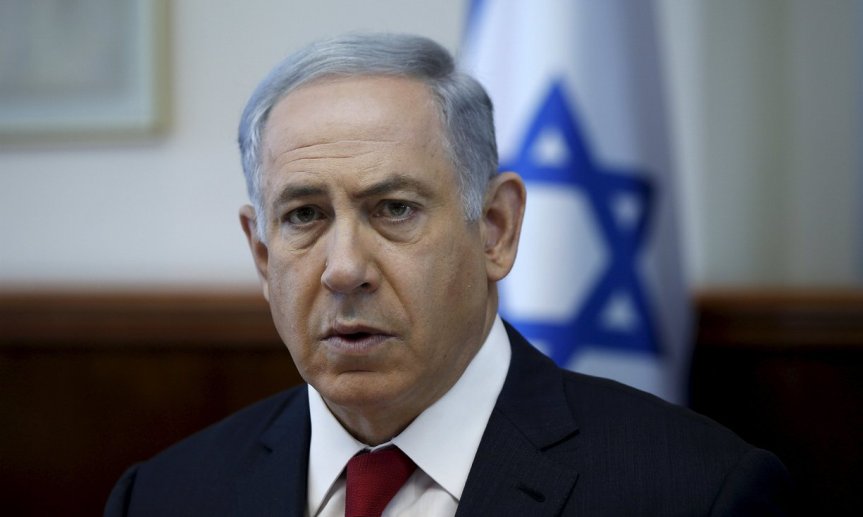
There you have it: the “sparring” between Israel and the U.S. is about whether Israel will get a huge chunk of America aid, or a gargantuan chunk of aid. Meanwhile, the U.S. government seems to have no influence over the Israeli government. Netanyahu does pretty much what he wants to do, even as he thumbs his nose at Obama.
The “punishment” for Netanyahu’s intractability – well, there is none. As a punch-drunk American heavyweight boxer staggers about the ring, a sneering Israeli lightweight launches punch after punch, taunt after taunt. And after absorbing the punishment the heavyweight simply throws in the towel and agrees to the lightweight’s terms.
Of course, none of this will change under President Hillary Clinton. If anything, Clinton will pursue the Afghan War with more vigor and ladle even more “aid” to Israel. Under President Trump, who knows? All bets are truly off since Trump changes his positions as often as most men change their underwear. (For example, Trump first affirmed neutrality in negotiating between the Israelis and Palestinians, then pledged one-sided support for Israel in a speech to AIPAC.)
Well, my dad always said, the more things change, the more they remain the same. In these two cases, he was right – yet again.
Donald Trump is a tacky, classless, and vulgar man. Recall back in April that he sent a tweet, since deleted, saying that “If Hillary Clinton can’t satisfy her husband what makes her think she can satisfy America?” Back in December, he wrote that Hillary “got schlonged” by Obama when they ran against one another back in 2008. (“Schlong” is Yiddish for penis; I recall hearing it as a teenager without ever knowing its Yiddish origins, not that etymology mattered much to teens in a locker room context.)
I’m no fan of Hillary Clinton, and indeed I’ve criticized her at this site for her establishment ties, her warmongering, her acceptance of big money from banks, her incrementalism, her lack of generosity toward the working classes when compared to Bernie Sanders, her lack of judgment when it came to her vote on the Iraq War or the intervention in Libya. And that’s my point: there are plenty of legitimate issues on which to criticize Hillary. Just think of her unsecure private email server, for example, which she used while leading the State Department. Hillary and her husband Bill have often acted as if one set of rules applied to them and another set applied to “everyday people” like you and me; call it the hypocrisy of the privileged, a common enough trait in America.
There are so many substantive and important issues to criticize Hillary and Bill on that it’s truly revealing when Trump stoops to attack Hillary just because she’s a woman, just because “she yells,” just because her husband cheated on her (Trump also claimed she “enabled” Bill’s cheating), and just because she lost a previous primary to a man with a penis. Recall as well when Trump criticized Hillary by saying that if she “were a man, I don’t think she’d get 5 percent of the vote. The only thing she’s got going is the women’s card.”
Politics is the land of the rough and tumble, but Trump’s attacks on his opponent that center on her gender and her husband’s cheating are beyond rough. They are the actions of a crude, tacky, boorish, and classless person, a person whose behavior is uncivil, behavior that would make even teenage boys in a locker room squirm.
What does she really stand for? (Photo by Melina Mara/The Washington Post)
W.J. Astore
What does Hillary Clinton stand for? It’s a serious question. Sure, she’s given a lot of speeches, but without saying much. I’ve watched the debates and have listened to her speak, and the best I can come up with is this:
She’s continuing the legacy of Obama. For example, Obamacare will be extended to cover all Americans.
She’s going to break the glass ceiling that has blocked a woman from being president.
She loves Israel and will support whatever the Israeli government wants.
She’s going to work to raise the minimum wage for workers — $12.00 is the goal.
She’s going to work against the TPP (after she was initially for it).
She’s against the Keystone Pipeline (after initially supporting it).
She’s fully for equality for the LGBT community (after initially being against it).
She’s for an aggressive U.S. military posture and fully supports enormous defense budgets.
She’s not going to do dumb things like that scary Donald Trump.
She’s got a lot of experience in government. The length of her resume alone qualifies her to be president.
That’s the gist of her message as far as I’ve been able to discern. Of course, there are other messages for her followers. Surely Hillary will support reproductive rights, to include access to abortion. Surely she will appoint justices to the Supreme Court that are somewhere to the left of Antonin Scalia. Such considerations shouldn’t be dismissed out of hand.
But a new path for our country? Fresh ideas? They’re not coming from Hillary. Important issues like campaign finance reform, reforming banks and other powerful financial institutions, reducing income inequality in the United States, and similar issues of reform and fairness are dead on arrival if she’s elected president.
Also, Hillary’s embrace of Henry Kissinger as well as neo-conservative principles in foreign policy ensures a continuation of wars in Afghanistan, Iraq, and locations throughout the Greater Middle East. (When I first typed that, I unconsciously wrote, Greater Military East, because America’s engagement with the region is almost exclusively conducted in military terms, via bombing, drone strikes, and special ops raids).
The Clinton Campaign’s strategy of being fuzzy about specifics while vilifying her chief opponent (admittedly not difficult to do if your opponent is Trump) reminds me of a book I read many, many moons ago: “The Selling of the President 1968,” by Joe McGinniss. What I recall from that book was the cynical process of triangulation and secrecy as well as the tight control of “the message” by Candidate Nixon and his cronies, the cagey and sleazy way Nixon and his campaign refused to engage honestly with the American people. His campaign in 1968 foreshadowed the crimes of Nixon and his administration to come, most infamously Watergate. At the root was an attitude of privilege, superiority, and entitlement, a sense that Nixon had paid his dues and deserved to be president. Dammit, it was HIS turn. And look at the length of his resume!
Much can be said about comparing Hillary to “Tricky Dick.” Long political careers tainted by scandal. High negative ratings. A tendency by each to see vast right wing (or left wing) conspiracies, and therefore to compensate by surrounding themselves with trusted operatives, sycophants, and strap-hangers. A desire to appear tough, whether it’s about standing up to terrorists or communists.
After eight years of “No drama Obama,” perhaps the American people prefer a return to the paranoid style of politics of Richard Nixon — and Hillary Clinton. A style that’s economical with the truth, led by a person who believes himself — or herself — to be the smartest and toughest person in the room.
But I already saw how that ended in 1974; I’m not voting for a repeat, even if the dramatic lead this time around is female.
Well, she’s won. Hillary Clinton’s victories in last night’s presidential primaries have clearly put her over the top, clinching the Democratic nomination. Facing the loudmouthed bigotry and ignorant blustering of Donald Trump this fall, Hillary has an excellent chance of being elected as America’s first female president.
I’ve already written a lot of articles at this site on why I find both Hillary and The Donald to be poor choices as president. I won’t repeat those arguments here. But I do want to talk about Hillary’s campaign, and what it says about her candidacy.
I remember the first commercial Hillary made, the announcement of her candidacy. A tedious spot, it focused on her grandmotherly qualities. It had no vision, no bite, and little hope. It was about trying to make us feel comfortable with Hillary. Hey, she’s a mom and a grandma! Other women like her! She’s just like us!
It went downhill from there. Hillary’s campaign has been carefully scripted and modulated, the opposite of impassioned. Vapidness replaced vision. That’s why a democratic socialist Jew from Vermont via Brooklyn gave her a run for her money, because she had no passion or vision and he did (and does).
For me, the defining moment of their debates came when Bernie argued strongly for a $15.00 minimum wage for workers and Hillary was content with offering workers a $12.00 wage. (More than enough, peasants!) Combine that moment with her infamous statement about the gobs of money she made in three speeches to Goldman Sachs (“Well, that’s what they offered”) and you get a clear sense of who she is and what she’s about.
A quick note: A nursing aide making Hillary’s generous $12.00 hourly wage at 40 hours a week would take 28 years to earn the $675,000 that Clinton “earned” in a few short hours giving those speeches.
Her campaign claims she’s “fighting for us.” But I see Hillary as fighting for herself — and her circle of privileged cronies. There’s nothing new about this in American politics, of course. It’s just terribly disappointing for America that two narcissists, two voices of the privileged, will be vying for the presidency this fall.
One thing I would like to see (and it won’t happen): I’d like to see Trump and Hillary debate with Green and Libertarian candidates. I’d like to hear some real alternative views and how the “major” candidates respond to them. But even though the media found room for up to seventeen Republican primary candidates on the stage, you can bet the house that Trump and Hillary will share a stage alone together.
Alone together — get ready for gratuitous insults and sound bites, America. One thing is certain: neither candidate is fighting for us, and both are not about making America great again.
On this 72nd anniversary of D-Day, the Allied invasion at Normandy in France during World War II, it’s high time we thought about what is truly weakness versus strength in U.S. foreign policy.
There’s no doubt that in World War II American leaders demonstrated strength. Nazi Germany and Imperial Japan had to be defeated, and the means had to be military. Our leaders mobilized the nation and the deed was done by men and women of my parent’s generation.
What about today? Is our nation truly mobilized for war? Are threats like ISIS truly the equivalent of militarized nation-states like Nazi Germany and Imperial Japan? Are we truly engaged in wars of necessity, in wars of self-defense, or are our wars those of choice? The lack of any Congressional declarations of war, of any effort at national mobilization or shared sacrifice, suggests the latter. Our leaders choose to wage them – a choice that showcases weakness rather than strength.
How so? “Strength” is shown not by committing troops to quagmires; not by escalating wars; not by buying, sending or selling more weaponry; not by more and more bombing; not by drone assassinations. Indeed, weakness is shown in embracing these steps as providing “solutions.”
How “tough” do you really have to be to commit other people’s sons and daughters to war? How tough do you have to be to bomb foreigners without risk to yourself, to buy and sell weapons at healthy profits, to send in the B-52s or the drones or the privatized militaries? For Washington today, these are the easy steps to take, the expected ones, the expedient ones, the predictable ones. They are not evidence of “toughness” — rather the reverse.
So, what is really “tough” for today’s DC crowd? Patient diplomacy, quiet resolve, a willingness to withdraw from unwinnable wars, the resolve to retrench and rethink militarized positions. Being a peacemaker instead of a war-bringer – that is what is really tough in today’s hyper-violent America. But in “exceptional” America, war means never having to say you’re sorry.
The corporate media also has its categories of “weakness” and “strength” exactly backwards, hence the praise of Hillary Clinton for her toughness. Her embrace of Henry Kissinger is generally applauded, and if Henry wasn’t so old, one could imagine the media applauding her if she made him her VP. Donald Trump, of course, is riding a wave of (trumped up) toughness. He’s presented as a “Go ahead—make my day” kind of guy, as if attacking marginalized groups for political advantage is the height of manly courage. In polarized America, how tough do you have to be to criticize Muslims, immigrants of color, and other victimized or vulnerable groups? Trump would be truly tough if he took on racism, if he fought for justice, if he adopted positions based on democratic principles rather than his own biases and resentments.
The ass backwards nature of “strength” versus “weakness” is mirrored in America’s movies and TV shows. In my dad’s day (the 1930s and 1940s), America’s good guys didn’t obsess about weapons. Generally, it was gangsters who relied on them. Men of weak character played with guns. Truly tough men duked it out with fists when they weren’t otherwise facing each other down. Think Humphrey Bogart, unarmed, facing down the gangster Johnny Rocco and his gun-toting stiffs in “Key Largo” (1948).
Think too of Gary Cooper in “High Noon” (1952). He’s not spoiling for a fight, but he’s ready to endure one if it’s unavoidable. His main “weapon” is his decency, his nerve, his courage, his character. Today’s “heroes” in movies and TV are all about kinetic action, amped-up violence, and big guns. Violence and mayhem dominate, just as in America’s overseas wars of choice. Art imitates life while reinforcing it. As a result, Americans don’t even blink when they hear about the latest drone assassination in Where–is-it-stan. It’s happening off-stage, so who cares?
Even our war movies aren’t what they used to be. Think Gary Cooper (again) playing Sergeant Alvin C. York, the World War I hero who was a conscientious objector due to his religious views. Nowadays, our war movies celebrate gung-ho “American snipers” for their kill totals.
What is truly weakness and what is truly strength? And why are America’s leaders, leaders of the sole superpower with the self-avowed “best” military ever, so very, very afraid of being perceived as “weak”?
Wrapping herself in the flag: Hillary talks foreign policy in San Diego, Calif. (AP Photo/John Locher)
W.J. Astore
Yesterday, Hillary Clinton gave a foreign policy speech in San Diego that was notably flat and misleading. It’s been getting decent reviews in the mainstream media for the zingers she tossed at Donald Trump. But when you listen to the speech (you can watch it here) and think about it, you realize how insipid and unoriginal it really was.
Here are my thoughts on Clinton’s speech:
1. The speech featured the usual American exceptionalism, the usual fear that if America withdraws from the world stage, chaos will result. There was no sense that America’s wars of choice in Iraq, Afghanistan, Libya, etc. have greatly contributed to that chaos. Oh, there was also the usual boast that America has the greatest military. That’s what Imperial and Nazi Germany used to boast — until the Germans lost two world wars and smartened up.
2. Hillary mentioned we’re electing “our” next commander-in-chief. No, we’re not. The president is a public servant, not “our” commander-in-chief. The president serves as the civilian commander-in-chief of the military, and the military alone.
3. Hillary mentioned the US has a “moral obligation” to defend Israel. Why is this? Sure, Israel is an American ally, but why is Israel the one country we’re “morally” obligated to defend? There’s only one country we’re morally obligated to defend, and that’s the USA, assuming our government is actually honoring the US Constitution.
4. The speech had no new ideas. It was a laundry list of neo-conservative principles about making America stronger, safer, and so on. As a friend of mine put it, “Nothing that I heard her say deviated in any way from her hawkish record of recommending bombing at every opportunity.”
5. Hillary seems to have two speech-giving styles: a somewhat bored monotone and a somewhat agitated yell. A line like, “this isn’t reality TV, it’s reality,” should have been a big applause line, but her delivery was flat and her timing was off. In this case, style and substance met as one.
Hillary Clinton reminds me of the grey leaders in the USSR before Gorbachev. She’s like a Brezhnev or an Andropov. A cookie-cutter product of the system with no fresh ideas.
For many people who are leery of a Trump presidency, Hillary’s hawkish and colorless conformity to the Washington system is more than enough to qualify her. If she wins the presidency, she will be much like Brezhnev and Andropov, senior apparatchiks of an empire in denial of its own precipitous decline.