Donald Trump and American Decline

The Donald: Easy to make fun of ... too easy
Don’t hire him, America

W.J. Astore

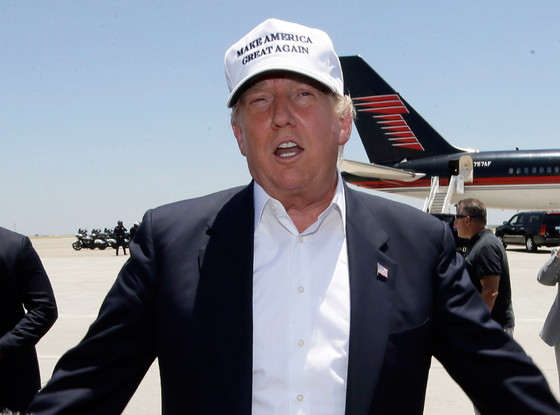
Donald Trump says he wants to make America great again.  What does this mean, exactly?

Think about it.  As American workers, how desperate are we to “hire” a man as president whose signature line to wannabe entrepreneurs is, “You’re fired”?  We’re a bit like abused spouses who, despite being bruised and bloodied, still decide to stand by a bully.

Americans sense that our nation is in decline; indeed, that’s the implicit meaning (as noted in this article by Tom Engelhardt) of Trump’s slogan: he wants to make America great again.  As in, we’re not great now, but we have been in the past, and under Trump we will be again.  But how?  Is Trump just going to fire all the “losers” in America?

Many abused workers have placed their faith in Trump to revive America.  Yet the irony is that Trump himself has precipitated America’s decline, what with his tacky casinos, his off-shoring of jobs, his shady business deals that seek to maximize profits while minimizing pay to workers.

So much of our economic health today, such as it is, consists of massive spending tied to a sprawling national security state, which fosters military adventurism and interventionism as well as weapons exports, amplified by casino capitalism (literally “casino,” as in my old hometown, which desperately seeks a casino as a jobs producer).

Back in the day, the city of my birth was proud to manufacture shoes and to ship them around the world.  Now, my city puts it faith in casinos and gambling.  If that’s not a clear sign of economic decline, what is?

Again, consider the irony of placing faith in Trump to reverse this trend.  Nearly 30 years ago, in the song “Gimme What You Got,” Don Henley captured the hollowness of “promoter Trump” with the following lines:

Now it’s take and take and takeover, takeover
It’s all take and never give
All these trumped up towers
They’re just golden showers
Where are people supposed to live?

Trumped up towers – more true today than when Henley penned that song (along with Stan Lynch and John Corey) back in 1988.

How have so many come to place their faith in America’s resurgence in the trumped up BS of Donald Trump?  Again, someone whose signature line as a boorish and preening boss is, “You’re Fired”?

Let’s make America great again.  Come this fall, let’s not hire Donald Trump as our new boss.

Hillary the Hardheaded Hawk

hillary henry
Birds of a feather …

W.J. Astore

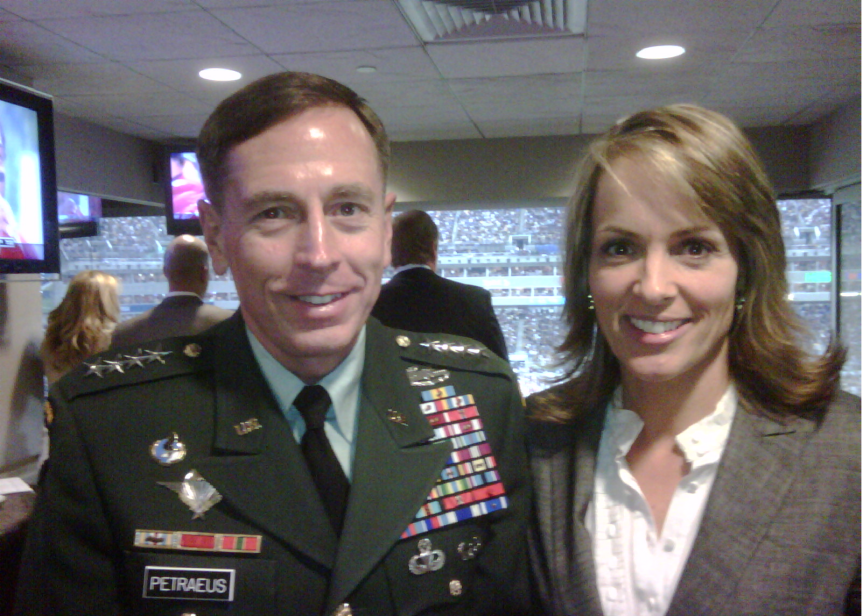
In a lengthy article (April 21st) at the “liberal” New York Times, “How Hillary Clinton Became a Hawk,” Hillary is variously described as “aggressive,” “tough,” a “military wonk” who’s “more muscular” than President Obama when it comes to advocating for the use of force.  Noted for her “pugnacity” and “hardheadedness,” Hillary is praised for her close relationships with U.S. generals, to include David Petraeus and Stanley McChrystal.  Indeed, the article highlights the fact that Hillary is sometimes more aggressive in advocating for military force than the generals she confers with.  Nevertheless, or rather because of this, the generals apparently like Hillary.  They really like her!

What are we to make of this puff piece that praises Hillary the Hawk?  Obviously, with Hillary’s victory in New York and her forthcoming, now nearly inevitable nomination as the Democratic candidate for president, Hillary Clinton and her allies have decided it’s time to sharpen her beak and claws.  No more nonsense about being a touchy-feely progressive like Bernie Sanders.  It’s time for Hillary the Hawk to take charge and soar, preempting any criticism by Republicans that she’ll be “weak” on defense.

But, tell me again, how did America’s wars in Iraq, Afghanistan, Libya, and elsewhere go for the United States?  At least three trillion dollars lost, tens of thousands of U.S. troops killed and wounded, hundreds of thousands of “foreigners” killed and wounded, millions made refugees, and for what, exactly?

Hillary the Hawk wants to double-down on a losing hand.  That’s neither “aggressive” nor “tough”: It’s reckless and dumb.  Worst of all, she’s playing with our chips as well as the lives of our troops, not to mention the lives of all those “foreigners” seeking shelter from American bombs and bullets and drones.  (But we have a word for them: collateral damage.)

Hillary Clinton, like all of the remaining presidential candidates, never wore a military uniform.  Her one child, Chelsea, married well and lives in a posh apartment (price: a cool $10.5 million) in New York City.  Indeed, like most American politicians in Congress, Hillary is a millionaire without children in the military, therefore she risks little in advocating for more U.S. troops to be sent off to war.  Her defenders (including Hillary herself) will say she will use force only as a last resort, yet the “Hillary Hawk” article cited above makes plain that she is no reluctant warrior.  Hell, why not, when she earns such praise for her wonkish warrior posturing from the New York Times?

Admirer of Henry Kissinger, supporter of the Iraq War in 2003, self-styled conqueror of Qaddafi and Libya (“We came. We saw. He died,” Hillary the Hawk laughed), fervid supporter of Bibi Netanyahu and Israel, Hillary Clinton is ready to take on the world.

One thing is certain: We can’t say we weren’t warned.

Words about War Matter

orwell-nineteen-eighty-four-large-cover

W.J. Astore

In my new article for TomDispatch.com, I argue that words about war matter.  A clear sign of America’s post-democratic military is the language our leaders use when they talk about war.  Specifically, words, euphemisms, and expressions that muddle or obfuscate meaning while excluding most Americans from the debate.  Acronyms like VUCA and 4GW and COIN, moreover, create a specialized language that suggests war is beyond the understanding of regular folk.  Meanwhile, euphemisms and rhetoric hide the truth about war.

In a democracy, how are proper decisions to be made about war if the truth is deliberately cloaked or hidden?

The entire article is here at TomDispatch.com; what follows is the last section of my article, featuring a strong contribution from Mike Murry, a regular contributor here at Bracing Views.

The proliferation of euphemisms, acronyms, and neologisms has no end.  You might start with “defense” instead of “war” department, followed by “homeland” security, the “PATRIOT” act, and on and on.  I still recall Ronald Reagan’s christening of the MX nuclear missile, with its multiple warheads capable of unleashing city-wide genocides, as the “Peacekeeper.”

The United States may be losing our many “overseas contingency operations,” but when it comes to manipulating words, it’s truly “mission accomplished.”

The Truth About “Progress” in America’s Wars

These days, Secretary of Defense Ashton Carter often resorts to cancer imagery when describing the Islamic state. “Parent tumor” is an image he especially favors — that is, terrorism as a cancer that America’s militarized surgeons need to attack and destroy before it metastasizes and has “children.”  (Think of the ISIS franchises in Libya, where the organization has recently doubled in size, Afghanistan, and Yemen.)  Hence the proliferation of “surgical strikes” by drones and similarly “surgical” Special Ops raids, both of which you could think of as America’s equivalent of white blood cells in its war on the cancer of terrorism.

But is terrorism really a civilizational cancer that can be “cured” via the most aggressive “kinetic” treatments?  Can the U.S. render the world cancer-free?  For that’s what Carter’s language implies.  And how does one measure “progress” in a “war” on the cancer of ISIS?  Indeed, from an outsider’s perspective, the proliferation of U.S. military bases around the world (there are now roughly 800), as well as of drone strikes, Special Ops raids, and massive weapons exports might have a cancerous look to them.  In other words, what constitutes a “cancer” depends on one’s perspective — and perhaps one’s definition of world “health,” too.

The very notion of progress in America’s recent wars is one that a colleague, Michael Murry, recently critiqued.  A U.S. Navy Vietnam War Veteran, he wrote me that, for his favorite military euphemism, “I have to go with ‘progress’ as incessantly chanted by the American military brass in Iraq and Afghanistan…

“We go on hearing about 14 years of ‘progress’ which, to hear our generals tell it, would vanish in an instant should the United States withdraw its forces and let the locals and their neighbors sort things out. Since when do ‘fragile gains’ equate to ‘progress’? Who in their right mind would invest rivers of blood and trillions of dollars in ‘fragility’?  Now that I think of it, we also have the euphemistic expression of ‘drawdown’ substituting for ‘withdrawal’ which in turn substitutes for ‘retreat.’ The U.S. military and the civilian government it has browbeaten into hapless acquiescence simply cannot face the truth of their monumental failures and so must continually bastardize our language in a losing — almost comical — attempt to stay one linguistic step ahead of the truth.”

Progress, as Murry notes, basically means nothing when such “gains,” in the words of David Petraeus during the surge months in Iraq in 2007, are both “fragile” and “reversible.” Indeed, Petraeus repeated the same two words in 2011 to describe similar U.S. “progress” in Afghanistan, and today it couldn’t be clearer just how much “progress” was truly made there.  Isn’t it time for government officials to stop banging the drums of war talk in favor of “progress” when none exists?

Think, for instance, of the American-trained (and now re-trained) Iraqi security forces. Each year U.S. officials swear that the Iraqi military is getting ever closer to combat readiness, but much like one of Zeno’s paradoxes, the half-steps that military takes under American tutelage never seem to get it into fighting shape.  Progress, eternally touted, seems always to lead to regress, eternally explained away, as that army regularly underperforms or its units simply collapse, often abandoning their American-supplied weaponry to the enemy.  Here we are, 12 years after the U.S. began training the Iraqi military and once again it seems to be cratering, this time while supposedly on the road to retaking Iraq’s second largest city, Mosul, from its Islamic State occupiers.  Progress, anyone?

In short, the dishonesty of the words the U.S. military regularly wields illustrates the dishonesty of its never-ending wars. After so many years of failure and frustration, of wars that aren’t won and terrorist movements that only seem to spread as its leaders are knocked off, isn’t it past time for Americans to ditch phrases like “collateral damage,” “enemy noncombatant,” “no-fly zone” (or even worse, “safe zone”), and “surgical strike” and adopt a language, however grim, that accurately describes the military realities of this era?

Words matter, especially words about war.  So as a change of pace, instead of the usual bloodless euphemisms and vapid acronyms, perhaps the U.S. government could tell the shocking and awful truth to the American people in plain language about the realities and dangers of never-ending war.

William Astore, a retired lieutenant colonel (USAF) and professor of history, is a TomDispatch regular.  He blogs at Bracing Views.


Lying and Deception in the Iraq War – and Today

pic-arendt2
Hannah Arendt, cigarette in hand (Arendt Center, Bard College)

W.J. Astore

(This is part 2 of 2 of an essay dealing with lying, politics, and war, inspired by Hannah Arendt’s writings on The Pentagon Papers.  For part 1, click here.)

After the Vietnam War, the U.S. government oversaw the creation of a post-democratic military, one that was less tied to the people, meaning that the government had even less cause to tell the truth about war.  Unsurprisingly, then, the hubris witnessed in Vietnam was repeated with Iraq, together with an even more sweeping ability to deny or disregard facts, as showcased best in a statement by Karl Rove in 2004.  The actions of the Bush/Cheney Administration, Rove suggested, bypassed the fact- or “reality-based” community of lesser humans precisely because their premises (the need to revolutionize the Middle East and to win the War on Terror through violence) were irrefutable and their motives unimpeachable.  In Rove’s words:

We’re an empire now, and when we act, we create our own reality. And while you’re studying that reality—judiciously, as you will—we’ll act again, creating other new realities, which you can study too, and that’s how things will sort out. We’re history’s actors…and you, all of you, will be left to just study what we do.

So it was that the Bush/Cheney administration manufactured its own “facts” to create its own “reality,” as the Downing Street Memo revealed (according to a senior British official, U.S. intelligence was “fixed” in 2002 to justify a predetermined decision to invade Iraq in 2003).  Dubious intelligence about yellowcake uranium from Africa and mobile biological weapons production facilities in Iraq (both later proved false) became “slam dunk” proof that Iraq had active programs of WMD development.  These lies were then cited to justify a rapid invasion.  That there were no active WMD programs in Iraq meant there could be no true “mission accomplished” moment to the war – a fact George W. Bush lampooned by pretending to  “search” for WMD at the White House Correspondents’ Dinner in 2004.  In this case, lies and self-deception coalesced in a wincing performance before chuckling Washington insiders that recalled the worst of vaudeville, except that Americans and Iraqis were dying for these lies.

Subsequent policy decisions in post-invasion Iraq didn’t fit the facts on the ground because those facts were simply denied.  Then-Secretary of Defense Donald Rumsfeld said in July 2003 he didn’t do quagmires even as Iraq was becoming one for U.S. forces.  Two years later, then-Vice President Cheney claimed the Iraq insurgency was “in the last throes” even as insurgent attacks began to accelerate.  Lies and deception, to include self-deception, doomed the U.S. government to quagmire in Iraq, just as it had in Vietnam forty years earlier.  Similar lies continue to bedevil U.S. efforts in Iraq today, as well as in Afghanistan and many other places.

Even as official lies and deception spread, whistleblowers who stepped forward were gagged and squashed.  Chelsea Manning, Stephen Kim, and John Kiriakou were imprisoned; Edward Snowden was forced into permanent exile in Russia. Meanwhile, officials who toed the government line, who agreed to dissemble, were rewarded.  Whether under Bush or Obama, government officials quickly learned that supporting the party line, no matter how fanciful, was and is rewarded – but that truth-telling would be punished severely.

Lying and Self-Deception Today

How are U.S. officials doing at truth-telling today?  Consider the war in Afghanistan.  Now in its 15th year, regress, not progress, is the reality on the ground.  The Taliban controls more territory than ever, the drug trade is exploding, and Afghan forces remain unreliable.  Yet the U.S. government continues to present the Afghan war as winnable and the situation as steadily improving.

Similarly, consider the war on terror, nowadays prosecuted mainly by drones and special ops.  Even as the U.S. government boasts of terrorists killed and plots prevented, radical Islam as represented by ISIS and the like continues to spread.  Indeed, as terrorism expert David Kilcullen recently admitted, ISIS didn’t exist until U.S. actions destabilized and radicalized Iraq after 2003.  More than anything, U.S. intervention and blundering in Iraq created ISIS, just as ongoing drone strikes and special ops raids contribute to radicalization in the Islamic world.

Today’s generation of “best and brightest” problem-solvers believes U.S. forces cannot withdraw from Afghanistan without the Afghan government collapsing, hence the misleading statements about progress being made in that war.  Radical Islamic terrorists, they believe, must be utterly destroyed by military means, hence deceptive statements about drone strikes and special ops raids as eliminating terrorism.

Accompanying lies and deception about progress being made in wars is image manipulation.  Military action inoculates the Washington establishment, from President Obama on down, from (most) charges of being soft on terror (just as military action against North Vietnam inoculated John F. Kennedy and Lyndon B. Johnson against charges of being soft on communism).  It also stokes the insatiable hunger of the military-industrial complex for bottomless resources and incessant action, a complex that the current crop of Republican and Democratic candidates for president (Bernie Sanders excepted) have vowed to feed and expand.

Whether in Vietnam, Iraq, or in the war on terror today, lying and self-deception have led to wrongheaded action and wrongful lessons.  So, for example, rather than facing the quagmire of Afghanistan and extricating itself from it, Washington speaks of a generational war and staying the course until ultimate victory.  Instead of seeing the often counterproductive nature of violent military strikes against radical Islam, Washington calls for more U.S. troops, more bombing, more “shock and awe,” the approach that bred the Islamic State in the first place.

One thing is certain: The U.S. desperately needs leaders whose judgment is informed by uncomfortable truths.  Comfortable lies have been tried before, and look what they produced: lots of dead people, lost wars, and a crippling of America’s ability to govern itself as a democracy.

More than ever, hard facts are at a premium in U.S. politics.  But the higher premium is the exorbitant costs we pay as a people, and the pain we inflict on others, when we allow leaders to make lies and deception the foundation of U.S. foreign policy.

The Vietnam War, the Pentagon Papers, and Lying

Arendt
Hannah Arendt (Arendt Center at Bard College)

W.J. Astore

In November 1971, the political philosopher Hannah Arendt published “Lying in Politics: Reflections on the Pentagon Papers” in the New York Review of Books.  Earlier that year, Daniel Ellsberg had shared those highly classified government papers with the U.S. media.  They revealed a persistent and systematic pattern of lying and deception by the government about U.S. progress in the Vietnam War.  By undermining the people’s trust in government, lies and deception were destabilizing democracy in America, Arendt said.  Furthermore, America was witnessing two new and related categories of lying.  The first was lying as public relations, the creation and distribution of images substituting for facts and premised in human manipulability (a Madison Avenue approach to war and foreign policy).  The second was lying tied to a country’s reputation as embraced by professional “problem-solvers” as the basis for political action.  Both categories of lying constituted a crisis to the republic.

Widespread lying during the Vietnam War, Arendt explained, had not been aimed at the enemy, as lies often are in war.  Rather, governmental lying had targeted Americans.  The enemy could hardly be fooled, but most Americans could – at least for a time.  Throughout the war, Arendt noted, senior U.S. government and military officials made decisions about Vietnam with the firm knowledge they could not be carried out, a form of self-deception facilitated by constant goal-shifting.  As goals changed and chaos mounted, U.S. officials then became driven by concerns about saving face.  Image-making and image-saving took precedence over reality. The truth about Vietnam – that the U.S. was losing the war – hurt, therefore it was denied, especially in public discourse.

Official lies can fool even the officials themselves, a fact Pulitzer prize-winning reporter David Halberstam noted in his prescient book, “The Making of a Quagmire,” published in 1965.  With respect to the Kennedy Administration’s support of the corrupt Diem/Nhu government of South Vietnam, Halberstam wrote that:

Having failed to get [the Diem/Nhu regime to make needed] reforms, our officials said that these reforms were taking place; having failed to improve the demoralized state of the [South] Vietnamese Army, the Americans talked about a new enthusiasm in the Army; having failed to change the tactics of the [South Vietnamese] military, they talked about bold new tactics which were allegedly driving the Communists back.  For the essence of our policy was: There is no place else to go.

When reporters began to file stories which tended to show that the [U.S.] policy was not working, its authors, President Kennedy and General [Maxwell] Taylor, clung to it stubbornly.  At least part of the explanation for this apparent blindness is that although they knew things were going wrong, they felt that the alternatives were worse.

This “blindness,” a sustained willingness to deny harsh truths about the Vietnam War, persisted throughout the Kennedy, Johnson and Nixon administrations.  U.S. leaders continued to package and sell a losing effort as a winning product. It helped, in Arendt’s words, that U.S. officials had “a truly amazing and entirely honest ignorance of the historically pertinent background” when it came to Vietnam.  Their ignorance was “honest” in the sense they did not believe facts were all that important to success.  What was needed, U.S. officials concluded, were not incontestable facts but the right premises, hypotheses, and theories (such as the infamous Domino Theory) to fit Vietnam within prevailing Cold War orthodoxies.  Overwhelming applications of U.S. military power would serve to actuate these premises, facts be damned.

Upon taking power in 1969, the Nixon Administration, which had promised a quick and honorable end to the war, continued the lies of previous administrations.  Even as Nixon and Henry Kissinger spoke publicly of peace with honor, they talked privately of a lost war.  To shift the blame for defeat, they cast about for scapegoats (as corroborated recently in the HBO documentary, “Nixon by Nixon: In His Own Words”).  Kissinger settled on South Vietnamese “incompetence” as the primary scapegoat.  He reassured Nixon that, after a “decent interval” between U.S. withdrawal and the inevitable South Vietnamese collapse, most Americans would come to see Vietnam as a regrettable (and forgettable) “backwater.”  Naturally, harsh facts such as these were ones Nixon and Kissinger refused to share with the American people.

For Hannah Arendt, truth as represented by verifiable facts is the chief stabilizing factor in politics.  Lacking truths held in common, action is compromised, judgment is flawed, reality is denied.  Deception feeds self-deception until politics is poisoned and collective action for the common good is disrupted.  Yet lies cannot be eliminated simply by moral outrage, Arendt noted.  Rather, truth must be fought for even as humility before truth must be cultivated.

The American people must fight for the truth: that is the lesson of Arendt’s essay.

Next Week: Part II: More Lies and Deception in the Iraq War of 2003

The Missions Unaccomplished Force

060503_MI3_hmed_1p.grid-6x2
At least we win in Hollywood …

Tom Engelhardt.  Introduction by W.J. Astore.

Colonel (retired) Andrew Bacevich has a new article at TomDispatch as well as a new book on America’s War for the Greater Middle East (my copy is already coming in the mail). Bacevich’s main point in his latest article couldn’t be more clear: Congressional cowardice.  Congress refuses to exercise the people’s authority over presidential warmaking, a gross dereliction of duty that ensures perpetual wars with missions perennially left unaccomplished.  And that is the theme of Tom Engelhardt’s introduction to Bacevich’s article.

You’ve heard of the Impossible Missions Force, or IMF, which somehow always gets the job done, whether led by Martin Landau or Peter Graves or Tom Cruise?  Well, that’s Hollywood.  In the real world, we have the MUF, or Missions Unaccomplished Force.  Yes, they always muff it, no matter if the “Decider” is the strutting George W. Bush or the cool and calculating Barack Obama.  But let Tom Engelhardt tell the tale …  W.J. Astore  

The Missions Unaccomplished Force, by Tom Engelhardt

It was a large banner and its message was clear.  It read: “Mission Accomplished,” and no, I don’t mean the classic “mission accomplished” banner on the USS Abraham Lincoln under which, on May 1, 2003, President George W. Bush proudly proclaimed (to the derision of critics ever since) that “major combat operations in Iraq have ended.”  I’m actually referring to a September 1982 banner with those same two words (and an added “farewell” below them) displayed on a landing craft picking up the last Marines sent ashore in Beirut, Lebanon, to be, as President Ronald Reagan put it when they arrived the previous August, “what Marines have been for more than 200 years — peace-makers.”  Of course, when Bush co-piloted an S-3B Viking sub reconnaissance Naval jet onto the deck of the Abraham Lincoln and made his now-classic statement, major combat had barely begun in Iraq (and it has yet to end) — nor was it peace that came to Beirut in September 1982: infamously, the following year 241 Marines would die there in a single day, thanks to a suicide bomber.

“Not for the last time,” writes Andrew Bacevich in his monumental new work, America’s War for the Greater Middle East: A Military History, “the claim proved to be illusory.”  Indeed, one of the grim and eerie wonders of his book is the way in which just about every wrongheaded thing Washington did in that region in the 14-plus years since 9/11 had its surprising precursor in the two decades of American war there before the World Trade Center towers came down.  U.S. military trainers and advisers, for example, failed (as they later would in Iraq and Afghanistan) to successfully build armies, starting with the Lebanese one; Bush’s “preventive war” had its predecessor in a Reagan directive called (ominously enough given what was to come) “combating terrorism”; Washington’s obsessive belief of recent years that problems in the region could be solved by what Andrew Cockburn has called the “kingpin strategy” — the urge to dismantle terror organizations by taking out their leadership via drones or special operations raids — had its precursor in “decapitation” operations against Muammar Gaddafi, Saddam Hussein, and Somali warlord Mohamed Farrah Aidid with similar resulting mayhem.  The belief that “an additional increment of combat power might turn around a failing endeavor” — call it a “surge,” if you will — had its Iraq and Afghan pretrial run in Somalia in 1993.  And above all, of course, there was Washington’s unquenchable post-1980 urge to intervene, military first, in a decisive way throughout the region, which, as Bacevich writes, only “produced conditions conducive to further violence and further disorder,” and if that isn’t the repetitive history of America’s failed post-2001 wars in a nutshell, what is?

As it happened, the effects of such actions from 1980 on were felt not just in the Greater Middle East and Africa, but in the United States, too.  There, as Bacevich writes today, war became a blank-check activity for a White House no longer either checked (in any sense) or balanced by Congress.  Think of it as another sad tale of a surge (or do I mean a decapitation?) that went wrong.

The Right Approach to Terrorism

A replica of the Manneken-Pis statue, a major Brussels tourist attraction, is seen among flowers at a memorial for the victims of bomb attacks in Brussels metro and Brussels international airport of Zaventem, in Brussels
Replica of the Manneken-Pis statue, a major Brussels attraction, among flowers at a memorial for the victims of bomb attacks in Brussels. REUTERS/Yves Herman

W.J. Astore

I grew up during the Cold War when America’s rivalry with the Soviet Union posed a clear and present danger to our country’s very existence.  Since the collapse of the USSR, or in other words the last 25 years, the U.S. has not faced an existential threat.  Of course, the terrorist attacks on 9/11 were shocking and devastating, as were recent attacks in Paris and Brussels.  But terrorism was and is nothing new.  We faced it in the 1970s and 1980s, and indeed we will probably always face it.  The question is how best to face it.

Stoking fear among the people is the wrong way to face it.  Restricting liberty is the wrong way.  An overly kinetic approach (i.e. lots of bombs and bullets) is the wrong way.  Invading the Middle East (yet again) is the wrong way.  Most of counter-terrorism, it seems to me, is an exercise in intelligence and policing (national and international).  Yet we seem always to turn to our military to solve problems.  The emphasis is relentlessly tactical/operational, stressing how many terrorists we kill in drone strikes and special ops raids (a version of the old “body count” from the Vietnam War era).

Military strikes and raids generate collateral damage and blowback, arguably creating more enemies than they kill.  We’re helping to sustain a perpetual killing machine, a feedback loop.  The more we “hit” various enemies while playing up the dangers of terrorism, especially in the media, the more they prosper in regards to attention (and recruits) they garner.

One of the first Rand primers I read as young Air Force lieutenant was “International Terrorism: The Other World War,” written by Brian M. Jenkins in 1985.  Jenkins made many excellent points: that terrorists seek to instill fear, that their acts are mainly “aimed at the people watching,” that terrorism can’t be defeated like traditional (uniformed) enemies, that terrorists commit crimes for a larger political purpose (“causing widespread disorder, demoralizing society, and breaking down existing social and political order”), that terrorism is a form of political theater.  As Jenkins notes:

“Terrorism attracts intense interest but produces little understanding.  News coverage focuses on action not words.  Terrorist incidents attract the media because they are genuine human dramas, different from ordinary murder and therefore newsworthy. “

Furthermore, “terrorists provide few lucrative targets for conventional military attack,” though this may be less true of state-sponsored terrorism.

What can we learn from Jenkins’s primer on terrorism?  Three big lessons:

  1. Deny the terrorists their victory by refusing to succumb to fear. In short, don’t panic.  And don’t exaggerate the threat.
  2. Don’t sensationalize the feats of terrorists in 24/7 media coverage of their attacks. That’s what the terrorists want.  They want extensive media coverage, not only to shift public opinion and to spread fear, but also to recruit new members.
  3. Finally, don’t change your way of life, your political system, your liberties, in response to terrorism. Abridging freedoms or marginalizing people (e.g. American Muslims) in the name of attacking terrorism is exactly what the terrorists want.  They want to turn people against one another.  To divide is to conquer.

The question is, when will Americans recognize the complexity of the terrorist threat while minimizing fear and over-reaction?

Terrorists need to be stopped, and that requires robust intelligence gathering, strong policing, and selective military action.  But threat inflation, media hysteria, and militarized over-reaction simply play into the terrorists’ hands.  Fear is the mind-killer, as Frank Herbert wrote.  Let us always remember this as we face the terrorist threat with firmness and resolve.

Above the people, beside the people, against the people

abe

W.J. Astore

Remember when Abraham Lincoln wrote about our government as being “of the people, by the people, for the people”?  Even after 150 years, those words still resonate, but they are increasingly less true.  Today, our government places itself above the people, and when the government is not working against the interests of (most of) the people, it acts as if the people’s interests are beside the point.

We’ve entered a new historical moment in America, which is precisely the point of Tom Engelhardt’s latest essay at TomDispatch.com.  As Engelhardt notes, our electoral process is “part bread-and-circuses spectacle, part celebrity obsession, and part media money machine.” Our foreign policy, and increasingly our domestic policy as well, is dominated by the national security state, the one leviathan in our government that is never paralyzed.  The political process itself is ever more divisive, polarized, and disconnected from the hardships faced by the working and middle classes.  Even planetary dangers such as climate change are either denied or ignored, as if denial or ignorance will keep seas and temperatures from rising.

The very disconnection of our government from painful realities explains in part the appeal of “maverick” candidates like Donald Trump and Bernie Sanders.  Yes, they are two very different men, but what they have in common is their willingness to take the side of ordinary Americans, who have seen their standard of living stagnate or drop over the last thirty years.  Trump says he wants to make America great again: the implicit message is that we pretty much suck now, that we are a nation in decline, and that the sooner we admit it, the sooner we can take action to restore America to greatness.  Sanders says he wants a future we can believe in, which is at its core much like Trump’s message.  America has serious problems, both men are saying, but greatness is still within our grasp if only we act together as a people.

Again, much separates Trump and Sanders, yet both are willing to admit the times are bad for many hardworking Americans.  What they’re saying is this: the American dream is increasingly a nightmare.  And part of the nightmare is a government that doesn’t act in the people’s interests because it’s been co-opted by special interests.  A government that can’t even do its job, such as to declare war or to advise on a Supreme Court nominee, in accordance with its Constitutional duties.

The promise and potential of our country remains.  But that promise, that potential, is being squandered by an alliance of various interests that are no longer responsive to the people.  If not dead, representative democracy in America is on life support.  Unless we can reinvigorate it, as Engelhardt notes in his article, we will continue to suffer a decline analogous to the declines of other great empires (think Rome, for example).  The difference today is the possibility of planetary-wide destruction, whether quickly from nuclear weapons or slowly from climate change.

Never was a revival in American democracy more urgently needed, not only for ourselves, but for the world.

Clinton versus Trump this fall?

trump
Good chums back in 2005

W.J. Astore

Last night’s primary results suggest it’s Hillary Clinton versus Donald Trump come this fall.  What does this mean for America?

Hillary is the easiest to gauge.  She’s been in politics for a long time and possesses a lengthy and controversial record.  She is of course a transformative candidate, the first female candidate for president from a major party.  That’s where the revolution begins — and ends.  Hillary is a pragmatist who promises a continuation of Obama’s policies.  Even more so than Obama, she is an establishment candidate, well ensconced among Wall Street financiers, K Street lobbyists, and all the other special interests that rule America today through money and power.  If this were 1976, you could well imagine her running as a moderate Republican against a Democratic candidate like Jimmy Carter (or Bernie Sanders).  With respect to foreign policy, she promises a hard line and the continuation of perpetual wars in Iraq, Afghanistan, and elsewhere.

Many liberal Democrats, and more than a few Republicans, will likely vote for her with noses held and fingers crossed.  Mainline Democrats will vote for her based on certain issues, such as Supreme Court vacancies, her pro-choice stance on abortion, and so on.  In a normal election year, an establishment Republican would have a good shot at beating her since Hillary’s negatives are so high.  But this is not a normal year.

Enter Donald Trump.  If Hillary promises more of the same, Trump promises unpredictability.  His simplistic rhetoric about making America great again has obviously resonated, just as Obama’s similarly simplistic message of “hope” and “change” did in 2008.  Trump is a man of (certain) people: unlike Hillary, he’s not a career politician. Unlike Hillary, he’s not tied to the political establishment.  In essence, he’s part wild card, part joker, and his outlandish statements on Muslims and Mexicans and walls and women suggest he’s not playing with a full deck.

No one really knows what a Trump presidency would look like.  I don’t think even Trump knows.  Trump has a habit of speaking off the cuff, of making statements that are more than a little grandiose, partly because he loves to grandstand.  He’s easy to dismiss — all too easy — yet look where he is now, closing in on the Republican nomination despite long odds.

Trump, as I wrote back in July 2015, likes to pose as a proto-fascist.  He likes to boast that the military will follow his orders even if they’re illegal.  (He backed off that statement, but the fact he made it speaks loudly about his judgement.)  On occasion he says something insightful and honest, as when he insisted the Iraq war was a mistake, costing the nation trillions of dollars, or when he attacks poorly negotiated trade deals as hurting working-class Americans.  But with the good comes lots of bad.

A big challenge for Trump this fall will be appearing presidential.  So far his policy knowledge in debates has been a mile wide and an inch deep.  He’s gotten away with this because of the size of the Republican field, but Hillary, the consummate policy wonk, will make mincemeat of him in the fall debates if he continues to speak off the cuff and glide over specifics.

Clinton versus Trump: it’s a grim choice for America.  An establishment oligarch versus a quixotic autocrat.  More of the same versus God knows what.  What they collectively represent is both the decline of progressivism and of conservatism in America.

For now I’m putting my crystal ball aside, except to say that one day (perhaps very soon) Americans may look back with fondness on the eight years Obama was president.

The Bizarre and Scary World of Republicans

11TRANSCRIPTweb-master675
There they go again

W.J. Astore

I watched last night’s Republican debate from Florida (transcript here) and then checked this morning’s coverage from major networks such as NBC and CBS.  The focus of media coverage was the “civility” of this debate compared to previous ones, combined with typical horse race speculations about which candidate won and which lost.

Well, I can’t tell you who won, but I can tell you who lost: the American people lost.

Several lowlights from the debate that stick in my mind:

1. Marco Rubio was asked about climate change and whether human action, such as the emission of greenhouse gases, contributed to it.  Rubio essentially denied that human action had any significant impact on global warming.  The essence of his answer: the climate is changing because the climate always changes.  And the U.S. government can take no action to reduce it.

2.  Donald Trump held to his position on torture.  He believes waterboarding should be used, that laws should be changed to allow harsher means of torture, apparently because the enemy (ISIS) beheads its opponents or drowns them in cages.  He was not challenged on how he would change international laws against torture, nor was he challenged on consistent evidence that torture does not work in efforts to gain accurate intelligence.  Nor were any questions raised about the morality of torture and its proposed expansion if he wins the presidency.

3.  All of the candidates expressed support for sending U.S. ground troops, perhaps 20,000 to 30,000, to combat ISIS in the Middle East.  The situation was presented as a civil war within Islam between radical Sunni and Shia forces, but no candidate explained how U.S. combat forces could win someone else’s civil war, a war driven by fierce ideological differences.  Somehow, magically, the reappearance of big battalions of U.S. troops and massive displays of air power would “shock and awe” radical jihadists into collapse and capitulation.

4.  For the candidates, nothing Obama has done in the last seven years is worthy of the slightest praise.  Obamacare must be repealed.  The Iran nuclear deal is a disaster.  His forthcoming trip to Cuba represents a capitulation to communism.  His executive actions are illegal; all of them must be reversed.

5.  Each candidate tried to best the other on who is more pro-Israel.  According to Trump, “there’s nobody on this stage that’s more pro-Israel than I am.”  Apparently Israel is the only U.S. ally that is worthy of total support and unconditional love by Republican candidates.

6.  Trump refused to qualify his statement that there is “tremendous hate” in the Islamic world directed against the United States.  However, there was no reason given for this hate, and no sense that U.S. military actions overseas, to include invasions, drone strikes, and special ops raids, contribute in any way to Islamic animosity.  The candidates were simply not asked why some, most, or nearly all Muslims “hate” America.

7.  Finally, topics that weren’t discussed at this debate but which are commonly discussed at Democratic debates: racism, shootings by police against Blacks, prison and justice reform, raising the minimum wage, the rising gap between the richest 1% and everyone else, reducing the cost of college education, and efforts to guarantee affordable health care for all.  Nor were women’s issues, such as equal pay for equal work, mentioned.  Indeed, with the exception of Trump’s comment about women being mistreated by the Muslim world, women’s issues simply didn’t exist, not in this debate and not in most of the others.  Indeed, my wife turned to me during a previous Republican debate and said, “Not one of these guys cares one whit about women’s issues — they’re offering us nothing.”

And on that sad yet telling note, I’ll end.