He’s everywhere. Trump as Agent Smith in “The Matrix” movies
W.J. Astore
Donald Trump is exploiting a weakness in our media — its quest for eyeballs at any cost. Trump is best at gluing eyeballs to the screen — he inflames his supporters and infuriates his detractors. Meanwhile, he oversees a train wreck of an administration that dominates headlines. “If it bleeds, it leads” — and our country is bleeding under his leadership.
Media owners seem to see synergy here: empower Trump with free and sweeping coverage and watch ratings and profits soar. But Trump is a parasite. He’s drawing strength from the media even as he sucks its power and influence dry. But the biggest loser is democracy, since the Trump-media nexus is degrading (and perhaps destroying) fact-based decision-making.
These thoughts came to mind as I read Tom Engelhardt’s latest article at TomDispatch.com. Trump, Engelhardt notes, has the unique and ultimately pernicious ability to drive — and often to dominate — discourse:
Never, not ever, has a single human being been so inescapable. You can’t turn on the TV news, read a newspaper, listen to the radio, wander on social media, or do much of anything else without almost instantly bumping into or tripping over… him, attacking them, praising himself, telling you how wonderful or terrible he feels and how much he loves or loathes… well, whatever happens to be ever so briefly on his mind that very moment.
Engelhardt highlights an important truth later in his piece: Trump’s true “base” is the very “fake news” media he’s so happy to attack.
Of course, Trump has always been a relentless, even ruthless, self-promoter. Now that he’s president, the media can’t exactly ignore him (or can they?). But what’s truly shocking is how the mainstream media is so supinely subservient to him. How unwilling they are to call him a liar when he lies; and how unwilling they are to critique their own obsequious coverage in a way that would lead to meaningful changes.
The media can’t get enough of Trump. Knowing this dependency, Trump exploits it, relentlessly. He reminds me of Agent Smith in “The Matrix” movies. He’s a rapidly-replicating virus that, if left unchecked, will destroy the matrix of American democracy . The question is: How is Trump to be neutralized, or at least contained, when the media keeps feeding him?
Breaking News: Jim Acosta got his press pass back. Big deal. Now Trump can score more points off of CNN and its “fake news” machine.
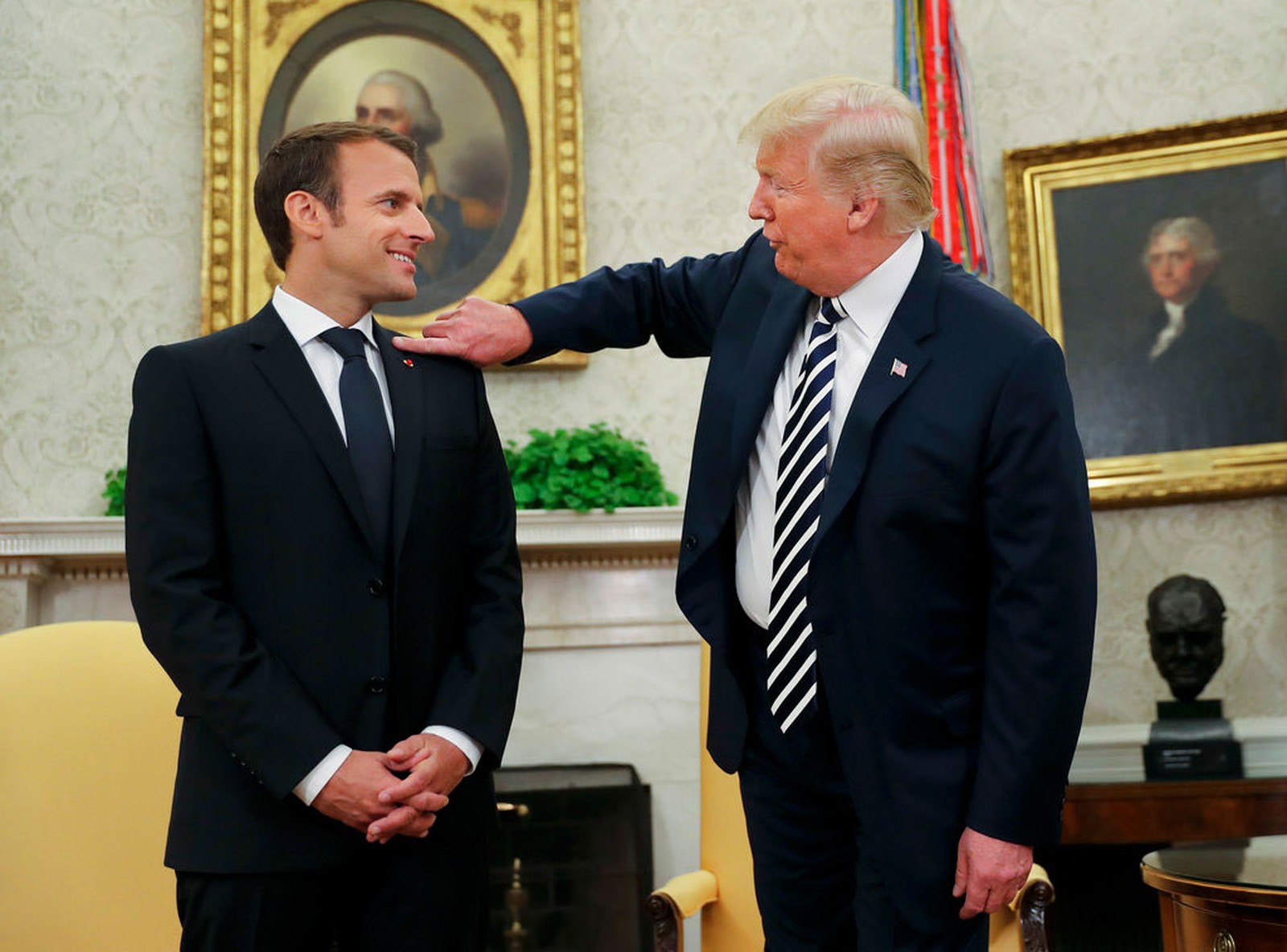
There he goes again. Donald Trump has insulted our French allies, apparently in retaliation for Emmanuel Macron’s sensible speech this past weekend that assailed nationalism as divisive and dangerous to world peace. In his retaliatory tweet today, the Trumpet had the following to say about France and its war effort in World Wars I and II:
Emmanuel Macron suggests building its own army to protect Europe against the U.S., China and Russia. But it was Germany in World Wars One & Two – How did that work out for France? They were starting to learn German in Paris before the U.S. came along. Pay for NATO or not!
Suggesting the French were learning German because they couldn’t or wouldn’t fight is more than insulting: it reveals Donald Trump’s utter ignorance of history.
First, consider World War I. The French lost roughly 1.4 million men in that war. More than any other country, France should be credited for defeating German militarism. Indeed, France served as America’s “arsenal of democracy” in that war, supplying U.S. troops with weaponry and helping to train them for war as well. The French, after all, had fought the war for nearly four years before American troops showed up in large numbers. Yes, the U.S. military helped to stiffen French and British resistance in 1918 and contributed to turning the tide toward victory, but overall France deserves tremendous credit and deep respect both for its victory and for the enormity of its sacrifice.
Now, let’s turn to World War II. It was the devastation of France in World War I (along with interwar political divisions and an overly defensive mentality) that contributed to its relatively quick defeat in World War II. Because of this defeat, France paid a high price indeed under German occupation. Some French people collaborated; many more resisted and paid for that resistance with their lives.
Trump insults the memory of millions of French men and women who died resisting German militarism in both world wars, and to what end? Just so he can score cheap points with his base by tweeting ignorant insults against an ally that fought side-by-side with Americans in both world wars?
The French, of course, helped to secure American independence in the 18th century, a favor you could say we repaid during the closing stages of World War I. And while World War II was a disaster for French arms, there was no lack of fighting spirit among major sectors of the French populace.
Suggesting the French were studying German because they were militarily inept until Americans rode to the rescue does more than a grave disservice to history. It gravely insults the French people. Such is the idiocy of Donald Trump.
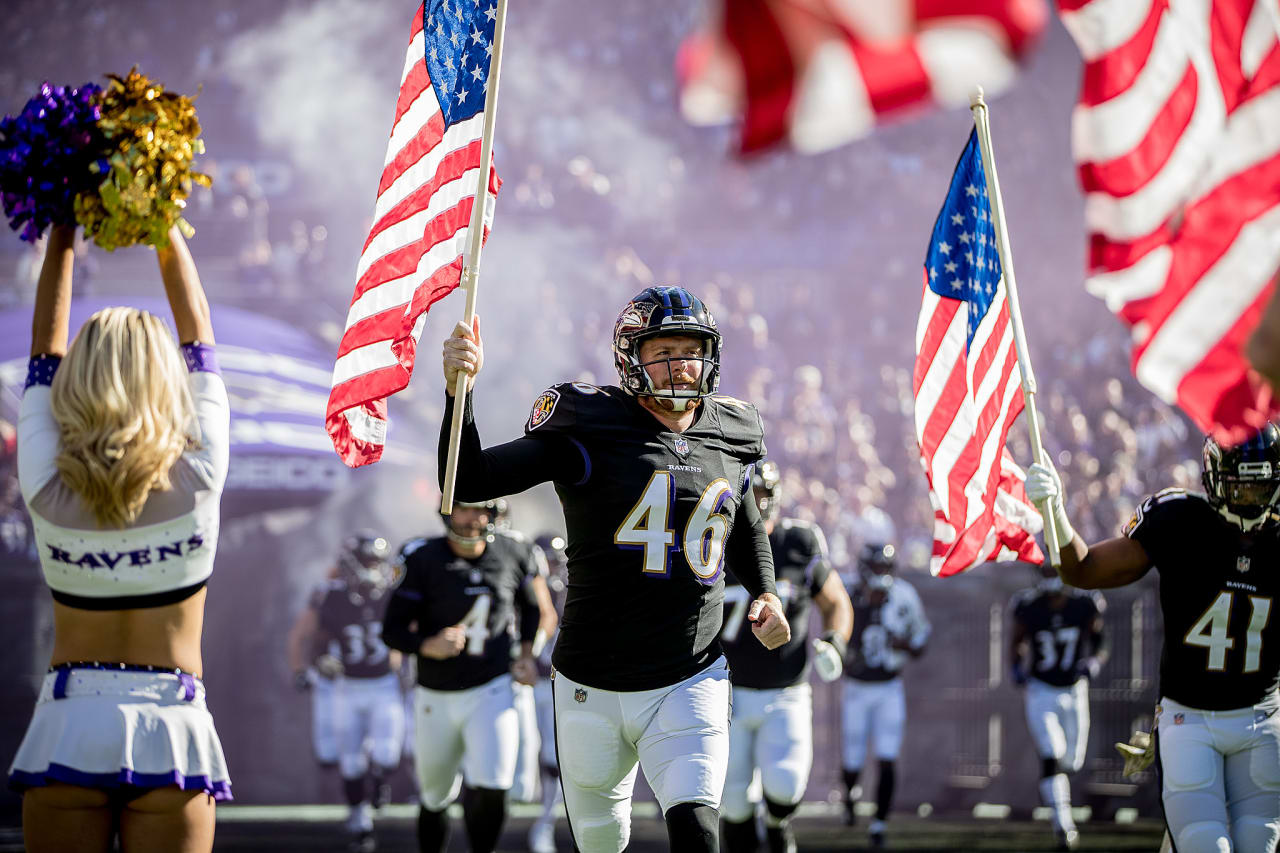
Now this makes me proud to be an American. “Salute to service” during Ravens-Steelers game.
W.J. Astore
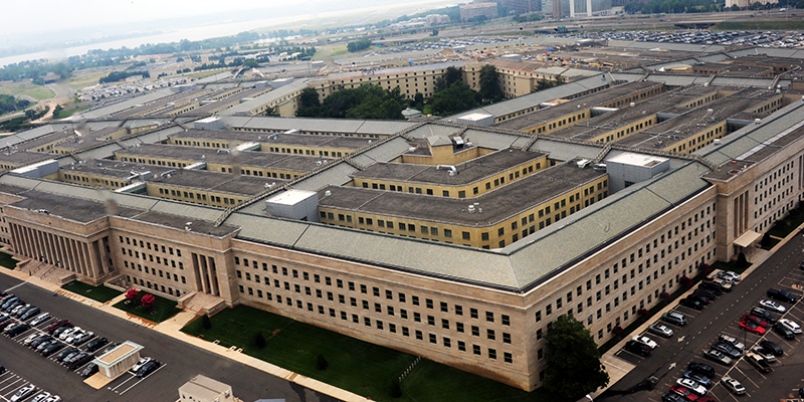
A few months ago, I was talking to a researcher about the Pentagon, the military-industrial complex, and America’s fourth (and most powerful?) branch of government: the national security state. After talking about the enormous sweep and power of these entities, she said to me, it’s the elephant in the room, isn’t it? More than that, I replied: It’s the rampaging herd of elephants in the room. Even so, we prefer to ignore the herd, even as it dominates and destroys.
This thought came back to me as I read Danny Sjursen’s recent article at Antiwar.com. His main point was that enormous Pentagon spending and endless wars went undebated during this election cycle. President Trump preferred to talk of “invasions” by caravans of “criminals,” when not denigrating Democrats as a mutinous mob; the Democrats preferred to talk of health care and coverage for preexisting conditions, when not attacking Trump as hateful and reckless. No one wanted to talk about never-ending and expanding wars in the Greater Middle East and Africa, and no one in the mainstream dared to call for significant reductions in military spending.
As Sjursen put it:
So long as there is no conscription of Americans’ sons and daughters, and so long as taxes don’t rise (we simply put our wars on the national credit card), the people are quite content to allow less than 1% of the population [to] fight the nation’s failing wars – with no questions asked. Both mainstream wings of the Republicans and Democrats like it that way. They practice the politics of distraction and go on tacitly supporting one indecisive intervention after another, all the while basking in the embarrassment of riches bestowed upon them by the corporate military industrial complex. Everyone wins, except, that is, the soldiers doing multiple tours of combat duty, and – dare I say – the people of the Greater Middle East, who live in an utterly destabilized nightmare of a region.
Why should we be surprised? The de facto “leaders” of both parties – the Chuck Schumers, Joe Bidens, Hillary Clintons and Mitch McConnells of the world – all voted for the 2002 Iraq War resolution, one of the worst foreign policy adventures in American History. Sure, on domestic issues – taxes, healthcare, immigration – there may be some distinction between Republican and Democratic policies; but on the profound issues of war and peace, there is precious little daylight between the two parties. That, right there, is a formula for perpetual war.
As we refuse to debate our wars while effectively handing blank checks to the Pentagon, we take pains to celebrate the military in various “salutes to service.” These are justified as Veterans Day celebrations, but originally November 11th celebrated the end of war in 1918, not the glorification of it. Consider these camouflage NFL hats and uniforms modeled on military clothing (courtesy of a good friend):
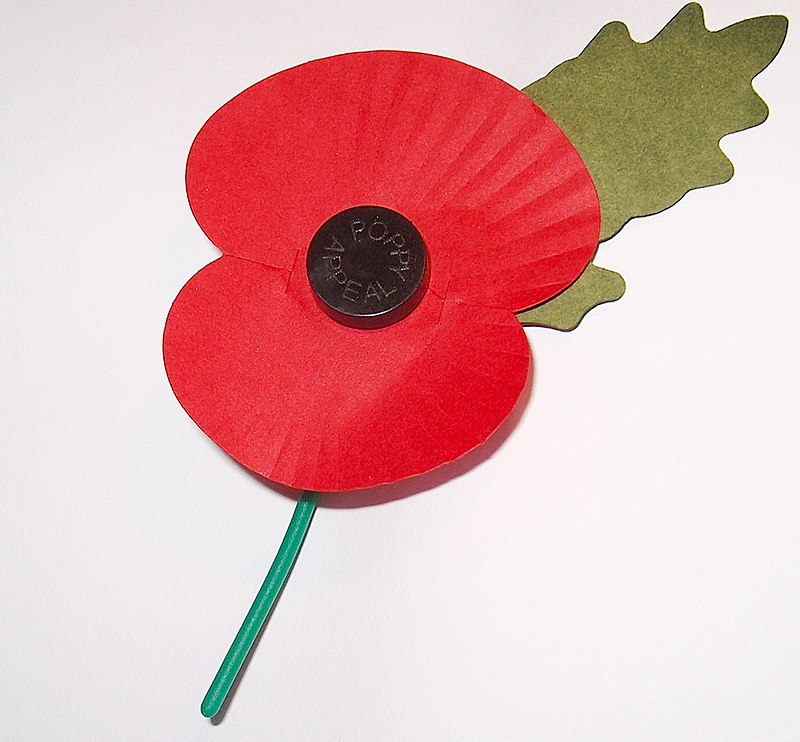
When I lived in England in the early 1990s, the way people marked Veterans or Armistice Day was with a simple poppy. I recall buying one from a veteran who went door-to-door to raise funds to support indigent vets. Students of military history will know that many young men died in World War I in fields of poppies. Thus the poppy has become a simple yet powerful symbol of sacrifice, loss, and gratitude for those who went before us to defend freedom.
No poppies for us. Instead, Americans are encouraged to buy expensive NFL clothing that is modeled on military uniforms. Once again, we turn war into sport, perhaps even into a fashion statement.
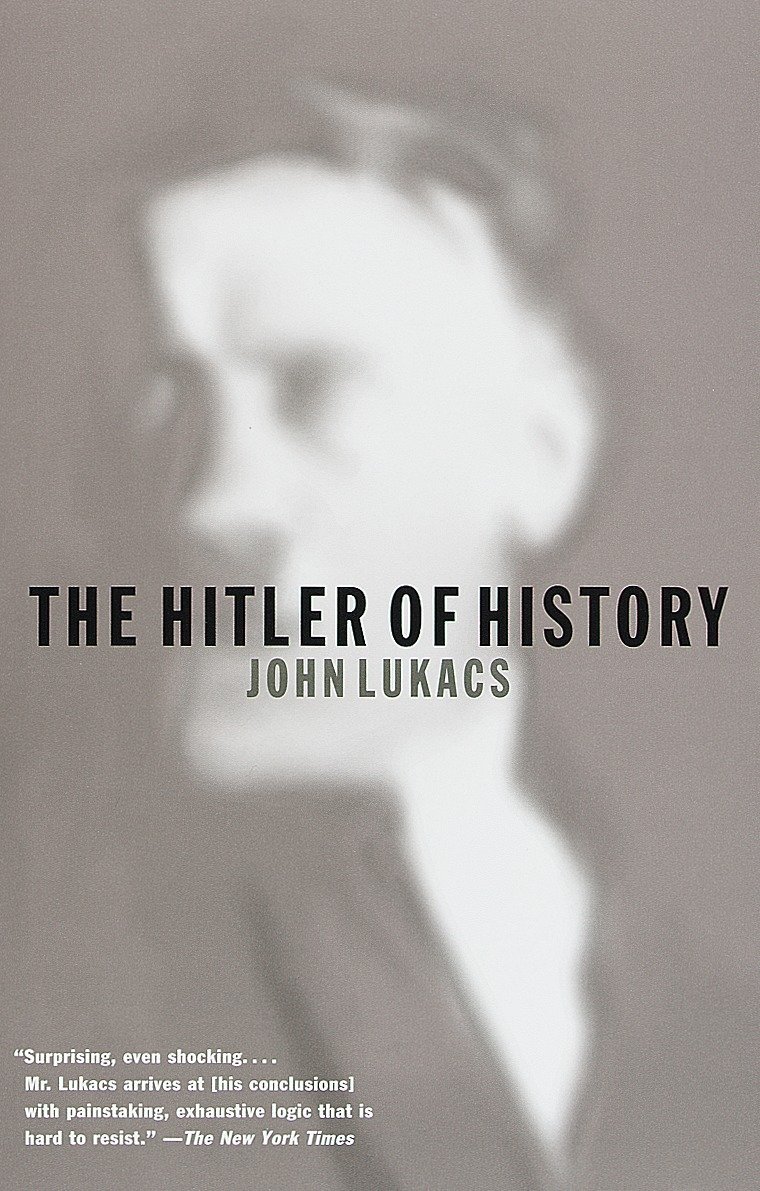
Purely by chance this morning, I came across old notes I took from historian John Lukacs’ study of Adolf Hitler. Lukacs said that Hitler’s genius “lay in his understanding of human weaknesses,” for which he had the nose of a vulture. Lukacs further identified him as a populist who used propaganda pragmatically. He knew what people wanted to hear, and not only the common people at his rallies, but prominent leaders whose illusions he recognized and exploited.
For example, Hitler wasn’t religious, but he presented himself as pro-Christian as a contrast to the atheism of his German communist opponents. He claimed to support families and moral order, what we today term “family values.” Hitler knew people were frustrated with the Weimar Republic, an experiment in parliamentary democracy in Germany after World War I; Lukacs uses the words “schismatic” and “chaotic” and “weak” to describe Hitler’s critique of democracy.
Hitler’s response was to appeal to nationalism (I’m a nationalist, he might have said) and a revival of Germany as a “spiritual community” in which class differences wouldn’t matter. Persecution among the right sort of Germans was to be avoided; instead, “good” (read: Aryan) Germans were to come together against racial and political enemies. Hitler’s goal, Lukacs said, was to achieve a tyranny not simply through violence but through a political majority, and he was incredibly successful at it.
Interestingly, Lukacs points out that Hitler convinced the Nazis in 1926 (when the Nazis were still very much a fringe party ostensibly for the working classes) to vote in favor of the restitution of property to German princes. In short, Hitler appeased powerful conservative elements within German society, Weimar Germany’s version of today’s 1%. He gained power legally as Chancellor early in 1933 by persuading Germany’s aging president, Paul von Hindenburg, that “The Bolshevization of the masses proceeds rapidly.” To an avowed monarchist like Hindenburg, it was worth the risk of appointing Hitler and empowering the Nazis so that the communist “mobs” could be put in their place.
Virtually everyone underestimated Hitler and the ruthlessness of his drive to power. He was often dismissed as crude, vulgar, harsh. As lacking class. Yet he knew his audience and he knew how to get his way in a deeply divided Germany.
Food for thought as Americans prepare to go to the polls.
Update (11/6/18): I’ve been re-reading Lukacs; two points I came across yesterday after writing this article:
Hitler said hate was a real strength of the Nazi party. We have learned to hate our political rivals, Hitler said, and that hatred makes us strong. In reading this, I thought of Trump and his efforts to demonize Democrats as a “mob” that wants to allow “invaders” (rapists, murderers) from Central America into the country. Also, of course, Trump’s denunciation of the media as “the enemy of the people.”
Even as Hitler was throwing communists and other rivals into concentration camps by the tens of thousands in 1933-34, he was lying about the growing threat to Germany coming from the left. Hitler knew the power of lies, the bigger the better, and used them to eliminate his rivals in the name of keeping Germany safe (“homeland security,” we might say).
President Trump claims the USA is being invaded. “Masses of illegal aliens” are going to “overrun” America. “Giant” caravans. Bad people from Central America. Fear them!
Isn’t it amazing that a nation of over 300 million people — which claims to have “the world’s finest fighting force” in all of history — fears an “invasion” by a few thousand desperate people, mainly women and children, who most likely would be happy cleaning toilets and doing other jobs that most Americans believe are beneath them?
This election cycle seems like a gloss on the “The Empire Strikes Back,” with the Dark Side of the Force triumphing on the Republican side. As Yoda the Jedi Master put it, “anger, fear, aggression.” They are “quicker, easier, more seductive” than the good side.
Trump and his minions know this. They know what stirs up his base and drives them to the polls to vote.
Trump is more opportunistic grifter than evil Sith Lord, but he’s stirring up anger, fear, aggression among voters to sustain his power.
Is the Dark Side stronger? We’ll soon see.
Update (11/4/18): A U.S. military report suggests that most of the several thousand people currently in the caravan in Mexico are unlikely to reach the U.S. border. To face down the roughly one thousand people who are likely to reach the border and apply legally for asylum, Trump is deploying roughly 15,000 troops while threatening that rock-throwers will be met by Army bullets.
This isn’t tough-talking; it’s irresponsible, it’s inflammatory, it’s even bat-shit crazy. Will bat-shit crazy work for Trump? Stay tuned: same bat-time, same bat-channel.
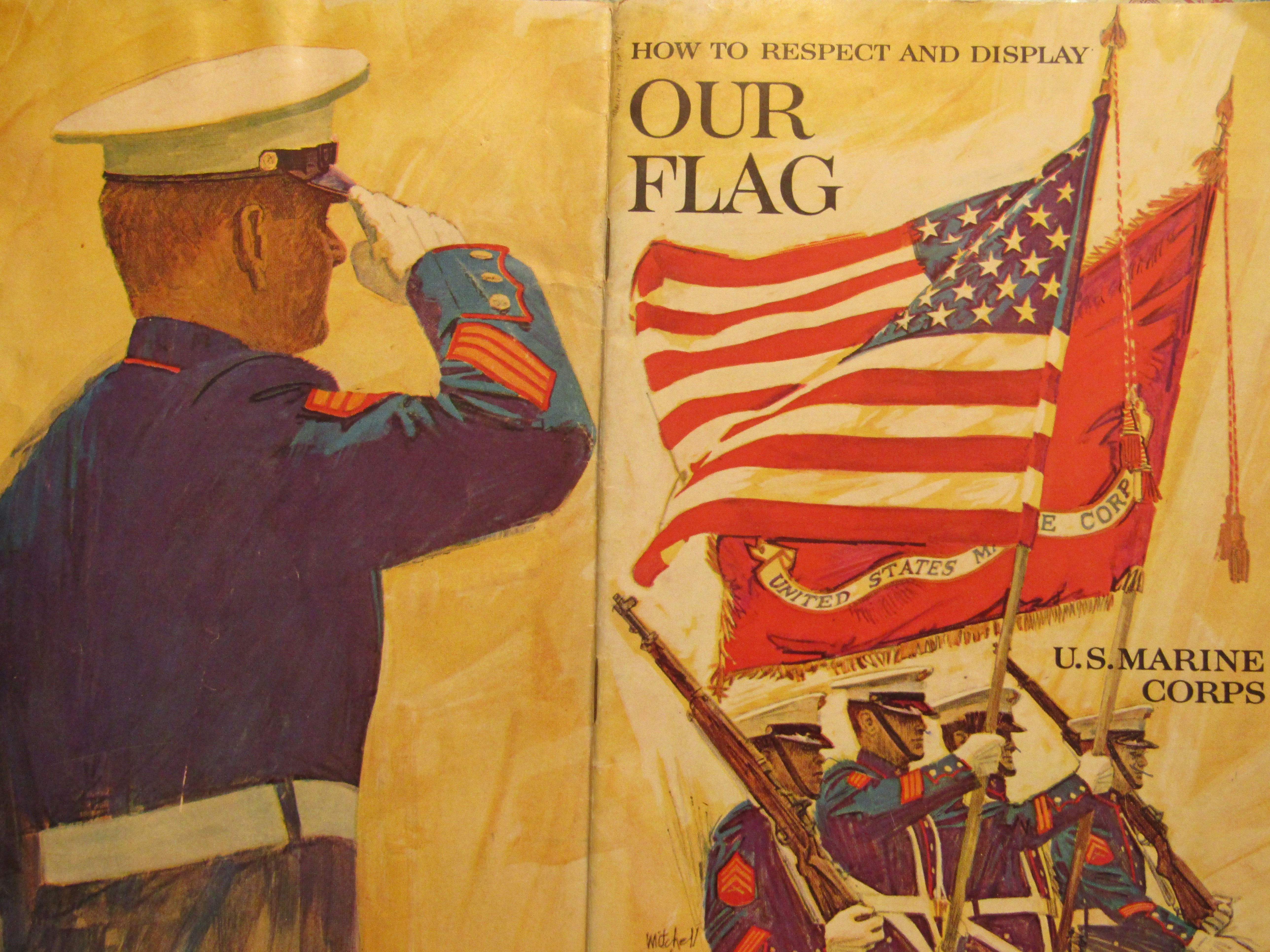
When I was young, I kept a pamphlet in my room: “How to Respect and Display Our Flag.” It was from the U.S. Marine Corps, dated March 1968. I still have that pamphlet; here’s a photo of it:
Some of its guidance is now (it saddens me to say) obsolete. Consider the following: “Do not use the flag as a portion of a costume or athletic uniform. Do not embroider it upon cushions or handkerchiefs nor print it on paper napkins or boxes.”
Nowadays, flags are everywhere. They are on football helmets and baseball caps. They are on bathing suits (!) and shirts, jackets and tops. I once bought an ice cream cone at a baseball game in a paper wrapper decorated by the American flag.
Fifty years ago, there was a sense our flag was special, meaning you didn’t put one everywhere and on everything. All these representations of the flag that you see today, especially those flag lapel pins most often seen on sportscasters and politicians, strike me as opportunistic and self-celebratory rather than respectable tributes to Old Glory.
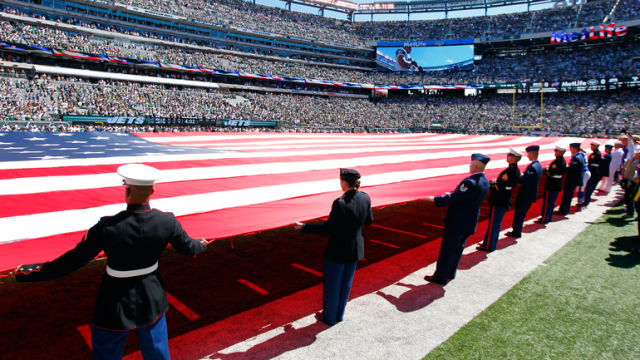
My flag handbook also says, “When carried, the flag should always be aloft and free–never flat or horizontal.” I suppose they couldn’t imagine in 1968 flags so gigantic that they could only be carried flat or horizontal.
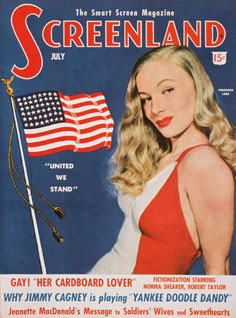
A book of more recent vintage (2001), “United We Stand,” celebrates efforts during World War II to bring the nation together by marking the Fourth of July in 1942 with images of the flag on magazines. One of my favorites from that time showcased Veronica Lake:
From this book, I was reminded of the original “Pledge of Allegiance”:
I pledge allegiance to my Flag
and the Republic for which it stands,
one nation indivisible,
with liberty and justice for all.
The phrase “under God” was only added in 1954 at the height of McCarthyism.
I favor the original pledge. If it was good enough for the “Greatest Generation” who fought and won World War II, it should be good enough for these times.
I was also reminded of a song that I rarely hear nowadays: “You’re a Grand Old Flag” by George M. Cohan (played, of course, by Jimmy Cagney in “Yankee Doodle Dandy,” as mentioned on the cover above). Remember the opening stanza of that song?
You’re a grand old flag.
You’re a high-flying flag
and forever in Peace may you wave.
“Forever in peace may you wave” — how come we don’t hear that sentiment today?
In my latest article for TomDispatch.com, I argue the Pentagon has won the war that matters: the struggle for the “hearts and minds” of America. Pentagon budgets are soaring even as wars in places like Afghanistan continue to go poorly. Despite poor results, criticism of the Pentagon is rare indeed, whether in the mainstream U.S. media or even among so-called liberals and progressives, a point hammered home to me when I contacted my senator. Here’s an excerpt from TomDispatch; you can read my article in full here.
A Letter From My Senator
A few months back, I wrote a note to one of my senators to complain about America’s endless wars and received a signed reply via email. I’m sure you won’t be surprised to learn that it was a canned response, but no less telling for that. My senator began by praising American troops as “tough, smart, and courageous, and they make huge sacrifices to keep our families safe. We owe them all a true debt of gratitude for their service.” OK, I got an instant warm and fuzzy feeling, but seeking applause wasn’t exactly the purpose of my note.
My senator then expressed support for counterterror operations, for, that is, “conducting limited, targeted operations designed to deter violent extremists that pose a credible threat to America’s national security, including al-Qaeda and its affiliates, the Islamic State in Iraq and Syria (ISIS), localized extremist groups, and homegrown terrorists.” My senator then added a caveat, suggesting that the military should obey “the law of armed conflict” and that the authorization for the use of military force (AUMF) that Congress hastily approved in the aftermath of 9/11 should not be interpreted as an “open-ended mandate” for perpetual war.
Finally, my senator voiced support for diplomacy as well as military action, writing, “I believe that our foreign policy should be smart, tough, and pragmatic, using every tool in the toolbox — including defense, diplomacy, and development — to advance U.S. security and economic interests around the world.” The conclusion: “robust” diplomacy must be combined with a “strong” military.
Now, can you guess the name and party affiliation of that senator? Could it have been Lindsey Graham or Jeff Flake, Republicans who favor a beyond-strong military and endlessly aggressive counterterror operations? Of course, from that little critical comment on the AUMF, you’ve probably already figured out that my senator is a Democrat. But did you guess that my military-praising, counterterror-waging representative was Elizabeth Warren, Democrat of Massachusetts?
Full disclosure: I like Warren and have made small contributions to her campaign. And her letter did stipulate that she believed “military action should always be a last resort.” Still, nowhere in it was there any critique of, or even passingly critical commentary about, the U.S. military, or the still-spreading war on terror, or the never-ending Afghan War, or the wastefulness of Pentagon spending, or the devastation wrought in these years by the last superpower on this planet. Everything was anodyne and safe — and this from a senator who’s been pilloried by the right as a flaming liberal and caricatured as yet another socialist out to destroy America.
I know what you’re thinking: What choice does Warren have but to play it safe? She can’t go on record criticizing the military. (She’s already gotten in enough trouble in my home state for daring to criticize the police.) If she doesn’t support a “strong” U.S. military presence globally, how could she remain a viable presidential candidate in 2020?
And I would agree with you, but with this little addendum: Isn’t that proof that the Pentagon has won its most important war, the one that captured — to steal a phrase from another losing war — the “hearts and minds” of America? In this country in 2018, as in 2017, 2016, and so on, the U.S. military and its leaders dictate what is acceptable for us to say and do when it comes to our prodigal pursuit of weapons and wars.
So, while it’s true that the military establishment failed to win those “hearts and minds” in Vietnam or more recently in Iraq and Afghanistan, they sure as hell didn’t fail to win them here. In Homeland, U.S.A., in fact, victory has been achieved and, judging by the latest Pentagon budgets, it couldn’t be more overwhelming.
If you ask — and few Americans do these days — why this country’s losing wars persist, the answer should be, at least in part: because there’s no accountability. The losers in those wars have seized control of our national narrative. They now define how the military is seen (as an investment, a boon, a good and great thing); they now shape how we view our wars abroad (as regrettable perhaps, but necessary and also a sign of national toughness); they now assign all serious criticism of the Pentagon to what they might term the defeatist fringe.
In their hearts, America’s self-professed warriors know they’re right. But the wrongs they’ve committed, and continue to commit, in our name will not be truly righted until Americans begin to reject the madness of rampant militarism, bloated militaries, and endless wars.
The National Anthem and flags are everywhere in America
Richard Sahn
Editor’s Intro: The first time I went to a movie on a military base, I was surprised when the national anthem began to play, and everyone stood up. It seemed so incongruous. My buddy who came with me refused to stand at first, but after catching grief from a fellow movie-goer, he reluctantly stood. I stood too, of course, but I felt silly doing so. The whole practice just seemed to cheapen the anthem.
Nowadays, the anthem and similar patriotic songs are everywhere, especially “God Bless America” and “God Bless the USA,” with its refrain about being “Proud to be an American.” Watching NFL football this past weekend, I noticed every announcer on CBS during halftime wore flag lapel wins. Easy gestures of patriotism are everywhere in my country, even at classical concerts, notes my good friend and fellow contrarian, Richard Sahn. But are they not patronizing to the audience? W.J. Astore
I recently attended a classical music concert in the town where I live. The orchestra began by playing the national anthem. Many in the audience sang the words. I felt like I was at a baseball game or a military parade or the moment before the fireworks at a July 4th celebration. I stood up, of course, for my own survival in the rural and conservative community where I live.
But I couldn’t help but engage in some critical thinking. What is the connection between this perfunctory display of patriotic observance and enjoying the music, I kept asking myself. I couldn’t conjure up a rational relationship. If there was a global anthem–perhaps honoring the potential of great music to bring the people of the world together–singing such an anthem would have been appropriate. Come to think of it, great artistic works and performers have the very potential to do just that, unite humanity. Yet all national anthems of developed countries when performed in public forums only enhance the capacity to see the social world in terms of us versus them. Depending on the government in power this division can have moral or immoral consequences if we define “immoral” as decision-making that promotes unnecessary death and suffering.
So, why play a national anthem before a classical concert featuring international music, and why stand up for it? I’ve come up with several possible reasons:
One reason people rise for the national anthem is because they don’t want to stand out in the crowd and endure negative reactions. (My reason.)
Another reason seems to be pure habit, which is the result of socializing and conditioning throughout one’s life.
Pride in nation as such, which would apply to people of any specific nationality. This is pure love of country, an easy form of patriotism with no cost to the individual.
The belief, undoubtedly a “true belief” as author Eric Hoffer would argue (“The True Believer”) that one is truly honoring those who sacrificed themselves in a nation’s wars, that one is somehow expressing thanks to the dead and their families. Or, that the nation itself is alive or conscious. Therefore, one is thanking the nation for winning its wars.
Obedience to the norm of standing up for national anthem, thinking that it is an obligation to society, perhaps authority figures in general, to respect the national anthem.
Finally, a cynical explanation for the musical director of the orchestra beginning a concert with the national anthem is pleasing or obeying members of the board of the orchestra who contribute financially, and who insist on the observation of “patriotic” norms.
Now, don’t get me wrong. I believe in honoring or supporting courageous individuals who have fought in wars or sacrificed themselves for what they believed was necessary for freedom and survival. Not just war heroes but moral heroes, men and women like Martin Luther King Jr. and Dorothy Day.
But I oppose national anthems because they feed nationalism which is conducive to unnecessary death and torture. I am also opposed to national anthems because there is no such thing as a country or nation; there are only people, laws, culture (material and non-material).
Countries exist in consciousness. They are abstract ideas, political constructs. Believing they exist as if they were a reality sui generis, as if they were an actual person or even a thing, is reification. The word is not the thing, the map is not the territory.
Instead of rising for jingoistic national anthems, people should instead rise to applaud a moving performance by the musicians and conductor after listening to, say, Mozart’s Jupiter symphony. Music is real in a way that nations are not.
Musical concerts should provide a haven for celebrating the human condition, not for anthem-singing that divides humanity. My protest that night was a silent one, but internally I raged against the conflation of the state with the arts when the national anthem began to play.
Richard Sahn is a sociology professor and independent thinker.
Pastors pray with Trump in Nevada, October 2016 (Photograph: Evan Vucci/AP)
W.J. Astore
Five years ago, I wrote an article to suggest “American fascism” was a misleading concept. Here’s some of what I wrote:
Certainly, since the attacks of 9/11 the U.S. has become more authoritarian, more militarized, and less free (witness the Patriot Act, NSA spying, and the assassination of American citizens overseas by drones). The U.S. Supreme Court has empowered corporations and the government at the expense of individual citizens. Powerful banks and corporations reap the benefits of American productivity and of special tax breaks and incentives available only to them, even as average American citizens struggle desperately to keep their heads above water.
But to describe this as “fascism” is misleading. It’s also debilitating and demoralizing.
It’s misleading because fascism has a specific historical meaning. The best definition I’ve seen is from the historian Robert Paxton’s The Anatomy of Fascism:
“A form of political behavior marked by obsessive preoccupation with community decline, humiliation or victimhood and by compensatory cults of unity, energy and purity, in which a mass-based party of committed nationalist militants, working in uneasy but effective collaboration with traditional elites, abandons democratic liberties and pursues with redemptive violence and without ethical or legal restraints goals of internal cleansing and external expansion.”
What about it? Is the U.S. fascistic? Plainly, no. We don’t have a messiah-like dictator. Our justice system still works, however imperfectly. Our votes still count, even if our political speech often gets drowned out by moneyed interests.
Here we are, in 2018, and the idea of American fascism no longer seems as misleading as it did to me in 2013. For his followers, Donald Trump is a messiah-like dictator. There’s even a movie making the rounds (“The Trump Prophecy“) about how Trump’s election in 2016 was an act of God. Meanwhile, the American justice system is increasingly partisan, increasingly captive to the political right, even as it remains favorably predisposed to the powerful. Our votes are increasingly suppressed: polling stations are closed in minority neighborhoods; onerous voter ID laws work to restrict voting by the “wrong” kind of people; early voting is being curtailed; voting rolls are being purged; and gerrymandering is widespread. All of these steps are designed to protect one party in particular: the Republican.
To return to Paxton’s definition in the light of 2018: Trump ran on a platform of American decline. He sees himself and his followers as victims; nationalist militarism is growing in popularity; democratic liberties are being eroded (whoever thought children would be separated from parents at the border and put into what are effectively concentration camps?).
Ethical and legal restraints still exist on the worst of this behavior, but for how long?
Fascism, Norman Mailer wrote, is “a murderous mode of deadening reality by smothering it with lies.” Nowadays we call these lies “fake news” or “alternative facts.” Whatever you call them, they feed what Mailer called “an insidious, insipid sickness” in society that “demands a violent far-reaching purgative.”
That’s where all of Trump’s lies may be leading us: to violent purges internally and violent surges externally. It’s a grim vision, one that no longer seems as far-fetched to me as it did in 2013.
He wrote me beautiful letters — then we fell in love!
W.J. Astore
Here are a few random thoughts I’ve had over the last few days.
1. I’m still reeling from Donald Trump confessing how he and Kim Jong-un “fell in love.” Imagine if Barack Obama had gushed about falling in love with a communist dictator? Fox News and the Republicans would have crucified him.
2. Brett Kavanaugh is now a Supreme Court justice. But imagine if he’d been black. Would he have survived sexual assault allegations from three white women? Or imagine if he’d been a woman and boasted of liking beer, lots of beer, while losing self-control before the Senate judiciary committee. A female Kavanaugh would have been dismissed as hysterical and unsuited for the pressures of the court, methinks. In sum, a certain type of privilege still exists for certain types of white males.
3. Last night, Donald Trump accused Hillary Clinton of colluding with the Russians. Trump’s tactics on this issue have run the gamut from denying he colluded, to saying it’s not illegal to collude, to charging his opponent with the (apparent) crime of colluding. This is not to say I believe Trump colluded with the Russians (though his constant denials make me think he’s got a lot to hide). While we wait for the Mueller investigation to conclude, it’s worth recalling that candidate Trump asked the Russians to hack Hillary’s server to find her missing emails. Perhaps this was merely a snide remark by an unhinged candidate, but why were Trump campaign staffers meeting with Russians? To help speed adoption of Russian kids by Americans?
But here’s a key point: Trump didn’t win because of Russian “collusion.” He won because Hillary ran a poor campaign. The collusion story (assuming there’s something to it) is a minor issue compared to the real damage Trump does every day as president, e.g. dismissing the perils of climate change as a “Chinese hoax.”
4. At TomDispatch.com, Juan Cole has a fine piece on Islamophobia and how it’s promoted by the Trump administration. It has at least three components. The first is resentment stemming from 9/11, which embarrassed the Republicans since it happened on their watch. The second is religion, that old crusading spirit of evangelicals and conservative Catholics. The third is entitlement/resentment. You know the saying: Who put America’s oil under the desert sands of the Middle East? America’s leaders, and so many of their countrymen, believe all that oil should be theirs.
5. There’s an argument that Trump is no worse than other politicians like Obama or the Clintons. Indeed, that in some way his mendacity is refreshing: that he’s torn the mask off American exceptionalism, revealing all the hypocrisy, all the duplicity, all the crimes against humanity, that other politicians work to keep hidden.
It’s tempting to say “they all do it.” But Trump’s dishonesty is constant. He lies just to stay in shape. And his lies are calculated to sow discord — to divide. Divide and rule is his strategy. Reaping profit for himself is his goal. He’s always been a con man, but now the entire country, indeed the entire world, is his mark.
Because he’s anti-democratic, because he’s a divider, because he loves dictators while mocking people weaker than him, for these and many other reasons, Trump is worse. Trump is making cruelty normal, even admirable (at least to his followers). He’s not so much ripping a mask off America as he is reveling in his own nastiness while encouraging likeminded people in America and around the world to join him.







 Bracing Views