America’s Surging Warrior Ethos

W.J. Astore

I’ve written a lot about America’s warrior ethos and how it represents a departure from a citizen-soldier ideal as embodied by men like George Washington and Major Dick Winters (of “Band of Brothers” fame).  This warrior ethos grew in the aftermath of defeat in Vietnam and the ending of the draft.  It gained impetus during the Reagan years and was symbolized in part by the development of fictional rogue symbols of warrior-toughness such as John Rambo.  Today’s U.S. military has various warrior codes and songs and so on, further reinforcing ideals of Spartan toughness.

John_Rambo
The Rambo Ideal: “Sir, Do We Get to Win This Time?” (Wiki)

My writings against this warrior hype have, on occasion, drawn fire from those who identify as warriors.  I’d like to share two examples.

Here is the first:

The day that we encourage our soldiers to be anything but warriors is the day that we start losing battles and wars. If we are controlled by citizens who are our ultimate leaders then it is up to them to handle the niceties of diplomacy and nation building.  But most of them don’t have the balls to get into the thick of things and try and convert the citizens of the place we are fighting to play at being nice children in the sand pile.  We had to dominate Japan to the nth degree to get them to surrender and so the same for Germany.  You academics never to cease to amaze me with your naïveté.

This reader cites World War II and America’s victory over Japan and Germany without mentioning the Greatest Generation’s embodiment of the citizen-soldier ideal and their rejection of Japanese and Nazi militarism.  Back then, America’s victory was interpreted as a triumph of democracy over authoritarian states like Japan and Germany.  While it’s true the Soviet Union played the crucial role in defeating Nazi Germany, the Soviets ultimately lost the Cold War, another “victory” by a U.S. military that didn’t self-identify as warriors.  Despite this history, this reader suggests that America’s recent military defeats are attributable to weak civilian leadership and a lack of warrior dominance.  He fails to notice how America’s new ethos of the warrior, inculcated over the last 30 years, has produced nothing close to victory in Iraq, Afghanistan, and elsewhere.

My second example comes from a U.S. Marine:

I watched the transition we made from life takers and widow makers to peace keepers and other terms that did us no good whatsoever.  Then, in 1987, along came a new Commandant, General Al Grey, who resurrected the warrior ethos in our Corps.

We were told, and accepted the fact, that the best way to win a war or battle was to kill the enemy in numbers that could not be sustained.  We did just that during Desert Storm.  I flew 67 combat missions in an F/A-18 and took great pride and satisfaction in killing as many Iraqis as I could so that when our infantry and other ground units pushed through the berms and other obstacles, they had a clear path to their objectives.

We need more emphasis on killing the enemy and maintaining a warrior ethos and less drivel from folks like you who think it’s some type of a debating match rather than combat we undertake when our nation goes to war.

Basically, this Marine argues that war is killing.  Kill enough of the enemy and you win.  Of course, winning by attrition and body count failed during the Vietnam War, but I’m guessing this Marine would argue that the U.S. military simply didn’t kill enough of the enemy there.

This Marine further sets up a straw man argument.  Nowhere did I write or even suggest that war is “some type of debating match.”  Nowhere did I write or even suggest that war doesn’t involve combat and killing.  But criticism of the warrior ideal is often caricatured in this way, making it easier to dismiss it as “naïve” or “drivel.”

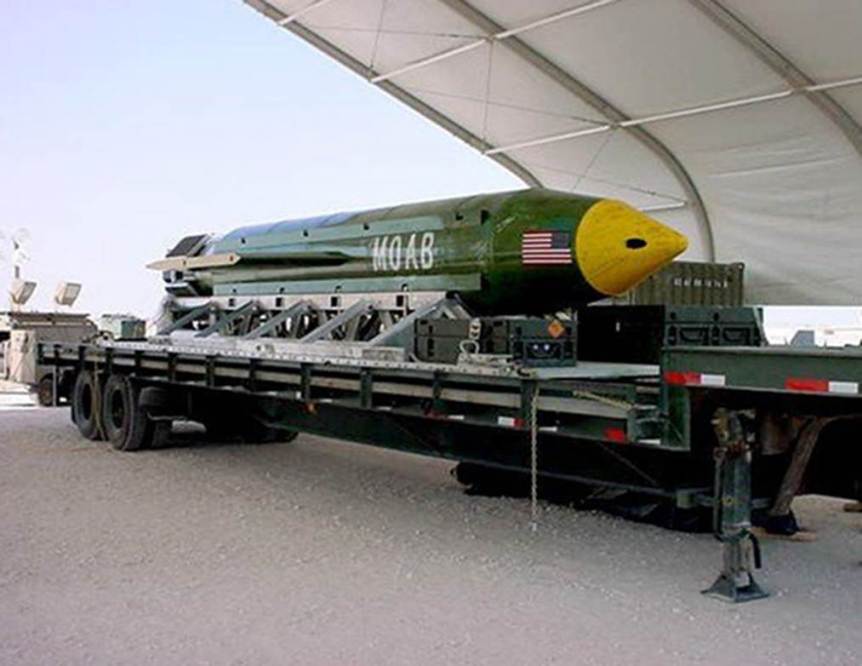
The warrior ethos is surging in America today, and not just within the military.  Witness the U.S. media’s positive reaction to President Trump’s missile strikes on Syria or the use of “the mother of all bombs” against ISIS in Afghanistan.  Gushing media praise comes to presidents who let slip the “beautiful” missiles and “massive” bombs of war.

Two centuries ago, the rocket’s red glare, the bombs bursting in air, did so over an American fortress that was under attack on our soil.  They gave proof through the night that America’s citizen-soldiers were defending our country (our flag was still there).  Nowadays, our rocket’s red glare appears in Syrian skies, our bombs bursting do so in remote regions of Afghanistan, giving proof through the night that America’s warrior ethos is anywhere and everywhere, killing lots of foreign peoples in the name of “winning.”

Call me naïve, say I write drivel, but I don’t see this as a victory for our democracy, for our country, or even for our “warriors.”

From Deterrence to Doomsday?

moab
A harbinger of bigger bombs and missiles to come?

W.J. Astore

In my latest article for TomDispatch.com, I investigate what an “America first” foreign policy actually means in practice.  What follows is an extract from the article in which I consider whether the U.S. military has morphed from a deterrent force (at least in its own eyes) to a doomsday machine.  This idea is inspired in part by an article that Dennis Showalter, a fine historian and an even better friend, wrote back in 2000 about the German military prior to World War I.  Excerpt follows:

Deterring Our Way to Doomsday

Who put America’s oil under all those Middle Eastern deserts?  That was the question antiwar demonstrators asked with a certain grim humor before the invasion of Iraq.  In Trump’s oft-stated opinion, the U.S. should indeed have just taken Iraq’s oil after the 2003 invasion.  If nothing else, he said plainly what many Americans believed, and what various multinational oil companies were essentially seeking to do.

Consider here the plight of President Jimmy Carter.  Nearly 40 years ago, Carter urged Americans to scale back their appetites, start conserving energy, and free themselves from a crippling dependency on foreign oil and the unbridled consumption of material goods.  After critics termed it his “malaise” speech, Carter did an about-face, boosting military spending and establishing the Carter Doctrine to protect Persian Gulf oil as a vital U.S. national interest.  The American people responded by electing Ronald Reagan anyway.  As Americans continue to enjoy a consumption-driven lifestyle that gobbles up roughly 25% of the world’s production of fossil fuels (while representing only 3% of the world’s population), the smart money in the White House is working feverishly to open ever more fuel taps globally.  Trillions of dollars are at stake.

Small wonder that, on becoming president, Trump acted quickly to speed the building of new pipelines delayed or nixed by President Obama while ripping up environmental protections related to fossil fuel production.  Accelerated domestic production, along with cooperation from the Saudis — Trump’s recent Muslim bans carefully skipped targeting the one country that provided 15 of the 19 terrorists in the 9/11 attacks — should keep fuel flowing, profits growing, and world sea levels rising.

One data point here: The U.S. military alone guzzles more fossil fuel than the entire country of Sweden.  When it comes to energy consumption, our armed forces are truly second to none.

With its massive oil reserves, the Middle East remains a hotbed in the world’s ongoing resource wars, as well as its religious and ethnic conflicts, exacerbated by terrorism and the destabilizing attacks of the U.S. military.  Under the circumstances, when it comes to future global disaster, it’s not that hard to imagine that today’s Middle East could serve as the equivalent of the Balkans of World War I infamy.

If Gavrilo Princip, a Serbian “Black Hand” terrorist operating in a war-torn and much-disputed region, could set the world aflame in 1914, why not an ISIS terrorist just over a century later?  Consider the many fault lines today in that region and the forces involved, including Russia, Turkey, Iran, Israel, Saudi Arabia, and the United States, all ostensibly working together to combat terrorism even as they position themselves to maximize their own advantage and take down one another.  Under such circumstances, a political temblor followed by a geo-political earthquake seems unbearably possible.  And if not an ISIS temblor followed by major quake in the Middle East, there’s no shortage of other possible global fault lines in an increasingly edgy world — from saber-rattling contests with North Korea to jousting over Chinese-built artificial islands in the South China Sea.

As an historian, I’ve spent much time studying the twentieth-century German military.  In the years leading up to World War I, Germany was emerging as the superpower of its day, yet paradoxically it imagined itself as increasingly hemmed in by enemies, a nation surrounded and oppressed.  Its leaders especially feared a surging Russia.  This fear drove them to launch a preemptive war against that country.  (Admittedly, they attacked France first in 1914, but that’s another story.)  That incredibly risky and costly war, sparked in the Balkans, failed disastrously and yet it would only be repeated on an even more horrific level 25 years later.  The result: tens of millions of dead across the planet and a total defeat that finally put an end to German designs for global dominance.  The German military, praised as the “world’s best” by its leaders and sold to its people as a deterrent force, morphed during those two world wars into a doomsday machine that bled the country white, while ensuring the destruction of significant swaths of the planet.

Today, the U.S. military similarly praises itself as the “world’s best,” even as it imagines itself surrounded by powerful threats (China, Russia, a nuclear North Korea, and global terrorism, to start a list).  Sold to the American people during the Cold War as a deterrent force, a pillar of stability against communist domino-tippers, that military has by now morphed into a potential tipping force all its own.

Recall here that the Trump administration has reaffirmed America’s quest for overwhelming nuclear supremacy.  It has called for a “new approach” to North Korea and its nuclear weapons program.  (Whatever that may mean, it’s not a reference to diplomacy.) Even as nuclear buildups and brinksmanship loom, Washington continues to spread weaponry — it’s the greatest arms merchant of the twenty-first century by a wide mark — and chaos around the planet, spinning its efforts as a “war on terror” and selling them as the only way to “win.”

In May 1945, when the curtain fell on Germany’s last gasp for global dominance, the world was fortunately still innocent of nuclear weapons.  It’s different now.  Today’s planet is, if anything, over-endowed with potential doomsday machines — from those nukes to the greenhouse gas emissions that cause global warming.

That’s why it’s vitally important to recognize that President Trump’s “America-first” policies are anything but isolationist in the old twentieth century meaning of the term; that his talk of finally winning again is a recipe for prolonging wars guaranteed to create more chaos and more failed states in the Greater Middle East and possibly beyond; and that an already dangerous Cold War policy of “deterrence,” whether against conventional or nuclear attacks, may now have become a machine for perpetual war that could, given Trump’s bellicosity, explode into some version of doomsday.

Or, to put the matter another way, consider this question: Is North Korea’s Kim Jong-un the only unstable leader with unhinged nuclear ambitions currently at work on the world stage?

The U.S. Military’s Ethos: Of Busy-work, Sweaty Suffering, White Wall Haircuts, Beribboned Uniforms, and Warrior Talk

W.J. Astore

Why does the U.S. military invest so much pride in working to the point of tedium, if not exhaustion?  A friend of mine, an Army major, worked at the Pentagon.  He worked hard during his normal shift, after which he did what sensible people do – he went home.  His co-workers, noses to the grindstone, would hassle him about leaving “early.”  He’d reply, I can leave on-time because I don’t waste hours at the coffee maker or in the gym.

A caffeinated emphasis on work and fitness, another friend suggested, may be a post-Vietnam War reaction to Secretary of Defense Robert McNamara’s “managerial culture” of the 1960s.  As he put it, “One easy way of showing one has the ‘right stuff’ [in the U.S. military] is to be an exercise nut, and the penumbras of that mind-set have really distorted the allocation of effort in our military.”

Two recent examples of work- and fitness-mania are Army Generals David Petraeus and Stanley McChrystal.  The U.S. media extolled them as ascetic-warriors, yet both flamed out due to serious errors in judgment (Petraeus for an affair with his biographer, with whom he illegally shared highly classified information, and McChrystal for tolerating a climate that undermined his civilian chain of command).  Asceticism and sweaty fitness routines, after all, are no substitute for sound judgment and a disciplined mind.

Busy-work within the military is related to Parkinson’s Law, the idea that work expands to fill the time allotted to it.  In this case, with America’s wars on terror being open-ended, or “multi-generational” as the U.S. military puts it, the “work” on these wars will continue to expand to fill this time, with the added benefit of “validating” the extra money ($54 billion in 2017 alone) being shoveled to the Pentagon by President Trump.

Along with busy-work are the virtues of suffering, as related by a societal celebration of Navy SEALs and similar special forces (“100 men will test today/but only three win the Green Beret”).  I’ve lost count of the times I’ve read articles and seen films featuring these “supermen” and their arduous training.  The meme of “sweet–and public–suffering” is related to the whole “warrior” ideal (more on this later) within the U.S. military.  There’s a self-righteous shininess here, a triumph of image over substance, or image as substance.  (Being physically tough is of course an asset in close quarters combat, but it’s no guarantor of strategic sense or even of common sense.)

In the past, some of America’s finest military leaders had no shame in appearing common, most famously the “shabby” Ulysses S. Grant during the U.S. Civil War.

Grant at Cold Harbor, 1864

Civil War officers – true citizen-soldiers, most of them – often had unruly hair and unkempt beards, but they sure as hell fought hard and got the job done.  Nowadays, as another reader put it, “there appears to be a whole lot of Army officers who think a white sidewall haircut proves you’re a great officer. It actually is a homage to the Prussian Army that shaved its soldiers’ heads to prevent lice.”

Speaking again of image, let’s take a close look at the beribboned uniforms of today’s military officers.  General Joseph Votel, presently U.S. Centcom commander, is only the most recent example of an excess of ribbons, badges, and other devices:

Contrast Votel’s image to that of General George C. Marshall, who defeated Nazi Germany and Imperial Japan during World War II.

Marshall in 1946

How did Marshall manage such military feats with so few ribbons?  Nowadays, U.S. generals sport more bling than the Kardashians.

But let’s return to the notion of U.S. troops as “warriors” and “warfighters.”  I’ve written extensively on this subject.  I see today’s “warrior” conceit as a way of eliminating our democratic citizen-soldier ideal, making the U.S. military a thoroughly professional force, subservient to the government and divorced from the people.

However, there’s another aspect to this “warrior” mythology, a powerful psychological one: the duping of the “warriors” themselves, distracting them from a bitter reality they may be little more than cannon fodder for greed-war.*  The U.S. military today is awash with warrior creeds that to me are antithetical to the citizen-soldier ideal of America.

To sum up the U.S. military’s current ethos, then: We have a lot of guys who take great pride in constant busy-work and excessive physical exertion, sporting high and tight haircuts, their uniforms festooned with bewildering displays of ribbons and medals and badges, extolling a warrior code in the service of a government that tells them that multi-generational wars are unavoidable.

And so it shall prove, if these shadows remain unaltered.

*Thanks to Michael Murry for bringing my attention to how the semiotics of “warrior” are dramatically changed if we substitute “gladiator” for “warrior,” followed by less grandiose terms such as “those about to die,” i.e. as scapegoats to the king’s ambition, an insight he gleaned from reading Umberto Eco.

America Needs a Stronger Anti-War Movement

W.J. Astore

Remember that saying from the Vietnam War era, “Suppose they gave a war and no one came?”  Considering present events, we need to modify that.  Suppose they kept giving us war after war and no one cared?

It’s remarkable that, even as President Trump expands our military involvement overseas, there is no significant anti-war protest movement in America.  Why is this?  Perhaps Americans don’t recognize the reality of today’s wars?

Tom Engelhardt has a great article today in which he reflects about World War II, the Vietnam War, and current conflicts around the world.  He ends his article with this powerful question:

In many ways, from its founding the United States has been a nation made by wars. The question in this century is: Will its citizenry and its form of government be unmade by them?

The answer to that is “yes,” if we continue largely to ignore them.

no-more-war
Protesters who shouted “No more war!” at the Democratic National Convention were silenced

Let me give you an example; it may sound trivial, but I think it’s indicative.  I just finished watching a seven-part series on HBO, “Big Little Lies.”  Set on the Monterey peninsula in California, the series revolved around several sets of mostly affluent, mostly White, parents and the travails of their privileged children.  The series did tackle serious issues, especially spousal abuse, and did feature fine acting.  What it did not feature was any sense that the U.S. has a military, let alone that America is at war around the world.

Wait a minute, you’re saying.  Why should a series featuring mostly affluent adults and their precocious children have said anything about the U.S. military and its wars?  Because of the setting.  I lived in Monterey for three years while serving as the military dean of students at the Defense Language Institute Foreign Language Center at the Presidio of Monterey.  I also taught at the Naval Postgraduate School in Monterey.  The U.S. military has a high profile there, but you’d never know it from watching “Big Little Lies.”  From that series, you’d think nearly everyone lived in sleek and expensive houses gazing out on the Pacific Ocean.  You’d never think that American adults had any concern whatsoever about what their military was up to around the world.  And perhaps that’s even true.

One teenager in “Big Little Lies” stirs family controversy by plotting to sell her virginity on the Internet to raise awareness of human trafficking.  (She eventually backs down.)  Perhaps she might have protested America’s wars instead?

So, why aren’t Americans protesting war?  Besides the unreality of these wars to the “Big Little Lies” crowd, here are some reasons that come to mind:

  • They’re couched as “necessary” wars against terrorism.
  • Unlike WWII or Vietnam, there’s no draft, hence the wars directly impact only American “volunteers” and their families/friends.
  • Recent U.S. casualties are much lower than they were from 2004-10 before, during, and after the “surges” in Iraq and Afghanistan, and much lower than in Vietnam. Americans care most when Americans die.  Witness the reaction to one Navy SEAL dying in a raid in Yemen.  If comparatively few American are dying, we don’t care much.
  • There is no major anti-war political party in the USA; the Democrats have embraced war as tightly as the Republicans. In short, there’s no strong rallying point against war.
  • The U.S. military has developed a form of war, based on technologies such as “smart” munitions and drones, that at least to us seems antiseptic and low cost.
  • American exceptionalism also plays a role, the government/mainstream media spin that Americans always enter wars reluctantly and only to do good.
  • Fear.  And nationalism (America First!) disguised as patriotism.

Another crucial reason: Many if not most Americans are remarkably disconnected from their government and its actions.  As Engelhardt wrote in another article (on the legendary journalist I. F. Stone):

What’s missing is any sense of connection to the government, any sense that it’s “ours” or that we the people matter. In its place—and you can thank successive administrations for this—is the deepest sort of pessimism and cynicism about a national security state and war-making machine beyond our control. And why protest what you can’t change?

Engelhardt wrote this in 2015, when Barack Obama was still commander-in-chief.  Now we have Trump and his unmerry crew, operating in their own bellicose reality.  In 2017 even more Americans are disconnected from the government, which they don’t see as “theirs.”  (Meanwhile, those who do see Trump and Crew as “theirs” probably embrace a bellicose approach to foreign policy.)

Disconnecting from government does not mean one should disconnect from its wars.  Those wars are being waged in our name; it’s up to us to work to end them.

Afterthoughts: Many Americans think that anti-war protest is somehow against “our” troops.  Yet, what could be better for our troops than fewer wars and less fighting?  Also, it’s foolhardy to give the U.S. military a blank check when it comes to war.  We the people are supposed to control our military, which is why America’s Founders gave Congress the power to declare war and to control the budget.  Finally, whether they know it or not, the Pentagon and its generals seriously need push-back from the American people.  When I watch Congressional hearings, most of our representatives are at pains to praise the military, instead of challenging it with tough questions.

Our military gets enough kudos!  What it needs is serious criticism, not unstinting praise along with buckets of money.

Ready for War with Iran?

W.J. Astore

General Joseph Votel, U.S. Centcom commander, testified to the House Armed Services Committee this week that the greatest destabilizing force in the Middle East is Iran, and that the U.S. must be prepared to use “military means” to confront and defeat the Iranian threat to the region.

No doubt Iran is a pest to U.S. designs in the Middle East.  No doubt Iran has its own agenda. No doubt Iran is no friend to Israel.  But the greatest destabilizing force in the Greater Middle East?  That’s the USA.  We’re the ones who toppled Iraq in 2003, along with the legitimate government of Iran 50 years earlier.

Iran/Persia has lived in, and sometimes dominated, the Greater Middle East for 2500 years.  By comparison, the USA is a newcomer on the block. Yet it’s the Iranians who are the destabilizers, the ones operating in a nefarious “grey zone” between peace and war, at least according to U.S. generals.

mattis
According to General Mattis, the Iranians are the greatest threat to stability and peace in the Middle East.  The U.S., with its massive military and extensive weapons sales, only safeguards peace and stability. 

Besides the disastrous U.S. invasion of Iraq in 2003, which accidentally helped Iran, the U.S. continues to sell massive amounts of weaponry to Iran’s rivals, most especially Saudi Arabia. U.S. military operations in Yemen, Syria, Iraq, and elsewhere in the Middle East have both destabilized the region and created marketplaces for U.S. weaponry and opportunities for economic exploitation by multinational corporations.

I’m no fan of Iran and its leaders, but can one blame them for resisting U.S. military and economic incursions into their sphere of influence? Recall how we reacted when the Russians put missiles into Cuba. Look at all the hostile rhetoric directed today against Mexico and its allegedly unfair trade practices vis-a-vis the U.S.

Let’s not forget that for 25 years (1953-78), the Shah of Iran was an American ally.  The U.S. military loved to sell him our most advanced weaponry, which at that time included F-14 Tomcat fighters and HAWK missile systems. That cozy relationship died with the Iranian Revolution (1979); ally turned to enemy as the U.S. supported Saddam Hussein and Iraq during the bloody Iran-Iraq War of the 1980s.

Yet, despite all this history, despite all the U.S. meddling, all the weapons sales, all the invasions and sanctions, somehow it’s the Iranians who are the destabilizing force, the ones deserving of more “disruptive” U.S. military action.

As America’s designs are frustrated in the Middle East, American generals never look in the mirror to see their own faults and failings. Instead, they cast about for new countries to blame — and to attack. Iran is seemingly next on the list, a country that General Mattis, America’s Secretary of Defense, said is “the single most enduring threat to stability and peace in the Middle East.”

Anyone for war with Iran?  U.S. generals are ready.

Mother Nature: It’s Really Not Nice to Fool with Her

News out of Trump-land today is that the president is signing an executive order to rollback environmental protections passed by President Obama. All the Republicans can seemingly agree on is to attack Obama’s actions; as a friend said to me, “They’re a bunch of spiteful mofos.”

We only have one Planet Earth, and we seem determined to ruin it, once again in the name of profit and jobs and “growth.” On a planet with shrinking resources, why is “growth” such a wonderful thing?

http://www.cbsnews.com/news/trump-executive-order-will-dismantle-obama-environmental-regulations/

wjastore's avatarBracing Views

earth Guess What?  There’s Only One Earth

W.J. Astore

The other day, I was watching a typical truck commercial on TV. It showed trucks literally tearing up the backroads, along with ATVs spinning and jumping and chewing up the countryside, all synonymous with “adventure” and “freedom.”

I remember those old Coors commercials featuring Mark Harmon. They were set in Colorado (I think) and featured him quietly extolling the virtues of barley and clean water. Now most Coors commercials are about self-indulgent partying (but please drink responsibly).

My point? We need a change in mindset — one that values nature and its preservation. We’re doomed if we keep selling the idea “you can have it all,” so go party and tear up nature — who cares as long as you’re having fun?

We act as if we have many planet earths, but we have only one.  And we’re slowly and surely making…

View original post 315 more words

Jared Kushner: SWAT Team Leader!

File this under the ongoing militarization of Washington, DC and our American moment: Jared Kushner, Trump’s son-in-law, is to lead a SWAT team to introduce best practices from business into government. Not an efficiency team or innovation team or idea team. A SWAT team. As in special weapons and tactics.

Will Kushner carry an M-16 or sniper rifle while he remakes government in the image of business? The SWAT rhetoric is both juvenile and absurd.

As Dirty Harry said, “A man’s got to know his limitations.” Kushner, whose record apparently wasn’t quite good enough to get into Harvard without Daddy’s money (to the tune of $2.5 million), doesn’t strike me as SWAT material. And I don’t think he knows his limitations …

https://www.washingtonpost.com/politics/trump-taps-kushner-to-lead-a-swat-team-to-fix-government-with-business-ideas/2017/03/26/9714a8b6-1254-11e7-ada0-1489b735b3a3_story.html

wjastore's avatarBracing Views

swat Keeping American TV “safe” since 1975

W.J. Astore

At Northeastern University in Massachusetts, members of campus security are now routinely carrying military assault rifles in their vehicles. The rationale is that you never know when and where terrorists will strike, so you have to be prepared to outgun them at all times.

Many Americans equate guns with safety — and bigness with value. So, the bigger the gun, the safer you are.  Right?

It didn’t used to be this way.

Back in the 1970s, I remember when the police got by with .38 revolvers. Up-arming the police meant going from .38 specials to .357 magnums.  Of course, these were six-shot revolvers.  Then cops started carrying 9mm handguns with clips that could carry 15-18 rounds.  Now some cops carry .40 caliber semi-automatics, which are more powerful than the 9mm but also more difficult to control.

You might call it the “Dirty…

View original post 375 more words

Trump Is Hurting the Pentagon!  (By Giving It Too Much Money)

Pentagon-Money
Throwing money at the Pentagon is never a good idea

W.J. Astore

Anyone who’s been in the military knows what happens as the end of a fiscal year approaches: wild spending.  Any money that’s left in your budget must be spent, if only to justify next year’s budgetary appropriation.  Woe to any unit with leftover money!  Not only is there no incentive to economize at the Pentagon: there’s a negative incentive to save money, and a positive one to spend as much as possible within your yearly allotment, while complaining to anyone within earshot that you never have enough.

Trump has already promised to enlarge Pentagon funding by 10% next year, or roughly $54 billion.  According to Mick Mulvaney, director of the Office of Management and Budget, Trump’s budget is all about “hard-power,” a signal to “our allies and our potential adversaries that this is a strong-power administration.”  At $54 billion, that is indeed a very expensive signal.

Forget about the global fight against ISIS: The big focus at the Pentagon is now going to be on spending that windfall of taxpayers’ dollars.  And, unlike the ISIS fight, which is expected to last for at least another generation, the “fight” to spend lots of money quickly is one that the Pentagon will surely win.  Believe me, the military-industrial-Congressional complex knows how to spend.

Want to make the Pentagon a better, more effective, place?  Cut its budget by 10%.  And keep cutting, year by year, while downsizing its mission.  Force it to economize – force it to think.

Let me give you a few examples.  How does the stealthy, super-expensive, F-35 jet fighter contribute to the war on terror?  It doesn’t.  Does the U.S. Navy really need more super-expensive aircraft carriers?  No, it doesn’t.  Do U.S. nuclear forces really need to be modernized and expanded at a cost of nearly a trillion dollars over the next few decades?  No, they don’t.  More F-35s, more carriers, and more nukes are not going “to make America great again.”  What they will do is consume enormous amounts of money for little real gain.

Throwing cash at the Pentagon is not the way to greater security: it’s a guarantee of frivolous military wish lists and “more of the same, only more” thinking.  In case you haven’t noticed, the Pentagon’s record since 9/11/2001 is more than a little mixed; some would say it’s been piss-poor.  Why is this?  One thing is certain: shortage of money hasn’t been the problem.

Want to send a signal about “hard-power,” President Trump?  Go hard on the Pentagon by cutting its budget.  Spend the savings on alternative energy development and similar investments in American infrastructure.  That’s the best way to put America first.

The Deeply Disturbing Trump-Merkel Press Conference

merkel_trump_meeting
Trump, in his own militarized world

W.J. Astore

Yesterday’s Trump-Merkel Press Conference was disturbing on several levels.  Worst of all was the scene of a German Chancellor listening to an American president boast about how strong his military is, and how much stronger it soon will be. Not that long ago in historical terms, Germany was a country that stressed military dominance. Two lost world wars cured Germany of its militarism. American militarism has taken its place.

As Trump responded to questions, again and again he returned to the U.S. military, vowing that he’s going to strengthen it from its “depleted” condition, perhaps to a level of power that “we’ve never seen before.”

America as a country is “very strong, very strong,” said Trump, a “very powerful company/country,” and soon the U.S. military would be “stronger,” and “perhaps far stronger than ever before.”  Naturally, the president added that he hoped he wouldn’t have to use that “far stronger” military, even as the U.S. military garrisons the globe at more than 700 bases while launching ongoing attacks against “radical Islamic terrorism” (Trump loves enunciating those three words) in places like Yemen.

Merkel and Trump hold a joint news conference in the East Room of the White House in Washington
She’s right to be worried …

This coming year, Trump is enlarging the military with a fresh influx of $54 billion.  “My generals,” as Trump likes to refer to James Mattis and John Kelly and Company, support him in part because he’s boosting military spending.  But will they continue to support Trump and his advisers like Steve Bannon when the President uses that “much stronger” military in unwise ways?

When you forge a bigger hammer, you tend not to leave it unused in the tool shed.  No — you look for bigger nails to strike.  As Trump noted at the press conference, he’s not an isolationist.  “Fake news,” he said.

That Trump, with his “far stronger” military, is not an isolationist is disturbing “real” news indeed.  Small wonder that the German Chancellor looked discomfited; her country has seen it all before.

What price military dominance?  Perhaps Chancellor Merkel could explain that to President Trump, if only he’d listen.

Trump: Yet Another War President?

trump
Yet another war president?

W.J. Astore

Is Donald Trump going to be yet another American war president?  Come to think of it, is there any other kind?

This is no accident.  Tom Engelhardt has an insightful article at TomDispatch today about how Trump the blowhard is a product of blowback from America’s failed wars, notably Iraq.  There’s much truth in this insight, since it’s hard to imagine demagogue Trump’s rise to power in a pacific climate.  Trump arose in a climate of fear: fear of the Other, especially of the terrorist variety, but also of any group that can be marginalized and vilified.  Think of Mexicans and the infamous Wall, for example.

In a separate post, Engelhardt noted the recent death of Marilyn Young, an historian who found herself specializing in America’s wars, notably Vietnam.  He cited a New York Times obituary on Young that highlighted her attentiveness to America’s wars and their continuity.

Since her childhood, Young noted, America had been at war: “the wars were not really limited and were never cold and in many places have not ended — in Latin America, in Africa, in East, South and Southeast Asia.”

She confessed that:

“I find that I have spent most of my life as a teacher and scholar thinking and writing about war.  I moved from war to war, from the War of 1898 and U.S. participation in the Boxer Expedition and the Chinese civil war, to the Vietnam War, back to the Korean War, then further back to World War II and forward to the wars of the 20th and early 21st centuries.”

“Initially, I wrote about all these as if war and peace were discrete: prewar, war, peace or postwar,” she said. “Over time, this progression of wars has looked to me less like a progression than a continuation: as if between one war and the next, the country was on hold.”

As George Orwell wrote in 1984, all that matters is for a state of war to exist (whether declared or, nowadays in the USA, undeclared).  A war mentality is the driver for autocratic excesses of all sorts.  It serves to focus the attention of people to various perceived enemies, whether from without or from within.  It promotes simplified thinking and generates fear, and fear is the mind-killer.  “Us and Them,” as Pink Floyd sang.

Aggravating simplistic and hateful “us and them” thinking in the USA is the lack of a major political party dedicated to peace.  In the USA, we have two war parties.  Trump knew this and readily exploited (and continues to exploit) it.  He knows the modern Democratic Party won’t seriously challenge the war rhetoric that drove and drives America’s new militarized reality.

Why?  Because the Democrats nurtured it.  Recall that in 2004 John Kerry “reported for duty” by saluting the Democratic National Convention.  Barack Obama in 2008 quickly morphed from a “hope and change” liberal to a drone-wielding assassin-in-chief while pursuing his “good” war in Afghanistan.  Hillary Clinton in 2016 proudly embraced Henry Kissinger and projected a harsh exterior as a hardheaded hawk.  “We came, we saw, he died,” she famously chuckled about Libya and the death of Qaddafi.  Even Bernie Sanders, with all his dreams, said little about cutting the Pentagon’s budget.

You can go back further and tag other recent Democratic presidents, such as LBJ during the Vietnam War or JFK during the Cuban Missile Crisis.  Candidate Kennedy wantonly exaggerated the “missile gap” in nuclear capability between the US and USSR (JFK had it backwards; it was the US that had clear superiority).  Jimmy Carter took a different approach, but he too soon learned his lesson, ordering a huge military buildup (overseen by the Reagan Administration) and declaring the “Carter Doctrine” to safeguard Persian Gulf oil supplies as a vital US interest.  That policy contributed in its own way to America’s recent disasters in the Greater Middle East.

Did Jimmy Carter, then, lead to Donald Trump?  Indirectly, yes.  America’s insatiable hunger for global resources (especially oil) and its desire for global power bred the conditions under which blowback came to America’s shores.  Blowback helped to generate the fear and confused desires for revenge that Trump tapped with great success in his campaign.

Today, America’s state of incessant warfare is consuming its democracy, yet President Trump’s answer is to call for more military spending, more violent attacks overseas, and more walls at home, all in a vain quest to “win” again.  Small wonder then that he’s ramping up military spending while ordering more attacks.

Trump knows what got him to the Oval Office, and it wasn’t his keen intelligence or gentlemanly charm or skill at diplomacy.  Recall that his favorite generals, George Patton and Douglas MacArthur, were all about “winning” even as they both wanted to wage the wrong wars (Patton was ready to take on the Soviets in 1945; MacArthur wanted to cross the Yalu River and invade China during the Korean War).

Will Trump, like his favorite World War II generals, seek to wage the wrong wars?  Will he recognize that fighting the wrong war is a loss even when you “win”?  Does he want to be a “war president,” and, if so, who will stop him?