Caption at the Guardian: Members of an airborne military unit are deployed on the streets of Washington DC on Thursday. Photograph: Win McNamee/Getty Images
W.J. Astore
When the only tool you have is a hammer, all problems begin to look like nails. This year alone, the U.S. government will spend roughly $740 billion on its military, though the real figure when you add in all costs exceeds a trillion dollars. With so much “invested,” as the Pentagon likes to say, in that military, there’s a strong tendency to see it as the solution to the most stubborn problems. All problems become nails either to be whacked down or pulled out and discarded depending upon which end of the military hammer our rulers choose to employ.
Americans are used to “our” military being used to hammer home American exceptionalism in faraway, foreign places. But what about when that hammer is deployed to Main Street USA to hammer peaceful protesters into line? Or, alternatively, to pull them out of the streets and into the jails? That hammer doesn’t seem to be such a solid “investment,” does it?
It appears the Trump administration has now backed away from plans to commit regular federal troops to “dominate” protesters. Opposition from retired generals and admirals like James Mattis, John Allen, and Mike Mullen may have helped. But if and when protests become more widespread or embarrassing to Trump personally, don’t be surprised if the “bunker boy” calls again for troops to be committed, the U.S. Constitution be damned. After all, he’s described peaceful protesters led by clergy in Washington, D.C. as “terrorists,” and we should all know by now what a “war on terror” looks like, led by generals like that same James Mattis.
Remember when a militarized hammer was a symbol of that Evil Empire, the Soviet Union? Remember when violent suppression of peaceful protests was something “they” did, you know, the bad commies, in places like Hungary and Czechoslovakia? As Paul Krugman has noted, today much of the GOP would cheer on Trump if he launched a military coup in the name of “law and order.”
Echoing this, one white American from Michigan told a reporter he “applauds” Trump’s crackdown and “fully supports” Trump if he orders federal troops into American streets to suppress protests. In the same story from the Guardian, reporting from the white suburb of St Clair Shores, many residents “share the president’s world view that the police and national guard are heroically battling violent agitators, not brutally suppressing largely peaceful protesters.”
The story noted that “Several men who were part of a construction crew called the protests ‘stupid’ and a ‘waste of time and energy.’ Some even suggested Floyd was at fault for his death because he allegedly committed a crime, despite general worldwide outrage at the brutal manner of his killing and the criminal charges it has now brought against the officers involved.”
So, you have Americans who support the brutal murder of George Floyd, with the police acting as judge, jury, and executioner, simply because Floyd allegedly passed a counterfeit bill. They even support a military crackdown, again in the name of “law and order.”
In the wake of mass protests and violence, Trump is threatening today to invoke the Insurrection Act, which would lead to deploying U.S. troops on active duty against American citizens. If you don’t think he’ll do this, or you think the troops will disobey his orders, think again. Trump boasted in 2016 that the military would follow his orders regardless of their legality, and he may well be proven right in the coming days.
Trump, hidden away in his bunker, hides his own weakness by calling others weak. And now he’s threatening to send U.S. troops in a war against their own mothers and fathers, sisters and brothers, kith and kin.
Hail the Leader (Trump at FreedomFest, July 11, 2015 (AP Photo/John Locher)
W.J. Astore
As a retired military officer, I watched last night’s Republican debate from Detroit (transcript here) with a special focus on which candidate is qualified to lead the military as commander-in-chief. I knew, of course, that Donald Trump had promised in the past to use torture against America’s enemies (last night, he called them “animals”), that he would pursue and kill not only terrorists but their families (apparently because the families always know, according to Trump, what their father/brother/sister is up to, as if there are no secrets in families). Trump, in short, is an Old Testament “eye for an eye” man: if they behead us, we’ll torture and kill them, end of story.
But Trump was put on the spot when he was asked what he would do if the U.S. military failed to carry…
It’s worth pausing this month to mark the 75th anniversary of the end of World War II in Europe, marked by Adolf Hitler’s suicide and Germany’s unconditional surrender. The Allied victory was a triumph of coalition warfare, the “Big Three” represented by the Soviet Union, the United States, and Great Britain, joined by so many other countries and peoples.
The Supreme Commander of the Allied Expeditionary Force, Dwight D. Eisenhower, sent a disarmingly simple message to mark Germany’s total defeat and surrender:
“The mission of this Allied Force was fulfilled at 0241, local time, May 7th, 1945.”
It was a true “mission accomplished” moment — perhaps the last clear one America has had in any major war or conflict since then.
Eisenhower was a complex man who presented himself as a simple one. One thing he knew was how to lead, to bring people together, to keep hotheads like Field Marshal Bernard Montgomery and General George Patton under control while maximizing their gifts. It’s difficult to imagine a better coalition commander than Ike.
I love this image of Ike from May 7, 1945 (Ike is seen here with his deputy commander, Air Chief Marshal Sir Arthur Tedder of the Royal Air Force):
Note the simplicity of Ike’s uniform (just three rows of ribbons, and no badges, devices, or other military gewgaws). The same can be said of Tedder’s uniform (a few ribbons, his wings, and that’s about it). Compare their uniforms to America’s current Chairman of the JCS, Mark Milley:
With all this self-congratulation and self-glorification, is it any wonder America’s generals found stalemate in Korea and defeat in Vietnam, Iraq, and Afghanistan?
VE Day represented enormous sacrifices by peoples around the world to defeat a murderous fascistic regime in Germany. Well should we remember it and learn from it.
B-2 bomber flies over Kansas City to honor Covid-19 workers
W.J. Astore
A recent news item caught my eye: “Whiteman Air Force Base [in Missouri] to salute health care workers with flyover on Tuesday: Flyover will include B-2 Spirit Stealth Bomber, four T-38 Talons and two A-10 Thunderbolt lls.” New York City had its own flyover by the aerial demonstration teams of the Navy and Air Force. “America Strong” was the theme of the latter.
Isn’t it curious that we celebrate our life-saving medical workers with flyovers by warplanes that are designed to take life? And, regarding the B-2 stealth bomber, a life-taker on a truly massive scale, since it’s designed for nuclear warfare.
Maybe there’s a weird form of (unintentional) honesty here. We use death-dealing machinery to celebrate life-preserving medical workers, highlighting a bizarre cult of death in America, one seemingly embraced and advanced by Donald Trump’s policies on Covid-19, among other policies working against the health and welfare of ordinary people.
As Tom Engelhardt notes in a new piece for TomDispatch.com, Trump is only America’s latest assassin-in-chief, but this time the killing is happening here in the homeland, rather than being exported to Iraq, Afghanistan, and other countries across the globe. Speaking of violence coming home, together with homeland insecurity, is there any other country in the world in which gun sales have soared during this pandemic? From an article in The Guardian:
An explosion in gun sales during a pandemic suggests something about the American psyche that is truly scary. So too do combat jets screaming in the skies as a celebration of heroic lifesavers.
It’s too easy to speak of war in the abstract … the Founders knew better
W.J. Astore
In America, you sometimes hear talk of “original intent” (or strict constructionism) from conservatives, usually applied to the courts and especially to the Supreme Court. The idea is to neuter “activist” judges by pressuring them to stick to the letter of the U.S. Constitution as written in the 1780s (as if that document has never required amendment), thereby upholding the original intent of the Founders (as if those men were gods who never got anything wrong).
Why is it, though, that original intent is never applied to America’s vast military establishment? Because when you read the Founders, you learn they were strongly against large standing armies and vehemently criticized the anti-democratic nature and sheer wastefulness of wars.
James Madison was especially eloquent speaking against war. In 1793, he wrote that: “In no part of the constitution is more wisdom found than in the clause which confines the question of war or peace to the legislature, and not to the executive department. War is in fact the true nurse of executive aggrandizement.”
Madison knew presidents could readily enlarge their powers by waging constant wars, just as Britain’s kings had. So he and his fellow Founders did their best to subjugate the army to Congress through various laws, such as funding it for only two years while also having each member of the House stand for reelection every two years. An unpopular and wasteful war, Madison figured, wouldn’t be funded after two years, forcing a president to put an end to it. Voters, meanwhile, would act to get rid of Members of Congress who foolishly or selfishly supported such a war.
Madison, of course, lived in a time when America’s vast and powerful military-industrial complex didn’t exist. That Complex is now a fourth branch of government that the Founders didn’t anticipate. But what if the Complex either didn’t exist or could be reined in, and what if “original intent” could be applied to America’s Department of Defense? We’d see a few things change:
1. No large standing army, thereby reducing American foolhardiness in places like Iraq, Afghanistan, and elsewhere.
2. Only defensive wars. An end to the Iraq and Afghan wars would be a start.
3. Gun ownership would be contingent on the willingness and ability to serve in the militia (National Guard or Reserves).
4. No wars, no “overseas contingency operations,” without a formal Congressional declaration.
5. Firm Congressional oversight of all military operations. An end to secrecy — the military must be accountable to the people.
The president, of course, serves as commander-in-chief. But here the intent of the Founders was to firmly subordinate the military to civilian control. It was not to empower the president as a quasi-generalissimo. So the days of presidents making near-unilateral decisions to commit American troops abroad must end, as it is totally contrary to the original intent of the U.S. Constitution.
Of course, I’m not arguing that we slavishly follow the Founders — in that case, we’d still have slavery, and in more ways than one. The point is that if we’re going to look to the Founders and celebrate their wisdom, let’s not do that merely for narrow partisan political gain. Let’s do it in a way that truly nourishes and enlivens democracy. Ending our permanent state of debilitating and destructive militarism and warfare would be a fine start. Madison, I think, would approve.
Note: to read more on this subject, see Greg Foster’s “Why the Founding Fathers Would Object to Today’s Military” (2013) at https://www.defenseone.com/ideas/2013/07/why-founding-fathers-would-object-todays-military/66668. As Foster notes, the Founders were not anti-military; they were anti-militarism. And, having experienced the pains of war, they took pains to prevent future ones. Let’s emulate them here.
On the surface, our lives are changing. We’re staying home. We’re practicing social distancing. We’re wearing masks when we go out. Many of us have lost jobs and maybe our health insurance as well. People are suffering and dying. I don’t want to diminish any of this.
Yet how much is really changing? Two of my dad’s sayings come to mind: the more things change, the more they stay the same; and the rich get richer and the poor, poorer. The latter saying defines our coronaviral moment.
The Trump/Congressional stimulus package favors corporations, banks, financiers, and other forms of big business. Ordinary people will be lucky to see a one-time $1200 check, maybe not until this summer. Once again, the trickle-down philosophy rules.
The stimulus bill itself is a grab-bag of special interest legislation. Did you know there’s a “provision in the $2 trillion coronavirus relief package [that] allows Education Secretary Betsy DeVos to seek congressional approval to waive parts of the federal law protecting students with disabilities”? Crises are always a good time to attack the most vulnerable while extending the privileges of the most favored.
Meanwhile, truth-tellers are being vilified or punished. Did you hear that “Dr. Anthony Fauci has been given added security after receiving threats”? His “sin” has been to tell the truth about the perils of COVID-19, thereby contradicting all the spin and happy-talk of the Trump administration. That pisses off the most fanatical of Trump’s cult, leading to threats against a medical doctor who’s trying his best to save lives.
Speaking of being punished, consider this report: “The Navy removed the captain of the aircraft carrier Theodore Roosevelt, saying an outbreak of the virus aboard his ship had ‘overwhelmed his ability to act professionally.’ Days earlier, Capt. Brett Crozier had sent a letter asking for help, using an unclassified email system.” According to Reuters, the move could have a “chilling effect on others in the Navy looking to speak up about issues they are facing at a time when the Pentagon is withholding some of the more detailed data about coronavirus infections for fear of undermining the perception of American military readiness for a crisis or conflict.”
Here’s what Navy Captain Crozier had to say before he was relieved of command: “We are not at war. Sailors do not need to die. If we do not act now, we are failing to properly take care of our most trusted asset – our sailors.”
Crozier made two “mistakes” here: he cared too much about his sailors while highlighting the uncaring nature of his chain of command; and he dared to say “We are not at war,” when the accepted wisdom is that America is always at war (how else to justify gargantuan “defense” budgets?). By embarrassing a callous and mercenary military abetted by the Trump administration, Crozier had to go. And as he left his ship for the last time, his crew chanted his name in a rousing sendoff.
Today’s final lesson to illustrate how “the more things change, the more they stay the same”: the story of Christian Smalls, a brave Amazon manager who spoke out against unsafe conditions at a fulfillment center. For his honesty, Smalls was fired by Amazon, which then considered smearing him as not smart or articulate in a leaked memo. Smalls just happens to be Black, so Amazon resorted to racist words (not articulate, not smart) to imply he had nothing to say of any value. Interesting that Smalls worked for Amazon for five years but only became dumb and inarticulate when he began to protest unsafe conditions related to the spread of COVID-19. I watched Smalls in an interview, and he made a great suggestion: stop clicking and buying from Amazon, America. That’s the only language Jeff Bezos understands.
I’ll close with some words of wisdom from one of my readers. This is what she had to say:
No reason to complain however, we are the lucky ones. As with all pandemics, it will be the poorest and weakest in the pecking order who will bear the brunt. People in countries engulfed by war, refugee camps, metropolitan slums, prisoners in overcrowded prisons stand no chance against this medieval plague.
Excuse my French: Plus ça change, plus c’est la même chose.
In my latest article for TomDispatch.com, I argue that the coronavirus crisis provides an opportunity to reimagine America. Please read the entire article at TomDispatch; what follows is an extended excerpt. Thanks!
This should be a time for a genuinely new approach, one fit for a world of rising disruption and disaster, one that would define a new, more democratic, less bellicose America. To that end, here are seven suggestions, focusing — since I’m a retired military officer — mainly on the U.S. military, a subject that continues to preoccupy me, especially since, at present, that military and the rest of the national security state swallow up roughly 60% of federal discretionary spending:
1. If ever there was a time to reduce our massive and wasteful military spending, this is it. There was never, for example, any sense in investing up to $1.7 trillion over the next 30 years to “modernize” America’s nuclear arsenal. (Why are new weapons needed to exterminate humanity when the “old” ones still work just fine?) Hundreds of stealth fighters and bombers — it’s estimated that Lockheed Martin’s disappointing F-35 jet fighter alone will cost $1.5 trillion over its life span — do nothing to secure us from pandemics, the devastating effects of climate change, or other all-too-pressing threats. Such weaponry only emboldens a militaristic and chauvinistic foreign policy that will facilitate yet more wars and blowback problems of every sort. And speaking of wars, isn’t it finally time to end U.S. involvement in Iraq and Afghanistan? More than $6 trillion has already been wasted on those wars and, in this time of global peril, even more is being wasted on this country’s forever conflicts across the Greater Middle East and Africa. (Roughly $4 billion a month continues to be spent on Afghanistan alone, despite all the talk about “peace” there.)
2. Along with ending profligate weapons programs and quagmire wars, isn’t it time for the U.S. to begin dramatically reducing its military “footprint” on this planet? Roughly 800 U.S. military bases circle the globe in a historically unprecedented fashion at a yearly cost somewhere north of $100 billion. Cutting such numbers in half over the next decade would be a more than achievable goal. Permanently cutting provocative “war games” in South Korea, Europe, and elsewhere would be no less sensible. Are North Korea and Russia truly deterred by such dramatic displays of destructive military might?
3. Come to think of it, why does the U.S. need the immediate military capacity to fight two major foreign wars simultaneously, as the Pentagon continues to insist we do and plan for, in the name of “defending” our country? Here’s a radical proposal: if you add 70,000 Special Operations forces to 186,000 Marine Corps personnel, the U.S. already possesses a potent quick-strike force of roughly 250,000 troops. Now, add in the Army’s 82nd and 101st Airborne divisions and the 10th Mountain Division. What you have is more than enough military power to provide for America’s actual national security. All other Army divisions could be reduced to cadres, expandable only if our borders are directly threatened by war. Similarly, restructure the Air Force and Navy to de-emphasize the present “global strike” vision of those services, while getting rid of Donald Trump’s newest service, the Space Force, and the absurdist idea of taking war into low earth orbit. Doesn’t America already have enough war here on this small planet of ours?
4. Bring back the draft, just not for military purposes. Make it part of a national service program for improving America. It’s time for a new Civilian Conservation Corps focused on fostering a Green New Deal. It’s time for a new Works Progress Administration to rebuild America’s infrastructure and reinvigorate our culture, as that organization did in the Great Depression years. It’s time to engage young people in service to this country. Tackling COVID-19 or future pandemics would be far easier if there were quickly trained medical aides who could help free doctors and nurses to focus on the more difficult cases. Tackling climate change will likely require more young men and women fighting forest fires on the west coast, as my dad did while in the CCC — and in a climate-changing world there will be no shortage of other necessary projects to save our planet. Isn’t it time America’s youth answered a call to service? Better yet, isn’t it time we offered them the opportunity to truly put America, rather than themselves, first?
5. And speaking of “America First,” that eternal Trumpian catch-phrase, isn’t it time for all Americans to recognize that global pandemics and climate change make a mockery of walls and go-it-alone nationalism, not to speak of politics that divide, distract, and keep so many down? President Dwight D. Eisenhower once said that only Americans can truly hurt America, but there’s a corollary to that: only Americans can truly save America — by uniting, focusing on our common problems, and uplifting one another. To do so, it’s vitally necessary to put an end to fear-mongering (and warmongering). As President Roosevelt famously said in his first inaugural address in the depths of the Great Depression, “The only thing we have to fear is fear itself.” Fear inhibits our ability to think clearly, to cooperate fully, to change things radically as a community.
6. To cite Yoda, the Jedi master, we must unlearn what we have learned. For example, America’s real heroes shouldn’t be “warriors” who kill or sports stars who throw footballs and dunk basketballs. We’re witnessing our true heroes in action right now: our doctors, nurses, and other medical personnel, together with our first responders, and those workers who stay in grocery stores, pharmacies, and the like and continue to serve us all despite the danger of contracting the coronavirus from customers. They are all selflessly resisting a threat too many of us either didn’t foresee or refused to treat seriously, most notably, of course, President Donald Trump: a pandemic that transcends borders and boundaries. But can Americans transcend the increasingly harsh and divisive borders and boundaries of our own minds? Can we come to work selflessly to save and improve the lives of others? Can we become, in a sense, lovers of humanity?
7. Finally, we must extend our loveto encompass nature, our planet. For if we keep treating our lands, our waters, and our skies like a set of trash cans and garbage bins, our children and their children will inherit far harder times than the present moment, hard as it may be.
What these seven suggestions really amount to is rejecting a militarized mindset of aggression and a corporate mindset of exploitation for one that sees humanity and this planet more holistically. Isn’t it time to regain that vision of the earth we shared collectively during the Apollo moon missions: a fragile blue sanctuary floating in the velvety darkness of space, an irreplaceable home to be cared for and respected since there’s no other place for us to go?
America’s counterfactual leader, hands posed like pistols, telling it like it isn’t
W.J. Astore
The coronavirus has made one thing clear: life is incredibly cheap in the USA. Or so it seems to our leaders, who are desperate to put America back to work by Easter in two weeks’ time, irrespective of the death toll that would result. It’s all about getting back to “normal,” keeping the wheels of capitalism rolling along, and the profits rolling in for corporate America.
Capitalism is America’s true national religion, and money is our god. Our leaders make decisions consistent with that belief system. And, as Dorothy Day, the famous Catholic activist for the poor, said: “Our problems stem from our acceptance of this filthy, rotten system.”
Worth citing here is Caitlin Johnstone, who in a recent article noted how America’s response to COVID-19 illustrates the pathologies of market-driven capitalism and the politicians who so willingly serve it:
Nice to know a few are profiting while so many worry, suffer, and die. But should we be that surprised by how callous America’s leaders are?
I recall reading Daniel Ellsberg’s book on U.S. planning for nuclear war. Sixty years ago, U.S. leaders were prepared to kill 600 million people (that’s not a typo) in their efforts to “win” the Cold War. As I wrote about in December 2017:
U.S. nuclear war plans circa 1960 envisioned a simultaneous attack on the USSR and China that would generate 600 million deaths after six months. As Daniel Ellsberg noted, that is 100 Holocausts. This plan was to be used even if China hadn’t directly attacked the U.S., i.e. the USSR and China were lumped together as communist bad guys who had to be eliminated together in a general nuclear war. Only one U.S. general present at the briefing objected to this idea: David M. Shoup, a Marine general and Medal of Honor winner, who also later objected to the Vietnam War.
Notoriously, General William Westmoreland once mused that “The Oriental doesn’t put the same high price on life as does a Westerner. Life is plentiful. Life is cheap in the Orient.” That philosophy helped to justify massive killing of the Vietnamese people (perhaps as many as three million) in a futile quest to “win” the Vietnam War.
Thinking about Westmoreland’s musing in light of our government’s response to COVID-19, as well as past plans for “winning” a nuclear war and prevailing in Vietnam by killing everything that moved, one wonders about which value system truly esteems life. It sure doesn’t seem to be the “Western” model as espoused by our leaders.
Bonus Lesson: In its daily send out, the New York Times had this article today: FACT CHECK: “Trump’s Baseless Claim That a Recession Would Be Deadlier Than the Coronavirus,” by LINDA QIU. The opposite is more likely to be true, according to research and experts.
As America confronts the coronavirus, we are hamstrung because of previous efforts to keep us divided, distracted, and downtrodden. Politics in America is poison. Our president is much more comfortable leading divisive rallies than he is comforting the American people. People are further distracted by a president seeking to blame the virus on China rather than recognizing it as a threat we all share in common as human beings. Even the idea of helping people by sending them checks may be “means-tested,” with poorer people receiving less or even no money.
We need new leadership (Trump and Biden aren’t the answer, even as figureheads). We need a new national ethos — call it common wealth for common health. We need a system that places people first, not corporations. We need a government that isn’t bought and paid for and that is responsive to our needs.
It’s time for fundamental change, because COVID-19 won’t be the last big challenge we face. There are more to come.
The American people are being kept divided, distracted, and downtrodden. Divisions are usually based on race and class. Racial tensions and discrimination exist, of course, but they are also exploited to divide people. Just look at the current debate on the Confederate flag flying in Charleston, South Carolina, with Republican presidential candidates refusing to take a stand against it as a way of appeasing their (White) radical activist base. Class divisions are constantly exploited to turn the middle class, or those who fancy themselves to be in the middle class, against the working poor. The intent is to blame the “greedy” poor (especially those on welfare or food stamps), rather than the greedy rich, for America’s problems. That American CEOs of top companies earn 300 times more than ordinary workers scarcely draws comment, since the rich supposedly “deserve” their money. Indeed, in the prosperity Gospel favored by…
Almost a year ago, I predicted the “dream” Democratic ticket of Biden-Harris. Old white guy, younger black woman, both corporatists, both essentially moderate Republicans (as Obama admitted he was), what could be better for the DNC and its enablers and string-pullers?
My prediction is coming true, not because I’m a great prognosticator, but because the fix was already in when I wrote. The DNC has made it plain: they select the candidates, not the people. So much for democracy in America.
So as we face a global pandemic, a calamity we haven’t faced since the Spanish Flu of 1918-20, our main choices for leadership are Donald Trump and Joe Biden. Both, in their own way, befuddled figureheads.
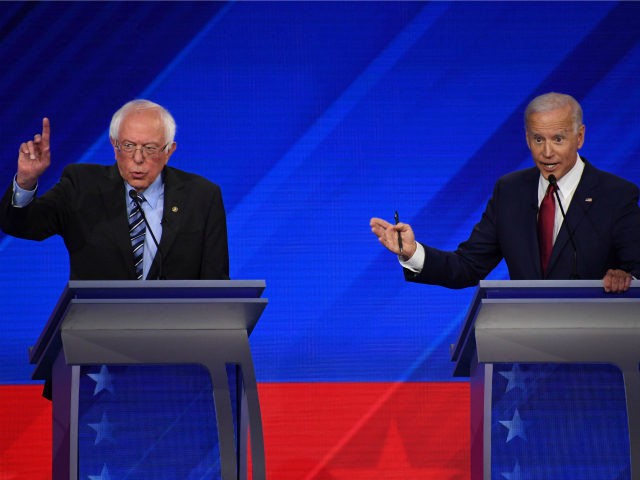
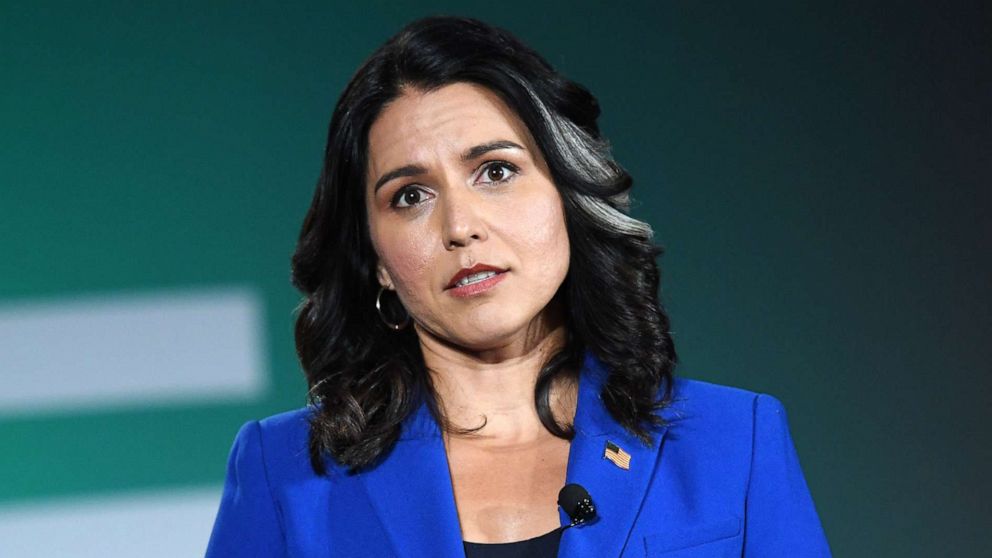
Sadly, I just heard Tulsi Gabbard has suspended her campaign. Bernie Sanders is likely to follow soon. Progressive voices have once again been silenced by the DNC.
It’s time for new political parties in America. We need a party that actually represents the interests of workers. A party that embraces the agenda advanced by leaders like Bernie Sanders.
By coincidence, the song “Everybody plays the fool” just came on my radio. The song adds, “Sometimes.” Isn’t it time we stopped playing the fool?
Clockwise from left: Pete Buttigieg, Bernie Sanders, Joe Biden, Beto O’Rourke, Kamala Harris, and Elizabeth Warren. Photo illustration by Slate. Photos by Sergio Flores/Getty Images, Mandel Ngan/AFP/Getty Images, Drew Angerer/Getty Images, and Kamil Krzaczynski/AFP/Getty Images.
W.J. Astore
Now that Joe Biden is officially in the race, the dream Democratic ticket has emerged: Biden and Kamala Harris.
By “dream,” I don’t mean the Progressive dream. I don’t mean the dream of working-class voters who are hurting. I don’t mean the dream of Americans who are tired of never-ending wars that enfeeble our economy (and kill lots of people, mainly foreigners). Those “dream” candidates are true Progressives like Bernie Sanders and Tulsi Gabbard. A Sanders/Gabbard ticket would truly shake things up, which is why it’s not going to happen, as much as I’d like to see it.
No — the corporate-loving DNC wants to preserve the status quo, wants to feed…