In the early 1970s, the US counted Iran as a close ally. A big fan of warplanes and weapons, I recall the US selling the F-14 Tomcat, the plane flown by Tom Cruise in “Top Gun,” as well as HAWK surface-to-air missiles and other advanced weaponry to the Shah of Iran. Back then, the F-14 had the most advanced avionics of any American plane, with a powerful radar linked to Phoenix air-to-air missiles. By selling the F-14 to Iran, the US was in a sense entrusting the Iranians with some of America’s most classified military secrets. (I later recall reading that the Iranians used F-14s as mini-AWACs planes, as in airborne warning and control, due to the power of its radar systems.)
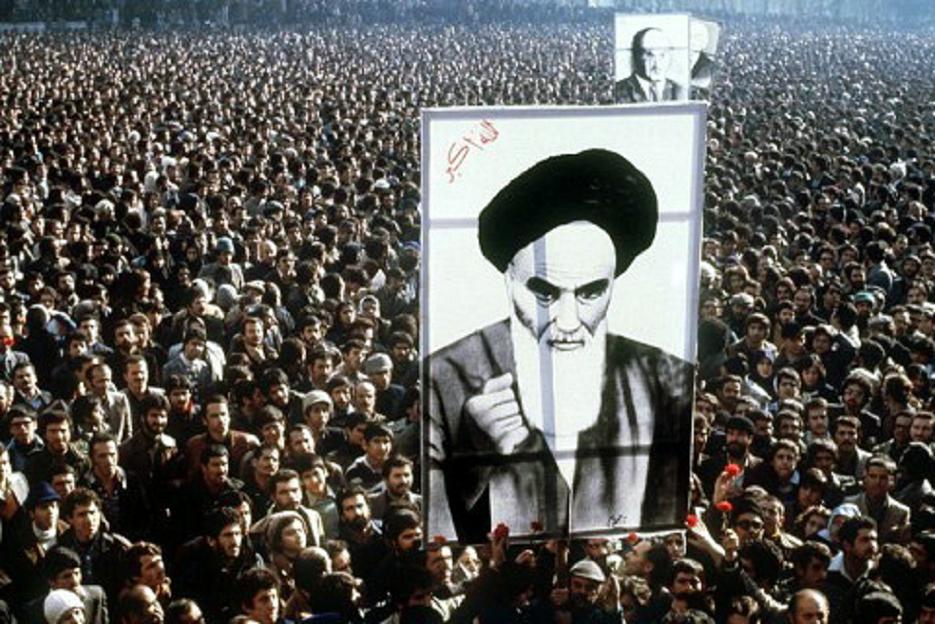
Well, that was then, when the Shah of Iran was our ally. Then the Iranian Revolution came, the Ayatollah Khomeini came to power, Iranians took Americans hostage in the US embassy, and Iran morphed into our “Great Satan” even as we became theirs. (As a teenager, I wore a t-shirt with Khomeini’s profile in a sniper’s crosshairs; the t-shirt read “Put a Hola in the Ayatollah.” It was quite popular.)
Now, of course, Iran is a nuclear bogeyman and a meddler in American designs on the Middle East. The irony is that the USA itself has been instrumental in facilitating the rise of Iran. This is amply documented in Peter Van Buren’s latest article for TomDispatch.com. It seems that what ever the US attempts in the Middle East, notably the invasion and occupation of Iraq, Iran emerges as the biggest beneficiary.
Maybe we’re still allies after all, and the Iranian Revolution was just a dream, as in that old plotline on the nighttime soap opera, “Dallas”? Heck, given the poor script being written by our foreign policy experts, anything seems possible.
Iran should send America a fruit basket to thank it for setting the stage so perfectly for its ascent. As a start, in 2003 the United States eliminated Iran’s major border threats: Iraq’s Saddam Hussein to the west and the Taliban in Afghanistan to the east. (The Taliban are back of course, but diligently focused on America’s puppet Afghan government.) The long slog of Washington’s wars in both those countries dulled even the reliably bloodthirsty American public’s taste for yet more of the same, and cooled off Bush-era plans in Tel Aviv and Washington for air strikes against Iran’s nuclear facilities. (After all, if even Vice President Dick Cheney couldn’t pull the trigger on Iran before leaving office in 2008, who in 2015 America is going to do so?)
Better yet for the Iranians, when Saddam was hanged in 2006, they not only lost an enemy who had invaded their country in 1980, launching a bitter waragainst them that didn’t end for eight years, but gained an ally in the new Iraq. As U.S. influence witheredaway with the failure of the March 2010 Iraqi elections to produce a broadly representative government, Iran stepped in to broker a thoroughly partisan settlement leading to a sectarian Shia government in Baghdad bent on ensuring that the country’s minority Sunni population would remain out of power forever. The Obama administration seemed nearly oblivious to Iran’s gains in Iraq in 2010 — and seems so again in 2015 …
The U.S. is running around in circles in the Middle East, patching together coalitions here, acquiring strange bedfellows there, and in location after location trying to figure out who the enemy of its enemy actually is. The result is just what you’d expect: chaos further undermining whatever’s left of the nations whose frailty birthed the jihadism America is trying to squash.
And in a classic tale of unintended consequences, just about every time Washington has committed another blunder in the Middle East, Iran has stepped in to take advantage. Consider that country the rising power in the region and credit American clumsiness for the new Iranian ascendancy.”
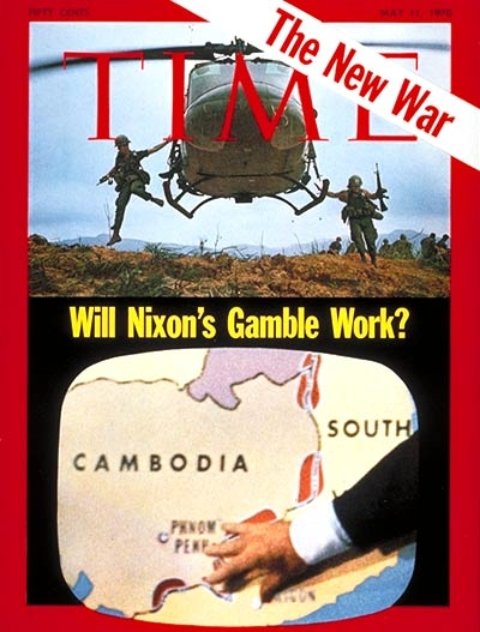
On 30 April 1970, 45 years ago this month, President Richard M. Nixon ordered an invasion into Cambodia. Explaining his reasoning for widening the war in Southeast Asia, Nixon declared:
If, when the chips are down, the world’s most powerful nation acts like a pitiful, helpless giant, the forces of totalitarianism and anarchy will threaten free nations and free institutions.” [Emphasis added]
So much of the U.S. foreign policy establishment, then and now, is frightfully worried about appearing weak, helpless, impotent. The solution, then and now, is military action. They all want to be Caesars, if only in their own besotted minds. As Shakespeare had Cassius say about Caesar:
he doth bestride the narrow world/Like a colossus, and we petty men/Walk under his huge legs and peep about/To find ourselves dishonorable graves.
America, to its image-conscious imperators like Nixon, must bestride the world like a well-hung giant, while little foreigners gasp in awe at the shadow cast, especially when aroused.
Think about John McCain’s fervent desire to bomb Iran, as Dan White deconstructed here. Think about George W. Bush’s transparent desire to play the conquering hero in the Middle East, ending Saddam Hussein’s reign once and for all in Iraq in 2003. Recall here the words of Henry Kissinger when he was asked about why he supported the invasion of Iraq, when it was clear that country bore no responsibility for the 9/11 attacks. “Because [attacks on] Afghanistan wasn’t enough,” Kissinger replied. Radical Islam had humiliated the U.S. at 9/11, and now it was our turn to strike back harder and to humiliate them. That simple.
As America’s foreign policy establishment continues to struggle with radical Islam and instability in Iraq, Syria, Yemen, Libya, and elsewhere, don’t expect any strategic retreats or retrenchment. Don’t expect wisdom. Don’t expect a containment policy that might allow radical Islam to burn itself out. No. Expect more military strikes, more troops, more weapons, more impassioned speeches about holding the line against barbarians determined to end our way of life.
Why? In part because it’s far easier for insecure men to lash out as a way of compensating for their impotence and growing irrelevance. Acting tough is the easier path. Having patience, demonstrating forbearance, knowing when to sheath the sword, requires a quieter strength and a more confident sense of self.
You would think the “most powerful nation on the planet” with “the world’s best military in all of history” would have such quiet strength and confidence. But remember that Nixon quote: No matter how big and strong we are, we can’t afford to look tiny and weak.
There was a time when American democracy, however imperfectly practiced, and American ideals served to inspire peoples and independence movements around the world. Heck, even Ho Chi Minh in the 1940s confessed his admiration for Thomas Jefferson and the U.S. Declaration of Independence. But now it seems all that really matters in our foreign policy is troops and weapons. If we’re not basing troops or at least deploying them to a country, or if we’re not exporting arms to a country, we believe we have no influence.
Take this headline from FP: Foreign Policy.
The United States is in danger of losing its clout in Baghdad. Courage on the battlefield is how respect is won in the Middle East. The lack of U.S. presence in the fight for Tikrit is allowing Iran, whose forces are leading the charge, to gain leverage in Baghdad. FP’s Lara Jakes and Kate Brannen: “It is clear that the top U.S. priority in Iraq is to defeat the Islamic State — and deal later with Iran’s ever-growing influence in Baghdad. Yet that trade-off carries long-term consequences, and it’s not clear Washington has thought them through.”
So: Unless we’re fighting wars in Iraq (or Syria, or maybe even Iran?), the United States has no leverage. Indeed, in Iraq the U.S. risks being emasculated by the Iranians, who are swinging their big dicks in the form of tanks, rockets, and so on.
And those primitive Iraqis: All they respect is military force, right? If that’s so, why don’t they love America? After all, no country has “courageously” bombed them more over the last 25 years.
Talk about projection! Maybe it’s not the Iraqis or other unnamed Middle Easterners who are enthralled by “courage on the battlefield.” Maybe it’s all those “American sniper” wannabees, especially in Congress.
Consistent with Members of Congress clamoring for more war, America’s real ambassadors today are special forces and the special ops “community.” As Nick Turse noted for TomDispatch.com:
During the fiscal year that [started on October 1, 2013 and] ended on September 30, 2014, U.S. Special Operations forces (SOF) deployed to 133 countries — roughly 70% of the nations on the planet — according to Lieutenant Colonel Robert Bockholt, a public affairs officer with U.S. Special Operations Command (SOCOM). This capped a three-year span in which the country’s most elite forces were active in more than 150 different countries around the world, conducting missions ranging from kill/capture night raids to training exercises. And this year could be a record-breaker. Only a day before the failed raid that ended Luke Somers life — just 66 days into fiscal 2015 — America’s most elite troops had already set foot in 105 nations, approximately 80% of 2014’s total.”
As the U.S. deploys its special ops forces around the planet, part of their mission, stated or unstated, is to encourage foreign military sales (FMS in the trade). Naturally, in selling weapons to various “allies” around the world, the United States continues to dominate the world’s arms trade, a lead that we’re supposed to keep until the year 2021. Think about it. What other sector of industrial manufacturing will the U.S. dominate for the next seven years?
Here’s an excerpt from the Grimmett Report (2012) that tracks weapons sales around the globe. Note that U.S. dominance of the global arms trade has come under a Democratic president who was awarded a Nobel Peace Prize:
Recently, from 2008 to 2011, the United States and Russia have dominated the arms market in the developing world, with both nations either ranking first or second for each of these four years in the value of arms transfer agreements. From 2008 to 2011, the United States made nearly $113 billion in such agreements, 54.5% of all these agreements (expressed in current dollars). Russia made $31.1 billion, 15% of these agreements. During this same period, collectively, the United States and Russia made 69.5% of all arms transfer agreements with developing nations, ($207.3 billion in current dollars) during this four-year period. In 2011, the United States ranked first in arms transfer agreements with developing nations with over $56.3 billion or 78.7% of these agreements, an extraordinary increase in market share from 2010, when the United States held a 43.6% market share. In second place was Russia with $4.1 billion or 5.7% of such agreements. In 2011, the United States ranked first in the value of arms deliveries to developing nations at $10.5 billion, or 37.6% of all such deliveries. Russia ranked second in these deliveries at $7.5 billion or 26.8%.”
When it comes to deploying troops to foreign countries or to selling weapons overseas, the U.S. is indeed Number One. And that is precisely the problem. Troops and weapons do not spread freedom. Troops are trained to fight wars; they are trained to kill. Weapons are designed to kill. It’s a foreign policy based on a readiness — a willingness — perhaps even an eagerness — to kill.
For U.S. foreign policy, our national security state has reached one clear conclusion: the sword is mightier (and far more profitable) than the pen. Sorry, Thomas Jefferson.
Update (3/19/15): Greg Laxer makes an excellent point in the comments about how many weapons the U.S. gives away to foreign countries, i.e. bought and paid for by the American taxpayer. Incredibly, much of this weaponry gets “lost” and is often diverted to American enemies. The latest story out of Yemen speaks to half a billion dollars worth of weaponry getting “lost.” Here’s the story, written by Craig Whitlock and courtesy of the Washington Post:
The Pentagon is unable to account for more than $500 million in U.S. military aid given to Yemen, amid fears that the weaponry, aircraft and equipment is at risk of being seized by Iranian-backed rebels or al-Qaeda, according to U.S. officials.With Yemen in turmoil and its government splintering, the Defense Department has lost its ability to monitor the whereabouts of small arms, ammunition, night-vision goggles, patrol boats, vehicles and other supplies donated by the United States. The situation has grown worse since the United States closed its embassy in Sanaa, the capital, last month and withdrew many of its military advisers.
In recent weeks, members of Congress have held closed-door meetings with U.S. military officials to press for an accounting of the arms and equipment. Pentagon officials have said that they have little information to go on and that there is little they can do at this point to prevent the weapons and gear from falling into the wrong hands.
“We have to assume it’s completely compromised and gone,” said a legislative aide on Capitol Hill who spoke on the condition of anonymity because of the sensitivity of the matter.
U.S. military officials declined to comment for the record. A defense official, speaking on the condition of anonymity under ground rules set by the Pentagon, said there was no hard evidence that U.S. arms or equipment had been looted or confiscated. But the official acknowledged that the Pentagon had lost track of the items.
“Even in the best-case scenario in an unstable country, we never have 100 percent accountability,” the defense official said.
Yemen’s government was toppled in January by Shiite Houthi rebels who receive support from Iran and have strongly criticized U.S. drone strikes in Yemen. The Houthis have taken over many Yemeni military bases in the northern part of the country, including some in Sanaa that were home to U.S.-trained counterterrorism units. Other bases have been overrun by fighters from al-Qaeda in the Arabian Peninsula.
As a result, the Defense Department has halted shipments to Yemen of about $125 million in military hardware that were scheduled for delivery this year, including unarmed ScanEagle drones, other types of aircraft and Jeeps. That equipment will be donated instead to other countries in the Middle East and Africa, the defense official said.
Although the loss of weapons and equipment already delivered to Yemen would be embarrassing, U.S. officials said it would be unlikely to alter the military balance of power there. Yemen is estimated to have the second-highest gun ownership rate in the world, ranking behind only the United States, and its bazaars are well stocked with heavy weaponry. Moreover, the U.S. government restricted its lethal aid to small firearms and ammunition, brushing aside Yemeni requests for fighter jets and tanks.
In Yemen and elsewhere, the Obama administration has pursued a strategy of training and equipping foreign militaries to quell insurgencies and defeat networks affiliated with al-Qaeda. That strategy has helped to avert the deployment of large numbers of U.S. forces, but it has also met with repeated challenges.
Washington spent $25 billion to re-create and arm Iraq’s security forces after the 2003 U.S.-led invasion, only to see the Iraqi army easily defeated last year by a ragtag collection of Islamic State fighters who took control of large parts of the country. Just last year, President Obama touted Yemen as a successful example of his approach to combating terrorism.
“The administration really wanted to stick with this narrative that Yemen was different from Iraq, that we were going to do it with fewer people, that we were going to do it on the cheap,” said Rep. Mac Thornberry (R-Tex.), chairman of the House Armed Services Committee. “They were trying to do with a minimalist approach because it needed to fit with this narrative . . .that we’re not going to have a repeat of Iraq.”
Auditors with the Government Accountability Office found that Humvees donated to the Yemeni Interior Ministry sat idle or broken because the Defense Ministry refused to share spare parts. (Government Accountability Office)
Washington has supplied more than $500 million in military aid to Yemen since 2007 under an array of Defense Department and State Department programs. The Pentagon and CIA have provided additional assistance through classified programs, making it difficult to know exactly how much Yemen has received in total.
U.S. government officials say al-Qaeda’s branch in Yemen poses a more direct threat to the U.S. homeland than any other terrorist group. To counter it, the Obama administration has relied on a combination of proxy forces and drone strikes launched from bases outside the country.
As part of that strategy, the U.S. military has concentrated on building an elite Yemeni special-operations force within the Republican Guard, training counterterrorism units in the Interior Ministry and upgrading Yemen’s rudimentary air force.
Making progress has been difficult. In 2011, the Obama administration suspended counterterrorism aid and withdrew its military advisers after then-President Ali Abdullah Saleh cracked down against Arab Spring demonstrators. The program resumed the next year when Saleh was replaced by his vice president, Abed Rabbo Mansour Hadi, in a deal brokered by Washington.
In a 2013 report, the U.S. Government Accountability Office found that the primary unclassified counterterrorism program in Yemen lacked oversight and that the Pentagon had been unable to assess whether it was doing any good.
Among other problems, GAO auditors found that Humvees donated to the Yemeni Interior Ministry sat idle or broken because the Defense Ministry refused to share spare parts. The two ministries also squabbled over the use of Huey II helicopters supplied by Washington, according to the report.
A senior U.S. military official who has served extensively in Yemen said that local forces embraced their training and were proficient at using U.S. firearms and gear but that their commanders, for political reasons, were reluctant to order raids against al-Qaeda.
“They could fight with it and were fairly competent, but we couldn’t get them engaged” in combat, the military official said, speaking on the condition of anonymity because he was not authorized to speak with a reporter.
All the U.S.-trained Yemeni units were commanded or overseen by close relatives of Saleh, the former president. Most were gradually removed or reassigned after Saleh was forced out in 2012. But U.S. officials acknowledged that some of the units have maintained their allegiance to Saleh and his family.
According to an investigative report released by a U.N. panel last month, the former president’s son, Ahmed Ali Saleh, looted an arsenal of weapons from the Republican Guard after he was dismissed as commander of the elite unit two years ago. The weapons were transferred to a private military base outside Sanaa that is controlled by the Saleh family, the U.N. panel found.
It is unclear whether items donated by the U.S. government were stolen, although Yemeni documents cited by the U.N. investigators alleged that the stash included thousands of M-16 rifles, which are manufactured in the United States.
The list of pilfered equipment also included dozens of Humvees, Ford vehicles and Glock pistols, all of which have been supplied in the past to Yemen by the U.S. government. Ahmed Saleh denied the looting allegations during an August 2014 meeting with the U.N. panel, according to the report.
Many U.S. and Yemeni officials have accused the Salehs of conspiring with the Houthis to bring down the government in Sanaa. At Washington’s urging, the United Nations imposed financial and travel sanctions in November against the former president, along with two Houthi leaders, as punishment for destabilizing Yemen.
Ali Abdullah Saleh has dismissed the accusations; last month, he told The Washington Post that he spends most of his time these days reading and recovering from wounds he suffered during a bombing attack on the presidential palace in 2011.
There are clear signals that Saleh and his family are angling for a formal return to power. On Friday, hundreds of people staged a rally in Sanaa to call for presidential elections and for Ahmed Saleh to run.
Although the U.S. Embassy in the capital closed last month, a handful of U.S. military advisers have remained in the southern part of the country at Yemeni bases controlled by commanders that are friendly to the United States.
Craig Whitlock covers the Pentagon and national security. He has reported for The Washington Post since 1998.
Once again, Hillary Clinton is in the news for the wrong reason. She used a private email account while she was Secretary of State, rather than an official government email account. As a result, not all of her (unclassified) emails are part of the public record. Many may be “lost,” consigned to the dustbin of history, whether by accident or design is hard to say. In the press conference she then gave to explain herself, she was less than forthcoming. And it now appears that her email server wasn’t even encrypted for the first three months she served as Secretary of State, meaning her official emails were eminently hackable and readable by foreign governments.
Just another meaningless scandal, right? No — what this reveals is the arrogance of power. Official rules may apply to “little people” like you and me, but to the Clintons, those rules can be ignored. They think they can do whatever they want. It’s a clear double standard, and it’s just one more reason why the prospect of Hillary Clinton as president disturbs me.
I remember when Hillary Clinton served as First Lady and worked on health care reform in the early 1990s. Her right-hand man was Ira Magaziner. I’d heard of Magaziner since he had served as an outside consultant to my hometown. According to Wikipedia:
“After Oxford, Magaziner and a group of former Brown students attempted to implement social democratic reforms in the city of Brockton, Massachusetts. These reforms included starting an agricultural cooperative, supporting liberal candidates for city council, strengthening the union movement, and printing a progressive town newspaper. Magaziner soon abandoned the project, after the group recognized that the effects of foreign business competition on the local manufacturing base would undercut their efforts.”
Not as I heard it. Magaziner thought he could come to Brockton and serve as its “instant expert,” remaking the city in his image without paying much attention to the desires of the locals. Brockton is working-class, fairly conservative, and tough-minded, proud of its championship boxers (Rocky Marciano and Marvin Hagler). The people of Brockton were less than enamored with Magaziner and his fellow “experts” telling them what to do and how to do it. So Magaziner withdrew, mission unaccomplished.
Magaziner then took his know-it-all approach and applied it to health care reform, working hand-in-hand with Hillary Clinton and her team. They concocted a massive reform of the health care system with no buy-in from major stakeholders. Arrogant policy wonks, they believed their ideas and reforms were so brilliant and compelling they’d easily win assent from Congress. Instead, they fell flat on their faces.
Nobody likes being dictated to. And nobody likes people who make their own rules while dancing on the heads of the little people. Hillary’s latest fiasco once again reminds us of her imperious nature, her arrogance, her lack of political deftness.
She’d make a formidable empress. But a president? No thanks.
Over at TomDispatch.com, retired Army Colonel Andrew Bacevich asks a telling question: Why does Washington continue to rely on policy “experts,” the “best and brightest” as they were called during the Vietnam War, even when events prove their advice to be consistently wrong?
As Bacevich puts it (with considerable relish):
“Policy intellectuals — eggheads presuming to instruct the mere mortals who actually run for office — are a blight on the republic. Like some invasive species, they infest present-day Washington, where their presence strangles common sense and has brought to the verge of extinction the simple ability to perceive reality. A benign appearance — well-dressed types testifying before Congress, pontificating in print and on TV, or even filling key positions in the executive branch — belies a malign impact. They are like Asian carp let loose in the Great Lakes.”
One of the big drawbacks of a Hillary Clinton vs. Jeb Bush joust in 2016 is that both candidates will be relying on the same neocon “experts” who got us into Afghanistan and Iraq and the ongoing, seemingly endless, war on terror. What Washington needs most of all is fresh blood and fresher thinking; what 2016 promises is retread candidates and recycled pundits.
The problem is that these pundits rarely admit that they’re wrong. Even when they do, their admissions run false. They say things like: “We were wrong for the right reason [about Iraq and WMD],” a sentiment echoed by George W. Bush in his memoir that “There are things we got wrong in Iraq, but the cause is eternally right.” So, as long as your cause is “eternally right” (fighting against Communism in Vietnam; against terror in the Middle East), it doesn’t matter how many things you get wrong (such as how many innocents you end up killing, especially if they’re foreigners).
Their mantra is something like this: Never admit your wrong. And never apologize. Instead, double down on talking tough and committing troops.
As Bacevich notes:
The present-day successors to Bundy, Rostow, and Huntington subscribe to their own reigning verities. Chief among them is this: that a phenomenon called terrorism or Islamic radicalism, inspired by a small group of fanatic ideologues hidden away in various quarters of the Greater Middle East, poses an existential threat not simply to America and its allies, but — yes, it’s still with us — to the very idea of freedom itself. That assertion comes with an essential corollary dusted off and imported from the Cold War: the only hope of avoiding this cataclysmic outcome is for the United States to vigorously resist the terrorist/Islamist threat wherever it rears its ugly head….
The fact that the enterprise itself has become utterly amorphous may actually facilitate such efforts. Once widely known as the Global War on Terror, or GWOT, it has been transformed into the War with No Name. A little bit like the famous Supreme Court opinion on pornography: we can’t define it, we just know it when we see it, with ISIS the latest manifestation to capture Washington’s attention.
All that we can say for sure about this nameless undertaking is that it continues with no end in sight. It has become a sort of slow-motion Vietnam, stimulating remarkably little honest reflection regarding its course thus far or prospects for the future. If there is an actual Brains Trust at work in Washington, it operates on autopilot. Today, the second- and third-generation bastard offspring of RAND that clutter northwest Washington — the Center for this, the Institute for that — spin their wheels debating latter day equivalents of Strategic Hamlets, with nary a thought given to more fundamental concerns.”
Tough talk by “experts” with no skin in the game has proved to be a recipe for disaster in slow-motion. The best and the brightest have become the venal and the vacuous. Bacevich is right: We can do better, America.
Like so many bloated Hollywood movies nowadays, America’s wars may bomb, but they always produce their own sequels.
Look at the latest news from Iraq and Afghanistan. These wars have persisted for more than a decade, with several re-releases to include “surges” and repeats. The latest from Iraq is preparations to retake the city of Mosul from ISIS, which promises a repeat of the level of destruction visited upon Fallujah in 2004. In this there are echoes of Vietnam: in Mosul, we may have to destroy the city to save it. Five Iraqi brigades, most likely supported by American airpower and some American troops on the ground (air controllers and Special Forces), are poised to strike as early as April. Doubtless they’ll prevail, at least for the moment, as the city and its civilians pay a price so dear as to be indistinguishable from defeat. Mosul will be “liberated,” but just look what happened to Fallujah, which after the American “victory” in 2004 is now a devastated city retaken by elements of al-Qaeda in 2014.
(As an aside, it’s interesting that the New York Times uses the word “epic” to describe the Battle of Fallujah from 2004. Surely a better word is “catastrophic.” What is epic about a battle that destroys a city, a battle that is ultimately inconclusive? Check out Bing West’s book about Fallujah, whose title, “No True Glory,” captures the frustrations and contradictions of that battle, mainly from the American perspective.)
Moving to Afghanistan, the latest is that American troops may stay longer than expected (surprise!). Despite all the talk of “progress” in Afghanistan, the takeaway is the following section, from Secretary of Defense Ash Carter’s recent visit to Afghanistan:
“Despite the aid of American air power, 2014 was the deadliest year for Afghan forces since the start of the war in 2001, and many Afghan and Western officials in Kabul believe that 2015 will likely be worse, particularly with less support from Western allies. That has begun to change the conversation about the possibility of slowing down in the [American] withdrawal.”
In other words, expect more micro-surges of American troops and assets in the coming years, as well as more reports of “progress,” however temporary or illusory (at least America’s best and brightest learned from Vietnam not to talk of seeing light at the end of tunnels).
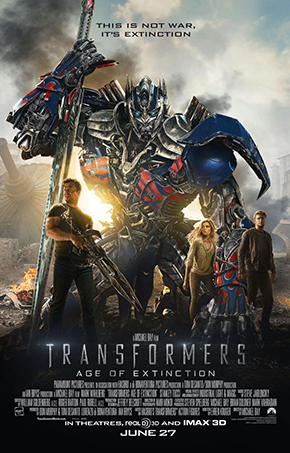
America’s wars are much like the “Transformers” franchise of movies: thrilling and seemingly conclusive at first, with much talk of missions being accomplished, followed by sequel after sequel of repetitive battles, increasingly loud and destructive, signifying vapidity and intellectual bankruptcy even as a few profit greatly from them.
And no one (certainly none of the producers at the Pentagon) seems to be able to pull the plug on green-lighting ever more sequels to these wars. Even when they bomb.
(For a different perspective on how recent Hollywood movies support American warmaking through myth-making, see Peter Van Buren’s insightful article “War Porn” at TomDispatch.com.)
Christian G. Appy, professor of history at U-Mass Amherst, has written a new and telling book on the Vietnam War: American Reckoning: The Vietnam War and Our National Identity (New York, Viking Press). Reading his book made me realize a key reason why the U.S. lost the war: for U.S. leaders it was never about Vietnam and the Vietnamese people. Rather, for these men the war was always about something else, a “something else” that constantly shifted and changed. Whereas for North Vietnam and its leaders, the goal was simple and unchanging: expel the foreign intruder, whether it was the Japanese or the French or the Americans, and unify Vietnam, no matter the cost.
Appy’s account is outstanding in showing the shifting goals of U.S. foreign policy vis-à-vis Vietnam. In the aftermath of World War II, the U.S. first supported the French in their attempts to reassert control over their former colony. When the French failed, the U.S. saw Vietnam through a thoroughly red-tinted lens. The “fall” of a newly created South Vietnam was seen as the first domino in a series of potential Communist victories in Asia. Vietnam itself meant little economically to American interests, but U.S. leaders were concerned about Malaysia and Indonesia and their resources. So to stop that first domino from falling, the U.S. intervened to prop up a “democratic” government in South Vietnam that was never democratic, a client state whose staying power rested entirely on U.S. “advisers” (troops) and weapons and aid.
Again, as Appy convincingly demonstrates, for U.S. leaders the war was never about Vietnam. Under Eisenhower, it was about stopping the first domino from falling; under Kennedy, it was a test case for U.S. military counterinsurgency tactics and Flexible Response; under Johnson, it was a test of American resolve and credibility and “balls”; and under Nixon, it was the pursuit of “peace with honor” (honor, that is, for the Nixon Administration). And this remained true even after South Vietnam collapsed in 1975. Then the Vietnam War, as Appy shows, was reinterpreted as a uniquely American tragedy. Rather than a full accounting of the war and America’s mistakes and crimes in it, the focus was on recovering American pride, to be accomplished in part by righting an alleged betrayal of America’s Vietnam veterans.
In the Reagan years, as Appy writes, American veterans, not the Vietnamese people, were:
portrayed as the primary victims of the Vietnam War. The long, complex history of the war was typically reduced to a set of stock images that highlighted the hardships faced by U.S. combat soldiers—snake-infested jungles, terrifying ambushes, elusive guerrillas, inscrutable civilians, invisible booby traps, hostile antiwar activists. Few reports informed readers that at least four of five American troops in Vietnam carried out noncombat duties on large bases far away from those snake-infested jungles. Nor did they focus sustained attention on the Vietnamese victims of U.S. warfare. By the 1980s, mainstream culture and politics promoted the idea that the deepest shame related to the Vietnam War was not the war itself, but America’s failure to embrace its military veterans.” (p. 241)
Again, the Vietnam War for U.S. leaders was never truly about Vietnam. It was about them. This is powerfully shown by LBJ’s crude comments and gestures about the war. Johnson acted to protect his Great Society initiatives; he didn’t want to suffer the political consequences of having been seen as having “lost” Vietnam to communism; but he also saw Vietnam as a straightforward test of his manhood. When asked by reporters why he continued to wage war in Vietnam, what it was really all about, LBJ unzipped his pants, pulled out his penis, and declared, “This is why!” (p. 82).
Withdrawal, of course, was never an option. As Appy insightfully notes,
LBJ and most of the other key Vietnam policymakers never imagined that withdrawal from Vietnam would be an act of courage. In one sense this moral blindness is baffling because these same men prided themselves on their pragmatic, hardheaded realism, their ability to cut through sentiment and softhearted idealism to face the most difficult realities of foreign affairs. They could see that the war was failing. But they could not pull out. A deeper set of values trumped their most coherent understandings of the war. They simply could not accept being viewed as losers. A ‘manly man’ must always keep fighting.” (p. 84)
A few pages later, Appy cites Nixon’s speech on the bombing of Cambodia, when Nixon insisted the U.S. must not stand by “like a pitiful, helpless giant,” as further evidence of this “primal” fear of presidential impotence and defeat.
Even when defeat stared American leaders in the face, they blinked, then closed their eyes and denied what they had seen. Beginning with Gerald Ford in 1975, America shifted the blame for defeat onto the South Vietnamese, with some responsibility being assigned to allegedly traitorous elements on the homefront, such as “Hanoi Jane” (Fonda). As Appy writes, “Instead of calling for a great national reckoning of U.S. responsibility in Vietnam, Ford called for a ‘great national reconciliation.’ It was really a call for a national forgetting, a willful amnesia.” (p. 224)
As a result of this “willful amnesia,” most Americans never fully faced the murderous legacies of the Vietnam War, especially the cost to the peoples of Vietnam, Laos, and Cambodia. Instead, our leaders and government encouraged us to focus on America’s suffering. They told us to look forward, not backward, while keeping faith in America as the exceptional nation.
Appy notes in his introduction that America needs “an honest accounting of our history” if we are “to reject—fully and finally—the stubborn insistence that our nation has been a unique and unrivaled force for good in the world.” (p. xix) American Reckoning provides such an honest accounting. But are Americans truly ready and willing to put aside national pride, nurtured by a willed amnesia and government propaganda, to confront the limits as well as the horrors of American power as it is exercised in foreign lands?
Evidence from recent wars and military interventions in Iraq, Afghanistan, and elsewhere still suggests that Americans prefer amnesia, or to see other peoples through a tightly restricted field of view. Far too often, that field of view is a thoroughly militarized one, most recently captured in the crosshairs of an American sniper’s scope. Appy challenges us to broaden that view while removing those crosshairs.
In America’s war on terror, the groundhog always sees its own shadow, meaning six (or more) years of additional war. War is indeed the new normal in America, as I argue in this article today for TomDispatch.com.
War Is the New Normal Seven Deadly Reasons Why America’s Wars Persist
By William J. Astore
It was launched immediately after the 9/11 attacks, when I was still in the military, and almost immediately became known as the Global War on Terror, or GWOT. Pentagon insiders called it “the long war,” an open-ended, perhaps unending, conflict against nations and terror networks mainly of a radical Islamist bent. It saw the revival of counterinsurgency doctrine, buried in the aftermath of defeat in Vietnam, and a reinterpretation of that disaster as well. Over the years, its chief characteristic became ever clearer: a “Groundhog Day” kind of repetition. Just when you thought it was over (Iraq, Afghanistan), just after victory (of a sort) was declared, it began again.
Now, as we find ourselves enmeshed in Iraq War 3.0, what better way to memorialize the post-9/11 American way of war than through repetition. Back in July 2010, I wrote an article for TomDispatch on the seven reasonswhy America can’t stop making war. More than four years later, with the war on terror still ongoing, with the mission eternally unaccomplished, here’s a fresh take on the top seven reasons why never-ending war is the new normal in America. In this sequel, I make only one promise: no declarations of victory (and mark it on your calendars, I’m planning to be back with seven new reasons in 2019).
1. The privatization of war: The U.S. military’s recourse to private contractors has strengthened the profit motive for war-making and prolonged wars as well. Unlike the citizen-soldiers of past eras, the mobilized warrior corporations of America’s new mercenary moment — the Halliburton/KBRs (nearly $40 billion in contracts for the Iraq War alone), the DynCorps ($4.1 billion to train 150,000 Iraqi police), and the Blackwater/Xe/Academis ($1.3 billion in Iraq, along with boatloads of controversy) — have no incentive to demobilize. Like most corporations, their business model is based on profit through growth, and growth is most rapid when wars and preparations for more of them are the favored options in Washington.
“Freedom isn’t free,” as a popular conservative bumper sticker puts it, and neither is war. My father liked the saying, “He who pays the piper calls the tune,” and today’s mercenary corporations have been calling for a lot of military marches piping in $138 billion in contracts for Iraq alone, according to the Financial Times. And if you think that the privatization of war must at least reduce government waste, think again: the Commission on Wartime Contracting in Iraq and Afghanistan estimated in 2011 that fraud, waste, and abuse accounted for up to $60 billion of the money spent in Iraq alone.
To corral American-style war, the mercenaries must be defanged or deflated. European rulers learned this the hard way during the Thirty Years’ War of the seventeenth century. At that time, powerful mercenary captains like Albrecht von Wallenstein ran amok. Only Wallenstein’s assassination and the assertion of near absolutist powers by monarchs bent on curbing war before they went bankrupt finally brought the mercenaries to heel, a victory as hard won as it was essential to Europe’s survival and eventual expansion. (Europeans then exported their wars to foreign shores, but that’s another story.)
2. The embrace of the national security state by both major parties:Jimmy Carter was the last president to attempt to exercise any kind of control over the national security state. A former Navy nuclear engineer who had served under the demanding Admiral Hyman Rickover, Carter cancelled the B-1 bomber and fought for a U.S. foreign policy based on human rights. Widely pilloried for talking about nuclear war with his young daughter Amy, Carter was further attacked for being “weak” on defense. His defeat by Ronald Reagan in 1980 inaugurated 12 years of dominance by Republican presidents that opened the financial floodgates for the Department of Defense. That taught Bill Clinton and the Democratic Leadership Council a lesson when it came to the wisdom of wrapping the national security state in a welcoming embrace, which they did, however uncomfortably. This expedient turn to the right by the Democrats in the Clinton years served as a temporary booster shot when it came to charges of being “soft” on defense — until Republicans upped the ante by going “all-in” on military crusades in the aftermath of 9/11.
Since his election in 2008, Barack Obama has done little to alter the course set by his predecessors. He, too, has chosen not to challenge Washington’s prevailing catechism of war. Republicans have responded, however, not by muting their criticism, but by upping the ante yet again. How else to explain House Speaker John Boehner’s invitation to Israeli Prime Minister Benjamin Netanyahu to address a joint session of Congress in March? That address promises to be a pep talk for the Republicans, as well as a smack down of the Obama administration and its “appeasenik” policies toward Iran and Islamic radicalism.
Serious oversight, let alone opposition to the national security state by Congress or a mainstream political party, has been missing in action for years and must now, in the wake of the Senate Torture Report fiasco (from which the CIAemerged stronger, not weaker), be presumed dead. The recent midterm election triumph of Republican war hawks and the prospective lineup of candidates for president in 2016 does not bode well when it comes to reining in the national security state in any foreseeable future.
3. “Support Our Troops” as a substitute for thought. You’ve seen them everywhere: “Support Our Troops” stickers. In fact, the “support” in that slogan generally means acquiescence when it comes to American-style war. The truth is that we’ve turned the all-volunteer military into something like aforeign legion, deploying it again and again to our distant battle zones and driving it into the ground in wars that amount to strategic folly. Instead of admitting their mistakes, America’s leaders have worked to obscure them by endlessly overpraising our “warriors” as so many universal heroes. This may salve our collective national conscience, but it’s a form of cheap grace that saves no lives — and wins no wars.
Instead, this country needs to listen more carefully to its troops, especially the war critics who have risked their lives while fighting overseas. Organizations like Iraq Veterans Against the War and Veterans for Peace are good places to start.
4. Fighting a redacted war. War, like the recent Senate torture report, is redacted in America. Its horrors and mistakes are suppressed, its patriotic whistleblowers punished, even as the American people are kept in a demobilized state. The act of going to war no longer represents the will of the people, as represented by formal Congressional declarations of war as the U.S. Constitution demands. Instead, in these years, Americans were told togo to Disney World (as George W. Bush suggested in the wake of 9/11) and keep shopping. They’re encouraged not to pay too much attention to war’s casualties and costs, especially when those costs involve foreigners with funny-sounding names (after all, they are, as American sniper Chris Kyle so indelicately put it in his book, just “savages”).
Redacted war hides the true cost of a permanent state of killing from the American people, if not from foreign observers. Ignorance and apathy reign, even as a national security state that is essentially a shadow governmentequates its growth with your safety.
5. Threat inflation: There’s nothing new about threat inflation. We saw plenty of it during the Cold War (nonexistent missile and bomber gaps, for example). Fear sells and we’ve had quite a dose of it in the twenty-first century, from ISIS to Ebola. But a more important truth is that fear is a mind-killer, a debate-stifler.
Back in September, for example, Senator Lindsey Graham warned that ISIS and its radical Islamic army was coming to America to kill us all. ISIS, of course, is a regional power with no ability to mount significant operations against the United States. But fear is so commonplace, so effectively stoked in this country that Americans routinely and wildly exaggerate the threat posed by al-Qaeda or ISIS or the bogeyman du jour.
Decades ago, as a young lieutenant in the Air Force, I was hunkered down inCheyenne Mountain during the Cold War. It was the ultimate citadel-cum-bomb-shelter, and those in it were believed to have a 70% likelihood of surviving a five-megaton nuclear blast. There, not surprisingly, I found myself contemplating the very real possibility of a thermonuclear exchange with the Soviet Union, a war that would have annihilated life as we knew it, indeed much of life on our planet thanks to the phenomenon of nuclear winter. You’ll excuse me for not shaking in my boots at the threat of ISIS coming to get me. Or of Sharia Law coming to my local town hall. With respect to such fears, America needs, as Hillary Clinton said in an admittedly different context, to “grow a pair.”
6. Defining the world as a global battlefield: In fortress America, all realms have by now become battle spheres. Not only much of the planet, the seas, air, and space, as well as the country’s borders and its increasingly up-armored police forces, but the world of thought, the insides of our minds. Think of the 17 intertwined intelligence outfits in “the U.S. Intelligence Community” and their ongoing “surge” for information dominance across every mode of human communication, as well as the surveillance of everything. And don’t forget the national security state’s leading role in making cyberwar a reality. (Indeed, Washington launched the first cyberwar in history by deploying the Stuxnet computer worm against Iran.)
Think of all this as a global matrix that rests on war, empowering disaster capitalism and the corporate complexes that have formed around the Pentagon, the Department of Homeland Security, and that intelligence community. A militarized matrix doesn’t blink at $1.45 trillion dollars devoted to the F-35, a single under-performing jet fighter, nor at projections of $355 billion over the next decade for “modernizing” the U.S. nuclear arsenal, weapons that Barack Obama vowed to abolish in 2009.
7. The new “normal” in America is war: The 9/11 attacks happened more than 13 years ago, which means that no teenagers in America can truly remember a time when the country was at peace. “War time” is their normal; peace, a fairy tale.
What’s truly “exceptional” in twenty-first-century America is any articulated vision of what a land at peace with itself and other nations might be like. Instead, war, backed by a diet of fear, is the backdrop against which the young have grown to adulthood. It’s the background noise of their world, so much a part of their lives that they hardly recognize it for what it is. And that’s the most insidious danger of them all.
How do we inoculate our children against such a permanent state of war and the war state itself? I have one simple suggestion: just stop it. All of it. Stop making war a never-ending part of our lives and stop celebrating it, too. War should be the realm of the extreme, of the abnormal. It should be the death of normalcy, not the dreary norm.
It’s never too soon, America, to enlist in that good fight!
William J. Astore, a retired lieutenant colonel (USAF), is a TomDispatch regular. His D.Phil. is in Modern History from the University of Oxford. He’s just plain tired of war and would like to see the next politician braying for it be deployed with a rifle to the front lines of battle. He edits the blog The Contrary Perspective.
Is the U.S. military doomed? I’d say yes. But it’s not because our troops are uncommitted, our weapons are bad, and our tactics are flawed. Rather it’s because of the conventional wisdom in Washington and the Pentagon that continues to commit our troops to unnecessary and unwinnable wars.
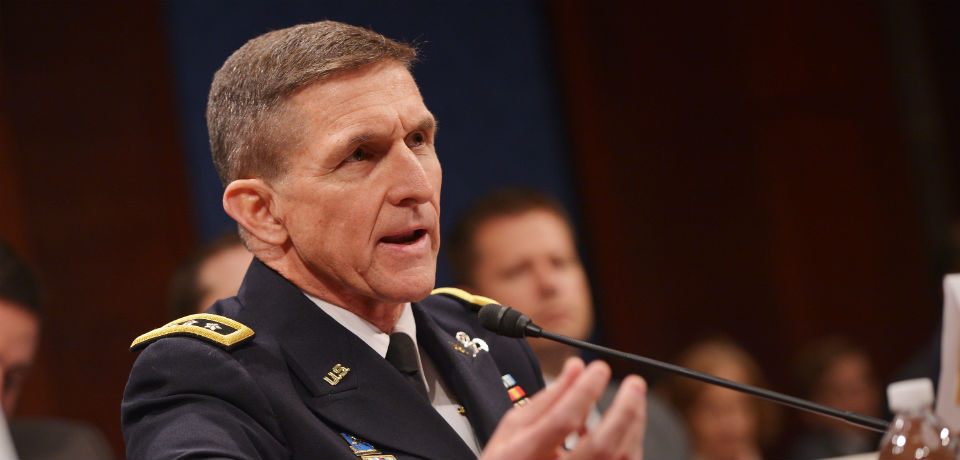
This conventional wisdom is perhaps best summed up in a speech by retired Lieutenant General Michael T. Flynn, the ex-chief of the Defense Intelligence Agency (DIA). It’s worth reading the speech in full, not because it’s especially original or insightful, but because it’s so unreflective and representative of Washington’s collective wisdom.
Here are General Flynn’s main points as I see them:
1. The American public must be committed to an open-ended ideological war “for decades.”
2. That war is against “grotesque” Islamic extremists who “hate our ideals” and who are “committed to the destruction of freedom and the American way of life.”
3. To win the war, America must be ready to use “overwhelming power” to defeat or deter the enemy, even if the U.S. must act alone.
4. Special Operations Forces (SOF) must be “well resourced” for this war, meaning they must be expanded even further and given even more money and latitude.
5. The model for this ideological war against extremist Islam is Ronald Reagan’s war against communism.
That is General Flynn’s strategic vision. It’s a vision widely shared within the Pentagon. And it’s a vision that dooms America to defeat.
Why? Mainly because radical Islam is a political/religious/social phenomenon. It is not amenable to military solutions. Indeed, the more America makes it into THE enemy, the more legitimacy organizations like ISIS gain within their communities and across the Muslim World.
Military force is a blunt instrument, even when it’s applied by the Special Ops community. Expanding the American SOF presence throughout the world is a recipe for more blowback, not more victories. Consider how well we’ve done so far in Afghanistan or Libya or Yemen. Or for that matter Iraq. Can anyone say that U.S. military intervention has produced stability in these countries? Has it contributed to the defeat of radical Islam? Indeed, in destabilizing Iraq and Libya and Yemen, has the U.S. not contributed to the spread of Islamic extremism?
Military professionals like General Flynn really know only one solution: “overwhelming power” applied “for decades.” And if you don’t accept their solution, they dismiss you as misguided (at best) or as arguing for “Retreat, retrenchment, and disarmament,” which “are historically a recipe for disaster,” according to General Flynn.
Well, I’m not aware of anyone seriously arguing for disarmament (fat chance of that happening in the USA!). I’m not aware of anyone arguing for “retreat,” as if this was the Chosin Reservoir in the Korean War. I’m not aware of anyone seriously working toward “retrenchment”; indeed, the SOF community keeps expanding, already mounting operations in 105 countries around the world in FY2015 (i.e., since October 2014). It’s easy to bayonet a straw man, general.
I have a few words for the general: Committing the American military to an ideological war “for decades” against radical Islam is pure folly. Chances are you won’t hammer it into non-existence: your blows will just spread it further, while wasting the energies of America and the lives of its troops.
Stop looking to Reagan and the collapse of communism for lessons and start looking at the actual results over the last 20-30 years of American meddling in Afghanistan, Iraq, Libya, and Yemen. And tell me: Is this what “victory” looks like? You want to double down on “overwhelming power” applied “for decades” as defending American “ideals” and “way of life”?
Which “ideals” are those, exactly? A permanent state of war in which military men are deferred to as the heroes and sages of the moment?
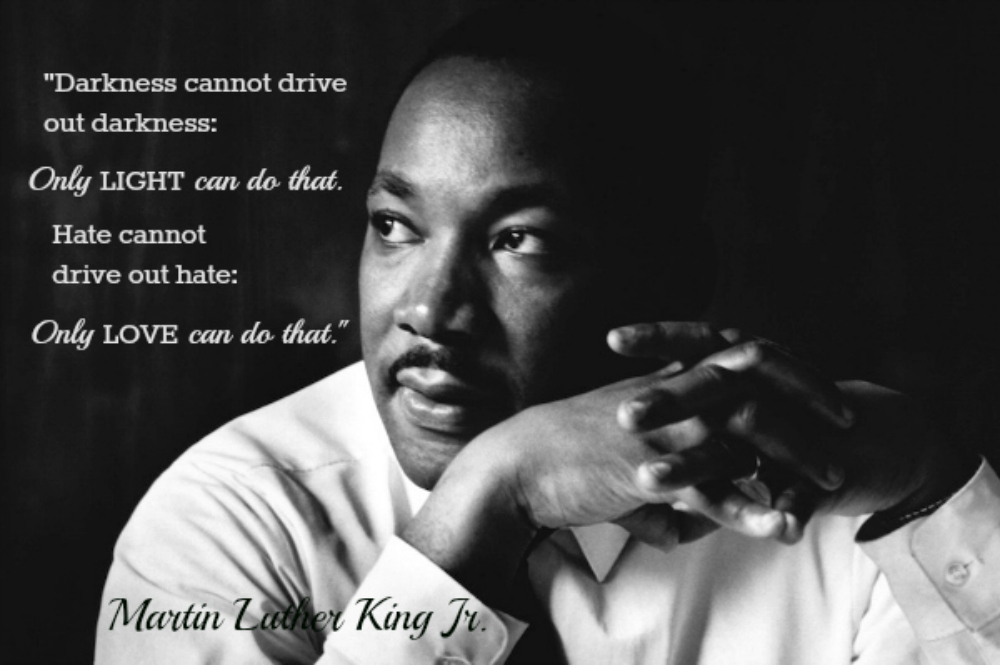
On April 4, 1967, Martin Luther King Jr. gave a powerful speech (“Beyond Vietnam – A Time to Break Silence”) that condemned America’s war in Vietnam. Exactly one year later, he was assassinated in Memphis.
What follows are excerpts from MLK’s speech. I urge you to read it in its entirety, but I’d like to highlight this line:
A nation that continues year after year to spend more money on military defense than on programs of social uplift is approaching spiritual death.
MLK called for a revolution of values in America. In his address, he noted that:
There is nothing except a tragic death wish to prevent us from reordering our priorities so that the pursuit of peace will take precedence over the pursuit of war.
MLK didn’t just have a dream of racial equality. He had a dream for justice around the world, a dream of a world committed to peace, a world in which America would lead a reordering of values in the direction of universal brotherhood.
Both of MLK’s dreams remain elusive. Racial inequalities and biases remain, though America is better now than it was in the 1960s in regards to racial equity. And what of a commitment to peace? Sadly, America remains dedicated to war, spending nearly a trillion dollars yearly on defense, Homeland Security, nuclear weapons, and “overseas contingency operations,” i.e. wars.
America has failed to dream the dreams of Martin Luther King, Jr., and we are the worse for it. W.J. Astore
Excerpts from MLK’s Speech on Vietnam, April 4, 1967
At this point I should make it clear that while I have tried in these last few minutes to give a voice to the voiceless in Vietnam and to understand the arguments of those who are called “enemy,” I am as deeply concerned about our own troops there as anything else. For it occurs to me that what we are submitting them to in Vietnam is not simply the brutalizing process that goes on in any war where armies face each other and seek to destroy. We are adding cynicism to the process of death, for they must know after a short period there that none of the things we claim to be fighting for are really involved. Before long they must know that their government has sent them into a struggle among Vietnamese, and the more sophisticated surely realize that we are on the side of the wealthy, and the secure, while we create a hell for the poor.
Somehow this madness must cease. We must stop now. I speak as a child of God and brother to the suffering poor of Vietnam. I speak for those whose land is being laid waste, whose homes are being destroyed, whose culture is being subverted. I speak of the — for the poor of America who are paying the double price of smashed hopes at home, and death and corruption in Vietnam. I speak as a citizen of the world, for the world as it stands aghast at the path we have taken. I speak as one who loves America, to the leaders of our own nation: The great initiative in this war is ours; the initiative to stop it must be ours…
If we continue, there will be no doubt in my mind and in the mind of the world that we have no honorable intentions in Vietnam. If we do not stop our war against the people of Vietnam immediately, the world will be left with no other alternative than to see this as some horrible, clumsy, and deadly game we have decided to play. The world now demands a maturity of America that we may not be able to achieve. It demands that we admit that we have been wrong from the beginning of our adventure in Vietnam, that we have been detrimental to the life of the Vietnamese people. The situation is one in which we must be ready to turn sharply from our present ways. In order to atone for our sins and errors in Vietnam, we should take the initiative in bringing a halt to this tragic war…
It is with such activity in mind that the words of the late John F. Kennedy come back to haunt us. Five years ago he said, “Those who make peaceful revolution impossible will make violent revolution inevitable.” Increasingly, by choice or by accident, this is the role our nation has taken, the role of those who make peaceful revolution impossible by refusing to give up the privileges and the pleasures that come from the immense profits of overseas investments. I am convinced that if we are to get on the right side of the world revolution, we as a nation must undergo a radical revolution of values. We must rapidly begin…we must rapidly begin the shift from a thing-oriented society to a person-oriented society. When machines and computers, profit motives and property rights, are considered more important than people, the giant triplets of racism, extreme materialism, and militarism are incapable of being conquered.
A true revolution of values will soon cause us to question the fairness and justice of many of our past and present policies. On the one hand, we are called to play the Good Samaritan on life’s roadside, but that will be only an initial act. One day we must come to see that the whole Jericho Road must be transformed so that men and women will not be constantly beaten and robbed as they make their journey on life’s highway. True compassion is more than flinging a coin to a beggar. It comes to see that an edifice which produces beggars needs restructuring.
A true revolution of values will soon look uneasily on the glaring contrast of poverty and wealth. With righteous indignation, it will look across the seas and see individual capitalists of the West investing huge sums of money in Asia, Africa, and South America, only to take the profits out with no concern for the social betterment of the countries, and say, “This is not just.” It will look at our alliance with the landed gentry of South America and say, “This is not just.” The Western arrogance of feeling that it has everything to teach others and nothing to learn from them is not just.
A true revolution of values will lay hand on the world order and say of war, “This way of settling differences is not just.” This business of burning human beings with napalm, of filling our nation’s homes with orphans and widows, of injecting poisonous drugs of hate into the veins of peoples normally humane, of sending men home from dark and bloody battlefields physically handicapped and psychologically deranged, cannot be reconciled with wisdom, justice, and love. A nation that continues year after year to spend more money on military defense than on programs of social uplift is approaching spiritual death.
America, the richest and most powerful nation in the world, can well lead the way in this revolution of values. There is nothing except a tragic death wish to prevent us from reordering our priorities so that the pursuit of peace will take precedence over the pursuit of war. There is nothing to keep us from molding a recalcitrant status quo with bruised hands until we have fashioned it into a brotherhood.









 Bracing Views