In a recent article for TomDispatch.com, I argued that Americans have embraced weapons and warriors, guns and gun exports, prisons and guards, all supported by a steady stream of fear. The end result has been a cesspool of violence largely of our own making. In such an environment, a man like Donald Trump, more opportunist than populist, more power-driven than public servant, more cynic than idealist, has ample opportunities to thrive.
The complete article is here; in this excerpt, I focus on Trump’s rise as well as the rise of a uniquely American anti-hero, the vigilante Dark Knight, AKA Batman.
Since the end of the Cold War, America has been exporting a mirror image of its domestic self — not the classic combo of democracy and freedom, but guns, prisons and security forces. Globally, the label “Made in the USA” has increasingly come to be associated with violence and war, as well, of course, as Hollywood action flicks sporting things that go boom in the night.
Such exports are now so commonplace that, in some cases, Washington has even ended up arming our enemies. Just consider the hundreds of thousands of small arms sent to Iraq and Afghanistan that were simply lost track of. Many of them evidently ended up on sale at local black markets.
Or consider the weapons and equipment Washington provided to Iraq’s security forces, only to see them abandoned on the battlefield and captured by the Islamic State.
Look as well at prisons like Gitmo — which Donald Trump has no intention of ever closing — and Abu Ghraib, and an unknown number of black sites that were in some of these years used for rendition, detention and torture, and gave the United States a reputation in the world that may prove indelible.
And, of course, American-made weaponry like tear gas canisters and bombs, including cluster munitions, that regularly finds its way onto foreign soil in places like Yemen and, in the case of the tear gas, Egypt, proudly sporting those “Made in the USA” labels.
Strangely, most Americans remain either willfully ignorant of, or indifferent to, what their country is becoming. That American-made weaponry is everywhere, that America’s warriors are all over the globe, that America’s domestic prisons are bursting with more than two million captives, is even taken by some as a point of pride…
Increasingly, Americans are submerged in a violent cesspool of our own making. As a man who knows how to stoke fear as well as exploit it, President Trump fits into such an atmosphere amazingly well. With a sense of how to belittle, insult and threaten, he has a knack for inflaming and exploiting America’s collective dark side.
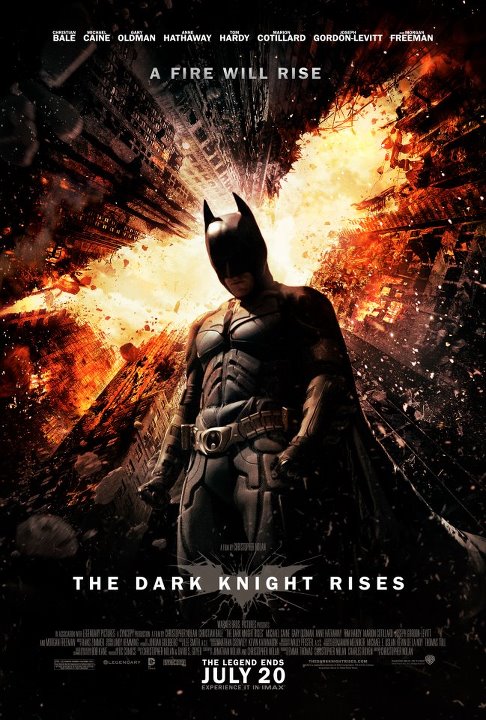
But think of Trump as more symptom than cause, the outward manifestation of an inner spiritual disease that continues to eat away at the country’s societal matrix. A sign of this unease is America’s most popular superhero of the moment. He even has a new Lego movie coming. Yes, it’s Batman, the vigilante alter-ego of Bruce Wayne, ultra-rich philanthropist and CEO of Wayne Enterprises.
The popularity of Batman, Gotham City’s Dark Knight, reflects America’s fractured ethos of anger, pain, and violence. Americans find common cause in his tortured psyche, his need for vengeance, his extreme version of justice. But at least billionaire Bruce Wayne had some regard for the vulnerable and unfortunate.
America now has a darker knight than that in Donald J. Trump, a man who mocks and assaults those he sees as beneath him, a man whose utterances sound more like a Batman villain, a man who doesn’t believe in heroes — only in himself.
The Dark Knight may yet become, under Trump, a genuine dark night for America’s collective soul. Like Batman, Trump is a product of Gotham City. And if this country is increasingly Gotham City writ large, shining the Batman symbol worldwide and having billionaire Trump and his sidekick — Gen. Michael Flynn? — answer the beacon is a prospect that should be more than a little unnerving.
It wasn’t that long ago that another superhero represented America — Superman. Chivalrous, noble, compassionate, he fought without irony for truth, justice and the American way. And his alter ego, of course, was mild-mannered Clark Kent, a reporter no less.
In Trump’s America, imagine the likelihood of reporters being celebrated as freedom fighters as they struggle to hold the powerful accountable. Perhaps it’s more telling than its makers knew that in last year’s dreary slugfest of a movie, Batman v Superman: Dawn of Justice, the bat rode high while the son of Krypton ended up six feet under.
Let me, in this context, return to that moment when the Cold War ended.
Twenty-five years ago, I served as escort officer to Gen. Robinson Risner as he spoke to cadets at the U.S. Air Force Academy. Risner’s long and resolute endurance as a prisoner of war during the Vietnam War — captured in his memoir, The Passing of the Night — had made him something of a real-life superhero to us then.
He talked to the cadets about public service, love of country and faith in God — noble virtues, based on humility, grace and inner strength. As I look back to that night, as I remember how Gen. Risner spoke with quiet dignity of the virtues of service and sacrifice, I ask myself how America today could have become such a land of weapons and warriors, guns and gun exports, prisons and fear, led by a boastful and boorish bullyboy.
How did America’s ideals become so twisted? And how do we regain our nobility of purpose? One thing is certain — the current path, the one of ever greater military spending, of border walls and extreme vetting, of vilification of the Other, justified in terms of toughness and “winning,” will lead only to further violence and darker (k)nights.
Be sure to check out TomDispatch.com, a regular antidote to the mainstream media.
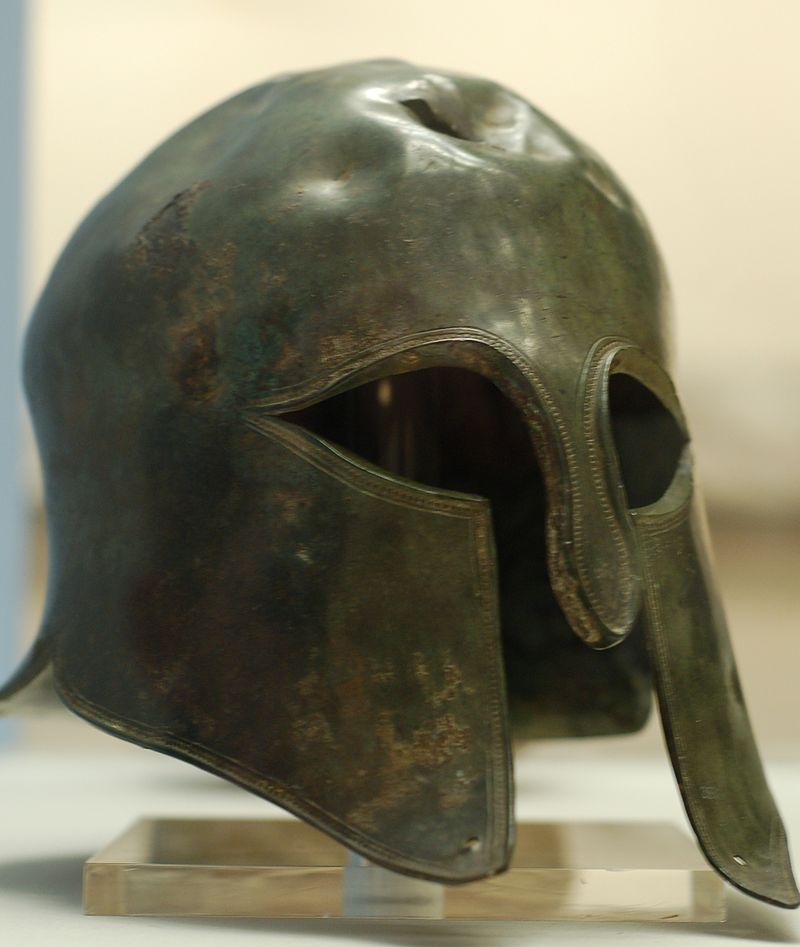
Spartan Helmet at the British Museum. Like the Spartans, it has known war
Steven J. Willett
Editor’s Introduction: Today, the ancient Greek city-state of Sparta has a reputation for being mindlessly devoted to warriors and war, yet this is a caricature of history. Sparta was neither mindless nor careless in its pursuit of war. Rather, as the classicist Steven Willett reminds us in this insightful article, appearing here first at Bracing Views, the Spartans deliberated with great care. They knew the perils of war, and entered on the same “very slowly,” as Willett shows by a close and sensitive analysis of the famous speech of Archidamus, a Spartan king, from Thucydides’ history. Would that the United States, which now fancies itself the inheritor of Spartan warrior excellence, deliberate about war with the same care as Archidamus exercised more than two millennia ago. W.J. Astore
In his History of the Peloponnesian War, Thucydides lays out the events that precipitated a long, enormously destructive war between the city-states of Athens and Sparta. The war ran from 431BCE to 404BCE with only a few years of intervening peace. Like many wars this one began in minor incidents far from the two states: Sparta was a land power with a league of allied cities in the Peloponnesus, while Athens was a sea power with a far-flung empire extending over the shores of the Aegean all the way to the Hellespont. The Athenian Empire embraced hundreds of cities and the Aegean islands, and at the start of the war was so wealthy it had begun a magnificent building program on the Acropolis.
I’ve summarized the history of events leading up to Sparta’s deliberations about going to war with Athens in Appendix One. The majority opinion of Sparta was that the Athenians were guilty of injustice and that war was justified. At this point Archidamus, one of Sparta’s two kings, “a man considered to be both intelligent and sensible” (Thucydides I.79.2), spoke before the Spartan war council. (On Thucydides’ accounts of speeches and the reliability thereof, see Appendix Two.) All translations are my own.
In the following section of the speech (I.84-85.1), Archidamus reviews the ethical principles that underlie Spartan reluctance to act precipitously. It provides an object lesson in the rational approach to making decisions about war, an approach that the United States would do well to emulate (but hasn’t).
Archidamus’ Speech About the Perils of Precipitous War
(1) And the slowness and hesitation, for which we [the Spartans] are especially blamed, should not shame you (αἰσχύνεσθε): rushing headlong [into war] may end it more slowly because the attempt lacked preparation. (2) Besides, we have always lived in a city that is free (ἐλευθέραν) and held in the highest repute (εὐδοξοτάτην). This very slowness amounts to truly rational (ἔμφρων) moderation (σωφροσύνη): for because of it we do not become insolent (ἐξυβρίζομεν) in success and yield less than others in misfortune. Nor are we, when those incite us with praise to dangerous actions (τὰ δεινὰ) contrary to our own best judgment, excited by pleasure, and if anyone provokes us with accusations we are not the least persuaded by our vexation. (3) We are both warlike (πολεμικοί) and well advised (εὔβουλοι) due to our good order (εὔκοσμον): warlike because shame (αἰδὼς) is the greatest part of moderation (σωφροσύνης), and courage (εὐψυχία) the greatest part of a sense of shame (αἰσχύνης), while we are well advised because we are trained with too little learning (ἀμαθέστερον) for contempt of the laws and by hardship to be more moderate (σωφρονέστερον) than to disobey them, and we are not so intelligent in useless matters that we finely criticize the enemy’s preparations in words only to fail matching them in deeds, but think that the intentions of our neighbors are like our own and that the occurrence of chance events cannot be determined (διαιρετάς) by argument. (4) We always prepare in practice against enemies who [we assume also] plan well, and should not place our hopes on their possible mistakes but in the security of our own forethought. We do not need to believe that one man differs very much from another man, but the best is one who has trained in the most rigorous discipline. (85.1) These practices, then, which our fathers bequeathed us and we always maintain for their continuing benefits, should never be abandoned, nor should we be incited in the short space of a day to make decisions on which hang many lives, resources and cities, but only at leisure.
Archidamus begins this passage by refuting the well-known Spartan tendency to dilatoriness by claiming it is nothing that should shame them. He uses the verb (occurring again as a noun below), αἰσχύνω, which means to be ashamed in the moral sense of having done something dishonorable, to feel shame for a dishonorable act. It can also be translated to dishonor, tarnish, or mar. Ancient Greece was in many ways a shame culture like that of my own home of Japan. To be charged with something shameful was one of the worst moral accusations. He then justifies that valuation of shame by stating that it has made Sparta a city that is free and most highly famed. The adjective he uses, ἐλεύθερος, means free in the sense of being unobstructed by any outside sources capable of restricting action. The noun form of the adjective is ἐλευθερία, freedom or liberty, and the word had very strong emotional connotations to the Greeks in their united opposition to Persia during the Greco-Persian Wars. For the Greeks, Persia was the epitome of tyranny, and to maintain their freedom they were willing to risk everything in the period of greatest threat, 490-479, when the Greek mainland faced invasion twice by Persia, the greatest empire in the world.
Having restored honor to Spartan dilatoriness in a negative sense, Archidamus then gives their habitual slowness a positive moral content: it’s a “truly rational (ἔμφρων) moderation (σωφροσύνη).” The adjective ἔμφρων means literally in one’s mind or senses, but here rational or intelligent. The noun σωφροσύνη (sophrosune) is an almost untranslatable word with a variety of meanings clustered around moderation, prudence, temperance, self-control (against pleasure or pain) and many others. I have chosen to use a single word, moderation, in translating it, but the phrase soundness of mind perhaps comes closest. Heraclitus Fr. 112 gives a powerful definition of its meaning: σωφρονεῖν ἀρετὴ μεγίστη καὶ σοφίη ἀληθέα λέγειν καὶ ποιεῖν κατὰ φύσιν ἐπαΐοντας (“Soundness of mind is the greatest virtue and practical wisdom is speaking the truth and acting in accordance with the natural constitution of things”). I’ve highlighted the two words whose roots lie in sophrosune: sophronein and sophie, “soundness of mind” and “practical wisdom.” Practical wisdom includes the skill of a craftsman or the diagnostic analysis of a physician.
Because of moderation, he continues, the Spartans don’t become insolent in success. The verb ἐξυβρίζομεν is another word very difficult to render in English. It means to break out into insolence, to run riot, to commit violence. It referred to behavior that shamed or humiliated the victim for the gratification of the abuser and included both verbal and physical assaults. The English word hubris is derived from it, but has a much thinner emotional sense than violence: foolish pride or dangerous overconfidence. To commit hubris in Greece was a crime subject to severe punishments if convicted.
Lesson for America: A good example of hubris in the Greek sense is the behavior of the United States after the fall of the Soviet Union in 1991: we declared ourselves the ‘winners’ in the Cold War, the USSR the ‘losers,’ and rubbed the defeat constantly in their faces. Under President Clinton we began to push NATO into the old Warsaw Pact countries in violation of promises to Gorbachev, to impoverish the Russian people by sending economic advisors to mount a massive deregulation of state enterprises and finally to exploit and ultimately partition Russia during the Yeltsin regime. In short, we ran riot. I was a student in St. Petersburg during the 1990s and saw the misery we unleashed up front and close: the homeless sleeping in bundles beneath famous statues, impoverished Afghan veterans selling war relics and even their own clothing on Nevsky Prospect and proud, old naval captains quietly and politely asking for some rubles in their soft, broken English.
When Archidamus follows this with the statement that Sparta cannot be incited to dangerous actions, τὰ δεινὰ, he means really serious dangers. The plural noun is very strong: fearful, dread, terrible, dire, the outcome of actions and of powerful natural events. He is directing his comments to the Corinthians and the other Peloponnesians who clamored for immediate war.
Lesson for America:Now that the (expired) Obama administration has initiated Cold War II, we have Members of Congress calling for wars with Iran, continuing wars in Iraq, Afghanistan, Libya and Syria, and even advocating policies that could lead to war with Russia. There doesn’t seem to be the slightest sense of the terrible consequences of such clamorous policies.
Section 3 of chapter 84 consists of one long sentence, which I’ve translated without a full stop, but will break into clauses for discussion. It is the most important section in the speech since it articulates the Spartan sense of their own ethical standards as a warrior society.
The first clause emphasizes two key Spartan qualities: they are “warlike (πολεμικοί)” and “well advised (εὔβουλοι)” because of their “good order.” The plural adjective πολεμικοί is derived from the Greek word for war and means warlike, valiant or courageous in war. They are “well advised” in the sense of exercising prudent, effective planning. The prefix εὔ~ in εὔβουλοι means good or well. The source of these two qualities is their “good order (εὔκοσμον).” The meanings of εὔκοσμος are variously behaving well, orderly, decorous, in good order. The word has a wide usage from Homer to the Roman period in many different semantic domains, but here Archidamus means that Spartans maintain the decorous, well-organized and graceful bearing of habitual discipline. From this disciplined, orderly bearing comes their qualities of being warlike and well advised. One thinks, for example, of a Spartan army marching in good order to the rhythm of auloi (pipes), their indifference to weather wrapped only in their scarlet cloak, their strict formation in the phalanx. Effective planning and valor, Archidamus means, are impossible without rigorous good order.
Then in the second clause he surprisingly deepens the meaning of “good order” by saying, in effect, “We are warlike because shame is the major part of moderation just as courage is the major part of shame.” He uses two words for shame: the nouns αἰδώς and αἰσχύνη. They mean very much the same thing, but the use of the second word αἰσχύνη in context means something more like honor: “courage is the major part of a sense of honor” because in battle the most shameful thing is a failure of courage or a failure to stand by your comrades. He follows that with an expansion of what it means to be well advised: “we are well advised because we are trained with too little learning (ἀμαθέστερον) for contempt of the laws and by hardship to be more moderate (σωφρονέστερον) than to disobey them.” He uses two comparative adjectives here, where the first means “not so highly learned” as to despise the laws, and the second is a form of that crucial word σωφροσύνη, but here it carries the sense of “more prudent” than to hold the laws in contempt. The Spartans were severe in their respect for the laws, and I’m sure everyone knows Simonides’ great epitaph on the Spartan dead at Thermopylae:
Oh stranger, tell the Lacedaemonians that
we lie here, obedient to their commands.
The third clause picks up the idea that Spartans are not so intelligent as to believe they can individually make public policy on their own and submit it to the assembly (a real failing of the Athenians): “we are not so intelligent in useless matters that we finely criticize the enemy’s preparations in words only to fail matching them in deeds, but think that the intentions of our neighbors are like our own and that the occurrence of chance events cannot be determined (διαιρετάς) by argument.” The Greek adjective διαιρέτης means divided, separated, distinguishable. The idea here is that chance events cannot be determined by rational argument: just as we denigrate our enemy’s intelligence, so we don’t pretend to know the future.
The final sentence in chapter I.85.1 should be engraved on the architrave of every department of war in the world: “nor should we be incited in the short space of a day to make decisions on which hang many lives, resources and cities, but only at leisure.” That is to say, hasten slowly, very slowly to make war.
Lesson for America: Haste makes waste, especially in war, whether in ill-judged attacks on the Taliban in Afghanistan, the overthrow of Saddam Hussein’s regime and the disbandment of the military in Iraq, or the elimination of Qaddafi in Libya, all done overconfidently and with inadequate intelligence.
In the course of the speech prior to my direct quotation, Archidamus makes other invaluable points about the dangers of war with Athens. He begins by emphasizing the sheer difficulty of making war against a city like Athens that possesses a distant empire, is the most experienced at sea and has the best resources in public and private wealth, ships, horses, hoplites and “a population such as does not exist in any other single place in Greece” (I.80.3). On top of that, they have tribute-paying allies, which enhances Athenian endurance. Then in turn he emphasizes Sparta’s weaknesses (I.80.4-81.5): we are inferior in ships, which take time to prepare and train, and in money because we do not have a common treasury or sufficient private sources. We surpass them in hoplites, so we could overrun and ravage their land, but they have extensive lands under their control and can import what they need by sea. If we try to make their allies defect, we will need a fleet since for the most part they are islanders. If we can’t defeat them with our ships or deny them the revenues they need to maintain their fleet, we shall be harmed even more. He ends this line of argument with a counsel that the Spartans not break the treaty or transgress their oaths, but resolve the disputes with arbitration. (Athens had in fact offered arbitration in I.78.4).
His warning about the uncertainly of war proved in the end to be all too true: “We should certainly not be borne up by the hope that the war will end quickly if we ravage their land. I fear that we shall bequeath it rather to our children, so likely it is that the Athenians in their spirited resolution will neither be enslaved by their land nor like novices terrified by war” (I.81.6). It was in fact the grandchildren who received the bequeath of war.
Lesson for America: Your enemies are not novices who are terrified by war. With the Afghan war in its 16th year and the Iraq war in its 14th year, America’s interventions in the Greater Middle East are becoming generational wars, soon to be fought by the children and grandchildren of soldiers who fought in Desert Storm and Iraqi Freedom. You wage war long, you wage war wrong; the Greeks discovered this as they weakened themselves in generational internecine warfare.
The next stage of Archidamus’ speech (I.82.1-6) is a call to take matters slowly, warn Athens it will not permit what they are doing and begin equipping themselves with Greek and barbarian allies (meaning primarily Persian). If Athens sees us preparing, they may give way. He recommends that they think of Athens’ land as a hostage and spare it if possible in order not to drive them into despair and thus make them that much harder to handle. We shall get ourselves into a more difficult situation if we allow our allies to incite us to war when we are unprepared. Let no one think we are cowards if our confederacy does not immediately attack a single city, “For they have as many allies as we do, who pay tribute too, and war is not so much a matter of arms but of finance, which provides the efficacy of arms, especially between continental and maritime powers” (I.83 2). So we should, he concludes, first provide for expenditures and not be stirred to premature action by our allies.
Ultimately, the Spartans rejected Athens’ offer of arbitration, blaming them for breach of the treaty, as Archidamus feared they might (I.81.5), and the terrible war commenced in 431. By the late 420s both sides had suffered major defeats and they agreed to the 50-year Peace of Nicias in 421. Athens blatantly violated the peace in 414 acting arrogantly (with hubris aforethought) in the belief they could finally win the war. Thucydides follows the last phase of the war in Books VI and VII to the catastrophe of the Syracuse Expedition.
Thus ended the 27-year conflict that constituted the slow suicide of Greece. In endless wars are we not witnessing today the slow suicide of the United States?
Steve Willett is a classicist living in Japan. He welcomes reader comments at steven.willett@gmail.com.
Appendix 1
Events Leading Up to the Speech of Archidamus
The first incident that ultimately triggered war was a political dispute between the island of Corcyra, on the western shore of the Adriatic, and the colony of Epidamnus that it had founded some distance north on the mainland. This dispute drew Corinth into the fray when Epidamnus asked her for help against Corcyra, which was besieging the colony. War then broke out between Corcyra and Corinth, with the island winning a naval engagement (435) and Corinth using the rest of 435 and 434 to prepare a large naval armada assisted by ground support for a decisive onslaught.
Both disputants then sent delegations to Athens in 433 and spoke before the Assembly appealing for help. Corcyra asked for an alliance with Athens against Corinth, emphasizing the fact that of the three major Greek navies at the time, Athens, Corcyra and Corinth, an alliance would give two fleets to Athens. Corinth in turn argued that as repayment for past support in an earlier incident involving the Peloponnesian League, Athens should remain neutral. The Assembly decided on a strictly defensive alliance with Corcyra, meaning that neither side adopted all the friends and enemies of the other.
In the second naval battle between Corcyra and Corinth, Athens sent a small contingent of 10 ships to help Corcyra, hoping to avoid a direct conflict so it wouldn’t violate the Thirty Years’ Peace that ended the First Peloponnesian War (446/5). Thucydides describes that battle in a vivid narrative, stating that it was the largest naval engagement ever fought up to that time. It ended with a clear victory for Corinth. Unfortunately, the Athenian ships had engaged Corinthian forces, thus giving Corinth grounds to charge her with violation of the peace treaty. This was the first incident that contributed to war between the Athenian Empire and the Peloponnesian League led by Sparta.
The second incident involved the city of Potidaea on the isthmus of Pallene, the western arm of Chalcidice in the northwest Aegean. It was a colony of Corinth, but a tribute-paying member of the Athenian Empire. The city revolted from Athens, incited by Corinth as it believed, and led to ground battles in which Athens defeated the Corinthian force, besieged Potidaea and trapped many Corinthian soldiers inside the city.
I have emphasized this chain of incidents, starting in small far-off Epidamnus and Potidaea, to illustrate a fact we should always remember: many wars begin with a precipitating event that arises far from the centers of power but whose real origin is obscure. The “truest reason” of the war, Thucydides says, though most concealed in discussion, was the Spartan fear of the growing power of Athens. He touches on the true cause earlier in Book I (I.23.6) and elaborates it later.
When Corinth called its allies to Sparta for a conference to condemn Athens, each harbored local grievances: the Corinthians complained that Athens was besieging a colony of theirs with men of Corinth and the Peloponnesus trapped inside; the Athenians complained that the Peloponnesian had caused the defection of Potidaea, which was a tribute-paying ally, and were fighting together with the Potidaeans (I.66).
This conference marks the beginning of a direct confrontation between its two greatest military forces in Greece. The Spartans additionally invited anybody else who claimed to have been unjustly treated by Athens. Several other cities spoke against her, but Corinth came last to let them provoke the Spartans first.
The Corinthian defense emphasized the tyranny of the Athenian Empire, Athens’ seduction of Corcyra and its radical difference from Sparta: one instinct with a spirit of innovative, daring, mercurial, impulsive action and one inclined to slow, sluggish commitment to action only when necessary. The Corinthians attribute this hesitancy to a preference for fair dealing that does not distress other states and for a defense that scrupulously avoids any harm to itself. They cap this line of argument with a superb aphorism against Athens: “If someone were to summarize them as born neither to enjoy any rest themselves nor to let other men enjoy it, he would speak the truth” (I.70.9). The whole description of Athens’ relentless thirst for innovation and its resilience in setbacks (I.70.2-9) is to my mind a far better account of the city’s creative effervescence than Pericles’ Funeral Oration, which is essentially a rhetorical defense of and a call to war.
Athens had some ambassadors in Sparta at the time, but on different business. They asked to speak and mounted a Realpolitik defense of their empire, which they claimed to have acquired voluntarily and not by force, and their sometimes harsh maintenance of it as normal practice for those who wield power. The tribute-paying members should in fact be happy they’ve not experience far worse treatment. The ambassadors were rather direct, however, in warning Sparta against going to war with such a powerful, wealthy state supported by a vast empire.
Sparta then closed the conference to outsiders so they could debate candidly among themselves.
The first to speak was one of the city’s two kings, Archidamus, who gave his name to the first 10 years of the war from 431 to the Peace of Nicias in 421.
Appendix 2
Note on the Speeches in Thucydides
Thucydides includes many speeches that are long and very difficult to interpret from their contorted, often opaque syntax and their complex semantic usage. Unlike his narrative passages, the ancient world found his speeches very tough going indeed. Some speeches he certainly heard in Athens before his exile in 424/3, such as Pericles’ Funeral Oration, and could well have made aides-mémoire of them. Others he might have heard outside Athens in exile, but there is not one certain case, though the possibility cannot be discounted. Others finally are imaginative reconstructions based, as he says in I.22, on his judgement of what would have been the most important or appropriate for the speakers to say regarding the current circumstances while keeping as close as possible to the general sense of the content. My opinion is that Archidamus’ speech accurately reflects his views: Athens had engaged in close relations with Sparta since well before the Greco-Persian Wars (499-449), giving her more than enough time to accurately assess the Spartan decision-making process and its civic ethics. Thucydides very likely had his own sources of information. He certainly would not have written the speech as he did if it contained obvious distortions. Here is what he writes about his exile in V.26.5: “I lived through the whole of it [the war], being of an age to understand events and apply my judgement to learn the exact truth. It happened that I was banished from my own country for 20 years after my command at Amphipolis, and by my association with both parties, as much with the Peloponnesian as the Athenians due to my exile, I could at leisure better learn the course of events.”
In my latest article at TomDispatch.com, “All the President’s Generals,” I examine Trump’s affection for retired military generals to fill America’s most senior civilian positions related to national defense. I urge you to read the entire article at TomDispatch.com; here I wish to focus on the quartet of generals/warriors Trump is empowering as part of his drive to “win” again. Trump seems most pleased that “his” generals are allegedly cut from the same cloth as George S. Patton and Douglas MacArthur, two of America’s most anti-democratic generals.
Perhaps this shouldn’t surprise us. Like Prussia in the age of Frederick the Great, America is increasingly becoming a colossal military establishment with a state attached to it. Unlike Prussia, our colossus is not producing any meaningful victories. And no one, I think, would confuse the educated and enlightened Frederick with America’s angry and undisciplined Tweeter-in-chief.
Too Many Generals Spoil the Democracy (from TomDispatch.com)
General officers, by the way, have come to resemble a self-replicating organism. The grooming process, favoring homogeneity as it does, is partly to blame. Disruptive creativity and a reputation for outspokenness can mark one as not being a “team player.” Political skills and conformity are valued more highly. It’s a mistake, then, to assume that America’s generals are the best and the brightest. “The curated and the calculating” is perhaps a more accurate description.
With that in mind, let’s take a closer look at Trump’s chosen threesome, starting with General Mattis. He has his virtues: a distinguished career in the Marine Corps, a sensible stance against torture, a dedication to all ranks within the military. Yet like so many high-ranking military retirees — take General Mark Welsh of the Air Force, for example — Mattis quickly cashed in on his career, reputation, and continuing influence via the military-industrial complex. Despite a six-figure pension, he joined corporate boards, notably that of military-industrial powerhouse General Dynamics where he quickly earned or acquired nearly $1.5 million in salary and stock options. Mattis is also on the board at Theranos, a deeply troubled company that failed to deliver on promises to develop effective blood-testing technologies for the military.
And then, of course, there was his long military career, itself a distinctly mixed bag. As head of U.S. Central Command under President Obama, for instance, his hawkish stance toward Iran led to his removal and forced retirement in 2013. Almost a decade earlier in 2004, the aggressive tactics he oversaw in Iraq as commanding general of the 1st Marine Division during the Battle of Fallujah have been characterized by some as war crimes. For Trump, however, none of this matters. Mattis, much like General Patton (in the president-elect’s view), is a man who “plays no games.”
And Mattis seems like the voice of reason and moderation compared to Flynn, whose hatred of Islam is as virulent as it is transparent. Like Trump, Flynn is a fan of tweeting, perhaps his most infamous being “Fear of Muslims is RATIONAL.” A brusque man convinced of his own rectitude, who has a reputation for not playing well with others, Flynn was forced from his position as director of the Defense Intelligence Agency in 2014, after which he became a harsh critic of the Obama administration.
In his brief retirement, Flynn served as a paid lobbyist to a Turkish businessman with close ties to President Recep Tayyip Erdogan of Turkey, while running a business consultancy that is due to profit by providing surveillance drones to patrol the U.S.-Mexican border. Rising to prominence during the Trump campaign, he led the chant against Hillary Clinton (“Lock her up!”) at the Republican National Convention in July. (His son recently helped spread the false rumor that Clinton was involved in a child sex trafficking ring involving a Washington, D.C., pizzeria.) Flynn, who sees Islam as a political conspiracy rather than a legitimate religion, is an angry warrior, a dyed-in-the-wool crusader. That Trump sees such a figure as qualified to serve as the nation’s senior civilian security adviser speaks volumes about the president-elect and the crusading militarism that is likely to be forthcoming from his administration.
Serving in a supporting capacity to Flynn as chief of staff of the National Security Council (NSC) is yet another high-ranking military man (and early supporter of Trump’s presidential run), Army retired Lieutenant General Keith Kellogg. Almost a generation older than Flynn, Kellogg served as chief operations officer for the ill-fated Coalition Provisional Authority in Iraq, which badly mismanaged the U.S. military’s occupation of the country after the fall of Baghdad in 2003. Like most retired generals, Kellogg has profited from close links to defense-related industries, including CACI International, Oracle Corporation (Homeland Security Division), and Cubic, where he was senior vice president for ground combat programs. It’s hard to see fresh ideas coming from the NSC with long-serving military diehards like Flynn and Kellogg ruling the roost.
General John Kelly, the last of the quartet and soon to be head of the Department of Homeland Security, is yet another long-serving Marine with a reputation for bluntness. He opposed efforts by the Obama administration to close the prison at Guantanamo Bay in Cuba, claiming that the remaining detainees were “all bad boys,” both guilty and dangerous. He also ran afoul of the administration by criticizing efforts to open combat positions to qualified servicewomen, claiming such efforts were “agenda-driven” and would lead to lower standards and decreased military combat effectiveness. Despite these views, or perhaps because of them, Kelly, who served as senior military assistant to Defense Secretary Leon Panetta and has been well vetted by the system, is likely to be confirmed with little real debate.
Of Coups and Crusades
Collectively, the team of Mattis, Flynn, and Kelly could not be more symbolic of the ongoing process of subversion of civilian control of the military. With Trump holding their reins, these self-styled warriors will soon take charge of the highest civilian positions overseeing the military of the world’s sole superpower. Don’t think of this, however, as a “Seven Days in May” scenario in which a hard-headed general mounts a coup against an allegedly soft-hearted president. It’s far worse. Who needs a coup when generals are essentially to be given free rein by a president-elect who fancies himself a military expert because, as a teenager, he spent a few years at a military-themed boarding school?
In all of this, Trump represents just the next (giant) step in an ongoing process. His warrior-steeds, his “dream team” of generals, highlight America’s striking twenty-first-century embrace of militarism.
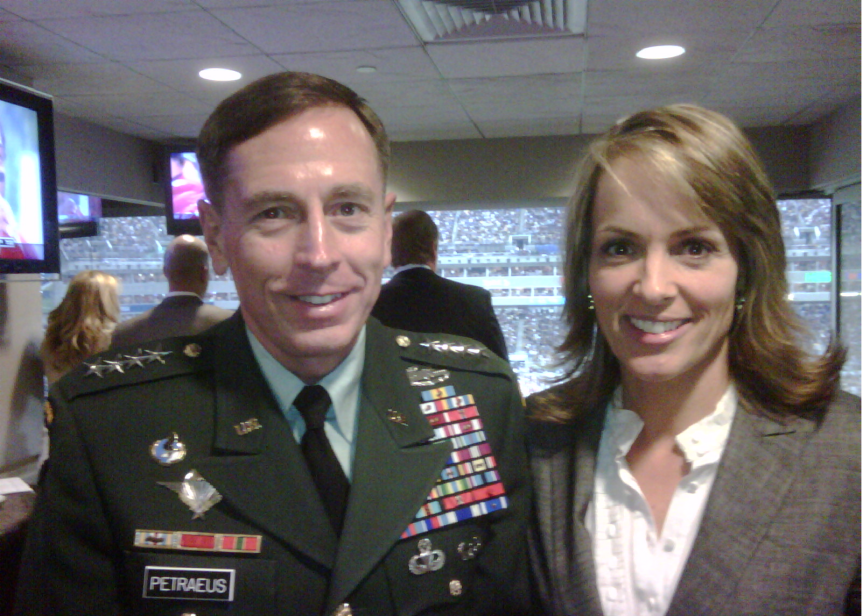
General (retired) David Petraeus was on PBS the other day to explain the current Iraqi offensive on Mosul. Sure, his military “surges” in Iraq and Afghanistan had no staying power, and he disgraced himself by sharing classified information with his mistress during an extramarital affair, but nevertheless let’s call on him as an unbiased “expert” on all things military. Right?
But that’s the extent of what we [the U.S.] can do [in Iraq today]. We can encourage, we can nudge, we can cajole [the Iraqi military and Kurdish forces]. We can’t force. And it is going to have to be Iraqis at the end of the day that come together, recognizing that, if they cannot, fertile fields will be planted for the planting of the seeds of ISIS 3.0, of further extremism in Iraq.
Wow. There’s no sense here that the U.S. is to blame for planting the seeds of Iraqi extremism (or, at the very least, fertilizing them) in those “fertile fields.” Overthrowing Saddam Hussein in 2003 and demobilizing Iraqi military forces predictably left a power vacuum that facilitated factionalism and extremism in Iraq, which was only exacerbated by an extended and mismanaged U.S. occupation. Petraeus’s “Surge” in 2007 papered over some of the worst cracks, but only temporarily, a fact that Petraeus himself knew (consider all his caveats about “gains” being “fragile” and “reversible”).
But no matter. Petraeus is now saying it’s up to the Iraqis to get their act together, with some “nudging” and “cajoling” by the U.S. I’m sure Iraqi leaders are happy to learn that U.S. experts like Petraeus are behind them, ready to encourage and nudge and cajole. They’re likely happiest with U.S. Apache helicopters and direct tactical assistance via Special Ops teams (yes, there are U.S. boots on the ground, and they’re in harm’s way).
And Petraeus’s reference to ISIS 3.0: Isn’t it strange to compare a terrorist organization’s evolution to a new software product roll-out? Petraeus might have added that ISIS 1.0 came as a result of the extended U.S. occupation of Iraq, and that ISIS 2.0 came as U.S. forces pulled out, leaving behind Iraqi security forces that the U.S. claimed were ready to defend Iraq, but which fled in 2014, abandoning their weapons and equipment to ISIS forces. Put plainly, U.S. bungling helped to launch ISIS 1.0 and to equip ISIS 2.0. And yet Petraeus suggests if there’s an ISIS 3.0, that version will be entirely the fault of the Iraqis.
Throughout the Petraeus interview, there’s a callous calculus in place. For example, earlier in the interview, Petraeus casually notes the population of Mosul, originally 2 million people, is down to 1.2 million and dropping. Nothing is said about the missing 800,000 Iraqis. Most are refugees, but many are dead. Doesn’t their fate suggest a colossal failure of the war and occupation you ran, General Petraeus? But questions such as this are never asked in the mainstream media.
In its long wars in the Greater Middle East, the U.S. has an incredibly short and corrupted memory. Indeed, to stay with Petraeus and his software analogies, the American memory is a circular file that is constantly overwritten with flawed data. That’s a recipe not for smooth running but for catastrophic crashes. And so it has proved.
I’d vote for Imperator Furiosa before Hillary and Trump
W.J. Astore
This year’s presidential election is depressing. I suppose Trump and Hillary supporters are fired up. They want to see “their” candidate win. But for me, I wish a pox on both their houses, even as I hope the eventual winner is not as bad as he or she appears to be.
With respect to foreign policy, neither candidate comes close to representing my views. Instead of American exceptionalism, instead of global reach and global power, I believe the U.S. needs to learn the merits of minding its own business. I want a country that is not imperial, not militaristic, and not intent on waging forever wars against inchoate forces (terror) and with a changing roster of enemies (Al Qaeda/ISIS/radical Islam, North Korea, Iran, and now possibly Russia and China, and who knows who or what else next). I want active wars in Iraq and Afghanistan to end. I want U.S. troops to be brought home.
We don’t need a new Cold War, America. Nor should we be elevating terrorism, a containable threat, to an existential threat. The true existential threat is incessant greed-wars, which will bankrupt our country even as they administer the death blow to our democracy.
The main candidates, Trump and Clinton, are committed to feeding the national security state. Both promise more wars, especially war-hawk Clinton. With Trump, honestly, I have no idea what to expect from him. Trump has all the makings of a Nero. He’ll fiddle (or Tweet) while the world burns. And Hillary? She’s a self-styled Imperator Furiosa (from the latest Mad Max movie) but without her heart.
So much of U.S. foreign policy nowadays is about selling weaponry. We sell billions and billions to the Israelis and Saudis (among others), and the peoples of Palestine and Yemen suffer and die as a result. Are U.S. hands clean merely because we made the weapons (and in some cases subsidized their purchase)? What kind of “democracy” dominates the world’s arms trade? In more enlightened days, the U.S. excoriated European countries and their “merchants of death” (this was in the 1920s and 1930s). Now we are the merchants of death, boasting of all the money we’re making. We have met the enemy, and he is us.
Trump and Hillary: one a Nero, one an Imperator. Both American exceptionalists, both believers in the military, both willing to wield big sticks while never speaking softly. Yes, I find that depressing.
On domestic policy, Hillary hews closer to what I believe, at least in theory. But in practice who knows with Hillary? She speaks with forked tongue on so many important issues. I think liberals/progressives can count on her to be pro-choice, to be pro-LGBTQ, to be (or appear to be) sensitive to racism, to be inclusive (compared to Republicans), to be pro-immigration (again, compared to Republicans). For many liberals/progressives/democrats, Hillary’s predictability on these issues is enough, especially compared to the hard right positions embraced by Trump/Pence. And indeed more than a few of my Democratic friends are voting for Hillary based on these positions, together with their faith (fingers crossed) that her Supreme Court nominees will be somewhere to the left of Antonin Scalia.
Is that enough? Not for me. Again, it’s Hillary’s opportunism, the way she slips in and out of positions as if they’re so many interchangeable pantsuits, that I find so depressing. Whether it’s the TPP or fracking or the $15 minimum wage or health care reform or bank reform or what have you, she changes her tune, much like a piper responding to requests. Yes, he who pays the piper calls the tune, and I can’t pay the piper what Goldman Sachs can. So I’ll never hear my tune played; only theirs. And I know how that song ends: with even greater inequality followed by another financial meltdown, and this time maybe the middle class will die.
I can’t vote for more of the same (Hillary) only with more fury. I can’t vote for random acts of caprice and belligerence guided by ignorance (Trump). Honestly, you know what I want to do? Write in “Bernie Sanders.” He’s not perfect (who is?), but he has character and integrity, and that’s what this country really needs. I know: Bernie told me to vote for Hillary. But dammit, Bernie, I can’t do it.
Did I say I was depressed? After I write in Bernie’s name on November 8th, I’ll walk away from the voting booth with a smile. And to me that’s not a “wasted” vote.
Editor’s Note: Jeremy Scahill, author of “Dirty Wars,” minces no words in his reaction to Trump/Clinton and their second “debate.” Scahill’s article appeared originally at The Intercept.
Trump may go away, but the people he has empowered will not
Republican presidential nominee Donald Trump during the town hall debate at Washington University on Oct. 9, 2016, in St. Louis, Missouri.
Photo: Rick Wilking/Getty Images
These presidential debates — certainly this one — serve as the most stark commentary on how bankrupt the U.S. electoral system is.
This is the choice the system produces for “viable” candidates.
The cartoonish villainy of Donald Trump is a major factor in distracting attention from the hawkish, neoliberal policies of Hillary Clinton. Hillary’s best selling point for a lot of people — Democrats and, increasingly, Republicans — is: I’m not batshit crazy like Trump.
There is rarely a focus on Clinton’s embrace of regime change, her role in creating the conditions, as secretary of state, for the horror show currently unfolding in Yemen, or her paramilitarization of the State Department. Clinton has never been asked about her role in the secret drone “kill chain” the Obama administration has now codified as a parallel justice system, where there are no trials, indictments, or convictions, but a whole lot of death sentences. Just as Clinton avoided real questions about Libya thanks to the clownfuck Republicans’ carnival over Benghazi, she emerges as the only choice for many sane people. That she is buddy-buddy with Wall Street, speaks one way to them and another way in public, becomes a footnote. She is the empire candidate and that is why the John Negropontes and Max Boots and George H.W. Bushes of the world have embraced her.
Here is the thing, though: Both Clinton’s and Trump’s candidacies have fucked us — albeit in different ways. Hillary represents more of the same bipartisan warmongering. And, under Obama, that has been met with a lot of silence and complicity from liberals. Depressing.
Whether Trump wins, loses, or loses big, he has empowered fascists, racists, and bigots. He did not create them, but he has legitimized them by becoming the nominee and openly expressing their heinous, hateful beliefs. This, to me, is one of the most frightening developments on a domestic level in the U.S. this election cycle. Trump may go away, but the people he has empowered will not.
Ike in 1959: Too critical of the military to be elected today
W.J. Astore
President Dwight D. Eisenhower gave his most powerful speech as he left office in 1961. He warned the American people about an emerging military-industrial complex, a complex that was already beginning to erode democratic rule in America. Originally, Ike had Congress as a collaborator with and enabler of that Complex, but he deleted the reference in the final version, apparently deciding that by alienating Members of Congress, he’d only push them further into the Complex’s corner.
The military-industrial complex, the Complex for short, has only grown in power over the last half-century. Today, more than half of Federal discretionary funding goes to it. With the post-9/11 addition of Homeland Security and more and more intelligence agencies (seventeen of them at last count), the Complex continues to grow like Topsy. It consumes roughly $750 billion each and every year, a sum likely to grow whether Trump or Clinton wins the presidency. (Trump has promised to rebuild an allegedly shattered military; Clinton, meanwhile, is a steadfast supporter of the military as well as neo-con principles of aggressive foreign interventionism.)
In the U.S. today, the Complex is almost unchallengeable. This is not only because of its size and power. The Complex has worked to convince Americans that war is inevitable and therefore endless (it’s never the fault of the Complex, of course: it’s the terrorists, or the Russians, or the Chinese …), and also that military service (and spending) is virtuous and therefore a boon to democracy.
America’s founders like James Madison thought differently, knowing from bitter experience and deep learning that incessant wars and standing militaries are an insidious threat to democracy. Nowadays, however, Americans say they trust their military more than any other societal institution, and mainstream society universally celebrates “our” troops as selfless heroes, the very best of America. This moral, indeed metaphysical, elevation of the U.S. military serves to silence legitimate criticism of its failings as well as its corrosive effect on democratic principles and values.
All of these topics I’ve written about before, but I wish to cite them again by way of introducing an article by Maximilian C. Forte, an anthropologist who writes at Zero Anthropology (I first saw his work at Fabius Maximus). The article Forte wrote is on Bernie Sanders and his limitations, but what struck me most was his reference to C. Wright Mills and his analysis of the nexus of interests and power between U.S. capitalism and militarism.
The following extended excerpt from Forte’s article shines much light into the darker corners of America’s corridors of power:
In The Power Elite (1956) and “The Structure of Power in American Society” (The British Journal of Sociology, March 1958), Mills’ explanations can look like an elaborated, in-depth version of what former president Dwight Eisenhower described as the military-industrial complex, but with a stronger focus on the role of private corporations and special interest lobbies. These approaches endure today — because the problem they describe and analyze continues — as shown in the work of anthropologists such as Wedel on Shadow Elite: How the World’s New Power Brokers Undermine Democracy, Government, and the Free Market … [as well as works by other authors that showcase] the relationship between the stock market, multinational corporations and the US’ CIA-led coups against foreign governments …
For C. Wright Mills, the problem was not just “Wall St.,” nor the “Pentagon” alone — focusing on one over the other produces a half-headed understanding, with all of the political demerits that result. As he argued in his 1958 article, “the high military, the corporation executives, the political directorate have tended to come together to form the power elite of America” (pp. 32-33). The power elite is what he described as a “triangle of power,” linking corporations, executive government, and the military: “There is a political economy numerously linked with military order and decision. This triangle of power is now a structural fact, and it is the key to any understanding of the higher circles in America today” (Mills, 1958, p. 32).
Contrary to Bernie Sanders, Mills emphasizes the decisive influence of the military in the corporate oligarchic state (as Kapferer later called it):
“The military order, once a slim establishment in a context of civilian distrust, has become the largest and most expensive feature of government; behind smiling public relations, it has all the grim and clumsy efficiency of a great and sprawling bureaucracy. The high military have gained decisive political and economic relevance. The seemingly permanent military threat places a premium upon them and virtually all political and economic actions are now judged in terms of military definitions of reality: the higher military have ascended to a firm position within the power elite of our time”. (Mills, 1958, p. 33)
US politics are dominated, Mills argued, “by a few hundred corporations, administratively and politically interrelated, which together hold the keys to economic decision,” and the economy that results is “at once a permanent-war economy and a private-corporation economy”:
“The most important relations of the corporation to the state now rest on the coincidence between military and corporate interests, as defined by the military and the corporate rich, and accepted by politicians and public”. (Mills, 1958, p. 33)
Mills also pays attention to the history of this type of corporate-military state. The influence of private lobbies dates back deep into US political history, when the influence of railway tycoons, banana magnates, and tobacco barons was considerable at different times. From this Mills discerned the rise of what he called the “invisible government,” which existed starting from at least 50 years prior to his 1958 article…
“Fifty years ago many observers thought of the American state as a mask behind which an invisible government operated. But nowadays, much of what was called the old lobby, visible or invisible, is part of the quite visible government. The ‘governmentalization of the lobby’ has proceeded in both the legislative and the executive domain, as well as between them. The executive bureaucracy becomes not only the centre of decision but also the arena within which major conflicts of power are resolved or denied resolution. ‘Administration’ replaces electoral politics; the maneuvering of cliques (which include leading Senators as well as civil servants) replaces the open clash of parties”. (Mills, 1958, p. 38)
The corporate-military government is tied to US global dominance, and its power increased dramatically from 1939 onwards. As Mills noted, “the attention of the elite has shifted from domestic problems — centered in the ’thirties around slump — to international problems centered in the ’forties and ’fifties around war” (1958, p. 33). (As I argued elsewhere, this shift also registers in US anthropology, which moved from research at home, on domestic social problems, to fieldwork abroad as the dominant norm.)
Rather than challenge the arms industry, whose growing size and power stunned Eisenhower, Sanders would simply tax them more. It is open to debate whether Sanders is offering even half of a solution, and whether he sees even half of the bigger picture. Usually Sanders has voted in favour of military appropriations, supported the financing of wars in Iraq and Afghanistan, and has backed a range of regime change and “humanitarian interventionist” efforts, from NATO’s war in Kosovo, to support for the 1998 Iraq Liberation Act and for regime change in Libya (contrary to his false representations on the latter point). He is also an aggressive supporter of NATO and its anti-Russian posture. While he is not even half of anti-imperialist, some might argue that it is also too generous to see him as half of a socialist–either way, we need to do better than beat each other up with half-answers.
***
Forte’s criticism of Sanders is spot on. My guess is that Sanders refused to take on the Complex precisely because of its financial, its political, and finally its cultural and societal clout. There are only so many windmills you can tilt at, Sanders may have decided. Yet, notwithstanding his willingness to appease the Complex, Sanders has been relegated to the sidelines by a corrupt Democratic establishment that did everything it could to ensure that one of its own, Complex-abettor Hillary Clinton, won the party nomination.
The fundamental problem for the U.S. today is as obvious as it appears insoluble. The Complex has co-opted both political parties, Republican and Democratic. It has at the same time redefined patriotism in militaristic terms, and loyalty in terms of unquestioning support of, even reverence for, American military adventurism and interventionism. Candidates who have rival ideas, such as Libertarian Gary Johnson or Green Party candidate Jill Stein, are simply not allowed on the stage. Their voices of dissent are suppressed. They are never heard within the mainstream.
Johnson, for example, has suggested cuts to the Complex approaching 20%; Jill Stein has suggested cuts as deep as 50%. Such suggestions, of course, are never seriously discussed in mainstream America. Indeed, when they’re mentioned at all, they’re instantly dismissed by the “power elite” as the ravings of weak-kneed appeasers or unserious ignoramuses. (Johnson, for example, is now depicted as an ignoramus by the mainstream media because he couldn’t place Aleppo or instantly name a foreign leader he adored.)
We have a new reality in U.S. government and society today: the Complex essentially rules unchallenged. Back in the 1950s, Ike had the military and political authority to constrain it. Today, well, no. There are no restraints. Just look at Hillary and Trump, both boasting of how many generals and admirals support them, as if they couldn’t run for office unless they’d been anointed by men in military uniforms wearing stars.
And America calls this democracy?
Democracy in America is dying. It’s dying because it’s being strangled by winner-take-all capitalism and corrosive militarism. Greed-war is consuming America’s resources. Not just material, not just political, but mental and emotional resources as well. The greed-war nexus as represented and nurtured by the Complex and its power elite is both narrowing and coloring the horizons of America. Tortured by mindless fear and overwrought concerns about weakness and decline, Americans embrace the Complex ever tighter.
The result: America builds (and sells) more weapons, supports higher military spending, and wages more war. Trump or Clinton, the war song remains the same. It’s a narrowing of national horizons, a betrayal of American promise, that we will overcome only when we reject greed-war.
Afterword: The sad part is that Martin Luther King said it far better than I can fifty years ago in this speech on Vietnam. Ike in 1961, MLK in 1967, both prophetic, both largely ignored today for their insights into the “spiritual death” represented by greed-war. Even earlier, General Smedley Butler, twice awarded the Medal of Honor, argued in the 1930s that war is a racket and that it would end only when the profit motive was eliminated from it.
So, if I had one question for Hillary and Trump, this would be it: When it comes to your decision to enlarge the military-industrial complex, to feed it ever more money and resources, what makes your decision right and the warnings of Ike, MLK, and General Butler wrong?
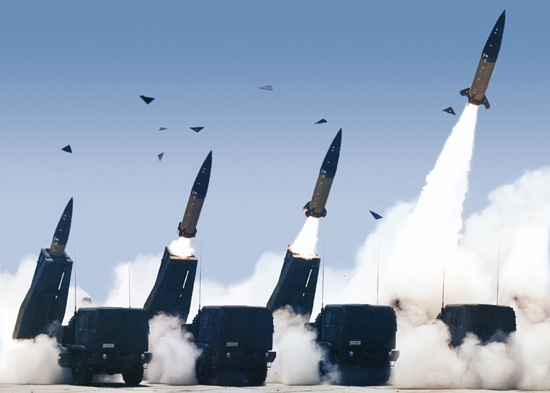
Today brings yet another announcement of more U.S. troops to Iraq. This time 600 are being sent as logistics support, advisers, and enablers (that term, “enabler,” is fuzzy indeed: enabler of what? More failure?). That brings the number of U.S. troops in Iraq to more than 5200, but of course this figure seriously under-represents the American presence in the region. Nowadays, most “troops” are provided by private contractors, and many of these are U.S. military veterans who discovered they could make a lot more money wearing mufti than in Uncle Sam’s uniforms. At the same time, the U.S. continues to provide heavy-duty weaponry to the Iraqi military, including Apache attack helicopters and the HIMARS rocket system. All of this is intended to help the Iraqi military retake the city of Mosul.
That the U.S. is yet again providing more troops as well as heavy weapons as “force multipliers” highlights the failure of U.S. military efforts to “stand up” an effective Iraqi military. The enemy, after all, has no Apache helicopters, no HIMARS system, and no U.S. advisers, although we certainly “enable” them with all the U.S. weaponry they’ve been able to capture or steal. Despite a lack of U.S. military training and aid, ISIS and crew have proven to be remarkably resilient. What gives?
Two years ago, I wrote an article at TomDispatch.com on “America’s Hollow Foreign Legions.” Back then, I said this:
Military training, no matter how intensive, and weaponry, no matter how sophisticated and powerful, is no substitute for belief in a cause. Such belief nurtures cohesion and feeds fighting spirit. ISIS has fought with conviction. The expensively trained and equipped Iraqi army hasn’t. The latter lacks a compelling cause held in common. This is not to suggest that ISIS has a cause that’s pure or just. Indeed, it appears to be a complex mélange of religious fundamentalism, sectarian revenge, political ambition, and old-fashioned opportunism (including loot, plain and simple). But so far the combination has proven compelling to its fighters, while Iraq’s security forces appear centered on little more than self-preservation.
Despite an ongoing record of failure, pulling out of Iraq is never an option that’s considered by the Pentagon. The only option our leaders know is more: more troops, more weapons, more money. As I wrote for TomDispatch back in October 2014:
pulling out is never an option, even though it would remove the “American Satan” card from the IS propaganda deck. To pull out means to leave behind much bloodshed and many grim acts. Harsh, I know, but is it any harsher than incessant American-led bombing, the commitment of more American “advisers” and money and weapons, and yet more American generals posturing as the conductors of Iraqi affairs? With, of course, the usual results.
Here we are, two years later, and nothing has changed. The war song remains the same, as discordant as ever, with a refrain as simple as it is harsh: putting out the fire with gasoline.
My parents taught me a lot of common sense sayings. You’ve probably heard this one: mind your own business, or MYOB. Most people have enough problems of their own; it’s not a good idea to compound one’s problems by messing around with other people’s lives.
What’s common sense for individuals is also common sense for nations. Think of the USA. We’ve got plenty of problems: crumbling infrastructure, inefficient and inadequate health care, too many people in too many prisons, social divides based on race and sex and class, drug and alcohol abuse, not enough decent-paying jobs, huge budgetary deficits, the list goes on. Yet instead of looking inwards to address our problems, too often we look outwards and interfere in the lives of others. How can we solve other people’s problems when we can’t solve our own?
Consider our nation’s foreign policy, which is basically driven by our military. We have a global array of military bases, somewhere around 700. We spend roughly $700 billion a year on national “defense” and wars, ensuring that we have “global reach, global power.” To what end? Our nation’s first president, George Washington, famously warned us to avoid foreign entanglements. The nation’s great experiment in republican democracy, Washington knew, could easily be compromised by unwise alliances and costly wars.
This is not an argument for isolationism. The USA, involved as it is in the global economy, could never be isolationist. With all those military bases, and all those U.S. military units deployed around the world, we could never turn completely inwards, pretending as if the rest of the world didn’t exist.
No – not isolationism. Rather a policy of MYOB. Don’t intervene when it’s not our business. And especially don’t intervene using the U.S. military. Why? Because U.S. troops are not charitable or social workers.
The U.S. military is supposed to be for national defense. It’s not an international charity. Even military aid is somewhat questionable. And if you profit from it, as in weapons sales, it smacks of mercenary motives.
As a good friend of mine put it:
I have become rather isolationist myself in my old age. The way I see it, we have the natural resources and (hopefully) the intellectual capital to be largely self-sufficient. We should enter the international marketplace as a self-reliant vendor of goods and services, ready to trade fairly with those who are of a similar mind. The rest can pound sand (no pun intended). Charity begins at home, and we should know by now that our ideology, while “ideal” for America, is not deployable or even beneficial to other countries steeped in ancient cultures of a different nature.
My friend then added the following caveat:
The remaining challenge is how you protect basic human rights, where you can. That is something I feel we have an obligation to attempt to do, but don’t know how to do so without crossing other lines. Perhaps that is how Mother Teresa became St. Teresa of Calcutta.
That’s an excellent question. Again, my response is that U.S. troops are not social workers. Charity and social work is best left to people like Saint (Mother) Teresa. Soldiers may be necessary to protect aid convoys and the like, but military intervention in the name of humanitarianism often ends in disaster, e.g. Somalia. And of course “humanitarian” motives are often used as a cloak to disguise other, far less noble, designs.
Again, the U.S. military is never going to be a do-nothing, isolationist, military. The USA itself will never return to isolationism. What we need to do is to recognize our limitations, realize that other countries and peoples often don’t want our help, or that they’d be better off without our often heavy-handed approach when we do intervene.
We need, in short, to take care of our own business here in the USA, and to let other peoples and nations take care of theirs. Listen to my parents, America: MYOB.
My dad in the Civilian Conservation Corps in Oregon, c.1937
W.J. Astore
America. Land of the free, home of the brave. Right? Peter Van Buren, who spent a career at the State Department, has a great new article at TomDispatch.com that highlights the way in which America has changed since the 9/11 attacks. In sum: too many wars, too much security and surveillance, and far too much fear. One passage in Van Buren’s article especially resonated with me:
Her [Van Buren’s daughter] adult life has been marked by constant war, so much so that “defeating the terrorists” is little more than a set phrase she rolls her eyes at. It’s a generational thing that’s too damn normal, like Depression-era kids still saving aluminum foil and paper bags in the basement after decades of prosperity.
Van Buren’s reference to Depression-era kids: Well, that was my dad. Born in 1917, he endured the Great Depression in a fatherless family. He really wasn’t certain where his next meal was coming from. Decades later, he still saved everything: plastic bags, twist ties, newspapers, old vacuums and toasters and other appliances (good for spare parts!), scrap wood, and so on. He wasn’t a hoarder per se; he just couldn’t throw away something that he might need if the times grew grim again.
My Dad would cook and eat broccoli rabe greens, then drink the green juice from the cooking. “Puts lead in your pencil,” he’d say. When he ate corn on the cob, there was nothing left on the cob when he was through. He stripped it bare like those crows I watched as a kid on Saturday morning cartoons.
He came of age in a time of want and later served in an armored division in World War II. My dad’s generation knew, like FDR knew, that the only thing they truly had to fear was fear itself. He became hardened to it, but the Depression indelibly marked him as well.
How is today’s generation being marked? Compared to the Great Depression, these are times of plenty. Few Americans are starving. The new normal for this generation is living in fear. Being surrounded by security guards and surveillance devices. Being immersed in celebrations of “patriotism” that involve steroidal flags and deadly military weaponry. Hearing about distant wars fought largely by the children of the working classes.
Looking overseas, they see an American foreign policy defined by perpetual war and an economy driven by perpetual weapons sales. Domestically, they see penury for social programs and profligacy for the national security state.
Is it any wonder that so many millennials seem detached or disenchanted or even defeated? They sense that America has changed, that the focus has shifted, that the American dream has darkened, that America the home of the brave has become the land of the fearful.
Fear is the mind-killer, to cite Frank Herbert. My father’s generation knew this and overcame it. Yet today our leaders and the media seek to generate and exploit fear. America has turned to the Dark Side, giving in to anger, fear, aggression. Just look at our two major party candidates for the presidency.






 Bracing Views