If We Lose Afghanistan, You’re to Blame

W.J. Astore

In my CNN news feed for today, I came across a warning from Army General Austin Scott Miller about Taliban advances in Afghanistan as U.S. troop withdrawals proceed. Conditions are deteriorating (not for the Taliban, obviously) and CNN cautioned that the Biden administration has yet to put together a plan to pursue terrorists in Afghanistan after the troop pullout is completed.

And I thought to myself: yet more evidence of the U.S. military covering its collective ass, for when the Taliban does take over, which it has been doing over the last decade, America’s generals can say, See, we told you so. We told you not to pullout too quickly. We told you this would happen, despite all those hard-fought gains we’d secured (always “fragile” and “reversible,” though, in the words of General David Petraeus). So when the “loss” does come (Afghanistan was never ours to “win” to begin with), it’ll be Biden’s fault, not ours.

In short, if we lose Afghanistan, we in the military are not to blame. You’re to blame.

Of course, this is patently ridiculous for so many reasons. I’ve written a lot about the Afghan war, and read more, so in a nutshell here’s why General Miller and Company are full of it:

  1. The U.S. military had nearly 20 years and billions and billions in resources to train, equip, and field an Afghan military, yet all those efforts gained little.
  2. The U.S. military had nearly 20 years and a trillion dollars in resources yet failed to defeat the Taliban.
  3. Before Biden ordered the troop pullout, the Taliban had already secured most of the country. This was also true when Trump as president considered withdrawing but was talked out of it by his generals.

As the saying goes in Afghanistan, the Americans have the fancy watches but the Afghan people have the time. Afghanistan never was America’s to win. And with respect to terrorism, the presence of U.S. and allied troops there only served to exacerbate the conflict. More and more military hammer blows only shattered the country further, causing more devastation, more desperation, and more extremism. The U.S. military seemed to specialize in killing the second- or third-ranked “terrorist” leader, over and over again, only to see a generally younger, more extreme leader rise to take his place. It was a terrific tactic for perpetual war, but it was hardly one suited to producing victory, whatever that might look like.

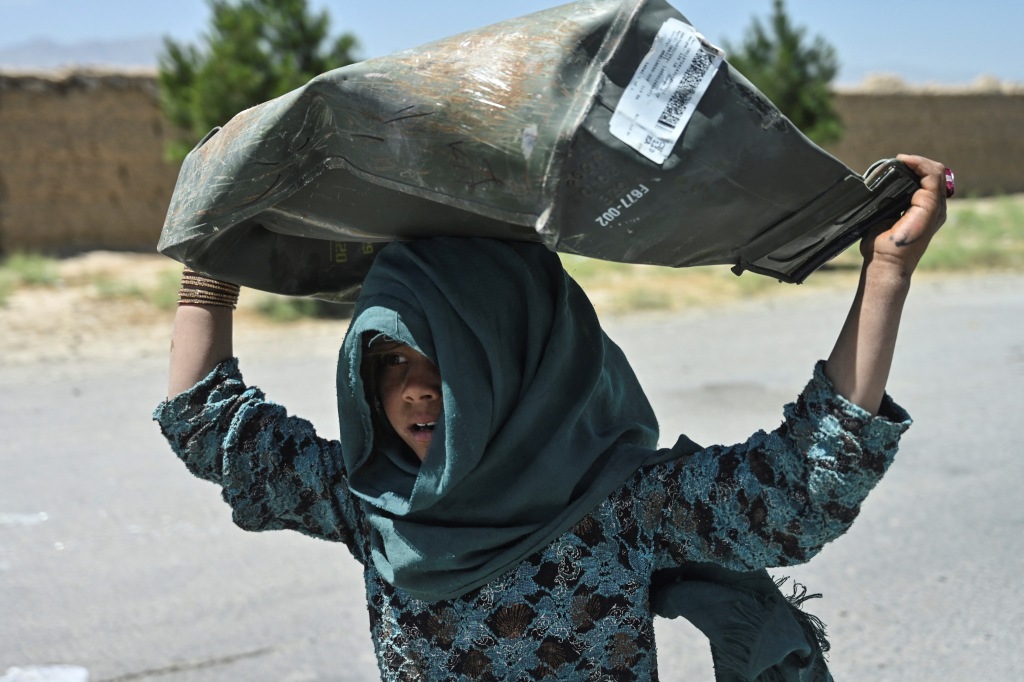
So American troops are leaving places like Bagram like thieves in the night, leaving behind lots of junk and a legacy of violence and destruction. If one photo can serve to sum up our withdrawal, consider this one of an Afghan girl at work carrying scrap metal (Made in USA!) for money:

In this picture taken on June 17, 2021, a girl carries a metal box she collected from a junkyard near the Bagram Air Base in Bagram. – The Pentagon is evacuating Bagram airbase as part of its plan to withdraw all forces by this year’s 20th anniversary of the September 11 attacks on the US, taking military gear home or given to Afghan security forces, but tons of civilian equipment must be left behind. (Photo by Adek BERRY / AFP) / TO GO WITH ‘Afghanistan-USA-conflict-Bagram’ FOCUS by Anne CHAON and Mushtaq MOJADDIDI

Well, that makes me proud to be an American.

Update (7/9/21):

Biden’s speech yesterday on Afghanistan was the usual claptrap. He claimed the U.S. didn’t go to Afghanistan to nation-build, even though the Afghan surge was all about defeating the Taliban while installing a “government in a box” for the Afghan people. All that effort by so many agencies to create an Afghan justice system, security forces, and so on so as to create the fundamentals of a government — all forgotten now because they failed. Meanwhile, the Afghan forces the U.S. military “trained” are folding quickly, flooding Afghanistan with even more weaponry.

I got this in my news feed from the New York Times: 

In Forceful Defense of Afghan Withdrawal, Biden Says U.S. Achieved Its Objectives

By Michael D. Shear, David E. Sanger and Thomas Gibbons-Neff
The president insisted that the United States had done more than enough to empower the Afghan police and military to secure the future of their people.

Look at the way this is structured. First the lie that we achieved our objectives. Then the idea that the way to “secure the future” is to create strong police and military forces. That is surely an idea that’s made in militarist America — that you secure the future through strong police and military forces. It’s the very opposite of what a democratic society would argue. But it is the approach of an authoritarian empire.

America Doesn’t Have A Foreign Policy, It Has A Business Plan

Business as usual

W.J. Astore

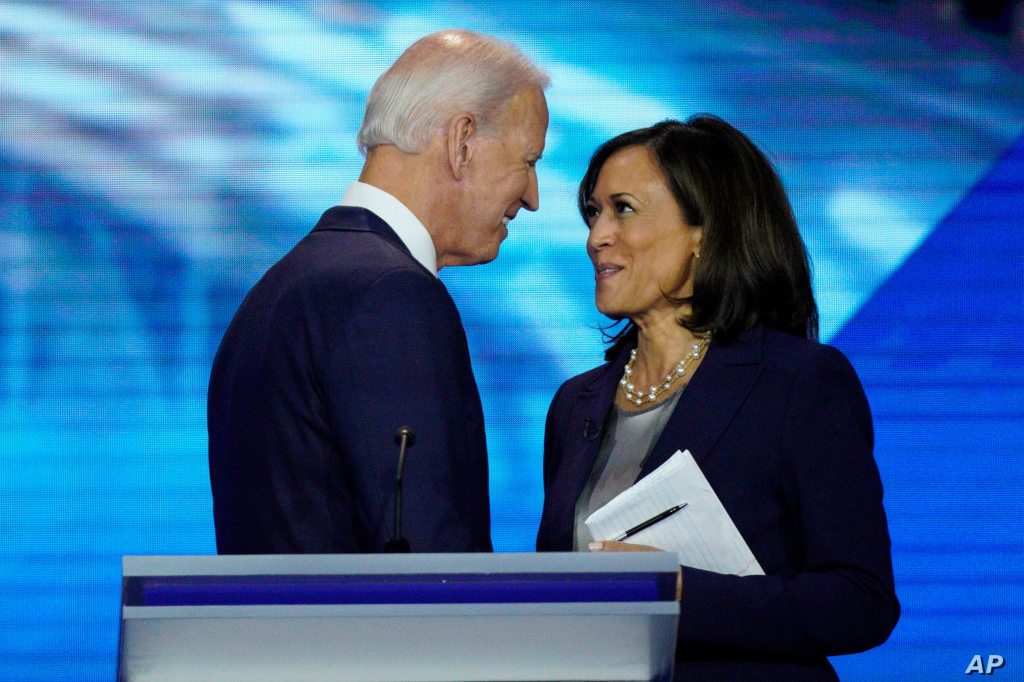
America doesn’t have a foreign policy, it has a business plan, and it’s business as usual in the Biden administration. Joe Biden promised his donors that nothing would fundamentally change in his administration. Kamala Harris said her agenda wasn’t about substantive change. So what we’re getting under the Biden/Harris team is eminently predictable:

  1. More blank checks for Israel, and no recognition of any rights for Palestinians.
  2. A revival of the old Cold War, with China as the leading “threat” but with Russia not forgotten.
  3. Politics subordinated to the military, rather than the military in service of political aims. In brief, military dominance is America’s foreign policy.
  4. Related to (1-3) is dominance of the world’s trade in weapons. The State Department has become a tiny branch of the Pentagon and the military-industrial complex. It’s all about closing arms deals, moving hardware, selling weaponry, making a buck.
  5. Naturally, one of Biden’s first acts as president was to bomb a foreign country, in this case Syria. So presidential!

In Joe Biden, America has a fading and flailing man to lead a fading and flailing empire. In Kamala Harris, America has an example of old wine in new packaging. She’s a woman, she’s Black, she’s South Asian — and she thinks like Hillary Clinton and Henry Kissinger.

Joined at the hip

Remember when Joe Biden said he’d be all about diplomacy? That the power of America’s example would rule over the example of our power? Nice words, but that’s all they’ve been so far. Words.

Two examples where Biden has appeared to offer meaningful change are with Afghanistan and Yemen. With Afghanistan, Biden has promised a complete military withdrawal by 9/11/2021. But does this apply only to combat troops while excluding mercenaries, the CIA, special forces “trainers,” and the like? It’s not yet clear. Plus anything can happen between now and 9/11 for Biden to switch gears and keep some combat troops in place.

With Yemen, Biden made a point about excluding offensive arms sales to Saudi Arabia while still allowing defensive ones. Almost any weapon can be labeled as defensive in nature, so it’s doubtful whether Saudi operations in Yemen will be impacted at all by Biden’s weasel-word policies.

The Biden/Harris foreign policy, such as it is, is retrograde. It’s a return to the Cold War, with an emphasis on new nuclear weapons and larger Pentagon budgets. It’s about global dominance while America at home burns. It’s foolish and stupid yet it will make a few people richer for a few more business cycles.

And thus it’s business as usual in Washington, which is exactly what Biden/Harris were hired for.

Guns and Money!

W.J. Astore

Remember in the 1930s how Americans referred to arms dealers, especially those who profited from war, as “merchants of death”? Yes, that was indeed a long time ago in a galaxy far far away. Nowadays, it’s weapons ‘r’ us, and America’s leading sounds of freedom are blam-blam-blam and ka-ching ka-ching ka-ching. Cash registers for weapons makers are truly ka-chinging wildly as America continues to dominate the global trade in war weapons, notes William Hartung at TomDispatch.com. Hartung’s title, “Selling Death,” puts it succinctly. Here’s an excerpt:

When it comes to trade in the tools of death and destruction, no one tops the United States of America.

In April of this year, the Stockholm International Peace Research Institute (SIPRI) published its annual analysis of trends in global arms sales and the winner — as always — was the U.S. of A. Between 2016 and 2020, this country accounted for 37% of total international weapons deliveries, nearly twice the level of its closest rival, Russia, and more than six times that of Washington’s threat du jour, China. 

Sadly, this was no surprise to arms-trade analysts.  The U.S. has held that top spot for 28 of the past 30 years, posting massive sales numbers regardless of which party held power in the White House or Congress.  This is, of course, the definition of good news for weapons contractors like Boeing, Raytheon, and Lockheed Martin, even if it’s bad news for so many of the rest of us, especially those who suffer from the use of those arms by militaries in places like Saudi Arabia, Egypt, Israel, the Philippines, and the United Arab Emirates.  The recent bombing and leveling of Gaza by the U.S.-financed and supplied Israeli military is just the latest example of the devastating toll exacted by American weapons transfers in these years.

When it comes to weapons sales, America truly is Number One! Which, in that faraway galaxy ,was once nothing to celebrate. In fact, it was something to deplore and denounce.

Why is this? Christian Sorensen at Consortium News has some answers. In a five-part series, he’s tackling the military-industrial-congressional complex and detailing its reach and power across American society. In “A People’s Guide to the War Industry,” Sorensen has this to say about America’s “solutions”-based war industry:

War corporations market their goods and services as “solutions.” A Raytheon executive, John Harris, explained to the Defense & Aerospace Report in 2018 that engaging “with senior members of government” is just “providing solutions to our customers,” providing “integrated solutions to meet our customers’ needs,” and even “figuring out how we can solve our customers’ problems using a dispassionate system approach.”

The solutions trick works well when selling to the U.S. military. For example, Booz Allen Hamilton offers digital solutions, CACI offers information solutions, and Leidos offers innovative solutions. Through its inherently harmful, anti-democratic activities, the war industry helps create the miserable conditions for which it then offers “solutions,” of course without ever taking responsibility for the dismal state of affairs (i.e. nonstop war) that it helped create.

“Providing solutions” sounds prettier and more generous than “making money off death and destruction.” MIC officials also regularly couch Washington’s imperialism, weapon sales, and war-first foreign policy as giving the troops the “tools they need.” A similar phrase (“We’ve listened to the warfighter”) is utilized when selling goods and services, particularly upgrades and technological insertions.

I’d add that, not only do war corporations market “solutions” to the warfighter, but the Pentagon sells these to the American people as “investments” in peace.

And who can be against “solutions” and “investments”?

I had the pleasure to be at a Warren Zevon concert in the early 1980s when he sang one of his signature songs, “Lawyers, Guns and Money.” How right he was! Between a rock and a hard place, America knows how to send lawyers, guns, and money.

I urge you to read Hartung and Sorensen and then reflect on the words of MLK about a nation that spends so much on weaponry and exports so much violence as one that is as a result approaching spiritual death.

Atlanta, Georgia, USA — Martin Luther King Jr. listens at a meeting of the SCLC, the Southern Christian Leadership Conference, at a restaurant in Atlanta. The SCLC is a civil rights organization formed by Martin Luther King after the success of the Montgomery bus boycott. — Image by © Flip Schulke/CORBIS

The Never-Ending Afghan War

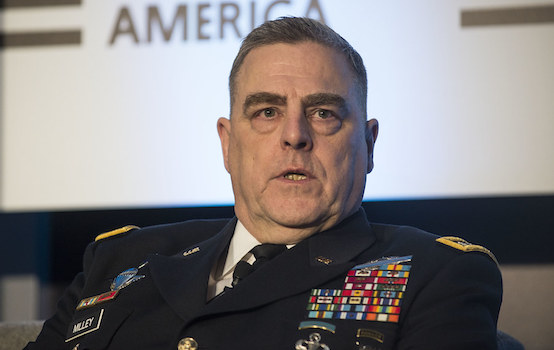
General Mark Milley. So many ribbons, so few victories (Gabriella Demczuk/New America)

Tom Engelhardt. Introduction by W.J. Astore.

Ever since that fateful day of 9/11/2001, Americans have been trying to process what can only be termed a colossal defeat. Showing our usual capacity for denial, we’ve rebranded it as a day for patriotism. We built the Freedom Tower, exactly 1776 feet high, on the ruins of the Twin Towers. We “got” Osama bin Laden. Yet the first victims of our collective rage, the Taliban in Afghanistan, have somehow emerged triumphant in a long destructive war against U.S. and NATO forces.

With his usual powerful prose, careful research, and keen eye for telling details, Tom Engelhardt has written a compelling introduction to Rajan Menon’s latest article on the Afghan War. It’s reposted here with Tom’s permission. W.J. Astore

It started with three air strikes on September 11, 2001. The fourth plane, heading perhaps for the Capitol (a building that wouldn’t be targeted again until last January 6th), ended up in a field in Pennsylvania. Those three strikes led to an American invasion of Afghanistan, beginning this country’s second war there in the last half-century. Almost 20 years later, according to the New York Times, there have been more than 13,000 U.S. air strikes in Afghanistan. Call that payback after a fashion. There’s only one problem: the greatest military on the planet, with a budget larger than that of the next 10 countries combined, has visibly lost its war there and is now in full-scale retreat. It may not be withdrawing the last of its forces on May 1st, as the Trump administration had agreed to do, but despite the pressure of the American military high command, President Biden “overrode the brass” and announced that every last American soldier would be gone by the 20th anniversary of those first airstrikes against the Pentagon and the World Trade Center.

At this late date, consider it grimly fascinating that the generals who all those years kept claiming that “corners” were being turned and “progress” made, that we were “on the road to winning” in Afghanistan, as the present Chairman of the Joint Chiefs Mark Milley insisted back in 2013, simply can’t let go of one of their great failures and move on. Under the circumstances, don’t for a second assume that the American war in Afghanistan is truly over. For one thing, the Taliban have not yet agreed to the new withdrawal date, as they did to the May 1st one. Instead, some of its commanders are promising a “nightmare” for U.S. troops in the months to come. Were they, for instance, to attack an air base and kill some American soldiers, who knows what the reaction here might be?

In addition, the Pentagon high command and this country’s intelligence agencies are still planning for possibly making war on Afghanistan from a distance in order to “prevent the country from again becoming a terrorist base.” As Eric Schmitt and Helene Cooper of the New York Times reported recently, “Planners at the military’s Central Command in Tampa, Fla., and Joint Staff in Washington have been developing options to offset the loss of American combat boots on the ground.”

In other words, the American war in Afghanistan may be ending but, as with so much else about that endless experience, even the finale is still up for grabs. In that context, consider the thoughts of TomDispatch regular Rajan Menon on what has, without any doubt, been the American war from hell of this century. Tom

Please read Rajan Menon’s latest article at TomDispatch.com.

Monday Military Musings

W.J. Astore

1. Recently I came across a reference to the U.S. military complaining that it never fights with a “home field” advantage. That the fight is always “away,” in sports speak, on the other guy’s field. And the gist of the comment was that the U.S. military must always be prepared to fight at a disadvantage. It seemingly never occurs to the decisionmakers that maybe, just maybe, the U.S. doesn’t have to fight on the other guy’s field. Maybe, just maybe, Vietnam was a bad idea. Iraq was a bad idea. Afghanistan was and remains a bad idea. China in the future would be a very, very, bad idea. And so on.

Or maybe, just maybe, the Pentagon and America’s generals are just too vainglorious in identifying the entire world as their home court?

2. Surprise! Joe Biden’s Pentagon budget is basically the same as Trump’s with a few extra billion thrown in for good measure. So much for reforming “defense” spending in any meaningful way.

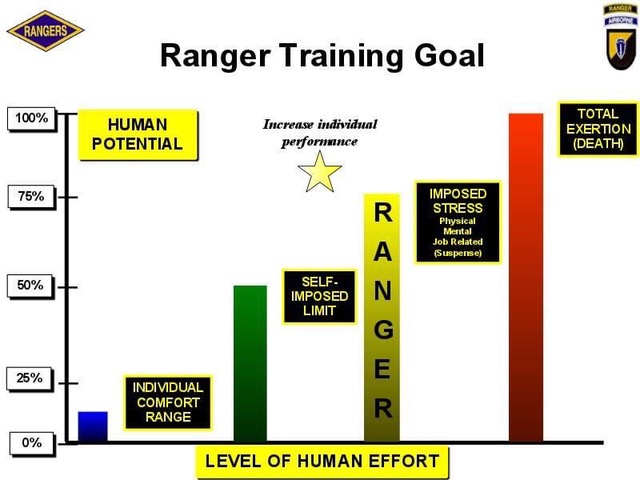
3. The U.S.. military continues to define exertion (and merit) mainly in physical terms. Consider this chart sent along by a friend:

As my friend amusingly put it, “If I read this chart correctly, humans reach their full potential only at the moment of death.”

I wrote back to him: Why is exertion in the military always physical? Maybe we should be thinking harder too? It’s fascinating this devotion to physical strength and fitness when modern weaponry is truly the great equalizer.  If I can sit in an air-conditioned trailer in Nevada and smite evil-doers in Afghanistan via a drone strike, should I be kicked out if I fail to do 50 pushups or run the obstacle course?

Mental fitness is rarely considered in the U.S. military except in the sense of weeding out the mentally ill or those who can’t conform to military discipline.

Even military promotion seems driven more by brawn than brains.  If I run a sub-3 hour marathon, I bet the OPR (officer proficiency report) bullet would be far more favorable than if I wrote an article for Armed Forces Journal.

As another friend of mine, the distinguished military historian Dennis Showalter, said to me: Some flab around the waistline is preferable to flabby thought processes. Just think here of David Petraeus and Stanley McChrystal, both celebrated in the U.S. media as running and exercise enthusiasts.

5. To come back to the subject of “home field” advantage, it’s precisely because we never have that that U.S. troops have to wear heavy body armor and carry all kinds of gear with them. Whereas the “enemy,” whether in Vietnam, Afghanistan, or Iraq, is at “home” and can wear street/farm clothes and carry a much lighter load, e.g. a rifle, some ammo, some rations.

The result is that U.S. troops often look like the imperial stormtroopers of “Star Wars” who are always bungling and losing to the lighter-armed rebel alliance.

You do need to be in decent physical shape to carry so much armor and so much weaponry and gear into hostile and foreign lands. But, maybe instead of turning every soldier into Rambo, we should find smart ways to advance our policies without having to fight at all?

It certainly is smarter than a bunch of Army Rangers driving themselves to the brink of death in the cause of maximizing their “human potential.”

$6 Trillion Down the Drain

W.J. Astore

America recently marked the 18th anniversary of the Iraq War by basically ignoring it. The 20th anniversary of the Afghan War approaches, and it appears we’ll get there since President Biden is saying U.S. forces can’t leave until this November at the earliest. Apparently, our withdrawal of troops must be “responsible” and based on ever-changing benchmarks. Leaving aside the harrowing human cost, these calamitous wars have cost the American taxpayer at least $6 trillion, yet they go on and on.

One person who’s learned a lot from these wars is Andrew Bacevich, a retired U.S. Army colonel who runs the Quincy Institute for Responsible Statecraft. In his latest article for TomDispatch.com, Bacevich had this to say about America’s seemingly unending pursuit of peace through war:

The longest war in U.S. history [the Afghan War] should by now have led Americans to reflect on the consequences that stem from succumbing to imperial temptations in a world where empire has long since become obsolete. Some might insist that present-day Americans have imbibed that lesson. In Washington, hawks appear chastened, with few calling for President Biden to dispatch U.S. troops to Yemen or Myanmar or even Venezuela, our oil-rich “neighbor,” to put things right. For now, the nation’s appetite for military intervention abroad appears to be sated.

But mark me down as skeptical. Only when Americans openly acknowledge their imperial transgressions will genuine repentance become possible. And only with repentance will avoiding further occasions to sin become a habit. In other words, only when Americans call imperialism by its name will vows of “never again” deserve to be taken seriously.

Bacevich is right to be skeptical. The prevailing narrative in the USA still rejects the notion of imperial wars. America’s wars are always sold as defensive. Put simply, we allegedly fight “them” over there so we won’t have to fight them over here. The Afghan War is still being sold as preventing terrorist attacks on America. The Iraq War was sold as preventing Saddam Hussein from using his non-existent weapons of mass destruction against us. In short, Americans are routinely sold a false bill of goods, and the price tag attached, $6 trillion and rising, again leaving aside the human cost, is truly prodigal to behold.

I urge you to read all of Bacevich’s article here. And I urge all Americans to think about our leaders’ imperial ambitions and their horrendous costs. Like the Romans, we are too fond of creating deserts with our weaponry and calling it “peace.” We can and must open our eyes and do better.

War is not pretty, whether in Iraq or Afghanistan or Syria or Anywhere

Gavin Versus Ricks: Why the U.S. Military Keeps Flailing and Failing

By Daniel N. White. Introduction by W.J. Astore.

Why has the U.S. military failed so consistently since World War II?  A popular thesis advanced most notably by Tom Ricks is that today’s military leaders simply aren’t called on the carpet and dismissed for poor performance as in the “greatest generation” era.  But is it that simple?  Should we simply stop coddling generals and cashier a few to encourage the others?  Dan White begs to differ, turning to the writings of two generals, James Gavin and Robin Olds, for support.  White persuasively argues that more firings and ostensibly tougher generals are not necessarily the answer, not when America’s wars are so poorly defined and essentially unwinnable to begin with.  So why does the U.S. military both acquiesce to and persist in waging unwinnable wars for unattainable objectives?  And what does that tell us about America’s approach to and understanding of war?  Read on!  W.J. Astore

A Flailing and Failing Military Has Forgotten the Fundamental Tenets of War 

Daniel N. White 

Tom Ricks, the Washington Post military affairs correspondent, argued in his book The Generals that US military failures in our ongoing and recently past wars are due to a reluctance to relieve commanders for cause.  Ricks tells of how in World War II numerous mid-level and senior officers were relieved for cause—nonperformance of their units on the battlefield.  Under-performing units turned around (every time, Mr. Ricks?) with new commanders and relieved commanders were given second chances that they often succeeded at.  Ricks argues that despite the obvious military failure in our current military ventures, no general officer has yet to be relieved for cause.  According to him, this sea-change in US military policy and practice is what now ails us. 

Ricks, however, fails to look at the overall history of relieving officers in the US military in wartime; thus his conclusions are suspect.  America’s current military failures have little to do with a failure to relieve officers for cause during wartime.  Ricks, like so much of this country’s population at large, its political and media elites in particular, looks no further back in our history than to World War II.  The American obsession with the “good war” fought by the “greatest generation” is a blinding defect that will ultimately kill many more Americans unless we wise up soon. 

Consider World War I, for example.  The US Army in the First World War generally didn’t perform very well on the battlefield.  Yet to my knowledge no studies have been done that affirm that relieving officers for cause improved US battlefield performance.   

Consider the Korean War as well.  The Army performed poorly in the opening stages of the war and was beaten again after the Inchon turnaround at Chosin Reservoir, after which General Matthew Ridgway turned things around and the US Army became a capable fighting force again.  Anyone who wants to argue about how relieving officers for cause is the key to effective performance on the battlefield needs to look at the US Army and its relief of officers in World War I and Korea.  Ricks doesn’t. 

The Retreat from Chosin Reservoir, Korea

Now let’s consider the Vietnam War.  The US Army officer corps was riddled with ticket-punching and widespread personal and professional dishonesty and a wide range of other vices during that war, yet it still managed to relieve officers in the field for cause.  The 1st Infantry Division regularly relieved officers for cause, while other divisions rarely used the practice.  Was there any real difference in the field performance between the two types of divisions?  Ricks doesn’t say. 

A better argument to be made against Ricks’ premise is from General James Gavin, in his war memoirs, On to Berlin (1978).  Gavin and the elite 82nd Airborne Division were sent to the Battle of the Bulge (1944), where they fought alongside the 7th Armored and the 106th Infantry Divisions.  The 7th was an experienced unit whose performance in fighting while badly outnumbered in the first days of the battle is now generally considered an outstanding example of defensive fighting against odds.  The 106th was a green division whose performance Gavin considered as good as could be expected under the circumstances, and whose commanding general gets several favorable mentions from Gavin for his performance in those most difficult circumstances of a green unit being attacked by superior forces. 

These two units led the US defense in the key defensive battle of St. Vith, a battle that didn’t get the press that its less important crossroads battle of Bastogne got, despite its larger importance.  Bernard Montgomery said of these two units’ performance, as they withdrew from their defensive positions they had held for the first week of the battle to new ones further back: “They can come back with all honour.  They come back to the more secure positions.  They put up a wonderful show.”  Gavin quotes the official Army history on Montgomery’s comments on two retreating US Army divisions: “Montgomery showed the ability to honor the fighting men which had endeared him to the hearts of the Desert Rats in North Africa.” 

Gavin further tells of how the commanders of both of these divisions were relieved once they finished their withdrawal to their new positions.  In the case of the CG of the 7th Armored, Gen. Robert Hasbrouck, the orders for his relief were sent at 6:25 on the morning of Dec. 22nd, while the countermanding orders, from the same Corps Commander, were sent to him restoring him to his command of the division the same evening, at 7:00 pm.  The CG of the 106th Inf., Alan W. Jones, wasn’t so lucky and was relieved permanently from his command.   Gavin has this to say about the matter here, and the US Army’s quickness to relieve officers for cause in WWII—which Ricks finds most admirable—here, on p. 258: 

      Once again I was struck by the manner in which the system treats senior officers in combat.  I have a haunting memory that does not diminish with the passage of time of how unfairly and thoughtlessly we treated some of our senior officers.  And I use the word ‘system’ because that is what it is.  It is not a personal matter.  It is something that one has come to expect of senior officers in our Army.  In this case, one is particularly impressed by the manner in which Montgomery congratulated all those who fought at St. Vith for the fine job they did.  We relieved the two senior commanders, although one was restored.  In the situation at Arnhem, in our earlier battle in Holland, the British general lost three-quarters of his command and a battle.  He returned home a hero and was personally decorated by the King. 

There is no doubt that in our system he would have been summarily relieved and sent home in disgrace.  In the case of General Jones and his 106th Division, higher command knew no more about the German plans than he did.  Higher command also knew of his dispositions and approved them.  His leading green regiments were overwhelmed before they could offer much resistance, and there is little that he—or anyone else, for that matter—could have done about it.  Summarily relieving senior officers, it seems to me, makes others pusillanimous and indeed discourages other potential combat leaders from seeking high command.  Again, it is not individuals acting against other individuals—it is not a personal matter–it is the way the system works and is expected to work.  It must be changed.  The shift from peacetime to a war footing and then to battle has a tremendous psychological impact on individuals.  Summarily relieving those who do not appear to measure up in the first shock is not only a luxury that we cannot afford—it is very damaging to the Army as a whole.  We have much to learn from the British about senior command relationships.   

And it is worth bringing to the table peacetime relief of command for cause.  The US military organization most famous for that practice was Strategic Air Command (SAC) in the US Air Force, in its halcyon days of General Curtis LeMay.*  SAC was in its day notorious for a horrific pressure-cooker environment but is nowadays regarded by some as a model of a peacetime military organization at the top of its form—the most highly skilled personnel, running the most technologically advanced weaponry, all ready 24/7/365 at the drop of a hat.


General Curtis LeMay, on a Navy ship, ready to observe a nuclear bomb test

SAC awaits a truly critical historian, but whoever it might be will be wise to heed the comments about SAC made by BGen. Robin Olds, an outstanding fighter pilot, a triple-ace, and wartime military leader and commander, in his posthumous memoirs, Fighter Pilot.  Olds was thoroughly dissatisfied with what he saw of SAC in the late 1970s, and wrote in his memoirs, on p. 372, of SAC’s longstanding history of relieving officers from command slots at the drop of a hat:  

Under their (SAC’s) rules, if a wing commander messed even a little bit he was canned and gone forever, so SAC fostered attitudes about how tough they were.  What they really did was make a bunch of liars out of many wing commanders, DM’s, and DO’s.  Guys at wing level were scared people.  They would lie, cheat, steal, and deny—anything to make themselves look good. 

The net result of this over time is described by Olds on p. 374: 

When LeMay scared the hell out of his people, he made some-thing out of them that I don’t think was in their true nature.  He made them cringe and hide the truth.  He made them say,  

’Yes Sir, Yes Sir,’ becoming chronic liars protecting their own skins…A man like that has to have someone working for him that he can dominate and he is invariably going to pick a lesser individual (for promotion) … a big group of guys were developed into people who were afraid to think for themselves.  They damned near destroyed the air force in the process (emphasis  mine)** 

Gavin and Olds versus Ricks on the merits of the US military’s past quickness to relieve commanders.  The choice is yours.  I’m with Gavin and Olds. 

Ricks and his writings on war and the US military deserve more comment than I want to give them here.  Fundamentally Ricks is a fan of the US military and of things military in general.  A fan isn’t an impartial judge of whatever it is they are a fan of.  That’s simply the nature of fandom.  Perhaps Ricks sees himself as a friend of the US military, but fans aren’t true friends, either. 

The worst sort of fans are accurately described by the athletes themselves as crotch sniffs, and that’s a telling turn of phrase.  Ricks is fundamentally a crotch sniff for the US military.  Journalists have mostly (and editors invariably) been a bunch of crotch sniffs for their own country’s militaries and Ricks is no exception. 

There’s unfortunately nothing new about that situation; it has almost always been the case about military/war journalism ever since newspapers were invented.  Anyone wanting to argue otherwise needs to reread Phillip Knightley’s The First Casualty (1975), 3rd edition in 2004, still the best book on war reportage.  

A complicating factor is that what most Americans know about war and warfare comes via Hollywood, whether they realize it or not—and most Americans lack the self-perception to realize how much Hollywood/ PR they’ve internalized.   An additional compounding factor is that the military is one of those institutions, like the judiciary, that invariably gets a pass from editors from critical analysis, and from probably the same reasons.  Most journalists simply know little of war or law, and when you combine technical ignorance with institutional sacred cowism you get uncritical coverage.  Ricks to his credit isn’t ignorant; he’s knows a fair amount about the US military and military history.  But Ricks’ strong belief in the goodness and efficacy of the US military dooms his writings to hackwork status, much like the rest of his militarily ignorant journalist colleagues’.***    

Ricks deserves credit for trying to come to grips with why the institution he admires so much has failed so badly against weak opponents like the Iraqis and Afghans.  His is an all too typical American attitude, particularly among conservatives, of harkening back to the glory days of World War II, when America seemed completely right and completely omnipotent.  This belief in America’s goodness in those days is dumb and wrong, yet it’s a belief that’s endemic in this country, and one that shows no signs of ever soon diminishing.     

The reasons for America’s recent military failures are more obvious than Ricks wants to acknowledge.  America simply had (and has) no realistic objective for wars whether in Iraq or Afghanistan.  Both wars had lies as their stated rationales, and nobody has yet explained how any sort of good is supposed to come from wars started by and waged on lies.  What is worse, far, far worse than that, is that both wars lacked any coherent political or military objective, at any time before or during their commission,  and if there is a worse crime or sin in the professions of politics or arms than fighting wars without objective I cannot name it.  I defy anyone else to, either. 

The US military has continued both wars in the face of obvious failures to achieve meaningful goals, despite however many times the political leadership here moved the goalposts.  Persons who remember the Vietnam War, or who bothered to learn anything about it beyond the Rambo cartoons, should be noticing more similarities than dissimilarities in our failed efforts then and our failed efforts now. 

Ricks fails to address how (as have likewise, for decades now, most all others in the media, political world, our moral leadership, and intelligentsia), once again, the US military has saluted smartly while participating in wars in distant lands that required more men in the field and a bigger war effort than they knew they were going to get from the home front.  Once again, senior military leaders willingly involved themselves and their organizations in efforts that they knew from the beginning were almost certain to fail.  They fought wars without realistic war objectives and without adequate resources (most especially, support at home).  This is institutional failure at the highest level, a master class in moral cowardice and corruption.  

Sadly, instead of covering this, most media sites post the usual puff pieces about our noble troops as they fight terrorists in the cause of freedom.  Few people have asked the dreaded question of whether and why our military leaders are willingly participating in odious demi-wars staged largely for domestic political reasons.  The sickness and corruption—moral and professional corruption of the worst sort possible—that this question raises is an issue that fans like Ricks simply cannot comprehend. 

Ricks, who is again a reporter with considerable military knowledge, simply misses the target here.  The US military isn’t flailing and failing because it hasn’t fired enough generals: It’s flailing and failing because it engages in wars that are lost causes to begin with, as well as being illegal and immoral to boot.  Ricks is too much of a military fanboy to see this; so too are most Americans, who continue to salute the troops as heroes without ever questioning their actions in the field.  It is all most discouraging. 

Daniel N. White has lived in Austin, Texas, for a lot longer than he originally planned to.  He reads a lot more than we are supposed to, particularly about topics that we really aren’t supposed to worry about.  He works blue-collar for a living–you can be honest doing that–but is somewhat fed up with it right now.  He will gladly respond to all comments that aren’t too insulting or dumb.  He can be reached at Louis_14_le_roi_soleil@hotmail.com.     

*My favorite story about SAC and its willingness to relieve commanders comes from its earlier days when a B-36 Wing Commander was called on the mat by LeMay for a low level of operational readiness of his aircraft.  The Wingco explained that his squadrons at the base had had a rash of bird strike accidents involving buzzards, and these accidents had caused damage to parts of the airframes that were beyond the capabilities of wing maintenance to repair, and that new airframe parts from Convair were necessary to restore safe airworthiness to the airplanes.  The USAF didn’t have these airframe parts in its inventory, and Convair did not have them as spare parts yet, and Convair was unwilling to interrupt its production schedule for new B-36s by pulling the necessary parts off of its assembly lines and shipping them to his squadrons’ repair shops like he’d asked them to.  LeMay listened and said: “I have neither the time nor inclination to distinguish between the unfortunate and the incompetent.  You are relieved.” 

**SAC was the preeminent branch of the US military during its Cold War salad days.  It had more money than God courtesy of a complacent Congress that gave it everything it wanted and then some.  There is of course nothing to show for all this expenditure; such is always the case for military expenditures.  But this line of Olds is as good an epitaph for SAC as an institution as it is ever going to get.  And SAC, as big and significant an American institution as it was in its day, really needs a good historian to look at it with a critical eye, before everyone involved in it is dead.  Most already are. 

***Anyone who thinks I’m being too hard on Ricks needs to go read his account of the Battle of Fallujah in his first book on the Iraq War, Fiasco.  A truly revolting bit of crotch sniffery towards the jarheads.

Playing the Fool in Afghanistan

W.J. Astore

Today, I’d like to revive an article I wrote in July of 2010 about America’s folly in continuing its war in Afghanistan. Here we are, a decade later, and the Biden administration is contemplating continuing that war. Stupidity is obviously unbounded.

Anyway, as Julian Assange rots in prison for the crime of doing journalism, it behooves us to recall that WikiLeaks provided convincing evidence of America’s Afghan folly. Obviously, Assange the messenger must be shot, or at least punished severely for daring to air America’s dirty laundry.

Here’s my post from 2010. Does it make any sense in any universe to keep this going?

What WikiLeaks Reveals: We’re Playing the Fool in Afghanistan

07/27/2010

Perhaps the most predictable, as well as the most maddening, headline to emerge from the latest WikiLeaks controversy is this one from the Washington Post: “WikiLeaks Disclosures Unlikely to Change Course of Afghanistan War.”

Doubtless this “stay the course” approach will be spun as a sign of American resolve and tenacity. Of course, it was Albert Einstein who defined insanity as doing the same thing over and over again and expecting different results.

Naturally, there’ll be some who’ll say that Obama and General Petraeus have new cards up their sleeves, so perhaps they’re not “insane.” But they (and we) sure are looking more and more like fools.

Partly this is because President Obama and his advisors are still looking at Afghanistan as a problem to be solved, a war to be won, a situation to be handled. Or they see it as a high-stakes poker match, a deadly game of raises and bluffs, of gambling at long odds, but a match we can ultimately win as long as we keep playing and pumping in more chips.

But what if Afghanistan is none of these? What if we’re playing the fool?

Recall how proud we were, in the 1980s, at providing arms and aid to the Afghan “freedom fighters” who were then fighting the Soviets. It was the Soviet Union’s own Vietnam, we said, the final nail in the coffin of Soviet communism, and we congratulated ourselves on our own cleverness.

Fast forward two decades, and now we’re the ones bogged down in Afghanistan, yet we still think we can “surge” or escalate or otherwise rescue a faltering and untenable war effort.

Faltering? Untenable? Few people will dispute the following facts, many of which are now further supported by the WikiLeaks documents:

1. We’ve already spent $300 billion on our war in Afghanistan with very little to show for it.

2. Year after year, we’ve been training the Afghan National Army and police, with very little to show for it.

3. We’ve almost completely eliminated Al Qaeda in Afghanistan, the immediate cause of our intervention in 2001, yet we continue to send more troops and more money there.

4. We’ve allied ourselves with a corrupt government and leaders who are enriching themselves at our expense.

5. We pay bribes to protect our convoys, and some of this money ends up in the hands of the Taliban.

6. We’re working with a regional ally, Pakistan, whose interests are often contrary to our own, and yet whose allegiance we attempt to buy with more military aid.

7. In trying to win the hearts and minds of ordinary Afghans, we’ve largely looked the other way with respect to the opium and heroin trade. The result? A drug-based Afghan economy.

8. In fighting an American-style war, we’ve relied on massive firepower, often from the air, that inevitably results in civilian casualties that undermine our counterinsurgency efforts.

9. At a time when we’re still trying to create jobs and pull ourselves out of a Great Recession, we continue to dedicate tens of billions of dollars to a seemingly endless war, with Congress currently preparing to approve yet another $33.5 billion for Afghanistan.

10. While largely ignoring civilian casualties in Afghanistan, we also downplay the cost of constant warfare to our troops, not just those who are killed or wounded in action (horrible as that price is), but to those who are brutalized by war, those whose families are destroyed or damaged by constant deployments, by domestic violence, and by suicides. Yet we reassure ourselves this price is bearable since our troops are “all volunteers.”

These are hard facts, and the WikiLeaks evidence has only made them harder. Only a fool refuses to face facts, and hardheaded Americans are not fools.

Or are we?

When the Wars Come Home

Pro-Trump supporters storm the U.S. Capitol, January 6, 2021 (Photo by Samuel Corum/Getty Images)

W.J. Astore

When I taught the core course in military history at the U.S. Air Force Academy, it focused on “major” wars. A review of my syllabus from 20 years ago confirms that we spent most of our time teaching military cadets about the American Revolutionary War, the U.S. Civil War, World Wars I and II, Korea and the Cold War, and Vietnam. There were special lessons that focused on airpower history and strategic thinkers like Clausewitz and Jomini, but the main focus was on “conventional” wars. I was OK with this, since mastering the course material was my main challenge, not challenging subjects within the course.

An astute student of U.S. military history would quickly note what’s missing. Genocidal wars against Native Americans were rarely mentioned. There were no specific lessons devoted to the Mexican-American War, the Spanish-American War, the Filipino Insurrection, or any of America’s frequent regime-change wars in Latin America. American imperialism wasn’t specifically addressed. Critiques of American imperialism by critics like Mark Twain and General Smedley Butler were rarely (if ever) heard.

What that means is this: America’s young officers go out into the world with little knowledge of America’s military interventions beyond the victories (more or less) in World Wars I and II, stalemate in Korea, and a misbegotten war in Vietnam that America could (and perhaps should) have won with better tactics and/or less civilian interference, or so they are often taught. Small wonder that disasters like Iraq, Afghanistan, Libya, and others occur and persist, though I wouldn’t put the blame for these simply on a lack of critical teaching about America’s various for-profit cock-ups and screw-ups.

This was on my mind as I read Kevin Tillman’s recent article at TomDispatch.com. As Tillman notes, America’s regime-change wars and propensity for foreign coups came home to our own country on January 6th with the storming of the Capitol. That such an action so deeply shocked Americans is a sign of our collective amnesia when it comes to remembering the totality of our military history.

Here’s an except from his article, which I encourage you to read in its entirety at TomDispatch:

Kevin Tillman, Capitol Blowback

Just about everyone was shocked by what happened at the Capitol building on January 6th. But as a former soldier in America’s forever wars, horrifying as the scenes were, I also found what happened strangely familiar, almost inevitable. I thought that, if only we had taken our country’s imperial history seriously, none of us would have found that day either shocking or unprecedented.

Honestly, it could only seem that way if you imagined our domestic politics as completely separate from our foreign policy. But if we’re to learn anything from that maladroit attempt at a government-toppling coup, it should be that they are anything but separate. The question isn’t whether then-President Donald Trump incited the assault on the Capitol — of course he did. It is rather: Since when have we cared if an American president lies to incite an illegal insurrection? In all honesty, our commanders-in-chief have been doing so abroad for generations with complete impunity. It was only a matter of time before the moral rot finally made its way home.

Back in 2007, I actually met Nancy Pelosi whom those insurrectionists were going after — “Tell Pelosi we’re coming for that b**ch. Tell f***ing Pelosi we’re coming for her!” — in that very Capitol building. That day, my family was testifying before the House Committee on Oversight and Reform concerning the U.S. government’s disinformation campaign about how, three years earlier, my brother Pat Tillman had died in Afghanistan (as a result of “friendly,” not enemy, fire). We would testify alongside former soldier Jessica Lynch who had suffered a similar disinformation fate in the wake of a tragic ambush of her convoy in Nasiriyah, Iraq, where soldiers died and she was taken prisoner. After the hearing, we discussed the case with Pelosi, who then took us on a brief personal tour of the halls of the building. Given the circumstances, it was a thoughtful gesture and a humbling experience.

So, it was personally quite unsettling to watch that rabid mob of insurrectionists storm our Capitol, some actively seeking to kill the woman who had walked our family through those same halls, wearing her signature green business suit. To see people desecrating that building over grievances rooted in demonstrable and absurd untruths manufactured by President Trump was both grotesque and shameful.

And yet, however surreal, disappointing, disqualifying, even treasonous that assault and the 57-43 Senate acquittal of the president would be, what took place should, in another sense, not have been a shock to anyone. The idea that January 6th was something new for this country and so a unique affront to the American idea of democracy, not to speak of common decency, was simply wrong. After all, ever since 1945, this country has regularly intervened in elections all over the globe and done far worse as well. What’s disorienting, I suppose, is that this time we did it to ourselves.

Around the Globe, Generation after Generation

My own limited experience with American interventionism involves the occupations of Afghanistan and Iraq. After the September 11th attacks, I enlisted in the U.S. Army with Pat. We would be assigned to the 75th Ranger Regiment and our unit would in March 2003 be sent into Iraq, one of so many tools in the Bush administration’s war of aggression there. We would help remove Iraqi leader Saddam Hussein by force. It was hardly the mission I had in mind when I signed up, but I was naive when it came to foreign policy. Being part of illegal invasions, however, leaves lasting impressions.

That particular intervention in Iraq began with a barrage of administration lies about Saddam’s supposed supply of weapons of mass destruction, his reputed links to al-Qaeda, and the idea that we were liberating the Iraqi people. Some of us actually were assigned to run around Baghdad, “east, west, south, and north somewhat,” looking for those nonexistent weapons of mass destruction. The whole invasion would prove catastrophic, of course, resulting in the destruction of Iraqi society, the deaths of hundreds of thousands of Iraqis and thousands of American soldiers, even as that country’s leadership was removed and its military disbanded (mission accomplished!). Of course, neither President George W. Bush, nor the rest of the top officials of his administration were held responsible for what happened.

So, when I watched the January 6th insurrection unfold, my mind was immediately drawn to the period leading up to the Iraq war — except this time, the drumbeat of lies had to do with massive voter fraud, voting irregularities, “dead voters,” rigged software, and other fabrications. Obviously, the two events were drastically different in scale, complexity, and destructiveness. Still, they seemed to share common fundamental threads.

Examples of American interference in the governance of foreign countries via coups, regime change, and other ploys are commonplaces of our modern history. Among the best known would be the replacing of a number of democratically elected leaders like Iranian Prime Minister Mohammad Mosaddegh with the Shah (1953), Guatemalan President Jacobo Arbenz with Colonel Carlos Castillo Armas (1954), Chilean President Salvador Allende with General Augusto Pinochet (1973), or Honduran President Manuel Zelaya in a U.S.-backed coup (2009). In other words, we’re not talking about a few one-off mistakes or a couple of dumb wars.

In truth, there has been an endless supply of such U.S. interventions around the globe: invasions, military coups, soft coups, economic sanctions, secretly funding candidates of Washington’s choice, the fueling of existing conflicts, you name it and it’s probably happened.

Take for example our neighbors in South America, Central America, and the Caribbean. I honestly don’t know if there is a single nation in Latin America that hasn’t fallen victim to a U.S. intervention of some sort: Argentina (1976), Bolivia (1971), Brazil (1964), Cuba (1961), El Salvador (the 1980s), Grenada (1983), Haiti (2004), Honduras (1980 and 2009), Panama (1989), Paraguay (1962), Peru (1968), Suriname (the 1980s), Uruguay (1973), Venezuela (the present moment). Maybe Costa Rica was spared?

Please read the rest of Kevin Tillman’s article here at TomDispatch.com.

Yet Another Wartime President

Enjoy America’s De-escalatory Bombs!

W.J. Astore

Who was the last U.S. president with a reputation for peace?

By bombing Syria this week, Joe Biden has become yet another “wartime” president. Apparently Iranian-backed militias from Iraq operating inside Syria were the intended target of the bombs. Perhaps as many as 22 “militants” were killed in these attacks. Using language that would make Big Brother blush, the Biden administration claimed the attacks aimed “to de-escalate the overall situation in both Eastern Syria and Iraq.”

I’ve heard of precision bombing, but this is the first time I’ve heard of de-escalatory bombing. Naturally, Congress wasn’t consulted.

Along with this provocative and needless act of aggression, the Biden administration is currently weighing its options in Afghanistan. Three options seem to be on the table: withdrawing all U.S. troops and ending the war; prolonging the war indefinitely; and continued “negotiations” with modest increases of those troops. The last option is considered the sober sensible one by Beltway sages. Complete withdrawal after twenty years of turmoil and death is predictably seen as too risky, whereas a wholehearted commitment to generational war in Afghanistan, a la General Petraeus, is seen as politically unpopular, even if the end result of the sober sensible option is exactly that: more war fought in the (false) name of (eventual) peace.

So, under Joe Biden, we have bombing for de-escalation and more war for peace. Again, Biden deserves praise when he promised that nothing would fundamentally change under his administration.