The last real Democratic President was Jimmy Carter. The last U.S. election offering a real alternative vision was George McGovern versus Richard Nixon in 1972.
Since then, Democratic Presidents like Clinton, Obama, and Biden have been DINOs, or Democrats in name only. In a rare moment of honesty, Obama admitted his administration had echoed the policies of “moderate” Republicans. Friendly to Wall Street, banking interests, corporations, the military-industrial complex, and the usual assortment of oligarchs. Obama’s health care plan was a corporate-friendly sellout that echoed the plan put together by Republicans like Mitt Romney. The DINOs fully support forever war and huge military budgets; Obama was quite happy to admit America had “tortured some folks” and that he’d gotten very good at ordering people to be killed, mainly via assassination by drone. It’s a far cry from Jimmy Carter trying to put human rights at the center of his foreign policy in the late 1970s.
Democrats began to move rightwards after McGovern’s resounding defeat in 1972. They haven’t stopped this rightward drift; indeed, it’s accelerated. The Republicans responded by embracing men like Trump as they found plenty of room even further to the right of the DINOs. America, Gore Vidal once said, basically has one property party with two right wings, and that’s only become truer and more obvious over the last fifty years.
What is to be done? We need viable alternatives, but of course the game is rigged, as Matthew Hoh, principled candidate for the Senate in North Carolina, discovered as Democrats conspired to keep him off the ballot, even though his efforts with the Green Party were more than sufficient to earn him a place on that ballot. Both parties, Democrat and Republican, will do anything to keep their duopoly while also endlessly punching each other. Neither party serves the interests of the people.
Perhaps Caitlin Johnstone can offer some hope, or at least a diagnosis for the right path ahead. Here’s what she had to say in her latest post about how the political system in America is structured and manipulated for the benefits of the powerful:
1. Use narrative manipulation to divide the population into a roughly 50/50 ideological split.
2. Ensure you control both of those factions.
3. Convince everyone that the only reason nothing changes is because their half of the population doesn’t win enough elections.
Everyone’s pulling on a rope that doesn’t lead anywhere and doesn’t do anything, convinced by powerful manipulators that they’re engaged in a life-or-death tug o’ war match of existential importance. Meanwhile the powerful just do as they like, completely indifferent to that spectacle and its back-and-forth exchanges.
A group is artificially split into two sides and told to pull a rope in opposite directions while someone else stands back and shoots them all with a BB gun. When they complain about the welts, they’re told it’s happening because their side isn’t pulling hard enough. But really they’d be getting shot no matter what they did.
This doesn’t mean give up, it just means give up on the fake tug o’ war game. If you’re playing tug o’ war while someone rummages through your handbag looking for cash, the first step to stopping them is putting down the rope and going after them. It’s like if everyone was pushing on a fake fire escape in a burning building: the first step to getting them out of there is showing them that the door is just painted on the wall and doesn’t lead anywhere. That’s not telling them to give up hope, it’s just telling them to give up on an ineffective strategy.
Perhaps Johnstone didn’t go far enough here. Americans go in for assault rifles, not BB guns. But she’s surely right that you’re not going to reform this system from within, i.e. from pulling harder on the Democrat or Republican rope. You need to stop playing an unwinnable game.
Organize. Vote third party when a sane candidate is available. Stop donating to DINOs and their even more dubious Republican cousins. Protest. Tell others. You never know what will be the spark that ignites true and meaningful change.
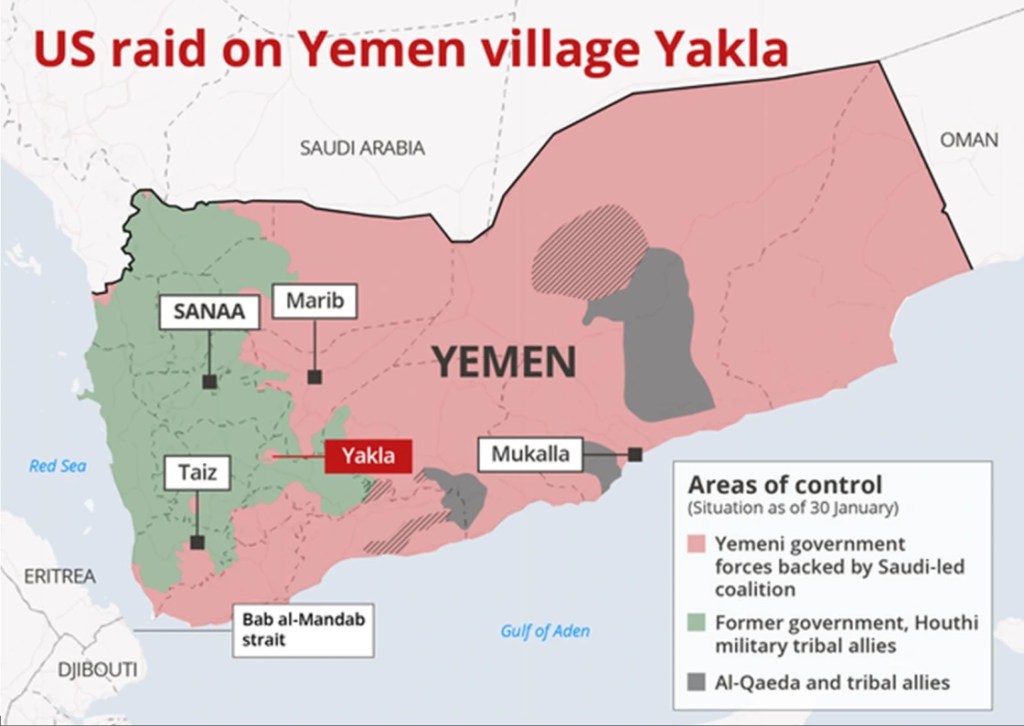
Map of Yemen from 2017 that shows the site of the botched SEAL Team raid at Yakla
W.J. Astore
I haven’t followed the Saudi war in Yemen that closely. But I’d wager most Americans know far less about it than I do. I know the U.S. has been supporting Saudi Arabia in its bloody repression of Iranian-backed Yemeni forces (the Houthis), providing critical resources such as aerial refueling, intelligence sharing, and, most importantly, an endless supply of weaponry. I know this support has been couched as consistent with a “war on terror,” when it’s driven much more by the U.S. need to appease Saudi rulers for economic reasons (primarily the petrodollar and oil exports). I know the Yemeni people have suffered greatly due to famine and diseases exacerbated by constant warfare and economic blockades. I know Joe Biden campaigned against the war and criticized Saudi officials but as president has done nothing to stop it. And I know a bipartisan force in Congress is trying to take steps to end America’s involvement in what essentially constitutes a genocide against the Yemeni people.
Occasionally, Yemen has appeared in my articles here, as with the SEAL Team fiasco launched by President Trump in late January 2017. (One Navy SEAL died in the raid; his father later accused the Trump administration of hiding behind the death of his son instead of admitting the raid had been a murderous failure.) In passing, I’ve mentioned Yemen in a few articles like this one, but again it’s not something I’ve written about in detail. I’ve been focused on the Afghan war, the military-industrial complex, the new Cold War, plans to build a new generation of nuclear weapons, and on and on.
Fortunately, a freelance journalist based in Yemen, Naseh Shaker, contacted me with a few questions that got me thinking a bit more about Yemen and the U.S. government’s role there. His article addresses whether Congress has any chance of invoking the War Powers Act to limit or end America’s involvement in this brutal war, given the reality that President Biden is once again courting and kowtowing to the Saudis. You can read his article here, which includes a few comments by me, but it may be useful to include his original questions to me, and my responses to them. He asked me to keep my responses short, 2-3 sentences, which I did:
Questions by Naseh Shaker
1- Why the US is sanctioning Russia for invading Ukraine but when it comes to the Saudi invasion of Yemen, the US is providing the Saudis with all logistics and weapons as if it is the American war, not the Saudi war?
2- Why Biden doesn’t fulfill his promise to end the war in Yemen?
3- Is invoking the War Powers Resolution (WPR) an attempt from Democrats to cover Biden’s scandal of not ending the war in Yemen as he promised?
4- If WPR is passed, does it mean the US is responsible for Saudi war crimes in Yemen given that it is providing the coalition “intelligence sharing” and “logistical support for offensive Saudi-led coalition strikes”?
Answers by William Astore
Question 1: The US sees Russia as a rival and an enemy. The US sees Saudi Arabia as an ally and a friend. Put differently, the US economy owes much to the petrodollar and the Saudi appetite for expensive American-made weaponry.
Question 2: Because he doesn’t really care about the Yemeni people. He cares about maintaining good relations with the Saudis.
Question 3: Unclear. But I don’t think Democrats consider it a “scandal” that Biden failed to keep his promise. There are many other promises Biden failed to keep, such as a $15 federal minimum wage for Americans, and these failed promises are not treated as “scandals.”
Question 4: The US government refuses to take responsibility for its own war crimes, so it certainly isn’t going to admit to responsibility or culpability for Saudi crimes.
Ignorance is a major enemy in the USA. We owe it to ourselves as citizens (and to what’s left of our democracy) to inform ourselves about what our government is up to, especially when what it’s up to is killing, whether directly or indirectly, untold numbers of people around the world.
The war in Yemen has killed at least 377,000 people. To what end? For what purpose? How is aiding the Saudis in this war remotely related to the defense of our country?
End the killing. End the wars. Let’s do something right for a change.
My esteemed colleague Davout and I have different ways of looking at the Russia-Ukraine War. We thought it would be a worthwhile exercise to share our differing perspectives here, allowing our readers to think over the merits of our approaches and the validity of our conclusions. Davout has framed the questions and made the initial response; I get the last word, so to speak, for each question. Our mutual intent is not to “win” a pseudo-debate but to pose questions and provide answers that inform and stimulate. To that end, here we go.
What caused the Russian invasion of Ukraine?
Davout: Putin’s desire to reestablish Russian hegemony over Eastern Europe and ensure the stability of his autocratic regime has been the main driver of the invasion. In 2005, Putin declared that the collapse of the Soviet Union was “the greatest geopolitical catastrophe of the century.” What was catastrophic about it for Putin? The eastern flank of the former Soviet Union, including Latvia, Lithuania, Estonia, Moldova, and Ukraine shifted from being an appendage of an authoritarian Soviet regime to being a collection of independent democracies or democracies-in-process. Membership in the European Union and in NATO has either been achieved (the Baltic states) or been pursued (Ukraine pursuing both, Moldova pursuing European Union membership only). None of these countries (not to mention the formerly occupied countries of Poland, Hungary, East Germany, Czechoslovakia) singly or together have the capacity or will to invade Russia or otherwise project military power across Russian borders. The real threat to which Putin is responding is the example set by the people of former Soviet territories opting for more democratic, less corrupt regimes and societies. That example endangers his own hold on power and pushes his own society toward historical irrelevance.
Astore: Putin was obviously the prime mover of the invasion. He chose the military option, and he surely believed it would strengthen his authority over a former Soviet republic that was tracking toward joining NATO.
When we speak of causes, however, it’s often wise to take a broad view over a breadth of time. When the Soviet Union collapsed in 1991, NATO’s reason for being ended with it. Nevertheless, NATO persisted, expanding to the very borders of Russia despite assurances to Russian leaders that the alliance would not expand eastwards beyond a newly unified Germany. Russian leaders, including Putin, had issued clear warnings that NATO expansion into Ukraine would constitute a “red line,” the crossing of which would likely lead to a military response. Putin’s decision to invade, therefore, was eminently predictable, thus it was also potentially preventable. The United States, which leads NATO, could have sent a clear signal to Russia that Ukraine should and would remain a neutral buffer state. The US chose not to do so.
One may question the premise of Ukraine as a “more democratic, less corrupt regime.” In Ukraine, corruption is endemic, exacerbated by extensive U.S. meddling, as in the notorious coup of 2014 orchestrated in part by Victoria Nuland, citing the support of then-Vice President Joe Biden. And while it’s important to recognize Russian regional hegemonic ambitions, one should never forget the global hegemonic ambitions of the U.S. empire. In sum, the US has not been an innocent bystander here.
US proxy war or Ukrainian war of independence?
Davout: A proxy war is a conflict instigated by a state in which it does not directly engage in hostilities. This war was a war of choice on the part of Putin. It has had the unintended result of inspiring patriotic resistance (even amongst Russian-speaking Ukrainians who were formerly pro-Russian like the mayor of Odessa). In the lead up to the invasion, the US and its NATO allies attempted to dissuade Putin from invading. In the invasion’s aftermath, they have provided critical arms and support to Ukraine and have sought economically to undermine Russia’s war-making capacities. While current official US policy may be the crippling of Russia’s capacity to engage in another such invasion in the near future, the US did not instigate this war in pursuit of this aim. While US and NATO armaments are a necessary factor in Ukraine’s continued defense against the Russian invasion, it is Ukrainian solidarity and resolve and Russian refusal to end its invasion that keep this war going.
Astore: Clearly, most Ukrainians believe they are fighting for their independence. Ukraine has no desire to become a Putin puppet state. Nor, however, do they wish to become a puppet state to the USA.
Lloyd Austin, the US Secretary of Defense, spoke clearly that weakening Russia was a key goal of this conflict. To that end, the US government, in a rare show of bipartisan unity, provided $54 billion in largely military aid to a Ukrainian military with a yearly budget of $6 billion. Such profligacy is not an example of generosity driven by disinterested ideals. Clearly, the US sees this war as the latest front in a new cold war, a way to stress Russia to the breaking point. As President Biden openly stated, that man (Putin) must go.
So, it’s worse than a proxy war: it’s yet another US regime-change war. The stated goal is to topple Putin and turn Russia into a divided and dysfunctional state, much like it was in the 1990s when Western corporations and financial institutions invaded Russia and exploited it in the name of capitalism and reform.
Are there any legitimate parallels to draw between Putin and Hitler?
Davout: Yes, though the parallels with Hitler are not the same parallels so often drawn to delegitimize non-interventionists as appeasers. Historian John Lukacs’s various histories of Hitler’s strategizing in that crucial period after the invasion of France to the start of the Battle of Britain paint a picture of Hitler less as the hubristic dictator irrationally striving for world conquest than as a canny but flawed geopolitical strategist, driven by geopolitical grievance and with a large capacity to hate those who opposed him. Lukacs argues that Hitler was prepared to cut a deal with Great Britain on terms that would allow Germany to exercise hegemonic powers on the continent. It was Churchill’s longstanding aversion to Hitler and Hitlerism and his ability to maintain British popular support for the war that blocked Hitler’s strategy to cut a deal. Once his overture was blocked by Churchill, Hitler underestimated British morale in the Battle of Britain. Then, in an effort to circumvent Britain’s resistance, Hitler gambled that he could cripple Stalin’s war making capacity and knock him out of the war and thereby present England with a fait accompli of German hegemony on the continent. The picture of Hitler Lukacs draws can plausibly be applied to Putin—a grievance-driven leader attempting to restore a lost geopolitical sphere of influence, who has miscalculated the resolve of democratic leaders and peoples and has doubled down on violence.
Astore: In a word, no.
Whenever American leaders want to justify military action and high spending on weaponry, they turn to Hitler and World War II. The claim is made that we must stop the “new” Hitler. We must not be appeasers. Saddam Hussein was allegedly the new Hitler in 2003; his WMD was supposed to be a mushroom cloud on our horizon. But there was no WMD and eliminating Saddam by invasion tipped Iraq into a disastrous civil war from which that country has yet to recover.
Putin isn’t the new Hitler, and his invasion of Ukraine doesn’t represent the kind of existential threat the Third Reich presented to democracies in 1938-39.
Hitler had the finest military machine of his day backed by the economic powerhouse that was Germany in the late 1930s. Putin’s military machine is mediocre at best, and Russia’s economy is smaller than that of California. Putin doesn’t appear to be seeking a huge empire or world domination, as Hitler was. And while Hitler may have temporarily played nice with Britain, that didn’t prevent the Nazis from hatching plans to invade and loot Britain and to massacre its Jews as well.
Of course, Putin was wrong to have invaded Ukraine, but George W. Bush was wrong to have invaded Iraq in 2003. Both these leaders have essentially nothing in common with Hitler, who was sui generis–a tyrannical dictator driven by genocidal fantasies of world dominance by a “master race.”
To what extent is US democracy hurt or helped by the Biden Administration’s policy of military support for Ukrainian resistance?
Davout: Seeing his country in hostile competition with western democracies, Putin has deployed various forms of soft power and hard power to undermine confidence in, and injure the working of, democratic regimes. Hackers and internet influencers employed by the Russian state have intervened in the elections of established democracies either to foster social distrust or to promote candidates (e.g., Trump) and policies (e.g., Brexit) that weaken adversary countries. Military interventions are carried out on Russia’s border to maintain regimes favorable to Putin (as was the case when a popular uprising against fraudulent elections in Belarus was put down with the help of Russian soldiers). Meanwhile, as was documented by the Panama and Pandora Papers, the huge amounts of money pilfered from the Russian people by oligarchs moves through the banking, legal, and commercial institutions of democratic countries (including South Dakota!) with corrupting effect on people and officials alike. To be sure, the US has corruption problems of its own. And US military support of Ukraine will have the unfortunate result of strengthening the position of defense contractors and their lobbyists, Pentagon brass, and congressional hawks. However, it would be worst for US democracy if Russian ambitions to occupy or dismember Ukraine succeed. This would undermine European democracies whose continued survival and flourishing provide democratic reformers in the US with critically important role models and partners.
Astore: US democracy hasn’t been hurt or helped by this war because the US is a democracy in name only.
In reality, the US is an oligarchy in which the rich and powerful rule at the expense of the many. The unofficial fourth branch of government is the US National Security State, a leviathan of enormous power. Its biggest component is what President Dwight D. Eisenhower in 1961 termed the military-industrial complex (to which he added Congress as well). This MICC is profiting greatly from this war, not only in the $54 billion in aid provided to Ukraine, but also in the ever-rising Pentagon budget for FY 2023, which will exceed $813 billion, a gargantuan sum justified in part by the Russia-Ukraine War.
The new cold war with Russia, and increasingly with China as well, is strengthening the state of permanent war in America. As James Madison warned, permanent warfare serves autocracy while insidiously destroying democracy. As militarism becomes more deeply entrenched in the US government, and as that same government continues to send more destructive weaponry to Ukraine such as artillery and missile systems, options for de-escalation narrow even as chances for a nightmarish escalation to nuclear war, whether by design or accident, increase.
What would truly strengthen democracy in America, assuming it could somehow be reanimated, is if the USA pressed ahead with all its strength to broker a peace treaty between Russia and Ukraine. Ukraine is getting wrecked by this war, and our aggressive actions, mainly in providing more and more lethal weaponry together with onerous sanctions, are guaranteed to shred more bodies and aggravate economic dislocation both here and in Europe.
Readers, what are your thoughts here?
Coda by M. Davout (6/6/22)
W. J. Astore has asked me to compose a “coda” of sorts, in which I might add some concluding reflections about the commentary provoked by our different views on the war in Ukraine.
Yes, there is a relevant pre-2022 history to the current conflict—decades old promises from US officials to Russian officials about not expanding NATO east of the Oder, a popular pro-West Ukrainian uprising (supported by Western intelligence agencies, some have plausibly argued) against a Ukrainian administration’s decision to reject closer ties with the European Union (as was the will of the Ukrainian parliament) in favor of the Ukrainian president’s decision to push the country toward closer ties with Russia, a counter-uprising in the Donbas that drew Russian political and military support, etc. But there is also the fact of a full-scale military invasion against a country that posed little if any military threat to Russian borders, a military invasion that has led to the needless deaths of tens of thousands of civilians and combatants and the uprooting of millions of Ukrainians.
It is undeniable that the invasion has promoted patriotic solidarity among different language speakers within Ukraine against the invasion, including Russian speaking Ukrainians whose rights Putin’s invasion was presumably intended to defend. It is also undeniable that voter support for Ukraine’s resistance to the invasion is very high in Eastern European countries. More noteworthy is the fact that in Western European countries, governments have been forced to respond to the pro-Ukrainian sentiments of their voters by sending arms to Ukraine and destroying longstanding economic relationships with Russia to the financial detriment of both European businesses and consumers.
So the situation is nowhere near as neat or clear as either my contributions or Astore’s contributions or the contributions of the majority of the commentators would have it be. In this regard, the comments of Denise Donaldson strike me as the most interesting. You can tell that she can see the issue from both sides and is struggling with that ambiguity.
That is the place to be on the Ukraine war, I think: struggling with ambiguity. There is no clearly right answer: the war is not solely a product of American empire, nor is it solely a product of Russian empire. And there are no good outcomes, only bad or worse outcomes.
But, in politics, one has to make choices and, for now, I choose align myself with current US and NATO policy. Not because I am a dupe of the mainstream media or a supporter of the Establishment or the MIC (my earlier posts on this website should put those notions to rest) but because I believe the expulsion of the Russian military from the Ukrainian lands it currently occupies (maybe including Crimea, maybe not) is both possible and more likely to lead to a lasting peace in eastern Europe. And my taking that position does not mean that I do not also see some merit in the points my esteemed colleague WJ Astore (and his many followers) make.
Response by Astore (6/6/22)
I would like to thank M. Davout for his reasoned response and for continuing this important discussion. One thing I can say with certainty: you won’t hear such a nuanced and broad debate in the mainstream media, which basically just sells U.S. weaponry while waving Ukrainian flags in our faces.
Davout suggests that Ukraine posed no threat to Russia. Alone, that is true. But Ukraine was planning to join NATO, a powerful alliance led by the world’s most hegemonic country. Surely, that combination was something for Russia to be wary of, and even to fear.
When Americans think of Russia, many negative images come to mind. The evils of communism. A charging and rampaging Russian bear. But Russia has had its share of devastation. Davout certainly knows the rampage of Napoleon’s empire in 1812. Russia and the Soviet Union were almost destroyed by World Wars I and II. Russian leaders have been reassured by Western leaders before that “we come in peace,” but surely 1812, 1914, and 1941 taught Russia much about trusting Western assurances.
Look at a map. From a Russian perspective, NATO surrounds them. Look at military budgets. The U.S. and NATO combined spend more than 20 times what Russia spends. If the roles were reversed and we were the Russians, might we see this differently?
My point is not to excuse Russia’s invasion but to offer a partial explanation.
I agree with Davout that by this point “there are no good outcomes, only bad or worse outcomes.” Therefore, I choose not to align myself with current US and NATO policy, since I see this as recklessly escalatory and focused primarily on providing more and more weaponry to kill more and more Russians (and Ukrainians too). I propose an immediate cease fire, the end of arms shipments to Ukraine, and negotiation that would end with some territory being ceded to Russia, a promise from NATO and Ukraine that the latter will remain neutral, and a promise from Russia that Ukraine will not be attacked again, and that its territorial integrity will be respected. I would also insist on Russia paying reparations dedicated to rebuilding Ukraine. Finally, the U.S. should end all sanctions on Russia and redirect its aid entirely to rebuilding Ukraine rather than to more weaponry.
I think this approach would save lives and restore equilibrium to Europe while avoiding dangerous escalation that could conceivably end in nuclear war. It’s time for statesmanship and compromise, rather than militaristic grandstanding and mendacious obstinacy.
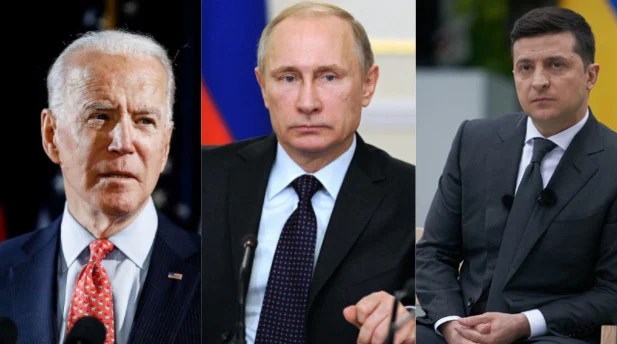
Sadly, I see no one in the US government with the sagacity and cojones to join Putin and Zelensky in working to stop this war reasonably and quickly.
Americans have a remarkable faith in weapons as “gamechangers,” as simple panaceas to complex problems.
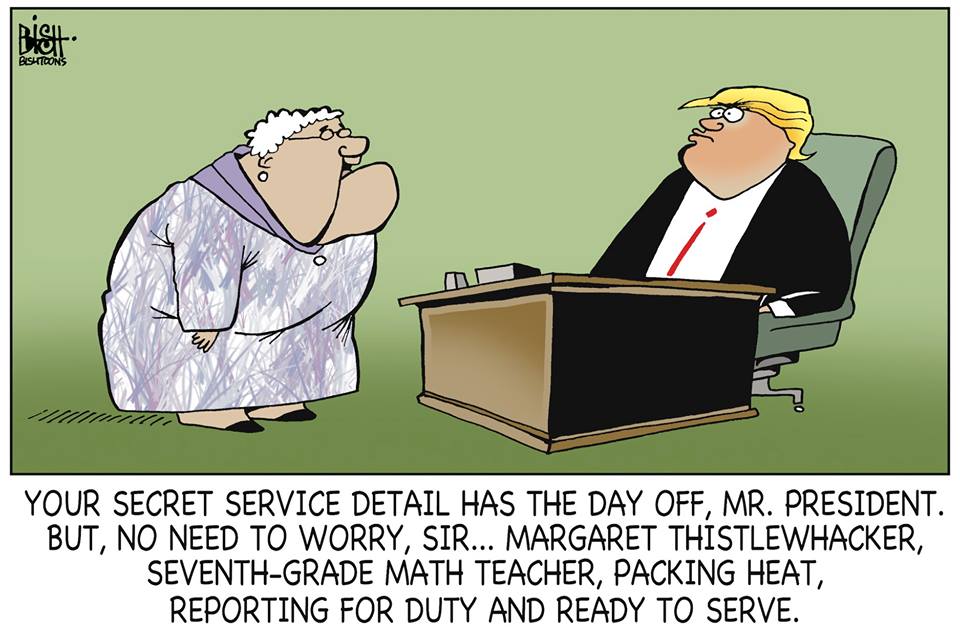
Yesterday, Donald Trump addressed the NRA convention in Houston, offering guns as a panacea to mass shootings. Once again, Trump said that “highly trained” teachers should be allowed to carry concealed guns in the classroom. Apparently, teachers should now be the equivalent of Special Forces warriors, ready to confront shooters with assault weapons at a moment’s notice. When he was president, Trump suggested these warrior-teachers might even see a small bump in pay for their willingness to carry guns and to serve as quasi-SWAT team members at schools. What generosity!
Just as many Americans see more guns as the answer to domestic violence like mass shootings, yet bigger guns and missiles are seen as “game changers” for complex foreign issues like the Russia-Ukraine War. According to CNN, the U.S. government is considering sending the MLRS (multiple launch rocket system) to Ukraine, which has a range of up to 300 miles, to counter Russian troops. One Congressman in particular thinks it’s a dandy idea:
Democratic Rep. Jason Crow of Colorado, who was part of a congressional delegation trip to Kyiv earlier this month, told CNN he believes the systems could help Ukraine gain significant momentum against Russia.
“I think it could be a gamechanger, to be honest with you,” Crow said, not only for offensive attacks but also for defense. He explained that Russian conventional artillery, which has a range of about 50km, “would not get close” to Ukrainian urban centers if MLRS systems were positioned there. “So it would take away their siege tactics,” he said of the Russians.
Where to begin? Are Ukrainian troops trained on such a system? How do you get the system into Ukraine to begin with? What if the system is used to strike targets inside of Russian territory? What about Russian warnings that such a system could lead to reprisals against European or American assets? What if less-than-well-trained Ukrainian troops fire a bunch of missiles that end up killing dozens, even hundreds, of innocent people?
No matter. The “answer” is always more guns, more howitzers, more missiles. They’re “gamechangers”!
Indeed, they just may be. Just not in the way that Trump imagines, or Congressman Crow.
Finally, that word: “gamechanger.” It’s a common practice in America to talk about war as if it’s a sport, a game. Call it the triumph of dumbass thinking. War is neither sport nor game, and you’re not going to “game-change” the Russia-Ukraine War, as in turning the tide so Ukraine wins, just by sending the MLRS, just as you’re not going to decrease mass shootings in schools by arming teachers with guns.
If you had told me three months ago that Russia would invade Ukraine and that the U.S. response would be $54 billion in “aid,” much of it consisting of missiles, artillery, bullets, and other forms of weaponry, and that this huge amount of “aid” would be supported by every Democrat in the House and Senate, without exception, I don’t think I would have believed you.
Not a single Democrat is against spending more than $50 billion that will serve to feed a war rather than putting a stop to it?
$54 billion represents roughly 80% of what Russia spends on its military for an entire year. How much is the U.S. government prepared to spend if the war drags on for the next few months? Another $54 billion? More?
The Democratic Party can’t get all its members to vote for a $15 federal minimum wage, or for student debt relief, or more affordable health care and lower prescription drug prices, and similar promises made by Joe Biden as he ran for president in 2020. But weapons for Ukraine brings instant and total accord and rapid action.
Feeding the military-industrial complex and perpetuating war is more than a sad spectacle. It’s more than the death of the Democratic Party. It heightens the risk of nuclear war with Russia, because the longer the Russia-Ukraine War drags on, and the more the U.S. gets involved in it, the riskier the situation in Europe becomes. What’s needed is deescalation through negotiation, not escalation through more rhetoric about Putin being a genocidal war criminal who must go.
I’ve already witnessed the death of the Republican Party with its open embrace of Trump and Trumpism. And now I’ve witnessed the death of the Democratic Party with its open embrace of peace through war.
We are increasingly “a nation unmade by war,” to cite a book written by Tom Engelhardt. We refuse to sufficiently help the poor and homeless here in America even as we airlift megatons of weaponry for Ukraine to wage a war that will likely be that country’s curse rather than its salvation. Meanwhile, politicians in both parties use the war to justify even higher military spending in the next Pentagon budget. And if that war isn’t enough of a driver, the mainstream media broadcasts war games on TV that posit a major war between the USA and China over Taiwan.
People dismiss me when I say I’m voting Green or Libertarian, that I want to vote for someone who’s not a tool for more and more military spending and more and more war. The “smart set” tells me to vote for someone like Joe Biden because he’s not quite as bad as Trump. But if we keep doing this, voting for Joe or the like because Trump and his followers are “worse,” how will we ever free ourselves from incessant warfare and restore our democracy?
Isn’t it high time for that “political revolution” that Bernie Sanders spoke about?
Coda: I know: the Democratic Party probably died in the aftermath of George McGovern’s loss in 1972, after which party officials vowed never to nominate a peace candidate like McGovern again. It certainly died with the election of Bill and Hillary Clinton (two for the price of one!) in 1992. And it died a thousand deaths when Barack Obama won in 2008 and abandoned the political revolution he had briefly set in motion. Much like a Hollywood vampire, however, it keeps coming back from the grave, no matter how many stakes it drives through what’s left of its own heart.
Update (5/21): Happened to see this on “the Twitter” this AM:
I’ve been meaning to post more about President Biden’s decision to throw $33 billion in weapons and money at Ukraine, followed by the decision in the House to boost that to $40 billion, and the vote that took place in which all Democrats, including the so-called Squad, voted for it, with a few dozen Republicans voting against. The implications of this are staggering. The U.S. has already committed more than $50 billion to the proxy war against Russia as Americans stagger under rising costs for everything.
We need Russia to attack the American working class — only then might workers in America get some financial relief from “their” government.
Democrats are “all-in” on being pro-war and pro-military (and pro-police, since Biden has called for even more police to be hired), leaving anti-war positions to a smattering of Republicans with various motivations. All credit to Senator Rand Paul for holding up the $40 billion Ukraine “aid” package. He wants an Inspector General to monitor and control how this immense sum of money will be spent for Ukraine. A smidgen of accountability — imagine that! I actually wrote a note to Senator Paul to salute him for this and for his opposition to the DHS Disinformation Governance Board.
More unaccountable billions for Ukraine and the military-industrial complex, more government censorship for Americans: a couple of worries for our Wednesday.
Anyhow, here are a few good articles I’ve been meaning to cite on this:
The US House of Representatives has voted 368-57 to spend $40 billion on a world-threatening proxy war while ordinary Americans struggle to feed themselves and their children. All 57 “no” votes were Republicans. Every member of the small faction of progressive House Democrats popularly known as “The Squad” voted yes.
The massive proxy war bill then went to the Senate, where it was stalled with scrutiny not from progressive superstar Bernie Sanders, but from Republican Rand Paul.
This is because the left-wing Democrat is a myth, like the good billionaire or the happy open marriage. It’s not a real thing; it’s just a pleasant fairy tale people tell themselves so they don’t have to go through the psychological turmoil of acknowledging that their entire worldview is built on lies.
Video Transcript: “The US Anti-War Left is Dead. The Squad’s $40b War Vote Just Killed It.” Many Dems voting YES have long denounced exactly these sorts of bills. What happened?
What happened, indeed? Not a single Democrat has a principled stance against weapons and war.
You could see something new playing out on the Sunday shows this past weekend: Some TV news networks are starting to raise questions about whether the U.S. involvement in the Ukraine might have some downsides.
After hearing from House Speaker Nancy Pelosi — who called for “more weapons, more sanctions” — and Ukrainian Ambassador to the U.S. Oksana Markarova — who asked for “more military support, more sanctions” — “Face the Nation” host Margaret Brennan warmly welcomed Jim Taiclet, the chairman and CEO of Lockheed Martin, tossing him questions that weren’t even softballs, they were bouquets.
One can imagine how that might have come about. Earlier in the week, President Biden visited a Lockheed Martin factory in Alabama that makes Javelin anti-tank missiles, pitching his requests for $33 billion in aid to Ukraine and subsidies for American microchip production. So Ukraine and supply-chain issues were in the news, and Taiclet could address both.
But still, what it came down to was a major television network inviting onto its marquee news show the head of the largest weapons manufacturer in the world — the company that profits more from war than any other company worldwide — and not asking a single pointed question.
Watch the entire six-minute segment and ask yourself if state television in a totalitarian country would have done it any differently.
In the 1970s and into the 1980s, the mainstream media occasionally did challenge the military-industrial complex. Those days are gone. I no longer see articles that criticize waste, fraud, abuse, threat inflation, and so on. The mainstream media, like the Democrats, have become pro-war and pro-weapons and pro-Pentagon. Rare indeed do you hear any sustained criticism or meaningful opposition. (You do get posturing from the Squad, but only when their posturing has no effect on legislation and money.)
What good is freedom of the press when the press muzzles itself on issues that could very well lead to a wider war, even a nuclear one? Why is America shoveling scores of billions of dollars to sustain a bloodletting in Ukraine? What is our strategy to end this war, rather than simply prolonging it and profiting from it?
Today, I parked behind a car that had a “Semper Fi” sticker for the Marines, an American flag sticker, another sticker that said “Don’t blame me, I voted for Trump,” and a final sticker that read: “The Media Is the Virus” (in place of Covid-19, I assume). It’s nice that people identify themselves so readily in America, thereby making it easier to avoid them. I’ve traveled to a few countries and I’ve never seen this proclivity for bumper stickers and the like replicated in other lands. What is it about Americans that we want our cars and trucks and SUVs to scream our views? Doesn’t matter if you’re “liberal” or a Trumper or what-have-you. Americans are very much in your face about their beliefs. Because, ah, freedom?
Who will win in 2022 and 2024: the woke Republicans, otherwise known as Democrats, or the unwoke ones who generally support Trump? And if you think Democrats like Joe Biden aren’t like Republicans, consider this: Biden is pro-police, pro-military, pro-war, and anti-worker in the sense that we’ve seen no increase to the federal minimum wage, no student debt relief, no meaningful health care reform, and no concerted effort to reduce inflation or to lower gasoline prices. As the rich get richer under Biden, generally the poor get poorer. Worked the same way under Trump and Obama, didn’t it?
If we judge Biden by his deeds as well as his words, he’s emulated the pro-business Republican-lite policies of Barack Obama, but with none of Obama’s charisma.
Isn’t it time America had a second party to choose from, rather than two right-wing factions of the same corporate uniparty?
Biden has a new press secretary who’s a Black female and a member of the LGBTQ community. Will it feel any better being lied to by her rather than a white female or the typical cis white male? As Cornel West noted, it’s not enough to put Black faces in high places if they’re just as committed to the Establishment as the typical cis white male. We need more than optical diversity in this country.
That said, I’d love to see more women in Congress (indeed, more women in all positions of power), and more diversity across America. But, again, if the “civilian” Secretary of Defense is from Raytheon via a career spent in the U.S. Army, does it really matter that he’s Black when he’s thoroughly a man of the military-industrial complex?
What if all NFL players wore peace symbols on their helmets rather than American flags? Would their heads explode first, or ours?
There’s no escaping the military-industrial complex. This weekend, I watched the Red Sox play the Rangers in Texas. There’s a huge blue and white ad for Lockheed Martin in the outfield; even worse, the company logo was superimposed on the pitcher’s mound! Every pitch, almost every play, was sponsored by my friends at Lockheed Martin, maker of the F-35 jet fighter, among other weapons. How heartening!
Trevor Story makes a play for the Red Sox as Lockheed Martin looms in the background
Remember those old commercials: baseball, hot dogs, apple pie, and Chevrolet? Chevrolet has been replaced by Lockheed Martin, with our president visiting weapons factories to promote the Javelin missile. With our president shilling for weapons and with Congress shoveling more than $50 billion to Ukraine to sustain a devastating war, tell me again how Democrats are making the world safer and more secure?
What will be the next galvanizing cause that forces people into the streets? The last one was Black Lives Matter and protests against police brutality that briefly led to a “defund the police” moment, which really meant to decrease police militarization while allocating more funds for mental health, family counselors, and other non-violent approaches to defusing trouble. President Biden has already said the answer is to fund the police, not defund them. How is this a “democratic” message? How is this even remotely adequate as a response to the very real anger and grievances of the BLM movement?
Fifty years ago, George McGovern asked America “to come home.” To end foreign wars. To focus on our problems here. To cut the Pentagon budget and to refund the savings to the American people. Was he the last real Democrat to run for President? Why do you never, ever, hear about his ideas today?
Why has every president since Ronald Reagan used the office to cash in after leaving? Kudos to Jimmy Carter for being a true, humble, and honorable public servant, and for having a brother who briefly brought us Billy Beer.
“Make love, not war!” on the helmet of Marine Corporal Billy Winn, Vietnam, 1967 (Photo by William Eggleston)
In the 1960s, in response to the Vietnam War, young Americans vowed to “make love, not war.” Ever since 9/11, if not before, America has a new vow: Make War, Not Love.
The American empire believes it must dominate the world stage. Partly this is due to hubris unleashed by the fall of the Soviet Union in 1991. As Colin Powell put it that year:
“We no longer have the luxury of having a threat to plan for. What we plan for is that we’re a superpower. We are the major player on the world stage with responsibilities around the world, with interests around the world.”
When you define the world as your “stage” and define yourself as a military and economic “superpower,” as the major player, a hubristic and militaristic foreign policy almost naturally follows. And so it has.
In my latest article for TomDispatch.com, I detail five reasons why America remains addicted to hubristic war; what follows is an excerpt that focuses on America’s vision of itself as the best and purest actor on the world stage. Please read the entire article at TomDispatch.com.
***
About 15 years ago, I got involved in a heartfelt argument with a conservative friend about whether it was wise for this country to shrink its global presence, especially militarily. He saw us as a benevolent actor on the world stage. I saw us as overly ambitious, though not necessarily malevolent, as well as often misguided and in denial when it came to our flaws. I think of his rejoinder to me as the “empty stage” argument. Basically, he suggested that all the world’s a stage and, should this country become too timid and abandon it, other far more dangerous actors could take our place, with everyone suffering. My response was that we should, at least, try to leave that stage in some fashion and see if we were missed. Wasn’t our own American stage ever big enough for us? And if this country were truly missed, it could always return, perhaps even triumphantly.
Of course, officials in Washington and the Pentagon do like to imagine themselves as leading “the indispensable nation” and are generally unwilling to test any other possibilities. Instead, like so many ham actors, all they want is to eternally mug and try to dominate every stage in sight.
In truth, the U.S. doesn’t really have to be involved in every war around and undoubtedly wouldn’t be if certain actors (corporate as well as individual) didn’t feel it was just so profitable. If my five answers above were ever taken seriously here, there might indeed be a wiser and more peaceful path forward for this country. But that can’t happen if the forces that profit from the status quo — where bellum (war) is never ante- or post- but simply ongoing — remain so powerful. The question is, of course, how to take the profits of every sort out of war and radically downsize our military (especially its overseas “footprint”), so that it truly becomes a force for “national security,” rather than national insecurity.
Most of all, Americans need to resist the seductiveness of war, because endless war and preparations for more of the same have been a leading cause of national decline. One thing I know: Waving blue-and-yellow flags in solidarity with Ukraine and supporting “our” troops may feel good but it won’t make us good. In fact, it will only contribute to ever more gruesome versions of war.
A striking feature of the Russian invasion of Ukraine is that, after so many increasingly dim years, it’s finally allowed America’s war party to pose as the “good guys” again. After two decades of a calamitous “war on terror” and unmitigated disasters in Afghanistan, Iraq, Libya, Somalia, and so many other places, Americans find themselves on the side of the underdog Ukrainians against that “genocidal” “war criminal” Vladimir Putin. That such a reading of the present situation might be uncritical and reductively one-sided should (but doesn’t) go without saying. That it’s seductive because it feeds both American nationalism and narcissism, while furthering a mythology of redemptive violence, should be scary indeed.
Yes, it’s high time to call a halt to the Pentagon’s unending ham-fisted version of a world tour. If only it were also time to try dreaming a different dream, a more pacific one of being perhaps a first among equals. In the America of this moment, even that is undoubtedly asking too much. An Air Force buddy of mine once said to me that when you wage war long, you wage it wrong. Unfortunately, when you choose the dark path of global dominance, you also choose a path of constant warfare and troubled times marked by the cruel risk of violent blowback (a phenomenon of which historian and critic Chalmers Johnson so presciently warned us in the years before 9/11).
Washington certainly feels it’s on the right side of history in this Ukraine moment. However, persistent warfare should never be confused with strength and certainly not with righteousness, especially on a planet haunted by a growing sense of impending doom.
Today as I was checking out at Job Lots, the cashier asked me if I wanted to donate money for Ukrainian refugee relief. I thought quickly of the $33 billion Biden already wants from us for Ukraine and politely said “no thanks.”
Then I read Todd Miller’s new article at TomDispatch.com on the security-industrial complex along the U.S. border with Mexico and reflected on all those people risking their lives to cross the border into America, most of them refugees from wars and climate change and violence and the like. I’ve never been asked by a company or a cashier for that matter to contribute to their relief. Indeed, when the issue of refugees comes up along the Southern border, it’s always about more money for Homeland Security and more border control agents and surveillance technology (including drones and robotic dogs, as Miller notes), all to keep the “bad” people out of America, all those “illegals” who allegedly want to take American jobs while doing violence to vulnerable Americans.
Remarkably, Miller notes in his article how the Biden administration is following basically the same approach to border security as the Trump administration. The only real difference is that Biden is relying less on physical walls and more on “virtual” ones (towers, sensors, cameras, drones, etc.). This is hardly surprising when you consider Kamala Harris went south of the border to deliver a singular message to would-be asylum seekers. Her message to them: Do not come.
Land of the free, home of the brave?
As Miller notes in his article, you can count on one thing: America’s border with Mexico will never be secure, no matter how much we spend, because insecurity and overhyped “threats” sell very well indeed.
Is America really the home of the brave, given our fears of invasions, whether from “dangerous” brown- and black-skinned people coming up from the south or all those gangster Russians and sneaky Chinese allegedly scheming against us?
If we want to help refugees facing violence and starvation, we don’t have to look as far as Ukraine. Depending on where you live in America, you might only have to look just beyond the wall or fence or surveillance tower in front of you. As you do, you might ponder why we’re not sending $33 billion to help them survive. Is it because they’re not killing Russians with American-made weaponry?
Joe Biden’s been president for a year and a few months; it’s time to award him a provisional grade for his performance as president. Here are a few factors to consider:
* Biden ended the Afghan War. Sure, it was a disordered ending, a pell-mell evacuation, a calamitous collapse that saw Afghan innocents killed in a final drone strike (nothing new about that, I suppose). But he did end a twenty-year war, so credit to him for that.
* Biden was able to pass an infrastructure bill, though it was disappointingly small. Still, America truly needs to invest in its infrastructure (rather than, for example, nuclear weapons), so credit again to Biden.
* Biden kept his promise to nominate an African American woman to the Supreme Court. The court is still overwhelmingly conservative, so her presence won’t make a critical difference to decisions, but dare I say, it’s about time the court looked more like the diversity of America.
* When Biden announced his candidacy, the first thing he did was meet with Comcast executives and other high and mighty media- and business-types. He told them nothing would fundamentally change under his administration. That’s a campaign promise he’s kept.
* Another promise Biden has kept is sizable increases to the Pentagon’s budget. If you’re part of the military-industry complex, you’re probably more than satisfied with Biden’s budgets.
* Finally, some people assert that Biden has stood firm against Russia and Putin, marshaling the West against Putin’s war of aggression in Ukraine. I beg to differ with this assertion, but more on that below.
Now, let’s look at where Biden has failed or proven to be a disappointment.
* Biden has kept none of his progressive promises, which is unsurprising, given his track record as a senator from Delaware. No $15 federal minimum wage. No public option for health care. No student debt relief (just moratoriums on payments). On these and similar issues, Biden’s defenders place the blame on obstinate “centrist” senators like Manchin and Sinema, or they blame the Senate Parliamentarian for ruling against the $15 wage increase due to a technicality. It’s all special pleading. When their own Senate Parliamentarian got in their way, the Republicans simply replaced that unelected person with someone more tractable. Chuck Schumer could easily have done the same. Manchin and Sinema can be cajoled or coerced if Biden had the will to do so. But “centrist” Democrats adore Manchin and Sinema because they serve as convenient scapegoats for why Biden can’t be more progressive.
* Biden’s “Build Back Better” plan died a meaningless death, but, once again, this was more by design. Recall Biden’s key promise that nothing would fundamentally change under his administration.
* Again, withdrawing from the Afghan War was a sound decision, but it was poorly implemented.
* The Russia-Ukraine War: Biden has gone all-in with his military approach to the war, meaning more money for the Pentagon, more weapons for Ukraine, harsh sanctions that hit ordinary Russians the hardest, and rhetoric that declares Putin to be a genocidal war criminal. Diplomatic efforts have taken a back seat to efforts to effect regime change in Russia. Some people may see this as tough and hard- minded; I see it as provocative and incredibly foolhardy. Brinksmanship with Russia risks nuclear war, with Biden’s harsh rhetoric leaving little room for a negotiated settlement. More than a few people see the U.S. as weakening Russia in a proxy war in which Biden is willing to fight to the last Ukrainian. Toughness is not about more weapons and war; it’s about finding ways to build fewer weapons and to end war.
* Inflation is reaching new highs and many Americans are struggling economically, but Biden’s main approach here has been to blame Putin. Unlike Harry Truman, the buck never stops with Joe Biden.
* The Biden team made a disastrous choice for his vice president. Biden has no affinity with Kamala Harris, and Harris herself has wilted on the world stage. High staff turnover suggests she’s a polarizing figure and a poor boss. The only good thing about Harris, from the Biden perspective, is that people dislike her more than they do the president.
* Biden’s unpopularity. Predictions for the midterm elections this November are dire for Democrats. It’s possible, even likely, Republicans will regain both the Senate and House, leaving Biden a lame duck for his final two years in office. Few if any Democratic candidates are seeking Biden’s support or planning to ride his coattails to victory.
* Biden’s mental status. Biden will be 80 this November. I’m not an expert on dementia. But I’ve seen plenty of speeches by Biden where he’s become forgetful; when he can’t remember words; when he gets frustrated. I feel for him. He can read from a teleprompter but get him off-script and he becomes unpredictable and says nonsensical things. Occasionally, he looks lost or at a loss. Something similar was happening to Ronald Reagan in his second term.
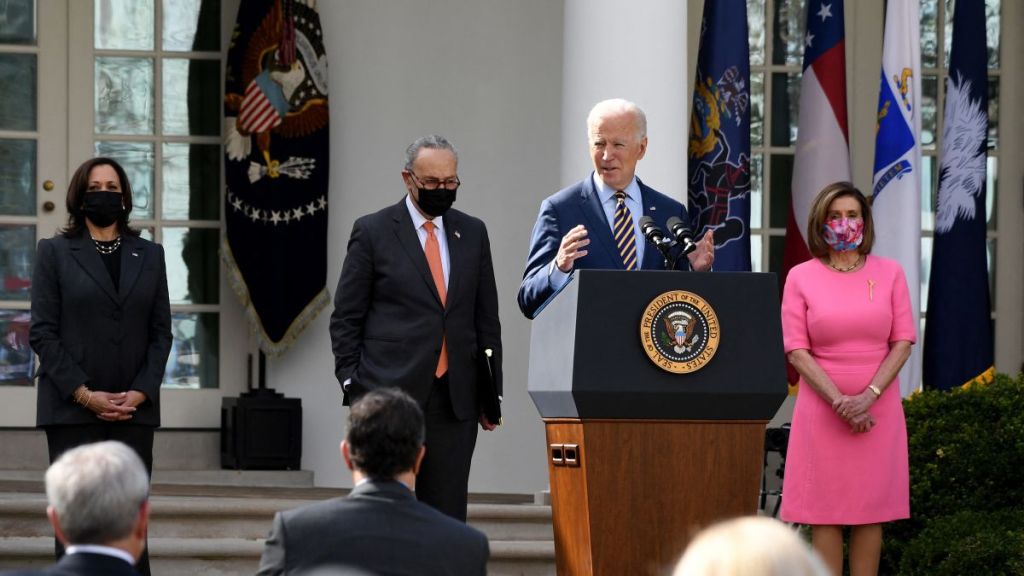
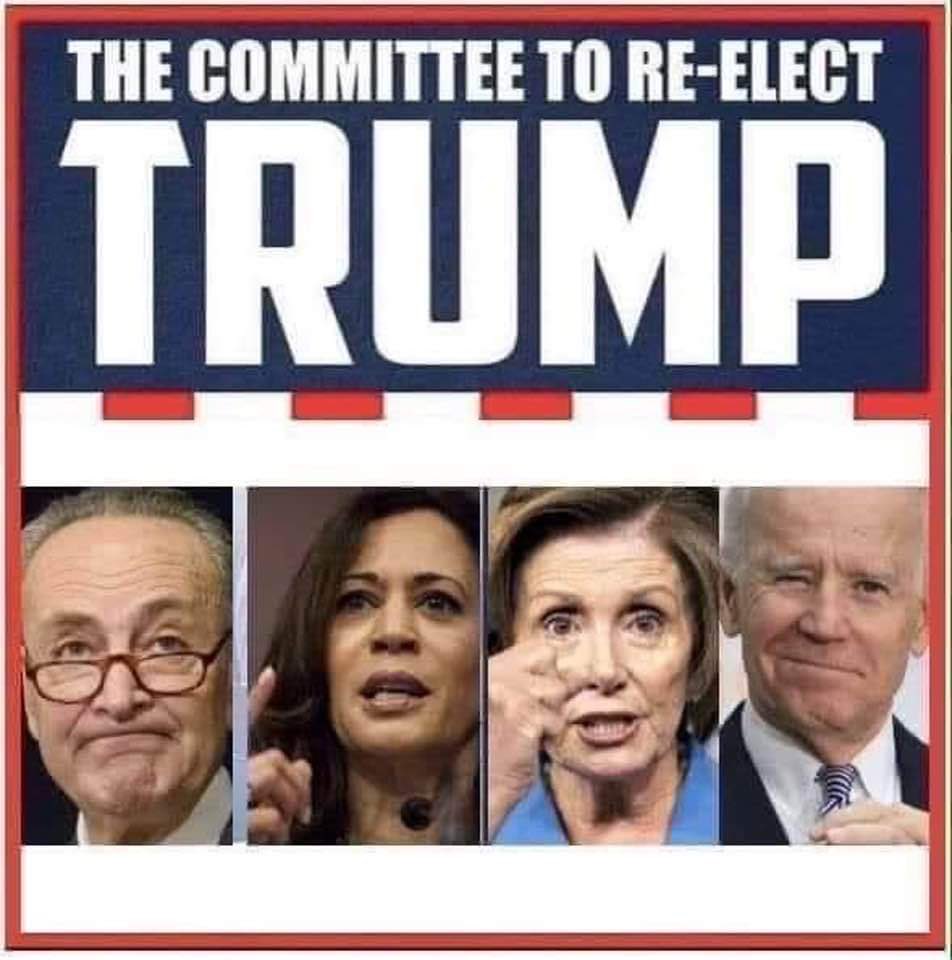
Always looming in the background and foreground is the party of Trump. To my mind, the best way to defeat rightwing popular authoritarianism is to have leaders who answer to the people rather than to corporations and oligarchs. The Democratic Party is venal and corrupt, which allows Trump & Co. an opening to play a (false) populist card. The Democrats, as presently led by Biden, Schumer, Pelosi, et al., are easy foils for authoritarian dipshits like Trump.
Trump would be far less dangerous if the Democrats actually believed and acted on their various campaign promises to help people rather than oligarchs and corporations.
The ultimate grade of Joe Biden’s presidency will depend on whether through his actions and inaction he gives Trump an opening to win the presidency in 2024. Assuming Trump wins again in 2024, Biden’s final grade will be an “F.”
His provisional grade? First, I’m not a Democrat. Second, I despise Trump, a man totally unqualified to serve the public in any capacity. Overall, my grade for Biden is a “C-,” and on less generous days I’m inclined to give him a “D.” He is a man who’s often out of his depth, a man well past his prime, a man who perhaps shouldn’t have run in 2020 and who most certainly shouldn’t run again in 2024, given the demands of the presidency. (Recall that when Biden suggested a run for the presidency in 2020, Obama told him, You don’t have to do this, Joe. Not exactly an inspiring vote of confidence!)
What do you think, readers? What grade has Joe Biden earned so far in your opinion?






 Bracing Views