America’s Unrepresentative Government

How can ordinary Americans regain political agency?

BILL ASTORE

JUN 06, 2025

When you have an unrepresentative government, or, put differently, a government that represents oligarchic interests and corporations, as well as being heavily influenced by lobbyists, domestic and foreign (AIPAC), you get Trump and Congress conspiring to decrease Medicaid, to cut food support for the poor, while funneling more money upward to the very richest Americans.

American workers essentially have no agency, no ability to act in meaningful ways in the political realm. Along with no agency, Americans also have fewer liberties, especially if you should choose to criticize U.S./Israeli policies and otherwise challenge the imperatives of the powerful.

Be careful shouting “Give me liberty or give me death!” in these times. Death may be far easier to achieve.

Hannah Arendt

What is the answer to regaining our agency? In “Between Past and Future,” the political philosopher Hannah Arendt wrote how French resisters to the Nazis during World War II discovered themselves—their true nature—in and through action. In resisting the Nazis, they seized control over their own agency by exercising it in the face of danger. They chose risk, they fought to effect change, they took stands that often meant life or death.

Through action, these resisters lifted themselves out of “normal” time, Arendt argued, entering instead a realm between past and future, a realm of true existence, a present of dynamism, of possibilities, of clarity of commitment.

Political agency is not going to be given back to the people. If we regain it, it will only be by seizing it ourselves, through action, through commitment, through risk-taking, and perhaps most of all through large-scale organized resistance.

Hopefully, that resistance can remain non-violent. I prefer reformation or restoration to revolution, recalling the words of Aleksandr Solzhenitsyn that revolutions unleash the most elemental barbarism.

Trump’s “Big Beautiful Bill” Robs the Poor and Rewards the Rich

More Walls, A “Golden” Dome, More Weapons, Higher Deficits, Make this a Petty Ugly Bill

BILL ASTORE

MAY 23, 2025

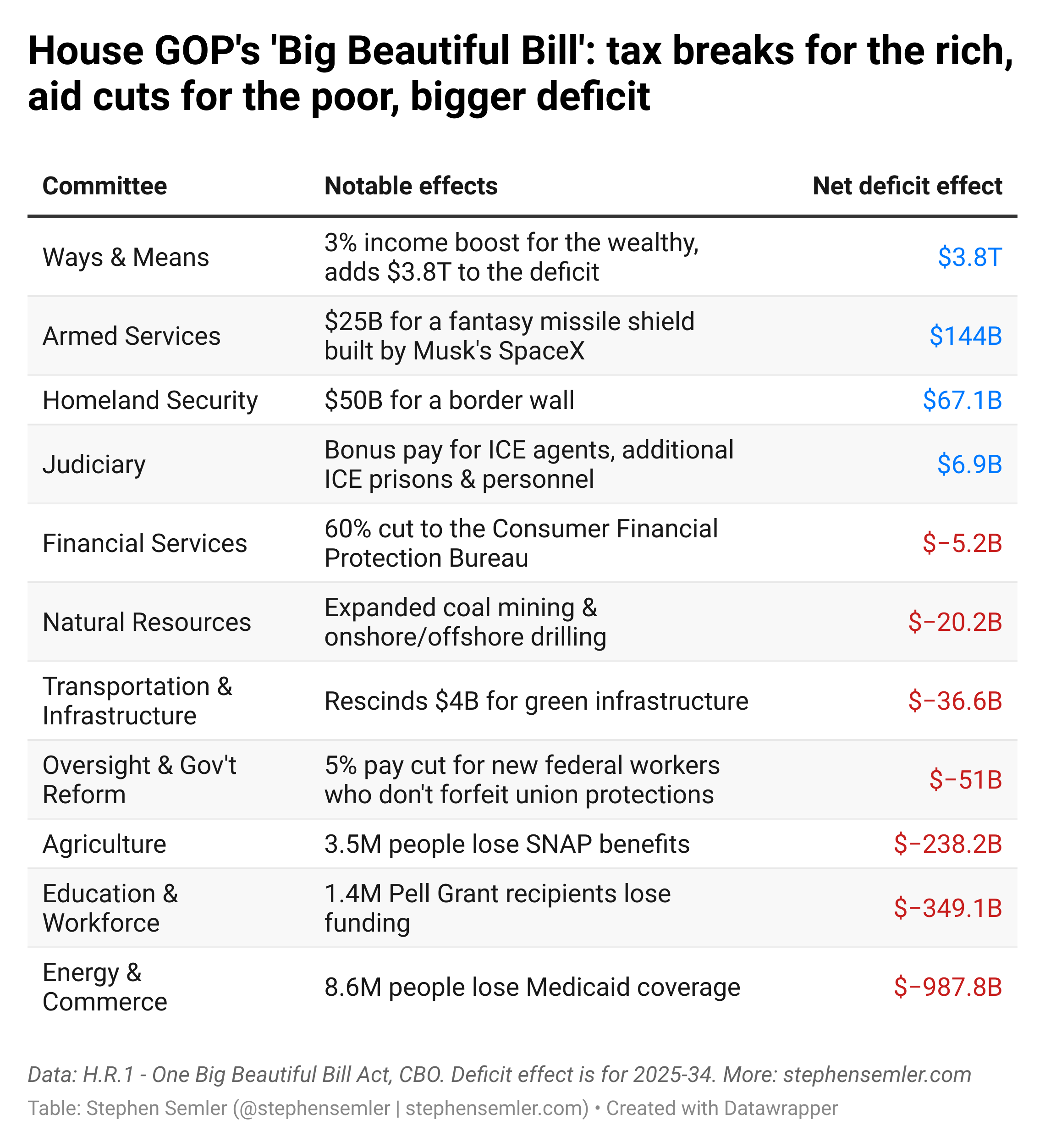
The “Big Beautiful Bill” passed recently by the House is petty and ugly. A sham. A reverse Robin Hood. It cuts SNAP benefits (food stamps) to the poor. It cuts Medicaid. Because who needs food and medical care, amirite? Meanwhile, it cuts taxes for the richest Americans and funds various weapons follies (a foolish and wasteful missile shield known as “Golden Dome,” more nuclear weapons, yet more billions for the wall on America’s border with Mexico). And it adds significantly to the national debt.

Remember when Republicans were once known as fiscal conservatives? Remember calls for a balanced budget? Those days are long gone. The “Big Beautiful Bill” is a fever dream, or a night terror if you prefer, of wanton and wasteful spending that rewards the already well-heeled and hurts the most vulnerable of Americans.

Trump, who is truly an expert at the craft of the con, concocts the most outrageous names to sell his BS. Thus a missile shield that may end up wasting $500 billion is a “golden dome.” Heck, the whole bill, which is contempuous toward the poor and punishing to workers organizing for higher wages, is sold as “big” and “beautiful.”

When Trump describes things as “golden” and “big” and “beautiful,” you should know to hold tightly to your wallets and purses, America, because you’re about to get scammed.

At his site, Stephen Semler has a superb chart that breaks down the petty ugly bill the House just passed. Here’s an excerpt. Read it and weep, America.

The bottom line: More money for the already affluent and for the Pentagon; less money and benefits for the poor. The rich get richer, the poor poorer, as America reinforces its turn to weapons, walls, police, domes, and warriors.

Speaking Truth to Power Is A Great Way to Learn

Truth Is Costly When It Contradicts the Lies of the Powerful

BILL ASTORE

Though the sentiment has been wrongly attributed to George Orwell, it makes sense to say that in an age of universal deceit, telling the truth is a revolutionary act.

Two graduating college students recently decided to tell the truth about Israel’s genocide in Gaza. The first student, Logan Rozos, said he’d searched his heart, a search which led him to condemn mass murder in Palestine.

New York University responded by denouncing his statement and withholding his diploma.

At George Washington University, another student-speaker, Cecilia Culver, used her speech to denounce Israel’s genocide in Gaza and U.S. complicity in the same. I haven’t heard as yet how she will be punished.

It’s truly hard to be a “prestigious university” when you have no moral spine.

It’s nice to think that speaking truth to power works, except that the powerful already know the truth, indeed they work hard to define what is “truth” and what isn’t, and they will indeed punish those who pose a threat to manufactured notions of truth.

I commend these students for speaking boldly and honestly, as democracy withers when it’s defined and dominated by lies. They truly earned their diplomas, even if the powerful conspire to take them away.

These students have learned a valuable lesson that really can’t be taught in classrooms: that doing the right thing, when it’s contrary to the dictates and interests of powerful entities, is risky and will often lead to severe repercussions. Just ask truth-tellers like Edward Snowden, Julian Assange, and Daniel Hale.

Zuckerberg Tells a Truth

W.J. Astore

Ready for Your AI “Friends”?

I caught this snippet from Mark Zuckerberg, guru of Facebook:

There’s this stat that I always think is crazy. The average American, I think has, I think it’s fewer than three friends, three people that they’d consider friends and the average person has demand for meaningfully more. I think it’s like 15 friends or something.

If you’re familiar with Facebook, every personal contact you make on there is categorized as a “friend.” When you want to add someone to your Facebook page, you “friend” them. Alternatively, when you want to get rid of someone, you “unfriend” them.

Now, the typical Facebook user has roughly 200-300 “friends.” What Zuckerberg is unintentionally revealing in that snippet above is that Facebook “friends” aren’t real friends. They’re mostly acquaintances. People we’ve met once or twice, maybe even people we’ve never met. They’re not close friends, intimate friends, “real” friends. 

So why call them “friends,” Facebook? For obvious reasons. Just about anyone would like more friends, and indeed I know people with over 2000 “friends” on Facebook. But, again, how many close or intimate friends can you really have?

That’s where Zuckerberg comes in, yet again, riding to the rescue with AI “friends.” Yes, he’s suggesting that the solution to loneliness in America, our lack of intimacy, is AI programs that will be your “friend,” a little bit like the movie “Her” with Joaquin Phoenix and Scarlett Johansson.

So, I suppose you’ll soon be able to buy AI “friends” from Mark Zuckerberg or someone like him. Or perhaps they’ll be offered for “free,” as Facebook is, with your most intimate data being sold to the highest bidder.

I really don’t want AI “friends.” I have a few real friends, people I’ve known for decades, people I do feel close to, and I’m lucky to have them. Two quick lessons come to mind. First, of course, friends aren’t perfect. They can be annoying, frustrating, maddening. (Guess what? I can be too.) Part of being a friend and keeping one is tolerance, acceptance, patience. The second lesson: To have a friend you have to be a friend. If you want people to be there when you need them, it’s a good idea to be there when they need you.

Sorry, Zuckerberg: I don’t think AI “friends” are the answer here. But thanks for debunking the whole idea of “friends” on Facebook.

The NFL Draft Is Back!

W.J. Astore

Bigger and Badder than Ever

The NFL draft started last night, in prime time. I’m fascinated, flabbergasted, and horrified by all the ink spilled and money spent on the draft–what a spectacle it’s become! Even before the draft, there are literally thousands of “mock” drafts, including those that attempt to predict all seven rounds of the draft, like this example. It’s insane! Why go through these exercises when you can simply wait for the draft results? I guess articles like this get clicks, but still …

After the obligatory national anthem and a military flyover featuring four helicopters (A flyover? For the draft?), the commissioner got down to business, Somewhere in the neighborhood of 200,000 people were in attendance outside of Lambeau Field in Green Bay, Wisconsin. There’s one tradition I do like: lusty boos for the commish (the commissioner). It’s all in good fun.

Anyhow, many people have noted the spectacle of mostly Black players being “selected” by mostly white owners. Echoes of the slave auctions of the past? I don’t go there, since the players selected in the 1st round become instant millionaires — they’re not slaves, obviously — but there’s something to the comparison.

When a player is selected, networks like ABC, ESPN, and the NFL Network show instant video highlights, over which “experts” intone whether the pick was wise or unwise, an overpay or a steal, and so on. Each player has a “tale of the tape” with all the player’s stats, including height, weight, arm length, speed in the 40-yard dash, even wrist size! The coverage is exhaustive—and exhausting, especially if you’re not a fan.

If only America took its wars as seriously as it took NFL football. If only events in Gaza were covered with the same objectivity and attention to detail as the draft. Given the media resources expended on it, you’d think the NFL draft was the lifeblood of America, the linchpin of our democracy. Perhaps it is?

With legalized betting, you can now bet on when a player will be drafted. Again, those odds are carefully calculated and supported with reams of data. NFL owners love all this legal betting—it puts a ton of money in their pockets. Just don’t read all the fine print about how America has more gambling addicts than ever.

Football remains #1 in America (along with the Pentagon, I suppose). At so many colleges and universities, the most richly compensated and often most powerful person is the football coach. A fortunate professor with tenure might make $100,000 a year as the football coach takes home several million dollars. Who says America’s students aren’t learning the right lessons at college?

Everything about major American sports like the NFL has been corporatized and monetized. Despite that, I still enjoy following “my” team, don’t ask me why, even as I marvel at the excess of America’s new national pastime of football. Call it a guilty pleasure, something that gets my mind off atrocities and all the other violent excesses of America. I’m just another member of the hoi polloi in the Colosseum, waiting for my bread and circuses. Next up: the Lions take on the Bears as the Eagles fight the Seahawks. Let the games begin!

Bears against the Lions—Bring it on! (AI-generated image)

Pope Francis and His Legacy

W.J. Astore

Reforming the Catholic Church

I woke to the news that Pope Francis had died at the age of 88. Francis had qualities that I admired, including his lack of pomp and his support of the disadvantaged. As Caitlin Johnstone notes, Francis was an advocate for the Palestinians. He was known as a “liberal” pope, so my guess is that we’ll soon see an old-school conservative elected as the new pope.

Pope Francis (Tiziana Fabi/AFP/Getty Images)

I was raised Catholic, getting confirmed back in 1979, but I’m very much a lapsed one today. I think the Church should allow female priests and should not persist in upholding chastity for the hierarchy. I think the Church should speak out far more strongly against genocidal nuclear weapons and warfare in general. I think the Church should use its great wealth and power to ease the suffering of people around the world. And I know all this is not going to happen in an institution dedicated to its own survival.

There are, of course, many “good” priests, “good” sisters, committed to charity and guided by the teachings of Christ, but those who are bumped upstairs, who become the bishops and cardinals of the Church, are often those who are most committed to the trappings of power. They are the most political, the most worldly, the most vulnerable to vainglory and sin, especially the sin of pride and the lust for power.

Perhaps a new pope will carry on the legacy of Francis, but something tells me that the College of Cardinals is going to coalesce behind a traditionalist, a symbol of orthodoxy. There will be no Vatican III, no fresh opening of the Church, no revolutionary spirit. 

After Francis I see regression, not reformation, and it makes me sad to type that.

What Good Is Democracy If You’re Unable to Speak?

W.J. Astore

A Lesson from “The Matrix”

In “The Matrix,” Agent Smith asks humanity’s hero, Neo, “What good is a phone call if you’re unable to speak?” It’s a powerful scene and perhaps the creepiest in the film.

What good is democracy, America, if you’re unable to speak? If your opposition to genocide in Gaza leads to you being labeled a terrorist and sent away to a place where your voice won’t be heard. If your shouts for peace, for greater fairness, for real change are simply drowned out by the “speech” of those with vastly more money than you, thus vastly bigger and louder megaphones.

Who does Donald Trump listen to, small donors who send him $20 or $200 or Miriam Adelson who gave him $100 million? Who would you listen to if you were Trump? Small wonder he’s Making Israel Great Again (MIGA).

Broadly speaking, Americans don’t want a war with Yemen. They don’t support Israel’s annihilation of Gaza. Yet your wants simply don’t matter. You have no say. Not when billionaires and powerful corporations have already bought “your” president and “your” representatives.

Public funding of elections is absolutely essential to curbing this corruption. Despite what the Supreme Court claims, money isn’t speech, and corporations are not citizens. Money is money, and those with the most money shouldn’t be allowed to use that money to drown out the voices of everyone else.

Oh, in the scene above, you’ll note that Neo is “bugged.” We’re all bugged as well. It’s called a Smart phone.

Four Years Ago, Democrats Could Have Won the 2024 Election

W.J. Astore

The Road Not Taken

Remember in February of 2021 when Democrats said they were going to raise the federal minimum wage to $15 an hour? That raise would have lifted nearly a million workers out of poverty while placing Democrats firmly on the side of working-class Americans.

You may recall the “Senate Parliamentarian,” an obscure official, ruled that the pay raise couldn’t be included in the proposed bill, a decision that Democrats said they oh-so-reluctantly respected. And so the federal minimum wage still sits at $7.25 an hour (the last time it was raised was in 2009).

Must…Obey…the Senate Parliamentarian! (Jacquelyn Martin/AP)

Vice President Kamala Harris, presiding over the Senate, could have simply overruled the Parliamentarian, but she and the Biden administration chose not to.

Think about that. Biden/Harris ran on a platform of raising that wage to $15. Biden himself promised it and promoted it. But when push came to shove, they didn’t shove, nor did they even push. They just caved to their corporate overlords.

A counterfactual: What if the Democrats had done what they’d promised? What if Harris had run in 2024 on a proven record of delivering higher wages to workers? What if she’d said she was going to raise it even higher, say to $20 an hour, when she became president? My guess is that she would have fared far better with workers and may in fact have won the election.

Elections have consequences, Democrats like to say. So too does a broken promise.

Something Is Rotten in the States United

W.J. Astore

America, Land of Preemptive Pardons and Preemptive War

I woke this morning to the news that President Joe Biden has issued preemptive pardons for Dr. Anthony Fauci, retired General Mark Milley, and members of the January 6th Congressional committee. These pardons are intended to shield them from persecution and prosecution by incoming President Donald Trump.

Preemptive pardons: I’m not a legal eagle, but are these in any sense Constitutional? 

More and more, U.S. presidents are assuming the powers of popes and kings. A preemptive pardon is a form of absolution in advance, or perhaps a type of indulgence to spring one from the purgatory (or inferno?) of Trump’s wrath. Or perhaps a preemptive pardon is akin to the royal touch: the old belief that monarchs, as God’s representative here on earth, could touch their subjects and heal them.

America used to have an idea and ideal of the president as first citizen, as a public servant accountable to the people through our elected representatives in Congress as well as the courts. Now, it’s the “unitary executive,” the president as commander in chief of us all (not just the military), as supreme leader. It doesn’t bode well as Trump takes the reins today, does it? Expect to be ridden hard, America.

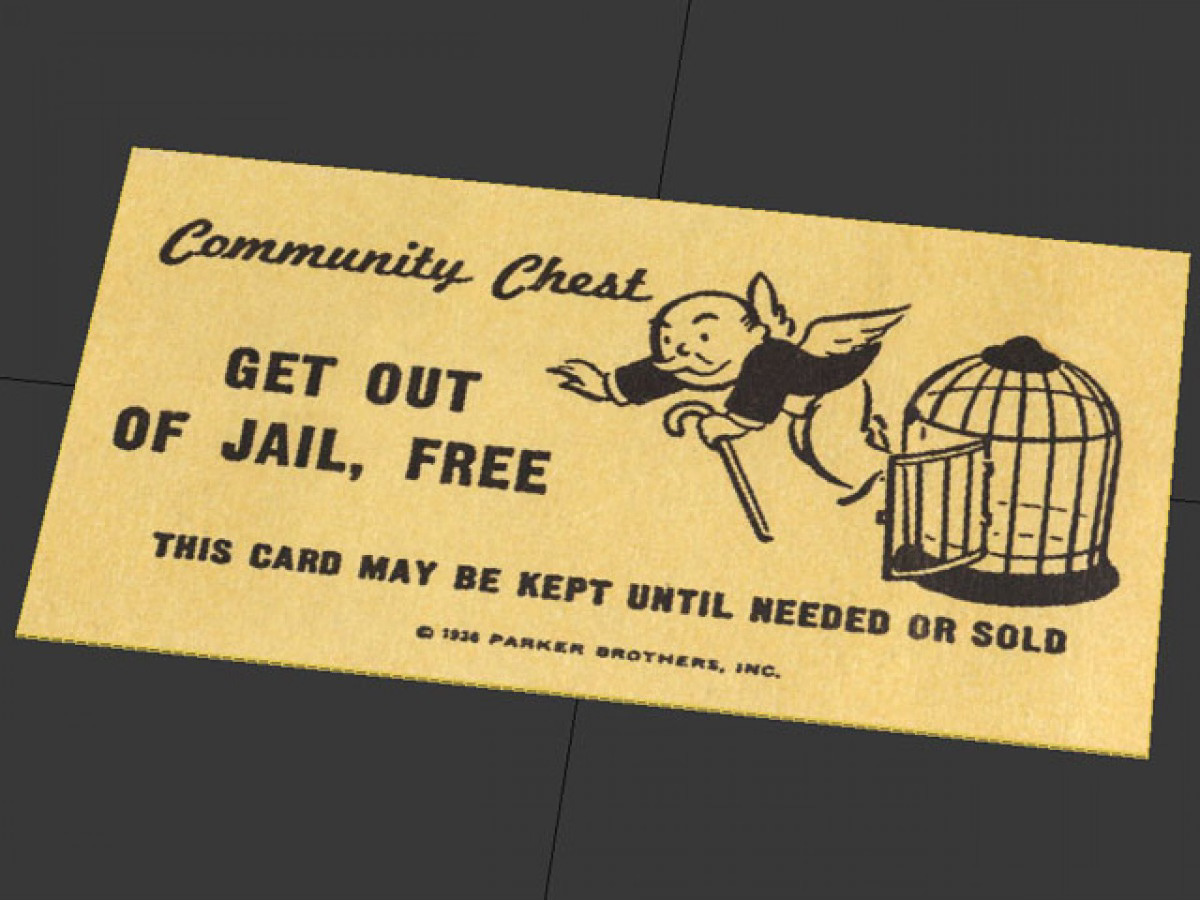
Partisan Democrats may be cheering Biden’s preemptive pardons today, but how about in four years when a lame duck President Trump issues his share of “get out of jail, free” preemptive pardons?

This idea of “preemption” recalls Vice President Dick Cheney and his idea of preemptive war. Basically, it went like this: If there’s a 1% chance a country might attack the United States, that’s all the justification a man like Cheney would need to launch a war (and without a Congressional authorization of the same, mind you). Again, it grants to presidents (and vice presidents like Cheney) the power of monarchs, which isn’t exactly what the Founders of America had in mind when they set up our government.

Preemptive pardons, preemptive war: What next? Preemptive censorship? (I know: we already have that.) Preemptive arrest and incarceration, as in the movie “Minority Report”? We think you may commit this act, this crime, this sin, so we must “preempt” it, and it’s all your fault for making us do this.

Something is rotten in the state of America.

The LA Fires Look Like a Nuclear Apocalypse

W.J. Astore

Except a Nuclear Apocalypse Would Be Unimaginably Worse

The wildfires in LA are horrific. People are losing everything. Thousands of structures have been consumed by flames. Ash, soot, smoke, poison the air. It’s devastating. Just look at this photo taken from space.

It looks like a nuclear apocalypse. Yet as devastating as the LA fires have been, a nuclear apocalypse would be unimaginably worse. A thousand times worse. A million times worse.

We see something like the wildfires in LA—as bad as they are, they remain on a scale that is comprehensible. We can fathom them. They will eventually be contained.

One atomic bomb like the one used at Hiroshima would be a thousand times worse (and don’t forget the blast wave and radiation as well as the fires). A thermonuclear weapon, a hydrogen bomb or warhead, would be one hundred thousand times worse. Unimaginable. Unfathomable. Unsurvivable.

There’s much to be learned from these wildfires in LA. Much more action needs to be taken to prepare for similar events in the future. Perhaps they might serve as a reminder as well of how much worse the fires could and would be from a man-made inferno in a nuclear war.

America, it’s high time we stopped building more nuclear weapons and started investing in improvements to our infrastructure, to disaster preparedness, to meet the climate-driven catastrophes that we know are coming.

America needs more fire trucks, more fire crews, even something seemingly as simple as more water. We don’t need more infernal (and inferno-producing) nuclear weapons.