Long may it wave as a symbol of freedom. Photo in Maine, 2006, by the author
We celebrate July 4th with a lot of hoopla. Flag-waving parades. Backyard barbecues with beer and laughter. Fireworks. Good times.
We celebrate the creation of a new country, a new ideal, in 1776. It was a country that rejected hereditary aristocracies, that called for equal rights for (most) men, that endeavored to create a new and better order for the ages.
Naturally, in an effort this ambitious, involving so many men with differing ideas and ideals, the end result was flawed. Native Americans were ruthlessly killed or shunted aside. Slavery remained the original sin of the young republic, a stain partially erased by the Civil War but one whose legacy still dims the brightness of America’s lamp of liberty.
Today the USA remains decidedly imperfect. That is why we must continue to strive to form a more perfect union, one which protects the rights of the weak against the depredations of the strong. In this sense the revolution is never over.
As we reflect on the meaning of July 4th, our day of independence, we should recognize that independence is not a day simply to be celebrated. Rather, it is a legacy that others have fought and died for, one we must continue to earn — and one we must continue to cherish and protect.
Just as the founders of this country fought against the tyrants of the 18th century, we must be on guard against the tyrants of the 21st century. They may not be kings named George sending their mercenaries to quarter among and fight against us. Today’s tyrants–today’s power-seekers and liberty-limiters–may even claim to be super-patriots who are protecting us from harm, even as they work to limit our rights while feasting on the plenty that still defines America.
But we know better. We know what is best about America. And on July 4th, we celebrate it.
America’s thirst for freedom — may it never be quenched. May it always endure.
Don’t worry, it’s just a game, and we have the best toys
When U.S. military theorists talk about asymmetrical warfare, they nearly always mean that the enemy has a diabolical advantage against us (They use human shields! They have no qualms about endangering women and children!). Rarely do these theorists recognize our own asymmetries, the enormous advantages they convey, and the seemingly irresistible temptation to use those advantages to smite our enemies, real or imagined.
Our enormous military capability and virtual invulnerability to direct attack combine to actuate “proactive” and “kinetic” aggressiveness whose means are entirely out of proportion to the ends. We “shock and awe” because we can, and because the targets on the receiving end of American firepower have little recourse and no ability to reply in kind.
How likely would it be that we’d meddle in Afghanistan or Iraq or Libya or Syria if these countries could strike with equal fury against the U.S.?
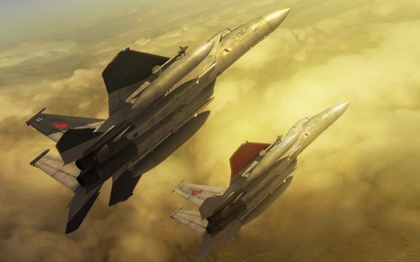
As the U.S. military responds with “urgent fury” in the name of “enduring freedom,” ordinary Americans are reduced to spectators at a bloodless video game, watching on American TV stock footage of missiles being launched, jet aircraft taking off, etc. We’re supposed to gaze, with pride, at our arsenal in action, and applaud when U.S. missiles, at a cost of $50 million plus, slam into their targets. It’s all bloodless (to us), just explosions from a distance blossoming on our TV screens in our living rooms.
So, when we talk of asymmetrical war, let’s remember our own asymmetries: the asymmetry of enormous American firepower, and the asymmetry of seeing war as a bloodless video game even as various enemies (or innocents) get vaporized by remotely-launched American missiles.
Our government has worked tirelessly to insulate the American people from the true costs of making war, which makes it far more likely that our war on terror, in one form or another, will continue indefinitely.
Let us recall, once again, the words of James Madison: No nation can preserve its freedom in the midst of continual warfare.
Very sad news coming out of Arizona: the loss of nineteen firefighters as they fought valiantly against wildfires started by lightning. My Dad fought forest fires in Oregon in the mid-1930s when he was in the Civilian Conservation Corps, or CCC. He once worked nearly 24 hours straight on a fire line to contain a blaze. He confessed he volunteered for the extra shift because he was in part too scared to sleep with the fire so close and so unpredictable.
Fire is protean, capricious, an almost living thing. Fire is truly “wild.” Small wonder we have nightmares about fire-breathing monsters or the fires of hell. It’s takes tough and courageous men and women to face down fire, to confront it, to try to contain it. Not only do you face the hell of heat and flames, but also the dangers of choking and blinding smoke and collapsing (even exploding) trees.
Here’s an excerpt from my father’s journal about some of the wildfires he fought in the 1930s:
We also fought a 10,000 acre fire in the foothills of Mt. Rainier in the State of Washington. Mt. Rainier is a pretty impressive mountain and over 14,000 feet high. A bus took us from Enterprise Oregon via the highway that followed the Columbia River for over 400 miles. The whole trip to the fire was 600 miles. Talk about scenery; very breathtaking. Off the highway you could see plenty of waterfalls and minor streams that flowed into the Columbia River.
Another big fire we fought burnt to the edge of the Pacific Ocean. We were discussing the fact, all that ocean water but we couldn’t put it on the fire.
Oddities: Two CCC boys were killed because a truck ran off a mountain road because visibility was bad with smoke and fog.
Also, we built a fire trail and we were going to start a backfire to the main fire. We couldn’t start a fire because of mist that wet the area that we wanted to burn. Where the fire was approaching you could hear the burning trees and snags falling. You looked towards the fire but you couldn’t see anything on account of the smog. We went to another area. Later when the sun came out and it cleared the fire went out of control again.
Work on the fire line was exhausting, even for men in the prime of life, as my father knew:
We were in the area of the North Fork of the Pistol River. Our crew was resting. It was a flat area, heavily wooded, miles from anything. One end of the stream had narrowed because of a sandbar and formed a pool that was a hundred yards long and about twenty yards wide. There was about a twenty-foot-high rock ledge on one bank. What a beautiful natural swimming pool. The water was cold and clear as crystal. The ranger said if you wanted to go in for a swim, go ahead. No one went in; the answer must be because we were too tired.
Amazing, isn’t it, that young men were so exhausted after fighting fires that they didn’t have the energy to jump in a stream-fed pool of cool water?
We owe a debt to firefighters around the world for the dangers they confront when taking on fire. True heroes, indeed.
I’ve seen a lot of movies and documentaries about the Holocaust or with themes related to the Holocaust and totalitarianism. Of the films I’ve seen, these are the thirteen that stayed with me. Please note that these movies have adult themes; they may not be suitable for children or teens.
American History X (1998): Searing movie about neo-Nazis and the power of hate. Violent scenes for mature audiences only.
Anne Frank: The Whole Story (2001): Excellent dramatization of Anne Frank’s life, to include the tragic end at Bergen-Belsen.
For My Father (2008): A movie about Palestinians, Israelis, and suicide bombers, but also a movie about the difficulties of confronting and overcoming prejudice.
Hotel Rwanda (2004): The genocide in Rwanda, and how one brave man made a difference.
Judgment at Nuremberg (1961): Powerful indictment of Nazi war criminals after World War II.
Katyn (2007): A reminder that the Nazis weren’t the only mass murderers in World War II.
The Last Days (1998): Incredibly moving documentary that explores the fate of Hungarian Jews. Highly recommended.
Life Is Beautiful (1997): It’s hard to believe that a comedy could be made about the Holocaust. But I think this movie works precisely because the main character is so resourceful and full of life.
The Lives of Others (2006): Astonishing movie about life under a totalitarian regime (East Germany). A “must see” to understand how people can be controlled and cowed and coerced, but also how some find ways to resist.
Lore (2012): Movie about a German teenager who has to survive in the chaos of 1945 as the Third Reich comes crashing down. Various small scenes show the hold that Hitler had over the German people, and the reluctance of many Germans to believe that the Holocaust occurred and that Hitler had ordered it.
Sarah’s Key (2010): Heart-wrenching movie about the roundup of Jews in France, which reminds us that the Nazis had plenty of helpers and collaborators.
Sophie Scholl: The Final Days (2005): Inspiring movie about Hans and Sophie Scholl and the White Rose movement in Nazi Germany. The Scholls were college students who took a courageous stand against the Nazis. Executed as traitors in 1943, they are now celebrated as heroes in Germany.
The Wave (2008): Compelling movie about the allure of fascism and “the Fuhrer (leader) principle.” Highly recommended, especially if you want to know how Hitler got so many young people to follow him.
As a history professor with a B.S. degree in mechanical engineering teaching at a technical college after 20 years’ service in the US Air Force, I’m sympathetic to education that connects to the world of doing, of making, of providing goods and services to consumers. Yet we must not allow education itself to become a consumable. When education becomes a commodity and students become consumers, the result is zombie education. Often characterized in practice by the mindless munching of digestible bits of disconnected PowerPoint factoids, zombie education leads to more mindless consumption of commodities after graduation, a result consistent with greed-driven capitalism, but not with ideal-driven democracy.
Mindless consumption is bad enough. But zombies are also mindless in political contexts, which is why totalitarian systems work so hard to create them as a preliminary to taking power. Think here of Hannah Arendt’s critique of Adolf Eichmann as a man devoured by the demands of his job (the extermination of the Jews in Europe), a cliché-ridden careerist who was unable to think outside the constraints of Nazi party ideology.
But let’s return to the economic bottom line. In his signature role as Gordon Gekko, Michael Douglas in Wall Street: Money Never Sleeps (2010) describes the latest generation of college graduates as NINJAs (no income, no jobs, no assets). Basically, they’re screwed, he says. This may even be true if you view a college diploma strictly as a passport to a vocation that pays well.
But true education is much more than that. True education is transformative. It’s soul-enriching and soul-engaging. It opens alternative paths to living that don’t begin and end at the workplace. It measures personal fulfillment in ways that aren’t restricted to take-home pay.
Higher education is (or should be) about enriching your life in terms that are not exclusively financial. It’s about the betterment of character and the development of taste. It’s about becoming a savvier citizen whose appreciation of, and dedication to, democracy is keener and more heartfelt.
And that’s precisely why it’s worthy of greater public funding. State and federal funding of higher education must be restored to previous levels precisely because an informed and empowered citizenry is the best guarantor of individual freedoms as well as communal well-being.
Education, in short, is not a commodity – it’s the commonwealth.
But today’s view of education is often narrowly focused on individual profit or vocational training or STEM (science, technology, engineering, mathematics), a bias that carries with it class-based strictures. Students are told it’s OK to be selfish but also that their role is to be consumers, not creators; conformists, not dreamers.
Powerful institutions at local, state, and federal levels share this bias. Educators currying favors from business and industry spout bromides about “competitiveness.” Business leaders address graduates and tell them the secrets to success in life are a positive attitude, punctuality and smart clothes.
If we view education as an ephemeral commodity in a world of goods, so too will our students. They’ll lump it together with all the other trivial, product-based, corporate-funded information with which they’re constantly bombarded. Critical thinking? Informed citizenship? Boring. And could you shut up a minute? I need to take this call/send this tweet/update my Facebook.
Staring vacantly into electronic gizmos as they shuffle to and from class, students are already halfway to joining the zombie ranks. Let’s not infect them further with commodity-based zombie education.
What is to be done? History is a guide. Consider the words of John Tyndall, eminent rationalist and promoter of science. In “An Address to Students” in 1868, or 145 years ago, Tyndall opined that:
“The object of [a student’s] education is, or ought to be, to provide wise exercise for his capacities, wise direction for his tendencies, and through this exercise and this direction to furnish his mind with such knowledge as may contribute to the usefulness, the beauty, and the nobleness of his life.”
Of course, back then such an education was reserved for young men. We congratulate ourselves today for including the “her” with the “his,” of promoting “diversity,” usually defined in racial or gender or ethnic terms.
But what about the diversity of a college education that embraces, not just hardheaded utility or the politics of identity, but ideals about the beauty and nobility of life? What about the fostering of judgment, the ability to go beyond prefabricated, binary thought processes of ideology to a form of thinking that can assess the value and significance of events, situations, and choices on their own terms?
But zombies don’t care about beauty or nobility. They’re not worried about making judgments, especially moral ones. All they want is to consume. Defined by their appetite, they are hollow people, easily led – and easily misled.
As long as we market education as a consumable, the zombies will come. They may even find ways to pay their tuition. Just don’t expect them to de-zombify upon graduation. Just don’t expect them to become noble citizens inspired by, and willing to stand up for, the beauty of true democracy.
My copy. Not the sexiest cover, but a good primer nonetheless
When I entered the Air Force in 1985, I grabbed a pamphlet by Brian M. Jenkins of Rand. The title caught my eye: International Terrorism: The Other World War. Back then, the country was focused on the Cold War against the Evil Empire of the Soviet Union. Jenkins suggested there was another war we should be focusing on.
In his pamphlet, he provided a “working definition” of terrorism:
“Terrorism is the use of criminal violence to force a government to change its course of action.”
And: “Terrorism is a political crime. It is always a crime…”
But Jenkins also knew that terrorism, as a word and concept, was contentious and politicized. As he explained:
“Some governments are prone to label as terrorism all violent acts committed by their political opponents, while antigovernment extremists frequently claim to be the victims of governmental terror. Use of the term thus implies a moral judgment. If one group can successfully attach the label terrorist to its opponent, then it has indirectly persuaded others to adopt its moral and political point of view, or at least to reject the terrorists’ view. Terrorism is what the bad guys do. This drawing of boundaries between what is legitimate and what is illegitimate, between the right way to fight and the wrong way to fight, brings high political stakes to the task of definition.”
Jenkins correctly notes that the word “terrorism” implies both a political and moral (and legal) judgment. By his working definition, to be a terrorist is to be a criminal.
Can nation-states be terrorists? Interestingly, no. Not if you accept the definitional imperative common to international relations. Nation-states draw their identity (and authority) in part by and through their ability to monopolize the means of violence. Because a state monopolizes or “controls” violence in a legally sanctioned international system, it cannot commit a criminal act of terror, however terrorizing that act might be. (By this definition, dropping atomic bombs on Hiroshima and Nagasaki and killing 200,000 people were not terrorist acts, even though the intent was to terrorize the Japanese into surrendering.) Put differently, a state can sponsor terrorism, but it cannot commit it.
It’s an unsatisfying definition to many. AsGlenn Greenwald, constitutional lawyer and journalist for the Guardian, has noted many times, terrorism as a concept is now so highly politicized, so narrowly defined and closely tied to evil acts committed by Muslim extremists, that the word itself has become polluted. It’s more weapon than word, with an emotional impact that hits with the explosive power of a Hellfire missile.
Terrorism, in short, has become something of an Alice in Wonderland word. As Humpty Dumpty put it, “When I use a word, it means just what I choose it to mean — neither more nor less.” Such is the case with “terrorist” and “terrorism”: they’re often just epithets, ones we reserve for people and acts we find heinous.
Terrorism exists, of course. But so too does politically-motivated manipulation of the English language, as George Orwell famously warned. If terrorist = criminal = always them but never us (because we’re a nation, and a good-hearted one at that), we absolve ourselves of blame even as we shout, like the Queen of Hearts in Alice, “Off with their heads!” at the “terrorists.”
That shout may be satisfying, but it may also be all too easy — and all too biased.
A good friend of mine wrote to me the other day about an increasingly rare privilege he enjoyed, courtesy of a visitor from Europe. In my friend’s words,
Yesterday we had a friend visit from Europe. We sat from about 7 PM to midnight just talking about anything from personal or work problems to politics and the time just flew by… The contrast with the limited ability of the well-educated Americans we have met here to really discourse was astounding. Free discourse and examination of competing ideas is fundamental to democracy yet most Americans today consider it either “impolite” or “bad manners” to reveal themselves in even random conversations. Most Americans have decided to live in a black or white world, not the grey that is the reality.
Imagine that! My friend’s European guest demonstrated both the ability to reason, distinguishing facts from theories and conjecture, as well as tolerance, the ability to entertain other points of view, even when they disagree with your own.
Remember when Americans enjoyed the cut and fray of conversation, the pleasure of minds working hard to shed light on difficult matters? Just as our bodies prosper from demanding physical chores, so too do our minds.
Sadly, discourse in the USA today, such as it is, is mostly polarized. It’s I’m right and you’re wrong, and the way I prove it is to outshout you. This is one reason why otherwise thoughtful people tend to avoid protracted or revealing conversations. What’s the point, when all the other person wants to do is to cow you, condemn you, or convert you?
That said, Americans are slowly losing the ability to converse, for lots of different reasons. Young people are educated indoctrinated to get a job, with “success” measured by their pay and benefits. They place little value on becoming educated, informed, critical thinkers. They’re constantly distracted by various electronic devices and video games, and constantly bombarded with trivial information masquerading as meaningful news.
Immersion in the trivial stifles creative discourse and is an ever-present threat, as Alexandr Solzhenitsyn warned us 35 years ago:
People also have the right not to know, and it is a much more valuable one. The right not to have their divine souls stuffed with gossip, nonsense, vain talk. A person who works and leads a meaningful life does not need this excessive burdening flow of information.
Solzhenitsyn
A large part of leading a meaningful life is healthy communal discourse. But our society no longer sees discourse — the true exchange of ideas — as valuable. You can’t put a dollar figure on it, you can’t sell advertising for it, you can’t assign a metric to it, so just abandon it.
Writing skills are also degenerating. My students have difficulty sustaining an argument in print. They have difficulty in conversing intelligently on a range of subjects. They can’t distinguish facts from propaganda, or they prefer to deny facts that disagree with their received opinions. And they are tainted by me-first American exceptionalism.
And it’s only gotten worse since 9/11. As my friend noted, “On top of the social attitudes of feeling that conversation on serious topics is outré, the post 9/11 suppression of free speech has had a devastating effect on private discussion of national politics.”
In these times of conformity and confusion and complicity with power, we need thoughtful and contrarian discourse more than ever.
Come, let us reason together. And let’s not be afraid of heated discussion. A controlled burn can stop the most raging wildfire in the mind. We all need to burn more brightly to shed the light that is the essence of an active mind and a thriving democracy.





 Bracing Views