I was reading a memoir by a combat veteran today who served in Afghanistan and he had this to say:
“I remember watching the movie Saving Private Ryan with him [my dad] and all I wanted after that was to be a soldier.”
Perhaps you’ve seen Saving Private Ryan. The opening sequence is harrowing–a visceral depiction of war (the bloody U.S. landing at Omaha Beach on D-Day, June 6, 1944)–followed by a “feel-good” Spielberg gloss that follows a band of heroes that “rescues” Private Ryan.
This is the problem with war films, even visceral ones. Boys and teenagers watch them and think they’re cool; they seek the deadliest of challenges, even war, guided and motivated as they are by BS pro-war government/Hollywood propaganda.
It’s very difficult to depict war without valorizing it. The director Samuel Fuller, who served in World War II and made the movie The Big Red One, noted how movies don’t depict combat realistically, even ones like Saving Private Ryan. In his words: “You can’t see anything in actual combat. To do it right, you’d have to blind the [movie] audience with smoke, deafen them with noise, then shoot one of them in the shoulder to scare the rest to death. That would give the idea [of real war], but then not many people would come to the movies.”*
I love that description of a “real” immersive war movie. Now, who wants to volunteer to be the one who gets shot in the shoulder?
Obviously, you’ll rarely see “real” war in the mainstream media or in Hollywood movies because ratings and profits matter. Those movies that truly show the very worst aspects of war, without glorifying war in any way, are rare indeed. Perhaps one of these is Johnny Got His Gun (1971).
The scene featuring Donald Sutherland as Jesus Christ—his howl at the end on the train of death—is unforgettable.
Another incredibly harrowing war film that I’ve never forgotten is Come and See (1985). Set on the Russian Front during World War II, it is a shattering depiction of the utter brutality of war.
One more war film that is perhaps prettier than it should be but which captures the sadness and loss of innocence of the World War I generation is Testament of Youth (2014). The scene near the end where Alicia Vikander calls for an end to killing—an end to war—is heartrending.
Readers, what “war” movies have you seen that truly made you want to reject war in all its sheer bloody awfulness and waste?
*Quoted in “Reel War vs Real War,” article by Peter Maslowski, MHQ: Military History Quarterly, Summer 1998 issue.
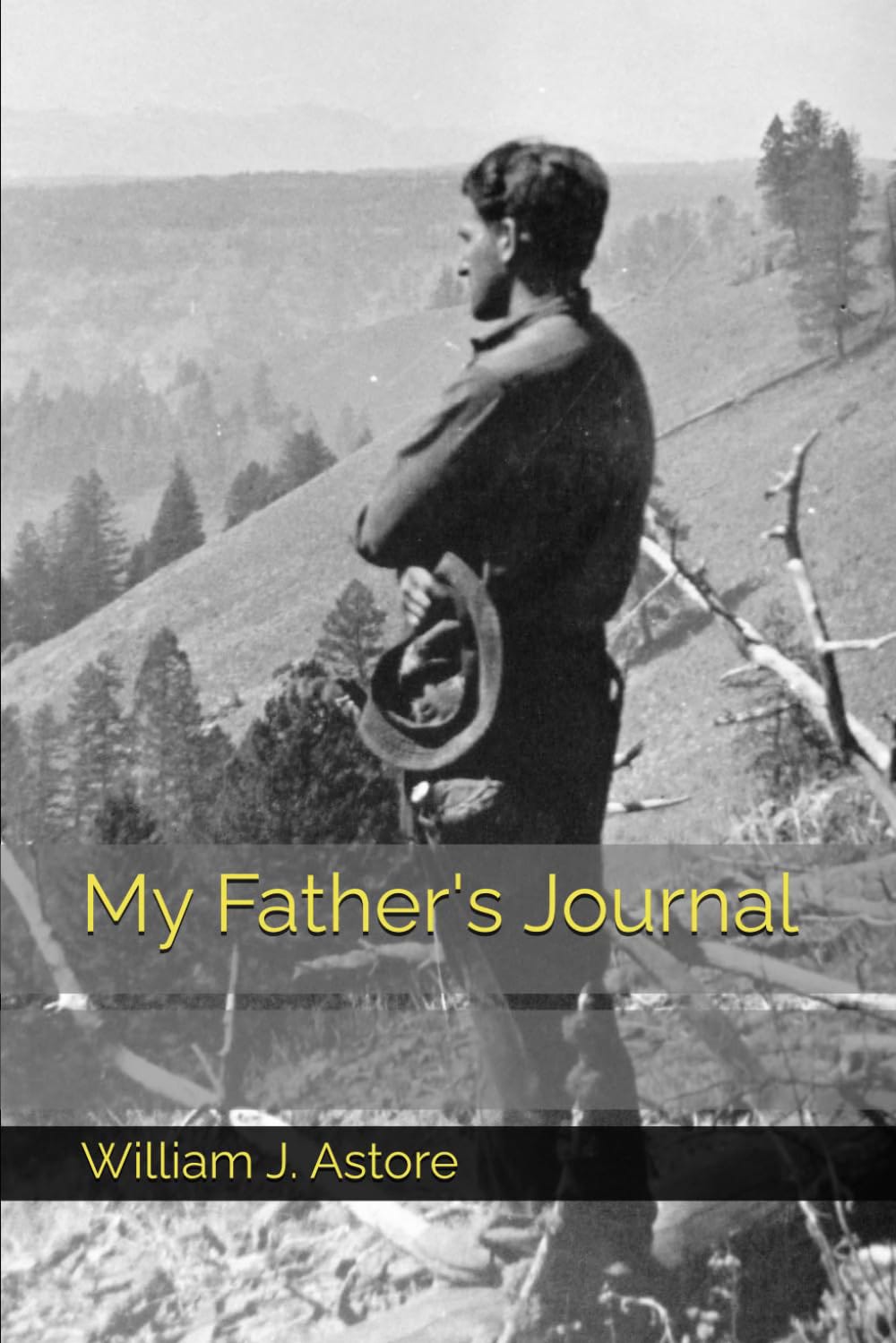
It seems like forever and a day, but I finally published my dad’s journal with my notes and photos at Amazon. Here’s the link.
It’s available for $10 in paperback, $5 on Kindle, or free if you have Kindle unlimited.
Here’s my description of the book:
Before he died, my father wrote a journal about his life. Born in 1917, he lived through the Great Depression, served in the Civilian Conservation Corps (mainly in Oregon) in the 1930s, survived working in factories and in the U.S. Army during World War II, and eventually became a firefighter for the City of Brockton (MA), serving for over 30 years.
Though he never finished high school, he read philosophy, loved classical music, and was an avid opera fan. The son of Italian immigrants, his story is the story of America, the story of a young man who worked hard and who in the process acquired a lot of wisdom from life’s setbacks.
This journal recounts many episodes in his life and the lessons he learned from them. It is one remarkable note in a fanfare for the common man.
*****
I started transcribing my dad’s journal soon after he died in 2003, but it took me two decades to put it all together in book form. If you find time to read it and you like it, perhaps you can bop on over to Amazon and write a review of it.
Thanks so much to all my readers. I hope you enjoy my book about my dad.
As a retired Air Force officer and military historian, I’m familiar with all kinds of euphemisms about killing, e.g. “precision bombing” and “collateral damage.” Just as it’s easier to kill at a distance, it’s easier to kill when we use words that provide distance from the act. Words that facilitate detachment. Words that befuddle and confuse our minds.
When writing honestly about war, it’s best to use bullet-hits-the-bone words: atrocity, murder, war crime, slaughter. Rape, pillage, burn are “old” words associated with war, and these words often most fittingly describe war and its likely effects and outcomes.
Powerful, blunt, and accurate words should remind us that war is inherently horrible and also profoundly anti-democratic. War is consistent with authoritarianism and lack of freedom, yet Americans nowadays seem to think war (and words about war) is conducive to democracy and freedom, e.g. Afghanistan, Iraq, and now Ukraine.
We used to know better. Military people are fond of the saying, “freedom isn’t free,” but neither is war. Indeed, war and its various manifestations are costing this nation more than a trillion dollars a year while weakening democracy and our constitutional freedoms. And that is a very high price to pay to keep the factories of the merchants of death humming and the generals and admirals happy.
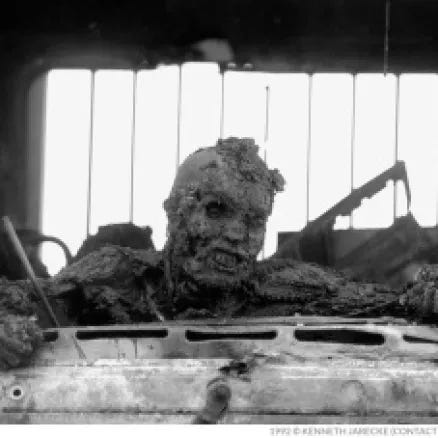
Grisly images like this one (of a dead Iraqi soldier) were censored in America. Language is censored as well.
Fortunately, there’s a new guide and website available that alerts us to the importance of language and war. The website is wordsaboutwar.org, from which you can read and download suggestions on how best to use words to convey the horrors and costs of war to people everywhere. I urge you to visit the site and peruse the guide. (Full disclosure: I was an advisor to this effort, which was ably led by David Vine.)
Here’s a sample of a few comments I made in passing to the group:
A war on terror is truly a war of terror because war itself is terrible.
Friendly fire is being killed by one’s own, often due to the chaos of war, the sheer waste of it all, exacerbated by incompetence. “Fire” is always unfriendly.
Very few troops are “heroes,” and indeed most aren’t, because heroes are rare in all walks of life.
The word “casualty” is too benign. I much prefer killed and wounded: the victims of war.
What are “enemy noncombatants”? They are usually innocent civilians.
With respect to the “War on Terror” that the U.S. has prosecuted for 22 years and counting, I noted that:
We (the U.S.) manifested a Manichean world view; as George W. Bush said soon after 9/11, you’re either for America (and all its violence) or you’re for the terrorists (with their violence). If you wanted a non-violent approach, you were dismissed as naive or “for them.” It was good versus evil, thus the infamous “axis of evil” the U.S. allegedly faced.
This is, of course, a problem with all discourse related to war. Subtlety and nuance are thrown out the window. Language is greatly simplified. The U.S. is “doubleplusgood” and the enemy must be the opposite while simultaneously being dehumanized. We kill “cowardly” enemy troops or terrorists (by drone they’re “bugsplat”) yet our “heroic” troops “fall” in battle and are revered as “the fallen.” Violent combat is disguised as “kinetic action” in U.S. military communiques.
In my view, the dishonesty of this language captures the dishonesty of America’s wars.
General William T. Sherman (U.S. Civil War) famously said that “War is all hell.” Sherman knew the hellish and harsh realities of war; he knew, as he wrote, that “war is cruelty, and you cannot refine it.” Too many people today are using and manipulating words to refine war. They’re camouflaging war’s harshest realities. Writers should write plainly and honestly, as General Sherman did, to capture war’s hellish nature. By choosing honest words, we also help to create a better future in which the threat of war recedes precisely because we recognize more clearly its horrific nature and terrifying costs.
Other high-ranking military officers, like General Smedley Butler, for example, also wrote plainly about war. As Butler famously said, war is a racket, and he described himself as a gangster for capitalism. Now that was plain speaking about war!
The chief intent of speaking and writing plainly about war is to discourage war and save lives. Some might see it as patriotic—saving the lives of U.S. troops by helping to prevent bloody awful wars—but more broadly the goal is humanistic—to save the lives of all those on the receiving end of bullets and bombs.
Interestingly, U.S. troops at lower levels are generally blunt about what war is about. Talk to sergeants at the front and you’ll hear visceral truths, probably enhanced by choice expletives. I’ve heard U.S. Marines shout “Kill!” at graduation ceremonies. Killing, after all, is what war enables. Mass killing leads to atrocities like My Lai in Vietnam. This fact should never be sugarcoated.
Few people, however, truly want to confront war’s horrors. Gazing upon the face of war is profoundly disturbing, which is why we’re encouraged to look away. And so the face of war is airbrushed and camouflaged with euphemisms and buried under a blizzard of acronyms.
If we are to end war and prevent atrocity, we must seek to name things accurately while calling up mental images (no matter how disturbing) appropriate to the horrors of war. The guide at wordsaboutwar.org is an important step in that direction.
Update: I went on Podcast by George today to talk about all this:
You won’t have to burn them if they’re never published
W.J. Astore
There are many forms of lying. One that we don’t always think about is lying by omission. A partial truth can be a more insidious lie than an outright falsehood. I might argue, for example, that the Vietnam War was awful for America, dividing the country and costing more than 58,000 U.S. troops their lives, along with innumerable other mental and physical casualties. But if I leave out or downplay the far more horrifying costs to Southeast Asia, the literally millions of Vietnamese, Laotians, and Cambodians killed in that war, the poisoning of their land by highly toxic chemicals like Agent Orange along with millions of unexploded mines and munitions, which still kill to this day, I have most definitely lied by omission. Perhaps the Vietnam War was a “tragedy” for the U.S., but it was far, far worse for those on the receiving end of American firepower.
It’s not easy to get books published that tell tough truths we’d prefer not to hear. For example, Nick Turse’s book about “the real American war in Vietnam,” entitled “Kill Anything that Moves,” was published by Metropolitan Books, which is now being shuttered and shut down, notes Tom Engelhardt in his latest article at TomDispatch.com. Engelhardt has seen this before, with Pantheon Books, another publisher known for publishing books that told uncomfortable truths about America. It too was a victim of consolidation in publishing, of being shut down, mainly because the consolidators simply didn’t like the books being published. And perhaps too because these same books sometimes didn’t make enough money (though some proved to be bestsellers, which, from the owners’ ideological perspective, may have been worse).
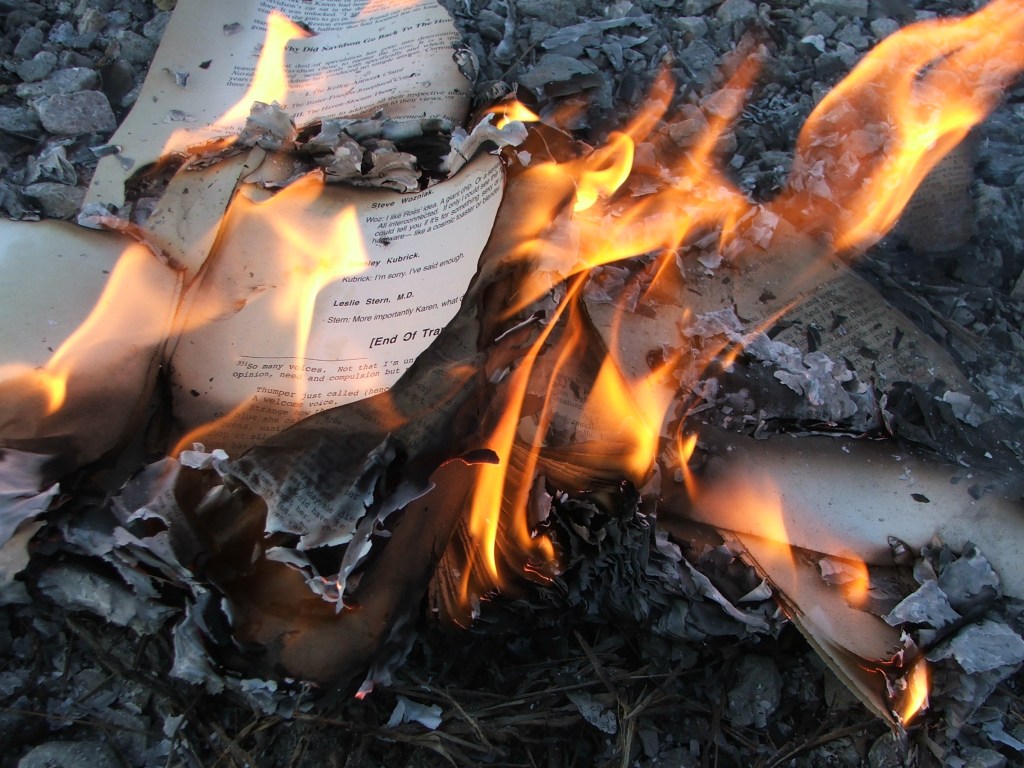
Engelhardt’s heartfelt article made me think. Imagine that. It made me think that the best way to “burn” books is to make sure they’re never published. Same with banning books. You don’t have to ban them when they can’t find their way into print.
Also, it’s far easier to manufacture consent — to control the national discourse — when only certain books are being published and hyped — the ones reflecting and reinforcing mainstream thought.
Whether it’s shutting down Pantheon or Metropolitan or similar publishing houses, it’s about blocking alternative views that challenge capitalism, neoliberalism,, neoconservatism, and similar mainstream ideologies. You can always claim that the house you’re shuttering just wasn’t making enough money, wasn’t moving enough product, never mind the quality of that “product” and the invaluable service it was providing to democracy and the free exchange of ideas.
Readers here know that I started writing for TomDispatch in 2007. My first article was critical of the Petraeus Surge in the Iraq War, but my goal back then was “to save the U.S. military from itself,” from its misleading and often mendacious metrics to its inflated sense of itself, shown most clearly with its obsession with medals and decorations even as the war was going very poorly indeed. I tried several mainstream publishers including the New York Times and Washington Post without success. A friend mentioned TomDispatch to me, I wrote to Tom, and he found something in my writing worthy of being published at his site. My next “Tomgram” will be the 95th I’ve written for the site.
If TomDispatch didn’t exist, my criticisms and critiques would probably have never been published. Tom’s example inspired me to write further, to become a regular at Huff Post and Antiwar.com and to start my own blogs. Bracing Views exists because of the example provided by TomDispatch.
Good books beget other good books. Critical books beget other critical books. Scholarship builds on itself. When you block or severely limit opportunities for good, daring, and critical books from being published, you strike a blow against scholarship, against the free exchange of ideas, against the very idea of an enlightened America made more powerful and righteous by its informed citizens.
Sure, it’s just another publisher being put out of business. Nothing to see here, move along. Except it’s much more than that. It’s a form of book burning before the book ever existed, a silencing of synapses in our minds, an insidious form of mind control in the sense of curtailing certain thoughts and ideas from ever taking form.
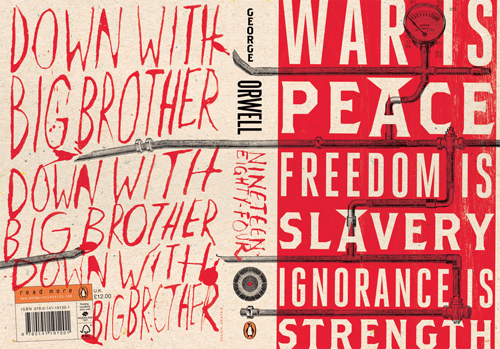
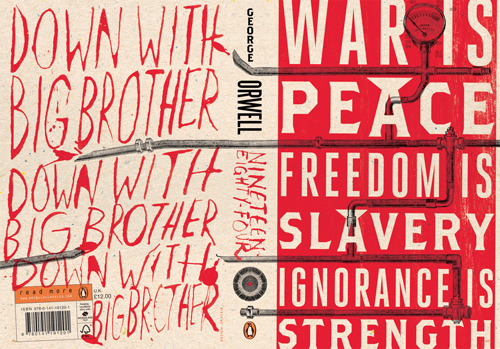
Fans of George Orwell’s 1984 will recall Newspeak, the development of a new language that also involved the elimination of certain words and concepts. The method is clearly defined by the character of Syme in Orwell’s book:
“You think … our chief job is inventing new words. But not a bit of it! We’re destroying words—scores of them, hundreds of them, every day. We’re cutting language down to the bone … You don’t grasp the beauty of the destruction of words. Do you know that Newspeak is the only language in the world whose vocabulary gets smaller every year?”
“Don’t you see that the whole aim of Newspeak is to narrow the range of thought? In the end we shall make thought-crime literally impossible, because there will be no words in which to express it. Every concept that can ever be needed will be expressed by exactly one word, with its meaning rigidly defined and all its subsidiary meanings rubbed out and forgotten … Every year fewer and fewer words, and the range of consciousness always a little smaller… The Revolution will be complete when the language is perfect…”
Trumpspeak is America’s version of Newspeak. Whatever you choose to call it, the intent is clear: the control of thought through the elimination of certain words and concepts. Today at TomDispatch.com, Karen Greenberg documents the destruction of certain words and concepts within the Trump administration. These words and concepts include refugees, climate change, greenhouse gases, America as a nation of immigrants, and even the notion of science-based evidence.
The suppression or elimination of words and phrases is one big step toward thought control; so too is the parroting of certain pet phrases and concepts, such as “support our troops” or “make America great again” or “homeland security.” In an article about Alfred Döblin’s Berlin Alexanderplatz that appeared in the Nation, Adam Kirsch writes of how Döblin recognized the “sinister” nature of “the colonization of the individual mind by parasitic discourses,” the way in which reality itself is “cloaked” by “predigested phrases.” Döblin wrote of how “The words come rolling toward you, you need to watch yourself, see that they don’t run you over.”
And I think something like this is happening in America today. We’re being run over by certain words and concepts, even as other words and concepts related to democracy and cherished freedoms are carefully elided or eliminated.
Of course, Orwell wrote about this as well. “Predigested phrases” is captured by Orwell’s concept of duck-speak, in which proles just quack like ducks when they speak, echoing the sounds fed to them by party operatives. Quacking like a duck requires no thought, which is precisely the intent.
Pay attention, America, to the words you’re losing before they’re gone forever; and also to the words you’re using before they run you over.
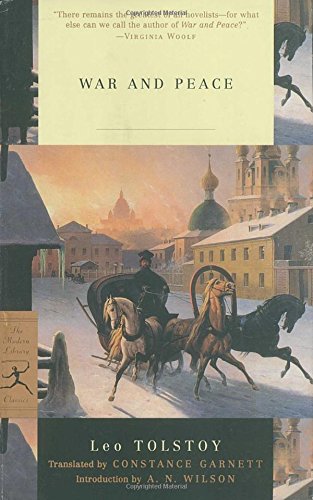
America’s bad novel has a one-word title: War (with apologies to Tolstoy)
W.J. Astore
A curious feature of America’s wars is their lack of thematic coherence. Lacking a clear beginning (other than the 9/11 attacks), they also lack a clear end point. It’s all middle – repetition without meaning, action without progress, like a bad novel that introduces lots of characters but that never goes anywhere. Look at the rolling cast of characters in charge of America’s wars in places like Afghanistan and Iraq. Other than generals who disgraced themselves in ways unrelated to combat performance (David Petraeus and Stanley McChrystal), their names are unmemorable.
The American people have largely cast aside the “bad novel” of America’s wars. They find it boring, repetitive, inconsequential (at least to them). But that doesn’t mean people aren’t paying for it, each and every day.
In the absence of Congressional declarations, America’s wars today are not being waged in the name of the people. Cowed by the Executive branch and coerced by money, a spineless Congress willingly sidelines itself. In turn the Executive branch keeps the American people isolated from war even as it misleads them with lies and half-truths.
And thus the American people refuse to take ownership of these wars. And who can blame them, since these wars aren’t being fought in their name or for their interests. America’s wars are the preserve of the commander-in-chief and his various “experts” in and out of uniform, men like retired general and current Secretary of Defense James Mattis, John Bolton, the new National Security Advisor, and Mike Pompeo, the CIA chief who now leads the State Department. Unconcerned with the will and concerns of the people, these men favor aggressive stances and support U.S. military interventions around the globe.
What’s the solution to America’s “bad novel”? Ignoring or disowning it only empowers its authors and their predilection for waging war, however falsely, in our name. Instead, we have to overcome America’s ethos of violence and its climate of fear. Campaign finance reform is vital if we want to suppress the influence of war profiteers. Cutting the Pentagon budget by at least 20% is essential as well. Finally, we need to educate ourselves about war, and to insist that wars are fought only when authorized by Congress, and only as a last resort instead of the first.
If we don’t take these steps, America will be forever stuck reading a bad novel with a one-word title: War.
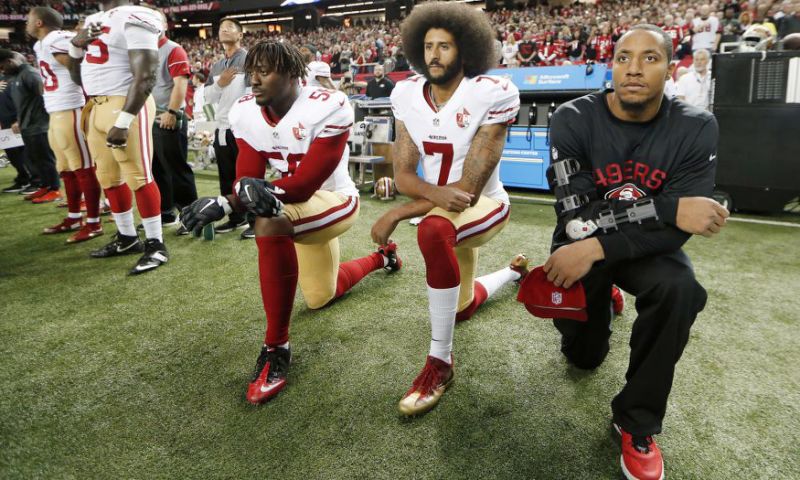
A week after Super Bowl Sunday, I was reading Frederick Douglass’s “Fourth of July Address,” given by the intrepid abolitionist and eminent public intellectual on July 5, 1852 to several hundred spectators in Rochester, New York. It struck me then how contemporary Douglass’s antebellum insights into the nature of patriotism in America seemed, especially in the wake of an NFL season steeped in controversy over football players (mostly African-American) taking a knee during the national anthem. Their symbolic protest, dismissed by some, notably including a tweeting president, as unpatriotic, was intended to highlight how police encounters with people of color in this country all too often and disproportionately end in unjustified uses of deadly force.
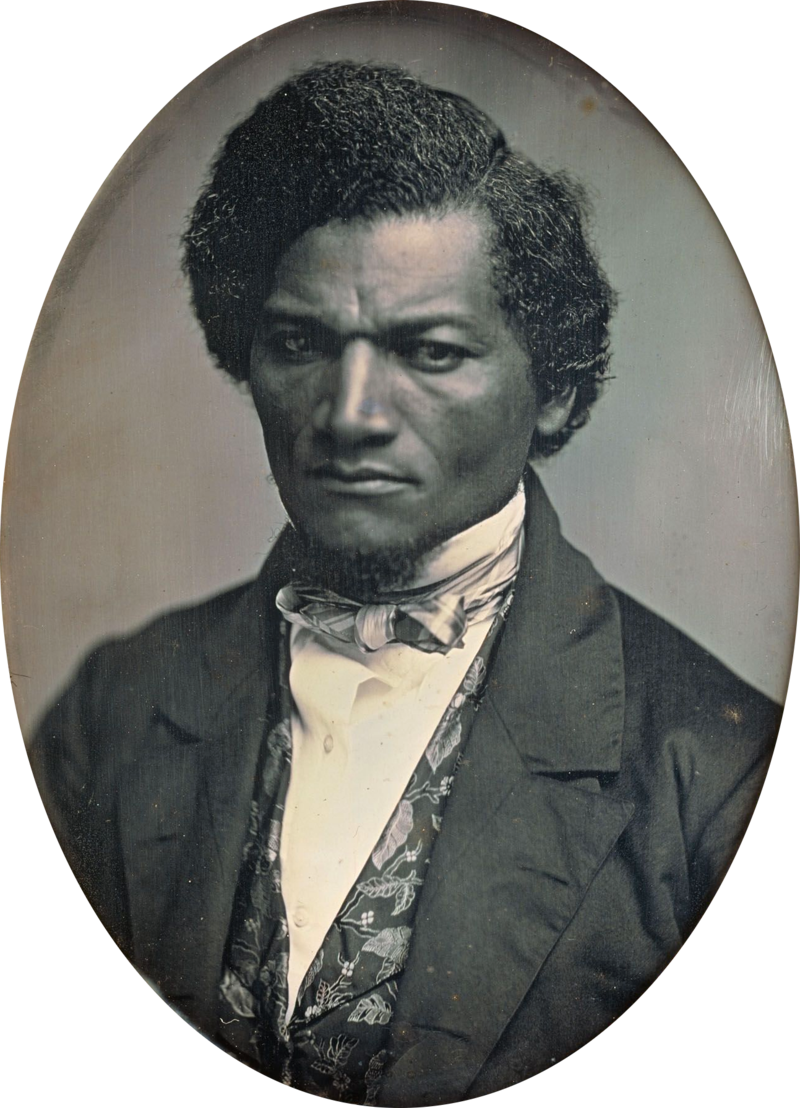
Frederick Douglass near the time of the Rochester Speech, given on the 5th of July 1852
At the time of his Fourth of July Address, Douglass was about fifteen years removed from a state of enslavement he managed, against steep odds, to escape and had become an orator of note in abolitionist circles. Attesting to a sense of trepidation in accepting an invitation to speak before such a large audience on their august day of national celebration, Douglass praised the generation of 1776 (“your fathers,” he calls them) for “lov[ing] their country better than their own private interests” and for their “solid manhood” in “preferr[ing] revolution to peaceful submission to bondage.”
Douglass then reminded his audience that, while it is easy in present times to celebrate the founders for resisting British oppression, “to pronounce against England, and in favor of the cause of the colonies” in the 1770s meant being pilloried and browbeaten as “plotters of mischief, agitators and rebels, dangerous men.” Moving beyond this critique of the easy and self-congratulatory patriotism of his contemporaries, Douglass raised the prospect that the founders’ great deeds might even be evoked by men of tyrannical intent: “The cause of liberty may be stabbed by the men who glory in the deeds of your fathers.”
Douglass went on to warn his listeners, and free citizens of the American republic generally, against shirking their own responsibility for carrying on the emancipatory tradition celebrated each Fourth of July–“You have no right to wear out and waste the hard-earned fame of your fathers to cover your indolence.”
While there is much more to Douglass’s powerful address, his opening discourse on the patriotic meaning of the Fourth of July provides a way of dousing the “fire and fury” that has been generated by the right-wing media around the symbolic protest started by Colin Kaepernick in 2016 and seeing the significance of that protest with a quiet clarity.
Douglass’s Fourth of July Address warns against the self-serving belief that routinized, programmed patriotic gesture is equivalent to a true love of liberty. He daringly calls out those who would abuse patriotic gesture in order to control others. His words remind us that the struggle for freedom is always a work in progress and that it is too easy to celebrate its provisional achievement after the hard and risk-laden work is done by others.
Douglass’s speech is part of a tradition of exposing empty patriotic gesture and challenging citizens to live up to the emancipatory demands of true patriotism, a tradition which Colin Kaepernick and his emulators can be seen as stalwartly embracing. His speech serves as a powerful rejoinder to those who would, like Donald J. Trump, attempt to shame NFL player-protesters into anthem-standing conformity with transparently cynical references to the sacrifices of US veterans and members of the armed forces.
M. Davout (pseudonym) is a professor of political science who teaches in the Deep South.
The historian Jill Lepore has an interesting article at The New Yorker on dystopic novels and their popularity today. Dystopias are all the rage, which is not surprising given the politics of fear that rules us.
Consider the stark contrast between the Republican Party of today versus that of the 1980s. Remember the sunny optimism projected by Ronald Reagan? The idea it’s “morning again” in America? Now we have the dystopia of Trump. Mexicans are rapists! Muslims are terrorists! They’re coming to get us! Build a wall! Torture and kill them!
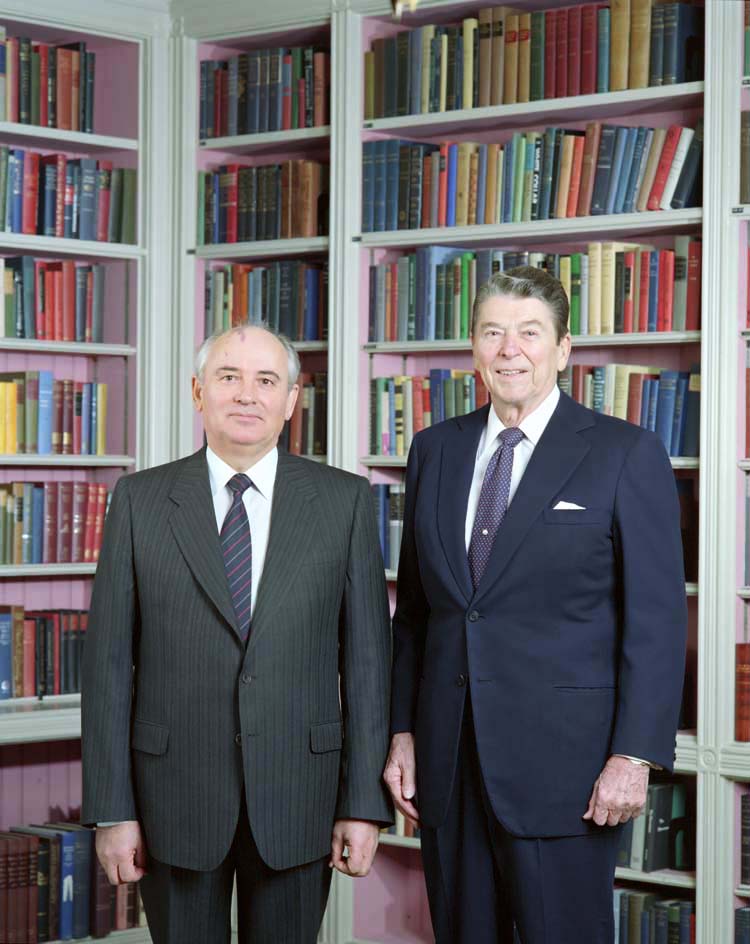
I’m not suggesting Reagan was a saint. Reagan was, however, a gifted communicator and an inspiring symbol for many. There was substance there as well. As a young man, he served as a lifeguard and helped to save lives. I find it intriguing that he was somewhat of an introvert, somewhat of a dreamer. He worked with the Soviets and Mikhail Gorbachev on the elimination of nuclear weapons, a dream that did not come to pass. For all his flaws, there was a fundamental decency about him.
Contrast Reagan to Trump. With Trump, it’s all about him. Trump’s favorite way of communicating is with insults, bluster, threats, and tweets. Reagan dreamt of eliminating nuclear weapons; Trump insists America will remain “at the top of the [nuclear] pack,” at a cost of a trillion dollars over the next generation.
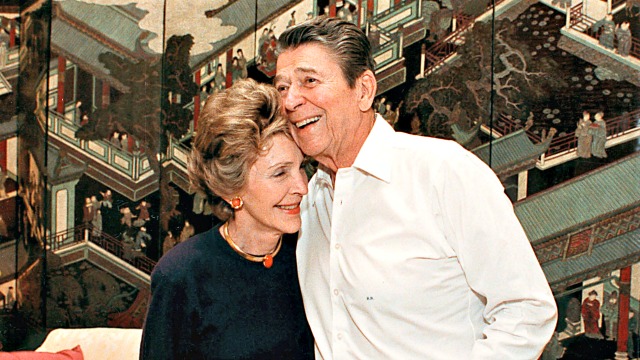
Reagan and his wife Nancy were quirky as well (astrology, anyone?), but seeing how they looked at each other and treated one another, no one could doubt their love. Trump and Melania? In public, at least, they come across as ill at ease, uncomfortable with each other. Small potatoes, perhaps, but part of being the “First Family” is projecting harmony, or so it has been in the past. Nowadays, such symbolism seems unimportant as Trump himself dominates the scene, his wife seemingly a bit player in his life.
There’s a toxicity to Trump that’s consistent with the emergence of all these dystopic novels. The Victorian author Samuel Smiles once wrote that a man should be what he seems or purposes to be. By this Smiles meant that a man must demonstrate, by his behavior, uprightness of character. A quaint expression, that. When people think of Trump today, “uprightness of character” doesn’t exactly spring to mind. Rather the reverse.
Though I wrote early on that Donald Trump had a serious chance at the presidency, by early November of last year I thought the negativity of his message – his bundle of hate – would not prove compelling enough to carry him to victory. I was wrong, of course. Trump, with his dystopic rhetoric as well as his actions, captured as well as amplified a prevailing mood.
It’s not morning again in America. Under Trump, darkness and dystopia prevail.
George Orwell’s 1984 is filled with wisdom. Perhaps my favorite saying from that book is Orwell’s statement about history and its importance. He said, he who controls the past controls the future. He who controls the present controls the past.
If you have the power, in the present, to rewrite history, to redefine the past, enshrining your version of history as fact while consigning all the bits you don’t like to oblivion (“down the memory hole”), you can define people’s sense of reality as well as what they believe is possible. You can limit what they see, their horizons. You can limit how and what they think. You can, in a major way, control the future. Add the control of language to the restriction and re-definition of history and you have a powerful means to dominate meaning, discourse, and politics in society.
Donald Trump and Company are brazen in their rewriting of history, notes Rebecca Gordon in her latest post at TomDispatch.com. They make no apologies and take no prisoners. They simply claim lies to be true, repeating them over and over until some people come to accept them as truth. The examples she cites include the size of Trump’s inauguration crowd (“Bigly!”), the reality of global warming (“Chinese lie!”), and why Trump fired FBI Director James Comey (“He hurt Hillary!”).
Another example of the big lie is the whole concept of “Trumpcare,” the recent revision to Obamacare as passed by the House. They sell this as a health care plan instead of what it really is: a health coverage denial plan and tax cut for the rich.
The GOP health care bill would insure 23 million fewer people than current law after a decade, while potentially impacting many with pre-existing conditions, according to the nonpartisan Congressional Budget Office.
The bill would spend $1.1 trillion less on health care and use the savings primarily to finance large tax cuts for high-income earners and medical companies. Overall, it would reduce deficits by $119 billion over ten years.
I know one thing: that’s not a health care plan.
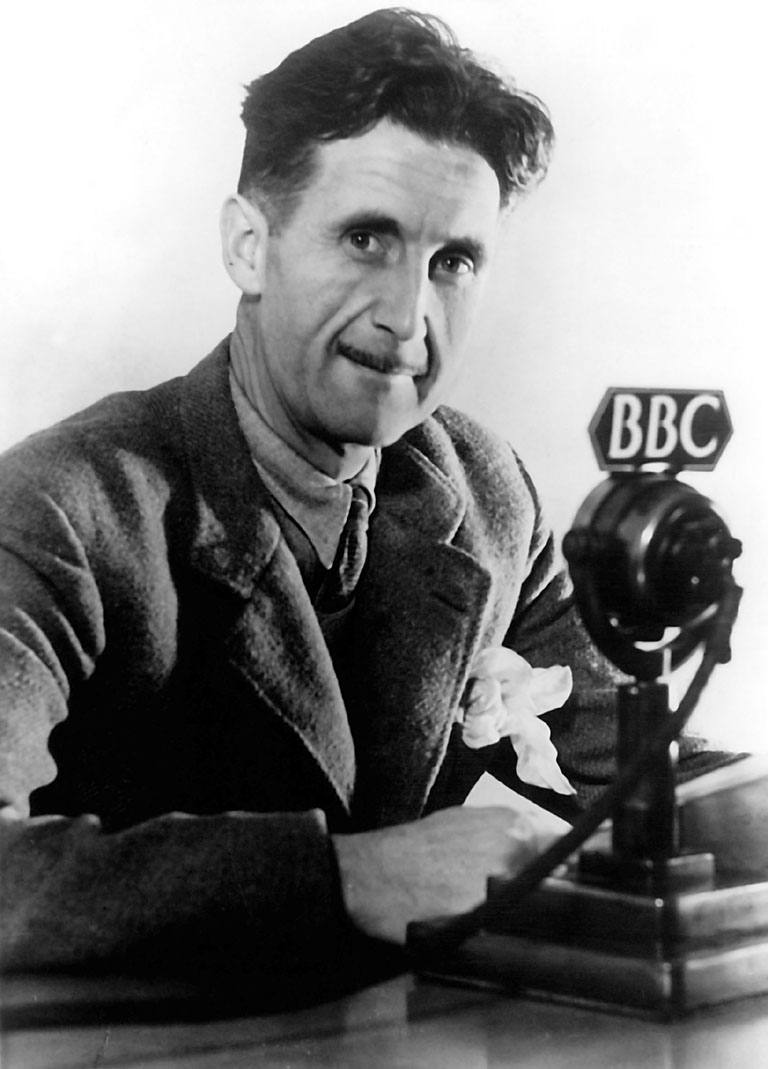
George Orwell
Returning to language, a big theme of Orwell’s 1984 is how language will be simplified, or dumbed down, stripping away meaning and subtlety and substituting unreflective obedience and coarseness in their place. Think here about how Donald Trump speaks. Orwellian expressions like “doubleplusgood” are not foreign to a man who speaks in glittering generalities to sell his ideas and hyperbolic superlatives to extol his own virtues.
In his introduction today to Rebecca Gordon’s article, Tom Engelhardt quotes Trump’s recent graduation speech at the Coast Guard Academy, during which Trump did what he does best — sell himself with lies (“alternative facts!”):
I’ve accomplished a tremendous amount in a very short time as president. Jobs pouring back into our country… We’ve saved the Second Amendment, expanded service for our veterans… I’ve loosened up the strangling environmental chains wrapped around our country and our economy, chains so tight that you couldn’t do anything — that jobs were going down… We’ve begun plans and preparations for the border wall, which is going along very, very well. We’re working on major tax cuts for all… And we’re also getting closer and closer, day by day, to great healthcare for our citizens.
One thing Trump does know is how to manipulate language — in short, to lie — to his own benefit.
In this age of Trump, a sense of history has rarely been more important. We have to fight for the richness, the complexity, as well as the accuracy of our history and our language. The very existence of the American republic depends on it.
What if World War II in the Pacific had not ended with the atomic bombs and Soviet entry into the war in August of 1945? If the Manhattan Project to build atomic weaponry had failed, and if that failure had necessitated an American invasion of Japan’s Home Islands in 1946, what level of destruction would have been visited upon Japan, and at what cost to the invading Americans?
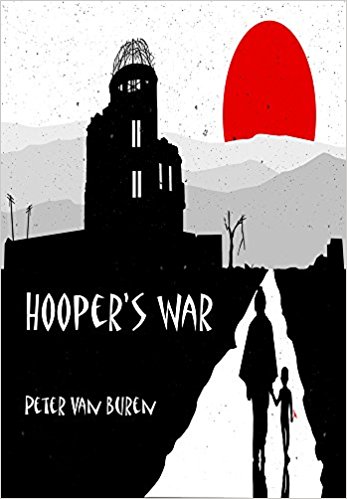
Alternative histories can be an intriguing way to highlight the contingencies of world events in a way that captivates readers. Peter Van Buren’sHooper’s War: A Novel of WWII Japan, both intrigues and captivates. Hooper’s War imagines a world in which Americans did have to launch an amphibious invasion of Japan in 1946, and that invasion is as bloody and as awful as students of history might expect.
Recall here the all-too-real bloodbaths on Iwo Jima and Okinawa in 1945. Recall as well the devastating firebombing raids led by General Curtis LeMay against Tokyo and numerous other cities that killed hundreds of thousands of Japanese. Now imagine if these had persisted into 1946, taking Kyoto, a most sacred place to the Japanese, with them.
The historian John Dower wrote convincingly of how the U.S. war against Japan was different in kind from its war against Nazi Germany. For Dower, the U.S./Japan war was a “war without mercy,” a war where each side demonized the other as culturally and racially inferior. Such attitudes produced the most vicious fighting and bred atrocities on both sides. Japanese warrior fanaticism, moreover, led to suicidal attacks, the Kamikazes, that sunk or damaged so many American ships.
Nothing good can come from prolonging such a war, and in Van Buren’s retelling, atrocities and tragedies occur with a frequency one would expect of a war driven by racial hatreds and profound cultural misunderstandings. Nevertheless, in the darkness he provides a ray of hope as Lieutenant Nate Hooper, the main character, becomes separated from his unit and has to deal on an intimately human level with a Japanese sergeant. I don’t think I give away much by stating their relationship doesn’t end well for all — such is the reality of a war driven by hatred. The horror of war goes deep, Van Buren shows us, but so too does the potential for mitigating and ultimately for overcoming it.
Some readers of Bracing Views will recall that Van Buren formerly worked for the U.S. State Department. His first book, “We Meant Well,” is that rare thing: an honest retelling of the failures of America’s reconstruction efforts in Iraq to which he was both witness and participant. He brings his experiences of war and diplomacy to bear in this, his latest book, enriched by the years he spent working in Japan with the State Department.
Peter Van Buren
Hooper’s War is for anyone interested in World War II in the Pacific, for anyone with a yen for imaginative “what-if” histories, or indeed for anyone who enjoys a good story well-told.
Full disclosure: Peter Van Buren sent me an advanced copy of Hooper’s War, to which I contributed a well-deserved commendatory blurb.



 Bracing Views