Federal funding for the arts and humanities often comes under attack, notably from conservative quarters when a particular artistic expression is considered to be objectionable. Cut the NEH and NEA (national endowments for the humanities and arts), Paul Ryan says, and we can save a whopping $335 million a year (slightly more than the cost of one F-35 jet fighter for the Marine Corps).
What are the humanities and the arts, after all? Why should the government fund them? Can’t we let the marketplace rule? Won’t good art find an audience (and patrons) without the government getting involved?
Art and the humanities? Well, they are what make us human. Art and music and dance and theater, but also our history, literature, languages, poetry, and so on. Art and the humanities teach us about the human condition — what it means to be human. So, in a way, religion is also part of the arts and humanities in the secular sense of the history of various belief systems, what they teach us about morality and ethics, as well as their iconography, music, and so on.
As a personal aside, I’m sure my first true artistic/humanistic experience came in my local Catholic church. The splendor of light streaming through stained glass windows, the intricacy of the architecture, the majesty of the altar, the beauty of the music: all of this and more represented an artistic and humanistic experience that resonated with me, putting me in touch with something larger than myself. I’ve felt similar majesty being out in the cathedral of nature, gazing out at the Continental Divide at 12,000 feet as clouds raced overhead after a long hike in the Colorado Rockies.
Nurturing and protecting the arts, humanities, and nature too is fundamental to being human. We should be stewards of beauty in all its forms. And certainly government must have a role in funding the arts and humanities as well as protecting the planet.
Unfortunately, the American political scene is oligarchical and driven by venality and greed. So nowadays what you see in education is an obsessive push for STEM, for competitiveness vis-a-vis various foreign countries, for workforce development, as if education can be reduced simply to job/vocational training. Arts and humanities? Humbug!
I have nothing against science, technology, engineering, and math. I majored in mechanical engineering as an undergraduate, loved calculus and differential equations, took several courses in physics and chemistry, and eventually got advanced degrees in the history of science and technology. Science is great and wonderful; technology is fascinating and much needed. Vocational training is important too.
But there’s more to life than getting a job.
Oligarchical powers don’t like to fund the arts and humanities. They’d rather fund business and industry in the name of competitiveness (and profit!). But there’s more to life than building things, crunching numbers, and working for the man. We have souls, if you will (there’s the Catholic in me), and our souls need to be nurtured by ideas and ideals, by beauty, by the angels of our better natures as represented by the arts and humanities.
So please act to save the arts and humanities, especially in our schools. They enrich our lives in ways you simply can’t measure with dollar signs. And please act to preserve nature and our planet as well, whether you see it as God’s creation or as spaceship Earth — or both.
We tackle heavy subjects at this site, but occasionally we throw in a change of pace. My Dad was a fount of homespun wisdom and sayings. Three of them immediately spring to mind. “Water seeks its own level,” meaning (for him) that you don’t have to coddle talented kids—they’ll find their own path in life. “The peaches don’t drop too far from the tree,” meaning kids are often a lot like their parents, even when (especially when) they take pains to deny it. And “The cream rises to the top.”
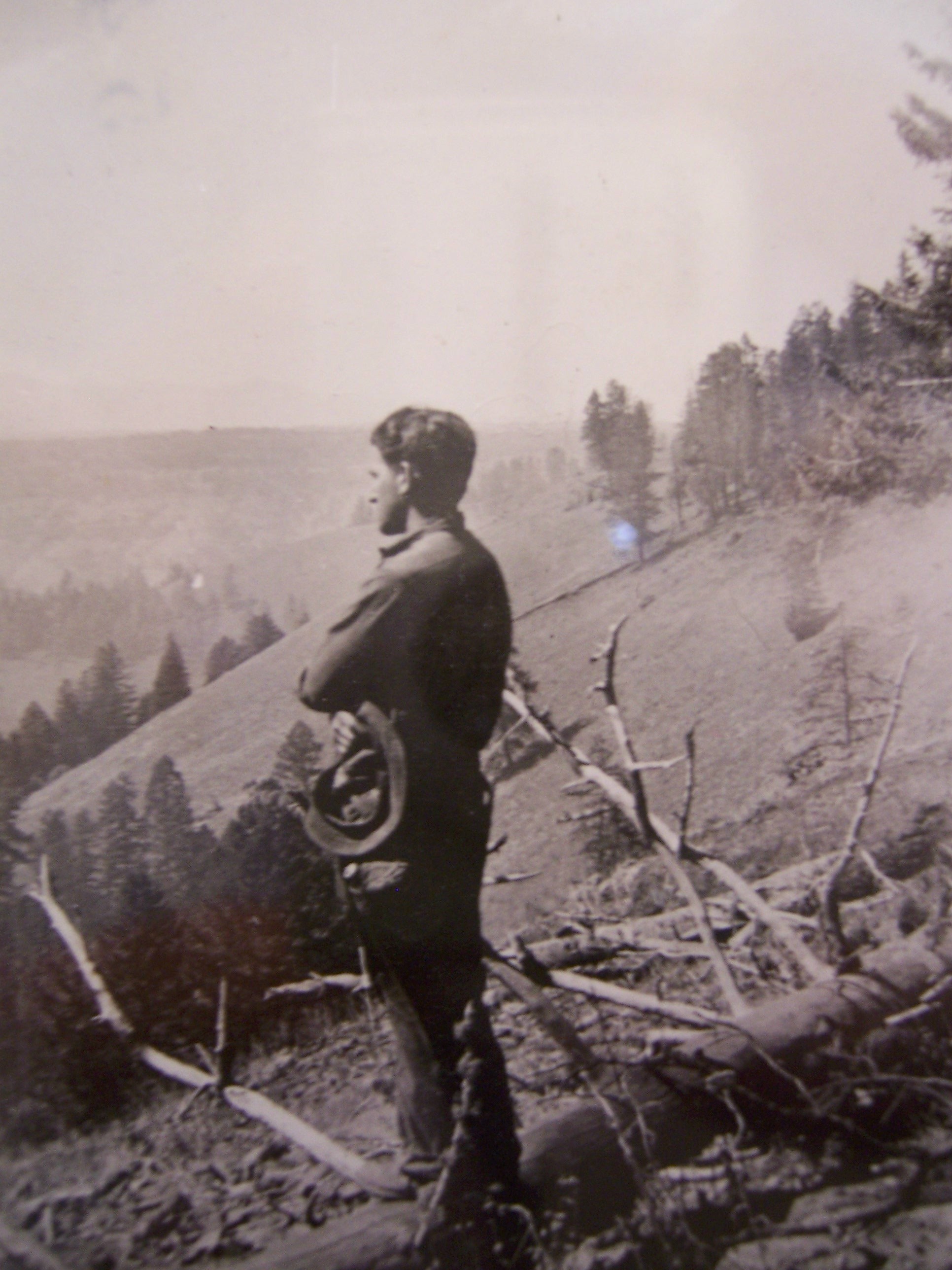
That last one is less than obvious to today’s generation. In these days of homogenized milk, many people have no experience skimming the cream from the top of a glass bottle or bucket of milk. But my father did. He recounts his experience in a short anecdote he titled, “A full mess cup,” when he was in the Civilian Conservation Corps in 1937:
We were in a rest area [in Oregon] when the pickup truck loaded with five gallon cans of fresh milk came in.
I was first in line with my mess cup. I guess it held more than a pint. Those days milk wasn’t homogenized. Being first my cup was filled with 100% cream. Who thought of fat and cholesterol in those days? What a taste treat.
Sometimes it pays to be first in line, especially when you can skim the cream from the top.
My father’s fourth saying? It’s one of my favorites: “The empty barrel makes the most noise.” I think of this whenever I encounter blowhards — someone like Donald Trump, perhaps?
During the Roman Empire, chariot races and gladiatorial games served to entertain the people. The U.S. empire’s equivalent, of course, is NASCAR and the NFL. Serve up some bread to go with the circuses and you have a surefire way to keep most people satisfied and distracted.
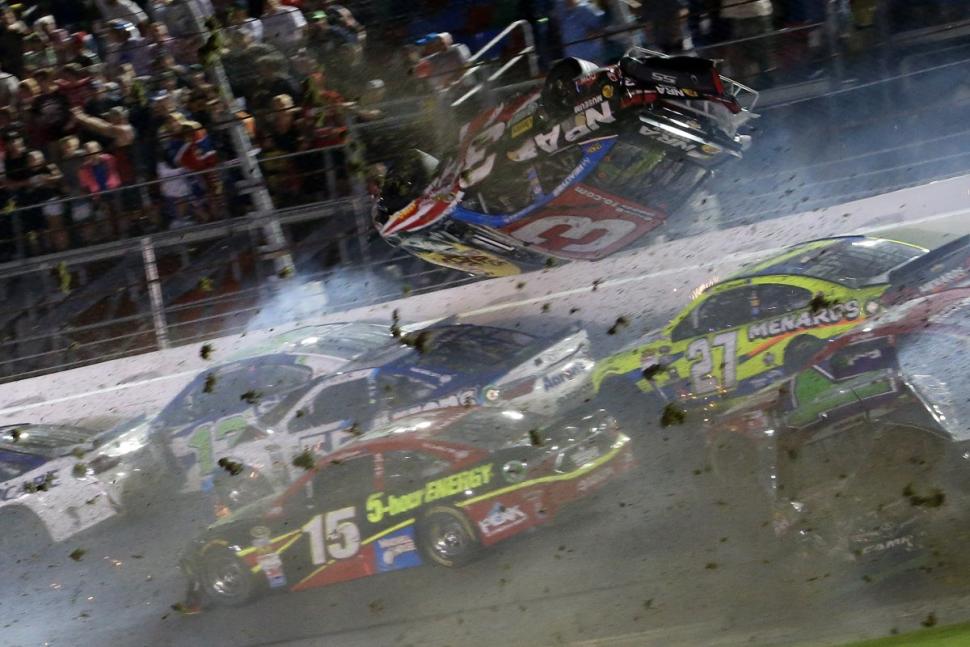
That’s true enough, but let’s dig deeper. NASCAR features expensive, high-tech machinery, heavily promoted by corporate sponsors, with an emphasis on high speed and adrenaline rushes and risk-taking — and accidents, often spectacular in nature. Indeed, turn to the news and you see special features devoted to spectacular crashes, almost as if the final result of the race didn’t matter.
Turn to the NFL and you see it’s about kinetic action — big plays and bigger hits, with players often being carted off the field with concussions or season-ending injuries. The game itself is constant stop and go, go and stop, with plenty of corporate sponsors again.
High-octane violence sponsored by corporations facilitated by high-tech machinery; big hits and repetitive stop-and-go action also sponsored by corporations; spectacular (and predictable) smash-ups and serious injuries, all enfolded in patriotic imagery, with the military along for the ride to do recruitment. Yes, our leading spectator sports do say a lot about us, and a lot about our foreign policy as well.
It used to be said that the Romans fought as they trained: that their drills were bloodless battles, and their battles bloody drills. We conduct foreign policy as we play sports: lots of violence, driven by high technology, sponsored by corporations, with plenty of repetition and more than a few crash and burn events.
A good friend wrote to me to contrast rugby with American football (the NFL). In rugby, he explained, the goal is ball control. Big hits are less important than gaining the ball. The play is hard but is more continuous. Playing as a team is essential. In rugby, there’s far less physical specialization of the players (e.g. no lumbering 350-pound linemen as in the NFL); every player has to run long and hard. There’s far more flow to the game and much less interference by coaches.
We could use more flow and patience to our foreign policy, more “ball control” rather than big hits and kinetic action and quick strikes. Yet, much like NASCAR and the NFL, we prefer high-octane “shock and awe,” the throwing of “long bombs,” with a surfeit of spectacular crashes and collateral damage. All brought to you by your corporate sponsors, naturally, where the bottom line –profit– truly is the bottom line.
Perhaps we should look for new sports. Tennis, anyone?
The New Yankee Stadium: The House that Corporations Built
W.J. Astore
Back in 2010, I wrote the following article on American sports for Huffington Post. With the end of “March Madness” and the beginning of baseball season, the time seems right to revive it. I love watching my hometown teams and experiencing the vicarious thrill of victory (as well as the agony of defeat), and I’ll never give up sports and the fun of being a fan. But professional sports in America sure make me want to stop watching at times, as you’ll read below:
Been to a major American sporting event lately? If not, consider yourself fortunate. The NFL and NASCAR are already over-the-top when it comes to manufactured noise, exaggerated pyrotechnics, and wall-to-wall corporate advertisements. Even my beloved sport of baseball has fallen victim to sensory saturation and techniques of crowd control that would make a dictator proud. The grace and spontaneity of America’s pastime is increasingly lost in Jumbotrons, overly loud and canned music, and choreographed cheering.
With all the Jumbotrons and other video screens everywhere, people are no longer focused on the game as it takes place on the field, and perhaps turning to their neighbor for an explanation if they miss a play or nuance. Instead, people look to the screens to follow the game. Indeed, sight lines at some seats at Yankee Stadium are so poor that the only way you can watch the action on the field is on video screens posted at strategic locations.
Speaking of Yankee Stadium, last month a friend of mine went to a game there and found the experience “shocking.” In his words:
“The new stadium is flooded with noise from constant speakers as well as screens everywhere. It was so loud that there was really not much independent reaction from the crowd. I got a feeling like I was in a scene from Triumph of the Will. The noise would come out of the speakers and people would chant. When it stopped so did the people. The entire experience left me dying to get out of there!”
Mediocre seats are $110 each, and an $11 beer only compounds the pain. Attending a Yankees game “used to be something of a social leveler, where people of all classes would come and meet to support the team… Although the place was packed for a Red Sox game, it was a largely white crowd, looking nothing like the mix of people who actually inhabit New York,” my friend concluded.
I share my friend’s concerns. I hate being coerced by screens and speakers telling me when to cheer and what to say. Even at my local Single-A baseball games, the post-game fireworks are set to music, usually of a patriotic tenor. I’ve got nothing against music, but why can’t I just enjoy the fireworks? I don’t need “Proud to be an American” blaring to make me proud to be an American.
But it seems like many fans are happy being told when to cheer, what to say, even what to feel. Or they’ve simply become accustomed to being controlled, which has the added benefit to owners of suppressing any inconvenient spontaneity.
More and more, our senses are saturated so we cannot pause to converse or even to think. If the game grows tiresome, people turn to cell phones, palm pilots, and other personal technologies for stimulation. And the phenomenon is hardly limited to sporting events. Today’s version of “Sesame Street” is an exercise in frenetic action and hyperkinetic stimulation; one wonders whether it’s designed for ADHD kids, or to create ADHD kids.
More and more, we’re surrounded by and immersed in near-total sensory saturation; the stifling effect such an environment has on individual spontaneity and thought can’t be disregarded (nor can it be accidental).
And it appears in the most unlikely of places. I used to watch air shows at the U.S. Air Force Academy. Few things are more viscerally thrilling (or chilling) than a formation of F-16s screaming overhead. But that effect apparently wasn’t enough. The powers-that-be “augmented” the air show with loud rock music (call it the “Top Gun” effect) along with an especially annoying (and superfluous) narrator. There was even a proposal to add huge video screens and even bigger speakers to the performance until it got shot down due to charges of contractual cronyism.
In a way, it’s sad to compare today’s thunderingly loud yet sterile air shows to their Depression-era counterparts. The latter, as another friend reminded me, had in his words:
“No concrete runways, no visitor stands, just grass in a field on the edge of town. I loved planes so much that as an eleven year old I would take the two streetcars … then walk a mile to the airport. There was always one or two old biplanes and the small crowd would wait expectantly for the pilots and the daredevils to appear. What excitement just to see those little planes taxing across the grass and getting into position to take off. Gunning their little engines and racing along into the wind. Loops, upside down and then the big thrill, the ‘wing walkers.’ Try that on a jet.”
Bigger, faster, louder doesn’t always mean “better.” Whether it’s an air show or ball game today, we seem saturated by noise, video images, and other sensory distractions, often advertised as “necessary” to broaden the appeal to non-fans or casual spectators who simply want to feel that they’ve witnessed a spectacle, whatever its meaning.
It’s hard to develop an inner life when you’re constantly plugged-in and distracted. It’s also hard to take independent political stances when you’re constantly bombarded by infotainment, not just in the mainstream media but in the sports world as well. I don’t care about off-field shenanigans or contract disputes or manufactured grudges between teams, nor do I want to watch pre-game and post-game shows that last longer than the games: I just want to watch the game and marvel at the accomplishments of world-class athletes while cheering for my home team.
Sports have always been a form of entertainment, of course, but today’s events are being packaged as life-consuming pursuits, e.g. fantasy football leagues. And if we’re spending most of our free time picking and tracking “our” players and teams, it leaves us a lot less time to criticize our leaders and political elites for their exploitation of the public treasury – and betrayal of the public trust. I wonder, at times, if we’re heading in the direction of “Rollerball” (the original movie version with James Caan), in which a few corporations dominate the world and keep the little people (you and me) distracted with ultra-violent sports and hedonistic consumption, so much so that people can’t recognize their own powerlessness and the empty misery of their lives.
Until our sporting events and air shows return to a time when players and fans and enthusiasts collectively showed up simply for the love of the game and the purity of it all (and I can hear my brother mischievously singing, “Until the twelfth of never”), count me out. I can be more spontaneous in my living room with friends — and the beer sure is cheaper.
Update (4/1/2015): Chicago’s Wrigley Field is a vintage ballpark with a lot of character. So how do you ruin some of that? By installing a massive Jumbotron.
Now this makes me proud to be an American
They still haven’t finished the bleachers, but they have the humongous TV glaring and dominating the skyline in left field. Error, Cubs.
I’m a Catholic, so of course I know all about Original Sin. For disobeying God and tasting the forbidden fruit, Adam and Eve were cast out of the Garden of Eden. Eve would suffer the pains of childbirth, and both she and Adam would age and die, their earthly bodies returning to the dust from which they came.
I always thought Eve got a bad rap in that story. She was, after all, tempted by Lucifer, a fallen angel in the shape of a serpent. Whereas Adam simply gave in to a mild suggestion by Eve to join her. Eve was tricked by the Master of Deceit, but Adam just joined in for the heck of it, and she shoulders the blame?
Of course, one might see Original Sin as part of God’s master plan. For without that sin, there would be no need for God to send his only begotten son to redeem mankind. No Original Sin, no New Testament. No Beatitudes. No Roman Catholic Church. No Christianity.
And without Christianity and its evangelizing zeal, America would doubtless be a far different land. Assuming Europeans still came to the New World in roughly 1500, would subsequent history be less bloody in the absence of Christianity? Or would naked conquest have been unrestrained by any moral code of restraint and compassion?
The United States has an original sin as well. It is the impiety of considering our country as being uniquely favored by God. American history shows how we’ve killed, enslaved, and otherwise violated God’s great commandment of loving thy neighbor, even as we continue loudly to shout how God uniquely showers His praises on us. God Bless America!
Is America’s original sin part of some master plan? How will we redeem ourselves from its awful legacies? My dad once joked that in school he almost solved an unsolvable equation; I confess I have no solution to such questions.
Readers, have at it in the comments section below. Is the very idea of Original Sin mysterious and magisterial, or mischievous and misleading? Have humans evolved beyond the need for God and gods? Is “sin” a misleading term to apply to America’s past, too metaphysical, too imprecise? Are there simply too many “chosen people” in this world, too many people who elevate themselves above others just because they believe they share a favored relationship to God?
It’s a grey and rainy day here — a good day for thinking. Join in.
Former Army Ranger Rory Fanning has a thoughtful article at TomDispatch.com on why young men should not join the Army to fight the war on terror in distant lands.
Here’s an excerpt:
Believe me, it [the Afghan War] was ugly. We were often enough targeting innocent people based on bad intelligence and in some cases even seizing Afghans who had actually pledged allegiance to the U.S. mission… I know now that if our country’s leadership had truly had peace on its mind, it could have all been over in Afghanistan in early 2002.
If you are shipped off to Iraq for our latest war there, remember that the Sunni population you will be targeting is reacting to a U.S.-backed Shia regime in Baghdad that’s done them dirty for years. ISIS exists to a significant degree because the largely secular members of Saddam Hussein’s Ba’ath party were labeled the enemy as they tried to surrender after the U.S. invasion of 2003 … Given the reign of terror that followed, it’s hardly surprising to find former Baathist army officers in key positions in ISIS and the Sunnis choosing that grim outfit as the lesser of the two evils in its world. Again, the enemy you are being shipped off to fight is, at least in part, a product of your chain-of-command’s meddling in a sovereign country. And remember that, whatever its grim acts, this enemy presents no existential threat to American security, at least so says Vice President Joe Biden. Let that sink in for a while and then ask yourself whether you really can take your marching orders seriously.
Fanning makes persuasive points here: How the U.S. military bungled its wars of choice in Iraq and Afghanistan; how often Iraqi and Afghan innocents were killed due to bad intelligence and the usual deadly mistakes associated with war; how the wars fed, and continue to feed, a cycle of violence that is perpetuated by new U.S. troop deployments and weapons sales (with respect to weapons sales, see this excellent article by Peter Van Buren, which details how the U.S. is hawking M1 Abrams main battle tanks to the Iraqis).
Yet persuading young American men against joining the military, let alone convincing them not to strive to be elite Rangers, is not, sadly, an exercise in logic. In American society today, young men, especially from the working classes, seek an identity and a status that affirms masculinity. They want to earn the respect of their peers, parents, and prospective dates (and mates). American society provides few options for such men, especially if they’re living in straitened circumstances in dead-end jobs. Consider that many physical jobs, such as working in a warehouse, pay only slightly better than minimum wage, with weekly hours curtailed so that employers don’t have to provide health care.
Military service, which exudes masculinity while conveying societal respect (and free health care, among other benefits), is in many ways the most viable option for working-class men (and more than a few women, obviously). Like it or not, young men often aspire to being “the biggest and baddest,” or at least serving with a unit of such men. They seek community and a sense of belonging within unapologetically masculine settings. They may also have dreams of being heroes, or at least of proving themselves as capable within a community of likeminded tough guys.
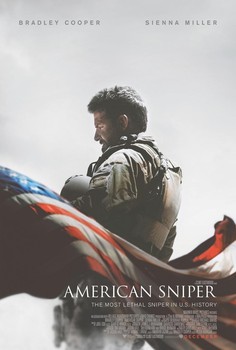
American society bombards such impressionable young men with images of soldiers, often deified in movies like “Act of Valor” or “Lone Survivor.” Consider the popular success of “American Sniper,” with its depiction of the resolute sniper as avenger and punisher. Movies like this are powerful in persuading impressionable youth to sign on the dotted line as volunteers for military service.
Military service, which conveys personal dignity, adds a dash of grandeur. By joining the military, you become part of something much larger than yourself. A sense of masculine challenge, especially in elite units like the Army Rangers or Navy SEALs, combined with societal respectability prove alluring to young men. Sadly, no amount of logic about the lack of wisdom and efficacy of America’s war on terror will convince them otherwise.
Some will say there’s nothing wrong with this. Why not encourage young men to join the military and to fight in foreign lands? Yet if those fights serve fallacious causes that amount to strategic folly, our troops’ sacrifices amount to little.
One thing we can do: American society should provide more jobs for young men that convey respect within masculine codes but which don’t require donning a uniform and killing an enemy overseas.
For nearly a decade, I taught working-class students, mostly young men, in rural Pennsylvania. My students came to class wearing camo fatigues. Many looked like they had just climbed down from a tree stand in the woods (a big holiday for my students was the first day of rifle deer season). They drove pickup trucks, listened to country music, dipped Skoal or smoked Marlboros. They’re not guys who aspire to be metrosexuals sipping lattes at Starbucks. They’re looking for a job that screams “man,” and sometimes they find it: in welding, as a heavy equipment operator, in residential construction, and so on.
But for those who can’t find such “masculine” vocations that provide decent pay and benefits, military service is powerfully alluring, and almost impossible to resist, especially when there are so few alternatives.
In September 2008, I called for a revival of the Civilian Conservation Corps, national service that is dedicated to rebuilding America. We need to instill an ethic of national service that goes beyond war and killing. An ethic that inspires young men with patriotic pride and that conveys societal identities that appeal to them as men.
What we need, in short, are fewer “American snipers” and more American workers and builders.
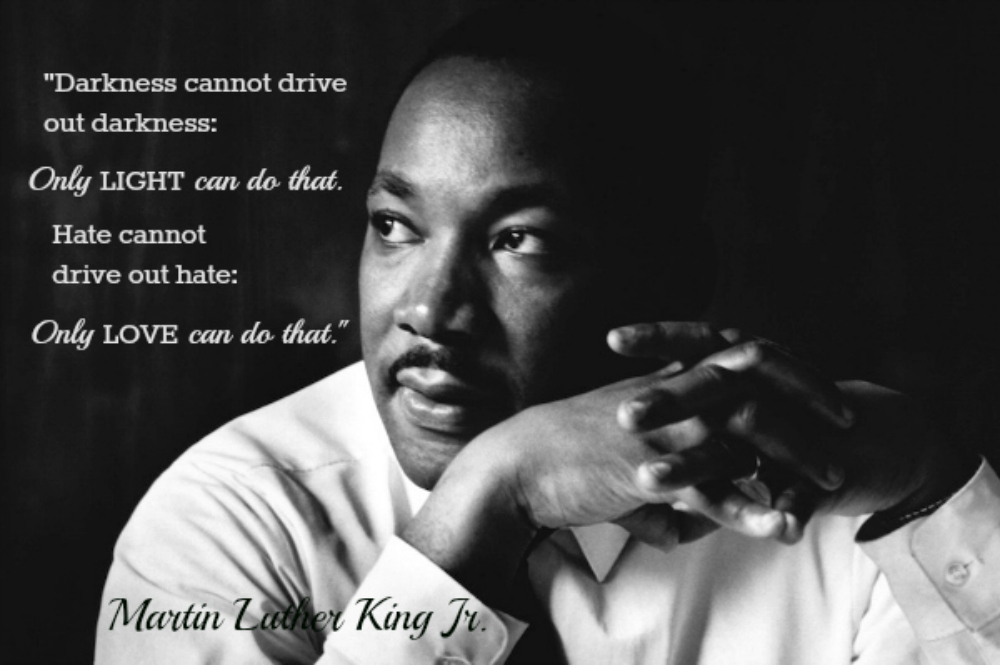
On April 4, 1967, Martin Luther King Jr. gave a powerful speech (“Beyond Vietnam – A Time to Break Silence”) that condemned America’s war in Vietnam. Exactly one year later, he was assassinated in Memphis.
What follows are excerpts from MLK’s speech. I urge you to read it in its entirety, but I’d like to highlight this line:
A nation that continues year after year to spend more money on military defense than on programs of social uplift is approaching spiritual death.
MLK called for a revolution of values in America. In his address, he noted that:
There is nothing except a tragic death wish to prevent us from reordering our priorities so that the pursuit of peace will take precedence over the pursuit of war.
MLK didn’t just have a dream of racial equality. He had a dream for justice around the world, a dream of a world committed to peace, a world in which America would lead a reordering of values in the direction of universal brotherhood.
Both of MLK’s dreams remain elusive. Racial inequalities and biases remain, though America is better now than it was in the 1960s in regards to racial equity. And what of a commitment to peace? Sadly, America remains dedicated to war, spending nearly a trillion dollars yearly on defense, Homeland Security, nuclear weapons, and “overseas contingency operations,” i.e. wars.
America has failed to dream the dreams of Martin Luther King, Jr., and we are the worse for it. W.J. Astore
Excerpts from MLK’s Speech on Vietnam, April 4, 1967
At this point I should make it clear that while I have tried in these last few minutes to give a voice to the voiceless in Vietnam and to understand the arguments of those who are called “enemy,” I am as deeply concerned about our own troops there as anything else. For it occurs to me that what we are submitting them to in Vietnam is not simply the brutalizing process that goes on in any war where armies face each other and seek to destroy. We are adding cynicism to the process of death, for they must know after a short period there that none of the things we claim to be fighting for are really involved. Before long they must know that their government has sent them into a struggle among Vietnamese, and the more sophisticated surely realize that we are on the side of the wealthy, and the secure, while we create a hell for the poor.
Somehow this madness must cease. We must stop now. I speak as a child of God and brother to the suffering poor of Vietnam. I speak for those whose land is being laid waste, whose homes are being destroyed, whose culture is being subverted. I speak of the — for the poor of America who are paying the double price of smashed hopes at home, and death and corruption in Vietnam. I speak as a citizen of the world, for the world as it stands aghast at the path we have taken. I speak as one who loves America, to the leaders of our own nation: The great initiative in this war is ours; the initiative to stop it must be ours…
If we continue, there will be no doubt in my mind and in the mind of the world that we have no honorable intentions in Vietnam. If we do not stop our war against the people of Vietnam immediately, the world will be left with no other alternative than to see this as some horrible, clumsy, and deadly game we have decided to play. The world now demands a maturity of America that we may not be able to achieve. It demands that we admit that we have been wrong from the beginning of our adventure in Vietnam, that we have been detrimental to the life of the Vietnamese people. The situation is one in which we must be ready to turn sharply from our present ways. In order to atone for our sins and errors in Vietnam, we should take the initiative in bringing a halt to this tragic war…
It is with such activity in mind that the words of the late John F. Kennedy come back to haunt us. Five years ago he said, “Those who make peaceful revolution impossible will make violent revolution inevitable.” Increasingly, by choice or by accident, this is the role our nation has taken, the role of those who make peaceful revolution impossible by refusing to give up the privileges and the pleasures that come from the immense profits of overseas investments. I am convinced that if we are to get on the right side of the world revolution, we as a nation must undergo a radical revolution of values. We must rapidly begin…we must rapidly begin the shift from a thing-oriented society to a person-oriented society. When machines and computers, profit motives and property rights, are considered more important than people, the giant triplets of racism, extreme materialism, and militarism are incapable of being conquered.
A true revolution of values will soon cause us to question the fairness and justice of many of our past and present policies. On the one hand, we are called to play the Good Samaritan on life’s roadside, but that will be only an initial act. One day we must come to see that the whole Jericho Road must be transformed so that men and women will not be constantly beaten and robbed as they make their journey on life’s highway. True compassion is more than flinging a coin to a beggar. It comes to see that an edifice which produces beggars needs restructuring.
A true revolution of values will soon look uneasily on the glaring contrast of poverty and wealth. With righteous indignation, it will look across the seas and see individual capitalists of the West investing huge sums of money in Asia, Africa, and South America, only to take the profits out with no concern for the social betterment of the countries, and say, “This is not just.” It will look at our alliance with the landed gentry of South America and say, “This is not just.” The Western arrogance of feeling that it has everything to teach others and nothing to learn from them is not just.
A true revolution of values will lay hand on the world order and say of war, “This way of settling differences is not just.” This business of burning human beings with napalm, of filling our nation’s homes with orphans and widows, of injecting poisonous drugs of hate into the veins of peoples normally humane, of sending men home from dark and bloody battlefields physically handicapped and psychologically deranged, cannot be reconciled with wisdom, justice, and love. A nation that continues year after year to spend more money on military defense than on programs of social uplift is approaching spiritual death.
America, the richest and most powerful nation in the world, can well lead the way in this revolution of values. There is nothing except a tragic death wish to prevent us from reordering our priorities so that the pursuit of peace will take precedence over the pursuit of war. There is nothing to keep us from molding a recalcitrant status quo with bruised hands until we have fashioned it into a brotherhood.
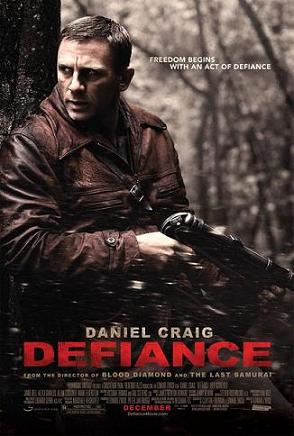
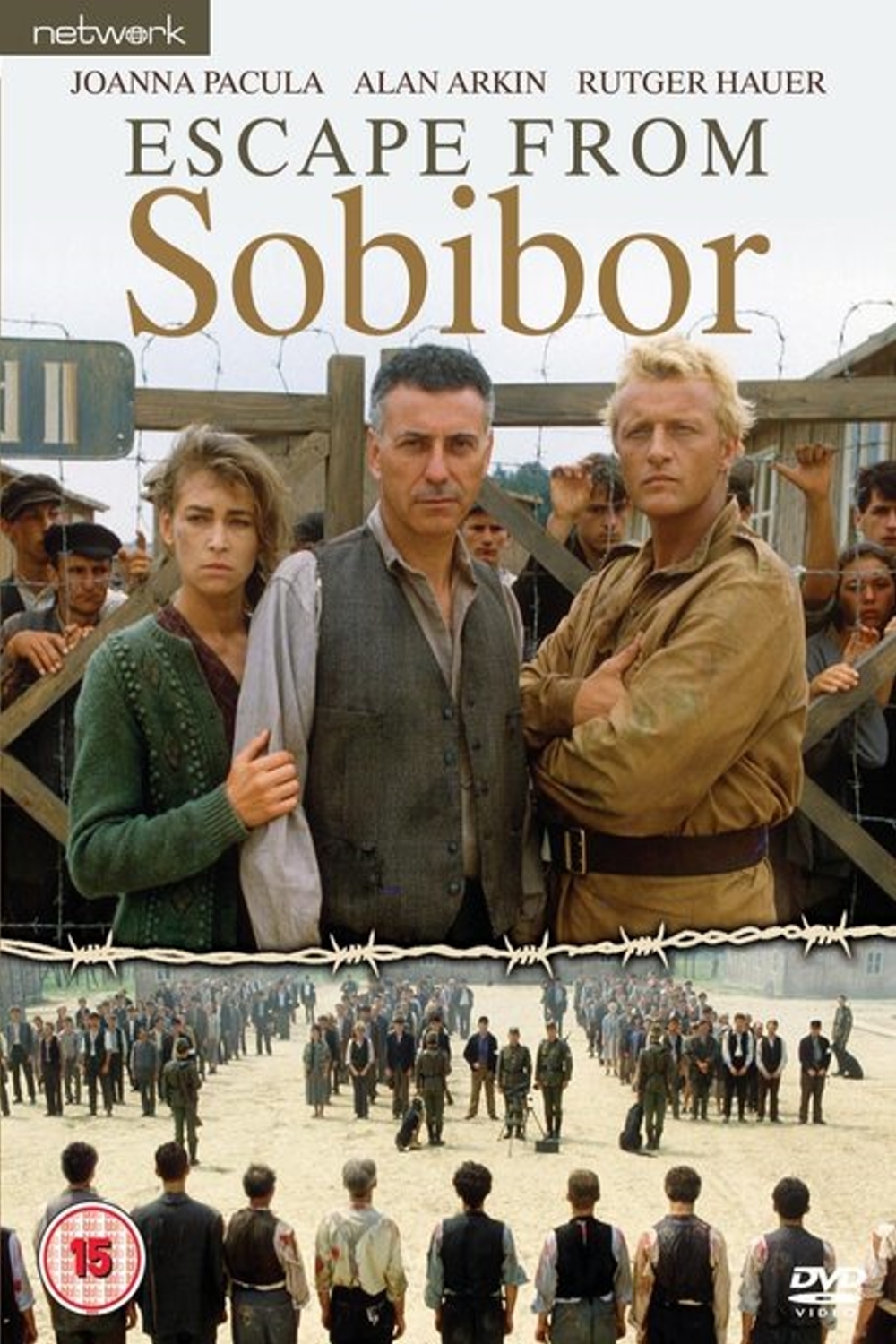
“Defiance” is one of the few mainstream movies that depict Jewish resistance to the Holocaust. Another good movie is “Escape from Sobibor”
W.J. Astore
In 2006, I presented the following talk on Jewish resistance to the Holocaust. It’s a dangerous myth, and sadly a common one, that Jewish people did not resist the Nazis in meaningful or effective ways. From this myth stems a far more insidious one: that Jewish people were somehow complicit in the murderous campaigns against them. I gave this paper to counter these dangerous myths.
The Nazis exterminated nearly six million Jews during World War II. Those who claim that Jews went meekly like sheep to the slaughter ignore the many instances of remarkable courage in the face of this staggering crime against humanity. In reality, Jewish resistance took many forms. That it often proved futile reflects the poignant vulnerability of Jews rather than any lack of bravery or courage.
Resistance can be divided into two general categories: passive and active. Passive resistance took the form of cultural and spiritual endurance and assertiveness. Jews confined to ghettos like Warsaw continued to practice their culture and religion despite prohibitions; they organized symphonies, drama clubs, schools, and other voluntary and educational associations; they also risked their lives by trading across ghetto walls despite threats of torture and execution.
Passive resistance drew on a long and esteemed Jewish tradition of outlasting the persecutor. Initially believing that the Nazis and their various European sympathizers and lackeys wanted to put Jews in their place, not in their graves, Jewish leaders sought to endure discriminatory laws, pogroms, and deportations, hoping for an eventual relaxation of anti-Semitic policies or perhaps even the defeat of their oppressors on the battlefield.
Thus Jewish resistance remained largely non-violent until 1943, in part because the Germans succeeded in deceiving the Jews. They were helped in this by the fact that their predecessors—the German soldiers of World War I—had generally behaved decently, treating Jewish non-combatants humanely. Jews in Poland and the East initially expected similar behavior from Nazi invaders. Even after it became apparent to Jews that Nazi soldiers and especially police were intent on human butchery on a scale previously unimaginable, Jewish cultures that embraced sanctity and sheer joy of life found it difficult to comprehend a Nazi culture built on hate and murderous brutality, especially one that continued to worship civilized icons like Goethe and Beethoven. Many Jews put their faith in God, hoping for the best, preparing for the worst, yet daring not at first to think the unthinkable.
When Jewish communities and individuals recognized the unthinkable—that the Nazis and their various European fellow travelers wanted to exterminate systematically all Jews in Europe—active and armed resistance increased. Active resistance included acts of industrial sabotage in munitions factories or isolated bombings of known gathering spots of Nazis. One must recognize, however, the near utter futility of Jews “winning” pitched battles against their killers. The Nazis had machine guns, dogs, usually superior numbers, and could call on tanks, artillery, and similar weapons of industrialized modern warfare. Facing them were Jewish resisters, often unarmed, some at best having pistols or rifles with limited ammunition, perhaps supplemented by a few precious hand grenades. Such unequal odds often made the final result tragically predictable, yet many Jews decided it was better to die fighting than to face extermination in a death camp.
When it became apparent that they were being deported to Treblinka to be gassed, Warsaw Jews at first refused to assemble, then led a ghetto uprising in April 1943 whose ferocity surprised the Germans. More than 2000 German soldiers supported by armored cars, machine guns, flamethrowers, and unlimited ammunition faced approximately 750 Jews with little to no military training. The SS General in command, Jürgen Stroop, had estimated he would need two days to suppress the uprising. In fact, he needed a full month as Jews armed mainly with pistols, homemade grenades, and Molotov cocktails fought franticly and ferociously from street to street, bunker to bunker. The Warsaw ghetto uprising was only the most famous example of nearly 60 other armed uprisings in Jewish ghettos.
Resistance was less common in death camps like Chelmno, Sobibor, and Treblinka, mainly because there was not enough time for networks of resistance to form. Resistance requires leaders, organization, and weapons. These elements cannot be improvised and acted upon in a few hours or even days: they require months of planning and training. Despite nearly insurmountable difficulties, however, Jews did lead revolts at all three of these death camps as well as at Auschwitz-Birkenau and 18 forced-labor camps.
Jews also participated actively in resistance networks in Poland, the Soviet Union, France, and other countries. Their plight was difficult in the extreme, since anti-Semitism within these networks often required Jews to hide their ethnicity. In some cells of the Polish resistance, Jews were killed outright. Many Soviet partisans distrusted and exploited Jews; nevertheless, between 20,000 and 30,000 Jews fought as partisans in the USSR against Nazi invaders. In France, Jews made up less than one percent of the population yet 15 to 20 percent of the French underground. In 1944, nearly 2000 Jewish resisters in France united to form the Organisation Juive de Combat (Jewish Fighting Organization), which supported Allied military operations by attacking railway lines and German military installations and factories.
Impressive as it was, Jewish resistance was always hamstrung for several reasons. In general, Jews lacked combat experience since many countries forbade Jewish citizens from serving in the military. Like Soviet prisoners-of-war (POWs) captured by the Nazis, many Jews, especially those confined in ghettos, were weakened by disease and deliberate starvation. Under these conditions, trained Soviet soldiers died with hardly a murmur of protest, so it is hardly surprising that Jewish families who had never been exposed to the hardships of war would similarly succumb.
The Nazis succeeded in creating a Hobbesian state of nature in which people were so focused on surviving from hour to hour that their struggles consumed virtually all their energy and attention. Dissension within Jewish communities also inhibited resistance, with older Jews and members of Judenräte (Jewish councils) tending to support a policy of limited cooperation with the Nazis, hoping that by contributing to the German war effort, they might thereby preserve the so-called productive elements of Jewish communities.
More controversially, Jewish resistance was hampered by weak and irresolute international support. Fearing that Nazi propaganda would exploit pro-Jewish statements as proof that a Jewish-Bolshevist conspiracy was behind the war, Western leaders refrained from condemning Nazi actions. Official Catholic and Protestant statements were equally tentative and tepid. Irresolute and sporadic support unintentionally played into the hands of Nazi plans for Jewish extermination.
Observant Jews were people of God’s law, the Torah, who put their faith in God, with Jewish culture in general tending to disavow militant actions. Confronted by murderous killing squads possessing all the tools of industrialized mass warfare, Jews nevertheless resisted courageously, both passively and actively. That their resistance often ended tragically does not mean that it failed.
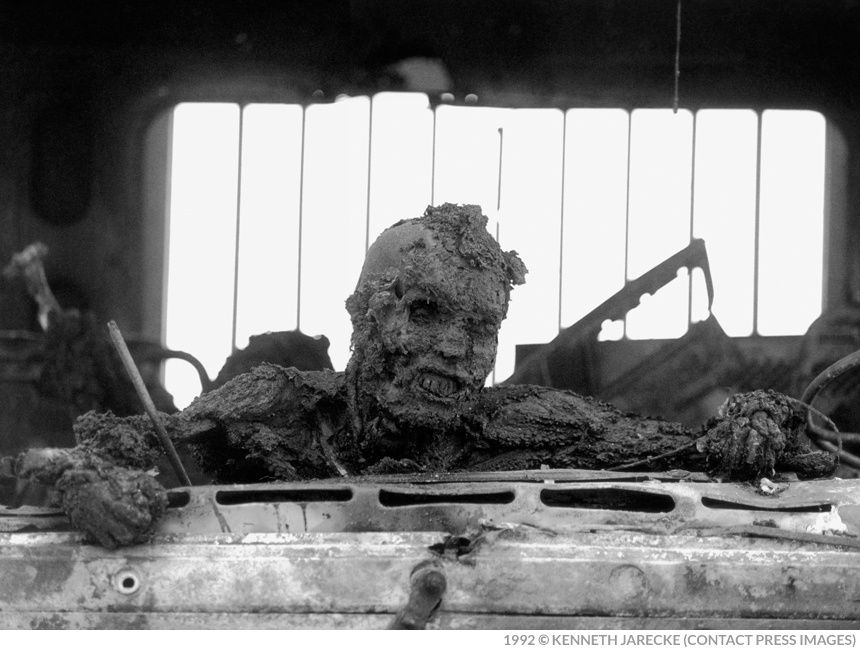
Kenneth Jarecke’s 1991 photo of a dead Iraqi was considered too disturbing to publish in America
W.J. Astore
Americans tend to fear death. It makes us uncomfortable. Yet death is inevitable. Its inevitability should teach us to revel in the richness of the here and now. It should also teach us the foolishness of undue pride.
All is vanity, the Bible teaches. Death reminds us of this — that human vanity, as unavoidable as it may be, is ultimately shallow. There are riches out there that we should seek away from the glaring and garish light of vanity. Riches that give deeper meaning to life.
Of all cultures in the world, I wonder if there’s another that ignores or denies death as much as American culture. We’re the culture of new beginnings, fresh starts, reinvention, and also of the perpetual now, of youth, of defying or denying death through face lifts, cosmetics, adrenalin-driven adventures, and so on. Technology and consumerism also provide distractions. After all, how can I be nearing the end if I have the latest iPhone or iPad or if I’m wearing the latest hip fashions?
Our funeral homes seek to deny death with open casket rituals in which the dead person is made up to look alive. Paul Fussell skewered this cultural tendency in his book, Class. We use euphemisms like “passed away” or “passed on” for “died”; the descriptive term of “undertaker” has morphed into “funeral home director.” Our religions stress life after death, not death itself.
We even deny that our wars produce death. Think of the Bush/Cheney Administration, which refused to show photographs of flag-draped coffins of American troops, ostensibly for “privacy” reasons but mainly to minimize the deadly costs of fighting in Iraq and Afghanistan. (Indeed, we don’t talk of troops dying in combat; we talk instead of troops “paying the ultimate price” or “making the ultimate sacrifice.”)
In minimizing the cost of war to its troops, the U.S. government and media also seek to deny the reality of death to the enemy. War coverage in the media is often stock footage showing drones or aircraft firing missiles, enhanced by graphics and music. You might see an enemy building or truck blowing up, but you’ll never see dead bodies. Too disturbing, even though violent gun play and bleeding corpses are routinely shown in American crime shows and movies as entertainment.
In the first Iraq war (Desert Storm) in 1991, the photographer Kenneth Jarecke caught a powerful image of a dead Iraqi soldier burnt alive in his truck on the infamous “highway of death.” Jarecke believed his photo would change America’s vision of the war, which in the U.S. media had been staged like a Hollywood production, neat and sanitary and clean. But no U.S. media outlet would publish the image. It was relegated to overseas publications.
What price do we pay as a people by ignoring death? We lack a certain depth and maturity; put differently, we are callous and shallow. Death has little meaning to us, especially the deaths of those in other lands. For in seeking to deny the inevitability of our own deaths, how can we possibly recognize and process the death of others?
A death-denying culture that rains death on others using drones named “Predator” and “Reaper”; a culture that finds images of war dead too disturbing even as its TVs and movies and videos are saturated by bloody murders. What are we to make of this?
The most powerful speech I’ve seen in any movie is that of Chief Dan George in “Little Big Man.” In trying to make sense of the White Man’s war on Native Americans, Chief Dan George’s character, Old Lodge Skins, suggests that the White Man kills because he believes everything is dead already. Lacking a moral center, the White Man has no sense of, or appreciation for, the sanctity of life.
Do we deny death because in some sense we are already dead? Dead to the richness and sanctity of life?
Random thoughts, as promised. But I hope they stimulate thought. What say you, readers?
Eve tempting Adam. I guess Adam didn’t have a mind of his own
W.J. Astore
The other day my wife and I were watching Wadjda, a terrific film about a spirited Saudi girl who dreams of buying and riding her very own bicycle. The film does a great job of highlighting the constraints put on women in traditional Saudi and Islamic culture. Women are not allowed to drive, they must veil themselves whenever they can be seen by men, they are trained to be subservient and not to attract attention to themselves, and so on.
Watching the constraints under which Saudi women live their lives, my spirited wife uttered the following aphorism:
Religion – written by men, for men. And that’s all you need to know.
Having been raised Catholic, it’s hard to disagree with her. The Catholic Church has historically been misogynist. It was Eve, after all, who tempted Adam. She was “the weaker vessel” who was cursed with the pain of childbirth because of her “original sin.” The Church itself, to state the obvious, is run entirely by men. Even the woman most respected by the Church, the Virgin Mary, is an unattainable ideal. A woman who gets pregnant without losing her virtue and virginity? Try aspiring to that.
Whenever a religion, no matter if it’s Islam or Catholicism or some other faith or sect, places half of humanity in inferior and subservient roles, we must question very closely its true intent and inspiration. Surely a just and compassionate God would not sanction a religion that subordinates women to the whims of men.
Obviously, I know many believers, women as well as men, will disagree with this. They will point to their faith, their holy books, the power of tradition. Or they will try to explain how their religion really doesn’t discriminate against women and so on.
Here I recall a saying that Temple Grandin says she will never forget: “Men will wrangle for religion, write for it, fight for it, die for it, anything but live for it.”
How true. And I’d add that any religion worth living for is one that treats men and women equally as believers. I don’t think God, if He or She (!) exists, would want it any other way.







 Bracing Views