Creator of Bracing Views. Contributor to TomDispatch, Truthout, HNN, Alternet, Huffington Post, Antiwar, and other sites. Retired AF lieutenant colonel and professor of history. Senior fellow, Eisenhower Media Network
“My body, my choice” is a common refrain for women in the pro-choice movement. I happen to agree with it. What women choose to do when they get pregnant is truly none of my business.
Photo by Alex Brandon, AP
Yet the abortion debate swirls and twists and roars as if men played absolutely no role in getting women pregnant. As if all pregnancies were some kind of immaculate conceptions.
Our society and culture puts almost all the onus and responsibility (and, often enough, blame) on women for getting pregnant. For pro-lifers, a woman, once pregnant, is then obligated to have a baby and care for it until adulthood, else put it up for adoption.
But what about the father’s obligation? After all, unless we’re talking the Virgin Mary here, she didn’t get pregnant alone. (And even the Virgin Mary had help of a godly kind.)
I’d have a bit more tolerance for pro-lifers if they’d agreed to these rules:
The biological father is also responsible, financially and legally and otherwise, for raising the baby until adulthood.
If the father isn’t married to the mother in question, and the mother keeps the child, he is legally obligated to pay for child support. For argument’s sake, let’s say he’s obligated to contribute 20% of his pay until the child reaches the age of eighteen.
If men were held legally and morally responsible for all the children they fathered, and this was strictly enforced by society and the state, with deadbeat dads becoming society’s new outcasts, I wonder how long it would take for abortion to be made legal and universally available in America?
Today as I was checking out at Job Lots, the cashier asked me if I wanted to donate money for Ukrainian refugee relief. I thought quickly of the $33 billion Biden already wants from us for Ukraine and politely said “no thanks.”
Then I read Todd Miller’s new article at TomDispatch.com on the security-industrial complex along the U.S. border with Mexico and reflected on all those people risking their lives to cross the border into America, most of them refugees from wars and climate change and violence and the like. I’ve never been asked by a company or a cashier for that matter to contribute to their relief. Indeed, when the issue of refugees comes up along the Southern border, it’s always about more money for Homeland Security and more border control agents and surveillance technology (including drones and robotic dogs, as Miller notes), all to keep the “bad” people out of America, all those “illegals” who allegedly want to take American jobs while doing violence to vulnerable Americans.
Remarkably, Miller notes in his article how the Biden administration is following basically the same approach to border security as the Trump administration. The only real difference is that Biden is relying less on physical walls and more on “virtual” ones (towers, sensors, cameras, drones, etc.). This is hardly surprising when you consider Kamala Harris went south of the border to deliver a singular message to would-be asylum seekers. Her message to them: Do not come.
Land of the free, home of the brave?
As Miller notes in his article, you can count on one thing: America’s border with Mexico will never be secure, no matter how much we spend, because insecurity and overhyped “threats” sell very well indeed.
Is America really the home of the brave, given our fears of invasions, whether from “dangerous” brown- and black-skinned people coming up from the south or all those gangster Russians and sneaky Chinese allegedly scheming against us?
If we want to help refugees facing violence and starvation, we don’t have to look as far as Ukraine. Depending on where you live in America, you might only have to look just beyond the wall or fence or surveillance tower in front of you. As you do, you might ponder why we’re not sending $33 billion to help them survive. Is it because they’re not killing Russians with American-made weaponry?
You would think that a U.S. president would have better things to do than to tour and tout a missile-production facility in Alabama, but then you’d be forgetting the power of the military-industrial complex and the profitability of war. Yesterday, President Biden toured a Lockheed plant that makes the Javelin missile, which I’m sure is working overtime given the number of missiles (about 5500) this country has shipped to Ukraine in its war against Russia. I was asked for a quick comment before Biden’s visit, and here’s what I came up with:
You don’t defuse a war by sending more and more weapons to the war zone. You don’t send a message of peace by visiting a missile-making facility. President Biden spoke of inspiring other nations with the power of our example, but he’s opting instead for examples of our power. In so doing, he’s betraying his own promise to America and to the world. Statesmanship, not brinksmanship, is what’s required to end the disastrous war in Ukraine. Negotiation, not militarism, is the correct path forward. But it’s hard indeed to play the statesman and to foster negotiation when you pimp yourself out to the weapons makers.
Incredibly, or perhaps not so incredibly, Noam Chomsky has praised Donald Trump for his willingness to call for a negotiated settlement to the war. By contrast, the Biden administration appears content to let the war drag on in the cause of weakening Russia. In short, Ukraine is the administration’s proxy, and Biden & Company are willing to fight and die to the last Ukrainian while supplying plenty of arms to the same. Indeed, the latest aid package for $33 billion for Ukraine includes $20 billion in weaponry.
Should weapons really be identified as “aid”? No matter. The U.S. media is pimping for war, the president is visiting missile plants and praising the wonders of our weapons and how many Russian tanks they’ve destroyed, and we’re all supposed to accept this as business as usual in America. Which it is.
Today’s big news: a “leaked” memo from the Supreme Court suggests that the court will overturn Roe v. Wade. My first thought is that the leak was deliberate, a way to get people used to the idea that a decision that has stood for 50 years is being negated by a packed and biased court. Let people yell and tweet and fulminate, but that’s all you get to do.
My second thought: the main victims of this law will be women without financial means. Women of means will always have access to abortion; they can travel to another state, pay a private doctor, etc. It’s poorer women, often of color, who will suffer the most.
But who cares about them, right? Justice is blind to them, never for them.
What a partisan joke the Supreme Court is in the U.S. And they have the gall to argue that the court is apolitical!
I truly believe that if men got pregnant, abortion would be free, legal, and readily available across the United States.
But men don’t get pregnant, so the idea of carrying an unwanted baby to term is mainly theoretical for them. How easy it is, then, to outlaw abortion while claiming to be pro-life.
Having been raised Catholic, I was taught abortion is murder. It’s that blunt. As the Church was teaching me that, it was allowing predatory priests to molest children. There was even a predatory priest assigned to my parish when I was young. So I’m not too keen on the moral authority and teachings of the Church here. Again, if priests got pregnant, I truly believe abortion would be accepted within the Church. Perhaps it would be justified by arguing that priests, first and foremost, have to serve God and the Church and therefore shouldn’t be…
The best way to combat disinformation is with more and better information. Censorship isn’t the answer.
The Biden administration has reached a different conclusion, creating a “Disinformation Governance Board” under the Department of Homeland Security. This “board” is headed by Nina Jankowicz, an unelected official and an apparent partisan hack. One example: she dismissed the infamous Hunter Biden laptop story as a “fairy tale” involving a “laptop repair shop”; it’s now been confirmed that Hunter’s laptop was real, and so too was that repair shop.
Democrats, of course, don’t have exclusive rights to censorship. Republicans always seem to be calling for books to be banned or education to be policed. But the real problem is much larger than partisan hackery and bickering. Efforts at censorship are all around us, couched as a way of protecting us from harmful lies and other forms of disinformation. Yet, as the comedian Jimmy Dore points out, the government isn’t that concerned about protecting you from lies; it is, however, deeply concerned with denying you access to certain truths, truths that undermine governmental authority and the dominant narrative.
As a retired U.S. military officer and as a historian, the most insidious lies and disinformation I’ve encountered have come from the government. Consider the lies revealed by Daniel Ellsberg and his leak of the Pentagon Papers. Consider the war crimes revealed by Chelsea Manning, aided by Julian Assange and Wikileaks. Consider the lies revealed in the recent Afghan War Papers. Consider the lies about the presence of WMD in Iraq, lies that were used to justify the disastrous Iraq War. The government, in short, is a center of lies and disinformation, which is precisely why we need an adversarial media, one that is willing to ferret out truth. Instead, we’re being offered a governmental Ministry of Truth in the form of a “Disinformation Governance Board.”
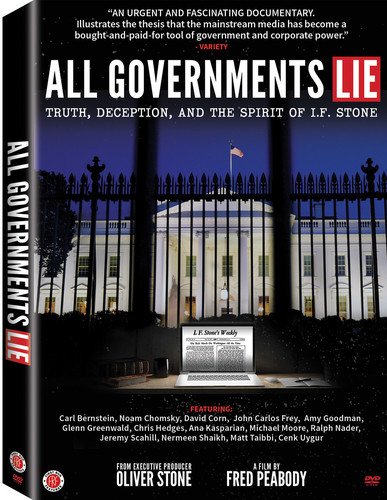
All things being equal, a democratic society thrives best when speech is as free as possible, trusting in the people to sort fact from fiction, and sound theories from blatant propaganda. And there’s the rub: trusting in the people. Because the government doesn’t trust us (remember Hillary Clinton’s comment about all those irredeemable deplorables), even as the government is often at pains to mislead and misinform us. As maverick journalist I.F. “Izzy” Stone said, all governments lie. It’s truly nonsensical, then, to allow the government to police what is true and what is “disinformation.”
But don’t we need some censorship in the name of safety or security or mental health or whatever? Sorry: censorship is rarely about safety, and it most certainly doesn’t serve the needs of the vulnerable. Instead, it serves the needs of the powerful, those who already possess the loudest megaphones in the public square.
But doesn’t someone like Donald Trump deserve to be censored because he spreads disinformation? Which is the bigger problem: Trump or censorship? I happen to think Trump is a divisive con man, but it was a bad precedent for Twitter to have banned him from tweeting. The bigger problem wasn’t Trump’s tweets but the media’s obsessive coverage of them in pursuit of ratings. The way to combat a blowhard like Trump is to ignore him, and to correct him when needed. To combat his lies with the truth. We don’t need a governmental Ministry of Truth to police the tweets of a former president. Not when the government is often the biggest liar.
The solution isn’t censorship but an active, engaged, and informed citizenry, assisted by a fourth estate, the press, that is truly independent and adversarial to power. But the weakening of education in America, combined with a fourth estate that is deeply compromised by the powerful and often in bed with the government, means that these democratic checks on power are less and less effective. Hence calls for quick yet dangerous “solutions” like censorship, where the censors (governmental boards, private corporations) are opaque and almost completely unaccountable to the people.
Unless your goal is to give the already powerful a monopoly on speech, censorship is not the answer.
Joe Biden’s been president for a year and a few months; it’s time to award him a provisional grade for his performance as president. Here are a few factors to consider:
* Biden ended the Afghan War. Sure, it was a disordered ending, a pell-mell evacuation, a calamitous collapse that saw Afghan innocents killed in a final drone strike (nothing new about that, I suppose). But he did end a twenty-year war, so credit to him for that.
* Biden was able to pass an infrastructure bill, though it was disappointingly small. Still, America truly needs to invest in its infrastructure (rather than, for example, nuclear weapons), so credit again to Biden.
* Biden kept his promise to nominate an African American woman to the Supreme Court. The court is still overwhelmingly conservative, so her presence won’t make a critical difference to decisions, but dare I say, it’s about time the court looked more like the diversity of America.
* When Biden announced his candidacy, the first thing he did was meet with Comcast executives and other high and mighty media- and business-types. He told them nothing would fundamentally change under his administration. That’s a campaign promise he’s kept.
* Another promise Biden has kept is sizable increases to the Pentagon’s budget. If you’re part of the military-industry complex, you’re probably more than satisfied with Biden’s budgets.
* Finally, some people assert that Biden has stood firm against Russia and Putin, marshaling the West against Putin’s war of aggression in Ukraine. I beg to differ with this assertion, but more on that below.
Now, let’s look at where Biden has failed or proven to be a disappointment.
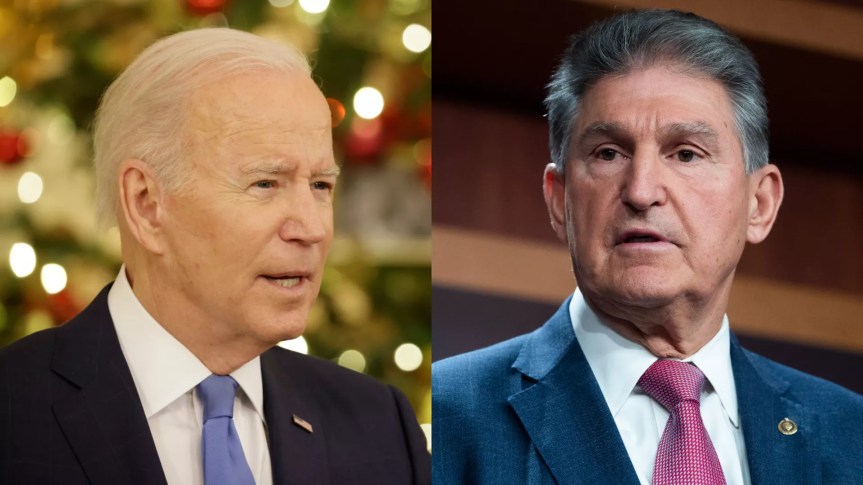
* Biden has kept none of his progressive promises, which is unsurprising, given his track record as a senator from Delaware. No $15 federal minimum wage. No public option for health care. No student debt relief (just moratoriums on payments). On these and similar issues, Biden’s defenders place the blame on obstinate “centrist” senators like Manchin and Sinema, or they blame the Senate Parliamentarian for ruling against the $15 wage increase due to a technicality. It’s all special pleading. When their own Senate Parliamentarian got in their way, the Republicans simply replaced that unelected person with someone more tractable. Chuck Schumer could easily have done the same. Manchin and Sinema can be cajoled or coerced if Biden had the will to do so. But “centrist” Democrats adore Manchin and Sinema because they serve as convenient scapegoats for why Biden can’t be more progressive.
* Biden’s “Build Back Better” plan died a meaningless death, but, once again, this was more by design. Recall Biden’s key promise that nothing would fundamentally change under his administration.
* Again, withdrawing from the Afghan War was a sound decision, but it was poorly implemented.
* The Russia-Ukraine War: Biden has gone all-in with his military approach to the war, meaning more money for the Pentagon, more weapons for Ukraine, harsh sanctions that hit ordinary Russians the hardest, and rhetoric that declares Putin to be a genocidal war criminal. Diplomatic efforts have taken a back seat to efforts to effect regime change in Russia. Some people may see this as tough and hard- minded; I see it as provocative and incredibly foolhardy. Brinksmanship with Russia risks nuclear war, with Biden’s harsh rhetoric leaving little room for a negotiated settlement. More than a few people see the U.S. as weakening Russia in a proxy war in which Biden is willing to fight to the last Ukrainian. Toughness is not about more weapons and war; it’s about finding ways to build fewer weapons and to end war.
* Inflation is reaching new highs and many Americans are struggling economically, but Biden’s main approach here has been to blame Putin. Unlike Harry Truman, the buck never stops with Joe Biden.
* The Biden team made a disastrous choice for his vice president. Biden has no affinity with Kamala Harris, and Harris herself has wilted on the world stage. High staff turnover suggests she’s a polarizing figure and a poor boss. The only good thing about Harris, from the Biden perspective, is that people dislike her more than they do the president.
* Biden’s unpopularity. Predictions for the midterm elections this November are dire for Democrats. It’s possible, even likely, Republicans will regain both the Senate and House, leaving Biden a lame duck for his final two years in office. Few if any Democratic candidates are seeking Biden’s support or planning to ride his coattails to victory.
* Biden’s mental status. Biden will be 80 this November. I’m not an expert on dementia. But I’ve seen plenty of speeches by Biden where he’s become forgetful; when he can’t remember words; when he gets frustrated. I feel for him. He can read from a teleprompter but get him off-script and he becomes unpredictable and says nonsensical things. Occasionally, he looks lost or at a loss. Something similar was happening to Ronald Reagan in his second term.
Always looming in the background and foreground is the party of Trump. To my mind, the best way to defeat rightwing popular authoritarianism is to have leaders who answer to the people rather than to corporations and oligarchs. The Democratic Party is venal and corrupt, which allows Trump & Co. an opening to play a (false) populist card. The Democrats, as presently led by Biden, Schumer, Pelosi, et al., are easy foils for authoritarian dipshits like Trump.
Trump would be far less dangerous if the Democrats actually believed and acted on their various campaign promises to help people rather than oligarchs and corporations.
The ultimate grade of Joe Biden’s presidency will depend on whether through his actions and inaction he gives Trump an opening to win the presidency in 2024. Assuming Trump wins again in 2024, Biden’s final grade will be an “F.”
His provisional grade? First, I’m not a Democrat. Second, I despise Trump, a man totally unqualified to serve the public in any capacity. Overall, my grade for Biden is a “C-,” and on less generous days I’m inclined to give him a “D.” He is a man who’s often out of his depth, a man well past his prime, a man who perhaps shouldn’t have run in 2020 and who most certainly shouldn’t run again in 2024, given the demands of the presidency. (Recall that when Biden suggested a run for the presidency in 2020, Obama told him, You don’t have to do this, Joe. Not exactly an inspiring vote of confidence!)
What do you think, readers? What grade has Joe Biden earned so far in your opinion?
War has much been on my mind lately, with a scene from “Gone with the Wind” flashing through my brain. It’s when Ashley Wilkes, the paragon of honor and decency, reflects on war: “Most of the miseries of the world were caused by wars,” Wilkes says. “And when the wars were over, no one ever knew what they were about.”
Powerful words coming from a Southern cavalier who went off to do his duty in the “War Between the States.” Interestingly, the South often called it “the war of northern aggression,” whereas the North used “the war of southern rebellion.” War is a remarkably protean thing, and often completely unpredictable in its duration and effects. We often can’t even agree how to name it.
Here’s a repost from the end of 2013, nine distant years ago. Who could have predicted America’s Afghan War would finally be over, only to be replaced by a new Cold War and massive weapons shipments to Ukraine in a war with Russia that could also last for years, spreading miseries for reasons that are already disputed and which may yet prove unfathomable.
“War is like love; it always finds a way.” So wrote Bertolt Brecht, and when it comes to American politics and foreign policy in 2014, you can bet on Brecht being right. There is no major anti-war party in the USA today. Despite claims to fiscal austerity, Democrats and Republicans fall over themselves to fully fund the Pentagon and its ongoing wars across the globe. Our misguided involvement in Afghanistan lurches into its thirteenth year with promises that it won’t end until 2024 at the earliest. The only certainty for 2014 is more dead bodies, more casualties of war, more money wasted.
Barbara Tuchman, a historian who knew how to write for the educated public, was right in pointing out the persistence of folly in history. A heavily militarized U.S. foreign policy is an illustration of that. Our country continues to seek global dominance through militarized measures, perhaps…
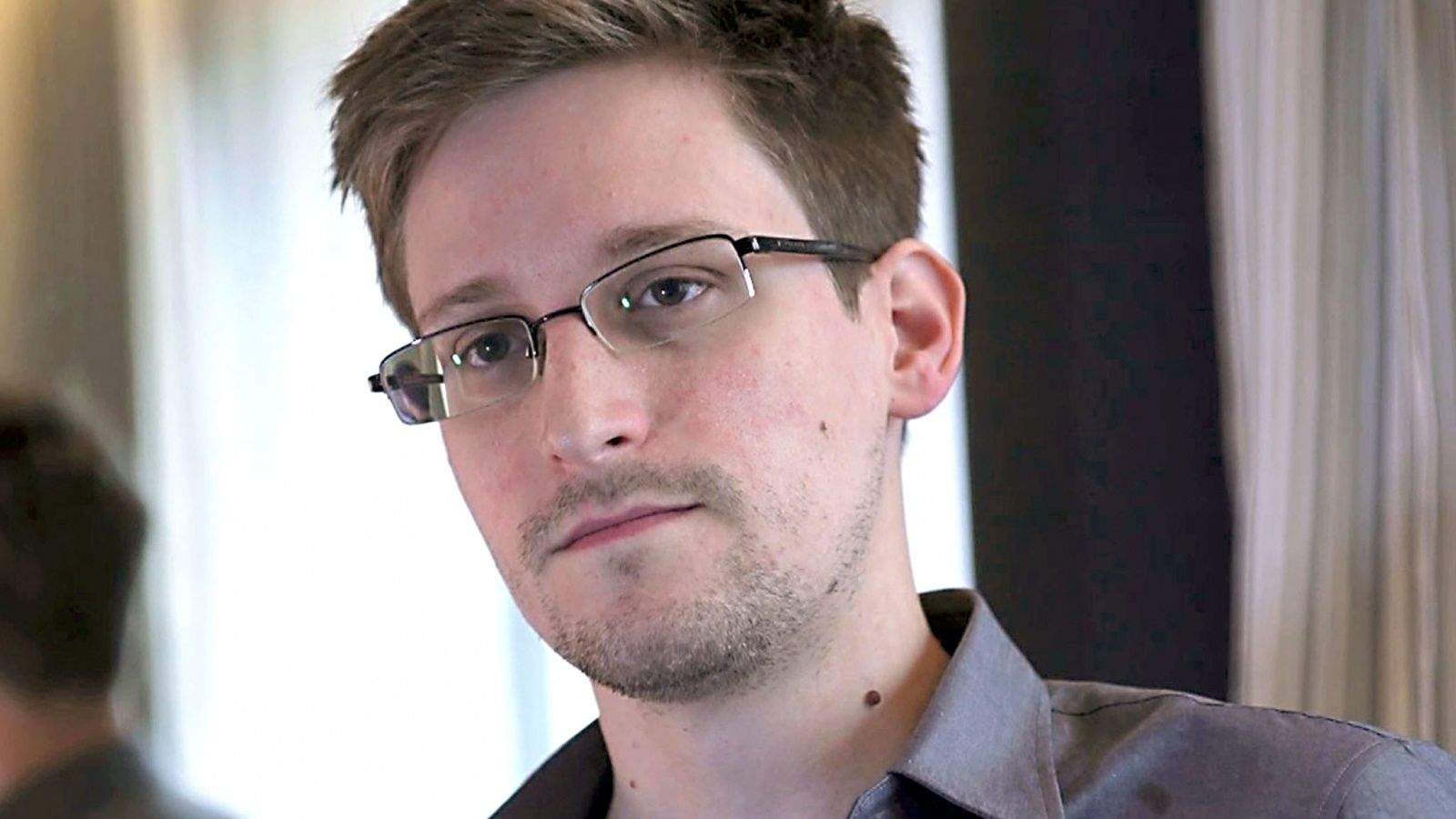
The truth is out there, America. Sometimes, the truth has even been forced to go into exile in Russia. How ironic is that? I remember the days when Soviet truth-seekers like Solzhenitsyn sought asylum in the U.S. Edward Snowden, of course, had to find asylum in Russia. Our country is not big enough to welcome him back. When did we become so small?
Edward Snowden recently talked to Joe Rogan for nearly three hours. Snowden has a book out (“Permanent Record“) about his life and his decision to become a whistleblower who exposed lies and crimes by the U.S. national security state. As I watched Snowden’s interview, I jotted down notes and thoughts I had. (The interview itself has more than seven million views on YouTube and rising, which is great to see.) The term in my title, “turnkey tyranny,” is taken from the interview.
My intent here is not to summarize Snowden’s entire interview. I want to focus on some points he made that I found especially revealing, pertinent, and insightful.
Without further ado, here are 12 points I took from this interview:
1. People who reach the highest levels of government do so by being risk-averse. Their goal is never to screw-up in a major…
Suddenly, the U.S. media has become blunt in its rhetoric about war. So too have U.S. leaders. We hear constantly of war crimes and war criminals, even of genocide and mass graves. The criminals, of course, are exclusively Russian, or so the media says.
Yet when U.S. leaders are talking about their actions, the language of war is very different, and words like “crime” and “genocide” are never heard. Perhaps this post from six years ago may serve as a reminder of the pliability of America’s language of war.
The language of war fascinates me. I was reading President Obama’s response to Donald Trump on whether Obama “gets it” when it comes to the threat of terrorism and came across this passage:
“Someone [Donald Trump] seriously thinks that we don’t know who we are fighting? If there is anyone out there who thinks we are confused about who our enemies are — that would come as a surprise to the thousands of terrorists who we have taken off the battlefield.”
That’s such a curious phrase: “terrorists who we have taken off the battlefield.” As if the United States has simply evacuated them or relocated them instead of killing them.
I think the distancing effect of air power has something to do with this euphemistic language. The U.S. military “takes people off the battlefield” rather than killing them, blowing them up, and so on. Obama’s personality may…
The U.S. government continues to denounce Putin for “genocidal” war crimes yet continues to persecute journalist Julian Assange for revealing war crimes. Contradiction?
Julian Assange’s persecution really isn’t about Assange anymore. It’s about intimidating other journalists and whistleblowers who’d dare to reveal the crimes of empire committed by the United States.
If I suggest that NATO expansion to the borders of Russia was a provocative move that was almost guaranteed to provoke hostility with Russia, as prominent experts like George Kennan and Henry Kissinger warned us about in the 1990s, does that make me a Putin puppet? Are Kennan and Kissinger retroactive puppets?
If I suggest that sending billions of dollars in weaponry to Ukraine is not in the cause of peace, that more people will die as a result, Ukrainian and Russian, does that make me a Putin puppet?
They say that bipartisanship is dead in Washington, yet why are both parties boosting Pentagon spending and competing with one another on how much weaponry can be sent to Ukraine without provoking nuclear Armageddon? That last part — do we trust the geniuses in Washington to walk that nuclear tightrope?
The Saudis recently made a major $2 billion investment in Jared Kushner, Trump’s son-in-law. Looks like they’re betting on a Trump victory in 2024. Speaking of Kushner, he gained admittance to Harvard only after his father made a mega-donation to the school. Or maybe it was a MAGA-donation?
I was asked what I thought of Russia’s new offensive in eastern Ukraine. Here was my response:
The short answer is war is war and it’s going to be ugly, especially in cities and other built-up areas.
Of course, there’s new technology like drones and guided missiles, e.g. Javelin and Stinger. Those missiles will make it more difficult for Russia to prevail. I’m guessing the Russians will use more artillery as a way of neutralizing Stinger and Javelin operators. What that means is more destruction, more “collateral damage.” More blood and guts.
I expect the Russians will lean on “combined arms” operations, meaning closer coordination among infantry, tanks, artillery, and airpower. If you just send in tanks without cover, they’re going to get knocked out, which we’ve seen in videos.
What we could see is guerrilla warfare by Ukrainian forces in smashed cities, which is truly terrible for the people of Ukraine.
Meanwhile, the U.S. keeps sending weapons in the name of peace …
I also got asked whether Putin would resort to nuclear weapons if the war in Ukraine went poorly for him. Here was my response to that:
Putin won’t use nuclear weapons against Ukraine. He’d have nothing to gain here.
The danger of nuclear weapons arises if the war were to widen outside of Ukraine. For example, if NATO enforced a no-fly zone and started shooting down Russian planes, I could see Putin responding with a tactical nuclear strike against a NATO airbase. That would risk a wider nuclear war, truly a horrifying scenario, which is why those who are calling for NATO escalation and direct involvement in the war are being irresponsible.
Of course, “irresponsible” is putting it mildly. “Batshit crazy” is more like it.
If more of America’s politicians were historians, or indeed almost any profession other than “lawyer,” would we see a bit more care and humility in their words and deeds? Sophistry, cleverness with words, fancy rhetoric, and blatant hypocrisy may play well in court when it’s all backed up by money, and lots of it, but it doesn’t necessarily play well on the battlefield. If lawyer-speak and lies won wars, America would be undefeated. (With apologies to principled lawyers everywhere who know the value of personal integrity and who fight for justice.)
“Dream it true” is a slogan I see in ads today in America. MLK had a dream, but he sure worked hard to put it in motion, and for all his work he paid for it with his life. Meanwhile, the dream still isn’t true, which isn’t the fault of MLK, who gave his life for his dream of a better America.
People may think Greta Thunberg is being overly dramatic here in her speech about climate change and the empty words of elite powerbrokers, but I think these are the sanest words I’ve ever heard.
Did you know the USA plans to “invest” $2 trillion in new nuclear weapons over the next 30-50 years? Imagine what $2 trillion could do if focused on green energy and a greener, cleaner environment. More nukes, or cleaner water and air: which should we be investing in? Hmm … I wonder.





 Edward Snowden
  W.J. Astore
 Bracing Views