How to Get Elected in America

W.J. Astore

Don’t talk about the poor or peace

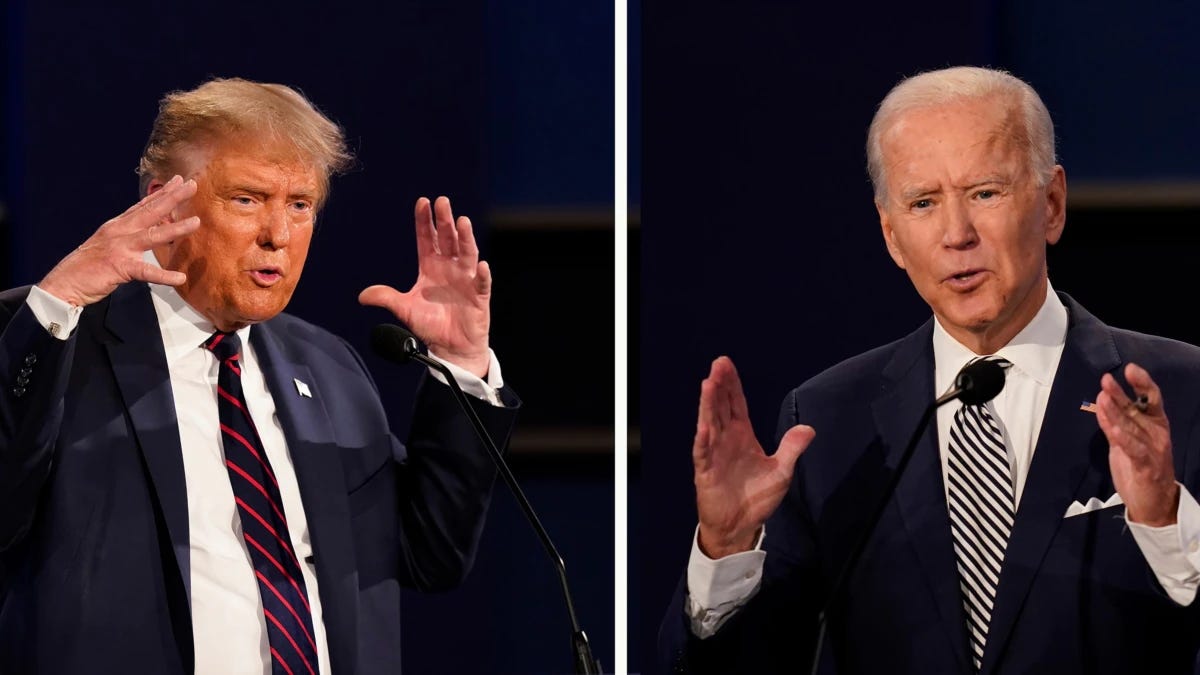
The key to getting elected in America is to raise lots of money. And you can’t do that by talking about poor people or the prospects for peace in the world.

Poor people have no powerful lobby or armies of lobbyists. With no access to the political game, they can be easily ignored. Those who advocate for peace also lack armies of lobbyists; they lack money as well compared to Raytheon, Boeing, Lockheed Martin, and similar giant weapons contractors. They can also be easily ignored.

When you look at Democrats and Republicans, both parties serve the privileged elites. Neither party is on the side of Aurora, a woman working two part-time jobs cleaning motel rooms while also cleaning houses on the side for affluent clients. She has no health care (she can’t afford it, and it doesn’t come with her part-time jobs) and she barely makes $30K a year despite working 70+ hours a week while trying to raise two kids.

Which political party is fighting (truly fighting, not just paying lip service) for higher pay for her? Which is fighting for single-payer health care for her that’s truly affordable? Child-care benefits? Anything at all? The answer is neither.

To America’s political establishment, Aurora doesn’t exist. She doesn’t count. She doesn’t matter.

This point was reinforced as I read an article by Chris Hedges on Father Michael Doyle. In Doyle’s words:

“There is a meanness that has raised its ugly head in the soul of America. Bobby Kennedy, even Lyndon Johnson, spoke about the poor. Now you can’t say the word poor and get elected. Let the poor suffer. They’re not important. Let the train roll over them.”

Bobby Kennedy reached out to everyone

This is the crux. America, we’re told, is incredibly rich and noble and good. Yet we export wars and weapons and treat the most vulnerable among us like trash.

Speaking of wars and weapons, the Biden administration is asking for nearly $38 billion more in aid for Ukraine in its war against Russia. If approved, this will bring U.S. aid to Ukraine, mainly in the form of weapons, ammunition, and the like, to almost $100 billion in less than a year. People tell me this is because America cares about the Ukrainian people. But the U.S. government doesn’t care about Americans living on the streets: do you really think it cares about Ukrainians?

Aid to Ukraine gets approved with alacrity by Congress because most of the money goes to weapons contractors like Raytheon and Lockheed Martin. To those and similar corporations, war is profitable, peace isn’t. Talk of a new cold war with Russia and China drives war-based profits higher still. Few in Congress have the temerity to suggest that peace is ultimately better for Americans (and indeed Ukrainians, Russians, and all other life on earth) than incessant wars and preparations for the same.

Imagine what $100 billion could do for the homeless in America. Imagine the shelters that could be built, the aid that could be provided, the hope that could be instilled. I’m not saying government aid is the solution to homelessness, but it sure would help.

Perhaps we need to declare war on homelessness while creating an army of well-heeled lobbyists to attack Congress with the magic bullet that always gets attention: campaign contributions. Money. At the same time, let’s eliminate the Departments of Defense and Homeland Security and replace them with a Department of Peace with an equivalent budgetary authority of roughly a trillion dollars a year.

Barring that, the poor will continue to suffer and wars and weapons will continue to find a way.

Why Did Eisenhower Fail in 1961?

W.J. Astore

Perhaps America, Home of the Brave, Simply Fears Too Much

In 1961, in his famous farewell address, President Dwight D. Eisenhower warned America about the military-industrial complex. He said it potentially posed a grave threat to liberty and democracy, noting that only an alert and knowledgable citizenry could keep its “disastrous rise” in check. In an earlier draft of his speech, Ike had included Congress as part of the complex, but he removed it from the final draft in the interest of parting with Congress on good terms.

Ike, of course, knew the military and loved it and had worked with industry as well. He knew of what he spoke. Every year when he was president, the military wanted more. So did the weapons manufacturers. And Congress was willing to give them more in the name of jobs and for that nebulous cause of national security. Ike did a decent job as president containing the ambitions of the military and the greed of America’s merchants of death. His speech in 1961 was his parting shot across the bow of the complex and a warning that’s largely been forgotten by Americans then and now. 

Ike, I think, would be dismayed but not shocked at how the military-industrial complex or MIC has expanded its “misplaced” power over the last sixty years. The MIC is now the MICIMATT, or the military industrial congressional intelligence media academia think tank complex, employing millions of Americans in pursuit of full-spectrum dominance across the globe. In fact, America has proudly become a warrior nation (the citizen-soldier ideal is long dead) with 750 bases around the world and military budgets that routinely touch or exceed a trillion dollars. Permanent war is the new normal in America, justified as always in terms of making the world safe for democracy.

In the spirit of Ike, we should recognize the military or industry or Congress alone is not the enemy. It’s the conjunction of an immense military establishment with powerful industrial interests, and the enabling of the same by Congress, that needs to be addressed and reformed.  

Yet, given its enormity and its power, the complex is remarkably resistant to change, let alone to being shrunk and weakened. It will take enormous national will, working against powerful propaganda forces that will paint every Pentagon budget reduction, large or small, as unsafe if not un-American.

So why did Ike fail?  Or why did we fail Ike?  He warned us in 1961.  Why have we as “an alert and knowledgable citizenry” failed to guard against the acquisition of “disastrous” power by the MIC?

For the truth is America has become an Orwellian country where war is peace.  War (or preparations for war) has been continuous since Ike’s speech.  Our government wages war in the alleged cause of peace.  It acts imperially in the name of democracy, and we collectively accept or tolerate the tale that Big Brother tells us.

Short of a revolution, what America needs is radical honesty. An awakening.  If we truly want as a people to pursue peace, we can’t do that by constantly waging war.  If we truly favor democracy, we can’t pursue one through militarism and imperialism.

What kind of nation — what kind of people — do we want to be? Judging by our federal discretionary budget and by the general affection for all things military in our nation, perhaps we want to be a bellicose empire. I’m not saying all Americans want this; even those who do probably wouldn’t state it so baldly. But maybe this is just who we are, a nation and a people convinced that it’s always at risk, and thus one that’s forever fearful, hyper-vigilant, coiled to strike and ready to rumble.

“Quite an experience to live in fear, isn’t it? That’s what it is to be a slave.” So says Roy Batty, the doomed replicant in Blade Runner, played so brilliantly by Rutger Hauer. There’s a lesson here for all of us. The first step to heeding Ike’s warning, as well as his marching orders to us, is to control our collective fear. To stop listening to threat inflation about China or Russia or Iran or terrorism or whatever. Fear is the mind-killer, Frank Herbert noted in Dune, thus to think freely requires us to master that which kills thought. Fear, Master Po said in Kung Fu, is the only darkness.

We will only begin to downsize the military-industrial complex and end our pursuit of militarism when we acknowledge our fear, stop being slaves to it, and head away from the darkness.

America is the home of the brave, so we say. Isn’t it time we acted like it?

Democrats Keep Control of the Senate

W.J. Astore

Democracy Is Saved!

I woke up today to the news the Democrats will keep control of the Senate through 2024. Democracy is saved! I guess the Russian bots didn’t steal the election this time around, nor did election deniers mount a coup against democracy. The status quo prevails in America. What great news for all workers, all those who are struggling to make ends meet, to learn that nothing has fundamentally changed in the best of all possible countries.

Heck, it’s even good news that Republicans are likely to gain a narrow majority in the House, thereby demoting Nancy Pelosi to House Minority Leader. I can look forward to House impeachment proceedings against various Democrats, because such proceedings are truly what working-class Americans want and need from their government.

President Biden promised to take action to codify Roe v Wade into law if the Democrats won, so I suppose he’ll weasel his way out of this promise if the House tips Republican. Not that his action was going to change anything, since Biden refuses to touch the Senate filibuster.

What we can look forward to is two more years of divided, do-nothing government in Washington, DC, with politics being dominated by Donald Trump’s new run for the presidency against Sleepy Joe and Giggles Harris. Happy days are here again!

Of course, a “divided” Congress will still come together to support massive Pentagon spending and a blank check of military aid to Ukraine. Nothing unites Democrats and Republicans like weapons and wars.

What you won’t see, of course, is a higher federal minimum wage, single-payer health care, or anything else the working classes could truly use. America, of course, is an oligarchy and Congress and the President serve the oligarchs. As George Carlin memorably said: “You have no rights” — and no say.

Ready for a depressing repeat?

One clear result from this election is Joe Biden’s commitment to run again in 2024, when he’ll be 82 years old. Truly, anyone can be president in America, as long as the oligarchs sign off on you. Biden running again reminds me of the Weimar Republic in Germany in the early 1930s, when Paul von Hindenburg, also in his eighties, ran against and defeated a certain Adolf Hitler in 1932. Of Hindenburg it was said that the men around him “shoved him — with dignity.” And I suppose the operatives around Biden will also shove him about, with (or without) dignity, as age takes its inevitable toll on him. 

Biden will likely keep Kamala Harris as his vice president, not wanting to admit his mistake in picking her. Put charitably, Harris has been a non-entity as VP, so she’s perfect for the job, but if Biden runs and wins in 2024, there’s a decent chance she could become president during Biden’s second term. Of course, the oligarchy vetted and picked her exactly because she’s predictable and obedient to power. But some people will crow about how amazing it is to have a Black Asian female president when her views and allegiances are almost exactly the same as a white Catholic male president like Biden. But, you know, diversity!

So it’s two more years of hearing Democracy is in peril because Trump is running again when we all know or sense that whatever democracy we had ended in America decades ago, and most certainly by 1980. (Of course, America was founded as a republic by a bunch of privileged white guys, who weren’t exactly trusting of democracy, seeing it as mob rule.) Still, I like to think there’s hope in America, because more and more people are waking up to the harsh realities we face as a people. Don’t tell me I’m wrong about this; I’d like to keep a scintilla of hope, if only to preserve my own sanity, which will be sorely tested in the run up to the 2024 election.

So here’s to another two years of “democracy,” American-style, meaning no democracy at all. I wonder why an obvious con man like Trump gains so much traction here in the land of the not-so-free?

Thank You For Your Service

W.J. Astore

This Veterans Day, instead of thanking vets, ask instead how they’re doing

I served in the U.S. military for twenty years. It was the prime of my life, and I got a great education courtesy of you the American taxpayer. In the Air Force, I was a developmental engineer when I wasn’t teaching history (long story), and I never had to endure bullets and bombs and IEDs in a combat zone, for which I’m grateful. I really consider it an honor to have served, a privilege, because we in the military take an oath to the U.S. Constitution and to the high ideals that document represents.

So I’m always a bit surprised when someone thanks me for my service. I feel like saying, please don’t thank me, but thank you for putting your trust in me, for allowing me to serve and to uphold our nation’s highest ideals. The nation placed its special faith and trust in me, so thanks for doing that.

Of course, I say nothing like that in reply. What I typically say is “You’re welcome,” and then I move on. I don’t tell people: Please, don’t thank me, because that would be rude. My experience is that people want to thank me for sincere if sometimes vague reasons, and that’s OK with me. It’s not the time to launch into a diatribe about the military-industrial-Congressional complex or war crimes or imperialism. I have my blog for that. (Smile.)

Sometimes, though, I think thought (and responsibility) begins and ends with “thank you for your service.” For some people, it means something like this:

Thank you for your service — so I don’t have to think about your service and America’s many wars — and so I don’t have to think about my loved ones having to serve and kill and die in them.

Veterans Day started as Armistice Day, a solemn occasion to mark the end of massive bloodletting in World War I and a return to normalcy, i.e. peace. It was supposed to be the war to end all wars; the armistice on 11 November 1918 was idealistically thought to be the beginning of eternal peace. Today, “peace” is a word you almost never hear in American political discourse. Our new normal is war, which is just about the most horrible thought I could write about U.S. society and culture today.

Why? Partly because veterans often pay “an intolerable price” for their awful experiences in war, notes Kelly Denton-Borhaug at TomDispatch. That’s why most combat veterans don’t want to talk about their experiences, especially with civilians. They’d rather forget, yet it’s so hard to forget or even to forgive yourself when your mind has been scorched by the fires of war.

And it’s not just veterans who pay the price of endless war. Young people turning 21 today have never known a time when America hasn’t been at war with somebody somewhere. They’ve never known a time when massive military budgets were considered abnormal. They’ve never known, in a word, peace.

So, instead of thanking veterans for their service today, perhaps you should simply ask them how they’re doing. Be ready to lend a sympathetic ear, or a helping hand, if they admit to feeling “not so well.”

Thank you for doing this. Thank you for your service.

The Military-Industrial Complex Wins Again!

W.J. Astore

Election 2022 Truly Had a Clear Winner

With Veterans Day in mind, I was asked as a retired U.S. military officer for a comment on the 2022 election results, which produced this:

When both political parties pose as pro-military, when both are pro-war, when both are enablers of record-high Pentagon spending, when both act as if a new cold war with China and Russia is inevitable, do election results even matter?  No matter which party claims victory, the true victor remains the military-industrial-Congressional complex.

We have a winner, America!

To paraphrase Joe Biden, nothing fundamentally changed in the 2022 elections when it comes to colossal military spending, incessant wars and preparations for the same, and non-stop imperialism around the globe. There is no new vision for lower Pentagon spending, for fewer wars and weapons exports, and for a smaller, less domineering, imperial mission.

As General and President Dwight D. Eisenhower warned us in 1961, the military-industrial-Congressional complex represents a disastrous rise of misplaced power that is profoundly anti-democratic. Collectively, we’ve failed to heed Ike’s warning. The result has been one unnecessary and disastrous war after another, even as democracy in America withers. The Vietnam War—disaster. The Iraq War—disaster. The Afghan War—disaster. The War on Terror—disaster. Even the war America ostensibly won, the Cold War against the USSR, is now apparently about to be refought.

I suppose we need to refight the Cold War we “won” thirty years ago so we can lose that one too.

With the Democrats doing somewhat better than expected at the polls, war business should continue to grow in Washington, D.C. Most political commentators seem to think this is a good thing, when they think about it at all. Few seem to recall Ike’s warning that a military establishment of vast proportions is antithetical to democracy.

In this election cycle, I’ve heard nothing about peace. I’ve heard nothing about strengthening and preserving democracy by downsizing our military and imperial presence around the globe. Not from Democrats and Republicans.

So the winner in 2022 is the same winner as always: the military-industrial-Congressional complex. It’s a sad result to contemplate with Veterans Day looming.

When Losing Is Winning

W.J. Astore

Corporate Democrats Would Rather Lose to Republicans than Enact Progressive Reforms

Call me cynical, but the establishment Democratic Party would rather lose to Republicans, even those Maniacal Trumpers, than win with strong progressive candidates.

The reason is obvious: money. The Democratic Party is all about raising money. The best way to raise money is to do the bidding of the corporate overlords. That’s why you don’t see firm commitments to a $15 federal minimum wage, or single-payer health care, or reducing the Pentagon budget. The Democrats are a pro-business, pro-rich, pro-establishment party with a large hierarchy that thrives on corporate cash. Whether it wins at the polls or loses, it still wins at the one “poll” that matters, and that’s raising corporate cash.

Consider the “big names” in the Democratic Party. The Obamas, the Clintons, the Bidens, Nancy Pelosi, Chuck Schumer, Kamala Harris, and so on. They are all bought and paid for. They have all been corrupted by money, willingly so. They see it as their right to cash-in on their public “service.” They are the servants of Wall Street, Big Pharma, the military-industrial complex, and other power centers. That’s how they attained thier positions in the first place.

It’s something of a truism that Democrats would rather lose to Republicans than submit to a progressive agenda like the one espoused by Bernie Sanders. (Forget about Ralph Nader; to the Corporate Democrats, he may as well be the antichrist.)

Things are so bad that the Democratic establishment is actually funding Trumpian Republicans, thinking that the latter will be unelectable because they’re too far right, too batshit crazy. But, my fellow Americans, there’s plenty of room on the right, and plenty of support for batshit crazy positions in this land of ours.

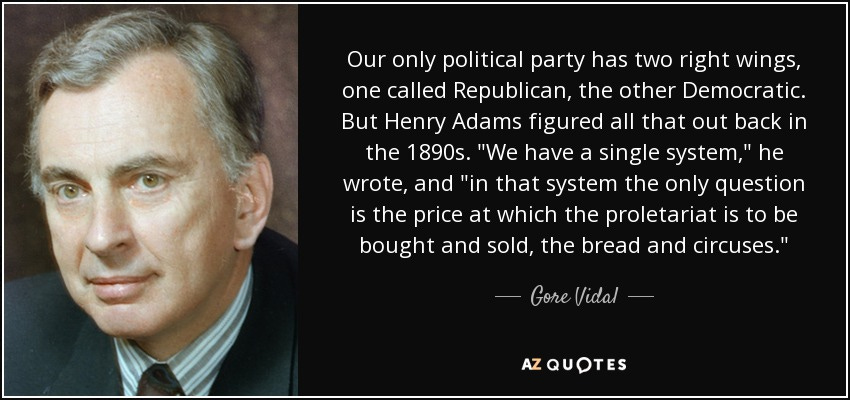
America is a strange bird with two right wings. I guess that’s why we don’t soar as a country anymore. We just flap aimlessly in circles on the ground, our withered left wing incapable of providing balance and lift.

Which Corporate Party Will Win on Tuesday?

W.J. Astore

It’s been a depressing election season but the end is finally near (hopefully not THE END). The Democrats tell me I must vote blue no matter who because democracy is at stake and only they can save it from the fascist Republicans. The Republicans tell me to vote for them because Biden the radical socialist/liberal is out to groom our kids, take away our guns, and disrespect our religion (it’s assumed here that your religion is Christianity). Both parties are hyping fear of the other as a motivating force. It’s not a shooting civil war; we don’t have a Bleeding Florida (yet) like we had in the 1850s in Bleeding Kansas; but the stoking of divisions in this country for electoral gains is truly dispiriting.

After reviewing my state’s ballot online and looking over the choices, I expect I’ll be voting mostly for Democrats, not because I want to but because the third-party choices are either uninspiring or non-existent. I live in a solidly blue state, so I don’t really have to worry about a red tide of Republicans surging across my little corner of this earth. Elsewhere in America, I expect Republicans will do quite well.

The reason is simple: The Democrats’ message, like Biden himself, is old, corporate-centered, and uninspiring. I can’t name one policy the Democrats are truly embracing to help ordinary Americans. A $15 federal minimum wage? Nope. Single-payer health care? Nope. A firm commitment to getting big/corporate money out of politics? Nope. Reductions to Pentagon spending and a peace dividend to those in need? Nope. I could go on and on. Just about the only clear Democratic message is “vote for us because the Republicans are going to destroy democracy.”

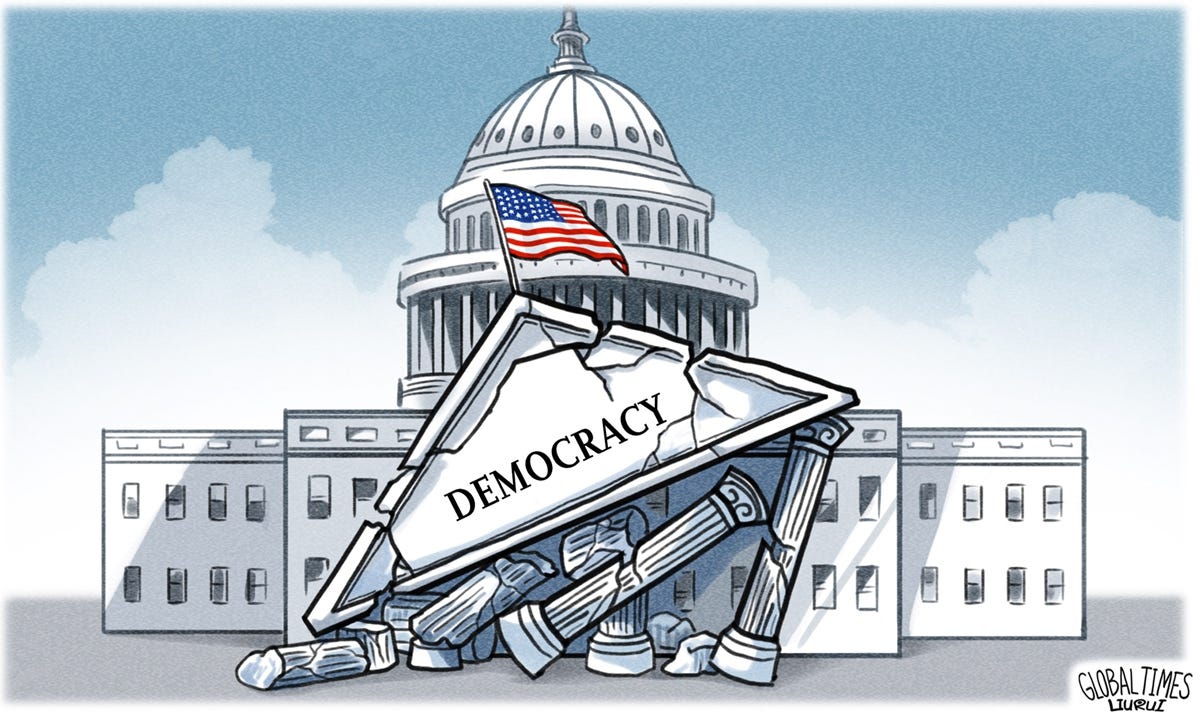
Of course, Democracy is already destroyed in America. Both parties are corporate-dominated. They obey the owners and donors and ignore us. The people who need the most help in America are those with the weakest voices; those who are dominant keep scheming successfully to get more and more even while loudly crying “foul.” It’s socialism for the corporate rich, dog-eat-dog capitalism for everyone else, and both parties are firmly committed to keeping it that way.

So why do I vote? I truly believe it’s one of my civic duties. Besides, there are issues/questions on the ballot that do matter in my state, and I want to have my say.

So, my fellow Americans, don’t despair at tomorrow’s results. Don’t become fearful about one party or the other winning followed by democracy’s destruction. For that happened decades ago, and we’re still chugging along, even though I’m seeing more black smoke billowing from the engine compartment.

My dad knew the score, and his words haunt me. He survived poverty, the Great Depression, World War II, and low-paying factory work before securing a decent civil service job that kept us solidly in the middle class. In the 1990s, he told me he’d had it tough in the beginning of his life but easy at the end; but he predicted the reverse would be true for me: relatively easy at the beginning but tough at the end. I hope he’s wrong, but I fear he’s right. The proof is evident at every election. Sigh.

Political Illogic in America

W.J. Astore

Don’t tell me I voted for the very bad guy when I voted for a very good one

Let’s look at a political ballot with three candidates. (I use “guy” without a specific gender in mind.)

Candidate (R): Very Bad Guy

Candidate (D): Bad Guy

Candidate (G): Very Good Guy

I only have one vote. I choose Candidate (G).

But wait, the critics scream. (G) doesn’t have a chance. Only (D) can win against (R). You must vote for (D) or children and democracy will die!

As Mr. Spock would say, this is highly illogical.

If (R) wins the election, the voters who cast their ballots for the Very Bad Guy are responsible. Not me.

If (D) loses, i.e. failed to win enough votes, then Party (D) should have nominated a better, more attractive, candidate, instead of a Bad Guy.

If (D) does win, and remember he’s a Bad Guy, his party will feel vindicated and will likely keep nominating bad guys. Why change a winning formula?

Logically, if I want a Very Good Guy to win, I have to vote for him. And if I want to drive Party (D) to nominate better candidates, I can’t do that by giving their bad guys my vote. I have to incentivize Party (D) to change, and they won’t change if I just roll over and vote for them because Party (R) is allegedly even worse.

So, if lots of Very Bad Guys win on Tuesday, blame those who voted for them. Prod those voters who stayed home and didn’t vote (perhaps by fielding better candidates in the future). Ponder why the big “choice” was between Very Bad Guy and Bad Guy. Just don’t blame me for voting for the Very Good Guy.

In 2022, What Are the Democrats For?

W.J. Astore

Tuesday’s elections won’t be kind to the aimless Democrats

President Joe Biden is not a message guy. Nor is Nancy Pelosi. Nor is Chuck Schumer. The senior leaders of the Democratic Party lack charisma, lack communication skills, and seemingly have no compelling core principles except the usual ones for politicians (raise money, stay in power). I’ve seen plenty of political ads, heard plenty of speeches, read plenty of articles, and what I’ve gathered is that I should vote Democrat because the Republicans are dangerous to democracy and beholden to Trump. And that’s about it for a “message.”

My guess is that this magnet is selling well

Oh, there is one thing. Biden promised he’d attempt to codify Roe v Wade into law if the Democrats can somehow keep control of the House and Senate, which at this point is unlikely for the House and dodgy as well for the Senate. Here’s the problem with that “promise.” In 2007, Barack Obama promised to codify Roe v Wade if he won the presidency, saying it would be his top priority. After he was elected, he changed his mind and did nothing. In 2020, Joe Biden made a similar promise; he has also done nothing in the last two years. Yet now we’re supposed to believe Biden’s new “promise,” even though it’s an obvious and desperate ploy to rally pro-choice forces to vote blue no matter who on Tuesday.

That Democrats are not Republicans is enough for more than a few voters, and I get that. What’s truly shocking is that’s pretty much the Democrats’ message. And it simply isn’t persuasive enough to appeal to undecided voters. More and more voters, fed up with both parties, are “independents” or otherwise unaffiliated, and you have to give them a reason to vote for you other than “the other guy (or gal) is worse.”

Consider, for example, the Democrats and war. Democrats fully support massive budgets for the Pentagon; Democrats fully support $100 billion or more for Ukraine in its war against Russia; Democrats fully embrace the “new Cold War” and aggressive support of Taiwan. Recall that Biden suggested “Putin must go” as a goal of the Ukraine war, and that Nancy Pelosi, that skilled and deft diplomat, traveled to Taiwan to stir up anti-American sentiment in China. If you’re at all interested in slightly downsizing the Pentagon budget, of ratcheting down tensions with Russia and China, of pursuing diplomacy with words instead of weapons, of occasionally fostering the idea of “peace,” today’s Democratic Party is not for you.

As inflation continues to rise, hollowing out the working and middle classes even more, the Democrats have no solutions except higher interest rates and a bit more government aid here and there so that you can keep making (barely) your rent or mortgage payments while putting food on the table and paying for heat. Forget about a higher federal minimum wage. Forget about single-payer health care. Even student loan debt relief is very limited (it may go away completely if the courts rule Biden exceeded his executive authority).

As Democrats lecture people about saving democracy, Americans wonder where democracy went. Obviously, both political parties are beholden to big money, the owners and the donors, and ordinary people have no say, except on Tuesday when we’re each allowed to cast one vote.

I will be voting, of course. As the saying goes, my vote must have some value or the powers that be wouldn’t be spending so much money to buy it. Where possible, I’ll be voting for candidates whose values most closely align with mine. That often means I’ll be voting third party, which my critics tell me is a vote for Trump and his evil minions. Sure, keep on scolding me for wanting honest and principled candidates like Matt Hoh, who’s running for the Senate in North Carolina for the Green Party. It’s all my fault for wanting candidates who truly offer hope and change, instead of more of the same.

Blame the voters, Democrats! It’s a surefire way to victory, if “victory” means another shellacking at the midterms by the Party of Trump. Sigh.

Whatever else is true, it’s not morning again in America.

Time to Study War Some More

W.J. Astore

There’s more to military history than decisive battles, great captains, and sexy weapons 

We sure could use honest and critical teaching about military history and war in America.

I don’t mean celebratory BS. I don’t mean potted histories of the American Revolution and its freedom fighters, the Civil War and its freeing of the slaves, World War II and America’s greatest generation and so on. I mean history that highlights the importance of war together with its bloody awfulness.

Two books (and book titles) come to mind: “War is a force that gives us meaning,” by Chris Hedges, and “A country made by war,” by Geoffrey Perret. Hedges is right to argue that war often provides meaning to our lives: meaning that we often don’t scrutinize closely enough, if at all. And Perret is right to argue that America was (and is), in very important ways, made by war, brutally so in fact.

Why study war? Shouldn’t we affirm that we ain’t gonna study war no more? Well, as Leon Trotsky is rumored to have said: You may not be interested in war, but war is interested in you. Among other reasons, students of history should study war as a way of demystifying it, of reducing its allure, of debunking its alleged glories. War is always a bad choice, though there may be times when war is the least bad in a series of bad choices. (U.S. involvement in World War II was, I believe, less bad than alternatives like pursuing isolationism.)

How are we to make sense and reach sound decisions about war if we refuse to study and understand it? A colleague sent along an interesting article (from 2016) that argues there’s not enough military history being taught in U.S. colleges and universities, especially at elite private schools. Here’s the link: https://aeon.co/ideas/the-us-military-is-everywhere-except-history-books

Visit your local bookstore and you’ll probably see lots of military history — it’s very popular in America! — but critical military history within college settings is much less common.  This is so for a few reasons, I think:

1. Many professors don’t like the “stench” of military history. When I was at Oxford in the early 1990s, I had a professor who basically apologized for spending so much time talking about mercenary-captains and war in early modern Europe. Yet war and controlling it was a key reason for the growth of strong, centralized nation-states in Europe in the 17th and 18th centuries.

2. Many professors simply have no exposure to the military — they’re ignorant of it, almost proudly so. Having taught college myself for fifteen years, including survey subjects like world history, I know the difficulty of teaching topics and subjects where your knowledge is shallow or dodgy. Far easier to stand on firm ground and teach what you know and ignore what you don’t know — or don’t like. But the easier road isn’t always the best one.

3. Critical military history suggests lack of patriotism.  I taught college as a civilian professor for nine years, and I was once told to “watch my back” because I wrote articles that were critical of the U.S. military’s wars in Iraq and Afghanistan. And I’m a retired Air Force officer!

So, with history professors often preferring to ignore or elide military subjects, military history is left to buffs and enthusiasts who focus on great captains, exciting battles, and famous weapons (often featured in glossy coffee-table books) like Tiger tanks and Spitfire fighters.  Such books often sell well and make for exciting reads. What they don’t do is to make us think critically about the costs of war and how disastrous wars often prove.

My own book on Paul von Hindenburg is a critical account of his life, including his complicity in the “stab in the back” myth and the rise of Adolf Hitler to power

A subject I taught at the USAF Academy was technology and warfare, and one of my concerns was (and remains) America’s blind faith in technology and the enormous sums of money dedicated to the same.  The Pentagon will spend untold billions on the latest deadly gadgets (actually, as much as $1.7 trillion alone on the F-35 jet fighterthroughout its lifespan) but academia won’t spend millions to think and teach more critically about war.

As an aside, weapons alone don’t make an effective military. It’s not the gladius sword that made Rome dominant but the citizen-soldier wielding it, empowered by republican ideals, iron discipline, and a proven system of leadership by example.

When the principled citizen-soldier ideal died in Rome, a warrior ideal consistent with a hegemonic empire replaced it. There’s much for Americans to learn here, as its own military today identifies as warriors and finds itself in the service of a global empire.

There’s more to military history than drums and trumpets — or bullets and bombs. For better or for worse, and usually for worse, we as a people are made and defined by war. We would all do well to study and understand it better.

(If you’d like to comment, please visit Bracing Views on Substack.)