
Beware of Long Wars

W.J. Astore

Ukrainian Attacks on Russia Are Dangerously Escalatory

Reports that Ukraine is launching modified drones to strike airbases deep in Russia highlight the unpredictability and escalatory nature of wars. Ukraine is no longer content at defending itself against Russian aggression; Russia itself must be made a target, which will likely provoke harsher Russian counterattacks. Meanwhile, the U.S. Congress continues to authorize billions in military aid to Ukraine, which is pitched as defending democracy and freedom.

War is many things but it is rarely democratic. Indeed, as James Madison warned, war is inherently anti-democratic. It strengthens authoritarian forces and contributes to abuses of power and corruption. As the Russia-Ukraine War goes on, with no clear resolution in sight, Ukraine suffers more even as the chances of escalation rise.
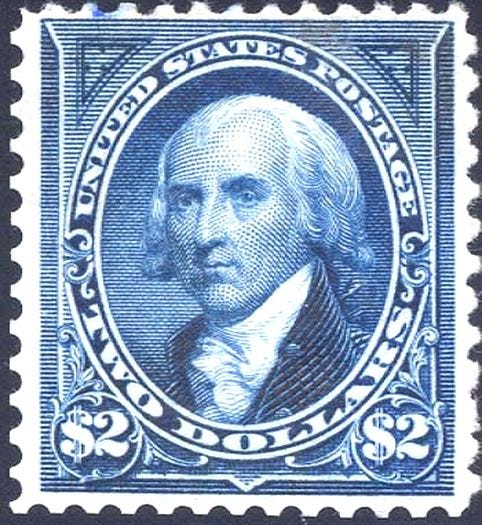
James Madison warned that no nation can preserve its freedom in the midst of continual warfare

What’s needed now is resolute diplomacy — a committed effort to end the war by all parties involved, obviously Russia and Ukraine but also the U.S. and NATO. The longer this disastrous war lasts, the more unpredictable it will become, the more atrocious it will prove, and the more likely ordinary Ukrainians and Russians will suffer and die, whether at various battlefronts or on the homefront.

Negotiation is not weakness nor is it appeasement. Negotiation is sensible, rational, and life-affirming. But there’s little reason for Ukraine to negotiate when it’s enjoying a blank check of support from the U.S. and NATO.

Meanwhile, as Ukraine continues striking deep into Russia, one wonders to what extent the U.S. military and intelligence agencies are involved. Did the U.S. provide technology?  Targeting information?  Intelligence? Or is Ukraine doing this entirely on its own, a scenario that is less than comforting?

I sure hope the U.S. and Russia are talking.  In the confusion and chaos of war, how is Russia to know for sure that an attack on one of their strategic air bases is coming from Ukraine and not from NATO territory?  Even if it’s clearly coming from Ukraine, if these attacks are enabled or approved by the U.S./NATO, will the Russians see them as an act of war? Will they respond militarily, creating even more escalatory pressure?

Bizarrely, Ukraine’s defensive war against Russia has been sold as America’s “good” war, a chance to weaken Russia and Putin in the cause of defending Ukrainian “democracy.” But as Ukraine’s tactics turn more offensive, and as the Ukrainian government likely becomes more authoritarian due to the pressures of war, how wise is it for the United States to continue to send massive amounts of military aid there while discouraging diplomacy?

Policies that end in prolonging the Russia-Ukraine War in the name of teaching Putin a lesson and eroding his power may teach us all a lesson in how war is not just anti-democratic. War runs to extremes, and only fools believe they can control it in a way that is conducive to liberty and freedom and justice.
Where’s the Antiwar Movement?

W.J. Astore

In America, we get what we pay for

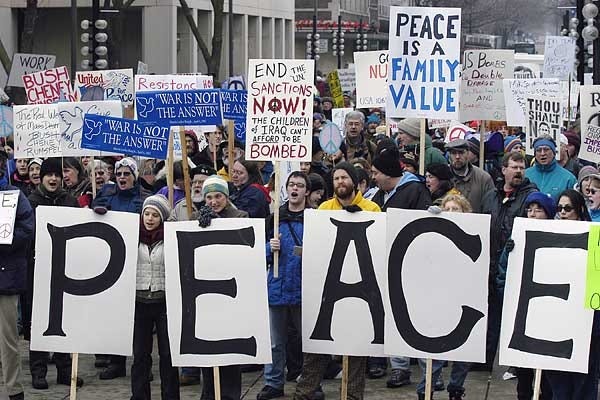
A question I hear often concerns the lack of a strong antiwar movement in America. The last large protest against war I remember preceded the Iraq invasion in 2003. The nuclear freeze movement of the early 1980s was sharply focused and somewhat effective in raising concerns about nuclear escalation between the US and USSR. But I can’t recall a truly powerful and effective antiwar movement since the Vietnam War days, when the draft was still in force and American troops were dying in the tens of thousands in a useless and atrocious war in Southeast Asia.

And those are, of course, two key reasons why America lacks a strong antiwar movement today: there is no military draft, and Americans are not dying in large numbers in a deeply unpopular war.

Rally agains the Iraq War in 2003. Photo by Jeff Miller

Another obvious (I think) reason: we get what we pay for. America pays for war and weapons, we even speak of “investing” in them, so at some (deep) level we believe in war and its efficacy. We are caught or even enraptured by it; our culture is infused with it, whether you speak of movies like “Top Gun: Maverick” or video games like the “Call of Duty” franchise or sporting events that routinely celebrate “our” troops and their weaponry. We “invest” in wars and weapons, and that investment sure pays dividends for the military and all its weapons makers.

There’s another reason as well, perhaps more subtle: the antiwar movement is fragmented whereas pro-war forces are united. What unites them is the pursuit of power, greed, profit, and their own sense they are being patriotic in “defending” America. A lot of people make a lot of money off the military-industrial complex, but it’s not solely about money. They also gain an identity from it and relatively high social status. (The military remains deeply respected within American culture.)

By comparison, antiwar forces in America are fragmented. In talking to some members, I found considerable diversity in what motivates them. This is hardly surprising. There’s no one “big” war to be against, as in the Vietnam War years or in the run up to the Iraq War. Being against war in general is not as compelling a message to fence-straddlers. Meanwhile, Americans are being told by the mainstream media that war works in places like Ukraine and that a new cold war is looming with Russia and China, so how can we afford the hypothetical comforts of peace when we’re afflicted by the grim realities of war?

Again, antiwar forces sometimes disagree about what is at the root of America’s hyper-aggressiveness and how best to counter it. I hear that we must tackle racism first; I hear that the white male patriarchy must be dismantled; I hear that indigenous peoples must finally obtain justice and reparations for the land and livelihoods stolen from them; I hear that BIPOC and LGBTQ+ communities must be heard and empowered; these motivations and agendas, and more, animate antiwar voices and communities. Diversity can be a strength, but it can also make working on a common cause problematic when there’s no clear unity of purpose.

I am perhaps most familiar with antiwar voices on the left, though I also listen to Tulsi Gabbard, Tucker Carlson, Rand Paul, and other voices that are considered right or libertarian. Generally speaking, the left doesn’t want to make common cause against war with the right, and vice-versa. There’s simply too much distrust and distaste. This is perhaps a fatal blow to building a truly effective antiwar movement.

I say this because the pro-war movement in America is truly bipartisan. Democrats and Republicans routinely come together in Congress to vote for more money for weapons and for more war. If we are to resist this, the antiwar movement must also be bipartisan. It must also pitch a big tent and let all people in, irrespective of their political affiliations.

I’d add as well that some antiwar voices in America are also anti-military. Perhaps I’m biased as a retired military officer, but I don’t think an anti-military message is attractive or compelling to most Americans. Anti-militarism, yes. Antiwar, yes. Anti-military, no. That said, I strongly believe America needs to reject warrior and warfighter nonsense and return to its roots and traditions with citizen-soldiers and a much smaller standing military.

Back in 2016, I wrote a similar article on the absence of a concerted antiwar war movement in America. Looking at that today, I think I should repeat the point I made about fear and threat inflation. To wit:

“Finally, a nebulous factor that’s always lurking: FEAR.  The popular narrative today is that terrorists may kill you at any time right here in America.  So you must be ready to “lockdown“; you must be ready to “shelter in place.”  You must always defer to the police and military to keep you safe.  You must fully fund the military or YOU WILL DIE. Repeated incantations of fear reinforce the master narrative of war.”

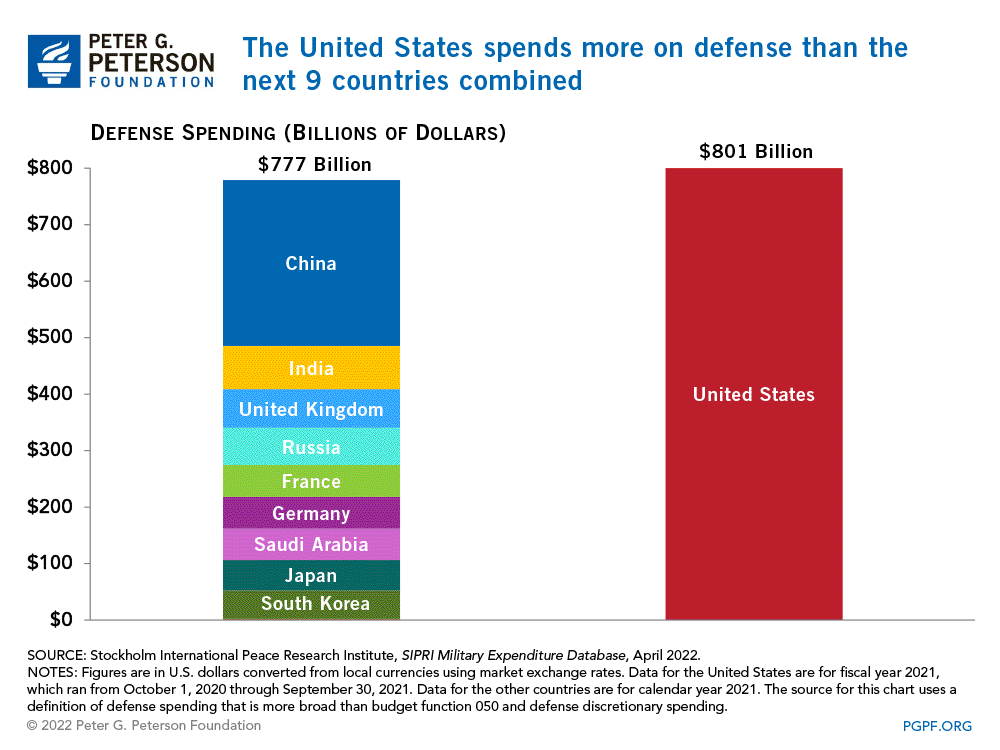
So, perhaps the biggest reason America lacks an effective antiwar movement is simply that we get what we pay for. America spends roughly a trillion dollars a year on wars and weaponry and an imperial military presence, so that’s what we get. We’re not spending a trillion a year on peace and diplomacy and conflict resolution. We reap what we sow, and what we sow is almost entirely favorable to more war.

War Dividends

W.J. Astore

The Pentagon Budget Keeps Soaring Up, Up, and Away!

When the Soviet Union collapsed in 1991 and the Cold War ended, I heard a lot about peace dividends. It was time to become a normal country in normal (more peaceful) times, said Jeanne Kirkpatrick, an early neocon who served under Ronald Reagan. More than thirty years later, America still awaits its peace dividends from the Cold War.

When the Afghan War came to a sputtering and ignominious end in 2021, I didn’t hear much at all about peace dividends. Even though the Afghan War was costing the United States almost $50 billion a year before it crashed and burned, the Pentagon budget for 2022 went up by that amount rather than down. You’d think the end of wars would lead to a decrease in military spending, but not in America.

And so we come to today, when I learned that the Pentagon budget for 2023, which sat at $802 billion per the request of the Biden administration, has been boosted big time to $847 billion by the House and Senate Armed Services Committees. That’s $45 billion extra for more wars and weapons, a whopping sum of money that would likely end homelessness if it was invested in America.

One thing is certain: war dividends always come through. Peace dividends? Not so much.

How does the Washington Beltway crowd justify such enormous sums for “national defense”? Threat inflation, of course. Because of its debilitating war with Ukraine, Russia is weaker but somehow that means America must spend more because Putin or something. Chinese maneuvers near Taiwan are treated like direct incursions into U.S. coastal waters. A few North Korean missiles are enough to justify more than a trillion dollars for new or revamped nuclear forces over the next thirty years. And of course military Keynesianism is always a factor, as in Pentagon-related jobs spread as widely as possible through every Congressional district.

The Pentagon can’t even pass an audit (for the fifth year in a row!), yet it still gets more and more billions from you the taxpayer.

I took a quick look at NBC News online to see if there were any objections to this massive $847 billion budget for the Pentagon. The only story featured warned that “GOP senators threaten to delay military bill over vaccine mandate.” Yes, what’s truly worrisome is that a few troops might have to accept a COVID vaccine against their will. Geez, where were these senators when the military was jabbing me in the arm every year with a mandatory flu vaccine?

Trees are falling in the forest to print all the money the Pentagon wants (and then some), but few Americans hear a sound since the mainstream media refuses to cover wasteful military spending and disastrous American wars. 

If you should want a sure bet in America, don’t toss money at your favorite sports team. Place your bet on America’s war horse. Whether it wins, places, or shows, or even comes up lame, it will always pay dividends.