

W.J. Astore
Because words about war matter
As a retired Air Force officer and military historian, I’m familiar with all kinds of euphemisms about killing, e.g. “precision bombing” and “collateral damage.” Just as it’s easier to kill at a distance, it’s easier to kill when we use words that provide distance from the act. Words that facilitate detachment. Words that befuddle and confuse our minds.
When writing honestly about war, it’s best to use bullet-hits-the-bone words: atrocity, murder, war crime, slaughter. Rape, pillage, burn are “old” words associated with war, and these words often most fittingly describe war and its likely effects and outcomes.
Powerful, blunt, and accurate words should remind us that war is inherently horrible and also profoundly anti-democratic. War is consistent with authoritarianism and lack of freedom, yet Americans nowadays seem to think war (and words about war) is conducive to democracy and freedom, e.g. Afghanistan, Iraq, and now Ukraine.
We used to know better. Military people are fond of the saying, “freedom isn’t free,” but neither is war. Indeed, war and its various manifestations are costing this nation more than a trillion dollars a year while weakening democracy and our constitutional freedoms. And that is a very high price to pay to keep the factories of the merchants of death humming and the generals and admirals happy.
Fortunately, there’s a new guide and website available that alerts us to the importance of language and war. The website is wordsaboutwar.org, from which you can read and download suggestions on how best to use words to convey the horrors and costs of war to people everywhere. I urge you to visit the site and peruse the guide. (Full disclosure: I was an advisor to this effort, which was ably led by David Vine.)
Here’s a sample of a few comments I made in passing to the group:
A war on terror is truly a war of terror because war itself is terrible.
Friendly fire is being killed by one’s own, often due to the chaos of war, the sheer waste of it all, exacerbated by incompetence. “Fire” is always unfriendly.
Very few troops are “heroes,” and indeed most aren’t, because heroes are rare in all walks of life.
The word “casualty” is too benign. I much prefer killed and wounded: the victims of war.
What are “enemy noncombatants”? They are usually innocent civilians.
With respect to the “War on Terror” that the U.S. has prosecuted for 22 years and counting, I noted that:
We (the U.S.) manifested a Manichean world view; as George W. Bush said soon after 9/11, you’re either for America (and all its violence) or you’re for the terrorists (with their violence). If you wanted a non-violent approach, you were dismissed as naive or “for them.” It was good versus evil, thus the infamous “axis of evil” the U.S. allegedly faced.
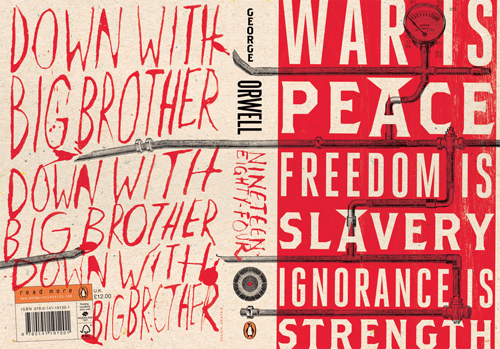
This is, of course, a problem with all discourse related to war. Subtlety and nuance are thrown out the window. Language is greatly simplified. The U.S. is “doubleplusgood” and the enemy must be the opposite while simultaneously being dehumanized. We kill “cowardly” enemy troops or terrorists (by drone they’re “bugsplat”) yet our “heroic” troops “fall” in battle and are revered as “the fallen.” Violent combat is disguised as “kinetic action” in U.S. military communiques.
In my view, the dishonesty of this language captures the dishonesty of America’s wars.
General William T. Sherman (U.S. Civil War) famously said that “War is all hell.” Sherman knew the hellish and harsh realities of war; he knew, as he wrote, that “war is cruelty, and you cannot refine it.” Too many people today are using and manipulating words to refine war. They’re camouflaging war’s harshest realities. Writers should write plainly and honestly, as General Sherman did, to capture war’s hellish nature. By choosing honest words, we also help to create a better future in which the threat of war recedes precisely because we recognize more clearly its horrific nature and terrifying costs.
Other high-ranking military officers, like General Smedley Butler, for example, also wrote plainly about war. As Butler famously said, war is a racket, and he described himself as a gangster for capitalism. Now that was plain speaking about war!
The chief intent of speaking and writing plainly about war is to discourage war and save lives. Some might see it as patriotic—saving the lives of U.S. troops by helping to prevent bloody awful wars—but more broadly the goal is humanistic—to save the lives of all those on the receiving end of bullets and bombs.
Interestingly, U.S. troops at lower levels are generally blunt about what war is about. Talk to sergeants at the front and you’ll hear visceral truths, probably enhanced by choice expletives. I’ve heard U.S. Marines shout “Kill!” at graduation ceremonies. Killing, after all, is what war enables. Mass killing leads to atrocities like My Lai in Vietnam. This fact should never be sugarcoated.
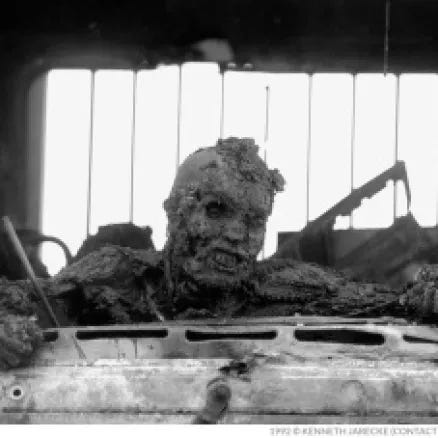
Few people, however, truly want to confront war’s horrors. Gazing upon the face of war is profoundly disturbing, which is why we’re encouraged to look away. And so the face of war is airbrushed and camouflaged with euphemisms and buried under a blizzard of acronyms.
If we are to end war and prevent atrocity, we must seek to name things accurately while calling up mental images (no matter how disturbing) appropriate to the horrors of war. The guide at wordsaboutwar.org is an important step in that direction.
Update: I went on Podcast by George today to talk about all this:
 Bracing Views