Patriotic History Is An Oxymoron

W.J. Astore

In my latest article for TomDispatch.com, I tackle Trump’s call for “patriotic” U.S. history. If normal history is “The Good, the Bad, and the Ugly,” think of Trump’s history as all good and with none of the bad and ugly. It would make for a boring movie, and for boring history as well. Of course, this argument over “patriotic” history is yet another front in Trump’s Kulturkamp, or culture war, in America.

Yet isn’t ironic that Trump, who says he seeks to celebrate America’s greatness, ran in 2016 as a declinist candidate? “Make America Great Again” was his motto: the again suggesting an America that had to be put right, which apparently Trump has done, since his 2020 motto is “Keep America Great.”

A lot of historians will be spilling much ink in the coming decades on Trump and his administration. I have a feeling most of it will not be judged as “patriotic” by Trump’s standard.

Nuking History (from TomDispatch)

There goes our history

Aggravating such essential collective madness in this moment (and the president’s fiery and furious fascination with such weaponry) is Trump’s recent cynical call for what might be thought of as the nuking of our history: the installation of a truly “patriotic” education in our schools (in other words, a history that would obliterate everything but his version of American greatness). That would, of course, include not just the legacy of slavery and other dark chapters in our past, but our continued willingness to build weaponry that has the instant capacity to end it all in a matter of hours.

As a history professor, I can tell you that such a version of our past would be totally antithetical to sound learning in this or any world. History must, by definition, be critical of the world we’ve created. It must be tough-minded and grapple with our actions (and inactions), crimes and all, if we are ever to grow morally stronger as a country or a people.

History that only focuses on the supposedly good bits, however defined, is like your annoying friend’s Facebook page — the one that shows photo after photo of smiling faces, gourmet meals, exclusive parties, puppies, ice cream, and rainbows, that features a flurry of status updates reducible to “I’m having the time of my life.” We know perfectly well, of course, that no one’s life is really like that — and neither is any country’s history.

History should, of course, be about understanding ourselves as we really are, our strengths and weaknesses, triumphs, tragedies, and transgressions. It would even have to include an honest accounting of how this country got one Donald J. Trump, a failed casino owner and celebrity pitchman, as president at a moment when most of its leaders were still claiming that it was the most exceptional country in the history of the universe. I’ll give you a hint: we got him because he represented a side of America that was indeed exceptional, just not in any way that was ever morally just or democratically sound.

Jingoistic history says, “My country, right or wrong, but my country.” Trump wants to push this a goosestep further to “My country and my leader, always right.” That’s fascism, not “patriotic” history, and we need to recognize that and reject it.

Read the rest of my article for TomDispatch here.
The Biden-Trump Debate: The Agony Booth

W.J. Astore

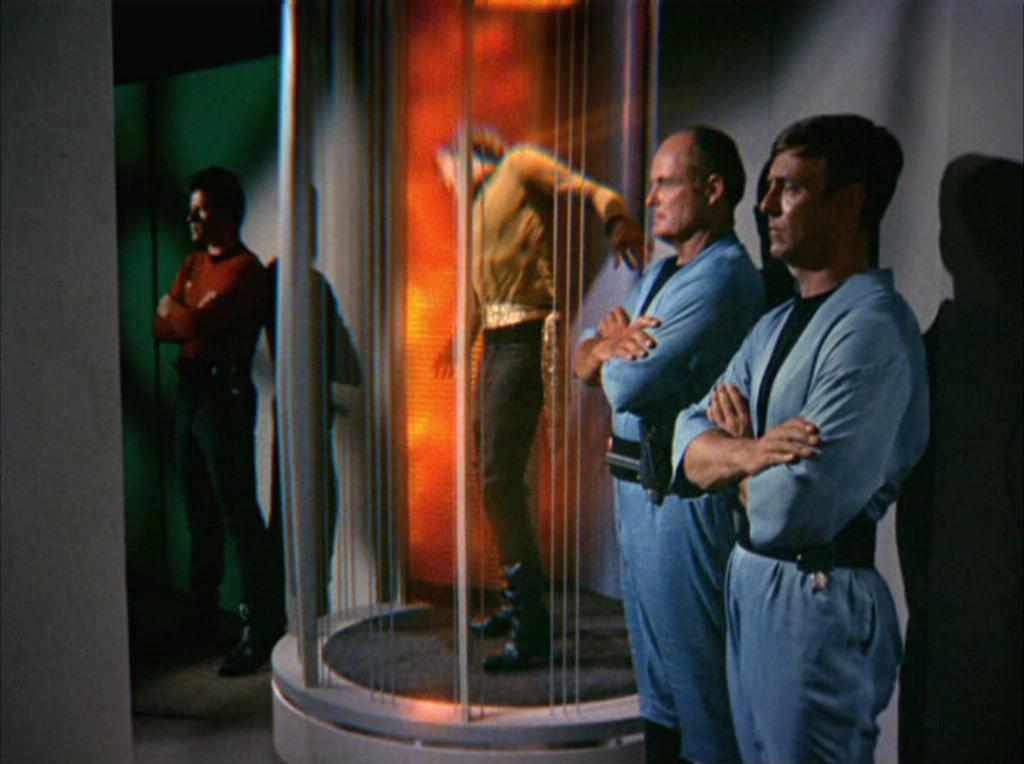
In the Star Trek episode, “Mirror, Mirror,” Captain Kirk and a few other crewmembers find themselves in a parallel universe on a more barbaric ship. On this imperial version of the Enterprise, disobedient or otherwise malperforming crew are punished, tortured really, in an “agony booth.” And that’s exactly how I felt last night watching the Biden-Trump debate. What did I do wrong to be put in this agony booth? Fortunately, I was able to escape after 75 minutes. The “full-duration” just may have killed me.

I watched the debate with my wife (agony loves company), and she had some of the best lines of the night. Here’s a sampling:

  • Great, two old white guys again. It’s blinking Biden versus bully-boy Trump.
  • Trump’s just a horrible, badgering bully.
  • Biden’s already muddled and is mixing up his numbers.
  • Trump never smiles, never laughs. Mean people suck.
  • Trump is steamrolling over everything.

Really, the less said about this “debate,” the better. It was insult after insult, interruption after interruption, most of the insults and interruption coming from Trump. His followers, I assume, enjoy his bully-boy tactics, but they left me cold and made the “debate” unwatchable.

As usual, Trump played some of his greatest hits. Covid-19 is “the China plague” and is “China’s fault.” A vaccine is “weeks away” (with no mention of how many weeks. Five? Fifteen? Fifty?). He’s going to make insulin for diabetics as cheap and available as water. Even that he was the one who brought back Big Ten college football.

Speaking of football, Trump earned many penalties in this debate. Taunting. Unsportsmanlike conduct. Delay of game. Unnecessary roughness. The list goes on. Next time, instead of a debate moderator, I suggest a team of NFL referees with whistles and plenty of penalty flags.

Media spokespeople and candidate spin rooms are most concerned about which candidate “won” or “lost” the debate. My sense is that Trump, in dominating the debate — what a nasty man he is — “won.” And who lost? Anyone who was expecting a real debate.

Welcome to the agony booth that is politics in America.

There I am, in the Agony Booth (actually, it’s Ensign Chekov)

The USA as a Fourth World Country

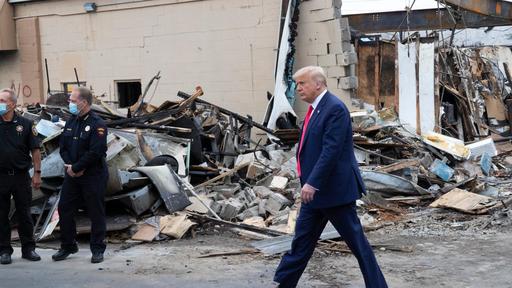
Trump, striding to protect precious property

W.J. Astore

1+3=4. It’s a simple equation that says much about the American moment, suggests Tom Engelhardt today at TomDispatch.com. Think about it. America remains a first world country with its unmatched military might, its powerful corporate and financial sectors, and the quality of life available to the affluent and well-connected. But for most other Americans? The country increasingly seems 3rd world, with crumbling infrastructure, low wages, lack of good jobs, lack of health care coverage for the less fortunate, and so on.

Perhaps that’s why Trump gets away with tweets about thug-ridden streets (that he connects to the Black Lives Matter movement). People may not see these thugs, but they sense something is wrong out there, and someone may indeed be coming for them, very shortly, perhaps to evict or foreclose on them.

There is a unique ideology to our fourth world country. Our two main parties, the Democrats and Republicans, agree that to invest in society is socialism, but to “invest” in weaponry and wars is the height of prudence and sanity. I know: a few Democrats like Bernie Sanders and AOC make noises, more or less sincere, about helping workers and investing in people, but they are shunted aside by the corporate Democrats whose main job it is to keep “socialists” like Bernie out of power. It’s the one thing they’re good at, led as they are by those icons of charisma and homespun goodness, Nancy Pelosi and Chuck Schumer.

Meanwhile, Trump continues to rant about American carnage, doing his level best to create it where it doesn’t yet exist. “Law&Order” is his new cry, usually shouted in all caps, even as he himself leads an administration that’s lawless and disordered. Roughly one-third of likely voters find him attractive as a tough-guy leader, the plutocrat populist, so mark this down as another weird feature of fourth worldness.

Fourth worldness: to invest in people is socialism and wrong; to invest in wars and weaponry is not militarism and is right. To elect a (democratic) socialist like Bernie Sanders would be un-American, but to reelect a sociopathic plutocrat posing as a populist is about keeping America great.

That’s America! You can’t love it “as is,” unless you’re crazy, and you can’t leave it ’cause we’re all Covid pariahs to the rest of the world.

So maybe, just maybe, we should change it?

On War Dead, Politics, and Trump

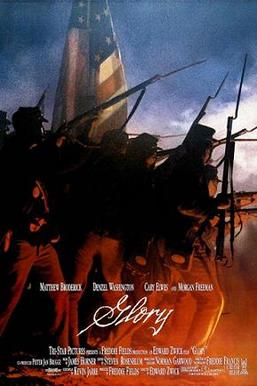
Glory_(1989_film)_poster

M. Davout

I was recently re-watching Glory (1989), starring Matthew Broderick and Morgan Freeman, with my high school senior son (for whom this was a first viewing). I’ve regularly shown sequences from this dramatization of the 54th Massachusetts Regiment, one of the first “Colored” combat units to enter the fight against the Confederacy, to students in my “Film and Politics” course. Toward the end of the film, as the action swung to the 54th’s frontal assault on Fort Wagner, South Carolina, on July 18, 1863, I let slip, to my son’s chagrin, that the attack would fail and result in the regiment’s near destruction. He rhetorically asked why they would make a film about this regiment if the attack failed and all the main characters died.

My son is a tech geek with libertarian leanings and, as a result, he tends to analyze interactions through a transactional lens. In assessing whether a deal or agreement or commitment makes sense, he asks himself what each party materially stands to gain. From his point of view, the conclusion of the dramatic arc of Glory was problematic because it depicted men who failed and died rather than lived and won. And it left viewers with an emotional deficit rather than a surplus.

My son’s response to Glory put me to mind of the uproar over President Trump’s reportedly disdainful remarks about US war dead, which continues to reverberate in the mainstream media. The sources for the Atlantic Monthly story remain anonymous to date but Trump’s documented pattern of openly contemptuous remarks about John McCain’s harrowing imprisonment by North Vietnamese captors gives credence to reports that Trump considered fallen US soldiers to have been “suckers” and “losers.” He openly wondered during a visit with his then chief-of-staff John Kelly to the grave of Kelly’s soldier son why his son had put his life at risk for his country.

Trump’s reported comments and the attitude toward military sacrifice they purportedly exemplify have provoked attacks from Democratic politicians and a deafening silence from Republican politicians. It remains to be seen what lasting damage, if any, this controversy will do to Trump’s electoral prospects.

Sometime an outrageous comment can illuminate an issue worth thinking about that would otherwise be obscured in the dust of political combat. While Trump could be faulted for lacking decorum in pressing Kelly about the rationale for his son’s death, it isn’t an unserious question to wonder why someone would volunteer to be a soldier in a country at war. After all, countries or nation-states are mostly abstractions. People experience them mainly as aggregations of bureaucratic practices and routines which determine where borders are, where certain customs hold or one language or currency is in use rather than another.

It is intuitively graspable why one would be prepared to sacrifice one’s life for one’s child or one’s family or one’s close friend or even a flesh-and-blood stranger in a car accident whose distress provokes an immediate empathetic response. (Maybe not for Trump—he does not seem capable of empathizing with anyone enough to put his interests or life at risk for them.) But to be prepared to die for one set of bureaucratic routines and practices in a conflict with others fighting for a different set of bureaucratic routines and practices? How does that make sense?

Recognizing the challenge of getting citizens to feel a self-sacrificing love of country, the functionaries of emerging nation-states have come universally to institute all sorts of cultural practices designed to foster an emotional connection to one’s nation: pledges of allegiance, national anthems, patriotic rhetoric and ceremonies (e.g., France’s Bastille Day Parade), even the instrumentalization of war dead as a way of tugging on citizen heartstrings (e.g., Lincoln’s Gettysburg Address).

However, the fact that the inhabitants of a bureaucratically-inscribed geographic region come to love their country and feel ready to sacrifice their lives for its good does not, in and of itself, guarantee the reasonableness of their sacrifice or the moral worthiness of the policies that led to that sacrifice. People do end up dying for stupid or bad or even evil national causes and a government’s instrumentalization of the war dead has sometimes had a role in rallying people to do wrong or even terrible things. (See for example the Totenehrung at the 1934 Nazi Nuremberg Rally.) As numerous columns at Bracingviews.com have argued, notions of patriotic service to country can be enlisted in a program of militarization that mainly benefits corporate profits and bureaucratic growth.

So fault Trump for a narcissism so pathological that he cannot control his disdain and contempt whenever he is faced with the spectacle of people who have sacrificed in the service of others. Fault him for colossal presidential laziness and mammoth personal vanity in not wanting to pay respects at a second US military cemetery in France because the rainy weather would force him to take a long drive and get his hair wet. Fault him for his lack of sensitivity in needlessly rubbing raw the sorrow of a father at the grave of his fallen son. But do not let the anger (whether righteous or hypocritical) being expended on him in this heated moment of political controversy obscure the duty citizens have to judge the right and wrong of war policy and the reasonableness of dying for country.

M. Davout, a political science professor who teaches in the Deep South, is an occasional contributor to Bracing Views.

Proud to be a deplorable

W.J. Astore

Today, my wife got stuck behind a pickup truck sporting a bumper sticker of considerable meaning: “Proud to be a deplorable.” No, this wasn’t red state Mississippi; it was blue state Massachusetts.

It’s worth a chuckle or two, until you realize its larger meaning. Many people are proud to vote for Trump because establishment Democrats like Hillary Clinton don’t speak to them, except when they’re dismissing them as deplorables that are “irredeemable,” as Hillary put it in 2016.

Take that, Hillary and all you “libtards”!

It’s never smart to dismiss potential voters as dumbasses without hope, but Hillary thought she had the election in the bag. She lost because she ran a poor campaign and because her elitism and sense of privilege were so obvious. But she also had no compelling messages for the “deplorables.” And Trump did. Trump talked about bad trade deals, the offshoring of jobs, the betrayal of ordinary Americans by the financial set, the big money people, the ones who paid Hillary so handsomely for a few empty speeches.

Of course, Trump didn’t and doesn’t care about ordinary Americans. From all appearances, Trump cares only about himself (and perhaps his immediate family). Nevertheless, he was smart enough to offer the people something, even if all they were left with in the end was a rebel identity as a deplorable.

Establishment Democrats, demonstrating their ability to learn nothing, are once again offering “deplorables” nothing specific. No universal health care (indeed, Joe Biden said he’d veto such a bill if it reached his desk as president). No firm and trustworthy commitment to a $15 minimum wage. No firm and trustworthy commitment to ending those endless foreign wars. Biden promises nothing more than he’s not Trump, end of story.

His choice of Vice President backs this up. Kamala Harris is a conservative Democrat; she’s establishment through and through. But she’s a woman who’s multiracial, so this is considered proof of her diversity and her commitment to helping the less fortunate. Come again?

As Tulsi Gabbard pointed out during a debate, Harris smugly joked about smoking marijuana even as she put “deplorable” users into prison, among other positions that showcased her privileged hypocrisy, but no matter. Even though Harris dropped out early (after boasting of being a top-tier candidate), even though she couldn’t win a single delegate in the primaries, she was handpicked by Joe Biden to lend some excitement to the ticket. Mission unaccomplished.

So I fear, like Michael Moore, that Trump could win again, probably losing the popular vote but winning enough swing states to put him over the top in the electoral college. Trump could win because the “deplorables” in their trucks across blue- and red state America know how to stand by their man. Even though he’s a no-good cheatin’ fool, Trump offers them something, something unquantifiable but powerful, an identity, perhaps, and the ability, in casting their votes, to give a big FU to all the elites that keep telling them they don’t measure up — and never will.

The Face of America

The Face of America

W.J. Astore

The Republican National Convention is over. Its main message: be afraid. Be very afraid. Of socialism. Of people coming to take your guns. Of open borders. Of anarchy in the street. Of “cancel culture.” And so on.

Its ancillary message: the Democrats are not a rival party of patriotic Americans. They are dangerous. Dishonest. Scheming. And un-American.

In last night’s acceptance speech, Trump was his usual huckster and grifter self. Perhaps my favorite claim was when Trump said he’d done more to help black people than any other president, Abraham Lincoln excepted. There’s little doubt that in his own mind Trump believes he’s done more than Lincoln “for the black.”

What can I say that hasn’t already been said about the alternate (un)reality that Trump sells to his acolytes? It’s total BS, it’s fantasy, it’s often hateful or spiteful, but it resonates with certain people, even as it disgusts others.

Trump, among many other things, is a sower of discord. A manufacturer of outrage based on lies and misinformation. But he needs an audience of willing followers, and there are plenty of those in America.

In life, Trump has failed at so many things. I’d argue he has failed miserably as a president, dividing the country instead of uniting it, effectively feeding the rich while starving the poor. Yet the man has captured an entire political party and the fervid support of roughly one-third of those Americans most likely to vote in November.

He has shown us a face of America we’d prefer not to see, a face defined by appetites and grievances and prejudices actuated by violence and fear and lies. But I’d go further. By fomenting violence and fear and lies, Trump has acted not like a true mirror but a funhouse one. He has distorted America. He has made it more grotesque. He has twisted it and contorted it and made it more like him.

In short, he has made his mark on the face of America. And that mark will be a very difficult one to erase.

The Republican Party of the Perpetual Now

Not much need for History in Trump’s America

W.J. Astore

As a historian, I have an allegiance to the past, and to getting the facts right about that past. Because, if you can’t get the facts right, if you can’t do research with rigor and honesty, you can’t call yourself an historian.

So you won’t be surprised to learn that Trump’s version of the Republican Party is anathema to me. The party has no respect for the past. And getting facts right? What does that matter in a time of “alternative facts,” in an administration that lies routinely and about everything?

Trump’s version of the Republican Party is a party of the perpetual now, in which the meaning of “now” is remarkably labile and open to interpretation (and re-interpretation). In a strange way, Trump’s party is the party of post-modernism, where all facts are contingent, where everything is open to being constructed and deconstructed. Truth itself is a social construct in the Trumpian universe, determined by Trump himself and the various ass-kissers he’s assembled around him.

Not only is the Trumpian Party without a meaningful past: it’s also without a mediated future. According to the official platform of the Republican Party adopted last night, the party and its platform is what Trump says it is, world without end, Amen.

Here’s how it was put in a press release:

“RESOLVED, That the Republican Party has and will continue to enthusiastically support the President’s America-first agenda” and “The 2020 Republican National Convention will adjourn without adopting a new platform until the 2024 Republican National Convention.”

The platform is Trump and Trump is the platform. The future is whatever Trump wills it to be, in his usual egotistical and often nonsensical way.

Facts don’t matter. The (true) past doesn’t matter. America as will and idea, as defined by Trump’s mind and driven by Trump’s desires.

As many have said, this isn’t a party, it’s a cult. A cult of unreflective minds, a cult unconcerned with critical thinking about the past, a cult that believes the future is best defined by one man.

One thing is certain: You won’t need any historians in Trump’s world. Just a lot of stenographers and sycophants willing to accept reality as Trump presents it, a perpetual now that’s constantly constructed and deconstructed before your eyes, the only constant being the celebration of Trump.

Remember: you can’t believe your lying eyes, but you can believe in Trump. If that’s not the end of history, I don’t know what is.

My Vote for President in 2020

tulsi-gabbard-gty-aa-191228_hpMain_16x9_992

W.J. Astore

I’ve given a lot of thought to my vote for the presidency in 2020.  Neither Trump nor Biden is attractive to me.  These men haven’t earned my vote.  Who has?

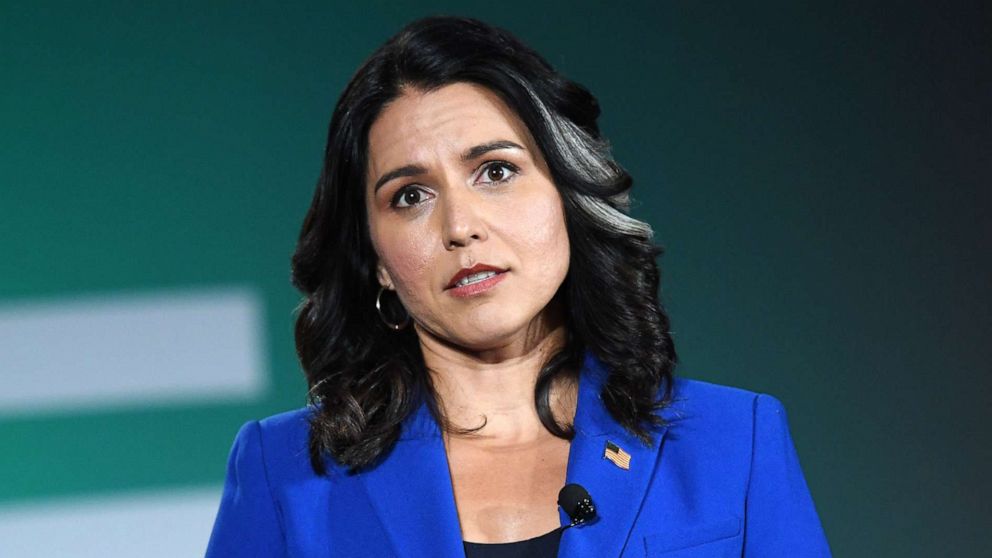
I like Tulsi Gabbard, and I’m planning on voting for her in November 2020.

I know: she’s pulled out of the race.  She even endorsed Joe Biden.  But I can’t vote for the Biden/Harris ticket.  To me, they’re corporate cronies who endorse U.S. militarism and empire.

Trump, the Republican alternative, is a disaster.  Totally self-absorbed and lazy to boot, Trump cares nothing about our country and will sacrifice anything and everything to his own definition of success.

Now, I live in a state that is safely blue; in the big picture, my vote is meaningless.  But it’s not meaningless to me.  I want to vote for something I believe in, and I believe in Tulsi’s stand against war.

Here’s a recent statement from Tulsi Gabbard that convinced me she’s still in the vanguard of reform.  If only Biden/Harris would say something like this, but of course they won’t.

STATEMENT FROM TULSI GABBARD

When I first ran for Congress in 2012, I knew that we needed to bring our troops home from Afghanistan and made that a central focus of my campaign. After two decades of fighting in a war that has no clear objective, cost thousands of lives, and continues to cost taxpayers at least $4 billion a month, most Democrats and Republicans want to continue this war. This is why I voted against this year’s National Defense Authorization Act (NDAA) – a $740.1 Billion defense bill that disproportionately benefits the military industrial complex, continues to escalate the new Cold War, and needlessly continues our decades-long war in Afghanistan.

Unfortunately, this bill passed the House with bipartisan support.

Nevertheless, as a senior member of the House Armed Services Committee, I fought hard to get many provisions added to the bill, including:

  • improving the quality of life for servicemembers and military families,
  • addressing sexual assault in the military,
  • providing transparency of the devastating humanitarian impact of U.S. sanctions,
  • allowing servicemembers to use over-the-counter hemp products,
  • and helping to mitigate and reduce the environmental threats that impact our troops.
READ MORE

We have much work ahead of us. I will continue to do all I can to bring our troops home from Afghanistan, work to end the new Cold War and nuclear arms proliferation, and ensure the safety, prosperity, and well-being of the American people and our planet.

Now, it’s time for Congress and this Administration to do the same.

Mahalo and be well,
Tulsi

Update (8/16/20): I believe politicians have to earn our votes.  We should never feel obligated to vote for them.

For the sake of argument, let’s say Trump wins. People will predictably argue that it’s people like me who are to blame, since I didn’t vote for Biden. (Nor will I vote for Trump.)

No. It won’t be my fault. If you wish to blame someone, blame the Trump voters. And blame the DNC for nominating a candidate (Biden) who didn’t earn the vote of people like me.

The same applies to Hillary’s loss in 2016. She lost to a con man and a reality TV celebrity because she ran a poor campaign, and because her hypocrisy and elitism were so obvious. Remember her “basket of deplorables” comment? Remember all the money she took from Goldman Sachs and the like? $675K for three speeches, even as she opposed Bernie’s call for $15 minimum wage.

With a $15 minimum wage, it would take a “deplorable” more than 22 years of hard work to earn what Hillary got in roughly three hours of speechifying.

And I’m supposed to admire Hillary and vote for her because the DNC said so?

And I’m supposed to vote for Biden because once again the DNC, joined by Obama and Hillary, gave the shaft to Bernie Sanders and Tulsi Gabbard?

If I vote for Joe, I’m rewarding the DNC for its blatant corruption.  So I choose to vote for someone who’s offering something more than the status quo of endless war and bottomless corruption.

Update (8/18/20):

I’m surprised that David Sirota, who worked for Bernie Sanders, had this to say about Democrats’ alleged “choice”:

“If the Sanders-Biden battle was perceived as a choice between Sanders’s daunting promise of an exhausting revolutionary struggle and Biden’s promise of a glide path back to normal, then it’s no mystery why Biden ultimately prevailed. Easy street was an understandably alluring vision for an electorate already tired out by Trump’s never-ending conflicts and controversies.

In reality, though, this was not a choice between two possibilities — it was a choice between honesty and fantasy, and Democratic voters picked the latter.”

https://sirota.substack.com/p/did-americans-want-a-political-revolution

I disagree with him because Democratic voters chose nothing. They had no choice. The DNC, the establishment, and especially Obama intervened to torpedo and sink Bernie just as he was riding high. Saint Obama even convinced Amy K. and Mayor Pete to drop out; we’ll see their rewards/price if Biden wins.

Democratic voters, when polled, broadly support Bernie’s agenda. But DNC operatives don’t give a f*ck about what voters want; they care about what the owners and donors want.

This is why I refuse to watch this convention. It’s a rigged, dishonest, show.

I know what happened to the two candidates I favored: Bernie and Tulsi. And I refuse to reward the DNC with my vote based on everything that we witnessed in this corrupt primary season.

All Is Vanity: Trump 2020

trump-cardboard-cutout
As promised: A photo with Trump!

W.J. Astore

The Bible tells us that all is vanity, and that’s most certainly true of the Trump campaign and its search for donors.  A friend of mine sent me the following come-on from Trump/Pence 2020:

******

“I’ll admit I’m disappointed [that you haven’t contributed as yet], but I know you have it in you to be one of my STRONGEST supporters, which is why I’m reaching out with a one-time offer in the hope that you’ll join me in making history.

When you make your FIRST contribution of ANY AMOUNT, you’ll instantly join the ranks in the Trump Donor Hall of Fame. This prestigious group will be remembered forever as the Patriots who won us the 2020 Election, and I’m offering YOU a spot.
The Trump Donor Hall of Fame is very competitive and your offer is only available for the NEXT HOUR. After that, I’ll be forced to reach out to the next Patriot. Please make your FIRST contribution of ANY AMOUNT IMMEDIATELY and you’ll automatically get your name cemented in the Trump Donor Hall of Fame.”

*****

Now, tell me, dear reader, who could refuse such an offer?  A chance to be enshrined (or “cemented”) in the “Trump Donor Hall of Fame.”  And all you need to contribute is a dollar — or even a penny!  Not only that, but you’ll gain personal recognition from one Donald J. Trump.  According to the ad:

“I’ll be walking through the Hall of Fame later today and I’ll be looking for your name. Make sure I see it.”

Donald Trump — walking?  Well, it’s nice to see him getting some exercise.

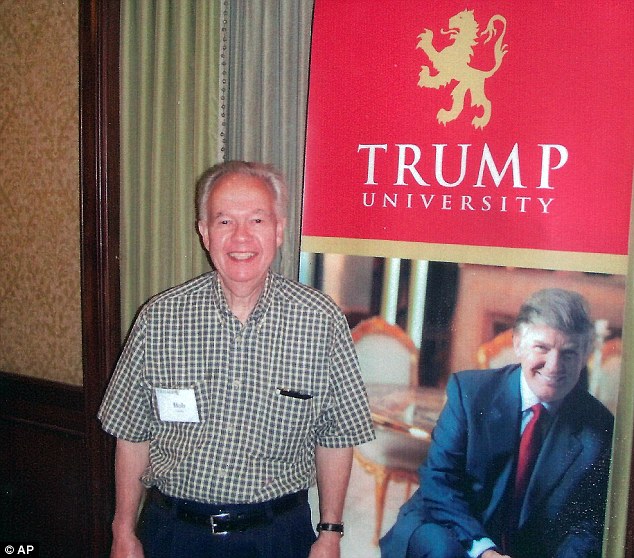
This come-on reminds me of Trump University, where you were guaranteed to meet Trump and get a photo with him.  Turns out that guarantee was bogus (like most of Trump’s presidency, and his businesses for that matter), but some people did get a photo with a cardboard cutout of Trump.

Trump has a keen sense of human vanity, powered as it is by his own bottomless vanity and venality.  But will it be enough to get him reelected?  (Along with the usual fear-mongering, race-baiting, flag-waving, and the like?)  Stay tuned.

Trump’s Garden of Heroes

Statues
Silent teachers in stone and metal: U.S. Capitol

W.J. Astore

While castigating the “radical left” in his latest vitriolic speech before Mount Rushmore, Trump proposed a new garden of heroes to celebrate meaningful Americans.  Naturally, that list has generated controversy.  As others have noted, Native Americans are absent from the list; so too are Hispanics; and so too are Democratic presidents.

Here’s a look at Trump’s “heroes”:

John Adams, Susan B. Anthony, Clara Barton, Daniel Boone, Joshua Lawrence Chamberlain, Henry Clay, Davy Crockett, Frederick Douglass, Amelia Earhart, Benjamin Franklin, Billy Graham, Alexander Hamilton, Thomas Jefferson, Martin Luther King, Jr., Abraham Lincoln, Douglas MacArthur, Dolley Madison, James Madison, Christa McAuliffe, Audie Murphy, George S. Patton, Jr., Ronald Reagan, Jackie Robinson, Betsy Ross, Antonin Scalia, Harriet Beecher Stowe, Harriet Tubman, Booker T. Washington, George Washington, Orville and Wilbur Wright.

It’s easy to pick apart any list.  Why this person and not that one?  Or why not this person and that one?  For example, why not MLK Jr. and Malcolm X?  Why not Jackie Robinson and Muhammad Ali?  Is it because MLK Jr. and Jackie are considered safer, or less controversial, or more American because they were “less angry”?

Among other absences, there’s another I’d like to highlight: Any person dedicated to the cause of peace.*

Again, looking at Trump’s list, what struck me was the predictable worship of military men, not just Joshua Lawrence Chamberlain from the Civil War or Audie Murphy from World War II but the usual generals Trump professes to love, Patton and MacArthur.  Two vainglorious wannabe Caesars, the very opposite of America’s citizen-soldier ideal, are Trump’s idea of America’s noblest generals.  Not George C. Marshall and Omar Bradley, also of World War II fame, and both more deserving of acclaim, and more suited to America’s military traditions.  Or how about General Smedley Butler, twice awarded the Medal of Honor, who became an outspoken critic of war after his retirement?

What also struck me was the presence of “the usual suspects” in the list.  Do we really need yet another statue to George Washington?  Abraham Lincoln?  Benjamin Franklin?  Can’t we come up with some lesser known heroes worthy of acclaim, perhaps someone like Prudence Crandall, a schoolteacher who established the first school for African-American girls in New England, and who faced mob violence as she fought to keep her school open.  Or how about Elihu Burritt, the Learned Blacksmith, who fought so hard in antebellum America against war.  America has a wealth of unsung heroes; why not take this chance to celebrate “ordinary” Americans doing extraordinary things?

Notice, naturally, the deep bow to conservative icons such as Billy Graham, Ronald Reagan, and Antonin Scalia.  An evangelist, a president, and a Supreme Court Justice, respectively.  So how about Dorothy Day, Jimmy Carter, and Harry Blackmun to balance the partisan ledger?

Some science might be injected with Carl Sagan or James Watson.  Some environmentalism with Rachel Carson.  During a pandemic, why not Jonas Salk?  And why is America’s greatest inventor, Thomas Edison, not on this list?  Of course, you could go on almost endlessly here.

Perhaps what amused me most was the stipulation the statues have to be lifelike or realistic, not abstract or modernist representations.  They are to be “silent teachers in solid form of stone and metal,” per Trump’s executive order.  This rejection of abstract or modernist representation put me to mind of Nazi Germany’s rejection of so-called degenerate art.  The Nazis preferred art that celebrated uncontroversially the heroism of Germans and the human form: art that was open only to the most obvious interpretation.  As a good friend put it, “Combine Trump’s classical garden of heroes with his edict that public buildings be made ‘beautiful again’ in a neoclassical style and all he’s missing is a catchy antisemitic drinking song.”

In other words, Trump wants a garden of heroes in which we’re expected to bow our heads in awe, rather than hold our heads in thought.  Awe is befitting to a dictatorship, but thought is becoming to a democracy.

* I’ve applauded MLK Jr.’s efforts to end the Vietnam War; he deserves to be recognized as a peace activist, but of course he’s on Trump’s list for his civil rights record, not his critique of America as the world’s greatest purveyor of violence.  One name I’d love to see added to the list is Daniel Ellsberg, who risked everything to expose American lies with the release of the Pentagon Papers.