What Is a “Real” General?

W.J. Astore

Tragically for America, Trump Believes He Is the Law

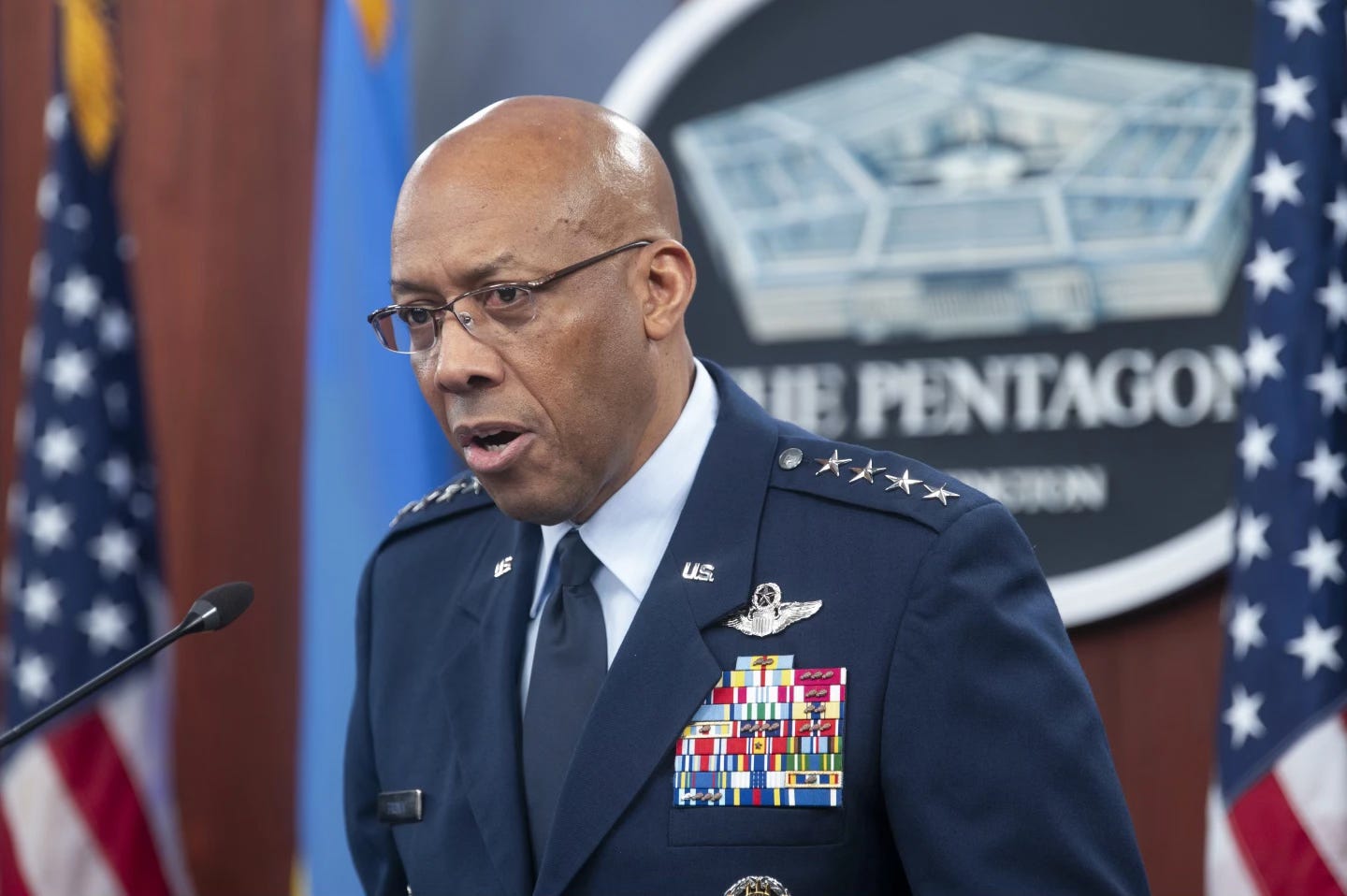
Yesterday, President Trump fired the Chairman of the Joint Chiefs of Staff, General CQ Brown, nominating retired Lieutenant General Dan “Razin” Caine as the next Chairman, who, Trump claims, is a “real” general instead of a “TV” general.

General CQ Brown, apparently not “real” enough for Trump

Trump’s affection for “real” generals is well known. In his first term as president, Trump was much taken with retired Marine Corps General James Mattis, who reminded Trump of General George Patton of World War II fame. Mattis became the Secretary of Defense—but his term of service didn’t end well.

General Caine first impressed Trump in 2018. They share something in common: boastfulness. Caine apparently told Trump that the Islamic State could be destroyed “in a week.” Trump also recounted meeting Caine in a hangar as the assembled troops were donning “MAGA” caps in a show of support for the president. As Trump recounted last year

“They all put on the Make America Great Again hat. Not supposed to do it. I said, ‘you’re not supposed to do that. You know that.’ They said, ‘It’s OK, sir. We don’t care.'”

Clearly, Trump selected General Caine because he perceives him as being loyal—to Trump. The MAGA caps and his can-do boastfulness were the clinchers.

I guess “real” generals are real when they talk a good game while donning MAGA caps. It helps too that Caine is a white male who can’t be construed as a DEI hire.

Trump didn’t just fire General CQ Brown, who’s Black. He also fired the Chief of Naval Operations, Admiral Lisa Franchetti, perhaps because as a woman Trump perceived her to be another DEI hire. Equally as likely, Trump saw Brown and Franchetti as insufficiently loyal—to him.

Back in March of 2016, I wrote an article in which I said Trump had disqualified himself as a Presidential candidate because he elevated personal loyalty to his potential commands (even illegal ones) over service members’ solemn oath to the U.S. Constitution. I continue to stand by that article.

To Trump the man, what matters is personal loyalty and obedience to him. As president, what should matter to him is an officer’s loyalty to the law—to the Constitution. Tragically for America, Trump believes he is the law. Too many of Trump’s followers also believe this.

Far too often, Trump behaves like a petulant man-child who is jealous of his power. His idea of “real” leaders are those who kowtow to him. That’s the idea not of a strong and mature leader but of a wannabe petty dictator.

Purge at the Pentagon!

W.J. Astore

It’s OK to Lose Wars, Not OK to be “Woke”

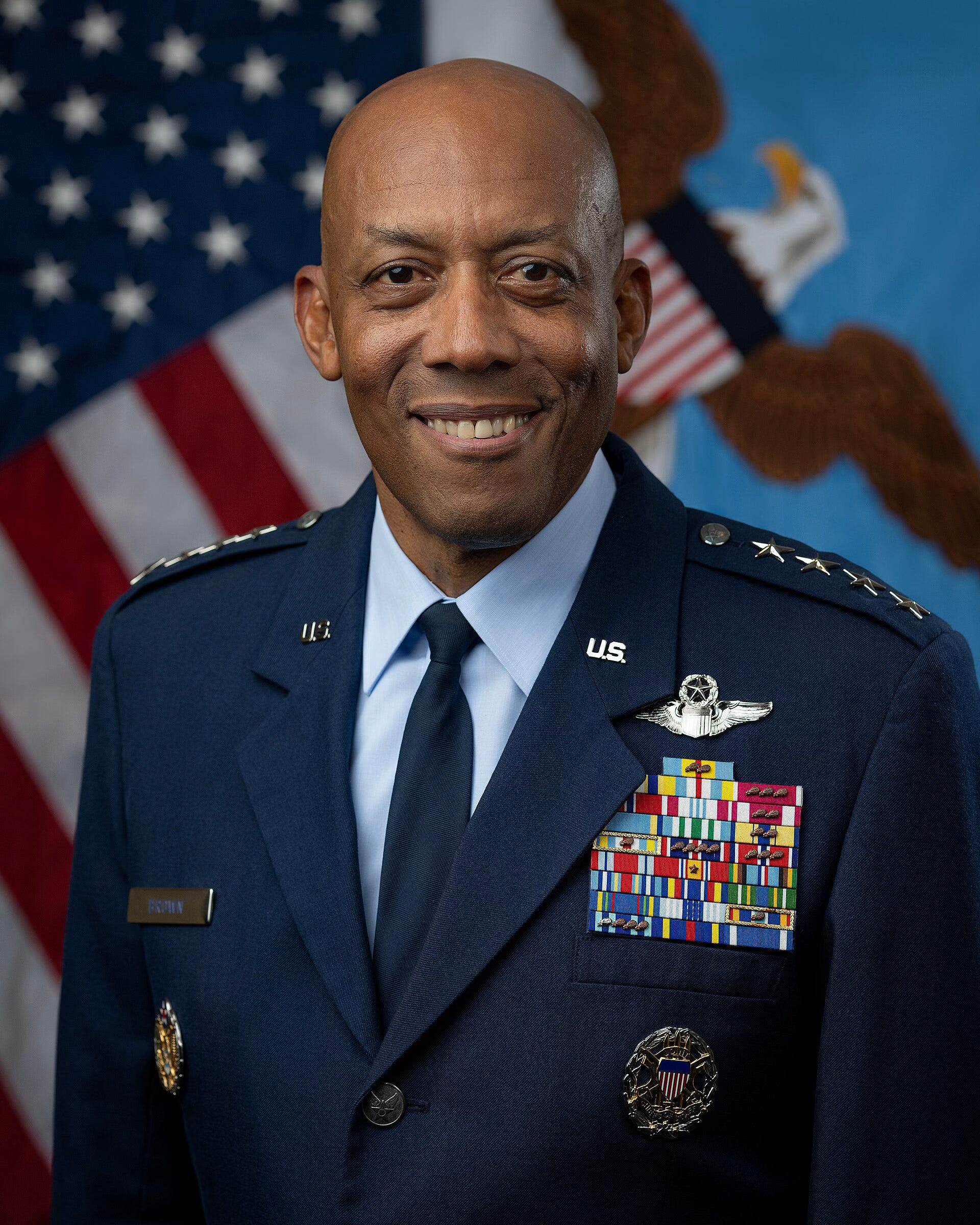
Purge at the Pentagon! Reuters reports that the incoming Trump administration is drawing up a list of generals to be fired. These are generals associated with former Chairman of the JCS Mark Milley and anyone else branded with a scarlet “W” for woke. The current Chairman, Air Force General C.Q. Brown, may also be fired, as some within the Trump camp suspect he may have been a DEI hire.

This is how Reuters put it: Hegseth [Trump’s nominee for Defense Secretary] has also taken aim at Milley’s successor, Air Force General C.Q. Brown, asking whether he would have gotten the job if he were not Black.

“Was it because of his skin color? Or his skill? We’ll never know, but always doubt – which on its face seems unfair to CQ. But since he has made the race card one of his biggest calling cards, it doesn’t really much matter,” he wrote.

Ouch. It does indeed seem unfair to CQ.

General C.Q. Brown, Chairman of the JCS

Retired General Milley is no fan of Trump, having called the president “fascist to the core,” so it’s time for vengeance against him and his cohort. General Brown might be collateral damage, but of course the general, if purged, will find seven-figure salaries available to him on the industrial side of the military-industrial complex, so don’t cry for him too hard.

What’s amazing about all this is reason for the purge. Wokeness. Vengeance. Not military incompetence.

Think about it. The U.S. military lost in Vietnam. Lost in Iraq. Lost in Afghanistan. And no general was fired for cause. Sure, Obama dismissed General Stanley McChrystal in 2010, but that was because McChrystal was an idiot. The last general I can remember who was fired for just cause by a president exercising true authority was Douglas MacArthur during the Korean War. That was over 70 years ago. 

As Army officer Paul Yingling famously wrote (“A Failure in Generalship”), a private is severely punished for losing a rifle but generals get promoted for losing wars. I doubt this is going to change. Instead, under Trump it appears the firing of generals is another leg of his vengeance tour, a purge of those who are perceived as disloyal.

Back in March of 2016, I wrote Trump had disqualified himself for the position of commander-in-chief because he had no understanding of the U.S. Constitution. For Trump, laws, principles, integrity, and character are far less important than loyalty and obedience to Trump.

If the Trump administration does indeed pursue a Pentagon purge based on vengeance, a courageous and principled officer corps should resign en masse in protest against this usurpation of authority. I’m no fan of the generals, but firing them because they’re associated with “woke” (whatever that means) and/or Milley is a misuse of power.

If you want to fire generals, fire them because they’ve failed in their primary duties, not because they’re allegedly “woke.”

Brief Reflections on Trump, War, and Militarism

Trump’s motto: In generals I trust. It didn’t work out so well for him. Or the country.

W.J. Astore

As the Senate prepares to acquit Donald Trump in his second impeachment trial, I thought it would be a good time for a quick look at his legacy on war and militarism. Trump’s fans like to say he started no new wars. But he was hardly a man of peace, and his legacy on war and militarism is almost entirely negative. Here, in no particular order, are my quick thoughts on this subject:

  1. He boosted military spending and weapons sales. Trump basically bought off the military-industrial-congressional complex by throwing scores of billions of dollars its way while selling weapons around the world. It’s an old formula for U.S. presidents and it worked.
  2. He boosted a militant nationalism vis-a-vis rivals and even traditional allies. Trump was no friend to Russia and aggravated relations with China. Relations with NATO allies were also aggravated as he pressured them to spend more on weapons and wars.
  3. He boosted militarism at home and specifically with police forces. Trump supported and encouraged violent police crackdowns of BLM activists. He called for the deployment of active duty military in the streets of Washington, DC. He even called for a massive military parade (which never happened).
  4. He boosted overseas bombing and drone strikes. Recall the use of MOAB in Afghanistan, or Trump’s missile strike against Syria, and increased bombing in Afghanistan.
  5. He boosted tensions with Iran nearly to the breaking point. Trump’s drone strike against Iranian general Qasem Soleimani was an act of war; harsh economic sanctions and withdrawal from the Obama-era nuclear treaty with Iran also heightened tensions.
  6. He boosted the chances of nuclear war in the future. Trump was a fan of nuclear weapons; he seems to think of them simply as bigger, mightier bombs. His pursuit of “smaller” tactical nuclear warheads and their deployment on Trident-class nuclear submarines increase the possibility of nuclear war in the future.
  7. He boosted economic sanctions against Venezuela while pursuing a coup. Trump knows Venezuela has vast oil reserves. Why not overthrow their government and take their oil? That was Trump’s policy, more or less. (It doesn’t appear to have changed under Joe Biden.)
  8. Creation of a Space Force. Yet another military competitor for U.S. taxpayer dollars, even as space itself becomes another sphere for the U.S. military to “dominate.”
  9. Failure to end wars that he promised to end. Trump was talked out of ending the war in Afghanistan by generals like James Mattis and H.R. McMaster. Ending such wars was a promise Trump foolishly abandoned.
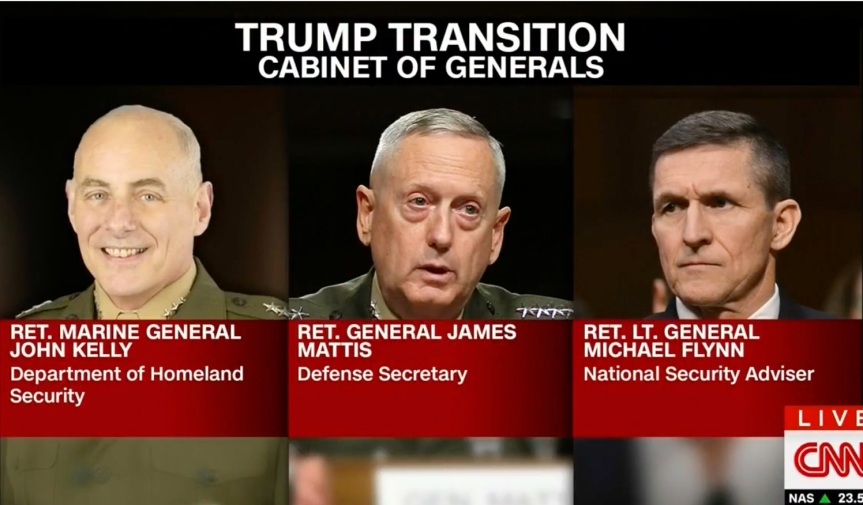
  10. Reliance on Generals as wise men. Trump, overall a weak and vainglorious man, surrounded himself with generals like Mattis, McMaster, John Kelly, and (briefly) Michael Flynn. Thus he got narrow-minded war-mongering advice.
  11. Seeing the world as a zero-sum game of winners and losers and debasing the art of diplomacy. Putting Mike Pompeo in charge of the State Department was a new low in the pursuit of peace through diplomacy.
  12. Aiding genocide in Yemen while kowtowing to Israel and Saudi Arabia: Trump was a willing participant to genocide in Yemen while pursuing a “peace” plan with Israel that was totally one-sided vis-a-vis the status and rights of Palestinians.

Off the top of my head, that’s my top twelve of Trump’s legacies in this arena. What do you think, readers? Can you think of others? And will any of this really change under Joe Biden?

On War Dead, Politics, and Trump

Glory_(1989_film)_poster

M. Davout

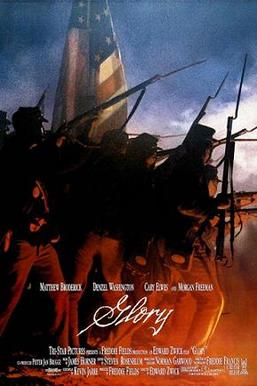
I was recently re-watching Glory (1989), starring Matthew Broderick and Morgan Freeman, with my high school senior son (for whom this was a first viewing). I’ve regularly shown sequences from this dramatization of the 54th Massachusetts Regiment, one of the first “Colored” combat units to enter the fight against the Confederacy, to students in my “Film and Politics” course. Toward the end of the film, as the action swung to the 54th’s frontal assault on Fort Wagner, South Carolina, on July 18, 1863, I let slip, to my son’s chagrin, that the attack would fail and result in the regiment’s near destruction. He rhetorically asked why they would make a film about this regiment if the attack failed and all the main characters died.

My son is a tech geek with libertarian leanings and, as a result, he tends to analyze interactions through a transactional lens. In assessing whether a deal or agreement or commitment makes sense, he asks himself what each party materially stands to gain. From his point of view, the conclusion of the dramatic arc of Glory was problematic because it depicted men who failed and died rather than lived and won. And it left viewers with an emotional deficit rather than a surplus.

My son’s response to Glory put me to mind of the uproar over President Trump’s reportedly disdainful remarks about US war dead, which continues to reverberate in the mainstream media. The sources for the Atlantic Monthly story remain anonymous to date but Trump’s documented pattern of openly contemptuous remarks about John McCain’s harrowing imprisonment by North Vietnamese captors gives credence to reports that Trump considered fallen US soldiers to have been “suckers” and “losers.” He openly wondered during a visit with his then chief-of-staff John Kelly to the grave of Kelly’s soldier son why his son had put his life at risk for his country.

Trump’s reported comments and the attitude toward military sacrifice they purportedly exemplify have provoked attacks from Democratic politicians and a deafening silence from Republican politicians. It remains to be seen what lasting damage, if any, this controversy will do to Trump’s electoral prospects.

Sometime an outrageous comment can illuminate an issue worth thinking about that would otherwise be obscured in the dust of political combat. While Trump could be faulted for lacking decorum in pressing Kelly about the rationale for his son’s death, it isn’t an unserious question to wonder why someone would volunteer to be a soldier in a country at war. After all, countries or nation-states are mostly abstractions. People experience them mainly as aggregations of bureaucratic practices and routines which determine where borders are, where certain customs hold or one language or currency is in use rather than another.

It is intuitively graspable why one would be prepared to sacrifice one’s life for one’s child or one’s family or one’s close friend or even a flesh-and-blood stranger in a car accident whose distress provokes an immediate empathetic response. (Maybe not for Trump—he does not seem capable of empathizing with anyone enough to put his interests or life at risk for them.) But to be prepared to die for one set of bureaucratic routines and practices in a conflict with others fighting for a different set of bureaucratic routines and practices? How does that make sense?

Recognizing the challenge of getting citizens to feel a self-sacrificing love of country, the functionaries of emerging nation-states have come universally to institute all sorts of cultural practices designed to foster an emotional connection to one’s nation: pledges of allegiance, national anthems, patriotic rhetoric and ceremonies (e.g., France’s Bastille Day Parade), even the instrumentalization of war dead as a way of tugging on citizen heartstrings (e.g., Lincoln’s Gettysburg Address).

However, the fact that the inhabitants of a bureaucratically-inscribed geographic region come to love their country and feel ready to sacrifice their lives for its good does not, in and of itself, guarantee the reasonableness of their sacrifice or the moral worthiness of the policies that led to that sacrifice. People do end up dying for stupid or bad or even evil national causes and a government’s instrumentalization of the war dead has sometimes had a role in rallying people to do wrong or even terrible things. (See for example the Totenehrung at the 1934 Nazi Nuremberg Rally.) As numerous columns at Bracingviews.com have argued, notions of patriotic service to country can be enlisted in a program of militarization that mainly benefits corporate profits and bureaucratic growth.

So fault Trump for a narcissism so pathological that he cannot control his disdain and contempt whenever he is faced with the spectacle of people who have sacrificed in the service of others. Fault him for colossal presidential laziness and mammoth personal vanity in not wanting to pay respects at a second US military cemetery in France because the rainy weather would force him to take a long drive and get his hair wet. Fault him for his lack of sensitivity in needlessly rubbing raw the sorrow of a father at the grave of his fallen son. But do not let the anger (whether righteous or hypocritical) being expended on him in this heated moment of political controversy obscure the duty citizens have to judge the right and wrong of war policy and the reasonableness of dying for country.

M. Davout, a political science professor who teaches in the Deep South, is an occasional contributor to Bracing Views.


Trump Talks About the Military as if It’s His Praetorian Guard

WGH-IR-03_PraetorianGuard
Hail Trump? Includes wannabe American Emperor in Golf Cart.

W.J. Astore

President Donald Trump has a disturbing way of talking about the U.S. military.  Consider the following Trump quotation about the recent attack on U.S. troops in Niger:

“I have generals that are great generals,” Trump said. “I gave them authority to do what’s right so that we win. My generals and my military, they have decision-making ability. As far as the incident that we’re talking about [in Niger], I’ve been seeing it just like you’ve been seeing it. I’ve been getting reports.” [emphasis added]

For Trump, it’s not the American people’s military, it’s “my” military.  Generals are not Congressionally-appointed officers, they’re “my” generals.  Trump has a fundamental misunderstanding of his role as commander-in-chief, as well as the role of the U.S. military.  He sees himself as the big boss of “his” military, with generals as his personal employees whom he can order around and fire at will.

And by “order around,” I mean the issuance of orders regardless of their legality, a point Trump made back in March of 2016, in response to a debate question by Bret Baier:

BAIER: Mr. Trump, just yesterday, almost 100 foreign policy experts signed on to an open letter refusing to support you, saying your embracing expansive use of torture is inexcusable. General Michael Hayden, former CIA director, NSA director, and other experts have said that when you asked the U.S. military to carry out some of your campaign promises, specifically targeting terrorists’ families, and also the use of interrogation methods more extreme than waterboarding, the military will refuse because they’ve been trained to turn down and refuse illegal orders.

So what would you do, as commander-in-chief, if the U.S. military refused to carry out those orders?

TRUMP: They won’t refuse. They’re not going to refuse me. Believe me.

BAIER: But they’re illegal.

TRUMP: And — and — and — I’m a leader. I’m a leader. I’ve always been a leader. I’ve never had any problem leading people. If I say do it, they’re going to do it. That’s what leadership is all about.

As I wrote then, Trump’s fundamental misunderstanding of leadership, and especially his boasts about the military obeying his orders irrespective of their legality, disqualified him as a presidential candidate.  Of course, Trump’s dictatorial statements didn’t deter his determined fans. Indeed, they elected him because they wanted a Strong Man, not because they feared one.

So here we are, with a dictator wannabe as president, treating the U.S. military as if it’s his personal Praetorian Guard.  If the Republic isn’t dead, its heartbeat is fading fast.  Meanwhile, the sordid and corrupt Empire of Trump – just by its endurance – grows ever stronger.